
Amsterdam · North Holland · Netherlands
Amsterdam - More Than I Expected, Different Than I Imagined
Verdict Canals, crooked houses, free ferries, expensive water and one very memorable winter city break.
A personal Amsterdam winter travel guide with canals, Amsterdam Noord, Anne Frank House, Van Gogh Museum, markets, Dutch food, Moco Museum and practical February tips.
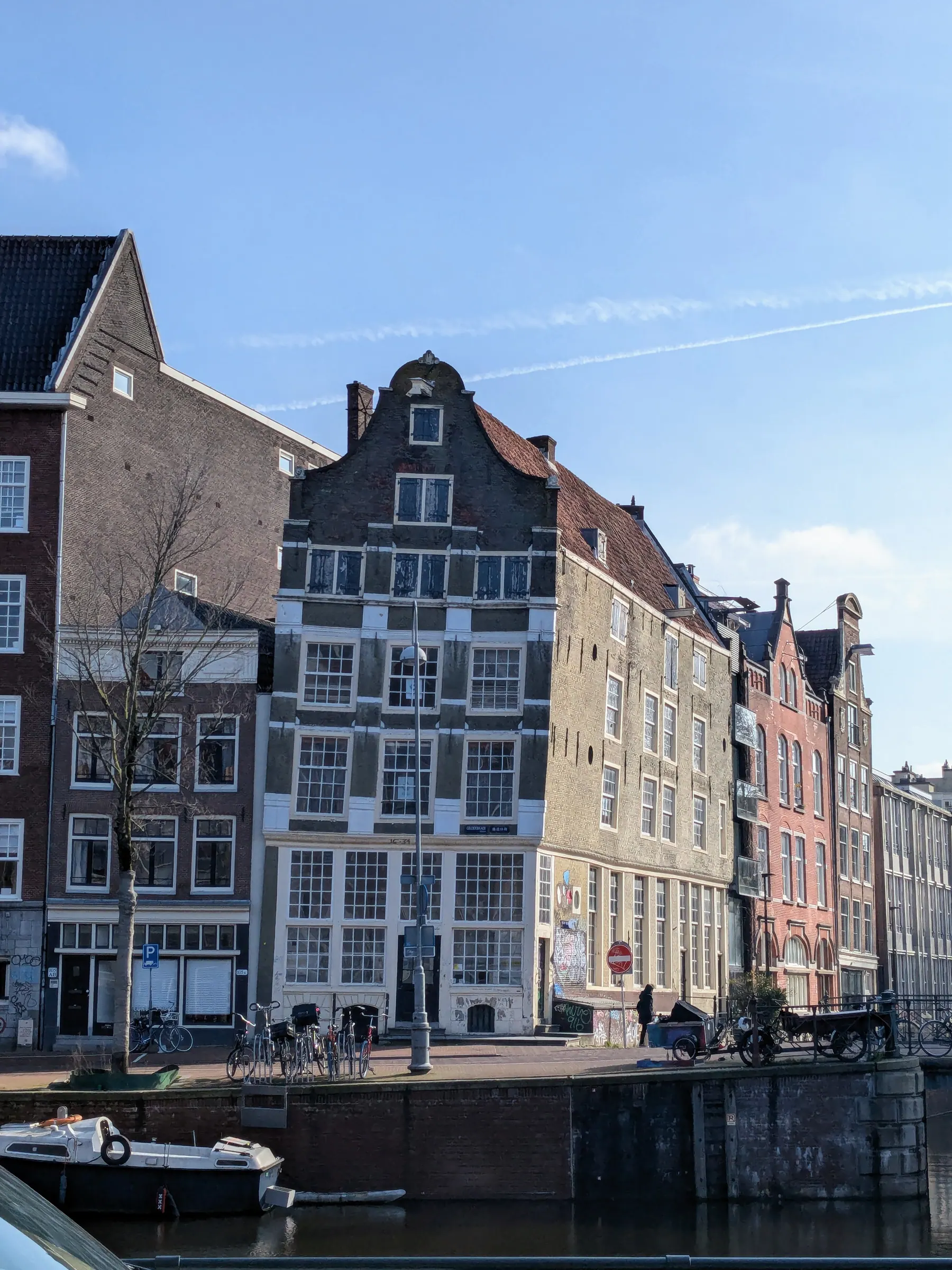
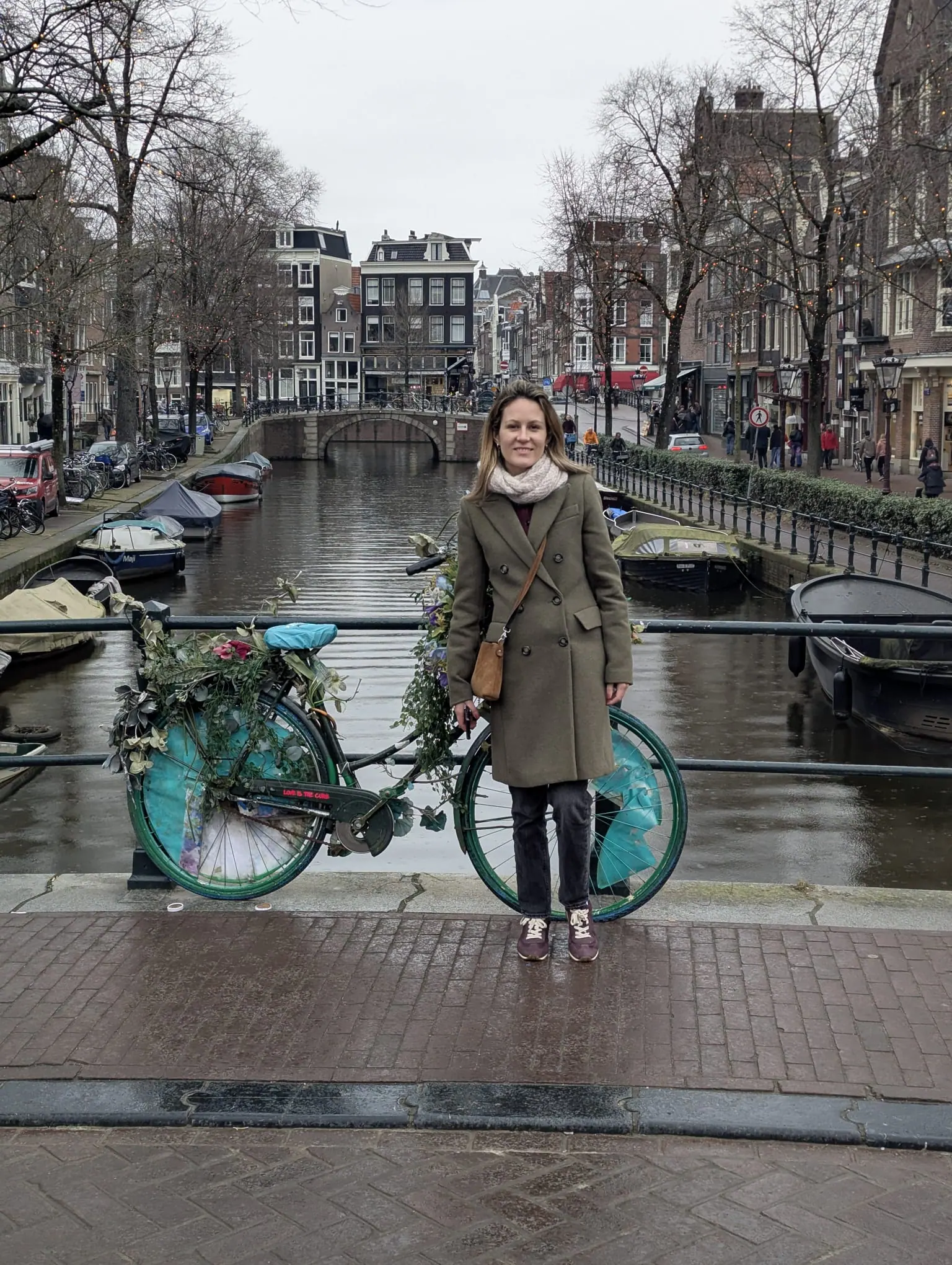
Amsterdam in February is not exactly the obvious choice. But sometimes the best trips happen when you stop waiting for the perfect conditions. Also, we weren't overwhelmed by crowds of tourists, so it was a good advantage.
My boyfriend and I spent two and a half days there - winter coats, boots, and all. And despite the grey skies and one particularly brutal last day of weather, Amsterdam left a stronger impression than I anticipated.
A City Built on a River - and a Beer Named After It
Before anything else, a fact that puts Amsterdam into perspective. The city takes its name from the Amstel River - originally a small fishing settlement called Amstelredam (Dam on the Amstel), built in the 13th century alongside a dam at the river’s mouth. That dam eventually became Dam Square, the heart of the city today.
The Amstel River flows through the city centre, connecting to Amsterdam’s famous canal ring - itself a UNESCO World Heritage Site. And if the name sounds familiar beyond the city, it should: Amstel beer was founded in 1870 on the banks of the same river, using its clean water for brewing and harvesting its winter ice to cool the cellars before refrigeration existed. The river literally gave Amsterdam its name, its canals and one of its most famous beers. Not bad for a modest waterway.
Getting There and First Impressions
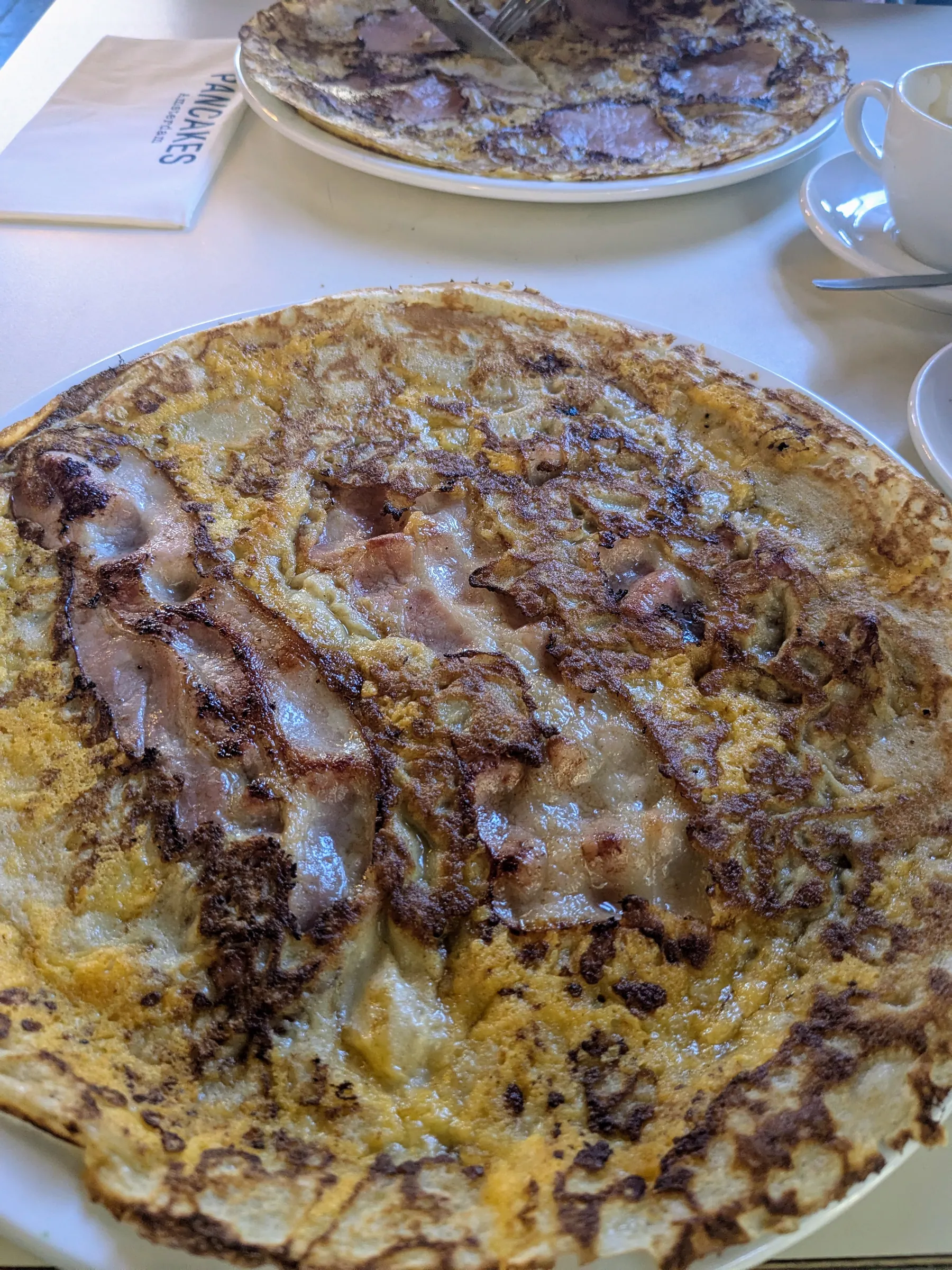
We flew directly from Valencia - around 117 EUR return per person, very reasonable. Straight from the airport we jumped on the train into the city and immediately started looking for food. We found Pancakes Amsterdam - and honestly, after an early morning flight, a warm, greasy ham and cheese pancake was exactly what was needed. Around 20 EUR per pancake and with a cappuccino we paid around 25 EUR each.
One thing to note immediately: Amsterdam is not cheap. We also quickly discovered that water and soft drinks are surprisingly expensive. On our very first day, extremely thirsty, we went into a small convenience store near the central station - no prices were displayed anywhere. At the till we paid around 7 EUR for two small water bottles and a can of Coca Cola. A lesson learned fast: always look for a proper supermarket with visible price tags rather than the small tourist area convenience stores. Carry your own bottle wherever possible.
Where We Stayed - Amsterdam Noord and the Little Ferry
We stayed at Bunk Hotel in Amsterdam Noord - around 250 EUR for two nights for two people, which for Amsterdam is reasonable. The hotel has a fascinating story: it was originally a church, and the building still looks like one from the outside. Inside it’s been transformed into a stylish, well designed space that manages to feel both quirky and comfortable. Our room was small with no windows - fair warning for anyone who gets claustrophobic - but the overall design more than makes up for it. I always prefer places with their own story over anonymous hotel chains, and Bunk delivered exactly that.
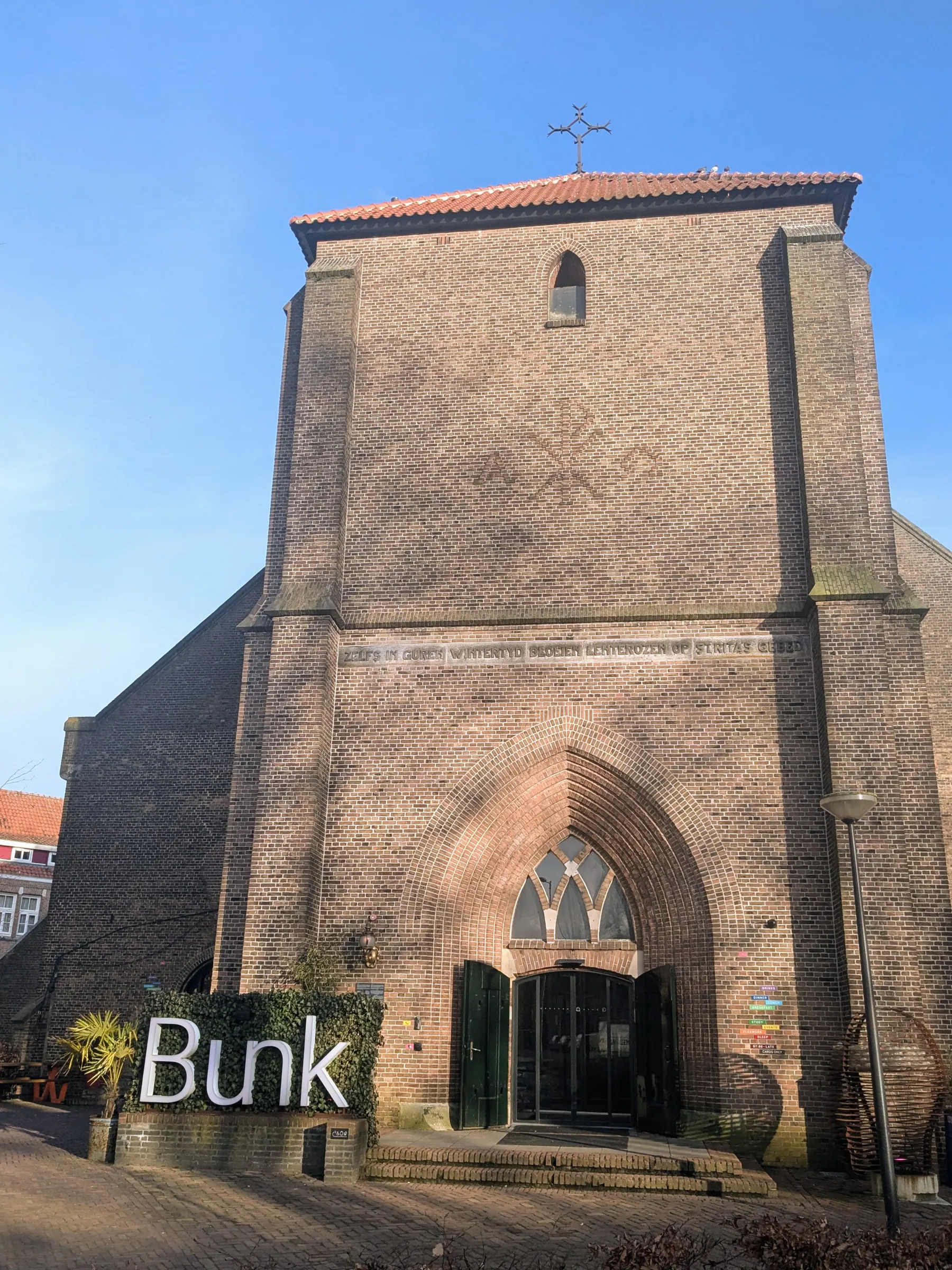
Amsterdam Noord is far more than just a place to sleep - it’s widely considered one of the coolest and most creative neighbourhoods in the city, a world away from the tourist-heavy centre. Think Brooklyn or Berlin rather than traditional Amsterdam.
Right by the ferry landing you’ll find the striking A’DAM Tower - a 22 storey lookout with a rotating restaurant, cocktail bar and at the very top, a swing hanging out over the edge of the building for those brave enough. Next to it sits the EYE Film Museum - a cinema, museum and film archive housed in a futuristic building visible from far away. Further along is NDSM Wharf - a former shipyard transformed into a creative hub with artist studios, restaurants and the STRAAT Museum, one of the world’s largest street art museums. We didn’t explore Noord as deeply as we could have - it deserves a full day on its own.
Amsterdam Noord is also a local neighbourhood. Every time we returned from the centre we crossed a small park to reach the hotel - and every time, the cyclists who had just crossed the ferry rushed past us heading home while we wandered along as the only people actually walking. It felt like a slice of real Amsterdam rather than the tourist version.
The ferry connecting Noord to the city centre was completely free, ran constantly and took around five minutes. Whenever we arrived at the dock it was already there or just pulling in. We kept wondering why there wasn’t a bridge - but perhaps the ferry is part of what keeps Noord feeling separate and special.
Best Time to Visit and How Many Days
We spent two and a half days in Amsterdam - and honestly, we could have used more. The last day was partly lost to the weather, and I would have loved more time just wandering the streets without a specific plan. Two and a half days feels like the minimum - three full days is more comfortable.
As for timing, February works but comes with weather risks. If I were to go back I’d consider spring - the Netherlands is famous for its tulips and Amsterdam in bloom must be extraordinary. The trade-off is crowds, which increase significantly from April onwards. But seeing the canals lined with flowers might just be worth it.
Getting Around Amsterdam
We got around mostly on foot - Amsterdam’s centre is remarkably compact and walkable, with no big tall buildings blocking the way and everything feeling closer than expected. We didn’t rent bikes, though cycling is absolutely the Amsterdam way - bikes outnumber people and move with complete confidence through every corner of the city. Next time, perhaps.
We used the metro and tram a couple of times. The metro is straightforward - tickets are easy to buy at machines outside the station. The tram is trickier: there was no obvious place to buy a ticket before boarding and the onboard ticket cost around 3.50 EUR per journey, which adds up quickly. My advice: download Amsterdam’s public transport app before you arrive. We had some technical issues with it which didn’t help - but having it ready in advance would save both money and stress.
Day 1 - Canals, Squares, a Boat and Anne Frank
Our first day gave us the best weather of the trip - sunny and clear, the kind of light that makes Amsterdam’s canal houses glow. Locals told us later that sunny days in February are rare. We made the most of every minute.
After pancakes we wandered briefly through the first canals and headed to Nieuwmarkt - a charming square with a relaxed local atmosphere. At its centre stands the Waag - a striking 15th century weighing house, one of the oldest surviving buildings in Amsterdam, that now houses a restaurant inside its medieval walls. The kind of thing you stumble upon and immediately feel lucky to have found.
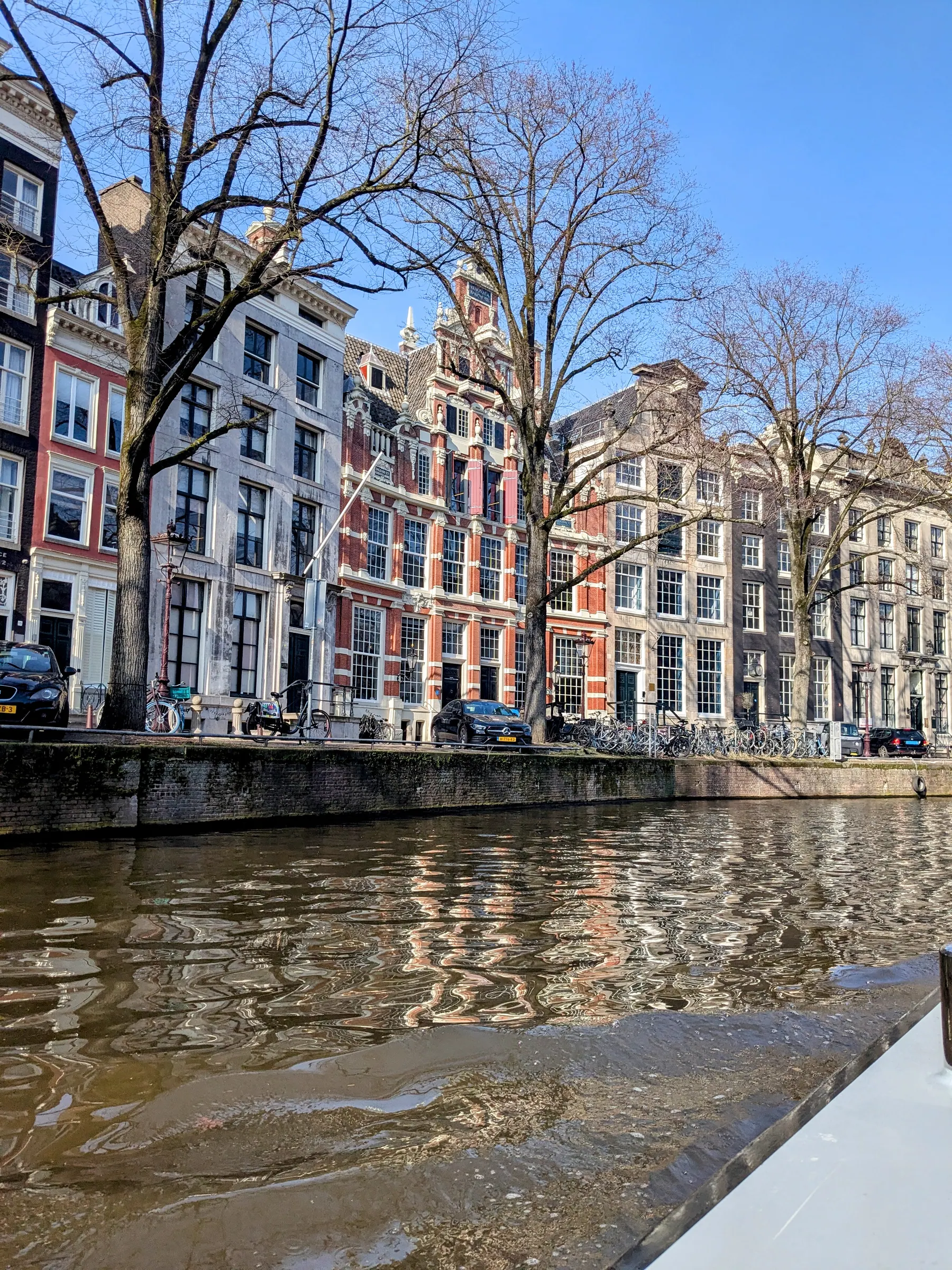
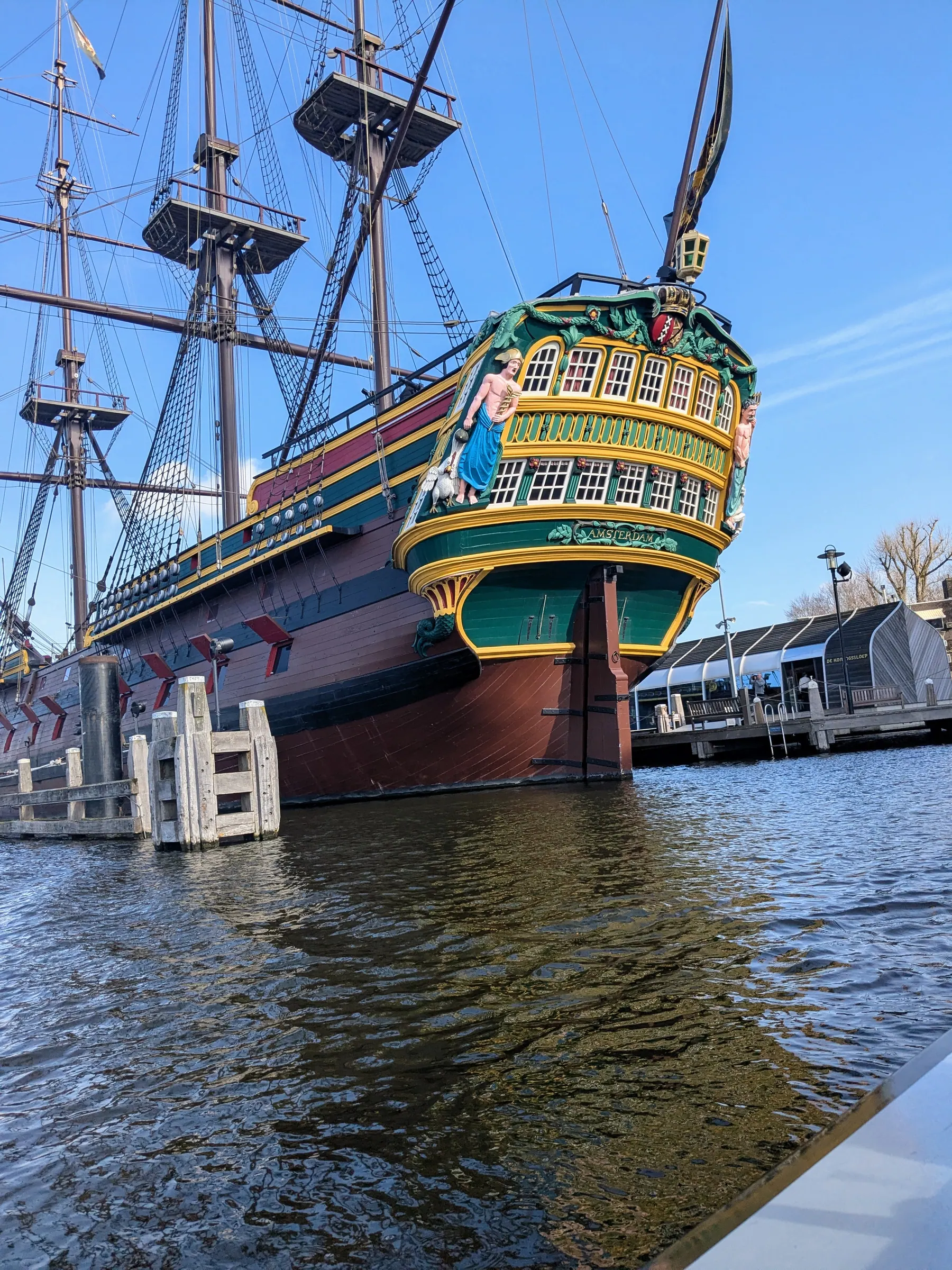
From there we went straight for the canal boat trip - partly because we were still tired and the idea of sitting for an hour sounded perfect. It was a daytime tour through Amsterdam’s famous canal network, the guide quickly pointing out landmarks as we drifted past. An hour wasn’t enough - we both wished we could have stayed on longer. But as an introduction to the city, seeing Amsterdam first from the water is the perfect way to start. The tour was 12.50 EUR per person.
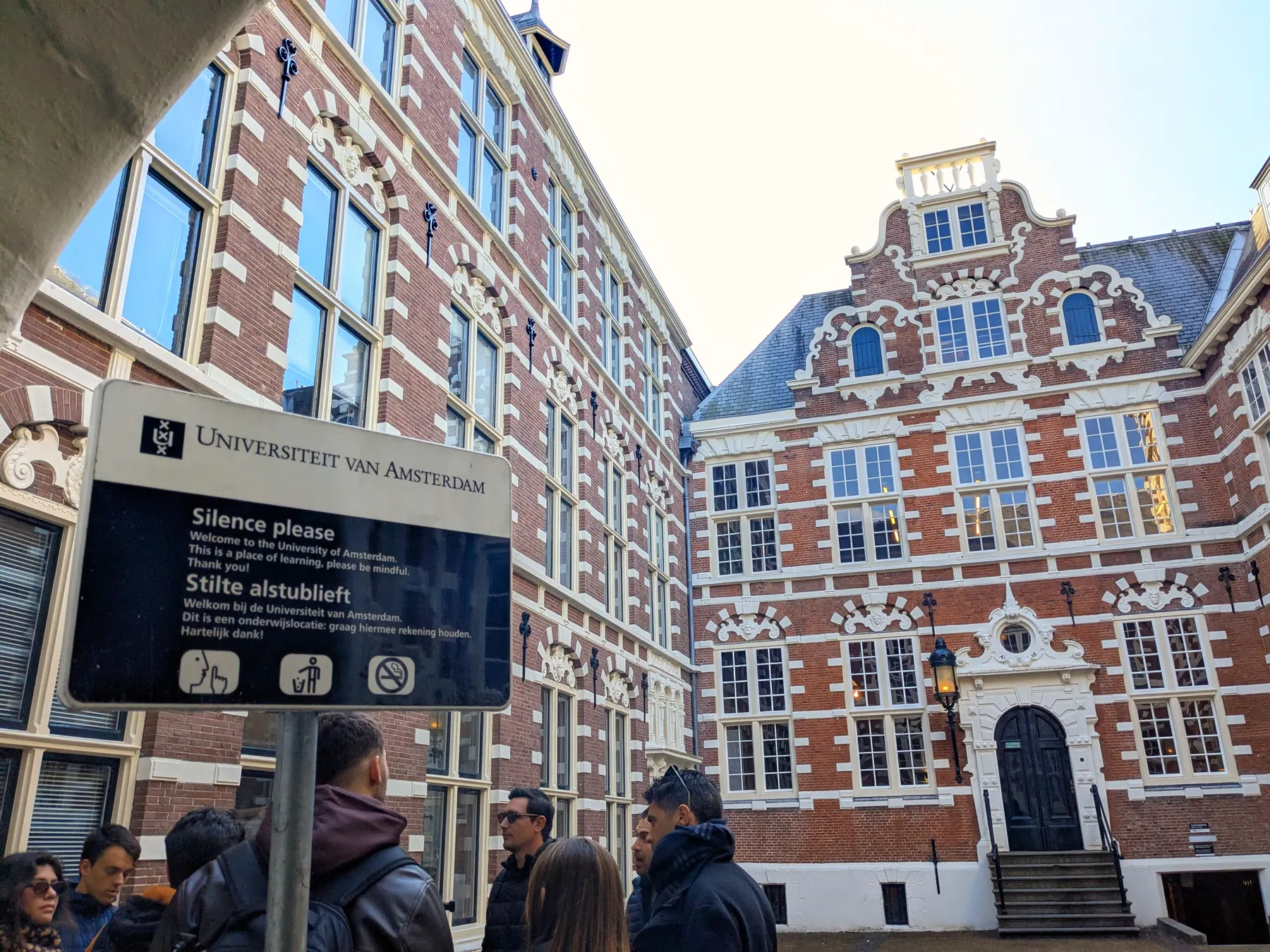
After the boat tour we joined a free walking tour booked through Guru Walk - we chose the guide with the most and best reviews. Our guide was as tall as a Dutch person should be, a history-obsessed local who had studied history and clearly loved every opportunity to share it. The tour lasted around two and a half hours.
Our guide wasn’t speaking much about Amsterdam’s notorious red-light quarter. Could it be because locals are a bit drained by the popularity of this quarter?
Two things stood out:
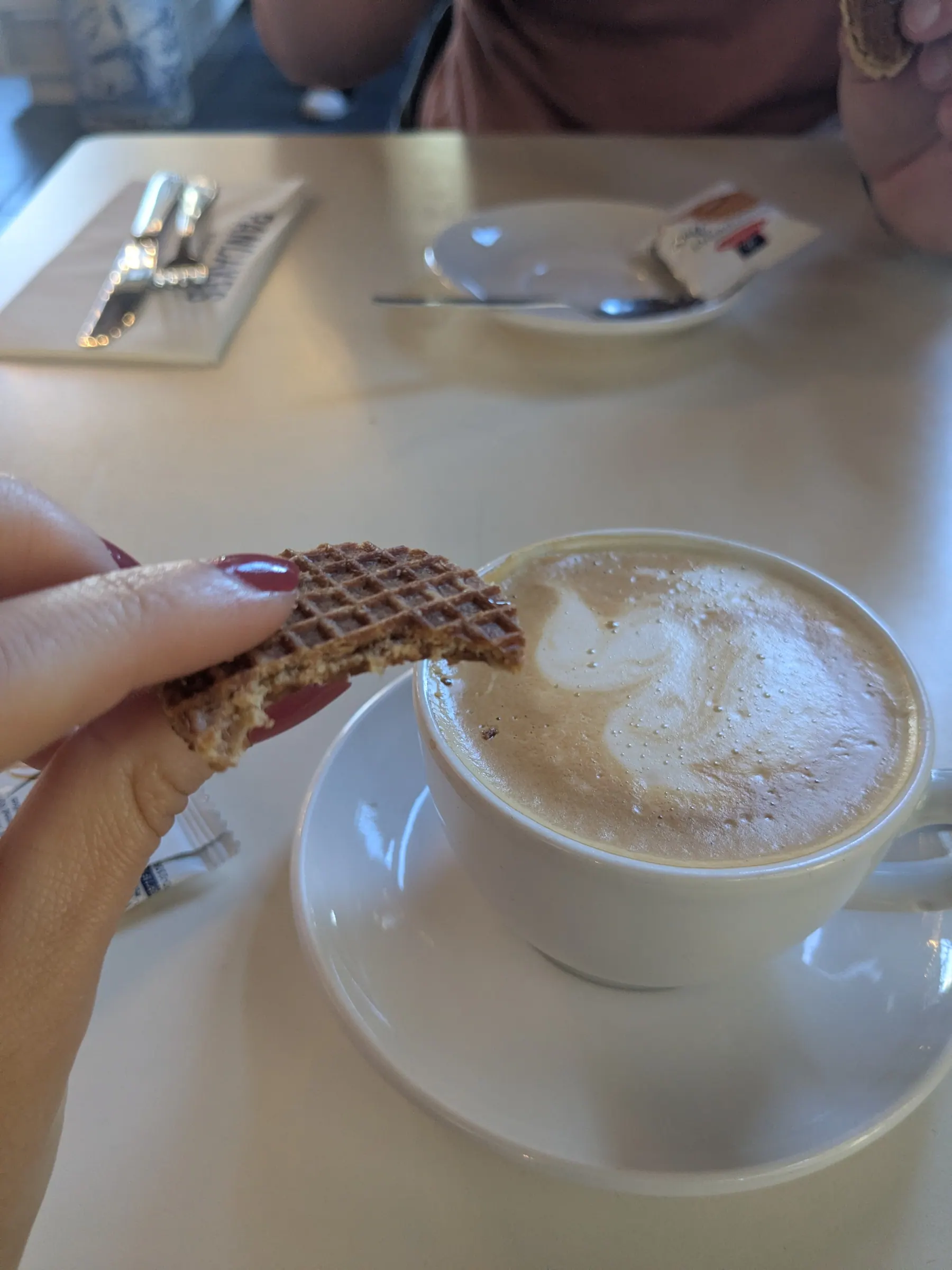
The stroopwafel truth. Every small shop in Amsterdam’s tourist centre claims to be the original stroopwafel bakery - the oldest, the most authentic, the first. Our guide laughed and pointed out that most were souvenir stores just a year ago. The truth? You can buy stroopwafels in any supermarket, same quality, fraction of the price. Don’t pay tourist prices for something you can grab at Albert Heijn for 2 EUR.
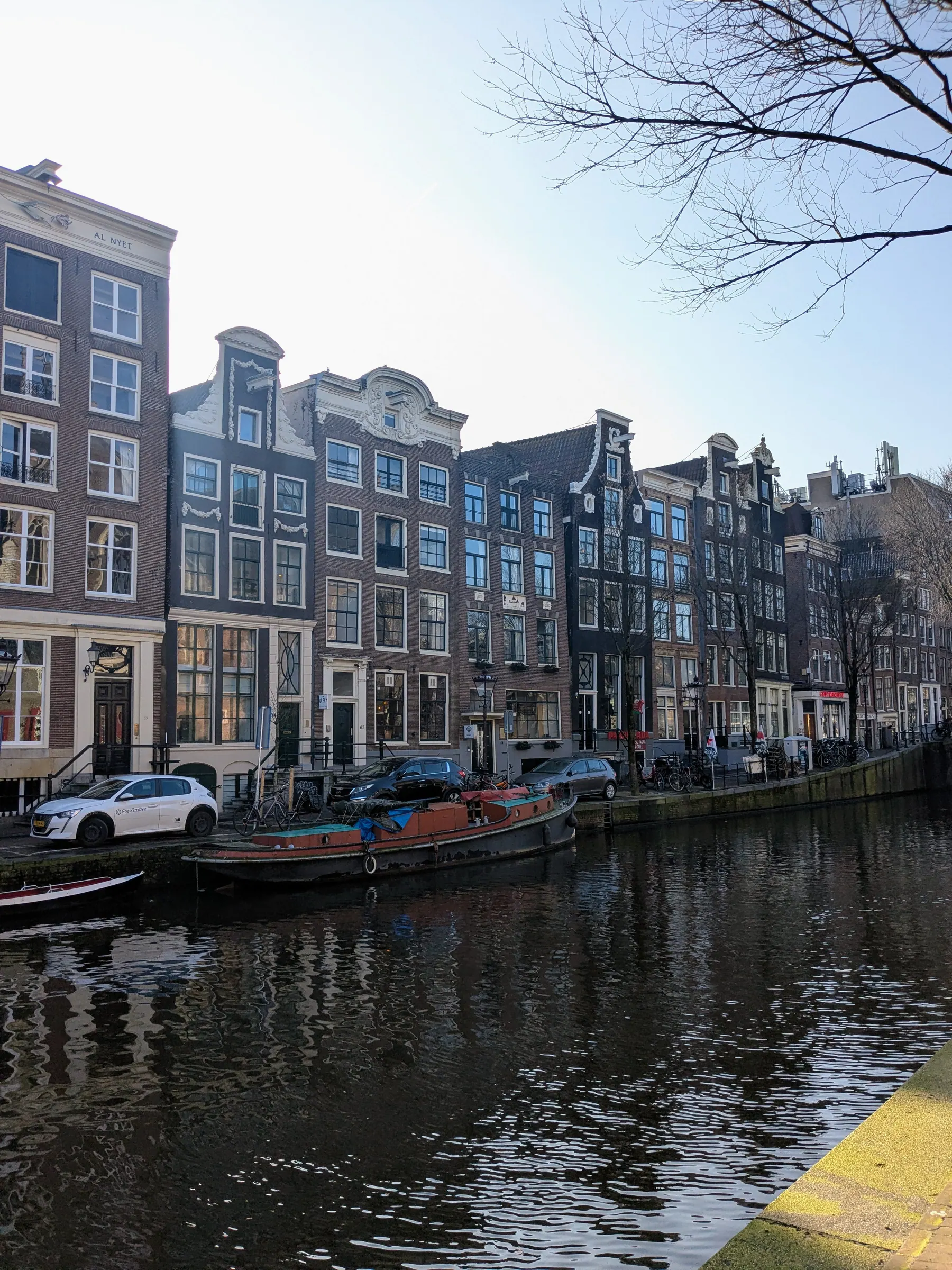
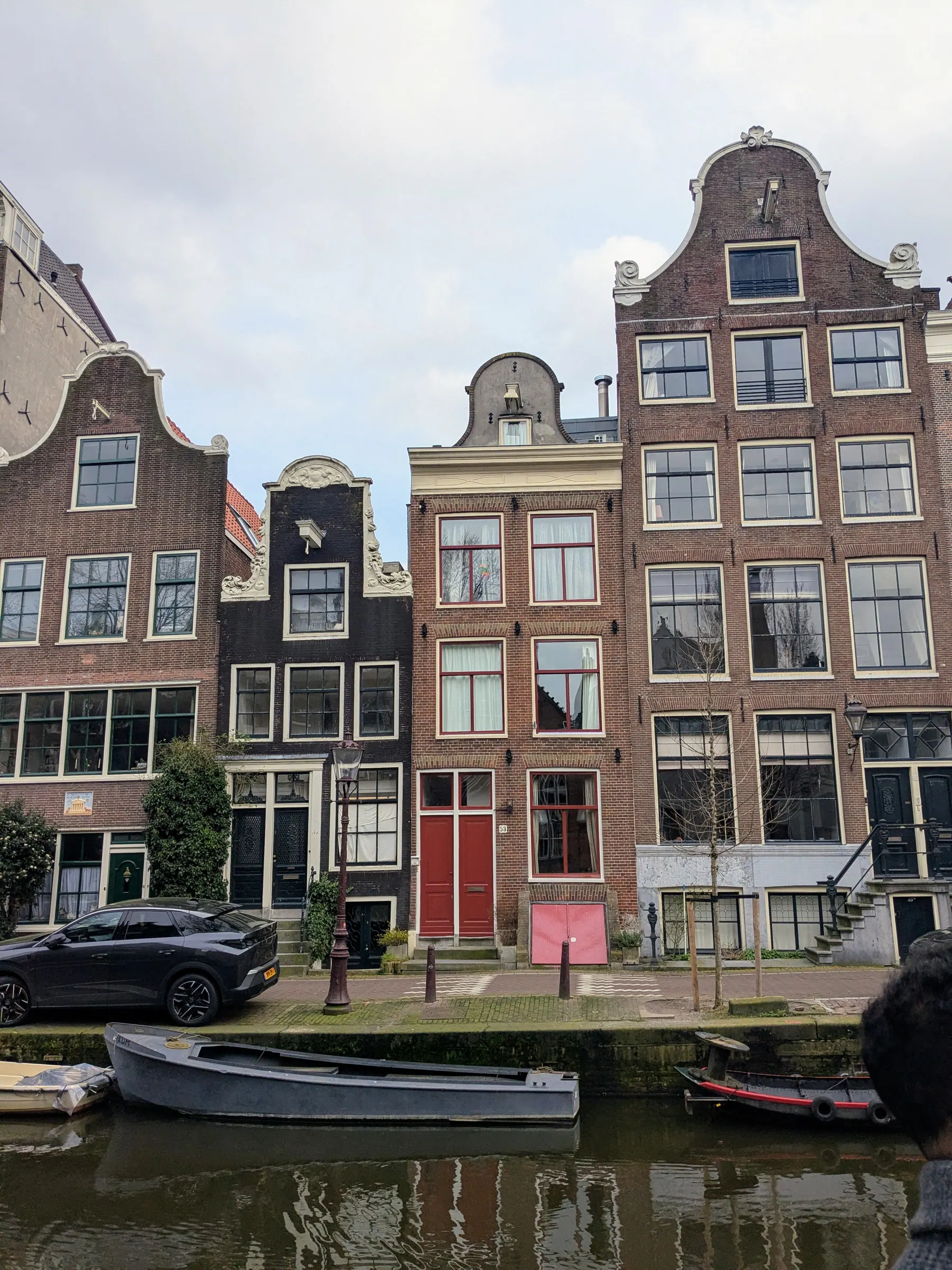
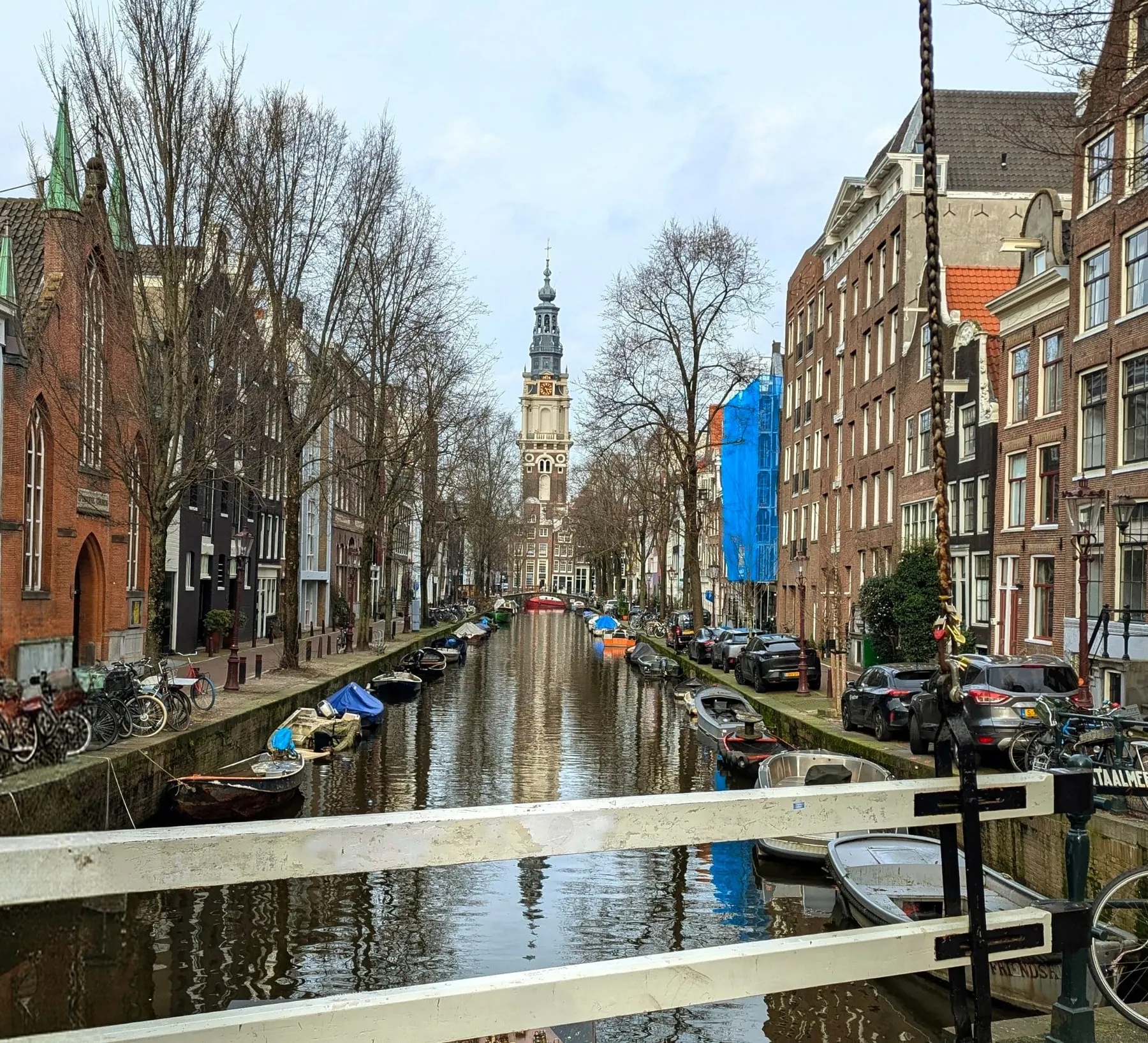
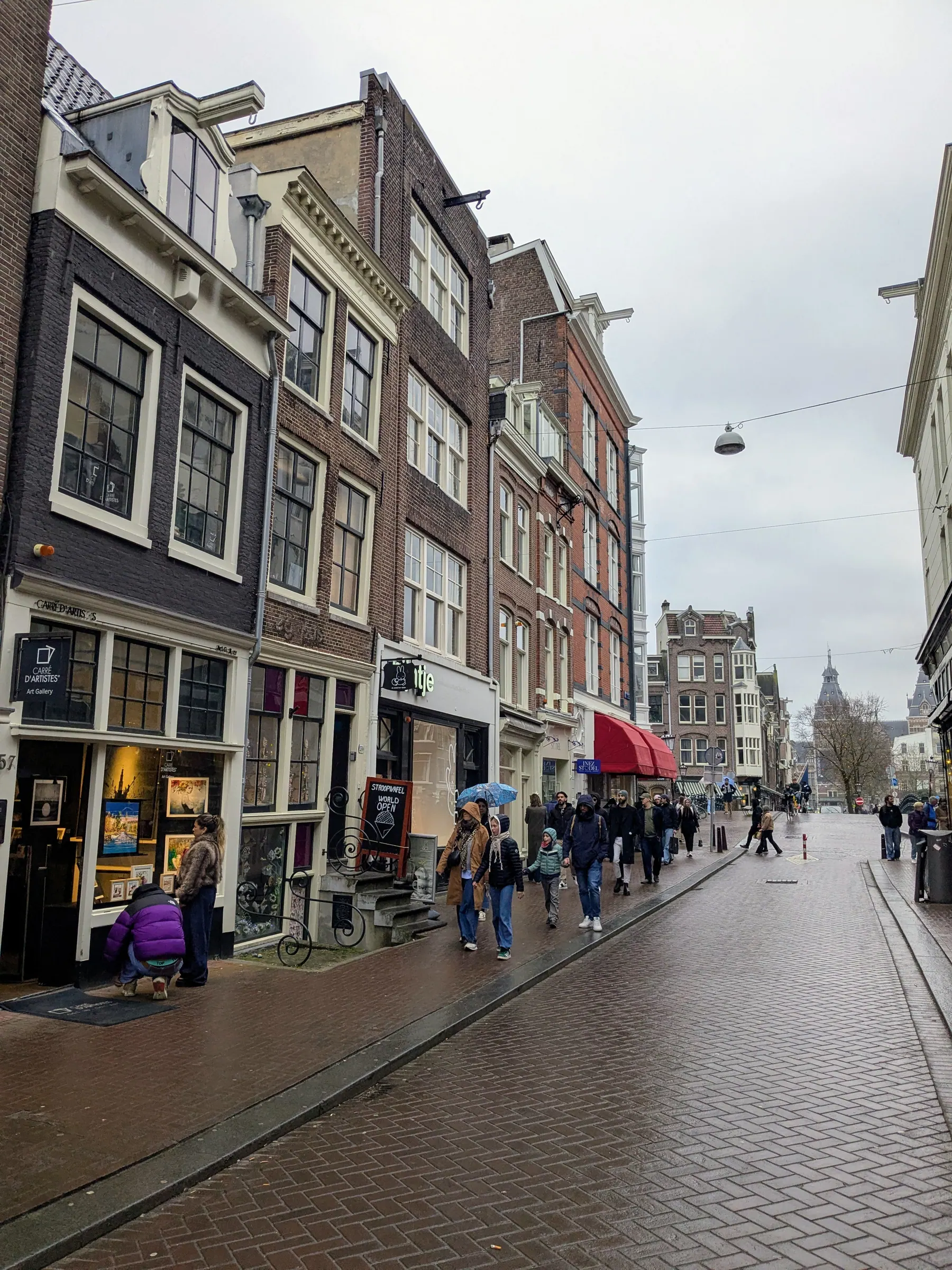
The leaning houses. Look up as you walk around Amsterdam and you’ll notice that almost none of the canal houses stand completely straight. Some lean forward, some sideways - like rows of books slowly tipping on a shelf. Amsterdam was built on a swampy delta where the ground consists of soft peat and clay before reaching stable sand. Early builders drove long wooden poles deep into the earth as foundations from Scandinavia. Over centuries, as water levels shifted and wood was exposed to air, the poles rotted, causing buildings to lean, sink and tilt in various directions. Some leaning was even intentional - until the 19th century, regulations required houses to lean forward to allow goods to be hoisted to upper floors without damaging the facade. The result is a skyline that looks slightly crooked in every direction - and is all the more charming for it.
After the tour we finally headed to Amsterdam Noord. On our way to the ferry we stopped at a small kiosk for fries with lemon mayo - simple, local and tasty.
In the evening we visited Anne Frank House - one of the most powerful experiences of the trip. Book well in advance - even in February, low season, we booked two weeks ahead. In summer you’d probably need months. Tickets cost 16.50 EUR per person and the visit takes around 90 minutes. No photos can be taken inside.
Walking through those small, hidden rooms where Anne Frank and her family lived in hiding for over two years, it’s impossible not to feel deeply moved. What struck me most was the determination of that young girl - the circumstances they endured, the tiny space shared between so many people, and the devastating unfairness of how their story ended. The museum handles it with enormous care and respect. It stays with you long after you leave.
After Anne Frank House we were completely exhausted - we’d been awake since 5:30 am. A quick snack for dinner and an early night. Good night.
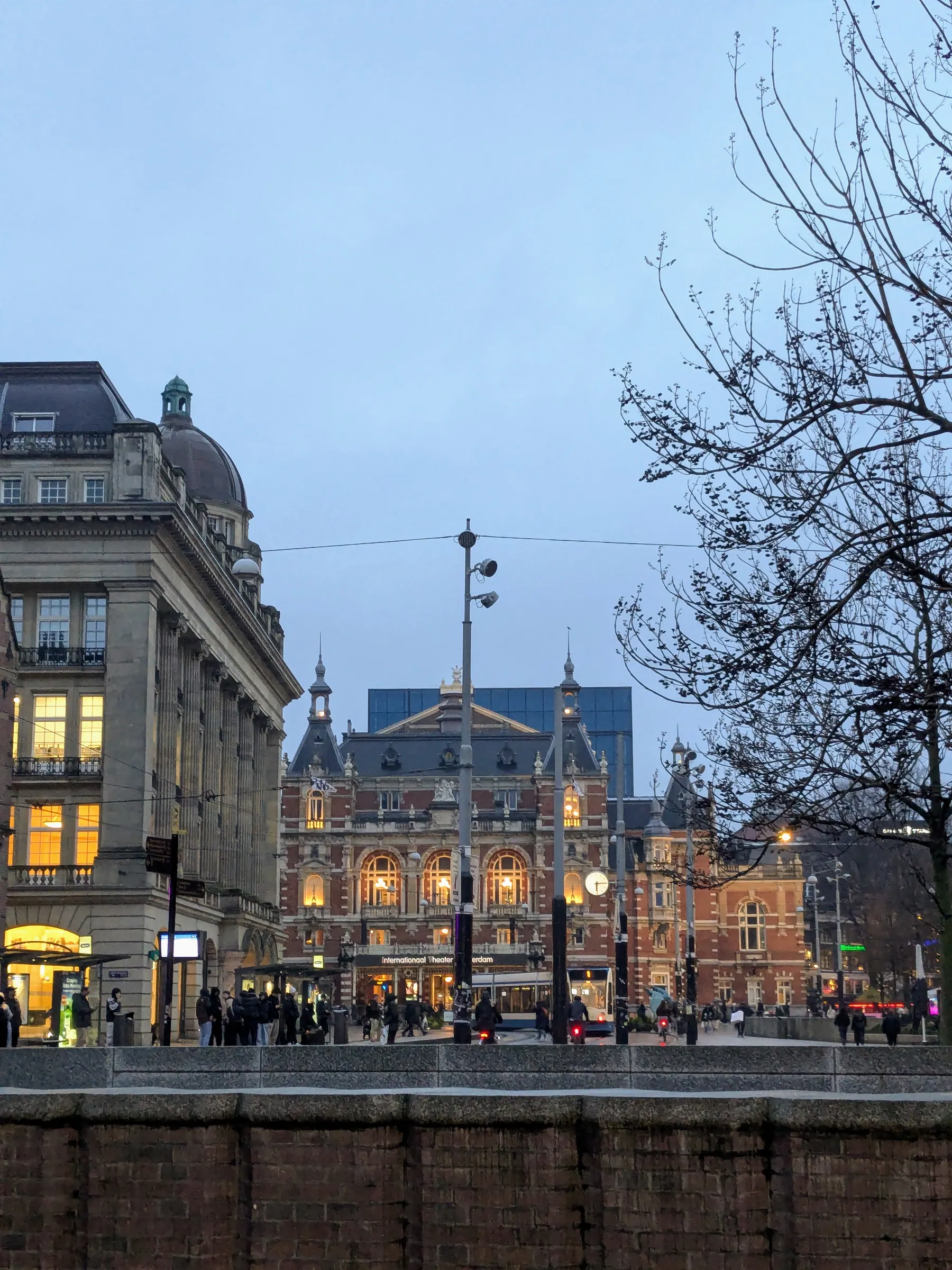
Day 2 - Markets, Museums, a Gallery Street and the Red Quarter
We started the second day with a big breakfast at the hotel before heading to explore Noord’s local market in the morning - quiet, unhurried, entirely local. We were almost certainly the only tourists there. The kind of market where nobody is performing for visitors - just neighbours buying their groceries. A small but genuinely authentic start to the day.
In the centre we began with De Pijp - a stylish, modern neighbourhood with a very different feel from the historic centre. At its heart is Albert Cuyp Market - one of Amsterdam’s largest and most local street markets, stretching along a long open street with a bit of everything: Dutch specialities, even kebabs, street food from various cuisines, clothing, household items. We didn’t buy anything but enjoyed wandering through the energy of it. After the market we explored the surrounding streets - numerous chic coffee shops, interesting independent clothing stores and several second hand shops that caught my eye. Given more time I’d go back and spend a proper few hours there.
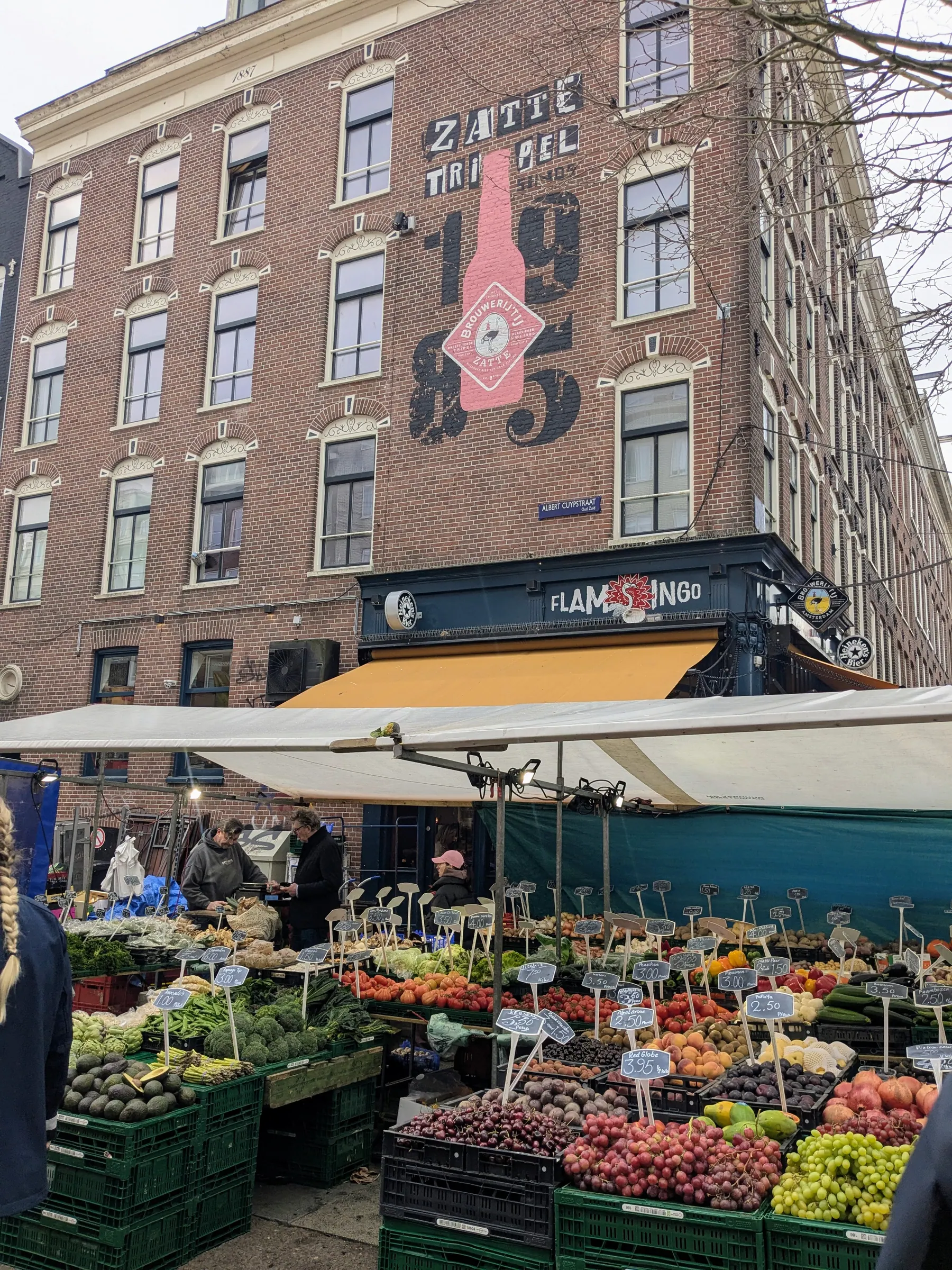
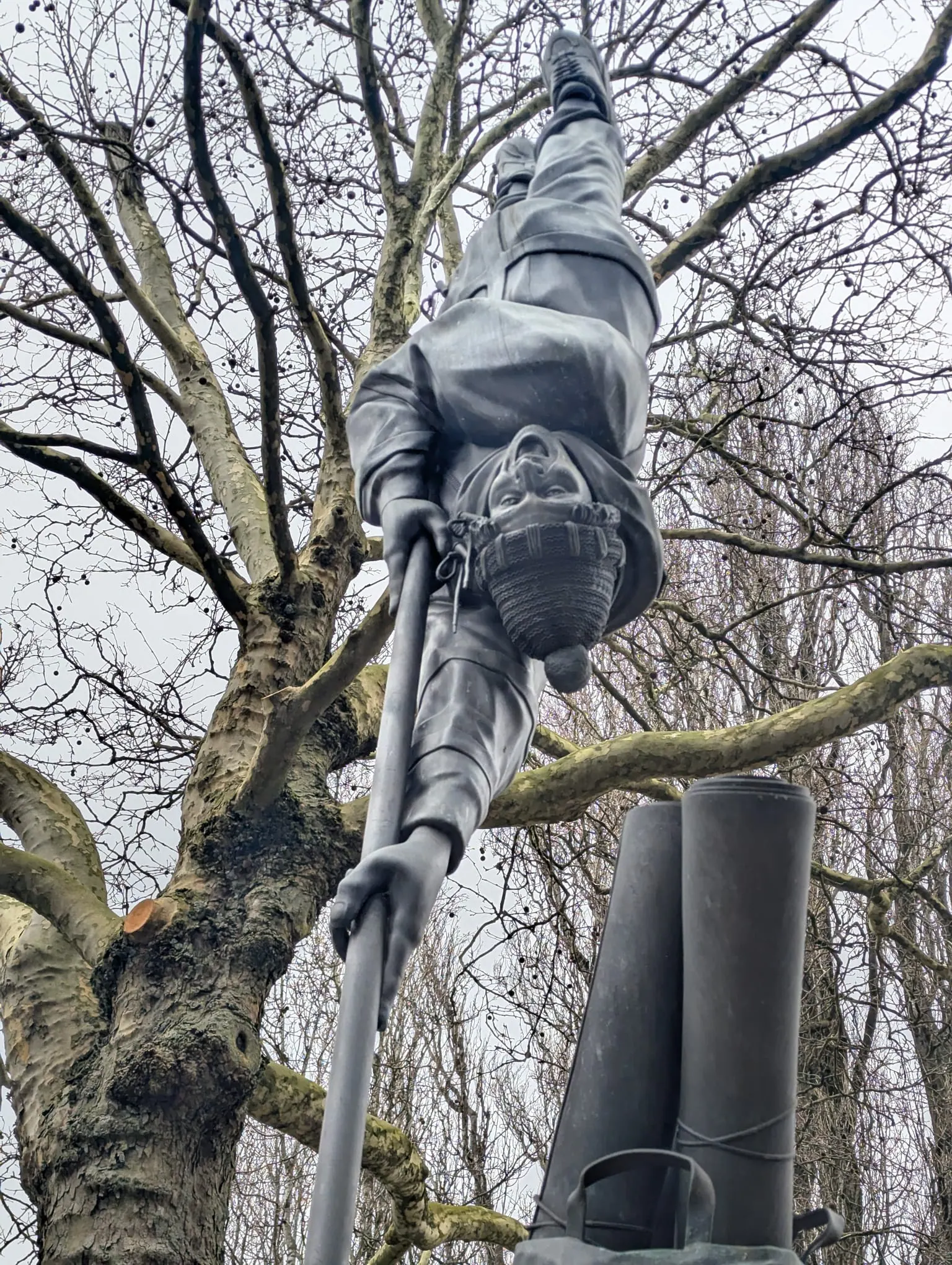
From De Pijp we headed toward ARTZUID - a park area where a sculpture exhibition was supposed to be taking place. We arrived to find it wasn’t on during our visit. These things happen. We adapted and headed to the museums.
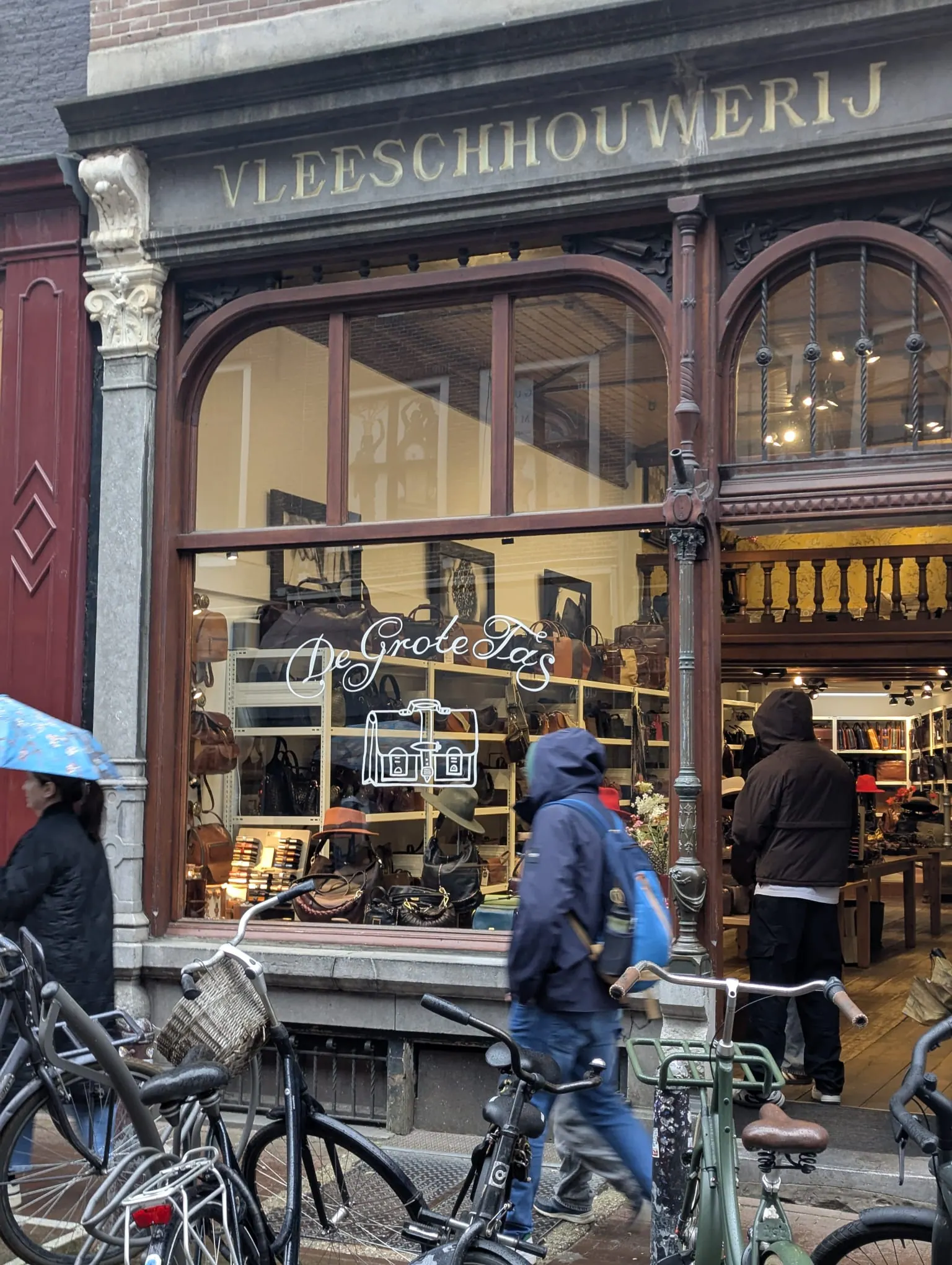
Spiegelstraat - an art gallery street close to the main museum quarter - was a highlight. Lined with antique shops, art dealers and independent galleries, we went inside several and ended up buying a small art print - a colourful, slightly distorted painting of Amsterdam’s canal houses, the kind of image that captures the city’s crooked charm perfectly. A meaningful souvenir rather than a fridge magnet.
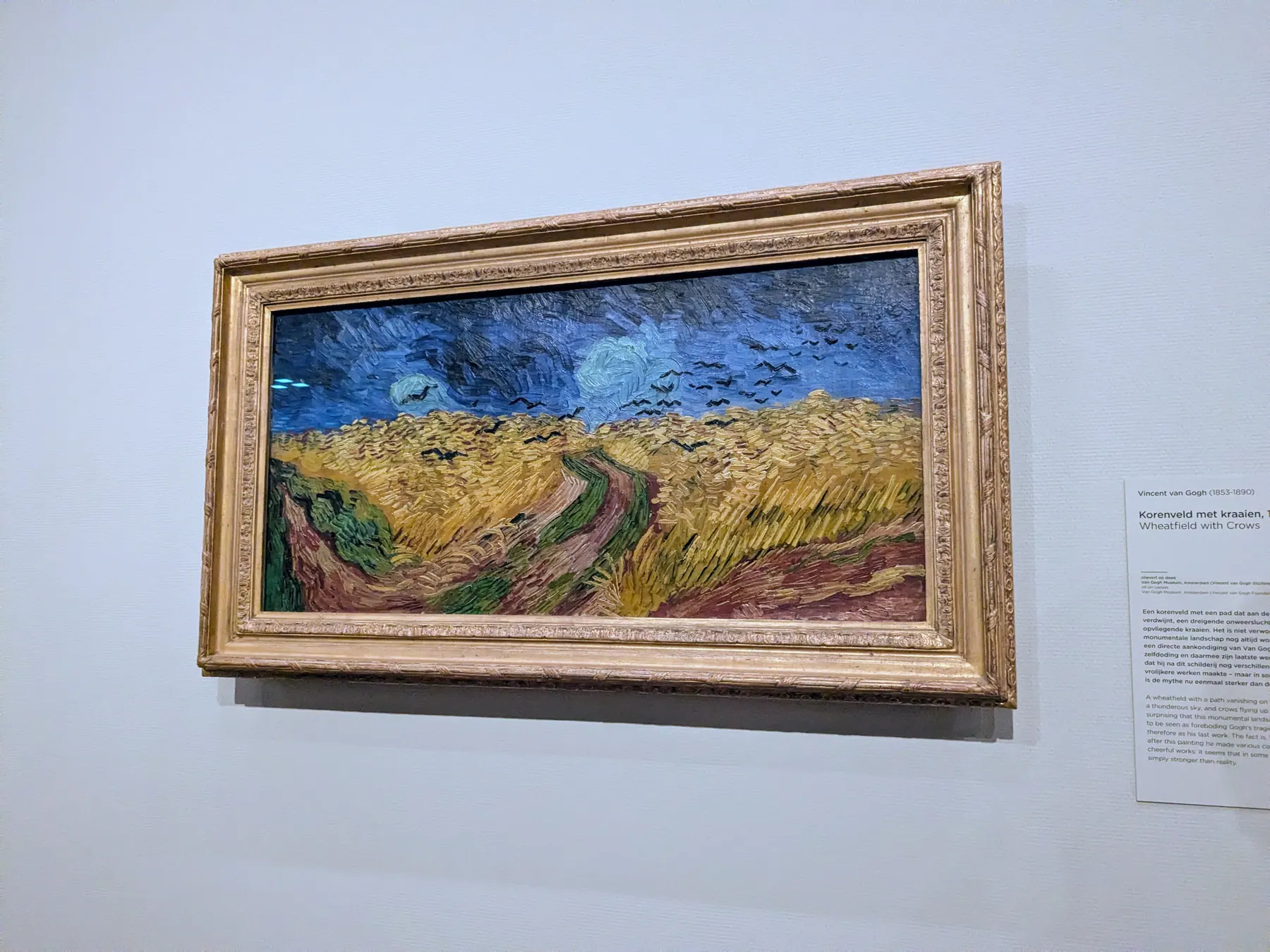
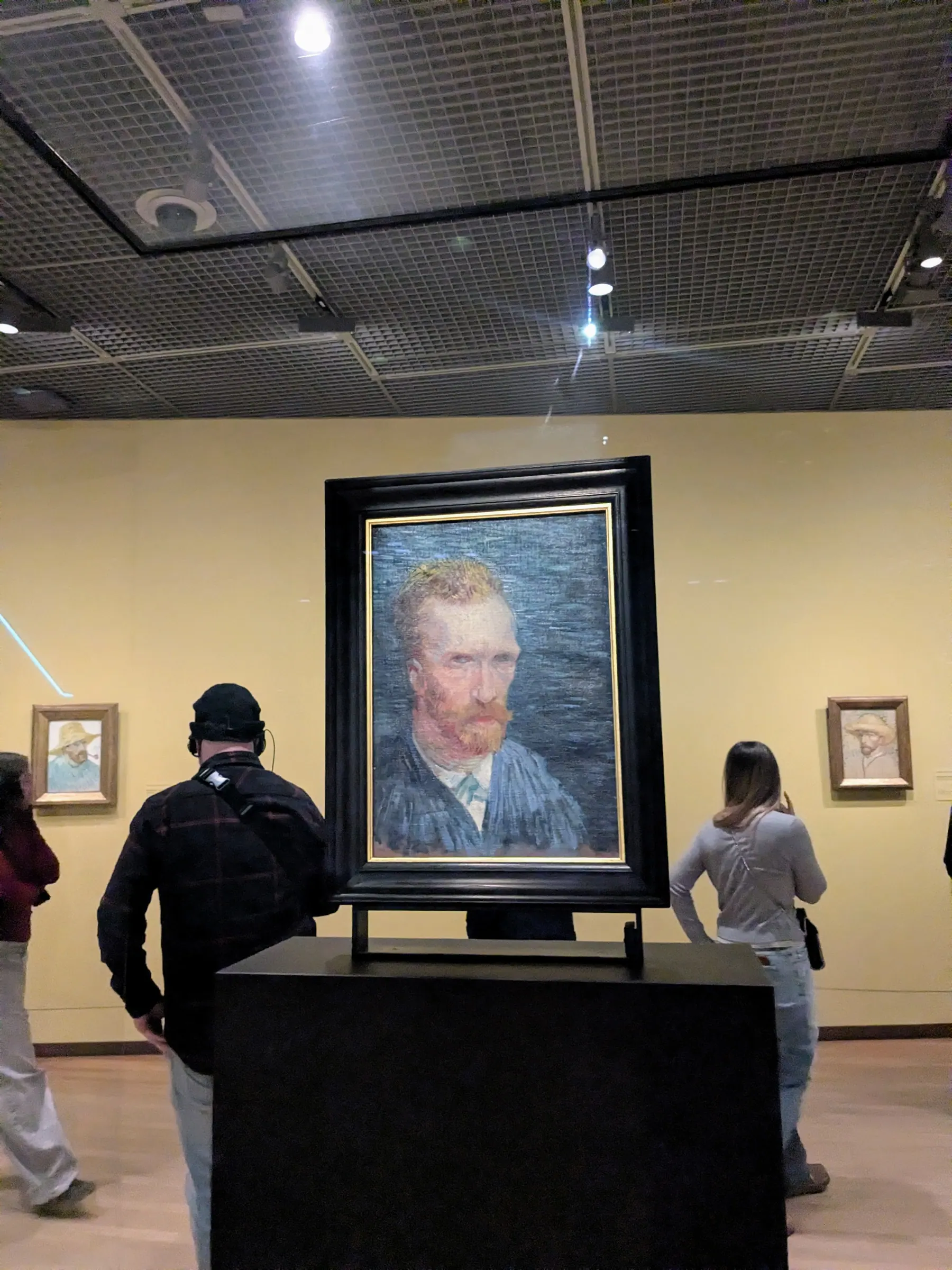
The Van Gogh Museum was unmissable - tickets cost 25 EUR per person, book in advance. Choose your time carefully though: we went at around 3:45 pm without realising the museum closes at 6 pm, so the visit felt slightly rushed. Go in the morning if you can. The paintings are extraordinary, but what surprised me most was a section where you could smell different scents - a fragrance that smells of summer, one that smells of joy. It sounds unusual but it was a moving experience. During our visit there was also a special exhibition - Yellow: Beyond Van Gogh’s Color - which added an extra dimension. Another museum that we heard is worth visiting is Rijksmuseum, but we didn’t choose it because it’s a large museum, and we preferred something smaller due to limited time. Van Gogh is a Dutch artist so we thought visiting this museum is a must.
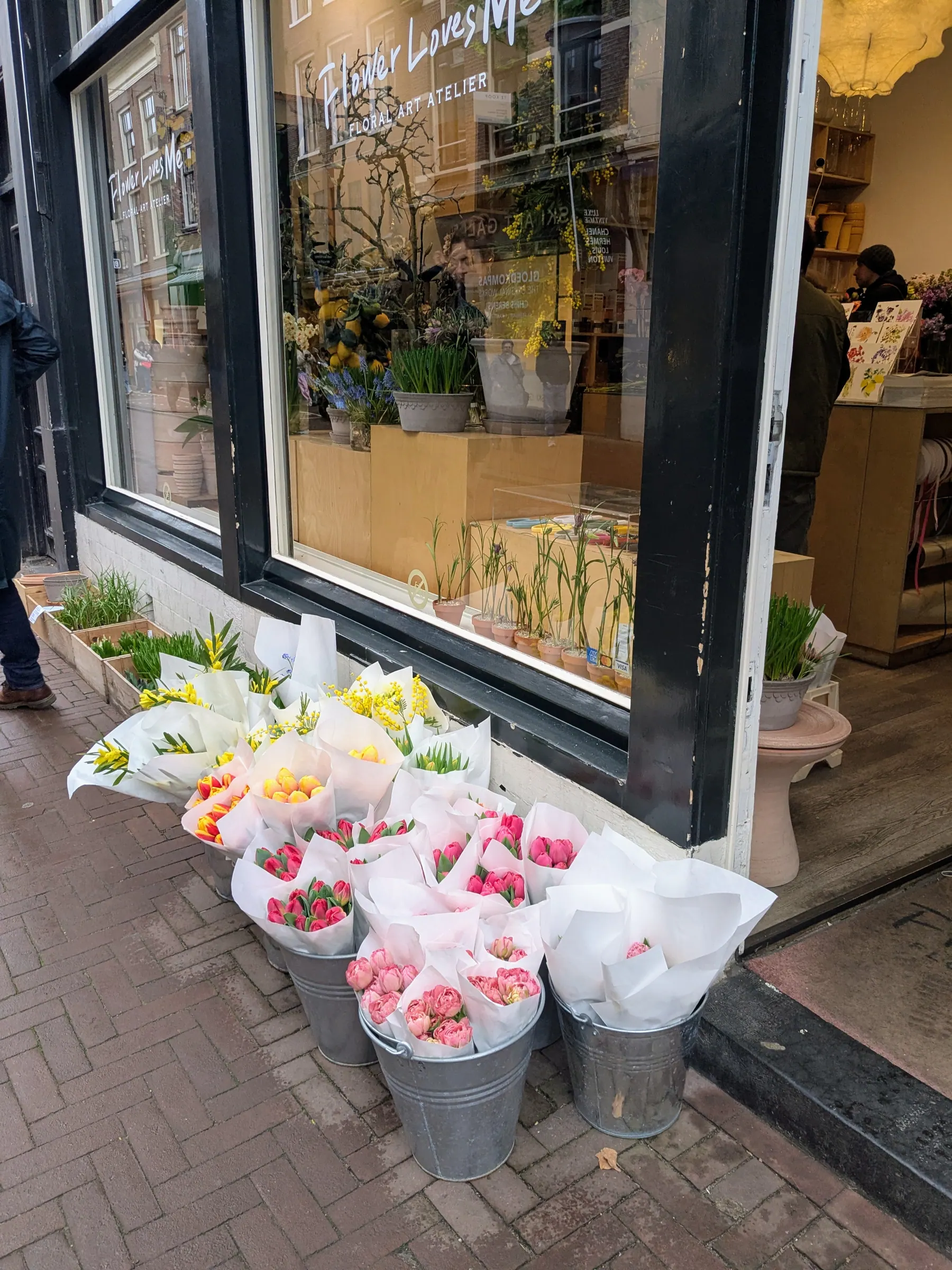
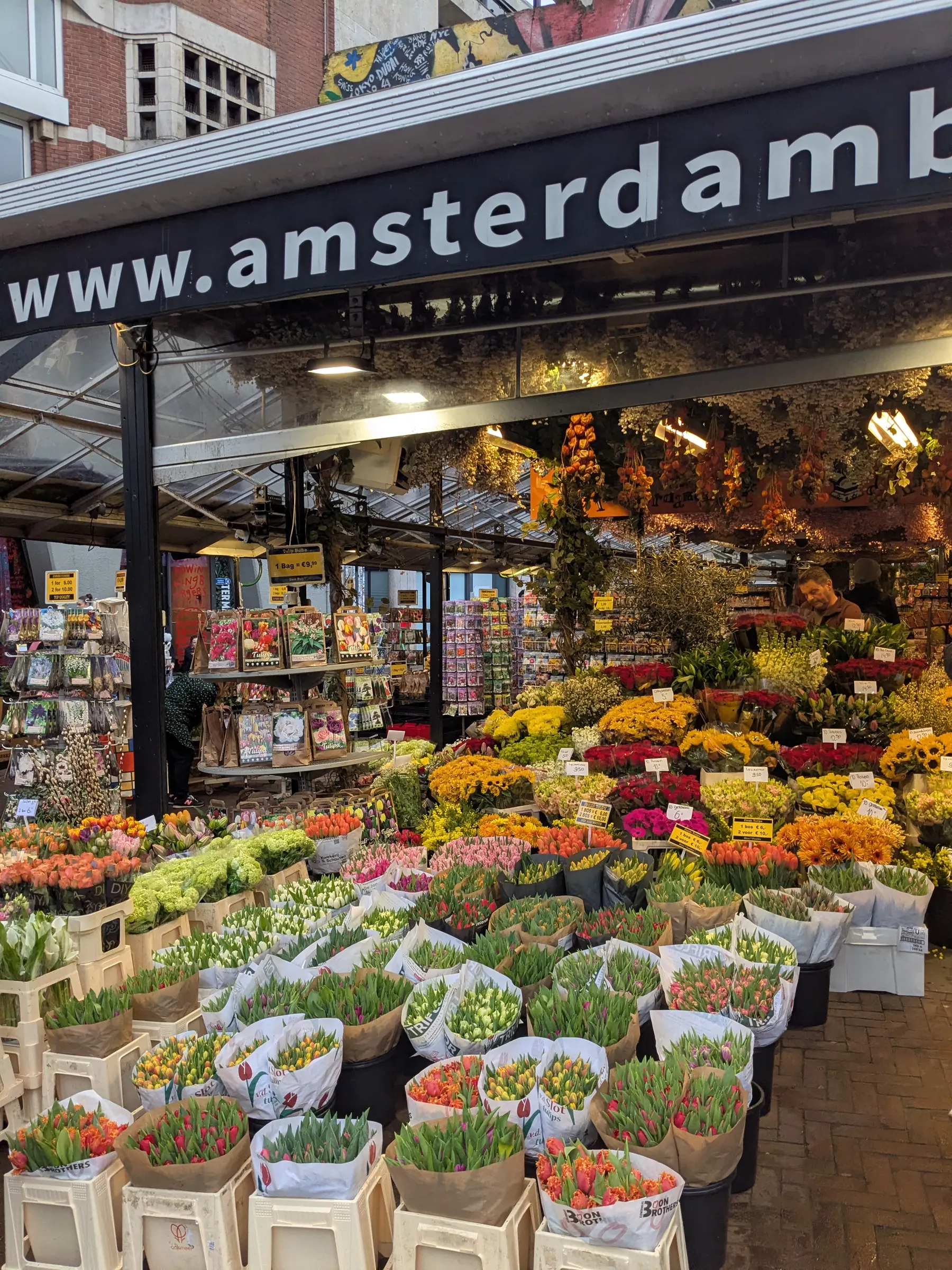
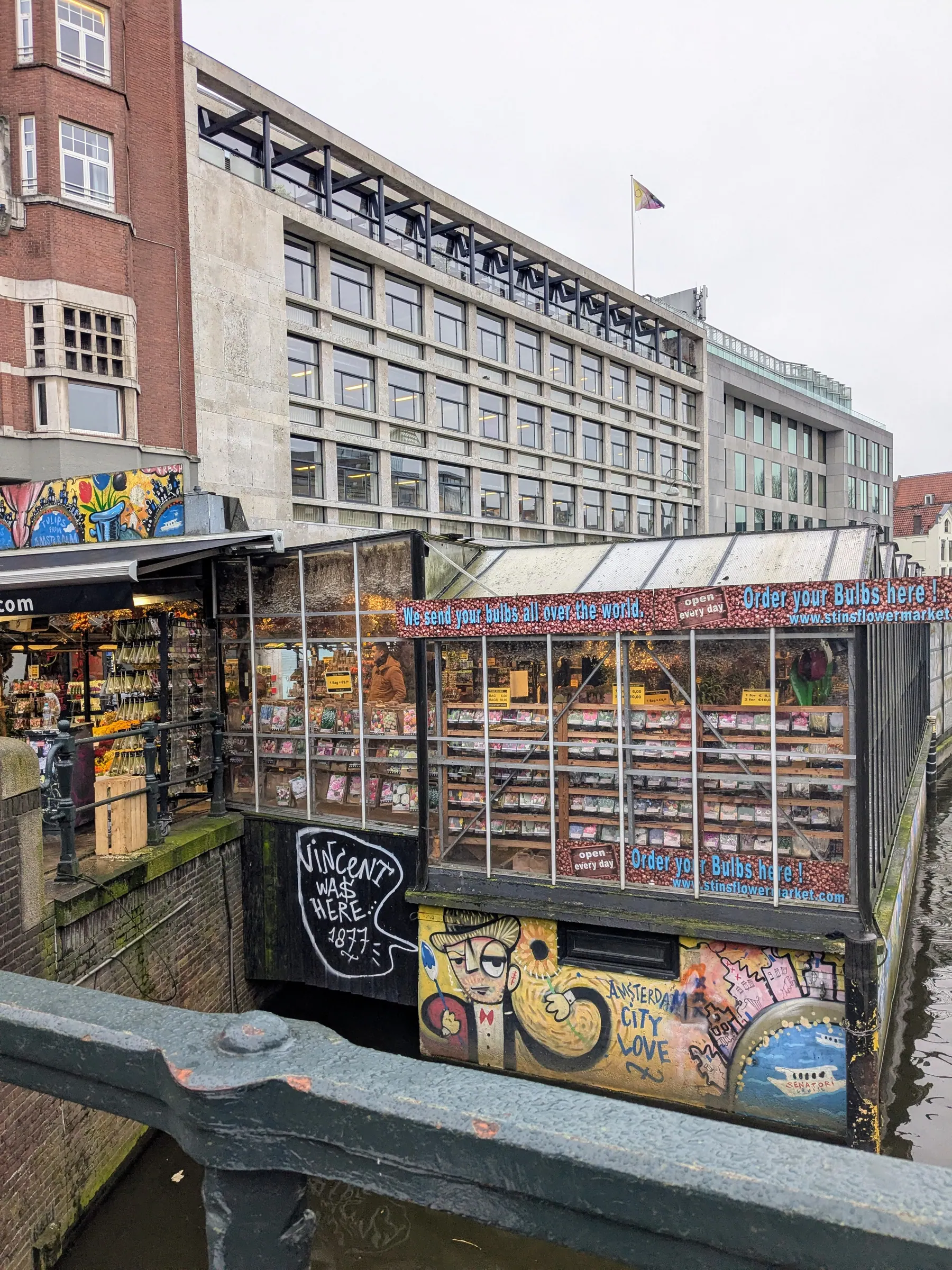
Afterward we visited the Floating Flower Market on the Singel canal. Honest verdict: I expected something more dramatic. While technically on the canal, it’s fully connected to the street and doesn’t really give the sensation of floating. Quite touristy - seeds with descriptions in English, souvenir postcards. Worth a quick walk through but manage expectations.
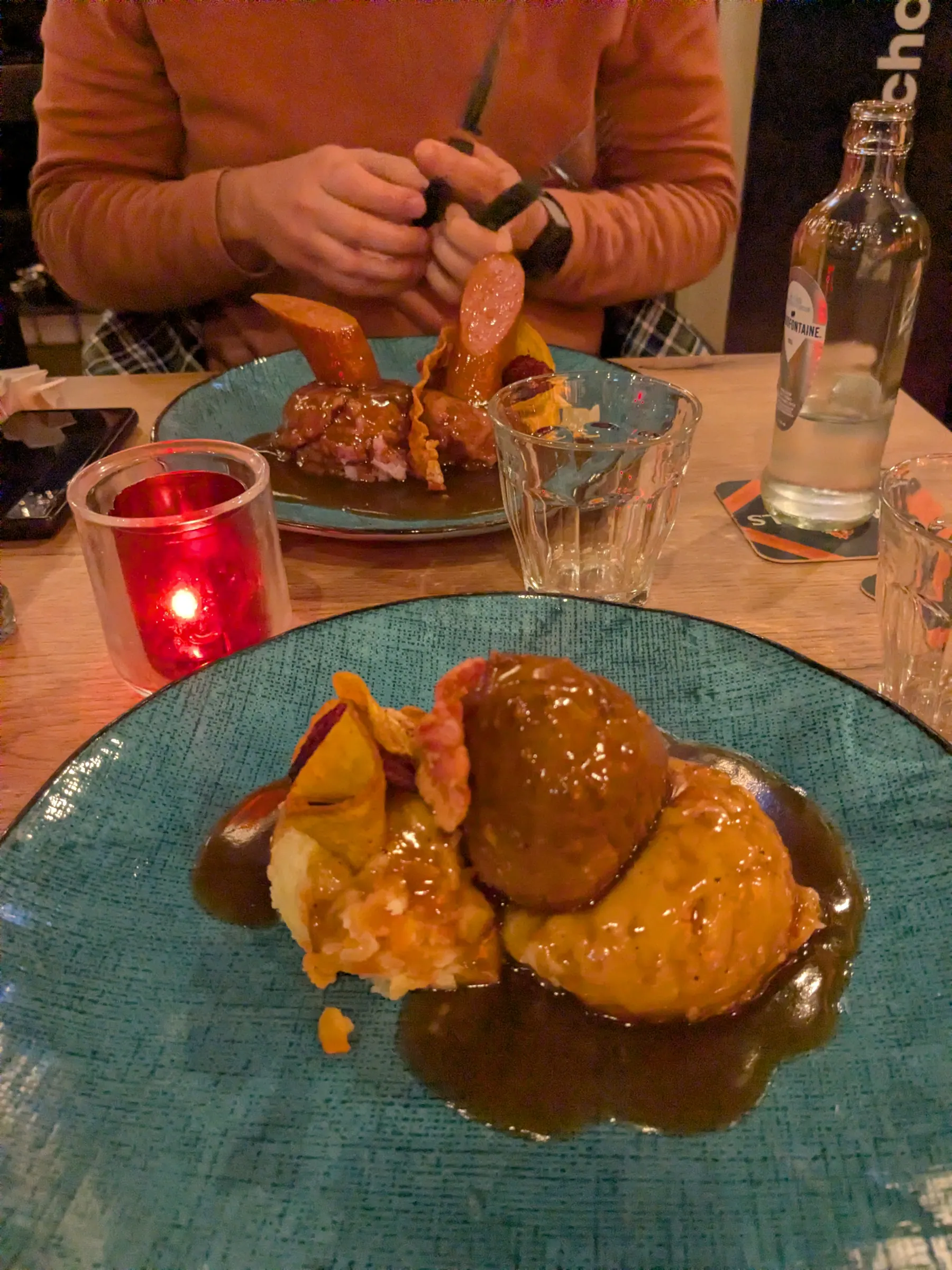
For dinner we tried something traditionally Dutch at Hollandse Pot - a restaurant in the centre dedicated to classic Dutch cuisine. We ordered stamppot - smashed potatoes combined with sausage, meatball, dried apple and a rich sauce. Warming, filling and tasty. Around 18 EUR per person. If you want one authentic Dutch meal in Amsterdam, a solid choice.
As night fell we headed to the Red Light District - and the city transformed completely. The main street was packed with crowds, the energy electric and slightly chaotic. The girls in the windows waving to potential clients made for an unusual scene - raw in a way that’s hard to describe without seeing it. It’s one of those Amsterdam experiences that’s difficult to have an opinion on and easy to feel conflicted about.
We did find ourselves wondering: with all those canals running through the city and coffee shops on every corner - how does anyone avoid falling in after dark? It’s one of Amsterdam’s great unanswered mysteries. Perhaps the cyclists are simply too experienced to wobble.
A word of caution about Amsterdam’s famous space cakes. We tried one that evening. For some people the experience is fun and relaxing. For me it turned paranoid and deeply unpleasant - not the fun evening we had planned. My honest advice, especially for anyone without experience: proceed with extreme caution, start with a very small amount and do thorough research first. It’s legal and everywhere, but it affects everyone differently and the unpleasant side can catch you completely off guard.
Day 3 - Riding Out the Storm
After the full day before, we were tired - so Day 3 was always going to be a slower, calmer one. Which turned out to be exactly right, because Amsterdam had other plans anyway.
Day 3 brought the worst weather of the trip. It was brutal - quite heavy foggy rain, the kind that makes going outside feel pointless. And in a way, Amsterdam showed both its faces in three days: a sunny first day that filled you with energy and made you want to see everything, and a rainy third day when all you wanted was to stay inside with a warm coffee. Both are real Amsterdam.
We visited Moco Museum - dedicated to modern and street art including works by Banksy. The museum felt quite small for the price and we left feeling slightly underwhelmed. Worth it for dedicated street art fans, but perhaps not essential for everyone. Also there is a part of the museum downstairs with rooms where there are mirrors with shiny elements and pink walls, and people were taking pictures. Instagram material for those who enjoy such things. A tip for Moco Museum is, if available, buy tickets online. There were people working for the museum standing outside and showing a QR code to scan to buy online. Buying tickets in the museum was around 25 EUR; buying online cost us only around 15 EUR.
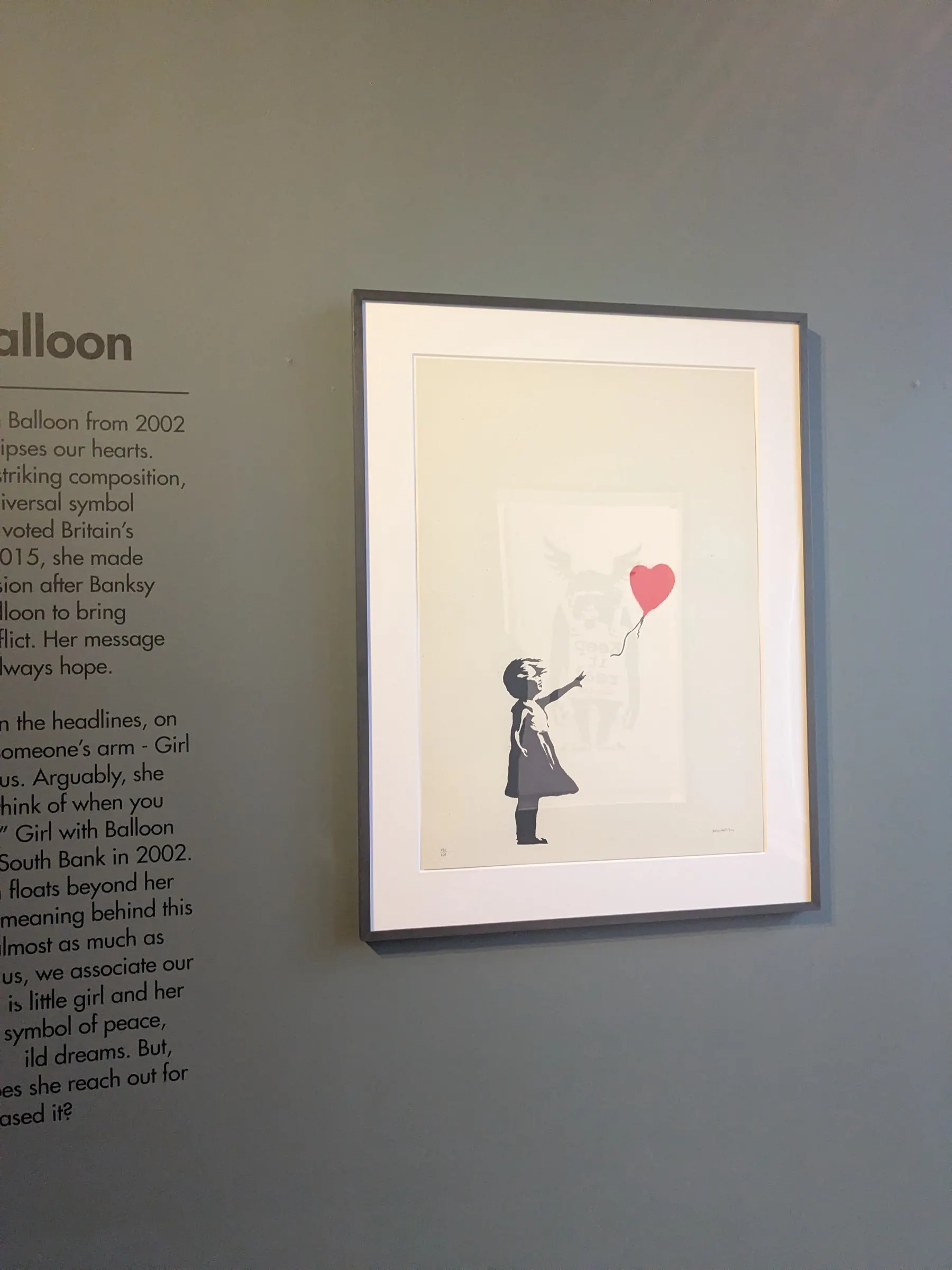
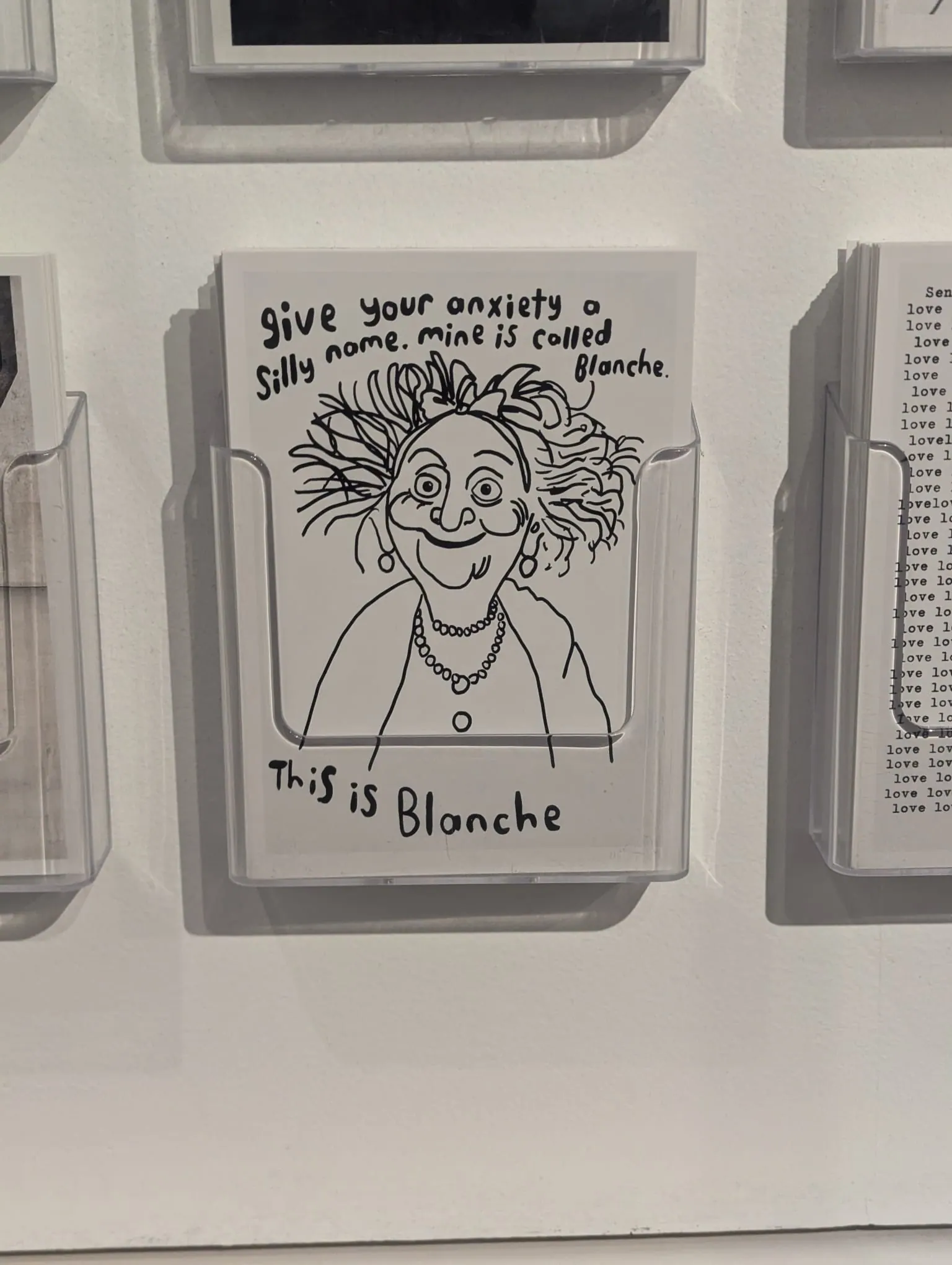
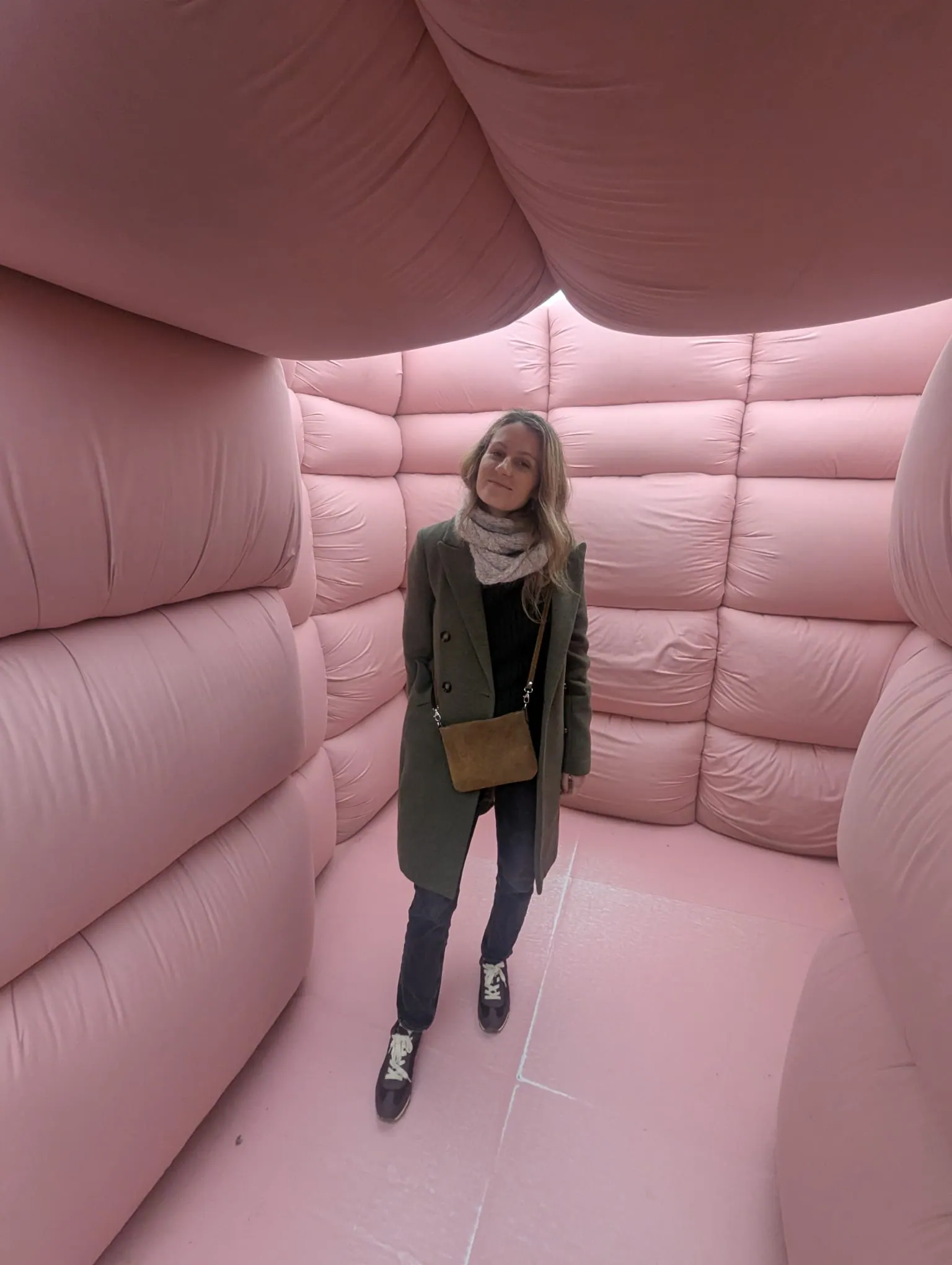
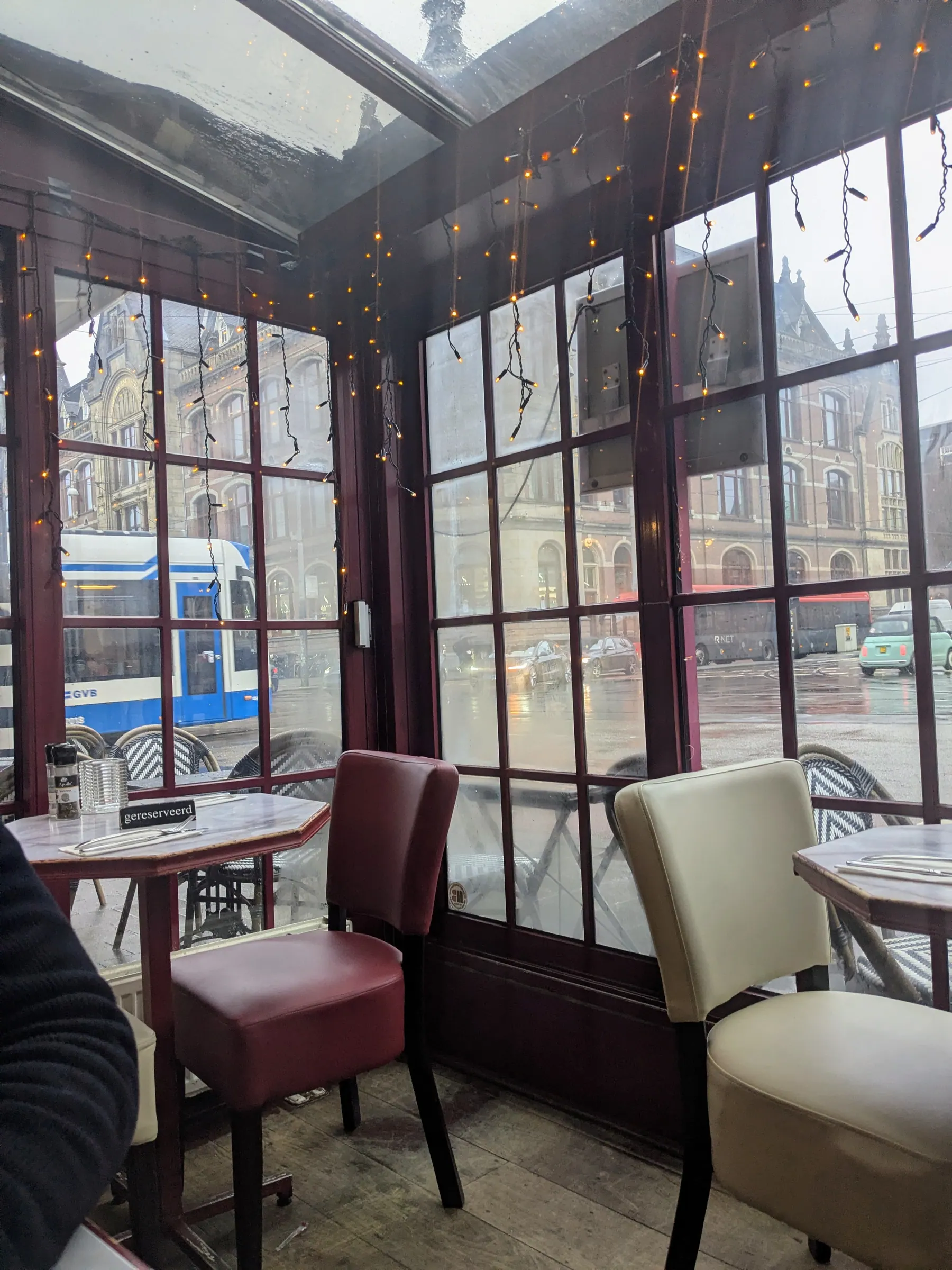
We wandered briefly around the area despite the weather, then went into a cafe and ordered hot chocolate - sitting by the window watching the rain streak down the glass outside. A genuinely cozy moment that felt very Amsterdam in its own quiet way. Then we headed to the Openbare Bibliotheek Amsterdam (OBA) - Amsterdam’s stunning public library by the canal. Entry is completely free. The library is large, light-filled and full of plants, with views over the water from the upper floors. A beautiful space that made us wish our local libraries looked like this. A perfect rainy day escape - and an unexpectedly lovely way to end the Amsterdam trip.
In the evening we headed to the airport.
Was Amsterdam Worth It in February?
Amsterdam is unlike any other city I’ve visited in Europe. And I mean that in the best possible way.
It isn’t a typical city with the same familiar composition - grand boulevards, tall buildings, a predictable tourist centre. Here the canals are everywhere, woven into the daily life, making the whole city feel extraordinary. The centre is remarkably compact and walkable, without the big city overwhelm you get in Paris or London. It feels more cozy for a capital than imposing - intimate even, despite being a world capital.
And Amsterdam has genuinely different faces. You can have a quietly romantic evening walking along a canal. Or you can find yourself in the middle of the Red Light District chaos an hour later. A world-class art museum in the morning, a coffee shop on the corner in the afternoon. That contradiction is the point - Amsterdam holds all of it at once without apology.
February is fine - fewer tourists, unpredictable weather, and a city that keeps moving regardless. Pack layers, carry a water bottle and book the big attractions in advance.
Visit Amsterdam because it is an unusual city in the heart of Europe. It will surprise you.
Practical Tips
- Stay in Amsterdam Noord. Local, creative, cheaper and the free ferry is a joy.
- Book Anne Frank House well in advance. Tickets were 16.50 EUR, and in summer you may need to book months ahead.
- Book Van Gogh Museum in advance. Tickets were 25 EUR, and I would go in the morning.
- Carry your own water bottle and find a real supermarket. Tourist area shops are expensive.
- Buy stroopwafels at the supermarket, not tourist shops.
- Take the free walking tour on Guru Walk. Choose by reviews.
- Download Amsterdam's public transport app before arriving. It saves money and stress on trams.
- For a traditional Dutch meal, try stamppot.
- On a rainy day, head to OBA. Openbare Bibliotheek Amsterdam is completely free and beautiful, and they even have sofas where you can relax.
- Visit Spiegelstraat, or the art area in general, for art prints and antiques. A much more meaningful souvenir than anything in the tourist shops.
- Space cakes and brownies: proceed with extreme caution, if at all.
- Consider visiting in spring for tulip season. More crowds, but potentially magical.
- February means fewer tourists but unpredictable weather. Bring layers.
- Noord deserves more time than we gave it.
Have you been to Amsterdam in winter? Drop a comment below - I’d love to know your experience!