
Fez and Marrakech · Fez-Meknes and Marrakech-Safi · Morocco
Fez vs Marrakech: Why Fez Won Our Hearts
Verdict Marrakech overwhelmed, but Fez felt real enough to win.
A personal Morocco itinerary comparing Fez and Marrakech, from medina streets and tanneries to palaces, rooftop cafes and practical tips.
Going to Morocco was something I had been thinking about for a while. Living in Spain, Morocco is quite close, and I know people who went there and absolutely loved it. But somehow I never had the chance to go. Honestly, Morocco was not at the top of my travel list, even though that curiosity about the country kept growing inside me.
What finally pushed me to go was my family. Living in Latvia, they had decided to visit Morocco, so it turned into a kind of unexpected family reunion. Best reason to travel, if you ask me.
My expectations were mixed. Without doubt I was inspired by photos of colourful streets and vibrant culture. People kept telling me about the couscous and tagine, and I had never tried tagine. So I was curious about the cuisine as well. What I did not expect was that Morocco would completely surprise me, and not in the way I imagined. Because the highlight of the trip was not what everyone talks about.
Arriving in Fez: A Different World
I landed at Fez airport, which was small, cozy and gave off welcoming vibes: a refreshing contrast to big airport hubs. After landing, I bought a local SIM at the airport and headed to the bus station. Already quite a few tourists were waiting there.
As per the schedule, the bus should have arrived by then, but as the persistent taxi drivers nearby helpfully explained: “It is Ramadan, the bus might come or might not.”
So I spent around 40 minutes there with no sign of the bus. I started getting a little impatient. It was around 6pm and I wanted time to start exploring the city. Some tourists started talking to each other and I got involved in the conversation too. In the end we decided to share a taxi, which turned out to be a great deal: we got to the city fast and it cost each of us around 32 Moroccan dirhams, around 3 EUR.
Stepping out of the taxi, I was thrown into complete chaos. The taxi left us by the city entrance gate, in the old town. My first thought was: I am so close to Spain, but this is a completely different world.
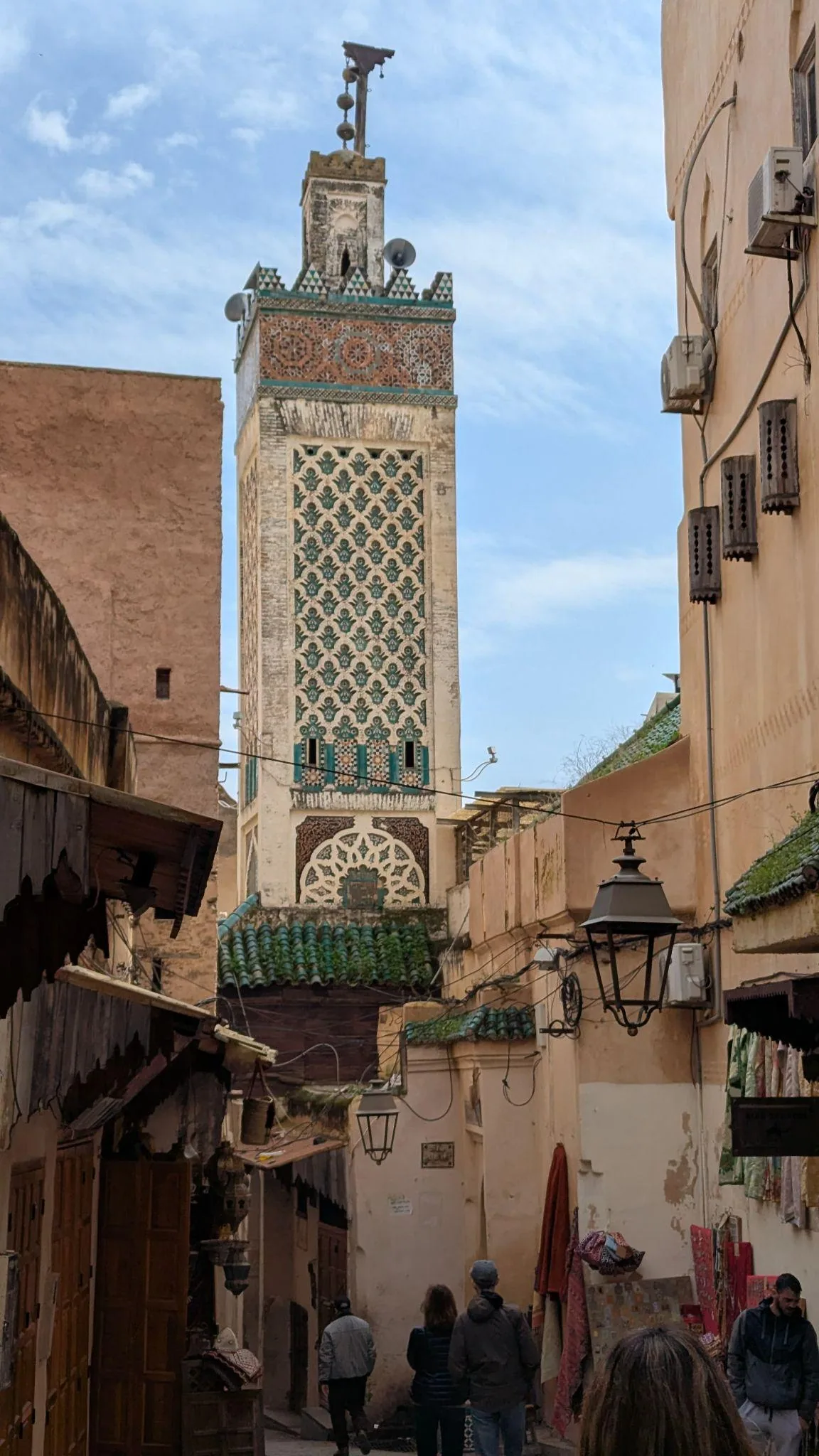
What I did not know at the time was that I was stepping into a UNESCO World Heritage Site. The entire Medina of Fez is protected, and walking through it you immediately understand why. It is also often described as the world’s largest car-free urban area: no vehicles, no motorbikes, just people, donkeys and centuries of history.
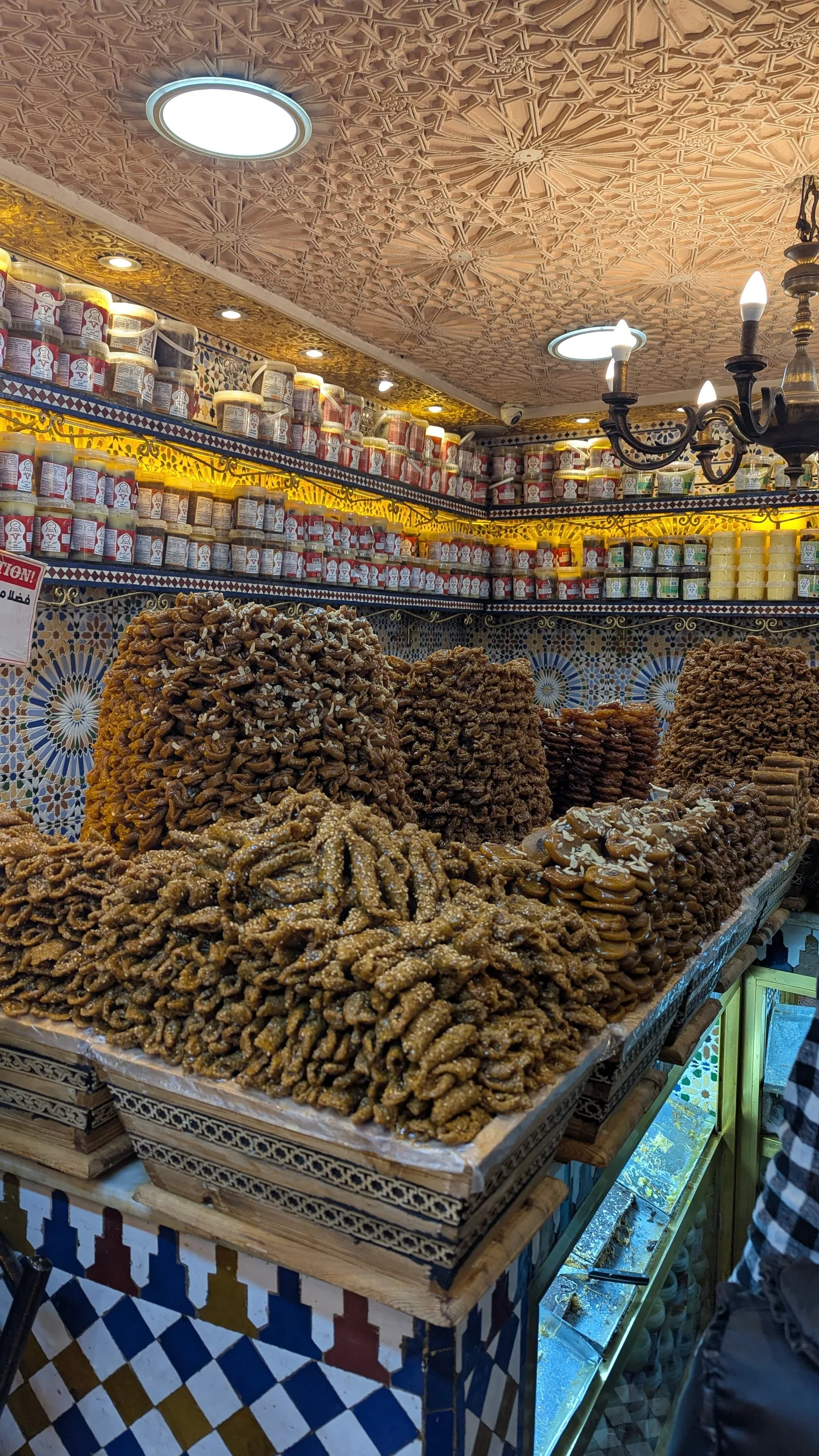
I said a quick goodbye to my road companions, we wished each other a good trip, and kept walking to the point where I would be meeting my family, who had flown in directly from Latvia. I was immediately struck by how vivid the city felt. Street markets lined up with bunches of colourful spices, typical Arab pastry shops, narrow alleyways buzzing with life. Fez had arrived.
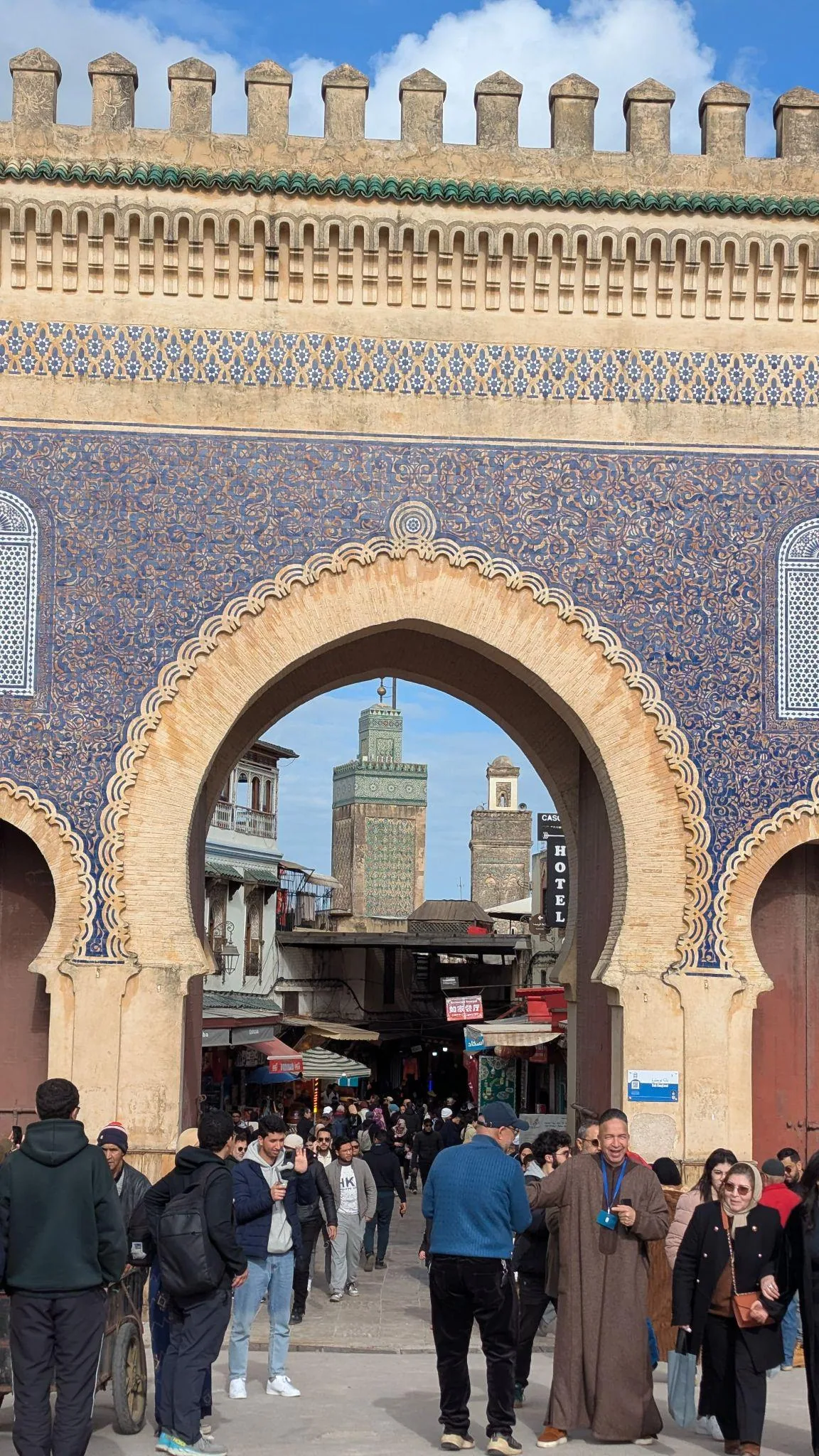
Exploring the Fez Medina
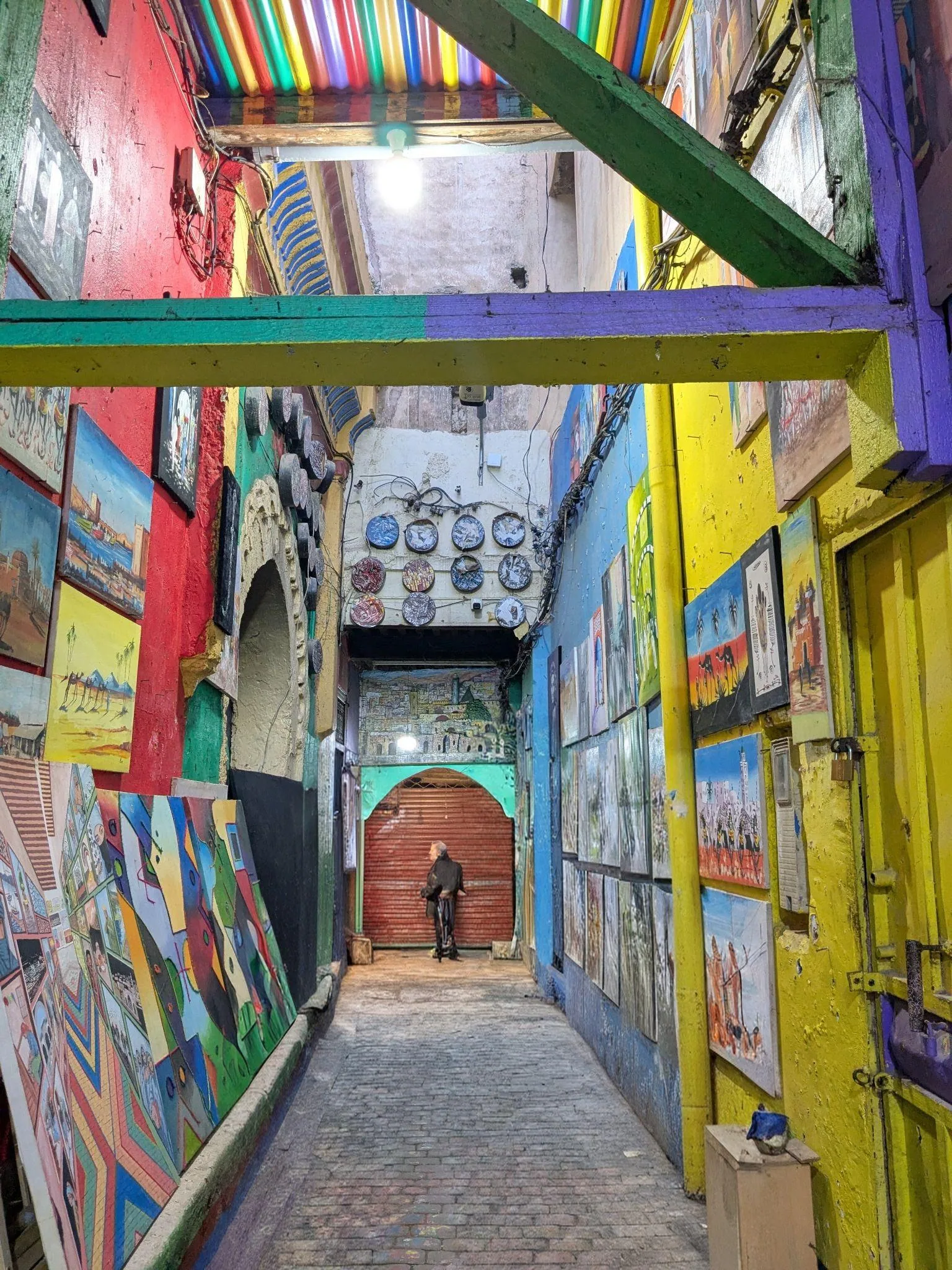
That first evening, after checking in, we walked around the streets of the Medina. What I remember most is the colourful art street: paintings everywhere, beautiful and unexpected. This is the Rainbow Street Art area, located in the heart of the Medina. A perfect introduction to the city.
We found a rooftop restaurant nearby, and this is where I had my very first tagine. In tagines it is typical to have onions, and I am not an onion fan, to put it mildly. But those onions complemented the chicken and almonds in a way I did not expect. They were caramelized, so I can forgive them for being there. I liked my very first tagine. A lot.
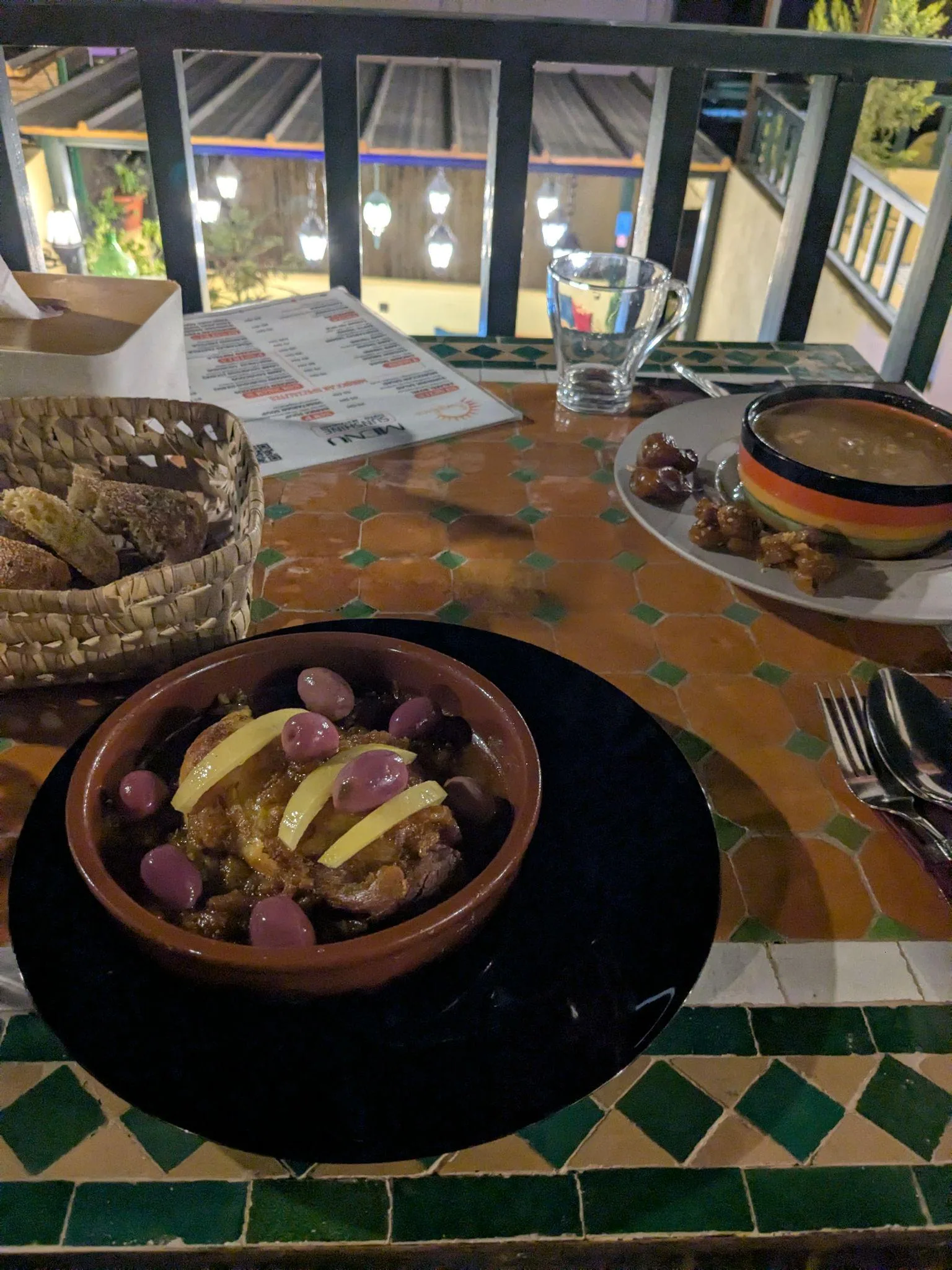
After dinner it was around 8pm and we decided to walk a bit around the streets, but not too late, since we were new to the city and decided to be sensible on the first night.
Day Two: Tanneries, Madrasas and Coffee on the Street
We had heard that the famous tanneries, where Fez’s legendary leather is made, are best visited in the morning to avoid the crowds. So we set off early.
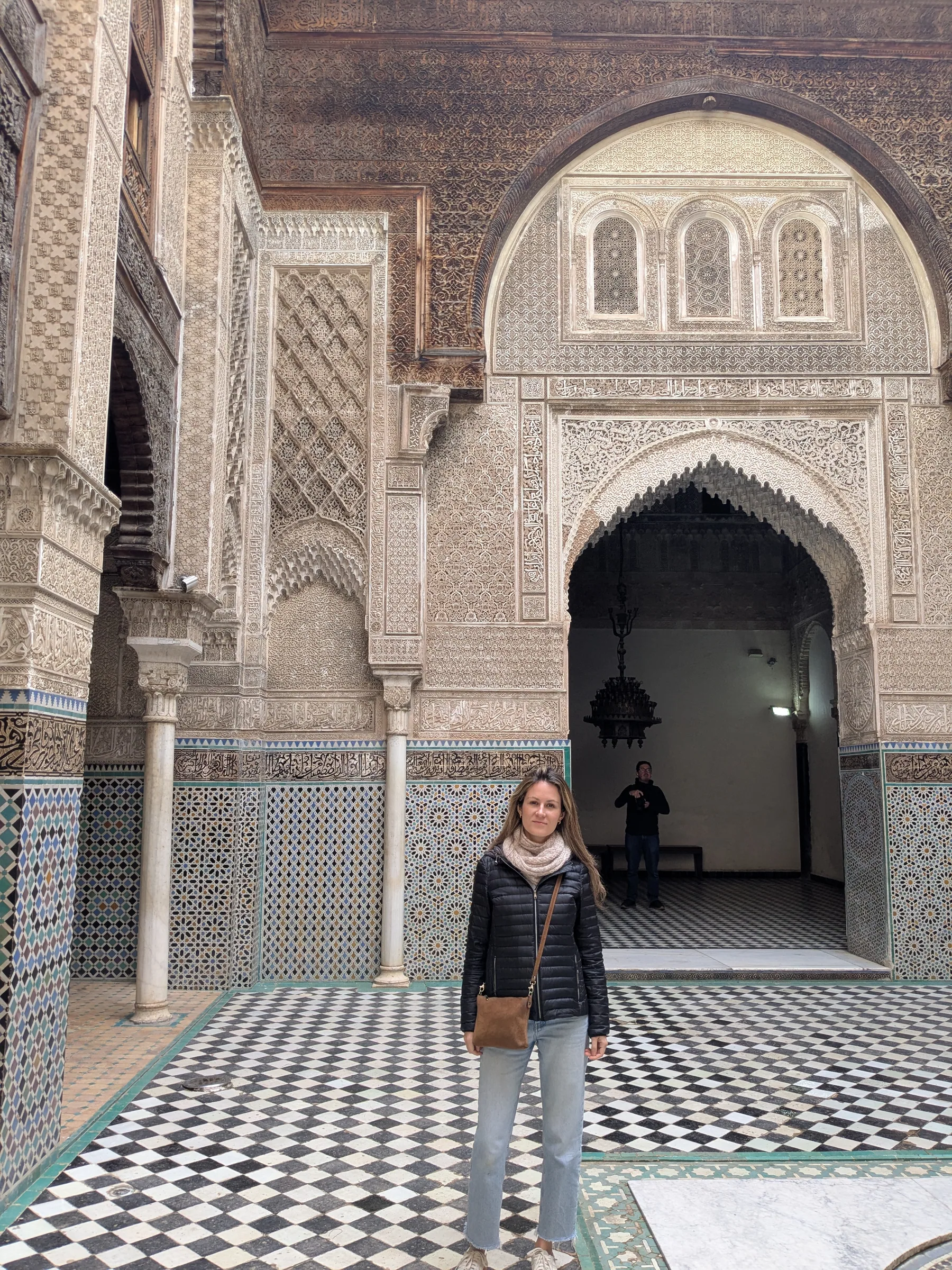
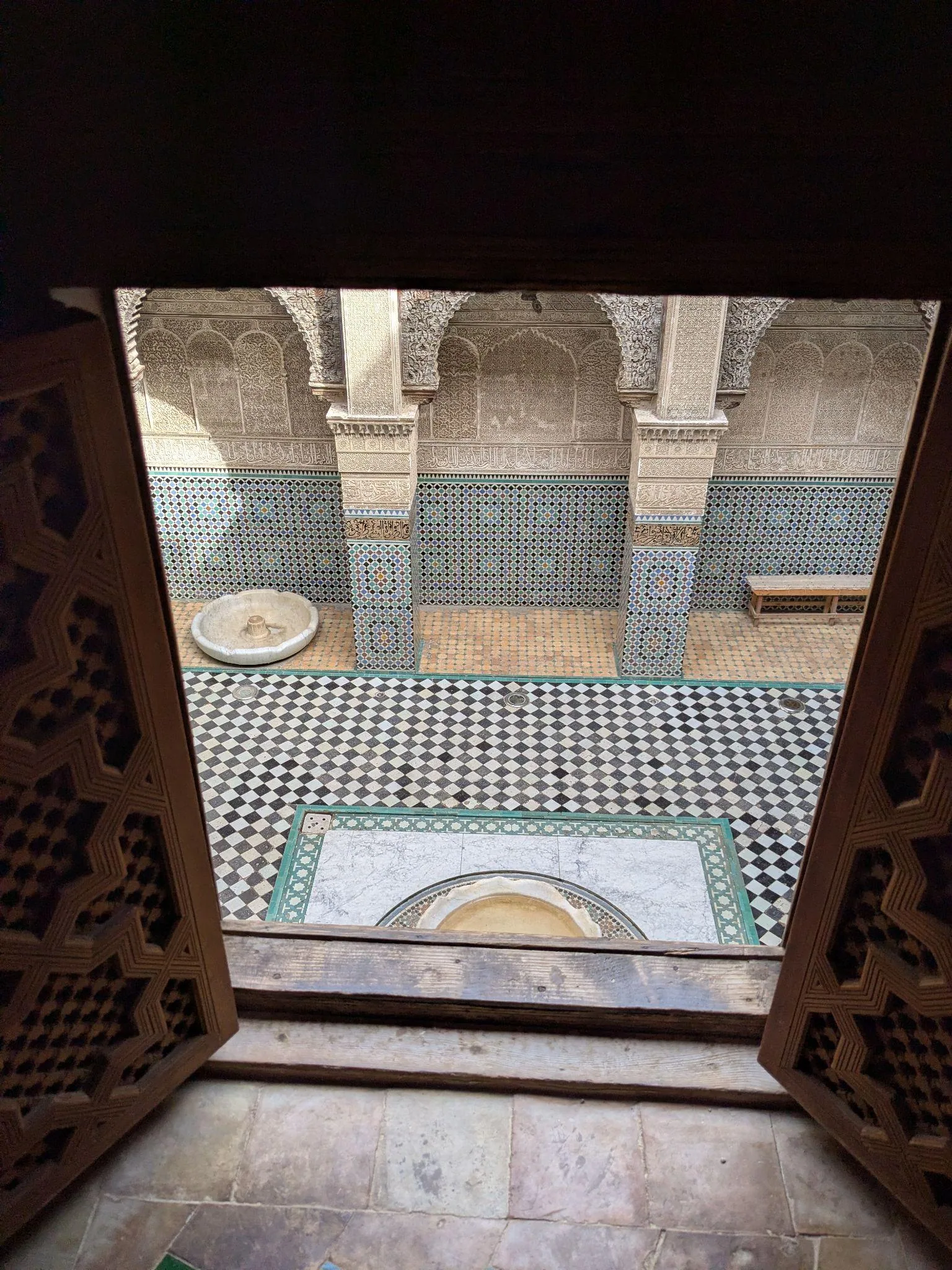
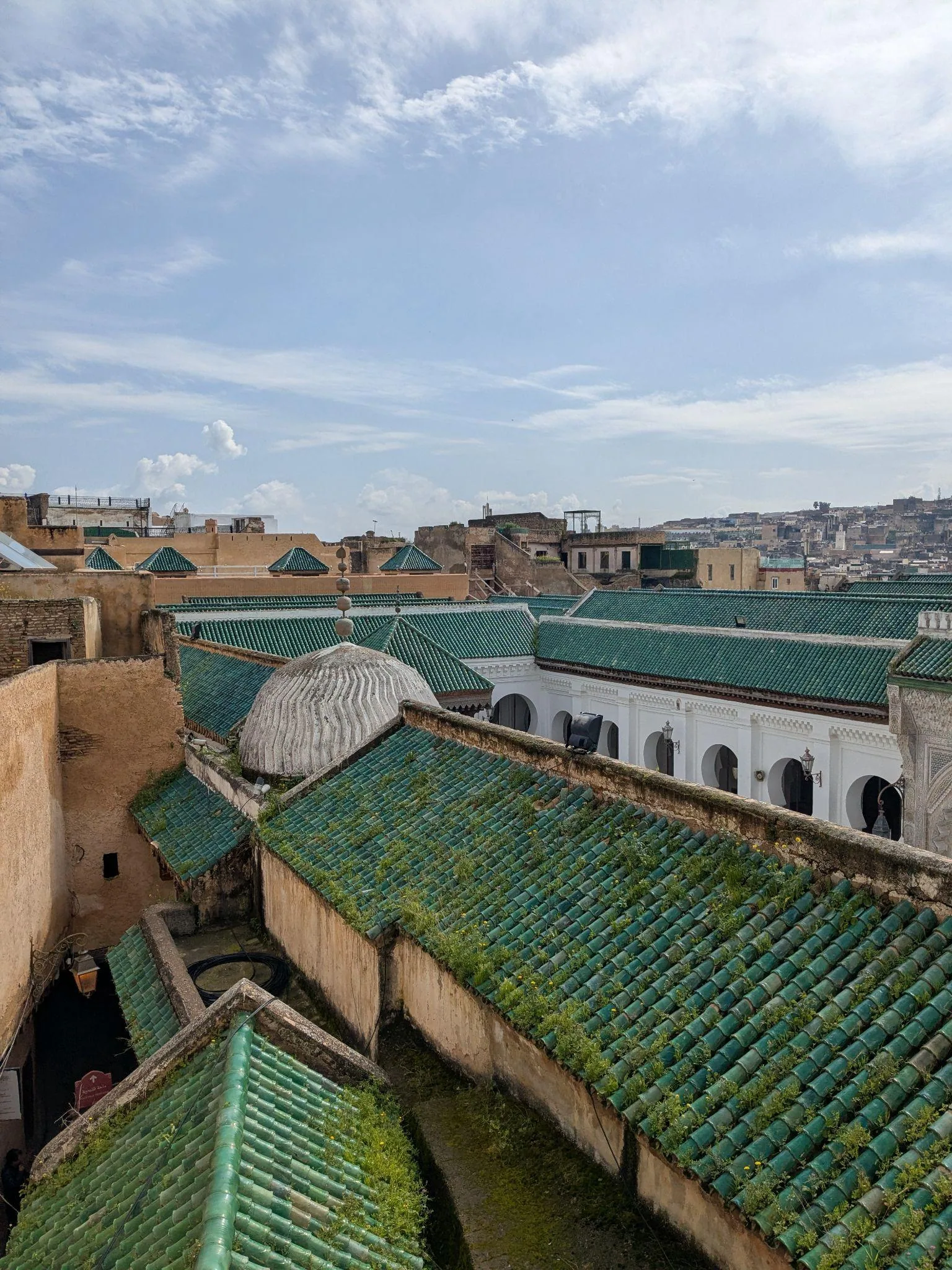
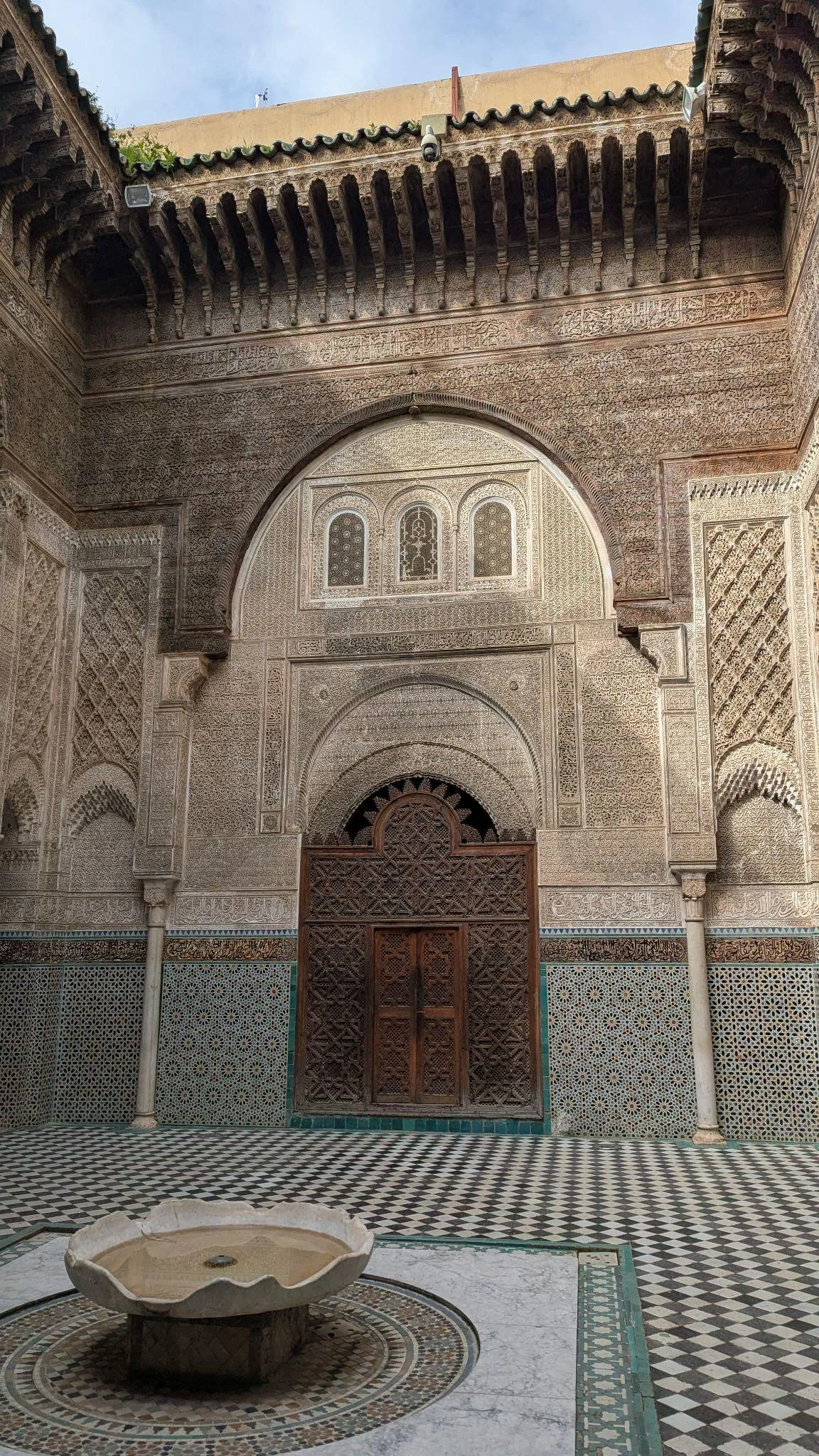
On our way there we spotted an interesting building with a typical Moroccan patio, incredibly sophisticated. We thought: why not go in? The entrance was around 3 EUR. This was Al Attarine Madrasa, a 14th-century masterpiece of Marinid architecture built next to the famous Al Qarawiyyin mosque. Its name means “madrasa of the spice sellers,” after the nearby spice market. Inside you find breathtaking zellige tilework, intricate carved cedarwood, and delicate stucco plasterwork covering every surface. I also loved the green rooftops visible from the windows.
Worth knowing: right next to the madrasa sits Al Qarawiyyin, recognized as the oldest continually operating university in the world, founded in 859 AD, older than Oxford, Bologna or any European university. Non-Muslim visitors cannot enter, but just knowing you are walking those streets adds a remarkable layer to the experience.
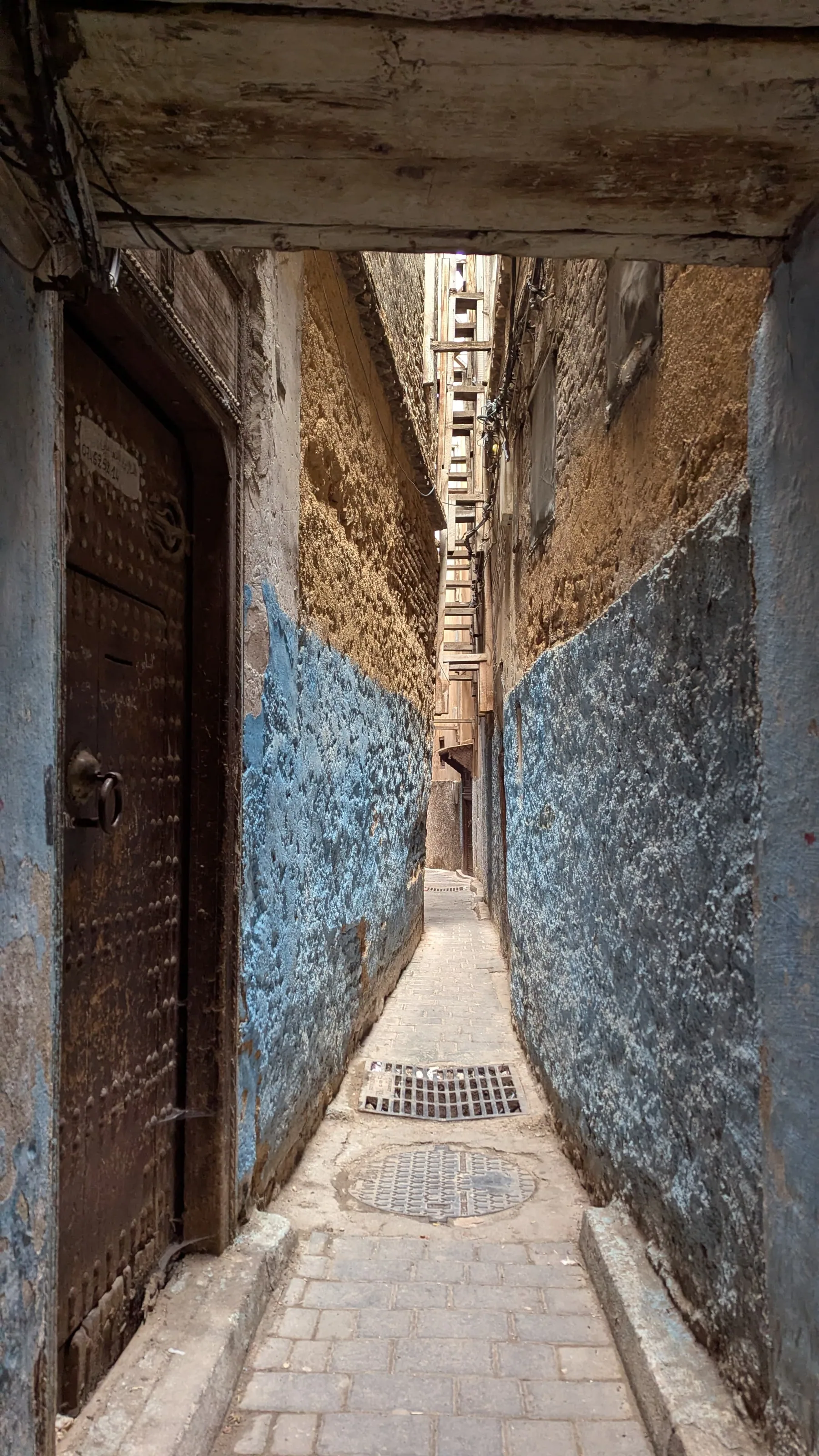
Madrasa visited, we continued towards the tanneries, and what a labyrinth it was. We had to cross many narrow alleyways and had read about how to find the right entrance to reach the viewing terrace. It was not easy. Locals holding peppermint herbs invited us from every doorway to come up and see the view.
Important tip: many of these are scams. The views are not good and they just want your money. Be careful. On our way we met some tourists who had just been up to the real viewing terrace and helped us find the right door. We followed them up, crossing through a leather goods store with endless bags, wallets, jackets and garments. As we advanced, the smell started to get stronger.
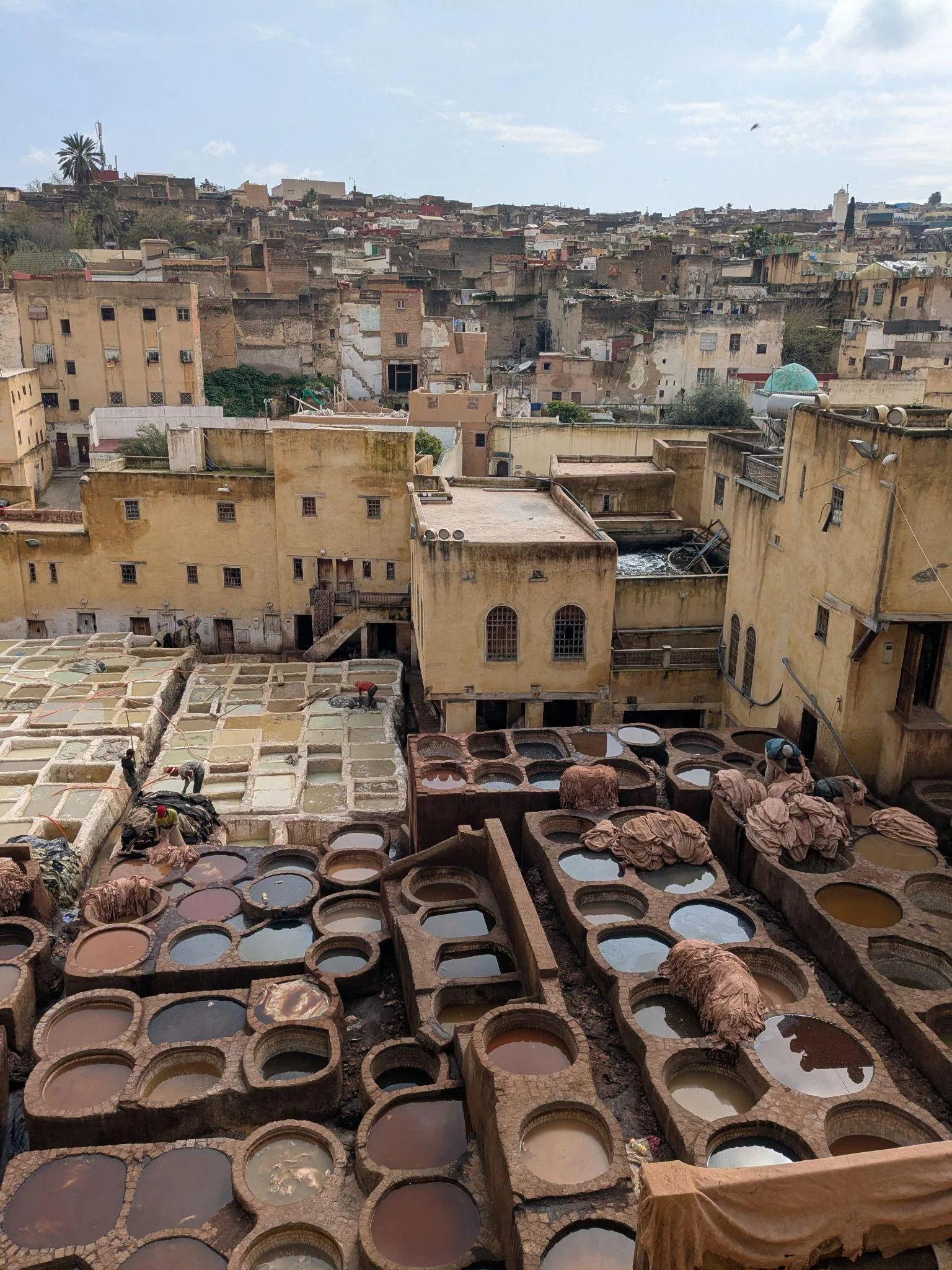
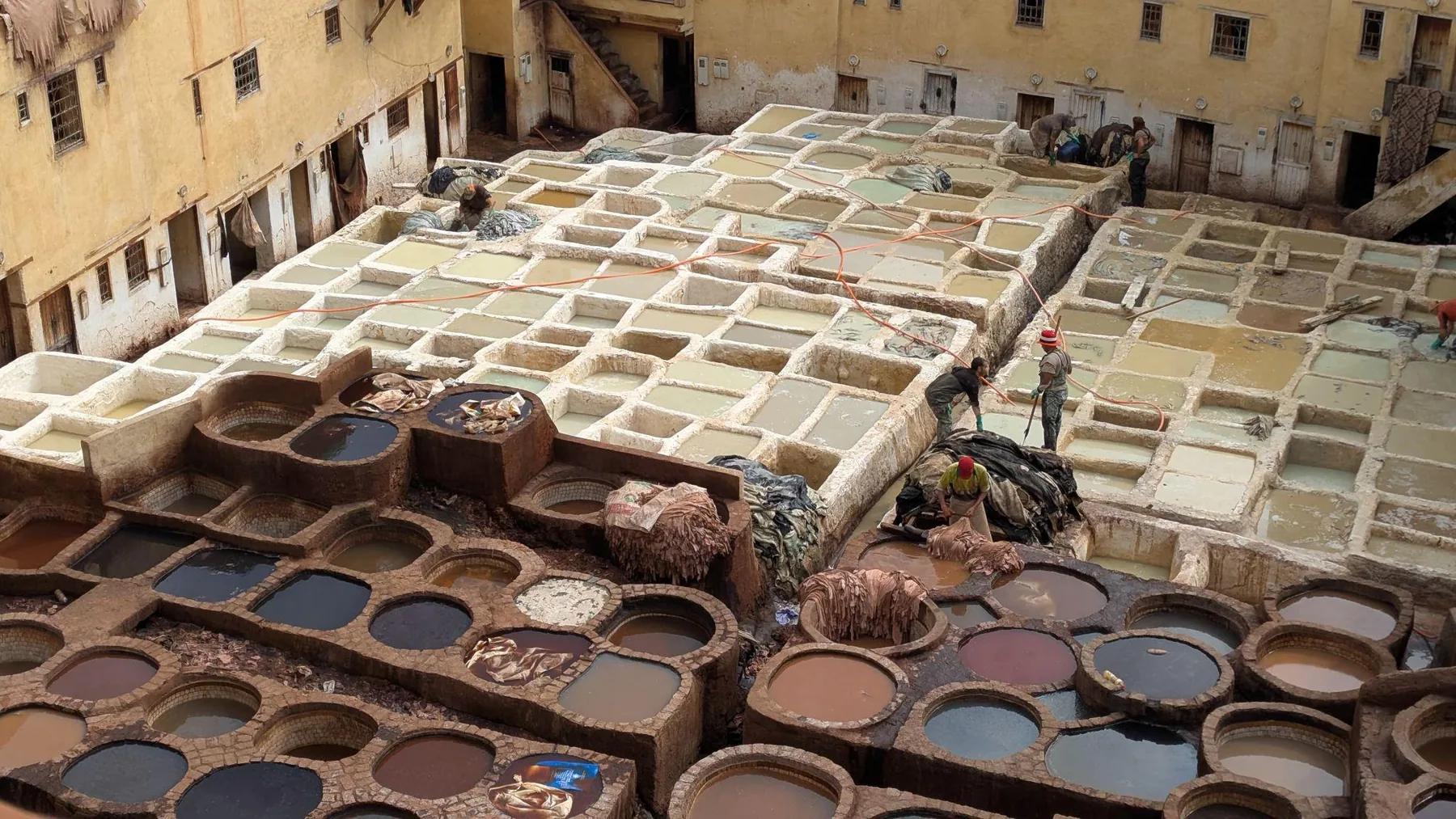
Tanneries of Fez
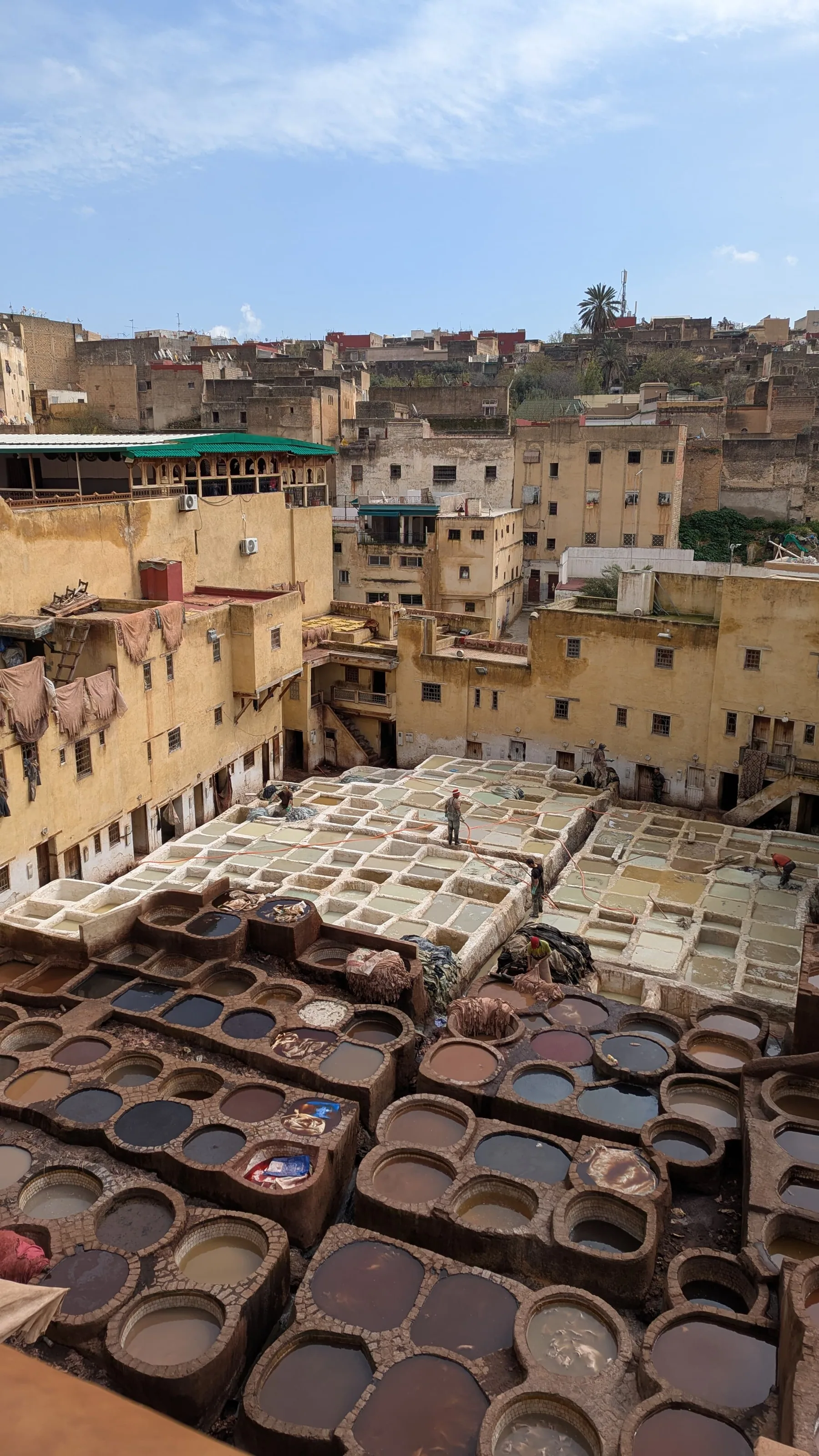
Finally we reached the top, and wow. I had never seen anything like it. Below the terrace, dozens of colourful barrels were being worked by hand. Questions flooded my mind: Why are they working with bare hands? How do they cope with the intense smell of skins mixed with chemicals?
What makes it even more striking is learning the facts: the Chouara Tannery is nearly 900 years old, considered one of the oldest in the world, with craftsmen working daily in stone basins using techniques that go back centuries. The workers you watch from above are doing what generations before them did.
We stayed around 10 minutes, holding peppermint to our noses to keep the smell bearable. We gave some money to the shop owner in thanks for access to his terrace, and headed back out.
Leather, Markets and the Art of Negotiation
Fez is renowned for its leather goods, and for good reason, since this is where the leather is actually produced. The markets are everywhere, lining the streets, selling everything from bags and jackets to wallets and shoes. A souk is the traditional market area, usually a maze of small stalls and workshops.
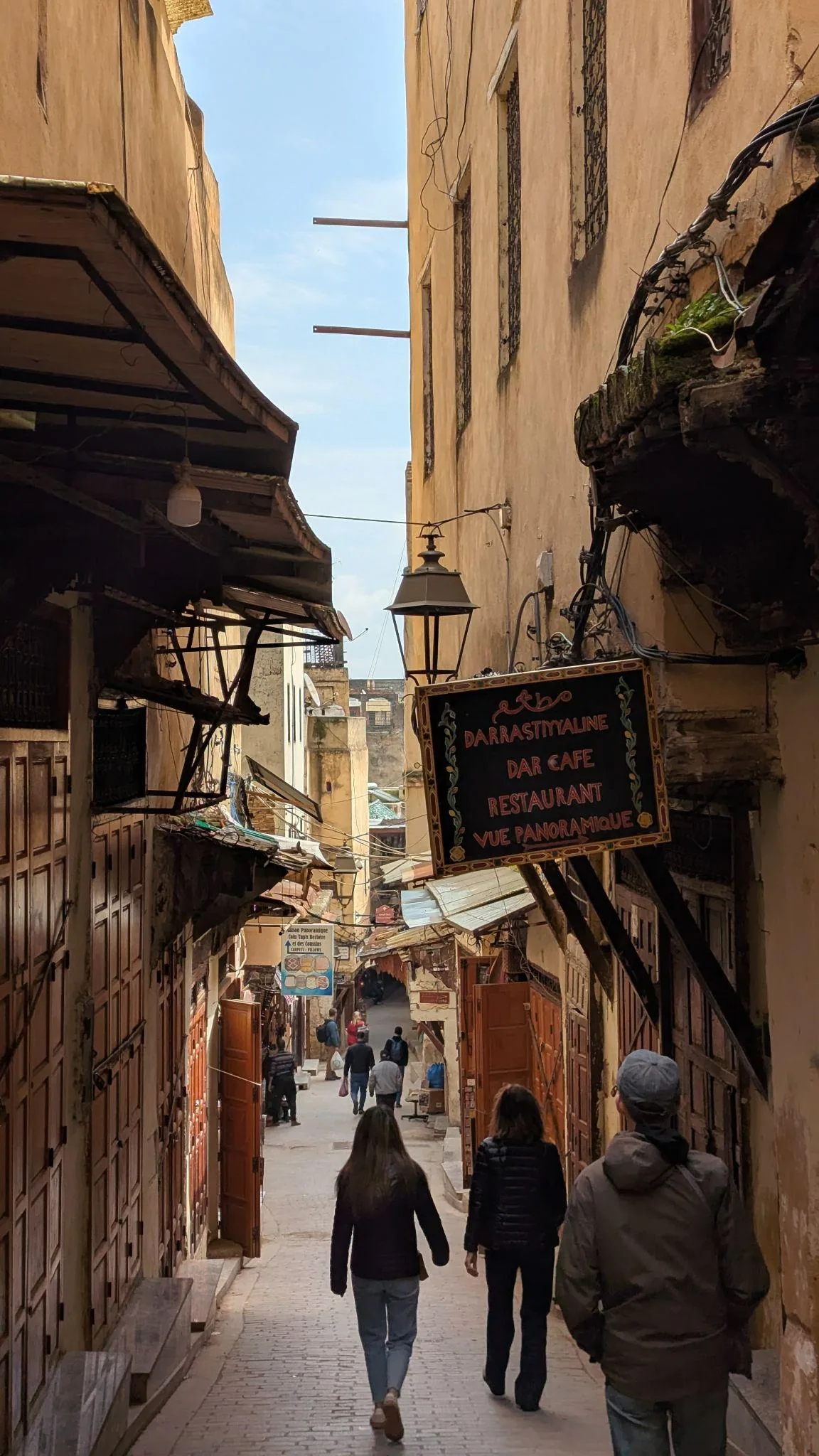
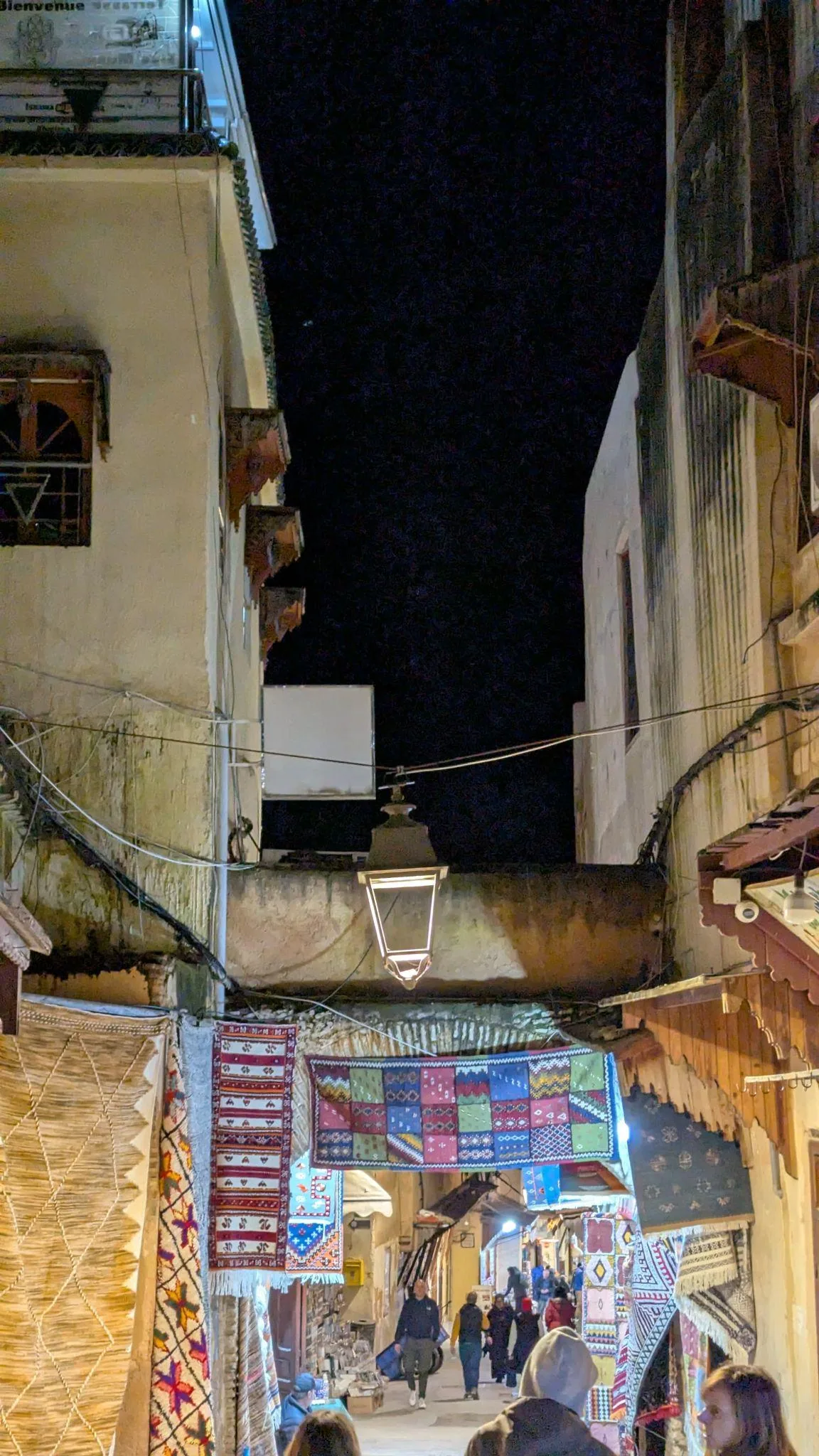
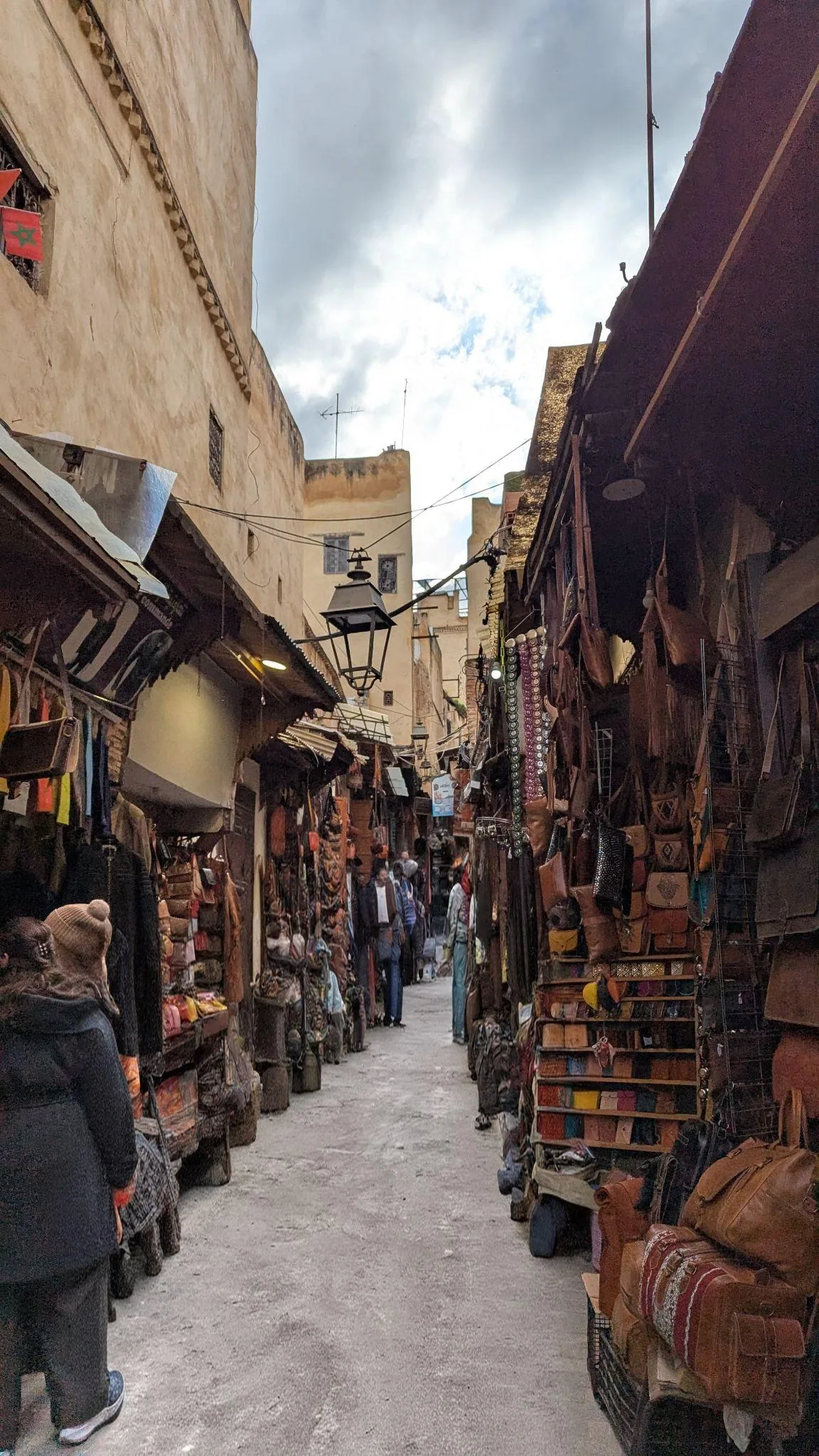
I could not resist and picked up a cute pair of leather ballet flats and a wallet. One important tip: always negotiate. Never accept the first price, but be reasonable. Offering too little can genuinely offend.
My own negotiation skills were somewhat questionable. I got a discount on the ballet flats, but not as impressive as I had hoped. In the end I gave in, partly convinced by the seller’s argument: “I am the only one selling these.”
It was convincing enough, until I found the exact same pair in Marrakech.
Royal Palace, the Jewish Quarter and Sunset at the Marinid Tombs
After the tanneries we wanted to visit the Royal Palace of Fez. Since it was quite far, we took a taxi, but there were four of us, and the driver explained passengers are limited to three. We were about to give up and walk when a driver with a van agreed to take all four of us. He also offered to be our guide for the rest of the day. We politely declined and headed to admire the palace. It is a beautiful building, though you cannot visit inside, so we stayed a while contemplating it from outside.
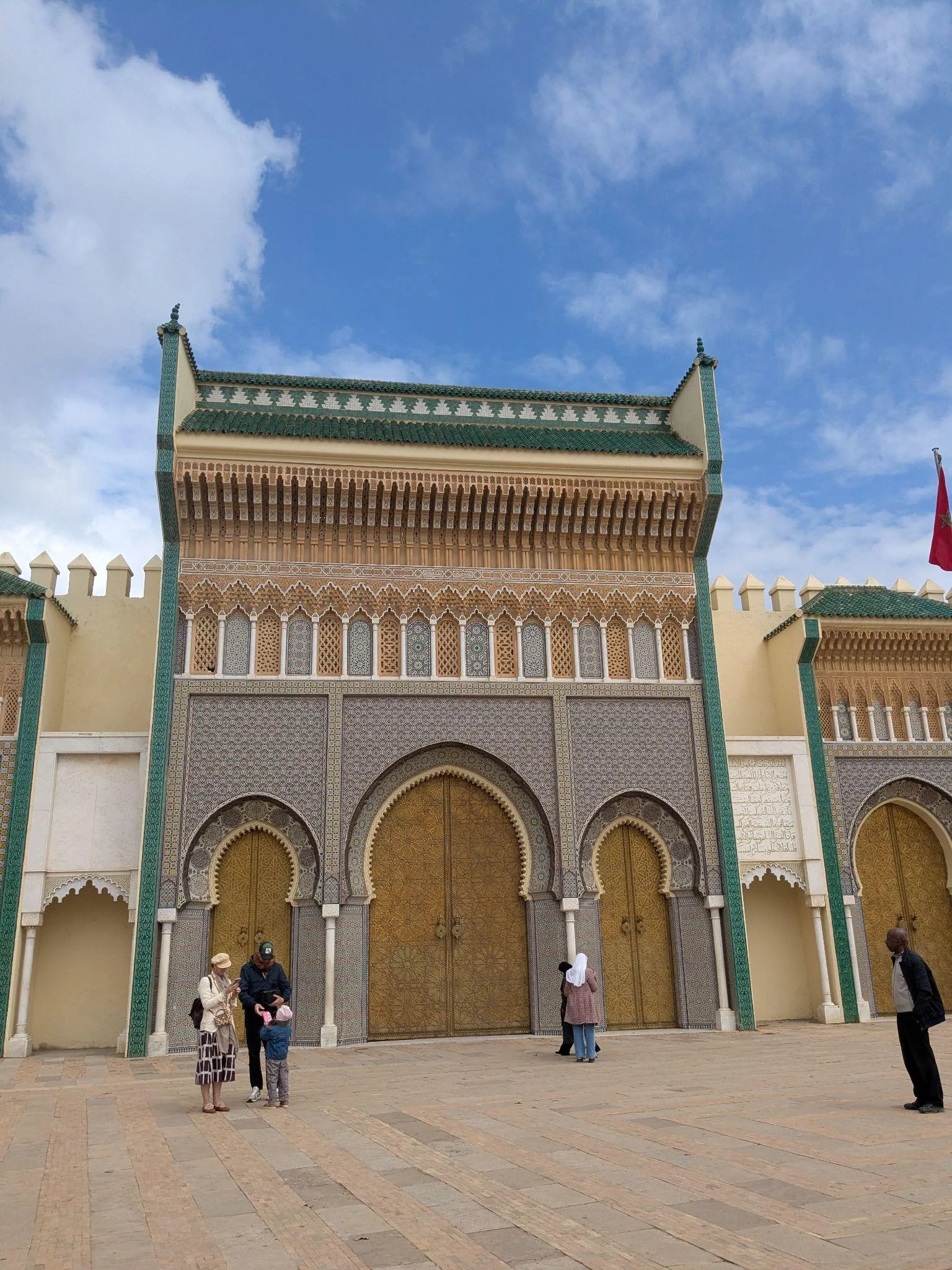
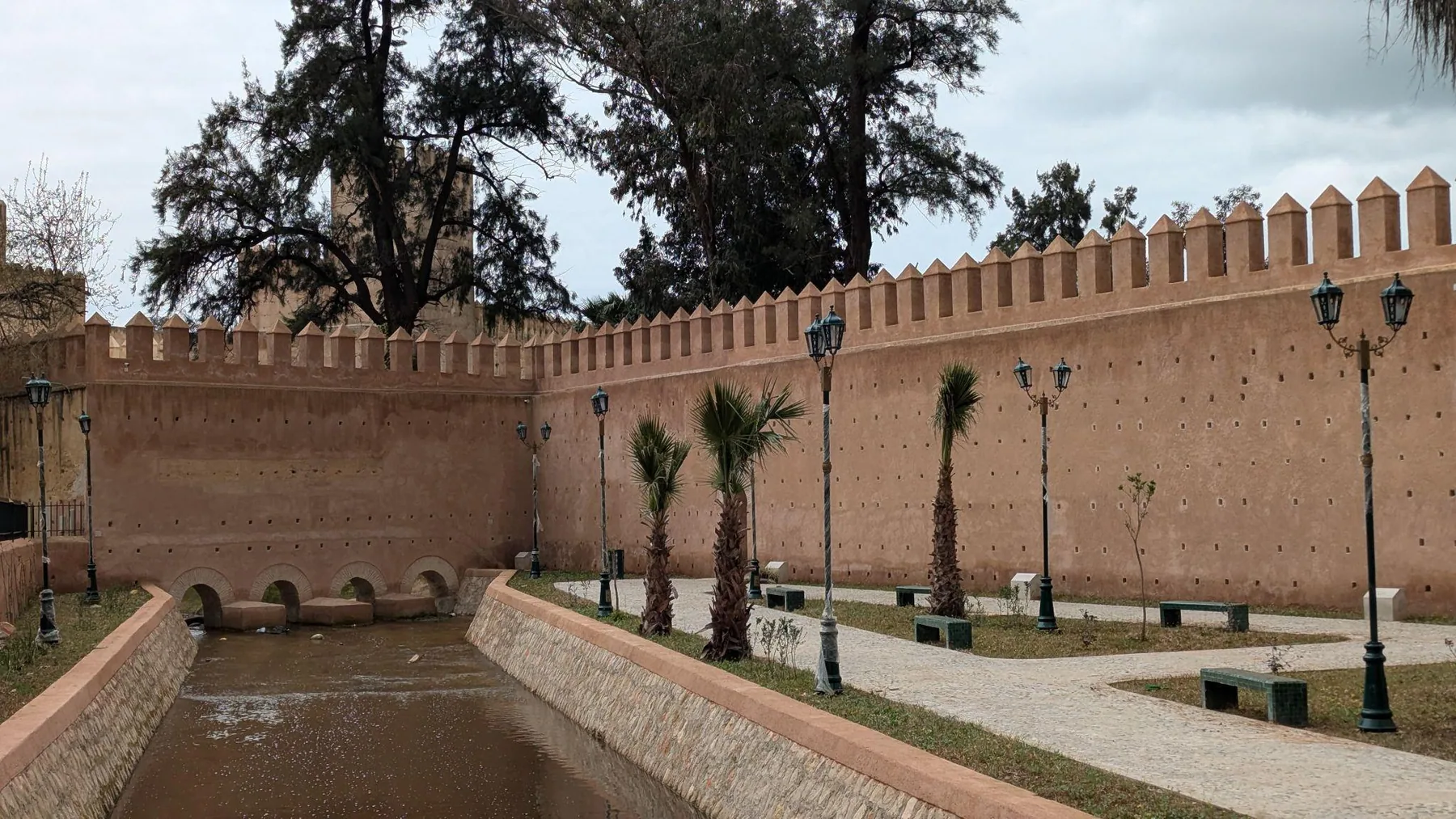
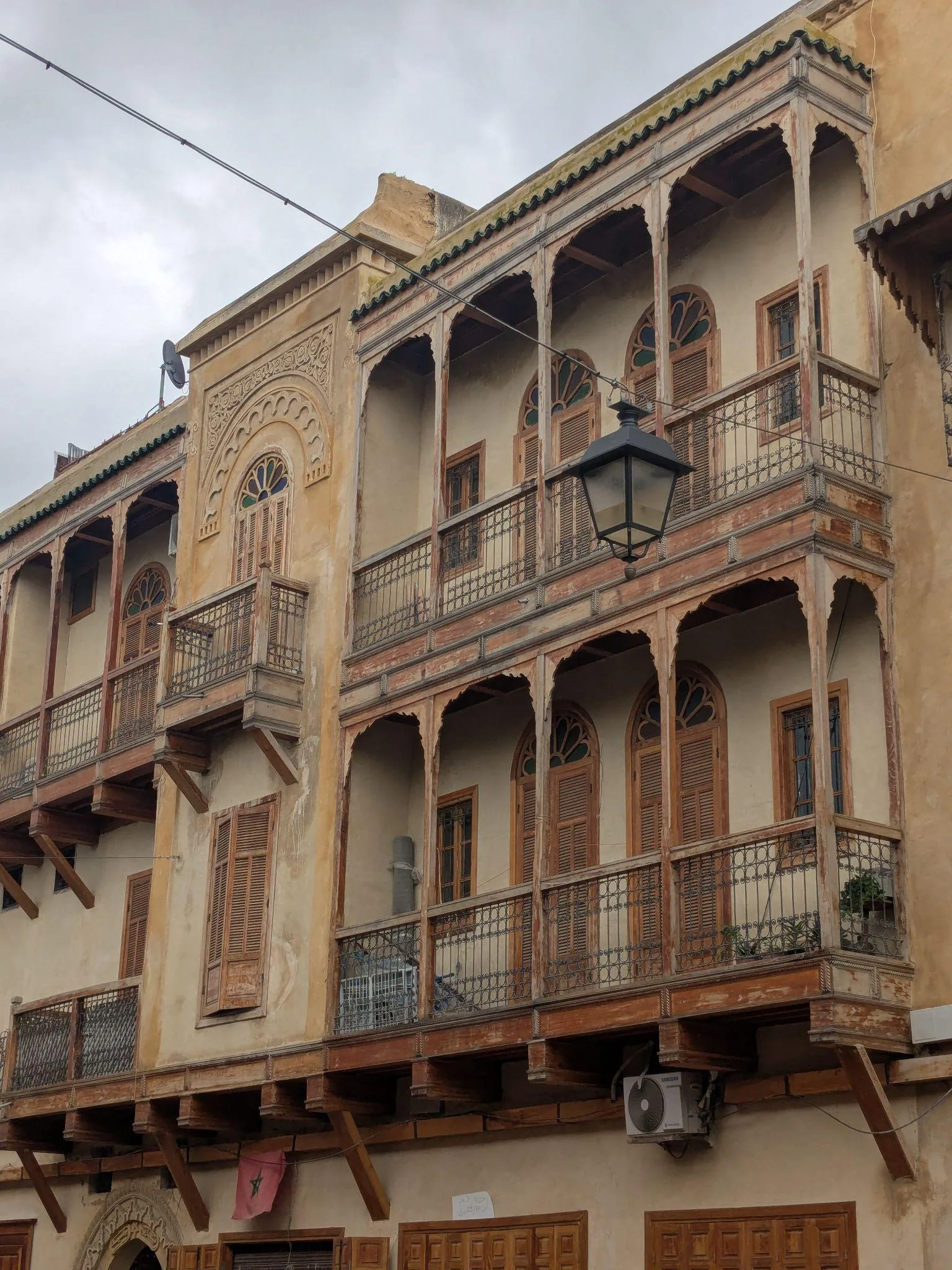
Nearby is the Mellah, the old Jewish quarter. What impressed me most were the wooden buildings, distinctly different from the general Moroccan architecture around them.
Before lunch we stopped at Jnan Sbil, a lovely park to walk through with a long palm tree alley. It was not in full bloom at that time of year, but still a pleasant pause. From there we went to Restaurant Cafe Rim, facing the park. The couscous with chicken was delicious. The waiter was very chatty, though he ventured into politics a little more than necessary.
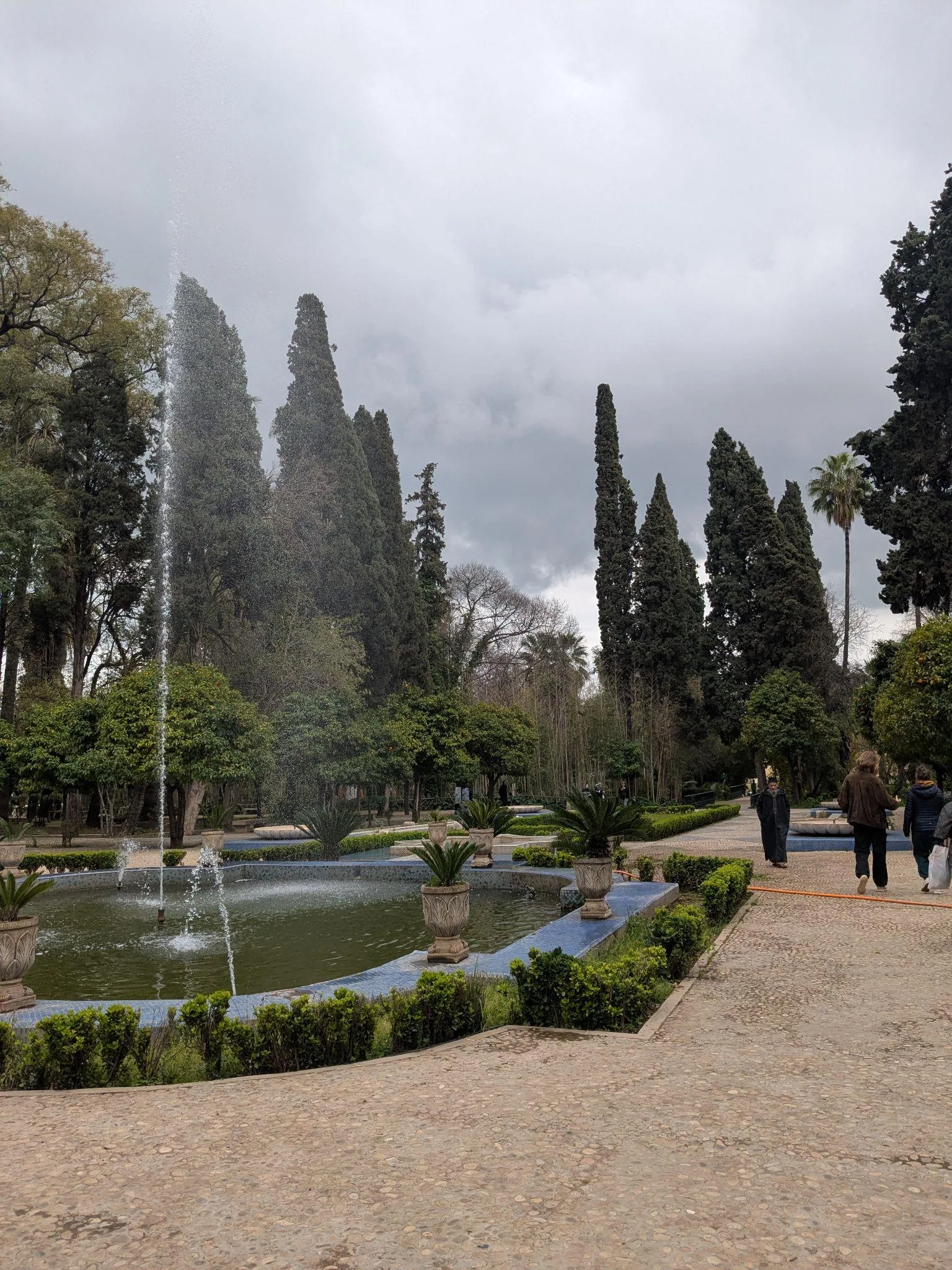
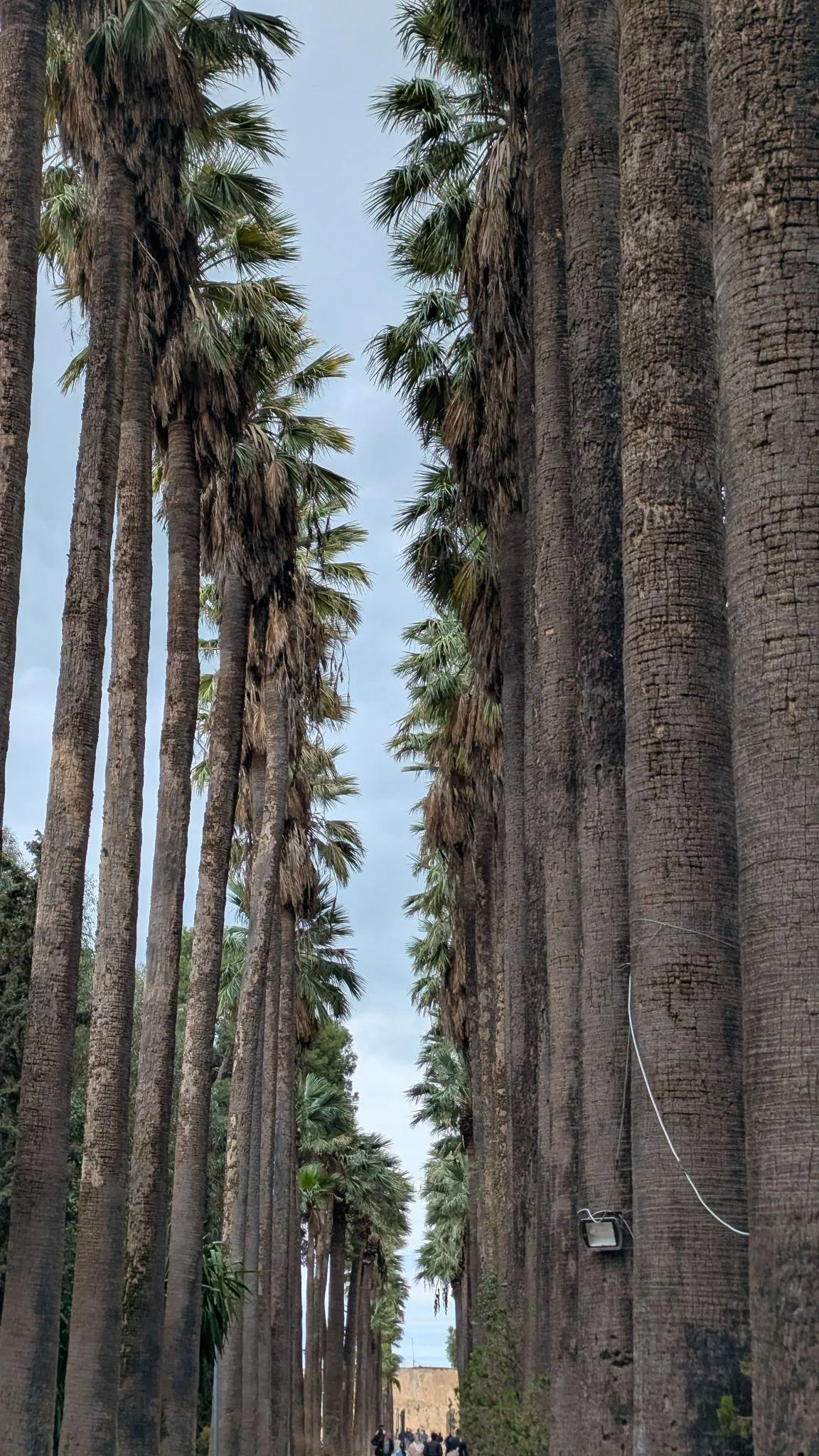
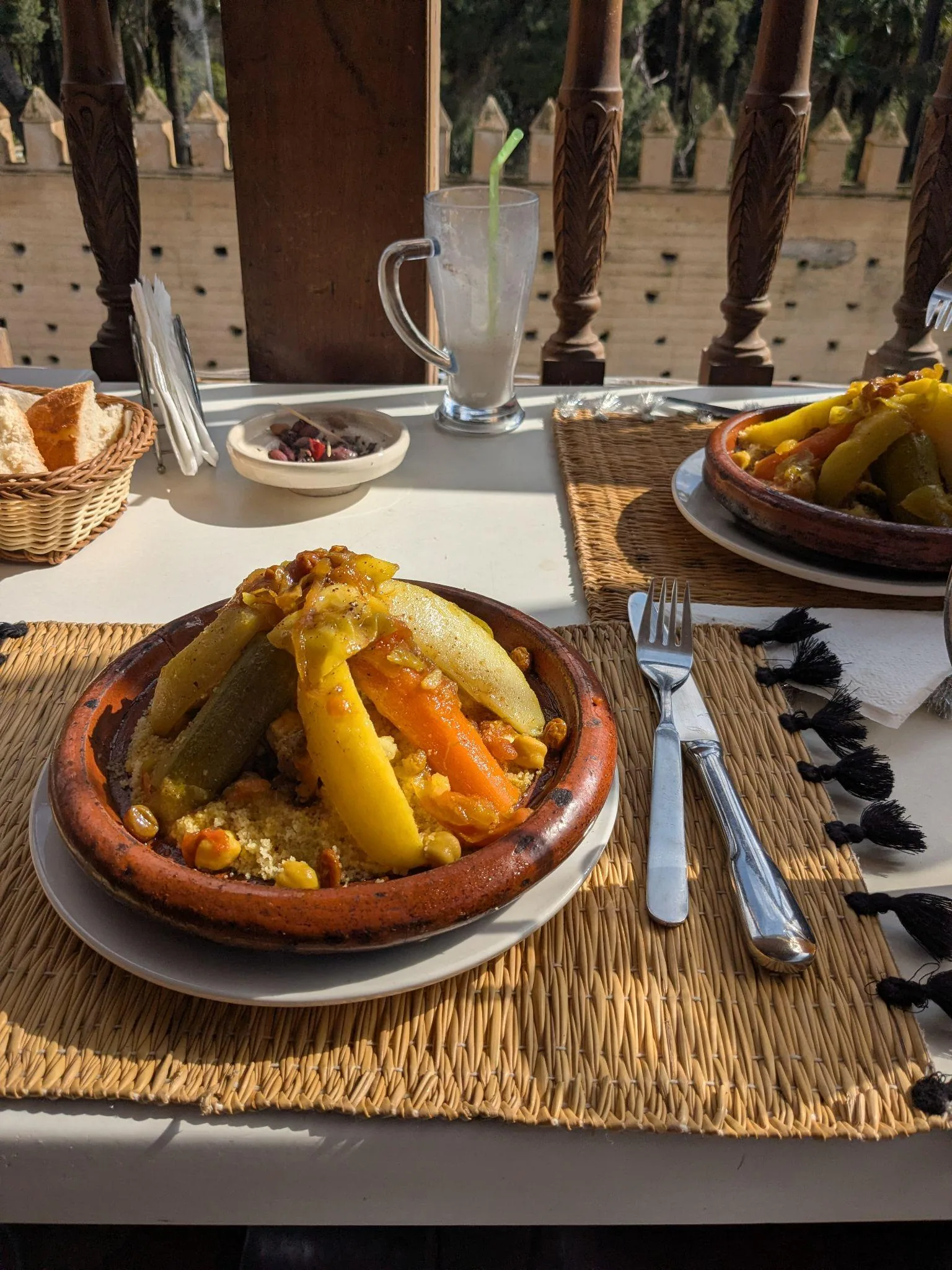
Jnan Sbil park
On the way back to the hotel, I grabbed a coffee from a local vendor making it on the street, adding spices and preparing it with care. The coffee was strong, tasted unlike anything I had had before, but was genuinely good. Highly recommend trying it if you are in Fez. Although I noticed Moroccans seem to prefer tea. Peppermint tea is absolutely everywhere. My only complaint is the cup size. Coming from Latvia, where tea means a large mug, those tiny glasses felt like a cruel joke.
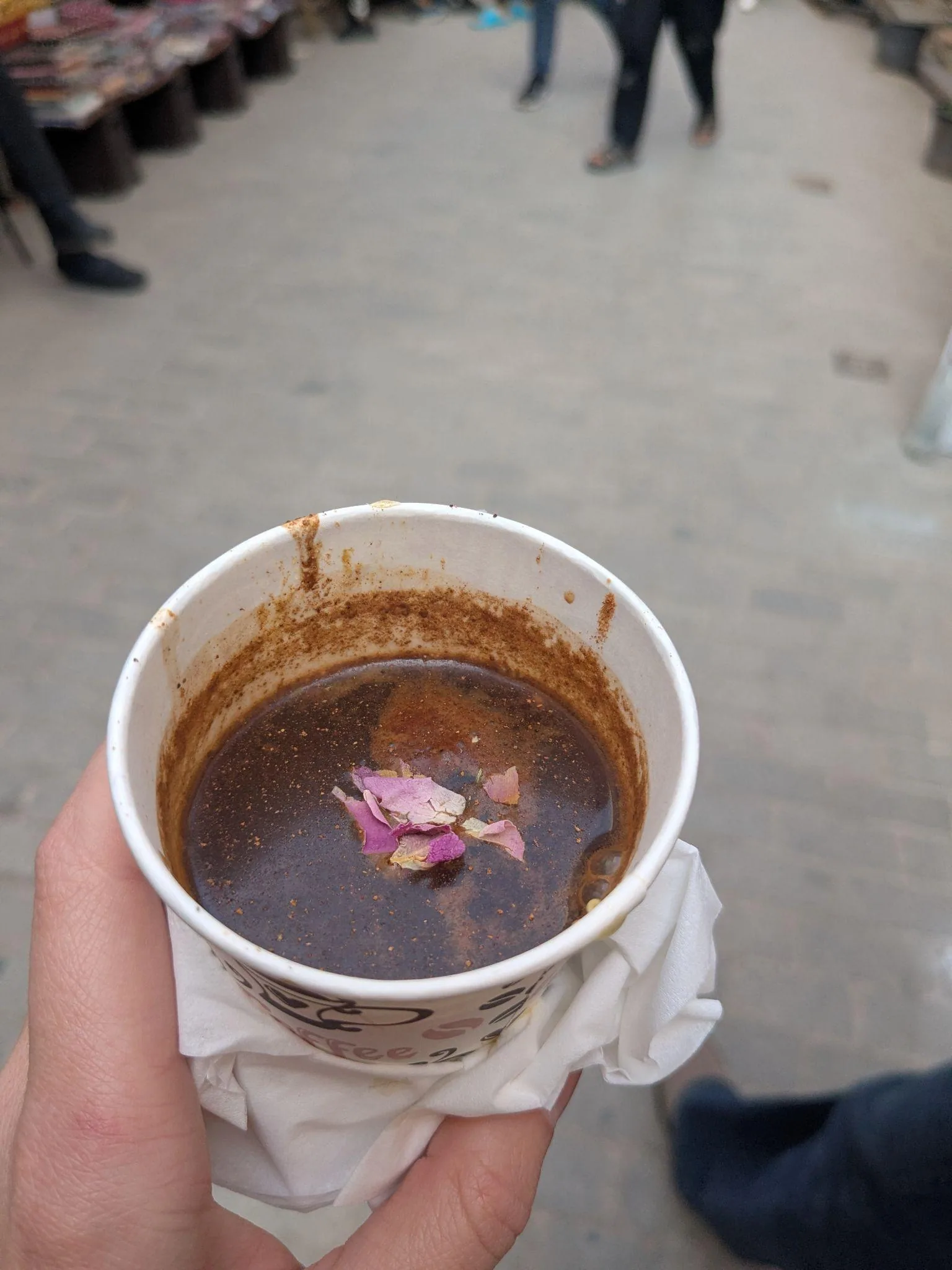
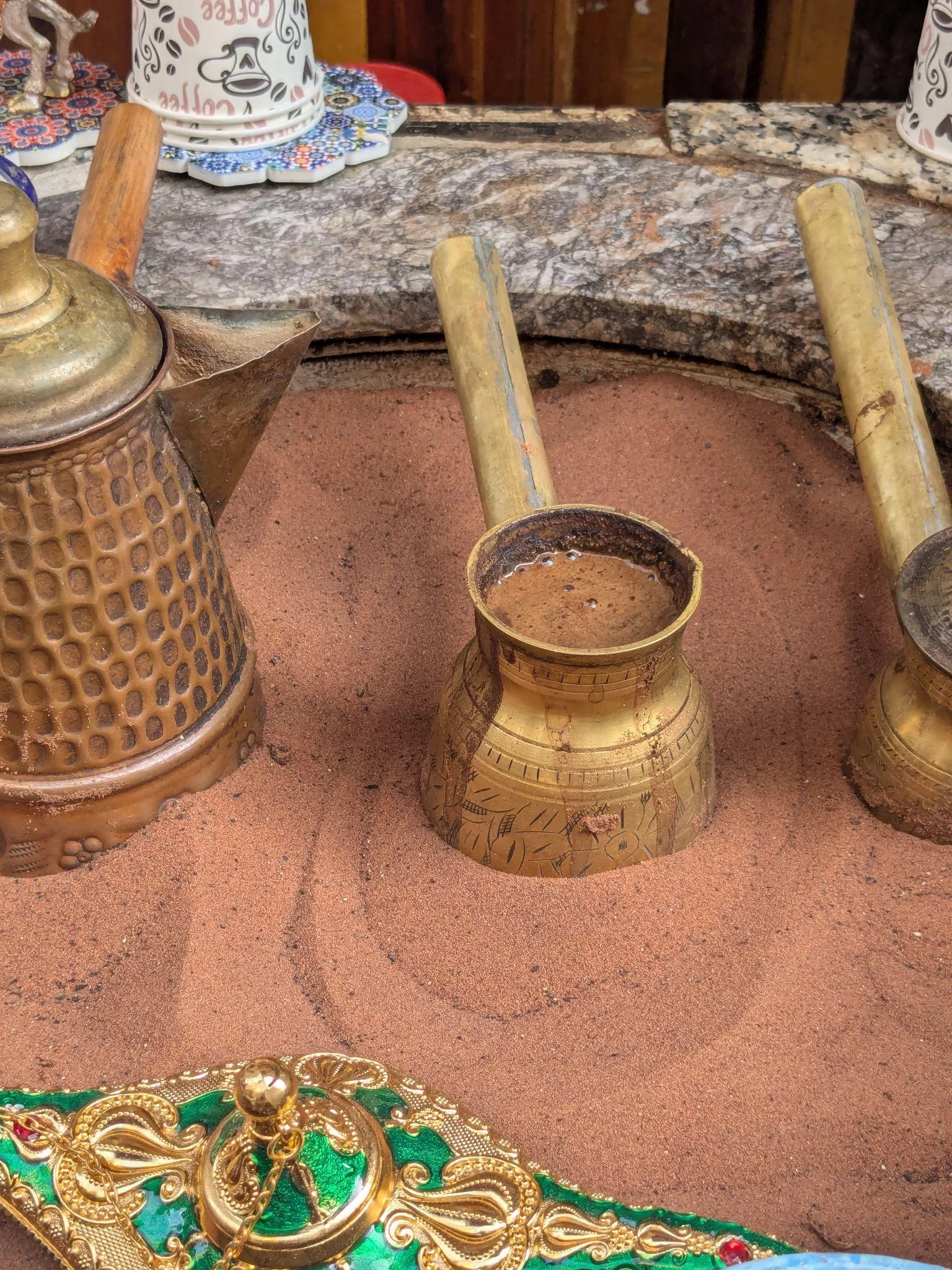
Coffee on one of the main streets in the Medina of Fez
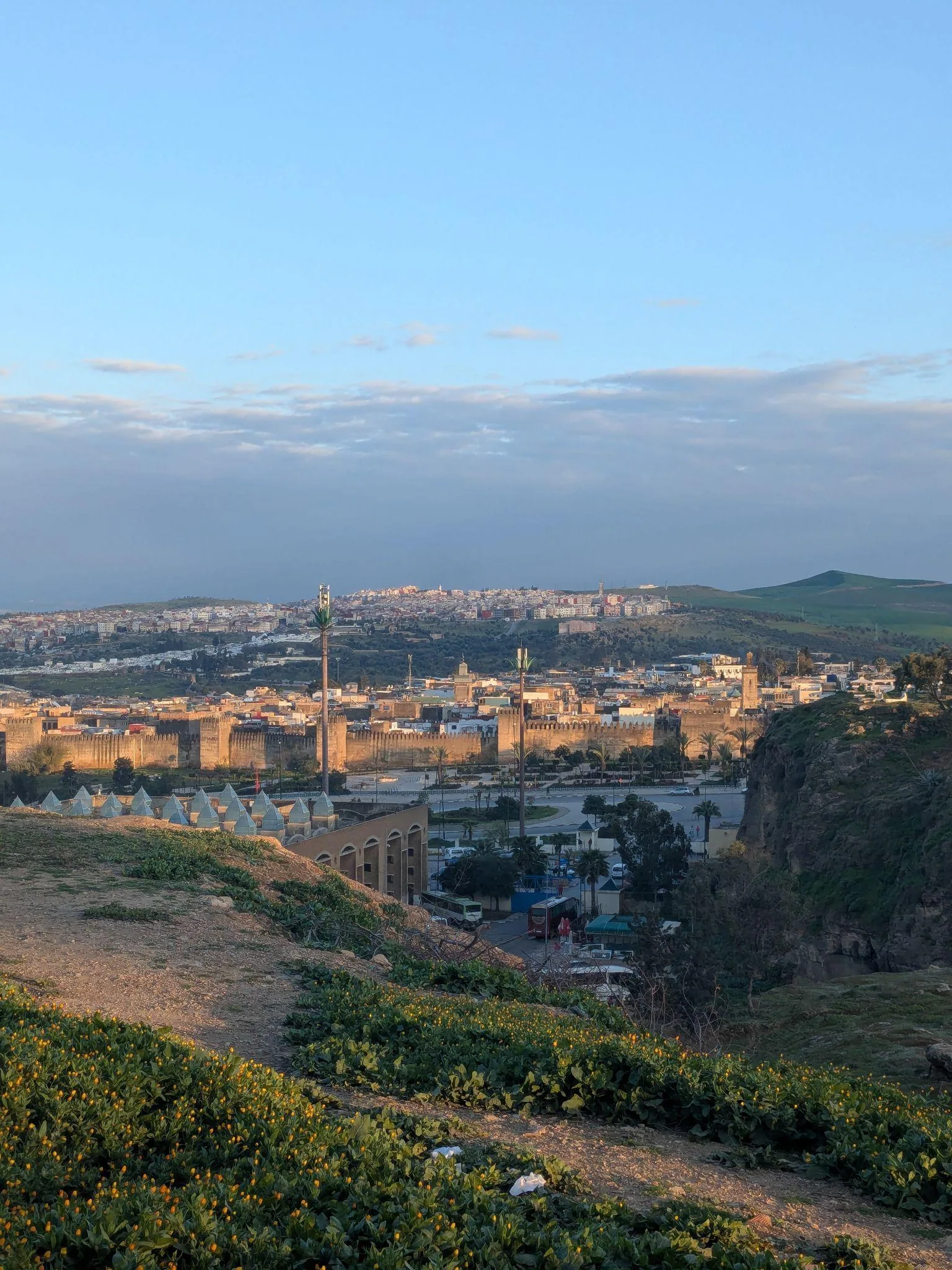
As the evening approached, we hurried to catch the Marinid Tombs before sunset. We arrived to find the tombs themselves temporarily closed, but there was a large open terrace with a panoramic view over the city. The sunset was absolutely gorgeous. The ancient city wall lit up in deep orange as the light faded, and we realised for the first time just how vast Fez actually is. The Medina is just a small, tiny part of it.
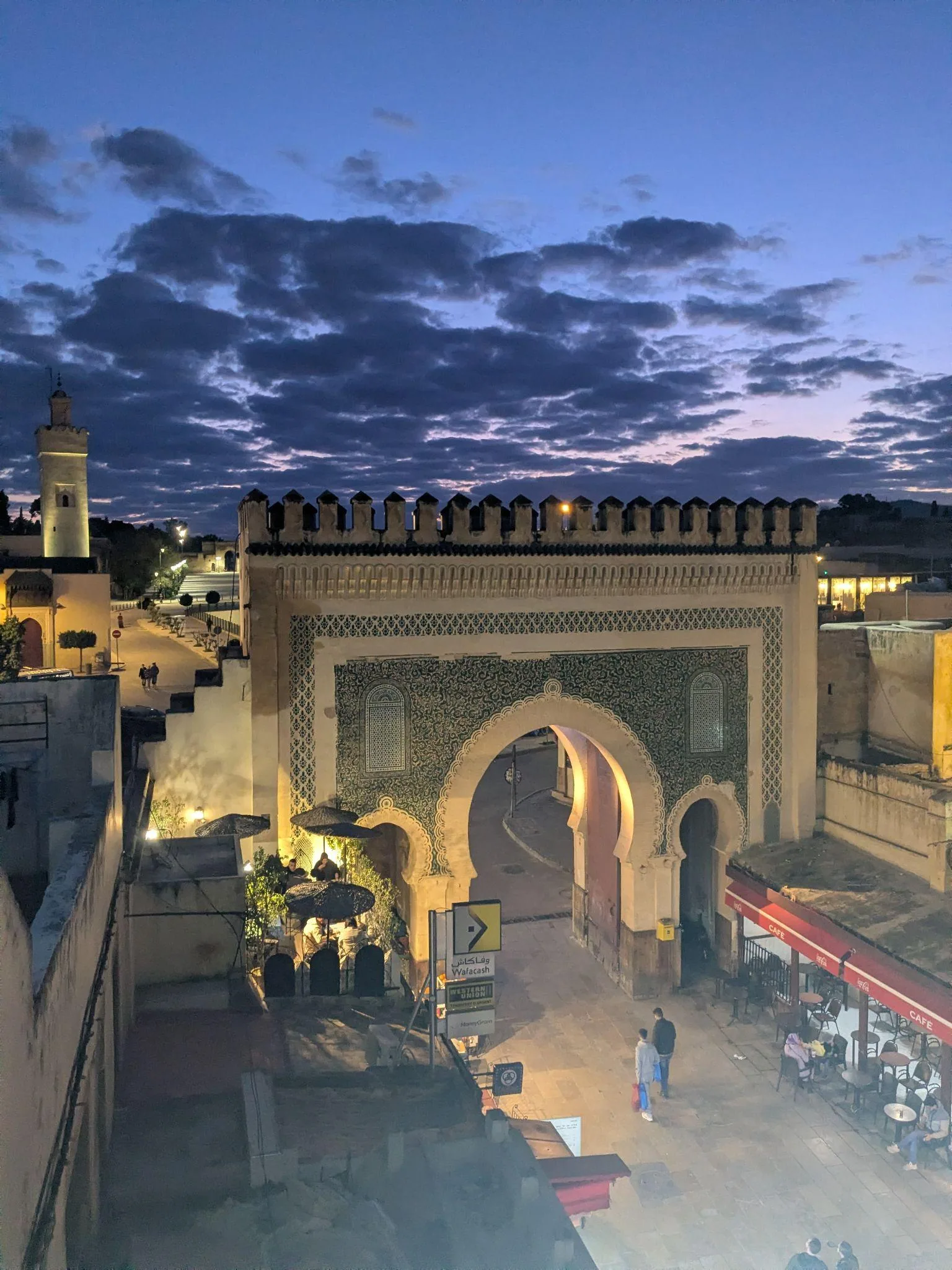
Not ready to call it a night, we walked back into the Medina and found a beautiful rooftop cafe. Over mint tea, in a small cup, alas, we watched the illuminated city gate glow against the colours of the after-sunset sky. The perfect ending to our one full day in Fez.
And Then There Was Marrakech
After Fez we joined a three-day organised bus tour through the desert and Atlas Mountains, but that is a story for another post. What matters here is what happened when we finally arrived in Marrakech.
Marrakech felt different immediately. Fez had given us a cozy, compact, local atmosphere, but arriving in Marrakech, the quantity of tourists was obvious from the first moment. The streets did not feel the same.
Our first nights were spent in the Derb Debachi neighbourhood, a quieter, more local area, though the streets felt somewhat dark in the evenings.
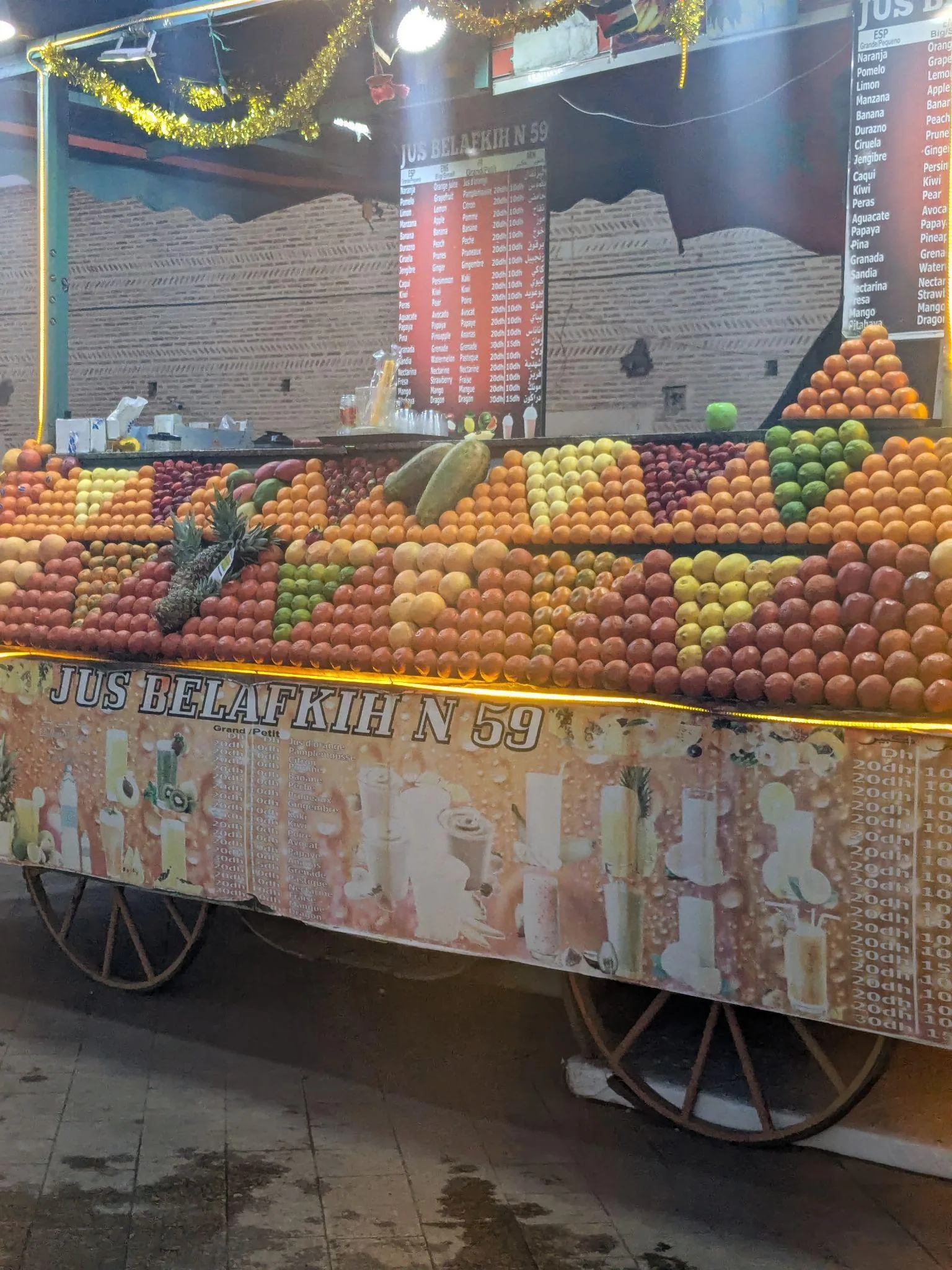
As for sights, Marrakech has plenty. We did not enjoy Jemaa el-Fna square as much as expected. I had anticipated something more authentic, but it was overwhelmingly geared towards tourists: vendors everywhere selling everything imaginable, all aimed squarely at visitors rather than locals. Maybe we went at the wrong time, but we could not quite catch what all the fuss was about.
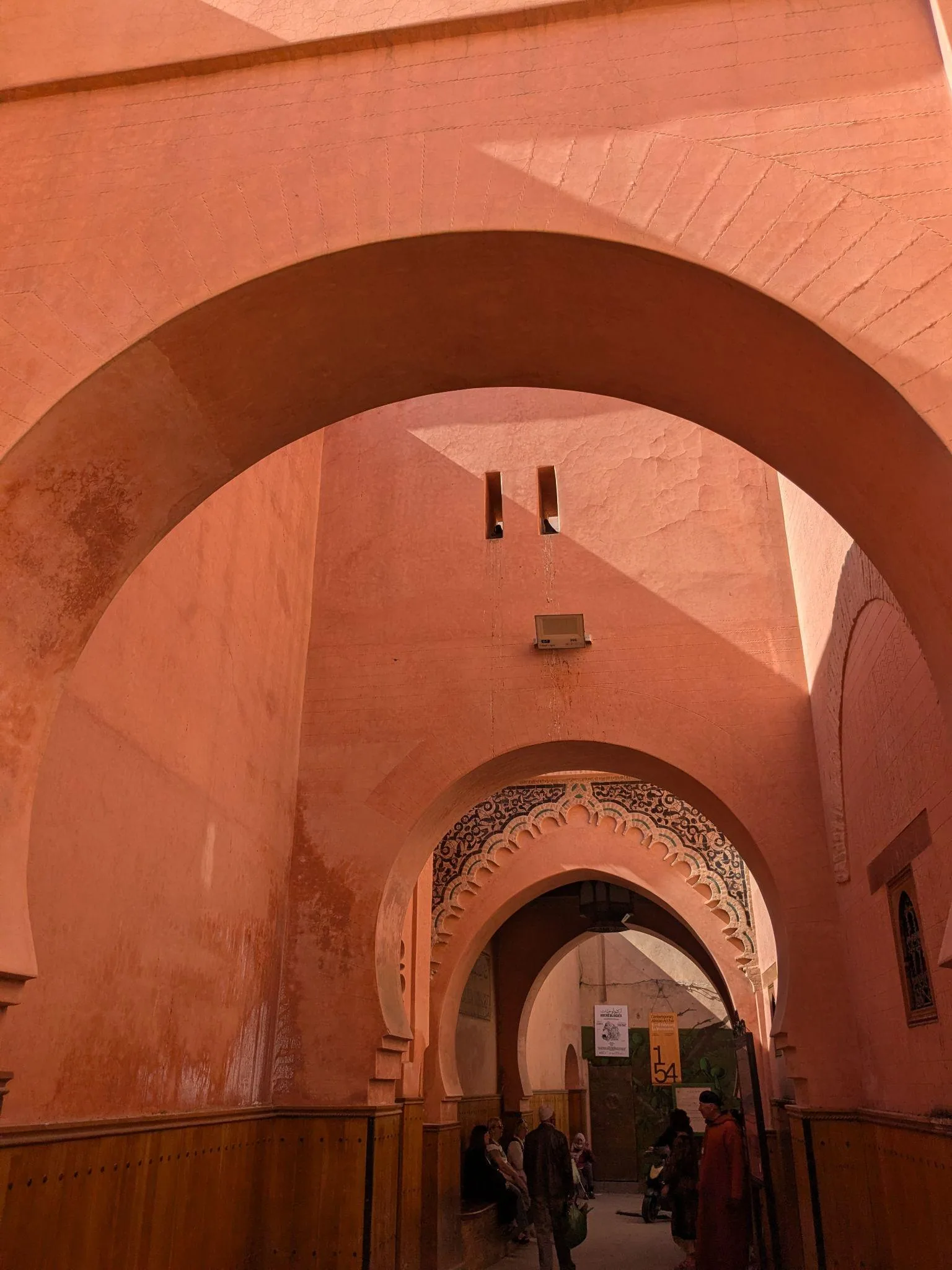
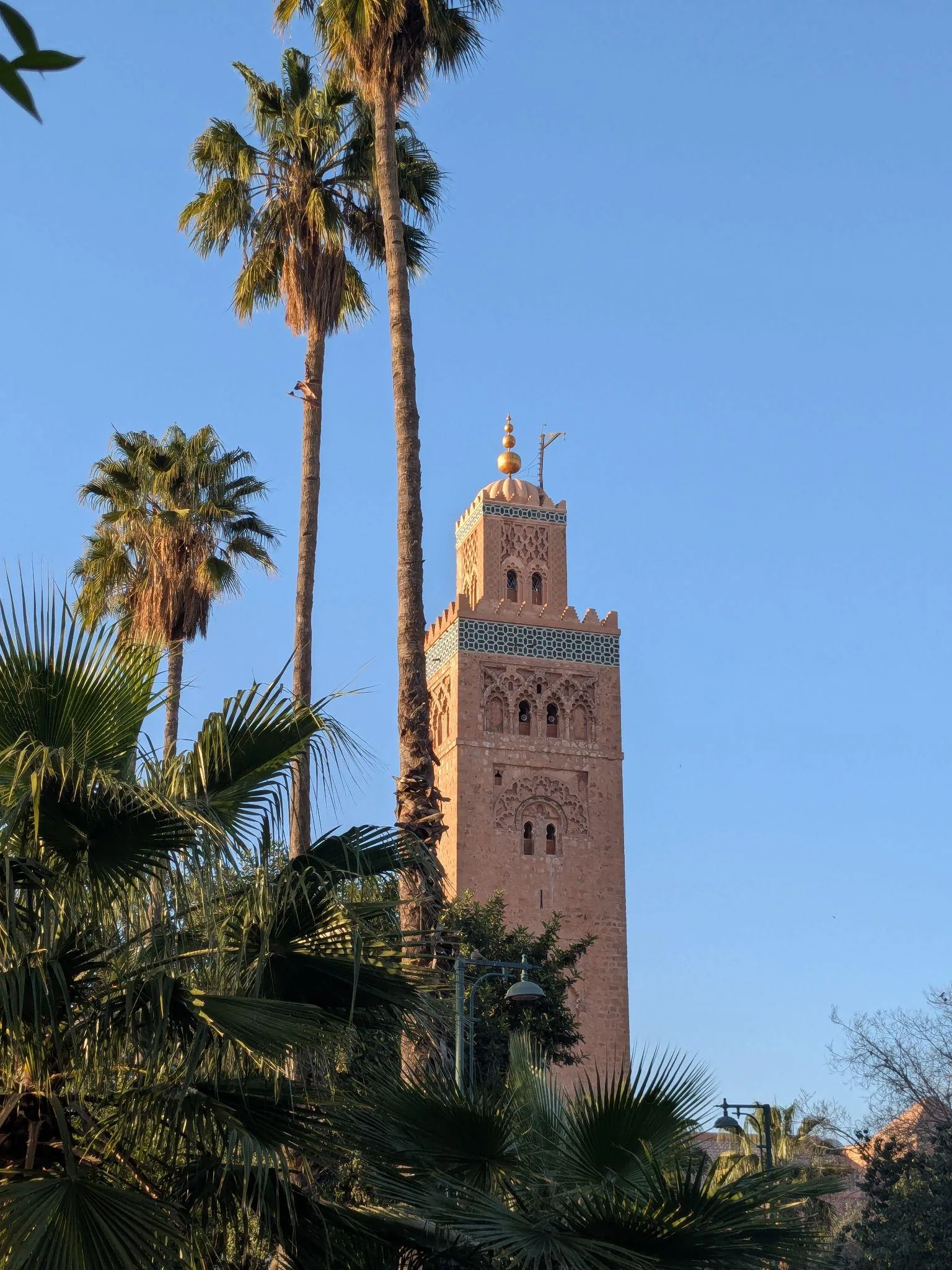
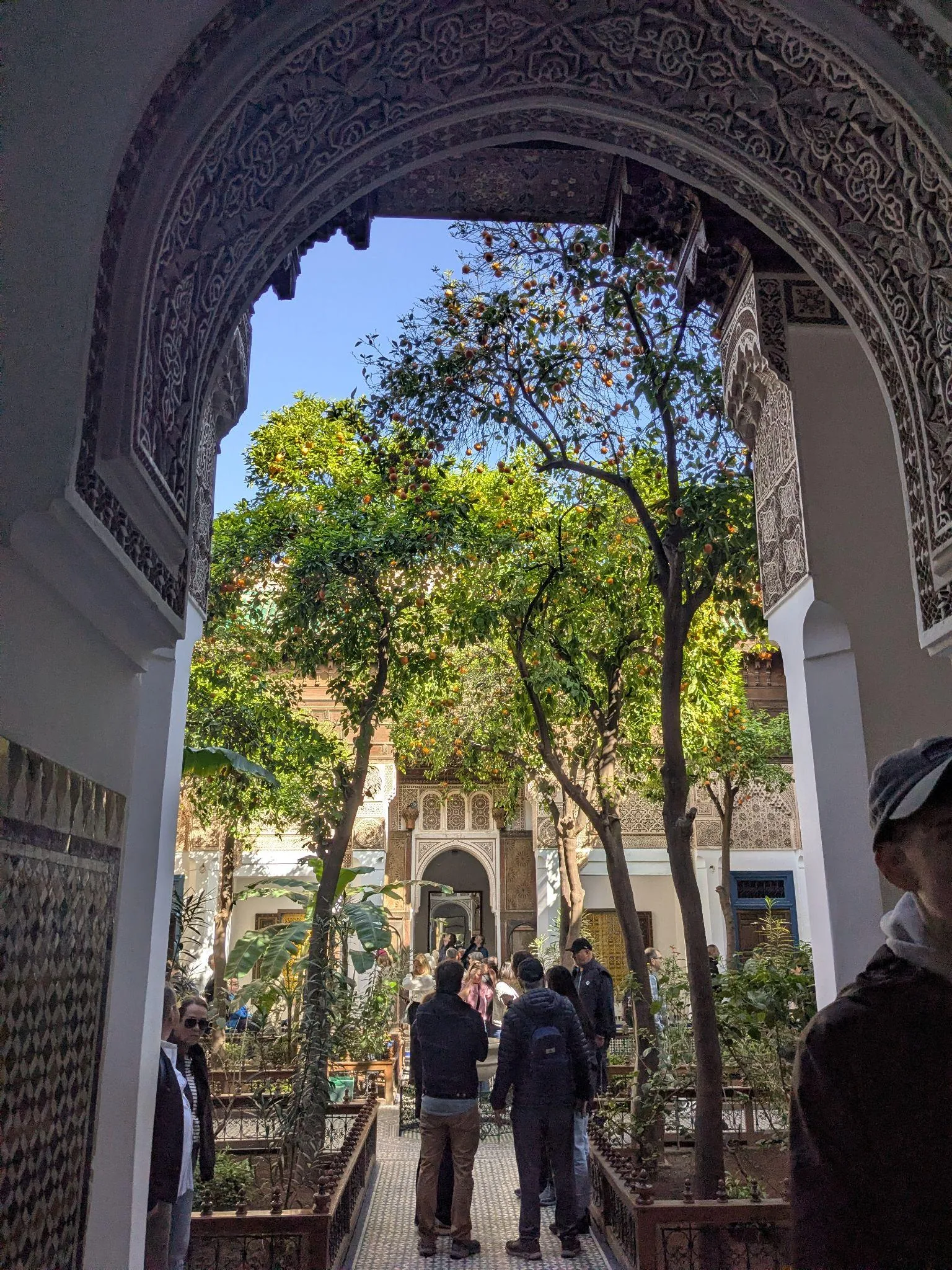
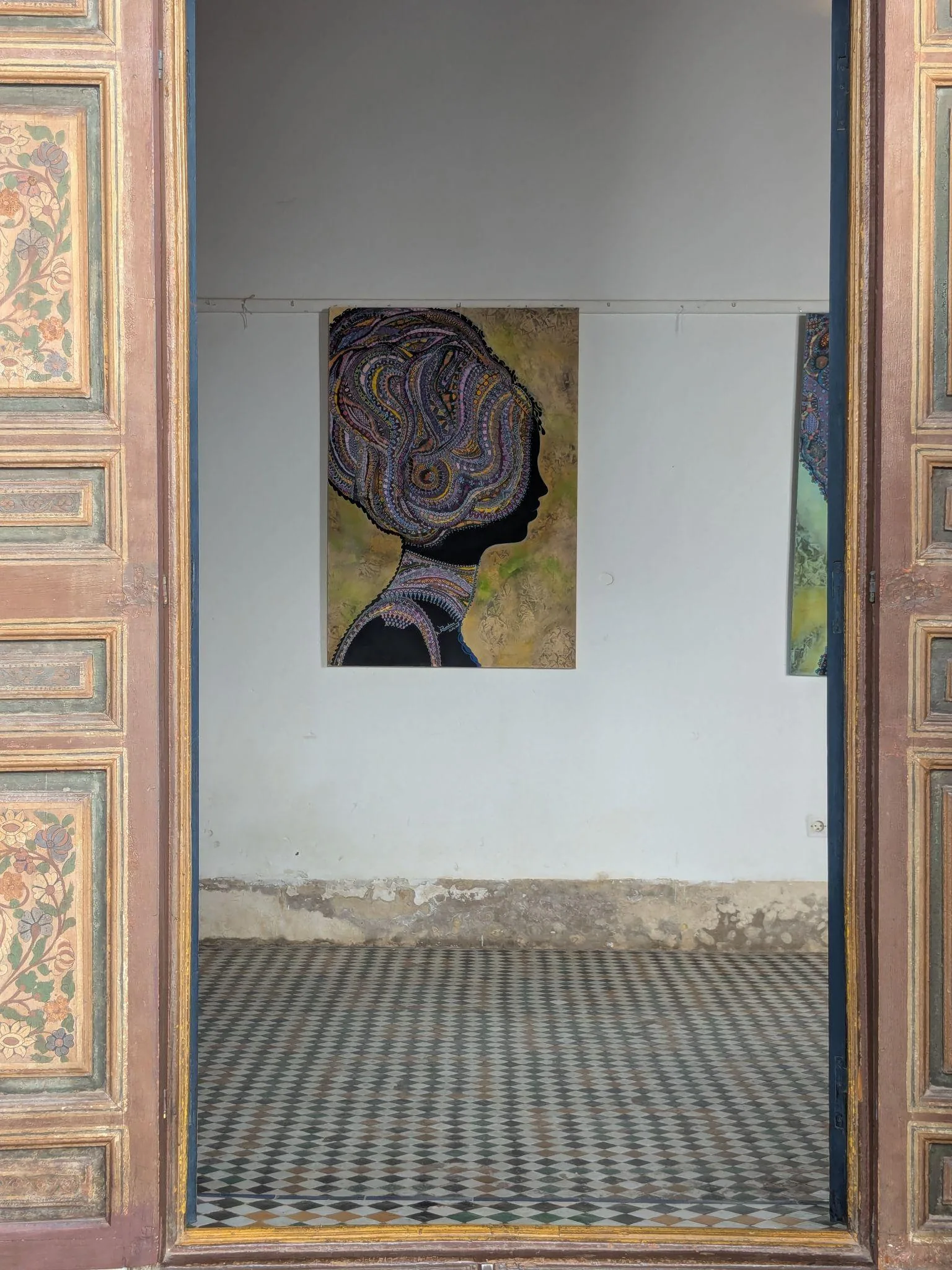
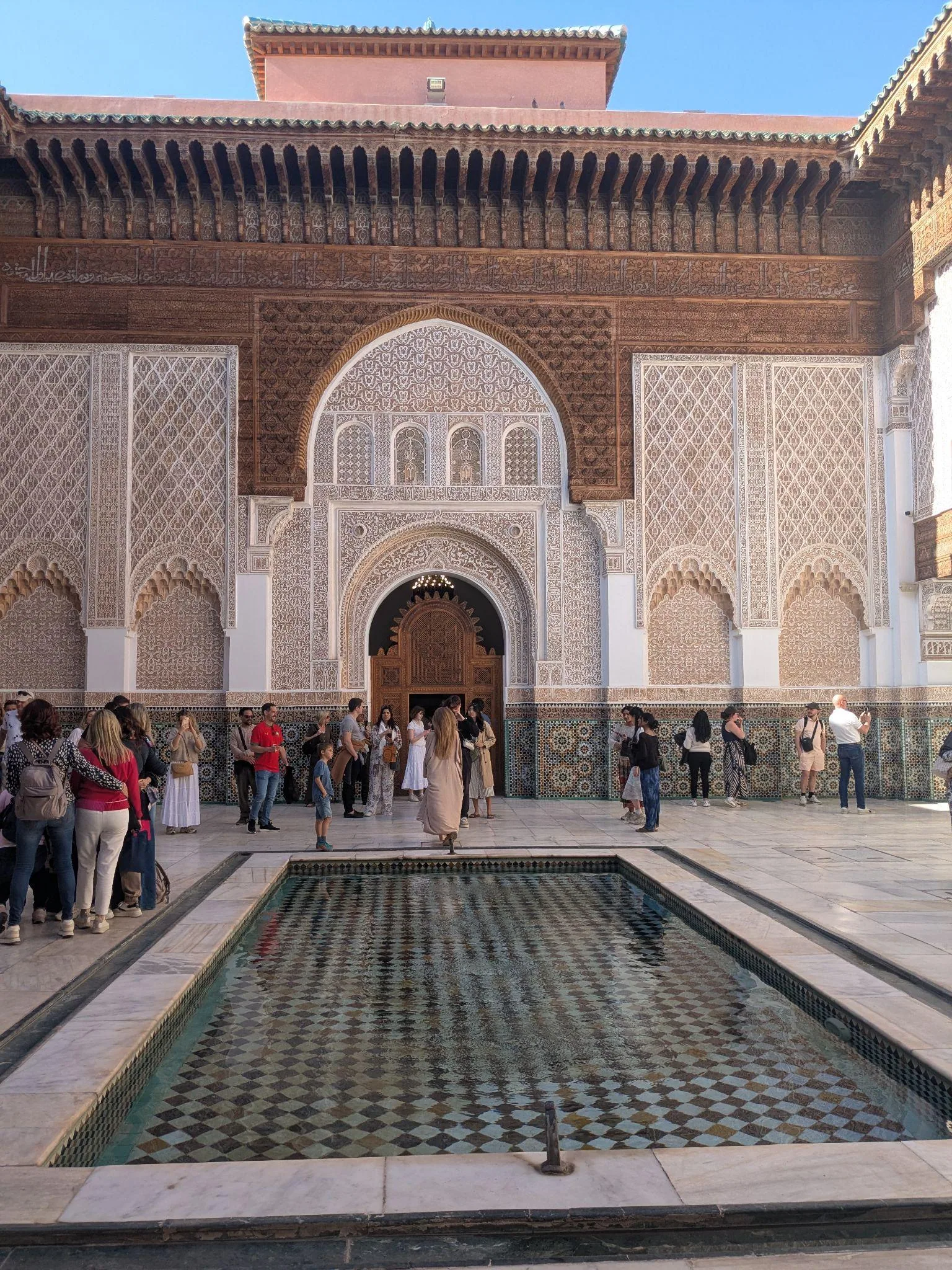
That said, Marrakech does have genuinely stunning places. Madrasa Ben Youssef is gorgeous inside, easily one of the most beautiful buildings I saw in Morocco. Bahia Palace was also beautiful, especially the garden patios. I am always a fan of anything green.
I skipped the famous Yves Saint Laurent Majorelle Museum, partly because you need to book tickets days or even weeks in advance, and partly because I had read mixed reviews and was not convinced it was worth the effort.
Overall, Marrakech has beautiful things to offer and holds significant cultural heritage. But it is undeniably more commercialised. Tourism has left its mark in a way that Fez, for now, has largely avoided.
Fez or Marrakech: Which Should You Choose?
We spent one full day in Fez and, for speedy travellers like us, it was enough to cover the highlights. That said, if you prefer a slower pace, lingering over meals, exploring the food scene or getting lost in the markets without a schedule, two days would serve you much better.
As for which city to choose, it really depends on what kind of traveller you are.
Choose Fez if you want authentic Morocco. Slower, more local, less polished for tourists. The kind of place where you feel you are experiencing something real.
Choose Marrakech if you want vibrant energy, stunning architecture and world-class sights, and do not mind sharing them with crowds. The beauty is undeniable, but go in with realistic expectations. It is more commercialised, and that gap with the “real Morocco” feeling is noticeable.
Personally? Fez won my heart. But I would recommend visiting both if time allows. They complement each other perfectly and together they tell the full story of Morocco.
And whatever you do, do not skip the tagine. Even if you are not an onion fan.
Have you visited Fez or Marrakech? Which did you prefer? Drop a comment below. I would love to hear your take.