

Porto · Porto and Vila Nova de Gaia · Portugal
Porto and Gaia: The Two Faces of One City
Steep streets, one river, many tiles, and one pastry lost to a seagull.
A Porto travel guide for a long weekend: Gaia viewpoints, azulejos, Francesinha, Aveiro, a sea chapel, Livraria Lello, markets, gardens and practical tips.
Quick facts
- Best time
- May worked well for sunshine, walking and day trips without summer heat.
- Trip length
- 2 or 3 days is good for Porto; 5-7 days allows you to explore more of the surrounding area.
- Where to stay
- Stay in Baixa or near Ribeira for a first visit; Gaia works well for views.
- Good for
- Azulejos, viewpoints, food, port wine cellars, river walks and easy day trips.
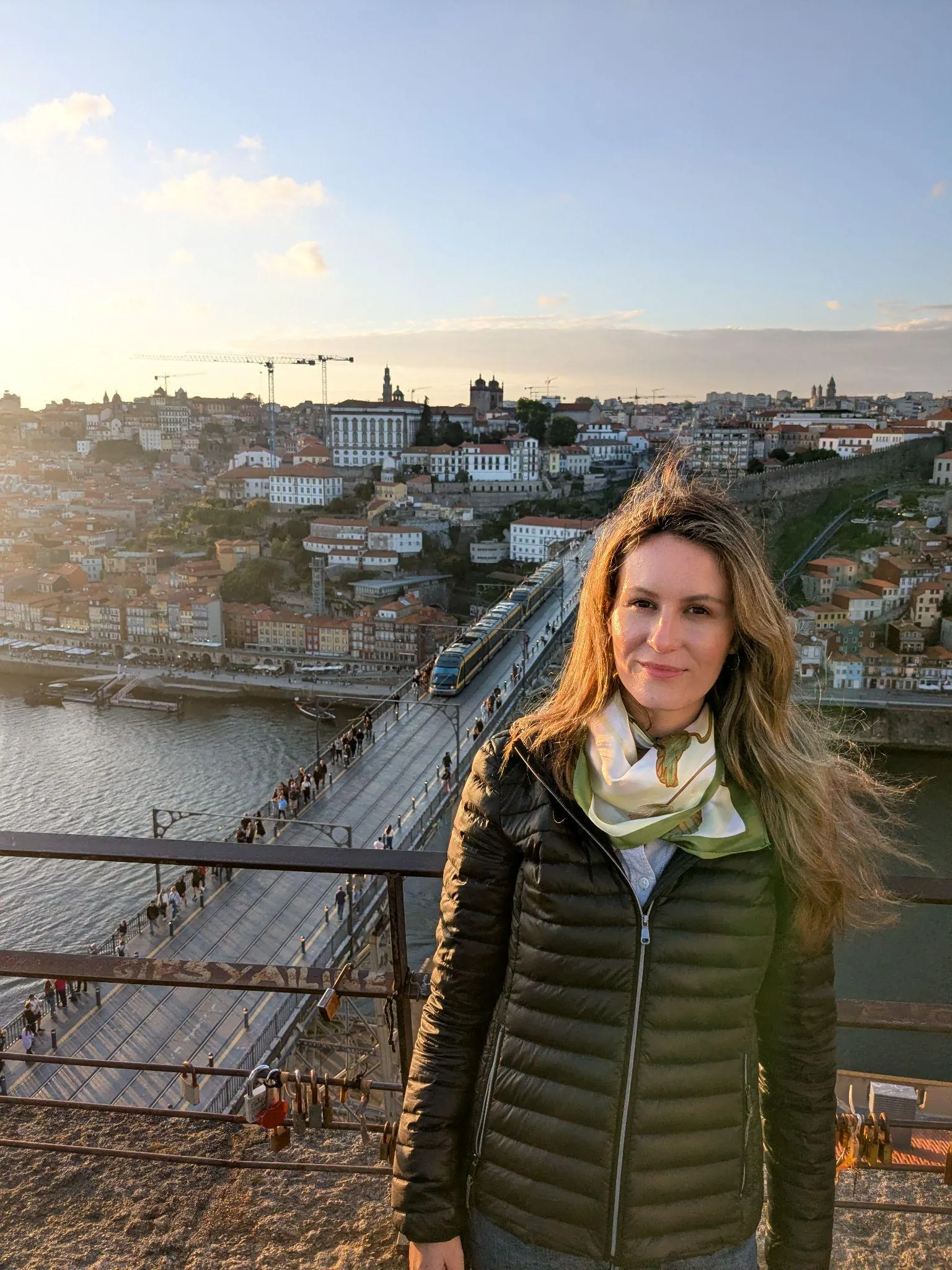
Oh Portugal, my dear Spain's sister. I had been there before, to the Algarve twelve years ago, which I absolutely loved. October, not so many tourists in sight, wild and extraordinary beaches, and some of the kindest people I have encountered anywhere. And of course Lisbon, which felt too polished, too Disneyland-like for my taste.
Porto was different, and the trip was quite spontaneous, decided only three weeks before departure. Flights from Valencia were around 50 EUR return.
My boyfriend and I both love landscapes, so the plan was simple: explore Porto and squeeze in a visit to the Douro Valley nearby.
Next Stop Read the full Douro Valley post Terraced hillsides, Quinta do Seixo and the drive that changes the pace of the trip.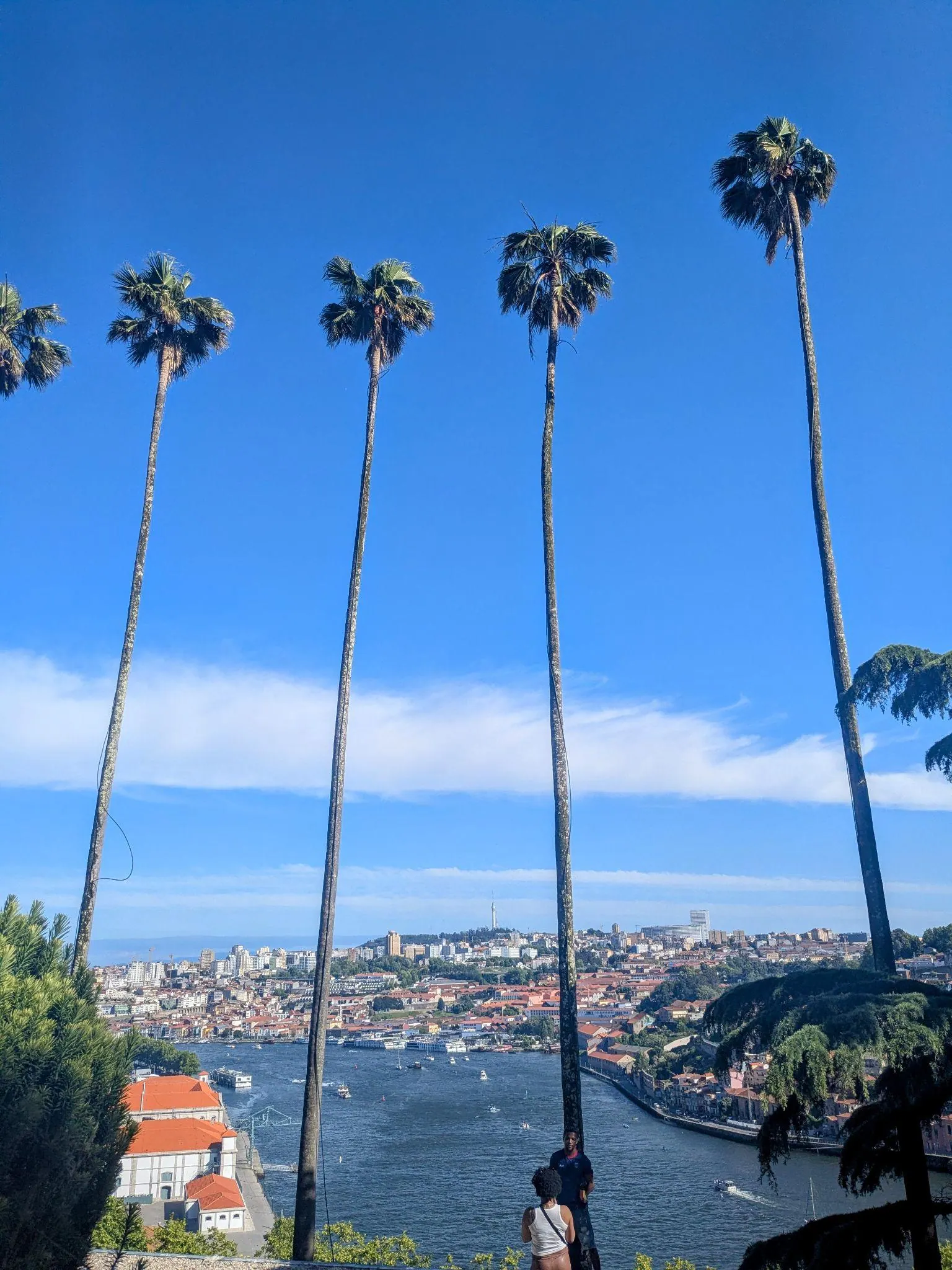
Best Time to Visit Porto
We visited in May and it was perfect. Porto and its region are known for rain. It rains quite a lot here, but we were lucky and got sunshine every single day. The temperatures were pleasant without being hot, ideal for walking the city's hilly streets without overheating. May gets a strong recommendation from us.
Getting Around Porto
Porto is surprisingly compact. We got around entirely on foot, no public transport needed. Even crossing to the other side of the river via Ponte Luis I is a walk. The city is hilly in places, but that is part of its charm.
We also discovered that Uber was quite cheap compared with other cities in Europe, so it is a useful option when you want to save your legs or get somewhere quickly.
We did rent a car for day trips outside the city, Aveiro and the Douro Valley, and it made everything much easier. We were lucky with parking since our hotel included it, which in Porto is a bonus worth considering when booking accommodation.
Budget Snapshot
- Flights: around 50 EUR return from Valencia, though from other European countries prices may be higher
- Hotel: 84 EUR per night, not cheap by Portuguese standards, but fair for central Porto in May
- Food: around 15 EUR per person per meal and drink across a range of places
Day 1 Evening: Arrival, Bacalhau and a Seagull Heist
Upon arriving at Porto airport we picked up our rental car and headed into the city. We stayed at Hotel S. Gabriel, small, simple, two stars, but with everything you need. In May it cost us 84 EUR per night, which given Porto’s accommodation prices is a solid deal.
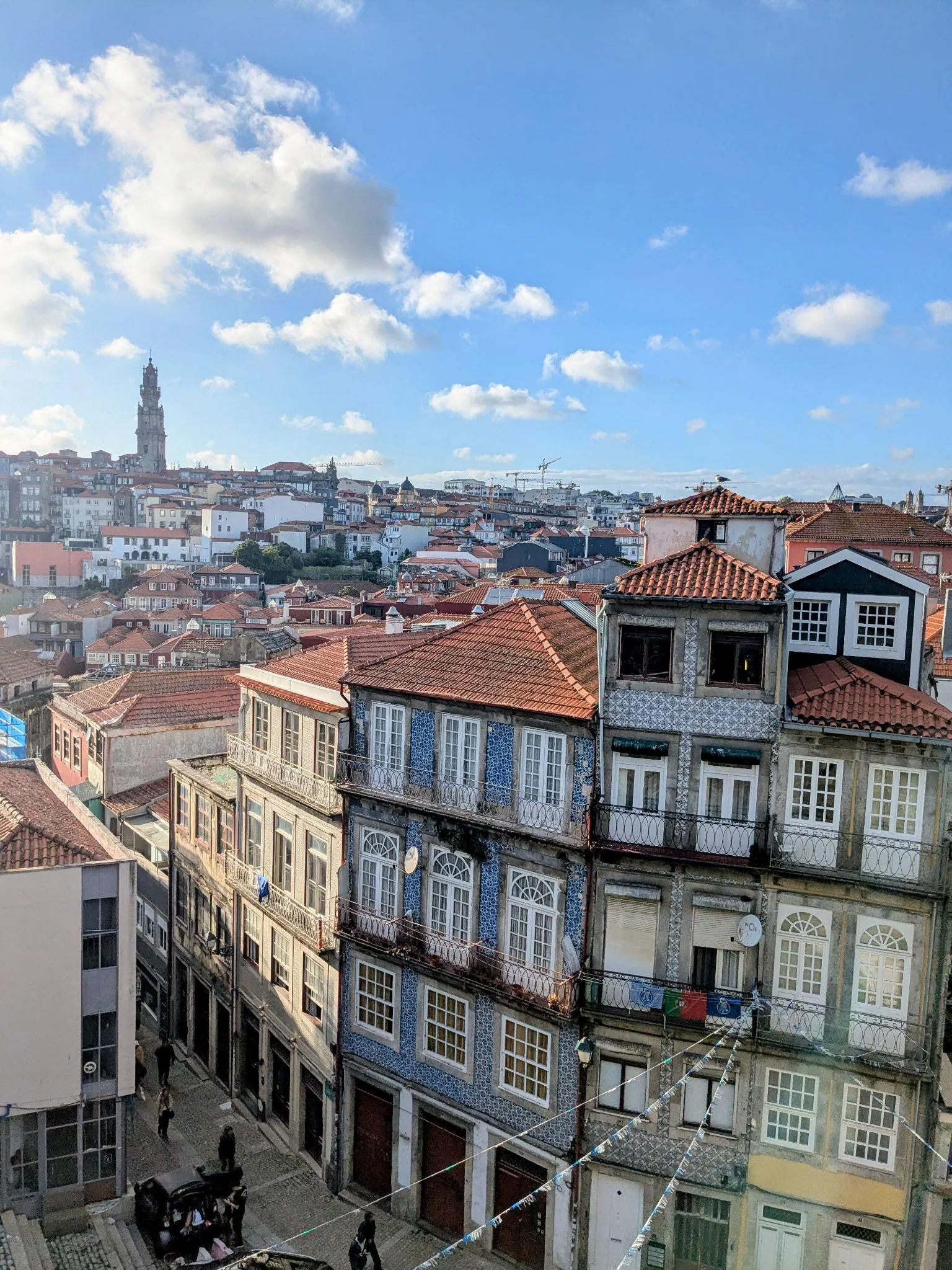
One of the first things I noticed arriving into the city was the architecture: low-rise buildings, much lower than what I am used to in Spain, many of them covered in azulejos, the iconic Portuguese decorative tiles. It immediately gives Porto its distinctive character.
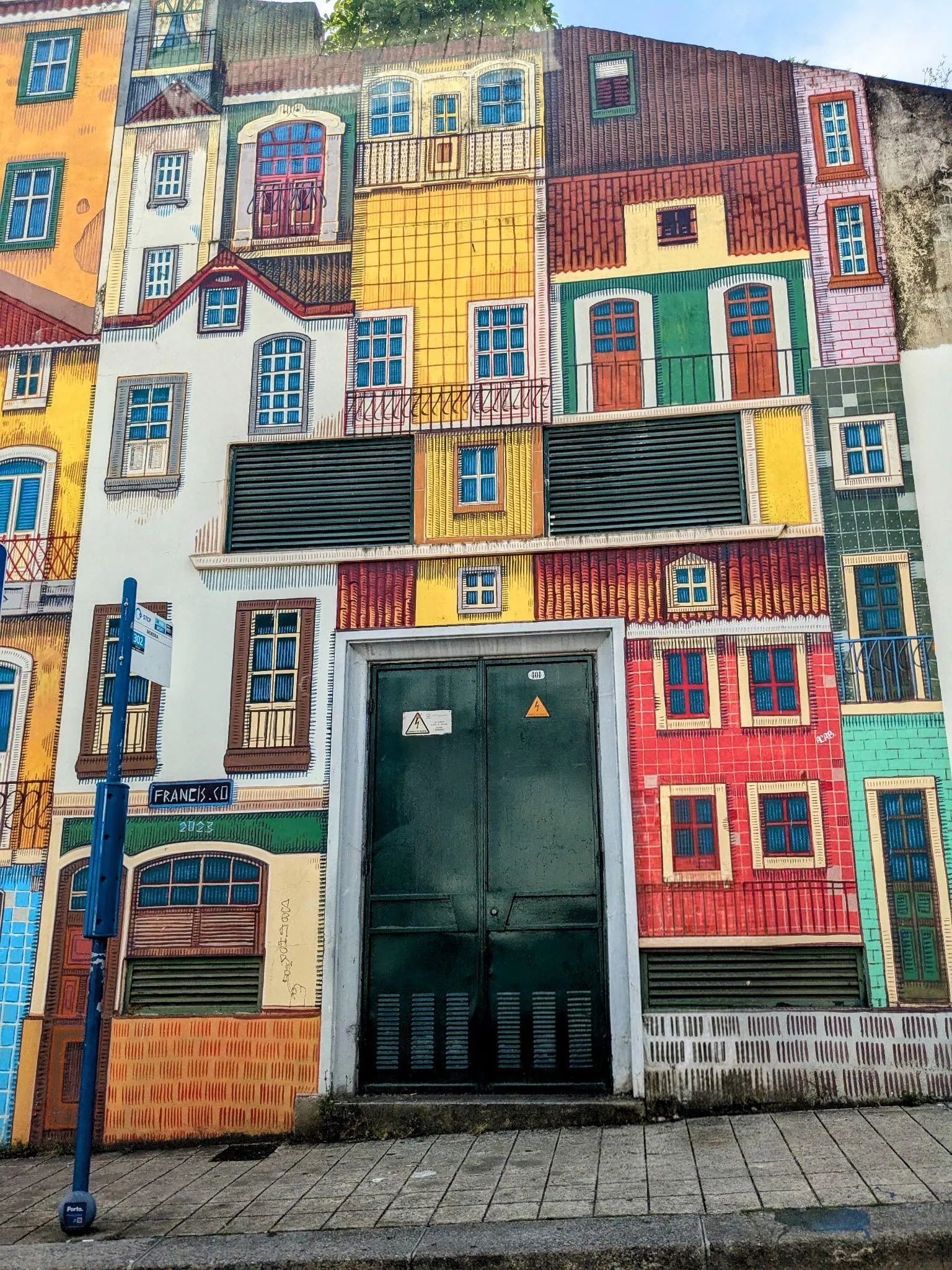
Once we had dropped our things at the hotel, we went to explore. It was around 6pm and hunger was calling. We found ourselves in the very centre at Bolhao a Gosto - Comida Tradicional, a traditional Portuguese restaurant I would recommend. I ordered Bacalhau a Bras, the famous Portuguese salted cod dish, and it was delicious. A cold beer after time spent at the airport and in the car was exactly what I needed.
Our friendly waiter suggested heading to the port area for sunset, so we stopped at Confeitaria do Bolhao on the way out and picked up some pastel de nata and a local pastry I had not tried before: Castanhas de Ovos, a caramelized egg yolk delicacy that is dangerously good. Founded in 1896, the confectionery still keeps much of its traditional interior. We also noticed Portuguese people inside, and the pastry prices were very reasonable, so it did not feel like a typical tourist spot attracting visitors only for pasteis de nata.
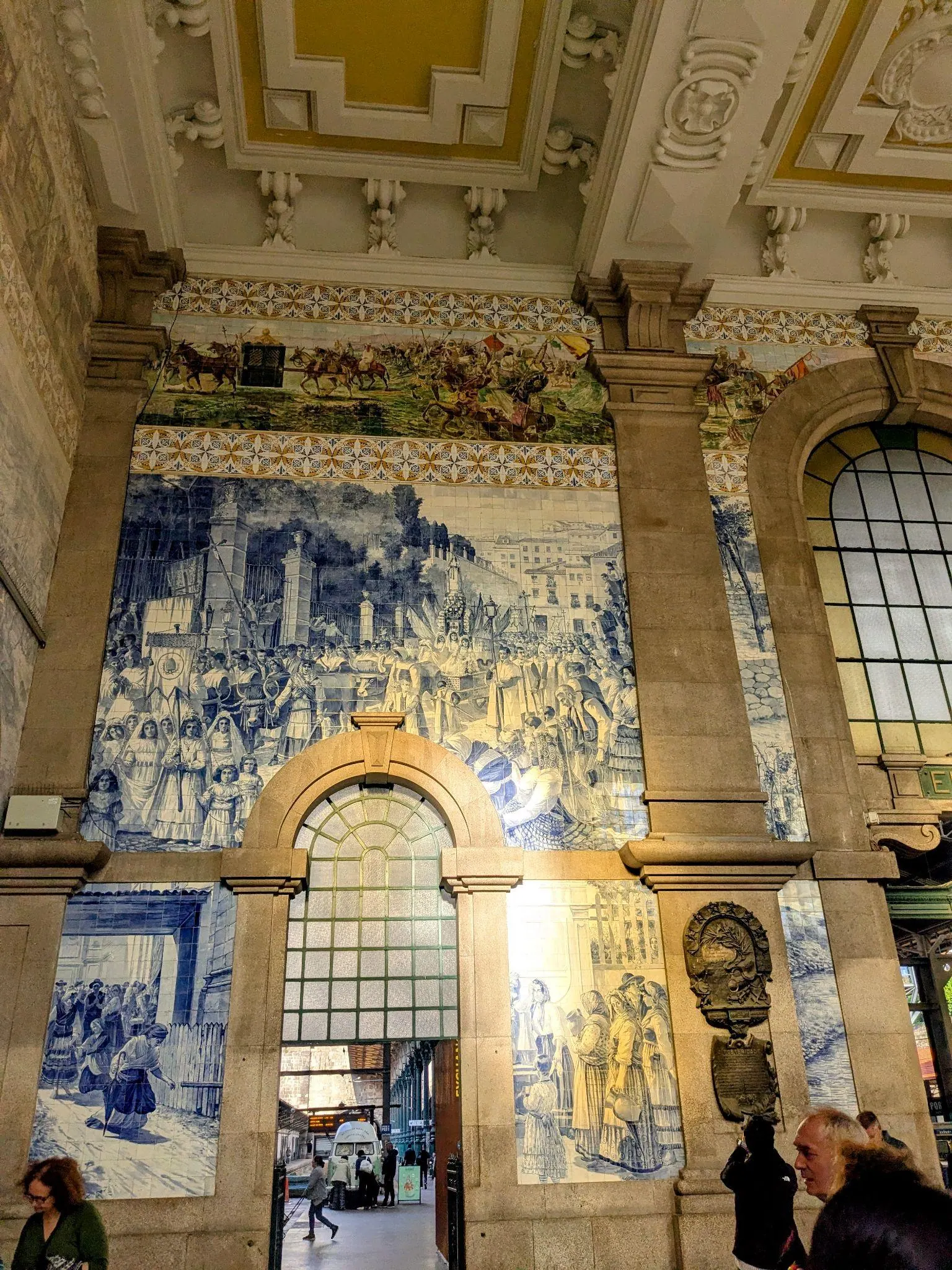
On our way we also briefly visited São Bento station, known for its beautiful blue azulejo paintings. The station was built on the site of a former Benedictine convent, and its entrance hall is covered with around 20,000 tiles by Jorge Colaço, showing scenes from Portuguese history and everyday life.
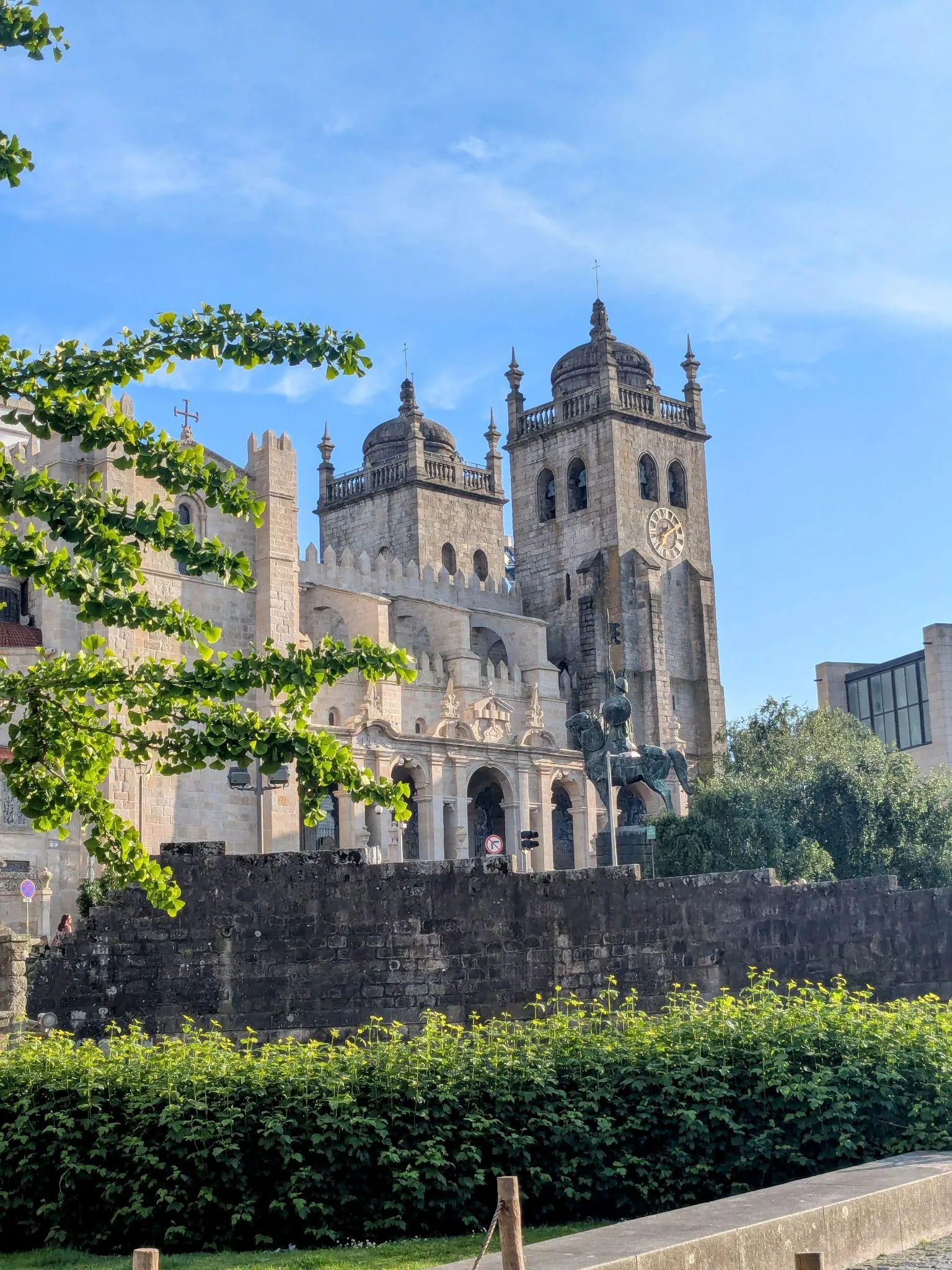
On the way to the river we stopped at Porto Cathedral. We could not enter at that hour, but walking around the exterior brought us to one of my favourite viewpoints in Porto. The view is not over the river, but I loved the colourful houses and the way the city stretched out below us. The cathedral itself dates back to the 12th and 13th centuries, and its Romanesque beginnings are still part of that fortress-like appearance.
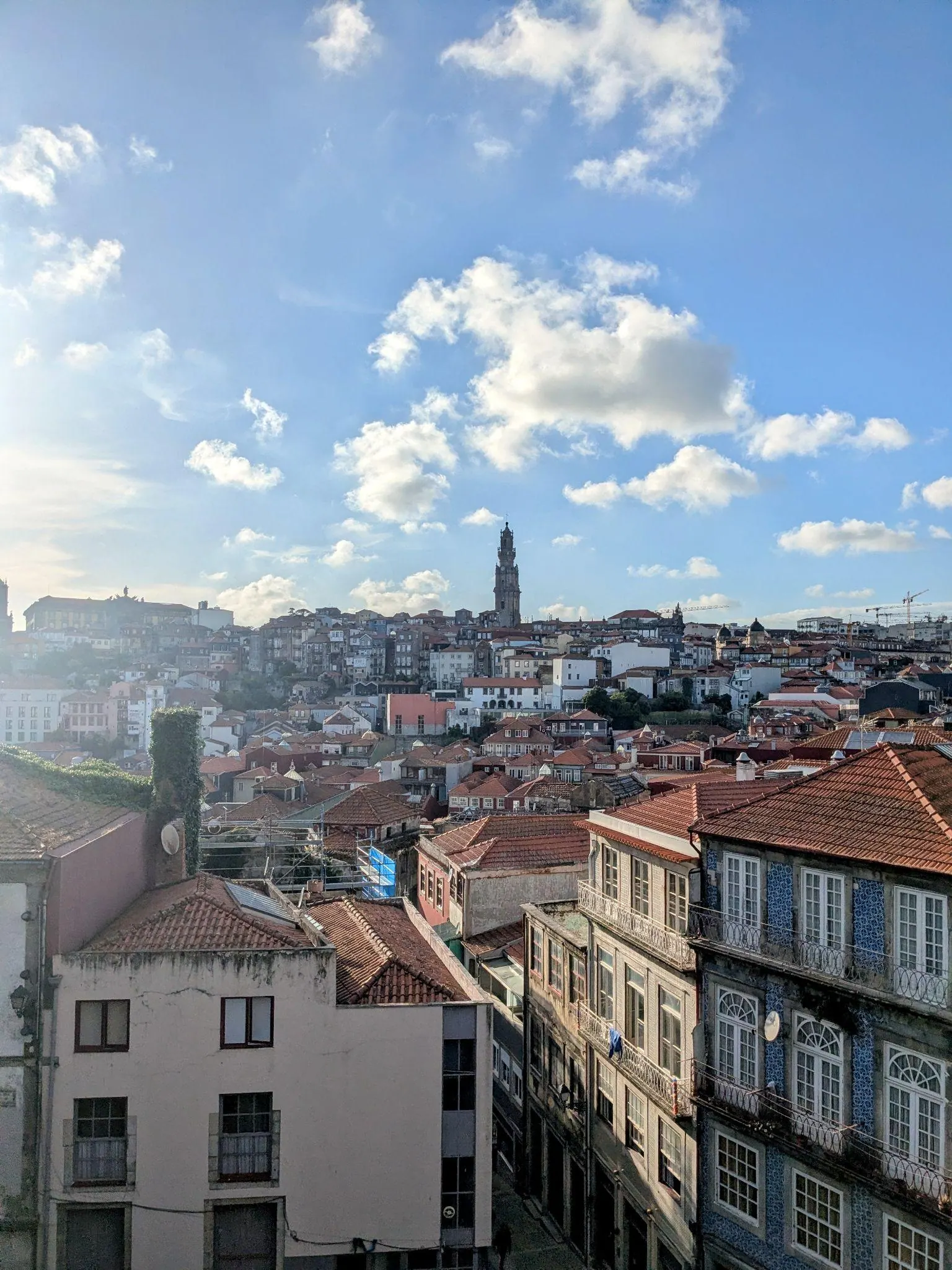
On our way to the bridge we crossed a little street, and what was surprising was that there were quite many abandoned buildings. We were wondering why they stay like that and are not used.
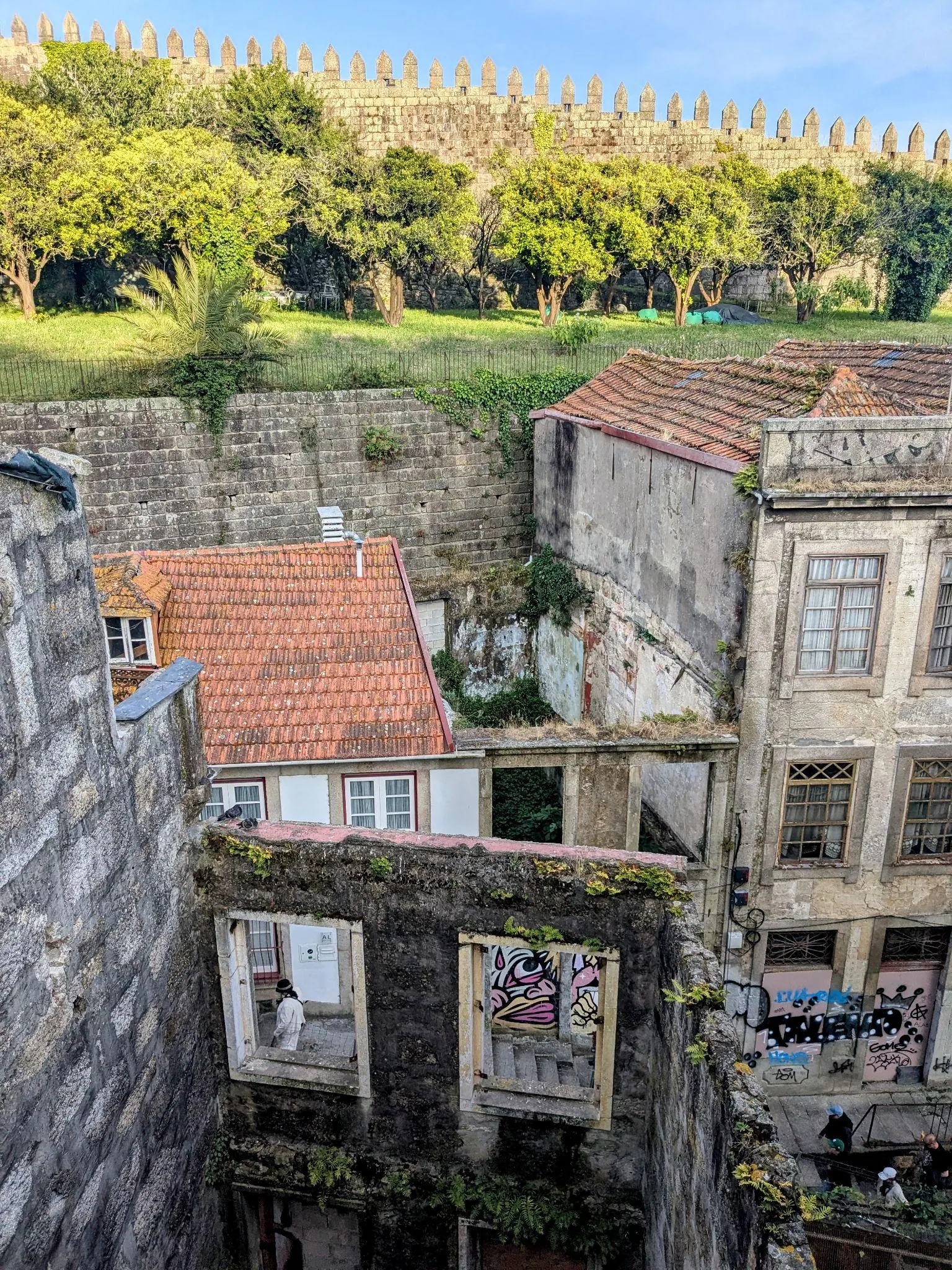
Then came the bridge. Ponte Luis I is one of those Porto experiences that makes you glad you came. Crossing it on foot with the river below and the city on either side is something special. Designed by Theophile Seyrig, a student of Gustave Eiffel, at the time of its completion in 1886 it was the longest iron arch bridge in the world. There is also a Gustave Eiffel Avenue in Porto. Actually, the famous engineer lived and worked in Porto, and in 1877 Eiffel completed the D. Maria Pia Bridge.
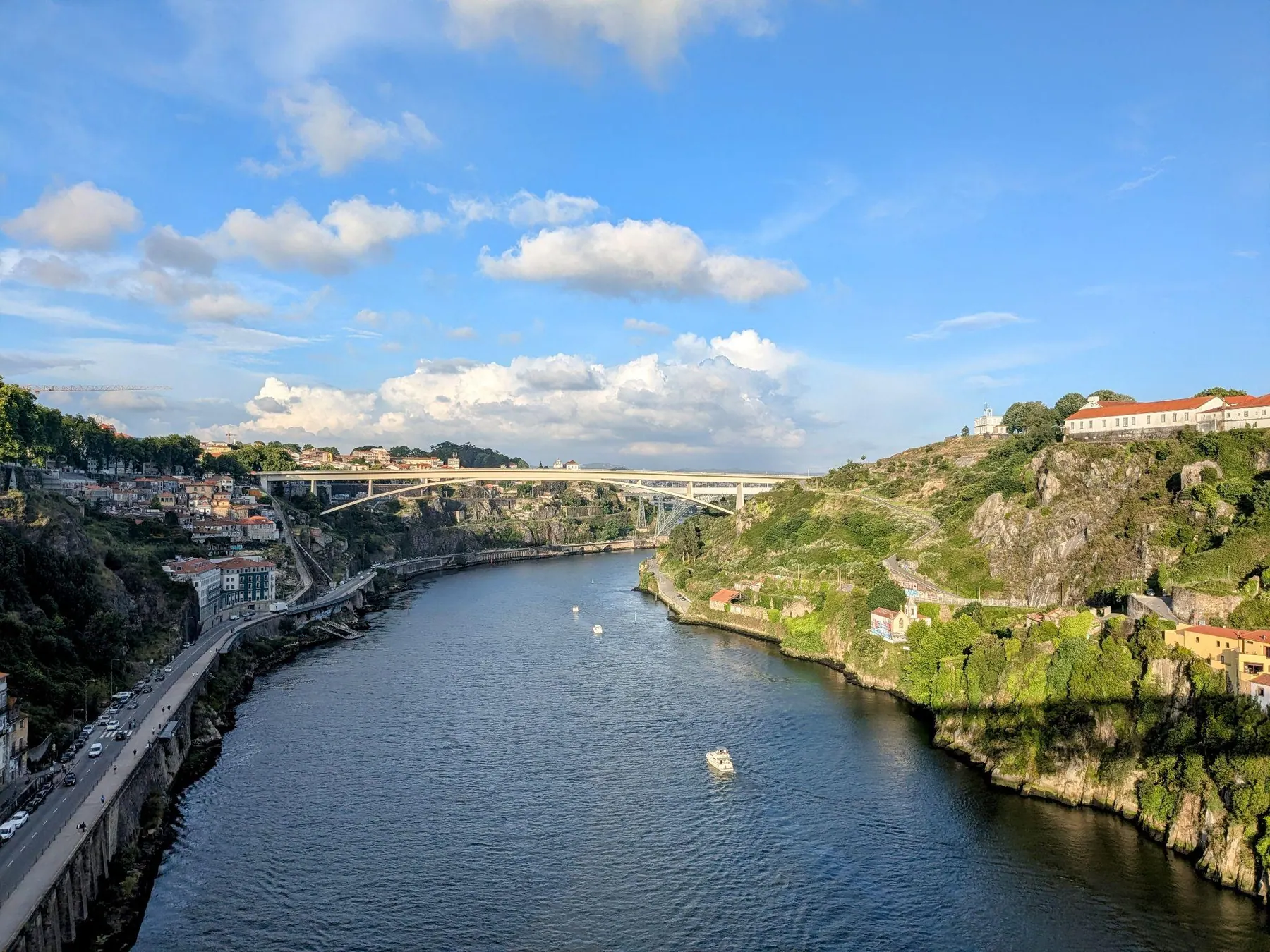
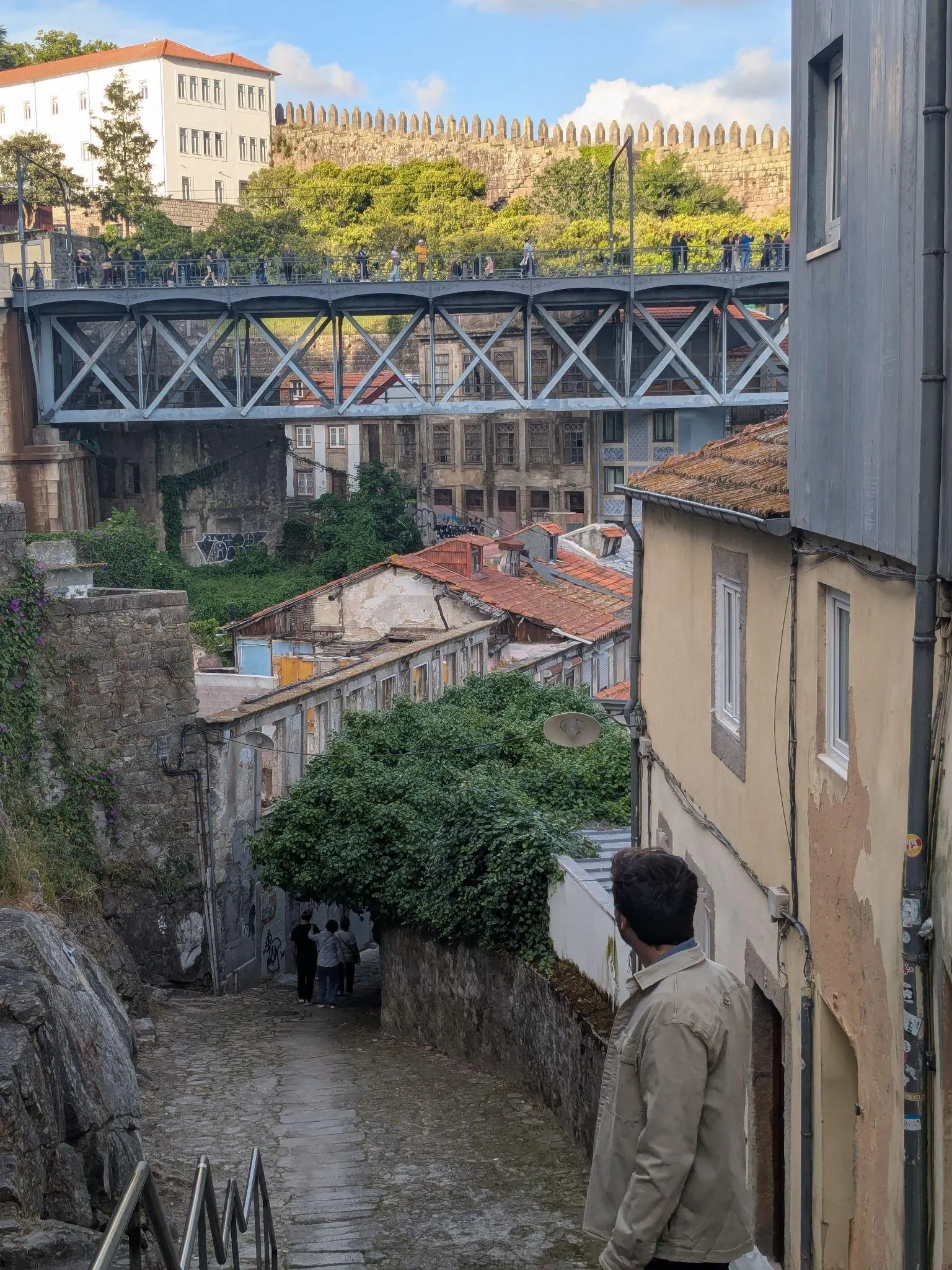
Something worth knowing about the river itself: the Douro divides Porto on the north bank from Vila Nova de Gaia on the south bank. What looks like one city from the bridge is actually two, and all the port wine cellars are stored in Gaia, not Porto itself, partly due to the more sheltered climate and partly for historical tax reasons. The name “Porto” actually gave Portugal its name. In medieval times the region north of the Douro was called Portucale, which eventually became Portugal. Standing on that bridge, you are literally standing on the historical divide that named a whole country.
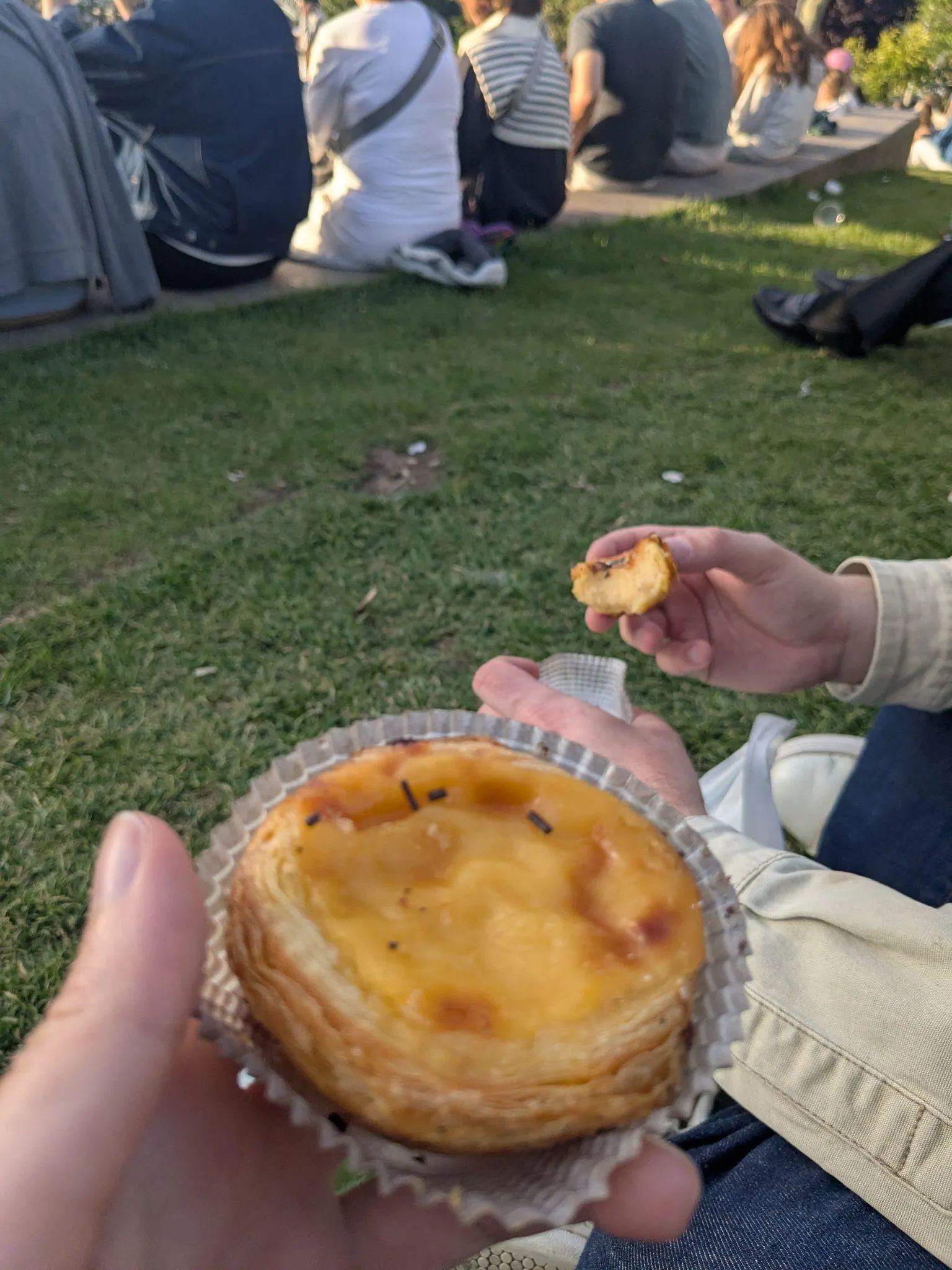
On the other side we found a park to finally enjoy our pastries, but that turned out to be a mistake: we were immediately surrounded by seagulls who had clearly done this before. And then, in one swift and shameless move, one of them stole my boyfriend’s pastel de nata clean out of his hand. Lesson learned: never keep sweets. Always eat them immediately. That happened in Jardim do Morro, a park that gets very busy in the evening.
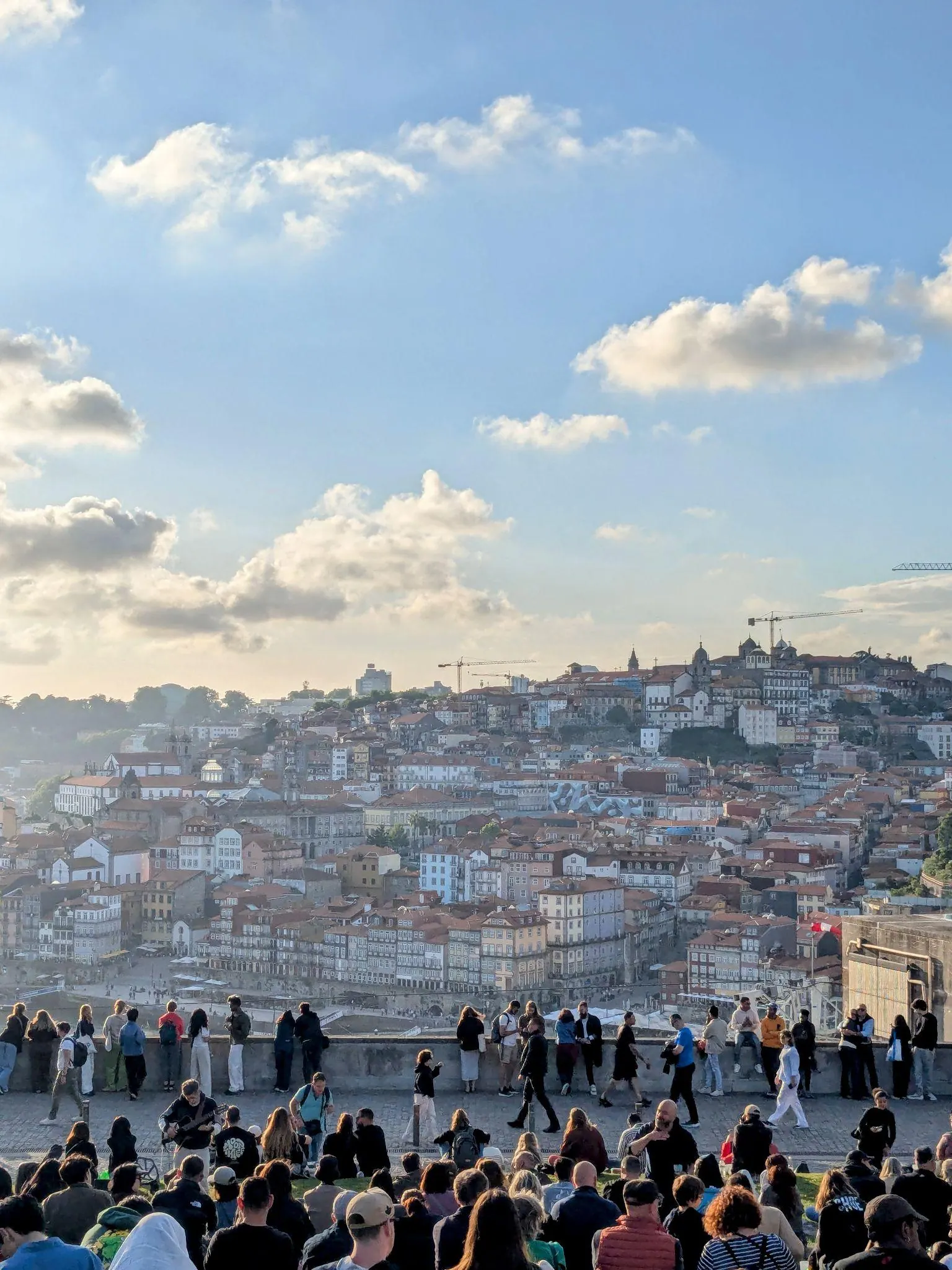
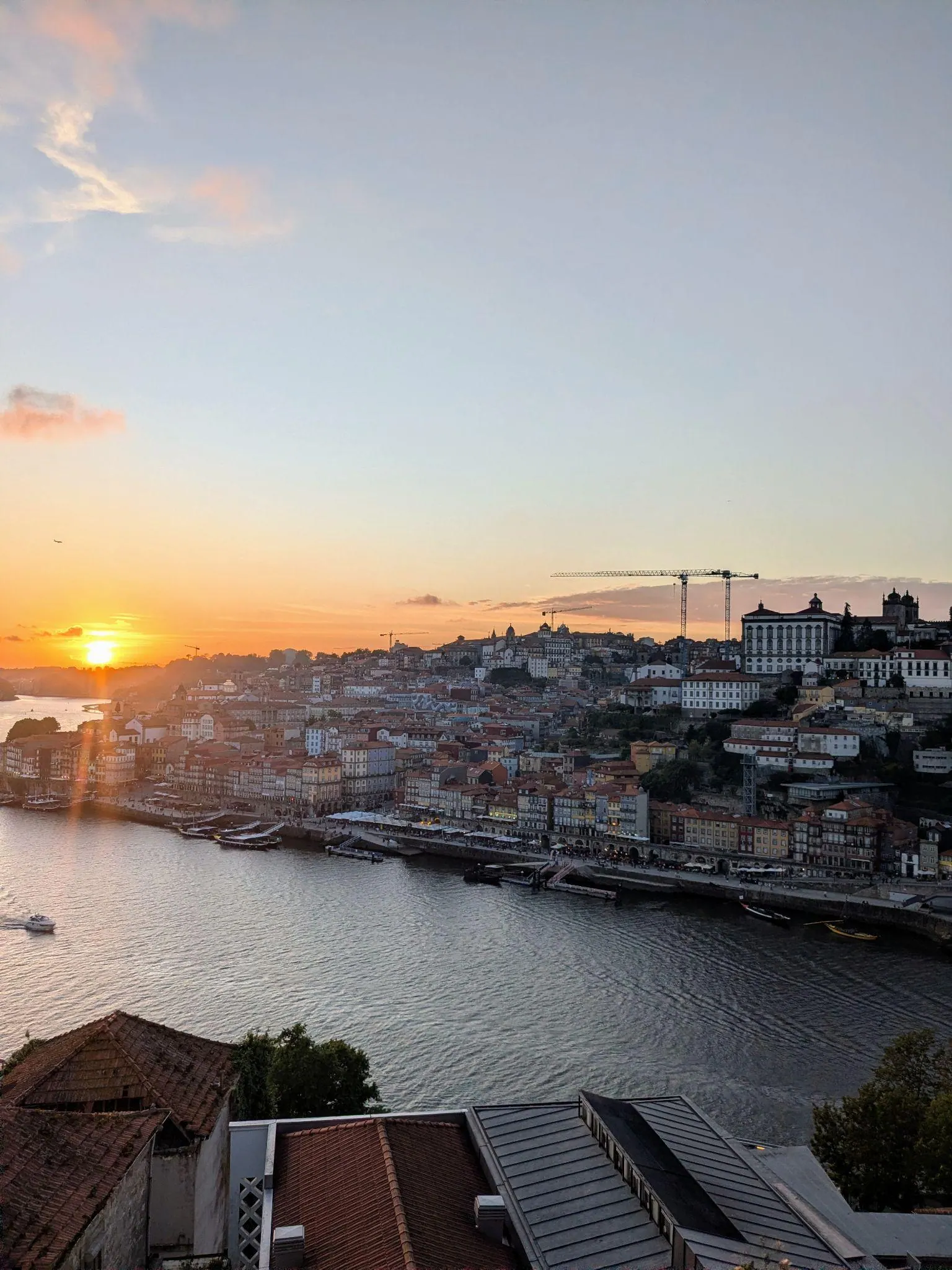
Slightly traumatised but mostly amused, we continued to Miradouro da Serra do Pilar, a viewpoint next to a Catholic church offering panoramic views across the river and the city at sunset. The atmosphere there was lovely and relaxed, and we spotted something charming: a girl was taking photos of people on the spot and printing them immediately as little souvenirs. We got one too. A small unexpected memento of the evening.
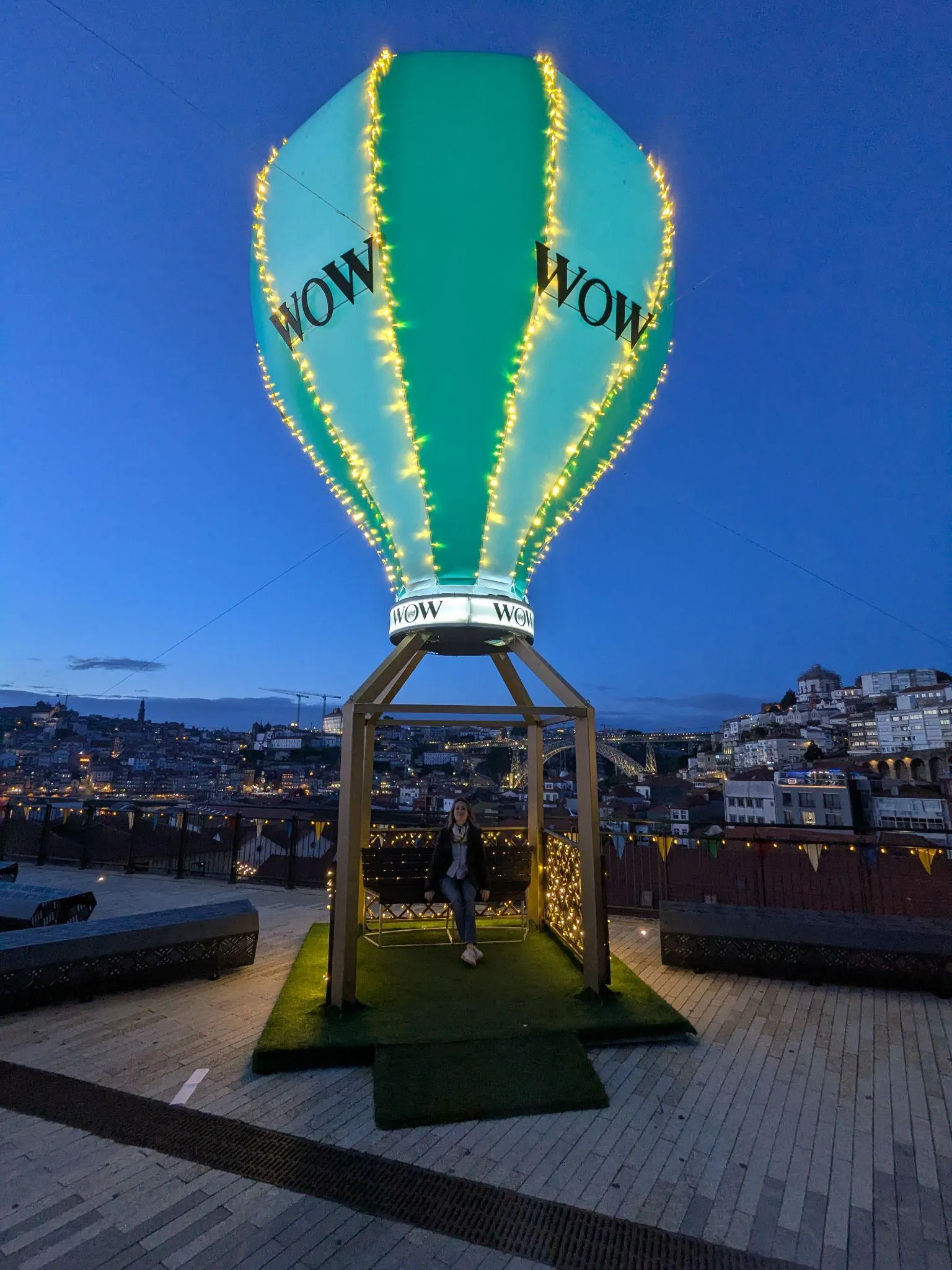
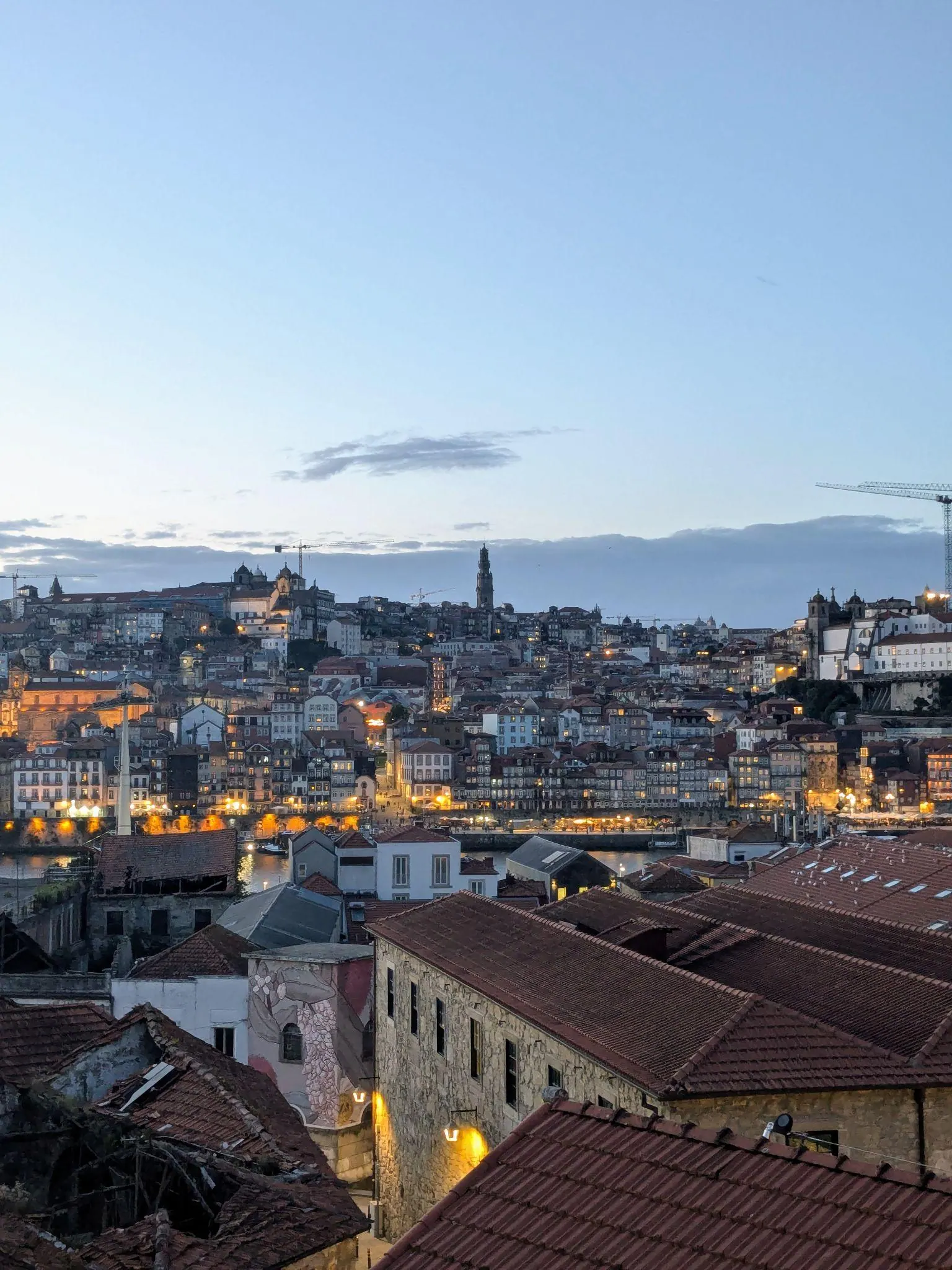
On the way back we wandered through the World of Wine area, known as WOW, located in Vila Nova de Gaia on the south bank. What was once a series of decaying port wine warehouses has been transformed into an entire cultural quarter with seven museums covering everything from wine and chocolate to Portuguese fashion, cork and the history of Porto itself, plus twelve restaurants and bars with some of the best views across the river to Porto. We did not enter the museums this time, but the views from the terrace back across the city were stunning. Given more time this would be a half day easily. It is far more than just a wine museum.
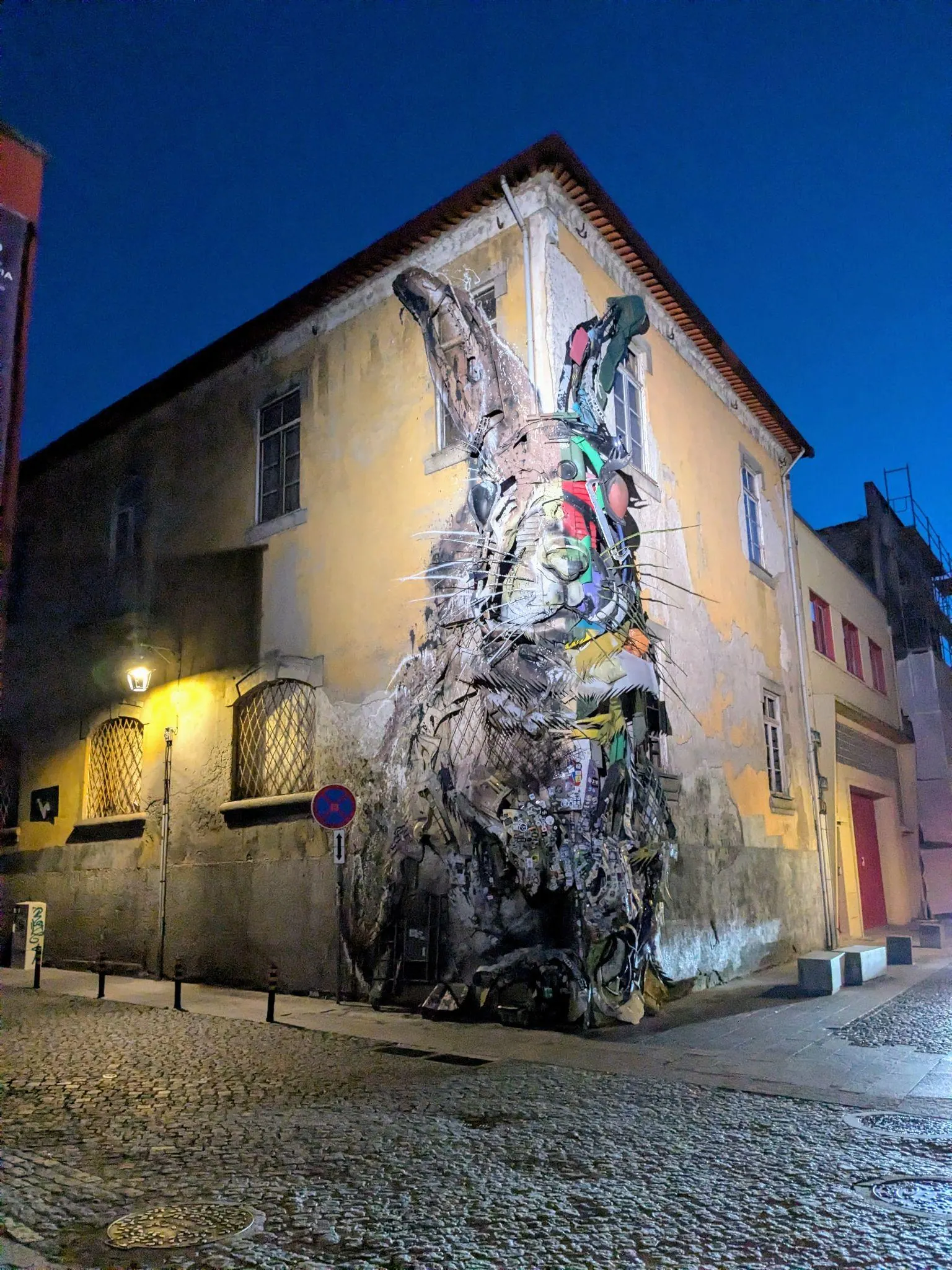
We also stumbled upon something unexpected: Half Rabbit by Bordalo, a large corner installation made entirely from recycled materials in the shape of a rabbit, located close to the World of Wine area on the other side of the river. It is searchable by name on Google Maps and worth the detour. The kind of thing that makes you stop and stare. Porto is full of these little surprises.
Porto has a relaxing atmosphere. When we were walking by the river, live music drifted out of doorways everywhere - a mix of international old hits and the melancholic Portuguese fado, those haunting traditional songs that feel completely at home in Porto’s narrow streets.
We ended the evening trying Porto’s most iconic dish: the Francesinha.
Picture this: layers of ham, steak and sausage between thick slices of bread, smothered in melted cheese and then drowned in a spiced tomato and beer sauce, sometimes topped with a fried egg for good measure. It was invented in the 1950s by a Portuguese chef who returned from France inspired by the croque monsieur and decided to make it considerably more ambitious. The name means “Little French Girl”, though there is nothing small about it.
Sharing one between two was absolutely the right call. Delicious and incredibly filling. Do not attempt alone unless very hungry.
Day 2: Aveiro, a Hidden Chapel and Evening in Porto
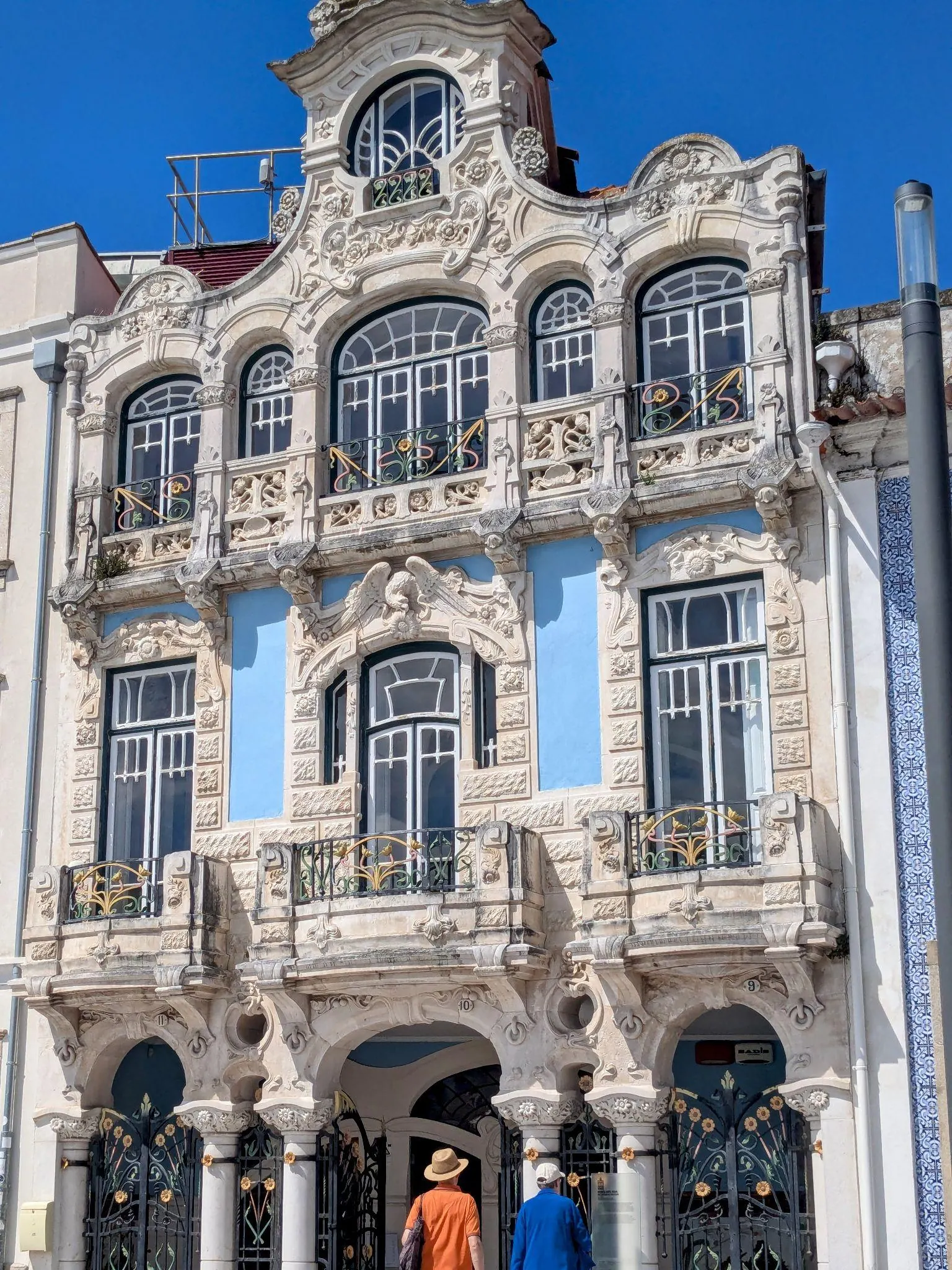
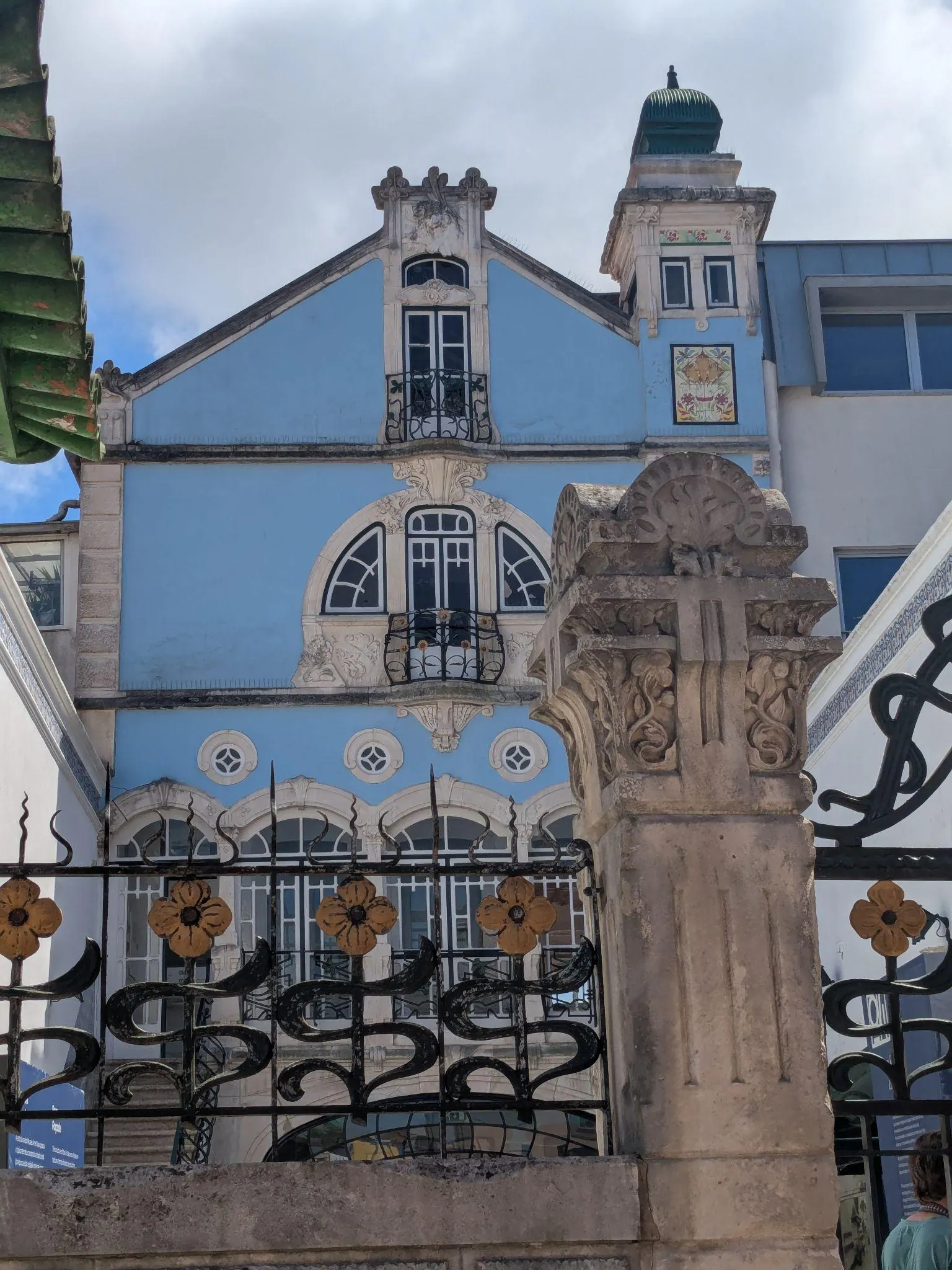
Our second day we drove to Aveiro, a small town around 50 minutes from Porto, nicknamed the “Venice of Portugal” for its system of canals and traditional flat-bottomed boats called moliceiros, once used for harvesting seaweed and today used for scenic tours. The Art Nouveau architecture here is particularly impressive. Many of the ornate facades were built by wealthy Portuguese emigrants returning from Brazil in the early 20th century who wanted to show off a little.
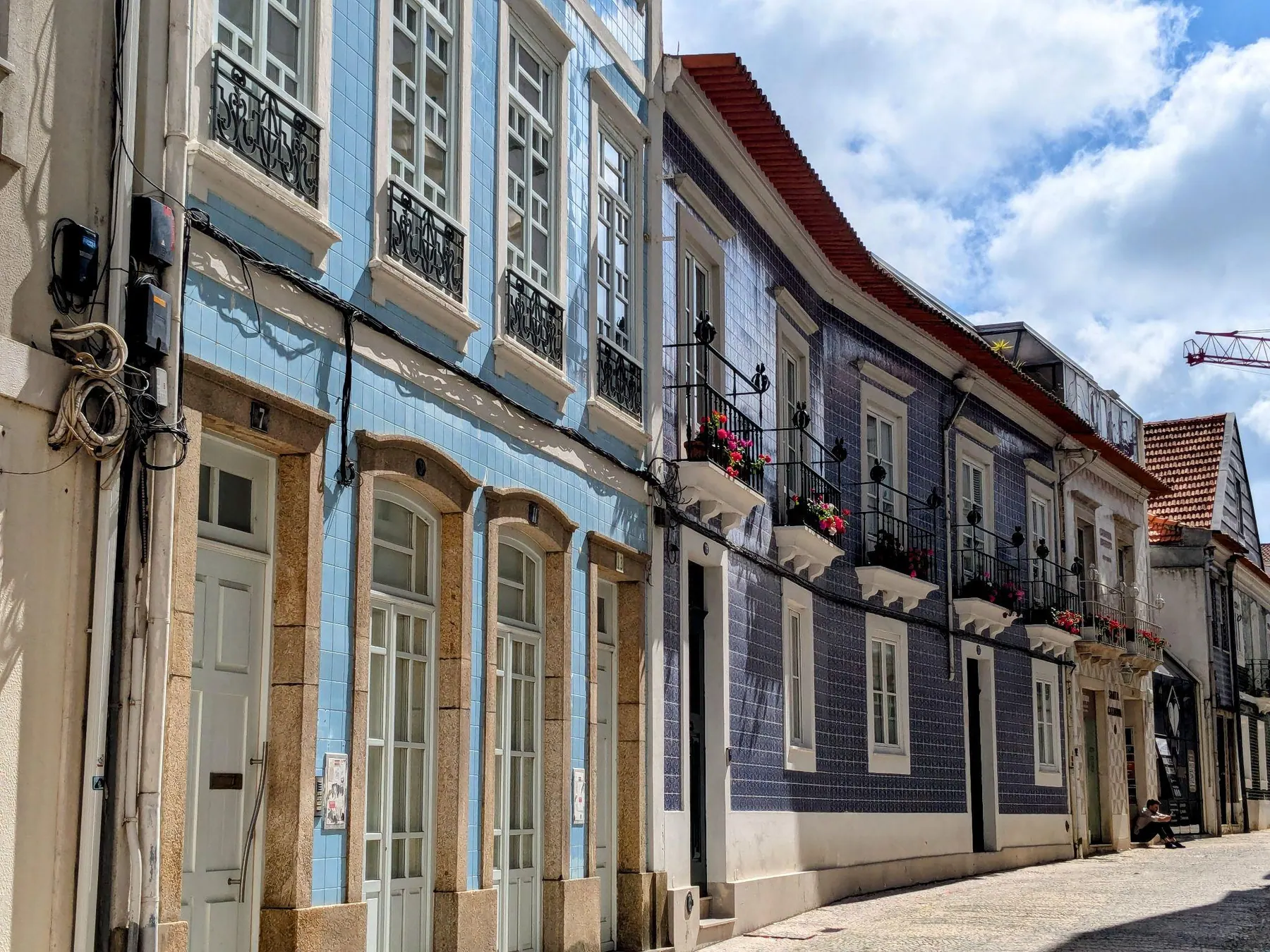
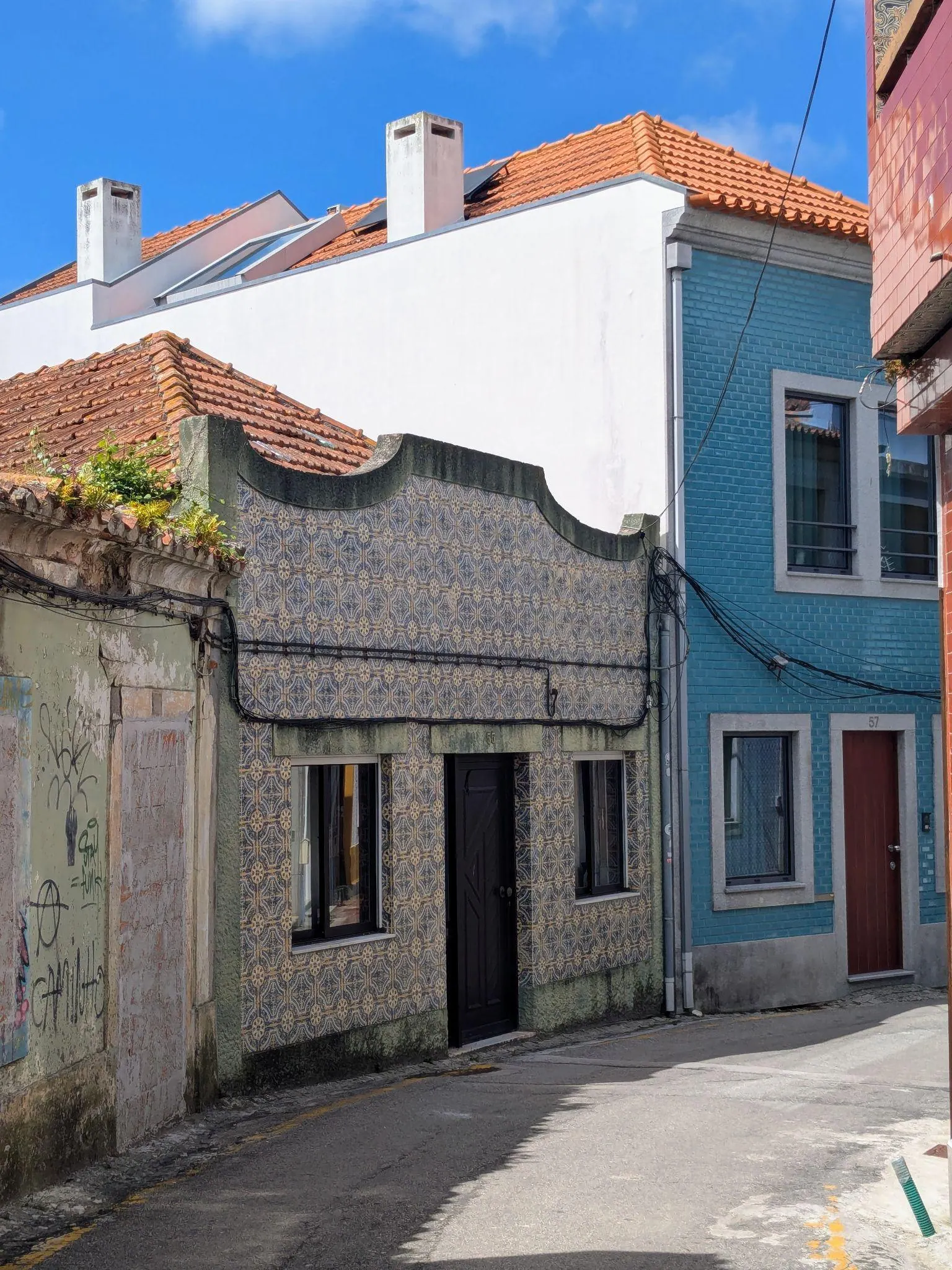
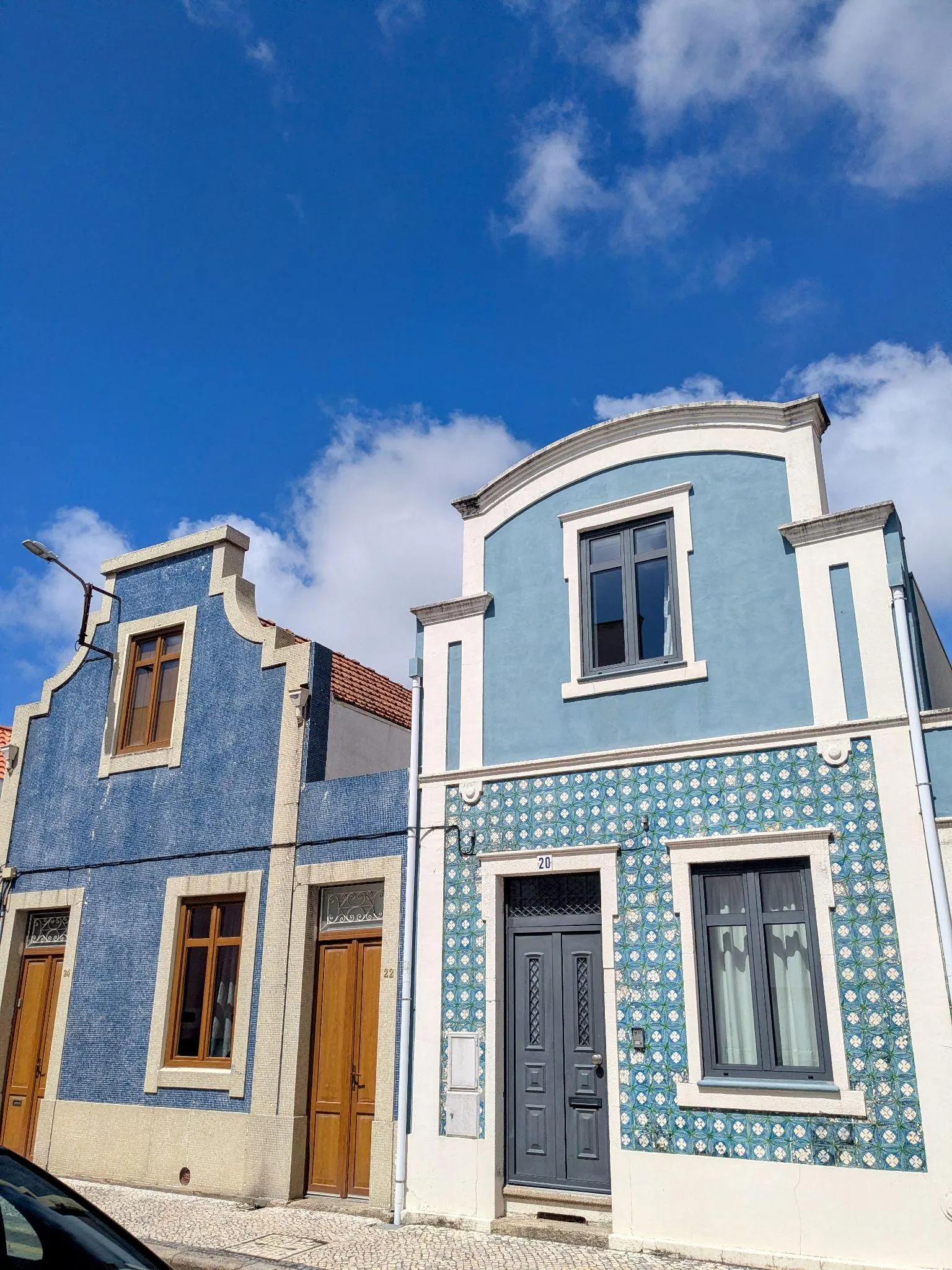
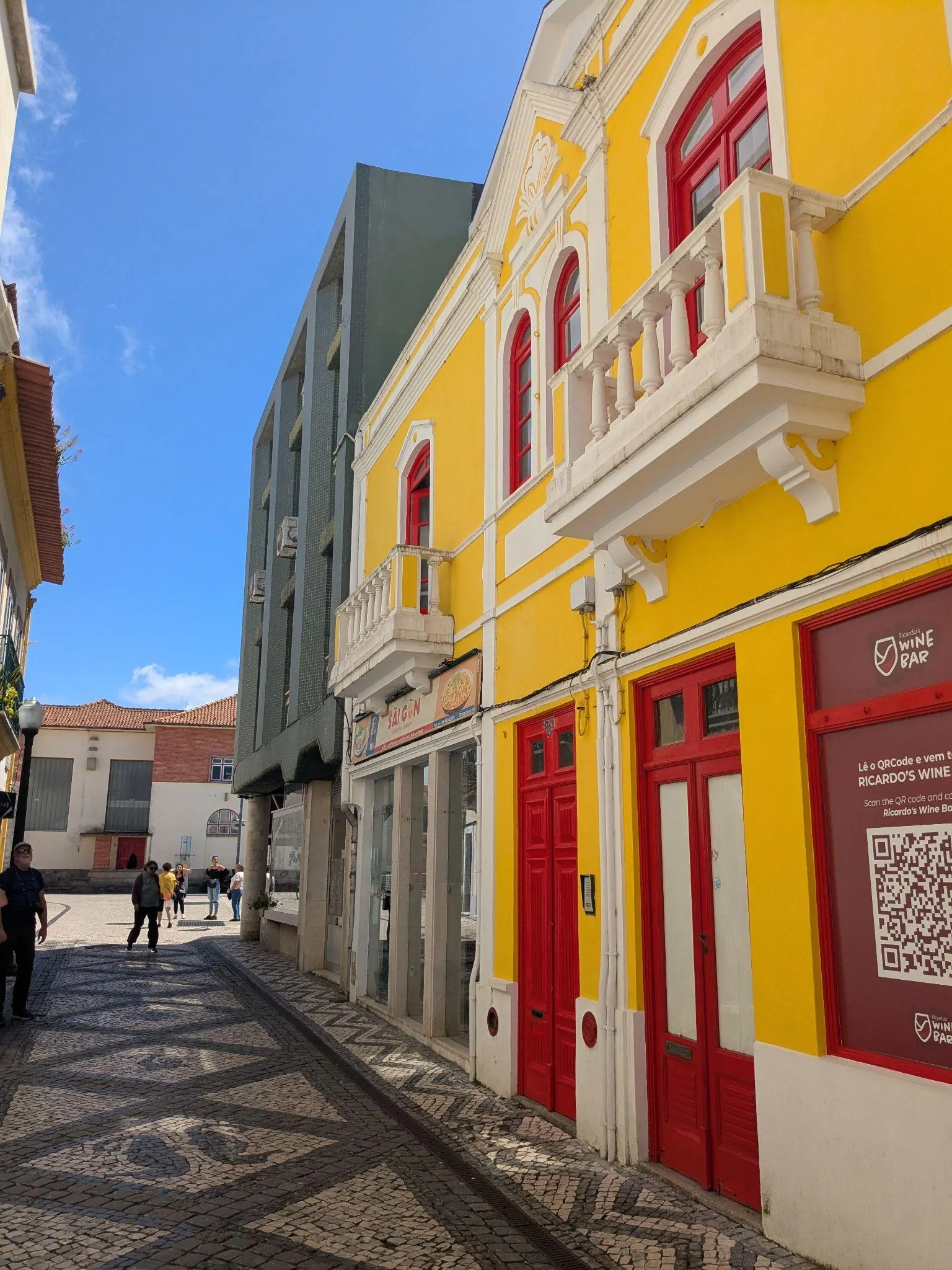
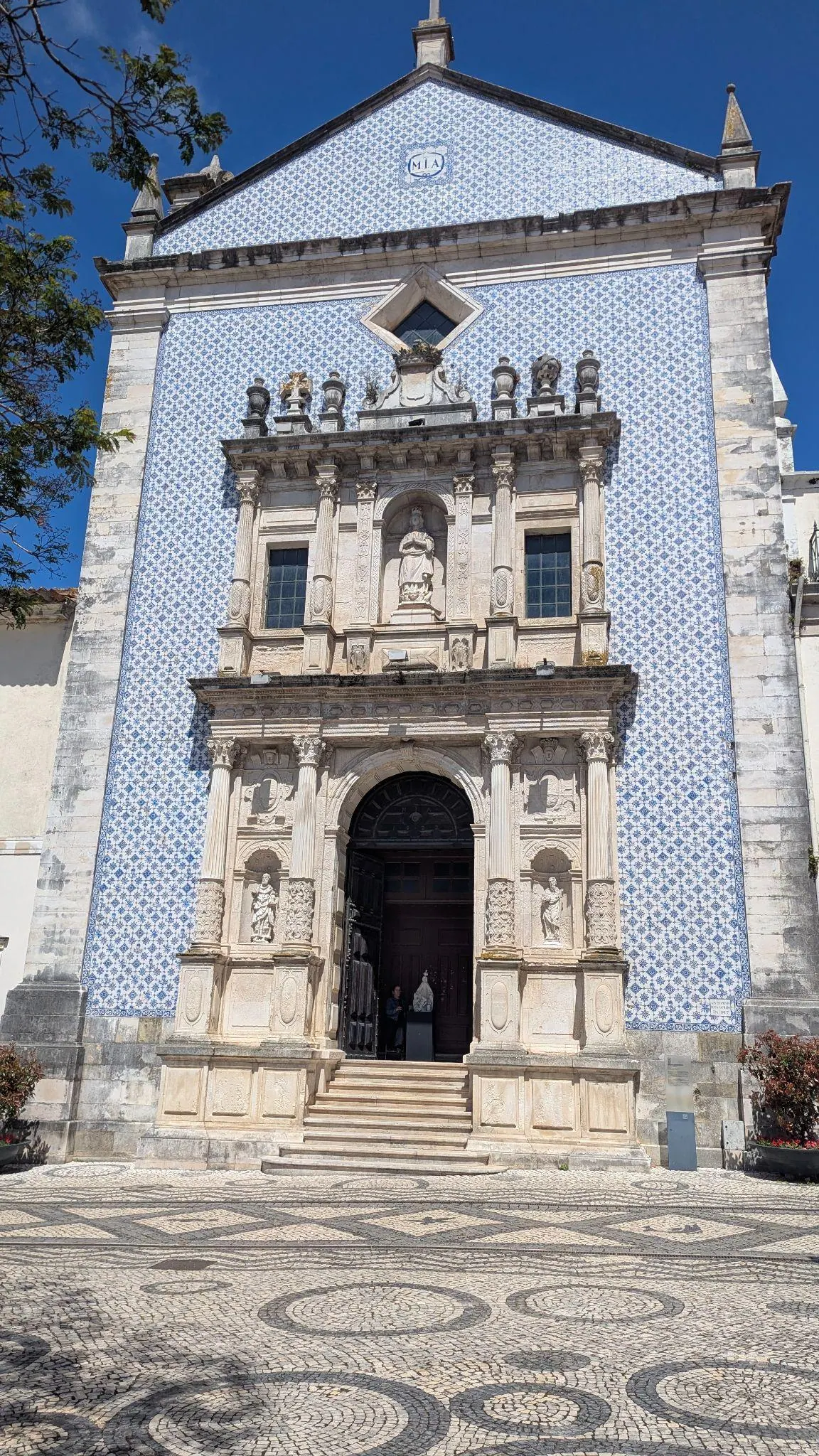
As someone from Latvia, where Riga is considered one of the world’s great Art Nouveau capitals, some of the buildings in Aveiro felt surprisingly familiar. Two countries so far apart geographically, yet sharing this same beautiful architectural language. It is one of those unexpected travel moments that makes you see both places differently. There is even a dedicated Art Nouveau museum in town. We only spent around an hour there, enough to wander the streets and soak up the atmosphere.
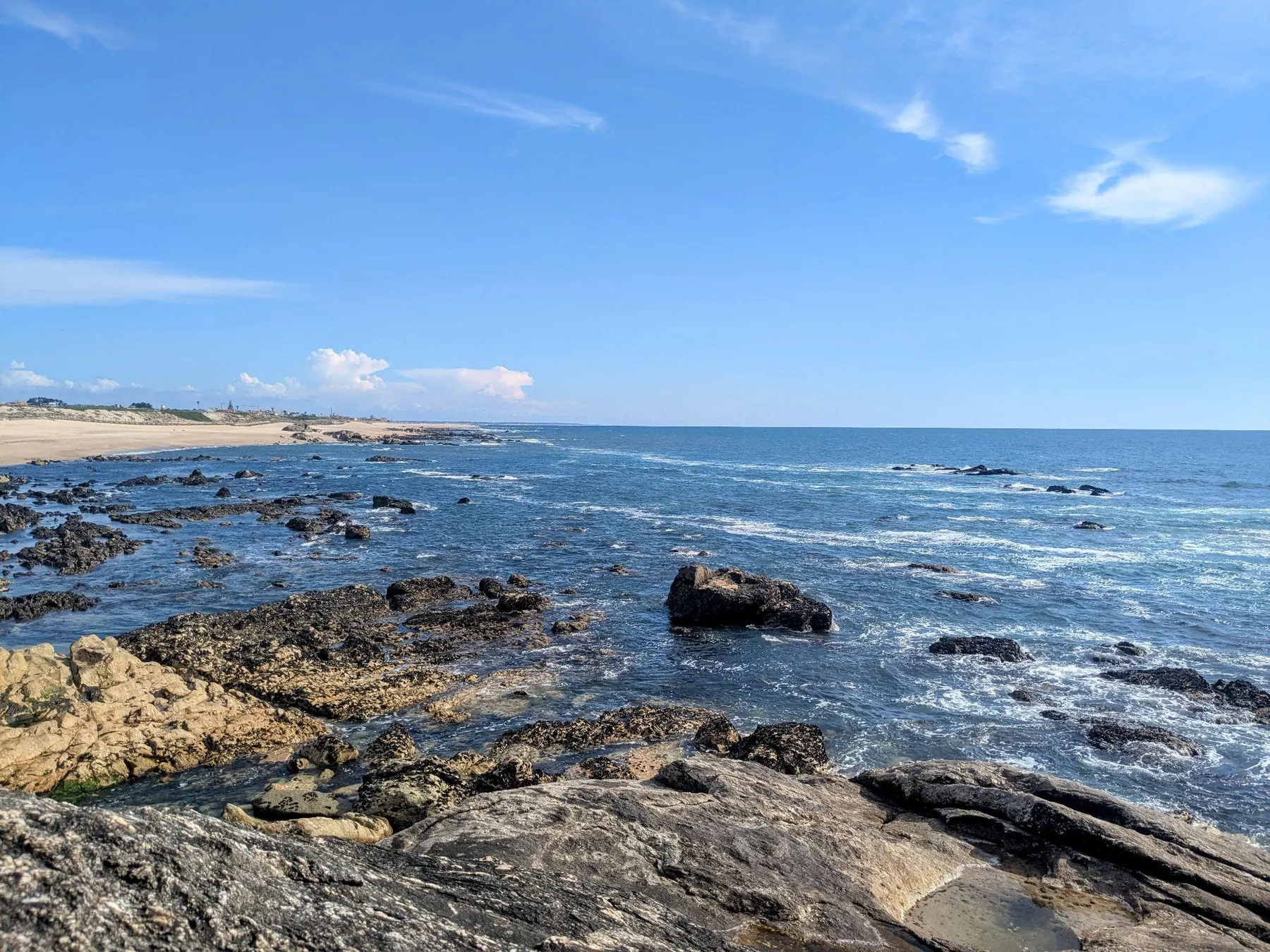
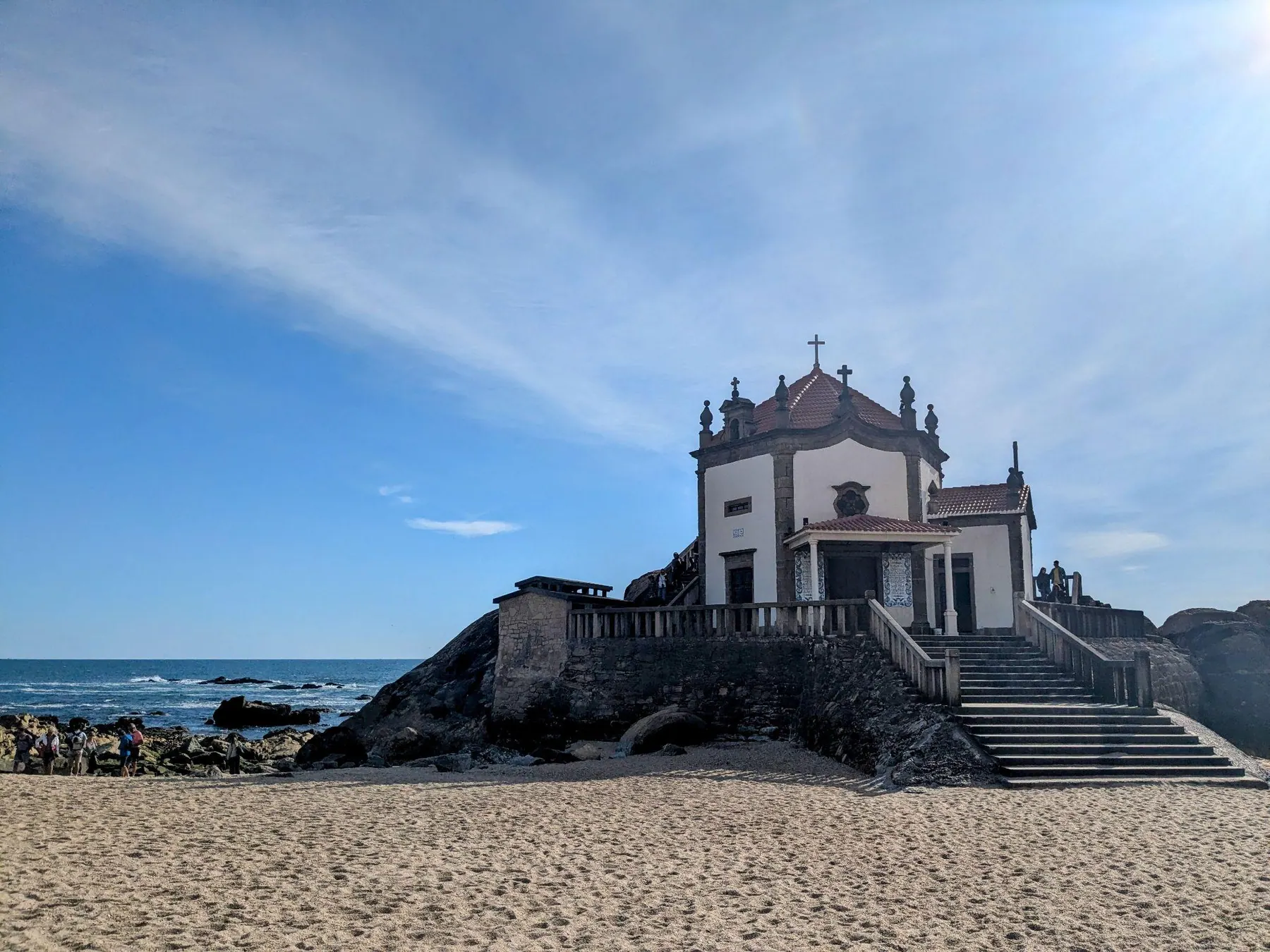
In the evening we visited Capela do Senhor da Pedra, a small chapel sitting right at the edge of the sea, about half an hour from Porto. The chapel has a distinctive hexagonal shape and stands directly on a rock. Calm, authentic and barely advertised, which is exactly why it still feels real. It is worth a stop if you’re in the area. We were lying on the rocks by the seaside, the smell of the ocean everywhere, watching a fisherman work the rocky coastline in the fading light.
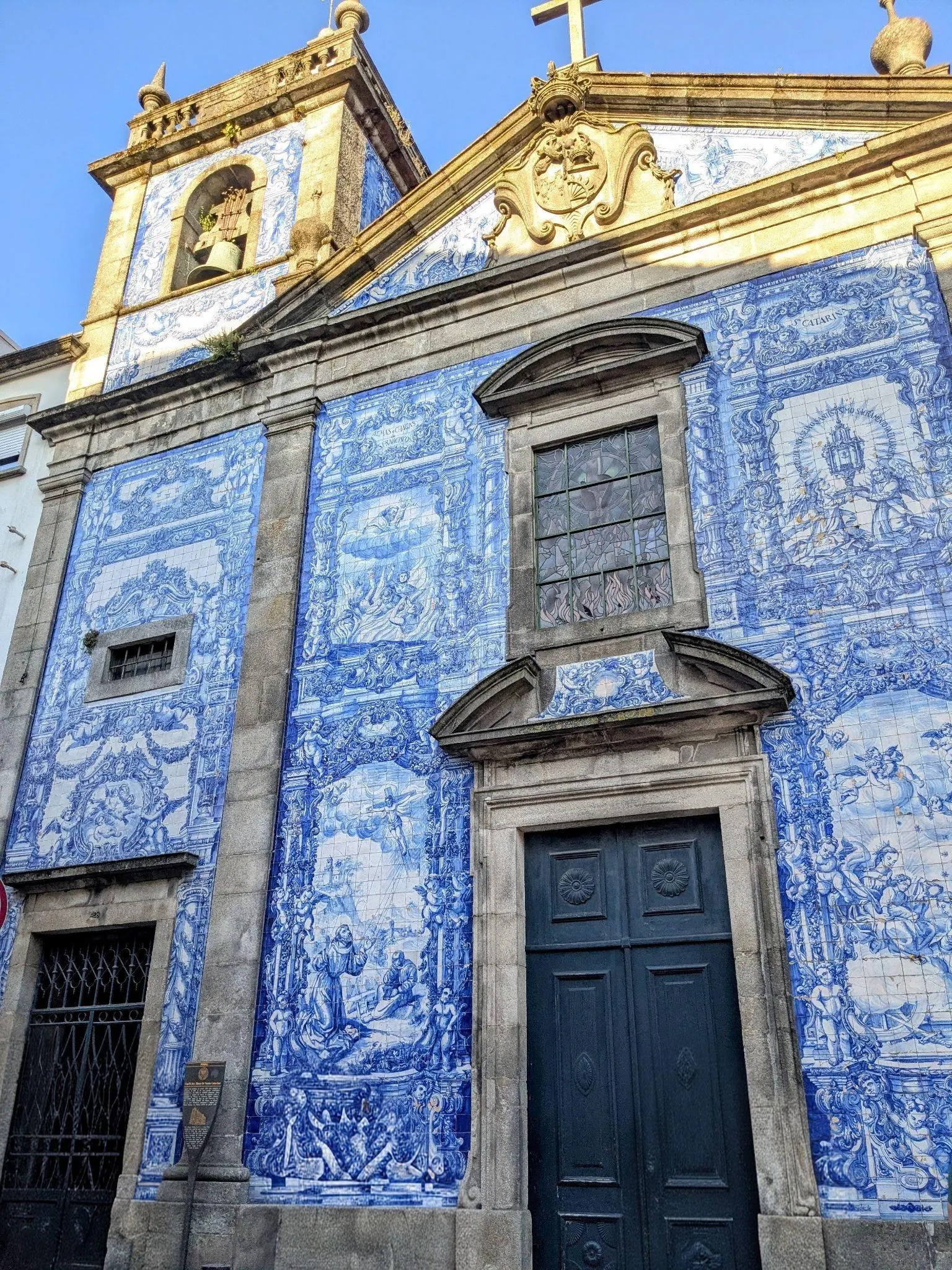
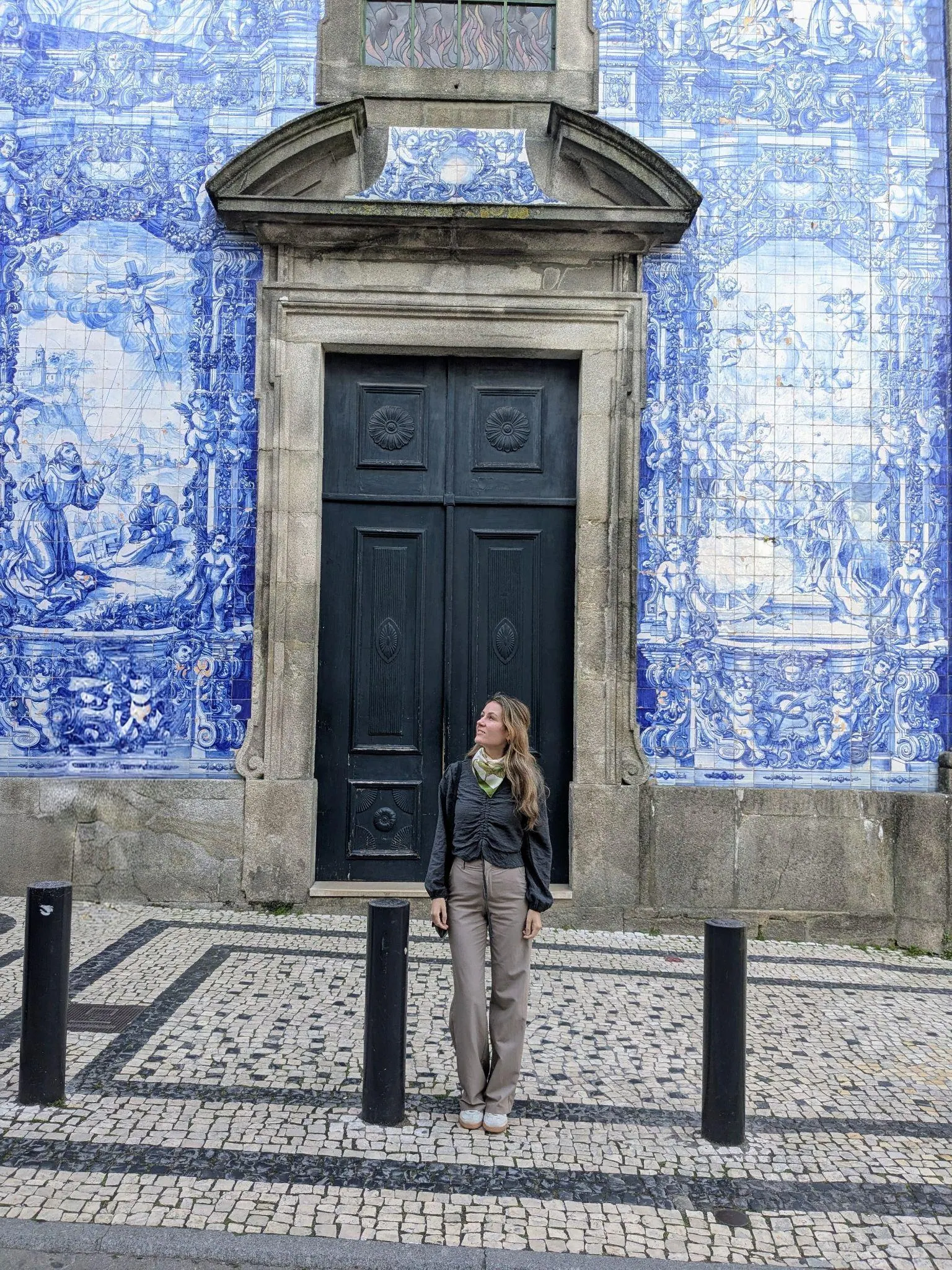
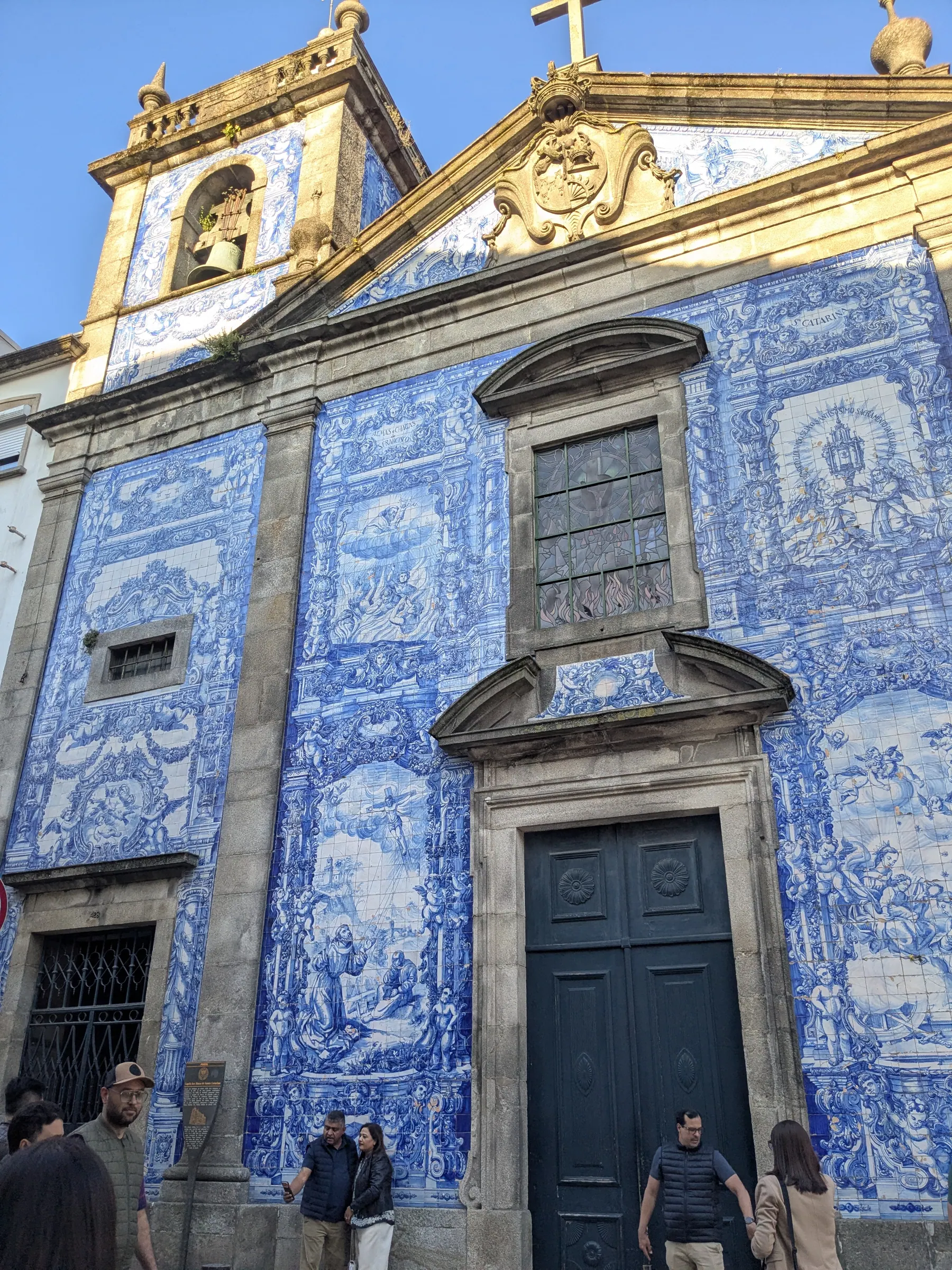
Back in Porto that evening, one of the most impressive sights in the city is Capela Santa Catarina, also known as the Chapel of Souls. Standing on Rua de Santa Catarina, Porto’s main shopping street, its entire exterior is covered in almost 16,000 blue and white azulejo tiles depicting scenes from the lives of Saint Francis of Assisi and Saint Catherine. The tiles were only added in 1929; before that the exterior was simply plastered white. Three hundred and sixty square metres of hand-painted ceramic storytelling on the outside of one building. Entrance is free and it stops you in your tracks. I think this is a masterpiece.
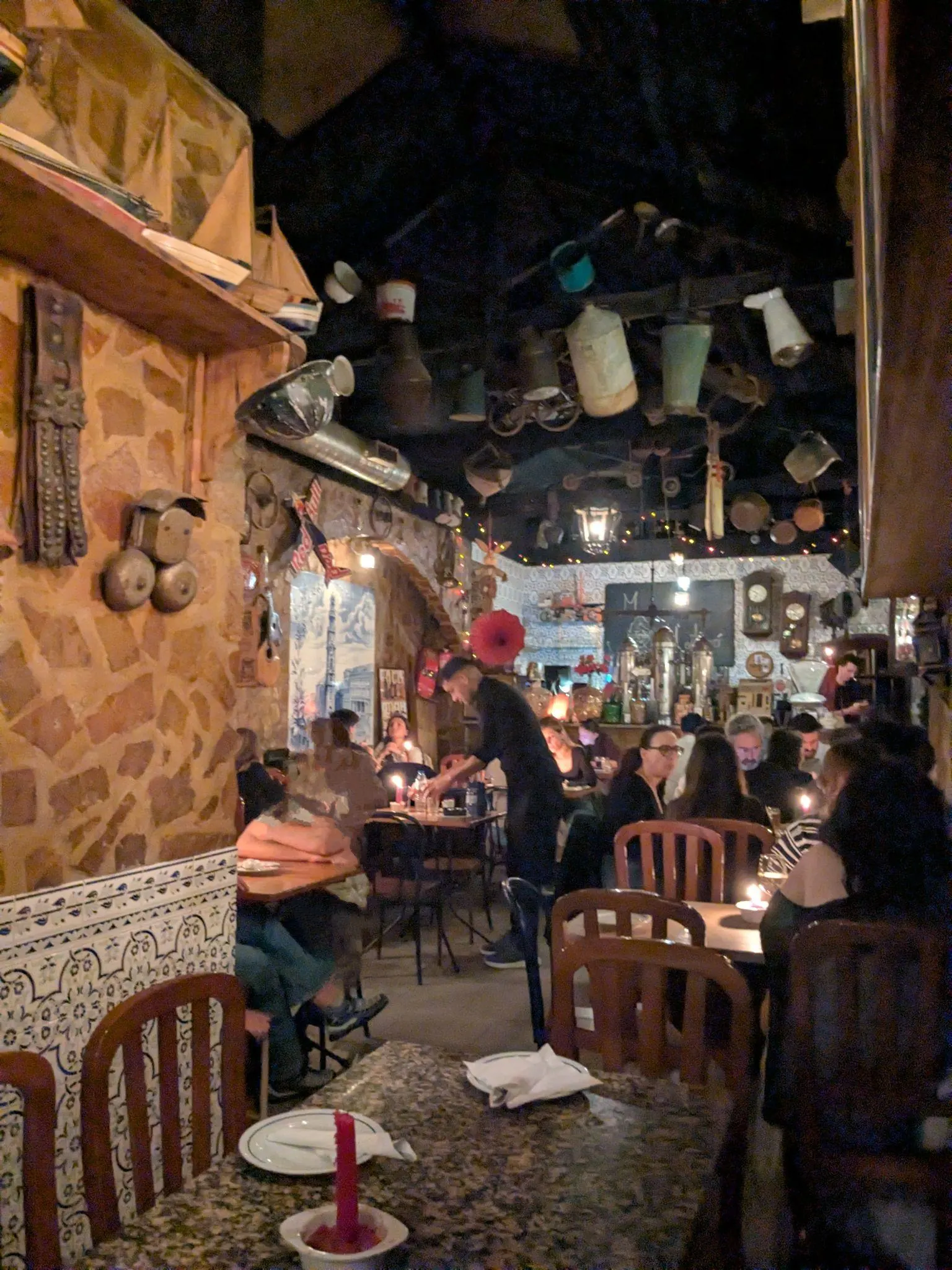
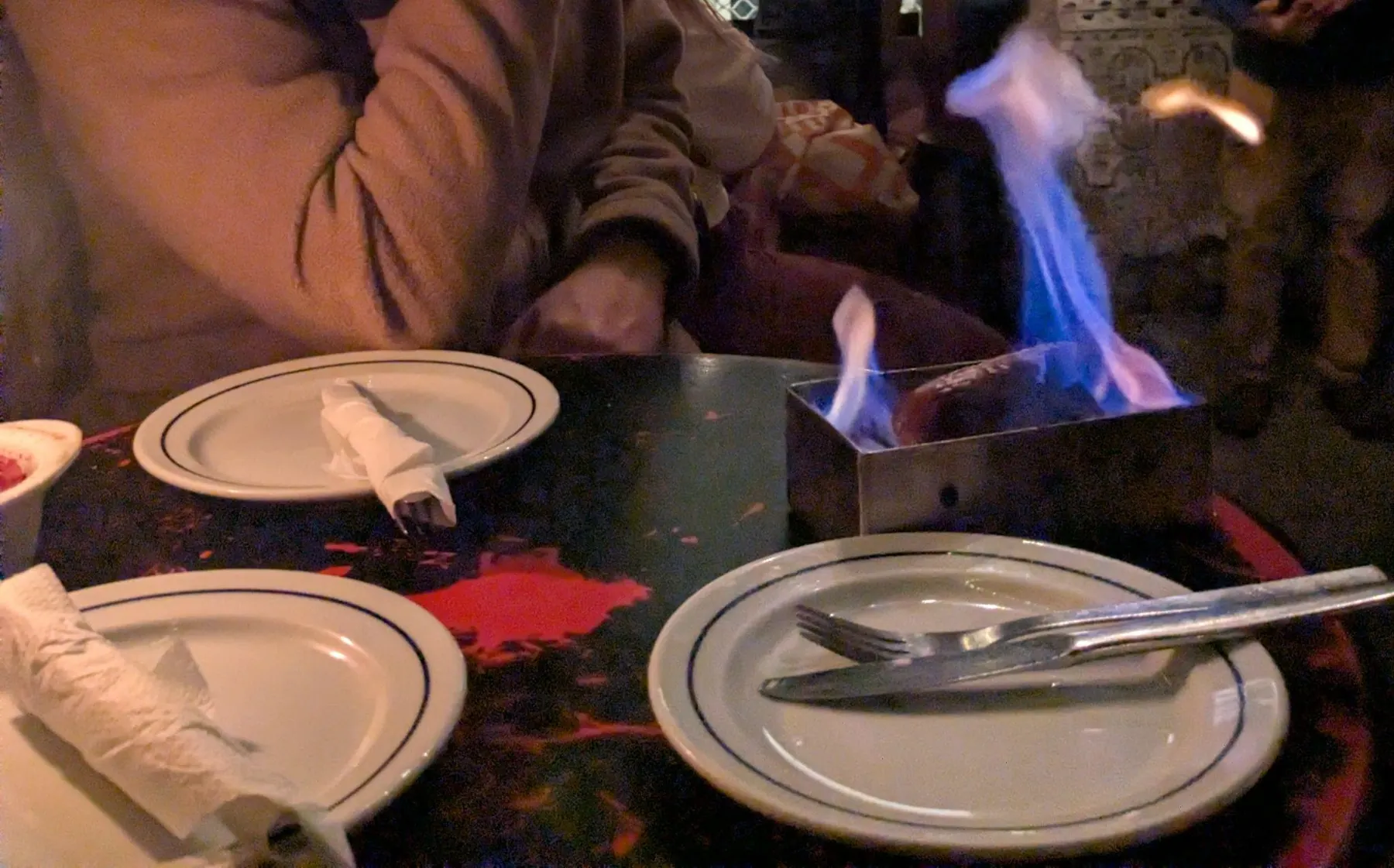
Some locals we had met recommended Museu d’Avo, and they were absolutely right. The space itself is worth visiting: rustic, warmly decorated, full of character, the kind of place that feels like someone’s beloved grandmother actually lives there. The menu is tapas style, around four dishes per person is ideal, and includes some theatrical moments, including a sausage served dramatically on fire at the table. The food was delicious and the bill came to around 18 EUR per person including wine. One of the best meals of the trip. I would recommend it without hesitation.
Day 3: Livraria Lello and Lunch at the Market
Our third day started with the most famous bookshop visit in Porto.
We were going there from our hotel in a lower part of the city, so reaching the library was a pretty steep walk. On our way there we saw Clerigos Church standing majestically at the top of Rua dos Clerigos, passed pastel de nata stores and quite a tourist crowd. It seemed to be a very popular area. One thing we missed in Porto was the signature yellow cable trams. Somehow their schedule did not cross ours. But oh well, a reason to come back.
Livraria Lello is consistently listed among the most beautiful bookshops in the world. You may have heard the rumour that it inspired J.K. Rowling’s Hogwarts library while she was living in Porto in the 1990s. A lovely story, except Rowling herself publicly denied it in 2020, tweeting that she never even entered the bookshop and had no idea it existed. The Harry Potter connection is pure myth. And yet, walking up that famous staircase, under that stained glass ceiling, surrounded by carved wooden shelves, you completely understand why people wanted to believe it.
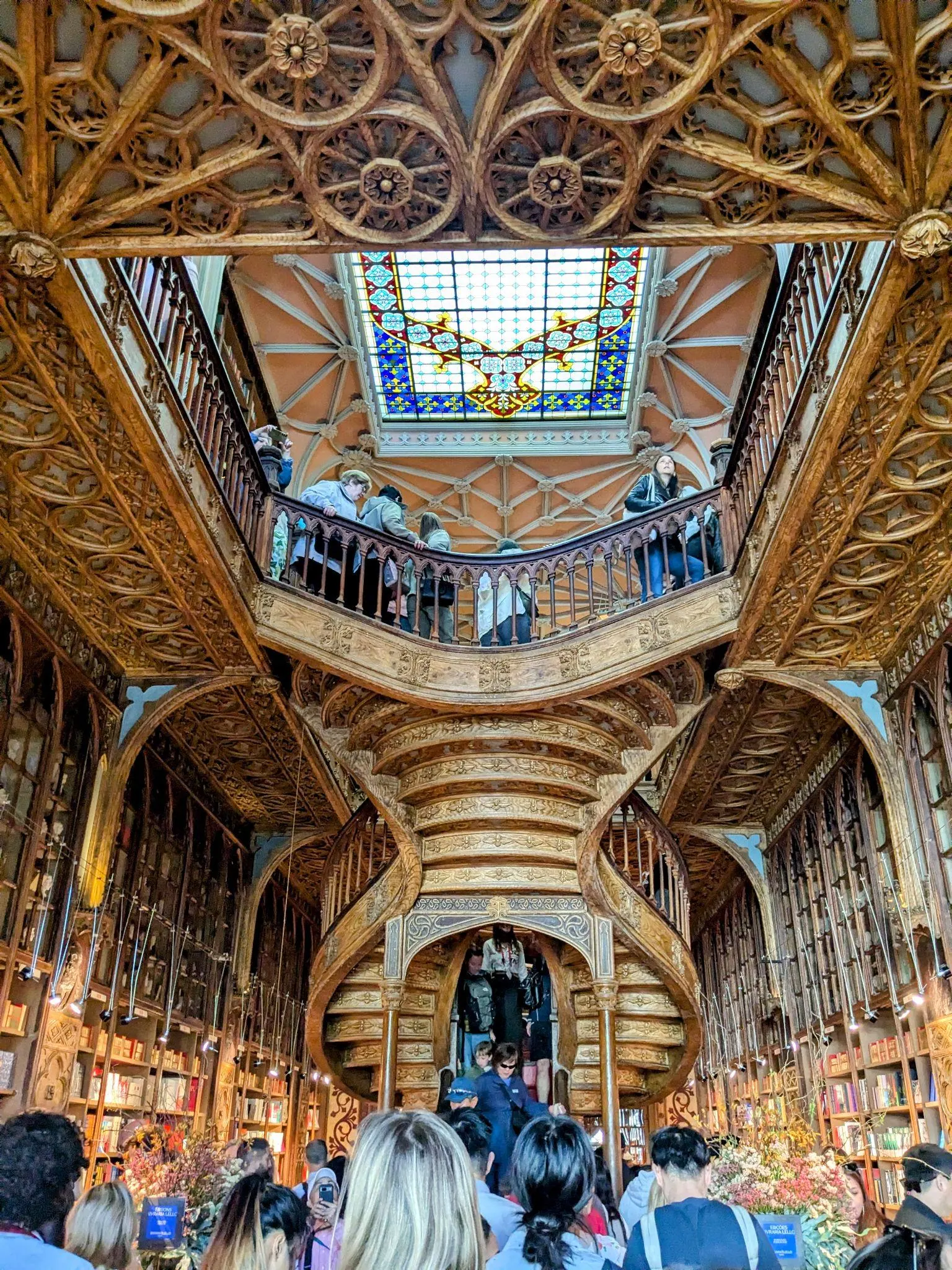
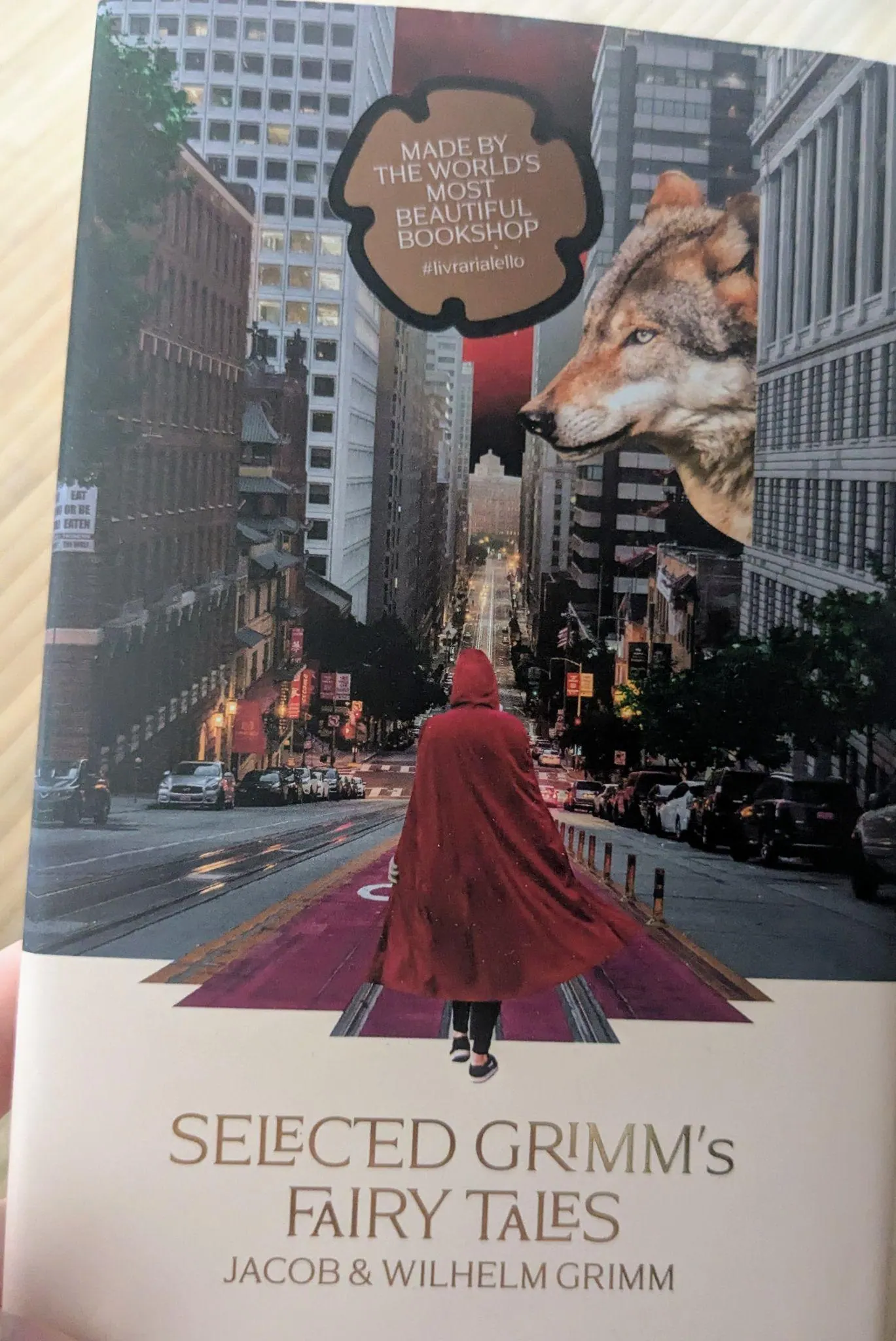
A tip: tickets must be purchased online in advance, and even then expect to queue. The entrance costs 12 EUR, which can be deducted from any book purchase. The books are beautiful, small-format classics in multiple languages averaging around 17 EUR. I bought a Brothers Grimm fairytale edition.
Was it worth it? Yes and no. The library is stunning, but the crowds make it hard to simply stand and appreciate it. Go prepared for the crowds.
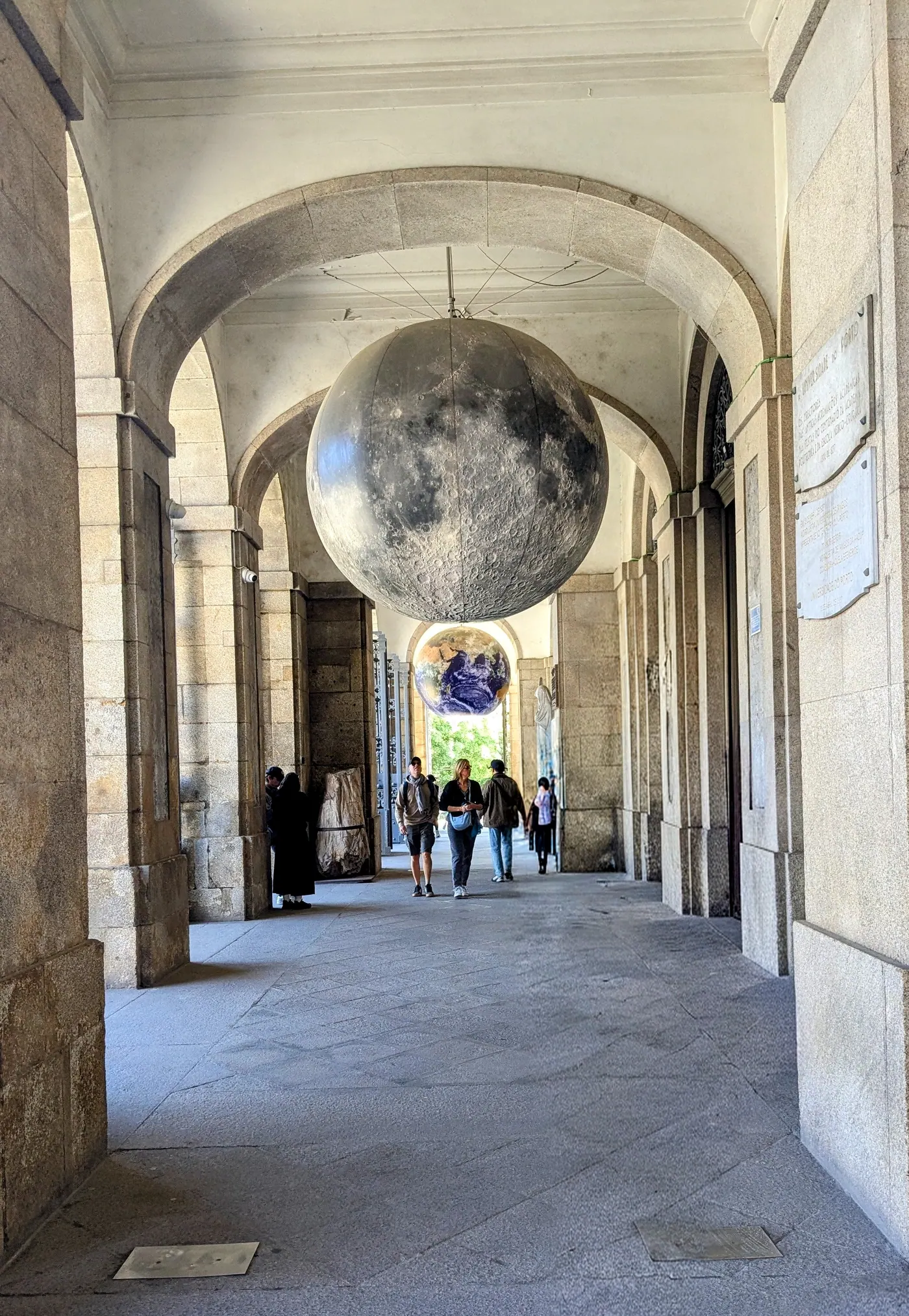
For lunch we headed to Mercado do Bolhao, Porto’s central market, recently renovated and beautifully done. Clean, light and airy, with a modern feel that still respects the original architecture. We had homemade pasta there, which was delicious. Worth a stop even just to wander and soak up the atmosphere.
From there we headed to the Douro Valley, but that deserves its own article entirely. Read our full Douro Valley article: nature at its most breathtaking, with terraced hillsides and a sweet reward at the end, a glass of port wine.
Last Day in Portugal: Last Few Hours Before the Flight
On our last half day we had just a few hours before heading to the airport. We wanted to squeeze in a few remaining spots.
On our way we passed through Rua de Miguel Bombarda, Porto’s famous gallery street in the Cedofeita neighbourhood. The street is lined with contemporary art galleries, bohemian boutiques and independent shops. We stepped inside a few galleries: a mix of Portuguese contemporary art, prints and sculptures. The atmosphere is relaxed, young and unhurried. A very different Porto from the tourist centre, and a lovely one.
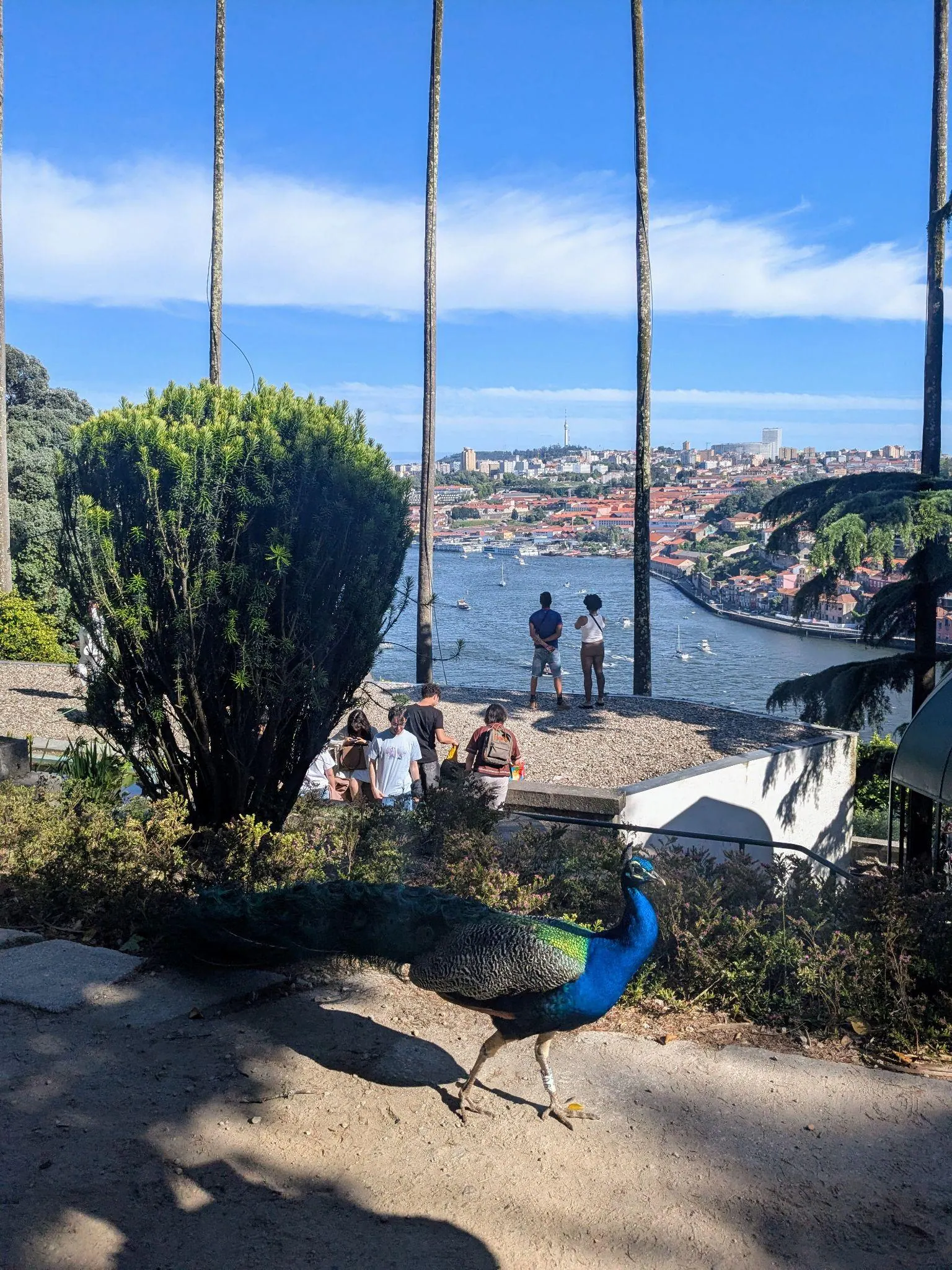
Jardins do Palacio de Cristal was not originally on the list, but it turned out to be a lovely discovery: a garden with peacocks wandering freely and beautiful views stretching down to the river. Peaceful, free and full of charm.
Other Places Worth Visiting in Porto
Our route covered the places we enjoyed most, but Porto has plenty more for a longer stay. Clérigos Tower is worth the climb for its view over the city and the Douro. Around Ribeira, add Palácio da Bolsa and São Francisco Church for two of the city’s most impressive historic interiors. In Boavista, Casa da Música and Serralves offer a very different, contemporary side of Porto. And if you want the Atlantic rather than the river, spend time in Foz do Douro, Matosinhos and Parque da Cidade for seafront walks, beaches and open space.
Porto vs Lisbon: Which Should You Choose?
Having visited both, they offer different experiences.
Porto felt more chill, more local, more cozy. Distances are smaller, the pace is slower, the atmosphere more authentic. Lisbon is more overwhelming: more sightseeing, more shopping, more tourists, bigger in every sense. Both are worth visiting, but if you are after something that feels real and human rather than polished for visitors, Porto wins.
Was Porto Worth It?
Absolutely. The views over the Douro River, the azulejos everywhere you look, the Francesinha, the hidden chapel by the sea. Porto gives you a lot for a short trip. There are also numerous museums we did not have time for, which means it has more to give on a return visit.
Porto works perfectly as a weekend escape, or as a base for combining with nearby trips, the Douro Valley or the coastline to the south.
Practical Tips
- How many days: around two days works well for active walkers covering the highlights. Add a third day if you want museums or a slower pace.
- Port wine: try it. It is sweet, smooth and delicious as a dessert wine. If you prefer drier wines, the sweetness can linger, but it is worth experiencing at least once. We saved ours for the Douro Valley, which was the perfect setting.
- Dress in layers. Porto is unlikely to have a sunny southern climate every day. The city is windy and it can rain.
- Book Livraria Lello tickets online in advance.
- Share a Francesinha. Trust me on this one.
- Eat pastries immediately. The seagulls are watching.
FAQs
How many days do you need in Porto?
Two or three days is enough for Porto at a comfortable pace. Five to seven days allows you to explore more of the surrounding area.
Should you stay in Porto or Gaia?
For a first visit, Porto is more convenient for walking between major sights. Gaia is excellent for views, port wine cellars and a slightly different riverside feel.
Do you need a car in Porto?
You do not need a car inside Porto, but renting one helps if you want to visit Aveiro, coastal stops or the Douro Valley independently.
What is the best time to visit Porto?
May worked perfectly for us, with sunshine and pleasant temperatures for walking without the summer heat. Spring and early autumn are also good choices if you want milder weather and fewer peak-season crowds.
How do you get from Porto Airport to the city centre?
The quickest public-transport option is Metro line E, which connects the airport with central stations such as Trindade and Bolhão in around 30 minutes. Taxis, ride-hailing services and buses are also available.
What are the best day trips from Porto?
The Douro Valley is the standout choice for vineyards, river scenery and wine. Aveiro is an easy town-and-canals trip, while the Atlantic coast offers beaches and small seaside stops such as Capela do Senhor da Pedra.
Is Porto expensive to visit?
Porto can be manageable for a European city break, especially for food and local transport, though central accommodation can be the main expense. We paid around 84 EUR per night for a central hotel and around 18 EUR per person for dinner including wine.
Read next
More posts for this trip mood
 Europe
 Madeira, Portugal
Madeira in November: A Nature-First Week on Portugal's Wildest Island
A mountain holiday with an ocean around it.
A personal Madeira travel guide for a nature-first week in November, with Funchal, Cabo Girão, Ponta de São Lourenço, levada walks, Porto Moniz and Pico do Areeiro.
 Europe
 Norte, Portugal
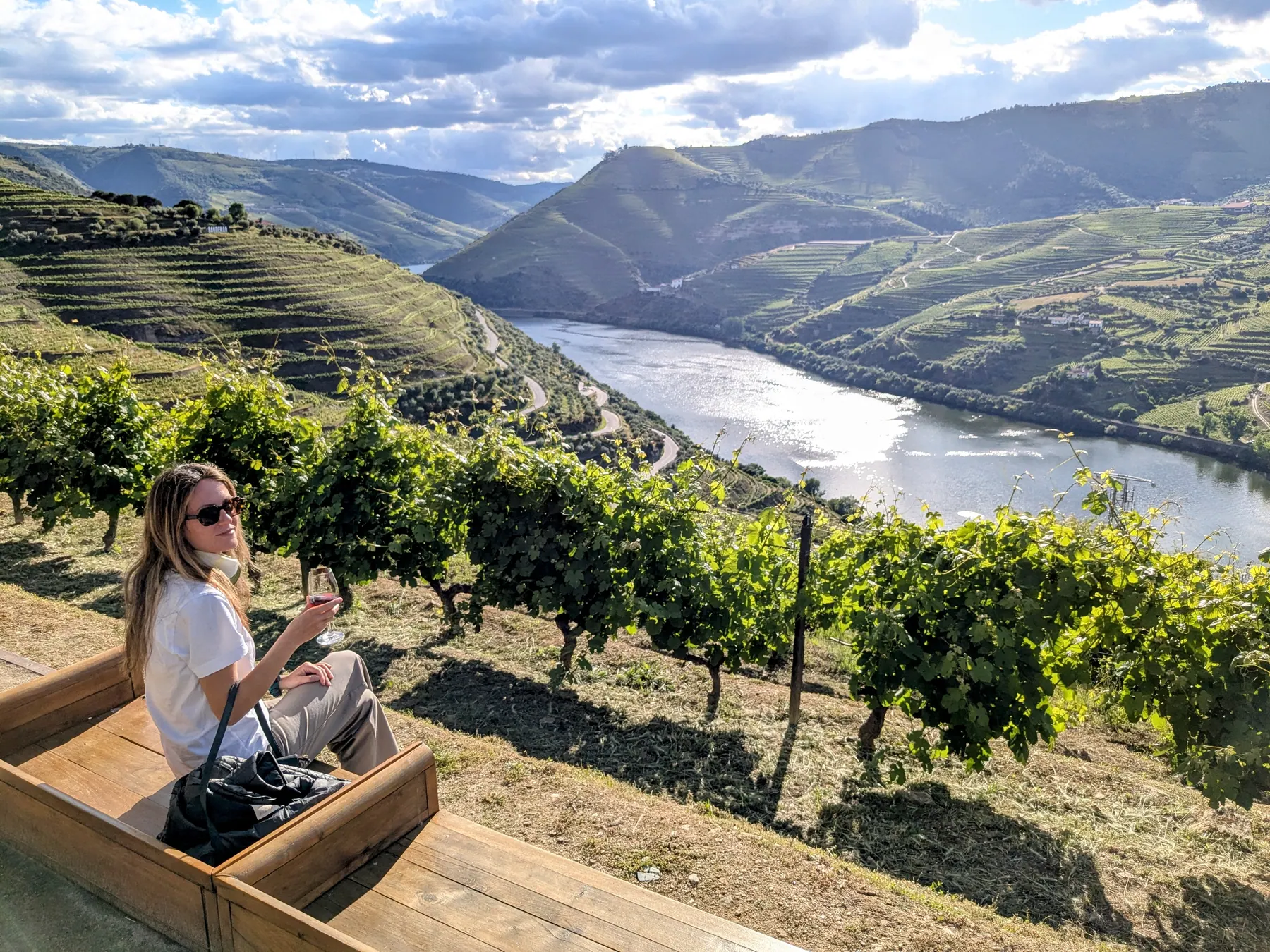
Douro Valley - Why You Can't Just Stay in Porto
Porto gives you the city. The Douro Valley gives you the reason to leave it.
A personal Douro Valley travel guide from Porto, with Lamego, Pinhão, the N222, a Douro River boat trip, Quinta do Seixo, Amarante and Citânia de Sanfins.
 Asia
Asia Hanoi, Vietnam
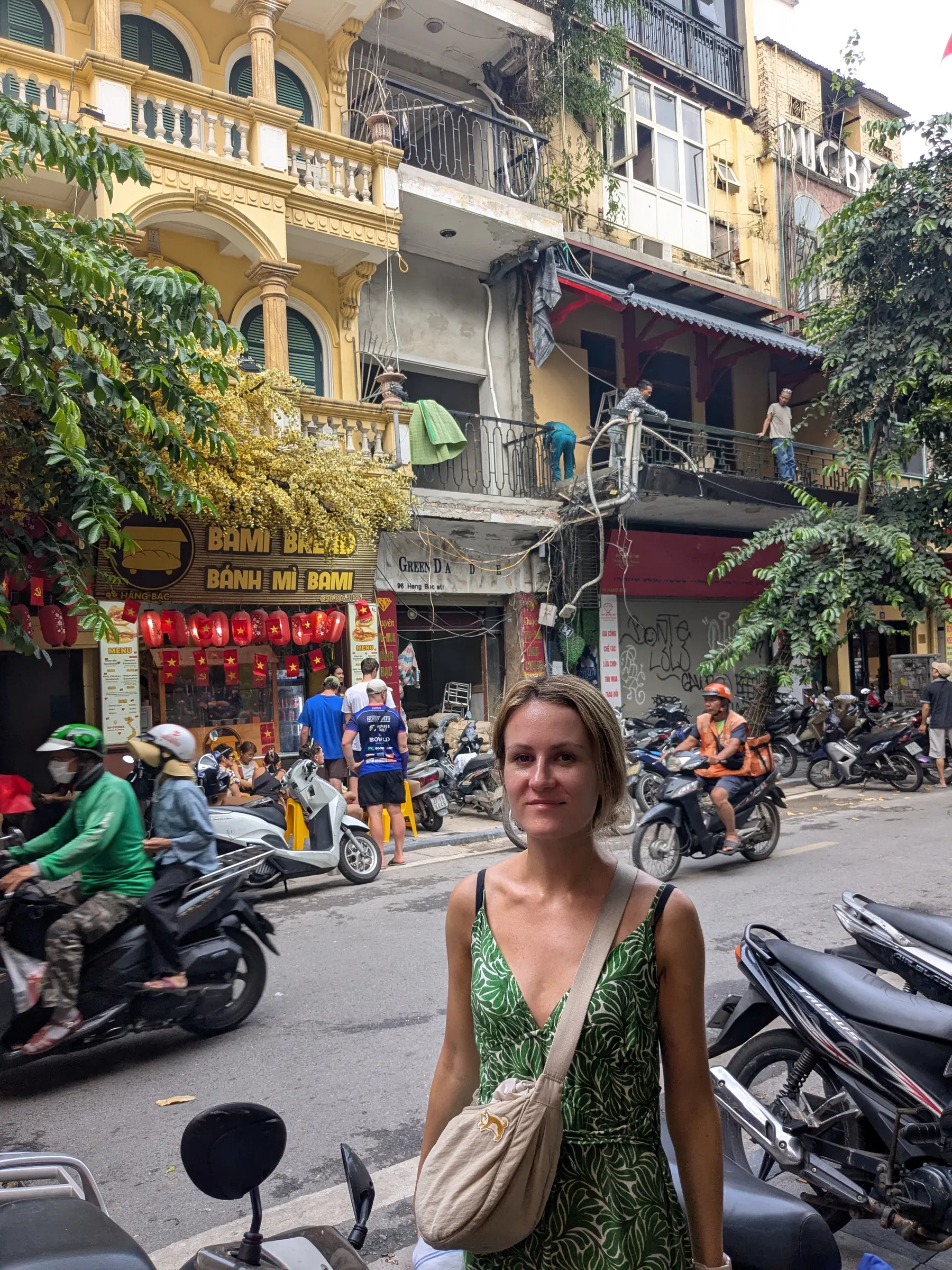
Things to Do in Hanoi, and What the City Is Actually Like
A four-day Hanoi guide to Hoan Kiem Lake, water puppets, the Old and French Quarters, temples, Train Street, food and a day in Đường Lâm.