


Albarracín · Aragón · Spain
Albarracín in Winter: A Guide to Spain's Walled Medieval Town
A winter guide to Albarracín, Spain: walking the fortress walls in snow, narrow medieval alleys, Casa de la Julianeta, river gorge trails, parking and where to eat.
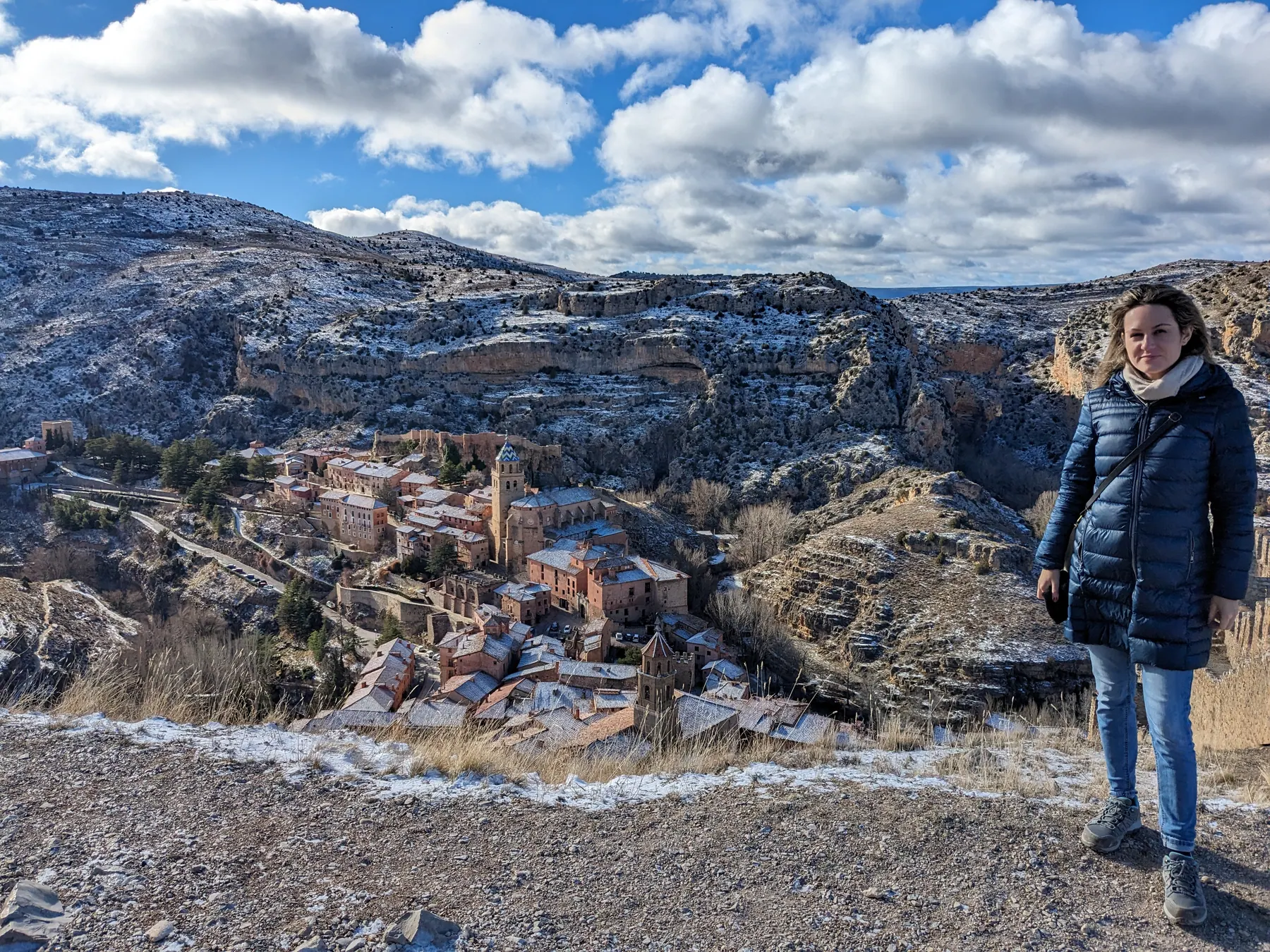
Albarracín in winter is wonderful. Getting there from warm Valencia changes things a lot: Albarracín welcomed us with snow and cold weather - and no surprise, since the place is located quite high, sitting at nearly 1,200 meters above sea level in the Sierra de Albarracín.
First of all, to locate where this magical town is: we are already not inside Comunidad Valenciana, but in Aragón, in Teruel province.
Winter temperatures to expect: Expect around 3°C to 8°C during the day, dropping to -2°C to -8°C at night, with frequent frost in January. Coming from 16°C in Valencia, you definitely feel the 15-degree drop! Keep in mind that during our visit there was only a thin layer of snow, not super snowy, but it was just enough to give the village a wonderful winter feel.
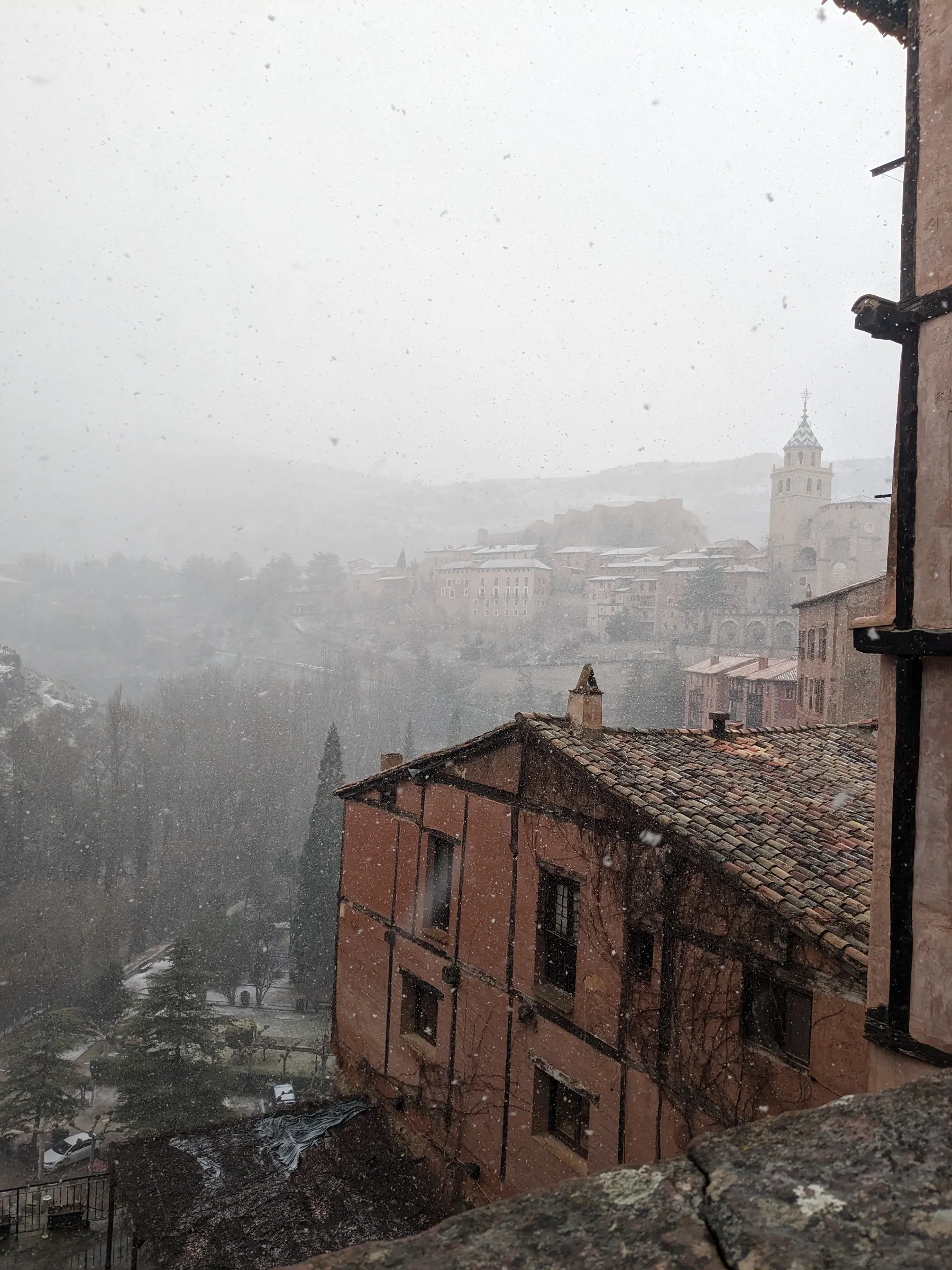
A few fun things that surprised me about Albarracín:
- The pink-red houses: The whole town is covered in a warm, dusty pink-red plaster made from local red stone.
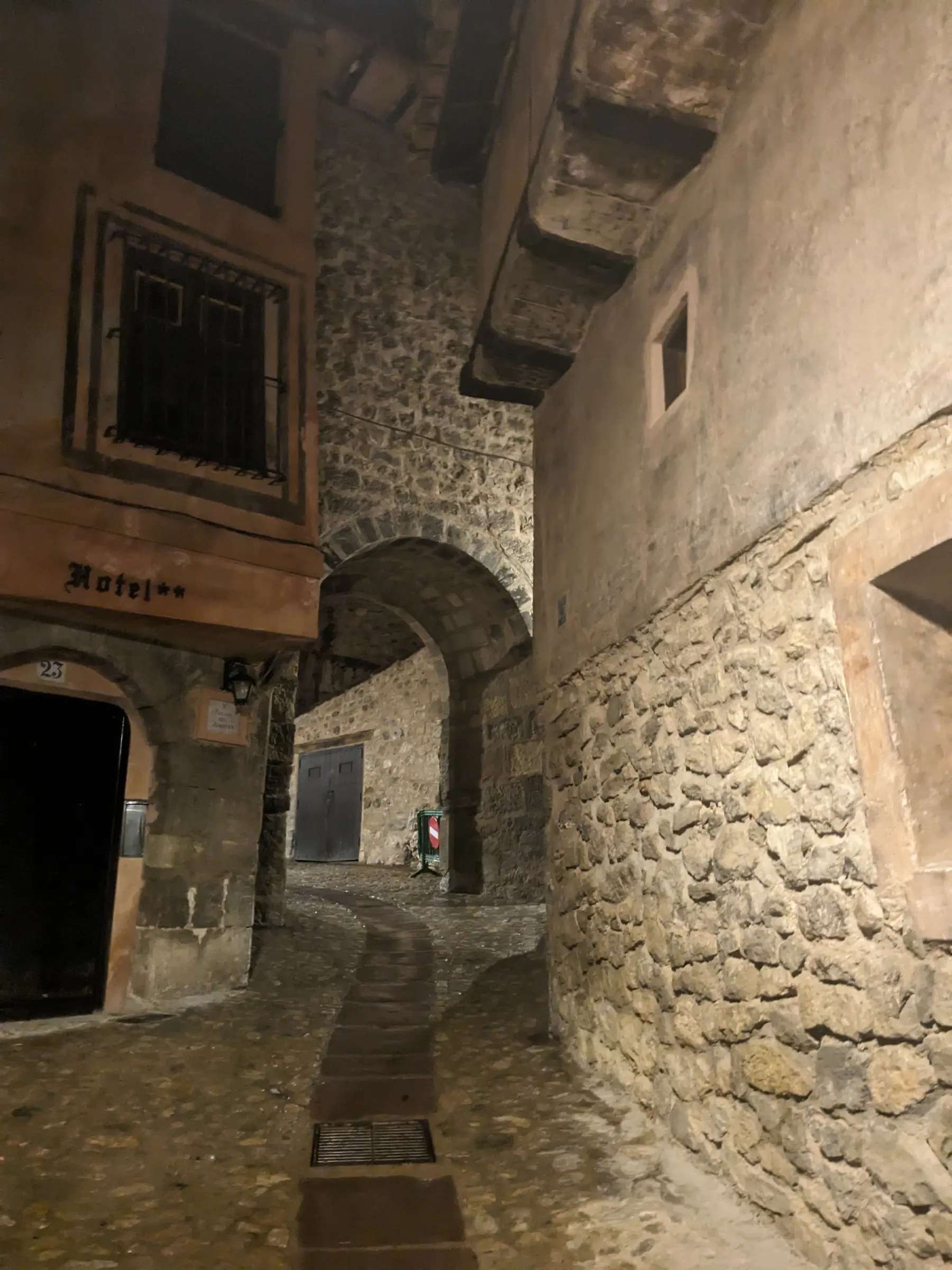
- Roofs that almost touch: The streets are so steep and narrow that houses were built to lean outward as they go up. In the tightest alleys, the wooden roofs on opposite sides almost kiss overhead.
- It used to be its own tiny kingdom: Back in the Middle Ages, Albarracín was actually its own independent mini-kingdom for over a hundred years.
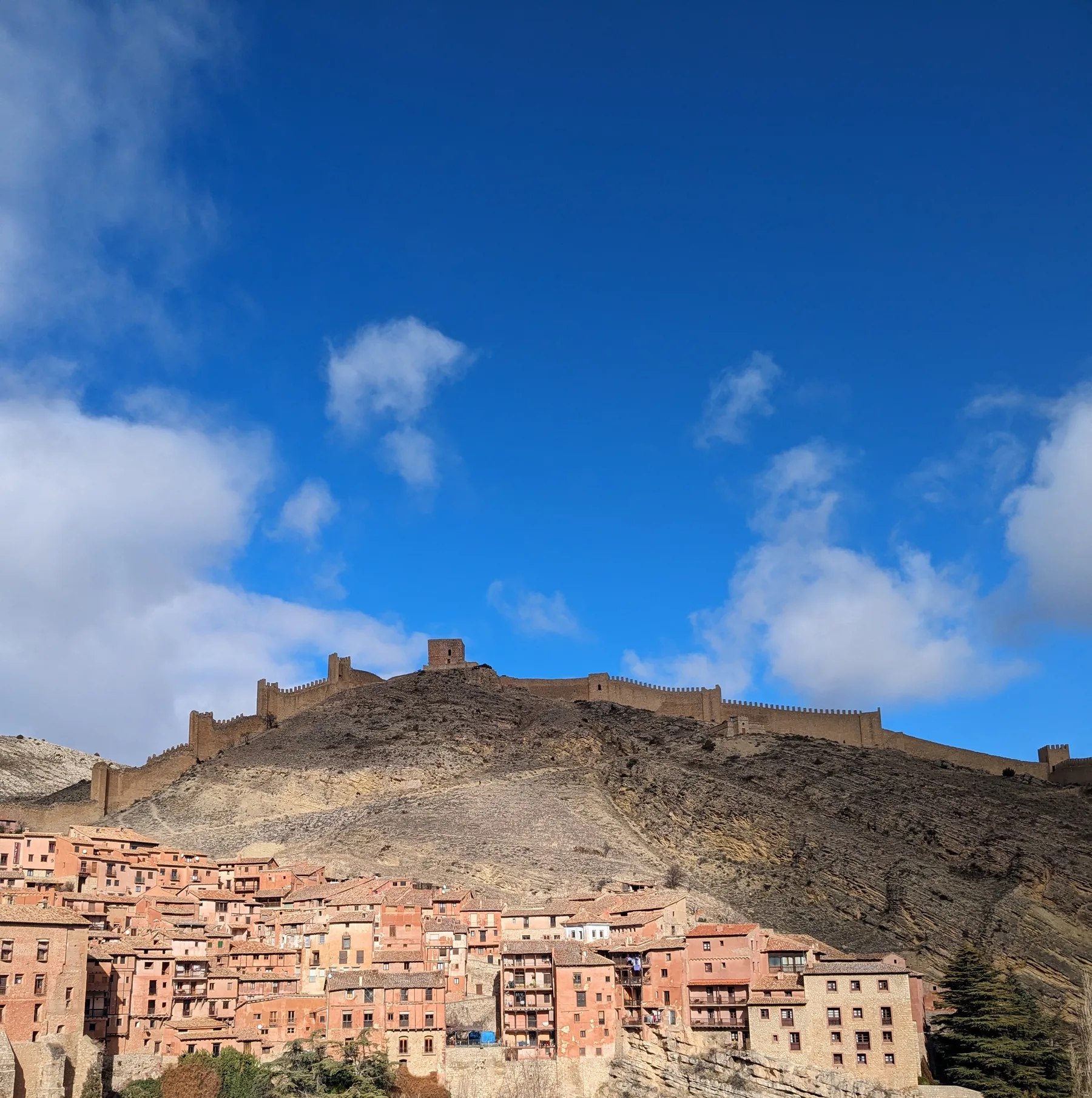
- The mountain fortress walls: High above the village, massive stone fortress walls climb straight up the bare rocky mountain ridge.
Our January Visit
Albarracín is relatively small, so we decided to stay for an afternoon, spend a night there, and explore during the first part of the next day. Staying overnight in January turned out to be a good decision.
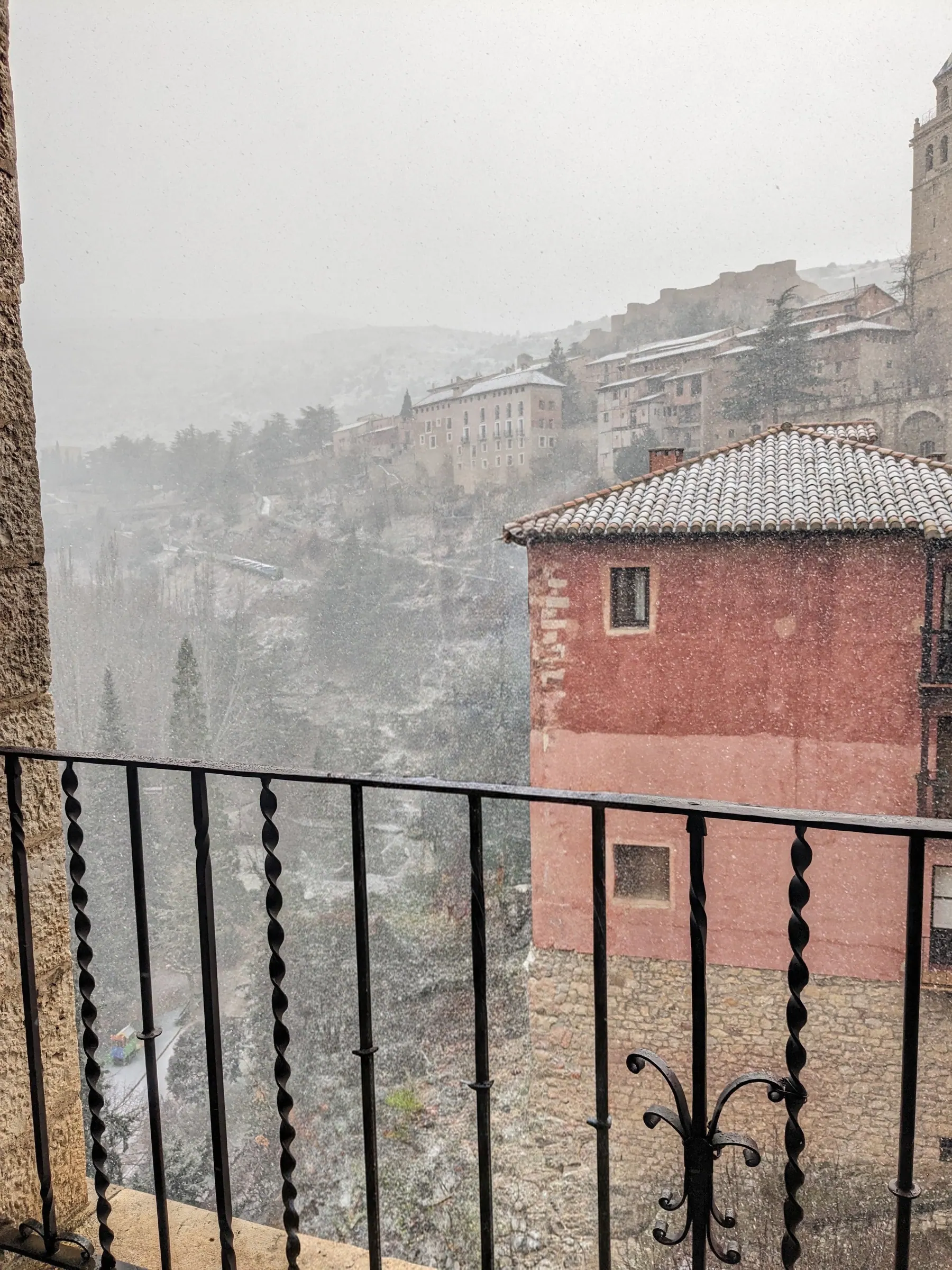
Walking those empty, dimly lit cobblestone alleys with light snow drifting down felt like stepping straight back into the Middle Ages. When walking inside the old town, the walls are so close and there are arch tunnels overhead, so you really feel like you’re walking through an enclosed place.
What to Do in Albarracín in Winter
These are the places we explored in and around Albarracín. Choose the ones that fit your time and interests.
Walking the Fortress Walls in the Snow
We walked up the fortress wall, and I still remember it snowing as we climbed. Climbing up here is an absolute must on any visit to Albarracín.
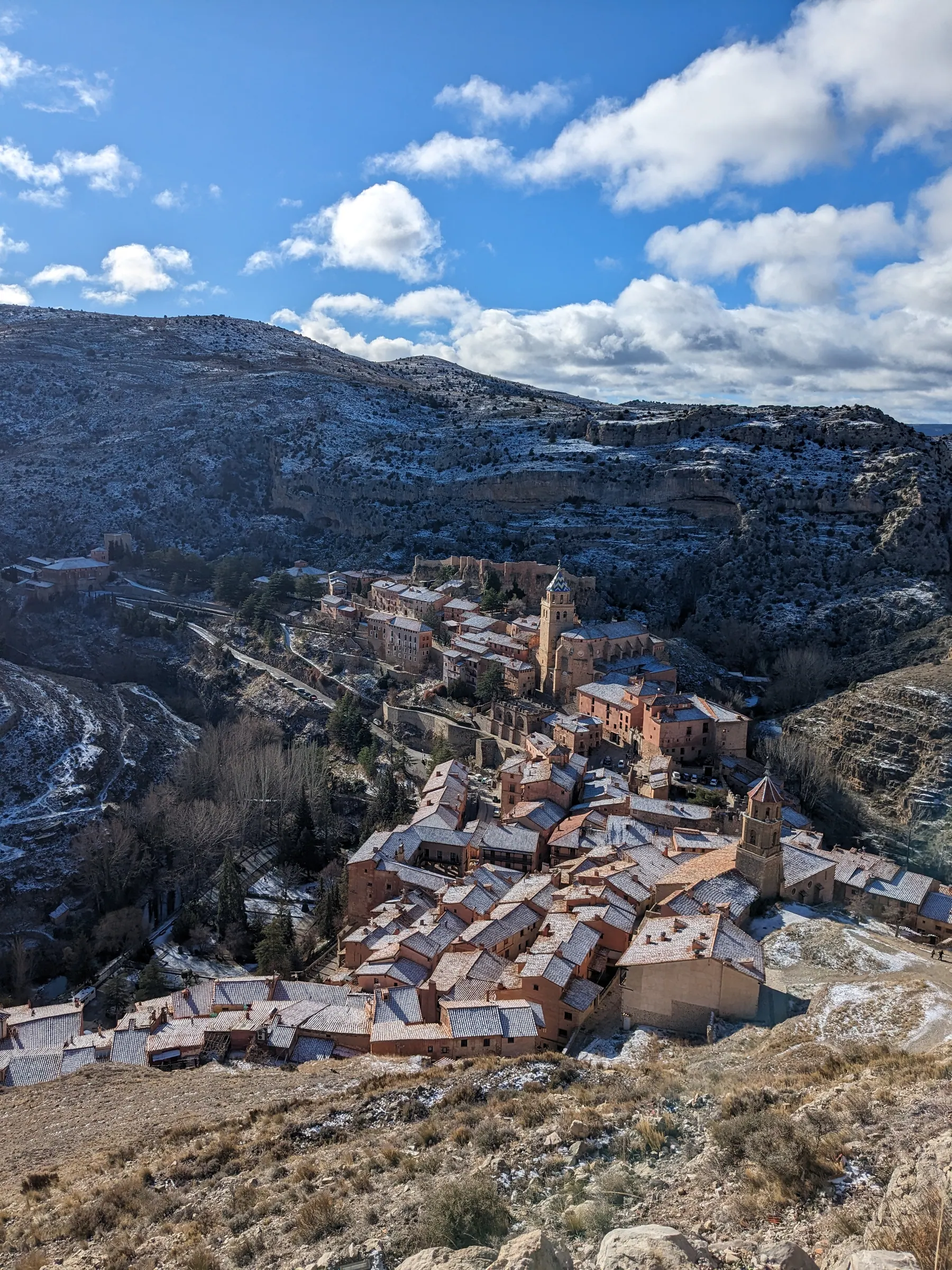
The walk starts right from the upper edge of the old town, near the Portal de Molina. Reaching the top in the snow was definitely worth the climb: looking down, you can see the whole town tucked into the river curve. It wasn’t very long at all - the whole climb and walk along the ridge took us only about 20 minutes in total, all with spending time there looking at the views.
Plaza Mayor
As it should be for a village in Spain, Plaza Mayor is always there. It’s a great point to contemplate the city, with nice views to the old town from the viewpoint terrace.
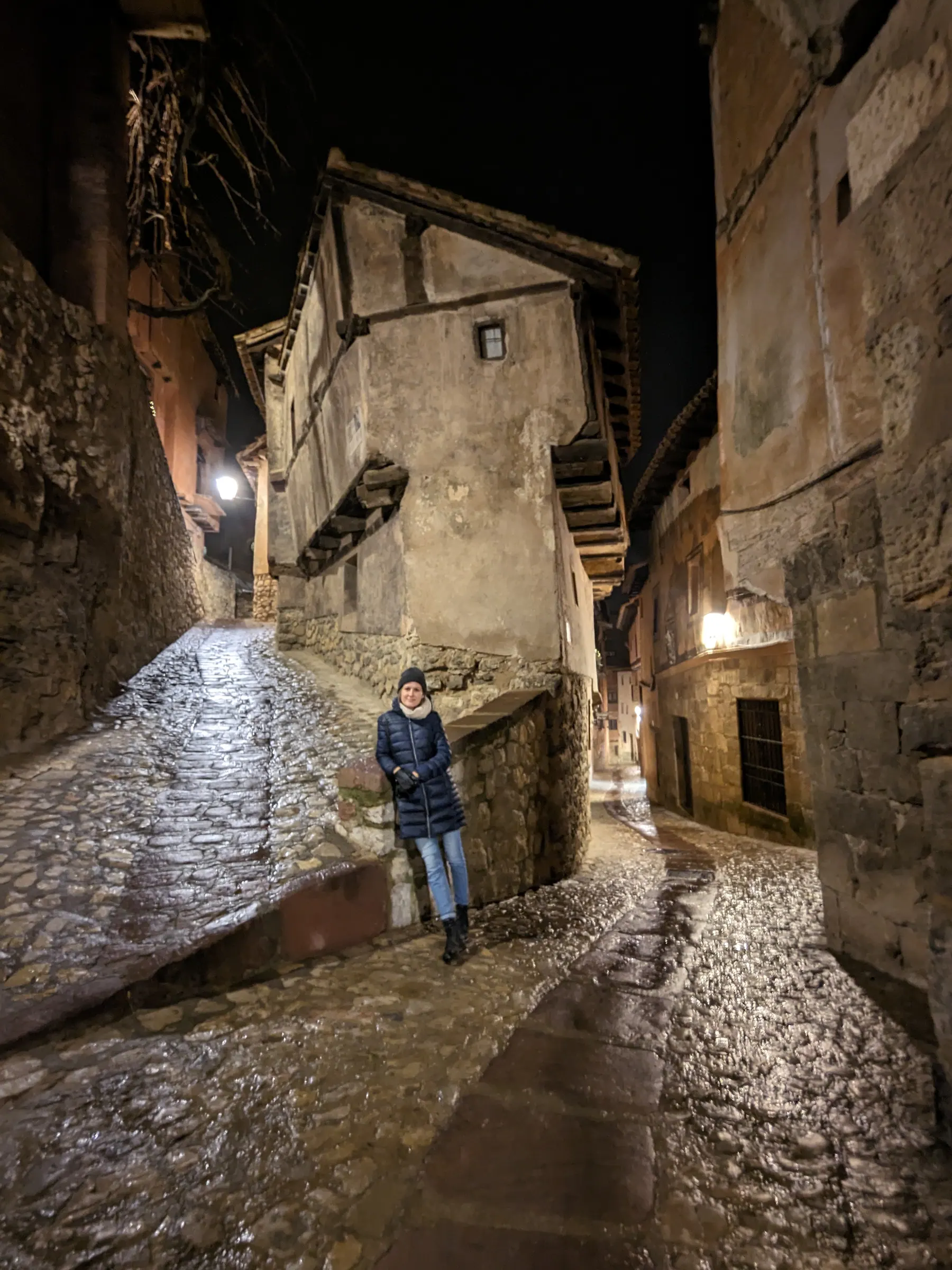
Casa de la Julianeta
We had read that Casa de la Julianeta has some importance, so we actually searched for it rather than just stumbling upon it. For this one, we couldn’t resist a photo - the house has such a funny shape!
It dates back to the 14th century and leans like that because each upper floor was built wider to gain space on the narrow alley. You can’t visit inside though - it’s a private artist studio now, so you can only see it from the street.
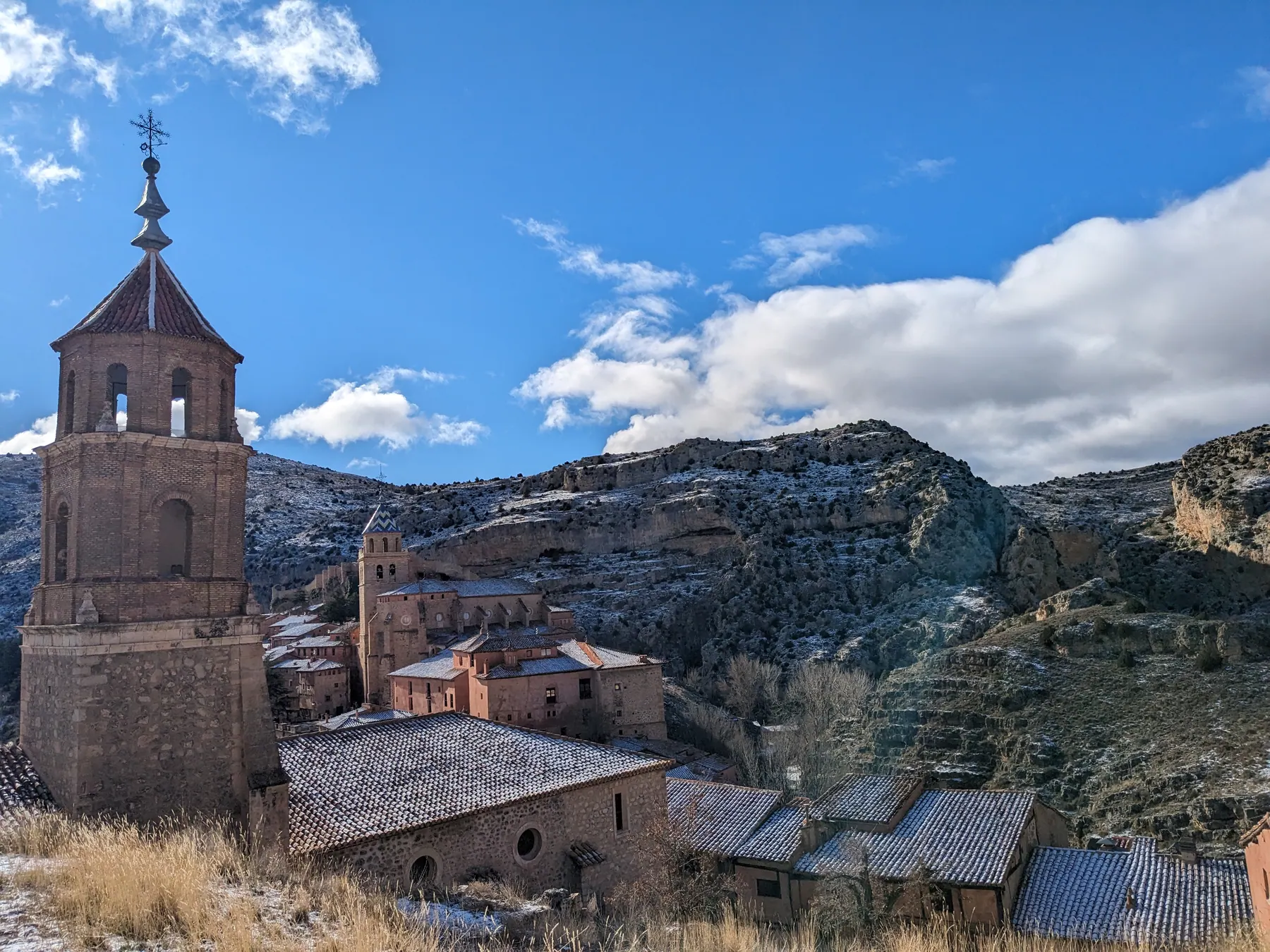
Cathedral of Albarracín and Iglesia de Santiago Apóstol
Walking through the upper streets of the old town brings you towards the Cathedral of Albarracín (Catedral del Salvador) and the Iglesia de Santiago Apóstol.
Mirador de Albarracín
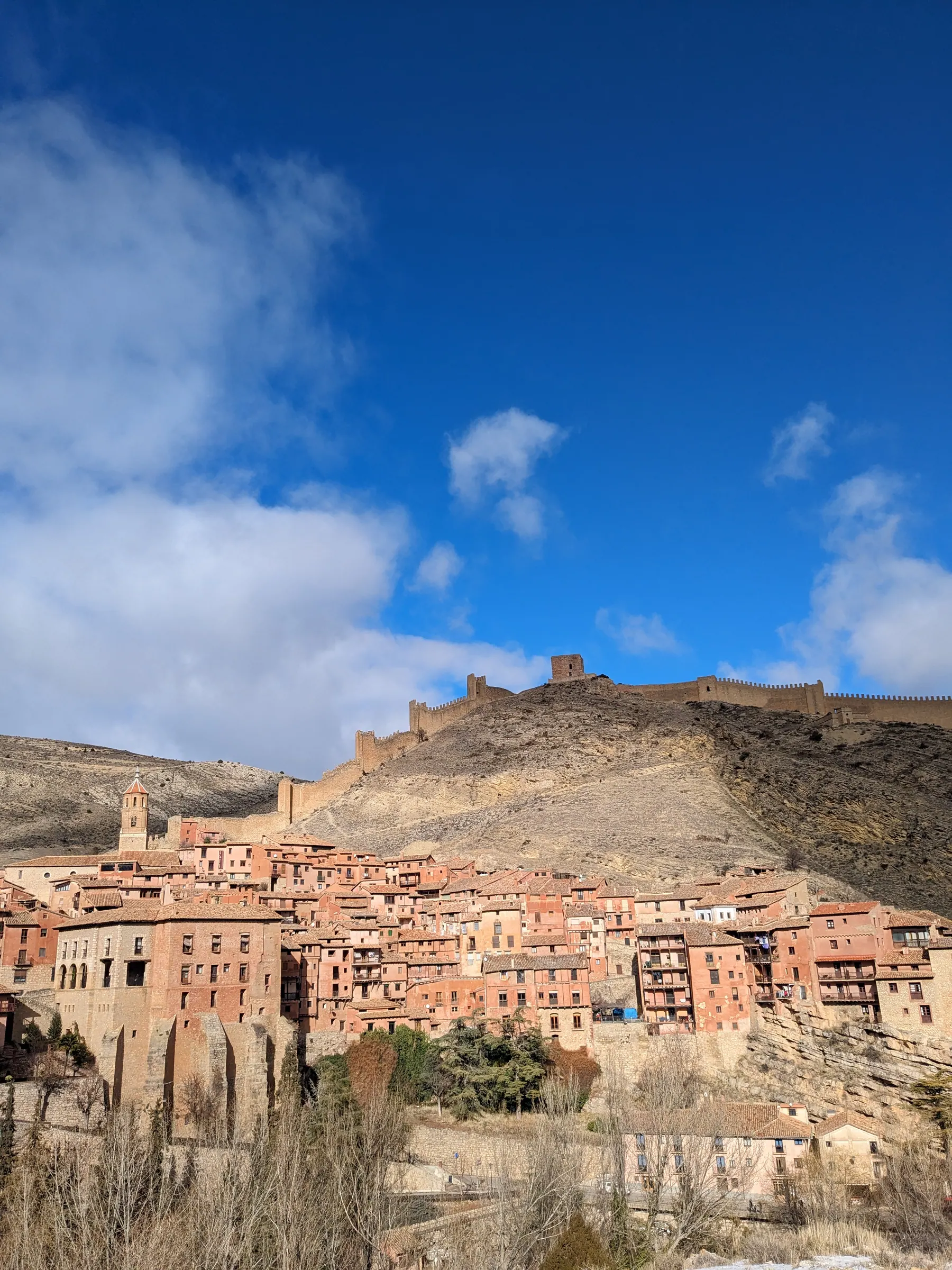
Seeing the views from the Mirador de Albarracín is a must. It’s a bit outside the center, so you have to walk further, but the viewpoint was exceptionally beautiful. From across the river, you get the view to the city and also mountains around and cliffs.
Down in the Gorge: The Paseo Fluvial
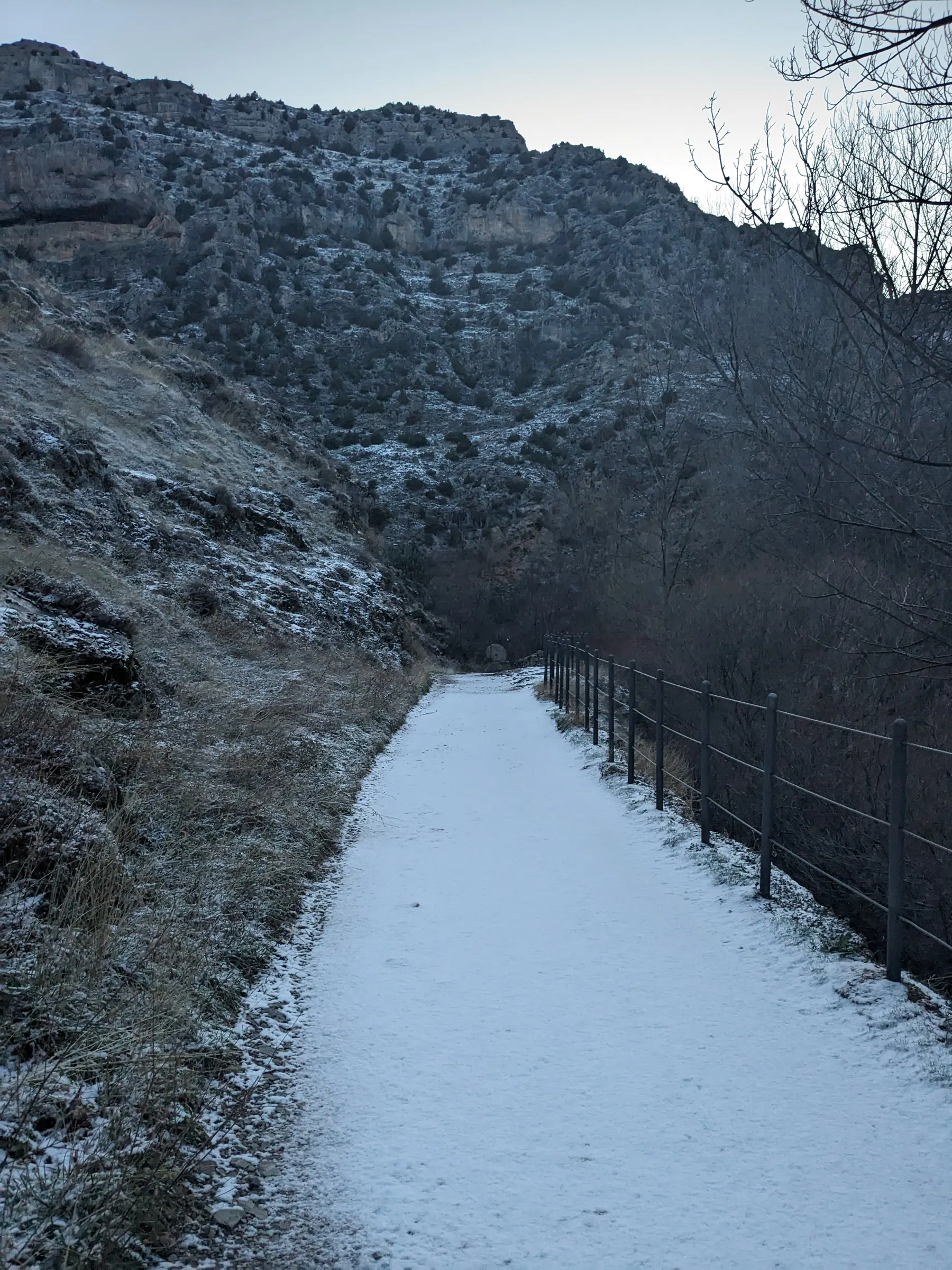
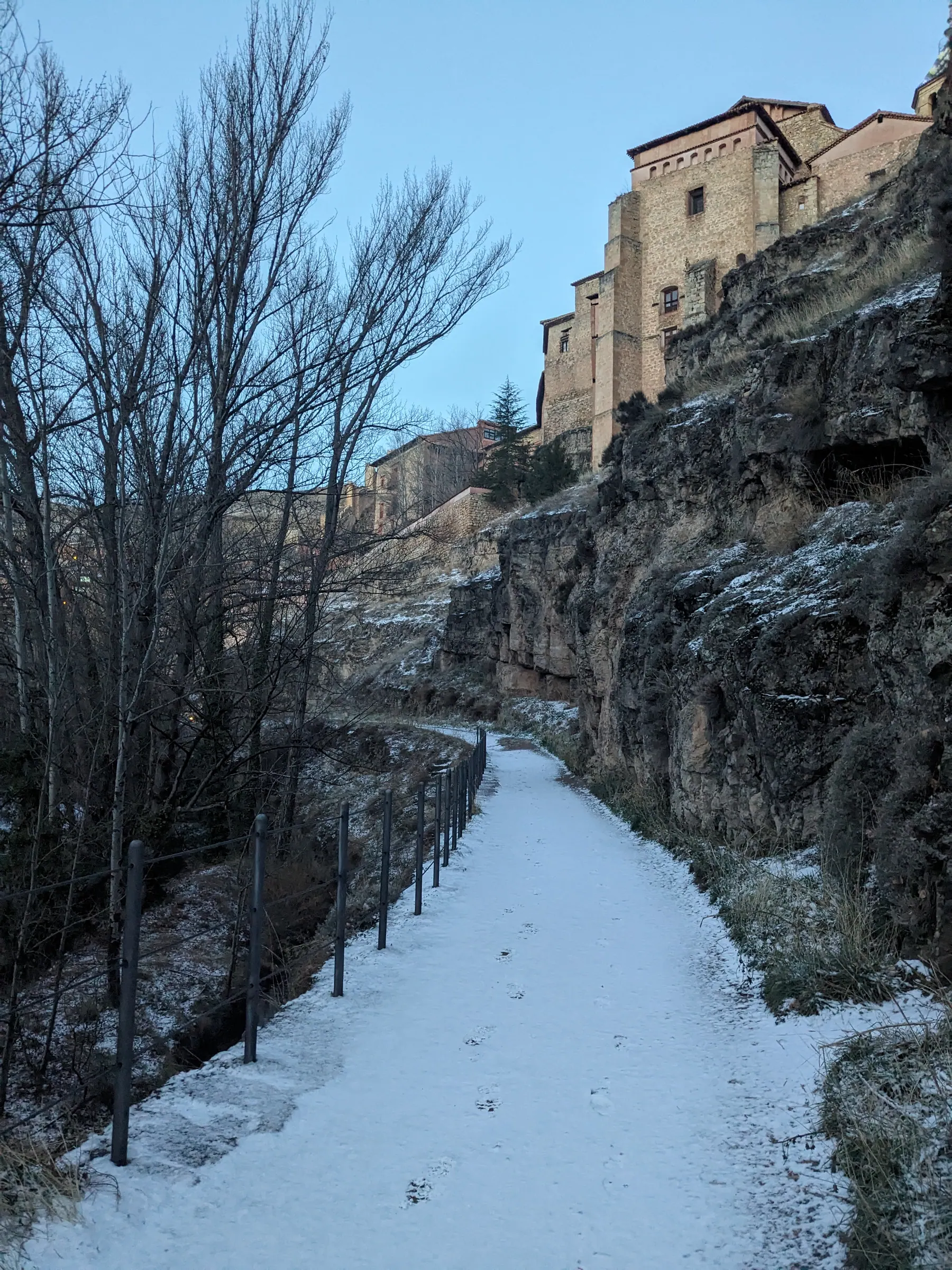
The Paseo Fluvial is another great way to explore Albarracín.
It’s a walking trail along the river at the bottom of the gorge with wooden footbridges. The walk starts right by the river at the foot of the old town, near the bridge crossing into the Arrabal neighborhood (or via the stone stairways leading down from the historic center). The full circular loop is around 1.5 km and takes about 45 minutes to an hour at an easy pace. With the snow, we experienced the path and wooden walkways being a bit slippery, so you definitely want to take your time and watch your footing here.
Museo del Juguete (Toy and Puppet Museum)
Right in the Arrabal quarter near the river is the Museo del Juguete (Toy Museum), housed in an old traditional mansion. It’s famous for its extensive collection of vintage dolls, dollhouses, tin toys, and puppets. We really wanted to visit it, but unfortunately it was closed.
Indoor Breaks: Places You Can Visit from Inside
Because winter in Albarracín can be freezing, especially up on the exposed walls and gorge trails, it helps to know what indoor spots you can visit to catch a break from the cold:
- Cathedral of Albarracín & Episcopal Palace (Diocesan Museum): The Fundación Santa María organizes guided visits to the cathedral interior and adjoining bishop’s palace, known for its collection of 16th-century Flemish tapestries.
- Museo de Albarracín: Housed in the old 18th-century hospital and former town jail, this municipal museum covers the town’s Islamic and medieval history, with archaeological finds and old stone prison cells.
- Casa-Museo Pérez y Toyuela: A traditional noble mansion preserved with antique furniture and historical rooms, showing how wealthy families once lived inside Albarracín’s leaning timber houses.
- Cozy Cafés around Plaza Mayor: If you just want to sit down and warm up without a tour, head into a café or tavern near Plaza Mayor for a thick Spanish hot chocolate (chocolate caliente) or coffee and try local almojábanas (traditional anise-flavored pastries).
Rock-Art Shelters in the Pinares de Rodeno
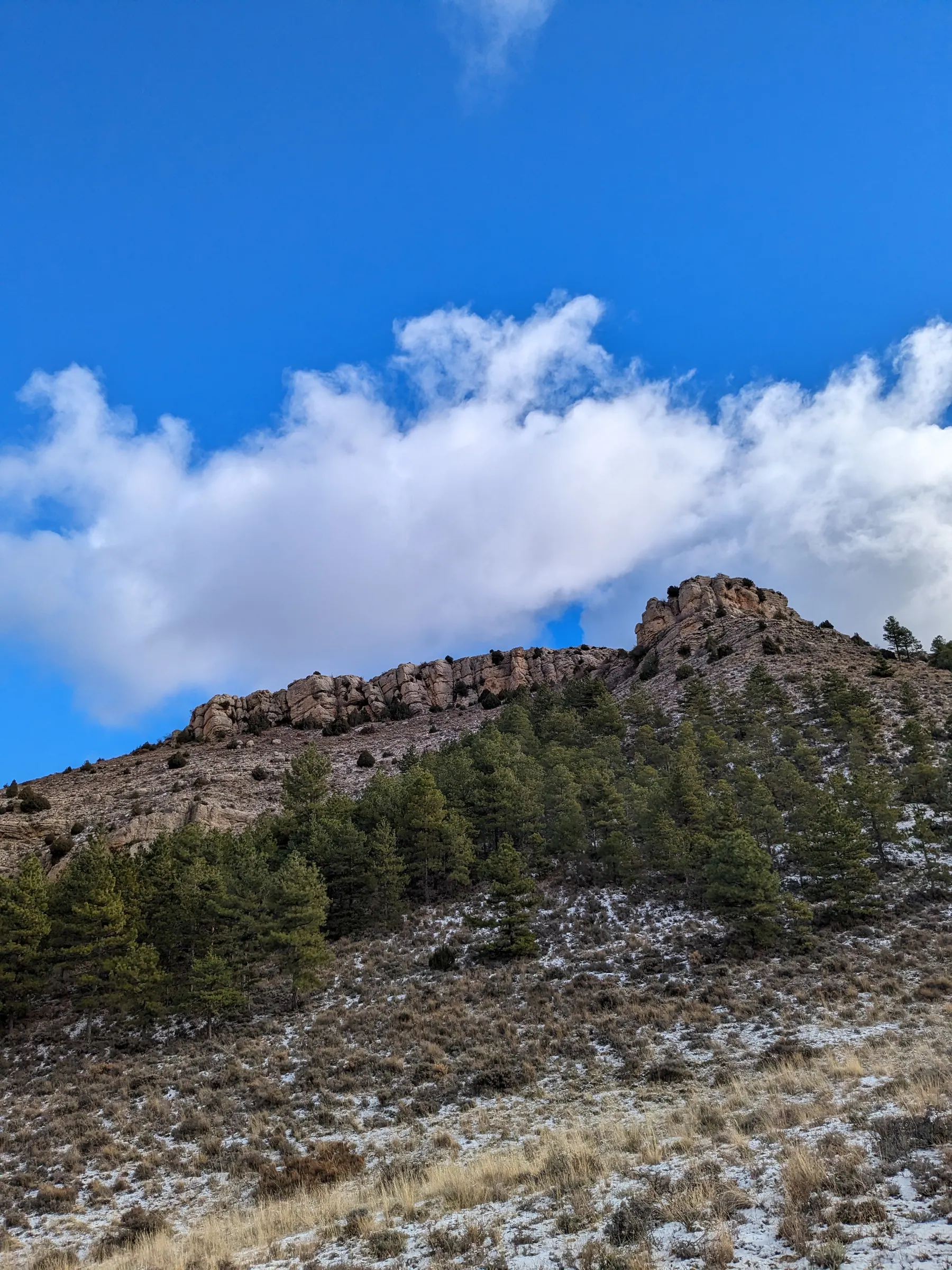
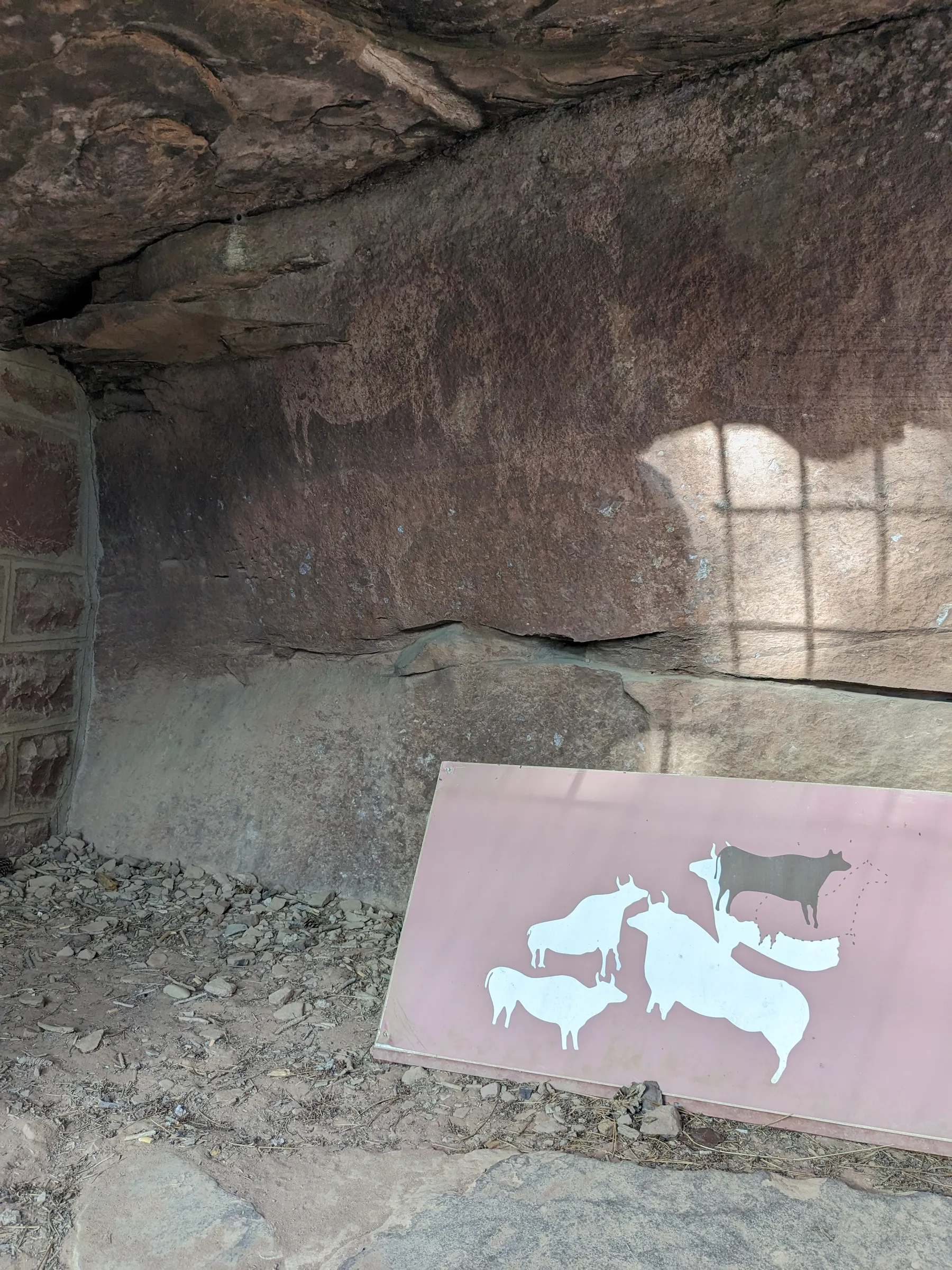
Just a 10-15 minute drive (about 4.5 to 5 km south along the VF-TE-05) outside Albarracín is Pinares de Rodeno. Rather than deep caves, these are shallow sandstone rock-art shelters - as Aragón Tourism describes them. If you look them up on maps, you’ll find them designated as Abrigo (such as the Abrigo de Doña Clotilde, the Abrigo de la Cocinilla del Obispo, and the Abrigo de los Toros del Navazo). They are called abrigos because the word literally means “shelter” in Spanish - instead of deep underground caves, they are natural rock overhangs and shallow hollows in the cliffs that provided prehistoric hunter-gatherers with natural protection from wind and weather while letting in daylight for their paintings.
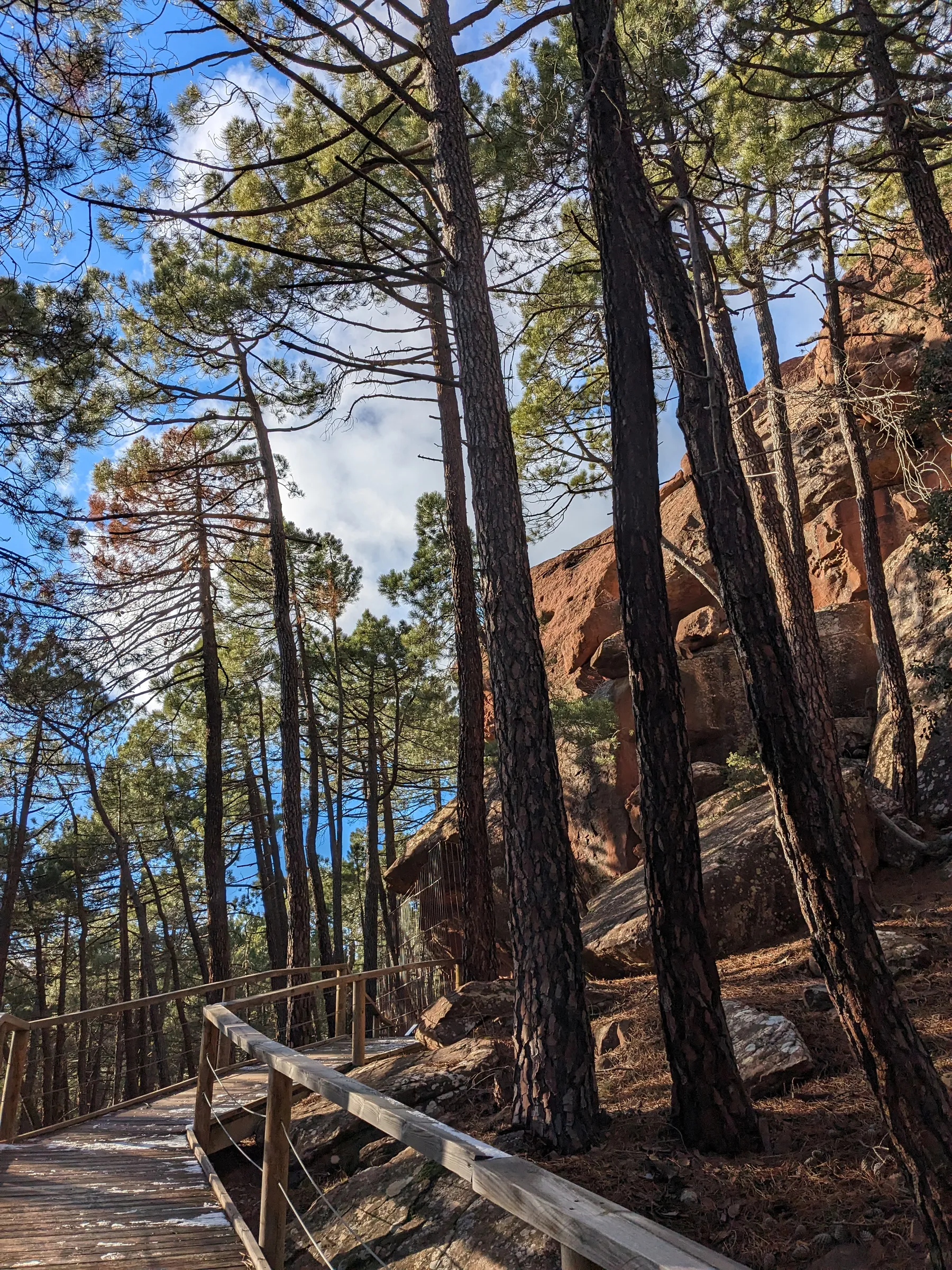
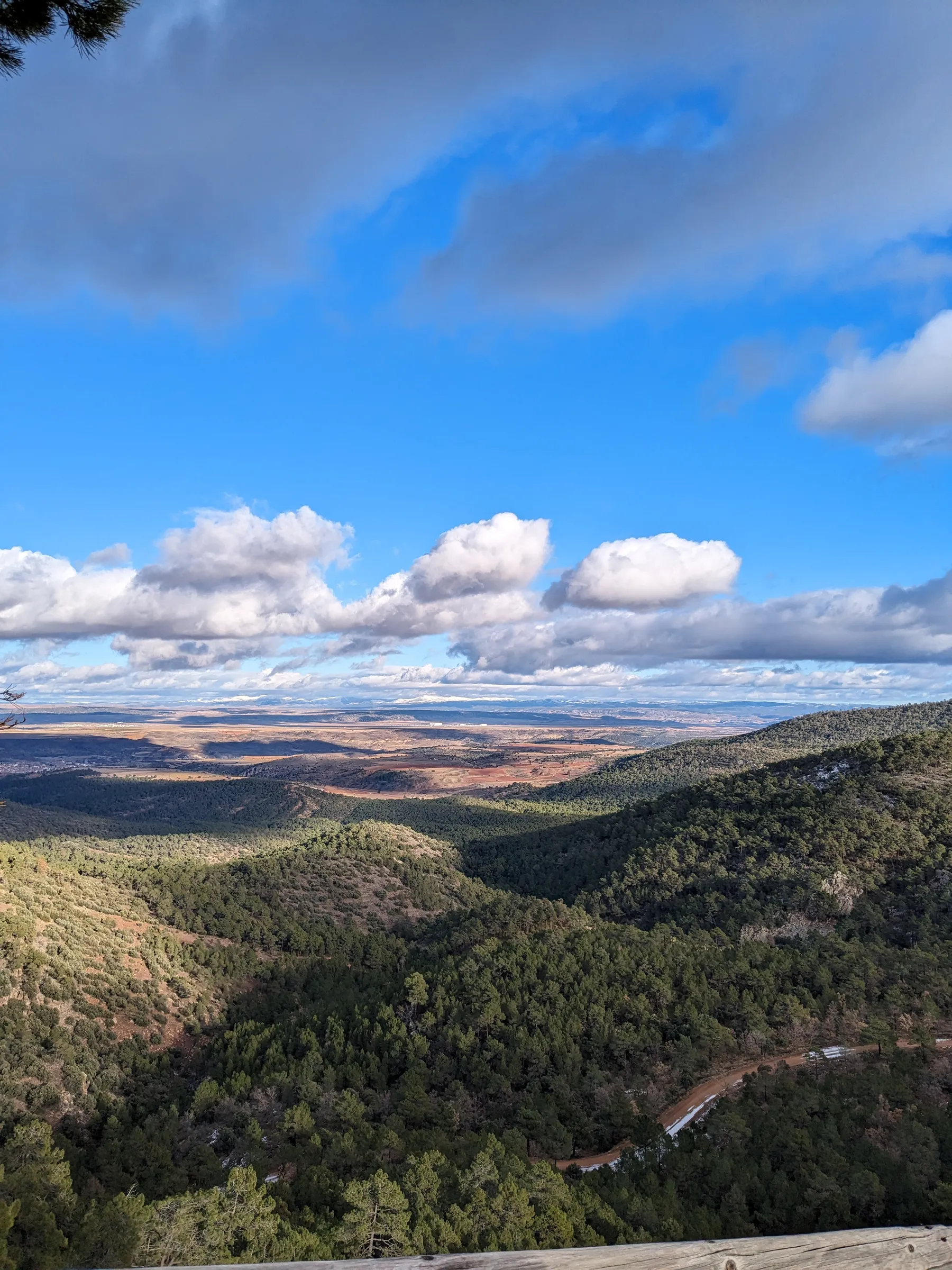
We parked our car in the designated parking area at Prado del Navazo (Área Recreativa del Navazo), the main starting point for visiting the shelters. From there, an easy walking trail leads to several protected overhangs, most notably the Abrigo de los Toros del Navazo. What I really liked was that they had animal exemplar drawings on the information boards to help you recognize what was actually painted on the wall thousands of years ago. It’s an interesting place for the rock formations there too. We didn’t spend a lot of time here - approximately one hour in total, as it was pretty cold - but the whole pine forest with its big red boulders is a really nice place to take a stroll, and I recommend going to the viewpoint there - the views are absolutely beautiful.
Where to Stay & Honest Food Verdicts
Where We Stayed: Hotel Doña Blanca Albarracín
We slept at Hotel Doña Blanca Albarracín.
This hotel wasn’t in the historic center, it was just outside, but that had a great advantage: it had its own parking. Driving inside the old town is basically impossible, so being able to park easily right at the hotel and walk in was a relief. In general, the hotel was very cozy and warm.
Dinner at A-Típico: The Best Baos We’ve Ever Eaten
For dinner, we ate at A-Típico. We had their steamed baos, and honestly, they were the best baos we have ever eaten - highly recommended! They also have French crepes, which might not be typical regional food, but the quality was good, and if you want something more international, why not?
An Honest Verdict on Local Migas
Actually, I tried migas in another restaurant on our second day, but to be honest, the dish was very oily. Maybe we just weren’t lucky with the place, but between that and the baos at A-Típico, there was no comparison.
Cozy Bars in the Historic Center
I noticed that in general, bars in the historic center are pretty cozy and small. Stepping in for a hot drink or some tapas during the visit is a really pleasant experience.
Traditional Regional Foods to Try
If you want to taste classic mountain food from Teruel and the Sierra de Albarracín, look out for these regional staples:
- Ternasco de Aragón (IGP): Slow-roasted suckling lamb; tender, juicy, and the signature meat dish across Aragón.
- Queso de Albarracín: Award-winning artisan cheeses made from local sheep and goat milk (the cured cheeses are especially good).
- Jamón de Teruel (DOP): High-altitude cured mountain ham, naturally air-dried in Teruel’s cold winter climate.
- Migas a la Pastora: Shepherd-style fried breadcrumbs with garlic and pork cuts, traditionally served with fresh grapes to balance the richness.
- Wild Game & Winter Truffles: Rich mountain stews made with wild boar (jabalí) or deer (ciervo), often cooked with wild forest mushrooms or local black winter truffle (trufa negra).
Practical Winter Travel Tips
How to Get There (Driving Times)
Having a car is essential to visit Albarracín comfortably:
- From Valencia: ~2 hours (175 km) past Teruel.
- From Madrid: ~3 hours (270 km) through Molina de Aragón.
- From Zaragoza: ~2 hours (185 km) south.
- From Barcelona: ~4 hours (400 km).
- From Teruel city: Just 35 minutes (38 km).
What to Wear
With daytime temperatures between 3°C and 8°C and freezing nights down to -8°C, bring warm layers, a winter coat, gloves, a hat, and shoes with good grip for snowy cobblestones.
Combine with Teruel
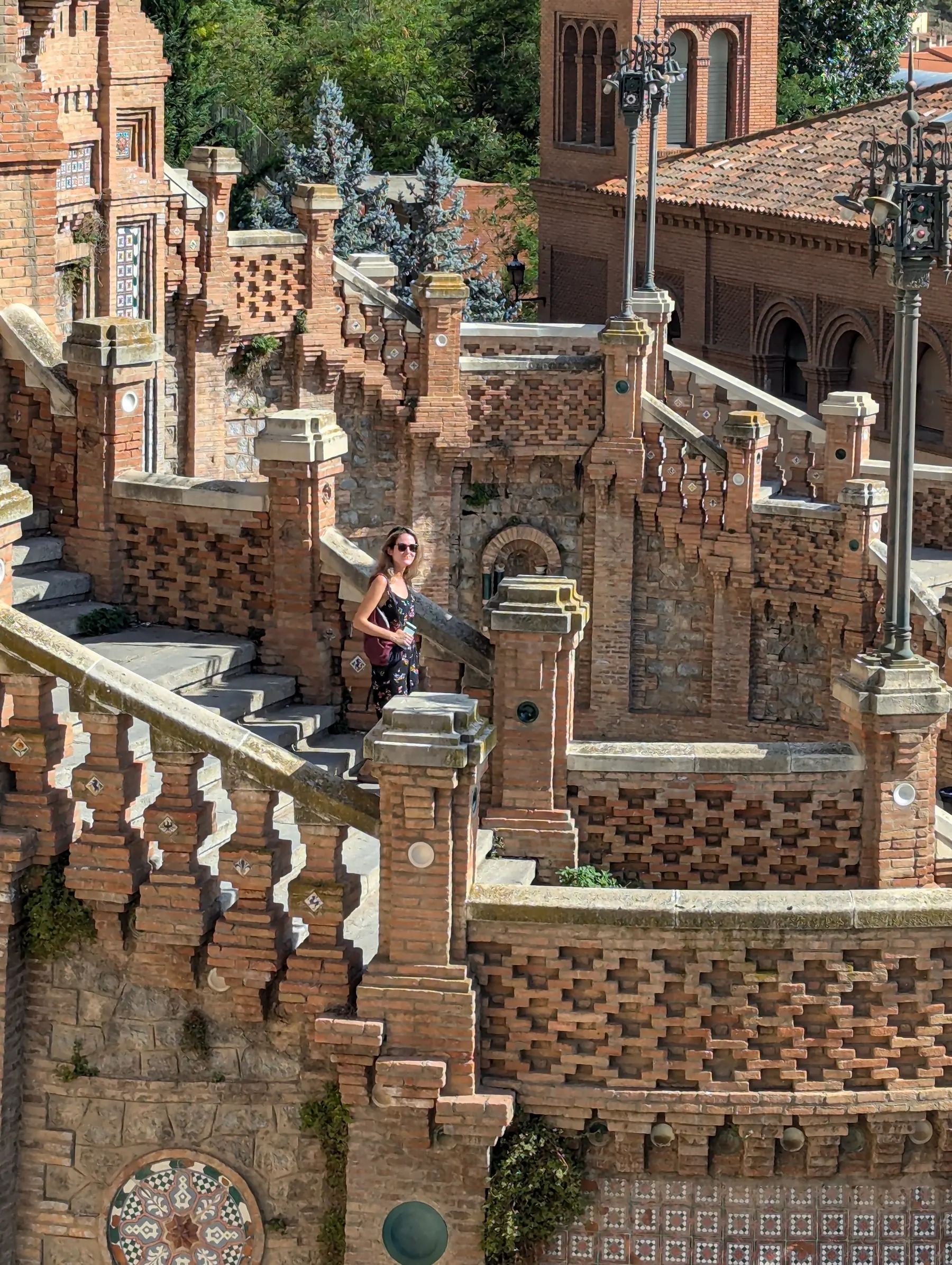
If you have time, make sure to stop in Teruel (just 35 minutes away) to see its UNESCO Mudéjar towers and the monumental Escalinata del Óvalo.
Final Thoughts
Visiting in winter felt like a great choice - we barely saw any tourists, and having the quiet medieval streets almost to ourselves made the whole trip feel special.
At the same time, it would be really interesting to return in the summer season to see a completely different side of Albarracín, and to have warmer weather to explore more of the nature trails around, which seemed very beautiful.
FAQs
Is Albarracín worth visiting in winter?
In our experience, yes. Visiting in January, we barely saw any other tourists, which gave us the narrow medieval streets and stone archways practically to ourselves. While visitor numbers can vary by day and holiday periods, during our trip seeing the quiet town with a light layer of snow on the pink-red houses was really special.
How long do you need in Albarracín?
Arriving in the early afternoon, staying overnight, and exploring through the next morning gave us plenty of time to see the fortress walls, the river gorge, and the town viewpoints without rushing.
Does it snow in Albarracín?
It certainly can, as Albarracín sits at nearly 1,200 meters altitude in the Sierra de Albarracín. During our January visit, we experienced a thin layer of snow rather than heavy snowdrifts - just enough to coat the rooftops and streets without causing driving issues - though mountain weather naturally changes, so you will definitely want a warm winter coat, gloves, and sturdy shoes with good grip.
Can you drive and park in Albarracín's old town?
No. Driving inside the historic center is restricted and the alleys are far too narrow for standard traffic. You should park in the designated visitor lots at the bottom of the town or stay at a hotel with its own private parking like Hotel Doña Blanca just outside the old center.
What is the best way to get to Albarracín?
A car is essential. Albarracín is about a 2-hour drive from Valencia via the A-23 and A-1512, around 3 hours from Madrid via Molina de Aragón, and 35 minutes west of Teruel. Public transport options are very limited.
Read next
More posts for this trip mood
 Europe
Aragón, Spain
The impressive Aragonese Pyrenees in Summer: Ordesa, Valle de Otal and the Benasque Valley
Ordesa is spectacular and unmissable, but Valle de Otal is the quieter memory.
A personal three-day summer trip through the Aragonese Pyrenees, with Ordesa, Valle de Otal, the Benasque Valley and practical hiking advice.
 Europe
Aragón, Spain
Teruel: The Spanish City That Had to Prove It Exists
A guide to Teruel, Spain, with Mudéjar towers, the Escalinata del Óvalo, the Lovers of Teruel, local food, parking and practical tips.
 Europe
Aragón, Spain
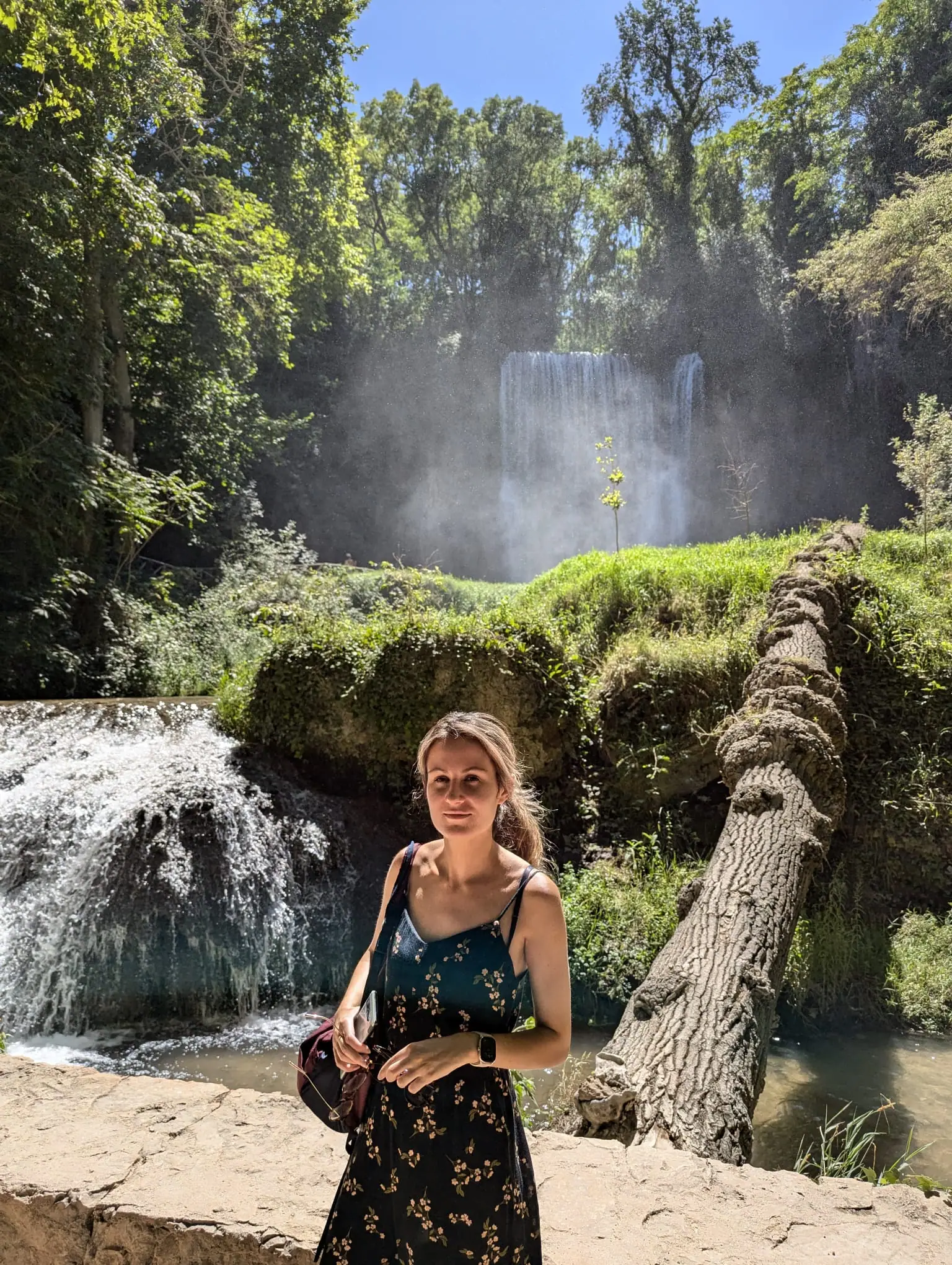
Monasterio de Piedra: A Fairytale Waterfall Park to Escape the Summer Heat
A hidden waterfall detour that feels like a small paradise in dry Aragón.
A summer visit to Monasterio de Piedra in Aragón, Spain, with waterfalls, caves, monastery history, practical tips and why it is worth the detour from Zaragoza.