

Ibiza · Balearic Islands · Spain
Things to Do in Ibiza Off-Season: Nature, Empty Calas & 4-Day Route
Ibiza off-season is a completely different island: empty calas, quiet hiking trails, and dramatic coastal views without the summer rush.
A 4-day off-season Ibiza guide focused on nature, empty calas, coastal hikes, Dalt Vila, Es Vedrà, and practical April road trip tips.
Quick facts
- Best time
- March, April, October, and November for mild hiking weather, empty beaches, and low prices.
- Trip length
- 4 days is ideal to explore all four coastlines by car without rushing.
- Rental car
- Strongly recommended for this 4-day route. While public buses connect main towns, having a car is essential for remote trailheads and coves.
- Good for
- Coastal hiking, secluded calas, photography, sunset viewpoints, and quiet nature.
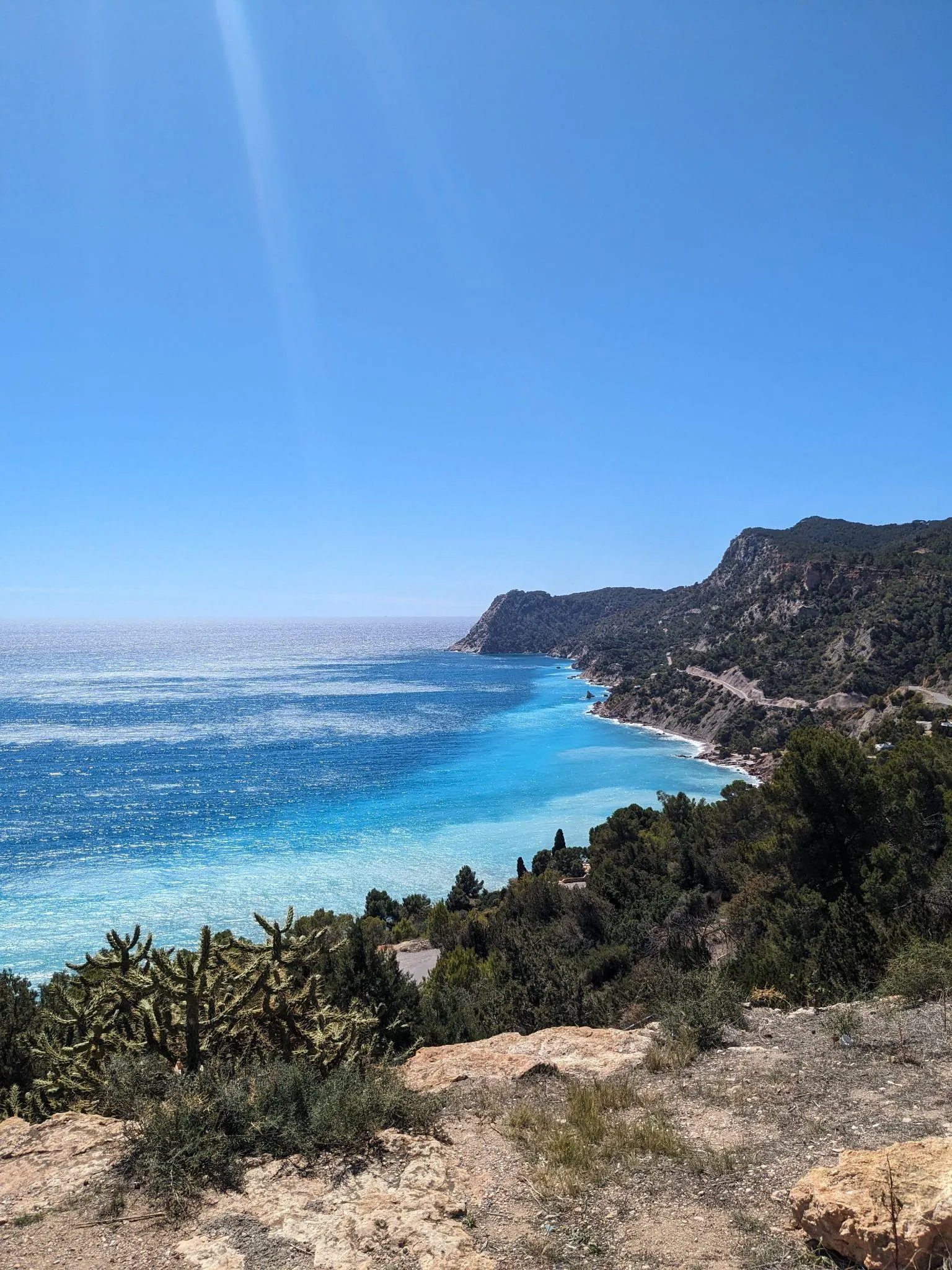
Going to Ibiza off-season is not what first comes to mind. When I went in April, we did not encounter open mega-clubs or loud parties, and that was the whole point of our trip: enjoying the nature and the calmness without the summer party scene.
Beyond the Nightlife: Nature and Calmness
If you are looking for things to do in Ibiza beyond the nightlife, the island in autumn and spring is a great alternative for people who like calas and a beautiful seaside but are not so keen on parties.
Let’s be honest: Ibiza can be much more than its summer reputation. Since I live in Valencia, Ibiza is a very short and cheap flight away.
First Impressions and Local Identity
What struck me the most right after arriving was the bilingualism. Street signs and town names are displayed in Catalan (the local eivissenc dialect) alongside Castilian Spanish, giving the island an authentic character that party tourism often hides.
Another big reason to visit is that Ibiza off-season felt very affordable. Flight tickets, lodging, and car hire were a fraction of the summer rates, and eating out at local spots was around 15 EUR per meal.
Having the island without the summer rush and at these prices made the whole trip feel like a completely different destination. I spent 4 days in Ibiza and these are the nature places we explored.
Why Having a Rental Car Made All the Difference (and Driving a Fiat Hybrid)
The most important practical lesson from our trip: having a car made exploring the coast effortless. While public buses connect the major towns like Ibiza Town, Sant Antoni, and Santa Eulària - and Ibiza’s tourism office lists the island’s transport options - bus frequencies drop significantly outside summer. You will want to pull over at quiet viewpoints, trailheads, and secluded calas that have little to no off-season bus connection.
For our entire four-day trip, we drove a small hybrid Fiat. The roads in Ibiza were not challenging at all: everything was relatively flat with short distances between stops. On another island where I went, like my trip to Madeira, driving a small Fiat would be pure insanity on those steep 30% mountain inclines. But in Ibiza, a small Fiat was completely fine, easy on fuel, and easy to park.
Route 1: What to See in Eivissa (Dalt Vila) and the East Coast
The eastern side of the island makes the most logical starting point after picking up your rental car near the airport.
Eivissa (Ibiza Town): What to See on Foot
Eivissa is right next to the airport and works best as a relaxed first stop before heading into the wilder coastlines:
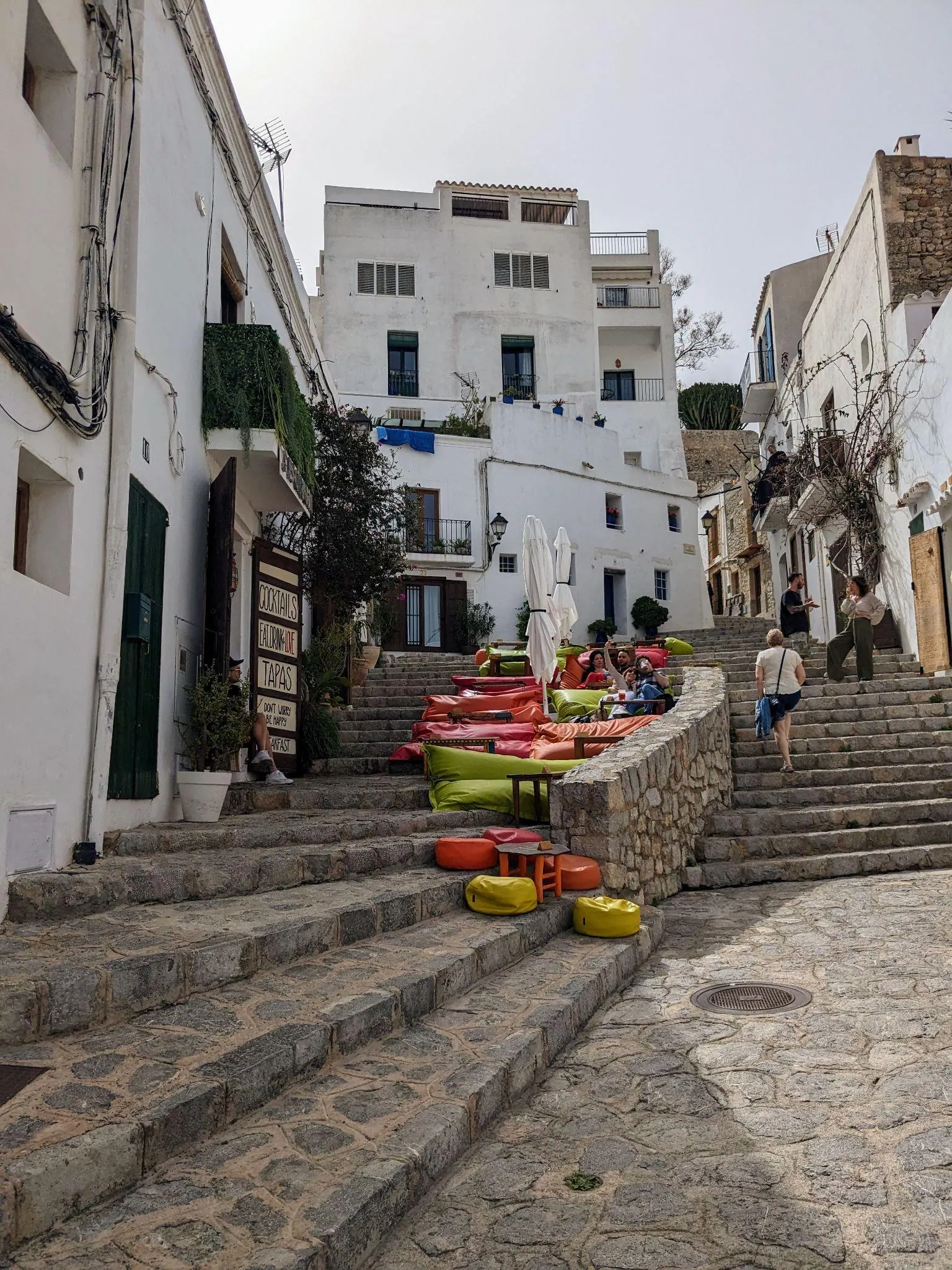
- Portal de Ses Taules and Plaça de Vila: You walk into Dalt Vila (the upper fortified town) through the stone drawbridge gate, which leads straight into the cobbled main square.
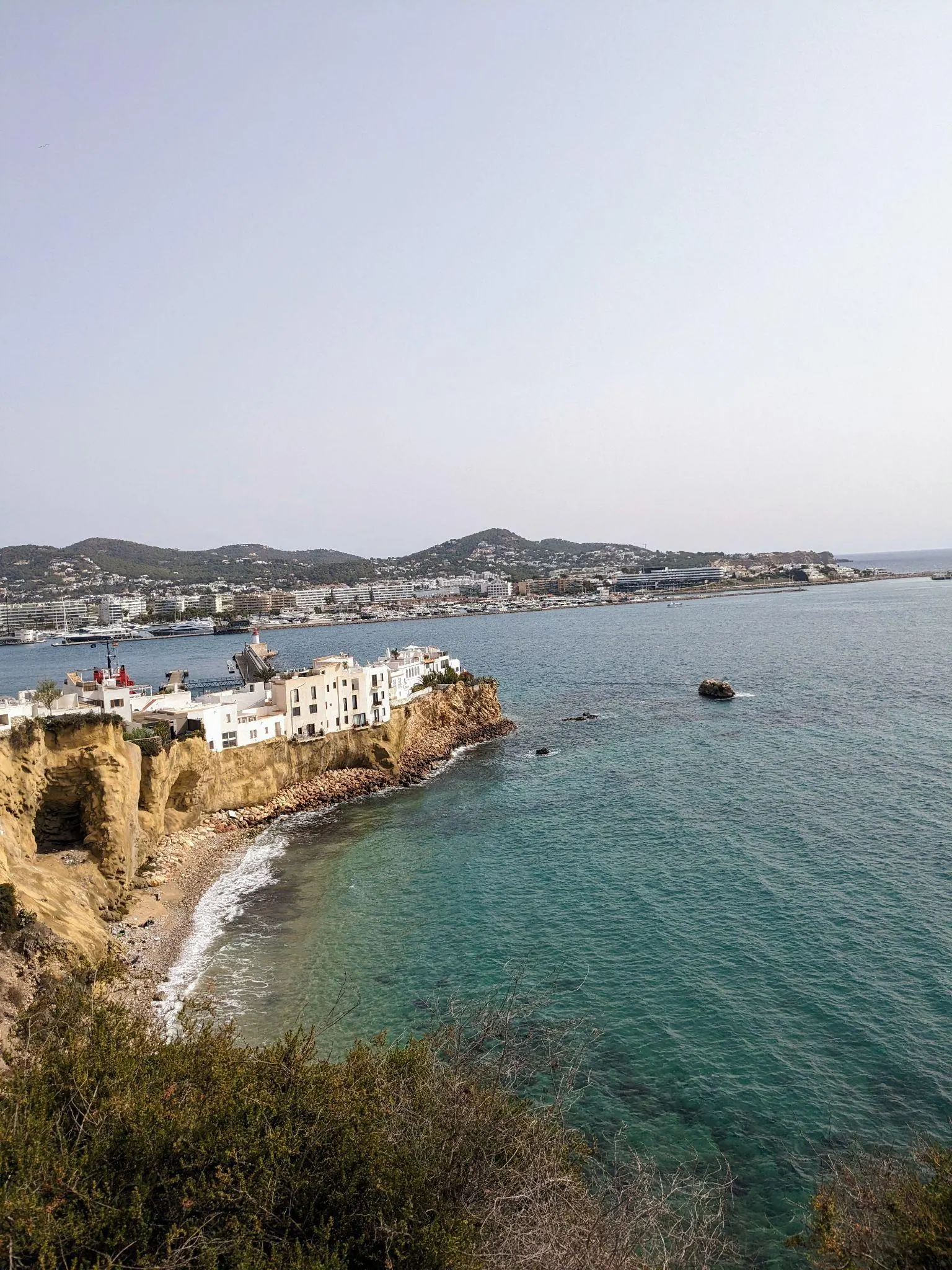
- The Bastions (Baluard de Sant Pere & Baluard de Santa Tecla): Walking along the Renaissance defensive ramparts gives you elevated views over the port and across the water toward Formentera.
- The Summit: Continuing up the cobbled lanes brings you to the Cathedral of Santa María and Castell d’Eivissa, with an open terrace overlooking the bay.
- La Marina and Sa Penya: Down below the walls along the waterfront, these old fishermen’s streets are quiet in April without the nightlife crowds.
Spending 1 to 2 hours here on foot is enough before getting back in your car. If you have more time nearby before driving to Cala Llonga - especially if the weather is poor or overcast - an optional history stop just a short stroll southwest of Dalt Vila is the Monographic Museum and Punic Necropolis of Puig des Molins, one of the most significant Phoenician-Punic sites in the Mediterranean (see Ibiza tourism).
Cala Llonga: Views from the Road
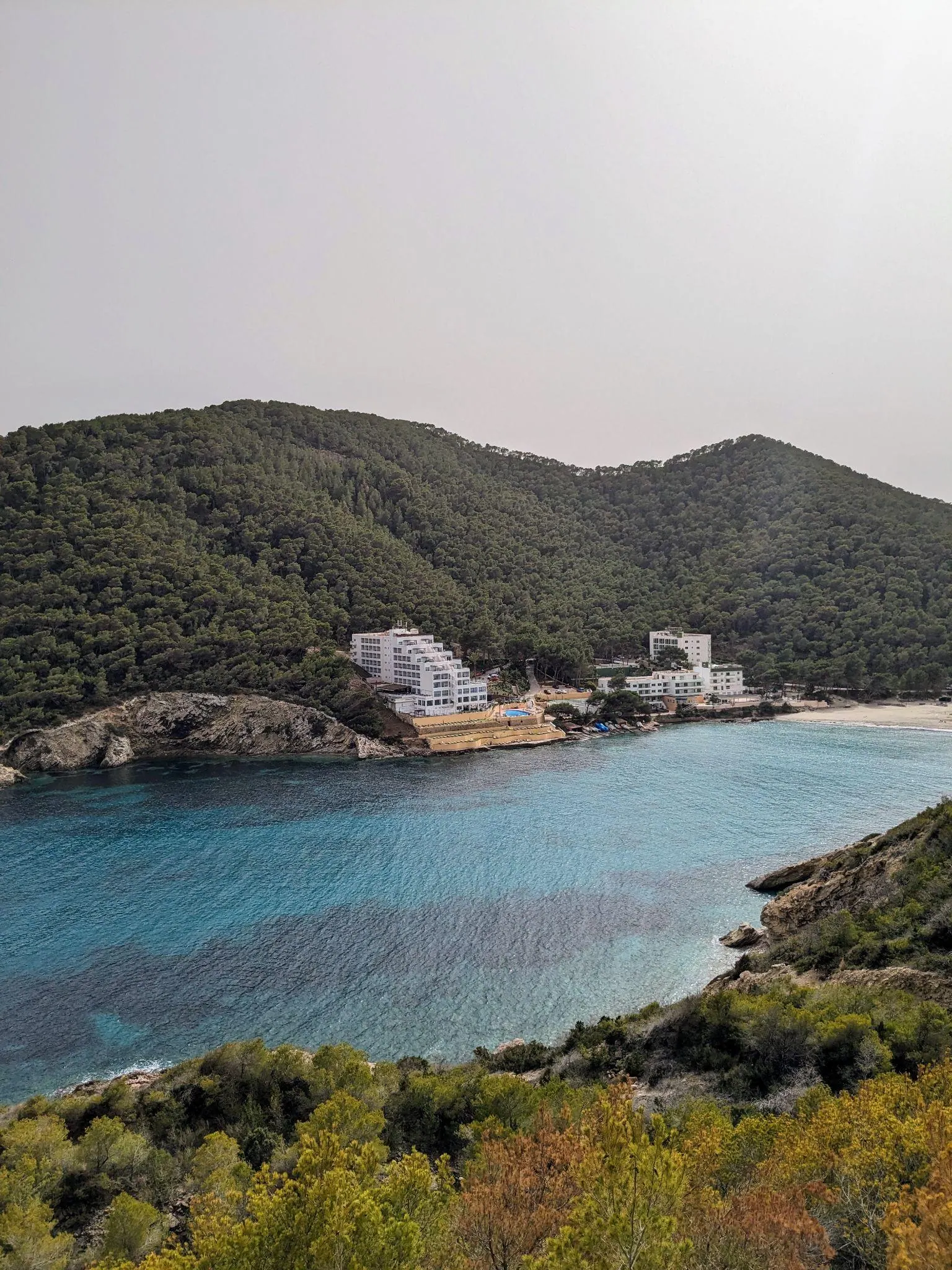
Just a 15-minute drive up the eastern coast from Eivissa sits Cala Llonga. We stopped down at the beach itself and also looked at it from the winding road above while driving. Viewing it from the road above gives the best perspective on how the bay cuts into the coast.
Nearby Calas to Explore on the East Coast
We did not visit any of the four calas below ourselves. If you have extra time on your first day, consider them as optional detours along the east coast rather than stops from our trip:
- Cala Olivera: A secluded cove south of Cala Llonga with clear turquoise water and rustic wooden boathouses (varaderos).
- Cala Nova: A wider, wilder beach north of Santa Eulària, with a coastal clifftop path linking to Cala Llenya.
- Cala Mastella: A tiny, sheltered inlet framed by pine hills and traditional fishing slipways (details on Ibiza tourism).
- Cala Talamanca: A calm bay right beside Eivissa, with a wooden boardwalk facing Dalt Vila.
If Las Dalias market is open on your arrival day and you still have time after Cala Llonga, you can visit it while you are already on the eastern side of the island. Otherwise, leave it for the start of Day 3 if the market is open then; you do not need to drive back east after exploring the northern coast.
Route 2: West Coast Hike, Southwest Calas, and Es Vedrà Sunset
Across on the western and southwestern side of the island, the coast is far more exposed, rocky, and dramatic. This section covers some of the most impressive natural places to visit in Ibiza.
The Coastal Hike: Cala Comte to Cala Bassa (1 Hour One Way)
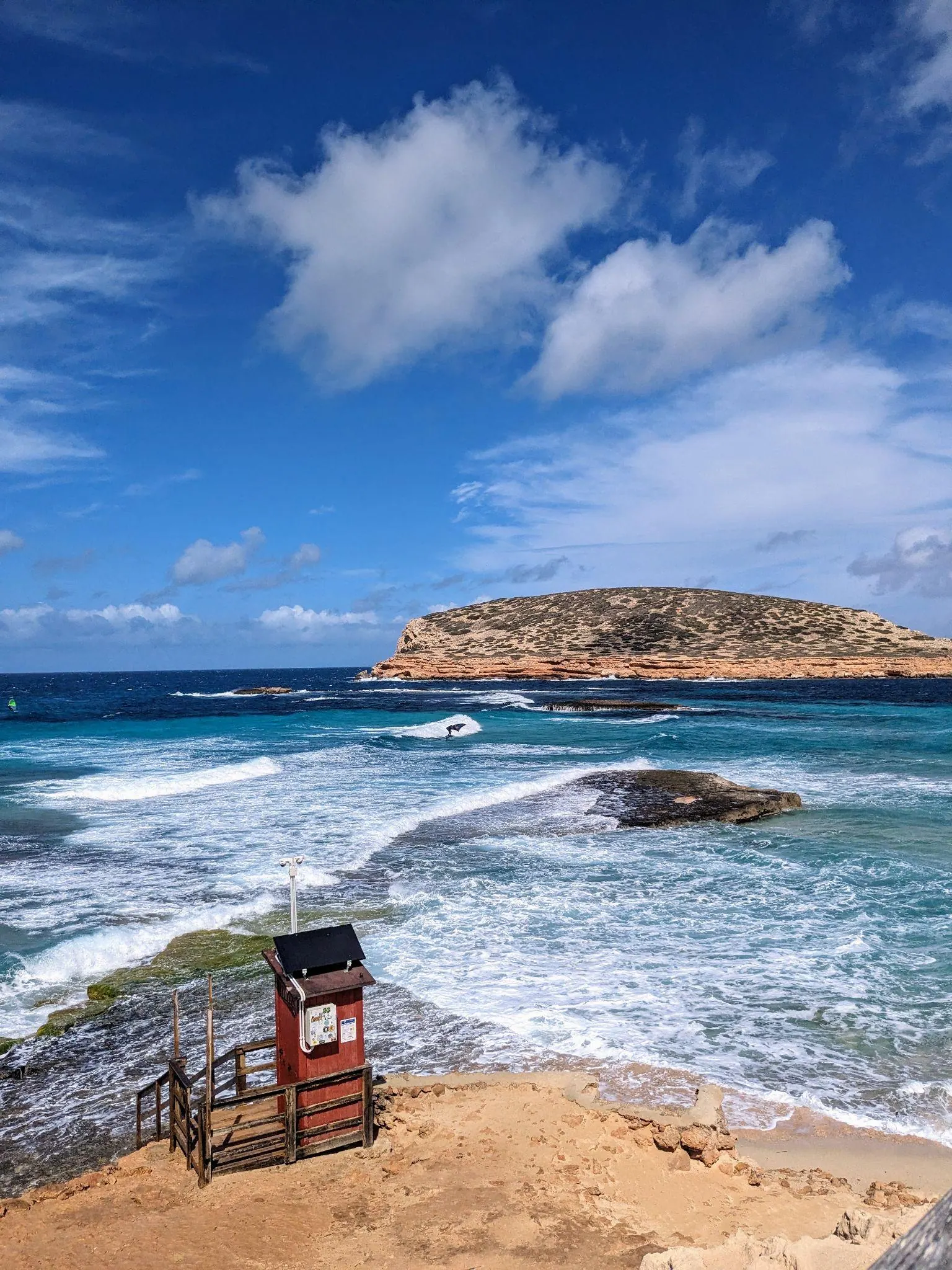
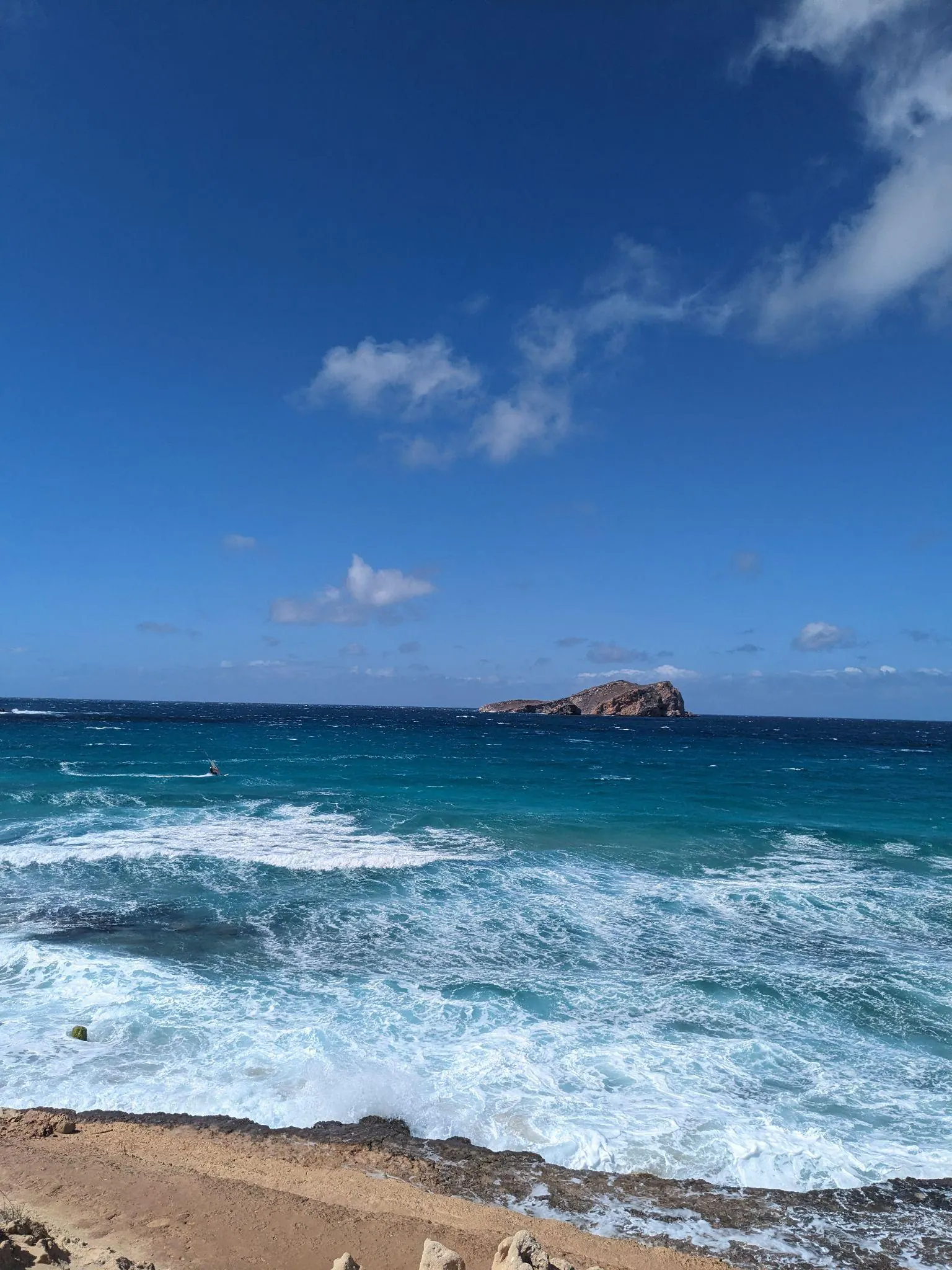
We drove out to Platges de Comte (Cala Comte) and Cala Escondida. It was extremely windy when we were there, with open views toward the rocky islets sitting right offshore.
From Cala Comte, the main plan was to do a proper coastal walk all the way to Cala Bassa:
- Duration and Distance: Around 1 hour one way, covering approximately 3 km (about 2 hours round-trip and roughly 6 km if you walk back to your car at Cala Comte).
- Route: Follow the coastline to the right (north-east). The trail stays close to the cliffs, with a few sections cutting slightly inland through low pine scrub before returning to the sea.
- Footwear: The terrain is mostly flat with rocky patches, so wearing proper walking or light hiking shoes is much more comfortable than flip-flops on the uneven dirt and rock paths.
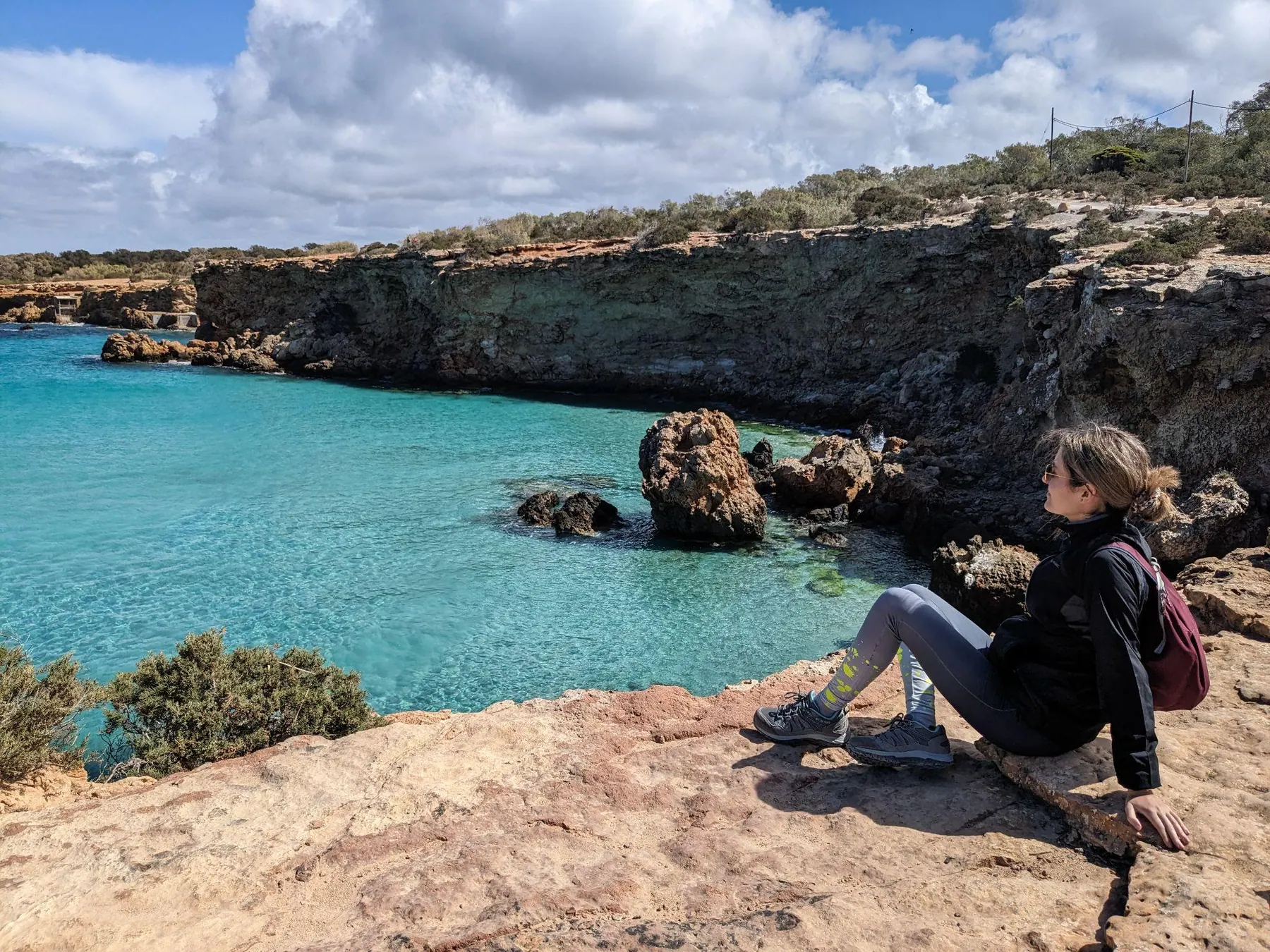
- Along the path: We stopped at several secluded coves where there was absolutely nobody around. The water had an unreal swimming-pool colour, completely clear to the sand at the bottom - and no, the picture is not touched. You would never find these coves empty in July or August.
- Landmark along the walk (Torre d’en Rovira): If your walk follows the outer coastal headland, look out for Torre d’en Rovira, an 18th-century coastal defense tower that overlooks the rocky islets of Sa Conillera and s’Espartar. It adds striking historical context right along the footpath without requiring another drive.
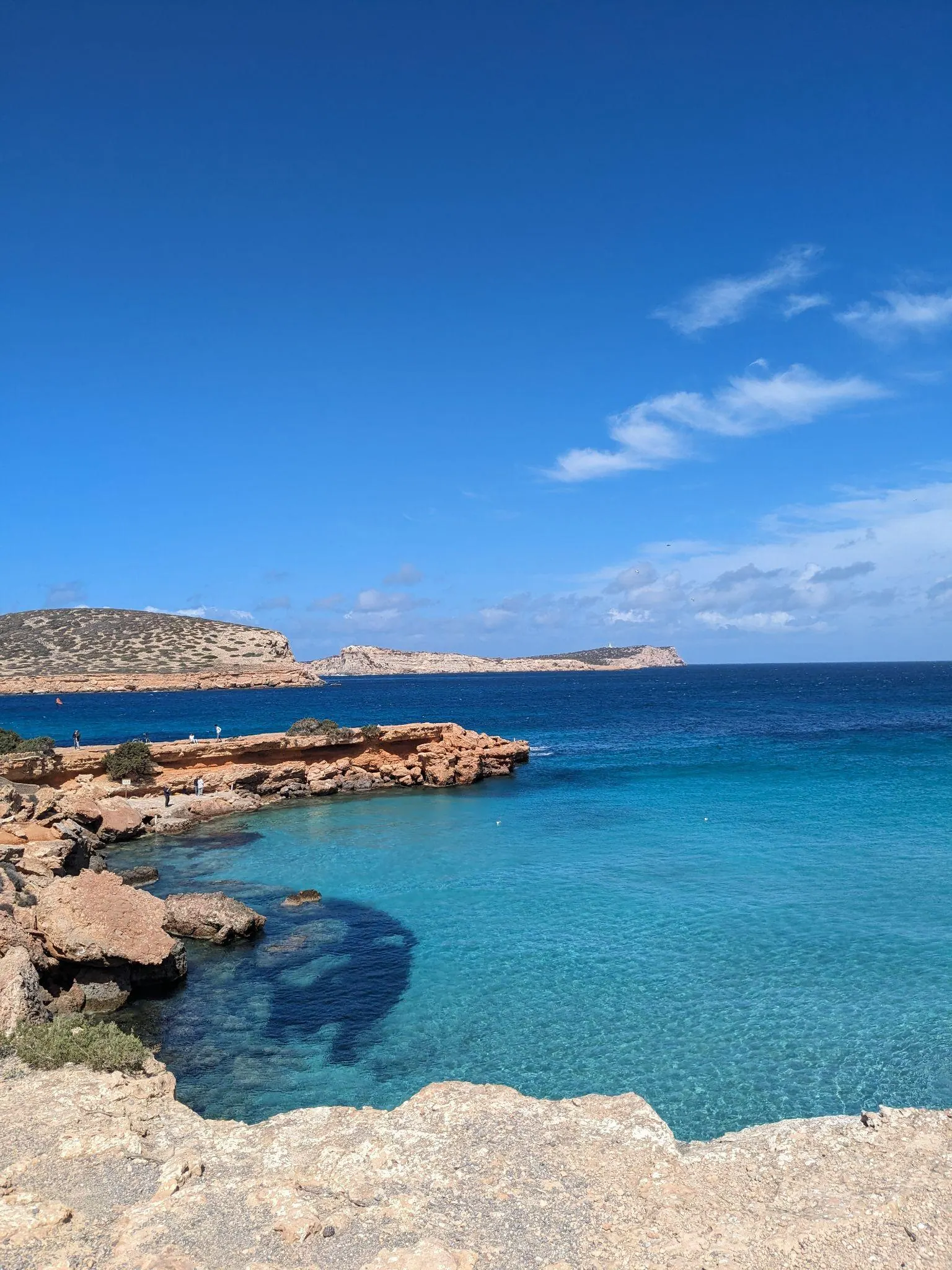
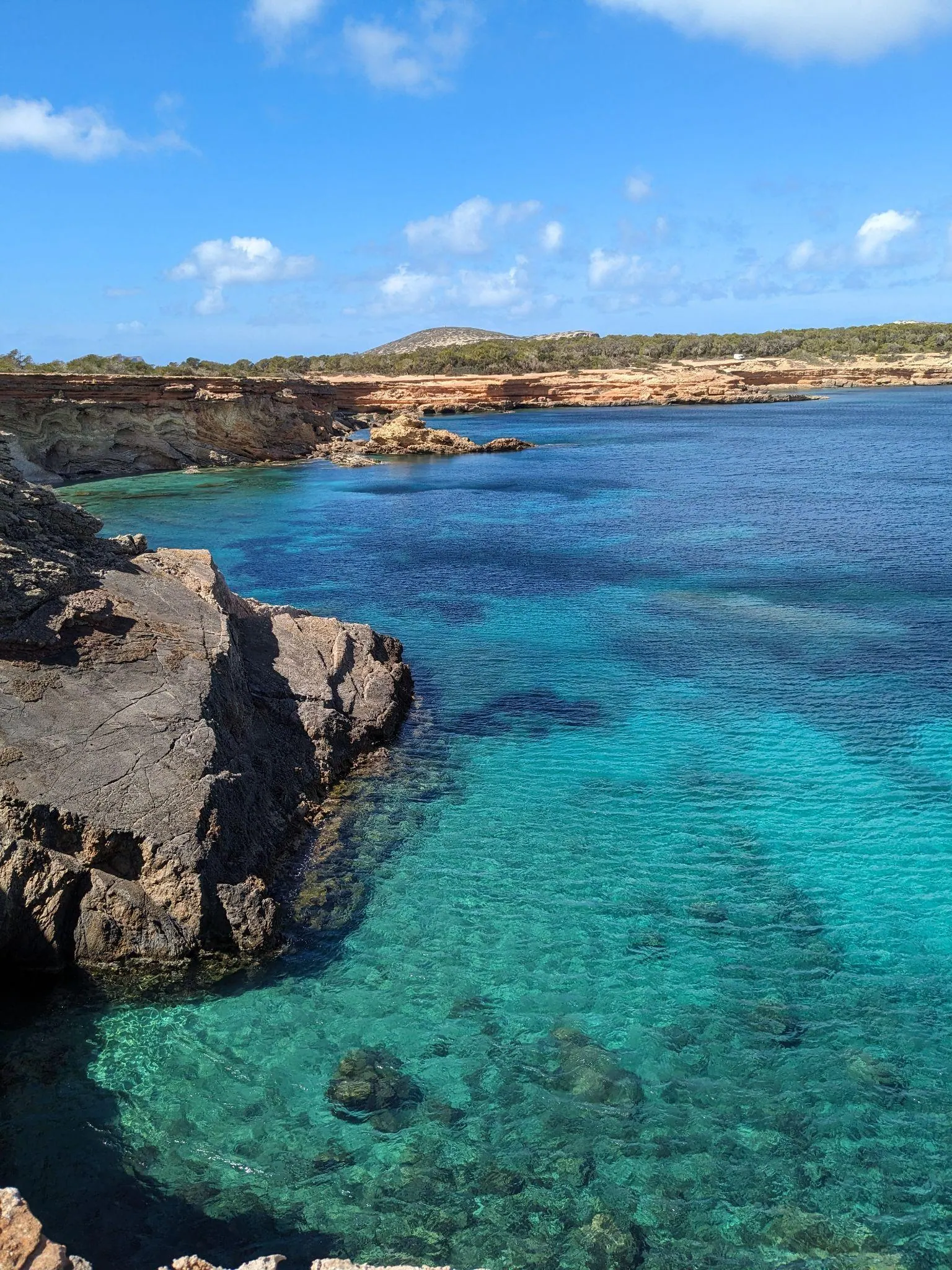
Calas on our way
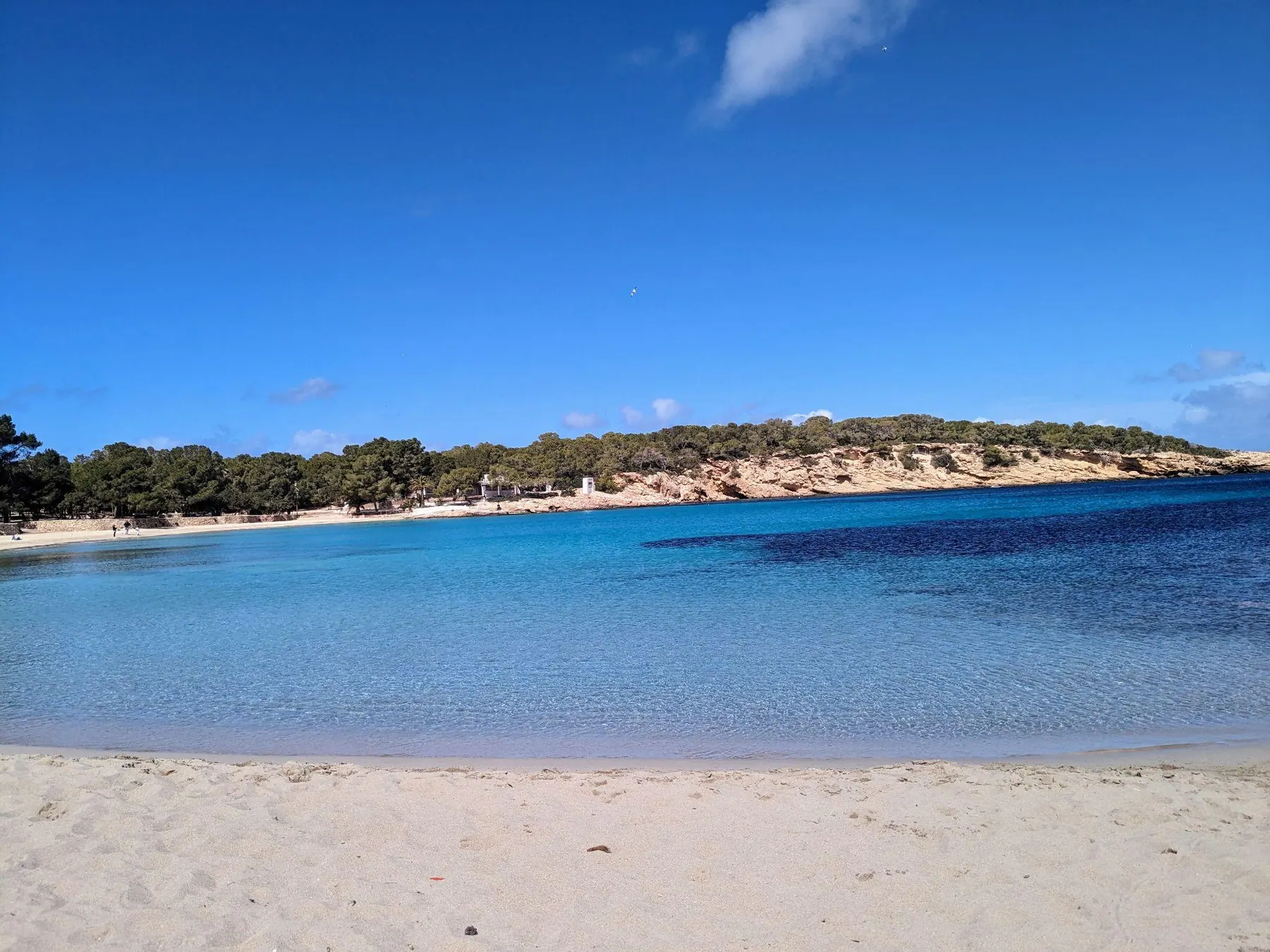
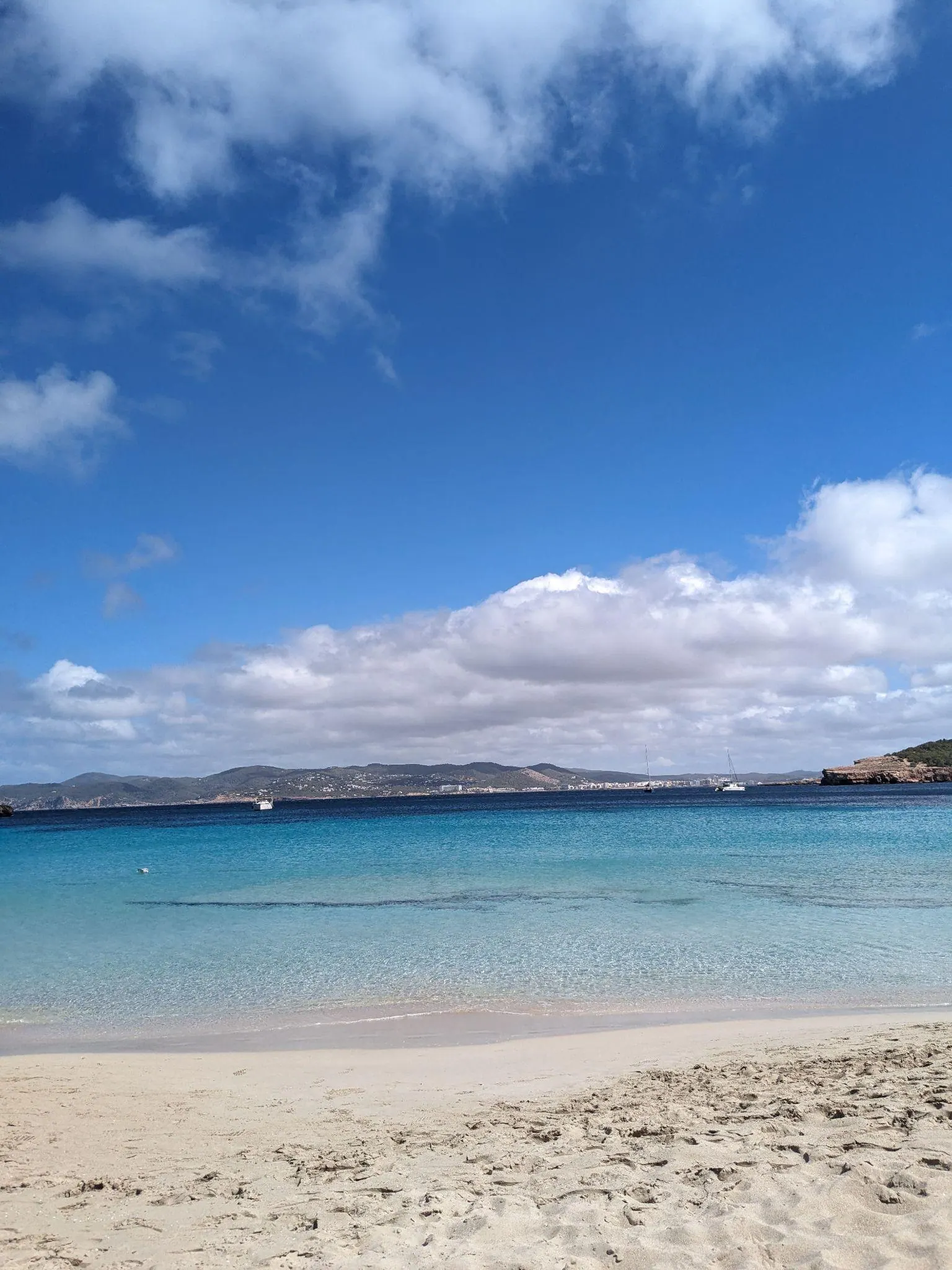
- Arrival at Cala Bassa and Return: The trail ends right at the wide sandy beach of Cala Bassa, which makes a great spot to sit down, unpack water and snacks, and take a restful break. This beach though made me dream it was summer, it looked perfect for swimming. Since this is an out-and-back coastal trail, plan on another hour to retrace your steps along the coast back to your car at Cala Comte.
The Southwest Calas: Cala Tarida, Cala Vadella, and Es Cubells
In the afternoon, drive south into the southwest hills, where the cliffs get taller and the roads wind through pine country:
- Close by Cala Tarida: Driving along the coast south from Cala Bassa brings you past Cala Tarida, where high clifftops overlook rocky headlands and open Mediterranean water.
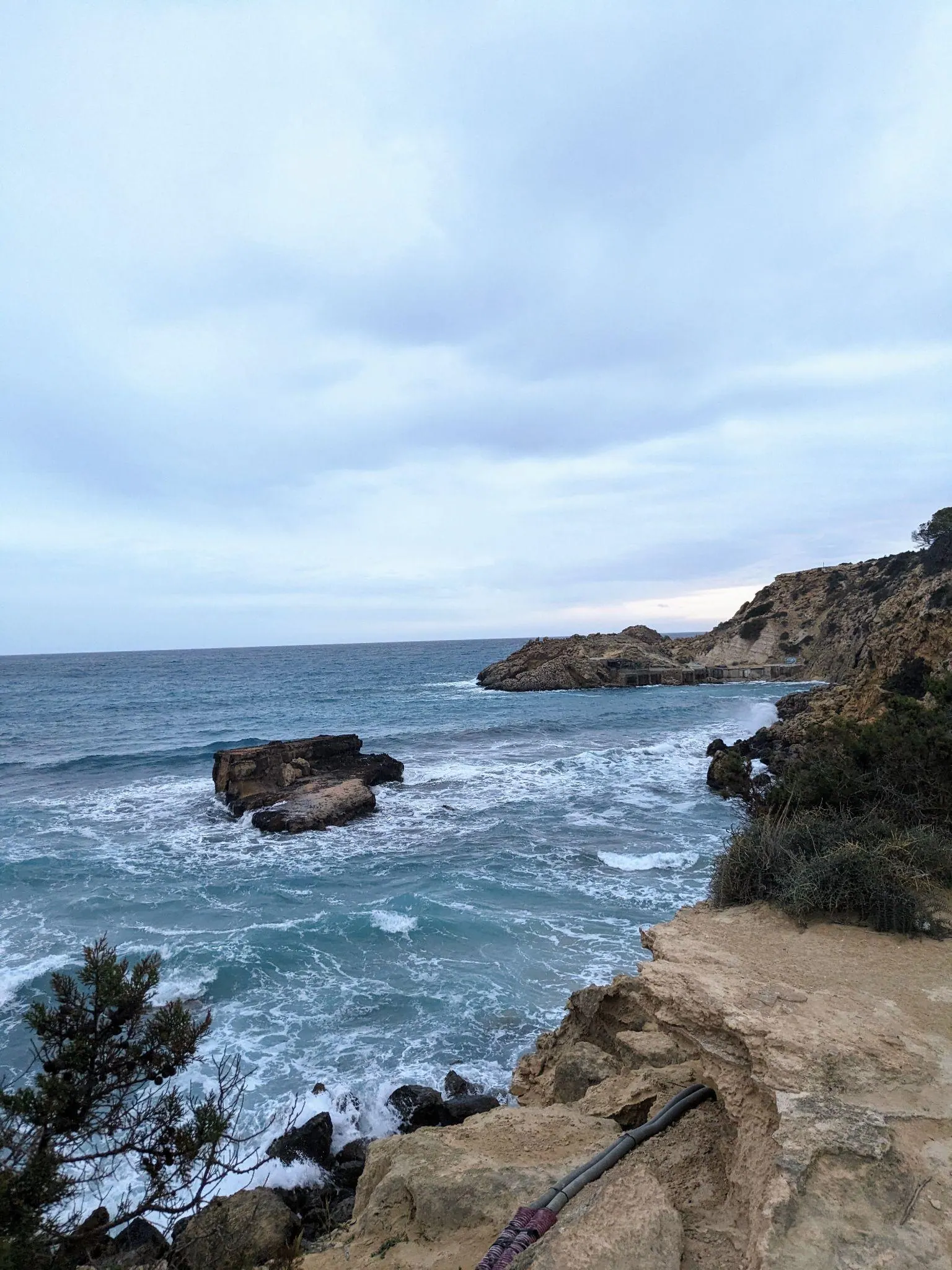
- Cala Vadella (Cala Vedella): Dropping down between pine slopes, this is a beautiful, sheltered cove that felt calm, protected from the open-sea wind, and had an unhurried atmosphere.
- Cala d’Es Cubells: Heading south along the coast to the village of Es Cubells, the road runs high above the water. Stopping here gives you striking, open views looking straight down the dramatic cliffs into the sea.
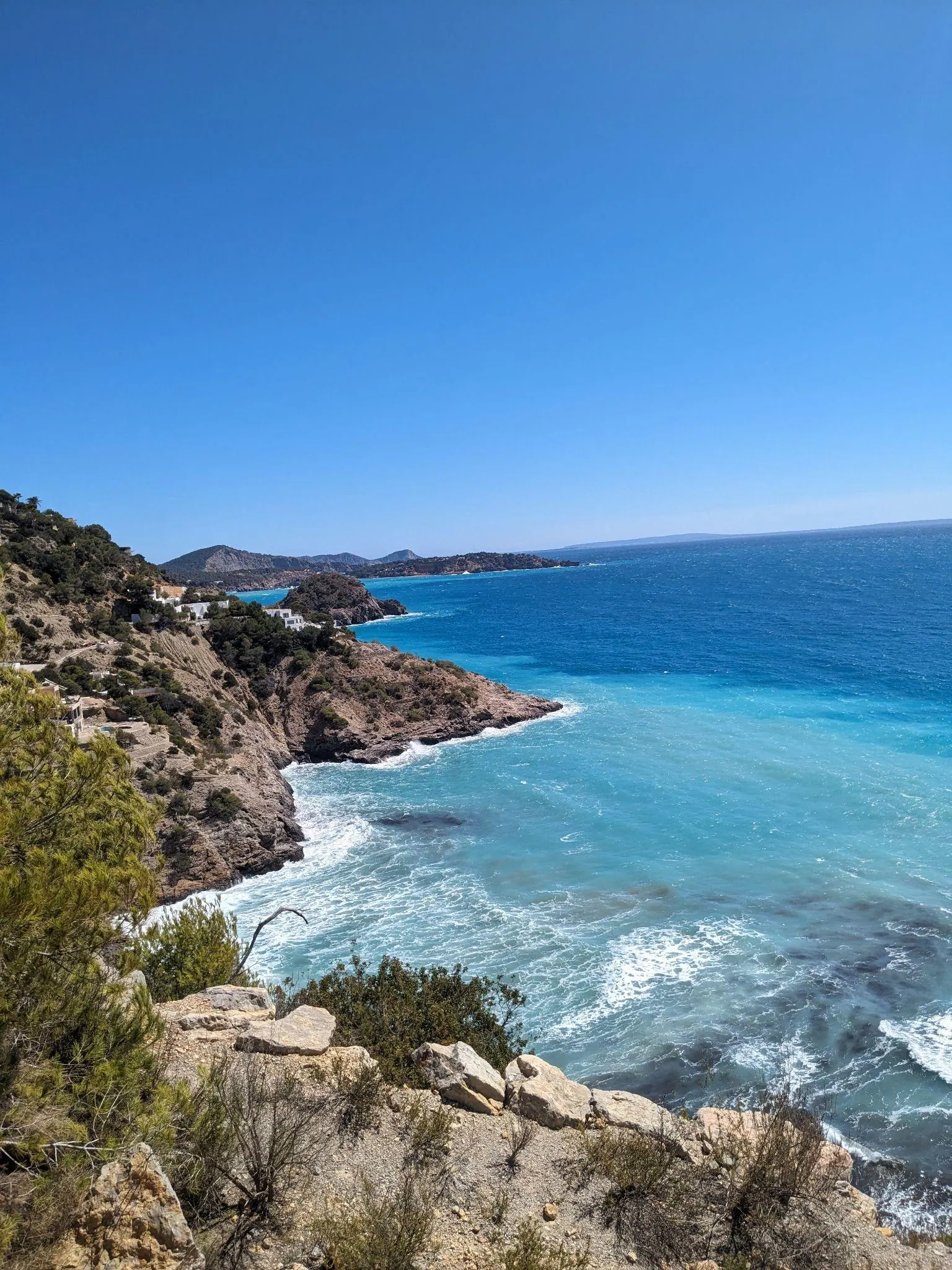
Cala d'Es Cubells
Es Vedrà and Cala d’Hort: The Monolith and Sunset Finale
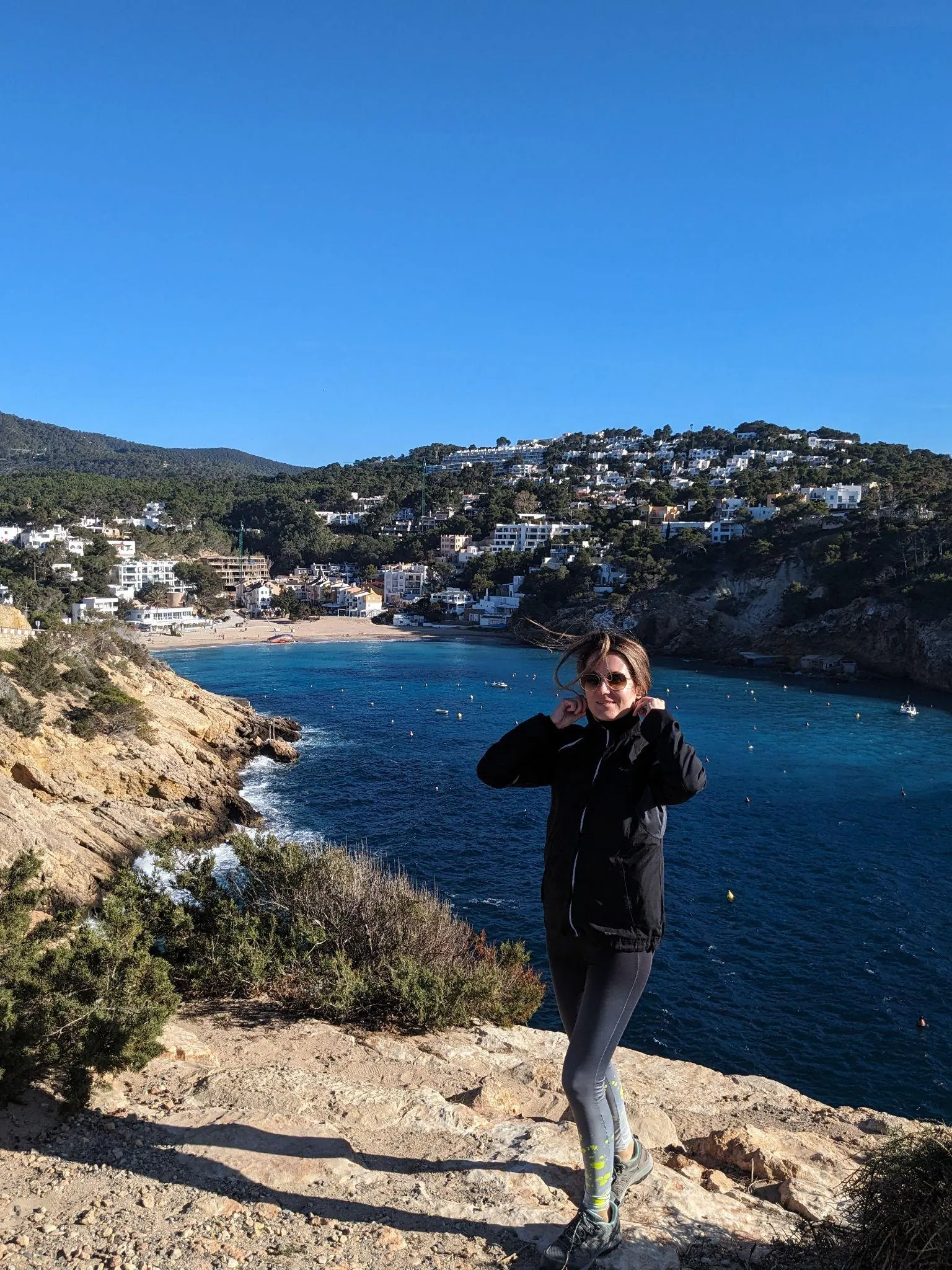
The ideal finale for Day 2 is the southwest tip, home to the most famous natural landmark on the island. Everyone talks about Es Vedrà, the mythical rocky monolith rising 400 meters out of the sea.
A few practical realities before you go:
- You cannot visit the island: It is a completely protected nature reserve, so you can only admire it from the coast and clifftop viewpoints (miradores).
- Cala d’Hort: We went down here first to see the rock from the beach. To be completely honest, this beach felt a bit too massified for my taste. We wanted to simply enjoy the views across to the rock, but the coastline was packed with beach bars and restaurants, taking away from the wild feeling.
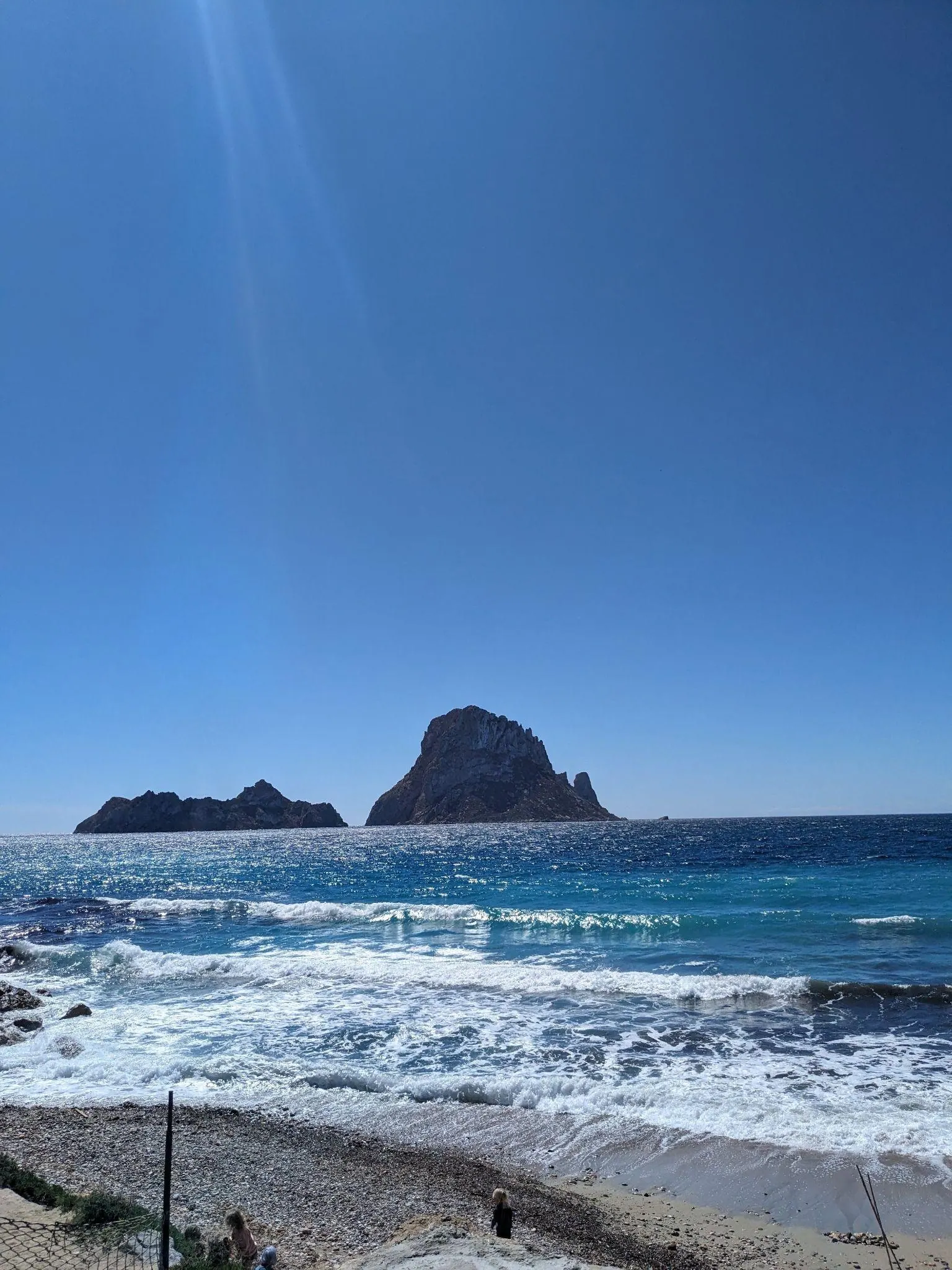
- Mirador Es Vedrà for Sunset: We headed up to the viewpoint on the cliff for sunset, but we obviously were not the only ones with that idea. Sunset time varies considerably across the off-season months, so check the time for your exact travel date and leave plenty of time for the drive and parking. Even in April, the narrow dirt access roads were completely jammed with cars, and finding somewhere to leave the car along the roadside was a real mission impossible, but we were lucky to find a spot.
- The Crowd: When we finally walked up to the viewpoint, it was so packed that we could barely find a spot on the rock to lay down a towel and sit down. The views of the rock and the sea were undeniably magical, but there were way too many people, personally speaking. If you want to go, arrive as early as you possibly can before sunset to avoid the worst of the traffic trap.
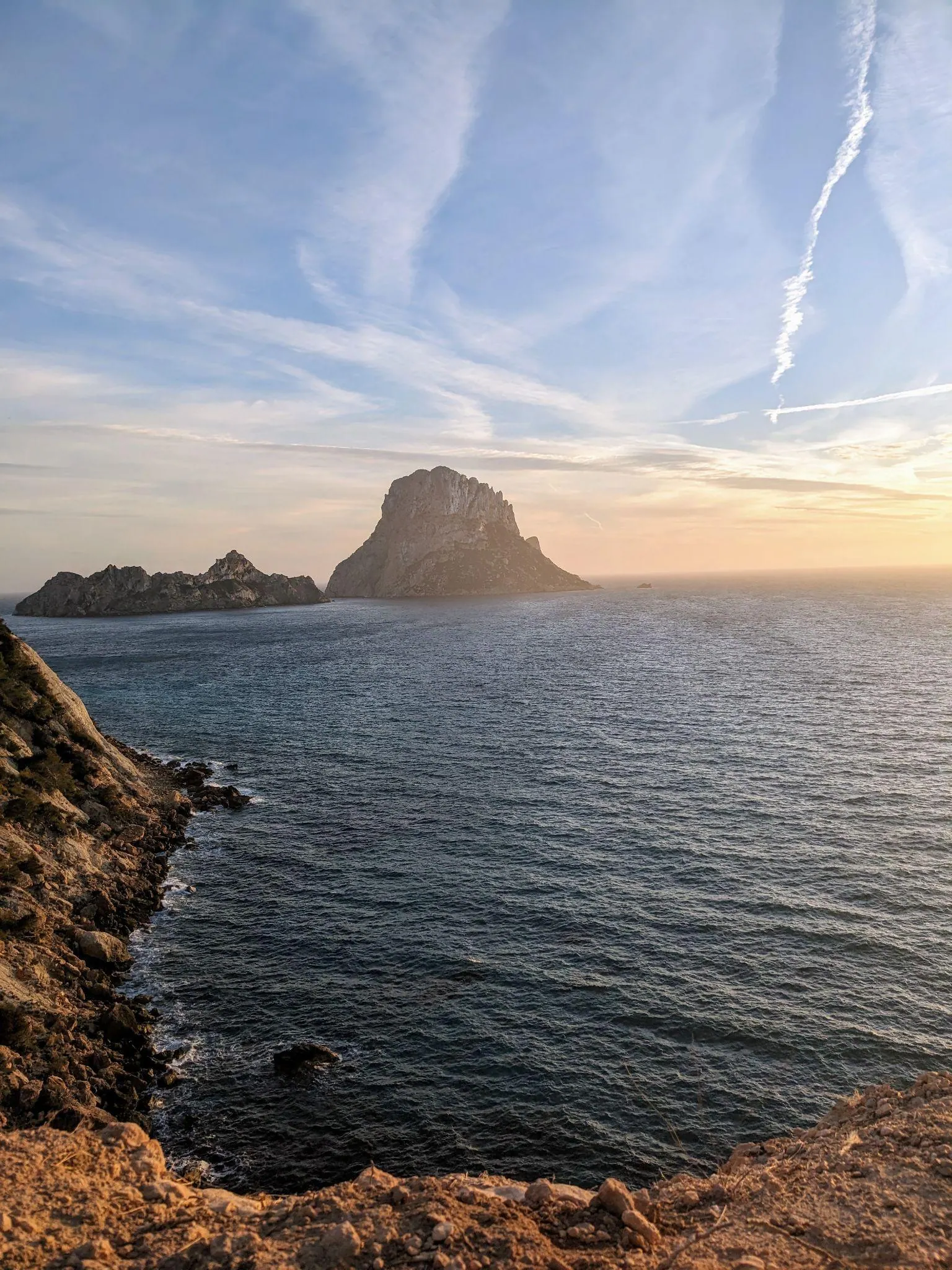
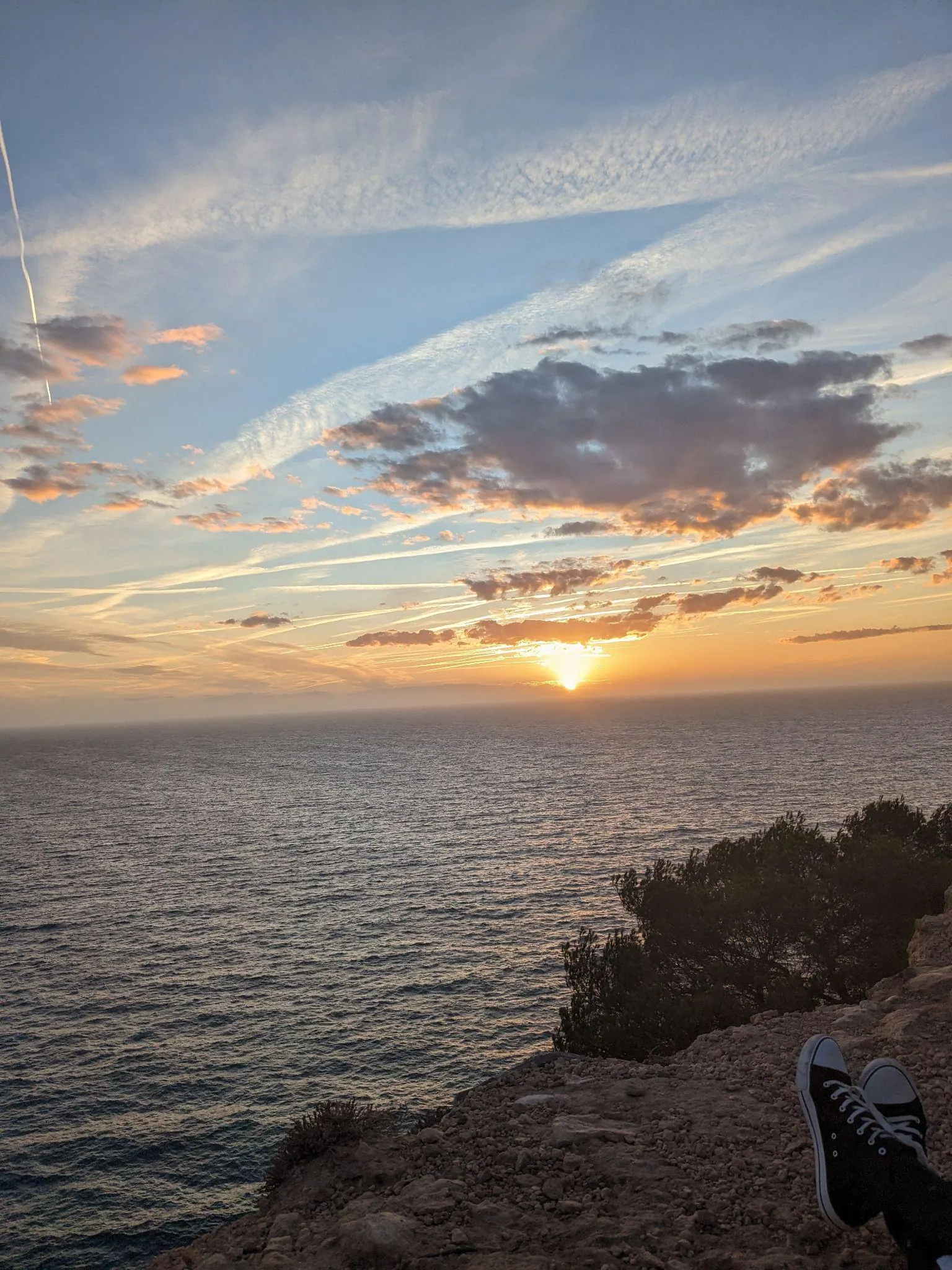
Views of Es Vedrà
Route 3: What to Visit in Northern Ibiza (Rugged Cliffs, Market, and Benirràs)
The northern tip of Ibiza has a completely different, rugged atmosphere with taller headlands and deep rocky inlets.
If Las Dalias is open today (and you did not visit on your east-coast day), start your morning at the market near Santa Eulària before driving up to the northern coast. If it is closed, head straight to Cala Xarraca and Portinatx for the coastal walk to Moscarter Lighthouse, and finish at Cala Benirràs for sunset.
Las Dalias Hippie Market: Expectation vs. Reality
If you are based around Santa Eulària, visiting Las Dalias Hippie Market in Sant Carles first thing in the morning makes the most practical sense before driving north. (On our trip, we actually cut across from the northern coast, but doing it first avoids that extra crossing).
Before visiting, keep in mind that off-season schedules vary by month: the market generally runs on Saturdays (with additional Sunday markets during parts of spring and autumn), and it is completely closed during January for winter break. Check the official Las Dalias market schedule for your travel dates before deciding which day to include it.
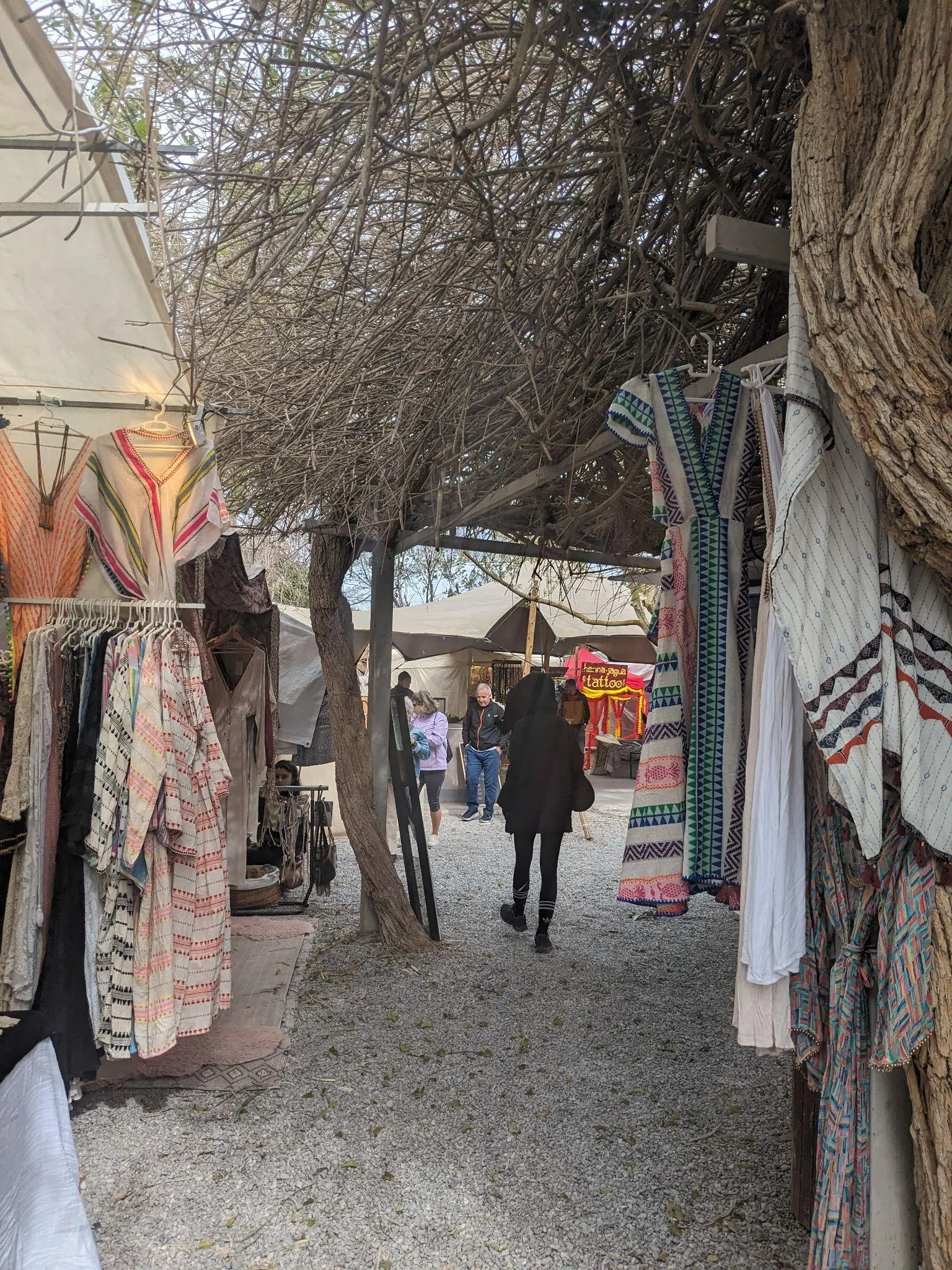
For this market, my expectations were higher than reality. There were plenty of handcrafted items, jewellery, and clothes, but overall it felt pretty commercial and touristy rather than the authentic hippie atmosphere I was expecting. It was also quite expensive. If you are passing through it can be an interesting stop, but do not expect an untouched bohemian enclave.
If you have more time nearby - or if you are visiting on a day when Las Dalias is closed - the traditional village of Sant Carles de Peralta sits just a minute further down the road. It makes an easy optional stroll around its white 18th-century parish church or a relaxed meal stop at local heritage spots like Bar Anita without committing to a full afternoon.
Cala Xarraca, Portinatx, and the Moscarter Lighthouse Walk
From Sant Carles, drive north up to Cala Xarraca and the rocky coast around Portinatx, setting out on foot toward the Far de sa Punta des Moscarter (the tall black-and-white spiral lighthouse):
- Starting point: Leave your car at Aparcament Portinatx (near Platja de Portinatx) and take the path heading out along the coastline.
- Duration & distance: It is around 1.5 km distance each way (roughly 3 km round-trip), taking about 35 to 45 minutes walking along the coast to reach the lighthouse.
- The trail: The dirt and rock track skirts the limestone cliff edge through low junipers and sea pines. It is mostly an easy walk with uneven rocky footing in places, so sturdy walking shoes are helpful.
- The lighthouse: Standing 52 meters tall, Far de sa Punta des Moscarter is the tallest lighthouse in the Balearic Islands. Built in the 1970s, its bold black-and-white spiral makes a dramatic beacon against the open Mediterranean.
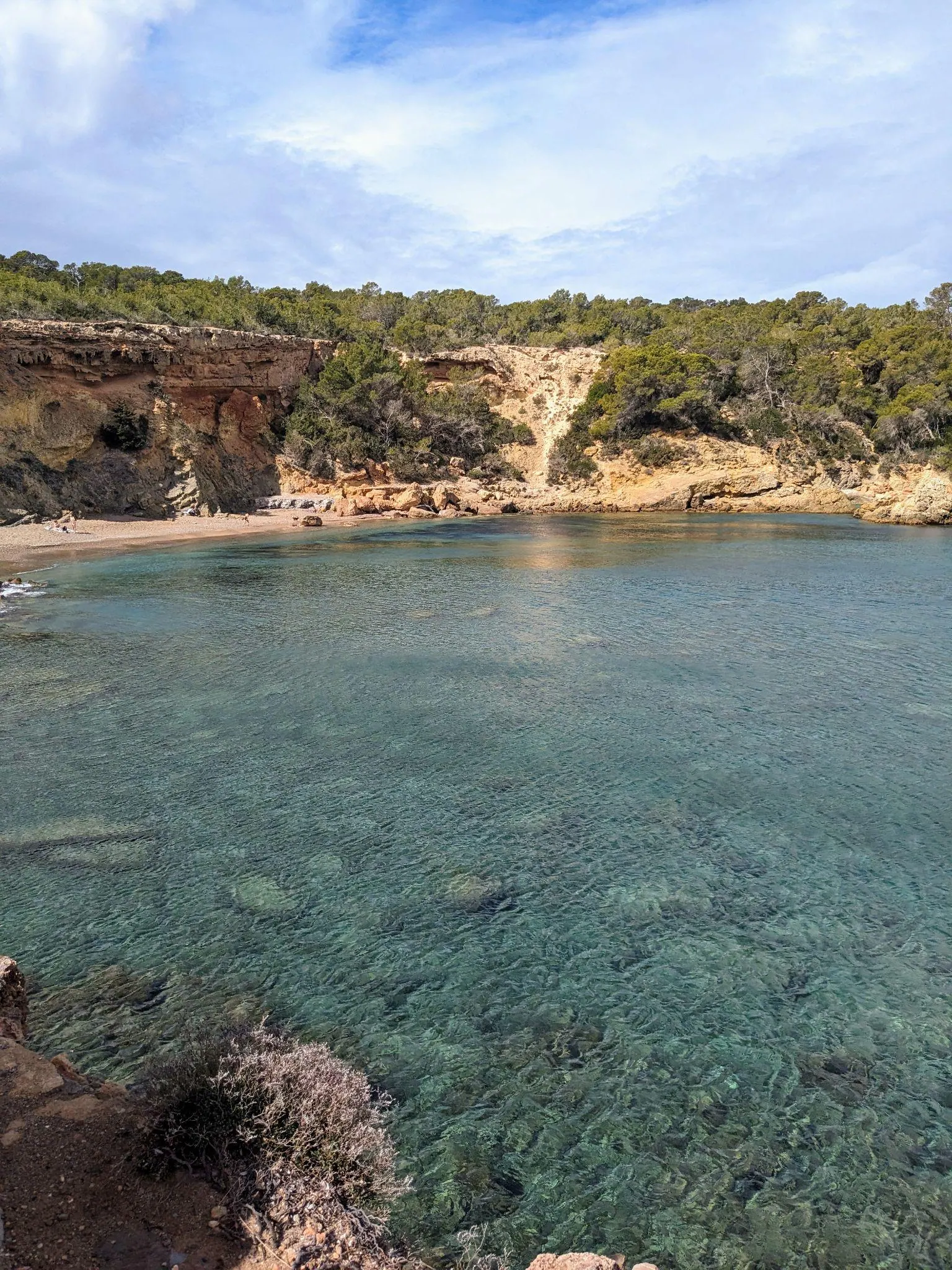
This walk was the exact moment I realized how much the Mediterranean sun dictates the experience outside summer. When the calas get plenty of direct sunlight, the water has that bright, glowing turquoise colour. But on a cloudy day, the colours simply do not come out and the water looks grey and ordinary. It is a reminder of how much the weather dictates the experience outside summer.
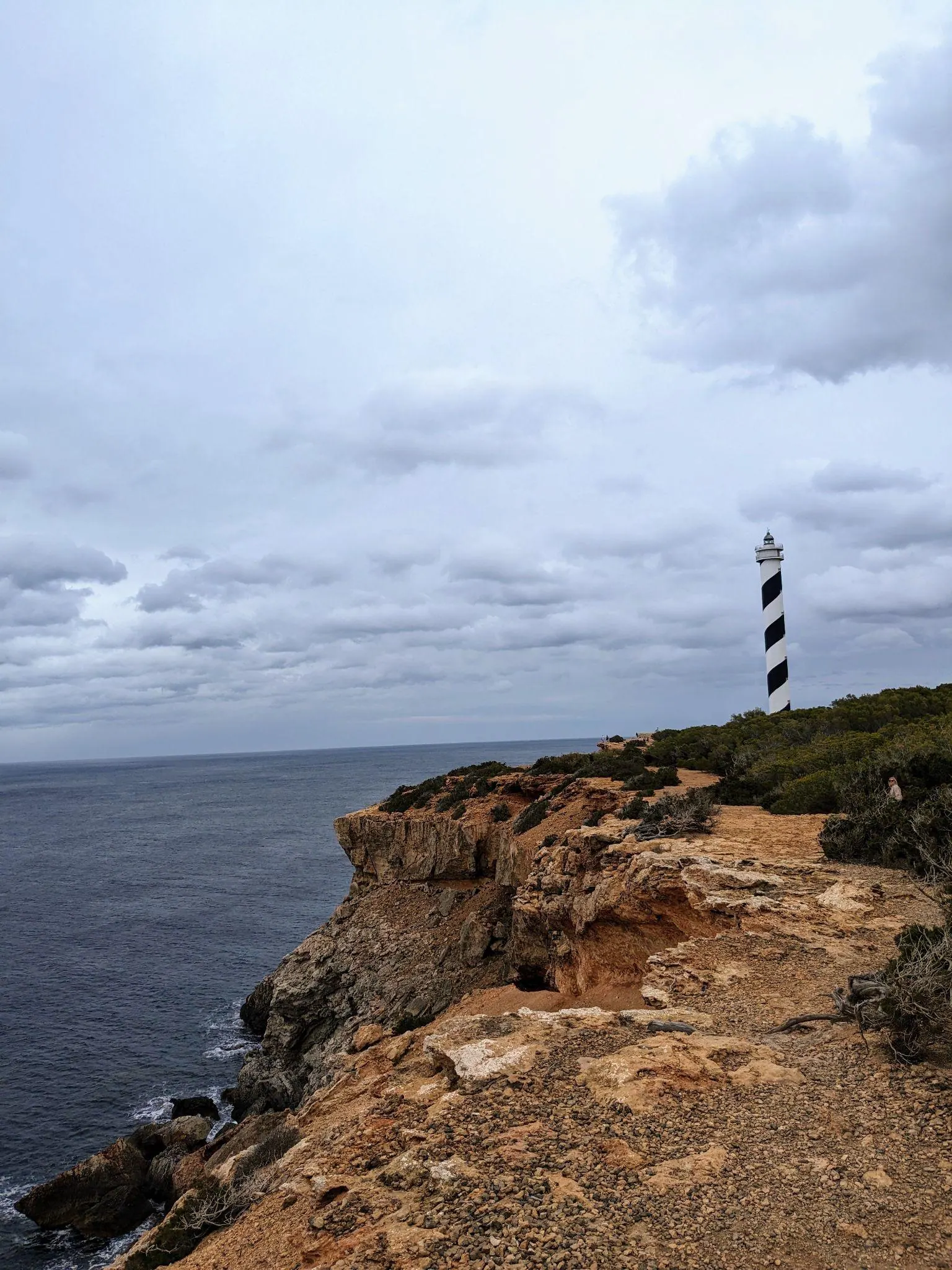
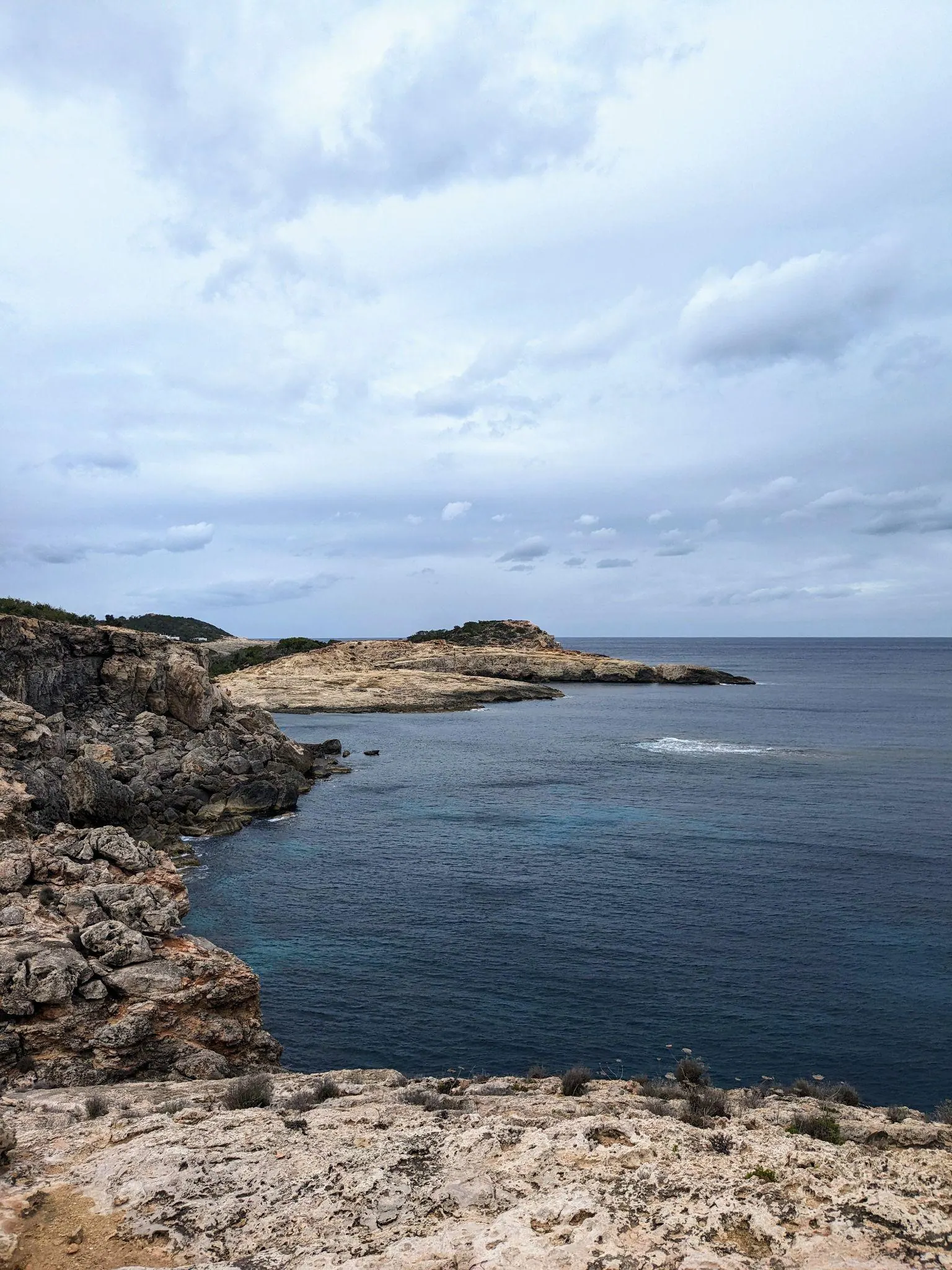
Far de sa Punta des Moscarter walk
Sunset at Cala Benirràs (Second Time Lucky)
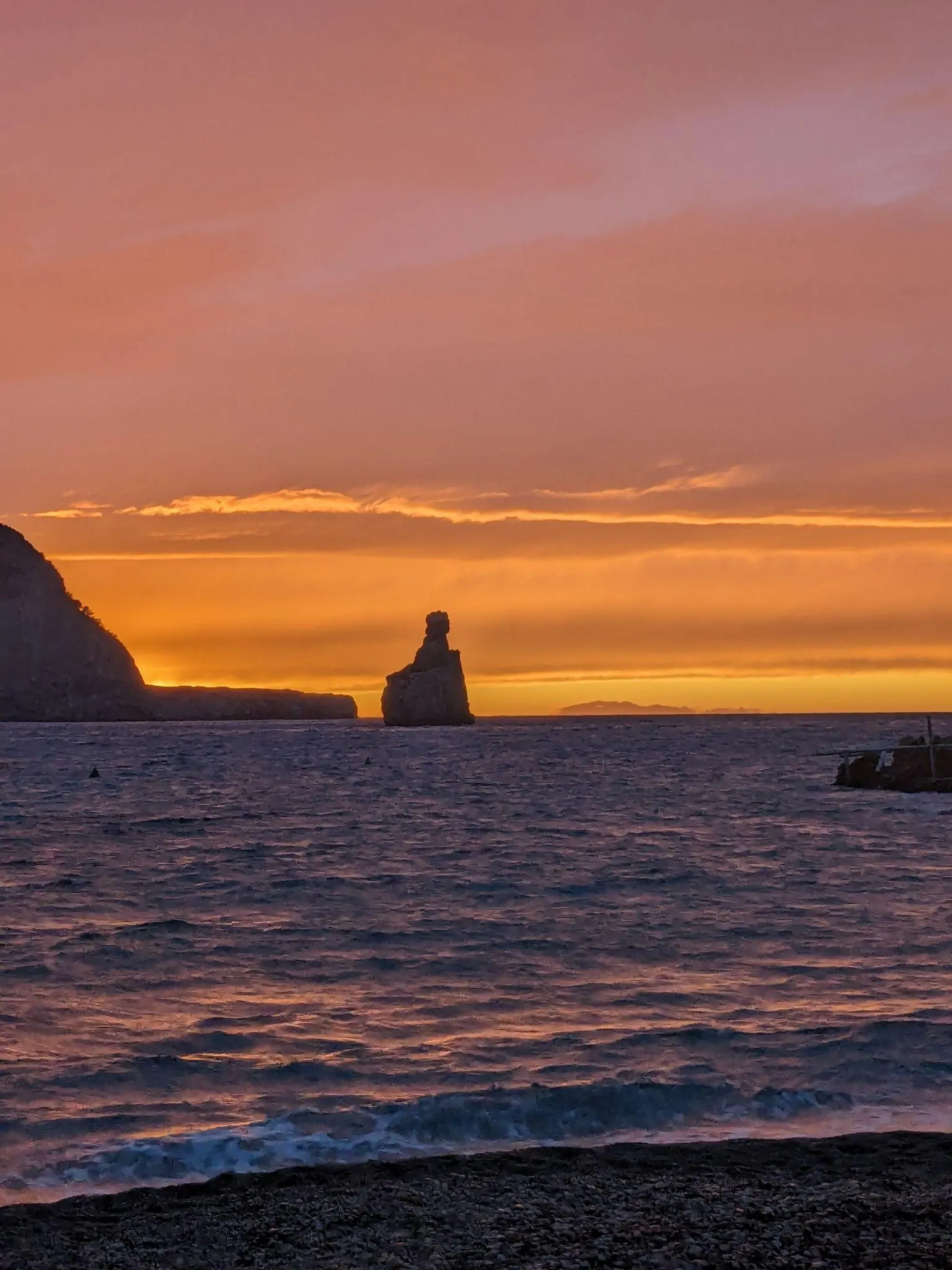
For the evening, head over to Cala Benirràs, known as one of the top sunset spots in Ibiza thanks to Cap Bernat, the rock formation rising out of the bay.
To be completely honest, we missed the sunset on our first attempt while driving there along the winding roads. But we decided to give it a second chance and returned the following evening. It was completely worth it: the sunset behind that interestingly shaped rock in the sea was amazing.
The beach is quite popular, and there were people gathered on the sand playing tambourines and drums, which gave the cove a lively, relaxed evening atmosphere.
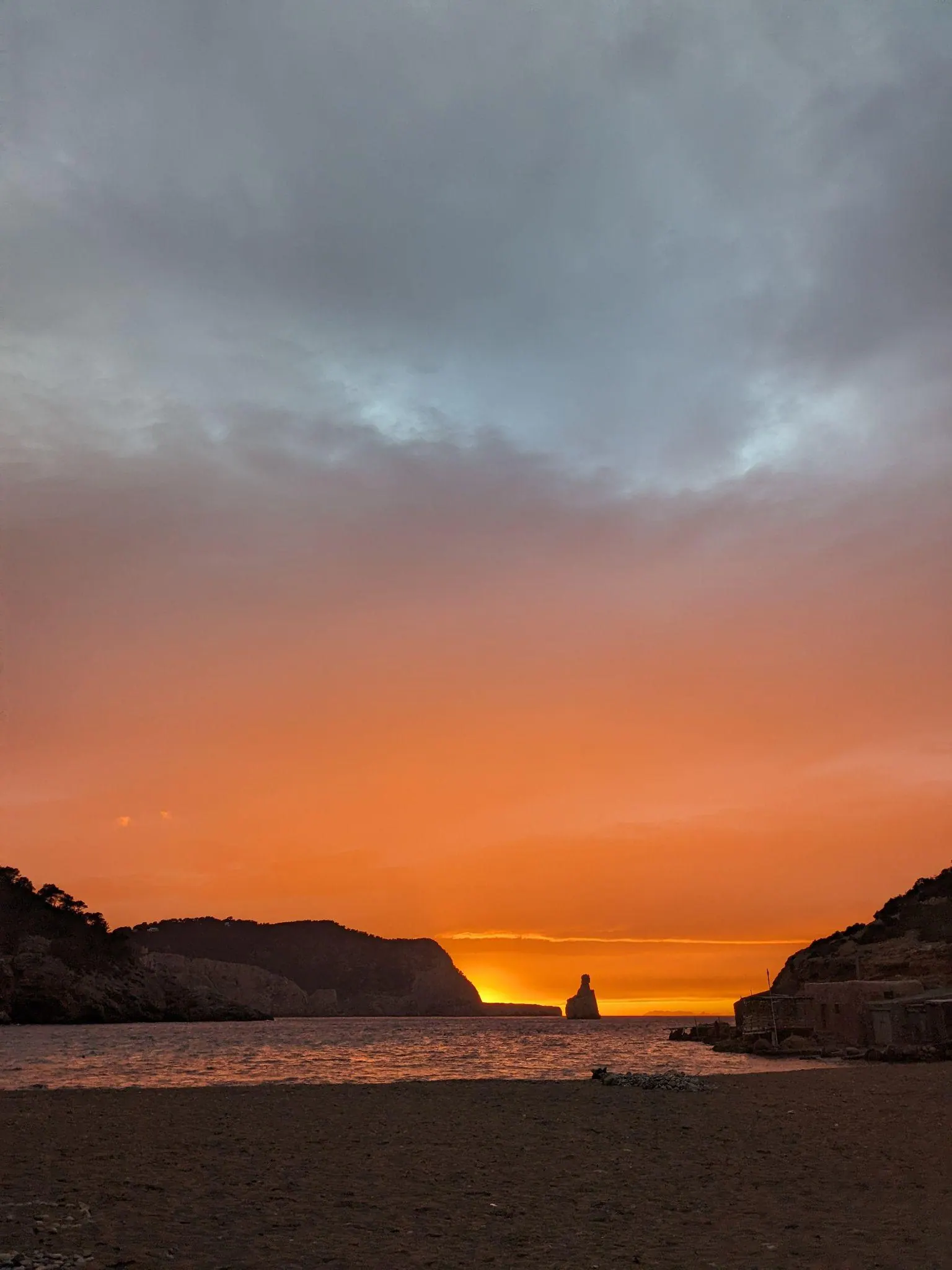
Cala Benirràs sunset
Route 4: Things to Do in Southern Ibiza (Salt Flats and Coastal Towers)
For a landscape that feels completely different from the rocky northern calas, head to the southern tip. Logistically, this is the perfect route for your final day because it sits just 8 to 10 minutes from the airport terminal.
Parc Natural de Ses Salines to Torre de Ses Portes
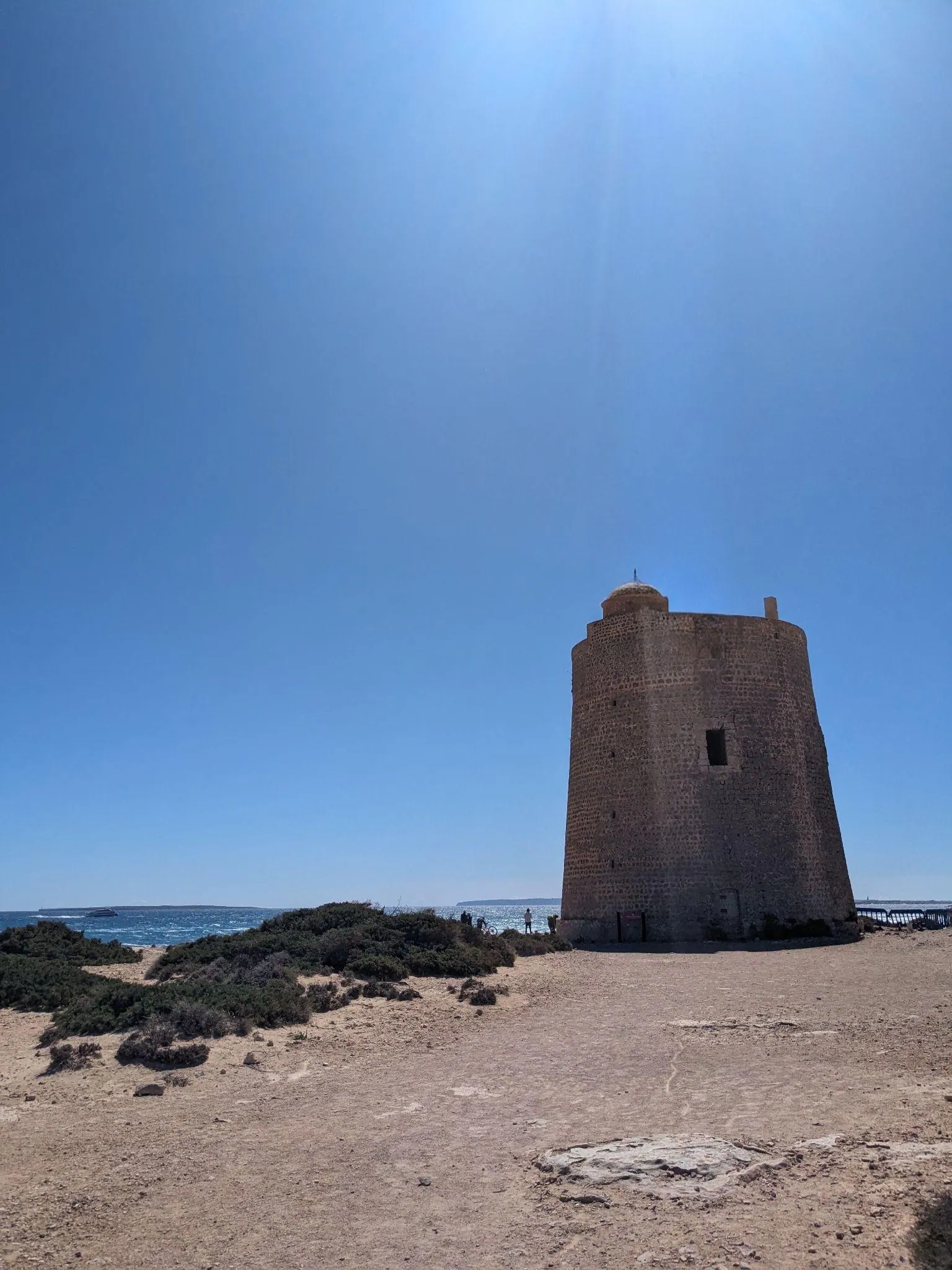
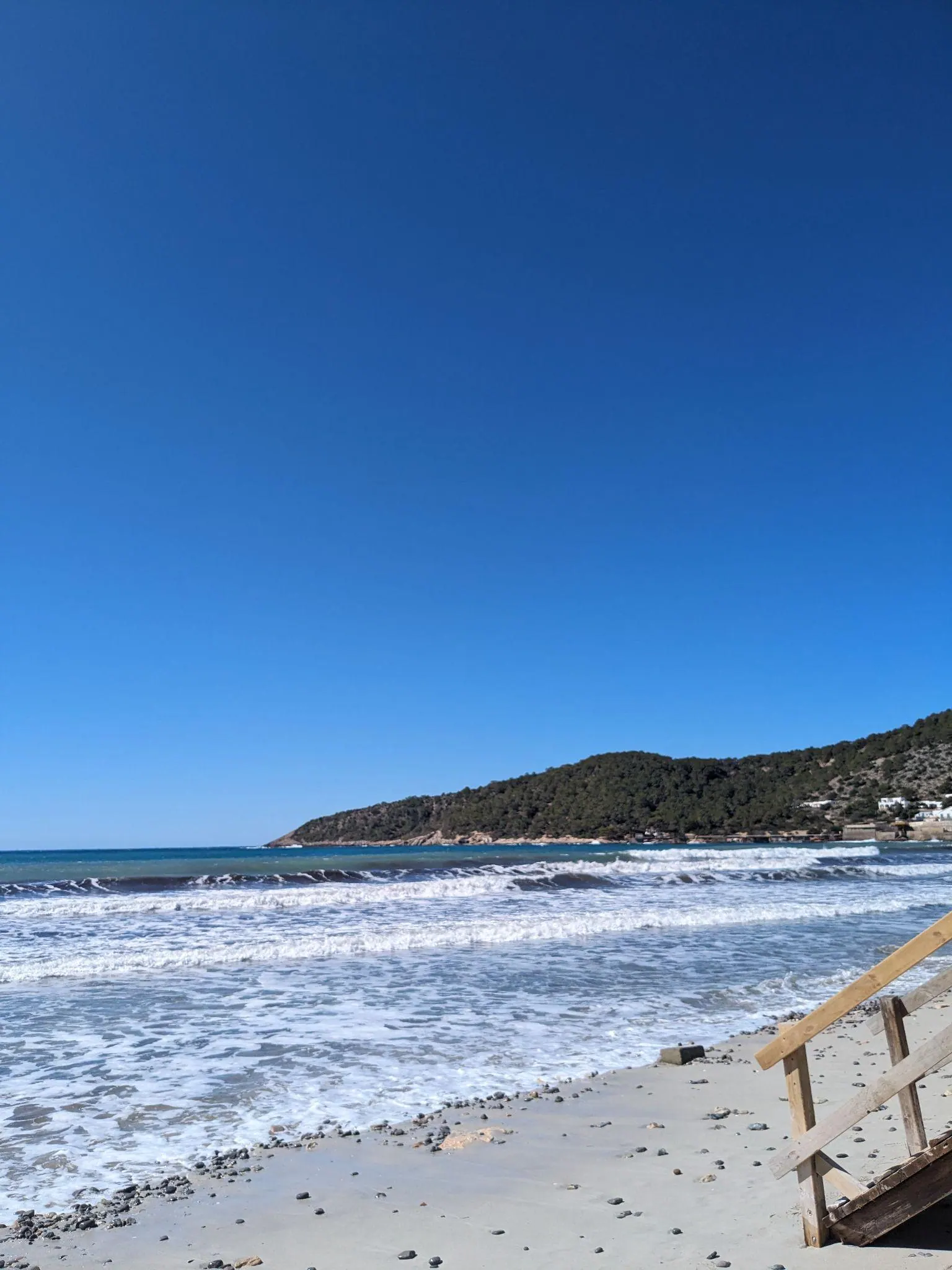
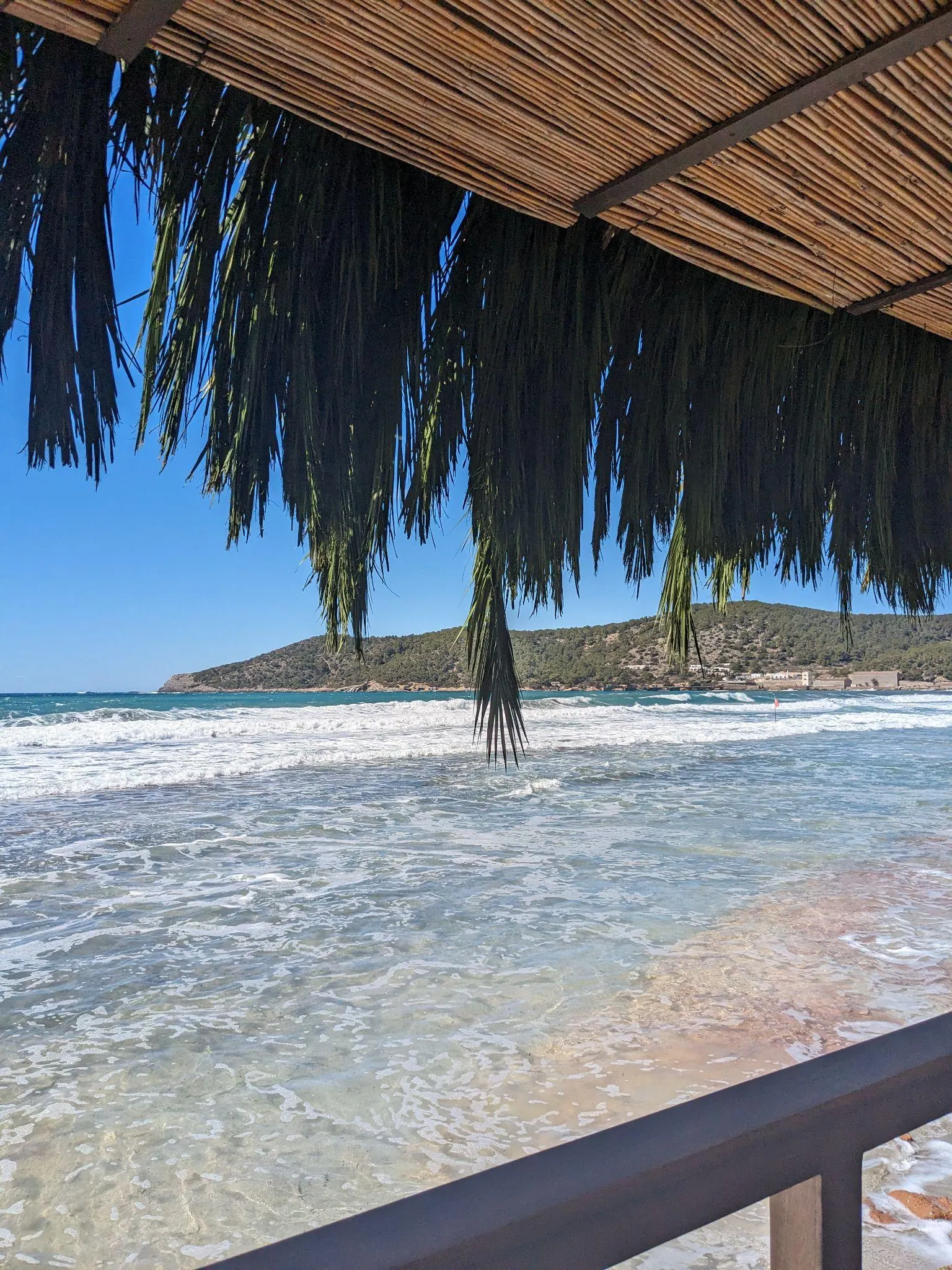
At Parc Natural de Ses Salines and Platja de Ses Salines, the scenery shifts to vast salt pans and sand dunes. We walked all the way out to the Torre de Ses Portes at the southern tip, looking out across the strait toward Formentera.
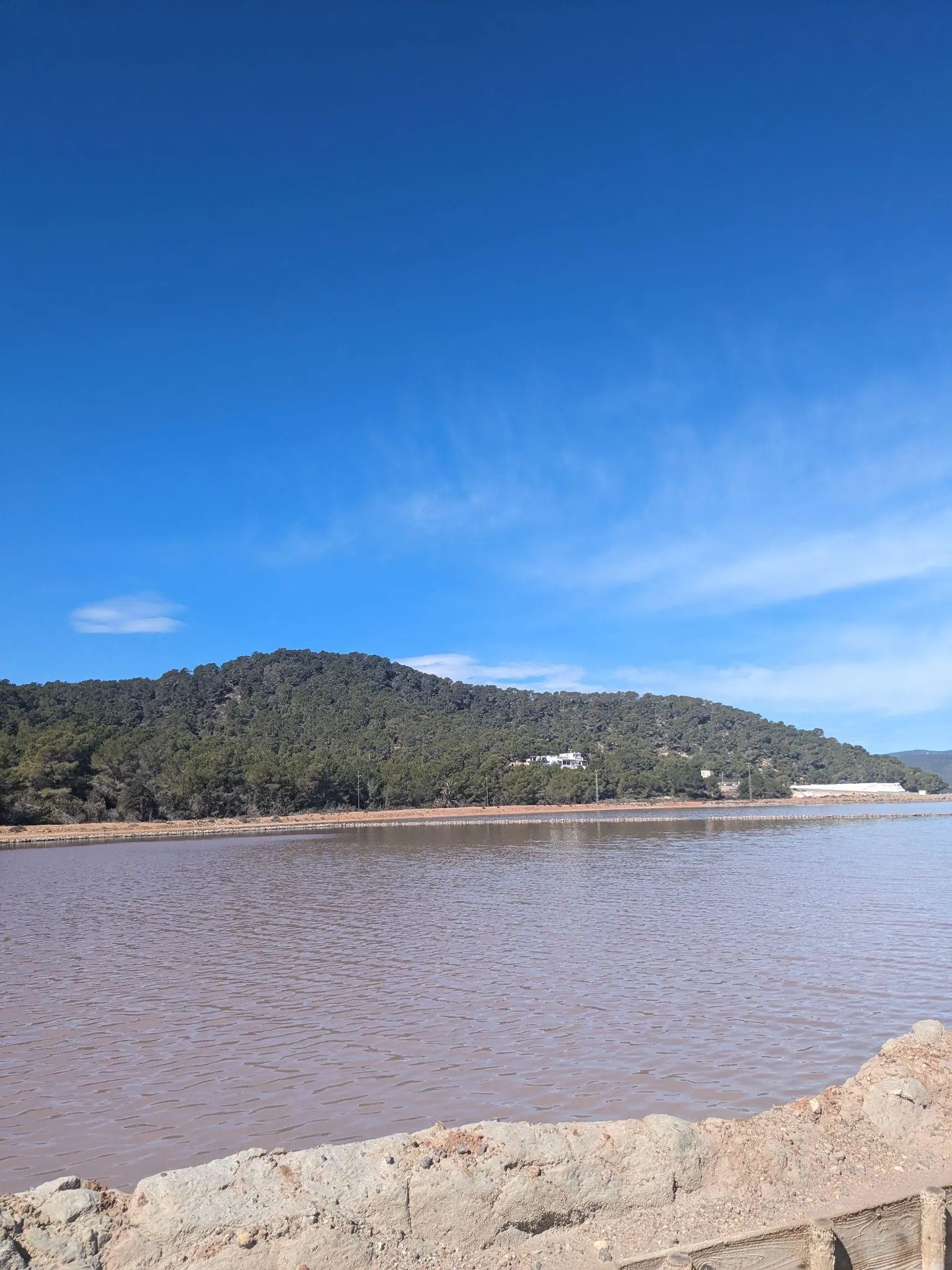
During this trip, I realized that Ibiza has so many ancient stone watchtowers standing all along its coastline. Whenever we were doing hikes along the cliffs, we saw them perched on headlands. Built centuries ago to watch for pirates, they now serve as great landmarks and walking destinations.
Platja de Ses Salines
After finishing the coastal walk and enjoying the wide-open views, you are only a few minutes drive from the terminal to return your rental car and catch your flight. If you have more time nearby before an evening flight and want one last cultural look at the coast after Ses Salines, an optional detour is the cliffside Phoenician site at Sa Caleta (an ancient settlement dating from the 7th century BC overlooking quiet red-clay coves).
Practical Reality: Weather, Swimming, and Off-Season Travel
Can You Swim in Ibiza in April?
For us, the weather was cool and breezy during our visit, so swimming was completely off the table for our taste. Daytime air temperatures hovered around 17°C (62°F), sea temperatures were around 15°C to 17°C (59°F-62°F), and one night we even had heavy, pouring rain.
We did not see anyone swimming at the beaches we visited because the water was very brisk. While cold-water swimmers or those with wetsuits can certainly take a dip, for leisure swimming most people will find it too chilly. March, April, October, and November are shoulder months where weather conditions vary: warm sunshine one hour, sharp coastal breeze the next, and occasional rain. Pack windbreakers, proper walking shoes, and layers.
Check the Sunset Time for Your Travel Date
Daylight and sunset times change substantially across the off-season months. In April, sunset is generally after 8 pm, while other months can be much earlier. Check the sunset time in Ibiza for your exact date before planning your hikes and driving stops, and leave plenty of time to drive and park before heading to viewpoints like Es Vedrà or Cala Benirràs.
Food and Off-Season Closures
Do not expect every beach chiringuito to be open. Outside of summer, most beach bars and party venues are completely shut down until May. We ate mostly in local village restaurants in Santa Eulària that stay open year-round with meals around 15 EUR, or bought groceries at supermarkets in the larger towns, which kept the trip simple and very affordable.
Where We Stayed: Santa Eulària des Riu (Hostal Sa Rota)
We based ourselves in Santa Eulària des Riu at Hostal Sa Rota for 3 nights with my friend, and it was 65 EUR per night for both of us (though prices vary by season). We were expecting a typical hostel experience, but it felt much more like a hotel and completely exceeded our expectations. Santa Eulària made a quiet, convenient base on the east coast with plenty of year-round restaurants, easy parking, and quick road connections across the island.
4-Day Off-Season Ibiza Itinerary Summary
- Day 1: Eivissa & The East Coast (Cala Llonga): Land in Eivissa, pick up your rental car, explore Dalt Vila and the harbor on foot (1-2 hours), and drive along the eastern coast to view Cala Llonga from the road above and down at the beach. If Las Dalias is open and you have time, visit it while you are on this side of the island.
- Day 2: West Coast Hike, Southwest Calas & Es Vedrà: Drive to Cala Comte for the coastal hike past empty turquoise coves to Cala Bassa (1 hour one way, ~2 hours round-trip back to your car), explore the southwest coves of Cala Vadella and Es Cubells, and finish at Mirador Es Vedrà for sunset (arrive very early).
- Day 3: Rugged North, Portinatx & Benirràs: If Las Dalias is open and you did not visit on Day 1, stop there first near Santa Eulària. Then explore Cala Xarraca, hike to the Moscarter Lighthouse from Aparcament Portinatx (~1.5 km each way), and finish at Cala Benirràs for sunset.
- Day 4: Ses Salines, Coastal Watchtowers & Departure: Walk the salt pans at Ses Salines Nature Park out to Torre de Ses Portes, and enjoy one last open coastal walk just minutes from the airport before flying home.
FAQs
Is Ibiza worth visiting off-season?
Yes. If your goal is to experience wild nature, quiet calas, empty hiking trails, and authentic coastal views without crowds or party noise, visiting between October and April reveals a completely different, peaceful side of the island at a fraction of the summer price.
What are the best things to do in Ibiza off-season?
The best things to do include hiking the coastal trail between Cala Comte and Cala Bassa, exploring Dalt Vila's fortified bastions on foot, driving the southwest cliff road to admire Es Vedrà, walking out to Far de sa Punta des Moscarter in Portinatx, and catching sunset at Cala Benirràs.
What to see in Ibiza if you do not like partying?
If you want nature and quiet, focus on the island's coastal scenery: the salt flats of Parc Natural de Ses Salines, the rugged northern cliffs around Cala Xarraca, secluded coves like Cala Vadella, and the historic stone watchtowers built along the headlands.
Do you need a car to visit Ibiza off-season?
For this specific 4-day nature and coastal itinerary, renting a car is by far the most practical choice. While Ibiza does have public bus routes connecting the airport, Ibiza Town, Sant Antoni, and Santa Eulària - and <a href="https://en.ibiza.travel/plan/getting-around/" target="_blank" rel="noopener noreferrer">Ibiza’s tourism office lists the island's transport options</a> - service frequencies drop significantly outside summer, and remote coastal trailheads like Cala Comte, Moscarter Lighthouse, or the Es Vedrà cliffs have minimal or no off-season bus links. A small compact rental car is inexpensive in spring or autumn and makes navigating narrow rural roads straightforward.
Can you swim in Ibiza in April?
It depends on your cold tolerance, but for most visitors it feels very brisk. In April, sea temperatures usually range between 15°C and 17°C (59°F-62°F), and breezy coastal winds can make stepping out of the water chilly. While afternoon sunshine is warm and inviting enough to relax on the empty beaches, full swimming is mostly enjoyed by cold-water swimmers or people with wetsuits, whereas longer swims are better suited for late spring or autumn.
Is Mirador Es Vedrà crowded off-season?
Yes. Even in April, Mirador Es Vedrà attracts dozens of visitors for sunset. The dirt tracks fill with cars quickly and parking along the verges becomes chaotic. Arrive at least one hour before sunset to park safely and walk to the cliff edge.
Read next
More posts for this trip mood
 Europe
 Castellón, Spain
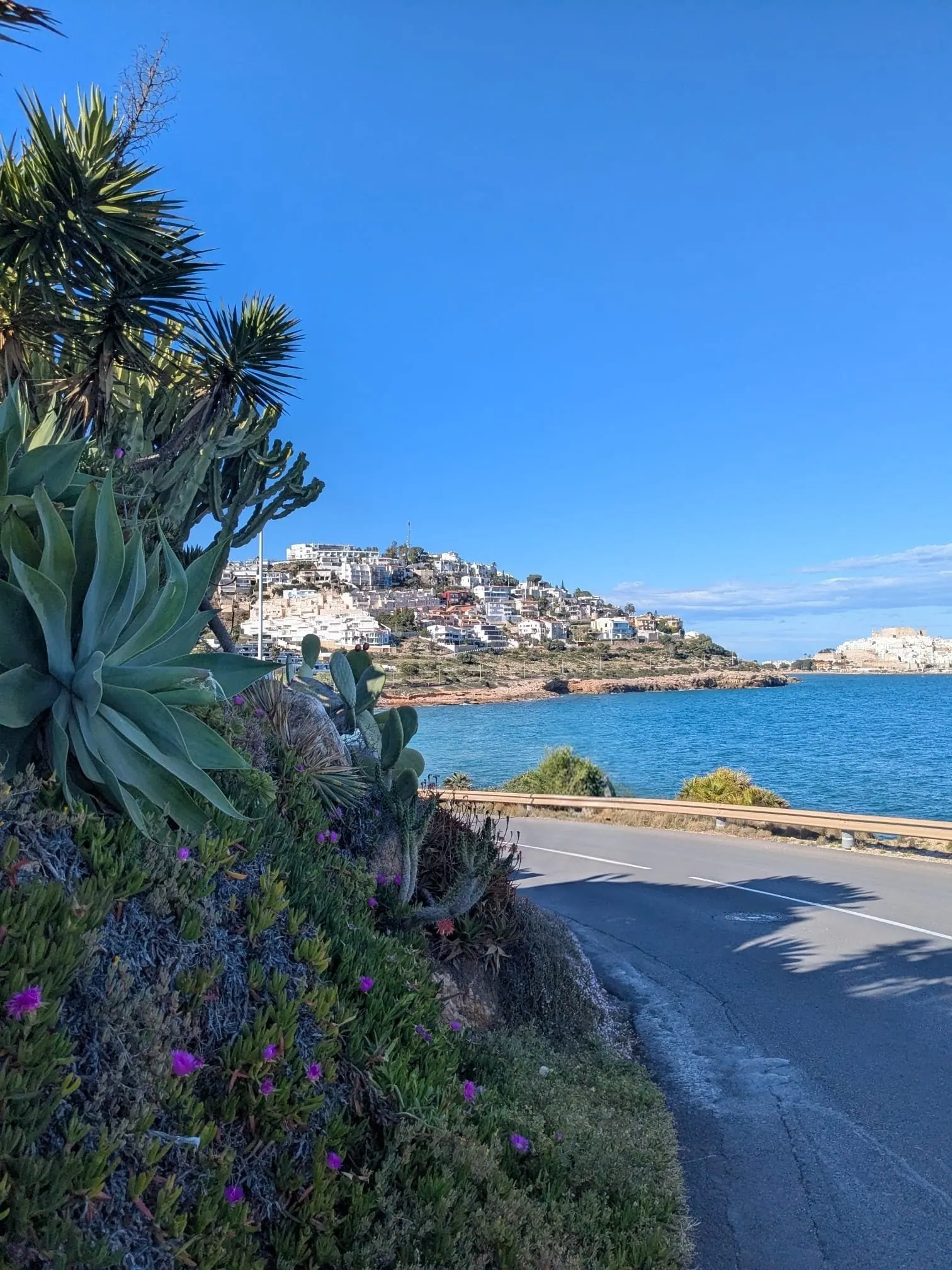
Peñíscola and Sierra de Irta: Castle Town and Coast Walk
Peñíscola's castle makes the first impression, but the wild Sierra de Irta coastline is what makes the journey memorable.
A practical guide to Peñíscola and Sierra de Irta Natural Park, with the castle, old town, beaches, coastal walking routes, Torre Badum, coves and 2026 summer parking rules.
 Europe
 Castellón, Spain
The Vía Verde del Mar: A Coastal Greenway Between Oropesa and Benicàssim
A flat coastal escape where an old railway line keeps the Mediterranean within reach.
A practical guide to the Vía Verde del Mar between Oropesa del Mar and Benicàssim, with the railway history, train access, coves, tunnel, swimming spots and summer advice.
 Europe
 Canary Islands, Spain
Gran Canaria Beyond the Beach Holiday: A Miniature Continent
Gran Canaria is far more than its beaches: a week of cloud forest, volcanic mountains, quiet villages and Atlantic coast.
A week exploring Gran Canaria beyond the resorts, from Agaete and Las Palmas to Roque Nublo, Artenara, Maspalomas and Barranco de las Vacas.