

Peñíscola & Sierra de Irta · Castellón · Spain
Peñíscola and Sierra de Irta: Castle Town and Coast Walk
Peñíscola's castle makes the first impression, but the wild Sierra de Irta coastline is what makes the journey memorable.
A practical guide to Peñíscola and Sierra de Irta Natural Park, with the castle, old town, beaches, coastal walking routes, Torre Badum, coves and 2026 summer parking rules.
Quick facts
- Best for
- A medieval old town, Mediterranean views, an easy-to-moderate coastal walk, quiet coves and a nature-focused weekend from Valencia.
- Time needed
- One day for Peñíscola and a second day for Sierra de Irta.
- Our walk
- About 13 km out and back in six hours, including long stops, from near Font Nova to Platja del Barranc d'Irta.
- Good to know
- The coastal path is exposed and has almost no facilities. Motor-vehicle access is regulated in summer and parking must be reserved.
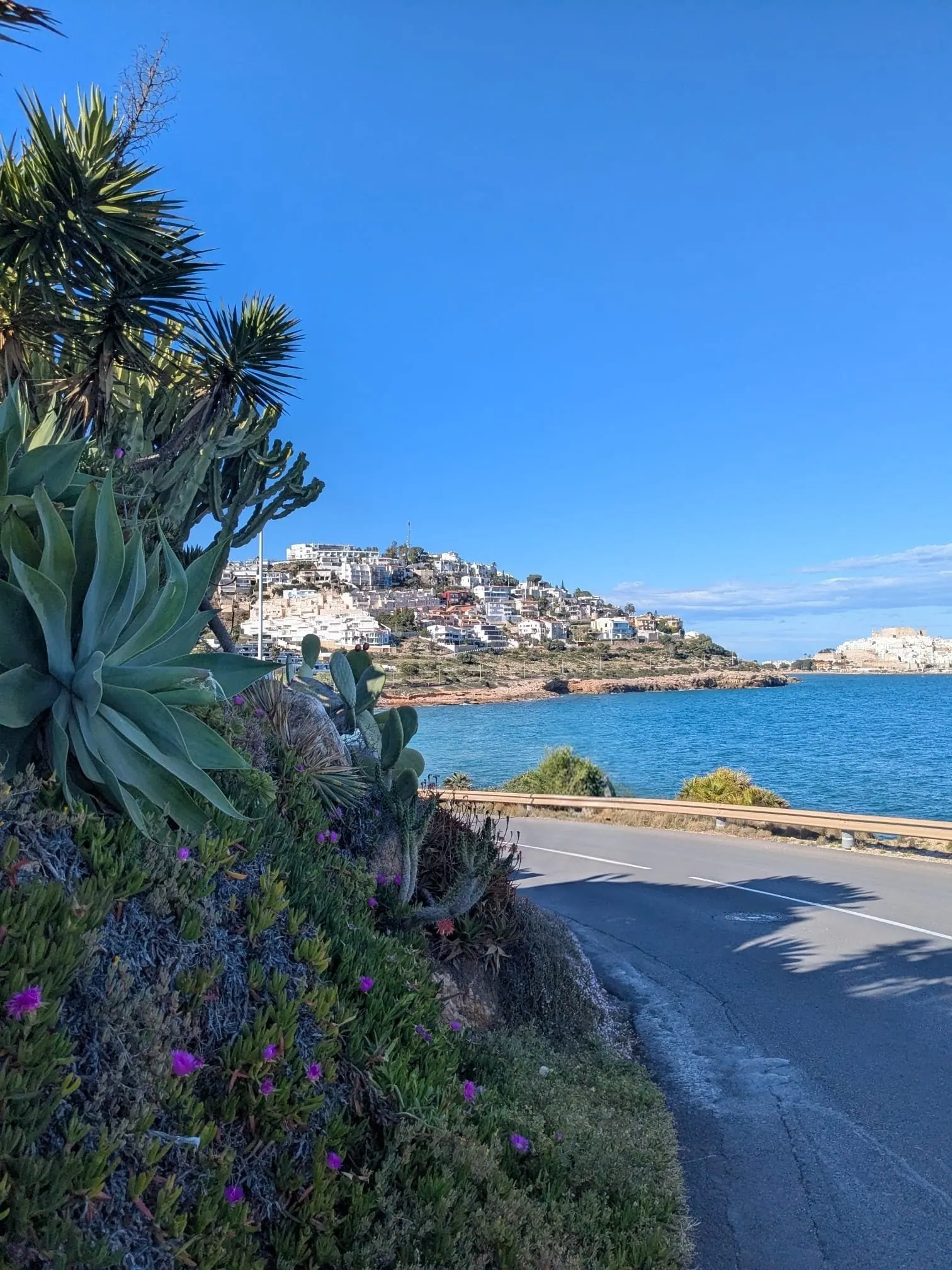
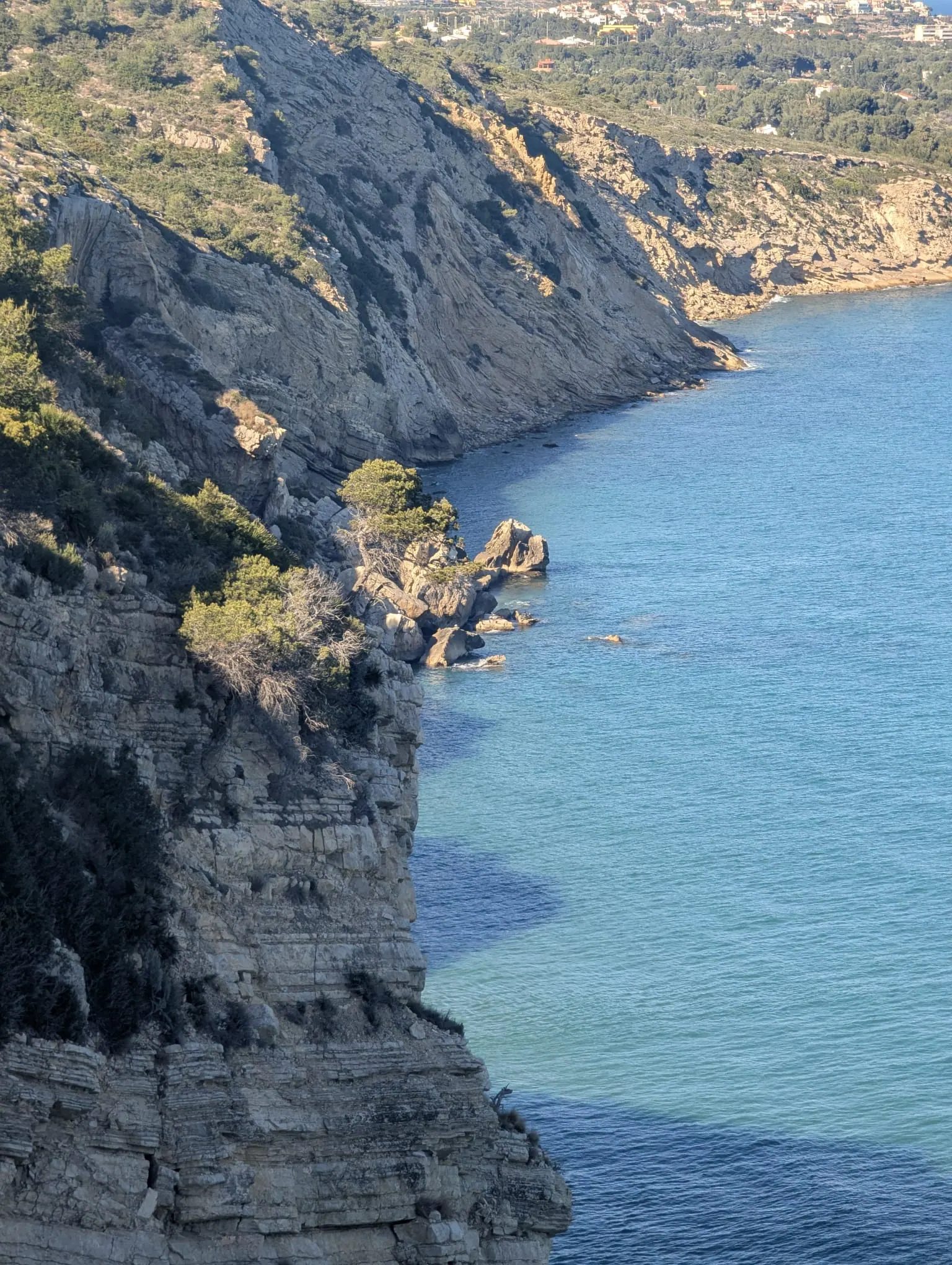
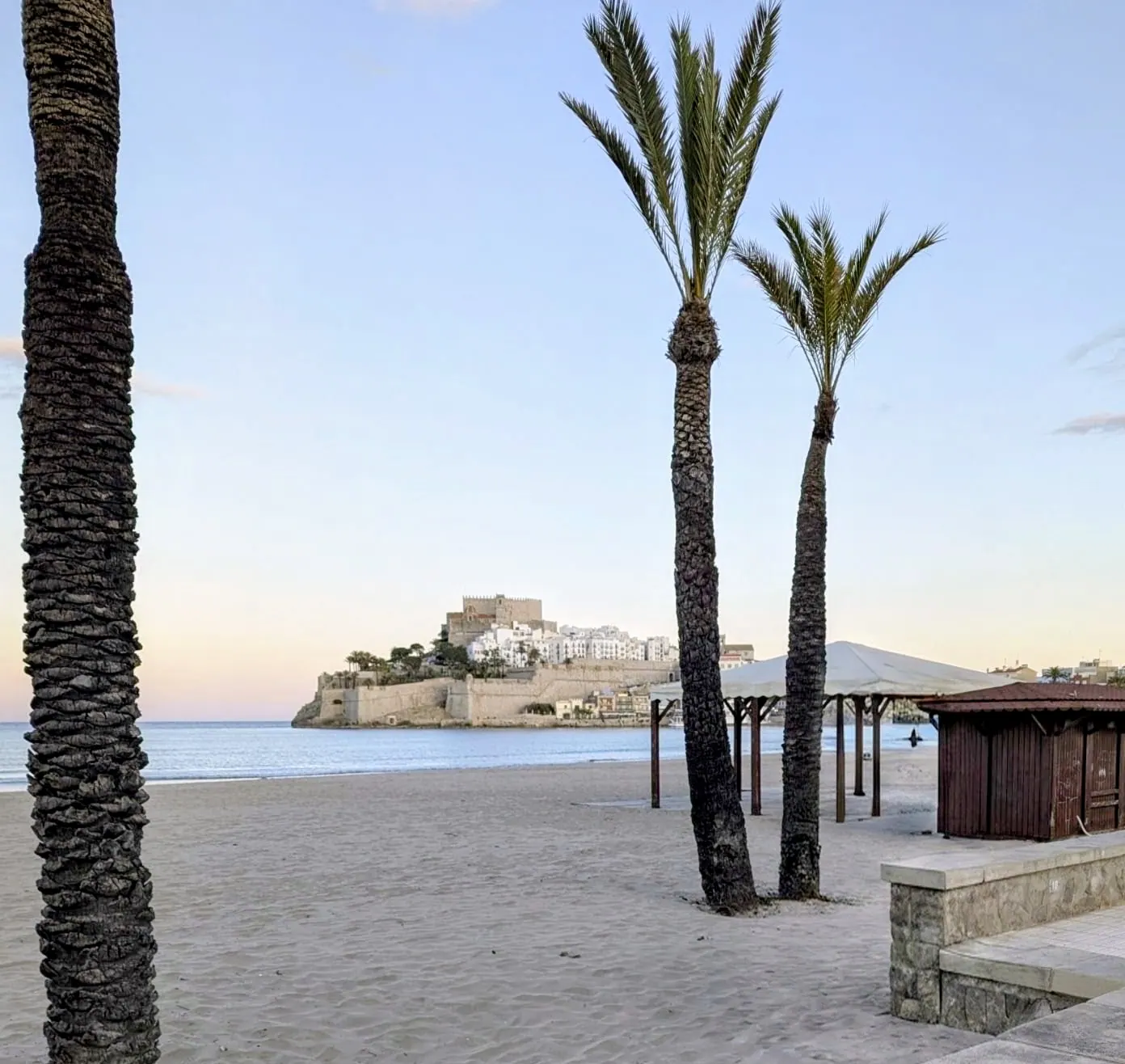
Most people who come to Peñíscola come for the castle. They photograph the old town from the promenade, wander through the white streets, visit the fortress and take in the views from the top. That makes a good afternoon, but it leaves out the part of the trip I would return for.
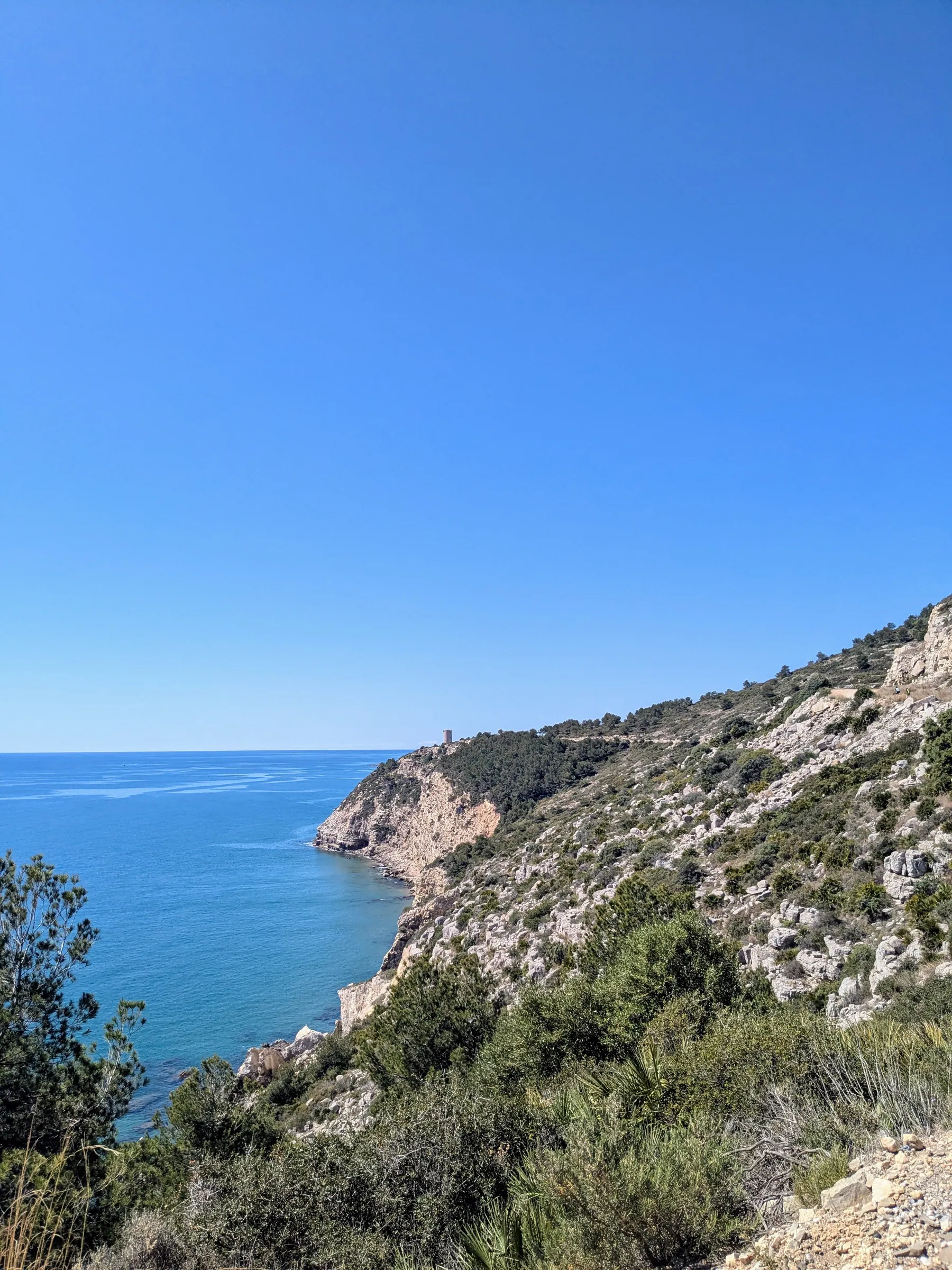
Walk south beyond the last urbanisations and the built-up coast simply stops. From there, the protected shoreline of Sierra de Irta Natural Park runs towards Alcossebre: cliffs, pine and Mediterranean shrubland, a watchtower above the sea and a chain of coves reached on foot.
Peñíscola and Sierra de Irta work best together. Give the town one day and the park another, and the trip changes from a castle-and-beach break into a much more interesting look at the coast of Castellón.
An interactive map later in this guide marks the coastal stops in order, making it easier to plan a short walk or a longer route through Sierra de Irta.
Where Peñíscola and Sierra de Irta are
Peñíscola sits on the northern coast of Castellón province, in the Valencian Community, roughly two hours north of Valencia by car. Its old town occupies a rocky headland that pushes into the Mediterranean, with the castle above the white houses. That is why the town looks so dramatic from the beach and promenade.
Sierra de Irta Natural Park begins at the southern edge of Peñíscola and continues towards Alcossebre. There is no single entrance. You can approach from Peñíscola in the north, Alcossebre in the south or the inland roads behind the ridge.
How to get to Peñíscola
- By car: take the AP-7/A-7 north from Valencia, then the N-340 and CV-141 into Peñíscola. The drive takes roughly two hours. Barcelona is about the same distance from the other direction. A car is the most flexible option if the park is part of your plan.
- By train: direct trains from València Nord reach Benicarló-Peñíscola station in roughly two hours. They run around twelve to fourteen times a day and cost from about €10. The station is in Benicarló rather than Peñíscola, so continue by taxi, which costs around €12, or use the urban bus when it serves the station in summer.
- By bus: HIFE runs directly from Valencia bus station to Peñíscola. The journey takes about two and a half hours and costs roughly €16 one way. It is more expensive than the train, but there is no transfer at the other end.
- By rideshare: BlaBlaCar covers this route and is how I reached Peñíscola on my first trip. It is usually the cheapest option and drops you in town, but availability depends entirely on someone driving that day.
Public transport gets you to Peñíscola, not deep into the natural park. You can reach the first coves on foot from town, but a car makes the longer coastal routes and southern access points easier.
How long you need
Allow one day for Peñíscola on a first visit: the castle, old town, a beach and an evening walk along the promenade. Give a second day to Sierra de Irta. That is the split I recommend after seeing the town in August 2022 and returning for the park in April 2025.
Peñíscola: the town and the castle
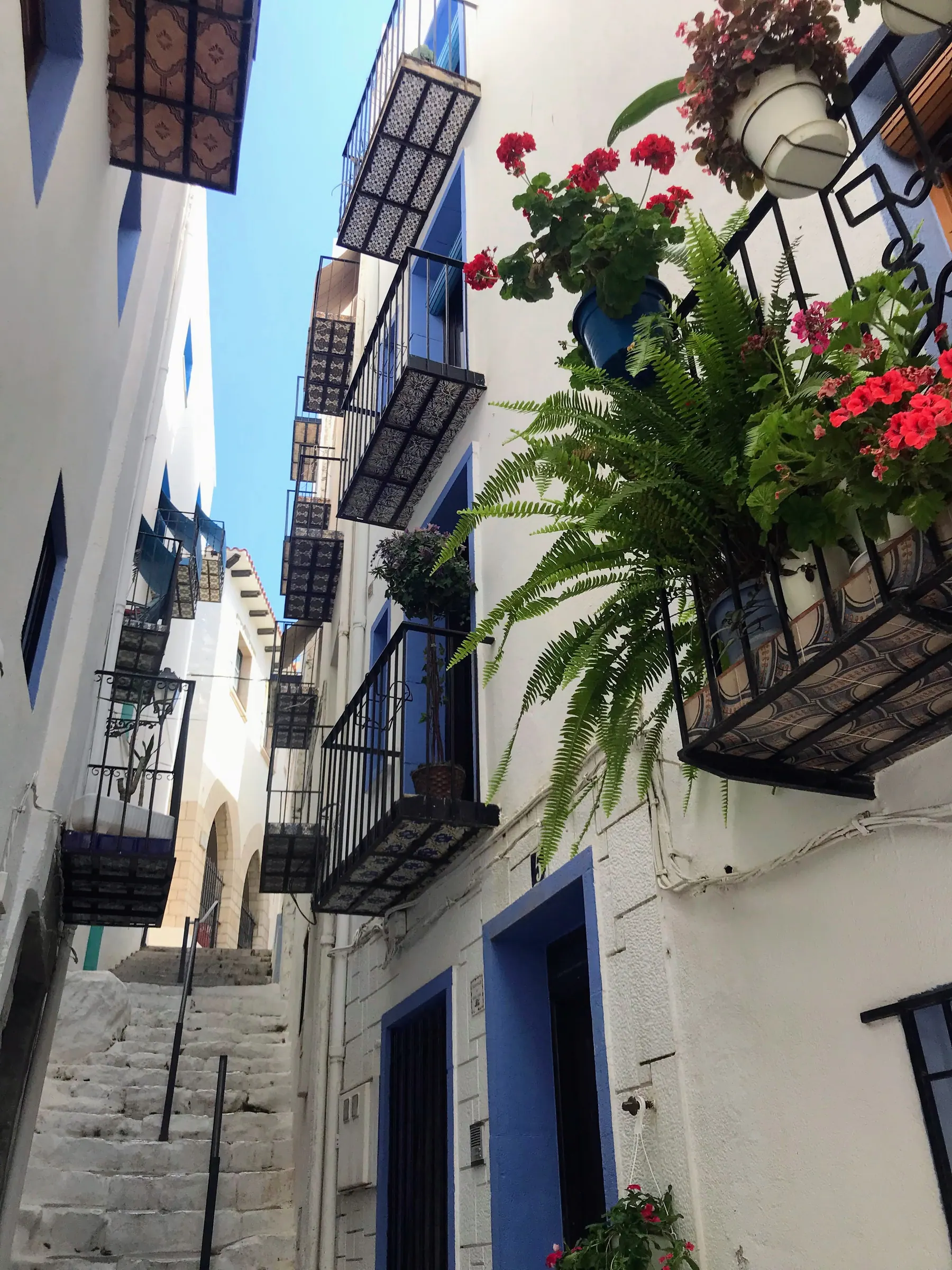
The old town is attractive in exactly the way the photographs promise: white houses climbing the headland, narrow lanes, blue details and stone walls that keep the whole place feeling like a fortified town rather than a collection of pretty streets.
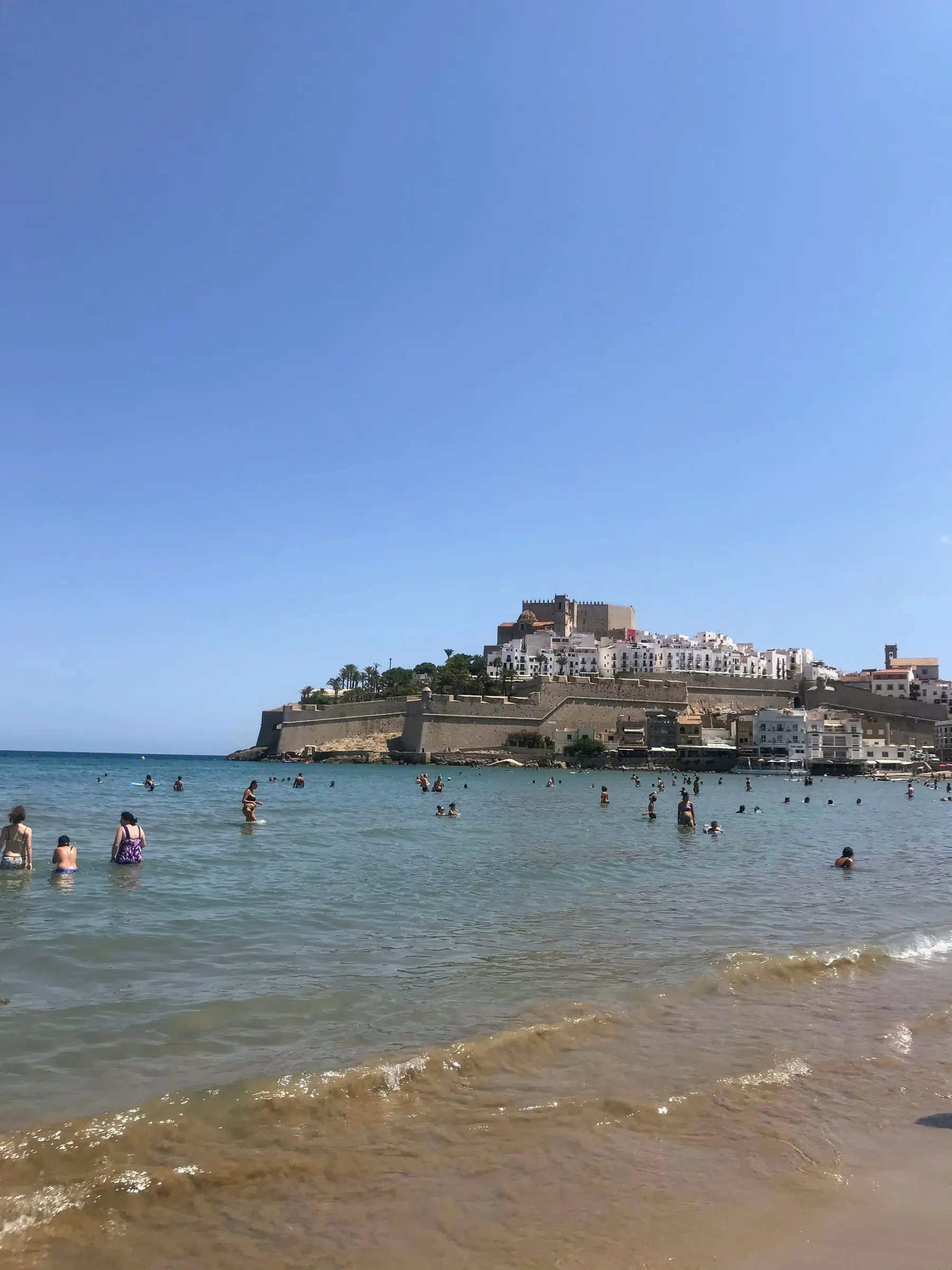
The classic view is not from inside the old town but from Playa Norte, looking back at the headland with the castle on top and the sea beneath it. Everyone takes that photograph, and it is still worth taking.
Inside Peñíscola Castle
If you are in Peñíscola, going inside the castle is a must. It is the defining symbol of the city, and entering it gives you the history and Mediterranean views that make the old town more than a beautiful backdrop.
The fortress is Templar in origin, built at the beginning of the 14th century over an earlier Muslim stronghold. It later became the residence of Benedict XIII, known as Papa Luna, during the Western Schism. For a period, a papal court was being run from this rock above the Mediterranean, which gives the place a history far stranger than its beach-town setting suggests.
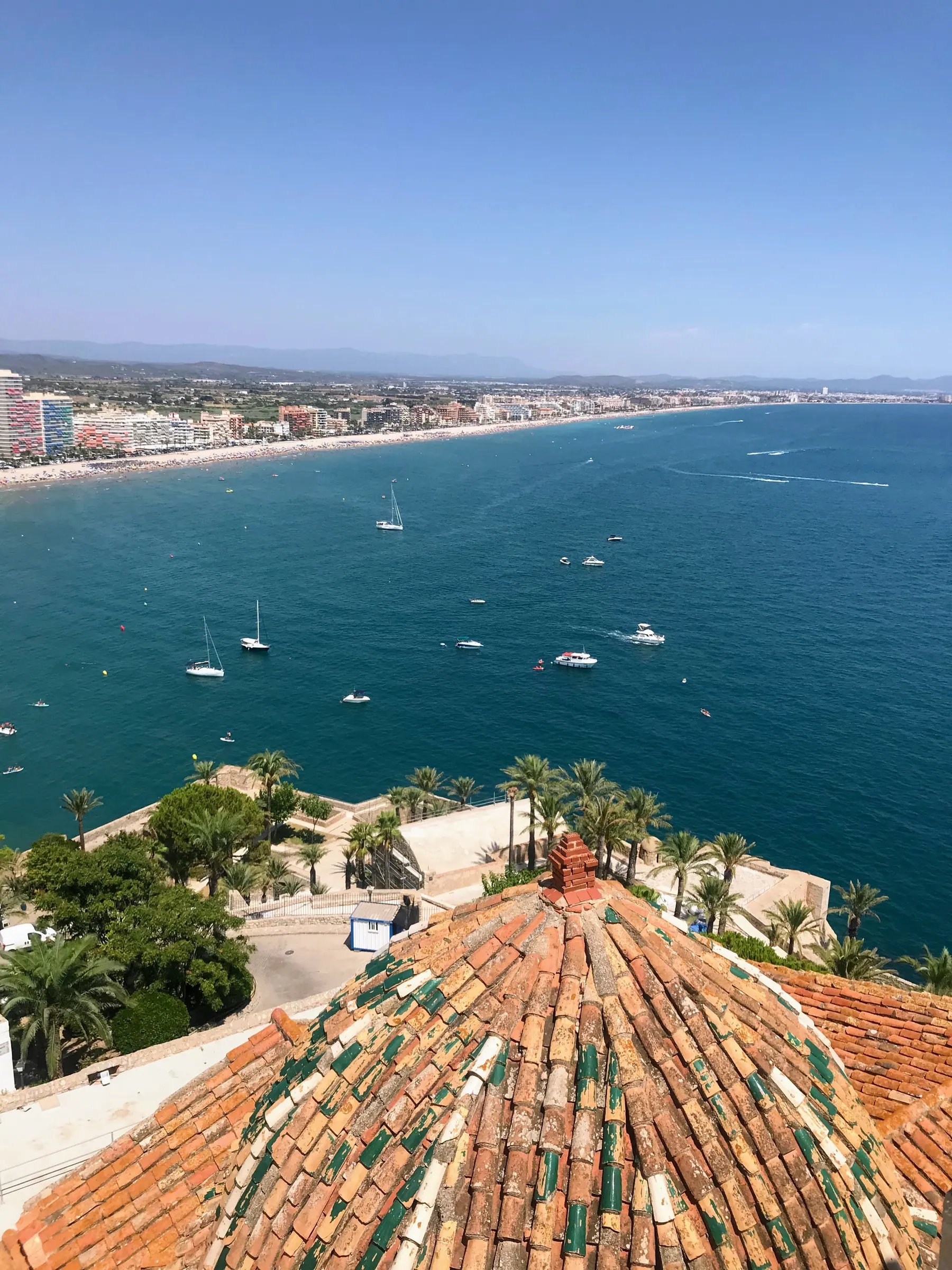
Inside, you move through stone chambers and displays about the castle’s history. It is not a huge visit. The terraces were my favourite part: terracotta roofs and Playa Norte on one side, open Mediterranean on the other.
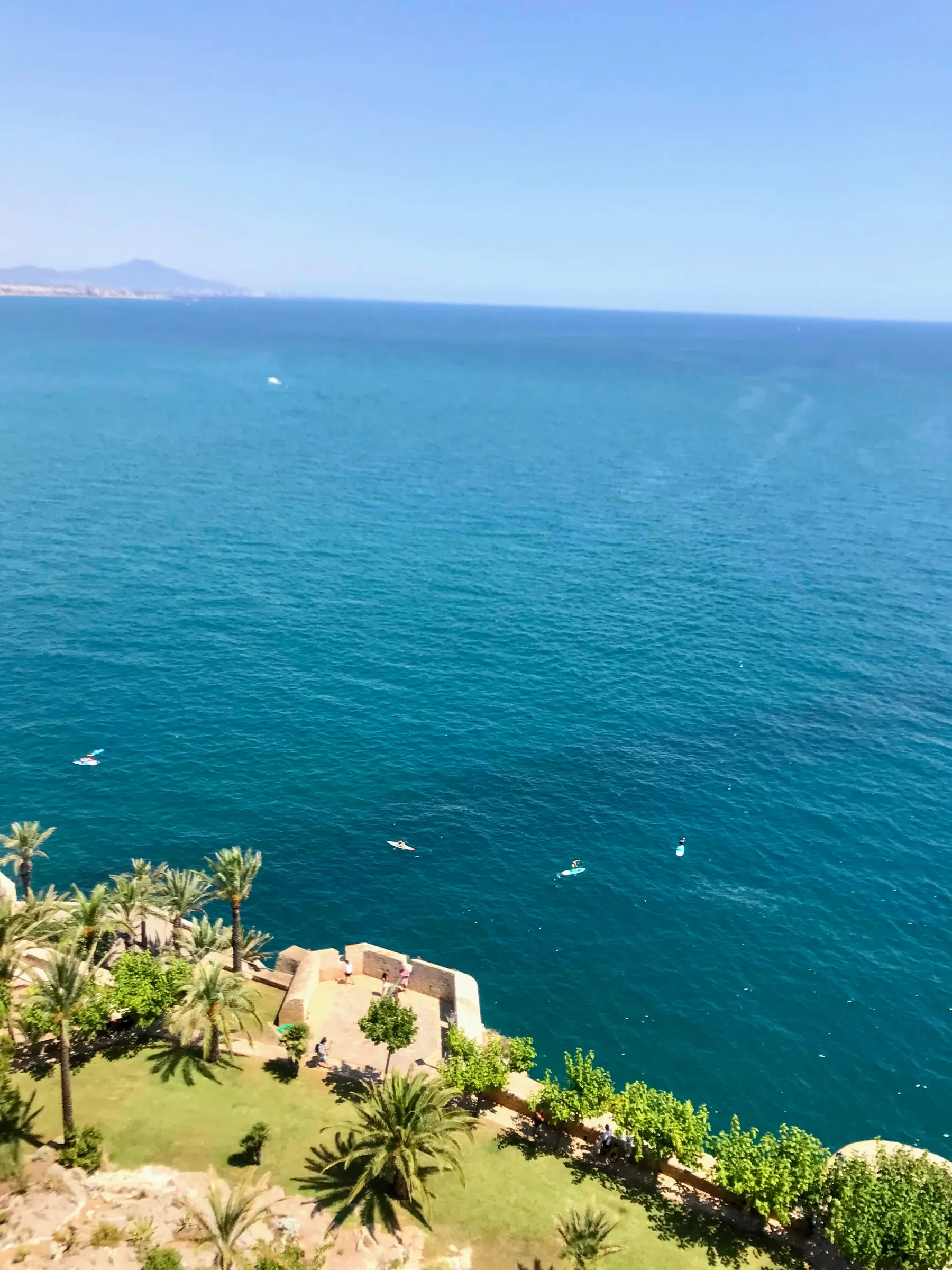
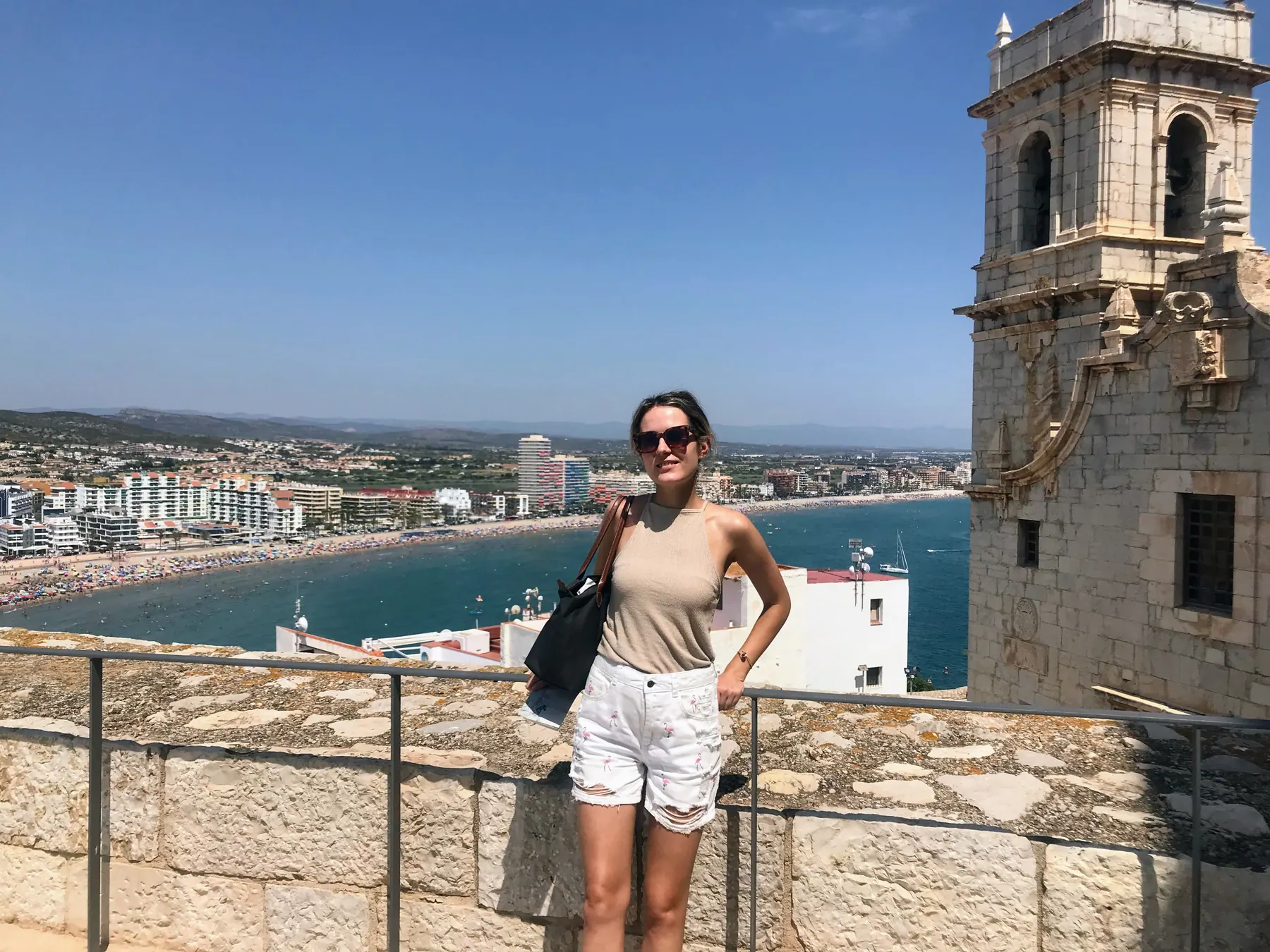
The Parque de Artillería and the castle are part of the same visitable complex, but their entrances are on different streets and the two areas are not internally connected. The castle entrance is on Calle Castillo; the artillery gardens are entered from Calle Santos Mártires.
Peñíscola also appeared as Meereen in season six of Game of Thrones. The production used the old town, walls and public spaces, so you can see several filming locations around the town.
Castle tickets and opening hours
At the time of writing, general admission is 5 EUR and the reduced ticket is 3.50 EUR for eligible visitors with proof. Children up to eight, visitors with disabilities and registered Peñíscola residents enter free under the published conditions. Payment is by card only.
The official schedule is:
- Palm Sunday to 15 October: 09:30-21:30
- 16 October to Palm Sunday: 10:30-17:30
- The ticket office closes 30 minutes before the castle.
Hours and prices can change, so check the current information before travelling.
Beaches and other things to see in Peñíscola
Playa Norte runs for about five kilometres north from below the castle towards Benicarló. It is the wide, sandy, fully serviced beach that fills in summer, and the view back towards the fortress is its defining feature.
Playa Sur is smaller and sits on the other side of the headland, beside the fishing port. It has less space but a more sheltered setting, with boats returning nearby and bars along the promenade.
Three details in the old town are worth looking for:
- El Bufador: a natural tunnel in the rock below the town. When the sea is rough, water and air surge through it with a deep sound; you may hear it before you see it.
- Museu de la Mar: a small maritime museum in the old Baluarte del Príncipe, with a viewpoint outside.
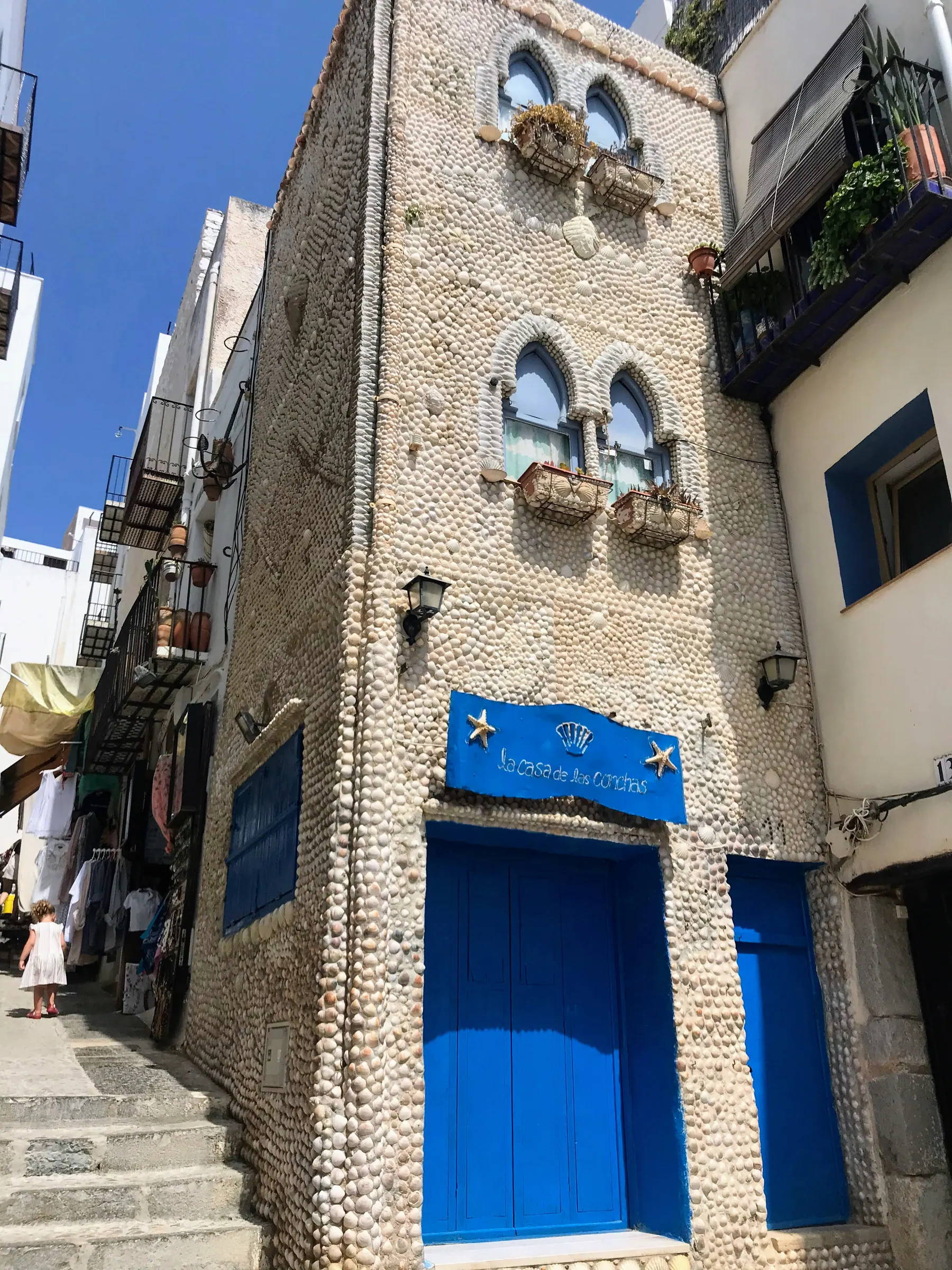
- Casa de las Conchas: a house whose facade was covered in shells by a local couple beginning in the 1950s. It is one of my favourite places in the old town and easy to miss if you walk past without looking up.
When the town feels busiest
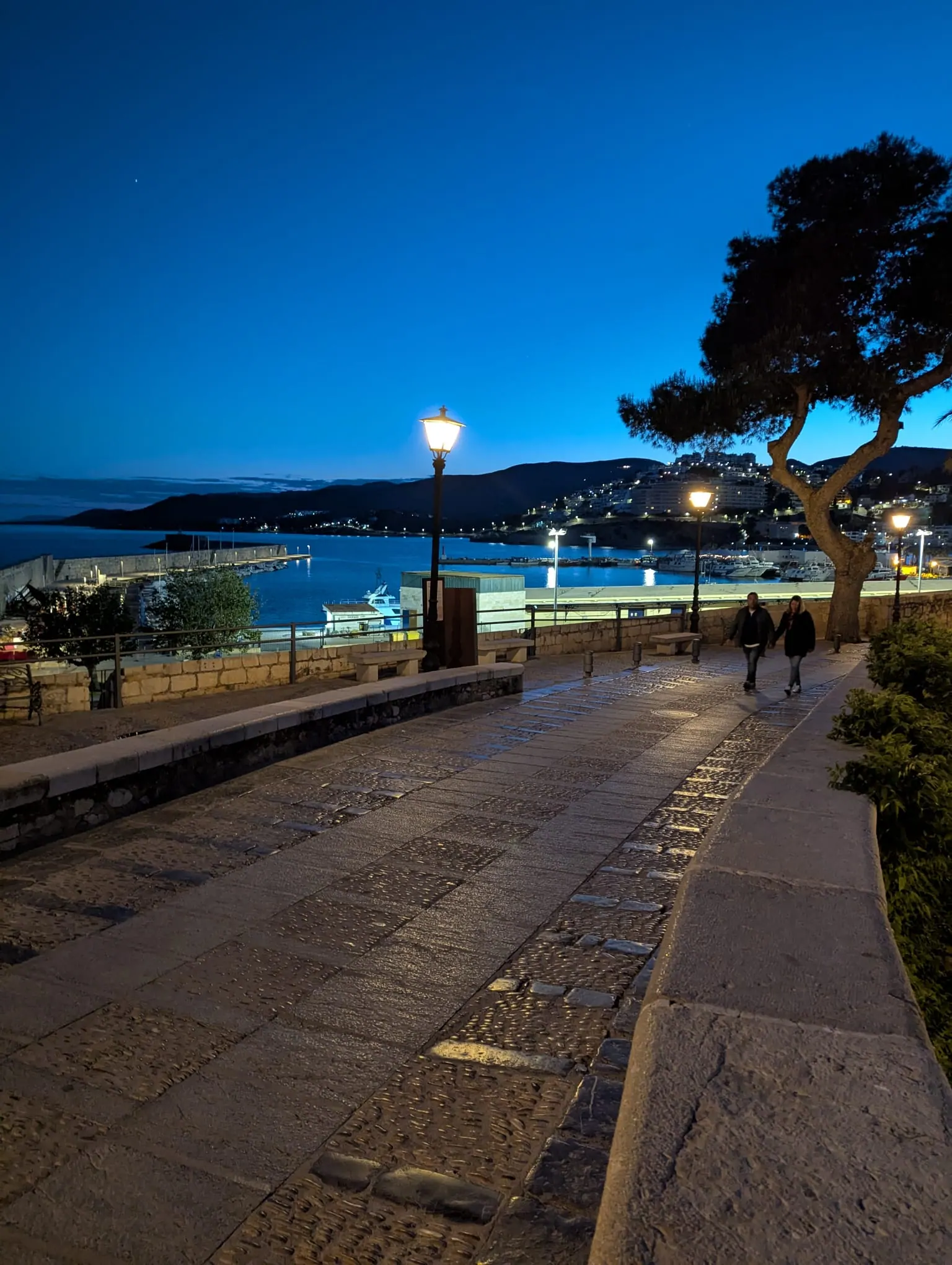
I first visited Peñíscola properly in August 2022 and returned briefly in April 2025. August is peak beach season: Playa Norte makes the town a straightforward resort destination, and the old streets fill with day visitors and tour groups. April felt far calmer and worked much better for combining the town with walking.
Sierra de Irta: the natural park
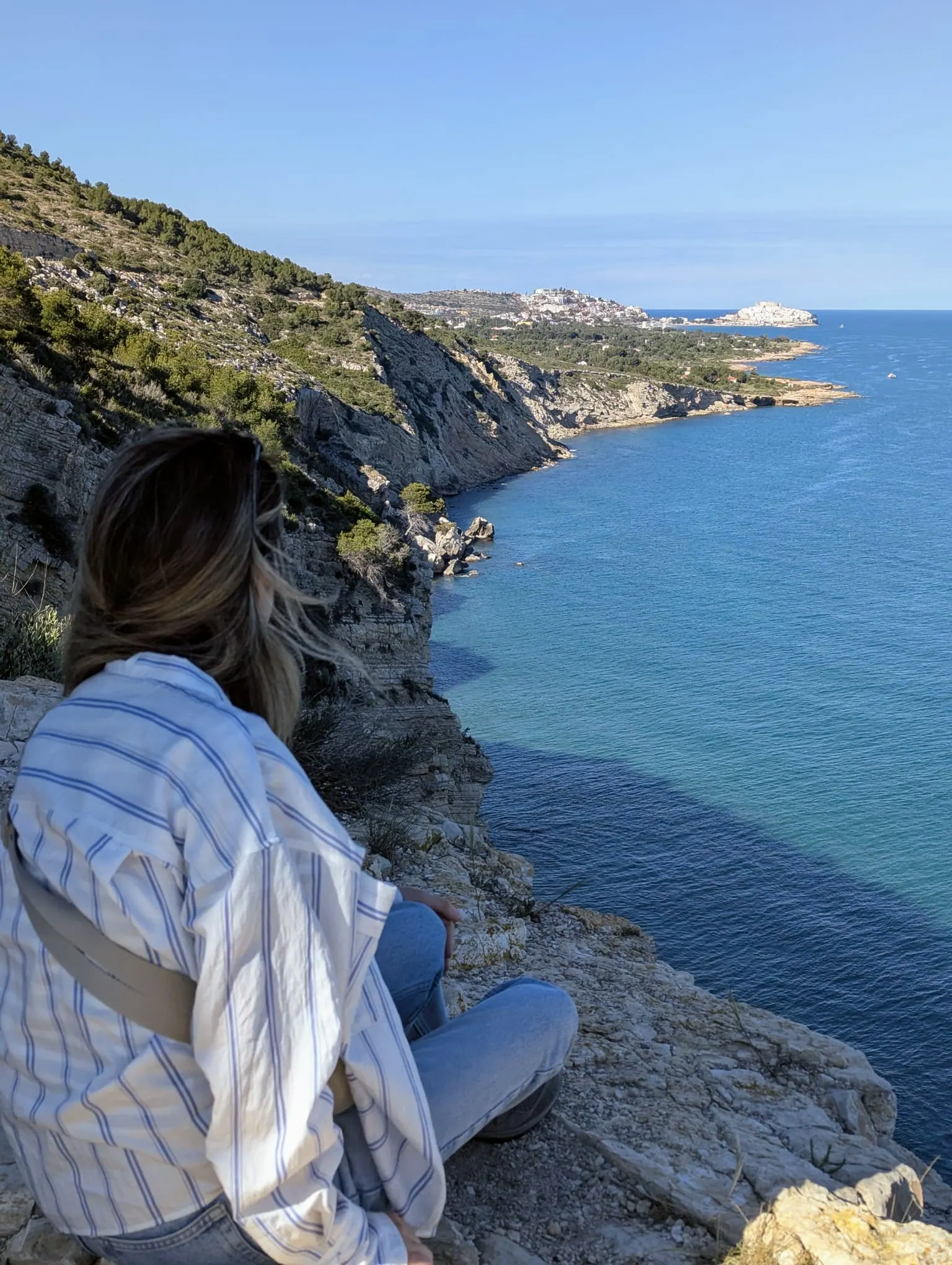
The Sierra de Irta Natural Park and Marine Reserve begins immediately south of Peñíscola and follows the coast towards Alcossebre. The Generalitat describes it as one of the last undeveloped coastal ranges on the Spanish Mediterranean. Once you walk into it, the distinction is obvious: no promenade, no apartment blocks and no beach bars, only the track, low Mediterranean vegetation, cliffs and sea.
- Protected since: July 2002, as both a natural park and marine reserve.
- Protected area: 7,743 hectares.
- Coastline: around 12 km of largely undeveloped shore.
- Highest point: 572 m at Campanilles.
- Entry: free; the coastal area is open countryside rather than a ticketed attraction.
- Terrain: rough coastal track and path, mostly unshaded, with short climbs.
- Difficulty: generally low; distance, sun and the return journey make it tiring.
The protected sea explains the clarity of the water. On land, the main landmarks are the coves, Torre Badum, the dune and boardwalk at Platja del Pebret, cycling routes and the inland castles of Xivert and Polpis.
How to visit Sierra de Irta
There is no main gate and no single compulsory route. Where you begin decides what you see.
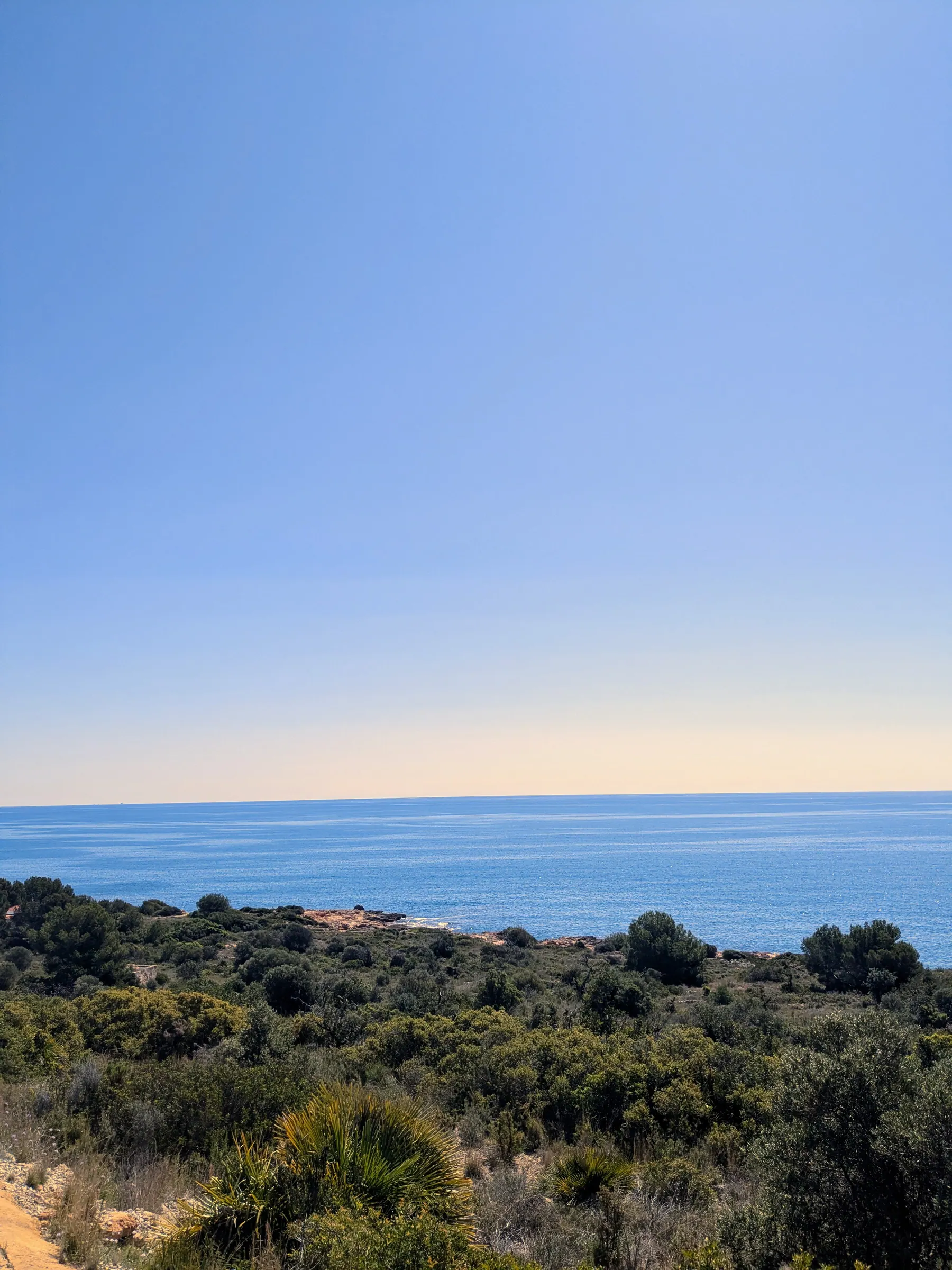
- Walk from Peñíscola: follow the Camí del Mar south. Within roughly an hour you can reach the nearer coves - Moro, Port Blau and Ordi. They sit at the edge where Sierra de Irta begins, although they are still outside the main protected coastal stretch. Turning back around Cala Ordi creates an easy first introduction; continue for a longer route towards Torre Badum.
- Park near the northern edge: starting around Font Nova skips the first built-up stretch and puts you closer to the tower and the wilder coast. This is how we did our longer day.
- Drive to a particular cove: useful when swimming is the priority or summer heat makes a long walk unwise. During the regulated summer period, you need a parking reservation.
- Start from Alcossebre: best for the southern half, including the lighthouse and the area around Cala Blanca, Mundina and Ribamar.
- Go by bike: the coastal track and several inland routes are cycleable. A bike is the fastest way to cover more of the park.
If you can arrange two cars or a pickup, walking the coastline one way - from Peñíscola to Alcossebre - would avoid retracing the same ground. Otherwise, remember that a coastal walk here is usually out and back: every kilometre you walk south must be walked again.
What is along the coast
Heading south from Peñíscola, the principal coastal stops appear in the following order.
On the approach to Sierra de Irta
Cala del Moro, Cala Port Blau and Cala Ordi are not yet on the main protected Sierra de Irta coastline. They sit at the southern edge of Peñíscola, just before the park begins, and form a simple transition from the built-up town to the wilder coast.
- Cala del Moro
- Cala Port Blau
- Cala Ordi
Along the Sierra de Irta coast
- Cala Volante
- Torre Badum
- Playa d’Ull de Bou
- Platja del Pebret
- Platja del Russo
- Platja del Barranc d’Irta
- Cala Argilaga
- Cala Cubanita
- Cala Ribamar
- Cala Mundina
- Faro de Irta
- Cala Blanca, near the Alcossebre end
The park continues inland as well, with Castillo de Xivert, Castillo de Polpis and Torre Ebrí. We did not reach those on this trip.
What we actually did
We returned in April, close to an ideal month for this coast: warm enough to sit by the water, cool enough to keep walking and outside the summer vehicle restrictions.
The plan was nature with a little town rather than the other way round. We decided to stay overnight only on the day itself and found accommodation in Urbanización Cerromar, south of central Peñíscola. That accident improved the trip because it placed us near the park instead of in the middle of the resort.
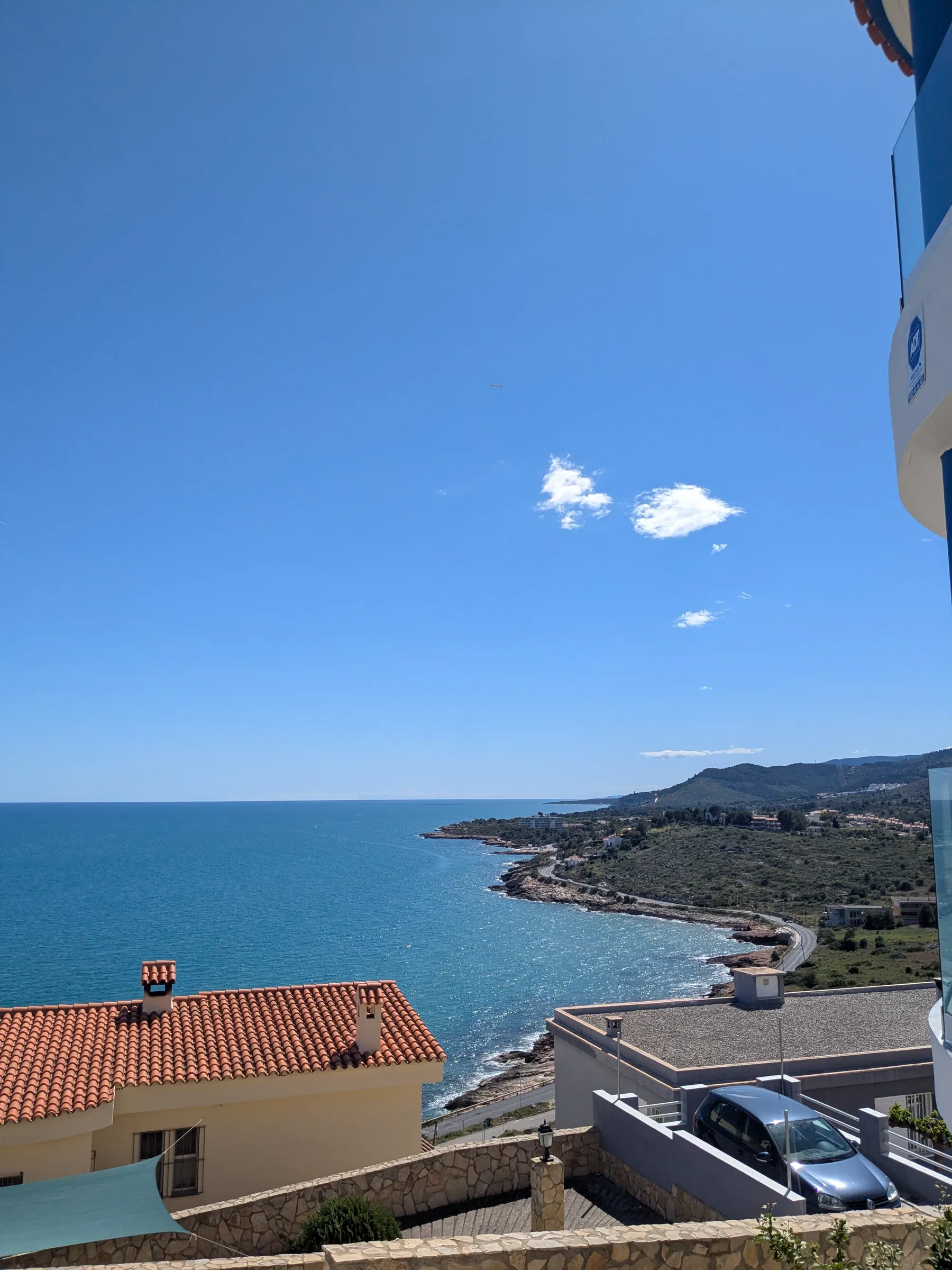
Book ahead if you can. Peñíscola is a beach town and good-value accommodation disappears even outside the busiest weeks.
The first afternoon: Peñíscola to Cala Ordi
We arrived around 15:00, left our bags and set off immediately. This first walk is technically the approach to the park rather than its deepest section, but it follows the same coastline and makes an easy introduction.
The route begins on the Camí del Mar, which is a road at first. The shoreline is not continuously walkable, so the path repeatedly pulls inland through pine and low vegetation before returning to the water. Navigation is straightforward - keep the sea on your left going south and on your right coming back - but I would still download an offline map.
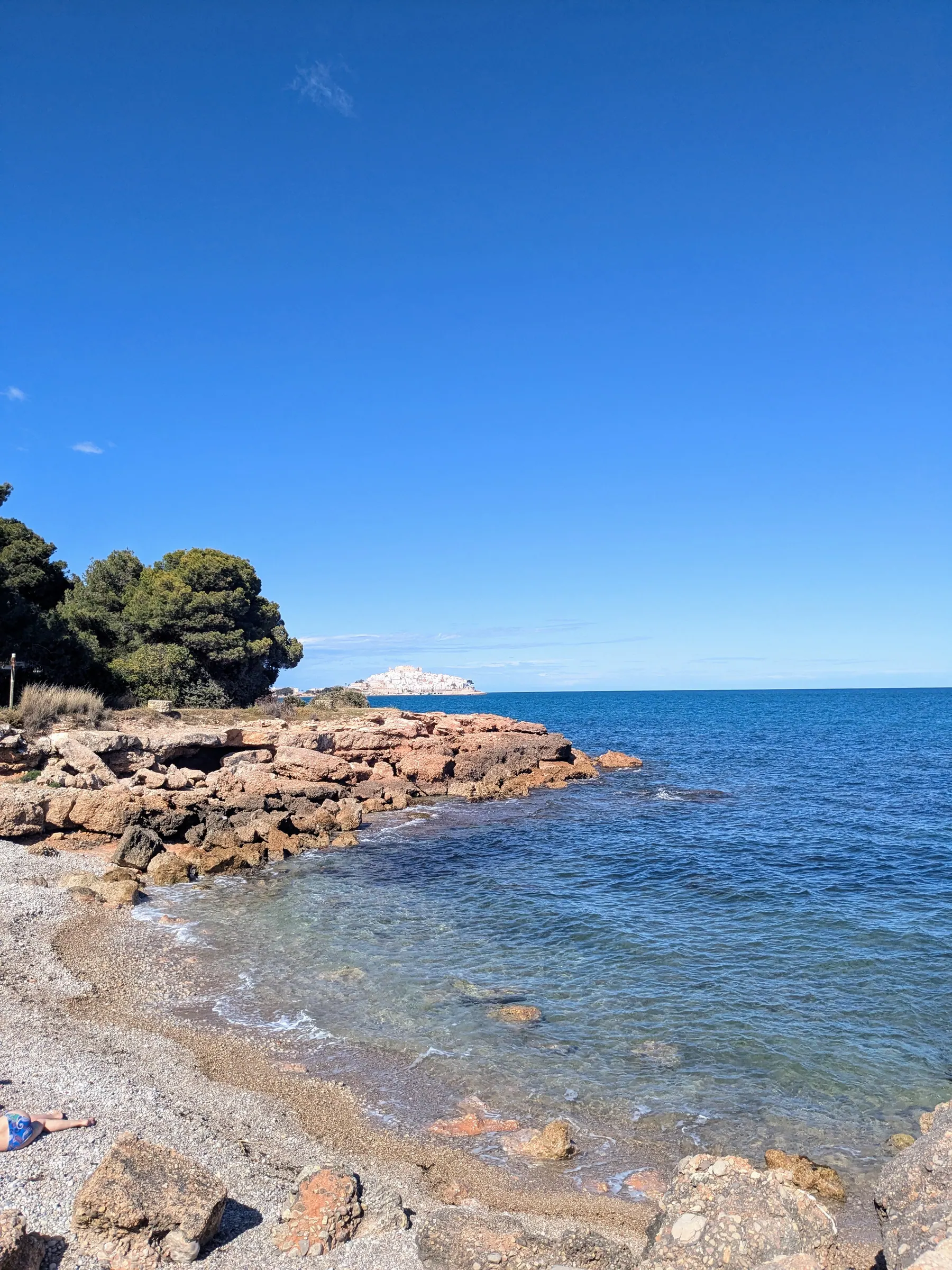
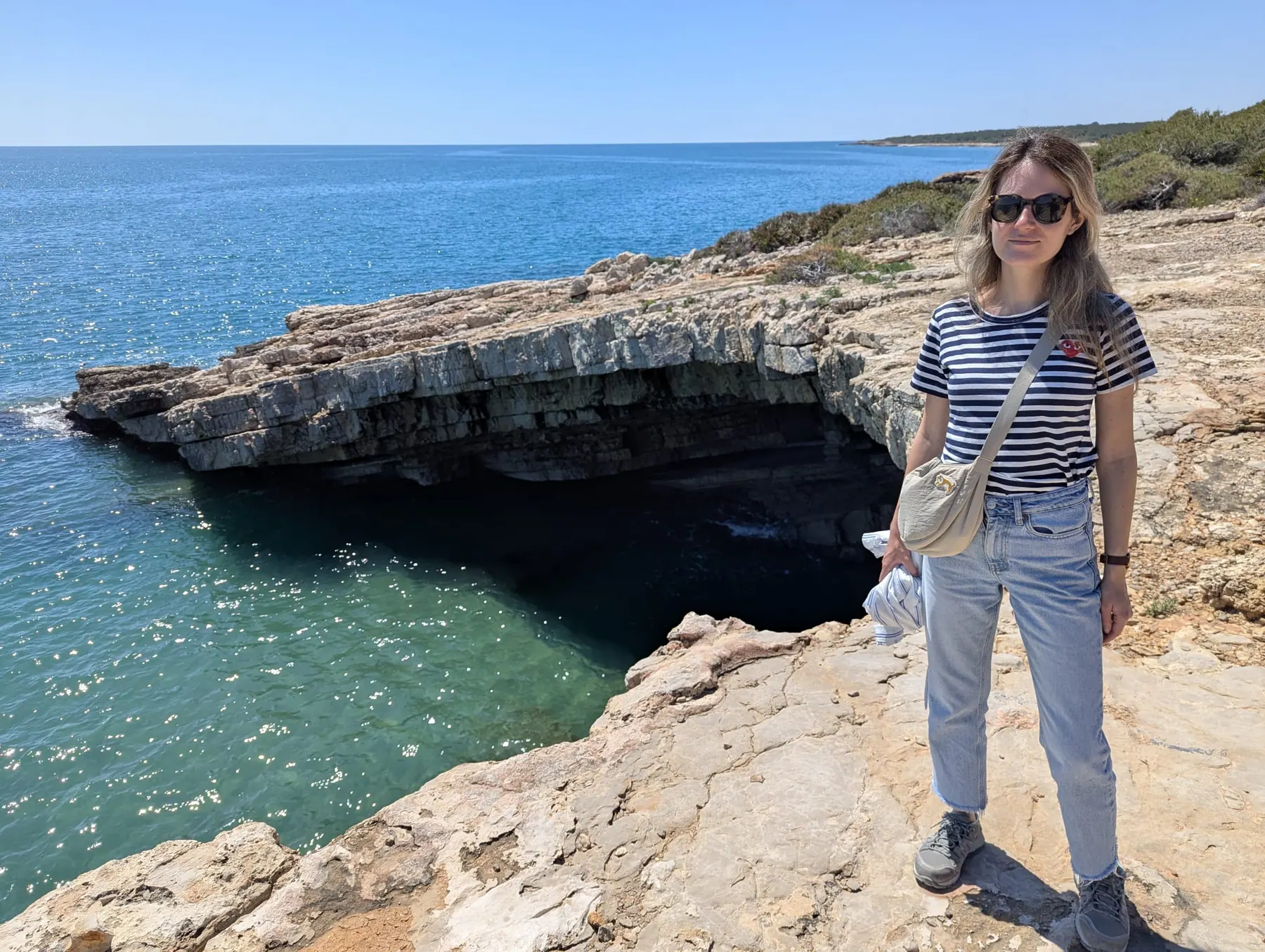
We stayed around the nearer coves and turned back at Cala Ordi. There was no reason to rush past the small stops, so we did not. The walk took about two hours there and back, perhaps 5-6 km at a relaxed pace with pauses.
The blackout we did not know about
A small anecdote from this walk: it took place on 28 April 2025, the day electricity failed across almost all of mainland Spain and Portugal.
We had no idea. We were sitting beside a cove trying to get online, could not connect and assumed it was the usual lack of signal. Only later, back at the car with the radio on, did we understand what had happened. The entire country was dealing with a blackout while we spent the afternoon looking at coves.
The second day: Font Nova, Torre Badum and Pebret
On the second day we drove and parked closer to the park near Urbanización Font Nova. That put us directly onto the best stretch and let us go much farther south. The full day came to around six hours and roughly 13 km there and back, including several long stops by the water.
The coastal route is not a loop. There is no bus or coastal shortcut back, so decide your turning point while you still have half your energy.
Torre Badum is the one real climb on this section. The circular watchtower stands high above the sea, with a long view in both directions. The approach is steeper than the rest of the walk, but the panorama justifies it.
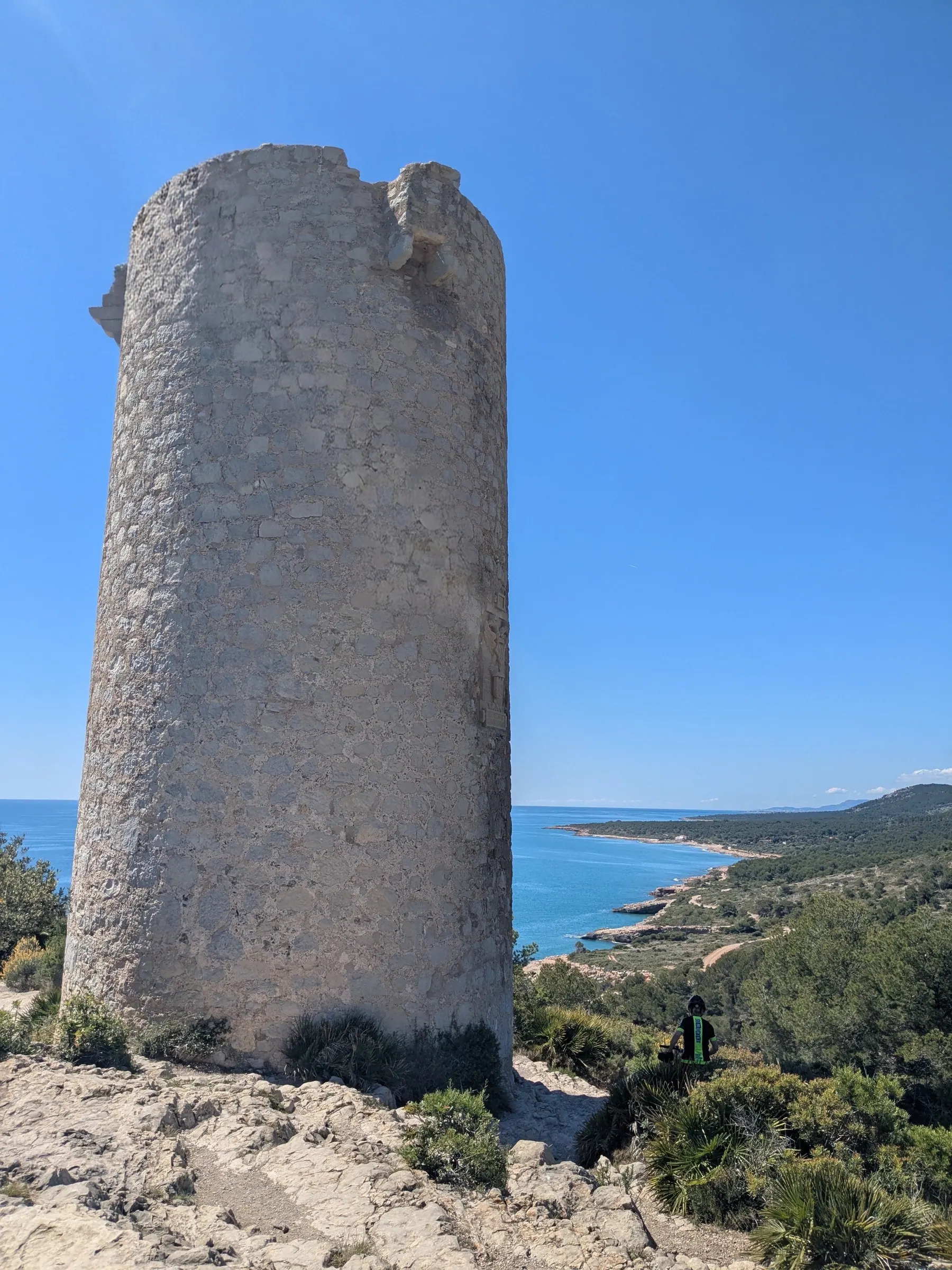
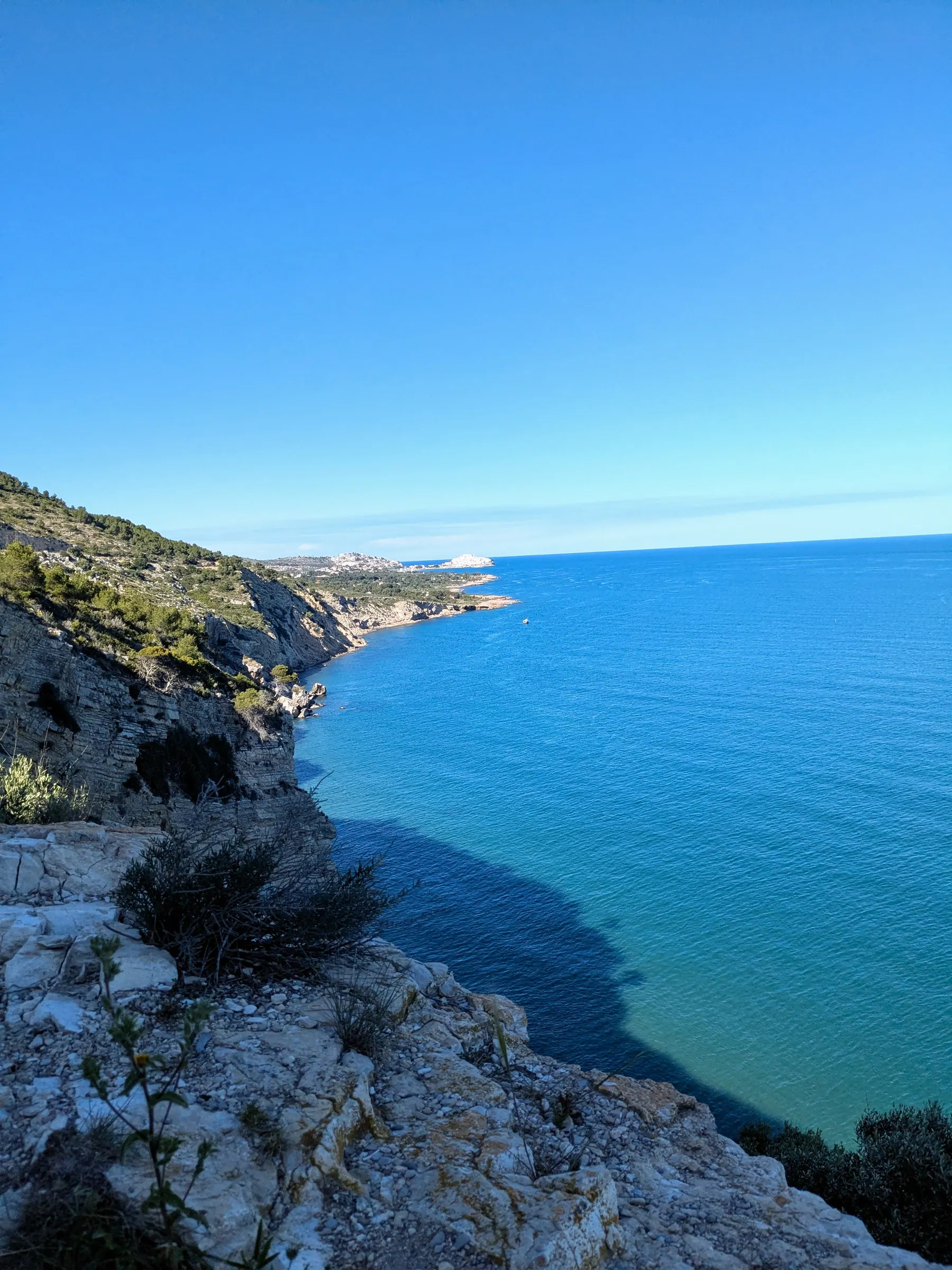
Somewhere before the tower, the route stopped feeling like the edge of a town. The urbanisations disappeared, rosemary scented the path and the track moved between low bushes before swinging back towards the sea. We passed occasional walkers and cyclists, but never enough to make it feel busy.
Beyond Torre Badum we reached Platja del Pebret, lay on the sand for about an hour and followed the wooden boardwalk through the protected vegetation. From there we continued to Platja del Barranc d’Irta before turning back.
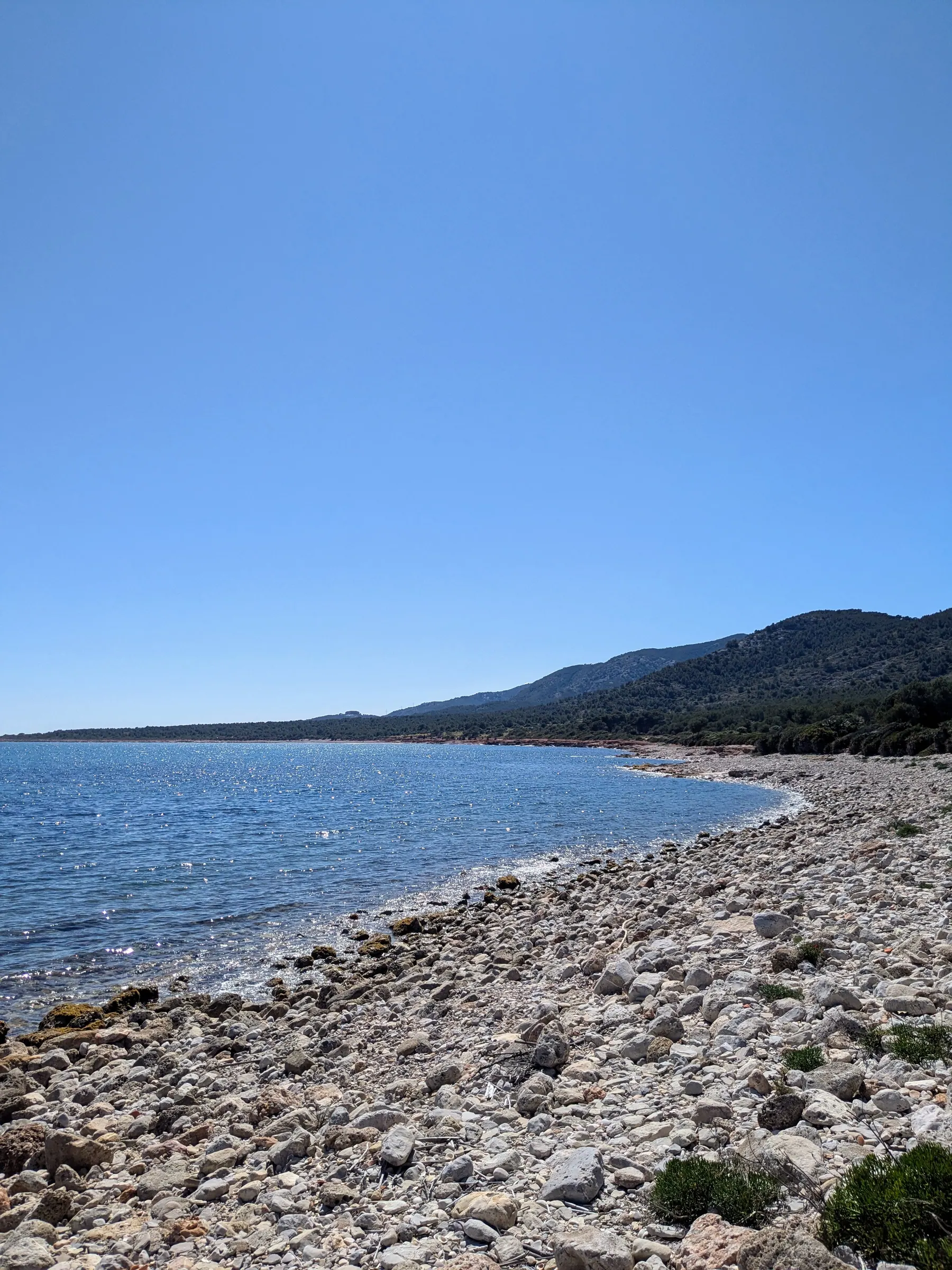
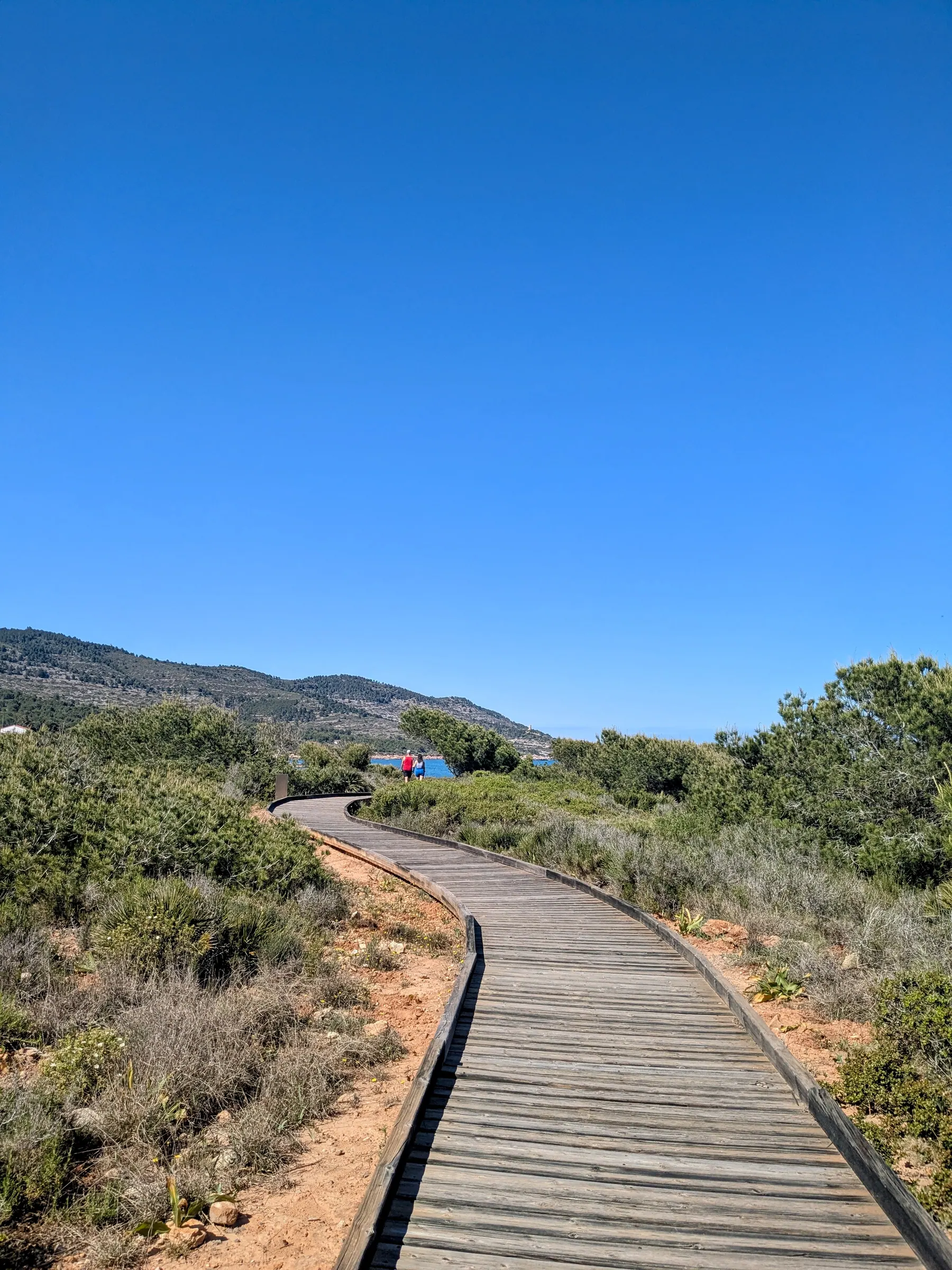
By the end, we were tired. Six hours mostly in the sun is demanding, and the final stretch is ground you have already covered. The return is the same distance as the outward walk, but you do it with less energy.
What we did not reach
We covered only the northern section closest to Peñíscola. The southern coast around Alcossebre - Cala Blanca, Mundina, Ribamar and Faro de Irta - is far enough away that it makes more sense as a separate route from that end. We also left the inland castles for another trip.
The natural park publishes marked itineraries and GPS files, including routes near Faro de Irta. Check the current park information before choosing a route, especially during periods of high fire risk when temporary access restrictions may apply.
Summer parking: read this before driving in
Motor-vehicle access to the coastal track is regulated in summer. For 2026, the restriction runs from 20 June to 6 September, from 08:00 to 19:30. Vehicles entering the controlled section need a reserved parking space unless they fall into an authorised or resident category.
Reservations are made through the GVA Parcs Naturals app, from two to seven days before the visit. One car requires one reservation regardless of the number of passengers, and overnight parking is not permitted. Read the current Peñíscola Tourism access information before setting out.
The rules and dates are published annually. Check the current Peñíscola access notice and Generalitat information before setting out.
Best time to go
April was excellent, and I would choose it again: comfortable walking temperatures, green vegetation after winter and no summer parking restrictions. Early autumn should offer a similar balance.
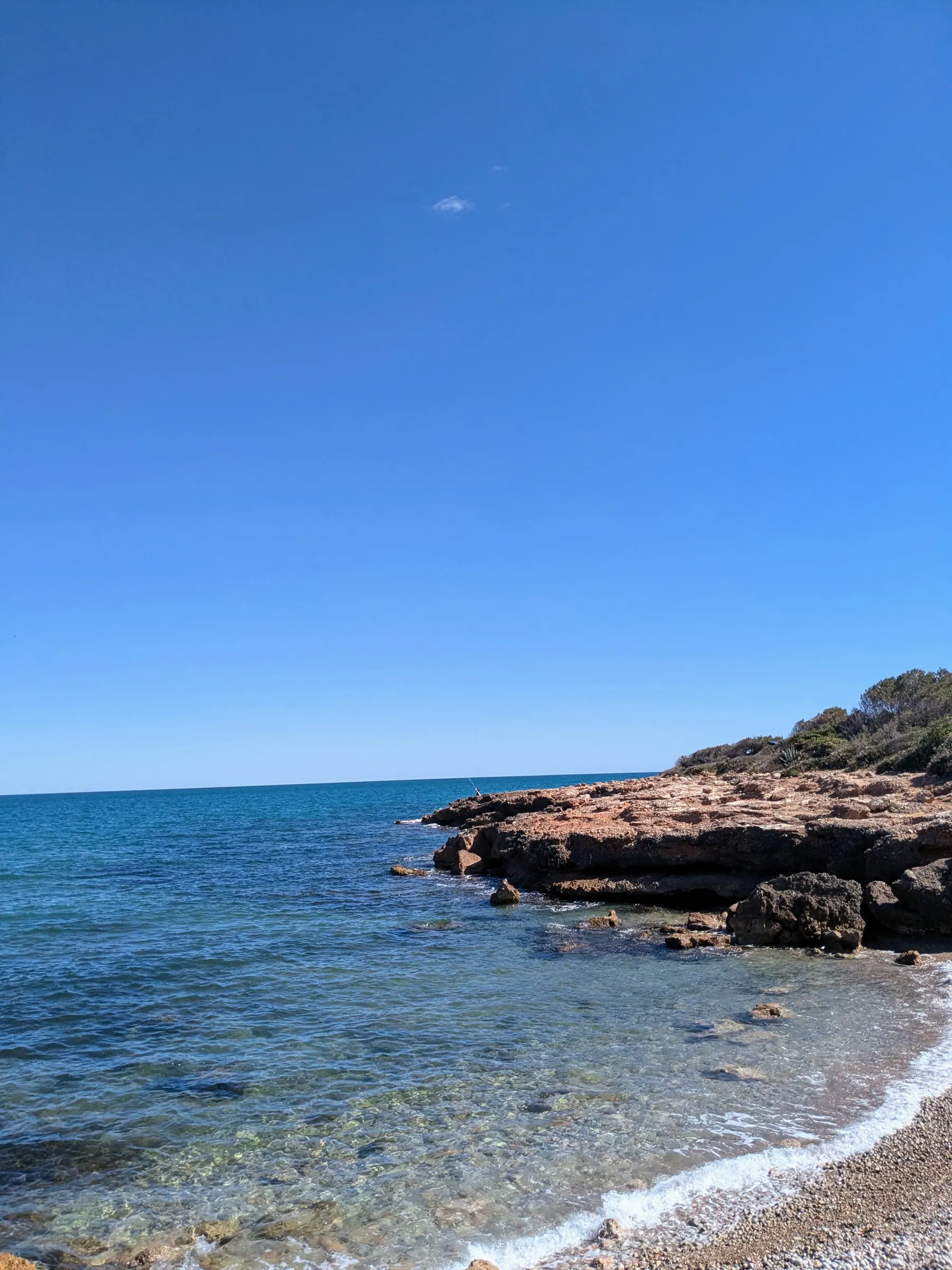
Do not underestimate the spring sun. April did not feel like beach weather, so we treated it as though sun protection did not matter and both came back burnt. The path is exposed even when the temperature feels comfortable.
Summer is more difficult. There is little shade, and a long coastal walk around midday in July or August would be punishing. In hot weather, reserve parking, drive to a cove or Torre Badum, swim and keep any walking for early morning or late afternoon.
Food and facilities
There are picnic tables and toilets at the Pebret recreational area, but nothing to buy along most of the coast. The urbanisations at either end have bars and restaurants; the middle section does not. Carry all the water and food you need. We bought sandwiches in central Peñíscola before setting off.
Swimming in Sierra de Irta
We did not swim, so this part is based on what we saw rather than personal experience.
- Platja del Pebret: the easiest sandy place we passed for entering the water.
- Cala Blanca, Cala Mundina and Ribamar: popular swimming places reached from the Alcossebre side.
Most other coves are stone or mixed sand and stone, so water shoes would be useful. The dune behind Pebret is protected and being allowed to regenerate, so stay on the boardwalk and off the fenced vegetation.
What to bring
- More water than you expect to need: there is nowhere to refill on the coastal route.
- Proper shoes: parts of the path are uneven and rocky.
- Sun protection and a hat: shade is extremely limited.
- Swimming gear and water shoes: many coves are rocky.
- Food: buy it before leaving Peñíscola or Alcossebre.
- An offline map: mobile signal can be patchy.
Is Peñíscola and Sierra de Irta worth it?
Yes, specifically because of the combination.
Peñíscola alone makes for a pleasant half-day or full-day visit: a good castle, a photogenic old town and a beach with one of the most recognisable views in Castellón. What makes the trip worth more than a quick stop is the coastline directly behind it - a protected stretch that many visitors never enter even though it begins where the last buildings end.
Sierra de Irta is not about ticking off one viewpoint. You walk beside an undeveloped coast, stop at coves when you feel like it and return tired, sun-warmed and probably smelling of rosemary. Give Peñíscola the first day and the park the second. Together, they reveal two very different faces of the same Mediterranean shore.
FAQs
Is Peñíscola worth visiting?
Yes. The castle, white old town, beaches and views make Peñíscola worth at least half a day, but combining it with Sierra de Irta turns it into a stronger one- or two-night trip.
Can you walk from Peñíscola into Sierra de Irta?
Yes. Follow the Camí del Mar south from the edge of Peñíscola. The nearest coves can be reached without a car, while Torre Badum and the more distant beaches require a longer out-and-back walk.
How long do you need for Sierra de Irta?
Allow half a day for the first coves or a full day for a longer coastal walk. Our longer route took about six hours with several stops and covered roughly 13 kilometres there and back.
Do you need to book parking in Sierra de Irta?
During the regulated summer period, motor vehicles need a reserved space to enter the coastal track. For 2026, the restriction runs from 20 June to 6 September, and reservations are made through the GVA Parcs Naturals app.
What is the best time to visit Peñíscola and Sierra de Irta?
Spring and autumn are best for walking. April gave us warm weather, green vegetation and no summer parking restrictions. In July and August, plan around the heat and visit the park early or late.
Read next
More posts for this trip mood
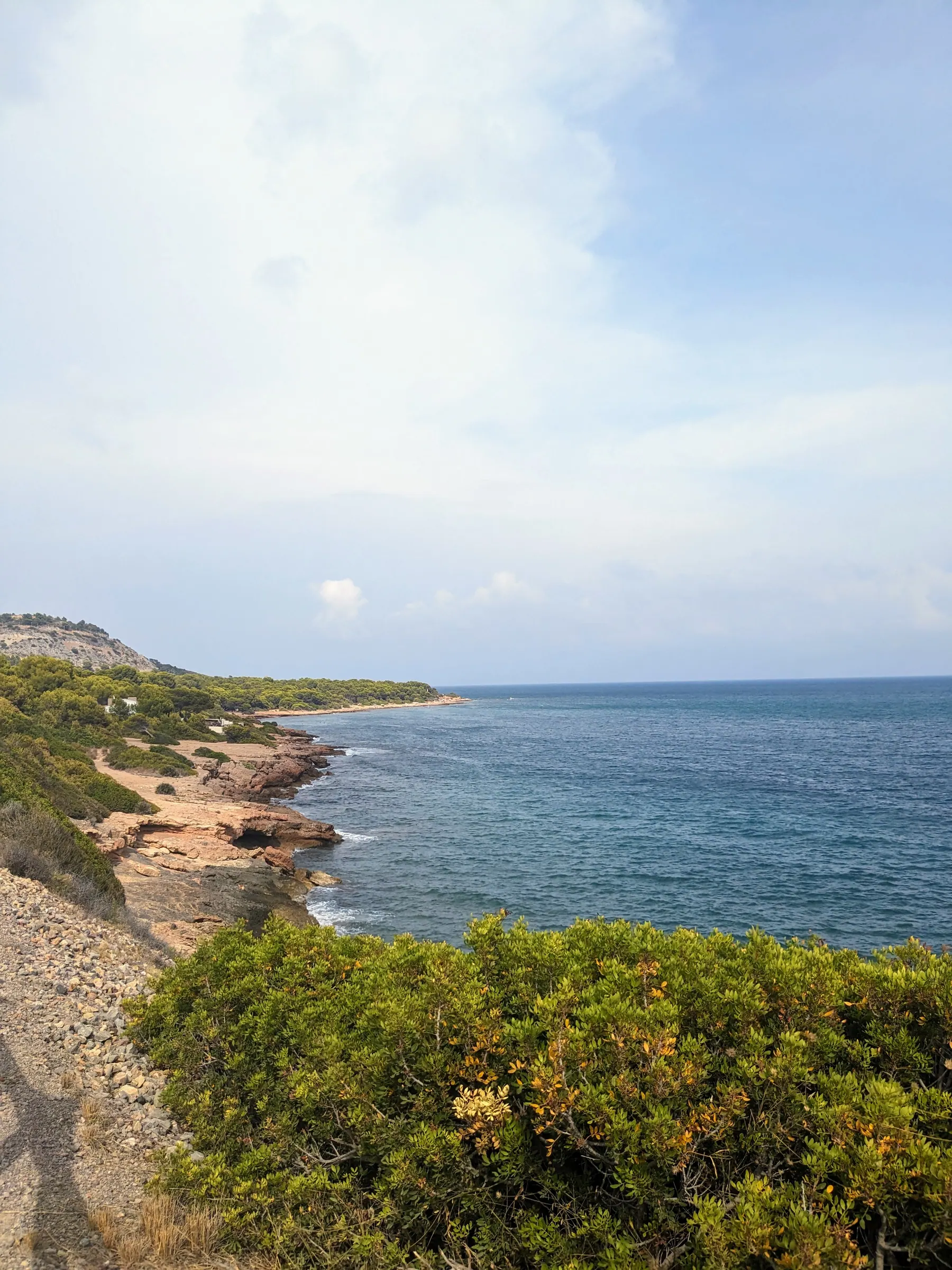 Europe
 Castellón, Spain
The Vía Verde del Mar: A Coastal Greenway Between Oropesa and Benicàssim
A flat coastal escape where an old railway line keeps the Mediterranean within reach.
A practical guide to the Vía Verde del Mar between Oropesa del Mar and Benicàssim, with the railway history, train access, coves, tunnel, swimming spots and summer advice.
 Europe
 Balearic Islands, Spain
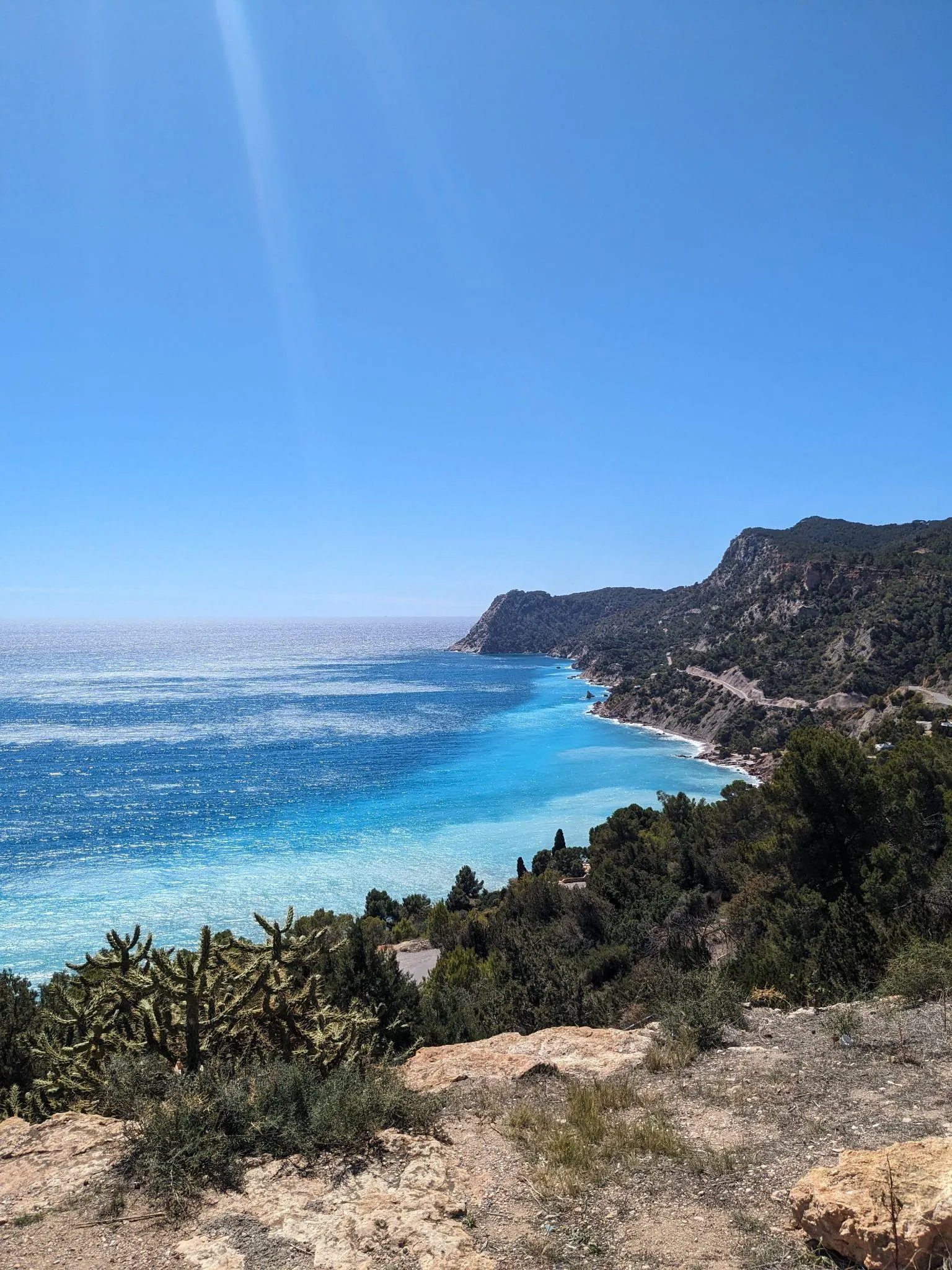
Things to Do in Ibiza Off-Season: Nature, Empty Calas & 4-Day Route
Ibiza off-season is a completely different island: empty calas, quiet hiking trails, and dramatic coastal views without the summer rush.
A 4-day off-season Ibiza guide focused on nature, empty calas, coastal hikes, Dalt Vila, Es Vedrà, and practical April road trip tips.
 Europe
 Canary Islands, Spain
Gran Canaria Beyond the Beach Holiday: A Miniature Continent
Gran Canaria is far more than its beaches: a week of cloud forest, volcanic mountains, quiet villages and Atlantic coast.
A week exploring Gran Canaria beyond the resorts, from Agaete and Las Palmas to Roque Nublo, Artenara, Maspalomas and Barranco de las Vacas.