


Mallorca · Balearic Islands · Spain
Mallorca Beyond the Beaches: Exploring the Island's Surprising Variety by Car
A road trip guide to Mallorca beyond the resorts: driving the scenic Ma-11A, walking to Fornalutx, Cap de Formentor, Cala Agulla, Coves d'Artà, and EV driving tips.
At a glance
- Where it is
- Largest of Spain's Balearic Islands in the Mediterranean, a short flight from Valencia or mainland Spain.
- Best time for this trip
- Autumn (late October) or spring for mild temperatures, hiking, and quieter mountain roads.
- Getting around
- Compact rental car (we rented an electric car and used MELIB charging points across the island).
- Main stops
- Palma, Serra de Tramuntana (Ma-11A, Sóller & Fornalutx), Cap de Formentor, Cala Agulla, Coves d'Artà, Botanicactus & Cala Pi.
- Time needed
- 4 to 7 days to combine mountain roads, stone villages, caves, and coastal walks at your own pace.
Having been to Mallorca twice, I have visited places which I would like to share. I went at the end of October by taking a short flight from Valencia: Mallorca is a beautiful island and offers quite a lot of variety, and it’s also worth exploring outside the summer season (much like visiting Ibiza off-season) to have fewer crowds and more pleasant temperatures. Some of the best places, as it often happens, were the ones we had no expectations for.
Choose the area that interests you most: Tramuntana for stone villages and valley walks; Formentor for dramatic cliffs and viewpoints; the northeast for coastal paths and caves; or the south for Botanicactus and Cala Pi. You can explore these areas at your own pace rather than follow them as a fixed itinerary.
Palma de Mallorca: A Buzzy First Stop
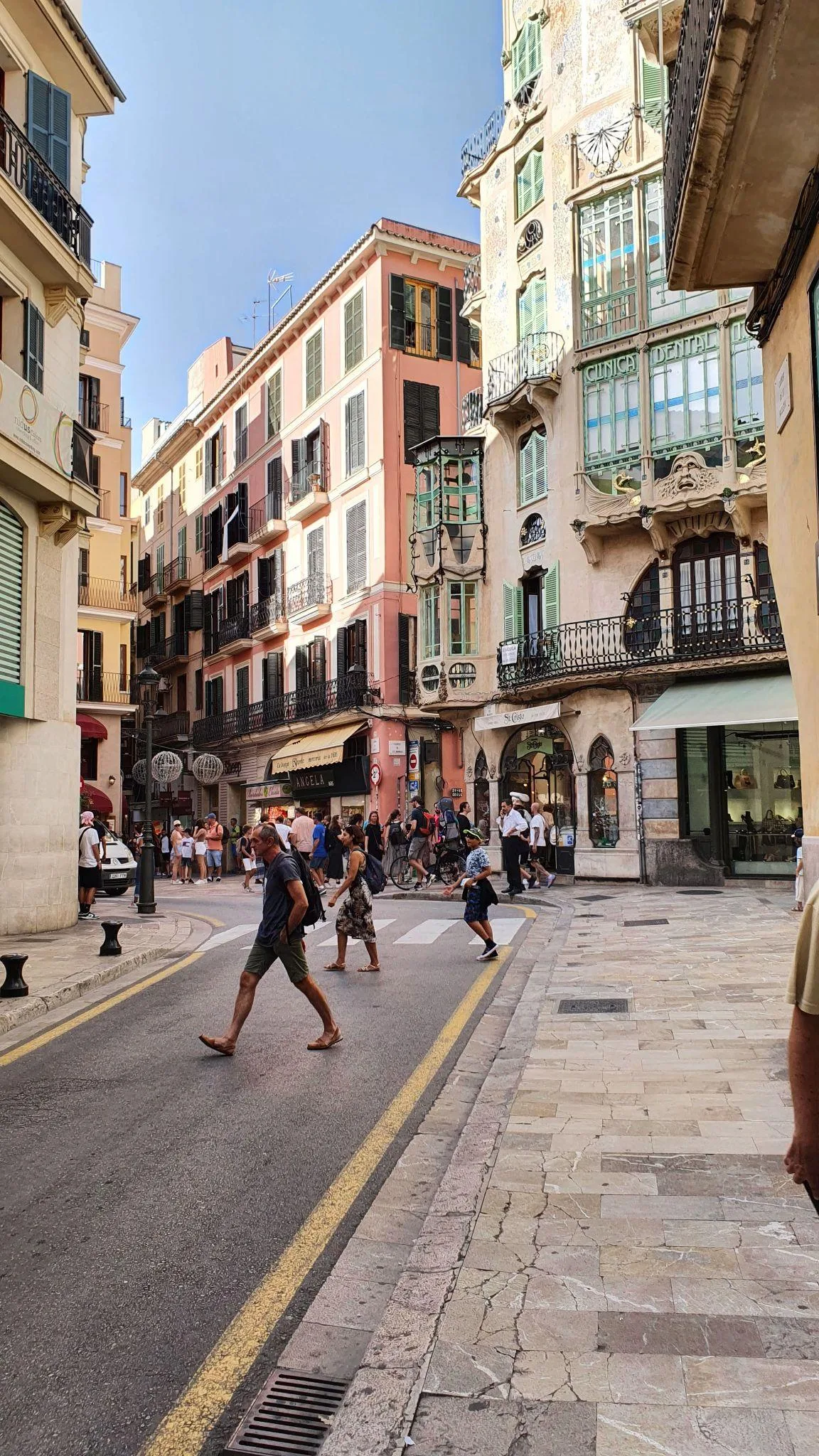
Palma de Mallorca was our first stop after arriving on the island. Palma is a buzzy city - it has a lot going on, with cute streets and historic courtyards tucked behind stone archways, but also high-end shop windows.
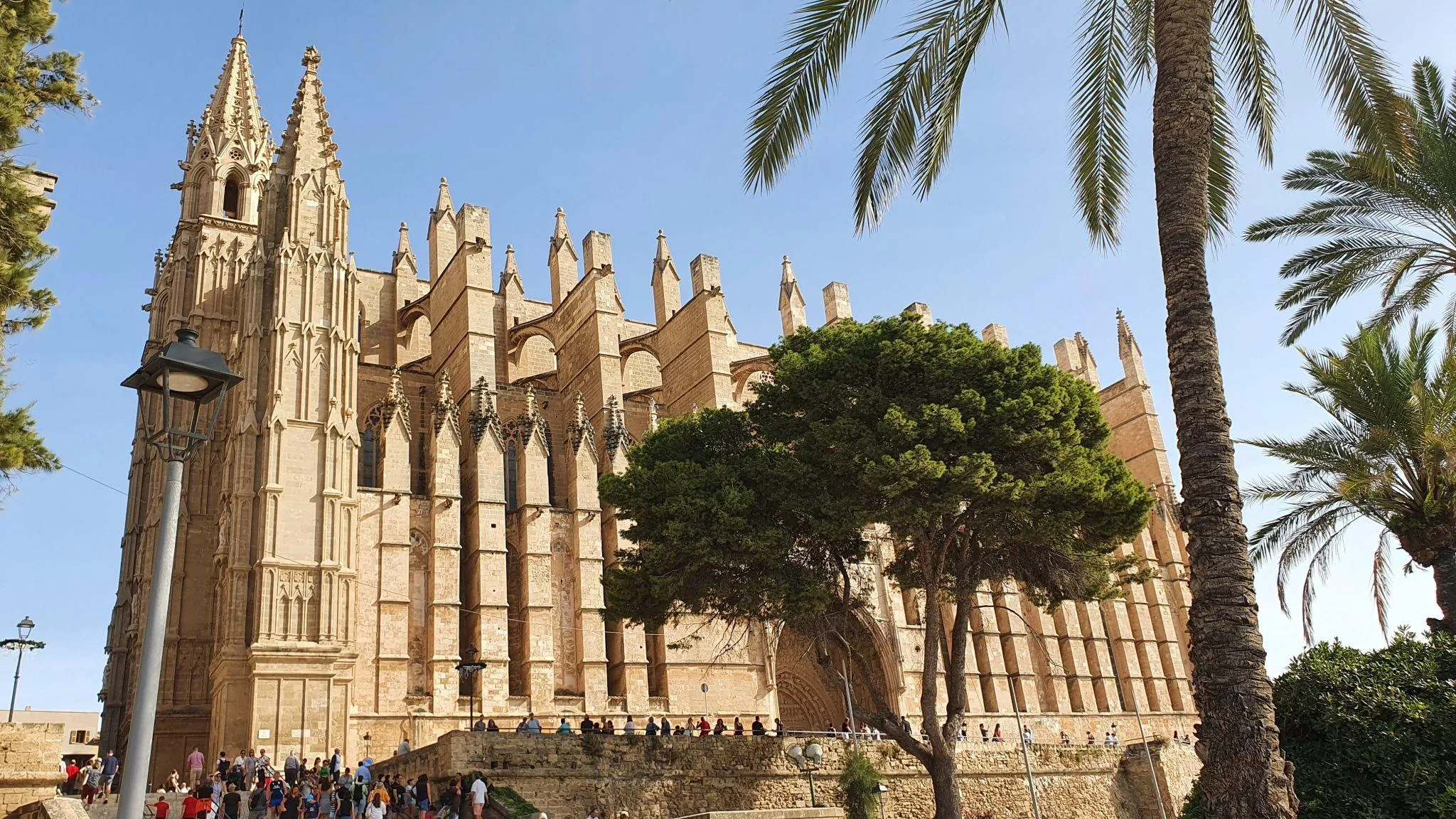
What I found the most intriguing was the cathedral (La Seu): it’s located a bit aside from the heart of the city, sitting grandly right on the edge of the old defensive walls overlooking the sea.
Time needed for Palma: a couple of hours was plenty for us. There were way too many people around, so we decided to keep it short, take in the atmosphere, and hit the road with the car.
If you have more time in Palma, other key highlights worth seeing include the circular Castell de Bellver with panoramic bay views, the Royal Palace of La Almudaina opposite the cathedral, the Gothic Llotja by the harbor, the Moorish Arab Baths, and a stroll down Passeig del Born into Santa Catalina.
The Tramuntana Valley: Sóller and Port de Sóller
Taking the Scenic Mountain Road (Ma-11A)
Distance from Palma: ~27 km (about 35-40 minutes drive).
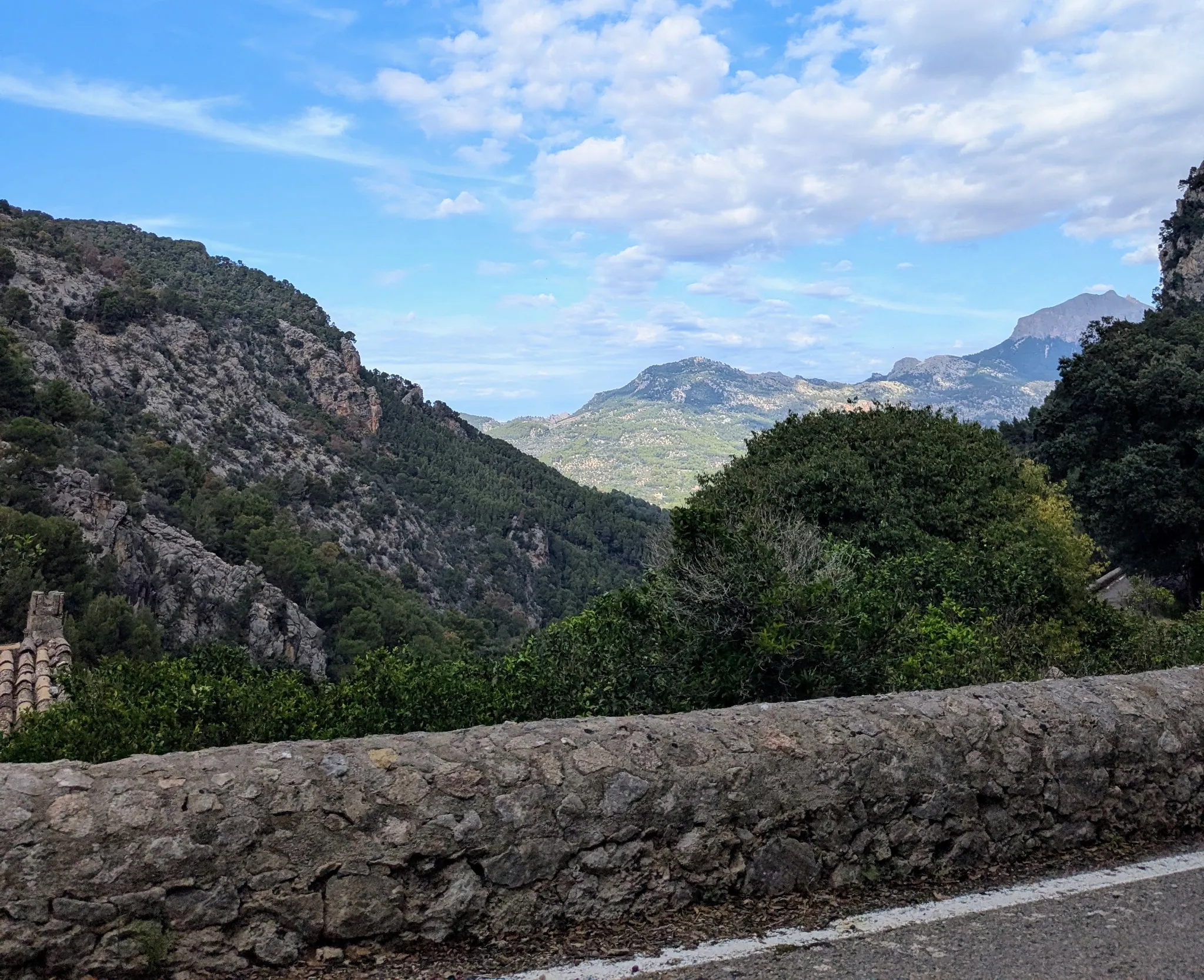
When approaching Sóller, we didn’t take the fastest road through the tunnel, but the scenic serpentine road over the mountain pass - the Ma-11A (via Coll de Sóller). The surrounding nature is beautiful, but the road has quite sharp turns, and there were not many viewpoints to stop at, so the ride is more of a “drive and see” experience as you wind down into the valley.
Exploring Sóller
Distance from Palma: ~27 km (about 35 minutes drive).
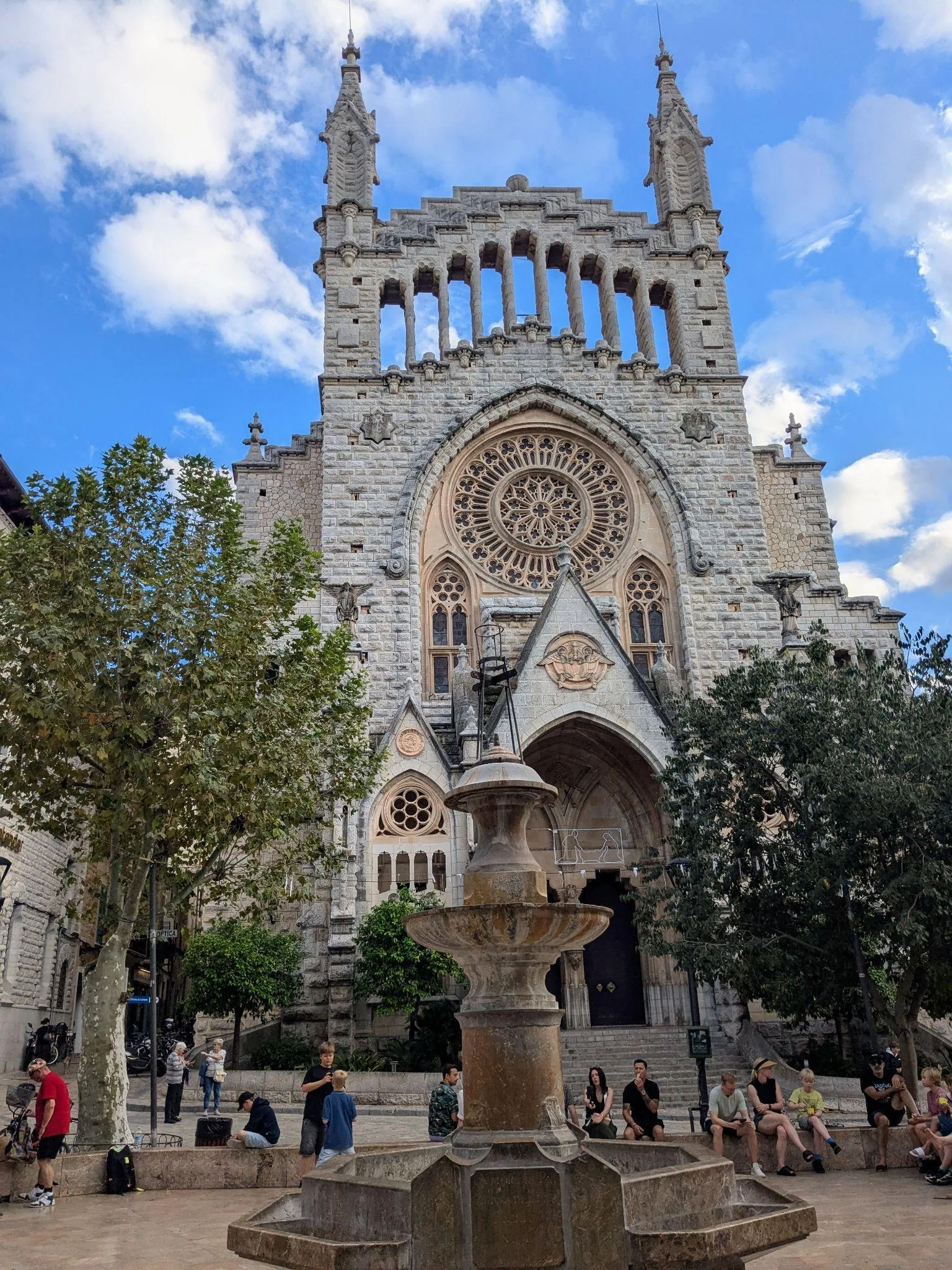
Sóller was undeniably cute, and very small - to see the old town you only need an hour or two. The church (Sant Bartomeu) really impressed me: a bit of Gaudí, a bit French. The whole town reminded me of Aix-en-Provence: the leafy plane trees (plataneros, London plane trees that line the squares with thick shade) and architecture, especially the light-colored houses and the beautiful light in general!
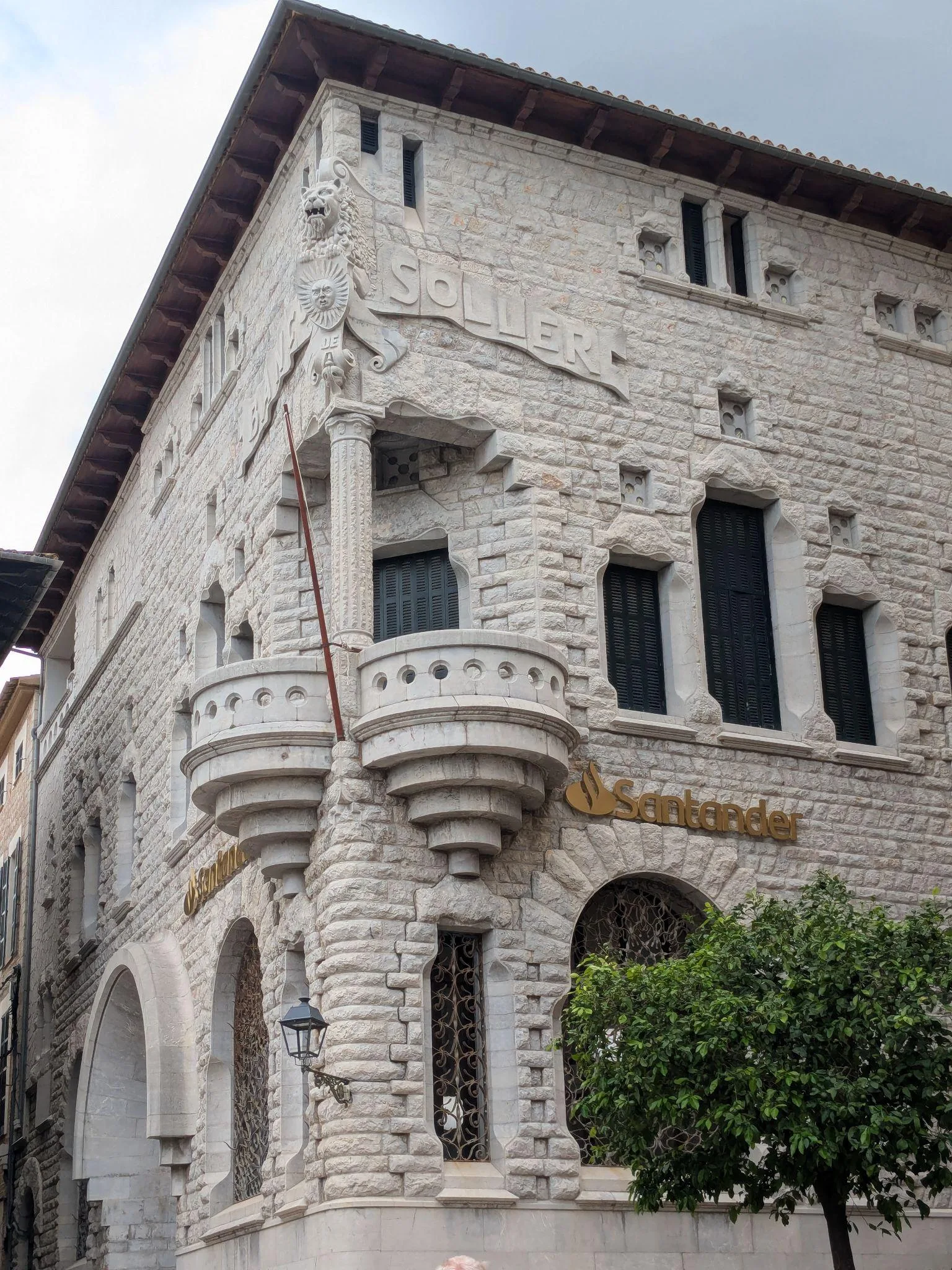
There is a fascinating historical reason for that French feel: cut off from Palma by the mountains in the 19th century, Sóller traded mainly by sea with France. After an 1860s orange blight, many locals migrated to southern France and returned wealthy, building the French-inspired Art Nouveau (Modernisme) mansions and bakeries still seen today.
The Picasso exhibition in the train station is a nice plus if you have time: it has some Picasso ceramic pieces and is completely free.
We were hesitant about the famous vintage Sóller tram, and in the end we didn’t take it. The €10 ticket for a 15-minute ride felt a bit pricey, and it was logistically tricky to plan the way back. We saw lots of people waiting to board the tram in the afternoon, so no, we weren’t up for it.
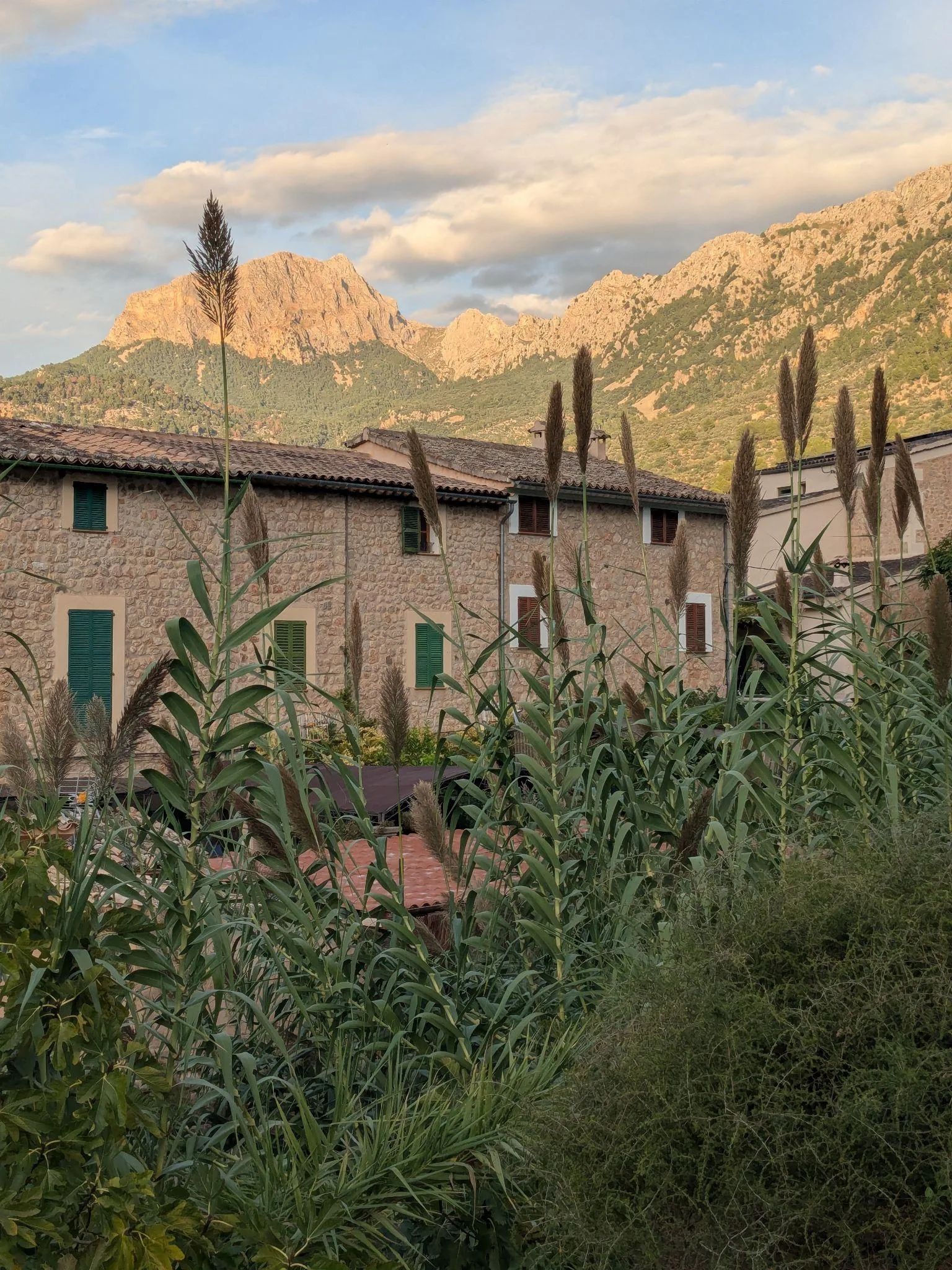
Walking around Sóller and getting closer to the mountain range (Sóller is nestled in a valley) was a lovely way to spend time. We also randomly discovered the Museo de la Sobrasada, where I bought some specialty embutidos for home. Sobrasada actually originates from Mallorca, and the museum is free - if you like cured meat, why not, it’s right in the centre.
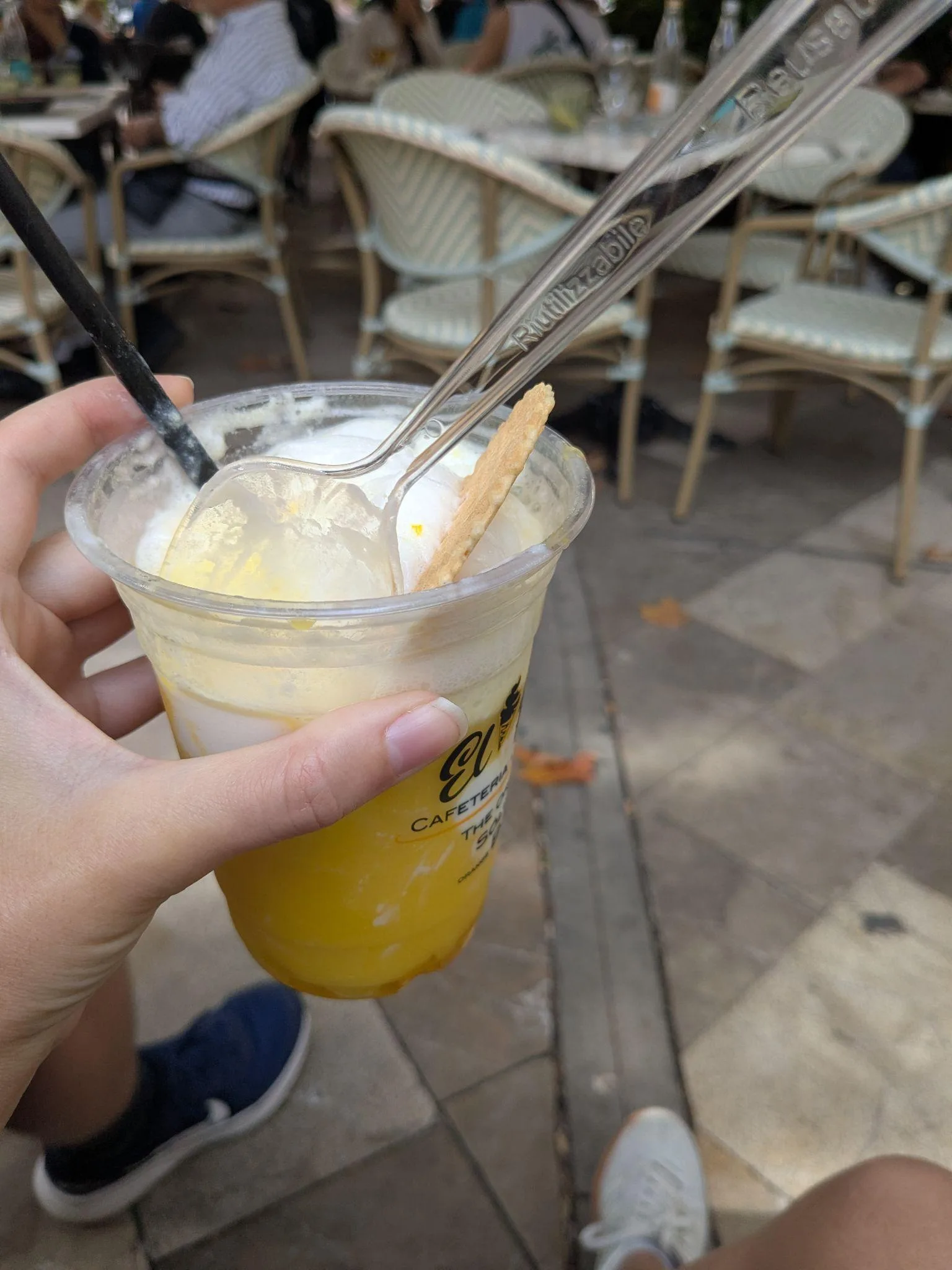
While in Sóller, we also tried the famous Bomba de Sóller. There were a few cafeteria-ice cream places in the main square to choose from; we tried ours from El Petit Cafeteria & Heladeria. Actually, it was much better than we expected: the citrus drink with cream and ice cream - the combo was really tasty! It is pricey though, around €10, but for this one I would say it’s worth trying, and normally it comes in a big size so sharing is definitely an option.
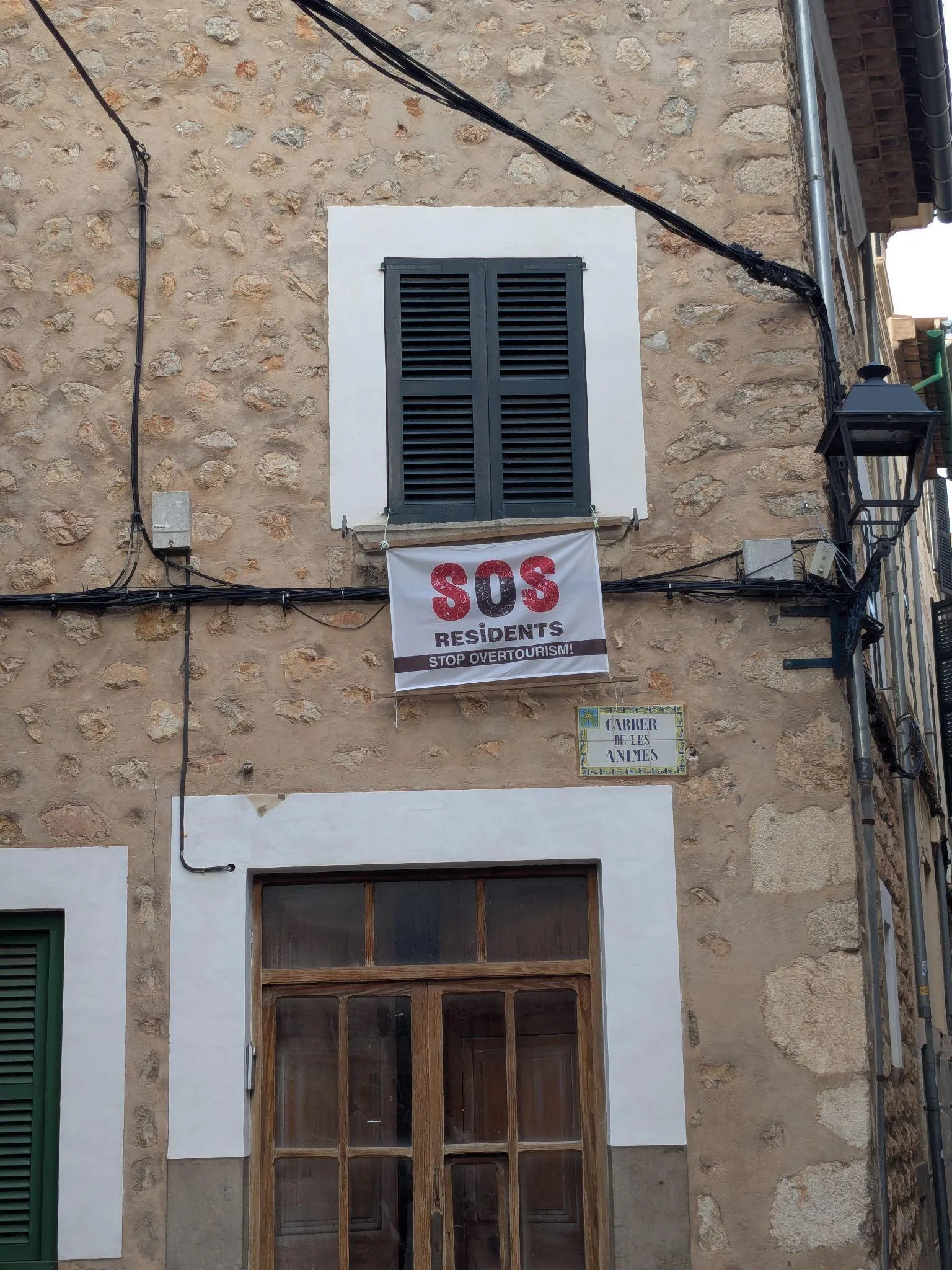
We also noticed signs hanging from houses saying “SOS Residents”. Sóller gets really crowded and we definitely felt that: it relies on tourism, but the centre is essentially taken over by tourists everywhere. I also thought that for many visitors it’s just a day trip, taking the train from Palma and leaving a few hours after, so they come and go.
A word about parking: we visited with an electric car, and turns out that with that type of car you are king in Mallorca! Otherwise, you normally can’t enter the old town. But getting to the parking was a real challenge: you need to strictly respect the white (free for all), green (residents), and blue (paid meter) lines, and parking is very limited; we were lucky to find white line parking a bit outside from the old town on a bigger street. We stayed at Casa Margarita, a very local place; it was good value for money, simple, but had everything necessary.
Port de Sóller
Distance from Palma: ~31 km (about 40 minutes drive, or 4 km from Sóller).
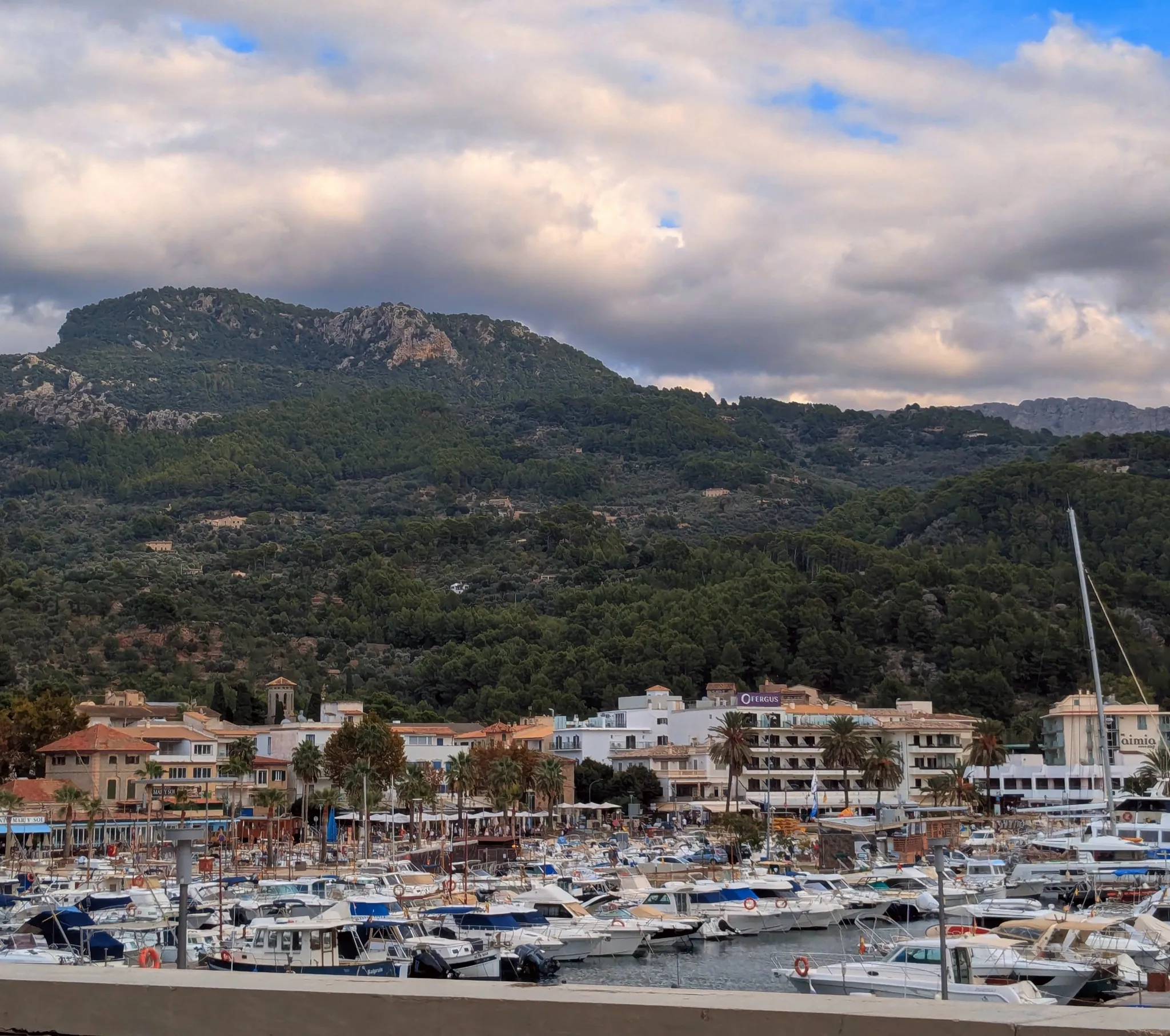
After spending time in Sóller, we drove down to the coast to visit Port de Sóller (around 10 minutes by car). It’s a port town and very touristy; it might be worth a stroll along the waterfront, but I felt it didn’t have much to offer beyond that. It’s also where the historic tram ends up.
Our Favorite Walk: Sóller to Biniaraix and Fornalutx
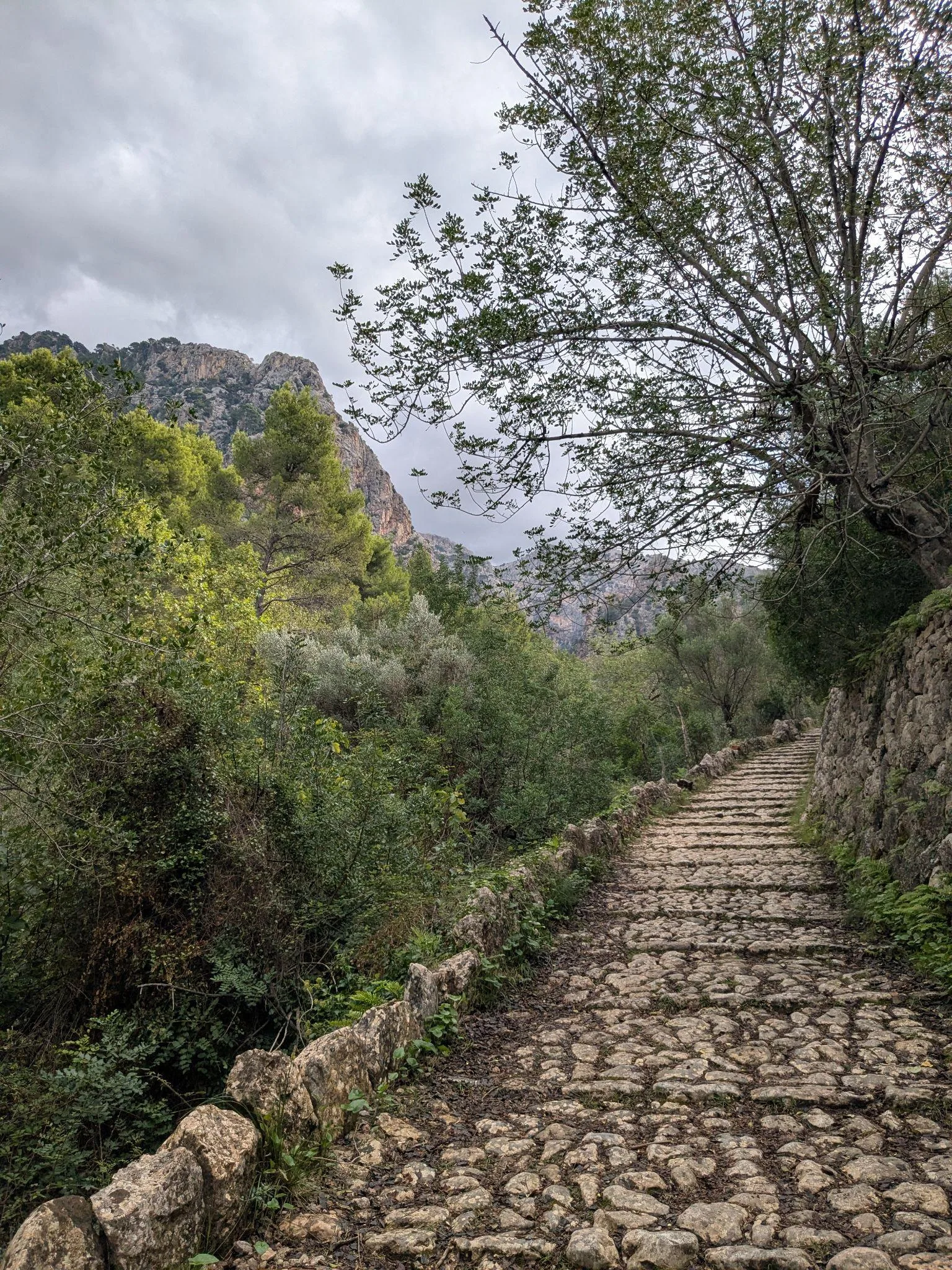
The trail is 7.6 km and starts around Camí de s’Ermita in Sóller. We used AllTrails to follow the way to Fornalutx, and it was super beautiful: it combined the stone walk to Fornalutx and the way back via Biniaraix. The signs along the way were pretty clear, so it’s hard to get lost.
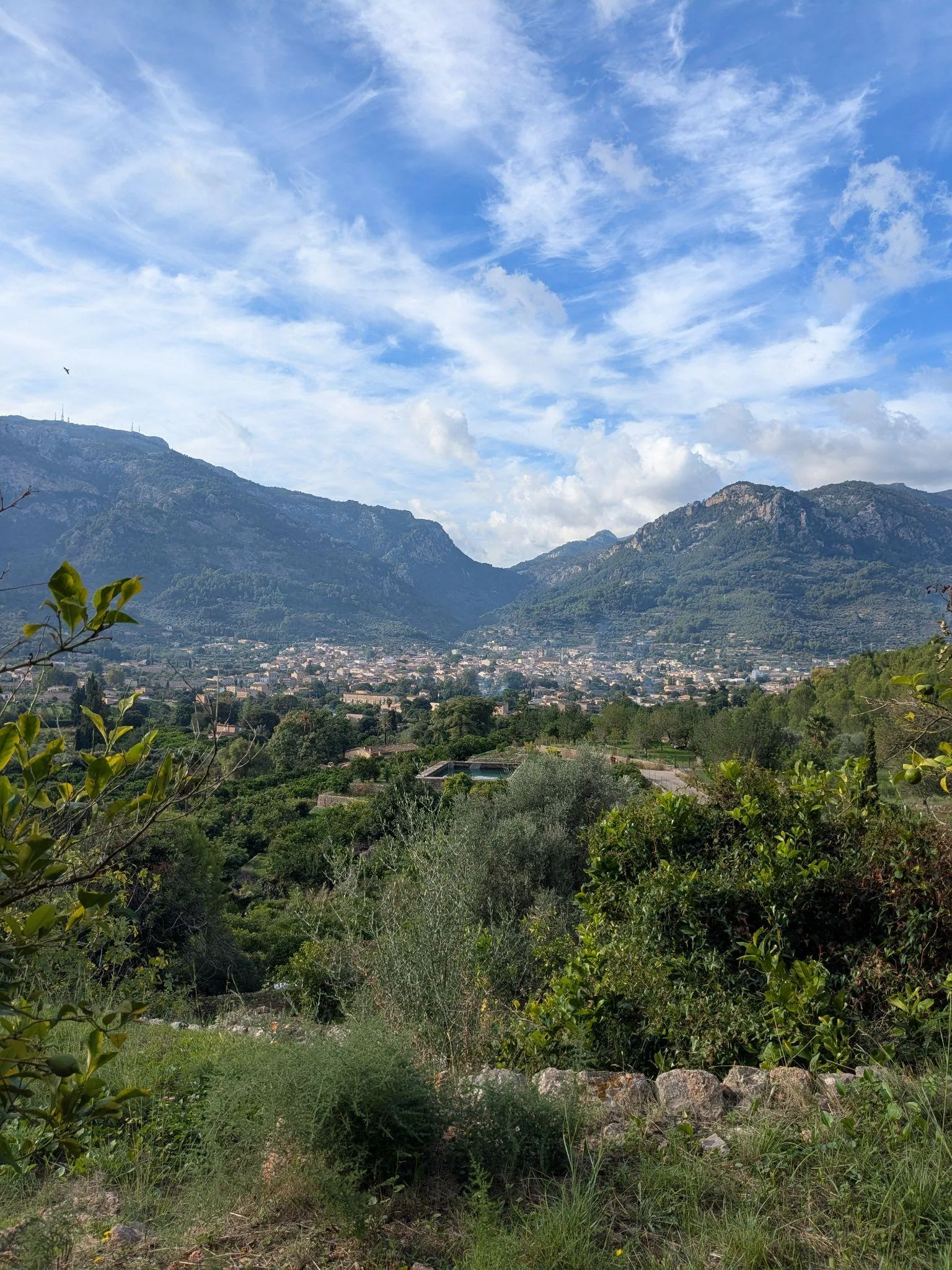
Orange and lemon trees were everywhere along our way, with green hills and stone villages in sight. It’s a very recommended path because of the great balance between nature and villages. Also, there was almost no steepness - only a gentle climb on the Sóller side, but nothing hard. The whole walk can take around 3 hours at a normal pace; we took a bit more because we stopped for a while in Fornalutx.
Walking along the camino de piedras (traditional stone paths) with the valley and nature all around, and approaching Fornalutx village, was absolutely beautiful.
What makes these stone paths special is their craftsmanship: connecting the villages for centuries, they were built completely without cement or mortar by fitting rocks together by hand. Originally made for mules carrying olive harvests down the mountains, this traditional dry-stone technique is now protected by UNESCO.
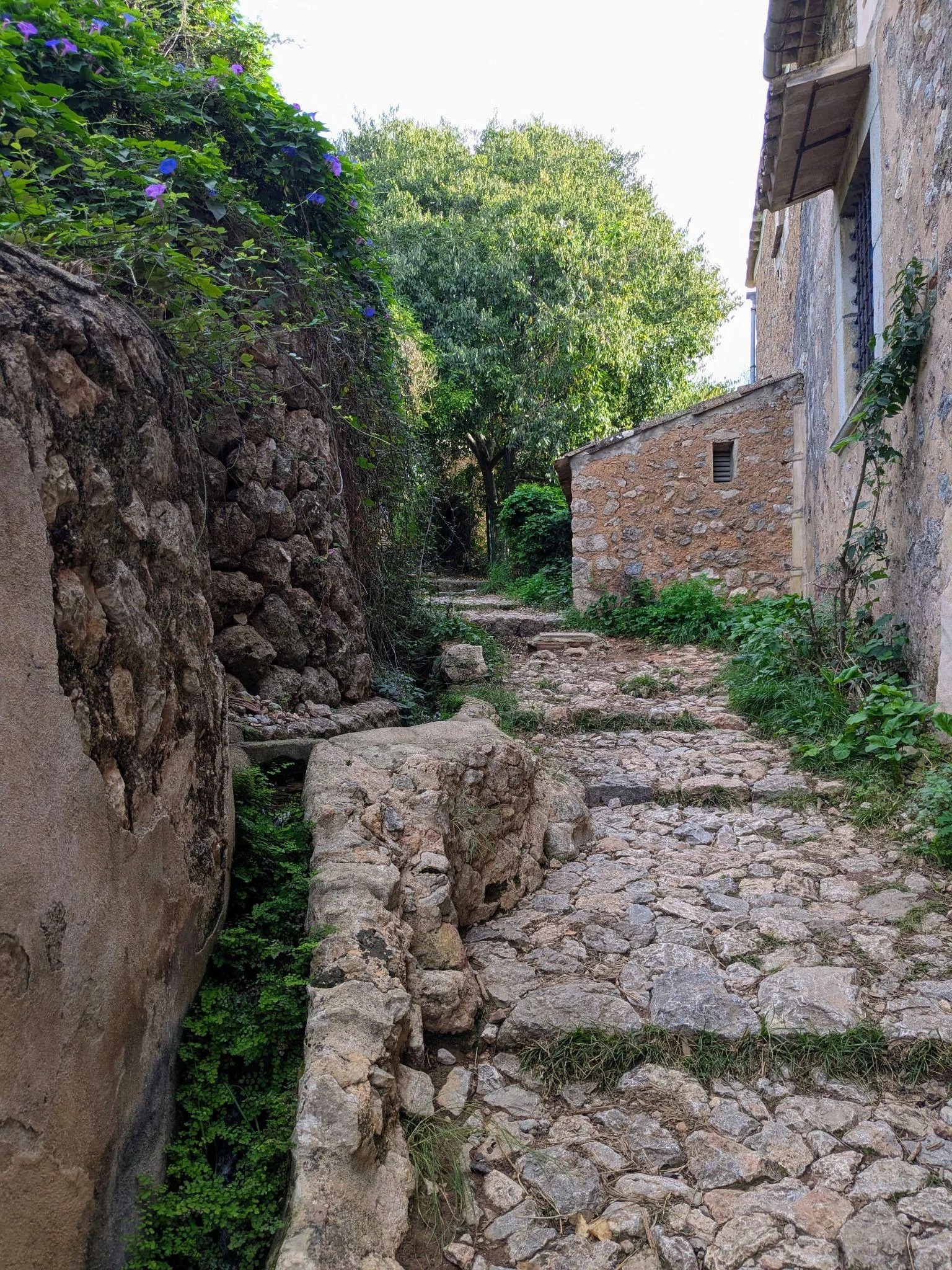
Fornalutx
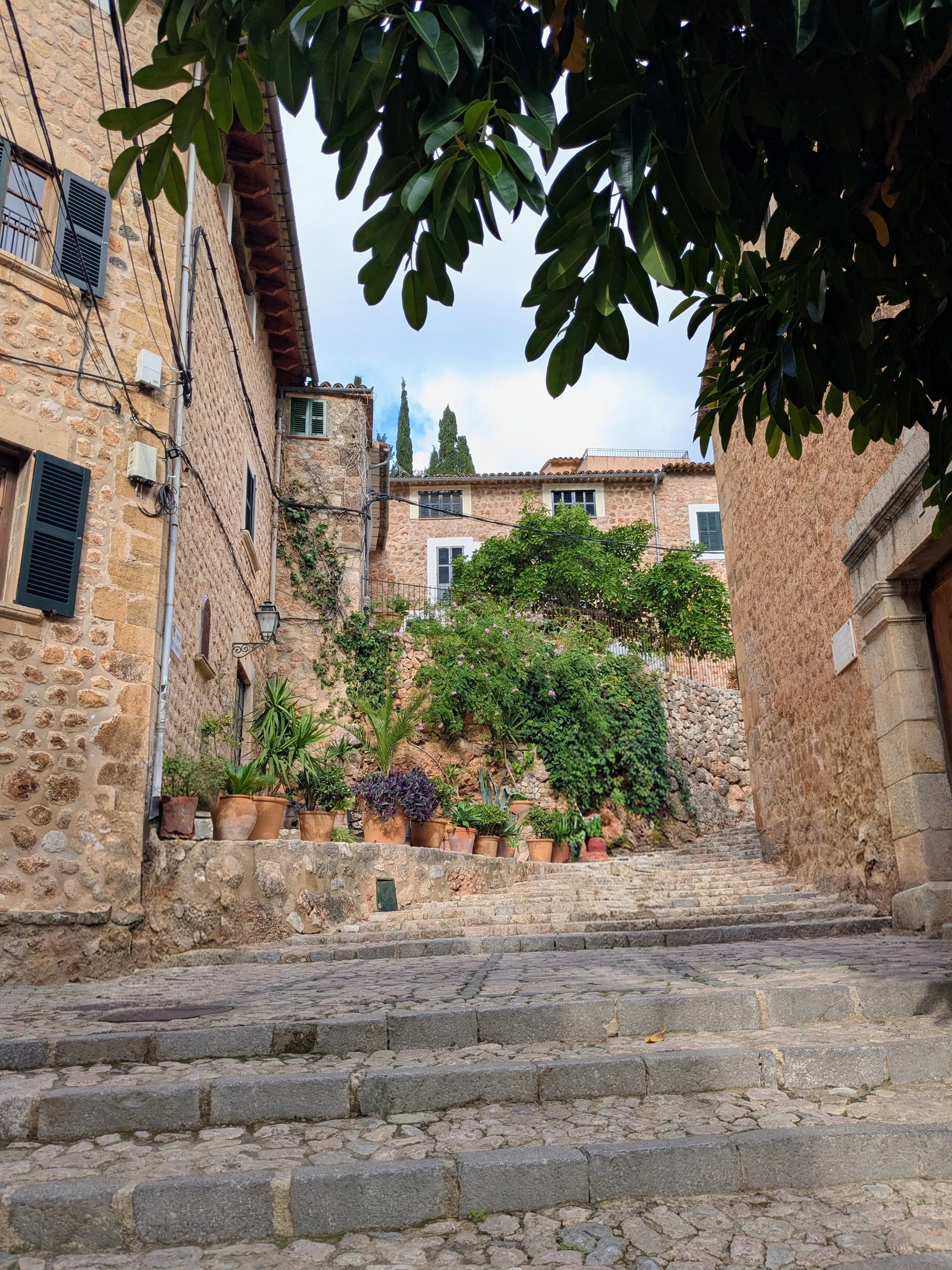
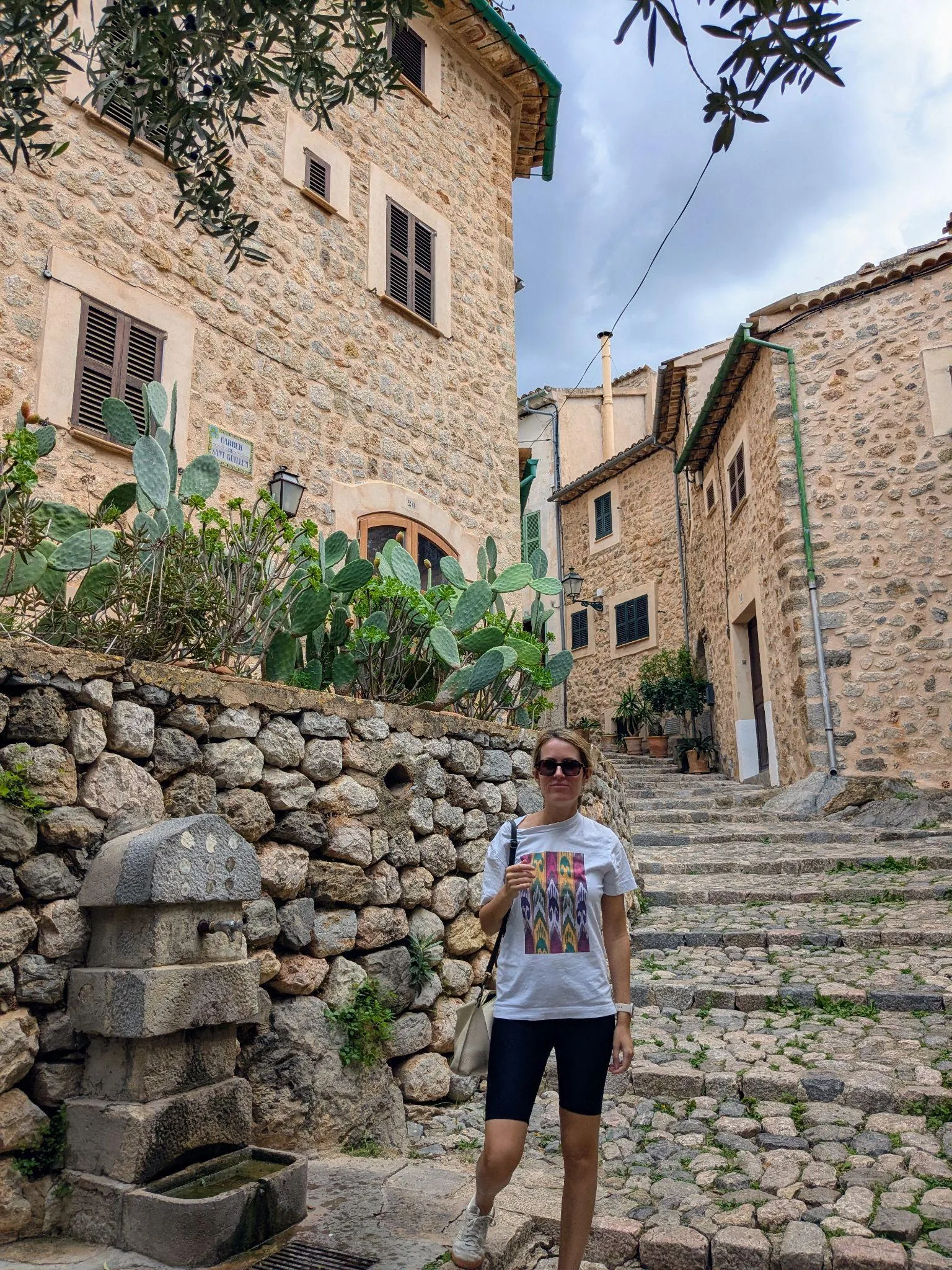
Continuing our walk along the stone paths through the valley, we reached Fornalutx. It is considered one of the prettiest villages in Spain (much like Albarracín on the mainland), and I admired it a lot: the stone houses, narrow alleys, and flower pots along the streets. It also felt a bit less touristy than Sóller, probably because the tram doesn’t go there.
A curious architectural detail to look out for: under the roof eaves of the traditional stone houses in Fornalutx, you can spot painted roof tiles known as teules pintades. Dating from the 16th to 18th centuries, they were hand-painted with red mineral pigment depicting animals, religious motifs, and geometric symbols to protect the home from lightning, fires, and bad spirits.
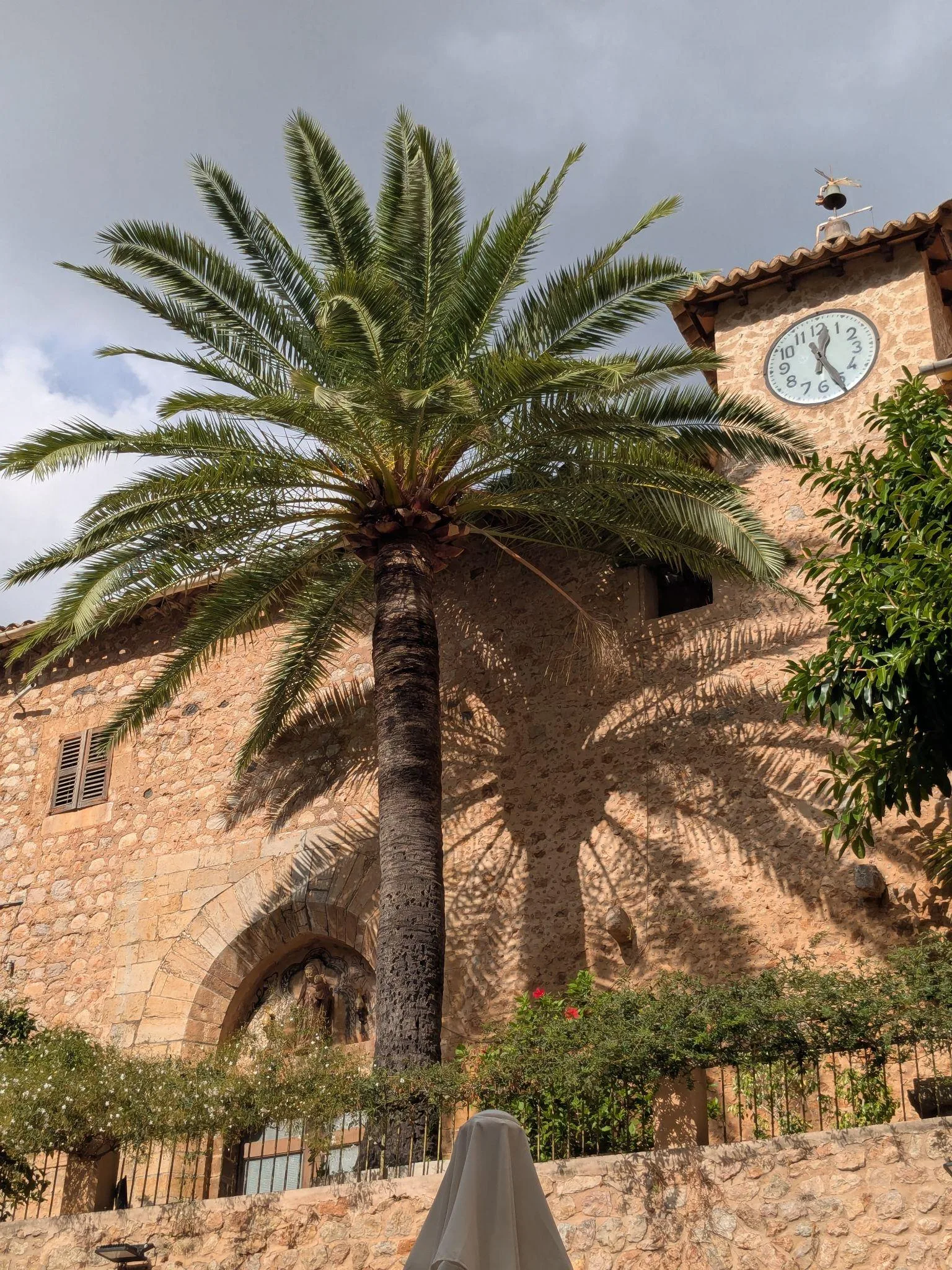
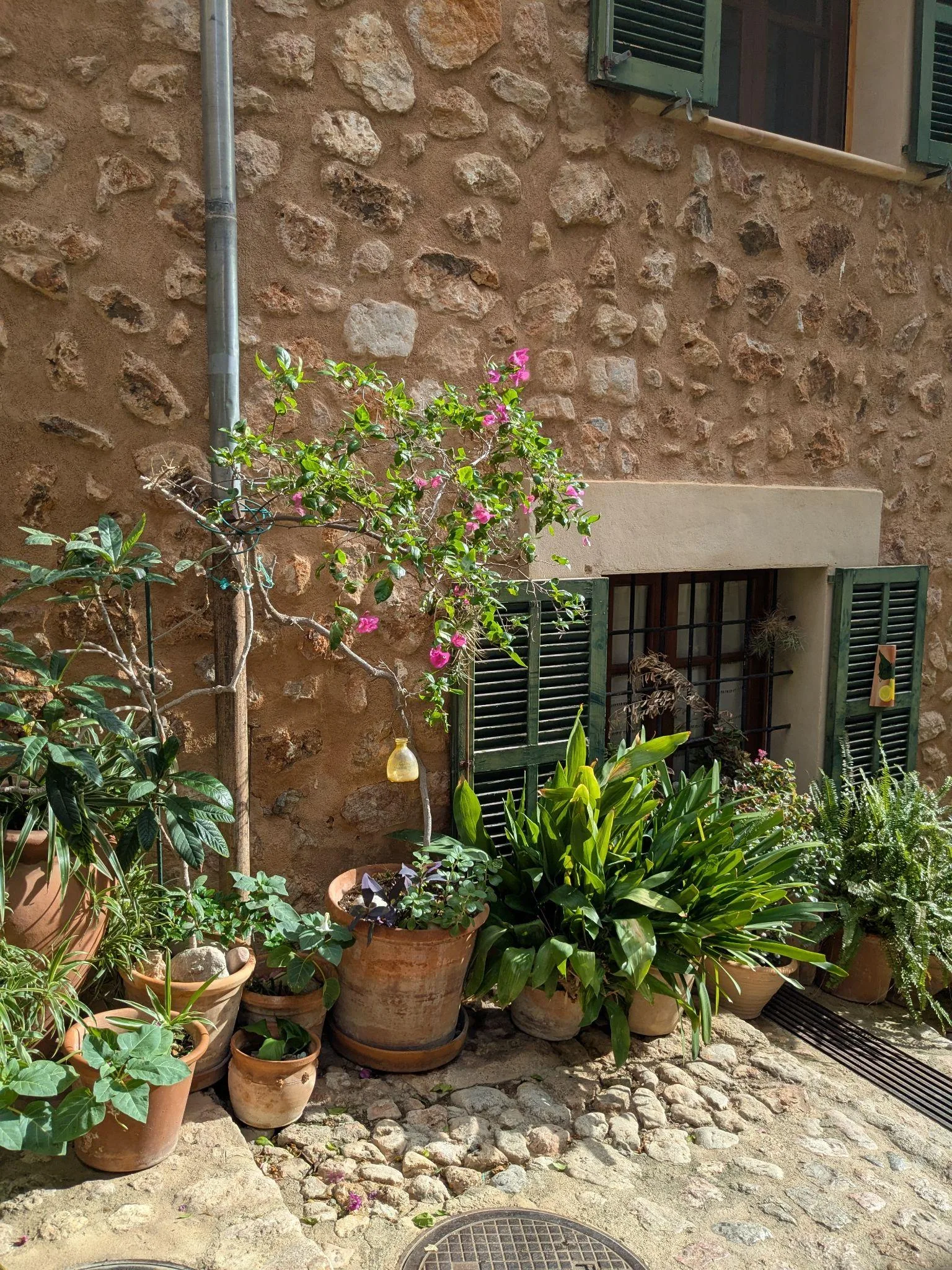
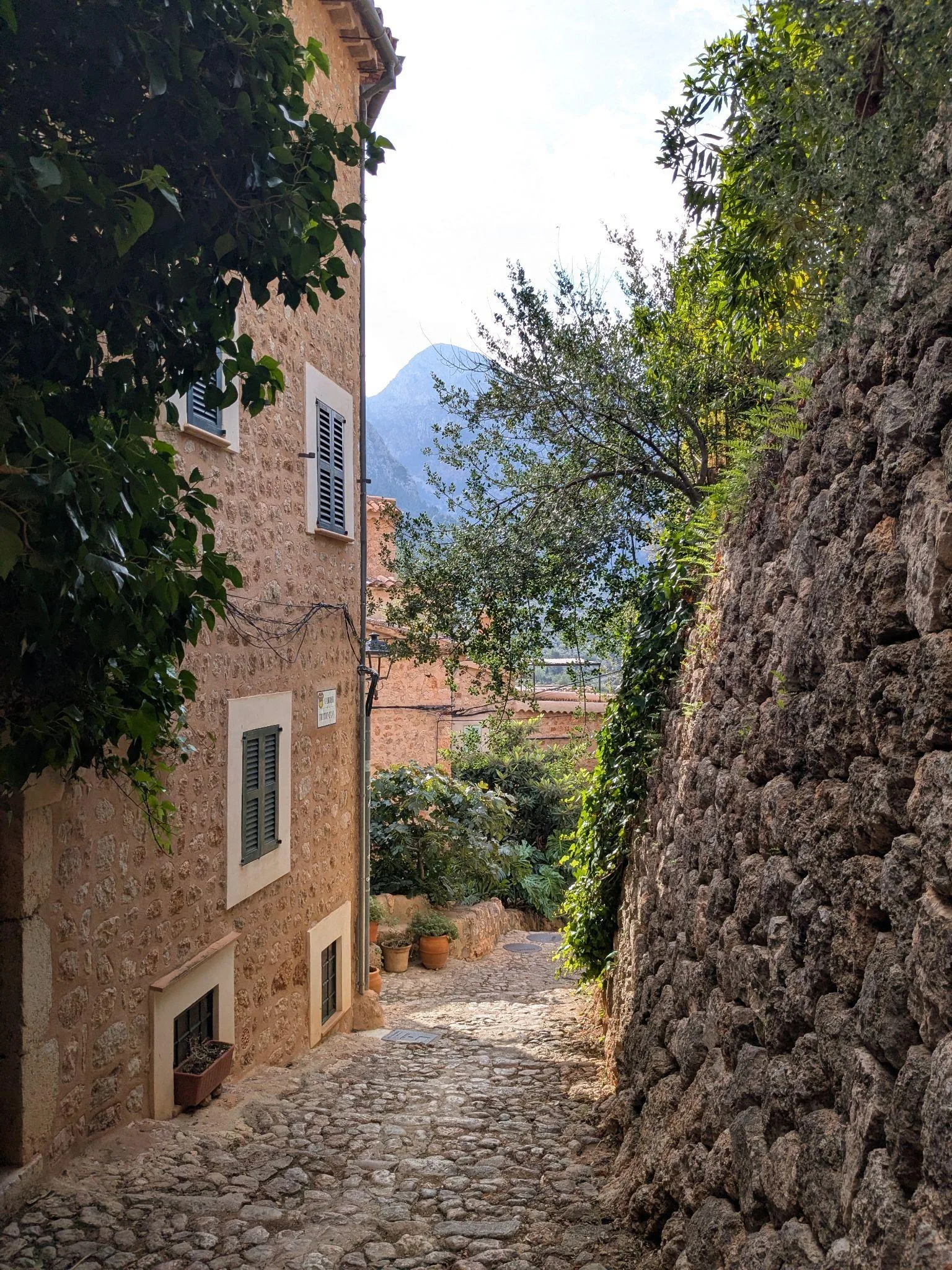
Biniaraix
A bit further along our loop trail, Biniaraix was another village we crossed, and it had a very similar town vibe. Up there we wanted to see a waterfall (near Biniaraix there are different hiking trails including waterfalls worth exploring), but it was completely dry, so it is definitely worth checking the weather and seasonality before heading up to waterfalls.
The hamlet is also famously the gateway to the Barranc de Biniaraix, a dramatic limestone canyon containing over 1,900 stone steps built by hand over centuries. The trailhead starts right at the edge of Biniaraix (just 500 metres from the village, with the gorge path winding about 4.5 km up into the mountains) - unfortunately we didn’t have time to go there, but I definitely would have done it! Mountain springs from the gorge still feed the village’s historic communal wash basins (Ses Rentadores).
The Rugged North: Cap de Formentor, Cala Figuera & Viewpoints
Distance from Palma: ~75 km (about 1 hour 15-20 minutes drive).
All of these spots are connected by one single road, so they are all located along the same serpentine road winding across the peninsula.
Cap de Formentor
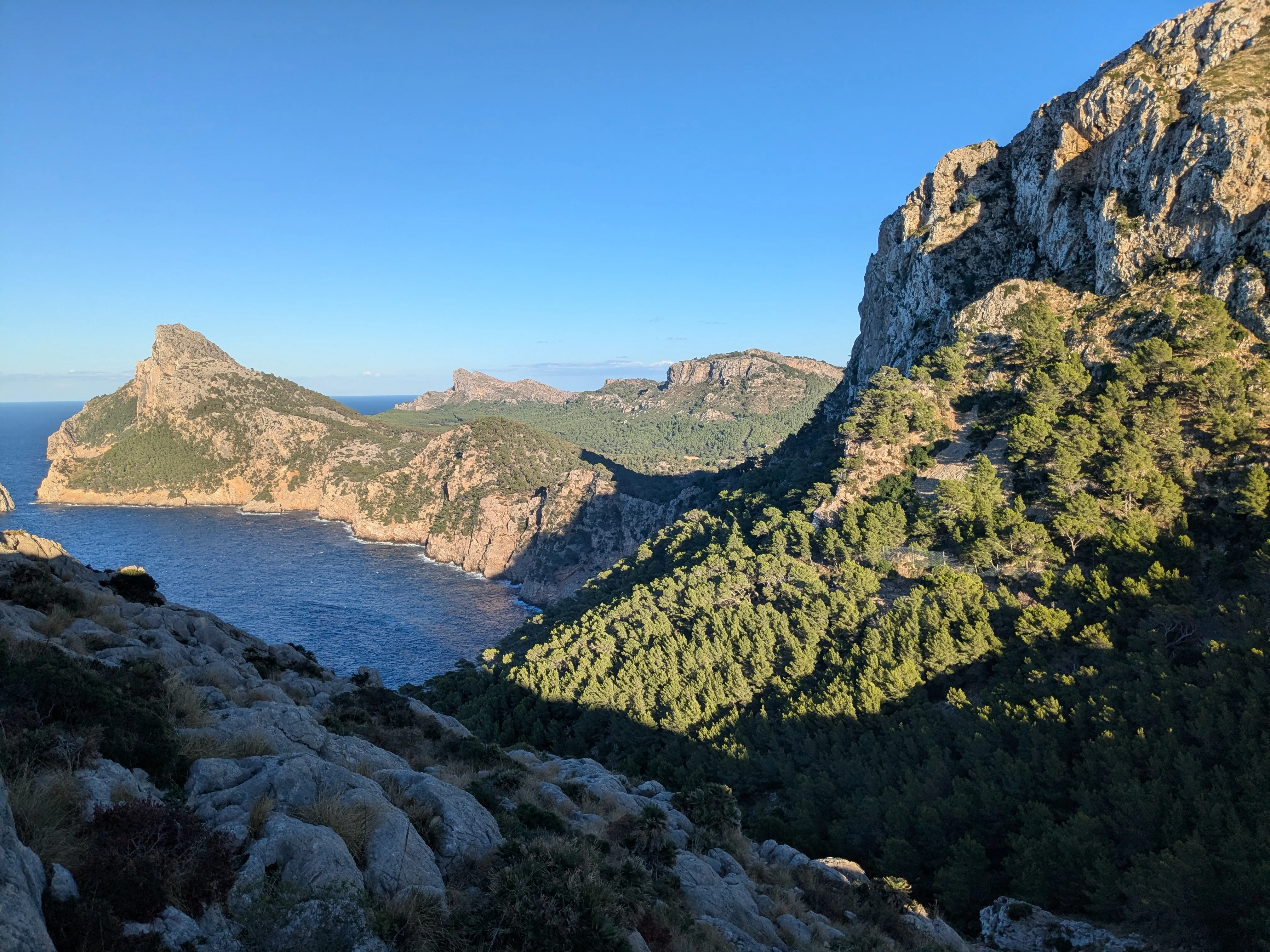
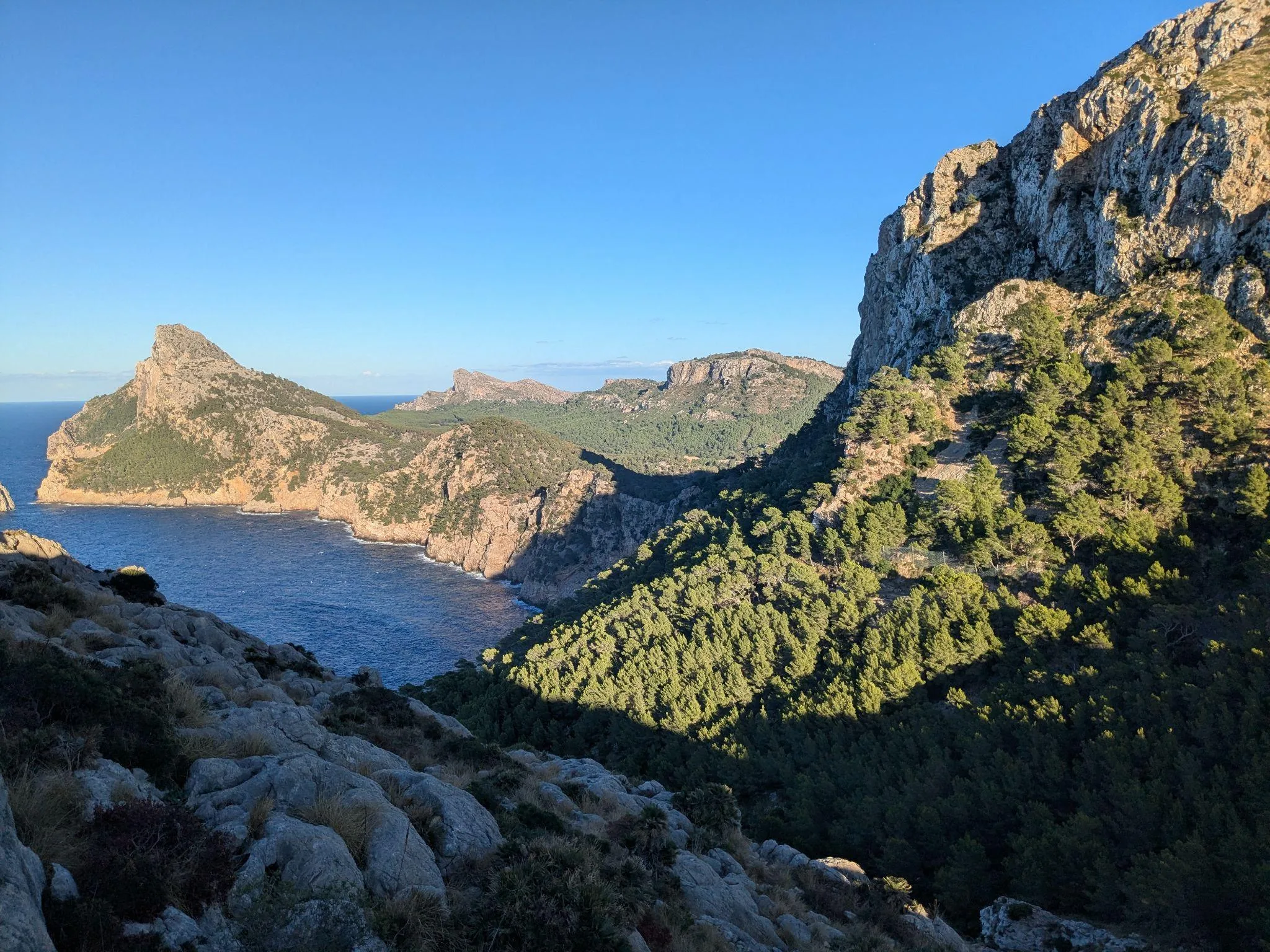
Cap de Formentor was a “going to the very edge” trip. Driving the winding serpentine roads to get there wasn’t the easiest task; as there is only this one road connecting all these places along the peninsula, everyone shares the same route. The views were gorgeous, but be aware that you might need to wait in a car line to get to the Cap parking; we waited in the car for a good half hour. Expect crowds, and we noticed lots of cyclists in the area, so it’s worth exploring for anyone who likes road biking. The roads are very narrow and winding, so you have to drive carefully.
Check access before driving: We could reach the lighthouse by car on our late-October visit, but private-car access is restricted during part of the year. In 2026, restrictions ran from 15 May to 18 October, between 10:00 and 22:00; the TIB 334 bus served the lighthouse during that period. Dates and hours can change, so check the official Formentor access rules for your travel date.
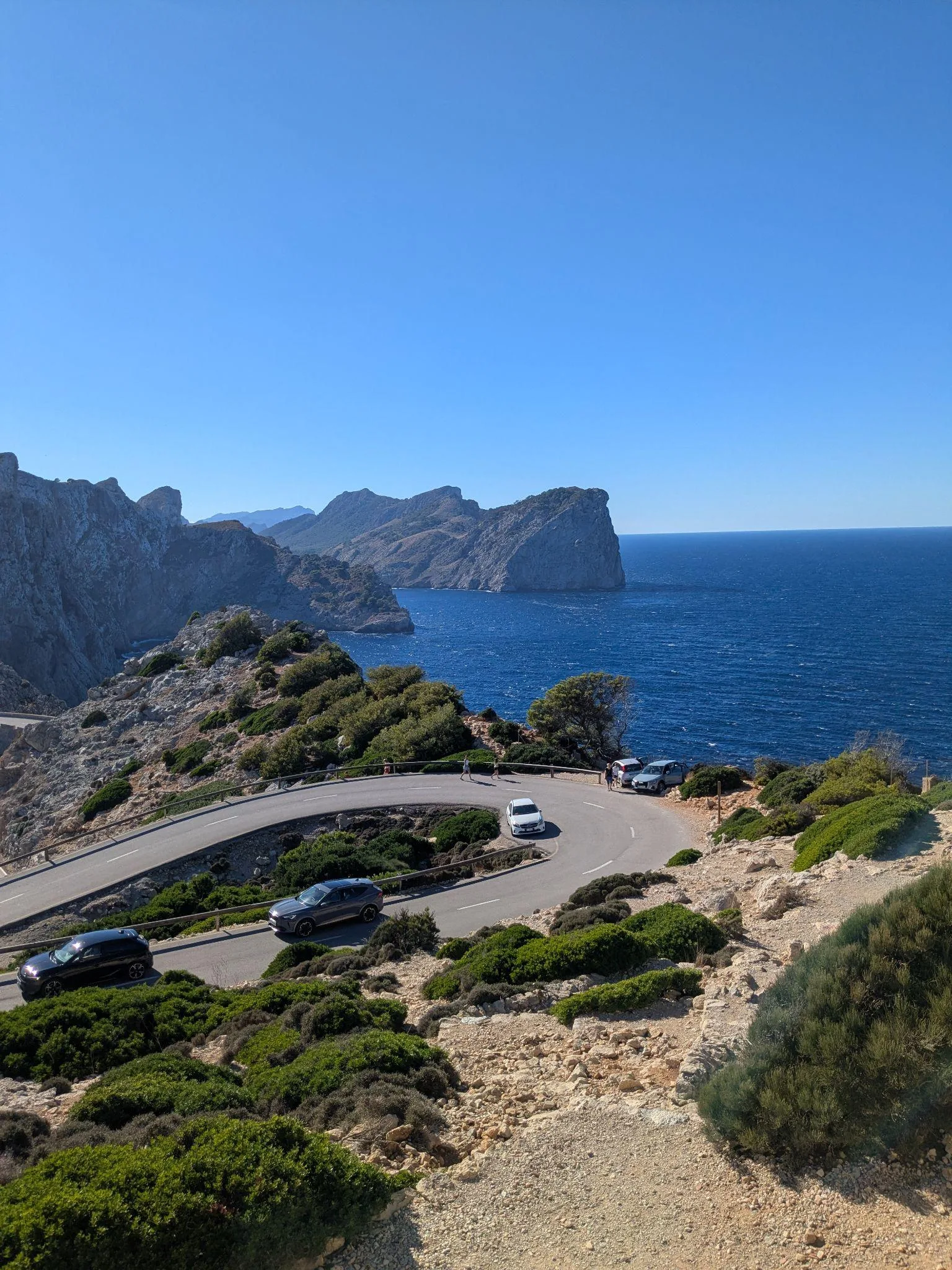
Locals historically call this rugged cape the “Meeting Point of the Winds”, where cliffs plunge 300 metres into the sea. Its 1863 lighthouse was built with stones hauled up goat trails by pack mules before any road existed, and on clear days you can even see Menorca across the water.
Cala Figuera
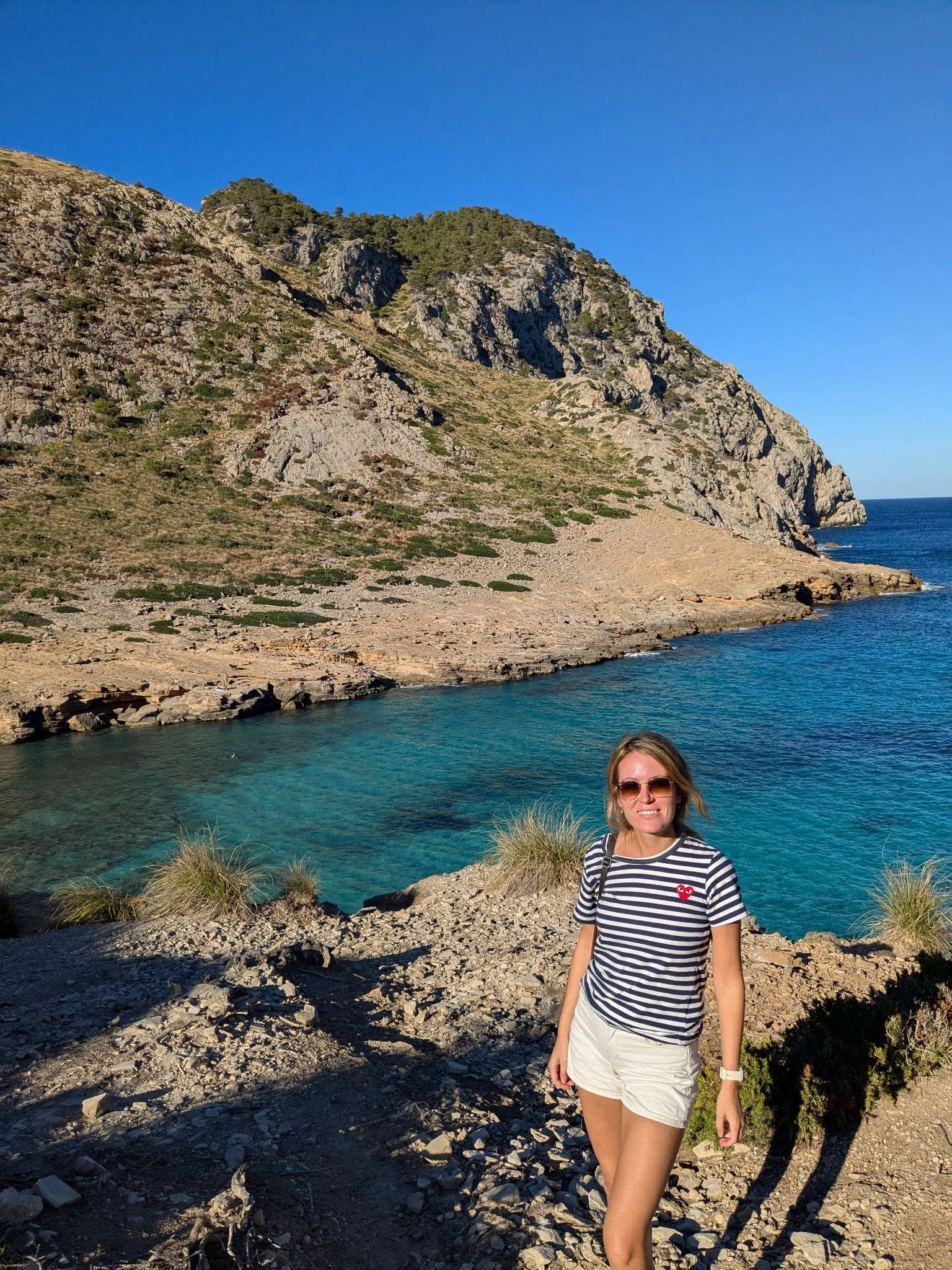
On the drive back from the Cap along the peninsula, we stopped at Cala Figuera: very beautiful and wild since there’s no direct car access, and you have to walk about 10 minutes down.
Mirador des Colomer
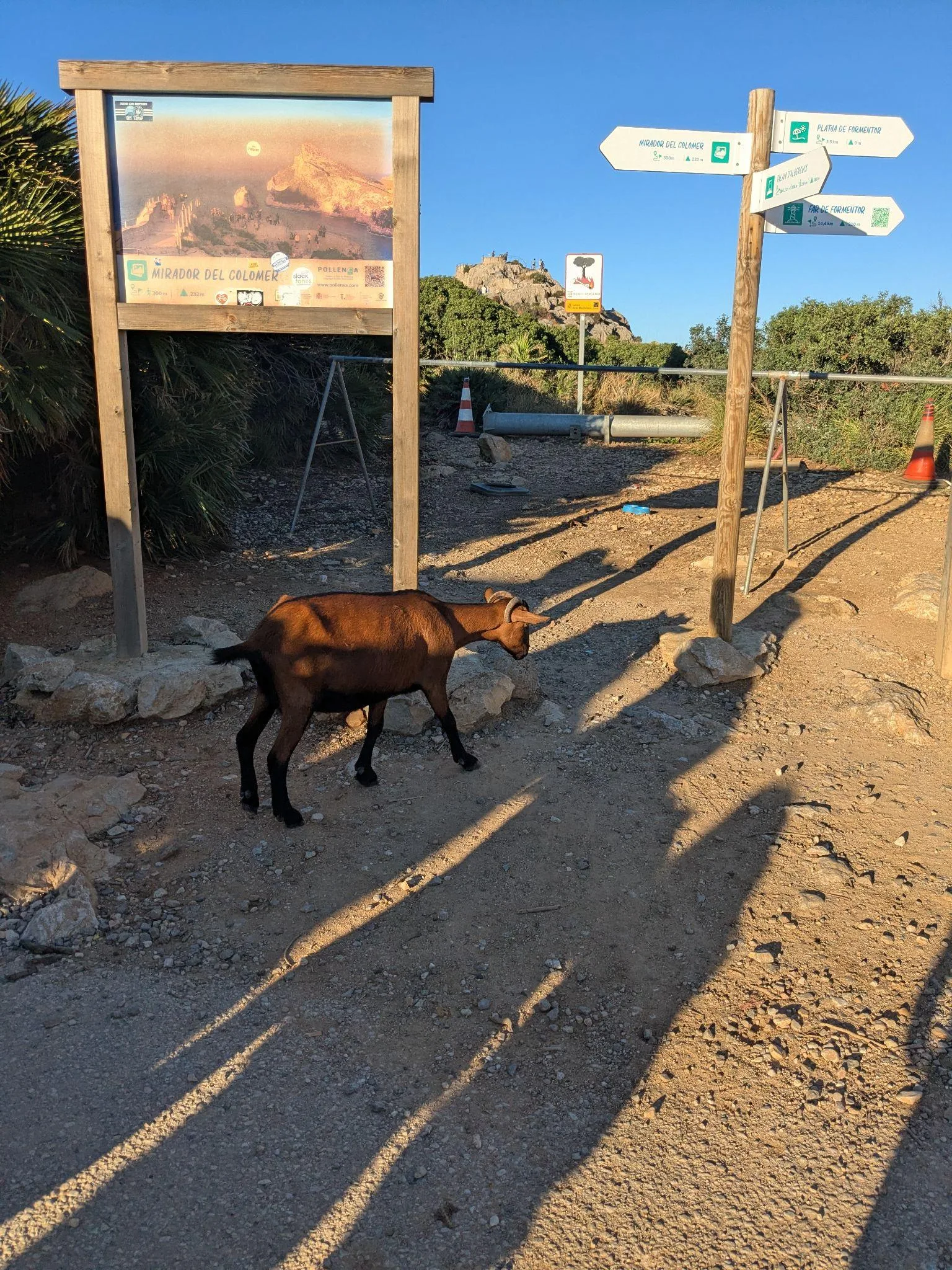
Along the winding road on the Formentor peninsula, Mirador des Colomer is a viewpoint well worth stopping at; by walking around the paths a bit, you get views not only of the sea but also of the dramatic mountain cliffs. I think I actually preferred this viewpoint over the Cap itself. There is a parking lot, but like everywhere in that area, you might need to wait for a spot. The wild brown goats were another thing you can’t miss - they were everywhere! In the whole area we noticed a lot of goats and they seemed to be pretty used to people.
Formentor Beach
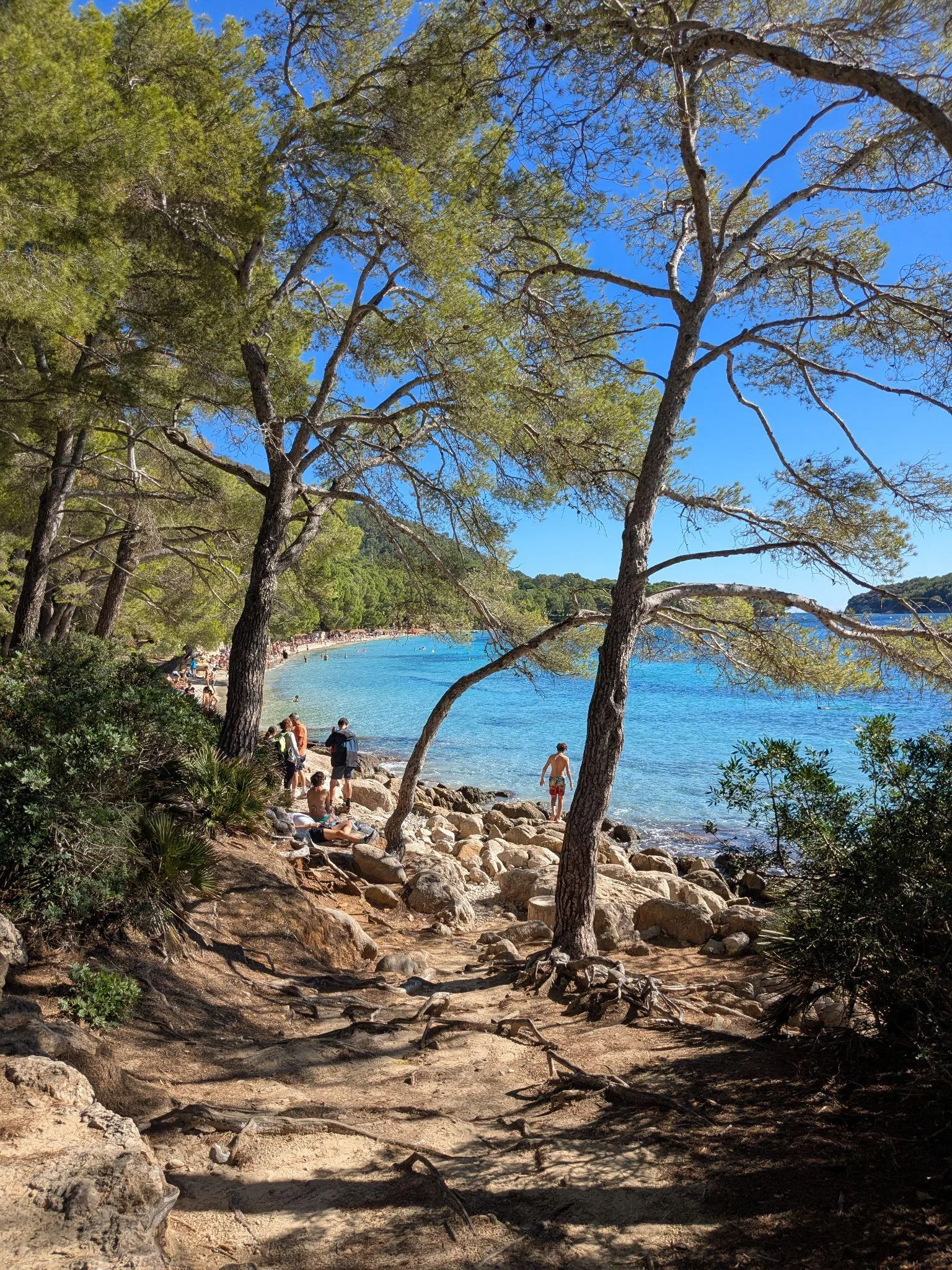
Further along that same road, we stopped at Formentor Beach: a well-known beach where we stopped to swim; it’s worth a stop to quickly refresh in the water. The water wasn’t bad, but the sandy strip felt too narrow, and with all the tourists packed in, it felt like sardines. There are several parkings next to it - a public one for free and another paid parking.
The Northeast Coast: Cala Ratjada, Cala Agulla and Artà
Cala Ratjada & Cala Agulla
Distance from Palma: ~80 km (about 1 hour 10 minutes drive).
Moving on to the northeast coast, we stayed in Cala Ratjada for the second time already. What I like about it is the beautiful seaside walk along the coast, with dramatic rocky landscapes.
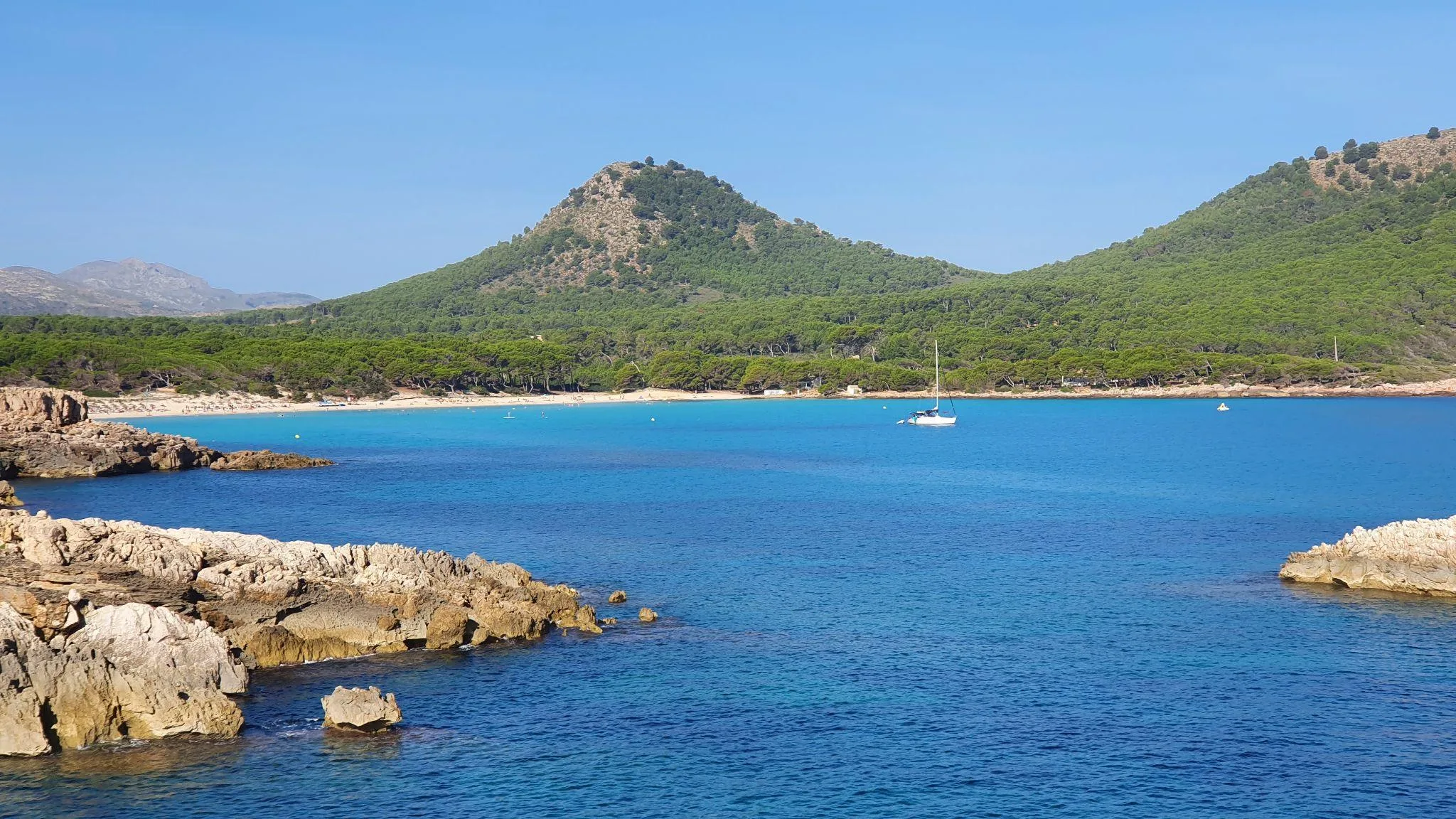
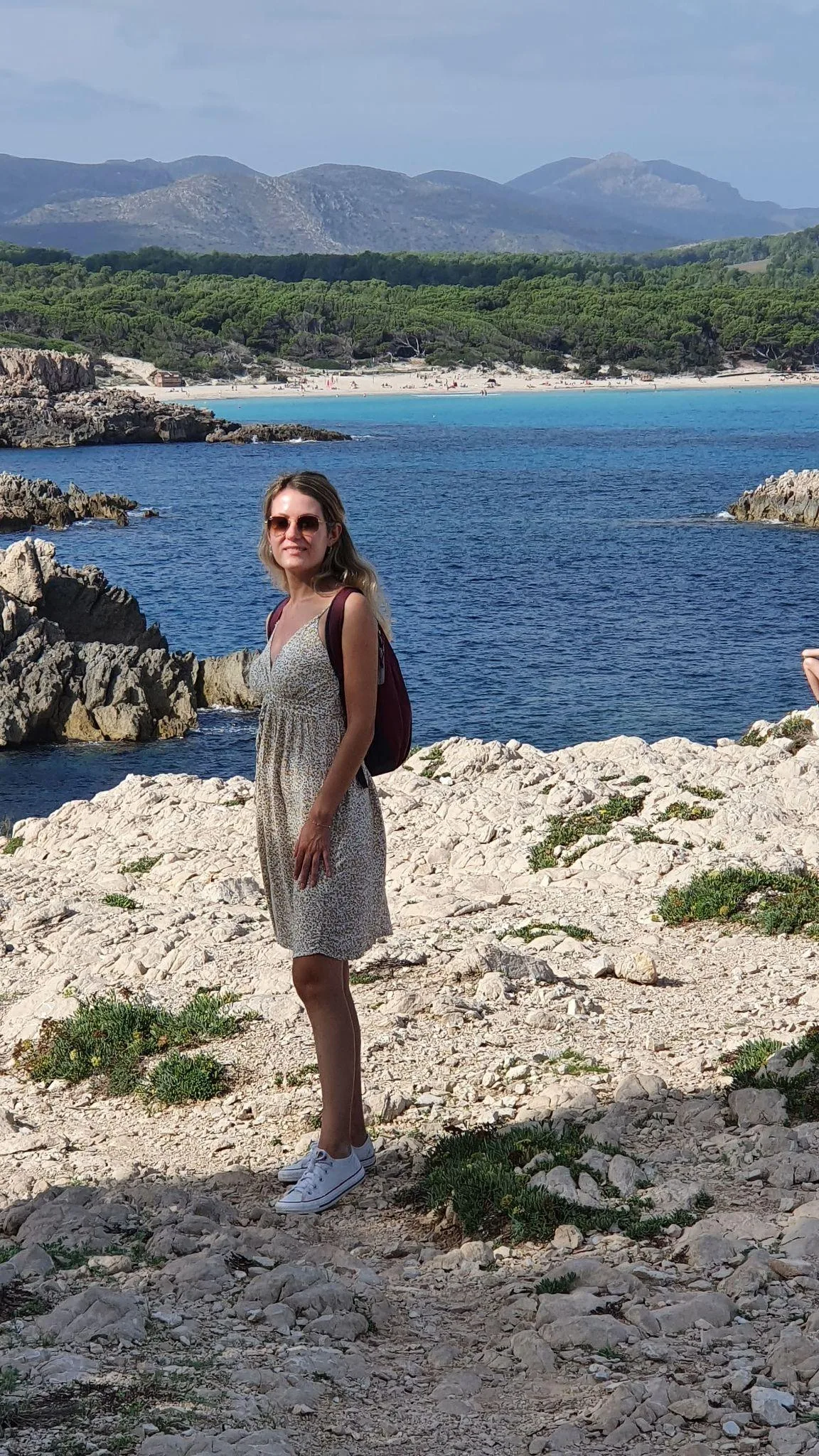
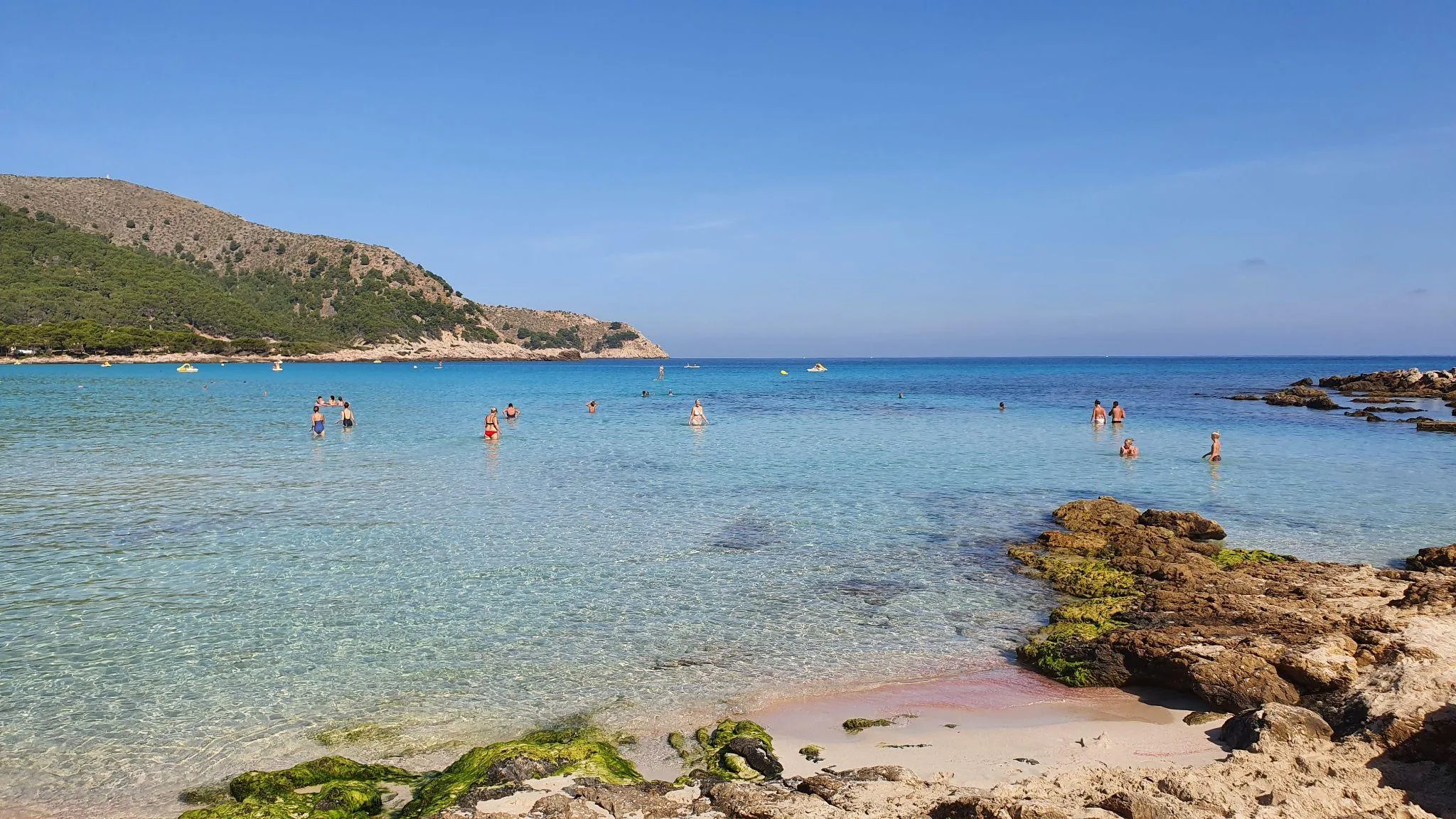
Cala Agulla beach is, to be honest, one of my favorites there in Mallorca. What I love are the green hills framing it, and you can take a walk behind it through the pines to discover even more calas.
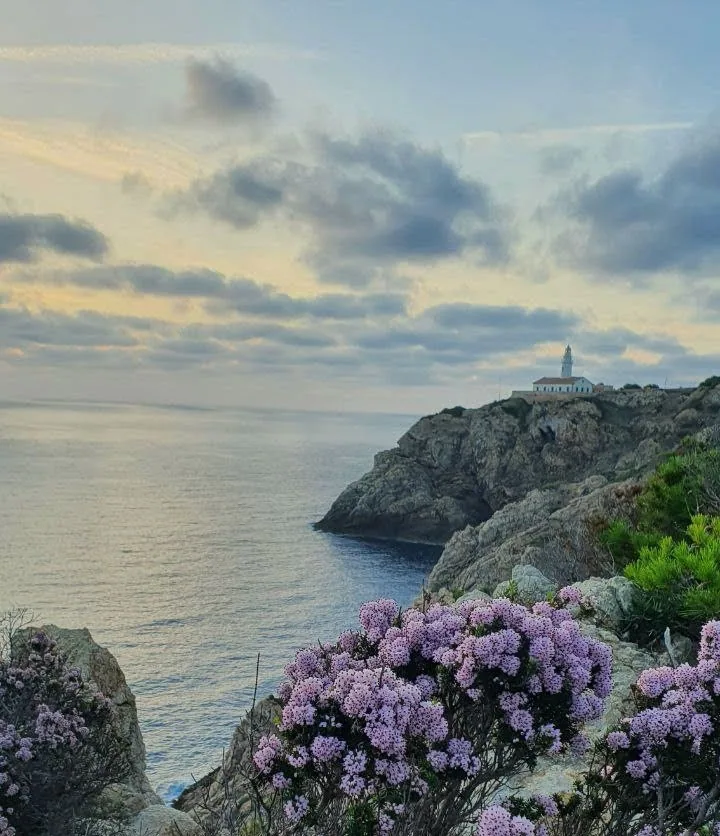
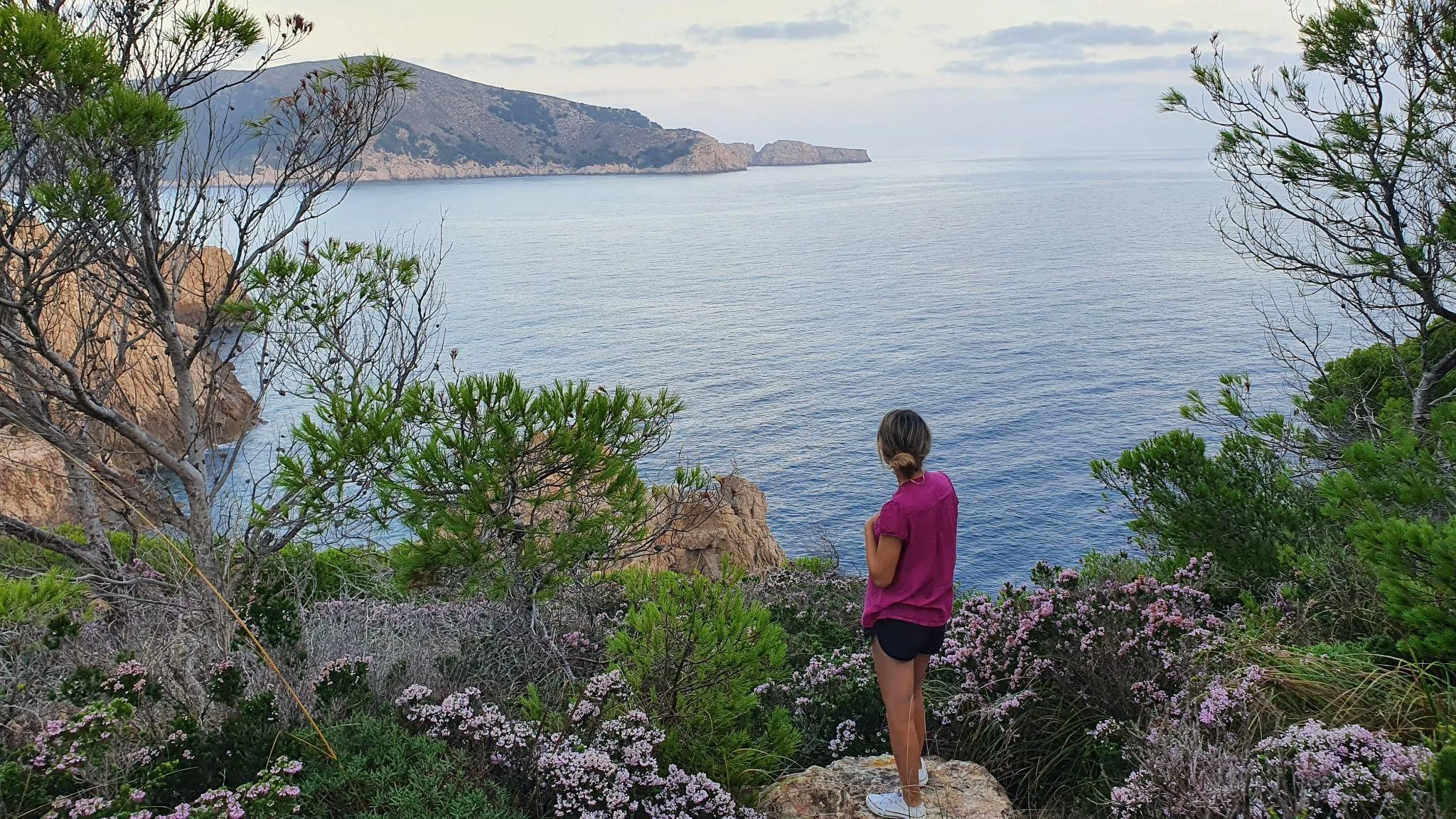
In the area for nature views, it’s also worth heading up to the Capdepera lighthouse for a scenic walk; there are walking trails around L’Olla, and when I went there, it was a very quiet place.
Artà
Distance from Palma: ~70 km (about 1 hour drive).
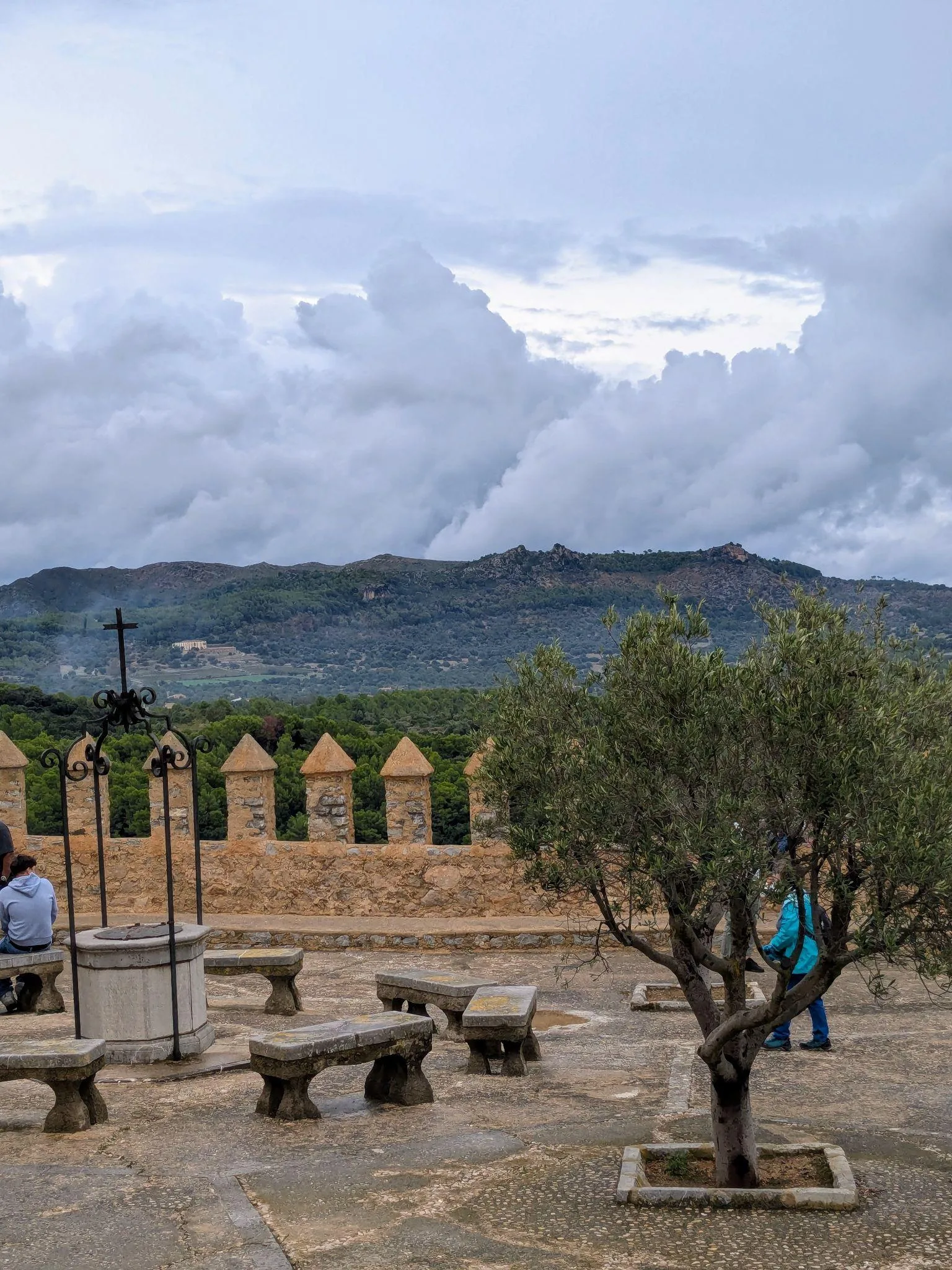
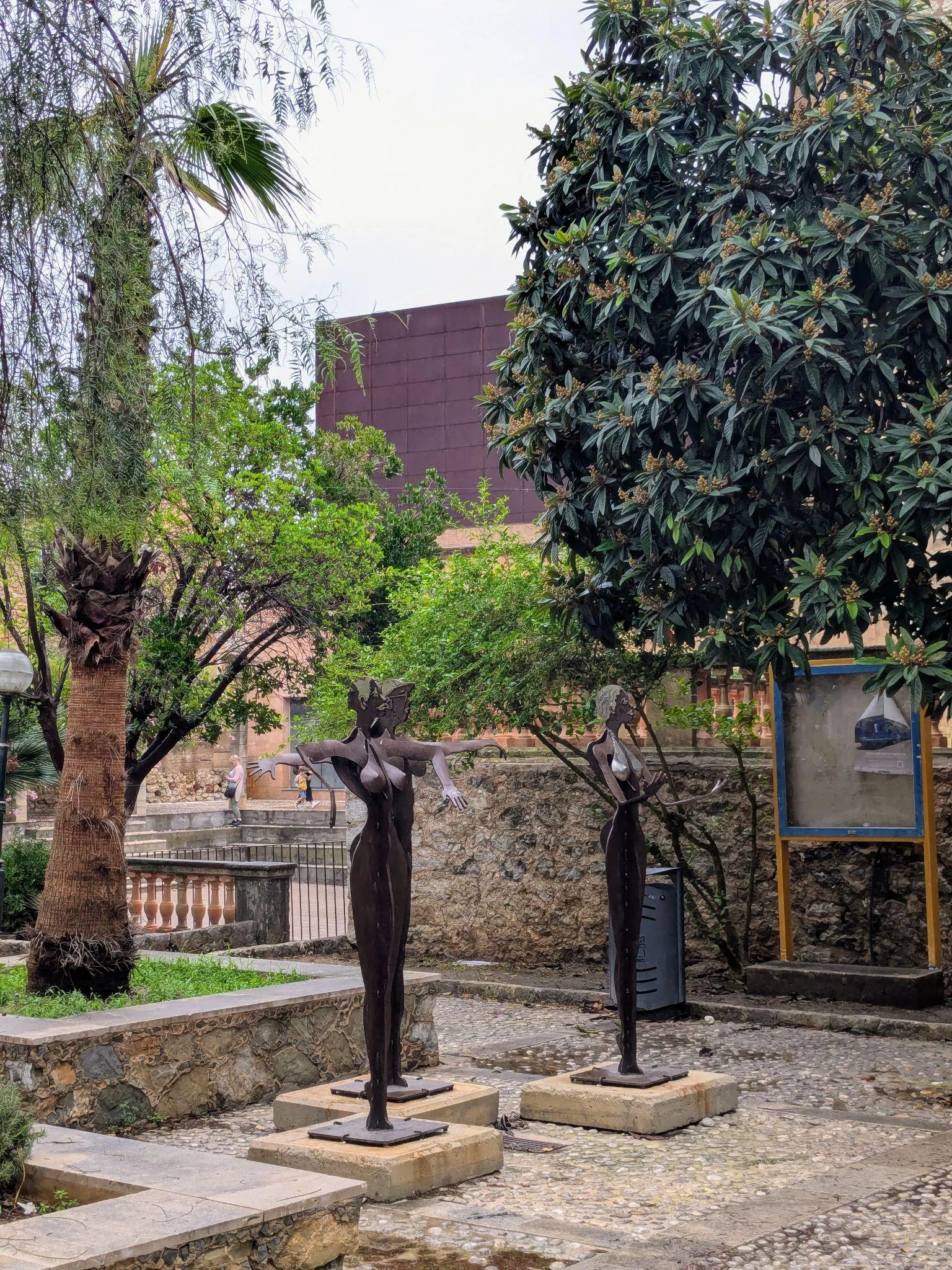
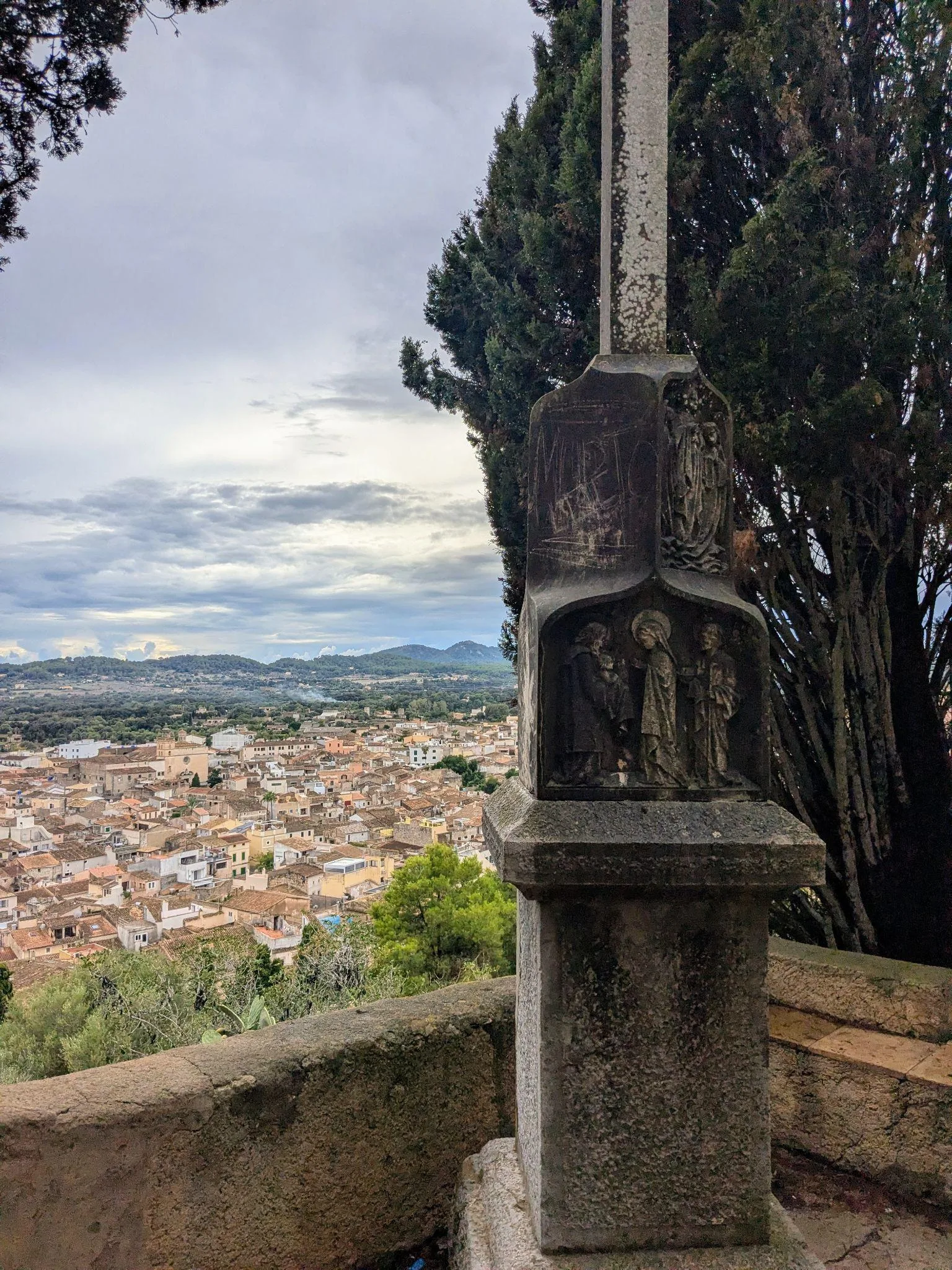
Nearby in the interior, Artà sounds like an artistic town and I would say yes, it has an artsy vibe. The walk up to the hilltop sanctuary (Sant Salvador) is a must for the panoramic views and the stone stairs winding down to the town.
We also visited Artà during the Tuesday market. My take: mixed feelings. It gets very crowded, with market stalls packed along the streets. It really depends on what you are looking for, but Artà in general is a nice stop if you happen to be in the area.
There is also deep history behind the fortress walls: enclosing Sant Salvador at the top, they were originally built in the Middle Ages to shelter the whole village from North African pirate raids sweeping in from the coast, and you can still walk the battlements today.
Coves d’Artà
Distance from Palma: ~75 km (about 1 hour 10 minutes drive).
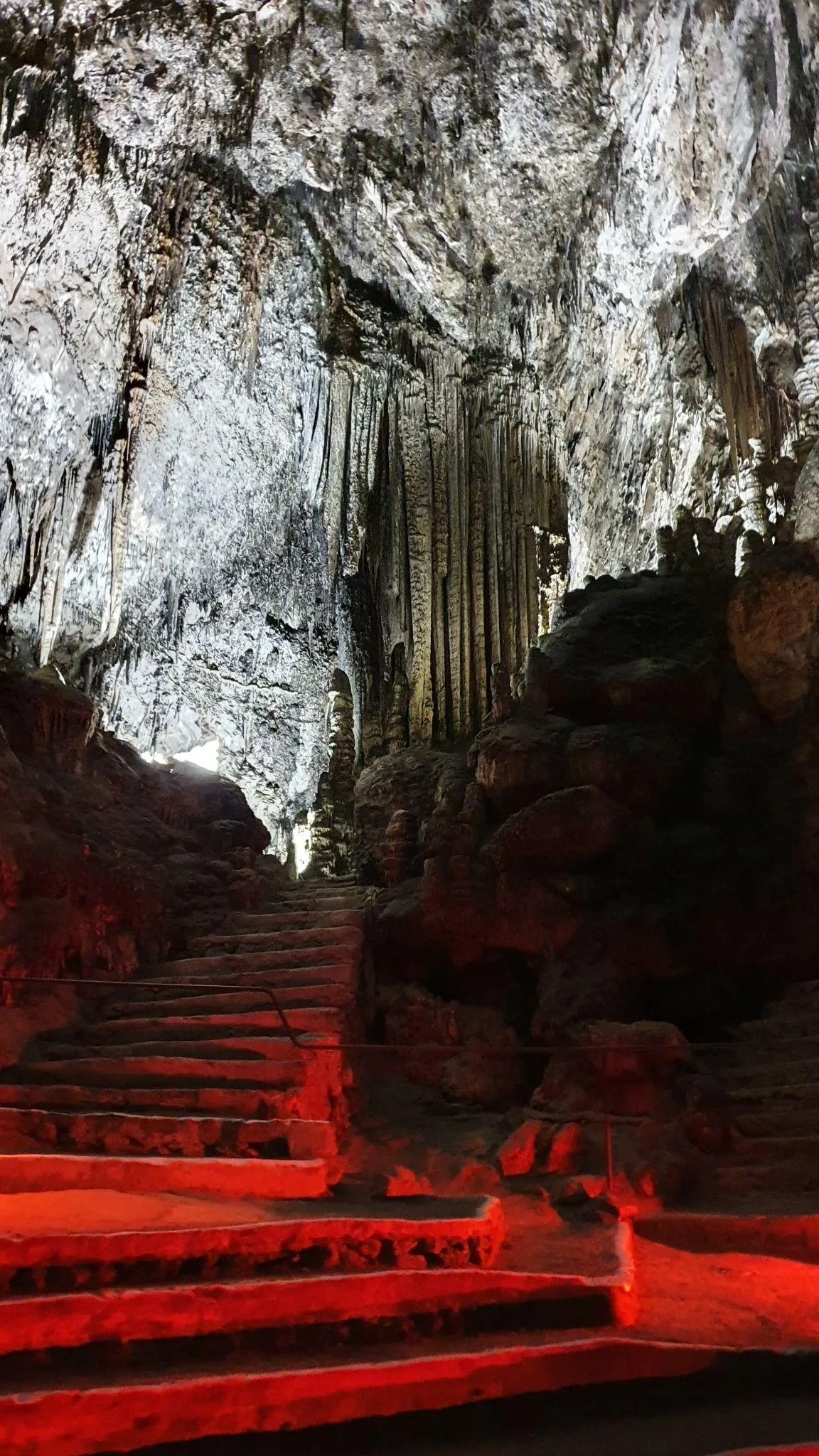
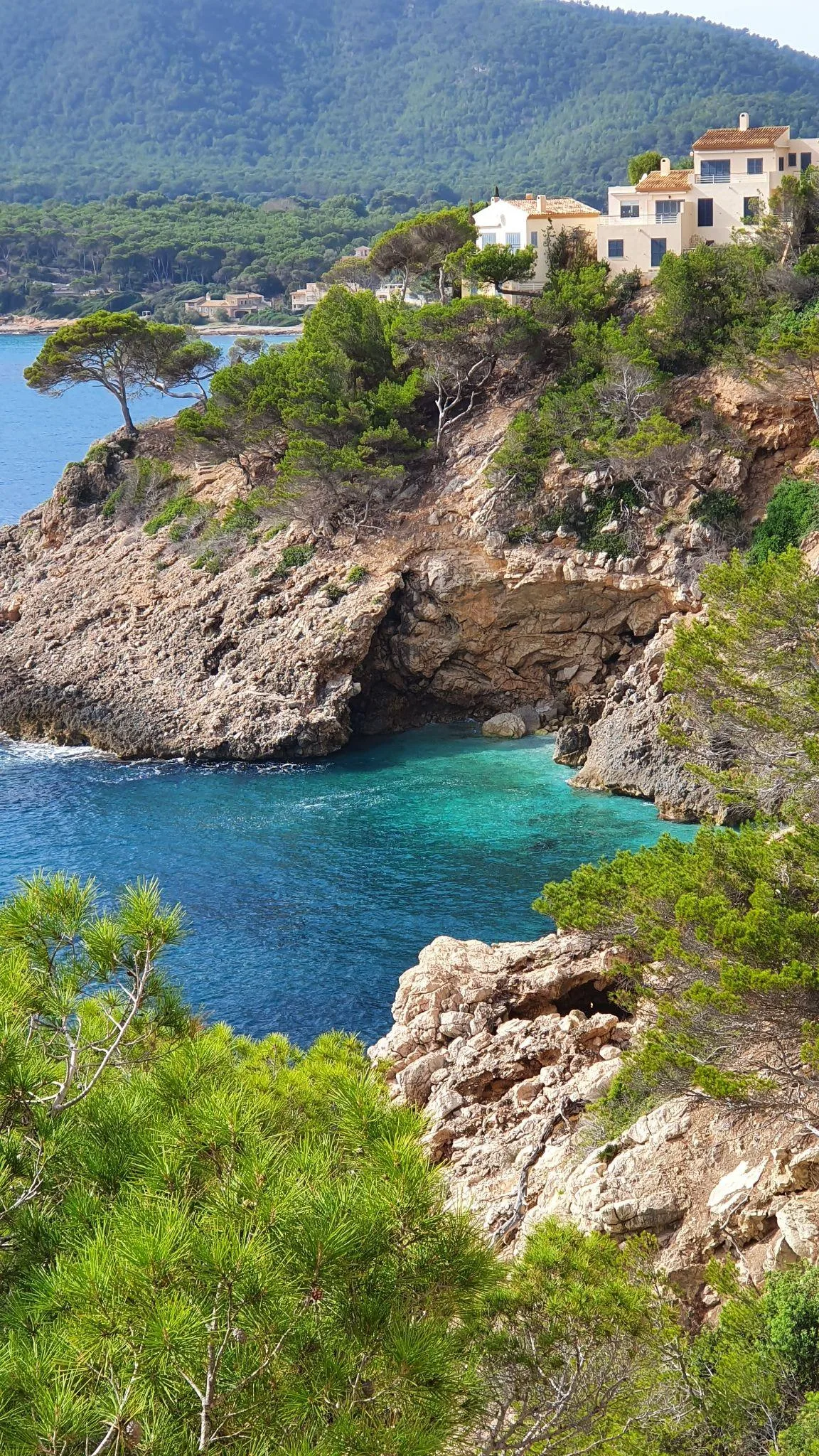
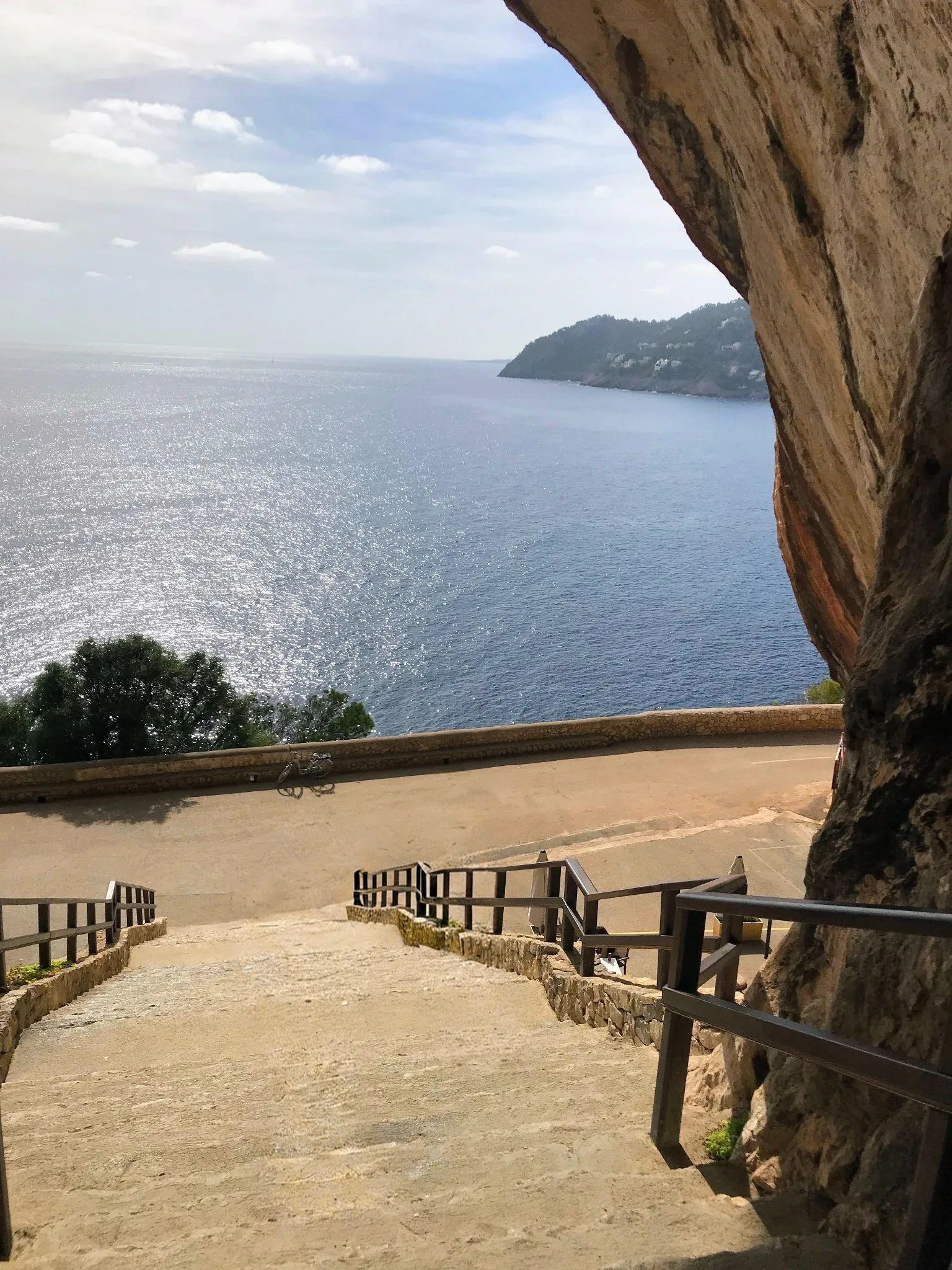
Just a short drive from Artà towards the coast, we visited the Coves d’Artà. Mallorca has two famous cave systems: Coves del Drach and Coves d’Artà. We visited Coves d’Artà since it was right on our way and a bit smaller. The overall experience was really positive and much quieter; in general, they are not as crowded as Coves del Drach. The stalactite formations and the whole guided tour were very impressive (entry is €17 for adults). The coastal views along the road outside are also beautiful.
The caves have also long sparked travelers’ imaginations: Jules Verne is said to have drawn direct inspiration from its soaring stalagmite columns and subterranean halls when writing Journey to the Center of the Earth, while 19th-century visitors like Alexandre Dumas and Victor Hugo also came to explore these depths.
Southern Surprises: Giant Cactuses and Cliff Inlets
Botanicactus (Ses Salines)
Distance from Palma: ~50 km (about 45 minutes drive).
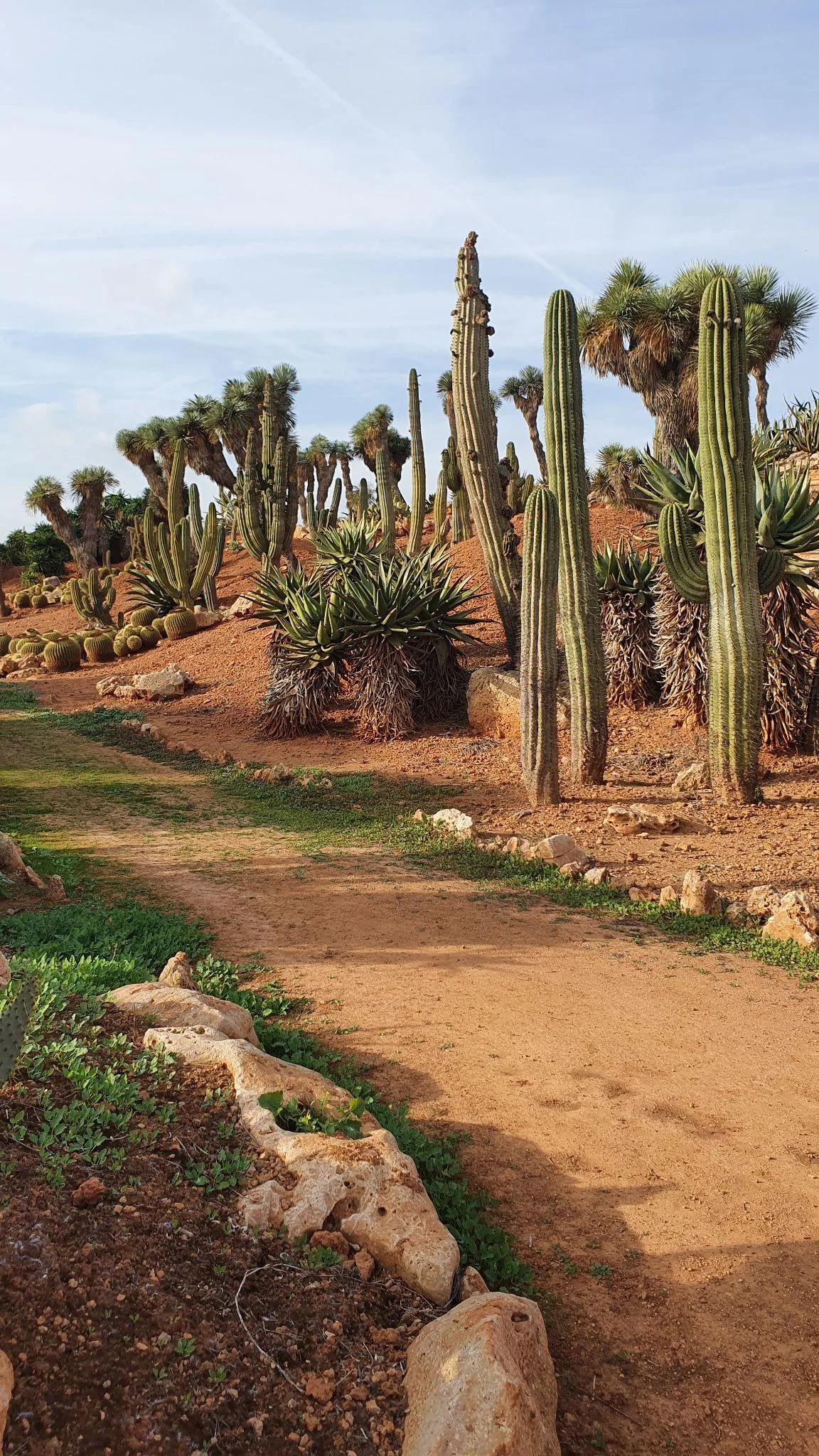
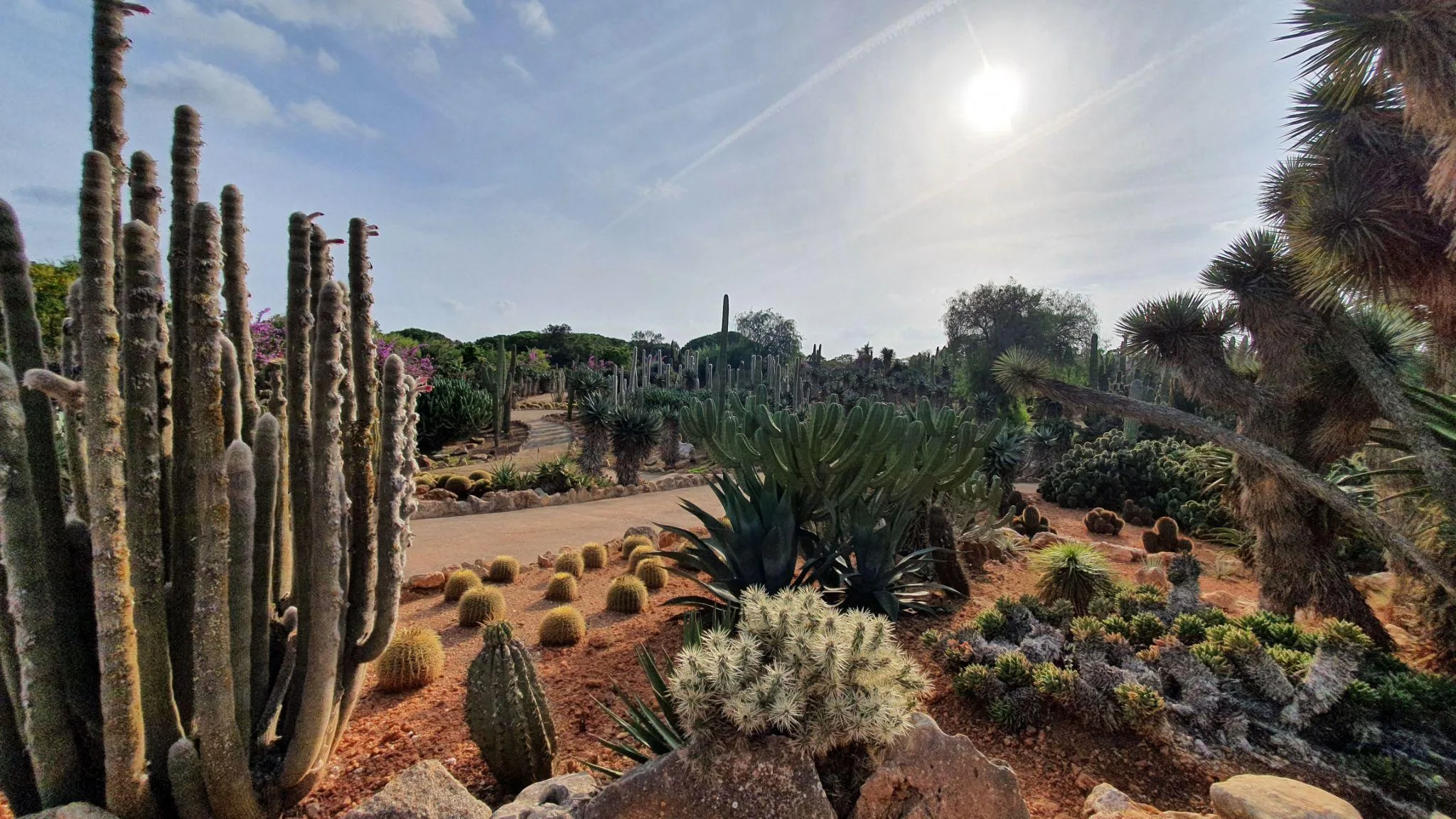
Driving down towards the southern tip of the island brought a completely different, desert-like change of scenery when we visited Botanicactus near Ses Salines. It turned out to be very impressive: the park has an incredible collection of cactuses (tickets are €11 for adults). It’s not a typical botanical garden - it really has a vast amount of cactuses. You can easily spend two hours there at a relaxed pace.
To give an idea of its sheer scale, Botanicactus covers 150,000 square metres as one of Europe’s largest botanical gardens, hosting over 12,000 cactus specimens across 400 species - including massive Arizona saguaros that are more than 300 years old.
Cala Pi
Distance from Palma: ~40 km (about 40 minutes drive).
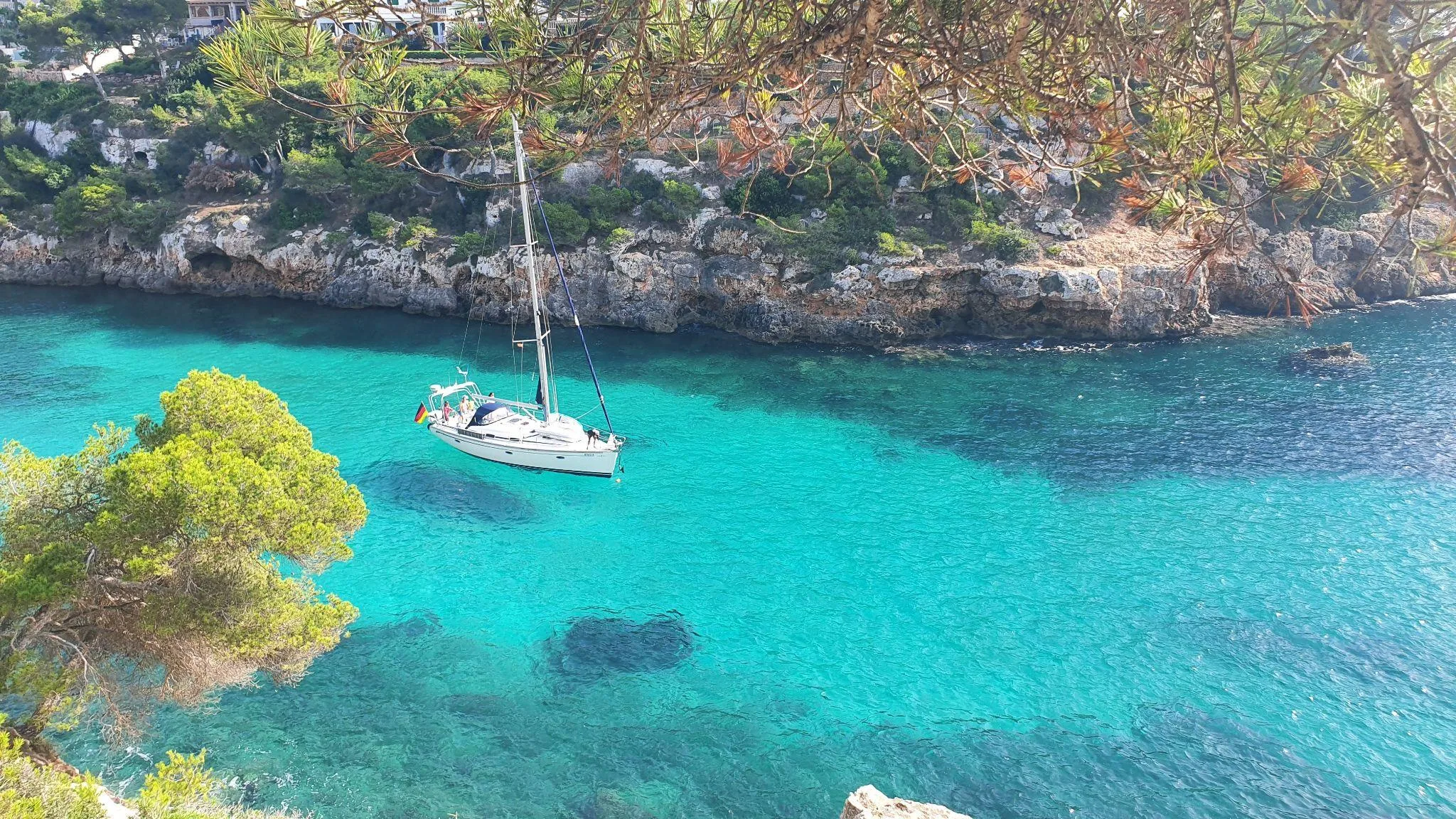
Mallorca has indeed many calas, but Cala Pi to me stood out for its incredible crystal clear water colour and calmness the day when we visited it. Tucked between dramatic vertical cliffs along the southern coastline, you can walk along the cliffs on the side of the cala. It’s a relaxing walk where you can enjoy sea views and spot small yachts anchored in the water. To get to the beach itself, you go down a steep flight of stairs built into the rock, with a hotel located right next to it. Definitely worth a stop.
Practical Tips for Exploring Mallorca by Car
Car Size Advice
In mountain towns like Sóller and village streets around Fornalutx, roads and parking bays are very narrow. A compact car or a smaller SUV (definitely not a giant SUV) is the ideal choice for maneuvering comfortably and squeezing into tight parking spaces.
Renting an Electric Car & Charging
An electric car can be a great option here. We found public charging stations on the MELIB network, which you can locate using the MELIB app.
The chargers we used were free, so we didn’t pay to charge the car on our trip. Some MELIB points now charge a fee, though, and prices and availability vary. Check each charger in the app before setting out, and plan your stops since not every small town has a charging point.
Final Thoughts: Is Mallorca Worth Visiting Beyond the Beach?
Mallorca is definitely worth visiting for its variety of nature and stunning waters. It’s far from just a beach holiday: cycling is actively encouraged, and hikers will find absolutely gorgeous nature trails.
FAQs
Do you need a rental car in Mallorca?
No, you can reach many towns by bus. For the mix of mountain roads, villages, caves, and different coasts in this guide, a rental car gave us much more flexibility. A compact car is easier to handle on narrow roads and in small parking spaces. Check the seasonal access rules before planning to drive to the Cap de Formentor lighthouse.
How many days do you need for a Mallorca road trip?
We recommend at least 4 to 7 days. This allows you to spend a day in Palma, dedicate 1-2 days to mountain drives and stone trail walks around Sóller and Fornalutx, drive to Cap de Formentor in the north, and visit coastal spots and caves in the east and south without rushing.
Can you drive all the way to Cap de Formentor?
It depends on your travel date. We drove to the lighthouse in late October, but seasonal restrictions can prevent private cars from reaching it during set hours. In 2026, these applied from 15 May to 18 October, 10:00 to 22:00; the TIB 334 bus served the lighthouse. Check the current rules before setting out.
Is Mallorca worth visiting outside the summer (in autumn or spring)?
Absolutely. Visiting in autumn (like October) or spring is often much better than summer for road tripping and hiking. Daytime temperatures are mild and pleasant, mountain roads and parking lots are less congested, and you can enjoy historic villages and viewpoints without the summer resort crowds.
Which caves in Mallorca are better to visit: Coves del Drach or Coves d'Artà?
While Coves del Drach is more famous, Coves d'Artà is generally quieter and less crowded with large tour buses. The stalactite formations are massive and impressive, the guided tour feels more relaxed, and the coastal sea views right outside the cave entrance are stunning.
Can you rent and charge an electric car easily in Mallorca?
We rented an electric car and found MELIB chargers along our route. The chargers we used were free at the time, but some MELIB points now charge a fee. Check each charger's current price and availability in the MELIB app before relying on it.
Read next
More posts for this trip mood
 Europe
Balearic Islands, Spain
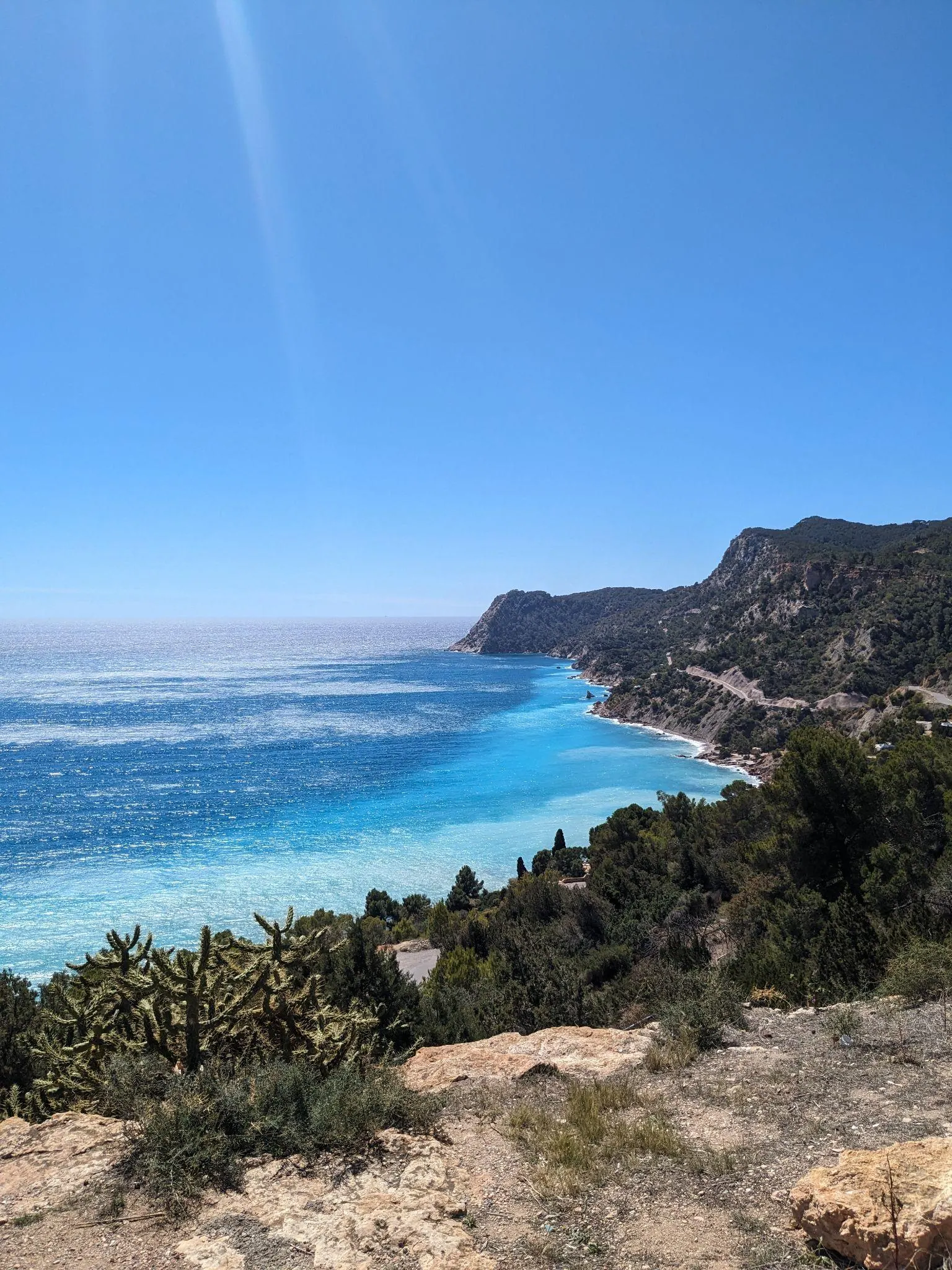
Things to Do in Ibiza Off-Season: Nature, Empty Calas & 4-Day Route
Ibiza off-season is a completely different island: empty calas, quiet hiking trails, and dramatic coastal views without the summer rush.
A 4-day off-season Ibiza guide focused on nature, empty calas, coastal hikes, Dalt Vila, Es Vedrà, and practical April road trip tips.
 Europe
Galicia, Spain
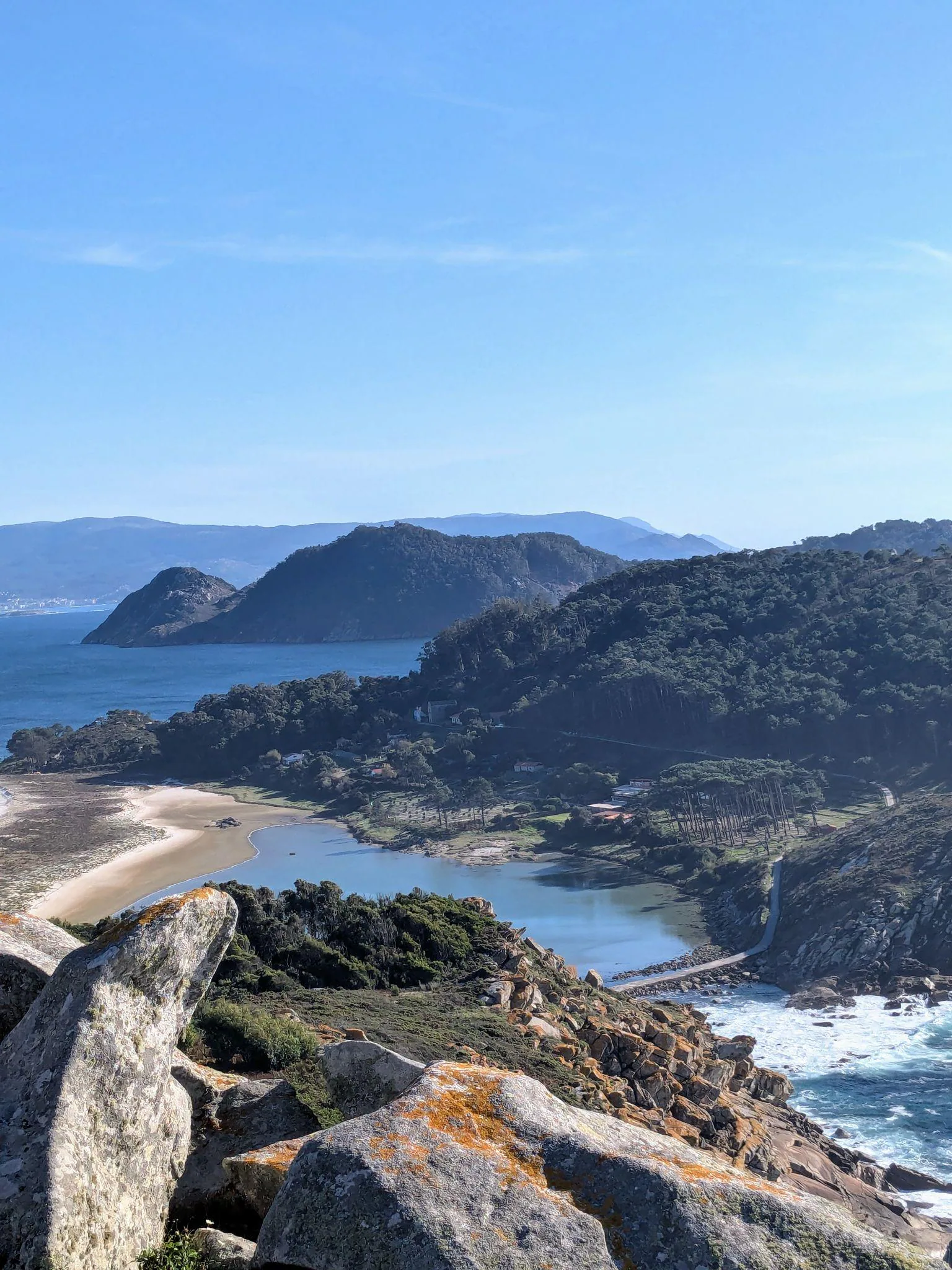
Visiting Islas Cíes in Galicia: Our October Day Trip to Spain's Raw Atlantic Island
A firsthand guide to visiting Islas Cíes in Galicia from Cangas: ferry permits, walking to Faro de Cíes and Alto do Príncipe, and the white quartz beaches of Praia dos Viños (Praia de Bolos) and Nosa Señora.
 Europe
Canary Islands, Spain
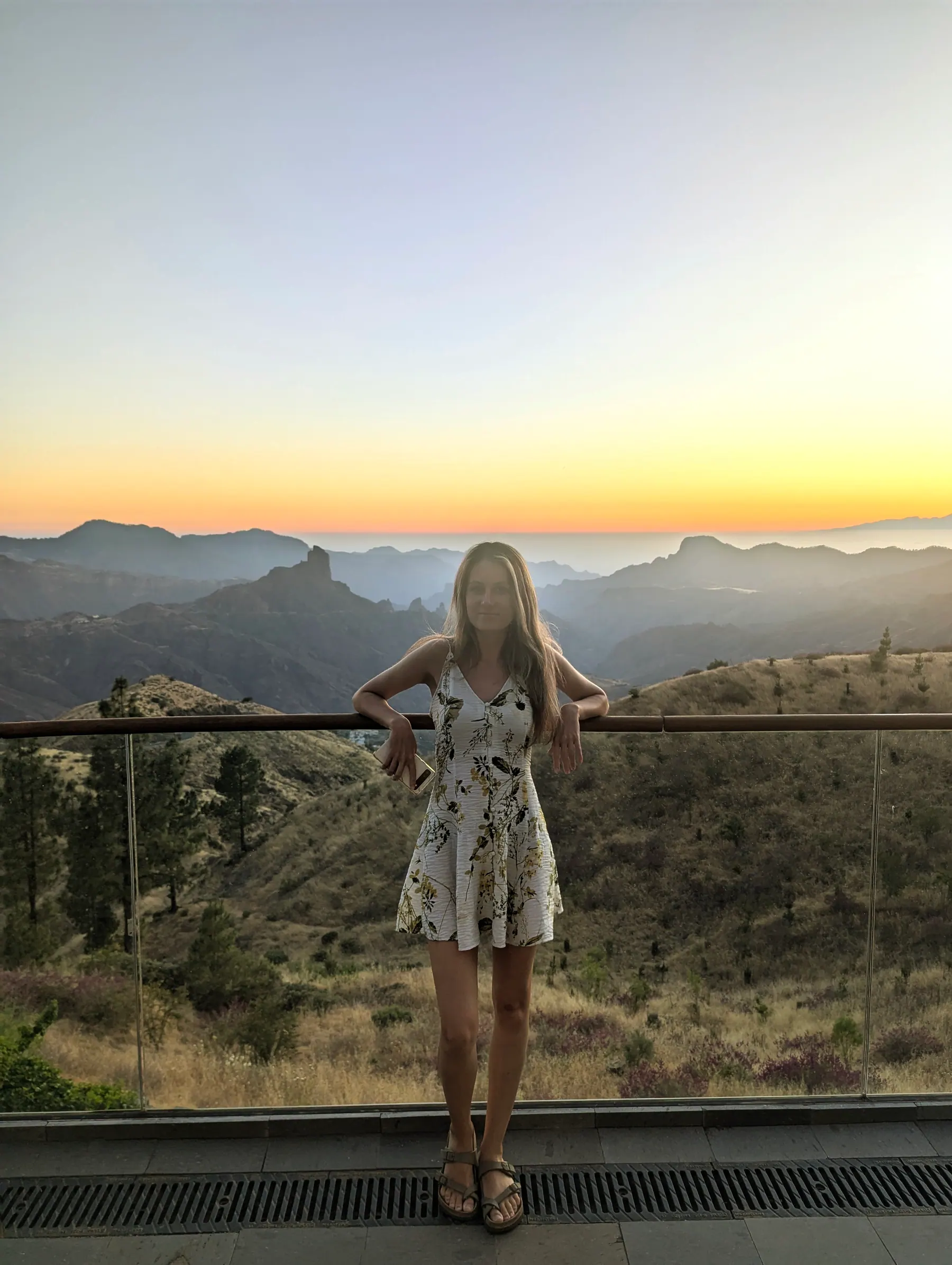
Gran Canaria Beyond the Beach Holiday: A Miniature Continent
Gran Canaria is far more than its beaches: a week of cloud forest, volcanic mountains, quiet villages and Atlantic coast.
A week exploring Gran Canaria beyond the resorts, from Agaete and Las Palmas to Roque Nublo, Artenara, Maspalomas and Barranco de las Vacas.