

Nikko · Tochigi · Japan
Nikko, Japan in Winter: Temples, Frozen Waterfalls and Snow
A personal Nikko winter travel guide with temples, frozen waterfalls, Lake Chūzenji, mountain buses and tips for seeing Nikko.
Quick facts
- Best time
- Winter is much quieter than the busy autumn season, and the snow suits Nikko beautifully.
- Trip length
- Stay overnight: give the shrines half a day or a full day, and the waterfalls a full day.
- Getting there
- The direct Tobu limited express from Asakusa takes about two hours with no transfers.
- Good for
- Shrines, waterfalls, snowy mountain scenery, nature and a slower side of Japan.
We had planned our Japan trip for early November, hoping for autumn colours and a light, crisp chill. Then circumstances forced us to postpone it to February 2025, and I remember being a little disappointed at the time. I shouldn’t have been because winter turned out to be one of the best things that happened to the trip, and nowhere showed that better than Nikko.
Nikko is a small town in the mountains about two hours by train north of Tokyo, known for its grand old shrines and its waterfalls. Most people visit in autumn, when the forests turn colour, or in summer. Almost no one talks about going in winter. That, it turned out, was the whole appeal.
Winter is low season for most of Japan, outside the ski resorts. If you don’t mind the cold, that’s a real opportunity: you get to see Japan, and places like Nikko, with a fraction of the crowds that fill them the rest of the year. For somewhere as visited as this, that quiet changes the whole experience.
Japan has a real overtourism problem: a handful of famous spots absorb enormous crowds while quieter regions see far fewer visitors, and the country has been actively trying to push people beyond Tokyo and out of peak season to ease the strain. Travelling off-season is one of the simplest ways to be part of the solution rather than the crowd: you spread your visit into the months a place can breathe, you support local businesses when they need it most, and you see the destination closer to how it actually is.
Getting there
Getting to Nikko is the one part of the trip that needs a little planning. Trying to save a bit of money, we took the local trains from Tokyo, with a transfer along the way. In the end we saved almost nothing and lost half our morning - working out the connecting trains was very confusing, and asking for help didn’t get us far, since most people in Japan don’t speak much English, and our attempts with a kind local lady at the station went nowhere. On the way back we happily paid the surcharge for the direct limited express train instead, and it was worth every yen.
So the straightforward advice is simple: take the direct train. The Tobu limited express (Spacia Kegon, Revaty, or the newer Spacia X) runs straight from Asakusa Station to Tobu-Nikko in about two hours with no transfers. There’s a fair bit more to say about fares, rail passes and the bus passes you’ll need for the waterfalls, but I’ve put all of that in a trains and passes section at the end so it doesn’t get in the way of the story. If you’re planning your own trip, it’s worth a read; if you’d like to continue with the story and guide, keep going.
Because of our train saga we arrived late, around 13:00. A cold, sharp winter air met us as we stepped out - I had two jumpers on under my jacket and still felt it. But we were lucky with the sun, and as a Latvian living in Spain, I’ve learned I can put up with almost anything as long as the sun is out.
The first thing you notice: the quiet
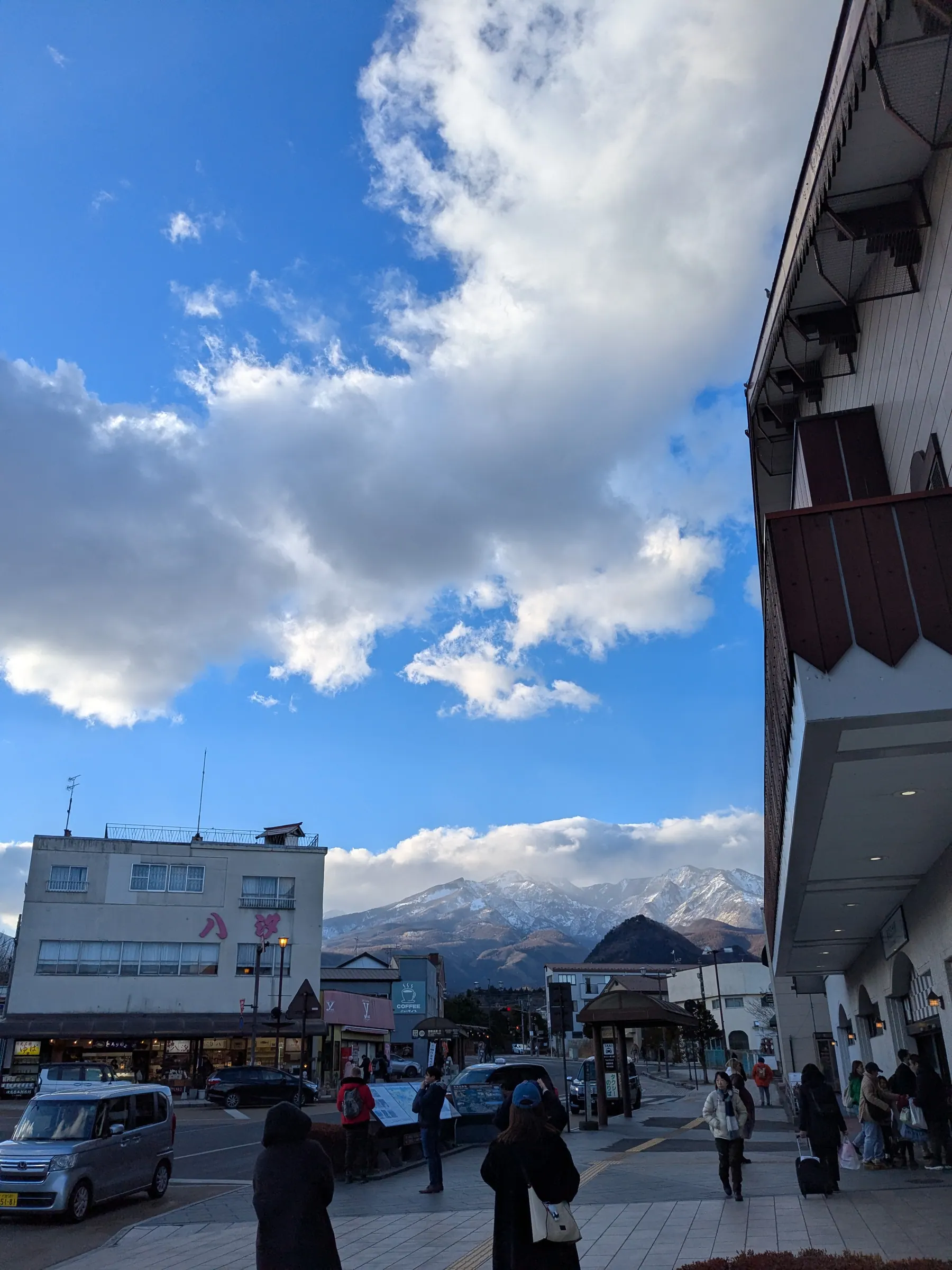
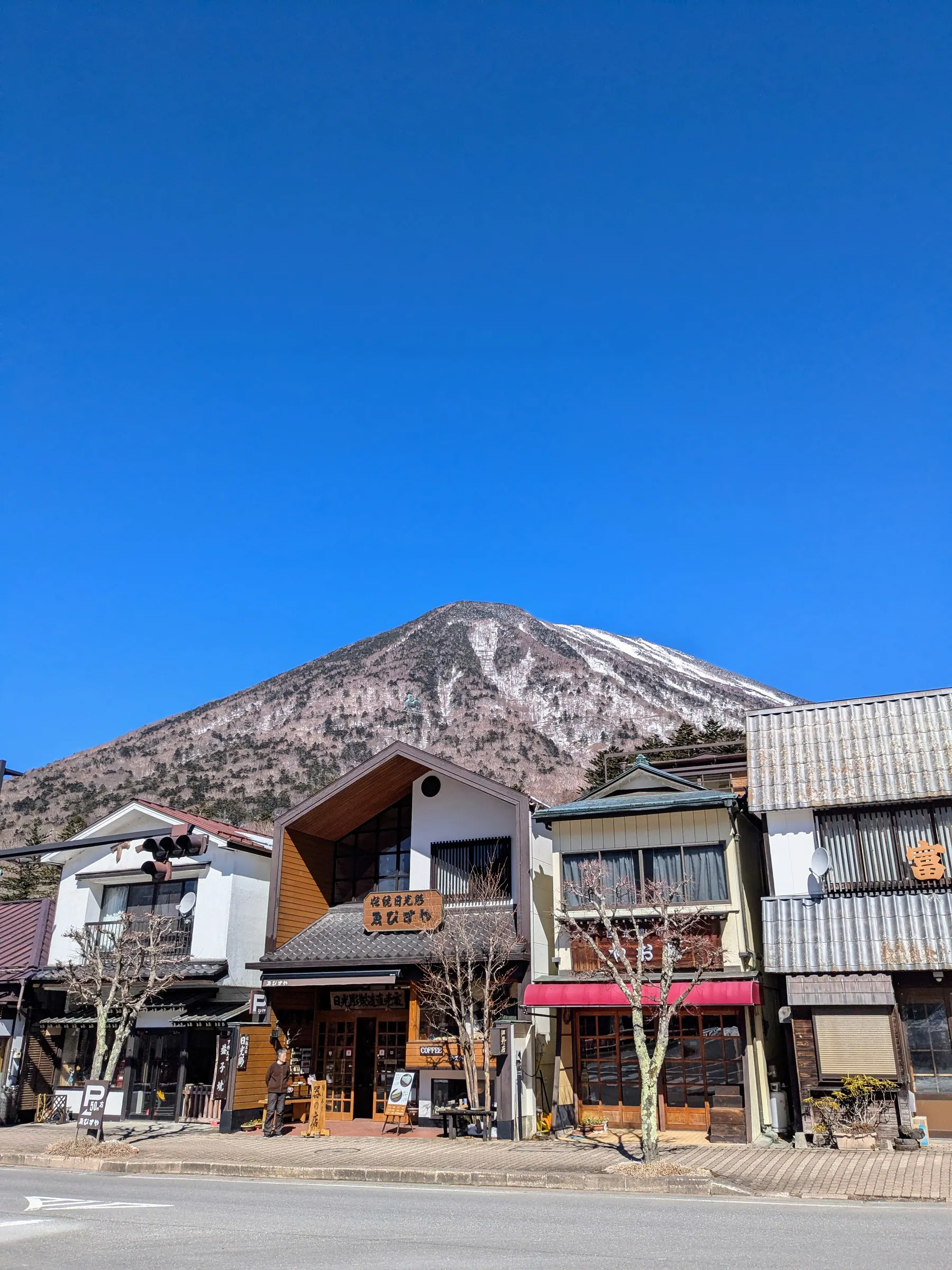
The moment we walked out into Nikko, the contrast with Tokyo hit us. After the crowds of the city, the streets here were nearly empty - just a handful of other tourists the whole time. That feeling of space and calm set the tone for the entire visit.
We stayed at Hotel Famitic Nikko Station, a small, simple place about eight minutes on foot from the central station. It even had an onsen, though we never used it. Nikko is small enough that most of the hotels are clustered in the same area near the station, so wherever you stay you won’t be far from anything.
Day one: the shrines
We gave our first afternoon to Nikko’s famous temples and shrines. The local bus dropped us near the Shinkyo Bridge, the beautiful red lacquered bridge that appears in almost every photo of Nikko you’ll ever see.
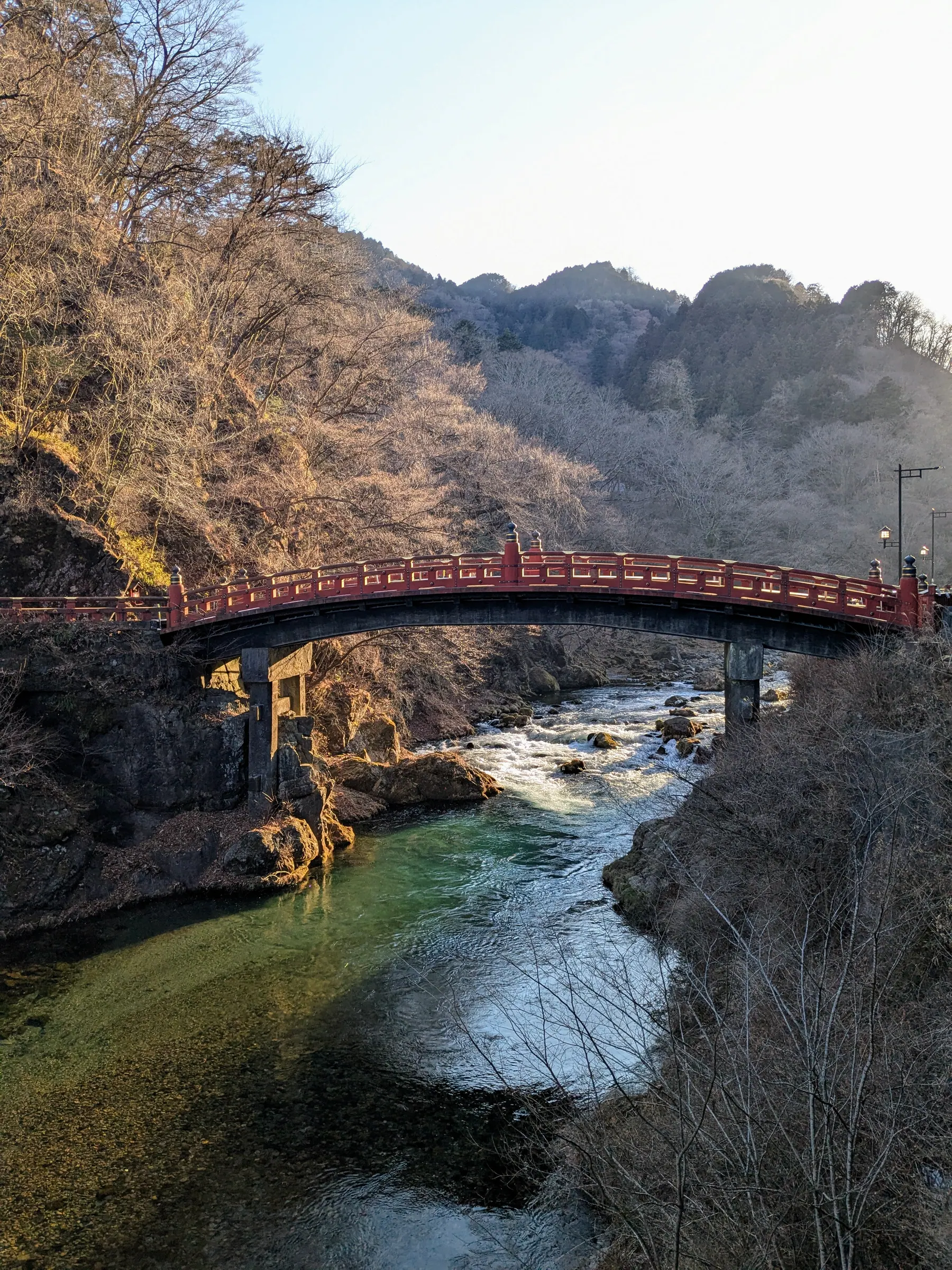
From there, finding the temple area is easy - the shrines are all gathered close together, and you simply walk towards them and keep exploring.
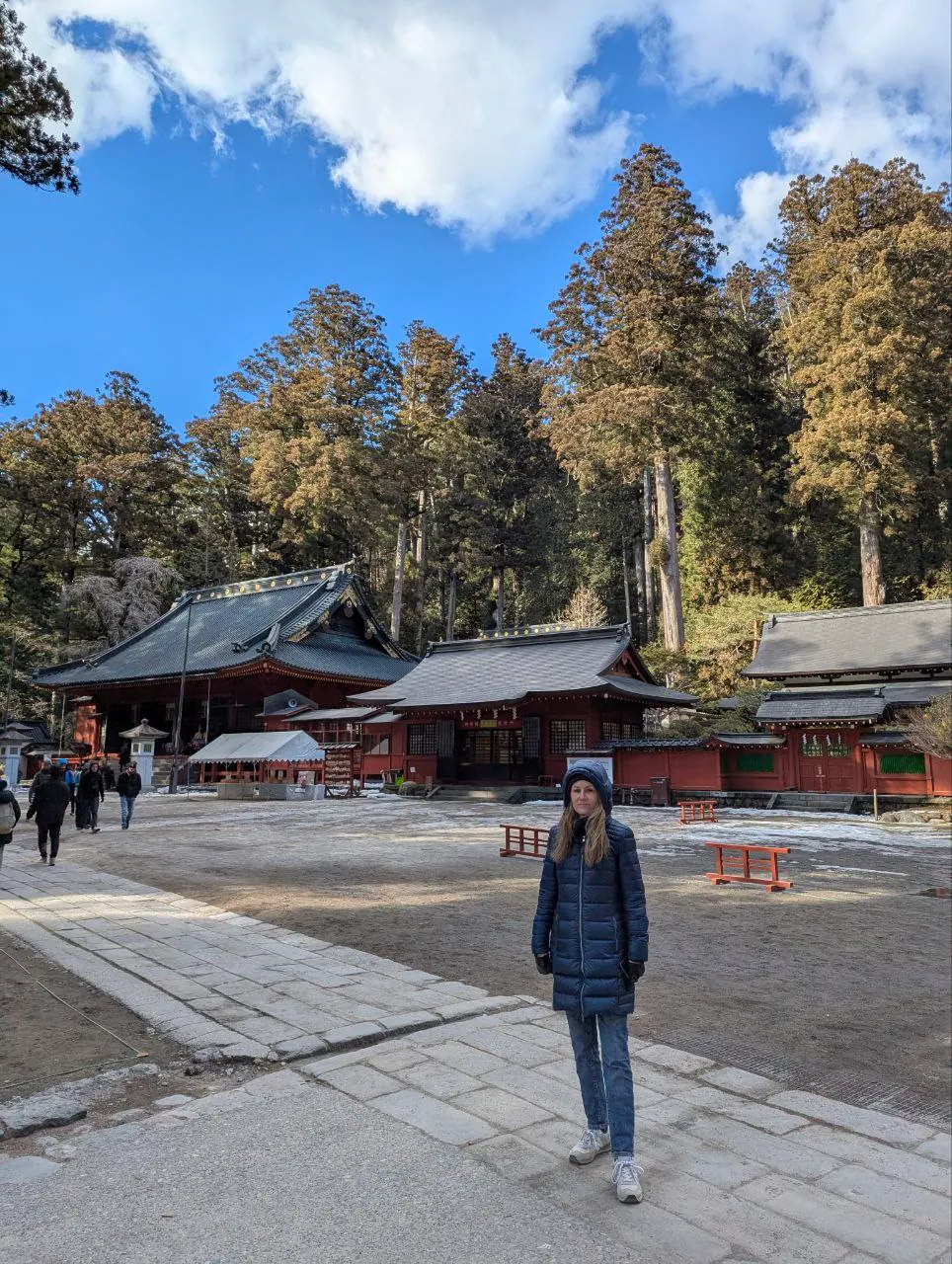
The complex holds several of Nikko’s most important sites, and it’s worth knowing that the shrines and temples of Nikko together form a UNESCO World Heritage Site, listed in 1999 - one connected complex of over a hundred buildings across two shrines and a temple, several of them National Treasures. and I’ll be honest that I can’t remember every one by name - we saw many of them mostly from the outside as we wandered.
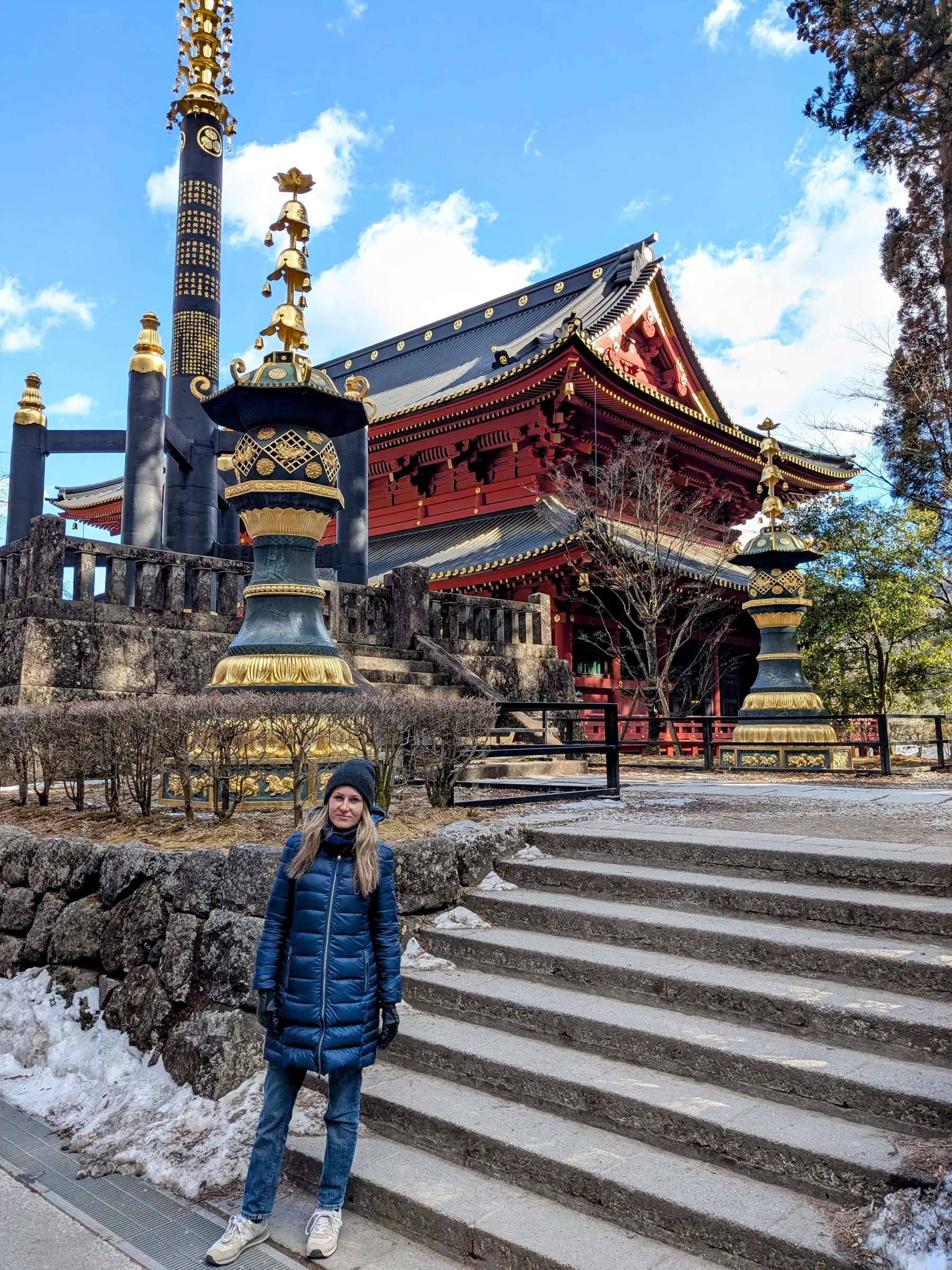
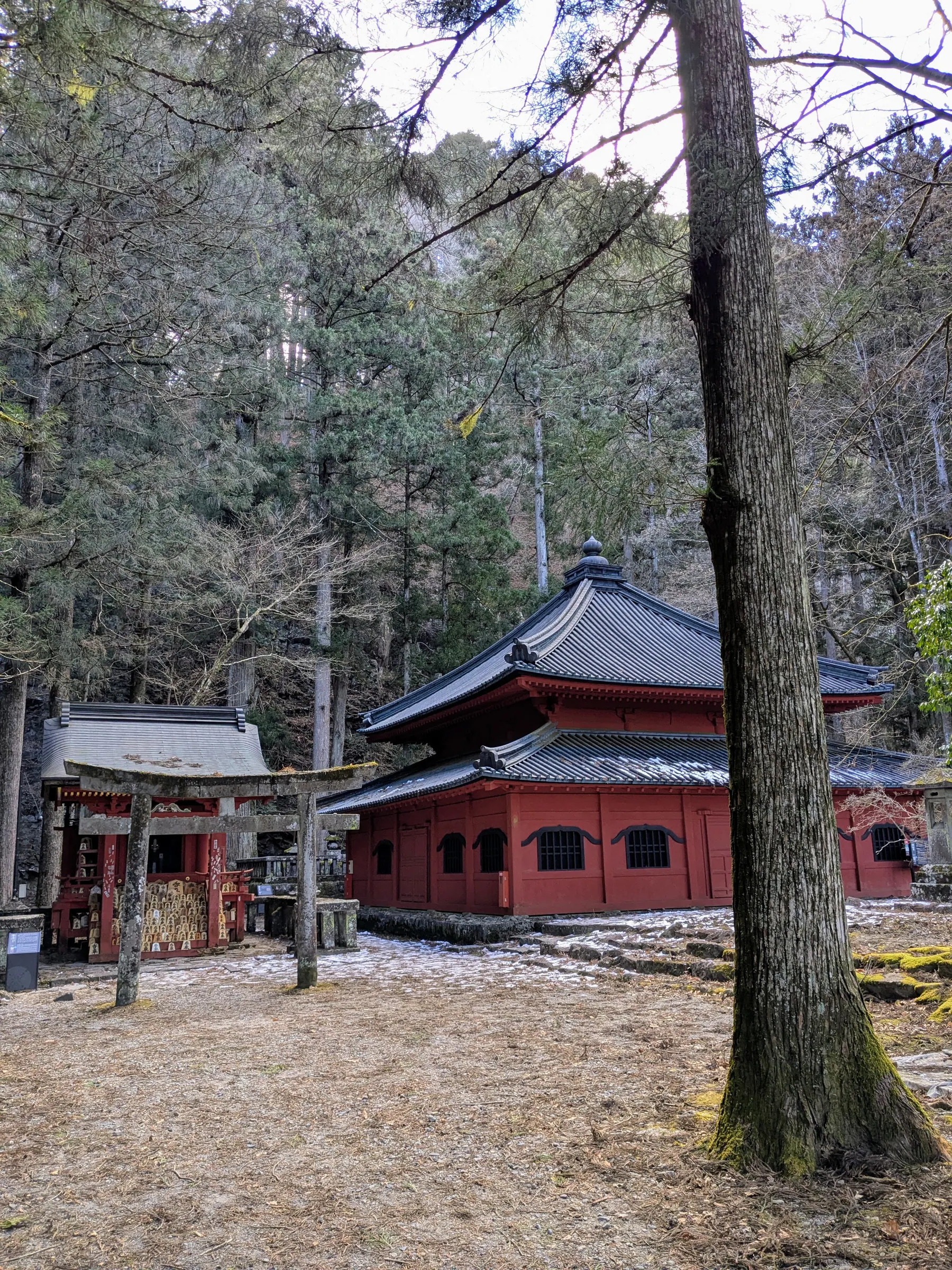
The grandest is Tōshōgū, the great shrine at the heart of it - it’s so lavish because it was built to honour and enshrine Tokugawa Ieyasu, the warlord who unified Japan, and his grandson later rebuilt it far more ornate than a normal shrine, covered in gold leaf and carvings, as a statement of the family’s power. If you look closely at those carvings, you’ll spot some famous ones: the three wise monkeys (“see no evil, hear no evil, speak no evil”) began here, along with a sleeping cat and a pair of elephants carved by an artist who had never actually seen one - and it shows. Nearby are Rinnō-ji, Nikko’s most important Buddhist temple, founded in the 8th century by the monk who first brought Buddhism to Nikko, which makes it the spiritual root of the whole sacred mountain; Futarasan Shrine, an old shrine dedicated to the sacred mountains around the town; and Taiyuin, a mausoleum set in a quieter, calmer spot among the trees. You can happily walk among all of them and take in a lot without going inside every one. I’ll be honest, though: after a while, and especially once you’ve seen several Japanese temples during the trip, they start to look a little similar. It’s a shame, really, how quickly your eyes get used to so much beauty.
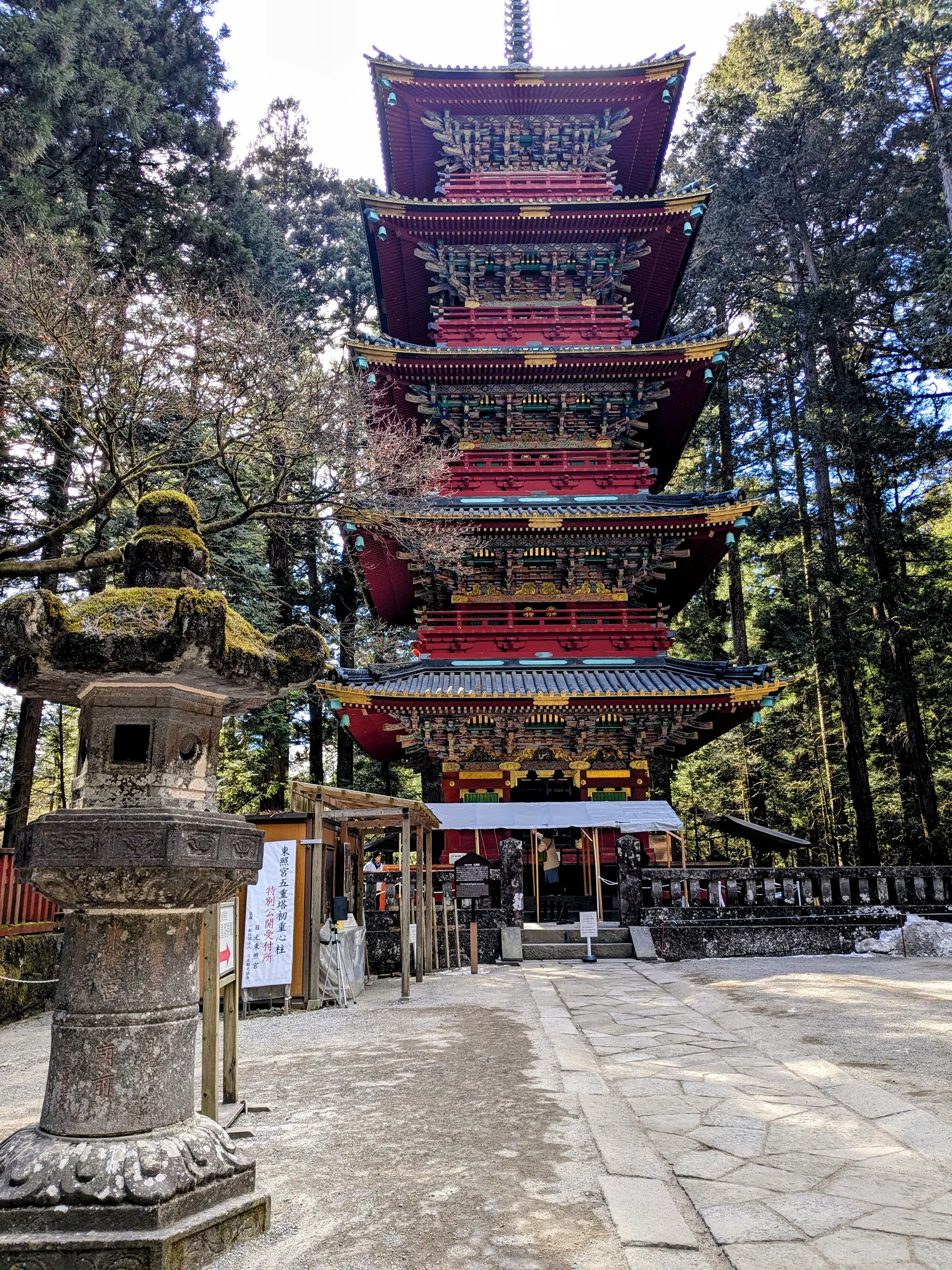
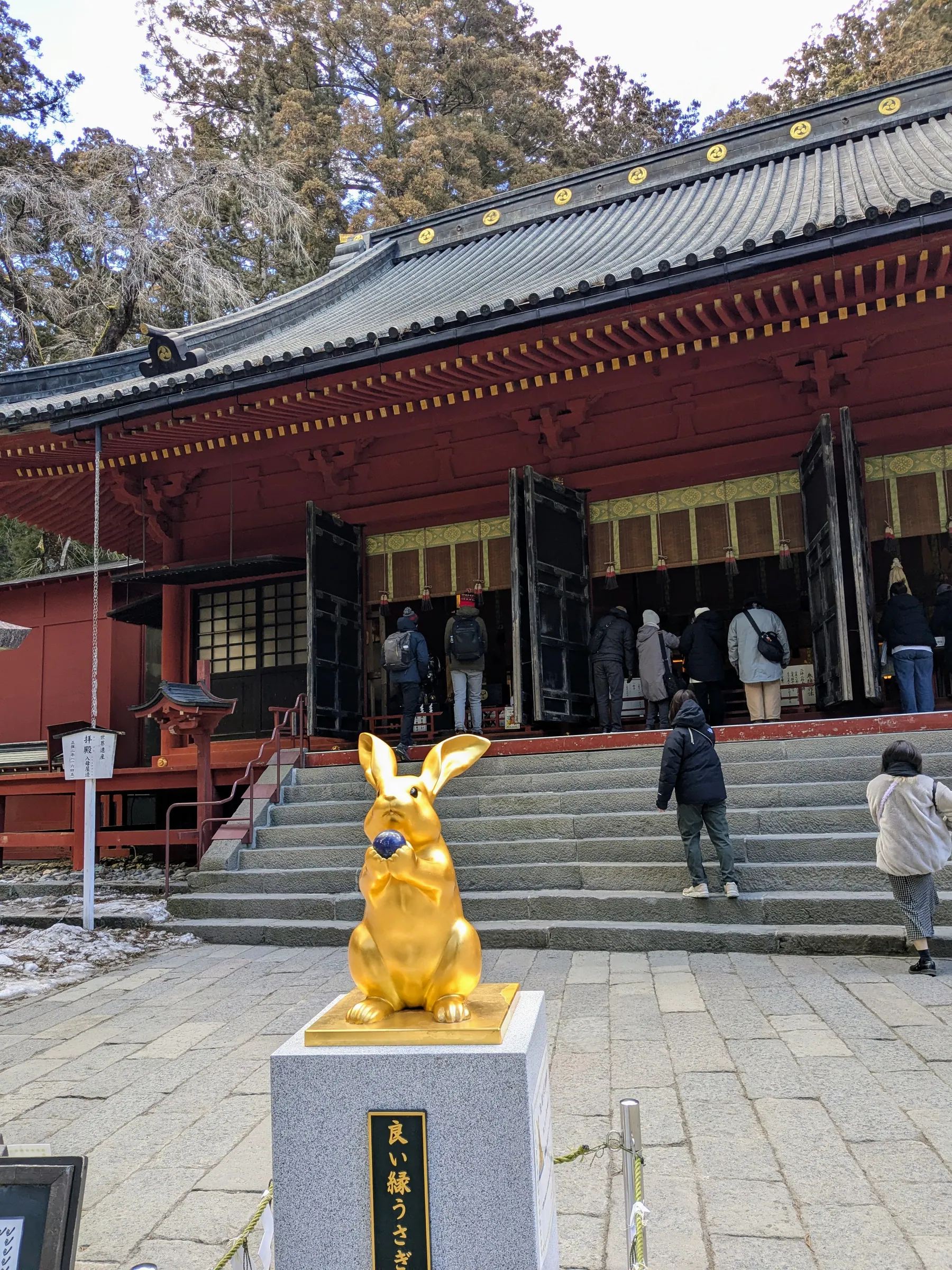
The five-story pagoda (Gojū-no-tō) near the entrance stood out - brightly coloured, about 36 metres tall, with carvings of the twelve zodiac animals around its base. There was also a golden rabbit statue outside one of the temples that we found unexpectedly charming. It is a newer symbol of Futarasan Shrine, unveiled to mark the 1,240th anniversary of Shōdō Shōnin’s founding of the shrine. Holding a lapis lazuli orb, it represents the community’s hope for good fortune and success for Nikko and its visitors.
A few practical things about the temples:
They are not free. The main shrine, Nikkō Tōshōgū, costs around ¥1,600 (about €10) for adults; the smaller shrines and temples have their own, cheaper fees. But you don’t have to pay to enjoy the area - much of the beauty is visible from outside, and you can happily wander the whole complex and pick one or two to go inside.
You can collect special stamps (goshuin) in a book at each temple, though these also cost a little.
In winter the temples close early - around 16:00. We arrived too late and had to rush, so learn from us and come in the morning.
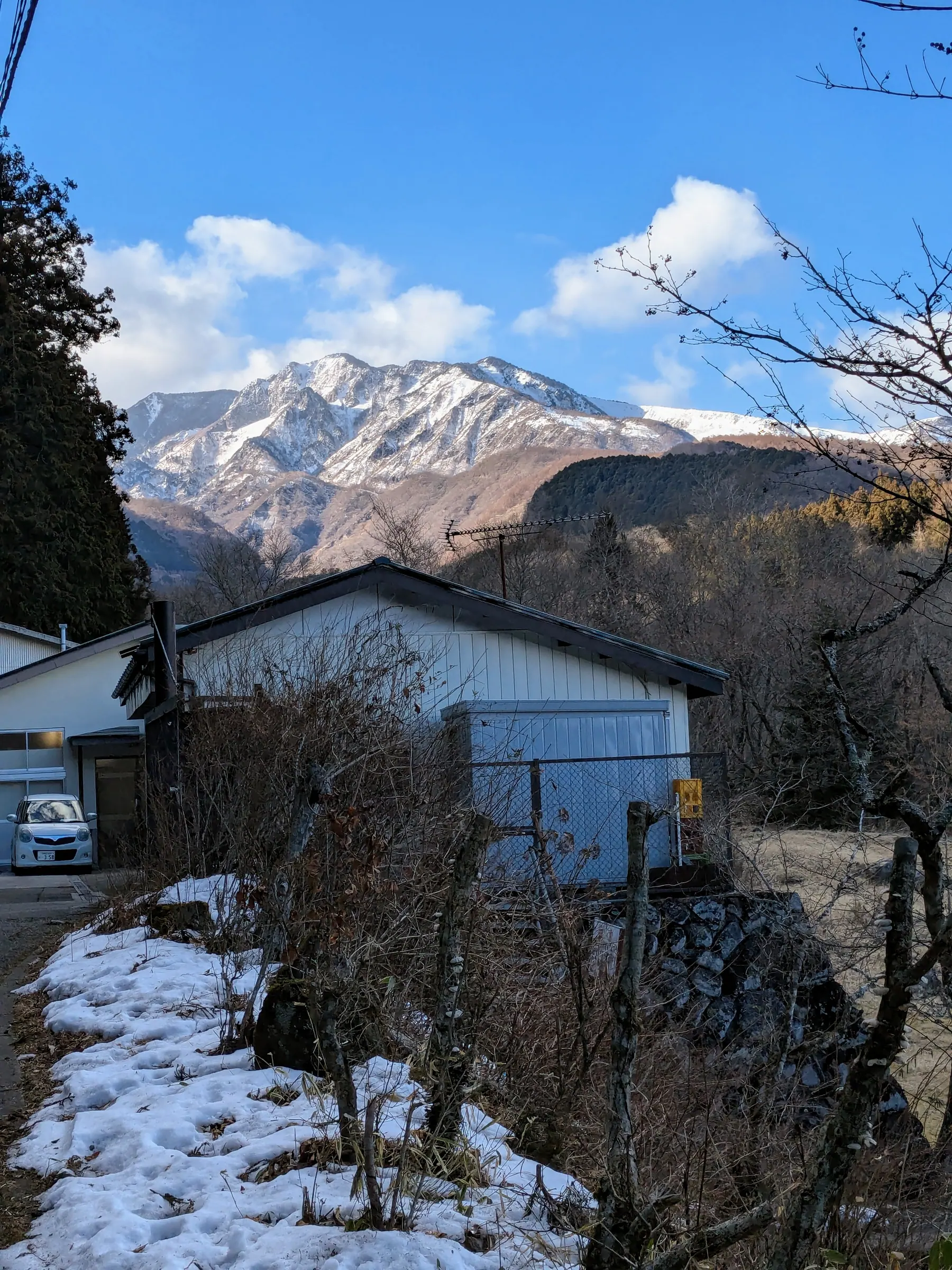
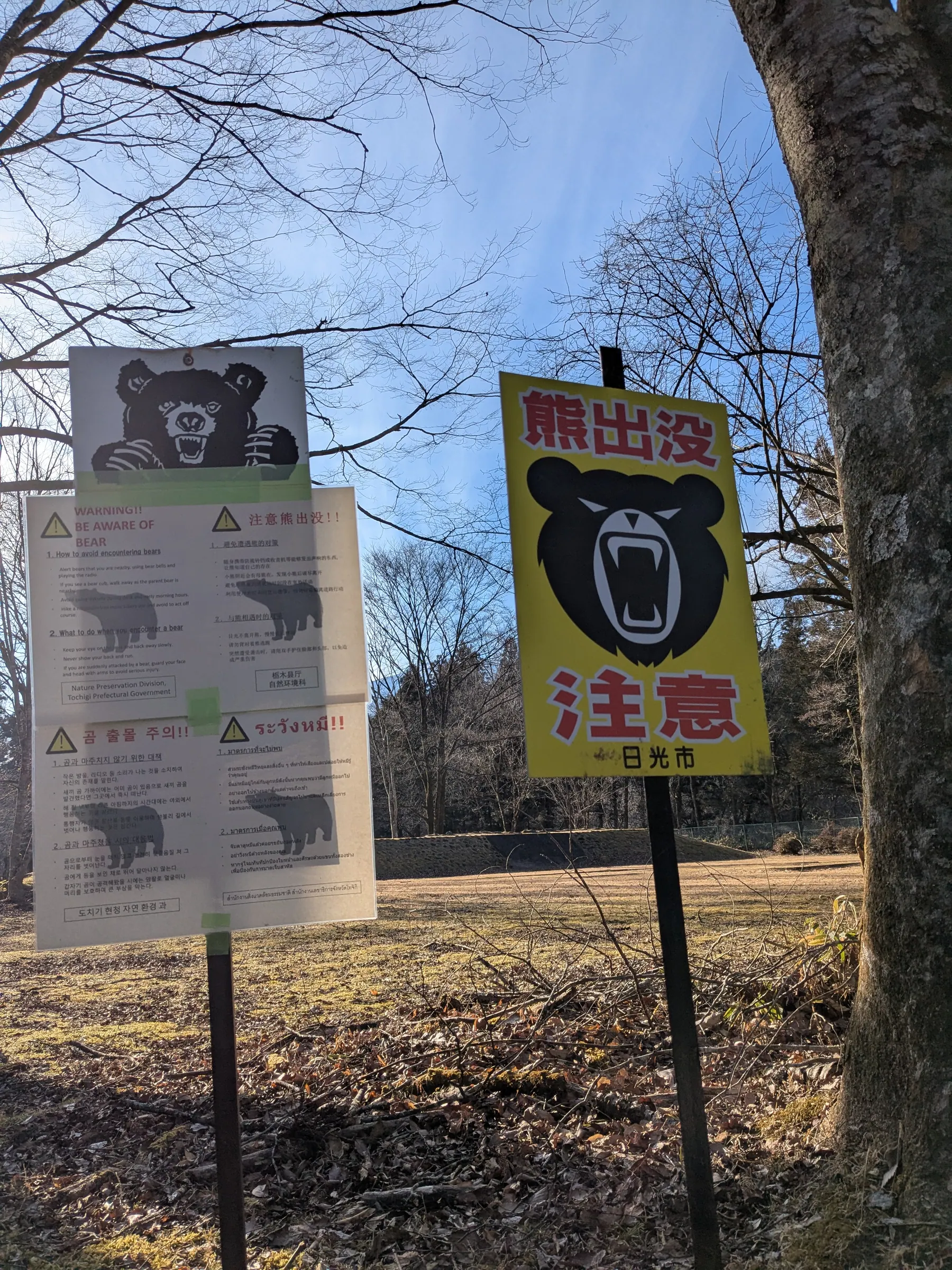
We wandered to the far edge of the temple area and then stopped, because we saw warning signs about bears. This is not a joke, and it’s worth taking seriously - bears really are common in this region, and we had no interest in meeting one. We turned back.
Dinner, and a moment you travel for
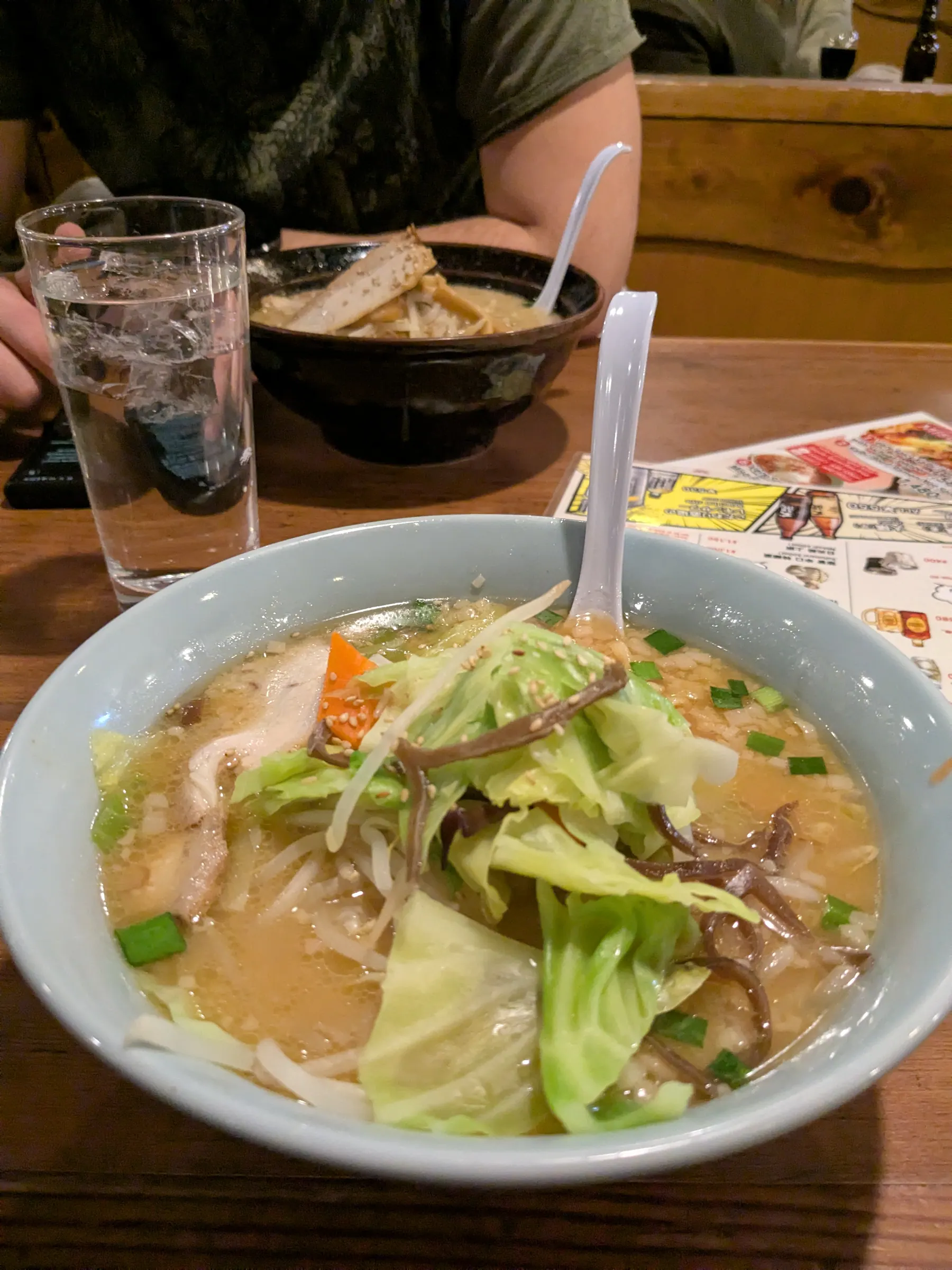
Finding somewhere to eat in the evening was not easy as we thought - Nikko is small, and there weren’t nearly as many options as in Tokyo. After a cold day we ended up at Bonten, where the ramen portions were enormous, with thick, chewy noodles with lot of veggies. Exactly what you want after hours in the cold.
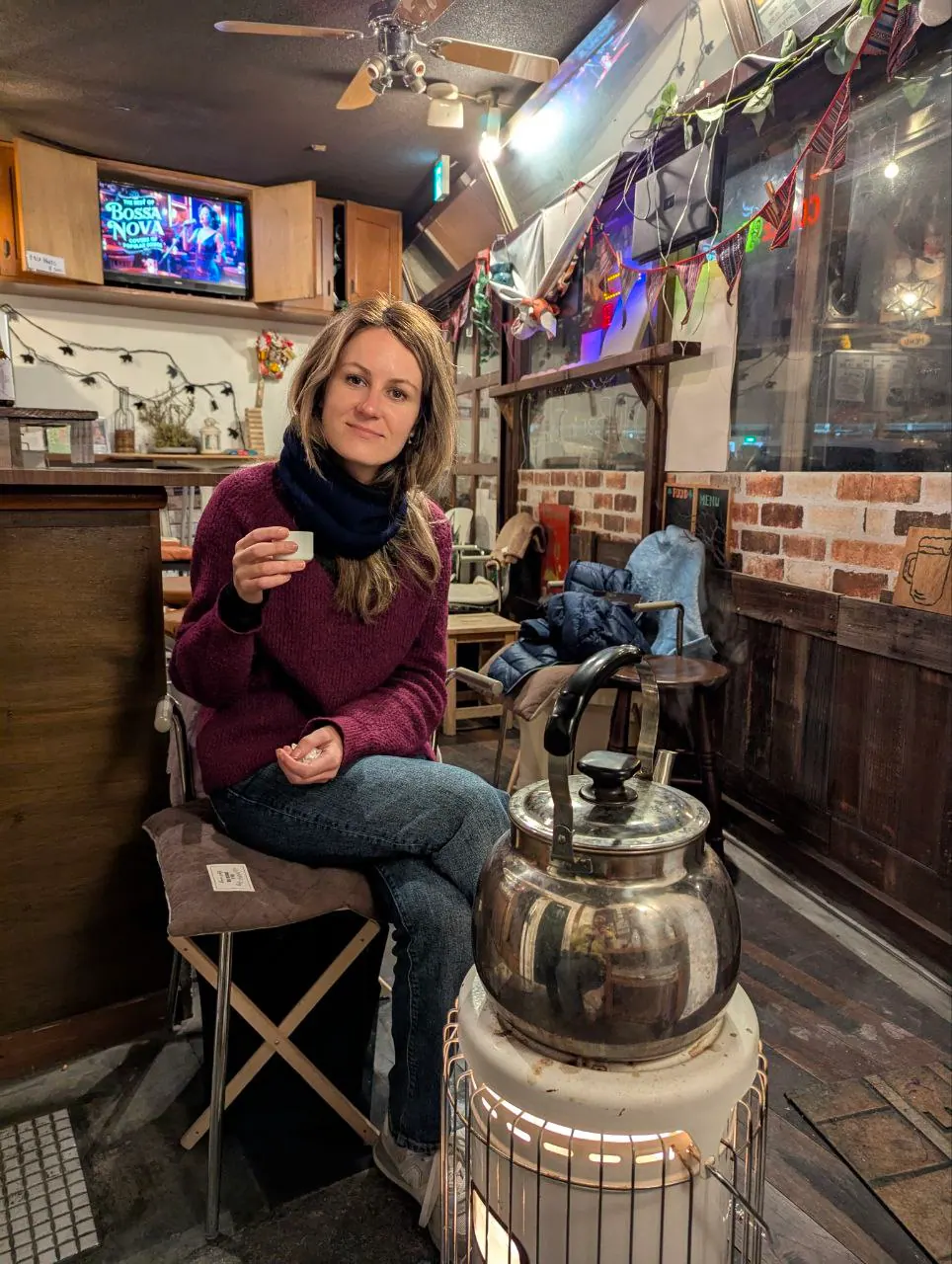
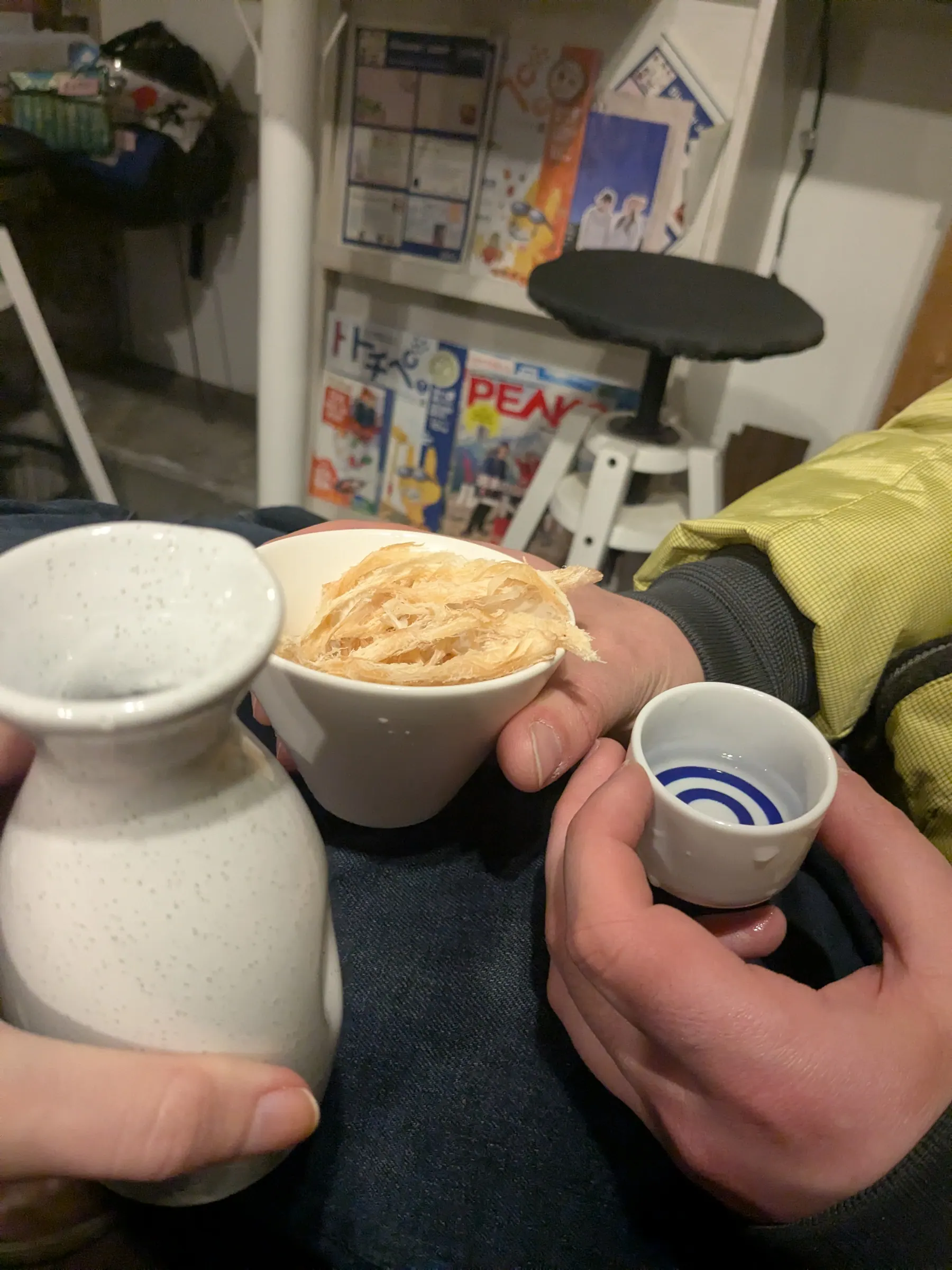
In the evening, looking for somewhere to sit for a while and maybe try sake for the first time, we found a cosy little spot called Nikko Smile Bar and Coffee. We were the only two people there all evening, just us and the woman running it. She served our sake with little pieces of dried squid to nibble on, which we’d never had before. We ended up talking for hours - she had been to Spain, we swapped little curiosities about Japan and about our own countries, and it turned into one of those warm, unhurried, human evenings that you actually travel for. In a packed bar in a busy city, it never would have happened.
Day two: the waterfalls
The second day was the one we, as nature lovers, had most looked forward to: the waterfalls.
We took the bus from the station up to Kegon Falls, the largest and most famous of the area’s waterfalls and one of the three great waterfalls of Japan. The journey takes about 40 minutes. The falls sit right by Chūzenji Onsen, a small lakeside hot-spring village with a real village feel - a few restaurants, the Nikko Natural Science Museum, and Lake Chūzenji itself. You can see the falls for free from the upper deck, but for a closer view you can take an elevator down about 100 metres to a lower observation deck for around ¥600 (about €3.50), which we did.
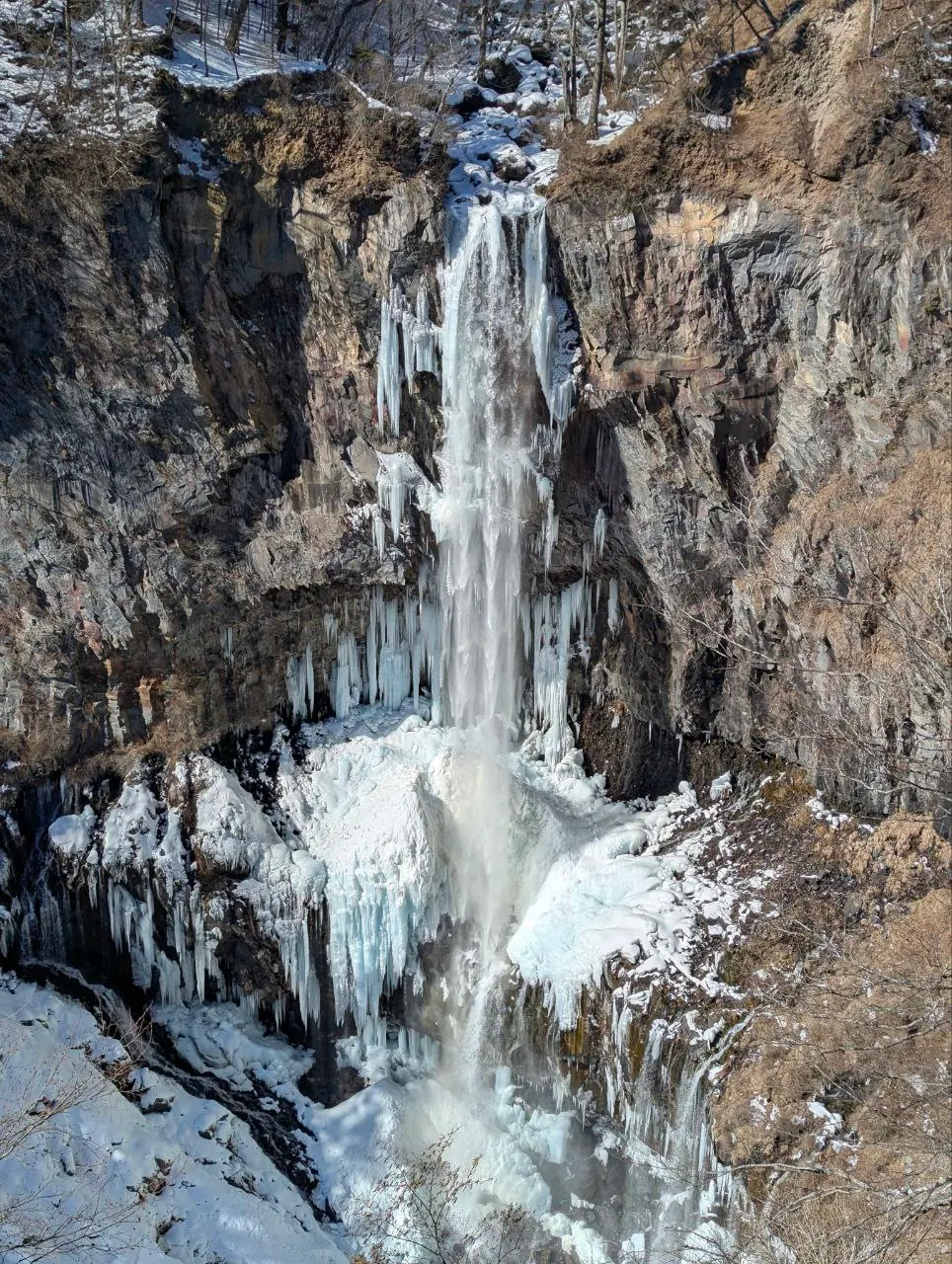
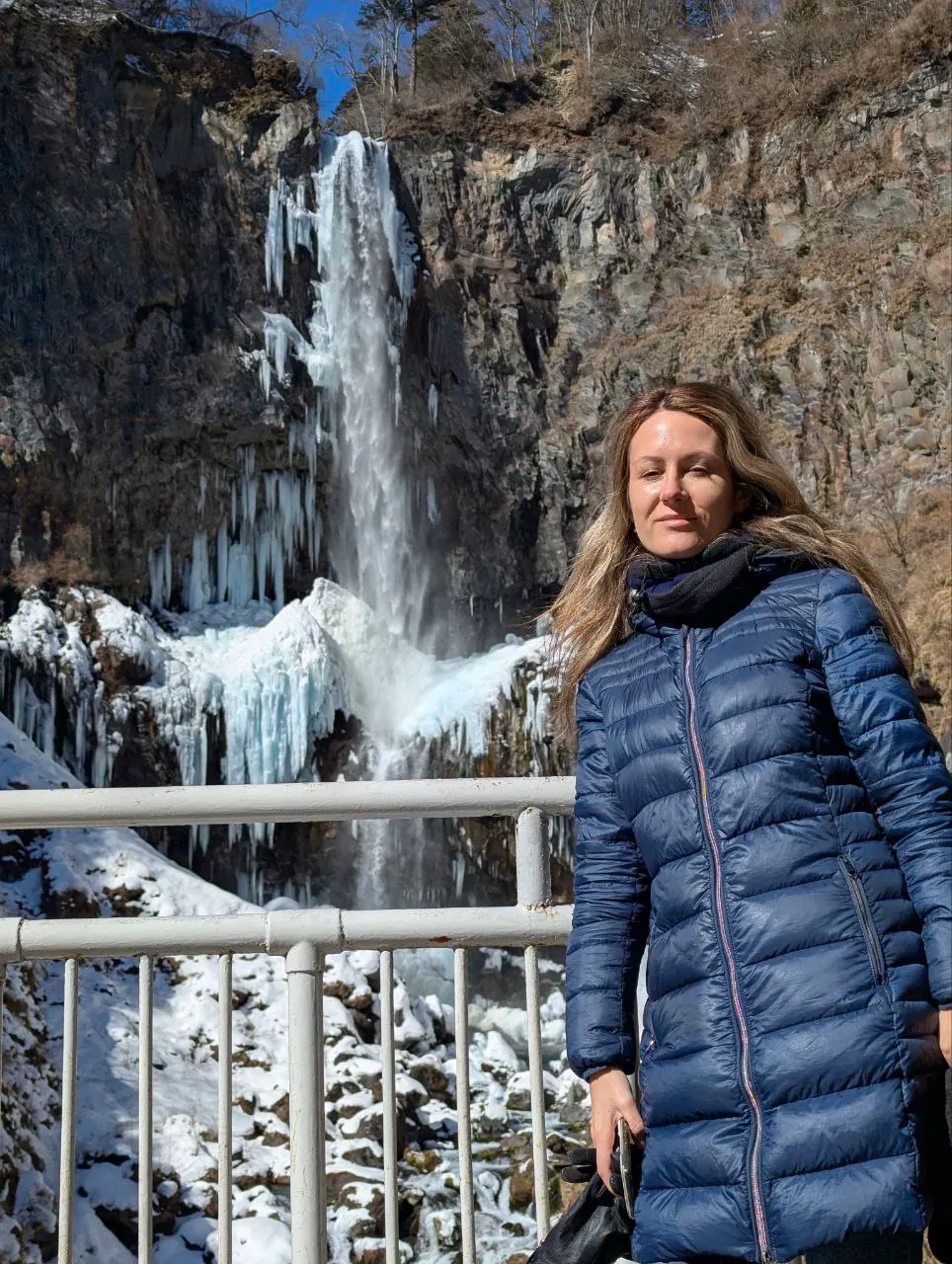
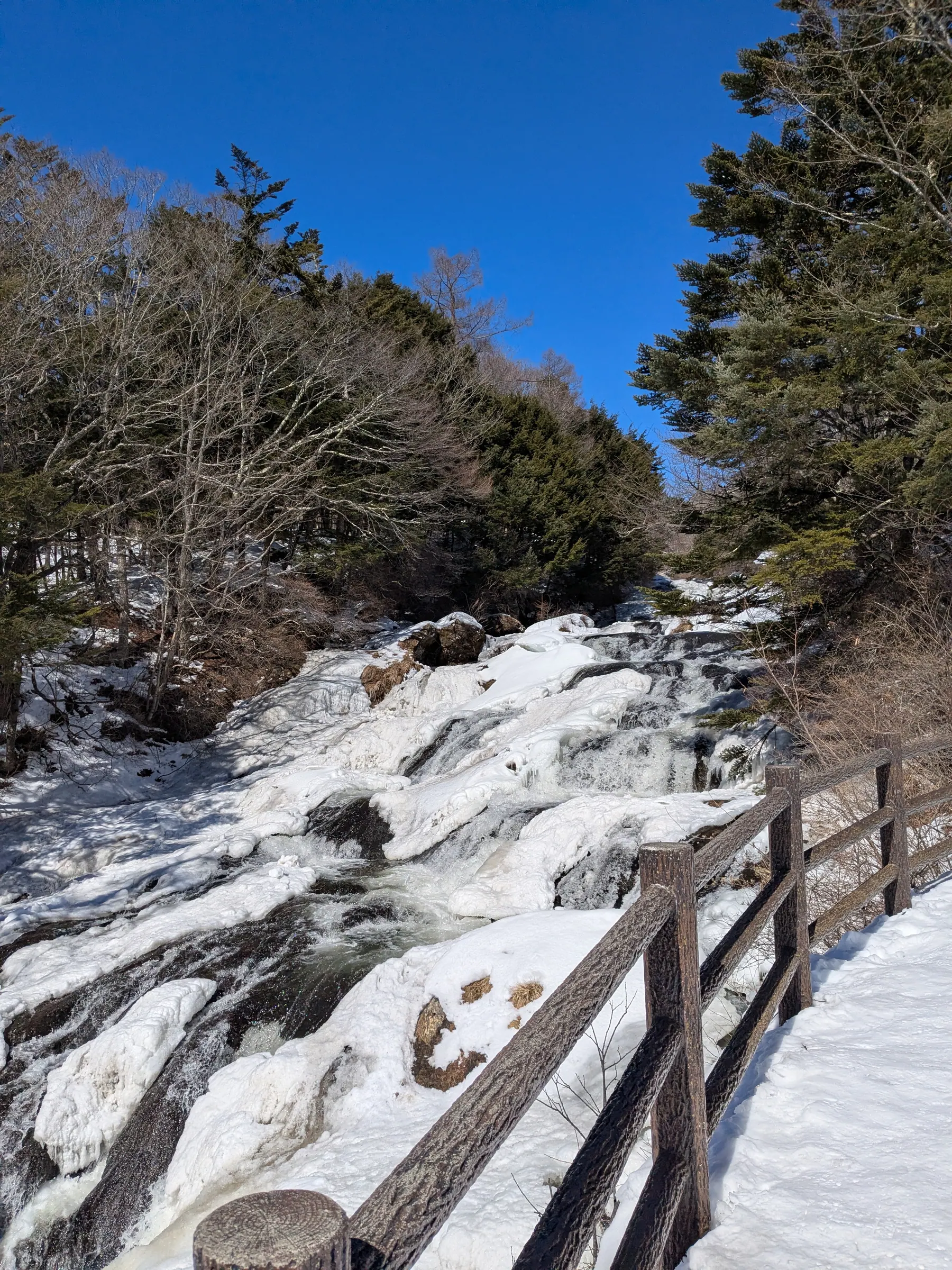
In winter, the waterfall was extraordinary. No photo does justice to the scale and the beauty of it, half frozen, thundering down. Seeing Kegon is reason enough to come to Nikko.
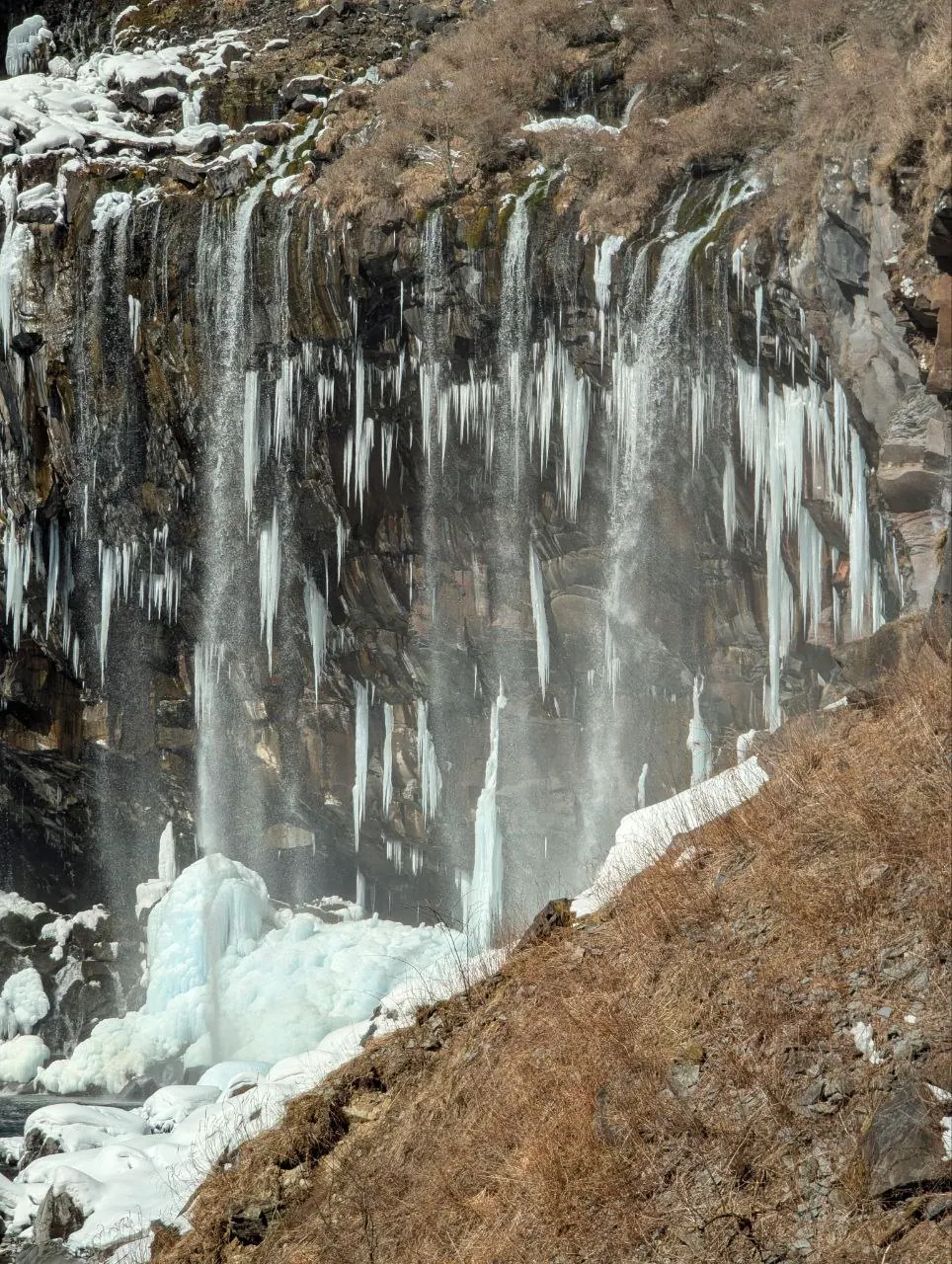
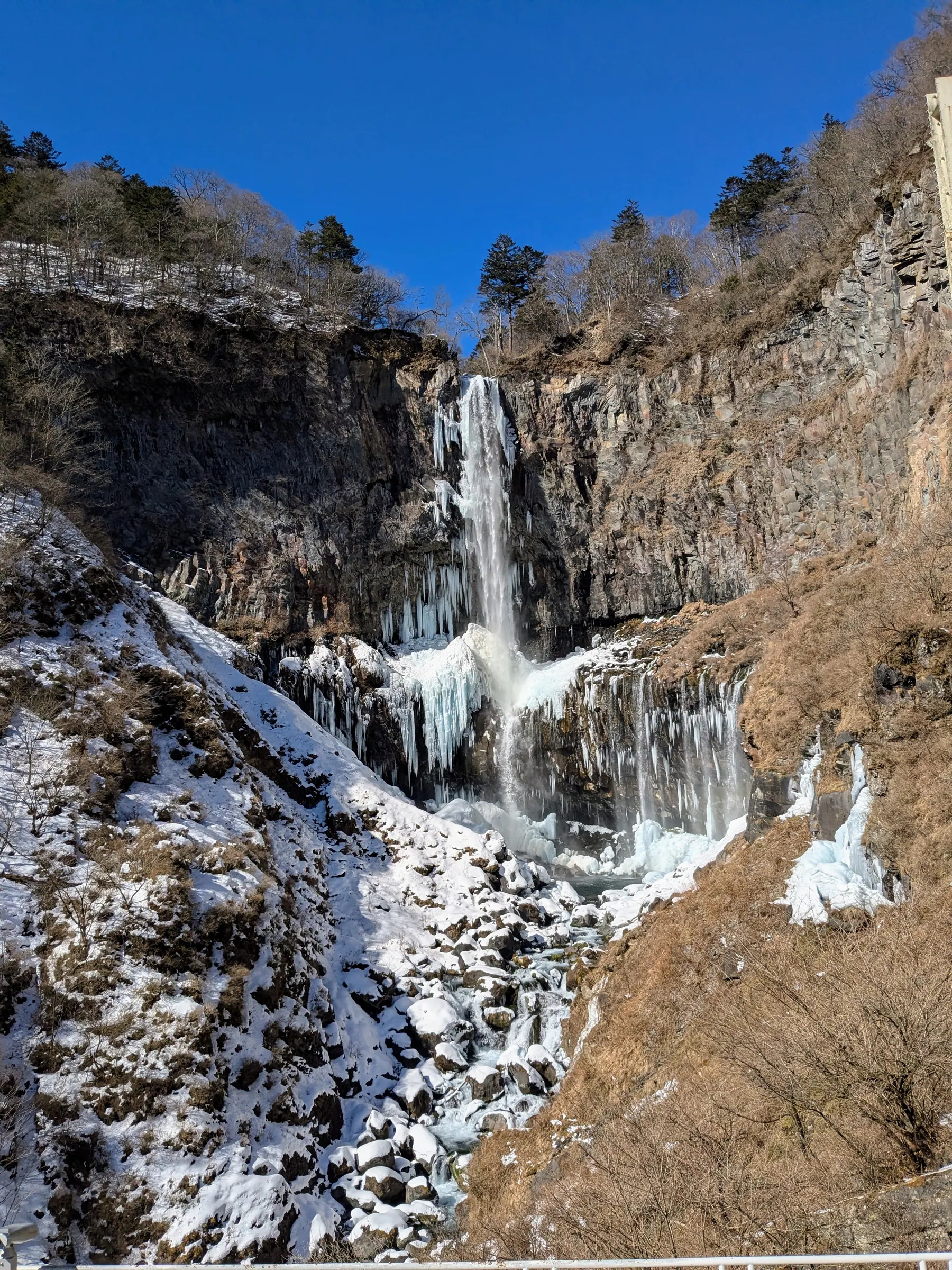
Frozen Kegon Falls
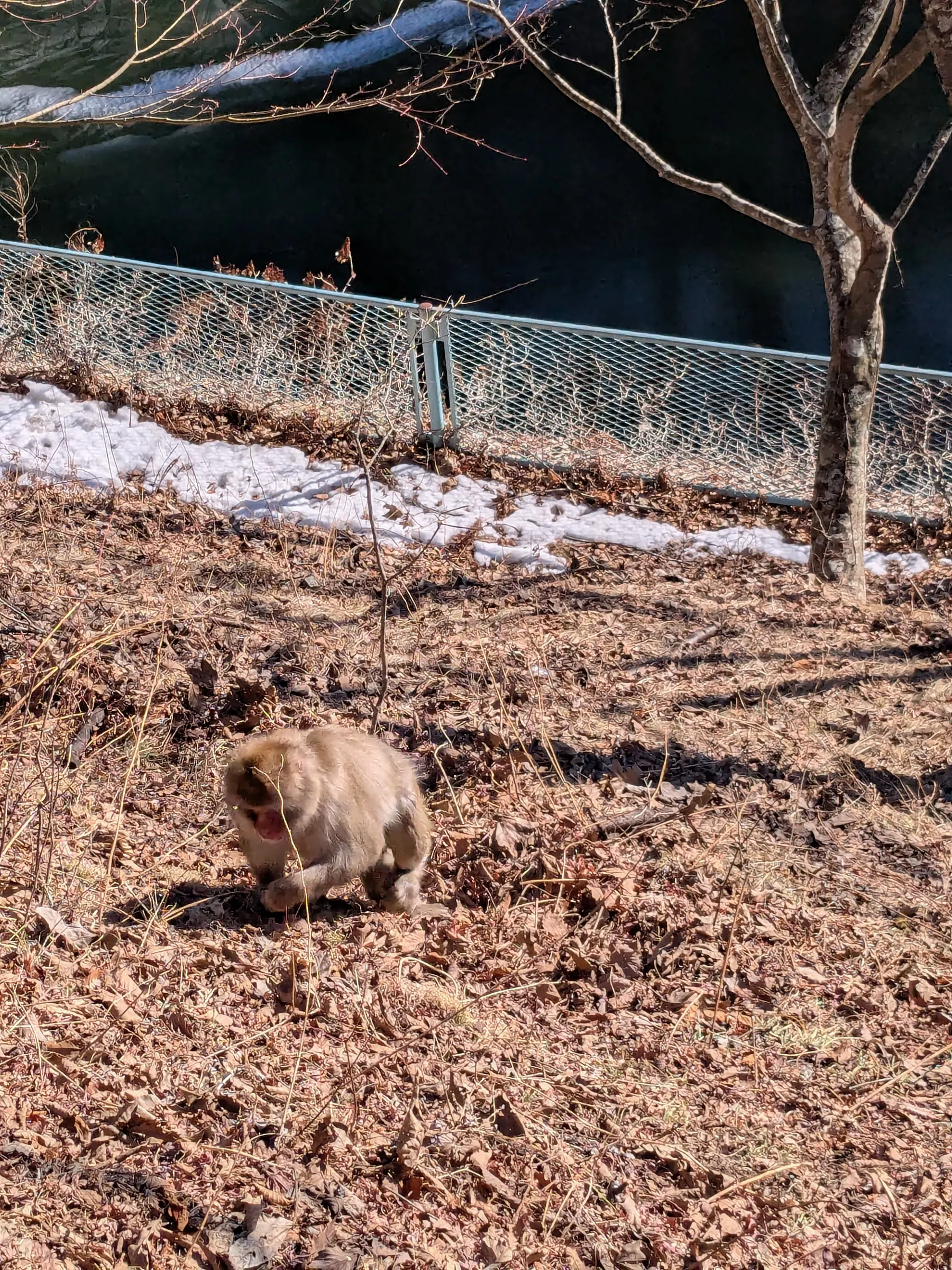
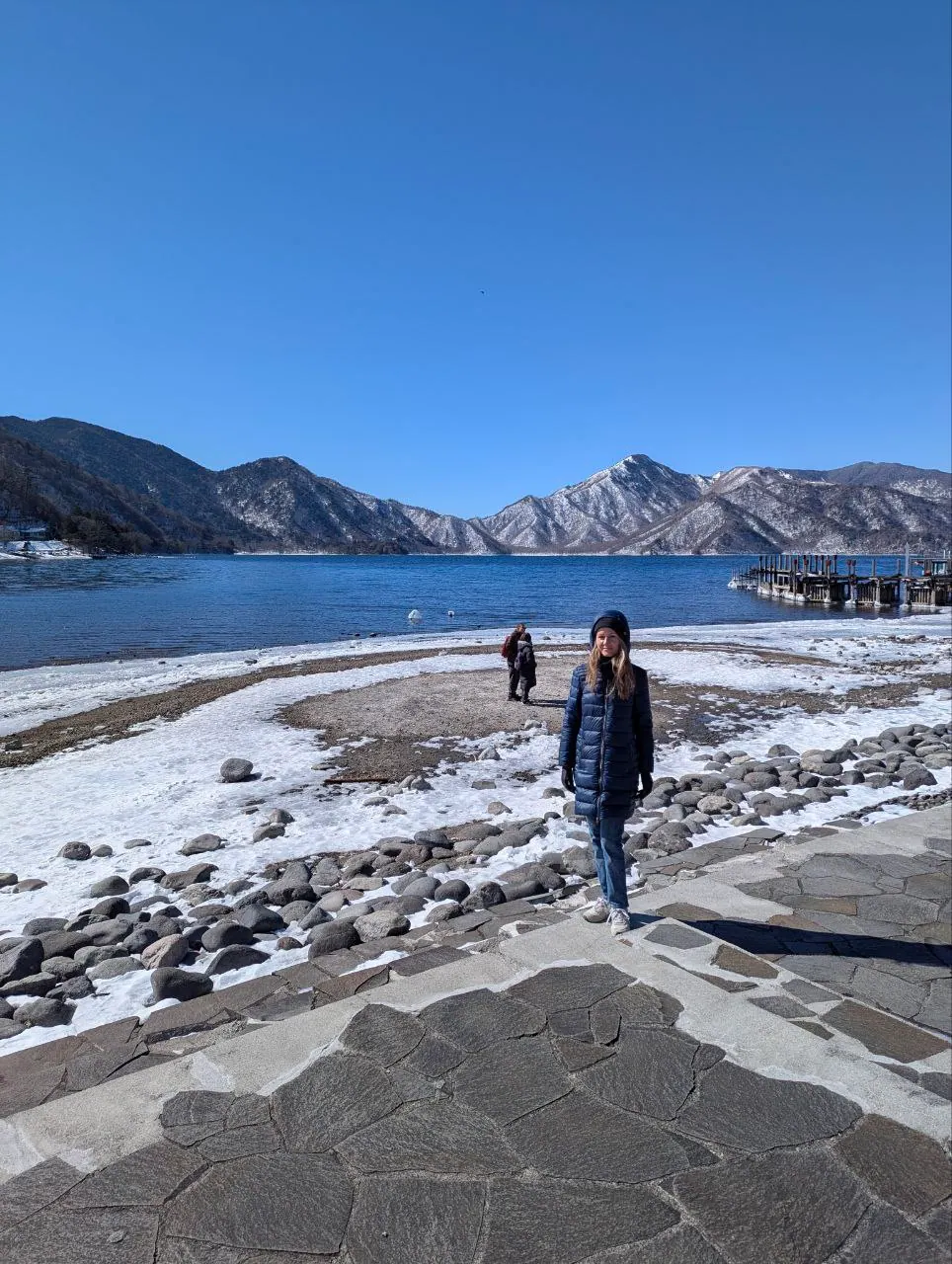
And there was an unexpected bonus by Lake Chūzenji: monkeys, out in the winter, wandering around near the water.
These are wild Japanese macaques, the ones often called “snow monkeys,” the northernmost monkeys in the world, able to live through freezing, snowy winters. Nikko has a good population of them, and they turn up along the mountain roads and around the lake, especially in the colder months when you see them against the snow.
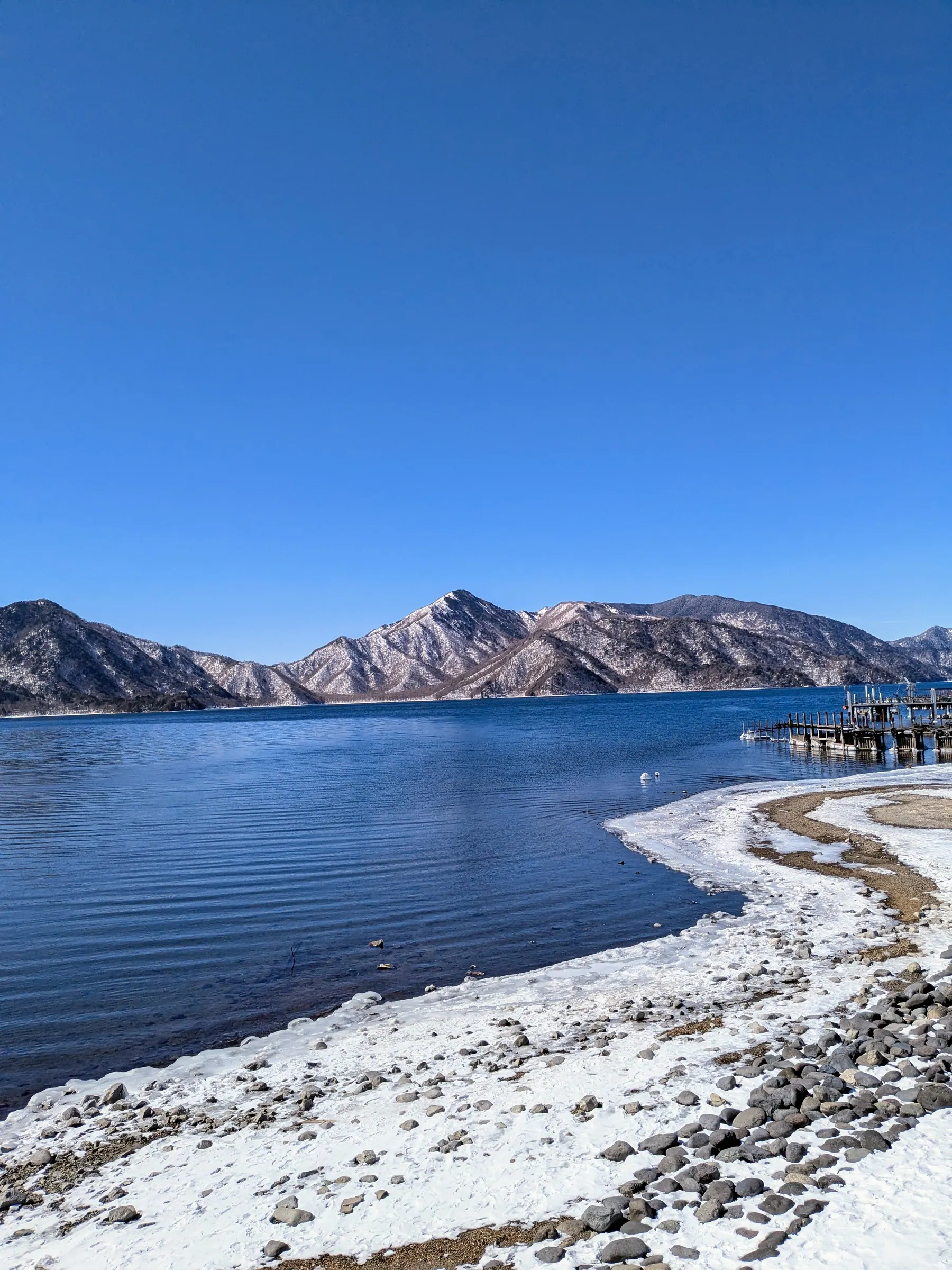
We explored the area slowly and quietly. Lake Chūzenji is Japan’s highest natural lake, sitting at nearly 1,300 metres, and it was formed around twenty thousand years ago when that same volcano, Mount Nantai, erupted and dammed the valley. There’s a curious bit of more recent history too: because the high altitude keeps it cool through Japan’s hot summers, the lakeshore became a summer retreat for foreign diplomats in the late 1800s, who built embassy villas along the water. A couple of them, the old Italian and British embassy villas, still stand and can be visited today.
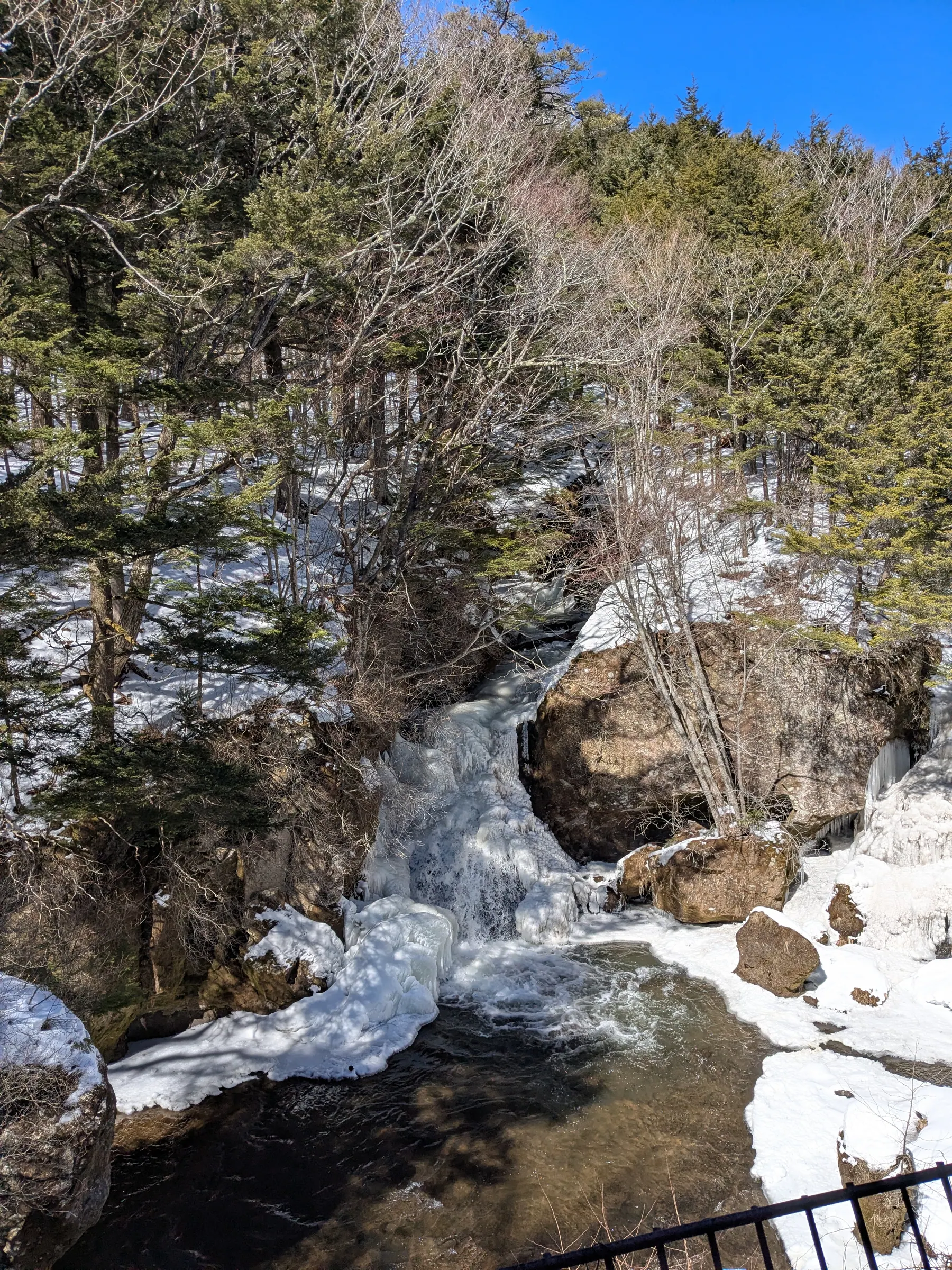
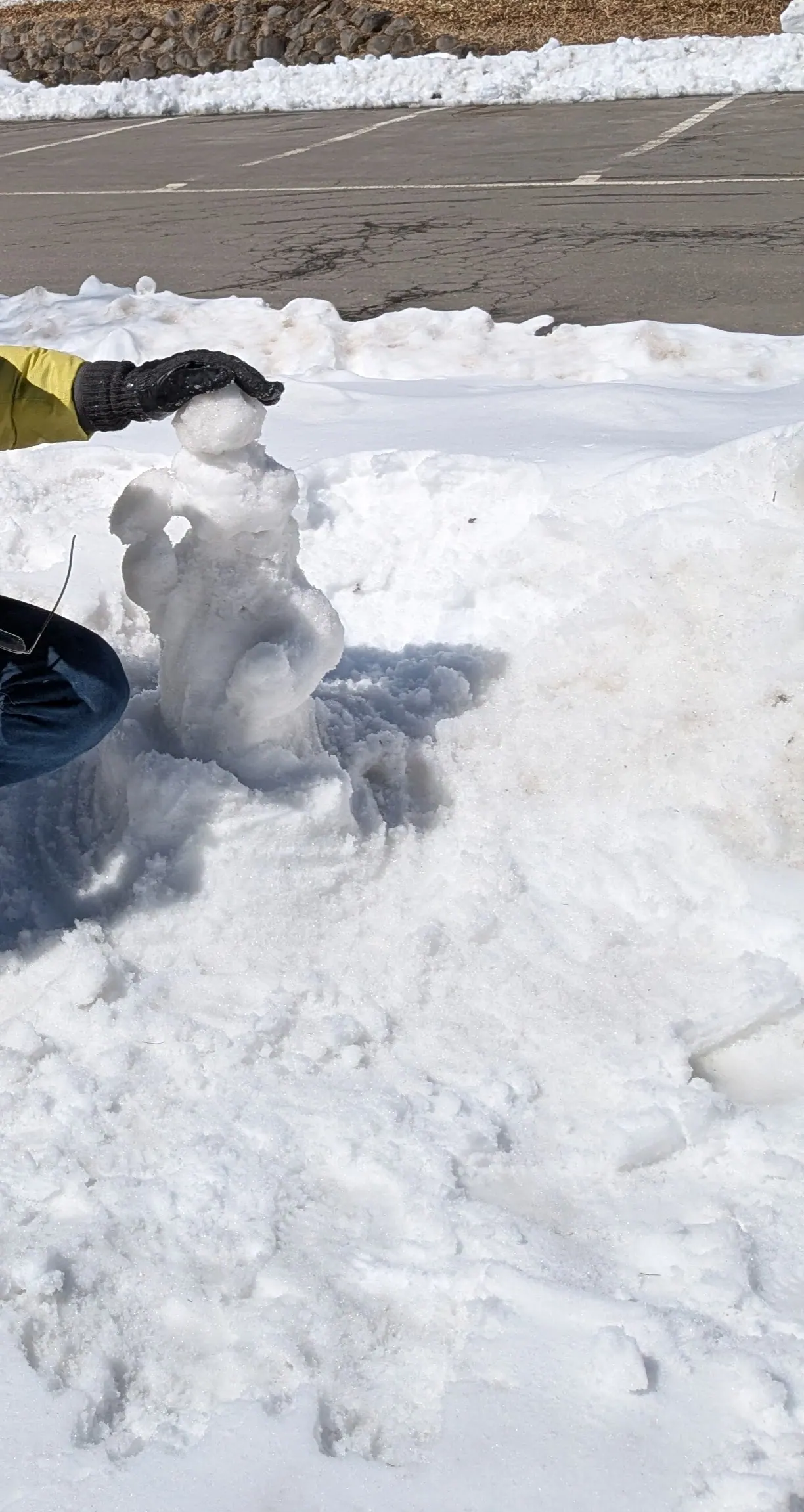
But we weren’t finished. We took the local bus further up to Ryūzu Falls, deep in snow - a smaller waterfall, not as grand as Kegon but lovely in its own way. We even built a little snowman there.
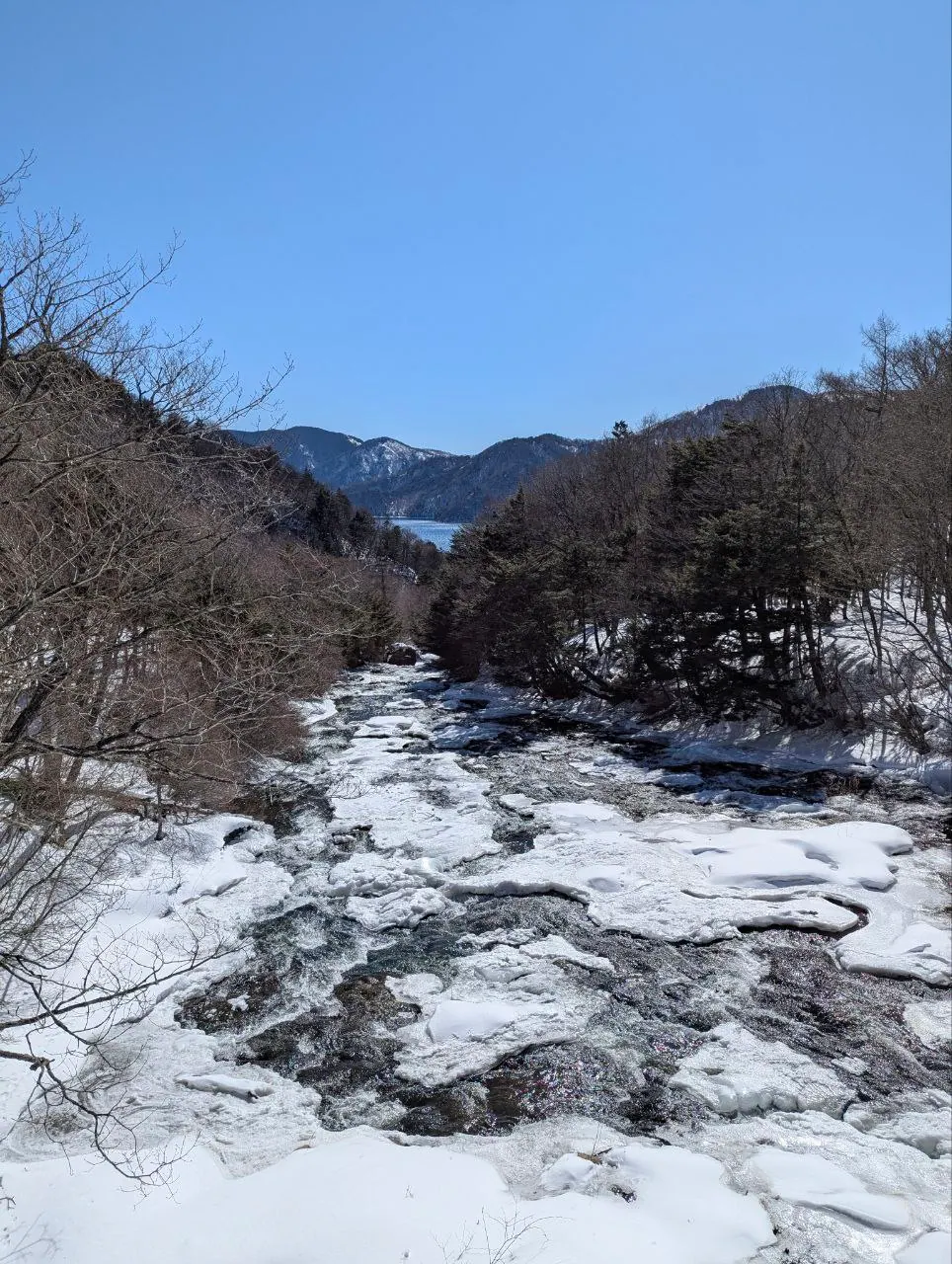
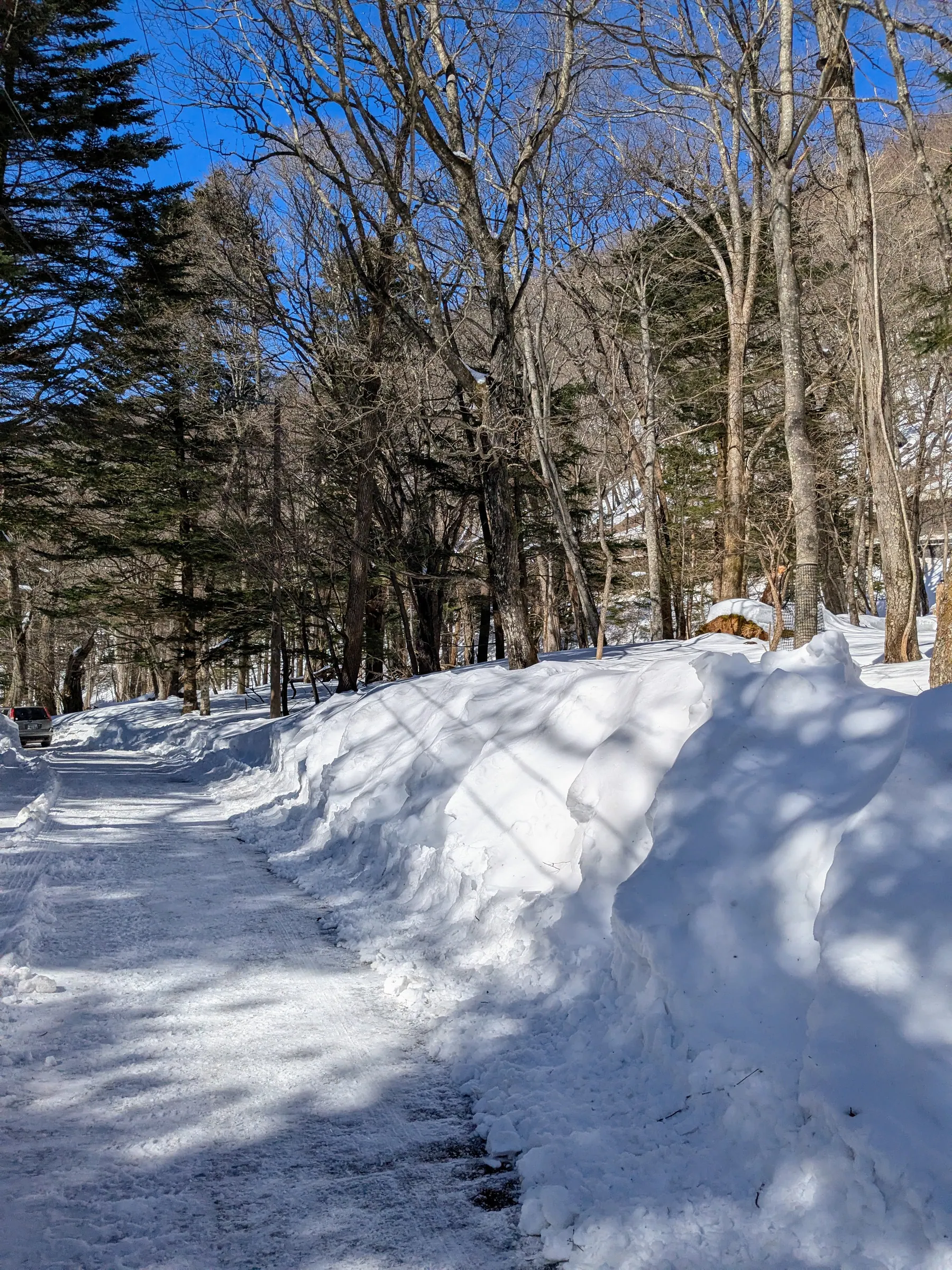
Then we carried on further up by bus towards Yudaki Falls, and by now we had the mountain almost entirely to ourselves - it seems not many people are brave (or foolish) enough to go that far in winter. On the way we saw deer moving gracefully through the snowy landscape, which was its own small gift. But when we reached the far end, we realised going further wasn’t wise: the path was buried in snow and looked as though no one had walked it in days, and with the bears still on our minds, we decided not to risk it. We turned back to the bus, and stopped to eat at a decent local place back in Chūzenji Onsen, the village by Kegon Falls.
One last surprise: Kanmangafuchi Abyss
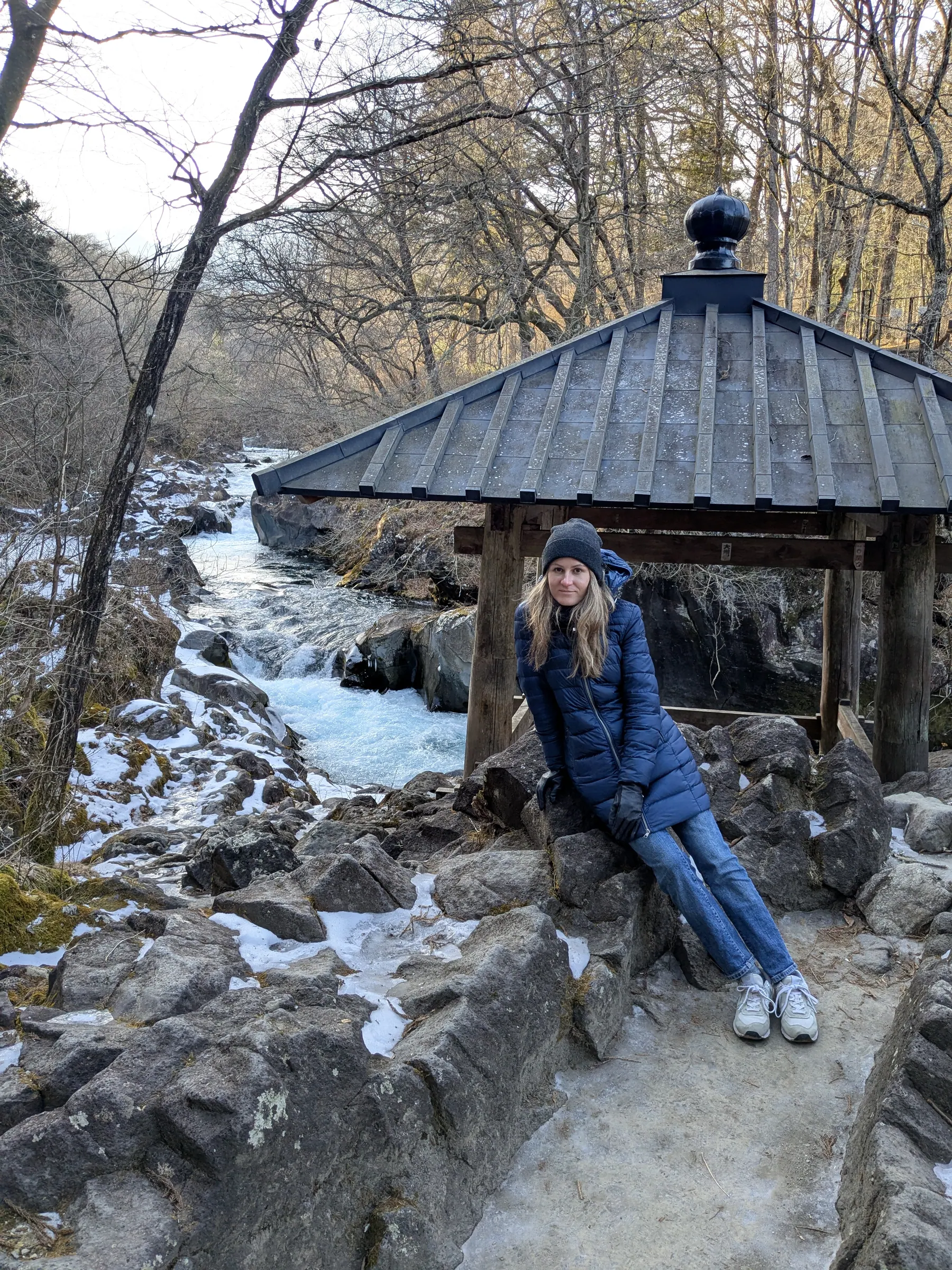
On the way back towards Nikko we almost skipped one more stop, and I’m glad we didn’t. Kanmangafuchi Abyss is a quiet gorge along the Daiya River, formed thousands of years ago by a lava flow from an eruption of Mount Nantai - the volcano beside Lake Chūzenji - with the river later carving its way through the hardened rock.
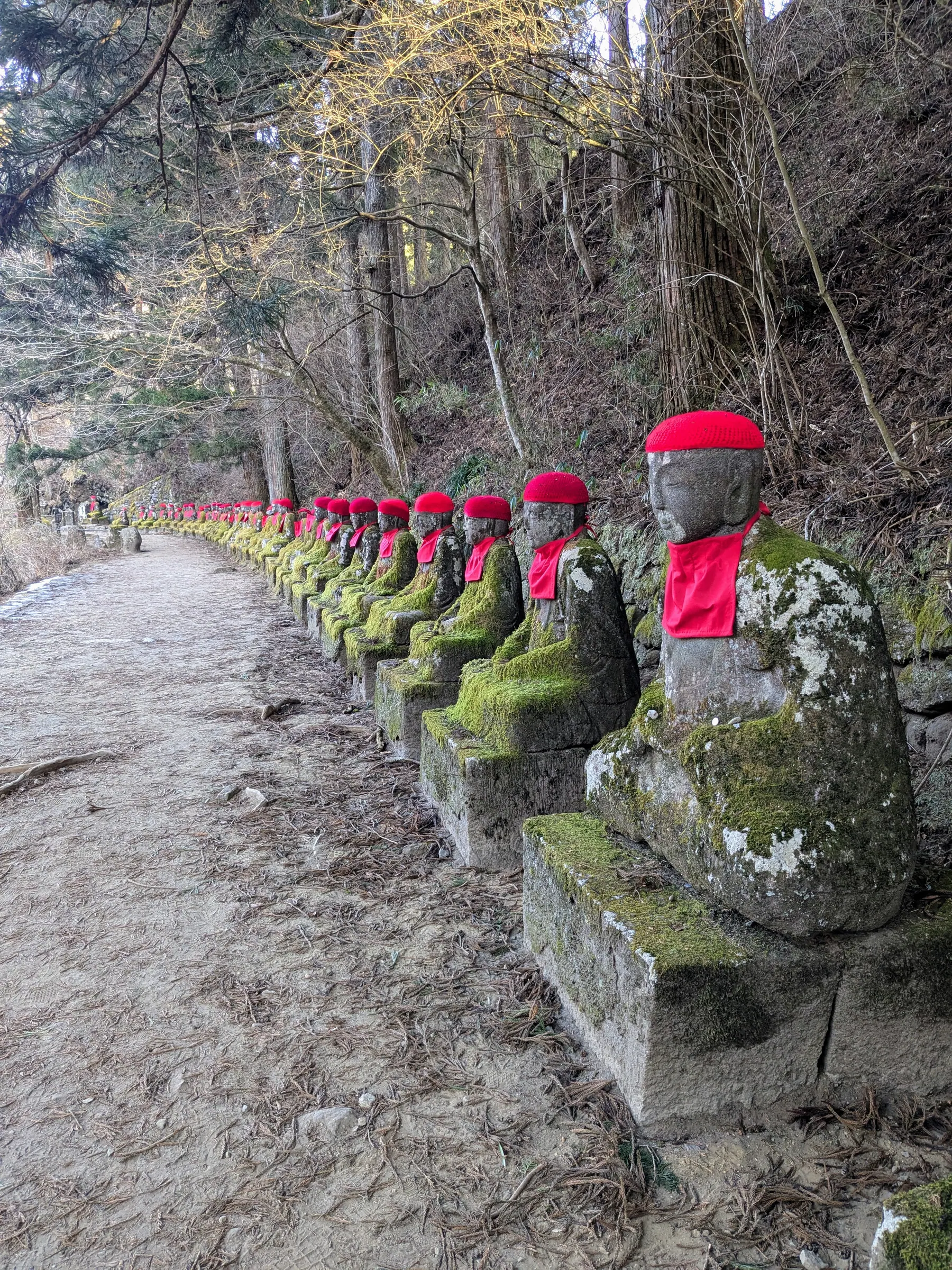
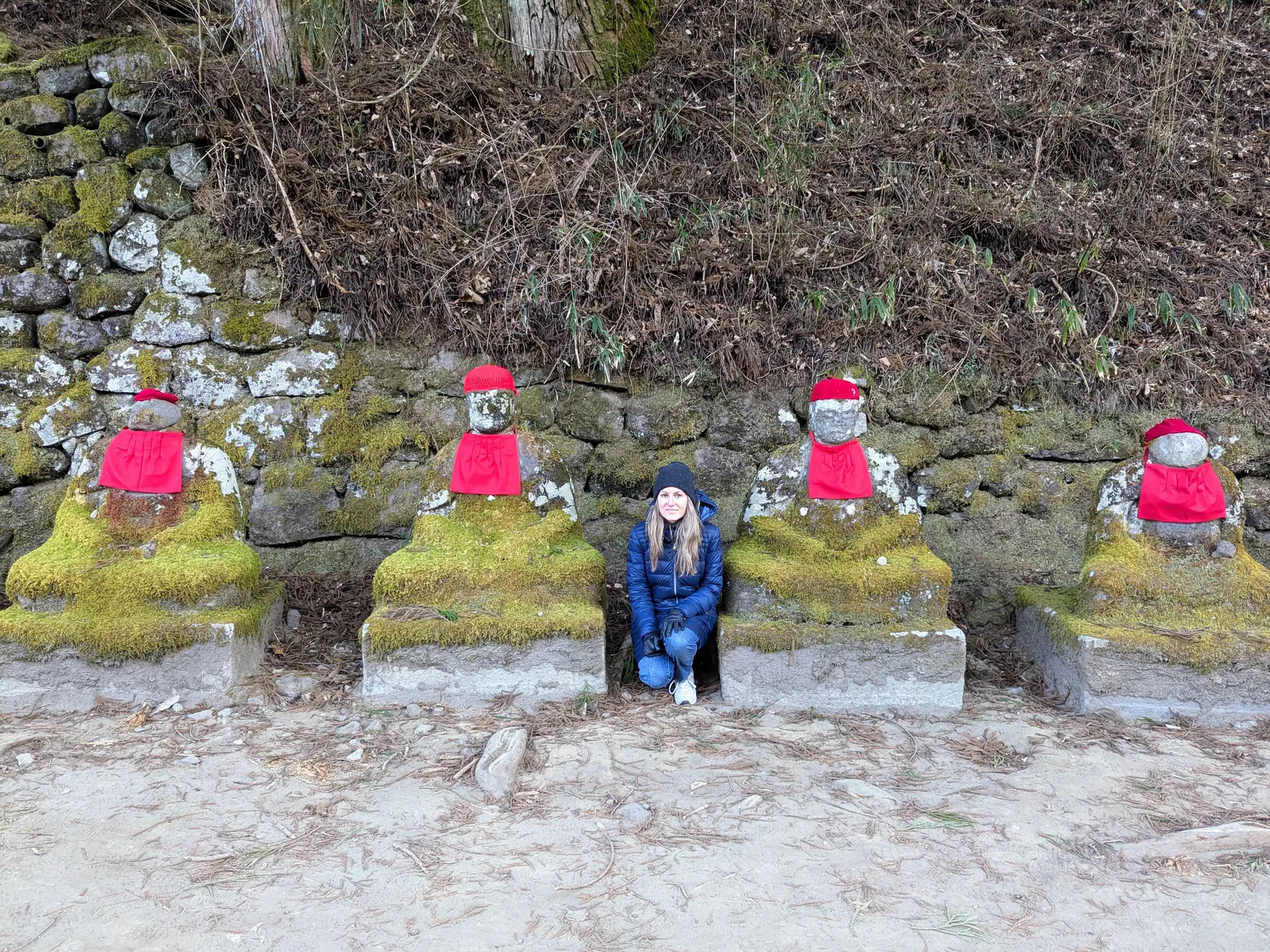
It’s lined with a long row of around seventy stone Jizō statues, each wearing a little red cap and bib. Red is traditionally associated with protection, which is why families dress Jizō in red caps and bibs. Jizō are believed to protect the souls of travelers and unborn children, making these small figures feel less like decoration and more like guardians along the path. They’re known as the “Ghost Jizō,” because of a local legend that you can never count them and get the same number twice - every attempt gives a different total. In the cold, grey quiet, with the river running beside them, it was a strange and beautiful place to end the day. It’s fairly close to the temple area too - about a thirty-minute walk - so it’s easy to add on.
And that was our Nikko. Back near the station we tried yuba, Nikko’s local specialty - it’s tofu skin, the delicate layer that forms on top of boiling soy milk, lifted off and used in all sorts of dishes. You’ll see it advertised all over town, a leftover from the vegetarian cooking of the mountain monks, and it’s worth a try while you’re here. Then we made our slow way back and took the train to Tokyo.
Other things to do in Nikko
We only had a day and a half, so there was plenty we didn’t get to. If you have more time, or you’re planning your own visit, here are some other things to see beyond the main shrines:
Senjōgahara Marshland - a high plateau of marshland above Lake Chūzenji with a flat boardwalk trail, popular with hikers and birdwatchers in the warmer months (and snowshoers in winter).
Yumoto Onsen - a small hot spring town at the far end of the Oku-Nikko area, past the waterfalls, for anyone wanting to soak in the mountains.
Edo Wonderland (Edo Mura) - a theme park that recreates a town from the Edo period, with ninja and samurai shows, where you can even dress in period costume. Good for families.
Tamozawa Imperial Villa - a large historic residence of the Tokugawa family, blending Japanese and Western styles, near the Kanmangafuchi Abyss.
A few interesting facts about Nikko
Nikko has been a sacred place for mountain worship for well over a thousand years, long before the famous shrines were built. A Buddhist monk named Shōdō Shōnin first opened it as a religious site in the 8th century.
The old road into Nikko, the Nikkō Cedar Avenue, is lined with around 12,500 cedar trees and holds a Guinness World Record as the longest tree-lined avenue in the world.
Nikko sits inside a national park, which is why the shrines, the waterfalls, the lake and the mountains all belong to the same protected landscape - and why the wildlife (the monkeys, the deer, and yes, the bears) is so close at hand.
Was it worth going in winter?
More than we ever expected. We had treated Nikko almost as an afterthought - a “let’s see if we have time” stop - and it became my dearest memory of the whole of Japan. Quiet, beautiful, snowbound, with kind people and hardly another tourist in sight. The winter that we’d been so disappointed to be stuck with turned out to be the reason it felt so special.
One piece of advice if you’re planning your own trip: stay overnight rather than doing Nikko as a day trip. Plenty of people rush up from Tokyo and back in a single day, and you can see the main shrines that way, but you’d miss half of what made Nikko special for us. Staying meant we could give the shrines half a day or a full day, and the waterfalls a full day, without watching the clock - and it gave us that slow evening in the little bar, which a day-tripper would never have. Nikko rewards not being in a hurry.
If you don’t mind the cold, and you’d rather see Nikko at its calmest, winter is a lovely time to go - the snow suits it, and it tends to be far quieter than the busy autumn season. Japan is getting more popular in winter too, so I can’t promise you’ll have it as much to yourself as we did, but even with a few more people around, Nikko in the snow is one of the loveliest, calmest corners of Japan you could ask for.
Trains and passes
This is the practical part - everything you need to work out getting to Nikko and around it. One general note first: fares, passes and entry fees in Japan change often, so treat the figures here as a rough guide and check the current prices before you go.
Getting there by train. The easiest way is the direct Tobu limited express from Asakusa Station (Spacia Kegon, Revaty, or Spacia X), about two hours with no transfers. There are also direct JR - Tobu trains from Shinjuku. The base train fare is the same whether you take the slow local trains or the fast limited express - the limited express simply adds a surcharge on top for the direct, reserved-seat train. The local trains are cheaper only because you skip that surcharge, but they take an extra hour or more and involve confusing transfers. Unless you’re on a very tight budget, the surcharge is worth it.
Do you need to book ahead? For most of it, no - you can buy the Nikko Pass and base-fare tickets on the day at Tobu ticket counters, including Asakusa, or use an IC card like Suica or Pasmo for the local trains. Tobu also offers digital purchase for eligible passes, so check the current sales options before you travel. The one thing worth booking in advance is the direct limited express: all its seats are reserved, so on busy weekends and in peak seasons like the autumn colours it can sell out, sometimes for a day or two. You can reserve online ahead of time through Tobu’s English ticket site or platforms like Klook, which is the safe option if your dates are fixed or you’re travelling at a busy time.
If you have a Japan Rail Pass. The JR Pass does not cover the Tobu line from Asakusa, since Tobu is a private railway. The route that is fully covered (and free) is the JR one: the Shinkansen from Tokyo to Utsunomiya, then a change to the local JR Nikko line, about an hour and three quarters with one transfer. There’s also a direct JR train from Shinjuku, but it runs partly on Tobu tracks, so the pass only covers part of it and you pay a supplement. Either way, if you already have a JR Pass, there’s no need to buy a Nikko Pass on top.
The Nikko Pass (World Heritage Area). We bought this at the Tobu counter in Asakusa. It’s valid for two days and covers the round-trip base train fare plus unlimited local buses in the shrine and temple area. When we visited in February 2025 it cost around ¥2,120 for an adult - at the time, Japan was actively encouraging visitors to travel beyond Tokyo and spread out across the country - but the price rose to ¥3,000 in April 2025, so check the current fare. Since a basic return train ticket alone is already about ¥2,800, the pass is good value if you’re seeing the temples, as you get the shrine-area buses thrown in. It doesn’t include the limited express surcharge or the temple entrance fees.
Buses up to the waterfalls are separate. This is the part people get wrong: the World Heritage pass does not cover the buses that climb the mountain road to Kegon Falls, Lake Chūzenji and beyond. For the waterfalls you either pay individual fares on the bus, or buy one of the dedicated bus passes - the Chūzenji Onsen pass reaches as far as Kegon Falls and the lake, while the Yumoto Onsen pass covers the whole mountain line, including Ryūzu Falls and Senjōgahara. These bus passes are sold at Tobu-Nikko Station and JR Nikko Station, at the counter and machines by the bus terminal, with digital versions through the Tobu app. There’s also a four-day “All Area” pass that covers everything, including the round-trip train from Asakusa and all the mountain buses; check Tobu’s current sales locations and digital options before travelling.
Paying on the buses. You can pay bus fares in cash or with an IC card like Suica or Pasmo, but keep coins and small notes on you: cash is always accepted, and cards aren’t guaranteed on every rural route. If you pay cash, take a numbered ticket as you board.
FAQs
Is Nikko worth visiting in winter?
Yes. Winter is quieter than autumn, and the snow suits Nikko beautifully.
How long should you stay in Nikko?
Stay overnight rather than making Nikko a day trip: give the shrines half a day or a full day, and the waterfalls a full day.
How do you get to Nikko from Tokyo?
The direct Tobu limited express from Asakusa runs to Tobu-Nikko in about two hours with no transfers.
Read next
More posts for this trip mood
 Asia
Asia Hòa Bình, Vietnam
Mai Chau: A Quiet Rice Valley in Northern Vietnam
A place for riding slowly through rice fields and letting the valley set the pace.
Mai Chau is a quiet rice valley in northern Vietnam, with bike rides through bright green fields, White Thai village life and waterfalls beyond the valley.
 Asia
Asia Ninh Binh, Vietnam
Two Days in Ninh Binh, by Bike and by Boat
Two slow days of bicycles, limestone mountains, temples, caves and a boat through Trang An.
Two days in Ninh Binh: cycling from Tam Coc to Bich Dong, Buffalo Cave and Mua Cave, with a quiet Trang An boat trip.
 Asia
Asia Northern Vietnam, Vietnam
The Ha Giang Loop: Three Days on a Motorbike
Three days on the Ha Giang loop with an easy rider: what it cost, what the route covers, what to bring, and the Sunday market at Dong Van worth waking for.