

Ninh Binh · Ninh Binh · Vietnam
Two Days in Ninh Binh, by Bike and by Boat
Two slow days of bicycles, limestone mountains, temples, caves and a boat through Trang An.
Two days in Ninh Binh: cycling from Tam Coc to Bich Dong, Buffalo Cave and Mua Cave, with a quiet Trang An boat trip.
Quick facts
- When to go
- Late September into October for the golden rice, June for the lotus flowers, October and November for the best weather. The humidity is the thing to plan around.
- Time needed
- Two full days cover the main cycling stops and a Trang An boat trip; add a third for Cuc Phuong National Park.
- Getting there
- From Hanoi, a limousine van or train takes around two to two and a half hours.
- Good to know
- Rent a bike, start early in the humidity and carry small cash for bicycle parking.
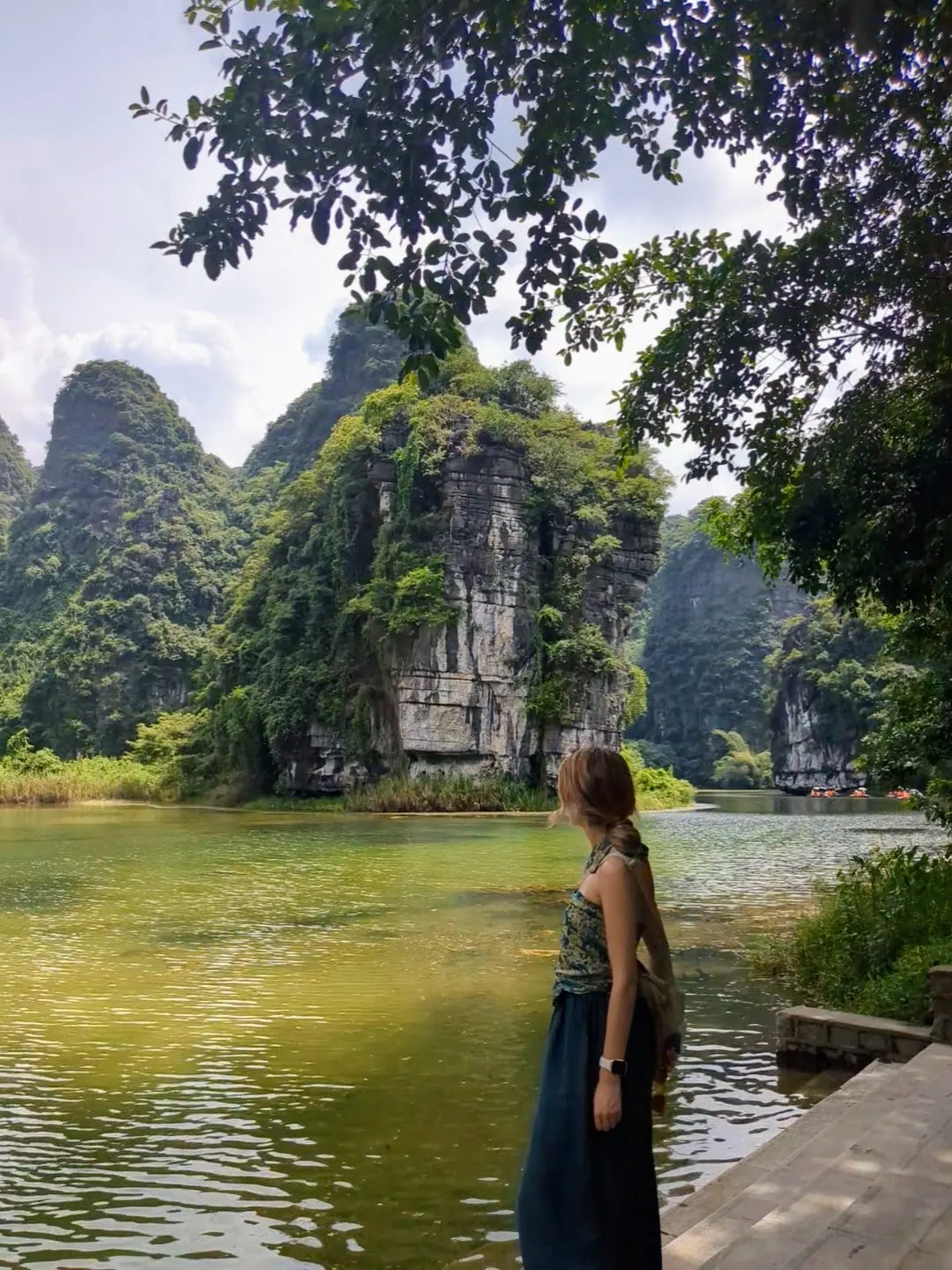
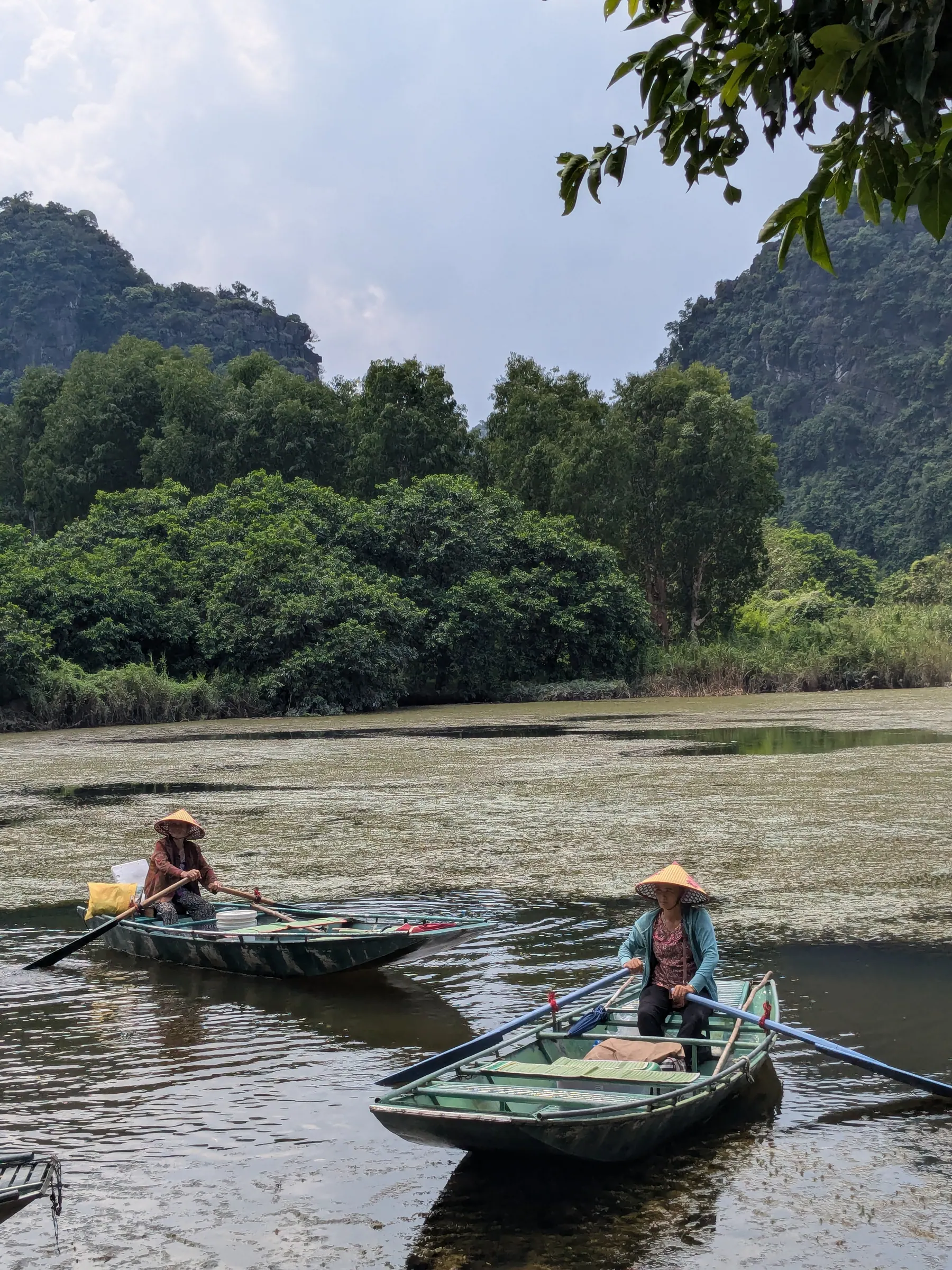
Ninh Binh was on our list from the moment we started planning Vietnam. It looked like the kind of nature you don’t skip - green mountains, water everywhere, lotus flowers. And the reality turned out to be better than the photographs.
Ninh Binh is the name of a province, not a town. When people say they are going to Ninh Binh, they usually mean this wider landscape; the former Ninh Binh city became part of Hoa Lu city in 2025.
We came here in the middle of September, by transfer from Cat Ba, arriving at our homestay around eight in the evening. It’s roughly 150 kilometres and takes about four hours, including the ferry off the island.
September is a reasonable time to come, and it’s one of the two windows people recommend. Ninh Binh has two rice harvests - late May to early June, and again from late September into October - so if you want the paddies gold rather than green, aim a couple of weeks later than we did. The lotus season is different again and peaks in June, which is why the ponds weren’t in bloom when we were there.
Our homestay rented out bikes, which turned out to matter more than anything else, because Ninh Binh is a place to see on two wheels.
Before you go
Getting there from Hanoi. Most people come from Hanoi, which is about 95 kilometres away. The limousine van is easiest - nine-seater minivans rather than anything glamorous, picking up in the Old Quarter and dropping you at your accommodation in Tam Coc, Trang An or the city, around two hours, €8–15. The train also works here, which isn’t true of every route in Vietnam, because Ninh Binh sits on the main north–south line: around €6 and two to two and a half hours, though the station is in the city centre, six or seven kilometres from Tam Coc, so you’ll need a Grab at the other end.
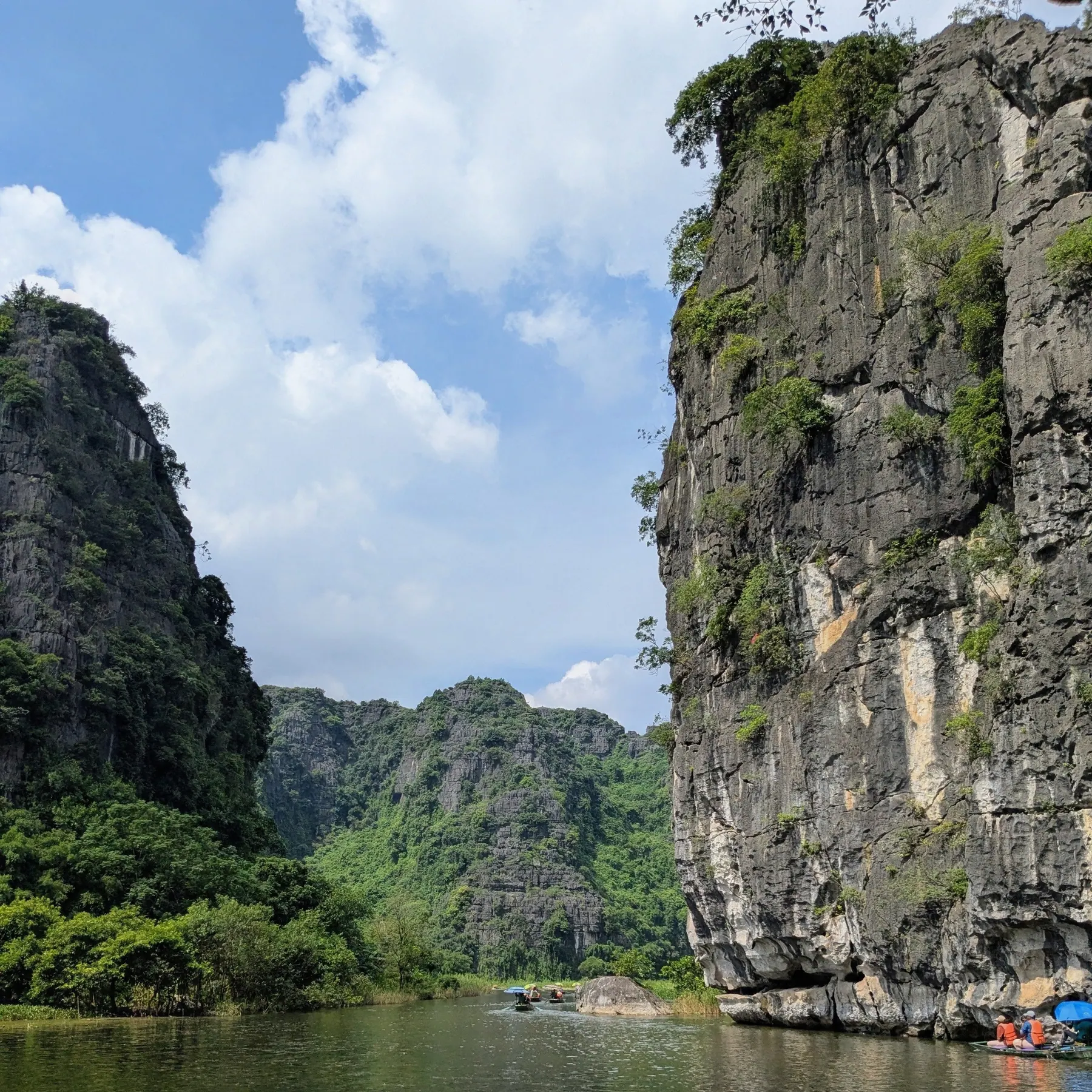
Where to stay. There are three areas and the choice matters more here than in most places. Tam Coc is where most people stay and it’s the sensible default - a small town of restaurants, bars and homestays, walkable, with the boat pier right there. Trang An is quieter and actually inside the nature area, so you wake up in the scenery. Hoa Lu city - formed in 2025 by merging Ninh Binh city and Hoa Lu district - is the one most guides tell you to skip, and it is further from everything, but it has the old town around Kỳ Lân lake lit up at night, a walking street and more restaurants than the other two.
One warning, from experience. Tam Coc is the name of a whole area, not just the town, so accommodation advertised as being “in Tam Coc” can mean anything from the centre to somewhere well out in the fields. Ours was further out than we’d realised and essentially on a main road, which isn’t what you picture when you book somewhere rural. Look at the map before you book.
How the place is laid out. Ninh Binh isn’t really a town with sights in it. It’s a landscape, and the things you come to see are spread out with real distance between them - walking isn’t a serious option. From our homestay it was about ten minutes by bike into the centre of Tam Coc, and forty minutes out to the nature sites. That’s the scale of it, and it’s why the bike matters.
The heat. This is the thing nobody warns you about properly. With that much water around - rivers, ponds, flooded fields - the humidity is at maximum, and the heat becomes hard to bear rather than just hot. Start early, and bring lightweight clothing and a hat.
Day one: Bich Dong Pagoda
Our first full day started by cycling through the centre of Tam Coc and on to Bich Dong Pagoda, a Buddhist temple complex built into the side of a limestone mountain. It’s arranged on three levels - lower, middle and upper - connected by stone steps, with a cave between the middle and upper temples where we saw bats.
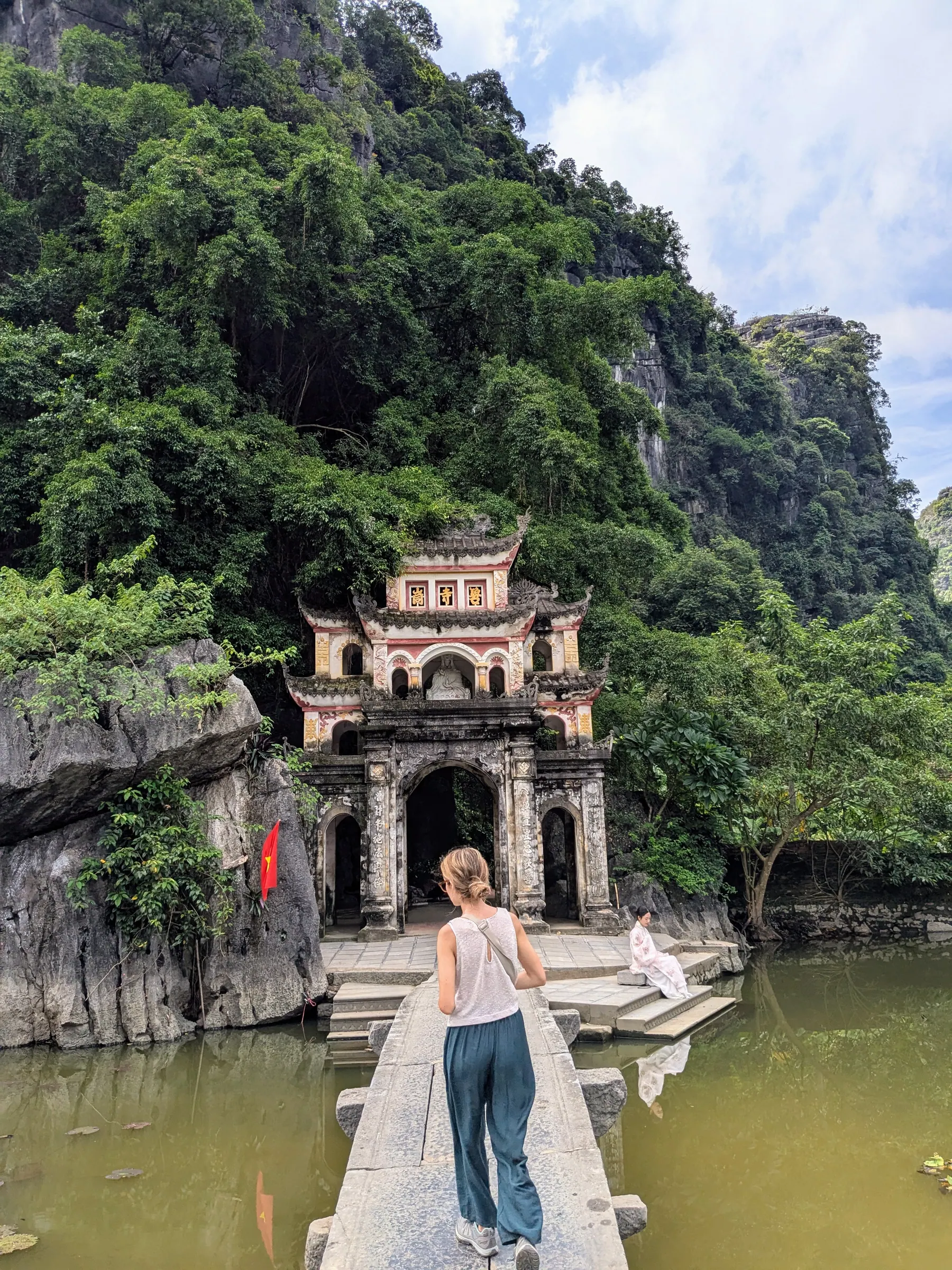
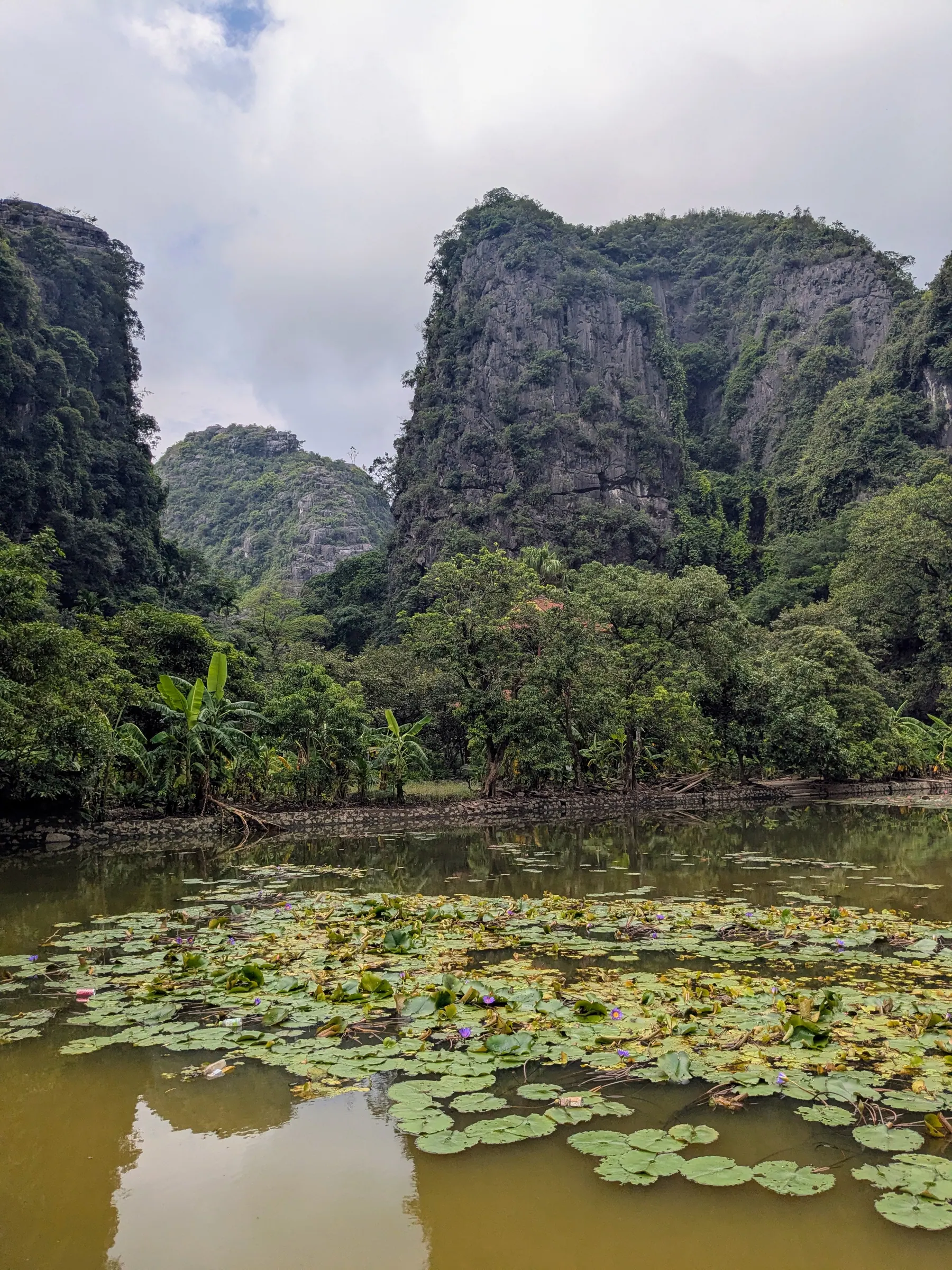
You can walk all the way up to the upper pagoda. The climb in that heat wasn’t easy, but it was worth doing.
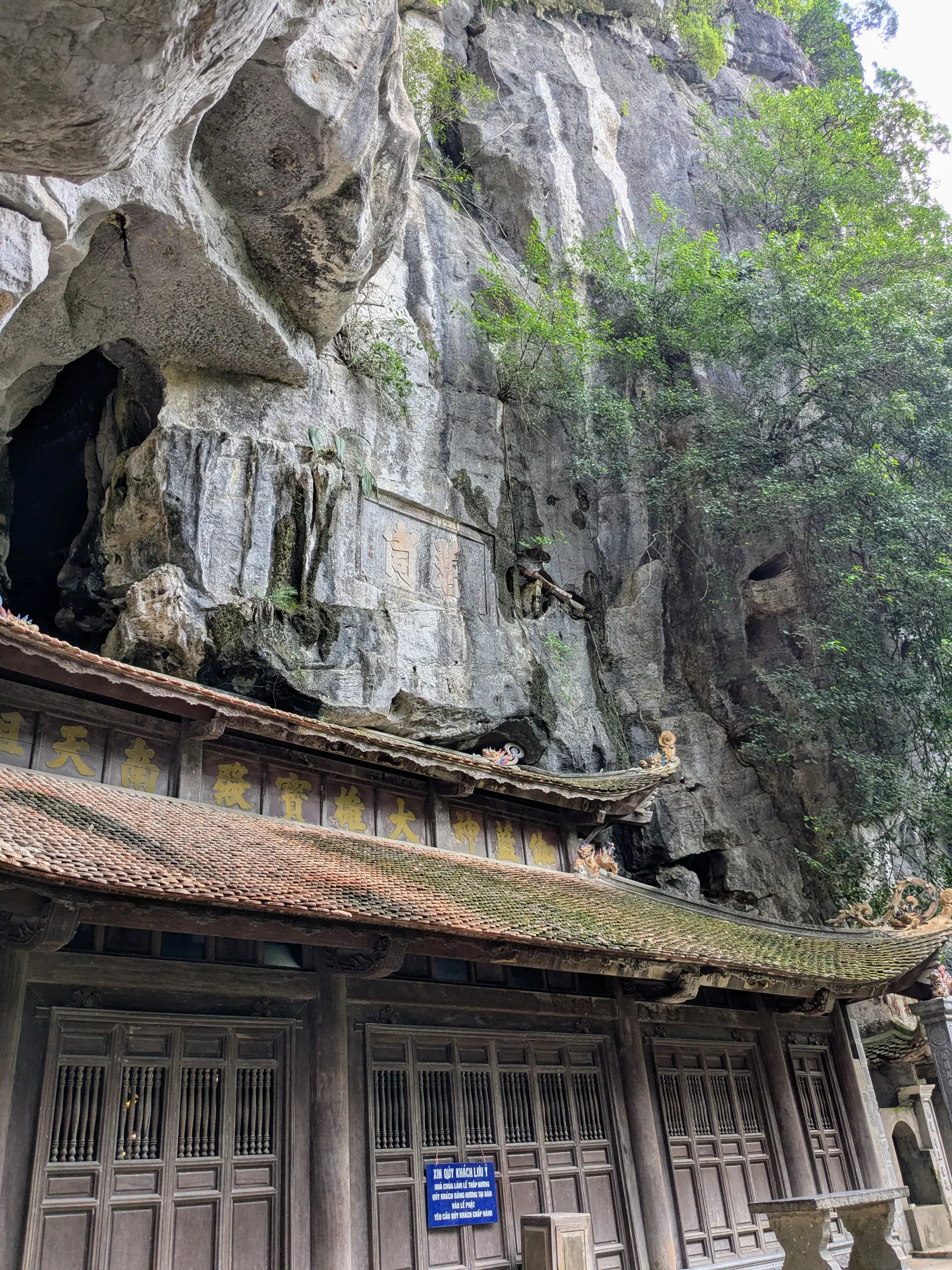
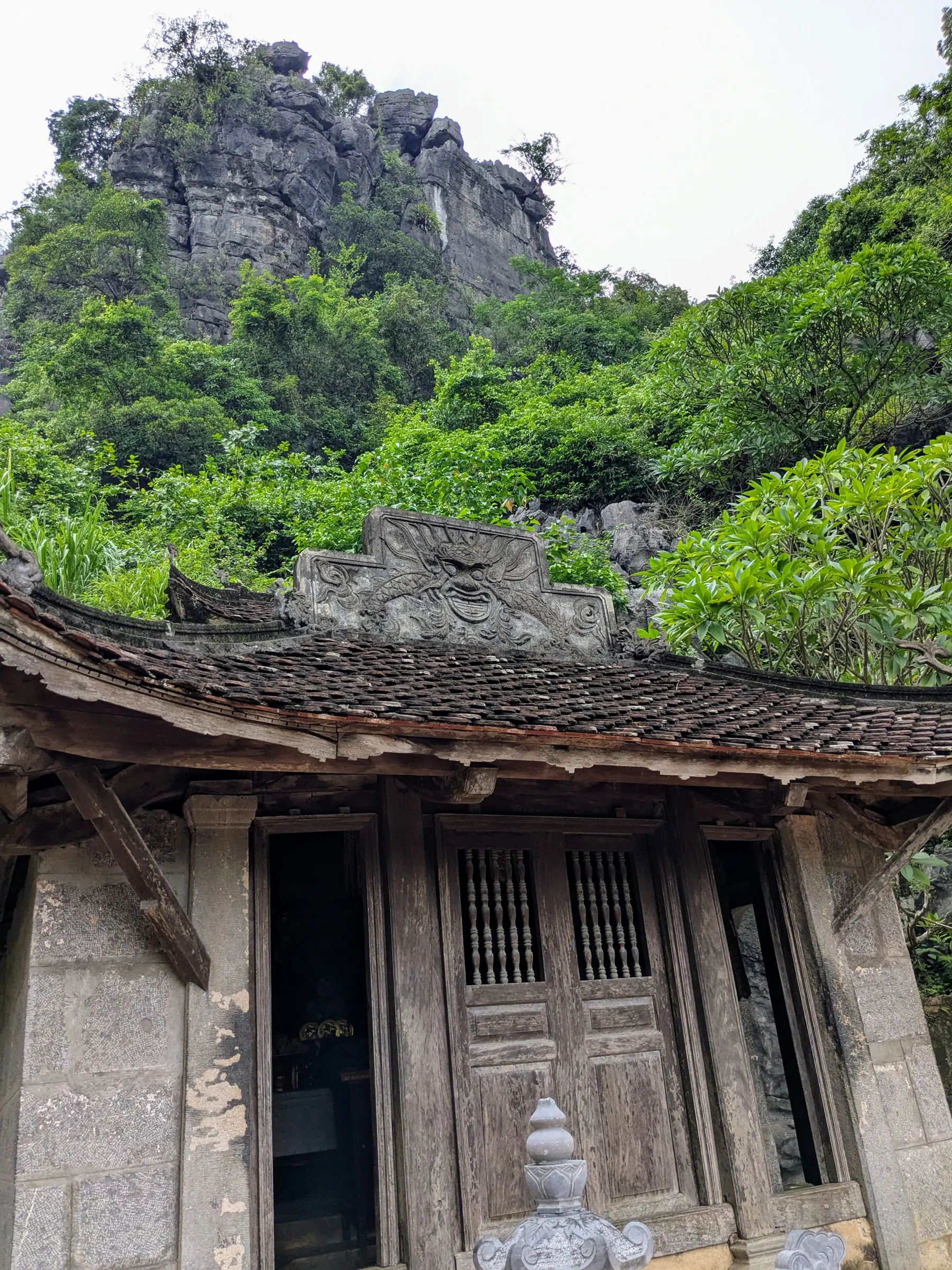
Be prepared for local women along the way who will press you fairly insistently to buy things.
This was also where we discovered something useful: most places here have bicycle parking, and you pay a small amount to leave your bike. Keep some small cash on you at all times.
Goats, ducks and coconut coffee
Our homestay gave us a map, and we spent the day trying to follow it, which is how you should do Ninh Binh. The distances between places are real, but the land is flat, so a bike covers them easily enough.
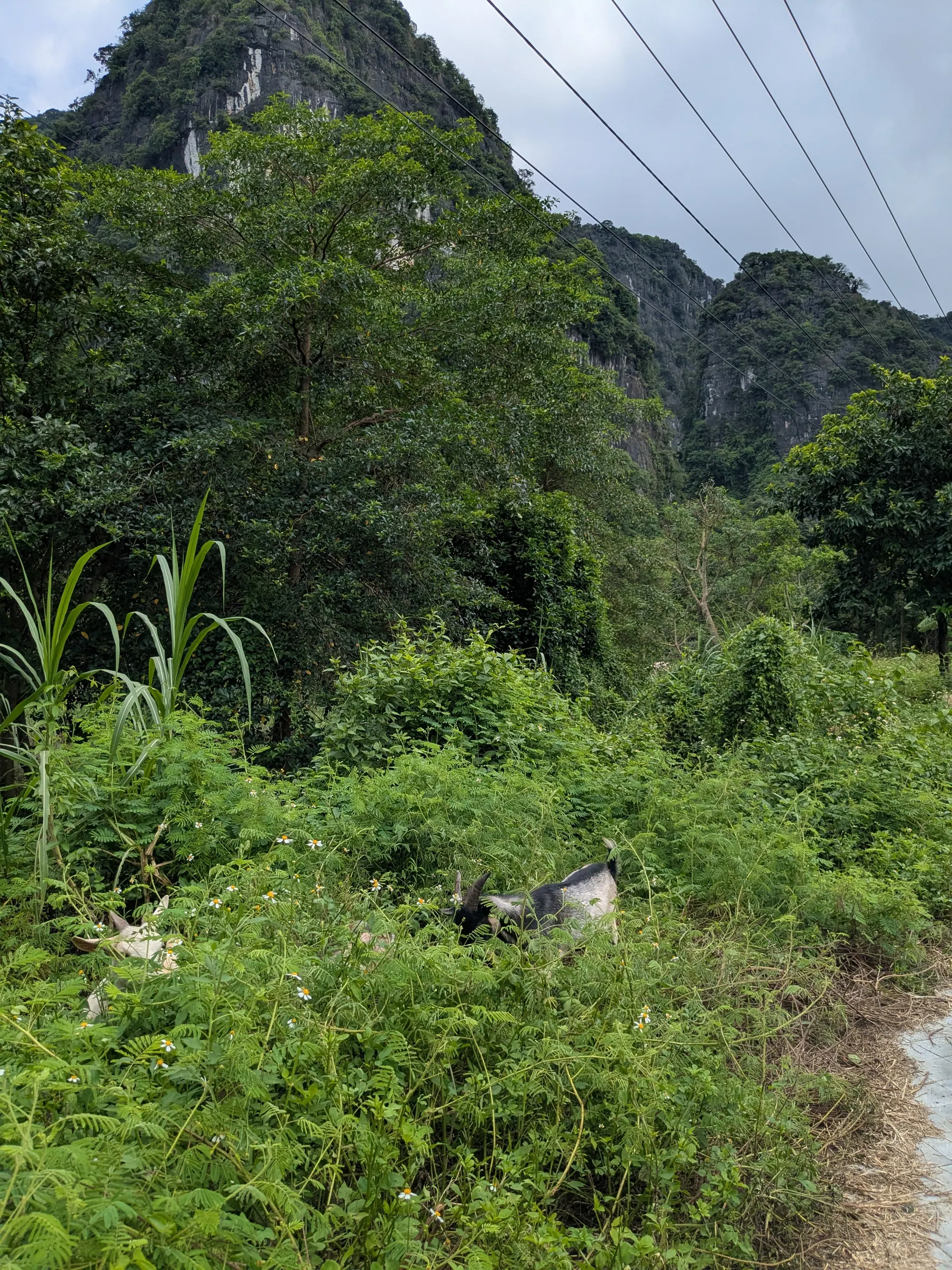
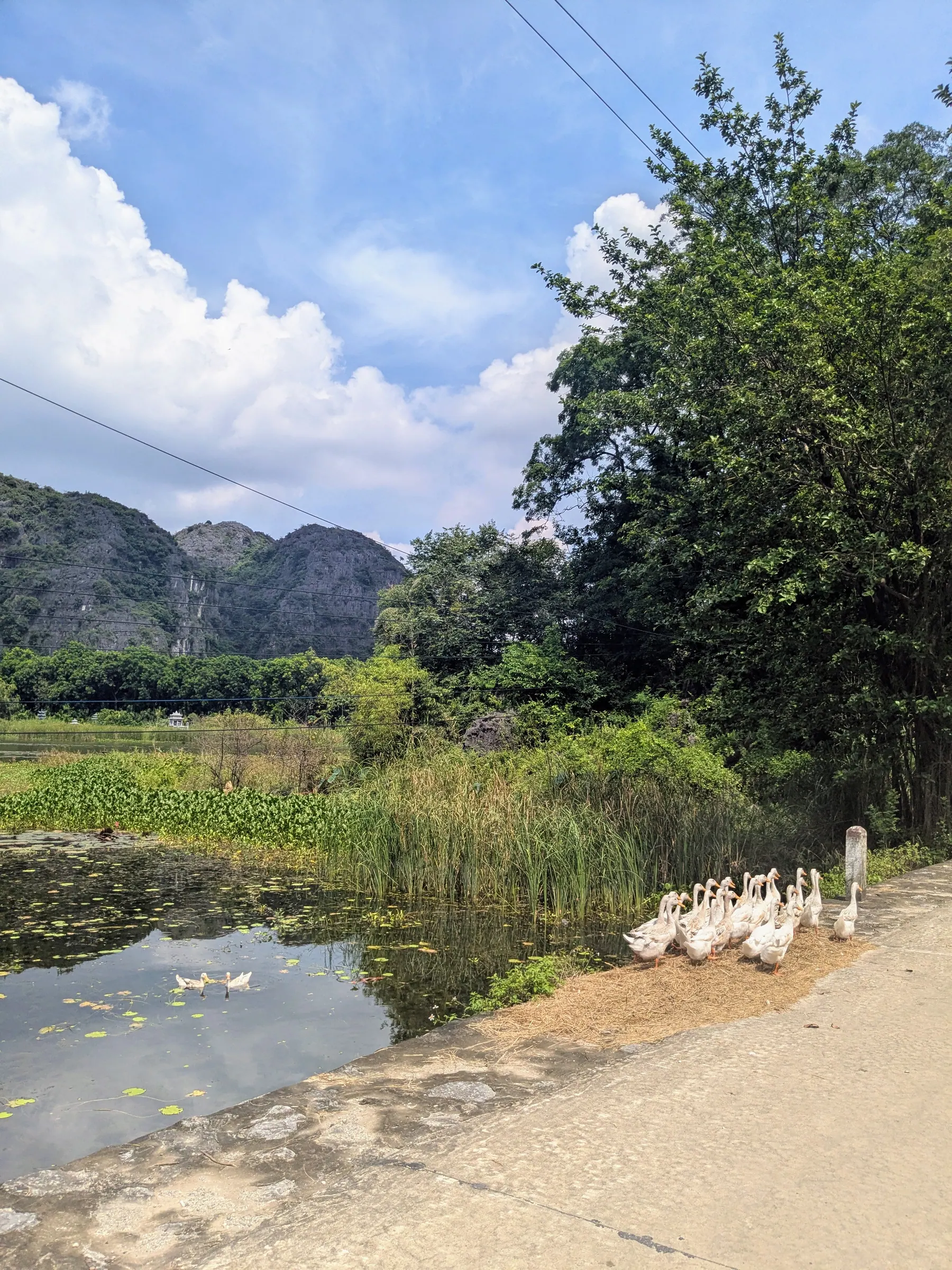
We rode towards Buffalo Cave but decided to carry on past it and come back later. On the way there were goats in the road and a duck family.
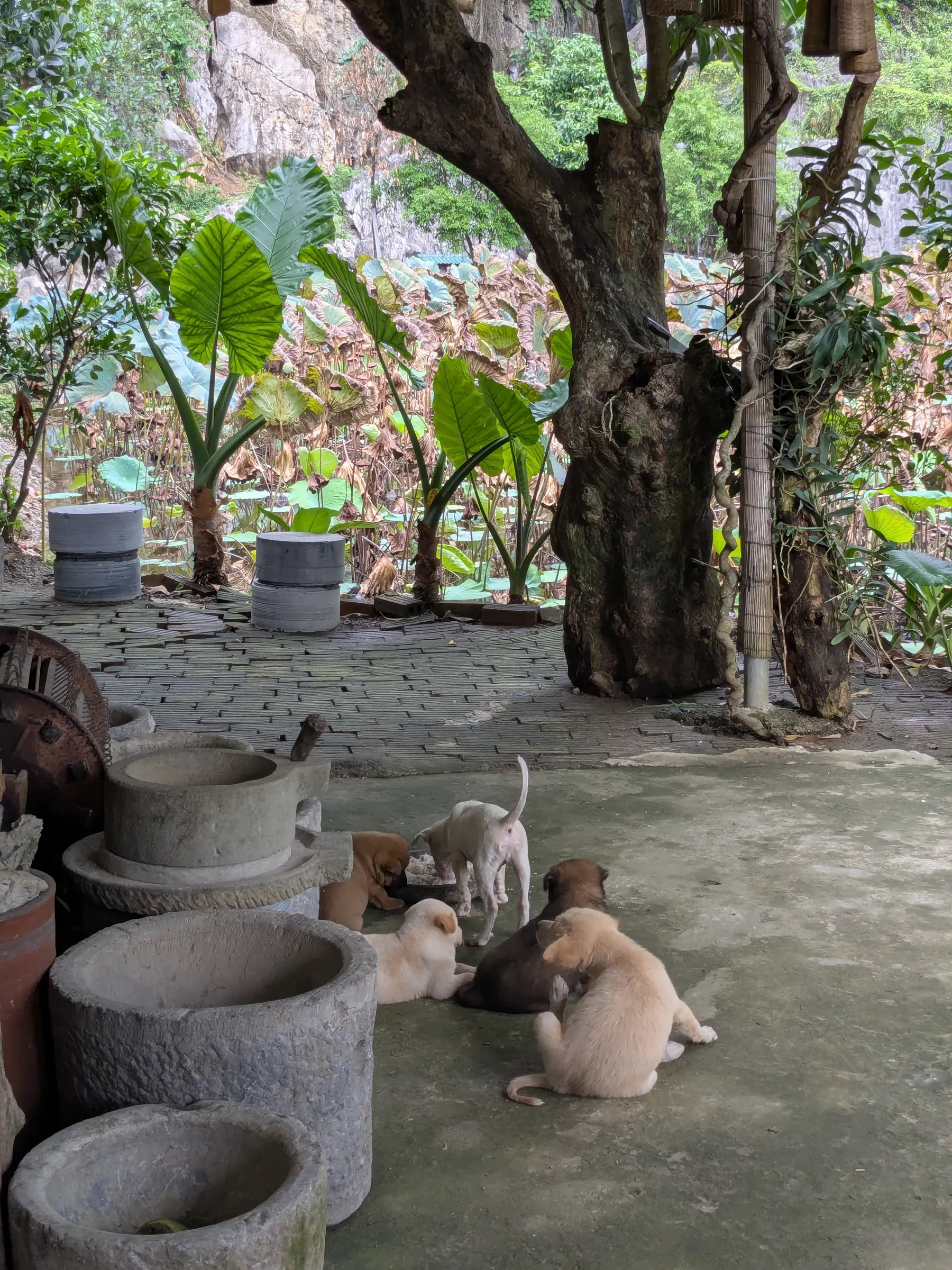
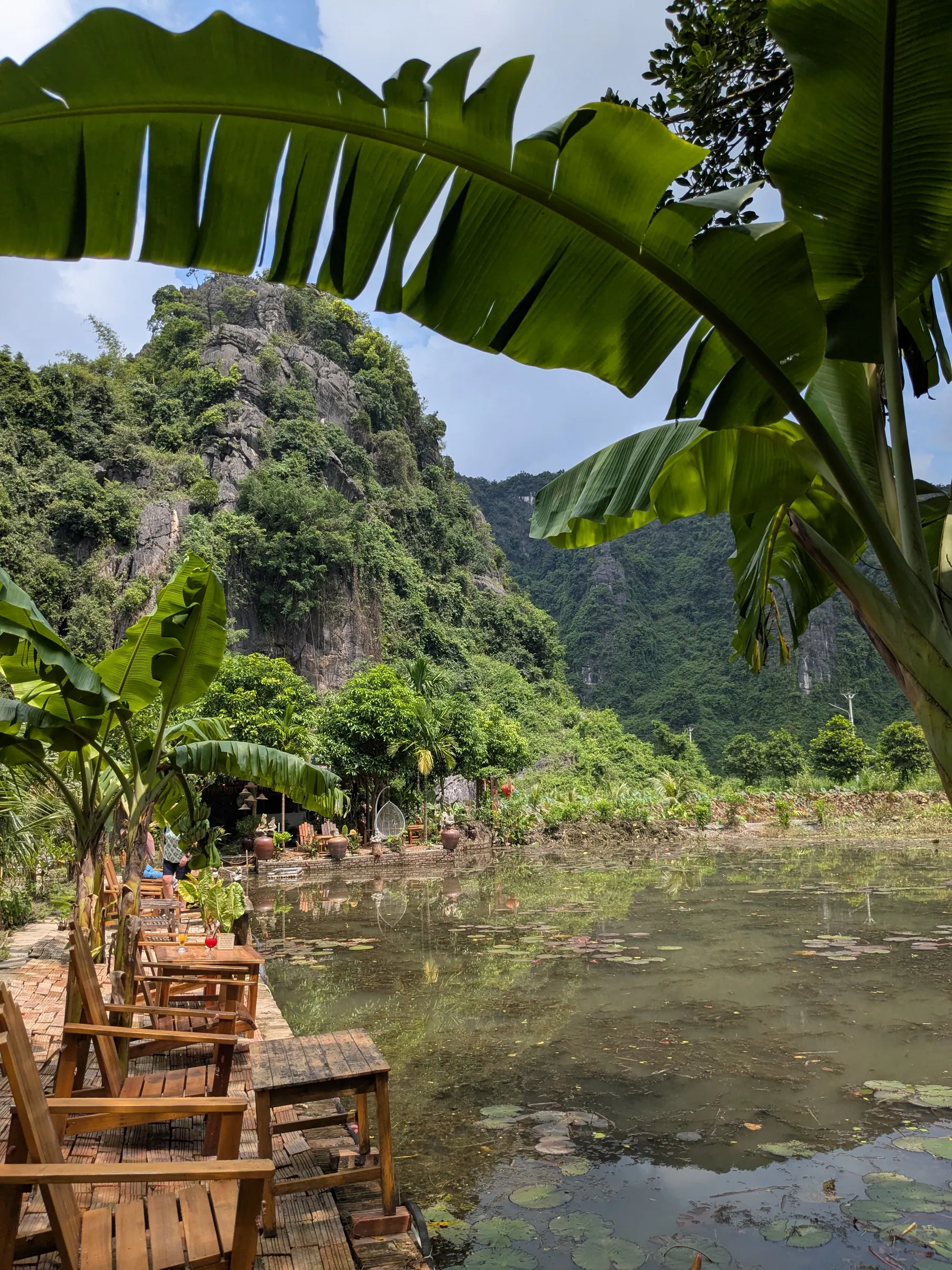
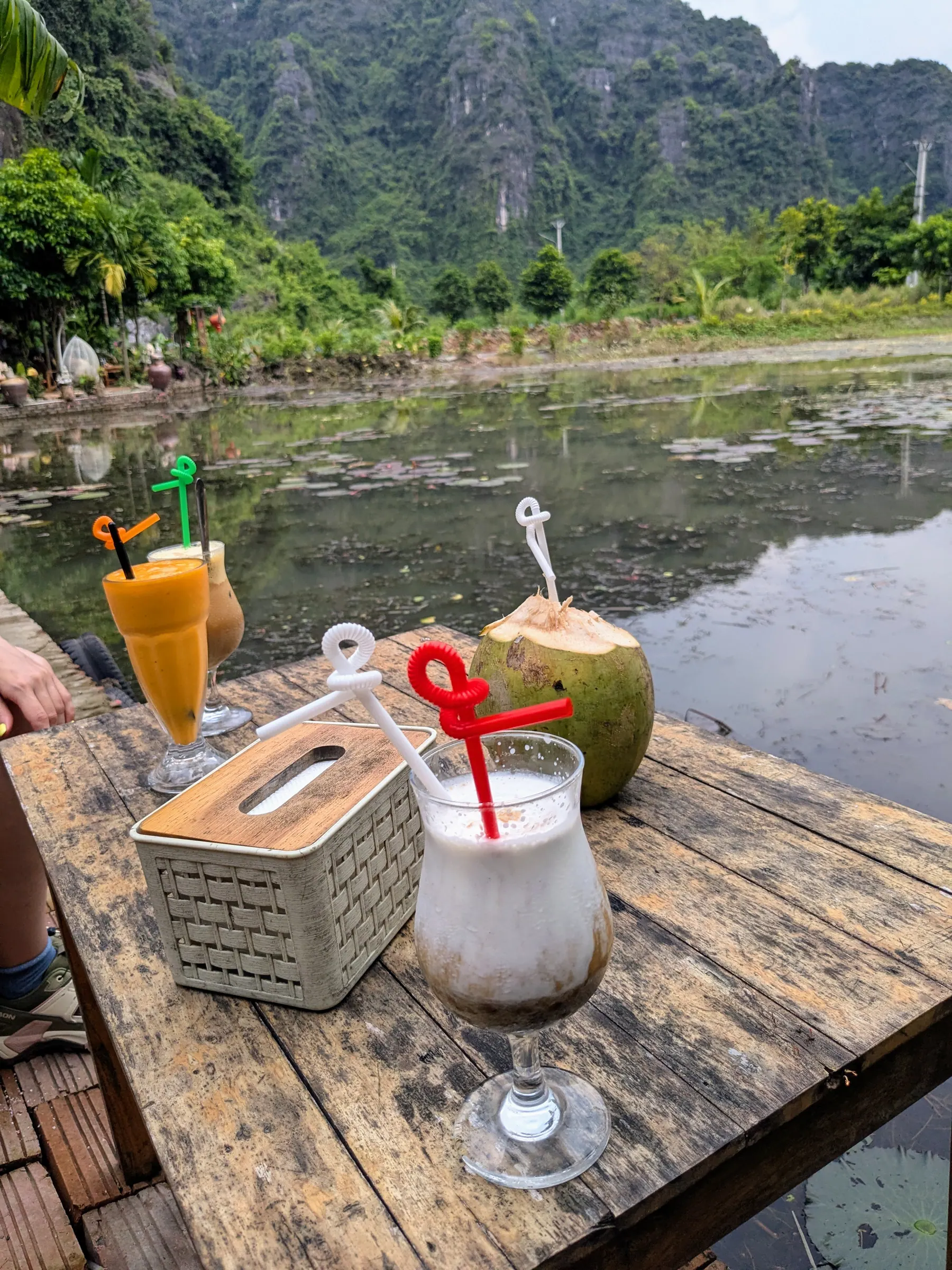
Eventually we reached Minh Quan restaurant, where we had a very good coconut coffee looking out over a pond and the landscape around it. There were puppies wandering about the place.
I thought that was a coincidence until I noticed how many cafés in the area have puppies. It’s a small local trend rather than an accident.
Nearby is Đền Voi, a quiet corner by the river where we saw women on boats.
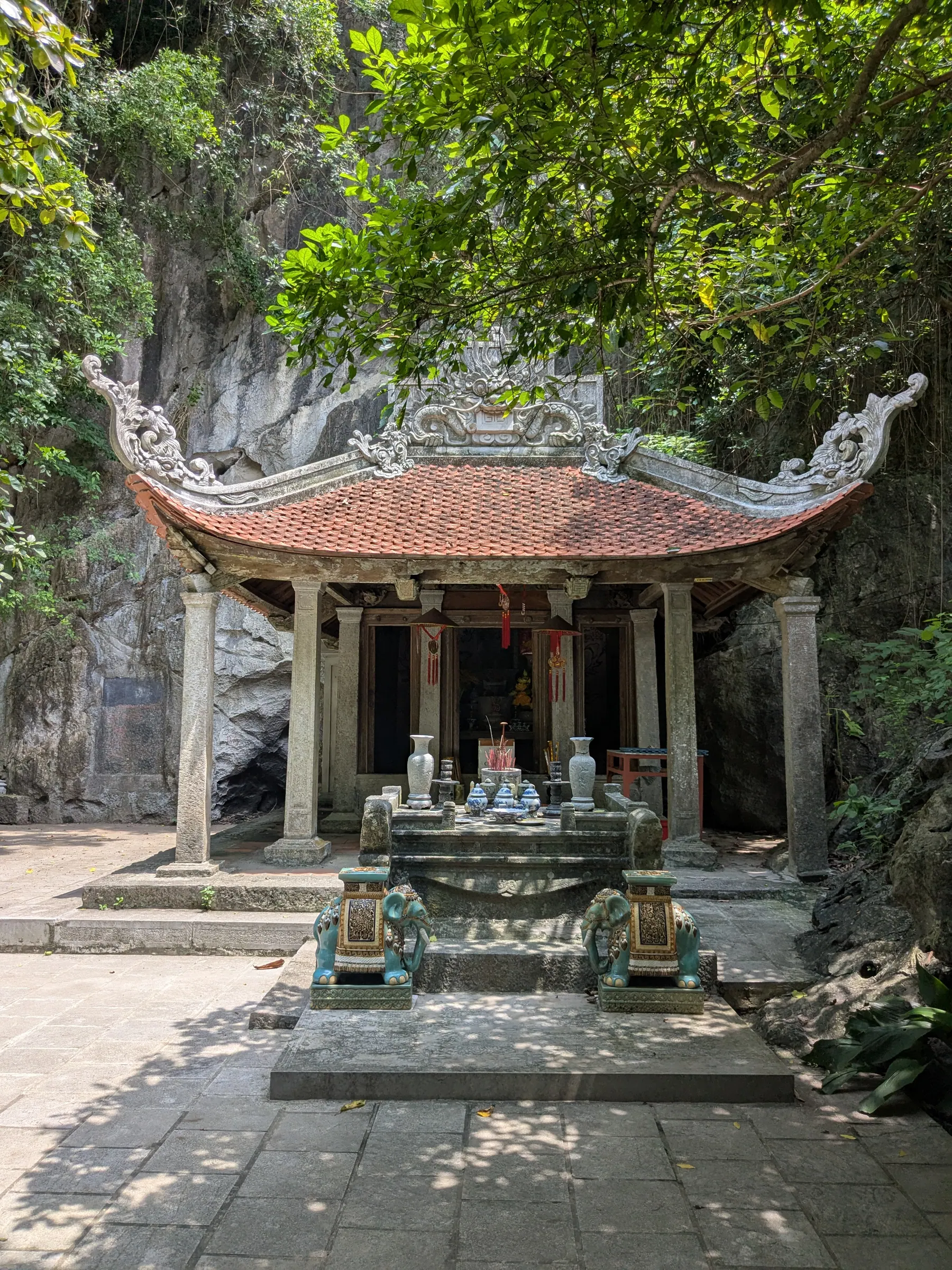
Buffalo Cave
Then back to Buffalo Cave - Hang Trâu - which is really an eco-tourism farm built around a cave rather than a cave you visit. The entry deal is almost too good to be true: 75,000 VND, around €2.70, and that includes a drink.
For that you get the cave, the bamboo forest, feeding the buffaloes and ducks, and a crossing on wooden poles over the water.
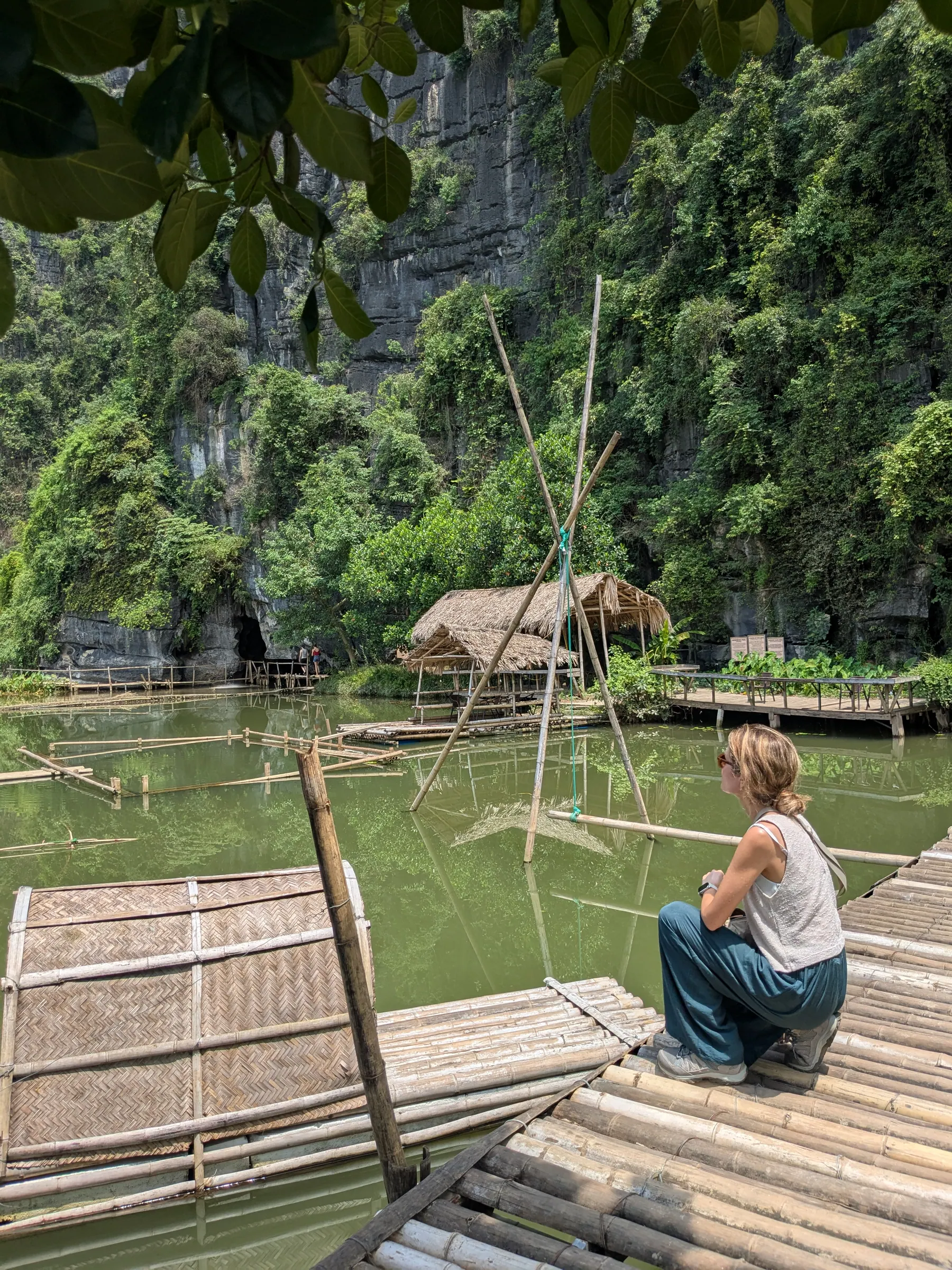
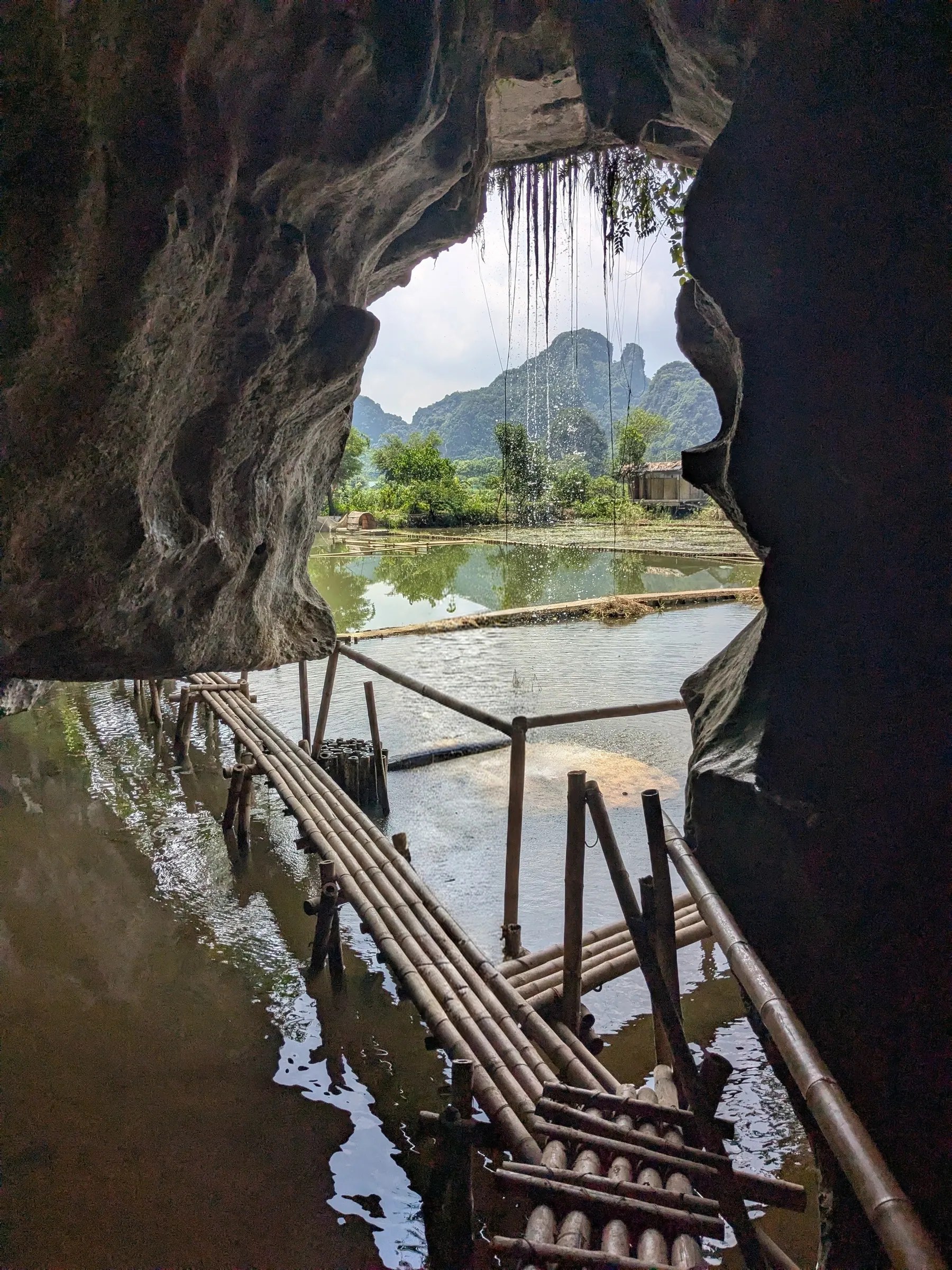
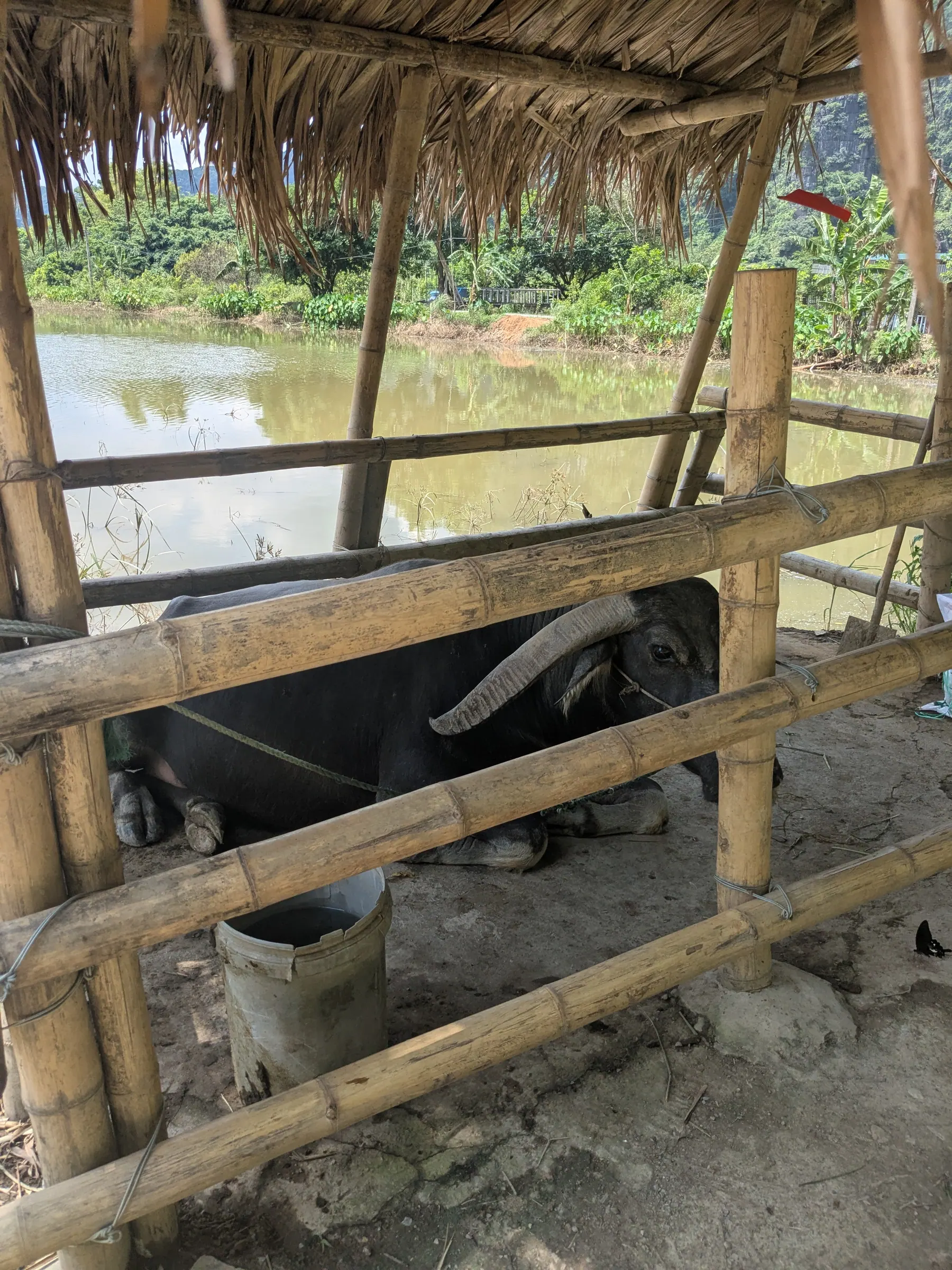
It’s a popular place and there were plenty of visitors, but it’s beautiful, and sitting there with a drink is a properly relaxing hour. The real buffaloes stand outside, calmly.
Worth knowing: the site is set up for foreign visitors - the website is in English and French, and prices are quoted in dollars. There’s a full-day version at around $45 with rice planting, basket fishing and cooking, if you want more than the entry ticket.

Đền Thái Vi
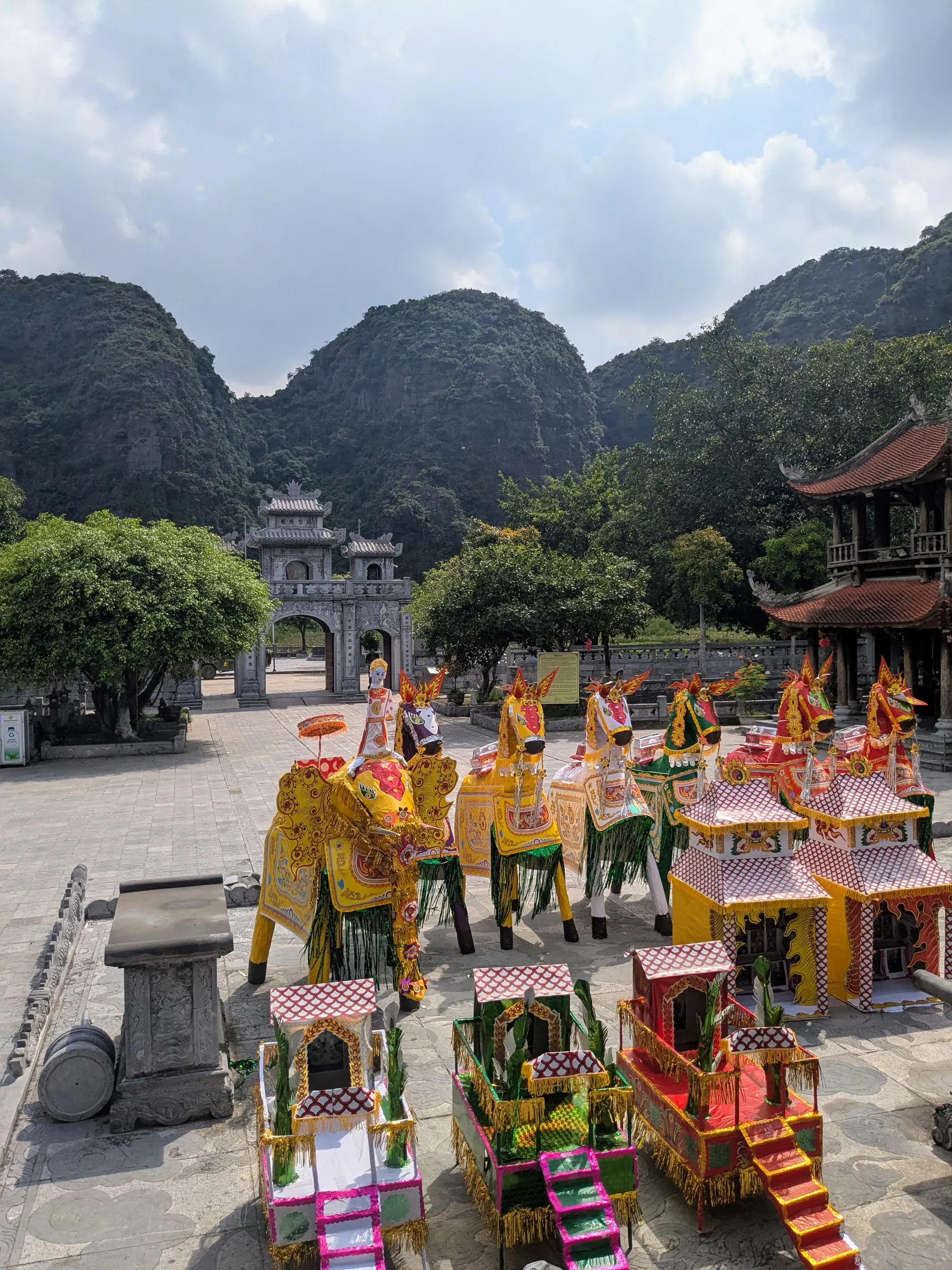
Đền Thái Vi was a curious temple, and we happened to arrive while locals were having a ceremony.
Outside there were large, brightly coloured horses - votive offerings, made from paper and bamboo over a frame, and burned afterwards so that the spirits receive them. Beside them at the gate stand two stone horses, permanent ones, carved about a century ago.
The evening in the city
For the evening we decided to cycle into Hoa Lu, the city that includes what was formerly Ninh Binh city. We trusted Google Maps, which put us on a main road with cars passing at full speed. We turned back and went instead through the nearest villages. It took longer and it was much safer. Do that.
For the way back we took a taxi and put the bikes in it.
Honestly, I’d suggest taking a taxi both ways if you’re staying in Tam Coc or anywhere out from the city. The streets were too chaotic for bicycles and it wasn’t a relaxing ride.
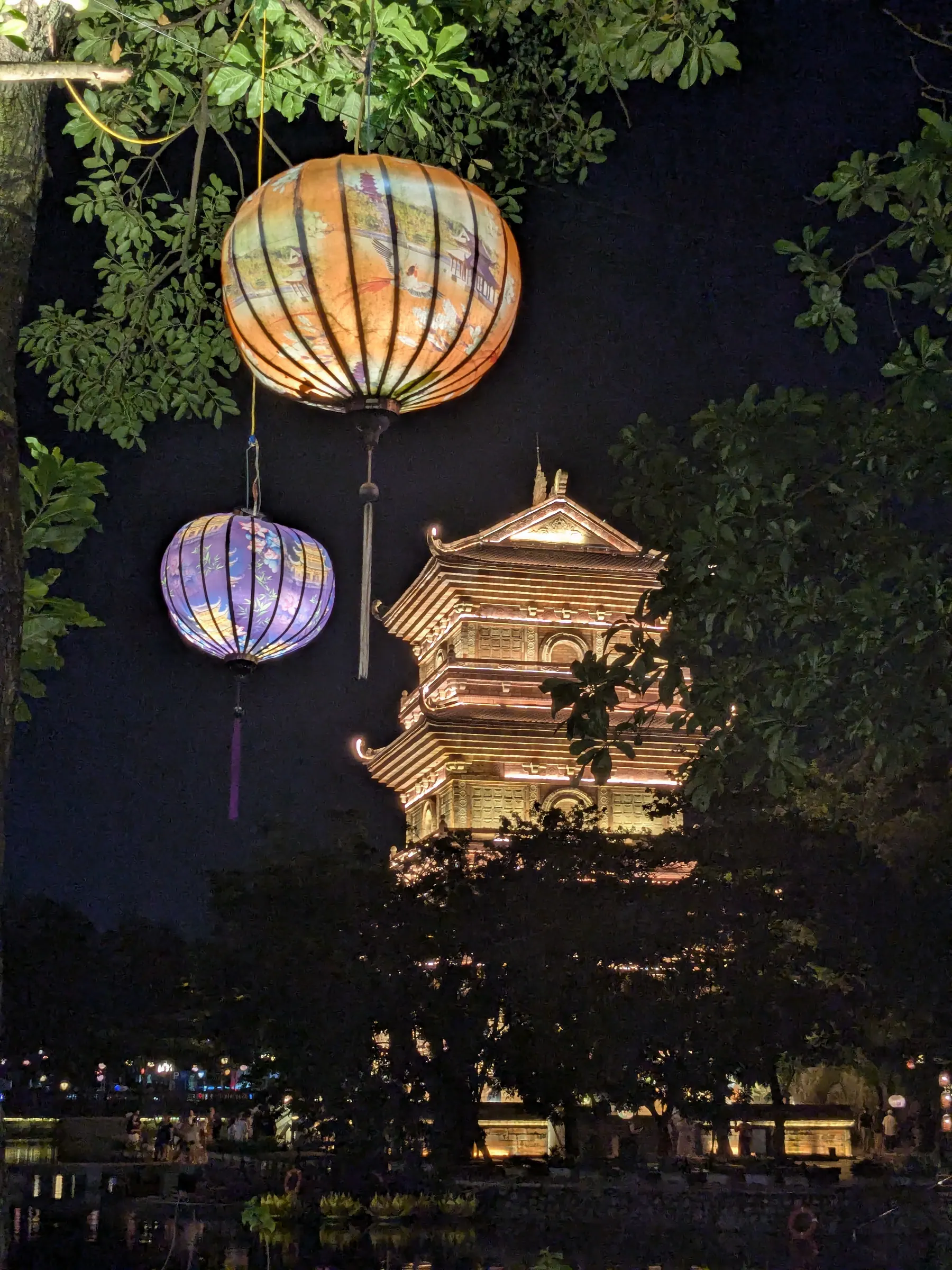
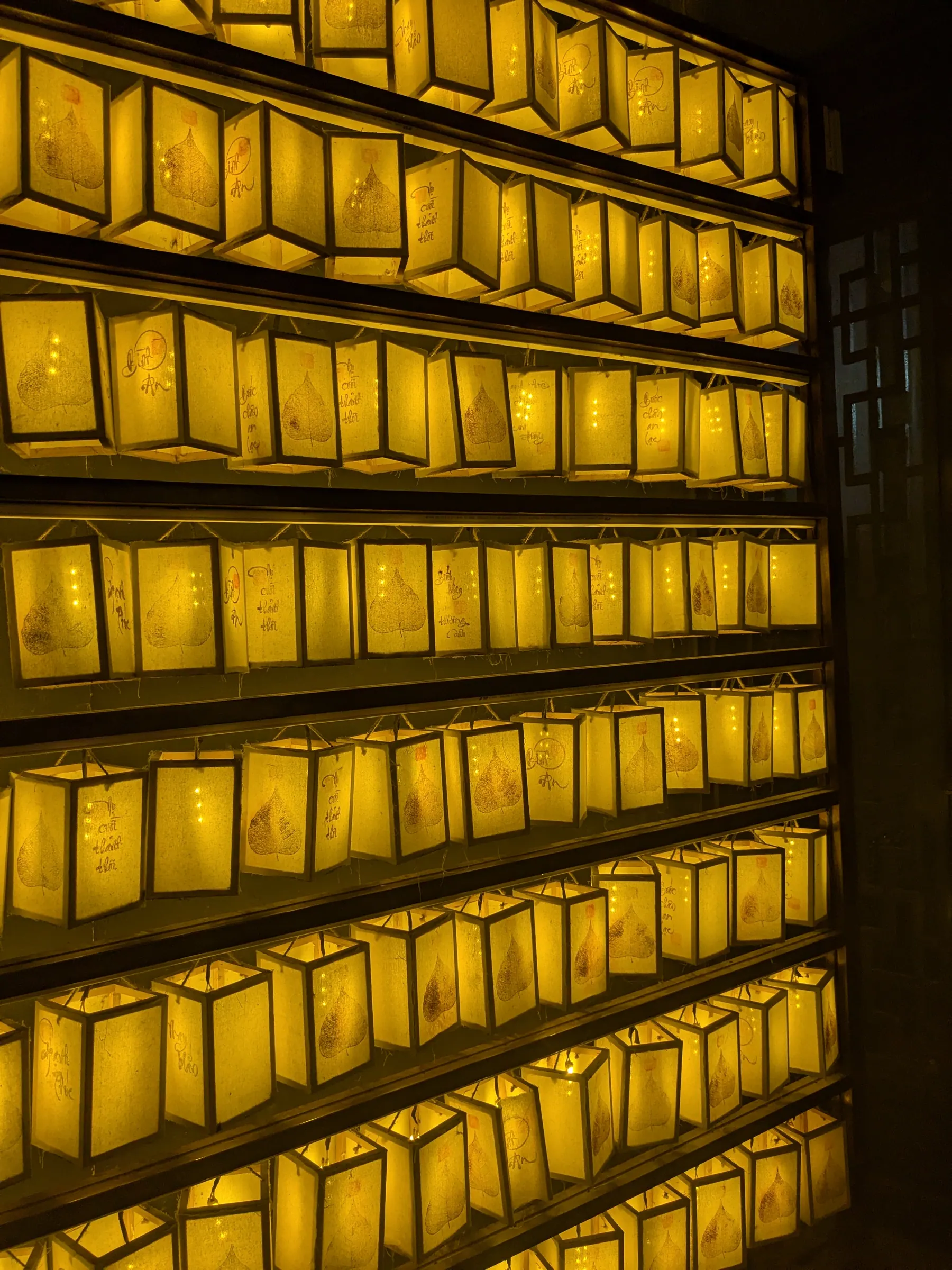
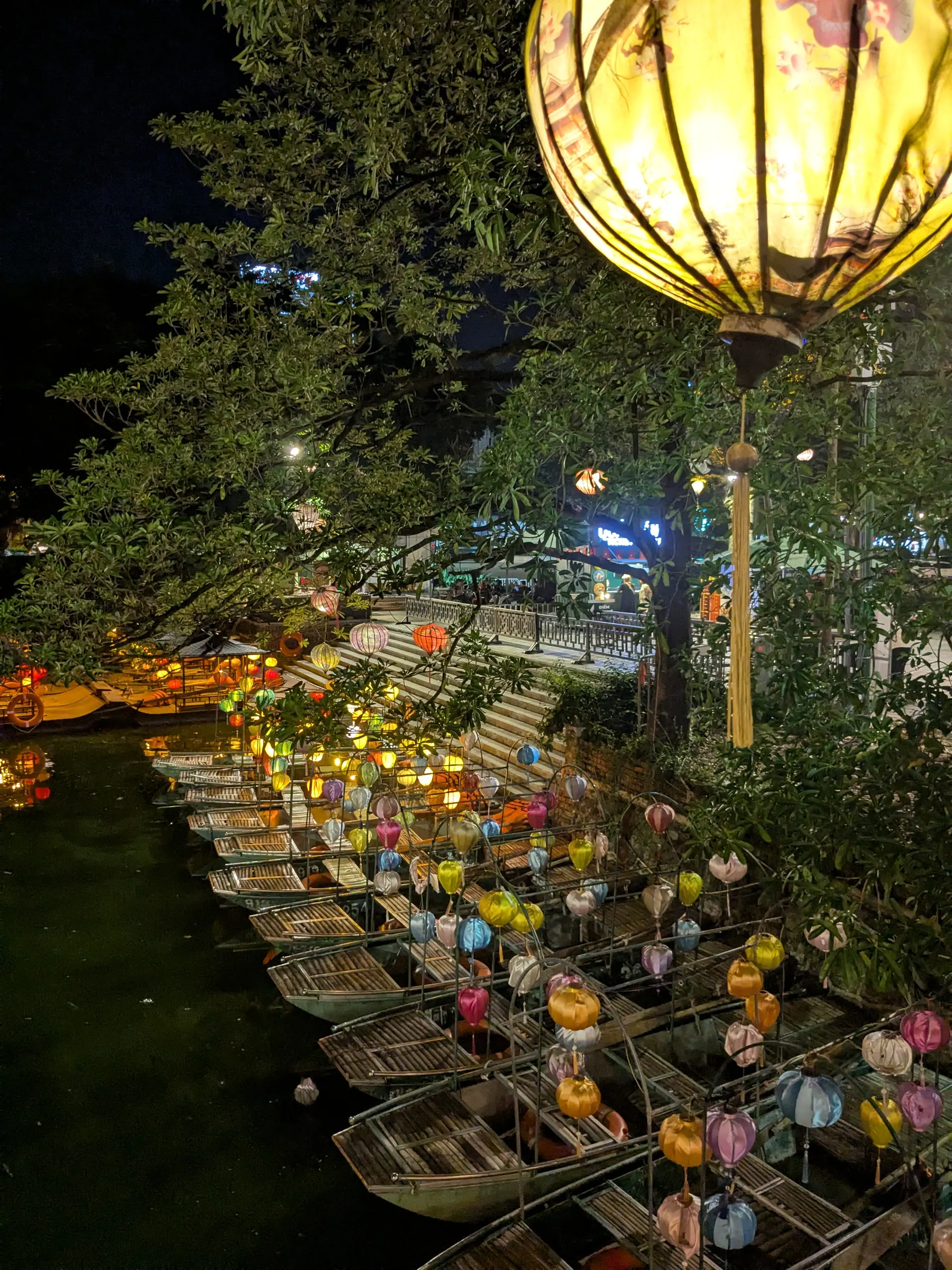
The city is lovely at night. There are coloured lanterns strung through the trees and the whole centre lights up. On Kỳ Lân island, in the lake in the middle of town, the temple and tower are lit gold and reflect off the water.
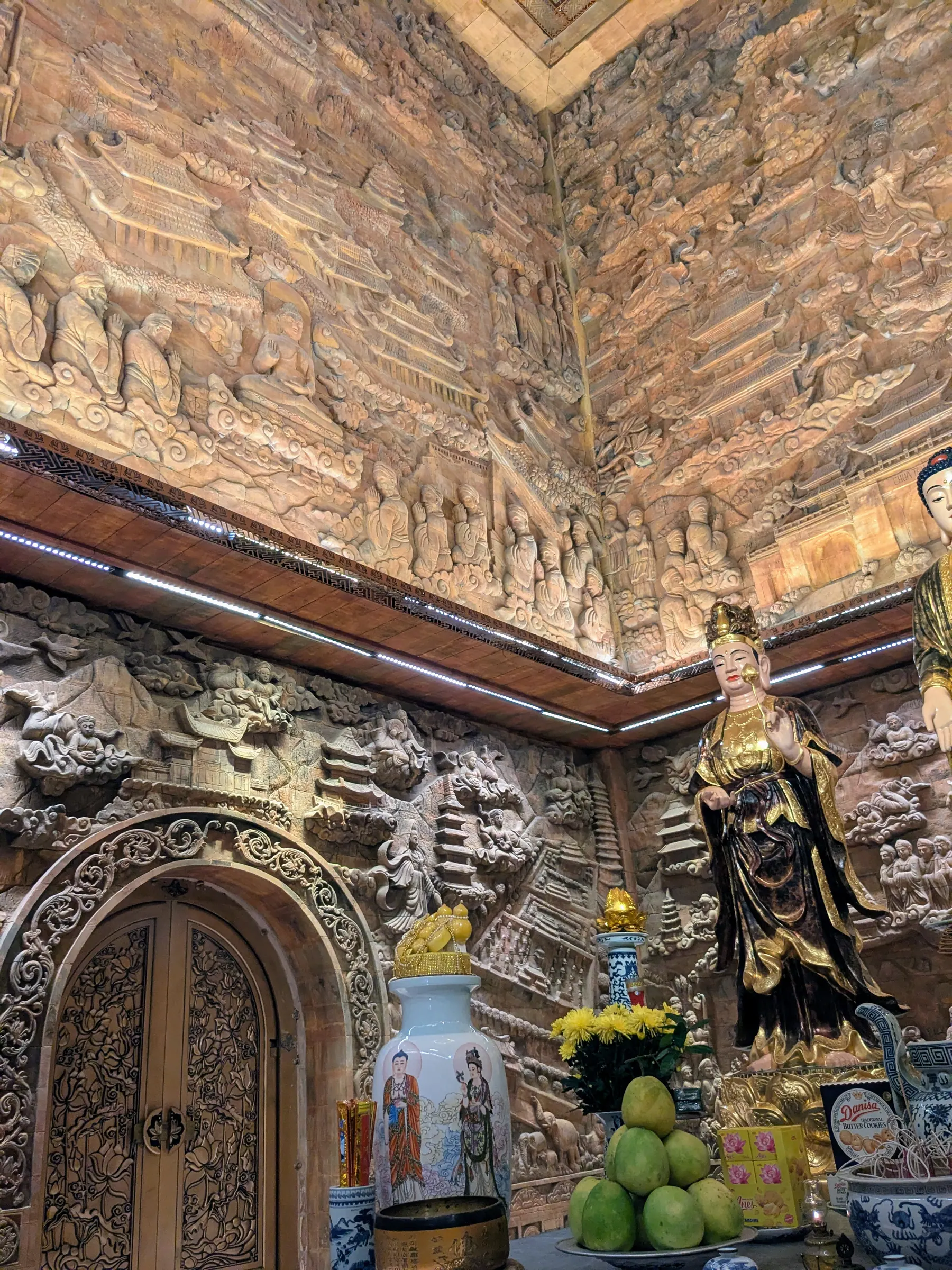
Go inside them. They’re beautifully carved, and the ornamental detail is remarkable - that’s the part you’d miss if you only looked at them from the bridges.
Crossing the small bridges - the Ven Núi Kỳ Lân one especially - and wandering the centre along the river in the dark is the best way to spend an evening here.

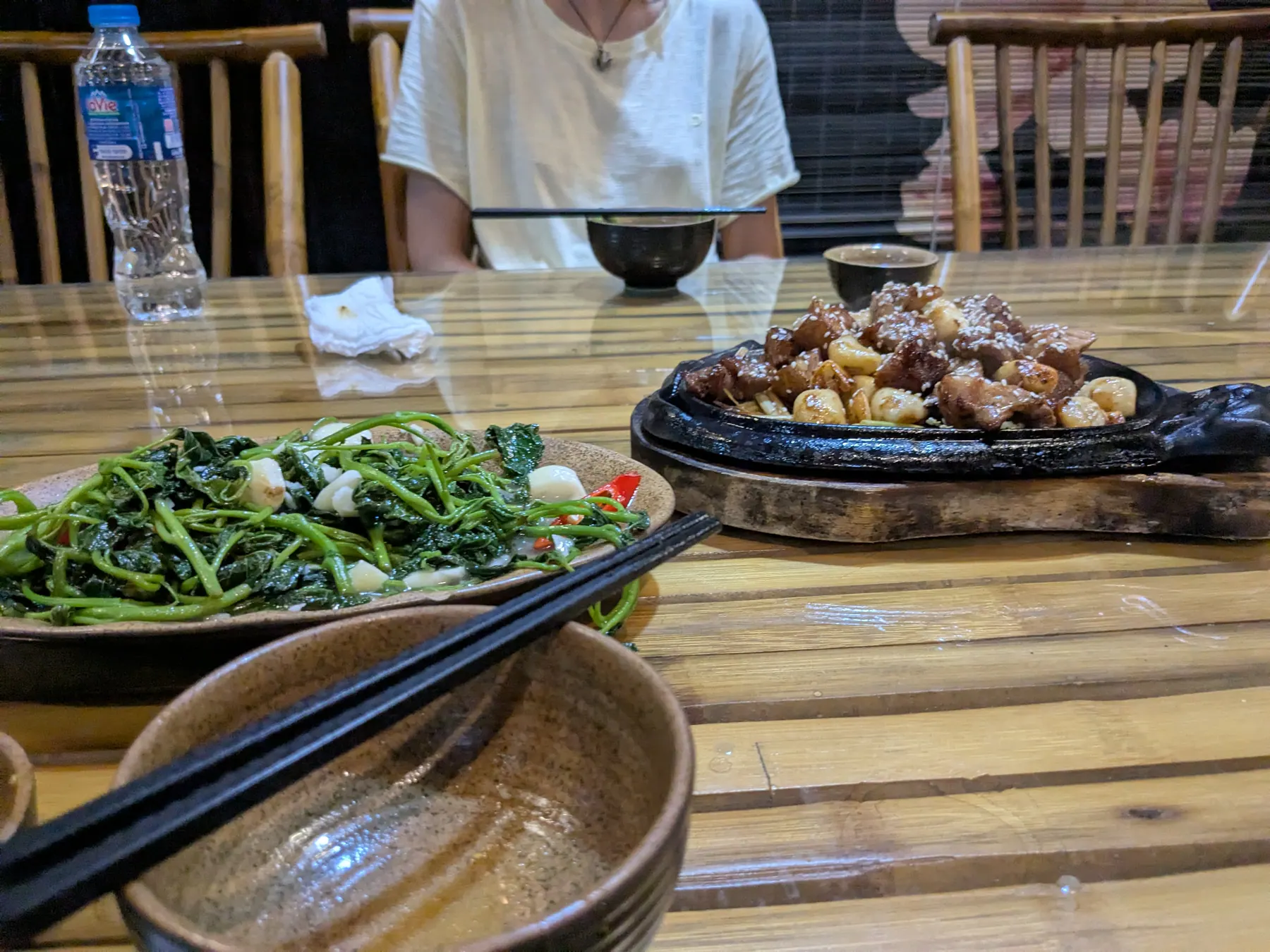
For dinner we had traditional food and I tried goat, which is the Ninh Binh speciality. It was too sinewy for me. My conclusion: goat works well as cheese and less well as meat.
Day two: the boat at Trang An
Going to Ninh Binh without taking a boat trip isn’t really doing Ninh Binh. This is the thing the place is for.
We gave our second day to it, and took route 3, which I’d recommend. There are three routes, all from the same pier and all the same price. When we did route 3 there were very few other boats around.
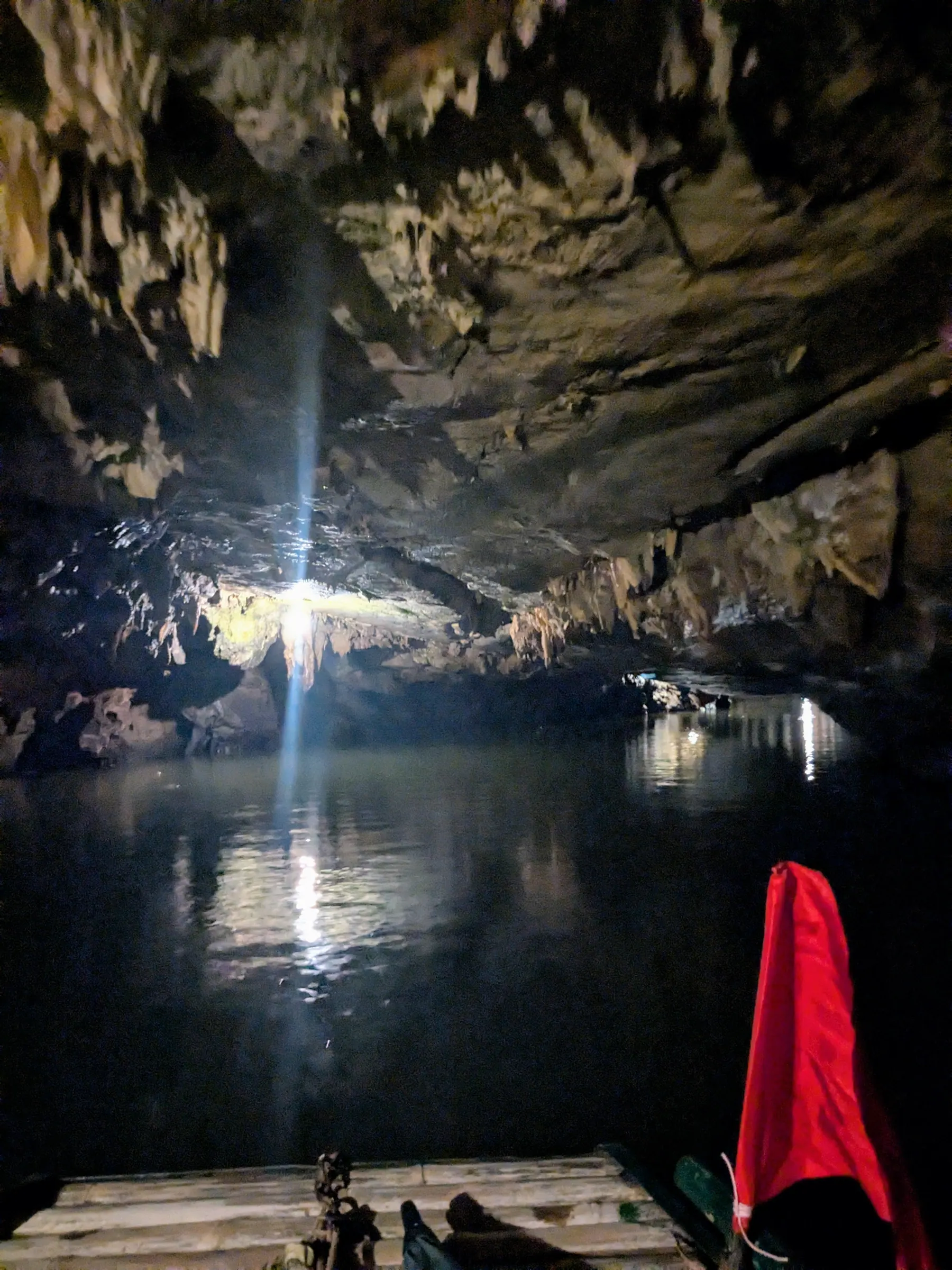
What it covers. Suối Tiên Temple, Vũ Lâm Palace, and the area where Kong: Skull Island was filmed. Its main feature is Đột Cave, about a kilometre long - the longest in the whole complex, and you’re inside it for around twenty minutes. There are smaller caves as well - and, of course, all the nature around you the whole time you’re on the water.
Đền Suối Tiên was my favourite moment of the whole boat trip. The temple sits in beautiful surroundings, and you walk out to it along a wooden path laid across a lotus pool.
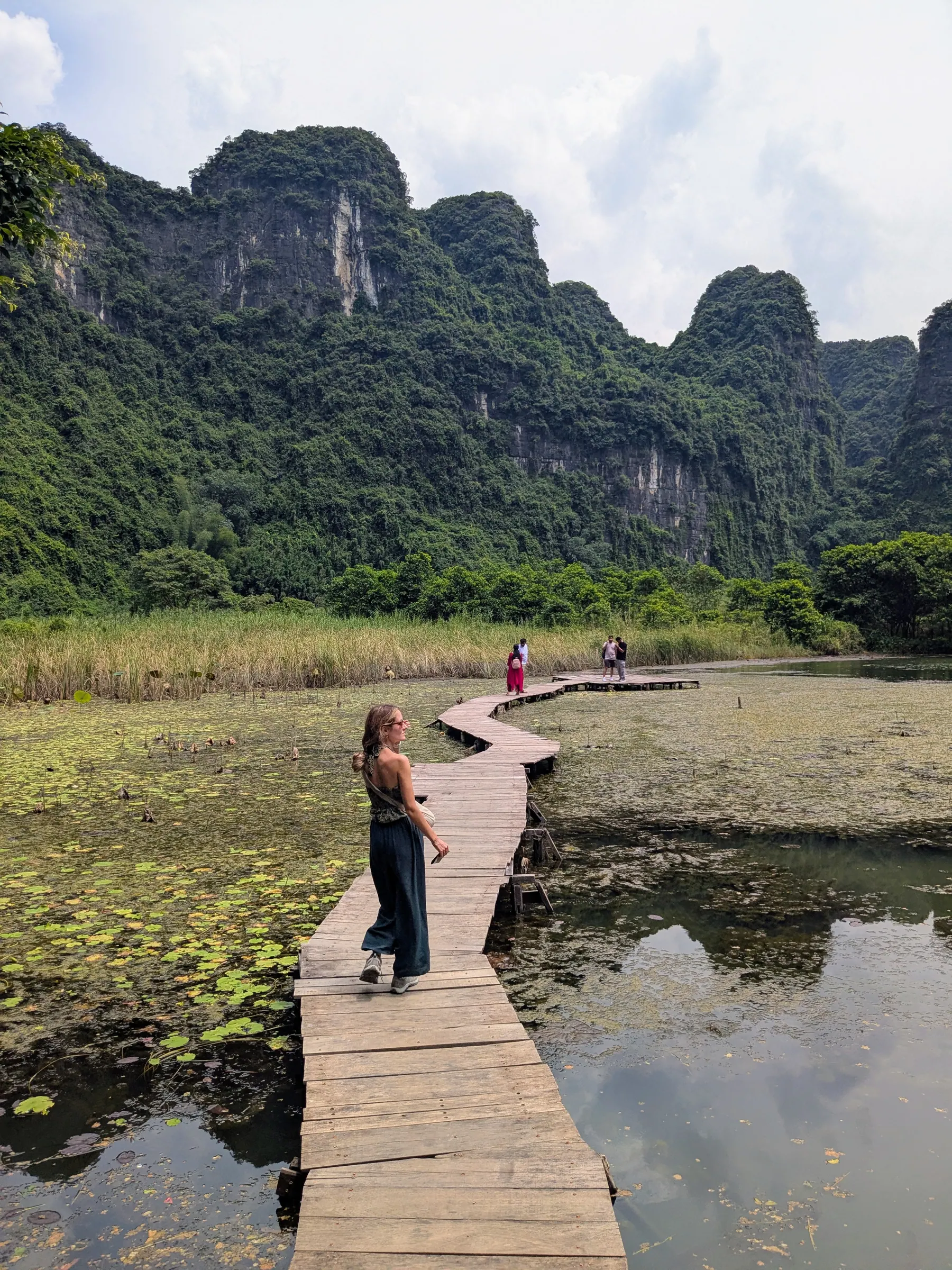
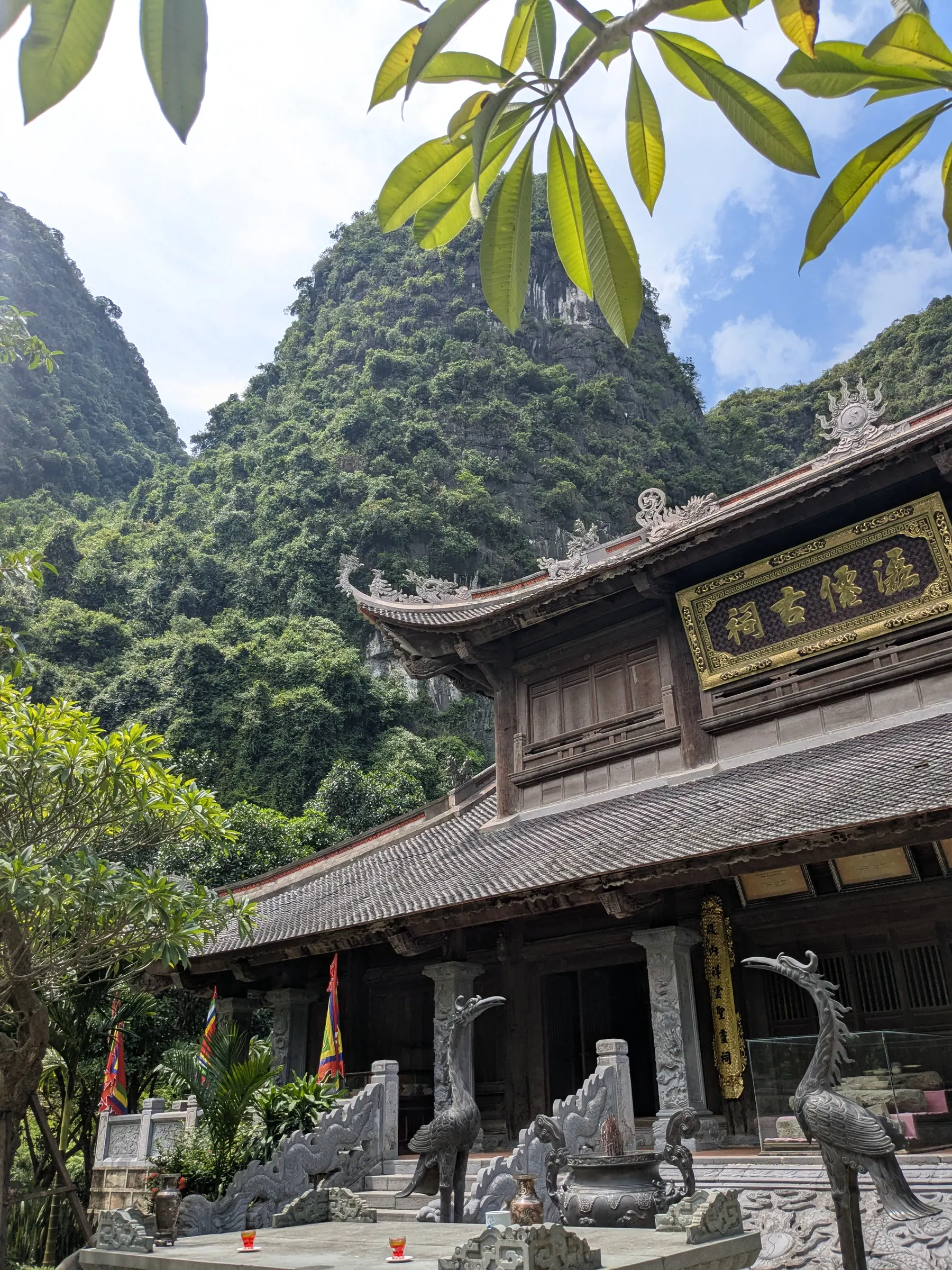
Vũ Lâm Palace is the other stop worth knowing about - several buildings and a pagoda standing out on an island in the water, with the karst peaks rising behind it. It was a Trần dynasty military base during the Mongol invasions, and later a place where the Trần kings practised Buddhism.

How long. Ours took about two and a half to three hours.
Tickets. Buy them at the official ticket office by the car park, opposite the harbour. The price is around 300,000 VND, roughly €11, and it includes the entrance and the boat. Boats take four or five passengers, so if you’re a smaller group you’ll share. There was no pressure to buy anything, at any point.
The rowing. Our rower was a man in a conical hat who rowed the whole way, partly with his feet, which is the local technique. At one stage the men in our boat took a turn to help.
How busy. The boats gather at the temple stops where everyone gets off, but between them it was quiet - just us and the water and the karst. That was what I liked most about it, though I can’t promise it’s always that way.
Kong. We were shown the exact mountain that appears in the film, and could see a small village of little houses along the shore, but we didn’t stop there. So I can’t tell you much about it beyond that it exists.
Sun. We were given umbrellas on the boat, and without them it would have been ten times harder. We were lucky that it clouded over for stretches. You don’t have to walk anywhere except at the temple stops.
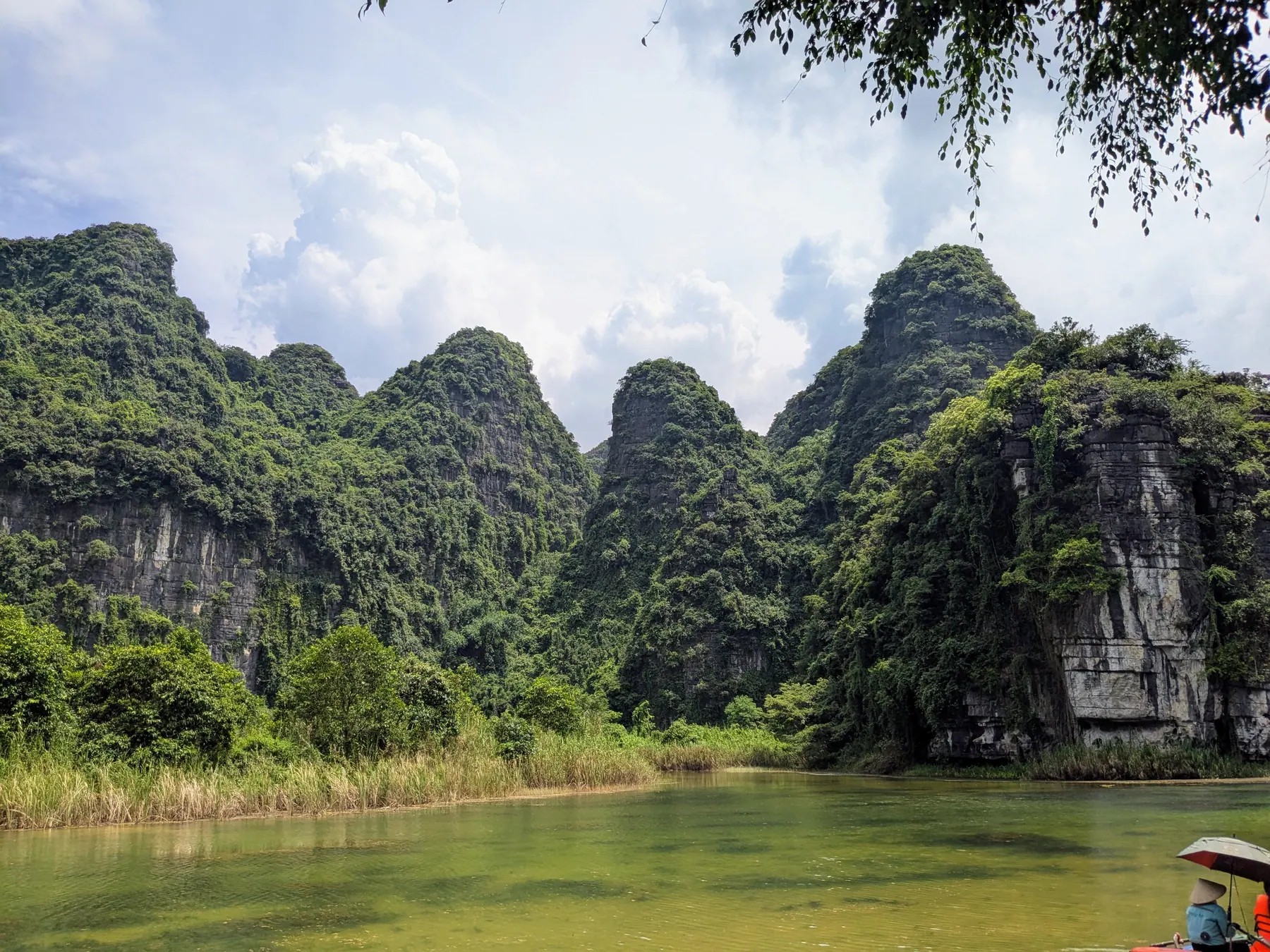
The boat turned out to be the perfect way to see Ninh Binh. You’re out there for hours in exotic nature, with animal sounds coming out of the forest at some points, and there are moments on the water when you could be on a jungle river somewhere and forget everything else.
Lunch at Grandma’s Garden
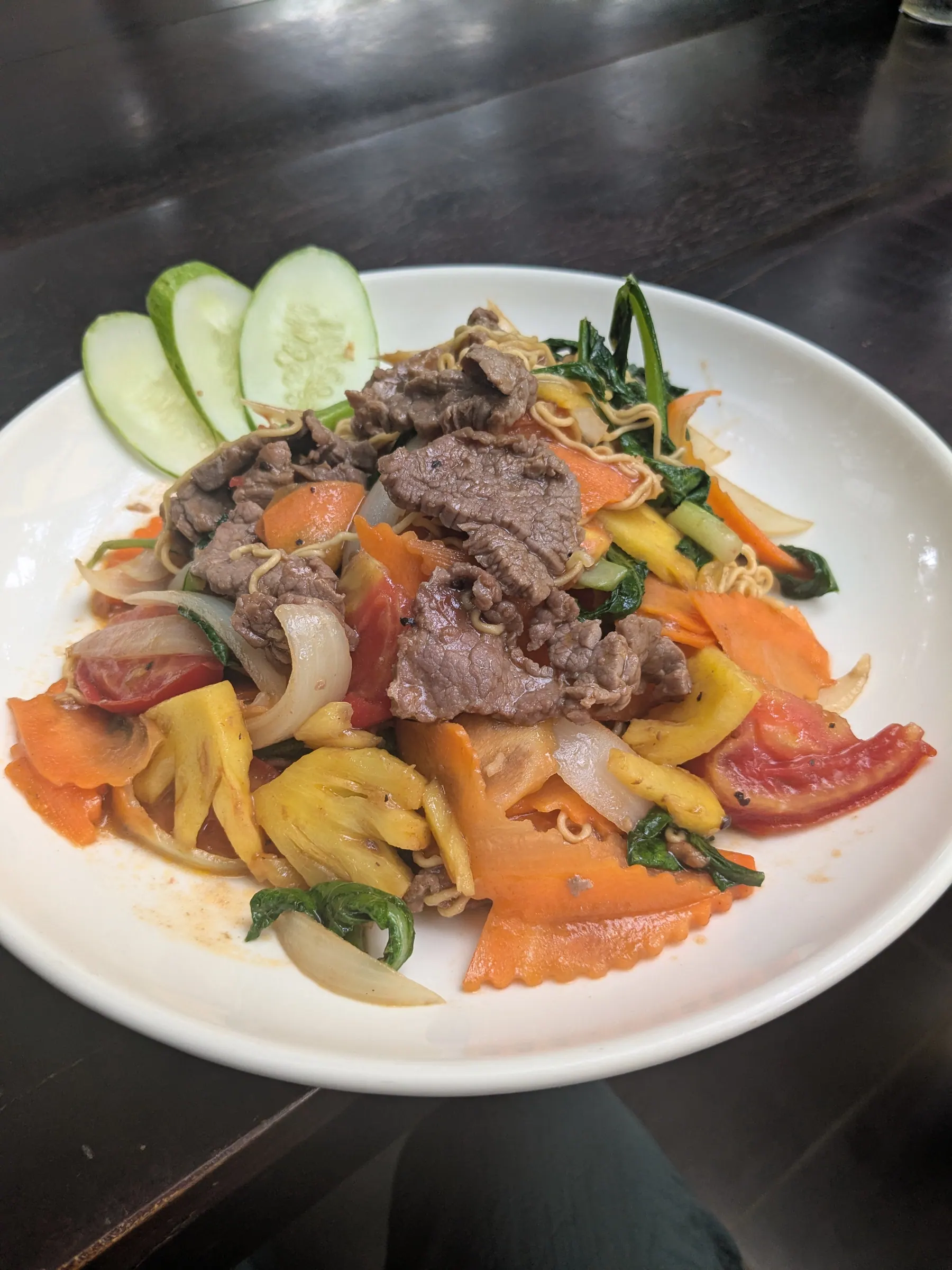
After the boat we had lunch at Grandma’s Garden, a café and restaurant I’d recommend without hesitation. The place itself is lovely and I had beef noodles with mango and different vegetables - an enormous portion, which is very often the case in Vietnam, sometimes we even shared portions with my friend.. It looked good enough that some tourists arriving after us asked what we’d ordered and had the same. It was as good as it looked.
Mua Cave, and a warning about bike parking
We headed for Dragon Hill and Mua Cave in the afternoon.
We came by bike, and as we approached the area some women told us we had to park there and couldn’t go any closer on two wheels. We said we could see people cycling further in, but it started to get tense, so we paid the fee and left the bikes. When we reached the actual entrance, where the walk up to Mua Cave starts, there were plenty of bicycles parked with no problem at all.
So: paid bicycle parking is normal in Ninh Binh, and most of it is legitimate - you’ll pay a small amount at Bich Dong and elsewhere. But around Mua Cave there are people running a version of it well short of the real car park. Keep going until you reach the entrance, where official bicycle parking costs 5,000 VND - about eighteen cents.
Entry to Mua Cave itself is 100,000 VND, roughly €3.60, and it’s open from six in the morning until seven at night.
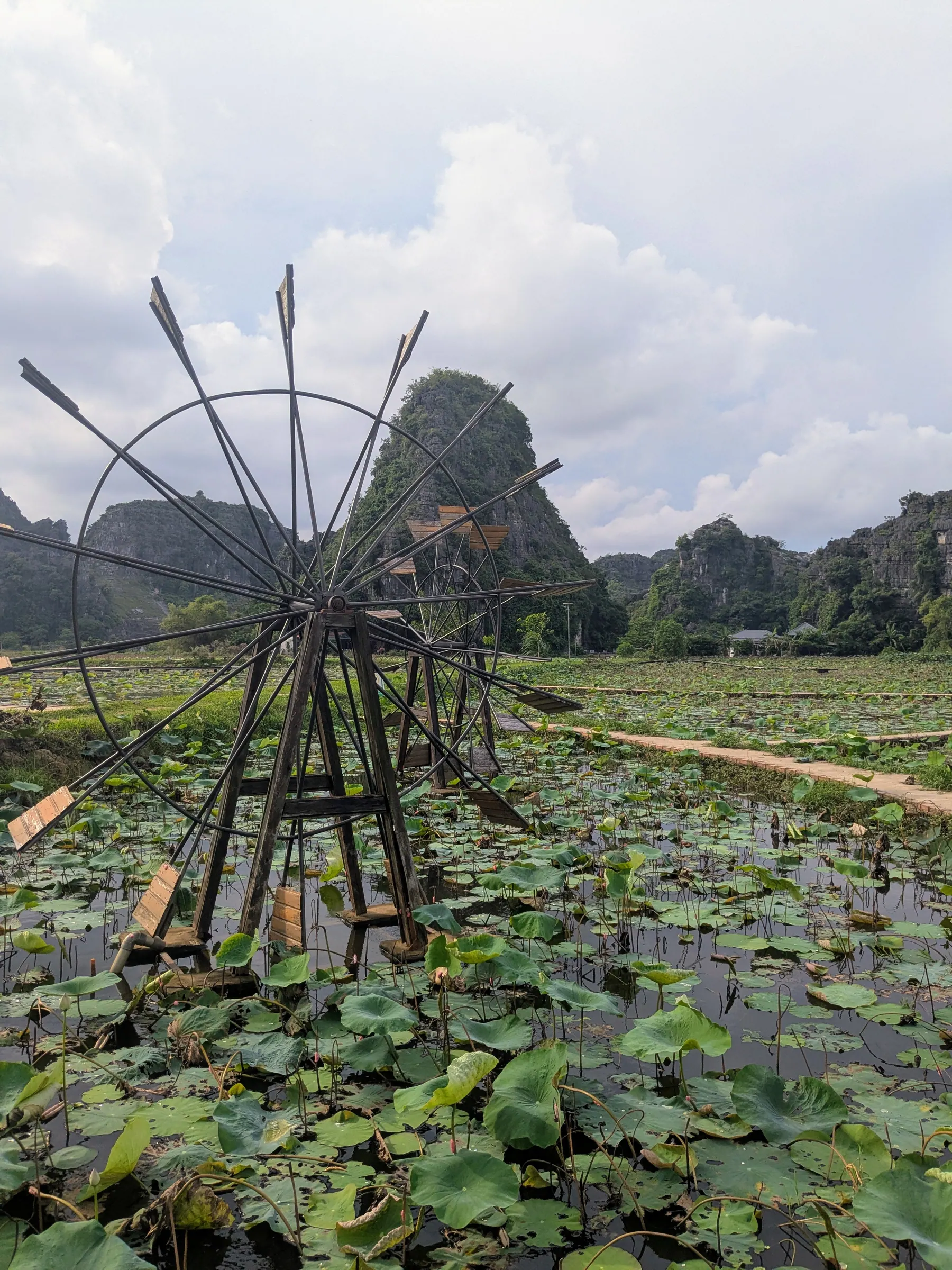
Once you’re through the entrance, there’s a long walk before you reach the cave itself, and the enormous lotus pool along the way shouldn’t be missed. We weren’t there when the lotuses were in bloom and it was still beautiful.
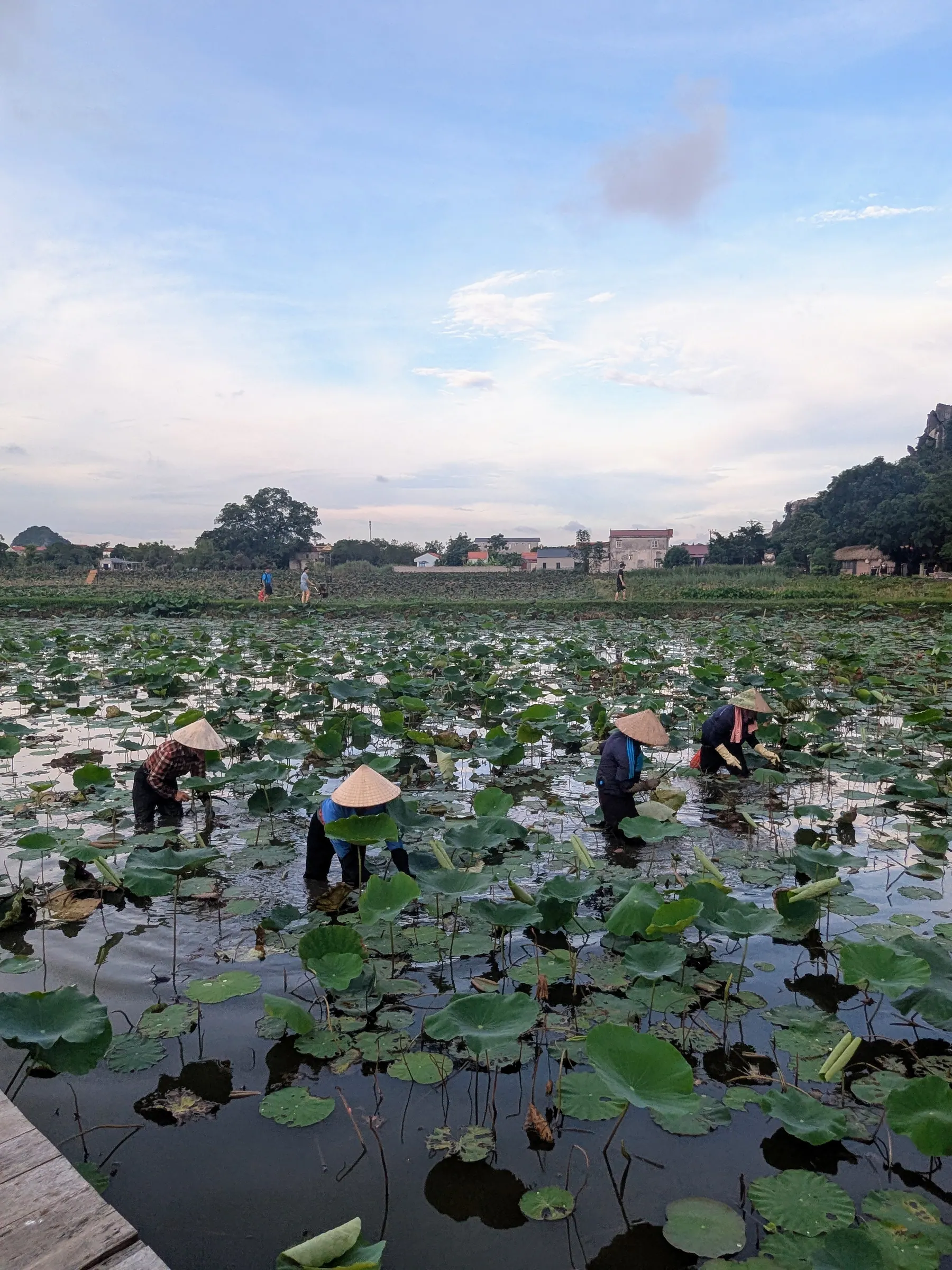
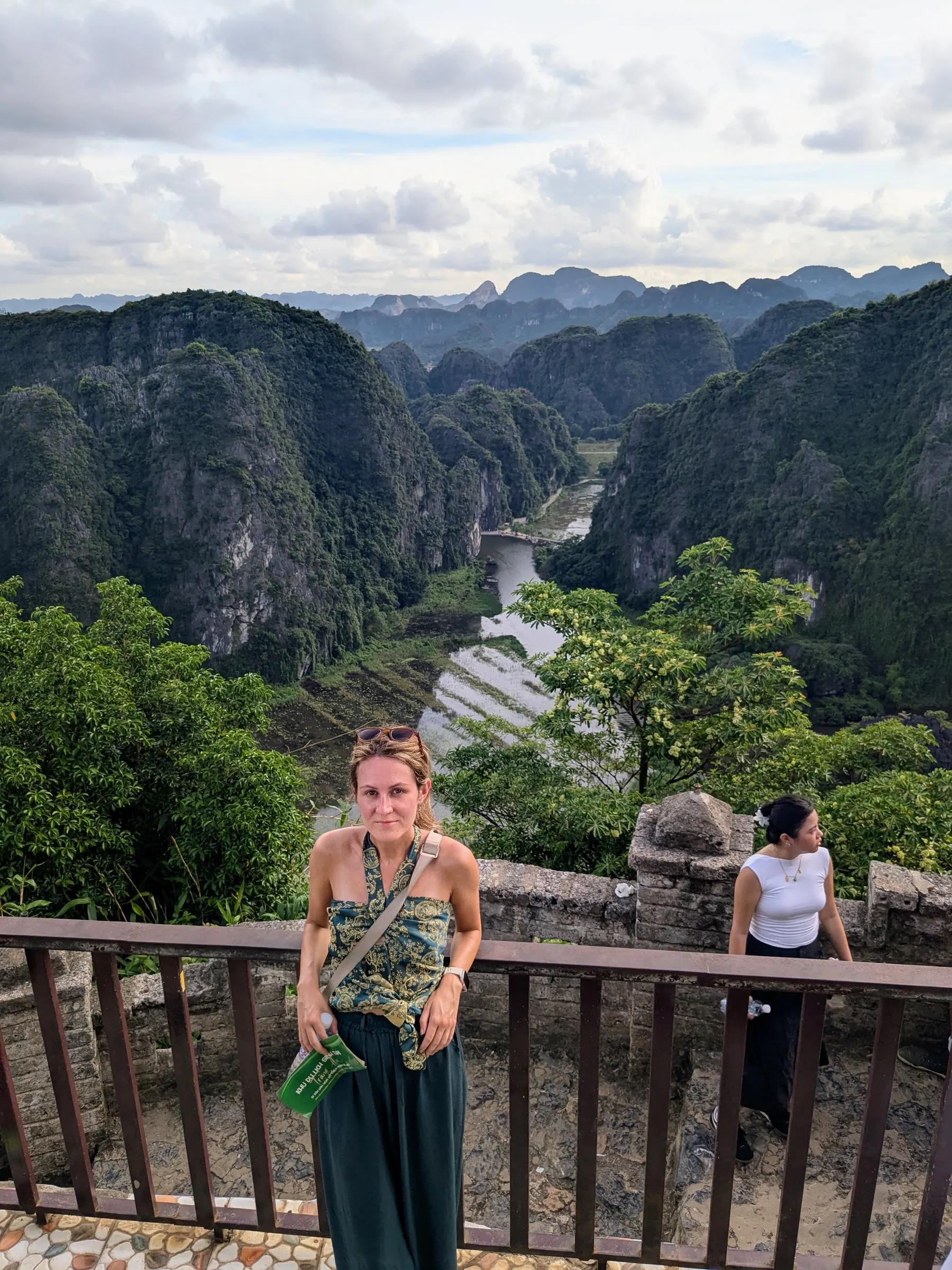
Then the climb. Honestly it was one of the hardest things I did in Vietnam, and I don’t mind climbing or exercise generally. It’s around 500 stone steps up the side of Ngọa Long - Reclining Dragon - mountain, and the heat was unbearable. The humidity leaves you soaking, and every step feels worse than the last.
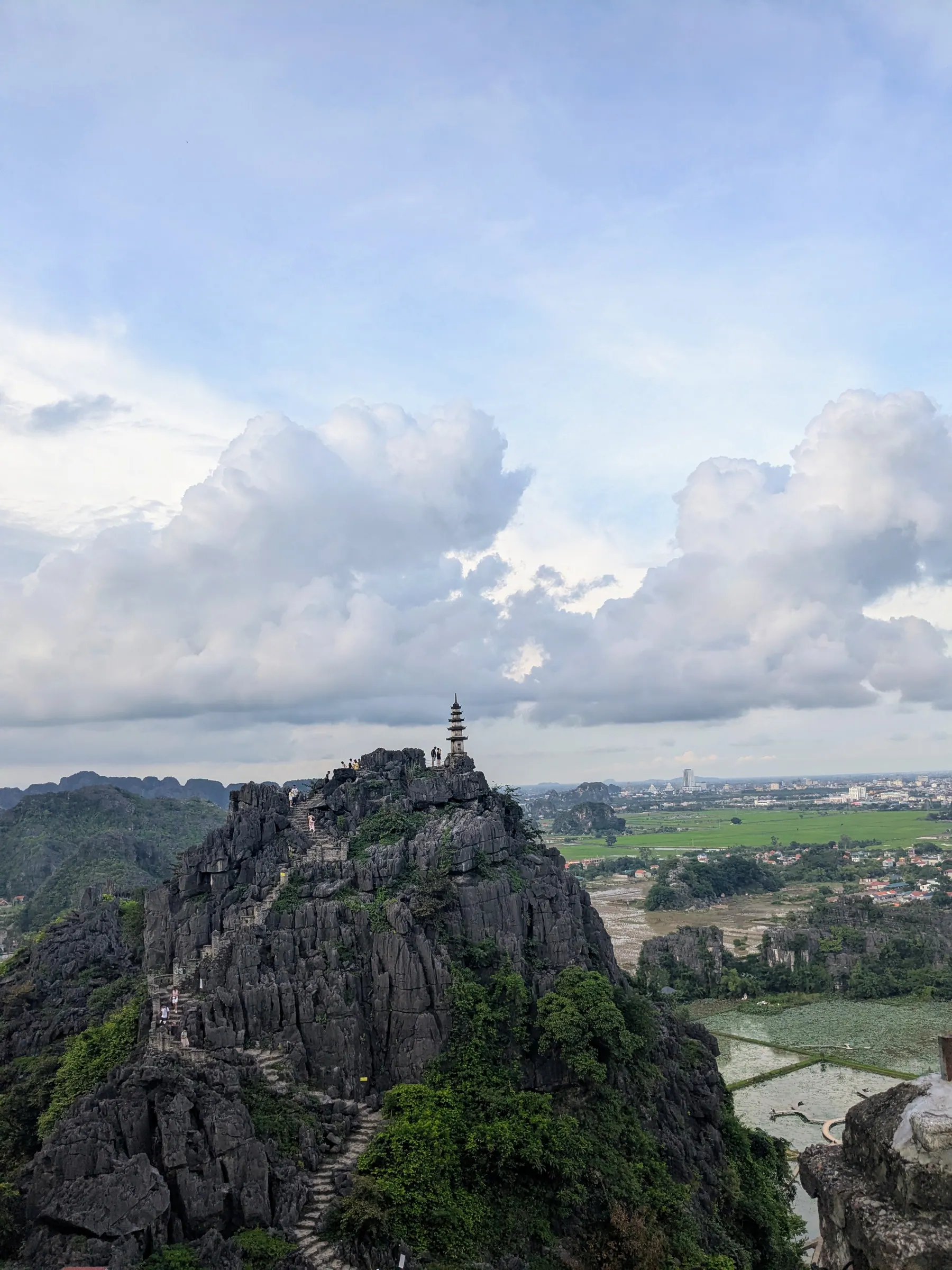
Was it worth it? Yes, pretty much. The views from the top are beautiful: green mountains standing on either side and the river running down the middle of it all. There’s a stone dragon along the ridge at the summit, and a small pagoda on the second peak.
The name means dancing cave. The story is that a king came here to watch performances, which is a strange thing to think about while you’re hauling yourself up 500 steps in the heat.
Is Ninh Binh worth it?
Yes. Two full days covers what we did, but I’d add a third if you can.
Ninh Binh is a nature place, and there’s more of it than we managed. We could easily have spent another day going out to Cuc Phuong National Park, Vietnam’s oldest national park, but we were tight for time.
Rent a bike, get a map, and give one of your days to the boat. Ninh Binh is flat and quietly beautiful. The one thing to plan around is the humidity - it shapes how much you can do in a day more than anything else. We ended up moving at a slow pace because of it.
Most people come from Hanoi, which is two hours away, and do it as a day trip. I wouldn’t. It’s the wrong shape for the place: you’d spend four hours in a van to see a fraction of it, and the evenings are part of what makes it.
And compared with the rest of northern Vietnam, Ninh Binh was a completely different experience. We’d come from Cat Ba, and from here we headed on to Mai Chau. Learn about Mai Chau. This was the varied one - karst mountains and rivers, temples and caves, villages and rice fields, boats and bicycles, all inside a few kilometres.
For the complete two-week Northern Vietnam route, costs and transport sequence, see our 14-day Northern Vietnam itinerary.
FAQs
Trang An or Tam Coc?
Both are boat trips through karst scenery, and both are lovely. Trang An is longer, takes in caves and temples, and the boats are rowed through a wider landscape. Tam Coc is shorter, on the Ngo Dong river, and famous for the rowers who row with their feet. If you only do one, Trang An gives you more for the time.
Which Trang An route should you take?
There are three, all the same price from the same pier. Route 1 has the most caves. Route 2 is the most popular. We took route 3, which goes through Đột Cave and was very quiet when we did it.
What does the Trang An boat cost?
Around 300,000 VND, roughly €11, including the entrance and the boat. Buy at the official ticket office by the car park. Boats hold four or five, so a smaller group will share.
How many days do you need in Ninh Binh?
Two full days covers the main things - one for cycling between the temples, caves and villages, and one for the boat. Three lets you add Cuc Phuong National Park.
Can you cycle around Ninh Binh?
Yes, and it's the best way to do it. The distances are real but the land is flat, so a bike covers them easily. Most accommodation rents bikes and will give you a map. Expect to pay a small fee for bicycle parking at the sites.
When should you go?
Whenever you can, but start each day early. The humidity here is extreme and the middle of the day is punishing.
Is Mua Cave worth the climb?
Around 500 steps in that heat is hard work, and the view from the top is worth it. Entry is 100,000 VND. Ignore anyone offering you parking before you reach the entrance.
Read next
More posts for this trip mood
 Asia
Asia Hai Phong, Vietnam
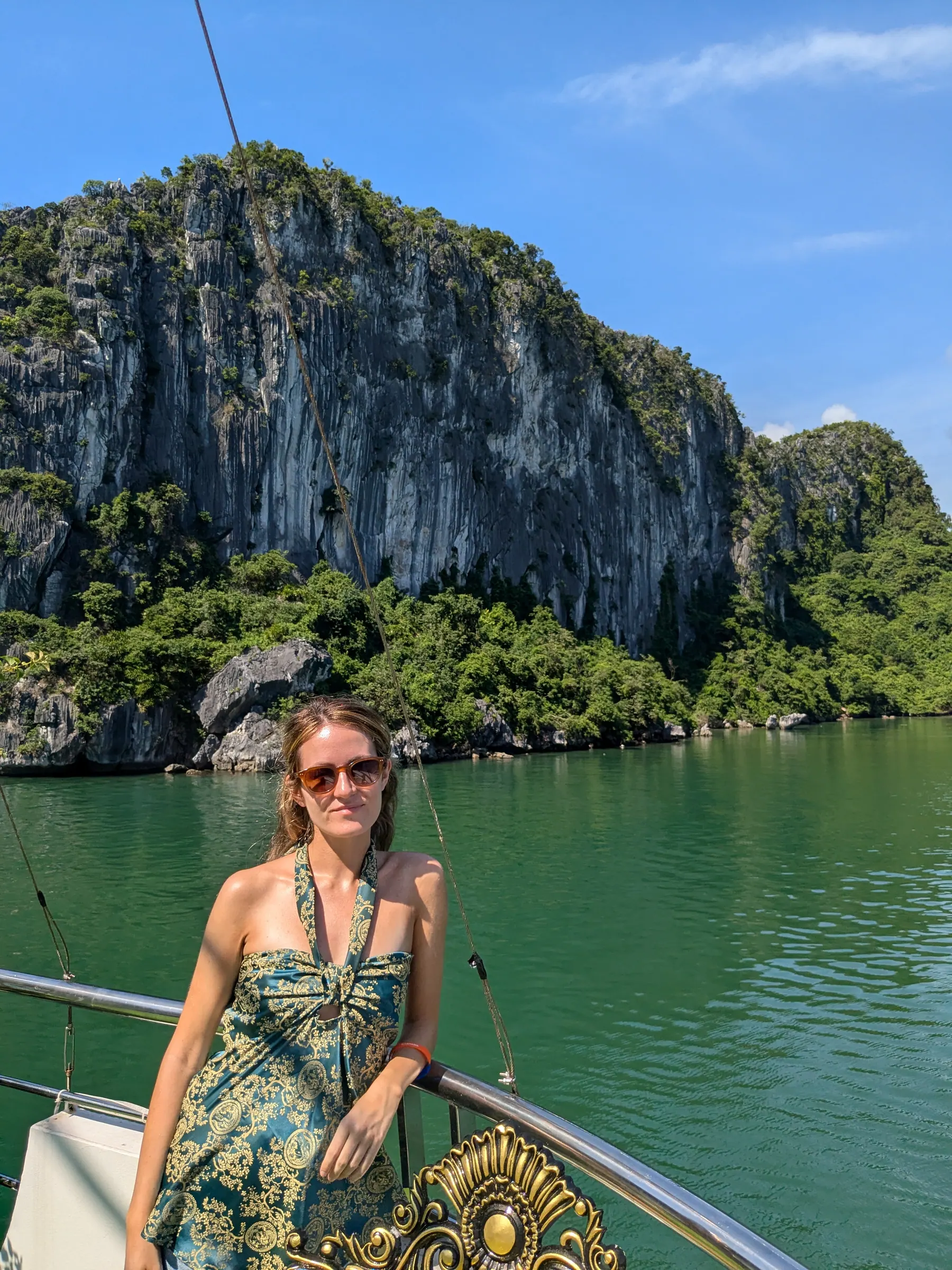
Cat Ba and Lan Ha Bay: The Quieter Ha Long
Two quiet days on the water: limestone karsts, cave kayaking, a floating village and no crowds.
Why we based ourselves on Cat Ba Island, skipped the mainland cruises, and spent two quiet days cruising, kayaking and exploring Lan Ha Bay instead of Ha Long.
Asia Red River Delta & Northern Highlands, Vietnam
Northern Vietnam in Two Weeks: A Complete Route
A realistic two-week Northern Vietnam itinerary balancing Hanoi, Lan Ha Bay, Ninh Binh, Mai Chau, and the Ha Giang Loop with honest budgets and transit tips.
 Asia
Asia Northern Vietnam, Vietnam
The Ha Giang Loop: Three Days on a Motorbike
Three days on the Ha Giang loop with an easy rider: what it cost, what the route covers, what to bring, and the Sunday market at Dong Van worth waking for.