

Cat Ba · Hai Phong · Vietnam
Cat Ba and Lan Ha Bay: The Quieter Ha Long
Two quiet days on the water: limestone karsts, cave kayaking, a floating village and no crowds.
Why we based ourselves on Cat Ba Island, skipped the mainland cruises, and spent two quiet days cruising, kayaking and exploring Lan Ha Bay instead of Ha Long.

Quick facts
- Time needed
- Two days and two nights are optimal to explore Cat Ba National Park and spend a full day cruising Lan Ha Bay.
- Getting there
- Book a combined bus and ferry transfer from Hanoi with 12Go Asia (around €10 per person).
- Where to stay
- Tran Chau Garden Home for a peaceful, village-like stay with a pool, or Cat Ba Town for nightlife and bars.
- Good to know
- Operators offer different itineraries, so check what your route includes before booking.
We visited around the middle of September 2025, and Ha Long Bay was on our list before we even landed in Vietnam. It’s one of those places you don’t question - you just go. What we didn’t know was that there’s a quieter version of the same scenery, with the same limestone karsts and the same green water, and that we’d end up on it instead.
We based ourselves on Cat Ba island. The island is worth slowing down for in its own right, but its greatest draw is what surrounds it: Lan Ha Bay, a crescent of karst scenery that many standard Ha Long Bay itineraries do not include.
Getting There
We booked our transfer from Hanoi to Cat Ba through 12go Asia, which cost around €10 per person and included the ferry to the island. The whole thing went smoothly - more smoothly than we expected.
What we did learn, the slightly stressful way, is that Vietnam takes punctuality seriously. We had arrived at the meeting point on time, but hadn’t read the small print: you need to be there 15 minutes early. Two guys on motos picked us up and rushed us to the transfer bus. We made it. Lesson learned: in Vietnam, arriving on time is arriving late.
The transfer itself was fast and convenient. The part that tested our patience was the ferry - a big, slow boat carrying not just passengers but buses too, crawling towards an island you could see on the horizon but never seemed to reach. When the coast finally arrived, I felt a real sense of relief: the long trip was done, and the exploring could start.
Where to Stay
Choosing accommodation in Cat Ba wasn’t straightforward at first because we didn’t know which part of the island made sense. My friend and I ended up at Tran Chau Garden Home, which is remote - and that did worry us a little in the beginning. It turned out not to matter. The homestay organises transfers to tours and motorbike rides as taxis, so getting around was easy enough.
The place itself is lovely: a swimming pool in the middle, with the rooms arranged around it in small individual houses. It felt more like a quiet little village than a hotel.
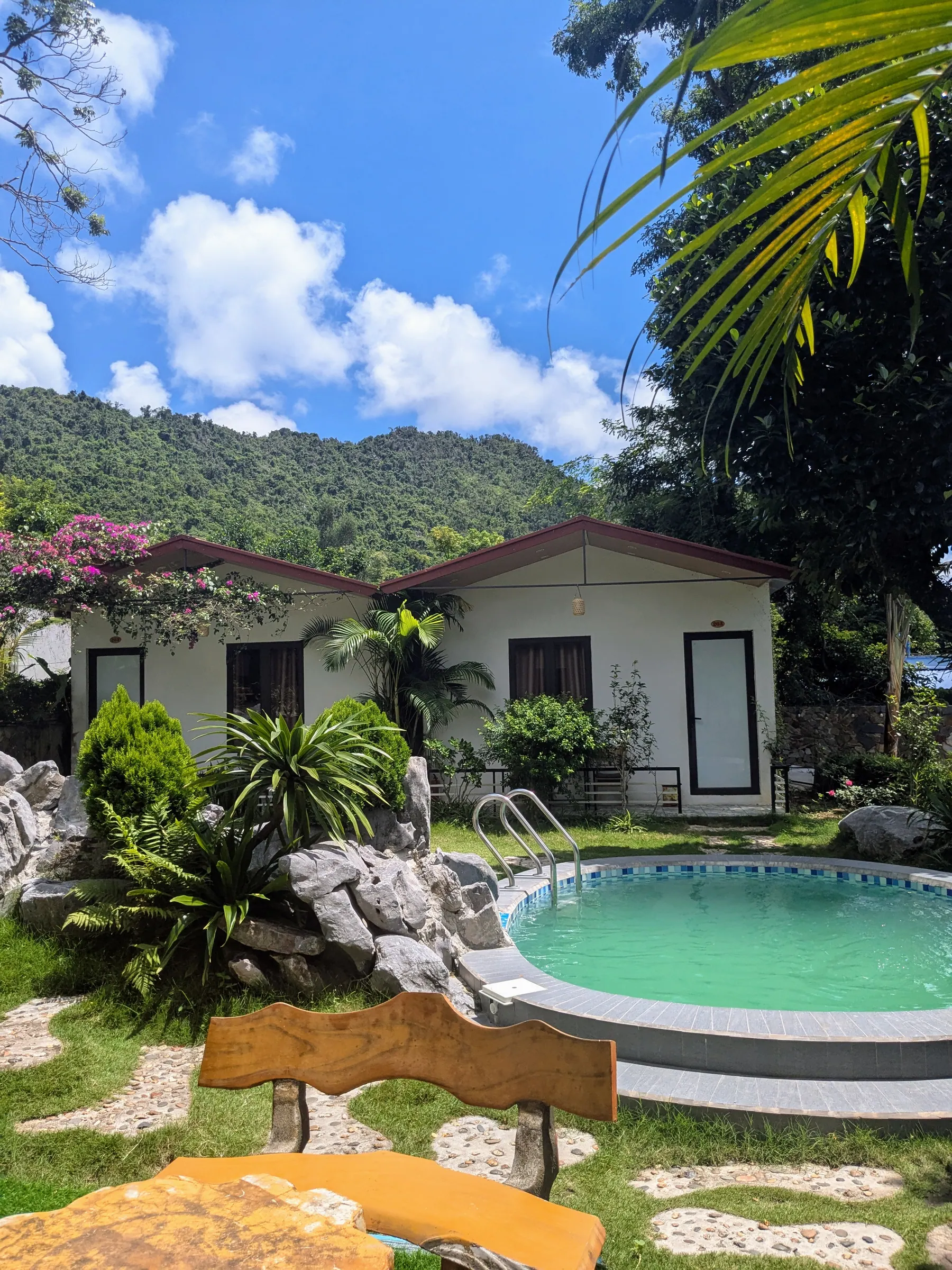
We were very glad we chose it. The guy running the place was incredibly kind and helpful, always there when you needed something. When we left, he sent us off with a small takeaway bag of fruit. It’s the kind of thing you don’t forget.
He was also the one who booked our Lan Ha Bay tour with Cat Ba Eco Tourist for us - two days on the water (excluding the night, as we slept back at our homestay), kayaking and meals included. We paid around €80 per person in 2025 for our two-day tour, which now sits firmly at the low-end of the market. For current planning, comparable two-day, one-night cruises from Cát Bà generally span roughly 2,200,000–6,500,000 VND per person (about €75–€220); fares vary widely depending on the boat category, route, cabin standard, and season.
Cat Ba National Park
Our visit to Cat Ba National Park on the first day was an express one - we had the boat tour booked for the evening, so we had roughly an hour to go up and back before we needed to leave. That’s worth knowing before you plan your day.
We arranged a motorbike taxi through the homestay, and the ride there turned out to be one of the highlights in itself. Mountains all around, exotic vegetation, and that feeling of freedom on the back of a motorbike with the wind in your face.
Cat Ba National Park covers around 15,000 hectares of tropical forest, limestone hills and wetlands, and is one of the few places in the world where you can still find the Cat Ba langur - one of the most endangered primates on the planet. There are several trails of different lengths and difficulties, and a small entrance fee to get in.
Be aware: you will be climbing uphill, a lot, and the heat mixed with the humidity is no joke. I was suffering. We saw monkeys, some interesting insects, and a remarkably big spider. The place felt remote - not many people around - which made it feel even more wild.
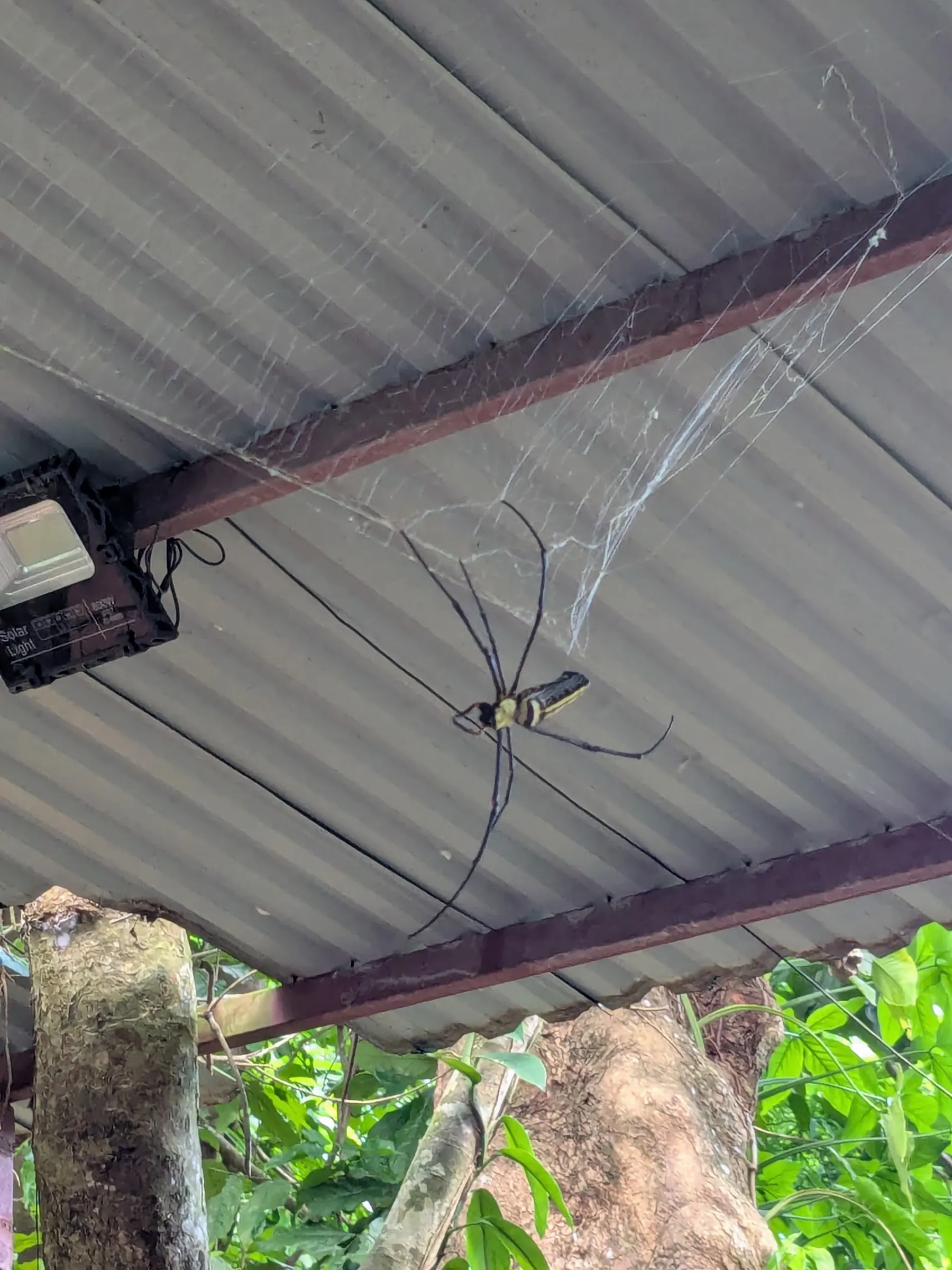

Spider and butterfly.
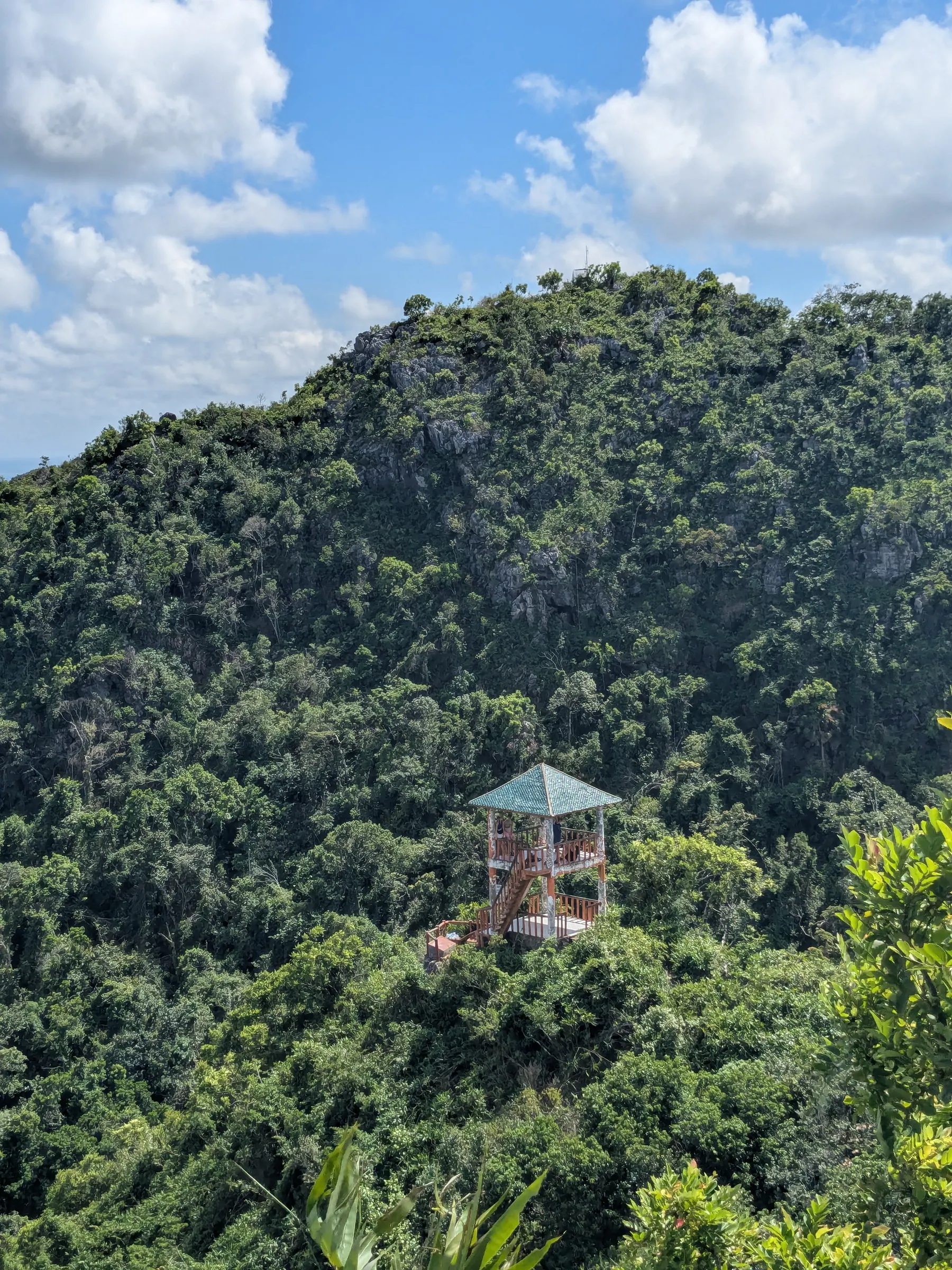
Once you reach the top there is a viewing terrace. I was half expecting a sea view - the island is not that big, after all. But it’s much more inland than you’d think, so what you get instead is greenery, hills and dense jungle as far as you can see. Still very much worth the climb.
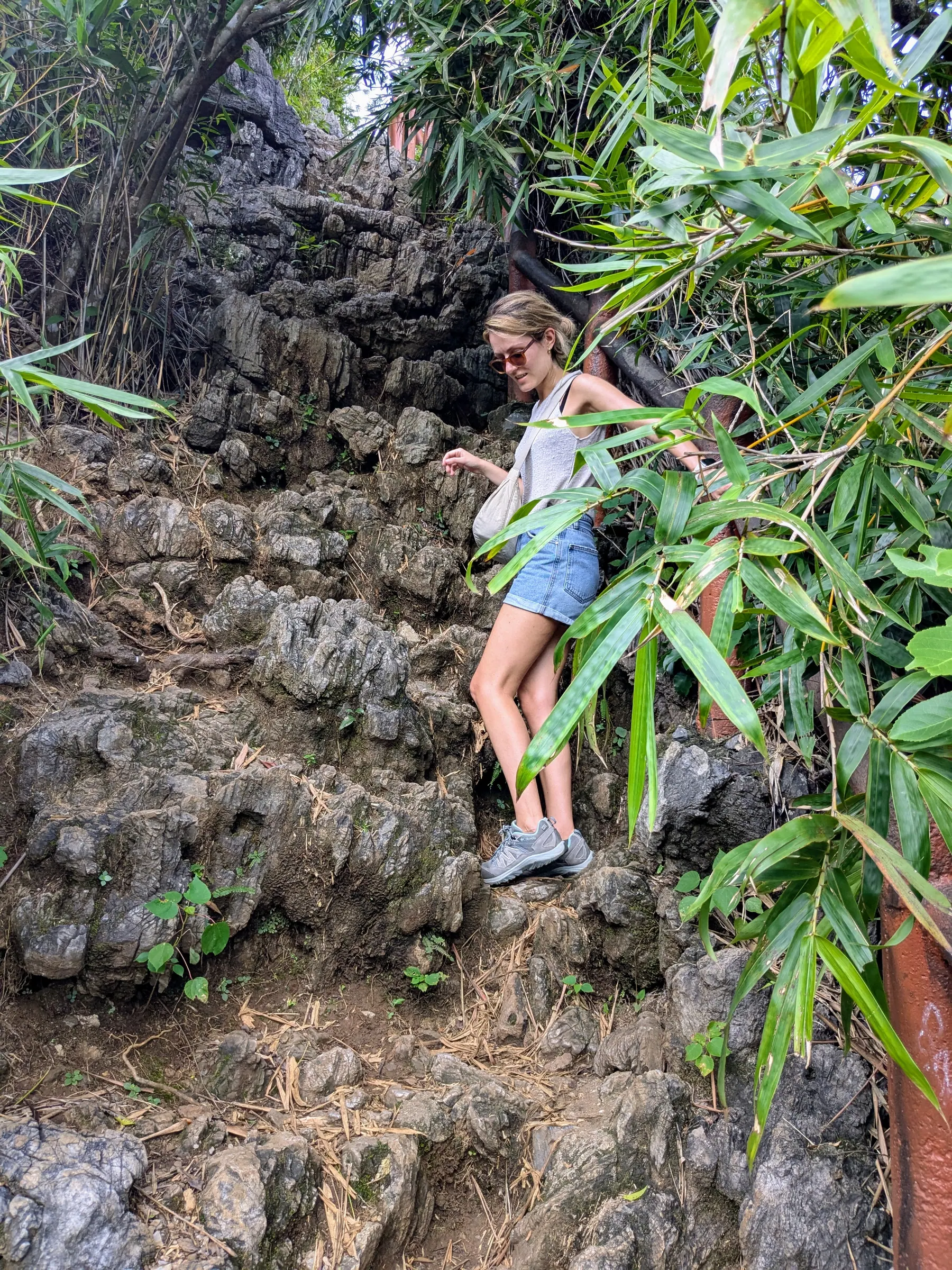
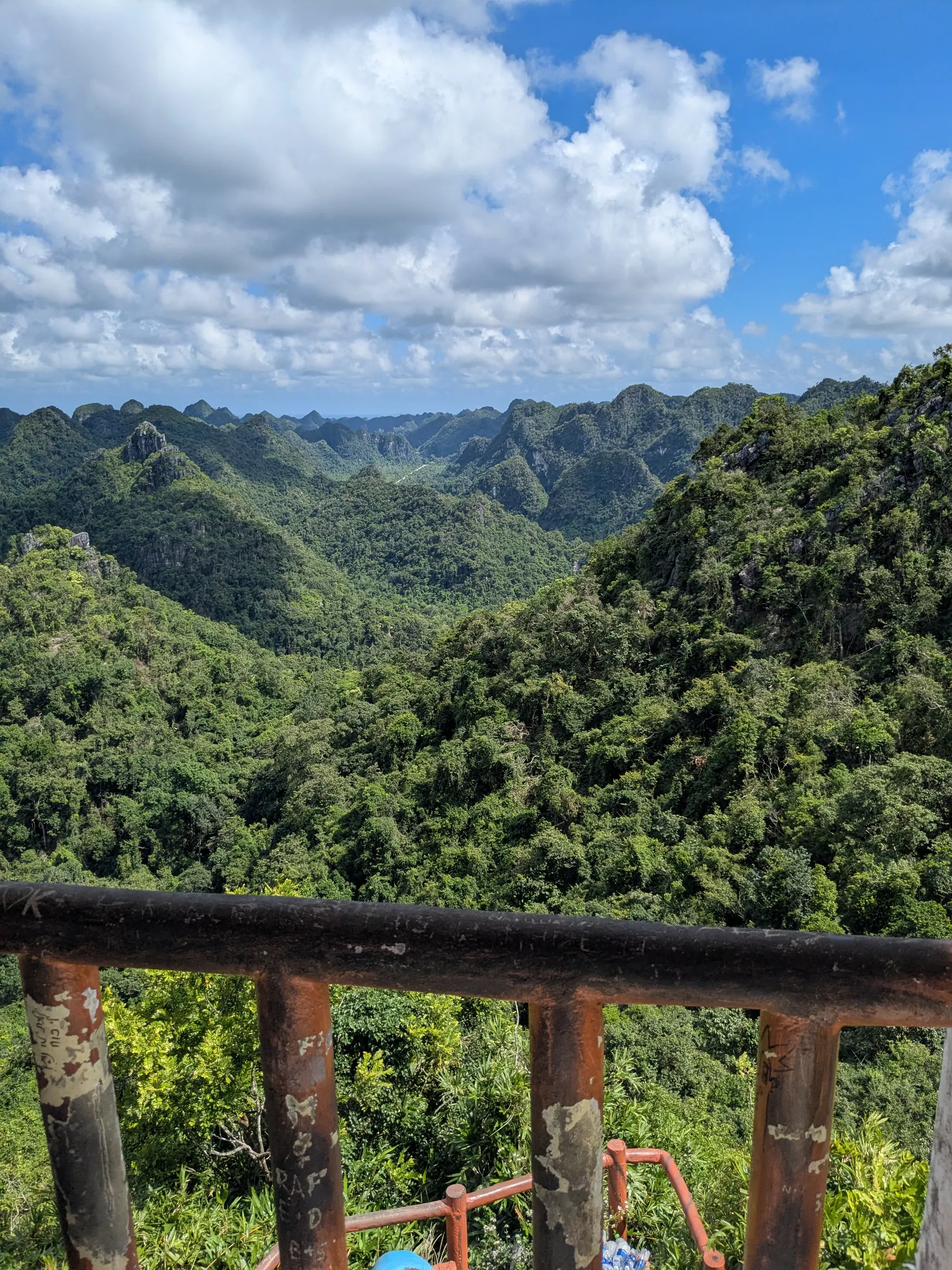
The climb to the viewing tower and the wide views across Cat Ba National Park.
Along the road to the park there are also two caves worth adding if you have more time than we did: Hospital Cave (Hang Quân Y), a secret three-level field hospital carved into the rock during the Vietnam War, and Trung Trang Cave, a 300-metre natural limestone cave full of stalactites. We simply didn’t have time, but if your day is free - don’t skip them.
Lan Ha Bay - The First Evening
The tour we chose through our homestay combined an evening on the boat followed by one full day. Since we were already on the island, it felt right to make the most of the bay for as long as we could.
Meals were included - dinner the first evening, lunch the next day. There was a lot of food, which is always a good sign, but taste-wise it was okay rather than memorable. Traditional Vietnamese dishes, well-meaning, but let’s put things as they are: it wasn’t a culinary masterpiece. You’re there for the scenery, not the cooking. Drinks were not included, so make sure you bring enough water to stay hydrated throughout the day.
The first evening, before sunset, we headed to Monkey Island. The idea is simple: the boat stops nearby and people jump in and swim to the shore. I’m not the best swimmer, and we both had doubts about where to leave our phones and valuables - so we stayed on board. Whether to swim or not is each person’s call; we relaxed on the boat and watched the monkeys from a distance. There were a few of them visible, though not many.
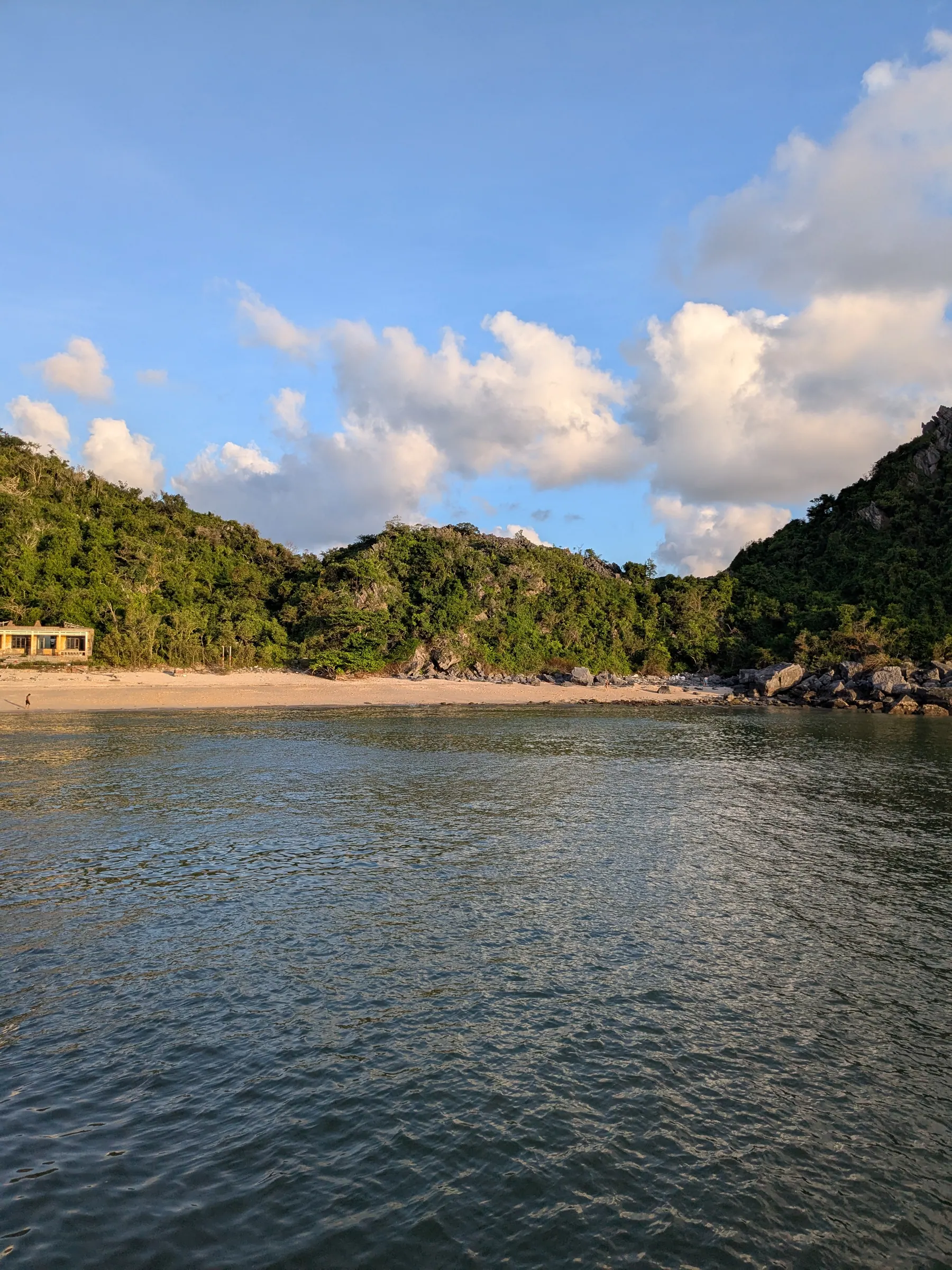
As it turned out, staying was the right call for another reason too. Water got inside a few of the supposedly waterproof bags other passengers were using, and the phones inside were dead afterwards.
If you do swim to Monkey Island: test your waterproof bag before you trust it with your phone.
The first evening was really about seeing the bay for the first time - the initial impressions, watching the light change, seeing how it all gets dark around you. It set the tone well.
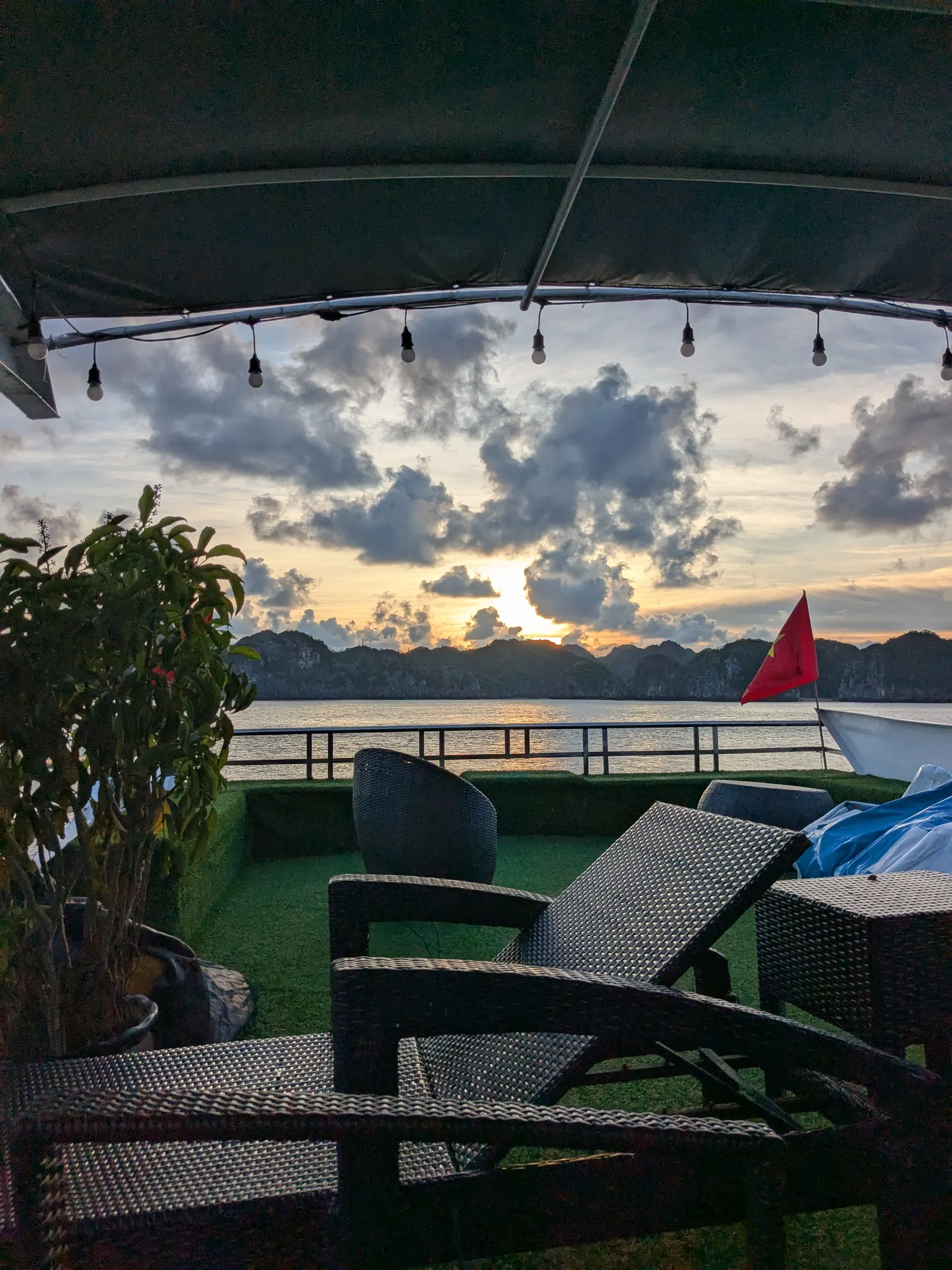

Evening light fading over the limestone karsts of Lan Ha Bay.
The Plankton Swim
After dark, the guide took us by kayak through Tai Keo Cave into an enclosed lagoon. In the darkness of the cave, away from any light, you could see the bioluminescent plankton in the water. I had seen it for the first time in Colombia, so I knew what to expect - which is why I’ll say this clearly: it was mild. The glow was there, and it was lovely, but don’t arrive expecting the vivid blue water that fills most photos of this phenomenon. It depends heavily on conditions - water temperature, the moon phase, the time of year. Manage your expectations and you won’t be disappointed; go in expecting magic and you might be. Either way, paddling through a cave in the dark in the middle of Lan Ha Bay is a pretty good way to spend an evening.
Day Two - The Full Day
The second day was the more complete one. The boat was also fuller - a mix of us, foreigners and a Vietnamese group - but the bay is big enough that it never felt crowded on the water.
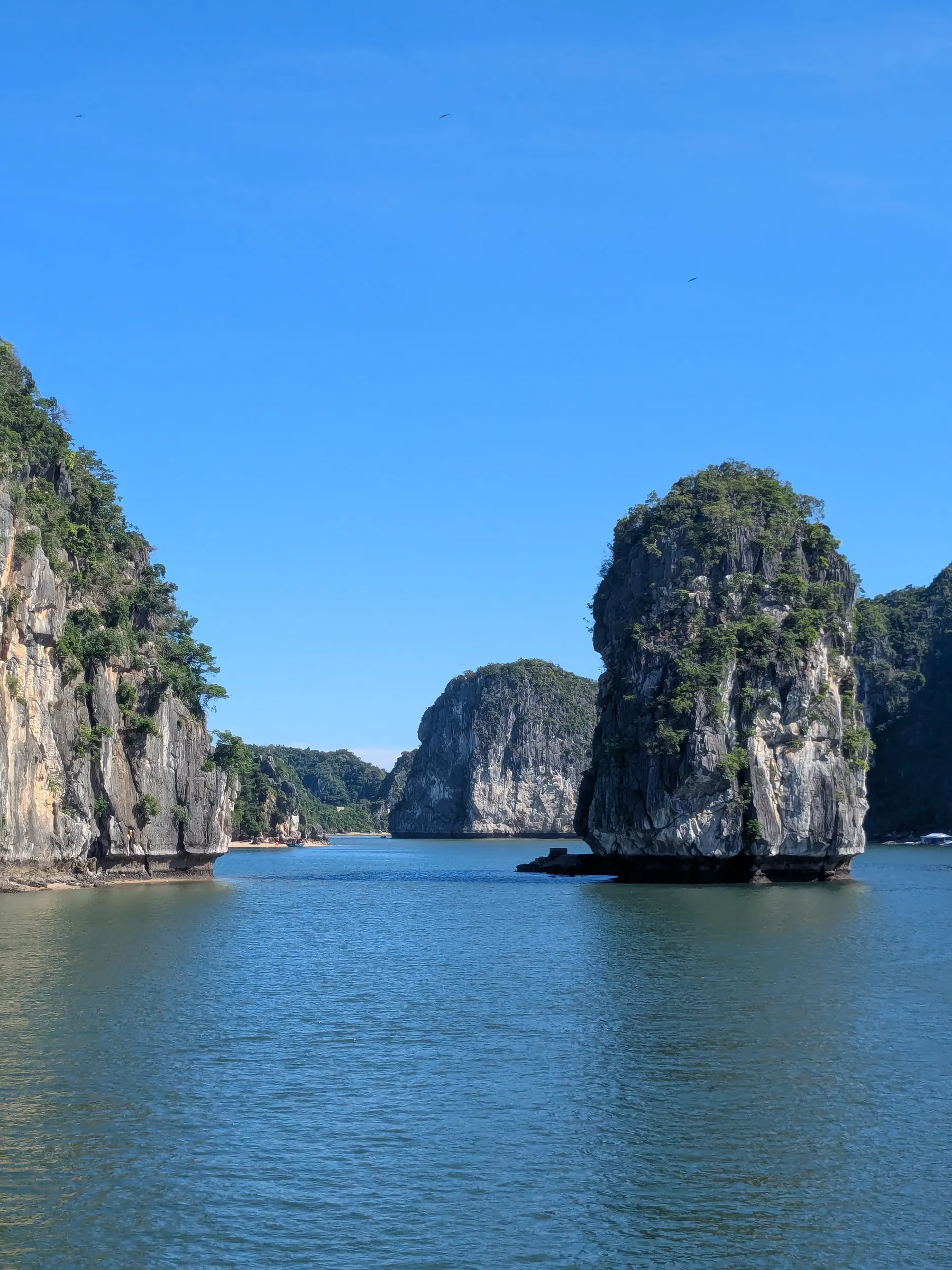
Navigating through Lan Ha Bay is less about doing things and more about being somewhere. Our boat had an upper terrace where we could sit in the sun and watch the limestone karsts pass by. We were lucky with the weather - not a cloud all day. At some points the guide pointed out areas he said were connected with the Kong: Skull Island filming around Ha Long Bay, which adds a strange cinematic layer to scenery that already looks slightly unreal.
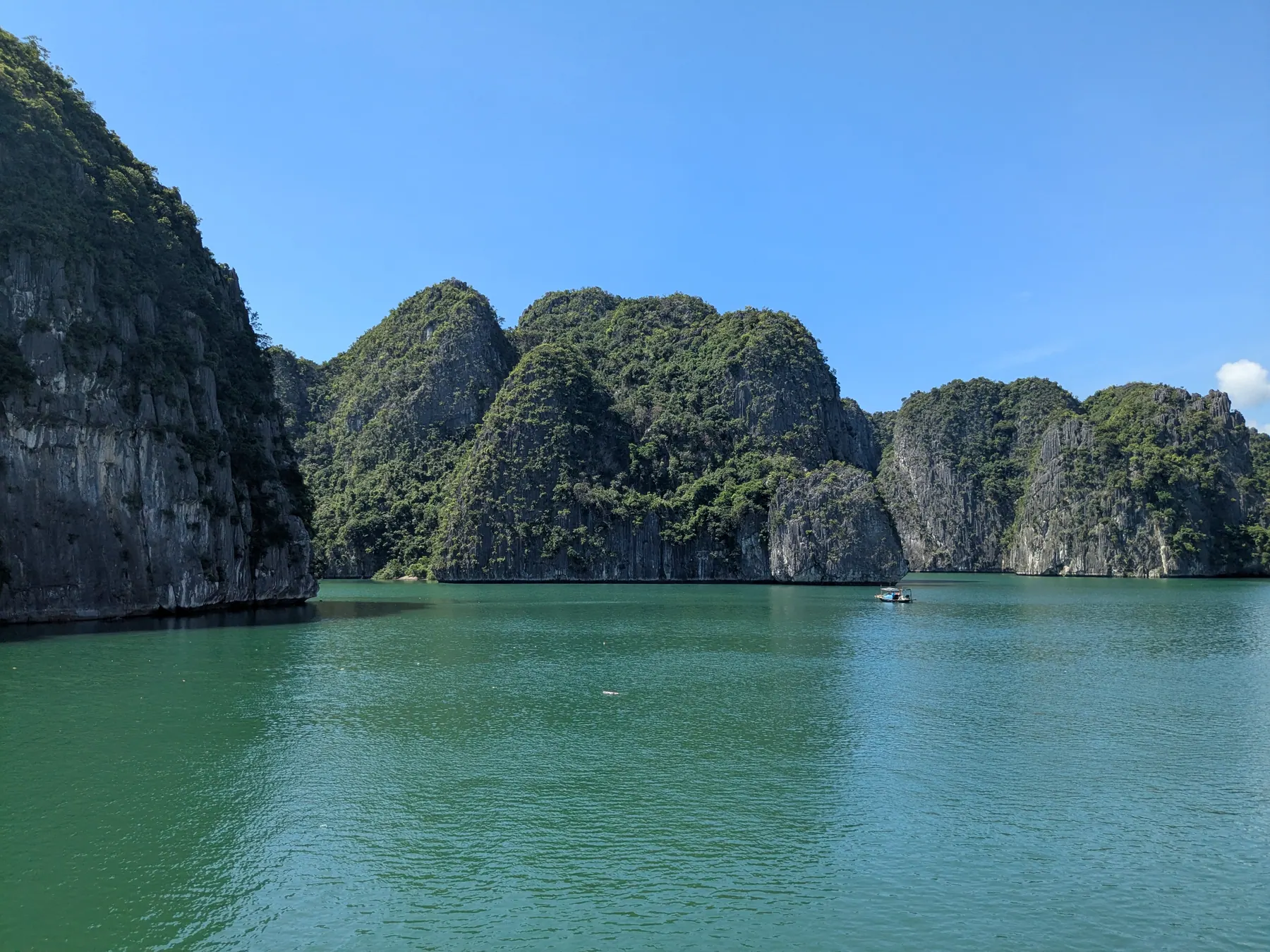
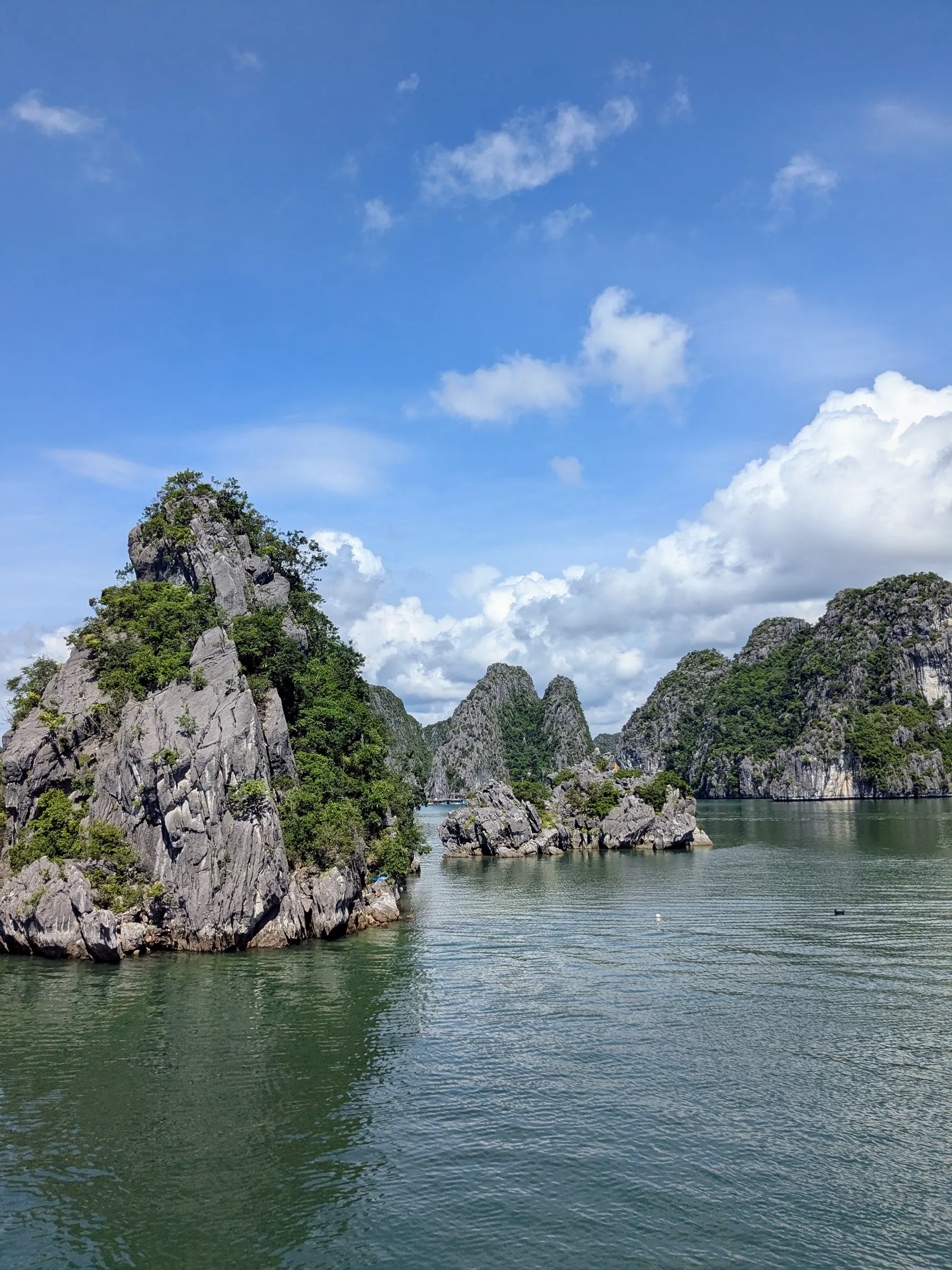
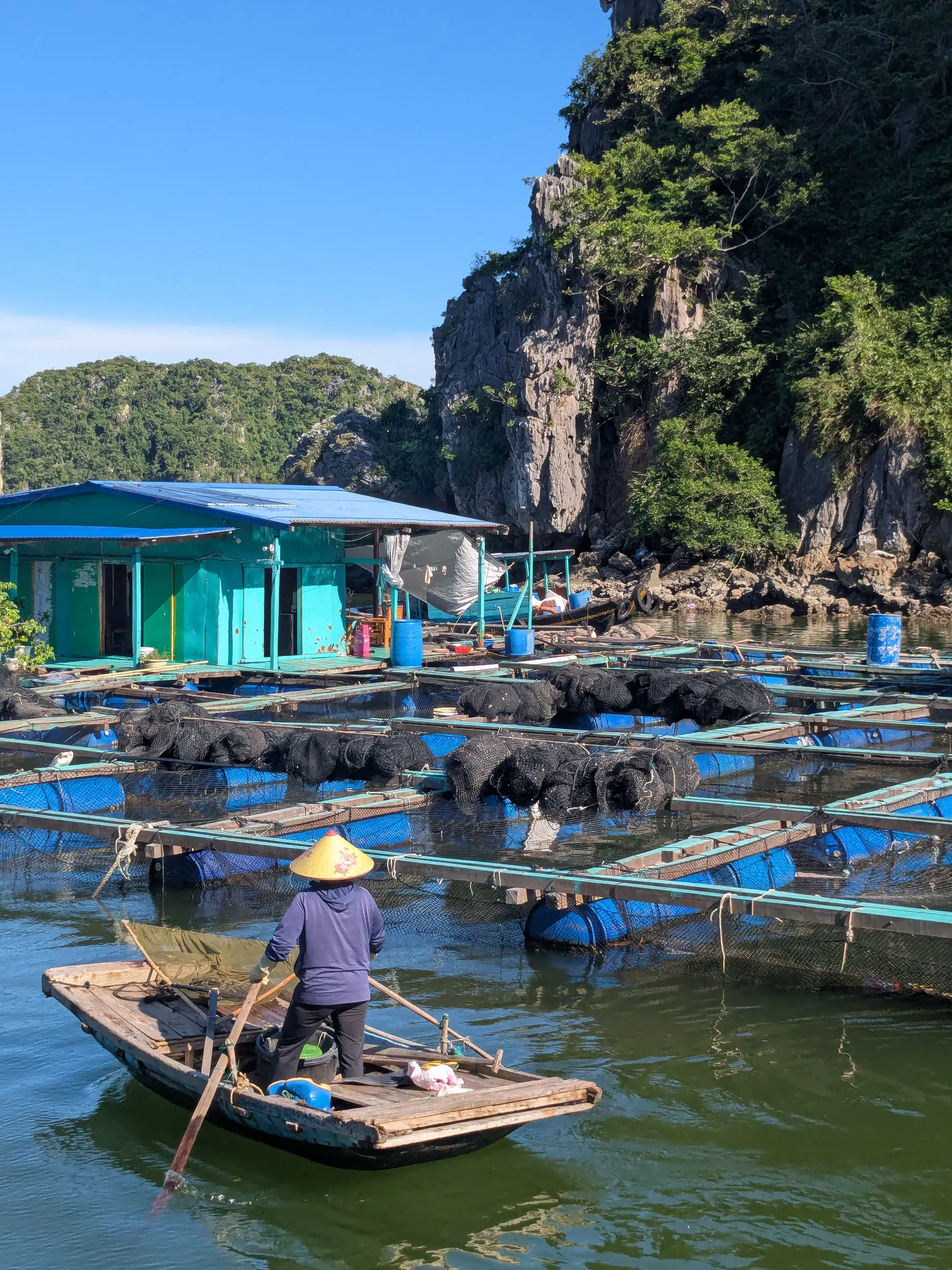
Cai Beo Floating Fishing Village was one of my favourite parts of the whole trip. Seeing locals going about their daily work, surrounded on all sides by those vertical cliffs - the contrast is striking. It’s the kind of scene that stays with you. The homes sit on floating platforms alongside fish cages, where residents raise fish as well as catch them in the bay. From the boat, the clusters of houses and working rafts looked like a whole community on the water, not just a scenic stop.
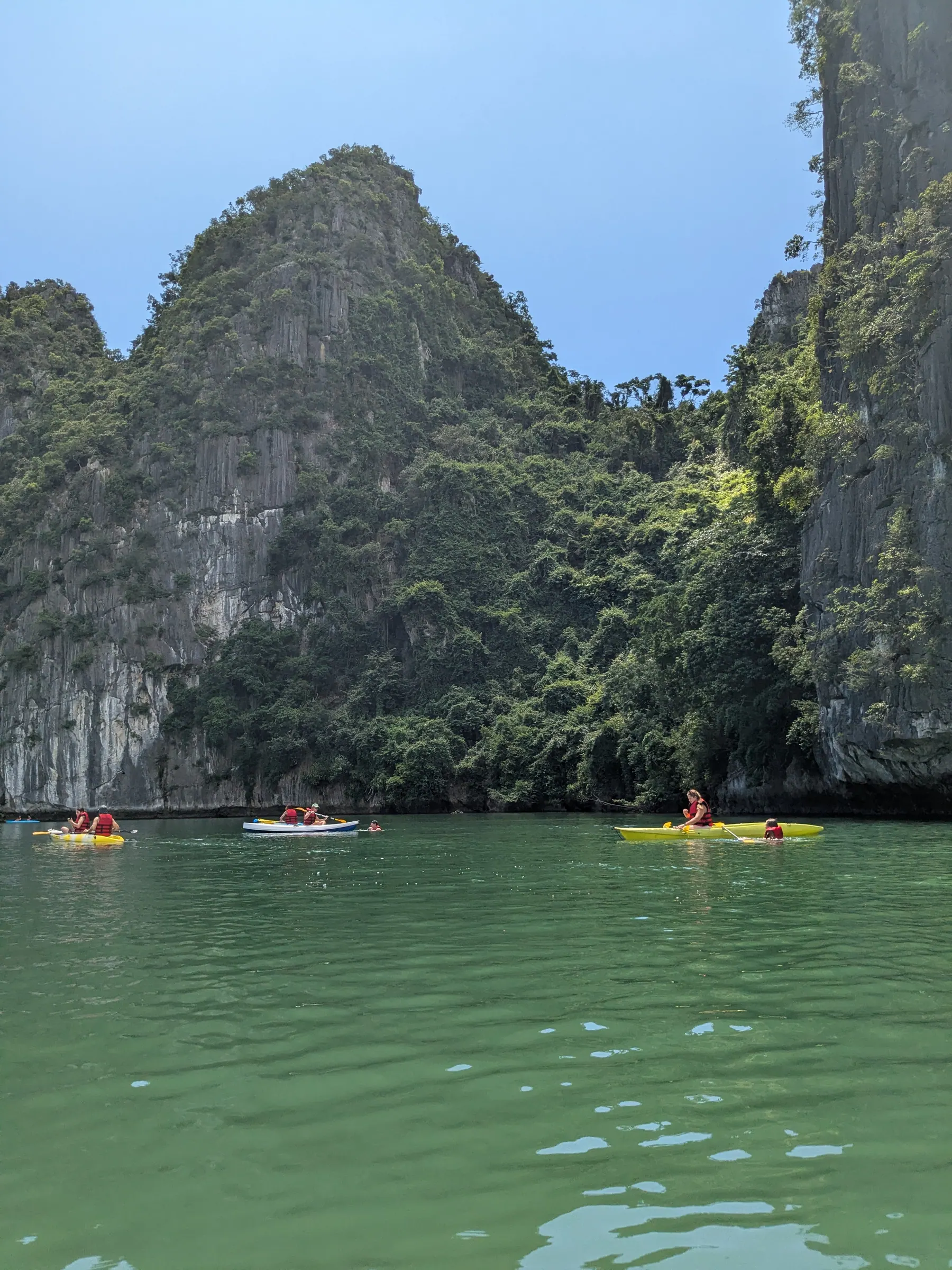
The highlight of the day was the kayaking at Tai Keo Cave. We paddled through the cave into a hidden enclosed lagoon surrounded by limestone walls and jungle. The guide came with us, and we had around an hour to explore and swim. It’s the most intimate way to experience the bay - the bigger boats can’t follow you in there.
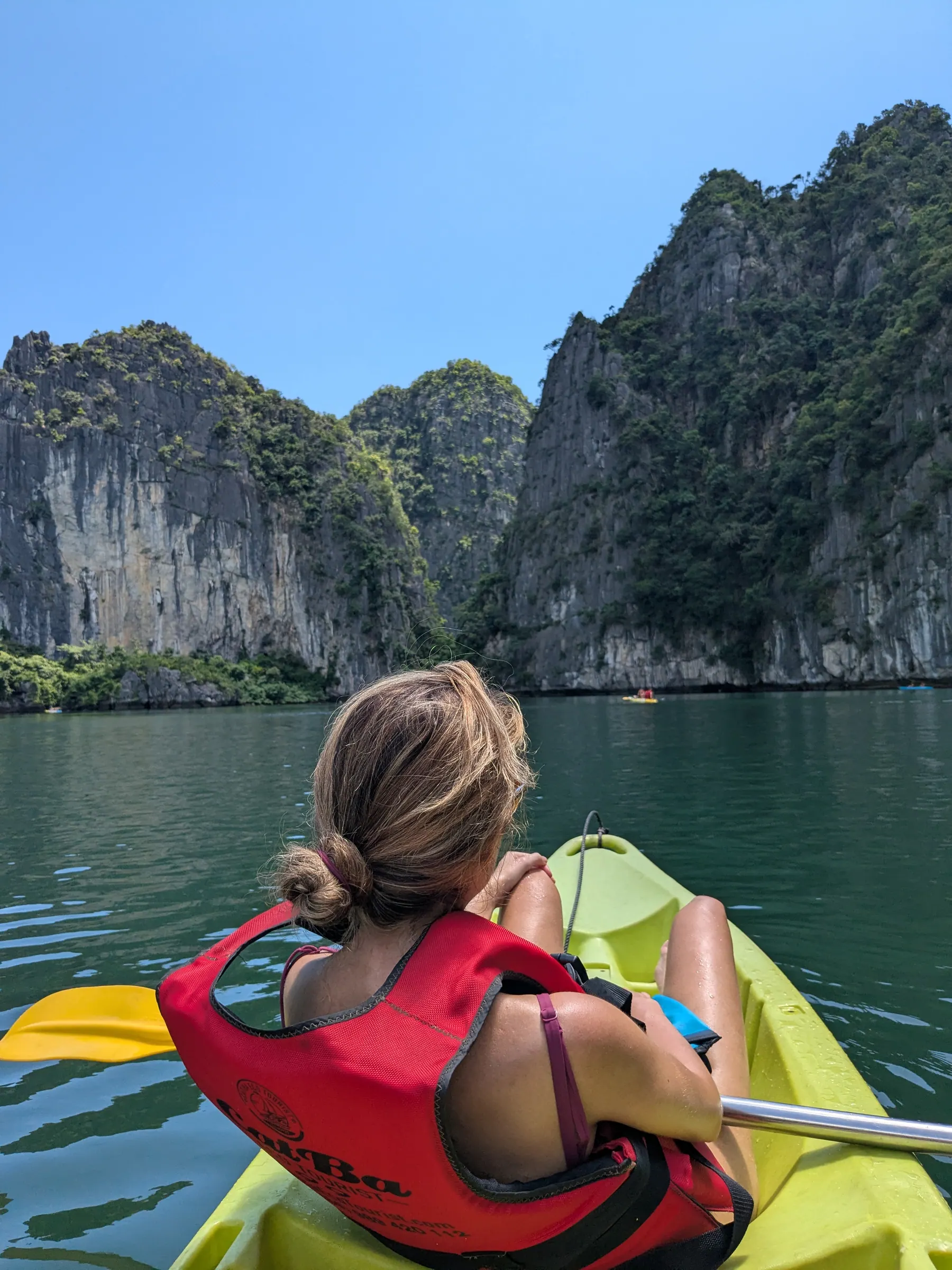
For those who want something more active, there was also a water slide mounted off the side of the boat at one point, for anyone who wanted to throw themselves into the bay. Good fun to watch if nothing else.
The part I liked the least was the stop at Viet Hai Village, a remote spot on Cat Ba where the main draw is a fish pond for a feet massage. I wasn’t interested in the fish pedicure thing - it’s one of those novelty activities you either enjoy as a bit of fun or prefer to skip, and I was firmly in the second camp. But beyond that, the place felt entirely set up for tourists - no real authenticity left in it. The floating fishing village we’d passed earlier in the day felt alive and real; Viet Hai felt like a stage. Getting there and back also ate up a chunk of the day I would have preferred to spend on the water. It was the kind of place that felt disconnected from everything around it.
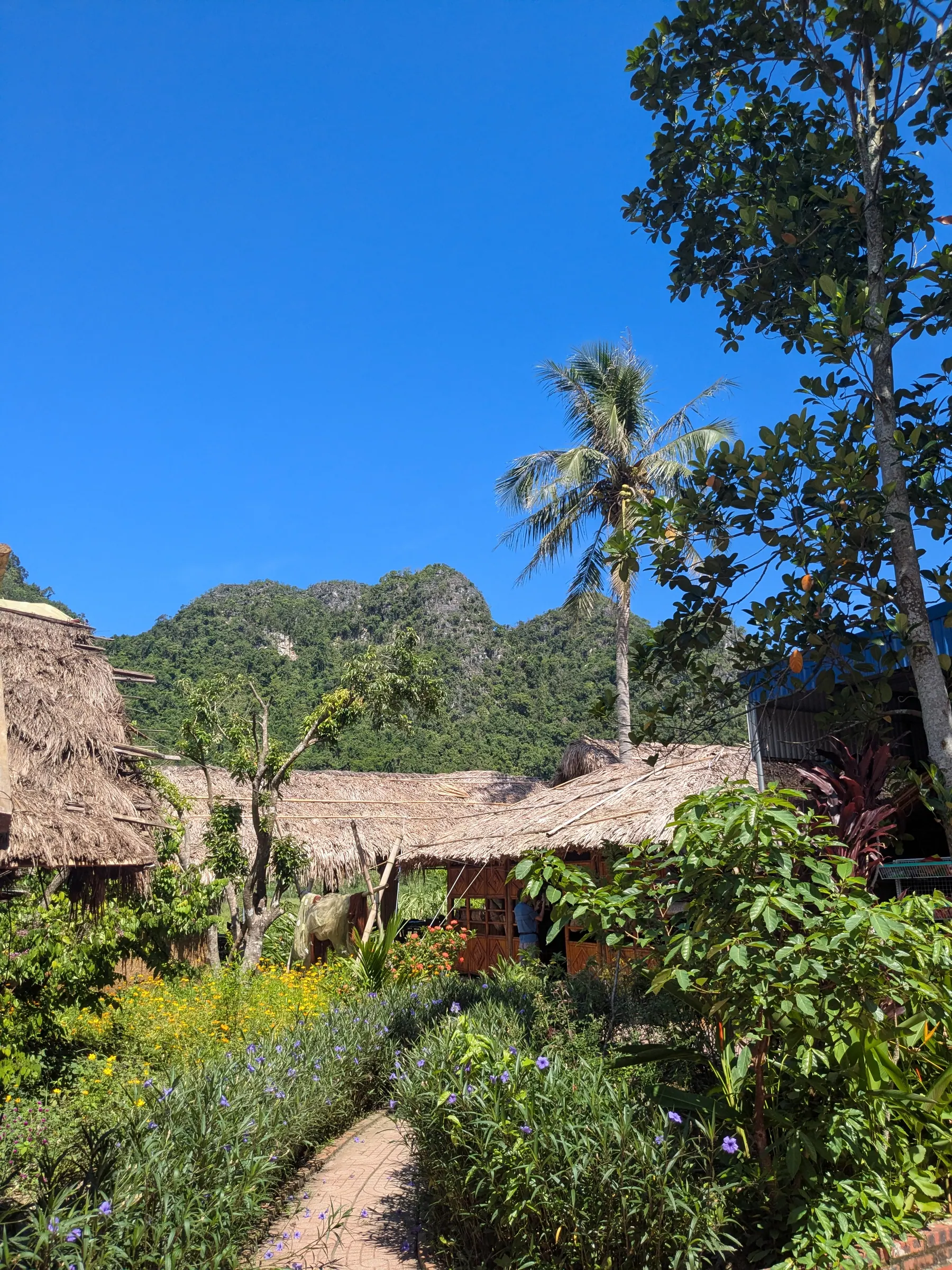
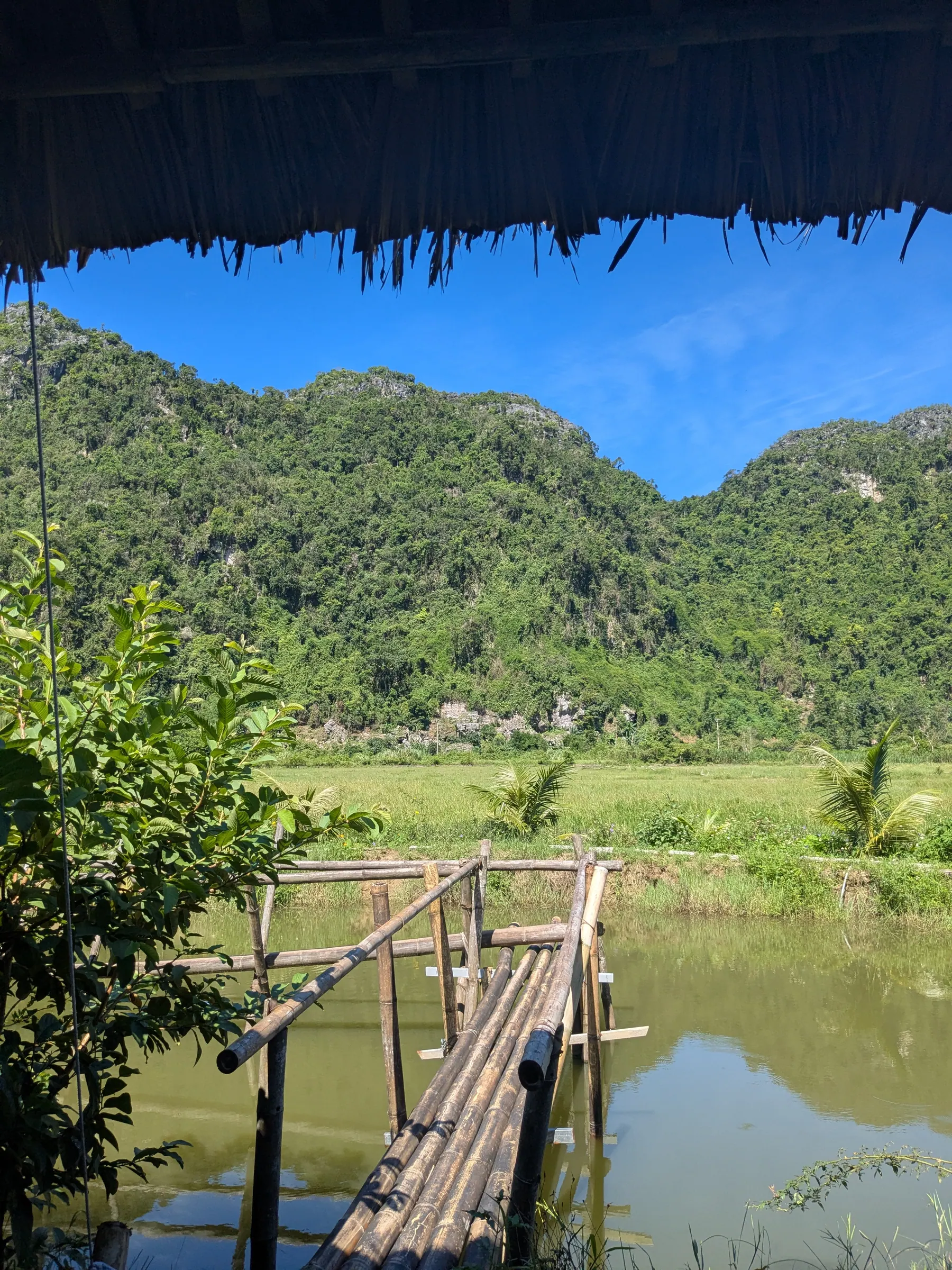
Viet Hai Village: the road in and its fish-pedicure pool.
Lan Ha Bay vs Ha Long Bay
Most people who come to this part of Vietnam ask the same question: Ha Long Bay or Lan Ha Bay? The honest answer is that the scenery is essentially the same - it’s the same geological landscape of limestone karsts rising out of green water, connected without a clear boundary. What’s different is everything around it.
At a glance: which bay should you choose?
- Atmosphere & crowds: Ha Long Bay is busy on its main channels; Lan Ha Bay generally sees fewer vessels, though boat numbers vary by season and route.
- Departure point: Ha Long Bay cruises depart mostly from mainland ports (like Tuan Chau or Halong City), and some of those itineraries continue into Lan Ha. Lan Ha Bay tours commonly set sail from Cat Ba Island, usually Ben Beo harbor.
- What you do: Ha Long leans toward massive illuminated show caves (like Sung Sot) and popular viewpoints. Lan Ha Bay centers on water-level nature - kayaking through archways into enclosed lagoons, quiet beaches, and navigating floating fishing villages.
- Famous landmarks: Ha Long has famous postcard formations and large show caves. Lan Ha trades those headline stops for quieter water and routes that can include secluded lagoons such as Tai Keo Cave.
Ha Long Bay - Cat Ba Archipelago is a UNESCO World Heritage Site. The Ha Long side has larger show caves, more developed infrastructure and cruise options from budget to seriously expensive. It’s the classic choice, and it earns that status. But the main routes can be busy at popular stops.
Lan Ha Bay is generally quieter. On our two days on the water, other boats passed by from time to time, but it never felt crowded - not once. The bay is also dotted with small beaches and hidden lagoons; whether a particular boat visits them depends on its route and size. If you’re already based on Cat Ba, choosing Lan Ha isn’t a compromise. It’s the smarter option.
Ha Long Bay is worth it if it’s your only chance to see the karst landscape and you want the full, iconic version. Lan Ha Bay is worth it if you want the same scenery with room to breathe.
Cat Ba Town
We were based far enough from the centre that we never really visited the town itself - just passed through quickly on transfers. From what we glimpsed and what other travellers on the boat told us, Cat Ba town is livelier than you might expect: bars, some nightlife, a seafront. If that’s what you’re after, staying closer to the centre makes more sense than where we were. We chose the quieter option and don’t regret it, but it’s worth knowing the choice exists.
Moving On
The full tour runs around seven to eight hours, with a pick-up organised directly from the homestay alongside other travellers heading to the same boat. It’s a long but full day.
When we got back, there was just enough time to return to Tran Chau, grab our bags, and say goodbye to the homestay guy - who, true to form, sent us off with a bag of fruit. Shortly after, we were already on the transfer to Ninh Binh. That’s the rhythm of this part of Vietnam: you’re always moving on sooner than it feels like you should be.
Before You Go - Practical Notes
Getting there from Hanoi. A combined transfer that includes the ferry to Cat Ba is usually the simplest option. We booked through 12go Asia for around €10 per person, but fares and timetables change. Just remember: arrive at the meeting point at least 15 minutes early.
Book your tour on arrival. Don’t stress about arranging the boat tour before you get there. We arrived with a long list of questions - which operator, which route, how much - and it all resolved itself at the homestay. A trusted local accommodation can be a helpful place to compare options, but check the exact itinerary, inclusions and cancellation terms before booking.
Bring cash. Withdraw a decent amount in Hanoi before you leave. If you’re staying somewhere remote, don’t count on finding an ATM nearby.
What to bring on the boat. Sunscreen, a hat, a towel, a swimsuit and water. Check what your tour includes before you go, especially drinks and equipment.
Getting around the island. Motorbike taxi is the practical option if you’re based outside the town centre. Official taxis exist too. For the boat tour itself, pick-up from our accommodation was included - confirm this when you book, as it varies by operator.
How long to stay. Two days was the right amount for us. We knew our day on the bay would have a more tourist-focused rhythm, and we didn’t want to overdo it - yet we still saw a lot. Two nights gives you one day for the national park and one full day on the water.
When to go. We were there in mid-September and the weather was excellent - sunny, clear, no rain. Vietnam’s weather can be unpredictable though, so don’t plan too rigidly around it.
Signal. I had connectivity most of the time, weaker in some spots but generally fine.
Moving on from Cat Ba. We bought our transfer to Ninh Binh straight from the homestay. Many accommodations can help arrange the next leg, but confirm the operator, departure point and what the fare includes before paying.
Final Thoughts
Lan Ha Bay is beautiful - undeniably so. But there’s no point pretending it isn’t a tourist experience, because it is. You’ll be on a boat with other tourists, some of the activities are designed around that, and a stop or two will feel more staged than spontaneous.
What it also is: a day on the water without rushing anywhere. Limestone karsts, kayaking through caves, a floating fishing village, and a plankton swim after dark. We came without high expectations and left very happy. Sometimes that’s all you need.
For the complete two-week Northern Vietnam route, costs and transport sequence, see our 14-day Northern Vietnam itinerary.
FAQs
Is Lan Ha Bay better than Ha Long Bay?
Both sit within the Ha Long Bay - Cat Ba Archipelago UNESCO World Heritage property and share the same karst scenery. Lan Ha is generally quieter than the main Ha Long routes, but water conditions, boat numbers and access to individual lagoons vary by season and itinerary. Choose the specific operator and route, not just the bay name.
How do you get to Cat Ba Island from Hanoi?
A combined bus-and-ferry transfer is usually the simplest option. It typically takes around 3.5 to 4 hours; recent fares commonly fall around 200,000 to 350,000 VND per person, depending on the operator and date. Book one combined itinerary through 12Go Asia, an operator or your accommodation so the bus and ferry are coordinated.
Should you book a Lan Ha Bay tour in advance?
Not necessarily. Booking ahead gives certainty in busy periods, while a trusted homestay or hotel can help you compare current local options once you arrive. Before paying, confirm the exact route, transfer, meals, kayaking and cancellation terms.
What should you bring on a Lan Ha Bay boat cruise?
Pack sunscreen, a sun hat, swimwear, a towel, cash and drinking water. Check exactly what your operator includes, as drinks and equipment vary by tour. Test your waterproof phone pouch before taking it on the water.
Can you visit Cat Ba National Park in a short time?
Yes, an express climb up to the viewing terrace takes roughly one to one and a half hours round trip. It's a steep, humid jungle hike with panoramic inland views of forested hills.
Read next
More posts for this trip mood
 Asia
Asia Red River Delta & Northern Highlands, Vietnam
Northern Vietnam in Two Weeks: A Complete Route
A realistic two-week Northern Vietnam itinerary balancing Hanoi, Lan Ha Bay, Ninh Binh, Mai Chau, and the Ha Giang Loop with honest budgets and transit tips.
 Asia
Asia Ninh Binh, Vietnam
Two Days in Ninh Binh, by Bike and by Boat
Two slow days of bicycles, limestone mountains, temples, caves and a boat through Trang An.
Two days in Ninh Binh: cycling from Tam Coc to Bich Dong, Buffalo Cave and Mua Cave, with a quiet Trang An boat trip.
 Asia
Asia Northern Vietnam, Vietnam
The Ha Giang Loop: Three Days on a Motorbike
Three days on the Ha Giang loop with an easy rider: what it cost, what the route covers, what to bring, and the Sunday market at Dong Van worth waking for.