

Northern Vietnam · Red River Delta & Northern Highlands · Vietnam
Northern Vietnam in Two Weeks: A Complete Route
When planning two weeks in Northern Vietnam, the biggest temptation is trying to see everything - stuffing Sa Pa, Ba Bể Lake, and Hạ Long Bay into a single trip. In practice, mountain roads are winding, distances take longer than they look on a map, and long transit days quickly take a toll on your energy.
Looking back, our two-week route struck the right balance. Every destination had breathing room: two full days in the capital to adjust, two days out on the water in Cát Bà, two unhurried days cycling between the limestone karsts of Ninh Bình, two nights of peaceful valley life in Mai Châu, and a climactic three-day motorbike tour around Hà Giang before finishing back in Hanoi.
This is the route I would recommend for anyone with around 14 days or two weeks in Northern Vietnam. We arrived late on the first day and flew home in the evening on the last, so the trip spanned 15 calendar dates without adding another full sightseeing day.
We travelled this route in September 2025.
The Honest Route Strategy: Why Pacing Matters
Fitting even one more stop into our two weeks would have tipped the trip from memorable into exhausting. Leaving Hà Giang for the final stage was especially rewarding - it was the adventure we had been anticipating most, and it gave the entire journey a spectacular grand finale.
My travel philosophy on this trip: I am always looking for budget-friendly options rather than choosing fancy hotels. I would much rather spend money on experiences, guided adventures, and memorable activities.
On almost all of my previous travels around the world, accommodation eats up a massive portion of the total budget - but nope, not in Vietnam. Here, accommodation was incredibly cheap. Even on a modest budget, we stayed in clean, comfortable rooms with air conditioning, private bathrooms, and delicious breakfasts for surprisingly little.
The Route: How the Two Weeks Connect
Rather than treating a two-week journey as a rigid day-by-day checklist, our trip unfolded across five distinct destinations - flowing naturally from the historic energy of the capital into quiet karst bays, peaceful farming valleys, and the dramatic mountain canyons of the far north:
Hanoi
Days 1-3 & 14-15 · 4 NightsHoàn Kiếm evening strolls, bustling Old Quarter alleys, trackside iced coffee on Train Street, a day trip to Đường Lâm laterite ancient village, shaded French Quarter boulevards and the Temple of Literature on Day 14, then one final slow morning before the evening flight on Day 15.
Cát Bà Island & Lan Hạ Bay
Days 4-5 · 1 NightThe quieter Hạ Long alternative: sunset sailing among towering limestone karsts, sea kayaking through Tai Keo Cave lagoons, and a night swim with bioluminescent plankton.
Ninh Bình Countryside
Days 6-7 · 3 NightsInland limestone towers and emerald paddies: leisurely countryside cycling, ancient temples of Hoa Lư, an early-morning rowboat trip through Tràng An caves, and the steep 500-step dragon summit climb at Hang Múa.
Mai Châu Valley
Days 8-10 · 2 NightsPeaceful White Thai stilt-house homestays, traditional loom weavers in Bản Lác, flat bicycle paths through quiet rice fields, and visiting Gò Lào waterfall.
Hà Giang Loop
Days 11-13 · 3 Days / 2 Nights on loopThe undisputed highlight: riding pillion with local Easy Rider guides across Tu Sản Canyon boat trips, hair-raising Mã Pí Lèng Pass switchbacks, and the authentic Sunday hill-tribe market in Đồng Văn.
Trip Costs & Budget Breakdown
Excluding international flights and personal shopping, a realistic budget for this entire route comes to roughly €570-€700 per person (sharing a double room, or around €38-€47 per day). Because lodging and daily dining were so affordable across Vietnam, the only significant single expense was the three-day guided motorbike loop through the northern highlands.
Expense Breakdown
Major Tours & Activities
~€295–€320 / person- Hà Giang 3D/2N Motorbike Loop (with Easy Rider): Around €190 per person. Covered round-trip VIP sleeper buses between Hanoi and Hà Giang, private drivers/guides, safety gear, two nights in homestays, and all meals.
- Lan Hạ Bay & Cát Bà 2-Day Boat Cruise (excluding night): We paid around €80 per person in September 2025 with Cat Ba Eco Tourist, booked directly from our homestay so we didn't buy online (prices might vary; including cruising, cave kayaking, and meals on board, excluding overnight stay on the boat as we stayed at our island homestay). Keep in mind this figure now sits at the budget low-end: current comparable cruises generally span roughly 2.2–6.5 million VND (approx. €80–€240) per person depending on cabin class and vessel standard.
- Tràng An Scenic Boat Trip (Route 3): ~300,000 VND (approx. €11) per person for the boat and cave entries.
- Hang Múa (Mua Cave viewpoint): 100,000 VND (approx. €3.70) entry fee.
- Thăng Long Water Puppet Show: 100,000-200,000 VND (approx. €3.60-€7.20) depending on seat tier.
- Historical entries (Đường Lâm, Temple of Literature, Women's Museum): 30,000-70,000 VND (approx. €1-€2.50) each.
Accommodation
~€90–€110 / person (€180–€220 total per room)Accommodation across Vietnam was remarkably affordable and comfortable:
- Hanoi Old Quarter (4 nights total): Around €22-€25 per room per night (around €11 each) with breakfast.
- Cát Bà Island (1 night): Around €16 per room for a peaceful island homestay or bungalow lodge (Trân Châu Garden Home).
- Ninh Bình (3 nights): Around €15-€25 per room per night for a peaceful countryside homestay in the Tam Cốc area.
- Mai Châu (2 nights): Around €15 per room per night at Little Mai Chau Homestay with breakfast and bicycles.
- (The remaining nights of the trip were spent on overnight VIP sleeper buses or homestays included within the Hà Giang motorbike loop).
Regional Transit & Connections
~€65–€75 / person- Airport to Hanoi City: Local Bus 86 Express is ~45,000 VND (approx. €1.60); municipal Bus 07 is ~9,000 VND (approx. €0.35).
- Taxi to Đường Lâm Ancient Village: Around €20 per person for the return trip (our most expensive taxi ride in Vietnam).
- Hanoi to Cát Bà (bus + ferry combo): Around €10 per person via 12Go Asia.
- Cát Bà to Ninh Bình transfer: Around €10-€12 per person.
- Ninh Bình to Mai Châu transfer: Around €10 per person arranged directly through our homestay.
- Mai Châu to Hanoi return bus: Around €8-€10 per person.
- City buses in Hanoi: 7,000–10,000 VND (approx. €0.25–€0.40) per ride.
Daily Food, Drinks & Dining
~€120–€170 / personEating at local sit-down restaurants gave us fresh, authentic meals at great value:
- Sit-down meals at local restaurants: Around 70,000-150,000 VND (approx. €2.50-€5.50) per person for freshly cooked dishes.
- Shared traditional hotpot dinner: 120,000-180,000 VND (approx. €4.50-€6.50) per person.
- Coffee breaks (egg coffee, coconut coffee): 25,000-50,000 VND (approx. €0.90-€1.80).
- Cold bottled water & drinks on travel days: 10,000-20,000 VND (approx. €0.40-€0.80).
Hanoi (Days 1-3 & 14-15) - Old Quarter Alleys, French Quarter & Heritage
Base: Hanoi Old Quarter · Days 1-3 & 14-15 (5 Days / 4 Nights) · Transit: Bus 86 Express from Nội Bài Airport & taxi to airport
Arriving in Hanoi was being thrown into a city at full volume. Crossing roads buzzing with endless motorbikes took serious nerve at first, but giving ourselves two full days upon arrival plus our final day returning from the mountains let us discover both the character of the ancient merchant alleys and the wide colonial boulevards.
- Day 1: Late Arrival in Hanoi: We arrived in Vietnam around 8:00 PM, took Bus 86 Express from the airport straight into the Old Quarter, and checked into our hotel (around €11 each per night with breakfast).
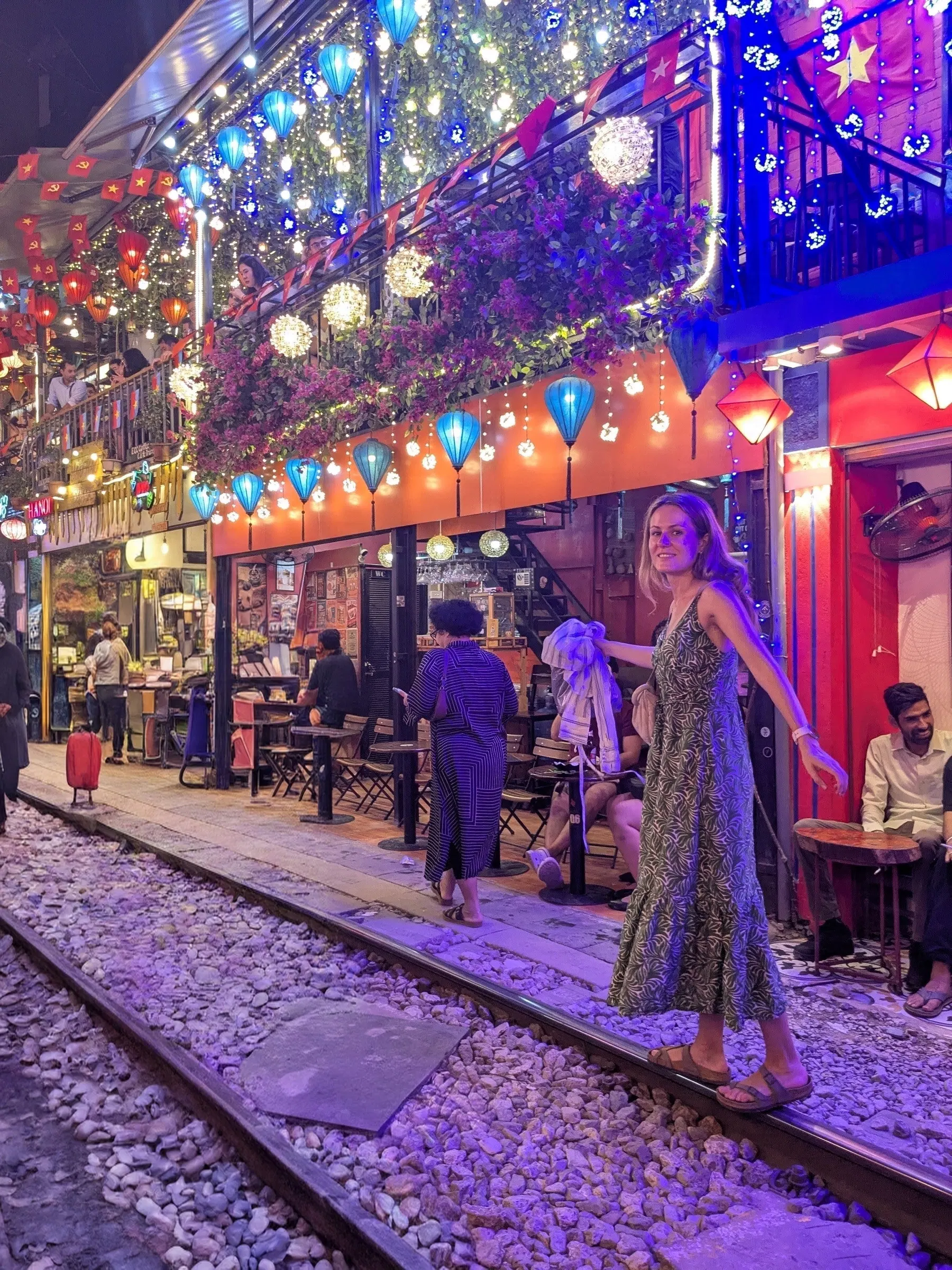
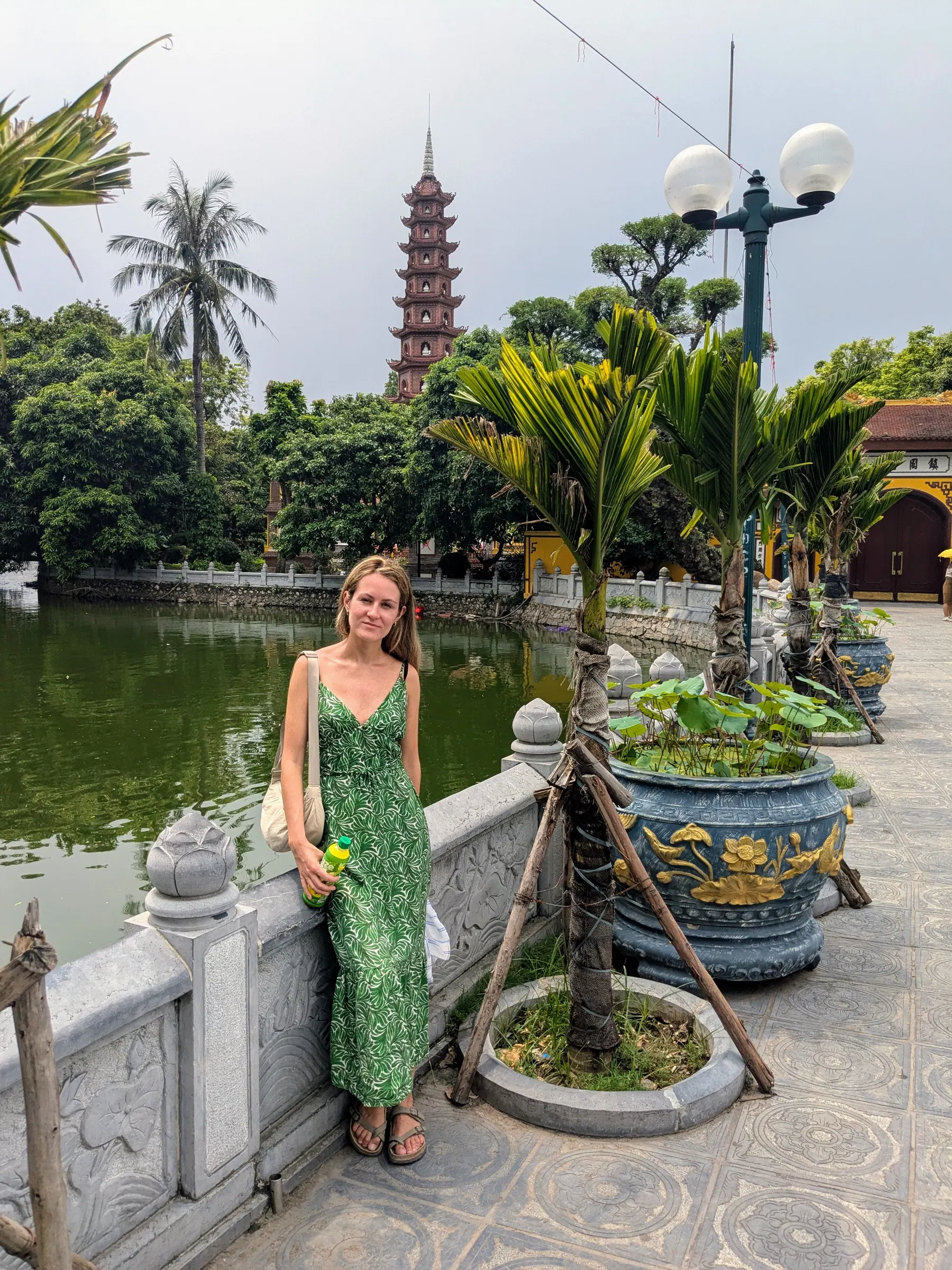
- Day 2: Old Quarter, Ba Đình, West Lake & Train Street: We spent the morning wandering the lively alleys of the Old Quarter and trying traditional egg coffee, then explored the tree-shaded boulevards of Ba Đình, visiting the Ho Chi Minh Mausoleum complex and lakeside Trấn Quốc Pagoda. That evening we sat at a trackside café on Train Street: feeling the heavy rush of air as the train roared past inches away was thrilling.
- Day 3: Đường Lâm Ancient Village, Old Quarter & Water Puppets: We took a morning excursion with a local university student guide to Đường Lâm (taking a return taxi that cost around €20 each, our most expensive taxi ride in Vietnam), walking through 300-year-old laterite stone compounds and talking openly about everyday Vietnamese life. Back in town, we explored more of the artisan streets across the Old Quarter, had coffee by St. Joseph’s Cathedral, and caught an evening performance of traditional live-music water puppetry at Thăng Long Theatre.
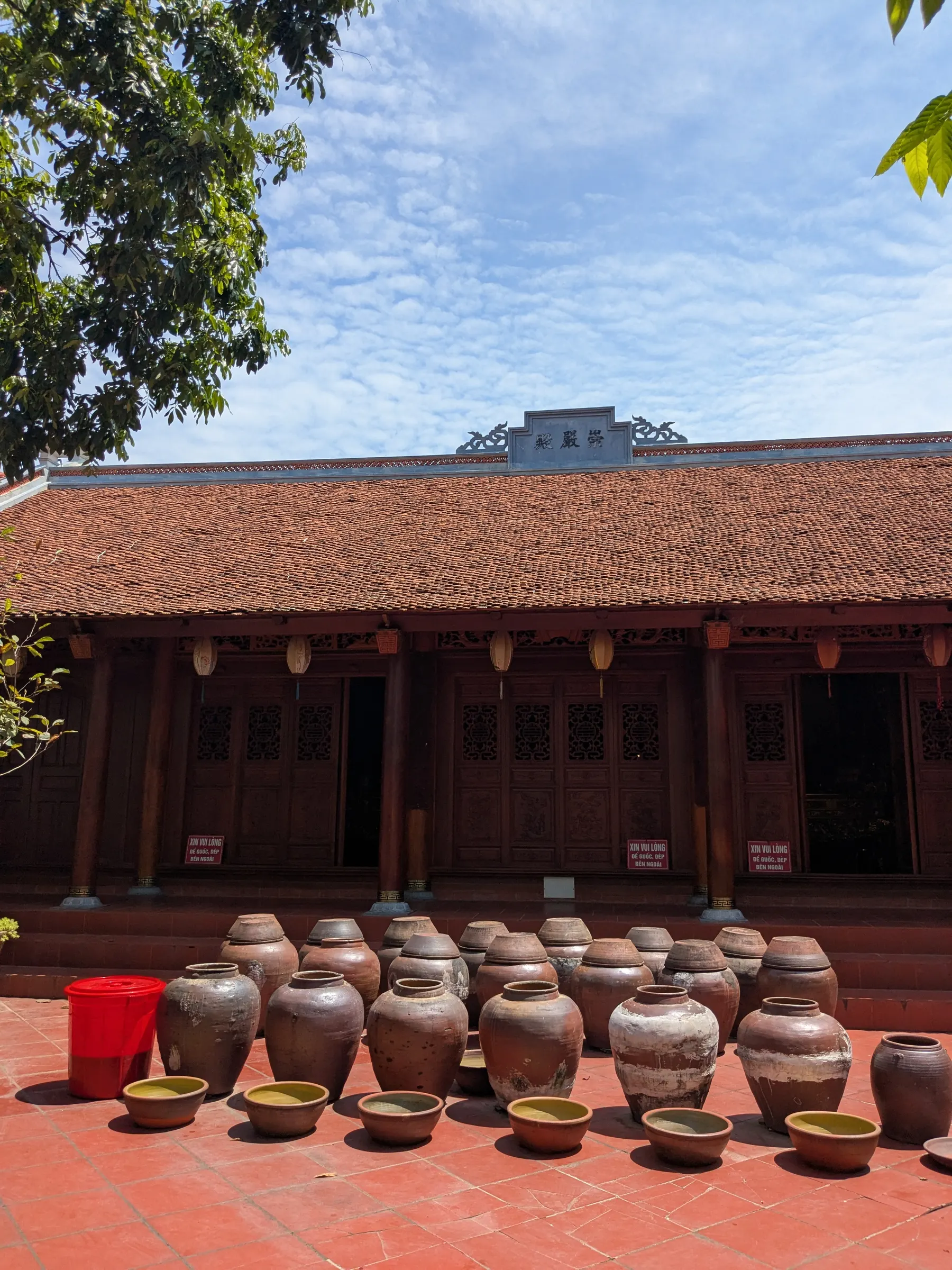
- Day 14: Return from Mountains, French Quarter & Culture: Arriving late at night by VIP sleeper bus back in Hanoi, we explored the French Quarter with its grand colonial architecture, the tranquil courtyards of the Temple of Literature (Văn Miếu), and the inspiring Vietnamese Women’s Museum. We spent the night back in the Old Quarter after picking up local coffee beans and phin drip filters.
- Day 15: Final Morning in Hanoi & Evening Flight: We enjoyed one last slow morning in the city before taking a taxi to Nội Bài Airport around 6:00 PM for our evening flight home, choosing it as the more reliable option.
Cát Bà Island & Lan Hạ Bay (Days 4-5) - Quiet Waters & Plankton Nights
Base: Cát Bà Island (Trân Châu) · Days 4-5 (2 Days / 1 Night) · Transit: Minibus + Ferry combo from Hanoi (around 3.5 hrs) · Operator: Cat Ba Eco Tourist
Instead of dealing with the massive cruise terminals and crowds in mainland Hạ Long City, heading to Cát Bà Island was the best decision of the trip. You sail straight into Lan Hạ Bay, which shares the identical karst scenery, but with smaller boats, fewer tour groups, and far greater tranquility.
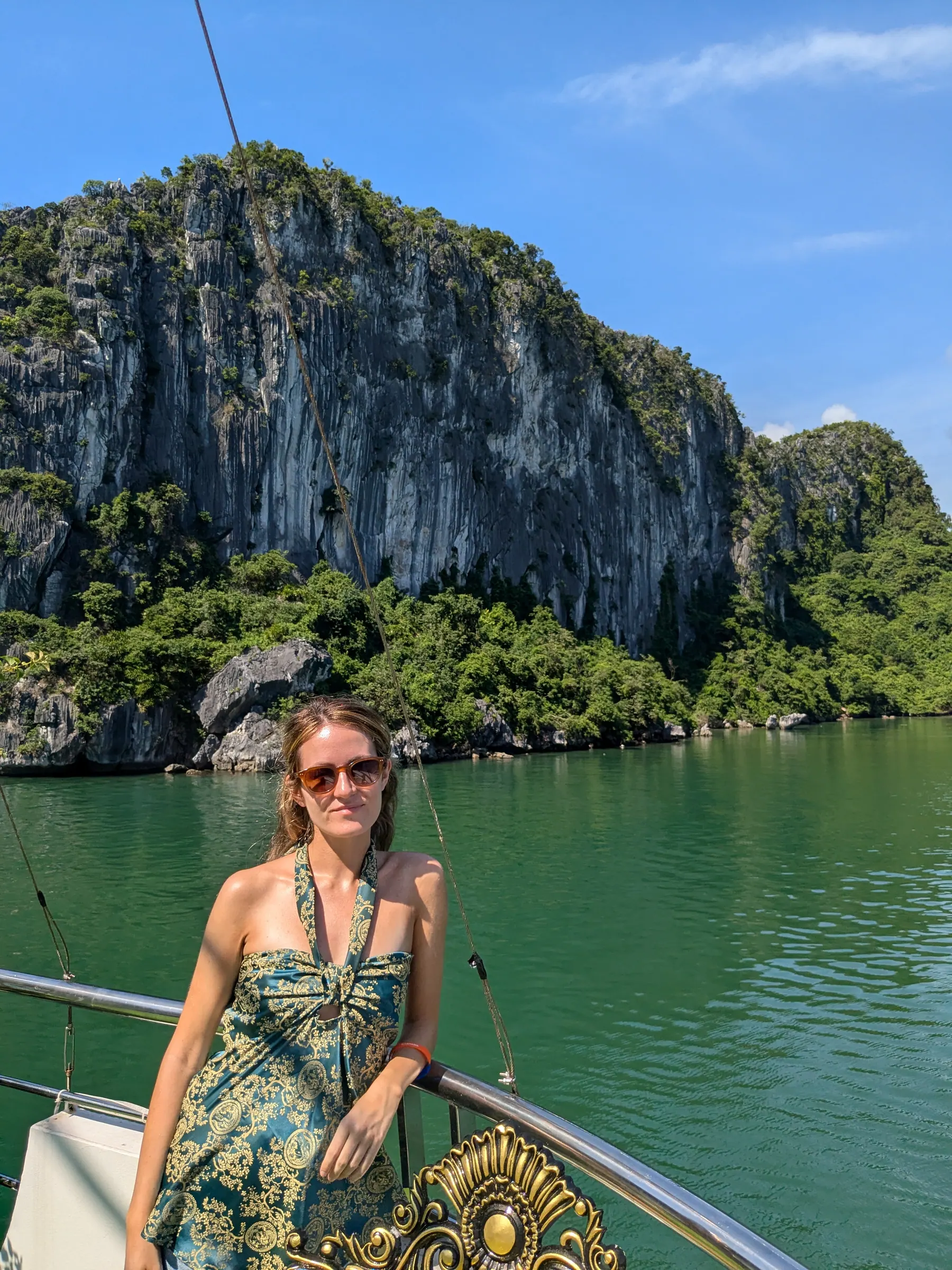
- Day 4: Island Jungle, Setting Sail & Bioluminescent Plankton: Before boarding our cruise, we hiked up the humid trails of Cát Bà National Park for sweeping jungle views, then set sail into Lan Hạ Bay with Cat Ba Eco Tourist (we paid around €80 in 2025). We watched wild monkeys from the deck and jumped into the dark water after nightfall to swim with glowing bioluminescent plankton sparkling like underwater stars.
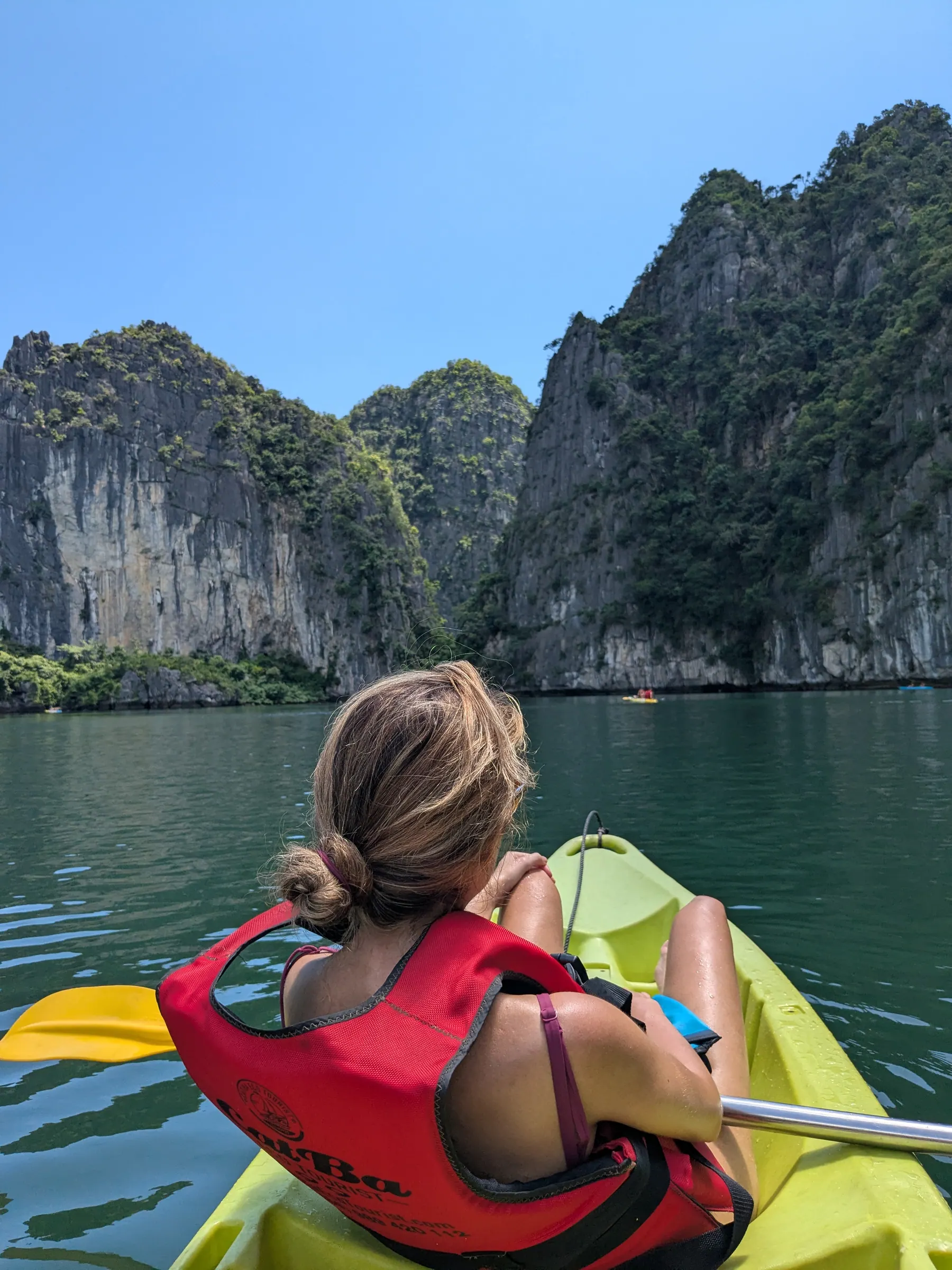
- Day 5: Sea Kayaking Through Sea Caves & Bus to Ninh Bình: We spent the morning paddling kayaks through Tai Keo Cave into silent, enclosed lagoons encircled by sheer limestone pinnacles. After a relaxed seafood lunch on board, we caught the direct afternoon bus and ferry transfer south to Ninh Bình (~4 hours), arriving in Tam Cốc for dinner.
Ninh Bình (Days 6-7) - Karsts, Countryside Cycling & River Caves
Base: Tam Cốc Countryside · Days 6-7 (2 full days / 3 nights, arriving on Day 5) · Transit: Direct minibus from Cát Bà (around 4 hrs) · Transport: Countryside pedal bicycles
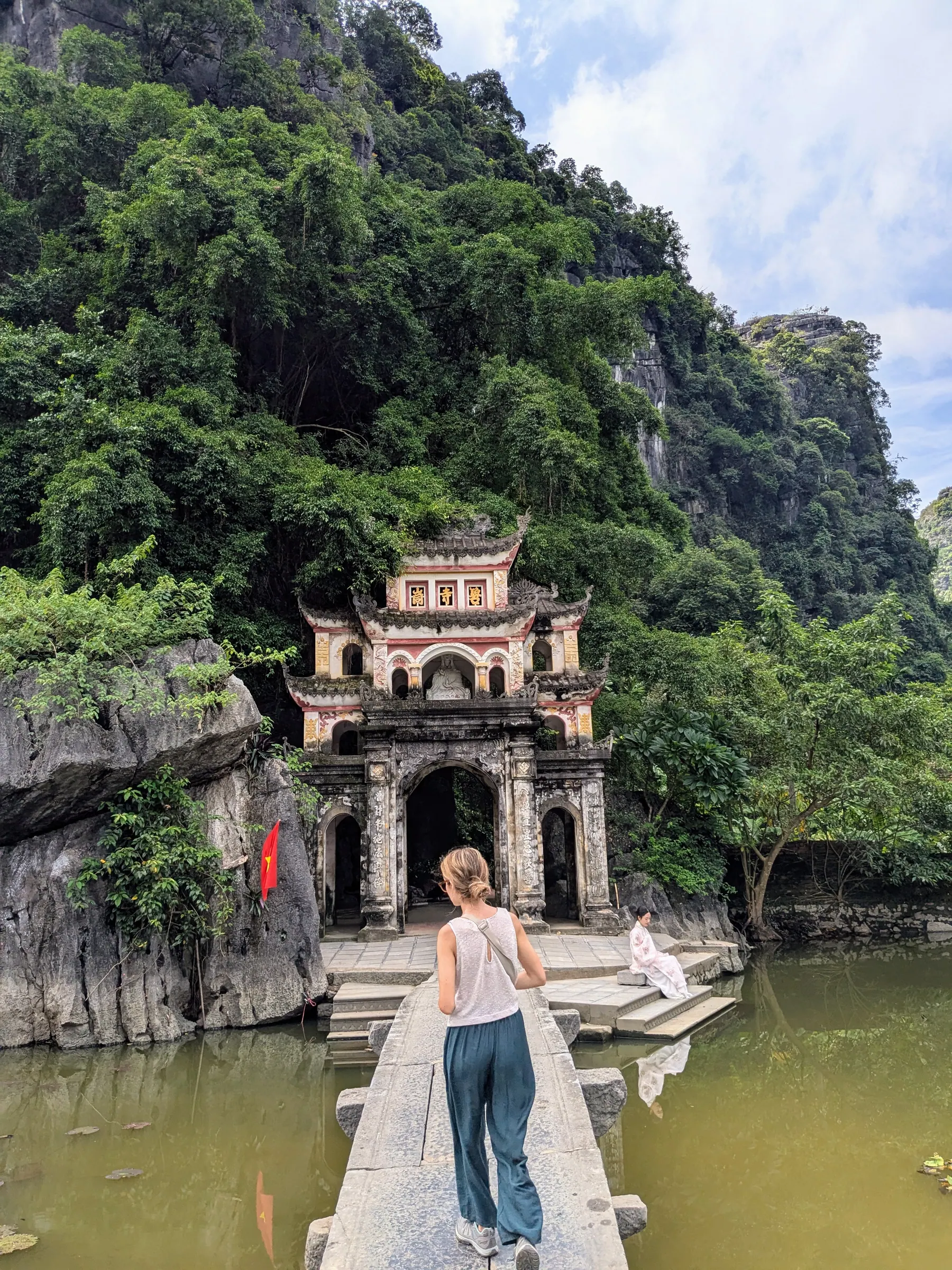
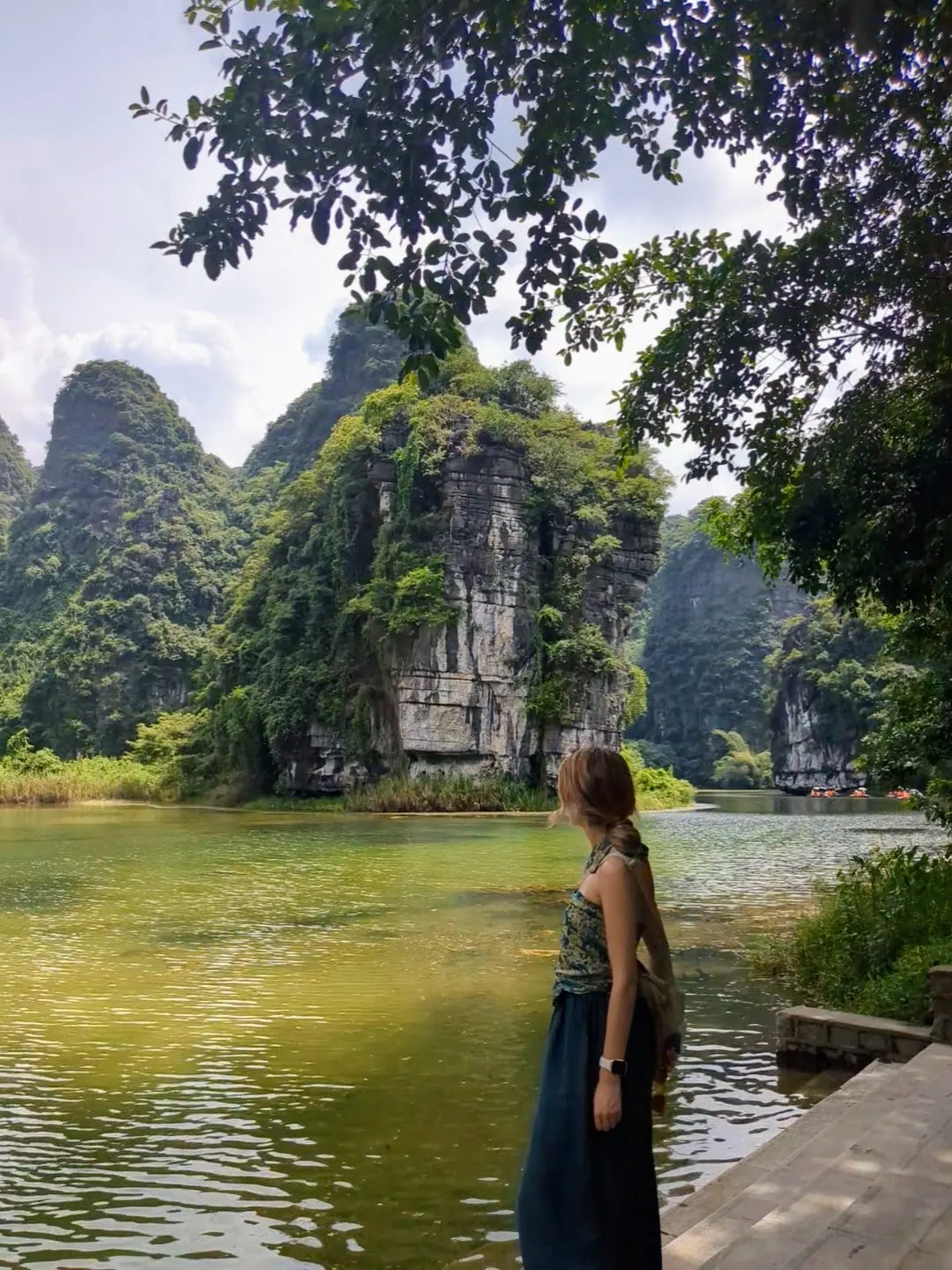
Often called “Hạ Long Bay on land,” Ninh Bình swaps open water for emerald rice paddies framed by steep limestone towers. Basing ourselves at a rural homestay and exploring by bicycle was the highlight: flat, scenic country lanes, duck farms, and complete peace.
- Day 6: Bích Động Pagoda, Countryside Cycling & Ancient Hoa Lư: We pedaled between limestone karsts to three-tiered Bích Động Pagoda built into the rock face, stopped for rich coconut coffee by a pond with playful puppies, and cycled in the evening to the ancient 10th-century temples of Hoa Lư.
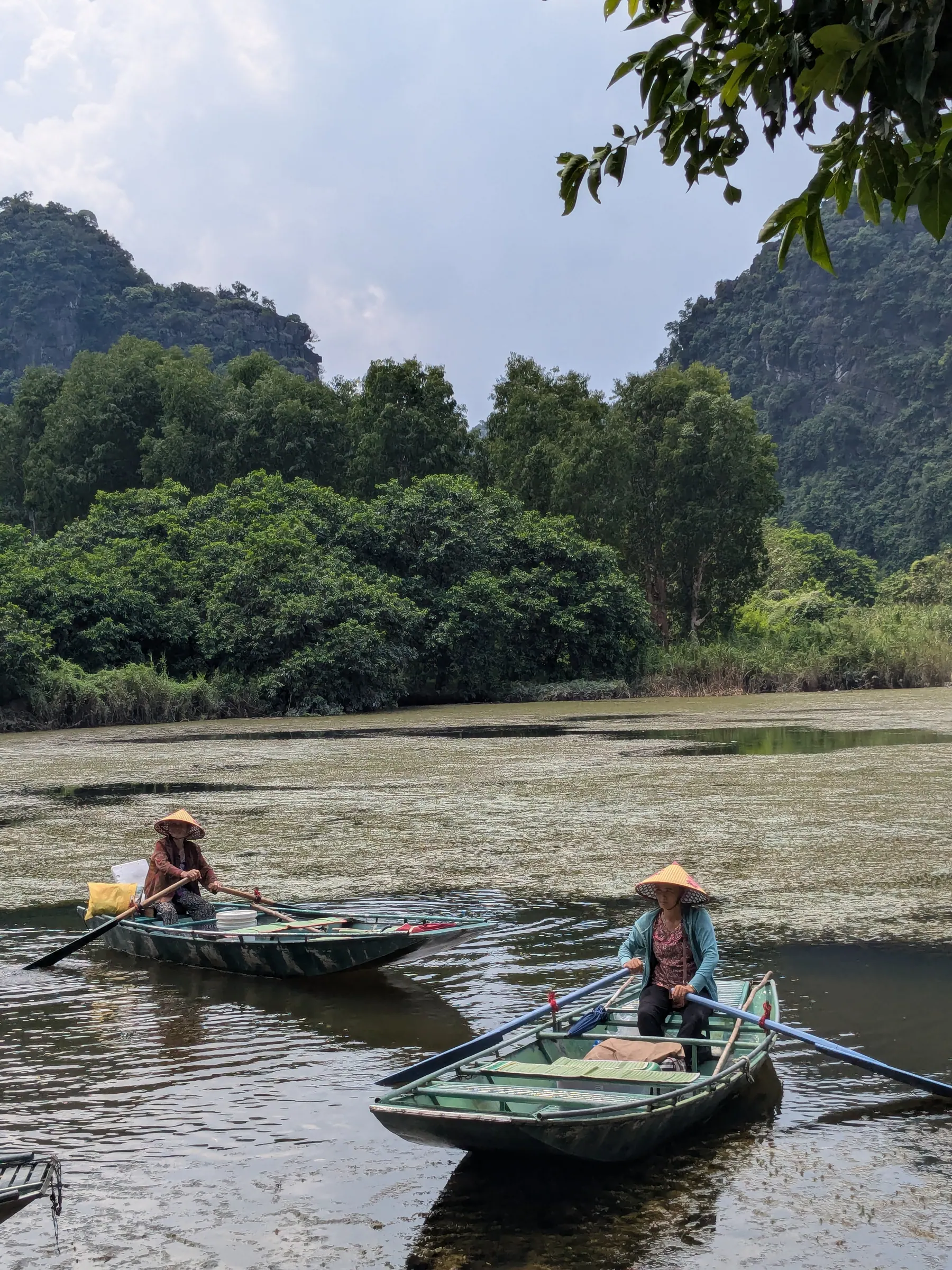
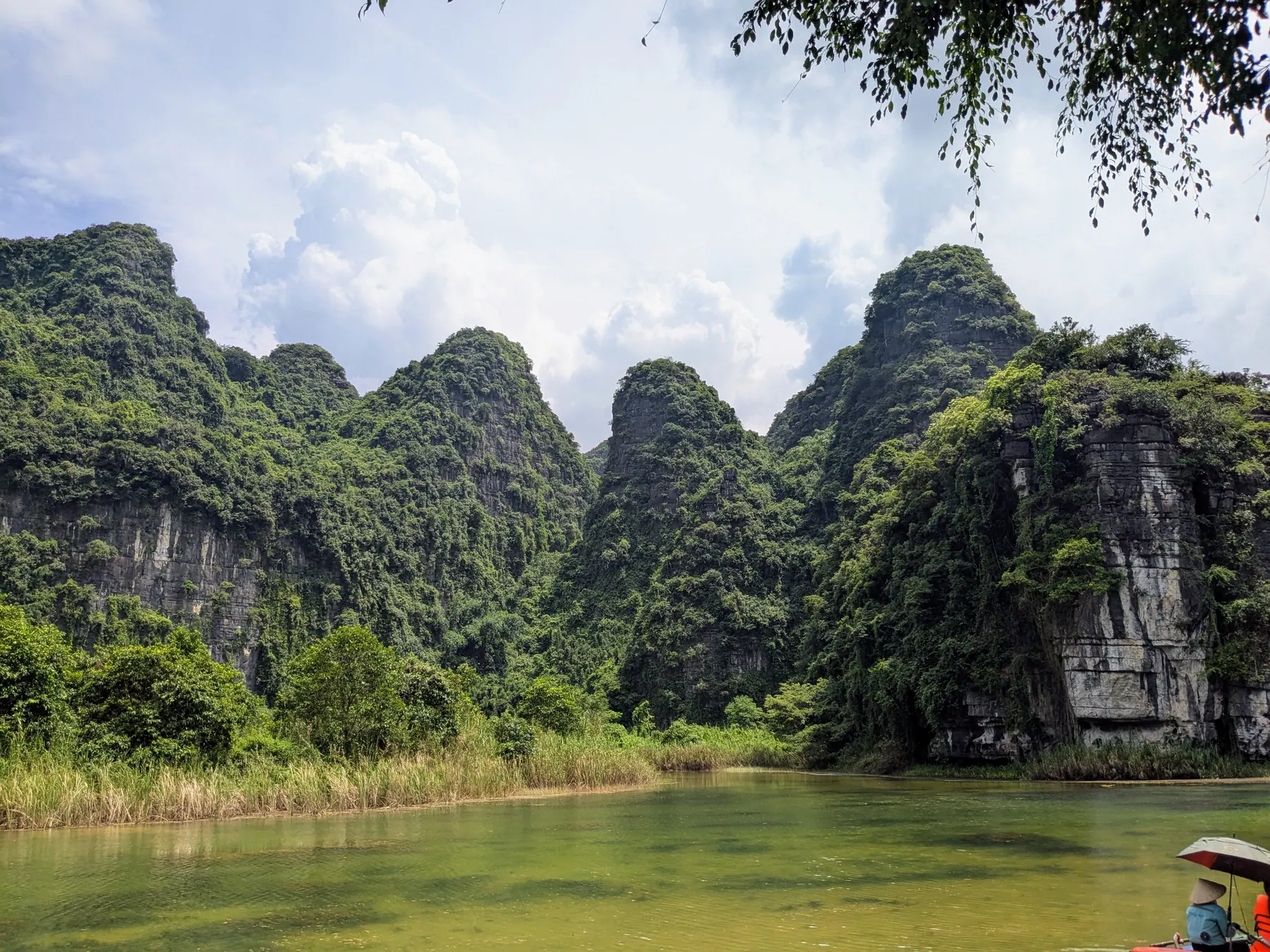
- Day 7: Early Morning Tràng An Boat Route & Hang Múa Summit: Arriving early before tour buses, we boarded a wooden sampan along Tràng An’s Route 3 (300,000 VND / around €11), gliding through cave tunnels and silent lagoons. In the late afternoon, we conquered the sweaty 500-step climb up Hang Múa for an unforgettable sunset view over the dragon ridge and winding river below.
Mai Châu (Days 8-10) - Peaceful Valley Life & The Hanoi Transit Bridge
Base: Bản Lác / Pom Coọng Village · Days 8-10 (2 Full Days & Morning / 2 Nights) · Transit: Minivan from Ninh Bình homestay (around 3.5 hrs) · Transport: Homestay pedal bicycles
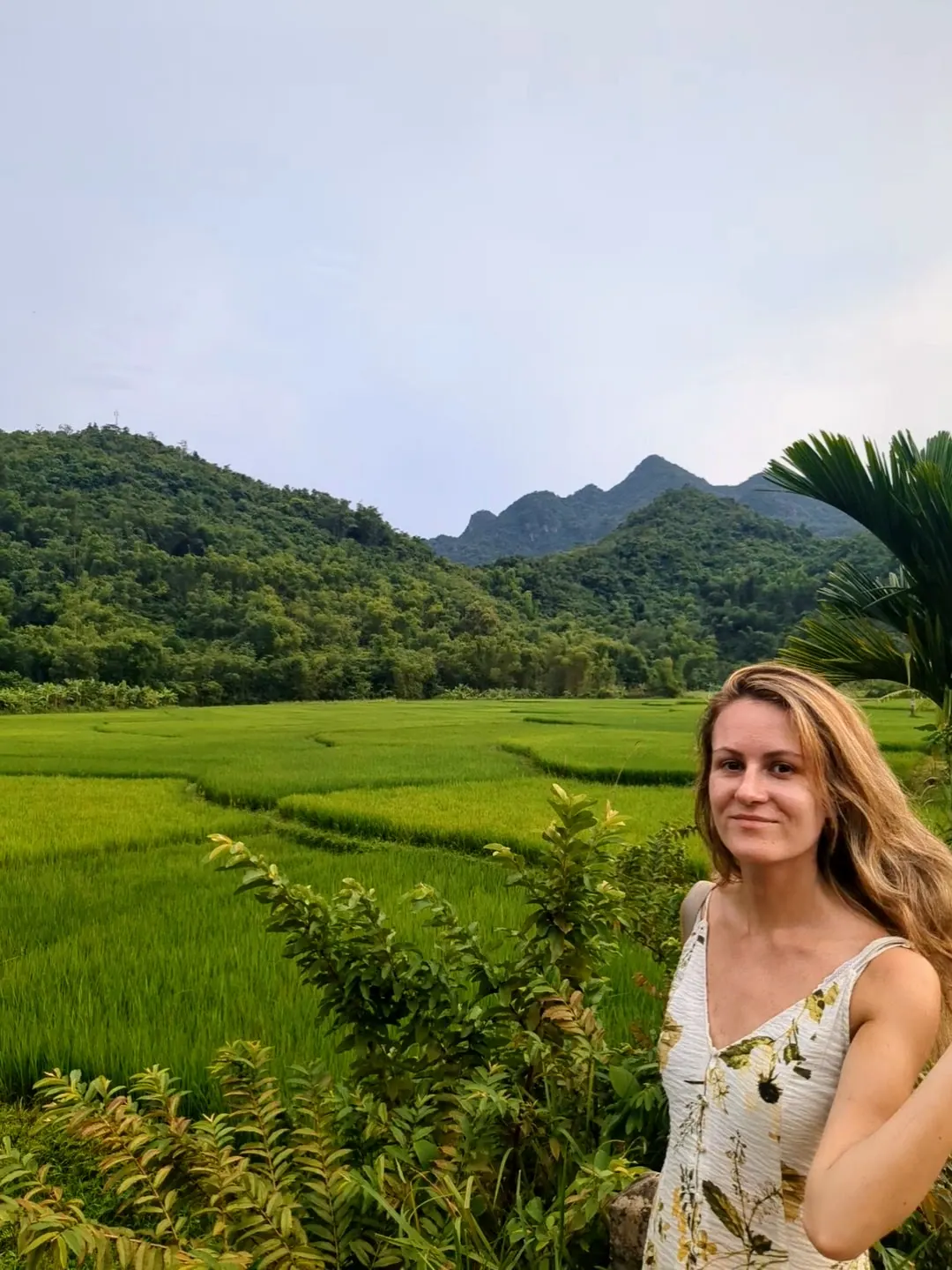
Turning west into the wide, flat valley of Mai Châu gave us the unhurried rural escape we needed. Rather than rushing through long checklists, Mai Châu is all about slow mornings, cycling through paddy fields, and warm White Thai hospitality.
- Day 8: Stilt-House Homestays & Cycling Valley Paths: We arrived by minivan from Ninh Bình (around 3.5 hours) at Little Mai Chau Homestay (around €15 per night). We spent the afternoon riding bicycles along paths through vibrant green rice paddies and wandering the stilt-house alleys of Bản Lác, watching local women weave textiles on wooden looms.
- Day 9: Tour Beyond the Valley & Gò Lào Waterfall: We arranged a tour with a local driver beyond the valley, stopping first at the scenic Gò Lào waterfall tumbling into its clear rocky pool, followed by panoramic viewpoints over Hòa Bình lake, the Thác Tạt Nàng waterfall area, and a swim in the warm Bo Am hot springs before coconut coffees by the lake.
- Day 10: Morning in the Valley & Afternoon Transfer to Hanoi: We enjoyed a peaceful final morning cycling and relaxing among the stilt-house hamlets, then caught the afternoon transfer bus back to Hanoi around 14:00 (around 3.5 hours, €8-€10). Returning to Hanoi served as our transit bridge: we had a relaxed Old Quarter dinner before boarding the direct 10:00 PM overnight VIP sleeper bus north to Hà Giang.
Hà Giang Loop (Days 11-13) - The Highland Motorbike Finale
Route: Hà Giang - Du Già - Đồng Văn - Hà Giang · Days 11-13 (3 Days / 2 Nights on loop + 2 VIP sleeper buses) · Style: Easy Rider guided motorbike · Luggage: Daypacks on bike; main bags in storage
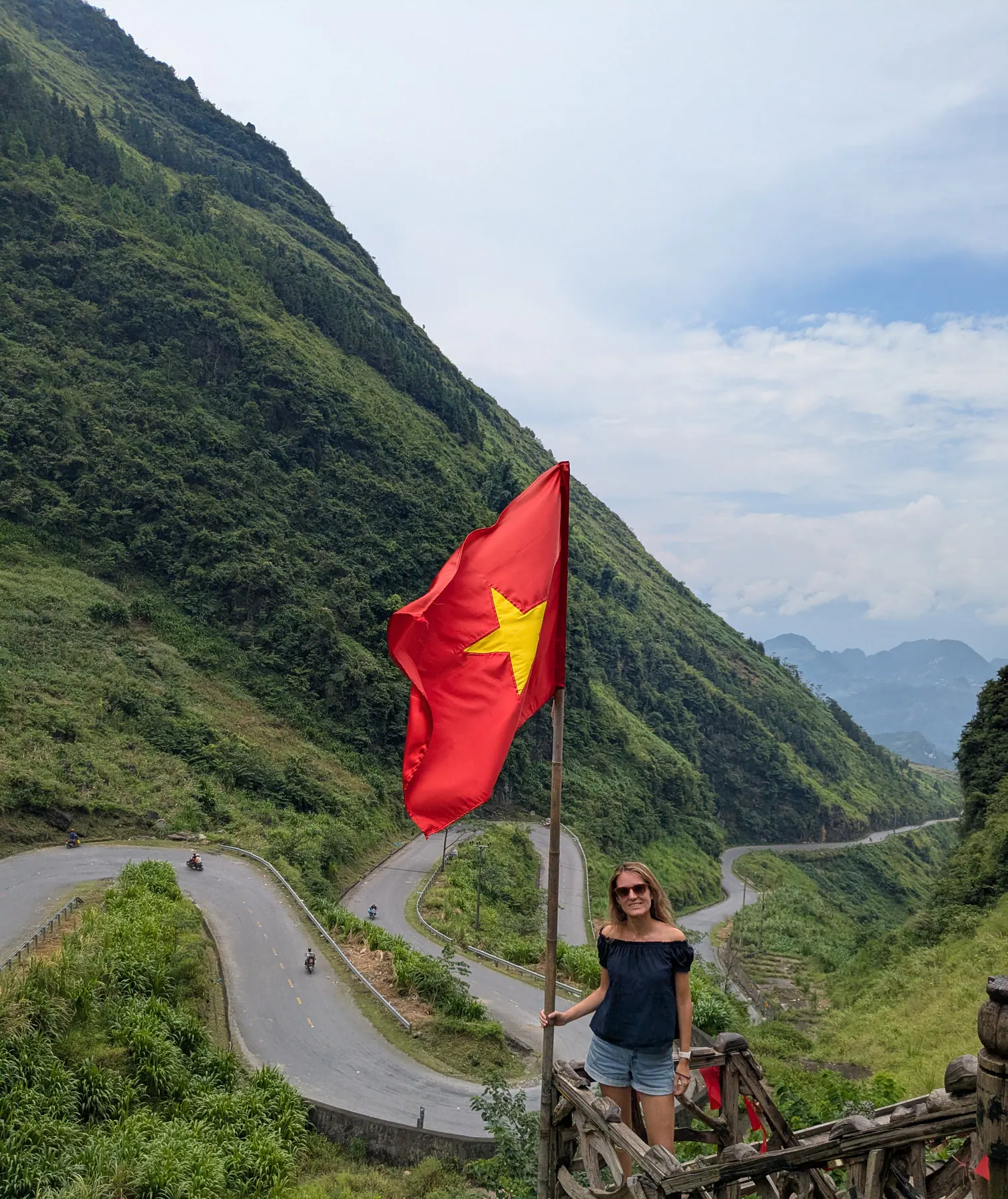
Saving the northern highlands for the final stage gave the entire journey a grand finale - it was hands down the highlight of our two weeks in Vietnam. We booked a 3-day/2-night Easy Rider tour with Yolo Ha Giang Adventures (~€190 each), riding pillion behind skilled local drivers who handled the steep gravel switchbacks safely while we took in the dizzying canyons and endless mountain vistas.
- Day 11 (Loop Day 1): Thái An Road & Waterfalls to Du Già: Arriving early by VIP sleeper bus (woken up by loud bus techno!), we stored our main luggage, packed light daypacks, and rode into misty mountain passes along the Thái An road. We stopped at A Boong waterfall, shared a hearty family lunch overlooking terraced valleys, and soaked in the wild viewpoints of Lũng Hồ before arriving at our ecolodge in Du Già.
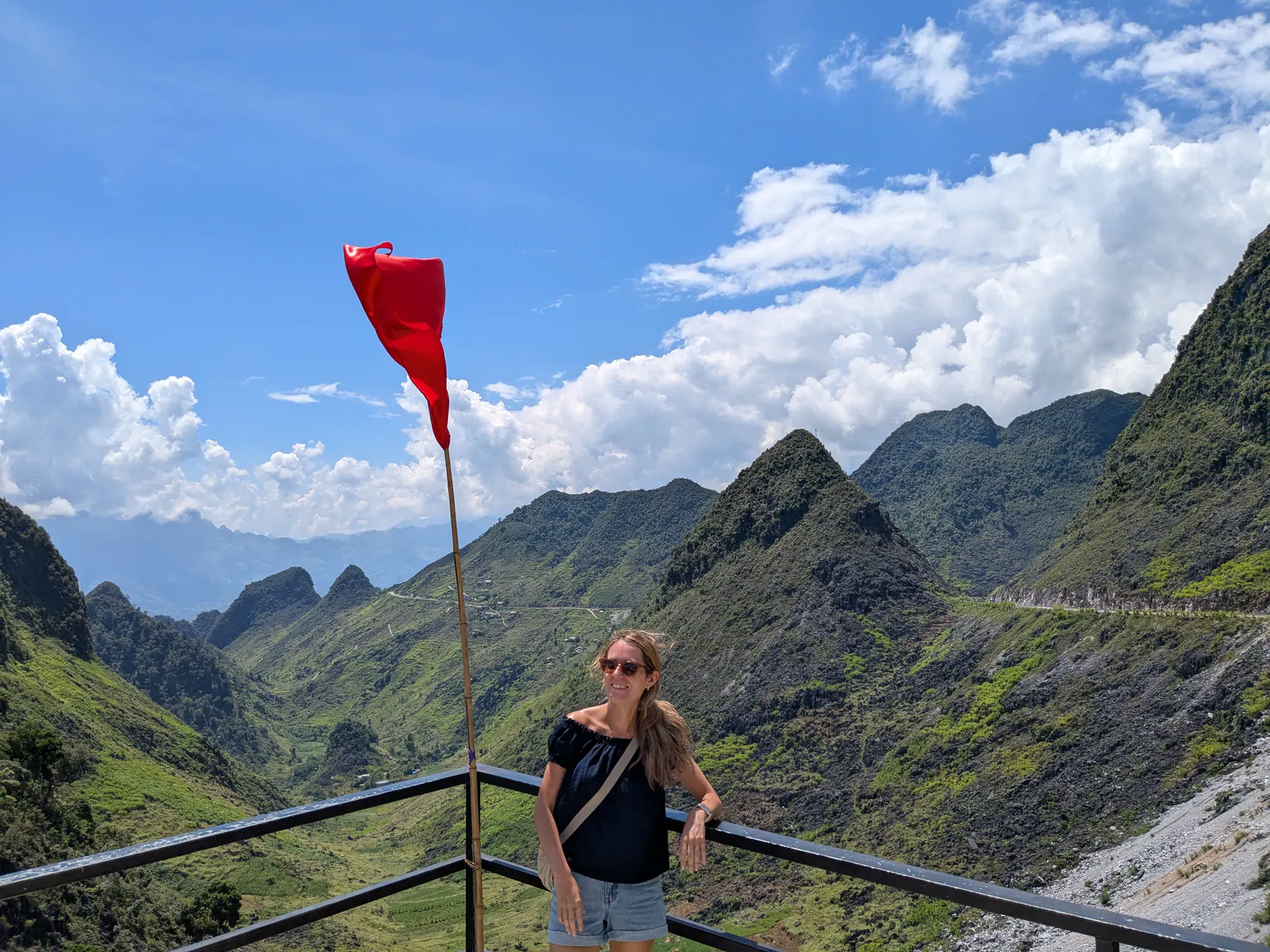
- Day 12 (Loop Day 2): Tu Sản Canyon Boat Trip & Mã Pí Lèng Pass: We wound down into deep limestone gorges for a boat ride along the turquoise Nho Quế River beneath the towering cliffs of Tu Sản Canyon. Afterwards, we rode the dramatic cliffside “Happiness Road” over Mã Pí Lèng Pass for staggering canyon views, finishing with a shared hotpot dinner in Đồng Văn.
- Day 13 (Loop Day 3): Đồng Văn Sunday Market & Switchbacks of Dốc Thẩm Mã: Waking early for the vibrant Sunday market, we watched ethnic minority families in traditional dress trade goods and livestock in a completely unperformed village gathering. We toured the historic Hmong King’s Palace, navigated the dizzying serpentines of Dốc Thẩm Mã, and caught our return night VIP sleeper bus back to Hanoi.
Essential Practical Advice for Northern Vietnam
1. Getting Around and Luggage
- Transfers and sleeper-bus logistics: Regional transit across Northern Vietnam is efficient and reliable. Book door-to-door minibuses and ferries directly through your homestays or compare routes via 12Go Asia. Punctual overnight VIP sleeper buses link Hanoi with the high mountains of Hà Giang.
- Airport transit: Avoid taxi haggling at Nội Bài Airport on arrival: Bus 86 Express departs every 30-45 minutes straight into the Old Quarter (~45,000 VND / €1.60) with luggage racks, while municipal Bus 07 connects to Cầu Giấy (~9,000 VND / €0.35). For your return flight home, taking a taxi directly is the most reliable option to reach the terminal with plenty of time.
- Luggage storage for Hà Giang: You do not need to haul large backpacks onto the motorbikes. Bring your main bags on the overnight VIP sleeper bus to Hà Giang city, leave them in secure storage at your tour agency’s office, and carry only a light daypack with three days of essentials on the bike.
- Bicycles for rural valleys: Tam Cốc and Mai Châu are best explored on pedal bicycles. Valley routes are flat, peaceful, and scenic, with bikes readily provided by countryside homestays.
2. Money, Health, and Safety
- Cash, cards, and ATMs: While Hanoi hotels accept credit cards (often with a 2.5% to 3.5% fee), rural homestays in Mai Châu, mountain cafes in Hà Giang, and attraction booths operate strictly in cash (VND). Withdraw from reputable bank ATMs like VPBank or TPBank to avoid inflated fees.
- Easy Rider safety: Unless you have extensive motorcycle experience on steep mountain gravel and blind curves, book a licensed local Easy Rider for the Hà Giang Loop. Riding pillion lets you take in the dramatic canyons safely and stress-free.
- Health and vaccinations: Consult a travel medicine clinic before your trip to verify routine vaccines and health advice. Pack quality insect repellent for rural valleys and carry a lightweight windbreaker for breezy mountain passes in Hà Giang.
- Visa requirements: Entry rules can change and depend on your passport. Before booking and again before departure, check the Vietnamese embassy visa information for your nationality, permitted stay, and any entry conditions. If a visa is required, apply through the official Vietnamese government portal.
3. Respectful Travel and Water
- Drinking water reality: Tap water is not drinkable anywhere in Vietnam. Refill reusable bottles from large filtered water dispensers available at homestays and hotels. In remote highlands and Lan Hạ Bay, pack all empty plastic bottles and rubbish back out with you.
- Temple and mausoleum dress code: Modest dress covering both shoulders and knees is strictly enforced at pagodas, temples, and the Ho Chi Minh Mausoleum. Keep a light scarf or lightweight trousers in your daypack.
- Homestay shoe etiquette: When staying at family-run homestays and traditional White Thai stilt houses, always leave your shoes outside by the threshold before stepping onto wooden living floors.
- Direct community support: Choosing family homestays in Tam Cốc and Mai Châu and local Easy Rider drivers ensures your travel spending directly supports resident host communities.
Complete Northern Vietnam Guide Collection
Each stage of this itinerary has its own dedicated deep-dive guide with detailed photo diaries and local tips:
- Hanoi City Guide: Top Sights, Food, Train Street & Đường Lâm →
- Cat Ba Island & Lan Ha Bay: The Quieter Ha Long Alternative →
- Ninh Binh in Two Days: Countryside Cycling & Trang An Caves →
- Mai Chau: A Peaceful Valley of Rice Fields Without the Crowds →
- Ha Giang Loop in Three Days: An Easy Rider Motorbike Adventure →
FAQs
Is two weeks enough for Northern Vietnam?
Yes, two weeks is the ideal timeframe to experience the variety of the north without burning out. It gives you enough time for city culture in Hanoi, island and bay cruising in Cát Bà, countryside cycling in Ninh Bình and Mai Châu, and a complete 3-day mountain loop in Hà Giang.
Should you visit Sa Pa or the Hà Giang Loop if you have to choose?
If you want raw mountain drama and a true journey through remote highland landscapes, choose the Hà Giang Loop. Sa Pa has become heavily commercialised with mass tourism and large construction projects. Hà Giang remains far more adventurous and visually breathtaking.
Why return to Hanoi from Mai Châu instead of going straight to Hà Giang?
There are no direct sleeper buses connecting Mai Châu to Hà Giang. Taking an afternoon transfer back to Hanoi takes about 3.5 hours, gives you time to have a relaxed sit-down dinner in the Old Quarter, and lets you board the direct overnight VIP sleeper bus to Hà Giang city (where you take your big backpacks on the bus and store them at the tour agency office before heading out on the motorbike loop).
How much cash do you need in Vietnam?
You will need cash (VND) daily. While boutique hotels in Hanoi accept cards, homestays, local restaurants, bus conductors, motorbike guides, and entrance ticket booths run strictly on cash. Cards almost always incur an extra 2.5% to 3.5% merchant surcharge.
Is an Easy Rider safe for the Hà Giang Loop?
Yes, riding pillion behind an experienced local driver is by far the safest way to do the loop. The mountain passes feature steep drops, gravel patches, sharp hairpin turns, and heavy construction trucks that make self-driving dangerous for inexperienced riders.
Do you need a visa and vaccinations for Northern Vietnam?
Visa and entry requirements depend on your passport and can change. Check the latest guidance from the Vietnamese authorities before booking and again before departure, and arrange any required visa through the official government portal. For health, consult an international travel medicine clinic well in advance regarding recommended routine and travel vaccines (such as Hepatitis A/B, Tetanus, and Typhoid) and mosquito protection for rural highland areas.
Read next
More posts for this trip mood
Asia Hai Phong, Vietnam
Cat Ba and Lan Ha Bay: The Quieter Ha Long
Two quiet days on the water: limestone karsts, cave kayaking, a floating village and no crowds.
Why we based ourselves on Cat Ba Island, skipped the mainland cruises, and spent two quiet days cruising, kayaking and exploring Lan Ha Bay instead of Ha Long.
 Asia
Asia Northern Vietnam, Vietnam
The Ha Giang Loop: Three Days on a Motorbike
Three days on the Ha Giang loop with an easy rider: what it cost, what the route covers, what to bring, and the Sunday market at Dong Van worth waking for.
 Asia
Asia Ninh Binh, Vietnam
Two Days in Ninh Binh, by Bike and by Boat
Two slow days of bicycles, limestone mountains, temples, caves and a boat through Trang An.
Two days in Ninh Binh: cycling from Tam Coc to Bich Dong, Buffalo Cave and Mua Cave, with a quiet Trang An boat trip.