

Mai Chau · Hòa Bình · Vietnam
Mai Chau: A Quiet Rice Valley in Northern Vietnam
A place for riding slowly through rice fields and letting the valley set the pace.
Mai Chau is a quiet rice valley in northern Vietnam, with bike rides through bright green fields, White Thai village life and waterfalls beyond the valley.
Quick facts
- Best for
- Quiet rice fields, White Thai village life and a slower stop between busy Vietnam destinations.
- Time needed
- Two days give you time to ride around the valley, explore Lac Village and spend a day beyond it.
- Getting there
- Shared vans connect Hanoi with Mai Chau; check current departure points, journey times and fares before booking.
- Good to know
- The valley is flat, homestays often have bikes, and the colour of the rice fields changes with the local farming calendar.
I had always wanted to go to Vietnam. I assumed it would be my first country in Asia, and in the end Japan got there first, but Vietnam was the one I'd been thinking about for years.
When I started looking at where to go, the north caught my eye more than the south. More nature, more variety, fewer beaches - and I was fine with that.
Vietnam turned out to be one of the most beautiful and culturally rich places I have ever been, and I'd recommend it to anyone.
Why Mai Chau, not Sapa
Every search for rice fields in Vietnam brings up Sapa. It's the famous one, the photograph everybody has seen, and for a while it was the obvious answer.
Then I read more about it, and the picture changed. It's a long way from Hanoi and a long journey to get there. The weather is often cloudy and wet. And it has become a heavily developed, heavily visited place - there's now a cable car up Fansipan that replaces what used to be a two-day trek, the town has filled with large hotels, and the tour buses arrive in numbers, all of it accelerated by a new highway from Hanoi.
I'll be fair to Sapa on one point: we went to Vietnam in the middle of September, which is exactly when Sapa's terraces turn gold, and that's the argument for going there. But I wanted the landscape without the crowd around it, so I looked for something else.
Mai Chau came up. It was on our route, it was closer, and it looked lovely. The name sounded friendly to me as well - a bit like ciao, as though the place were already greeting you. That was enough.
Getting there and where to stay
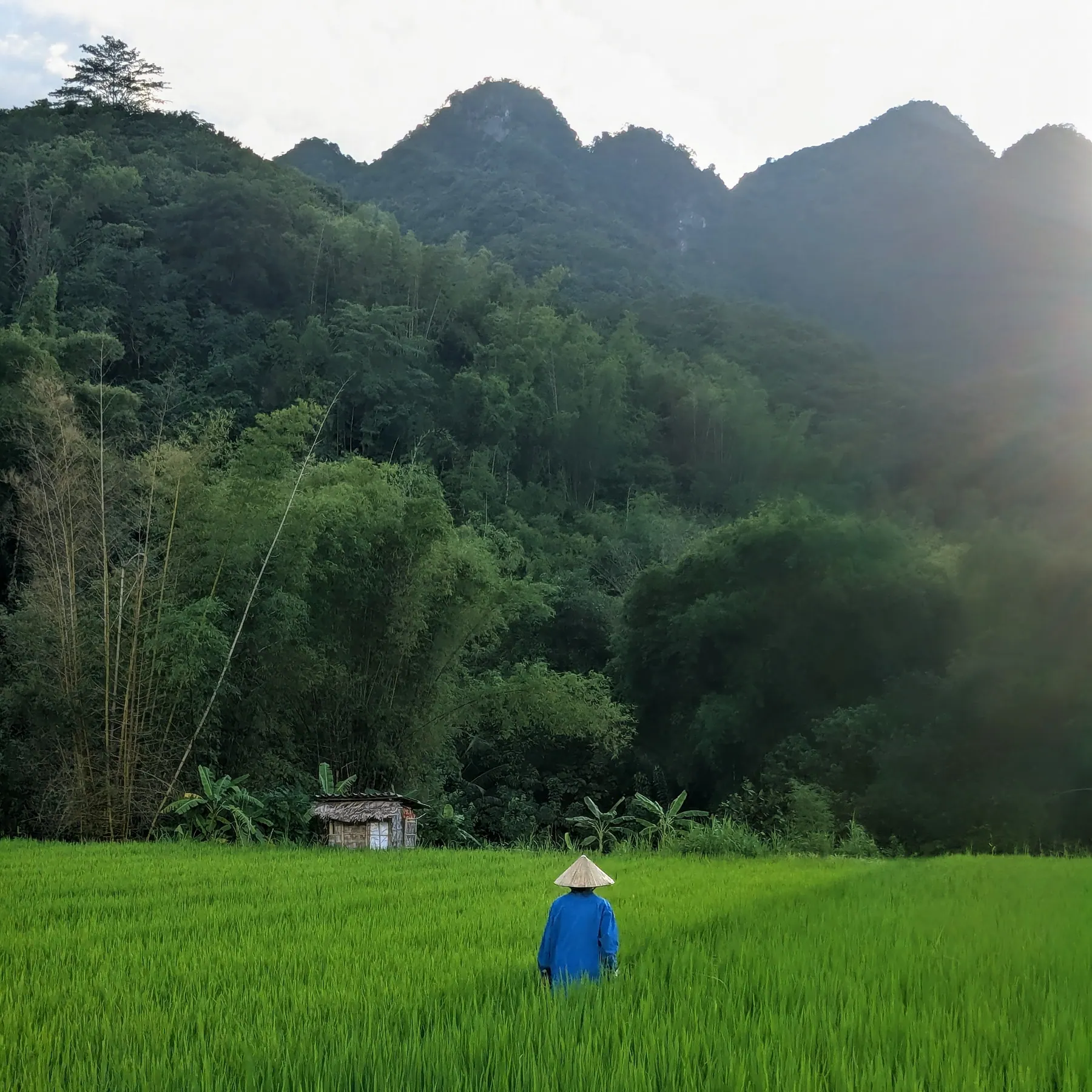
We came from Ninh Binh, by transfer arranged through our accommodation, and this is worth knowing generally about Vietnam: booking transfers through the place you’re staying is an incredibly smooth way to travel. I was very surprised by the punctuality as well - everything was always on time. Ninh Binh to Mai Chau is around 130 kilometres and three to four hours, and I think the transfer came to about €10 each, though I didn’t note it down exactly.
In general, when we weren’t booking through the accommodation, we used 12Go Asia, which was convenient too. From my experience, getting around Vietnam by booked transfers was the easier way to do it - the sites are in English and you can arrange everything online in advance.
Most people, though, come from Hanoi, which is about 140 kilometres away. Shared limousine vans are a common option. When I first heard the word limousine I expected something luxurious, and that is not the case at all - these are small minibuses with proper seats, nothing more. They are comfortable enough, though. Departure points, journey times, fares and drop-off arrangements change, so check the current details with the operator; some services can drop you at your homestay. There are public buses too.
Where we stayed
Little Mai Chau Homestay, run by a local family. Beautiful location, good rooms, and a small pool in the middle of it. It’s clearly a place a lot of visitors go - the reviews are very high - but that didn’t spoil it.
Like most of the homestays, it sits on the edge of that big central rice field. Walking to Lac Village from there takes about twenty-five minutes; by bike it’s no distance at all.
Breakfast was included, and my friend and I paid around €15 each for two nights. Vietnam is relatively cheap generally, but worth saying that for the price, compared with the other homestays we stayed in, this one exceeded our expectations. They also had bikes we could use, which is how we spent most of our time.
They organised tours around the Mai Chau area too, with a whole catalogue of them to choose from, which is how we ended up doing our second day.
Exploring the valley
The layout is unusual and it takes a moment to understand.
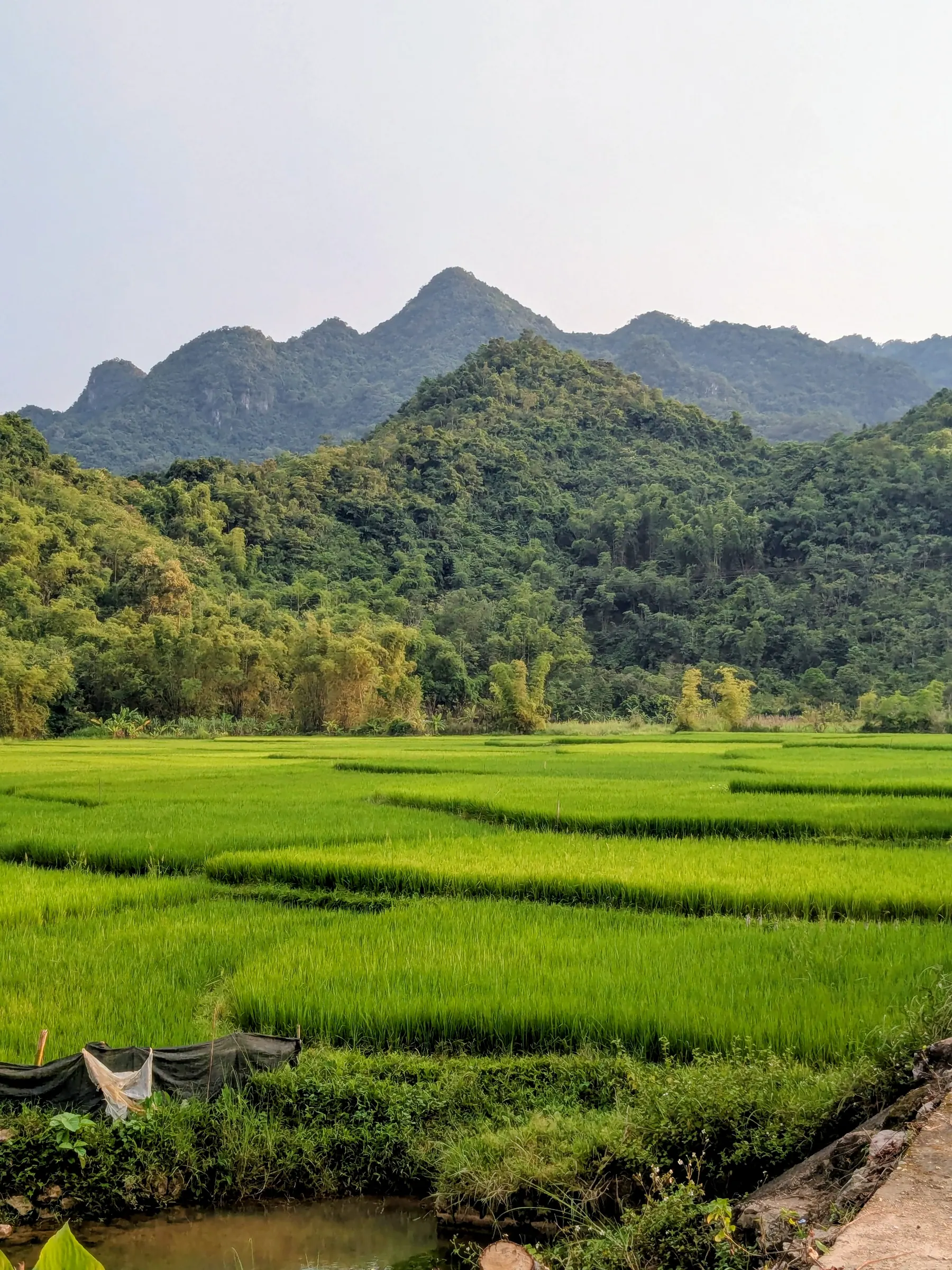
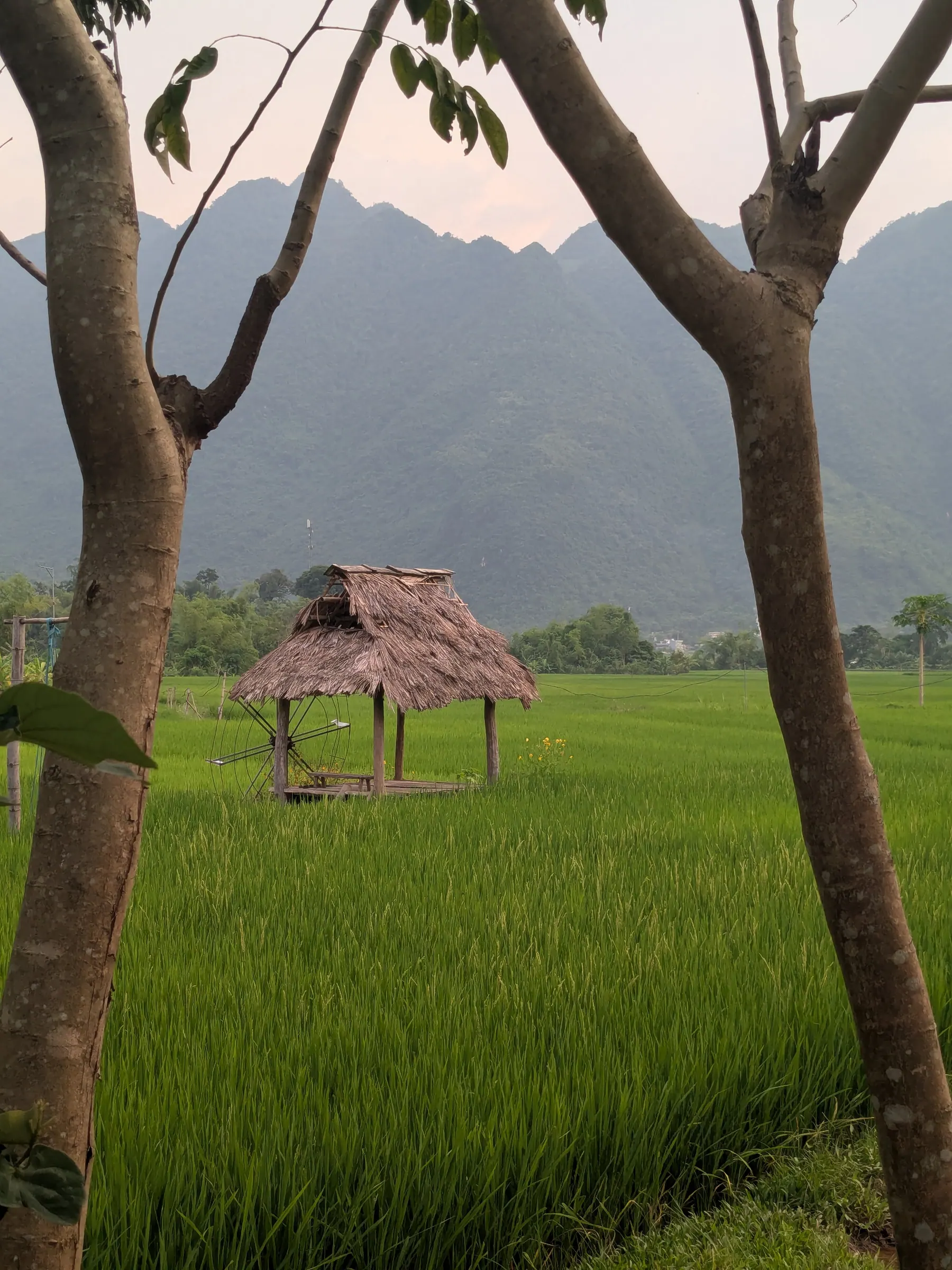
In the middle of the valley there’s an enormous flat plain of rice field. The homestays aren’t clustered together in a town - they’re spread around the edge of that field, spaced apart from each other. Local people live mostly around Lac Village. There are homestays in that area too, and staying in one of the traditional houses would be a great idea.
So there isn’t really a centre in the way you’d expect. There’s a field, and everything sits around it.
That also makes it very hard to get lost. Whichever way you ride, sooner or later you come back to the field.
Go by bike
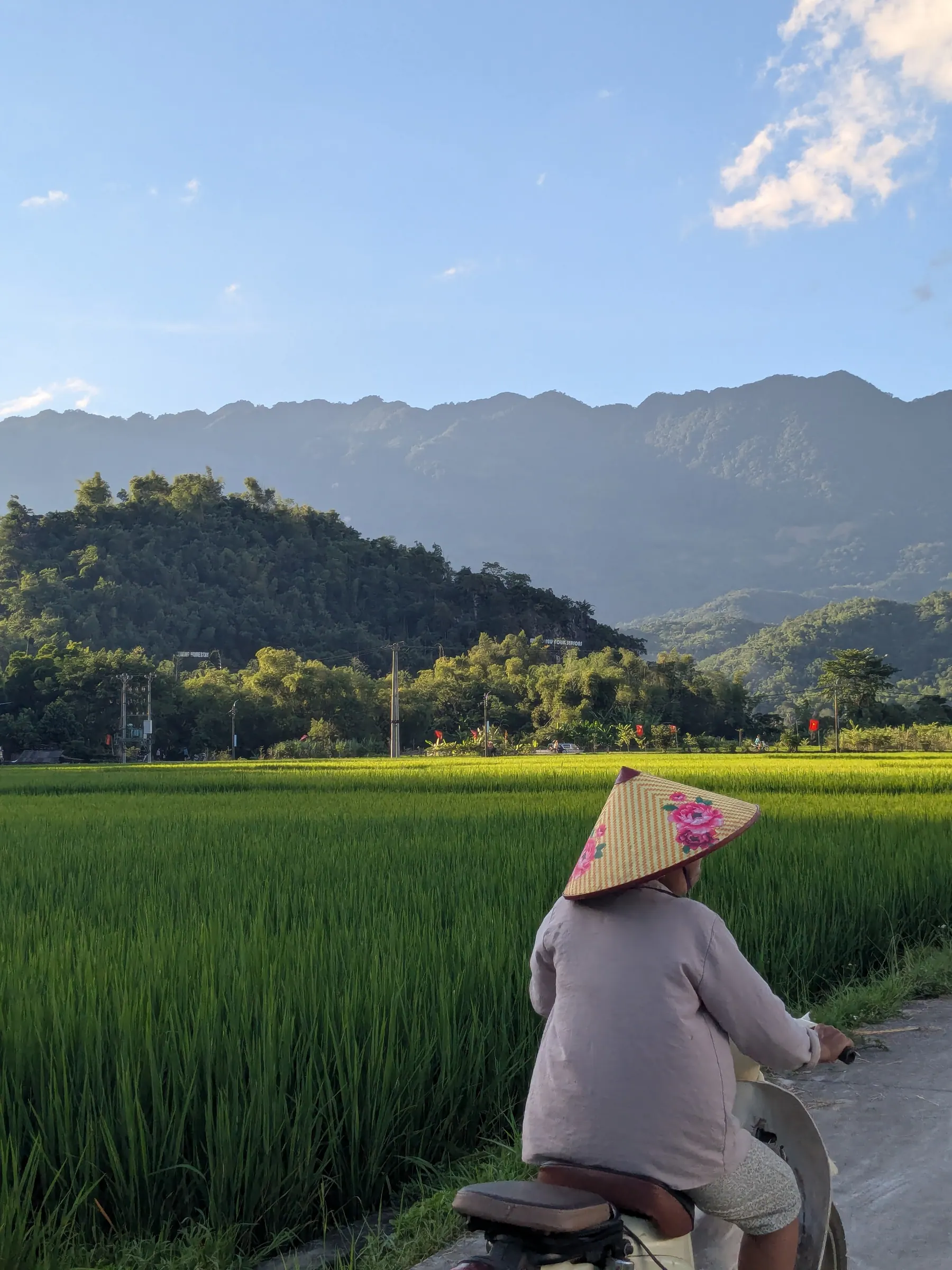
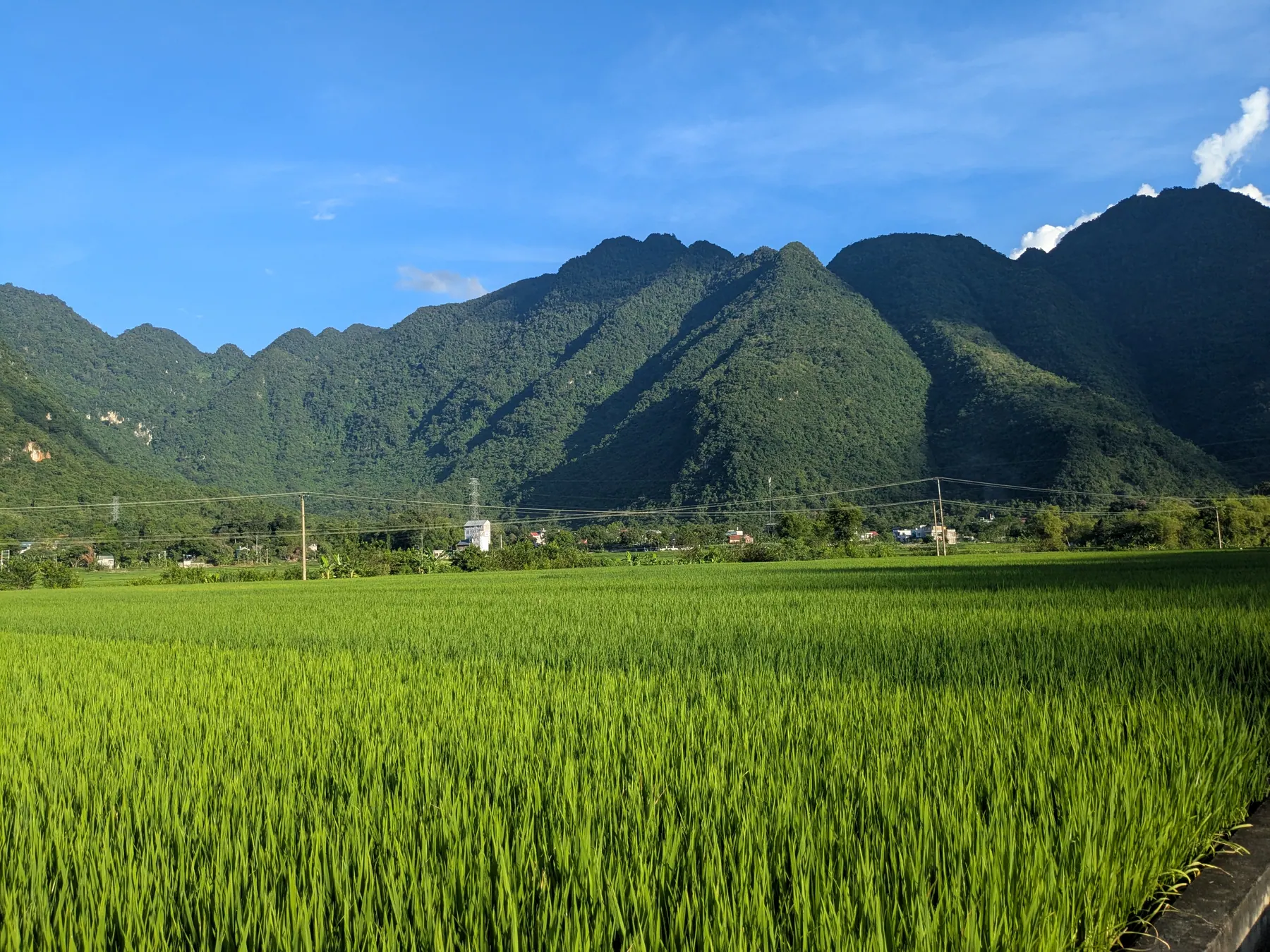
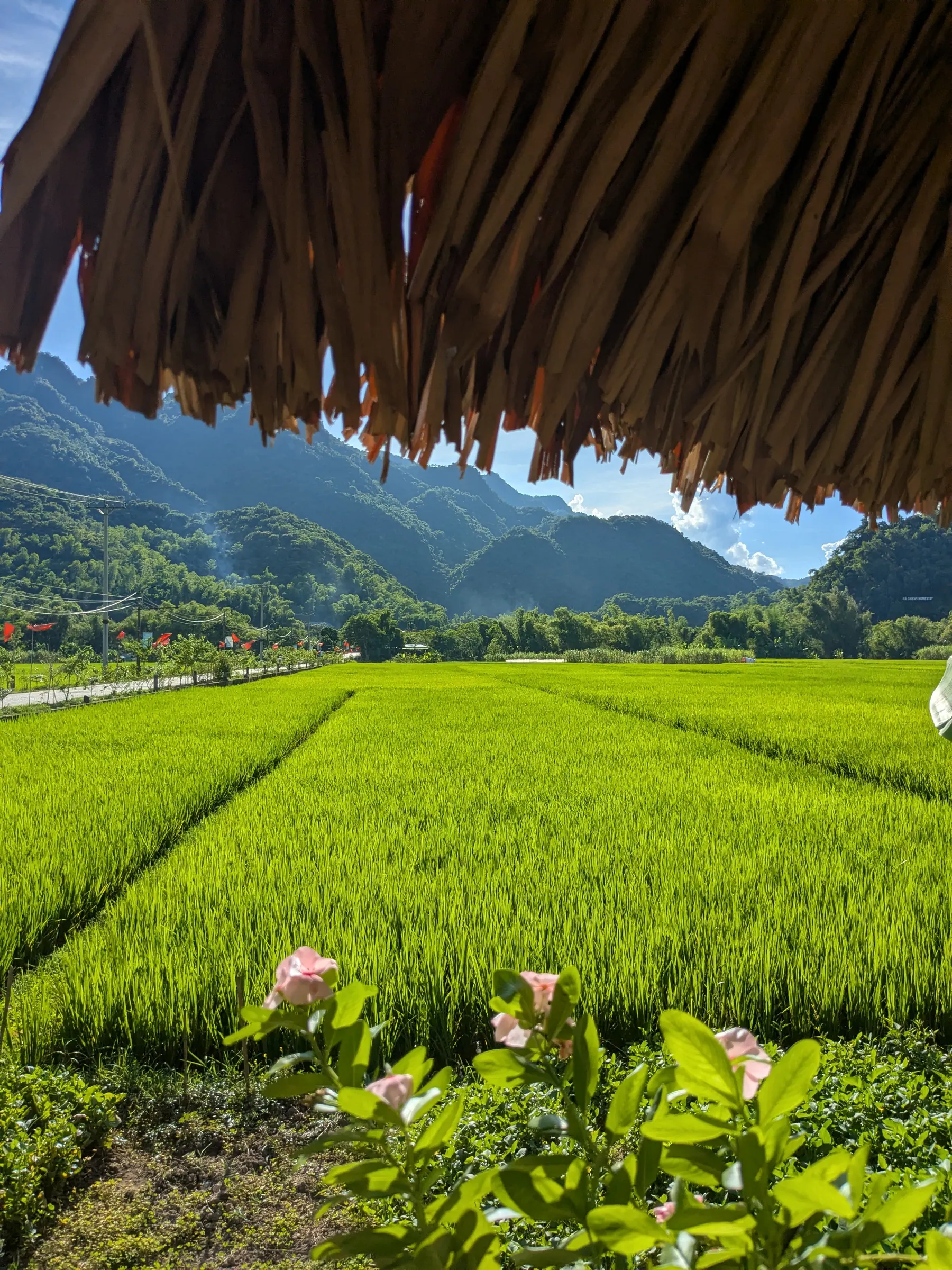
Mai Chau is best seen by bike. Everything is close enough to walk, but the bike is more convenient and the whole valley is flat - no climbing anywhere.
Riding the paths across the fields, with people out harvesting the rice, was one of the experiences I remember most from Vietnam. The way the shadow falls across the bright green of the field, and then the sun comes out and unveils a completely different shade of it, with the mountains standing around the edge of everything.
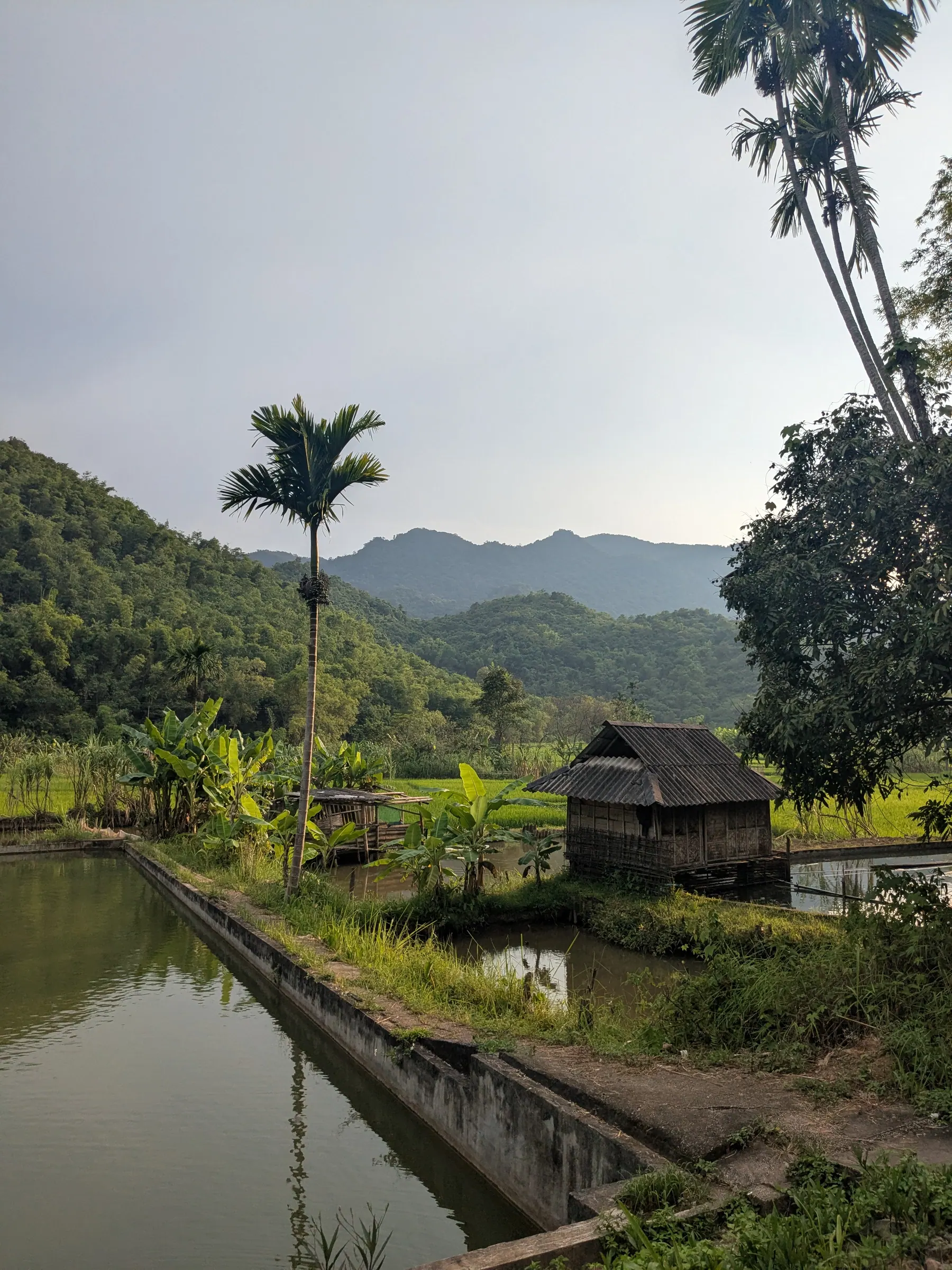
There’s no route to follow. Take a bike and let yourself ride somewhere.
In Mai Chau you won’t have twenty things to do. It’s more about immersing yourself in the place and enjoying it slowly. If you have a Vietnam trip planned out day by day with a lot of activities in it, Mai Chau fits perfectly somewhere in the middle, when you want to relax a bit. That’s exactly how it was for us - we had some tiring days behind us and some tiring days ahead.
Lac Village
Take your time here rather than passing through.
Lac Village is a White Thai community, and the stilt houses, the weaving and the dancing all belong to them rather than being put on for visitors. They’re called White Thai after the white jackets the women traditionally wear, and the village has been here more than seven hundred years.
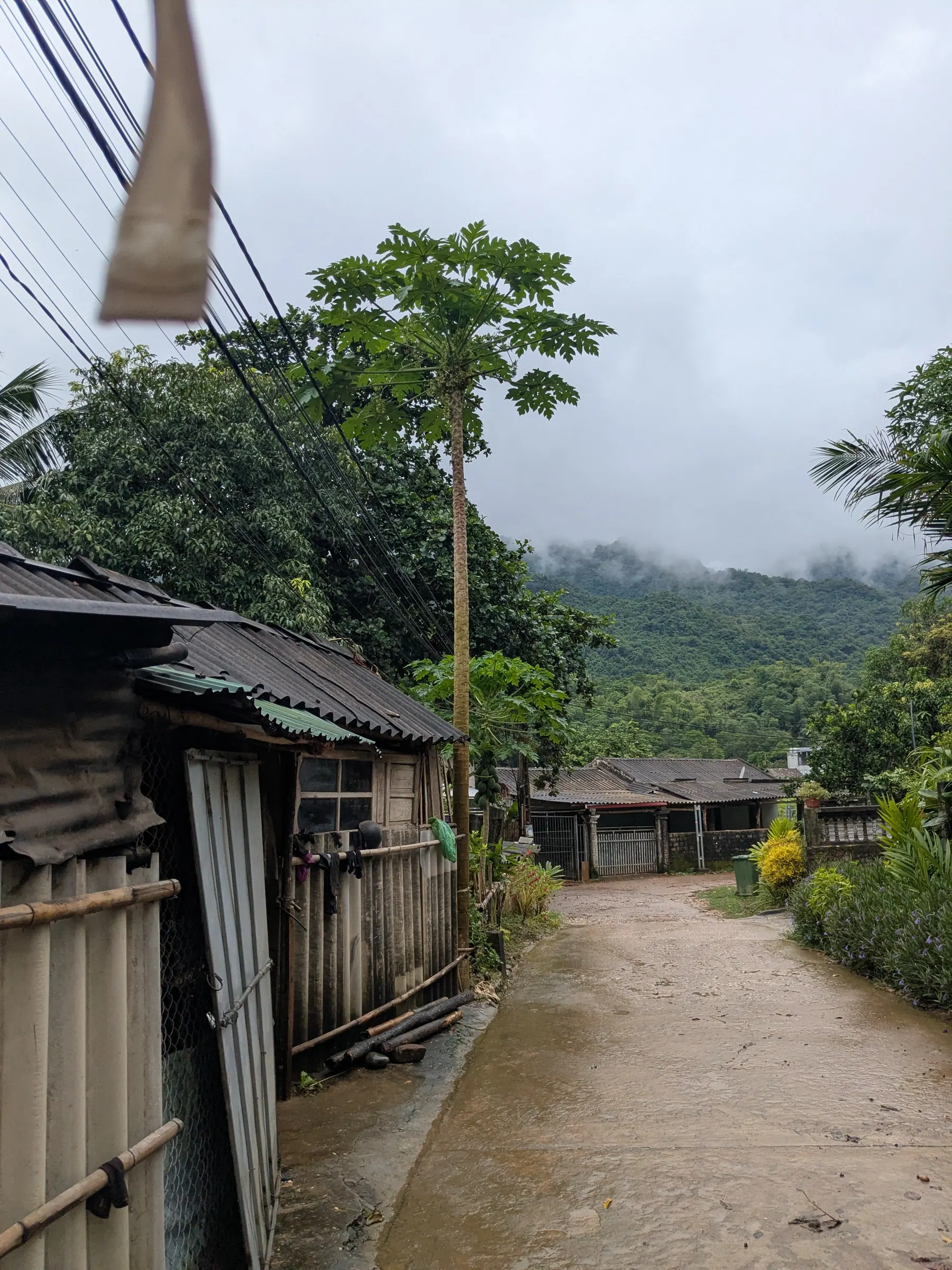
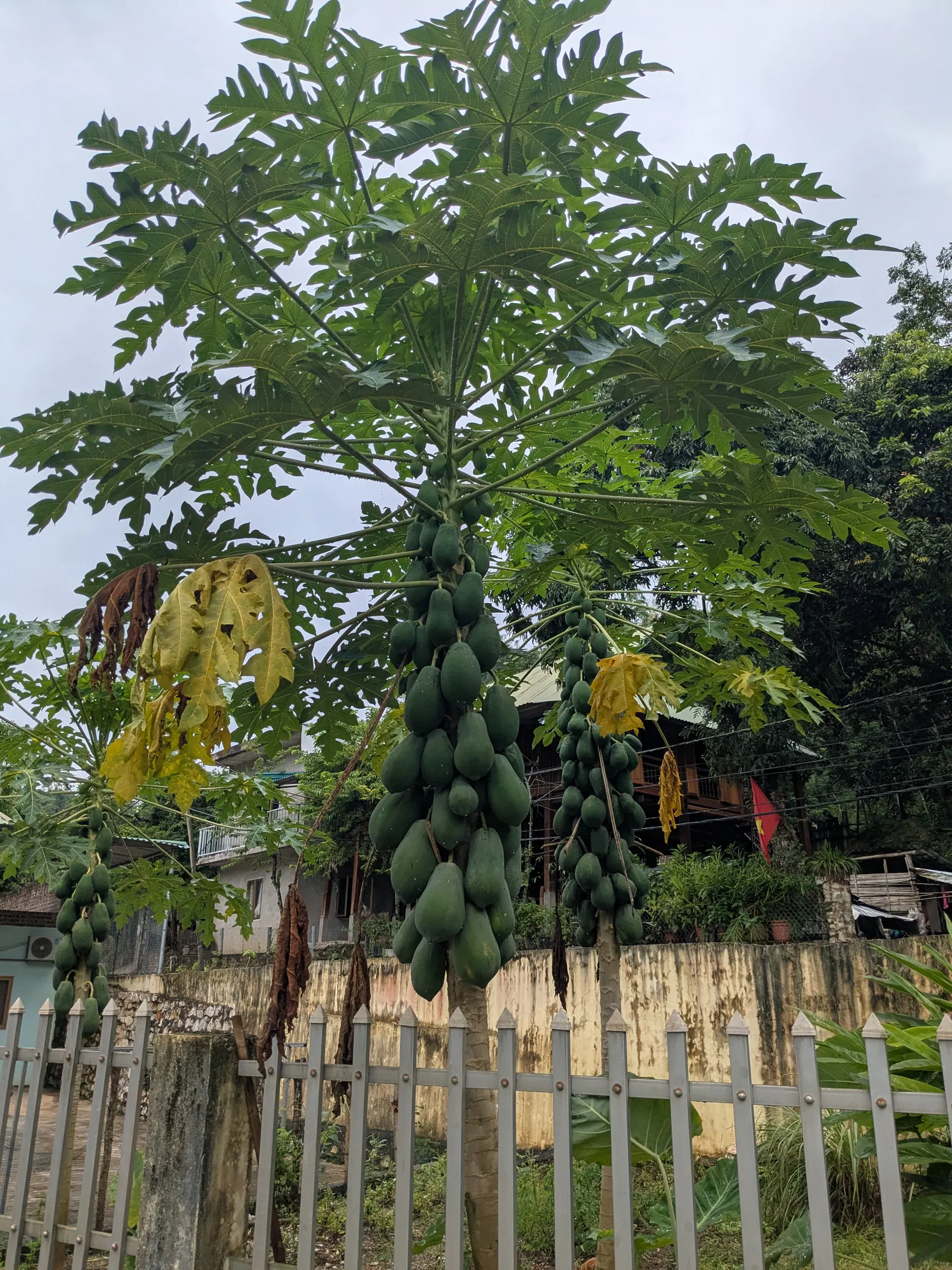
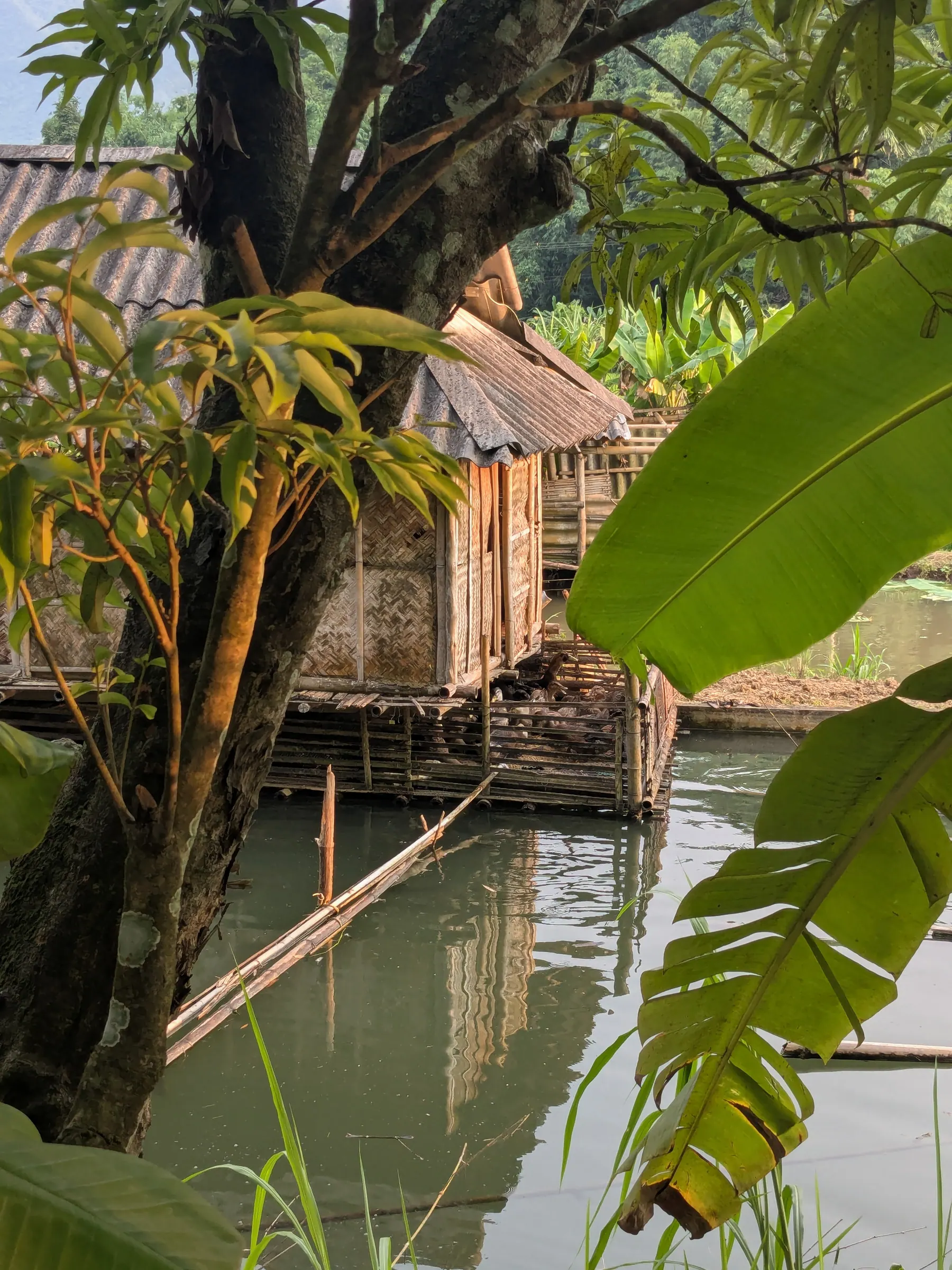
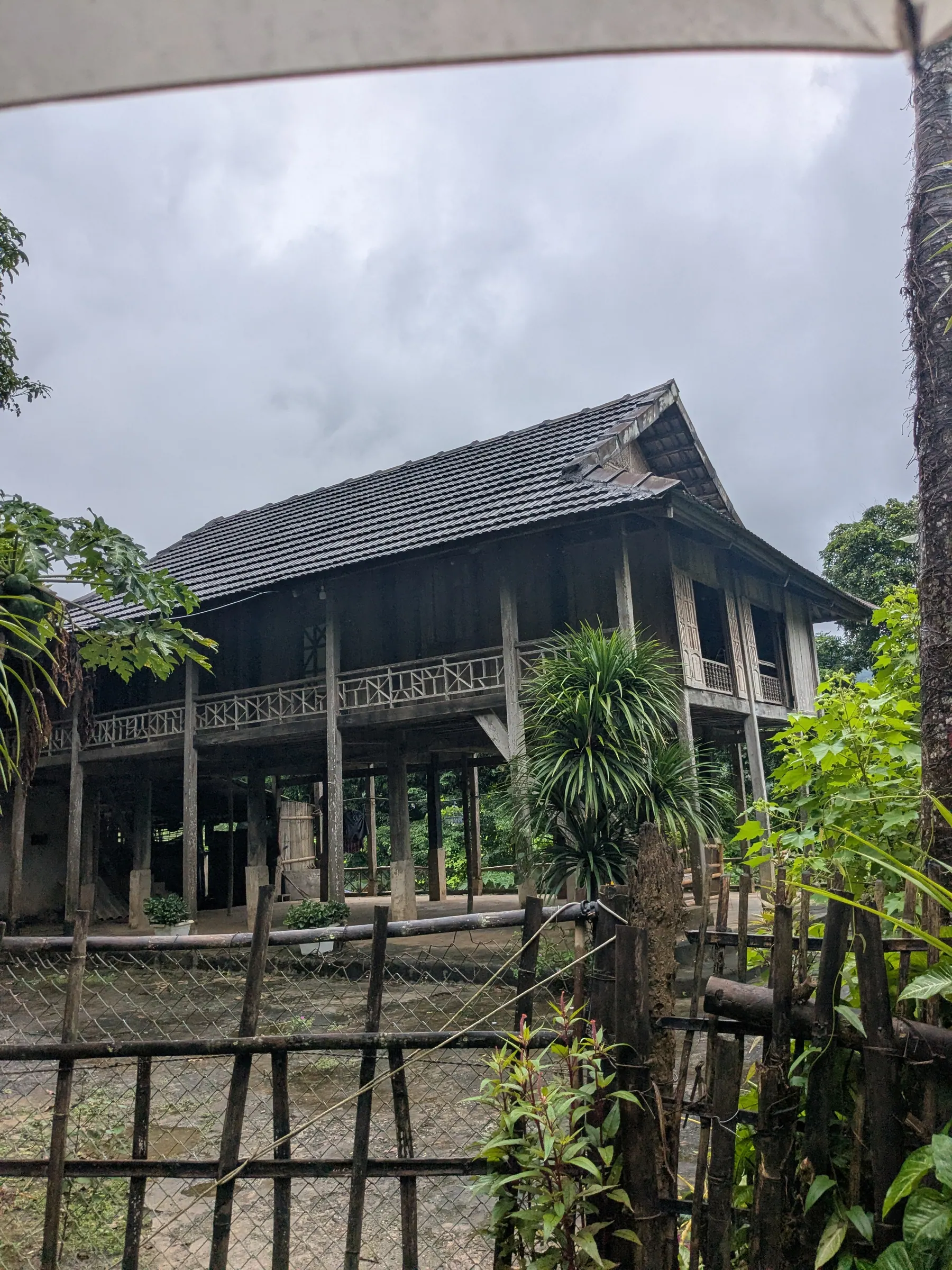
The houses are worth looking at properly. They stand on wooden pillars a couple of metres off the ground, and the space underneath is the working part of the house - storage, tools, the looms the women weave on, and traditionally the animals. That’s why you see livestock tied up beneath the buildings rather than in a field somewhere.
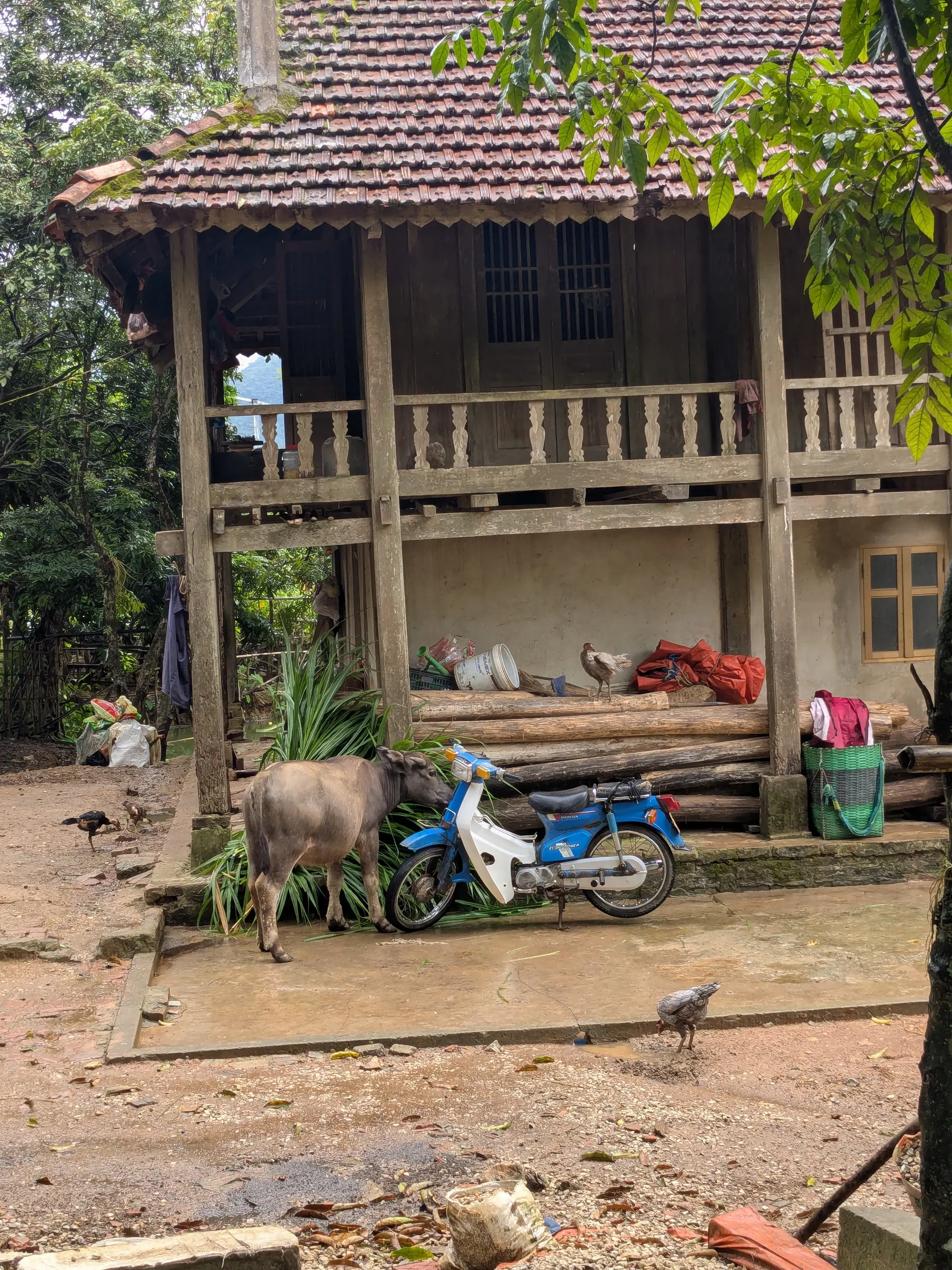
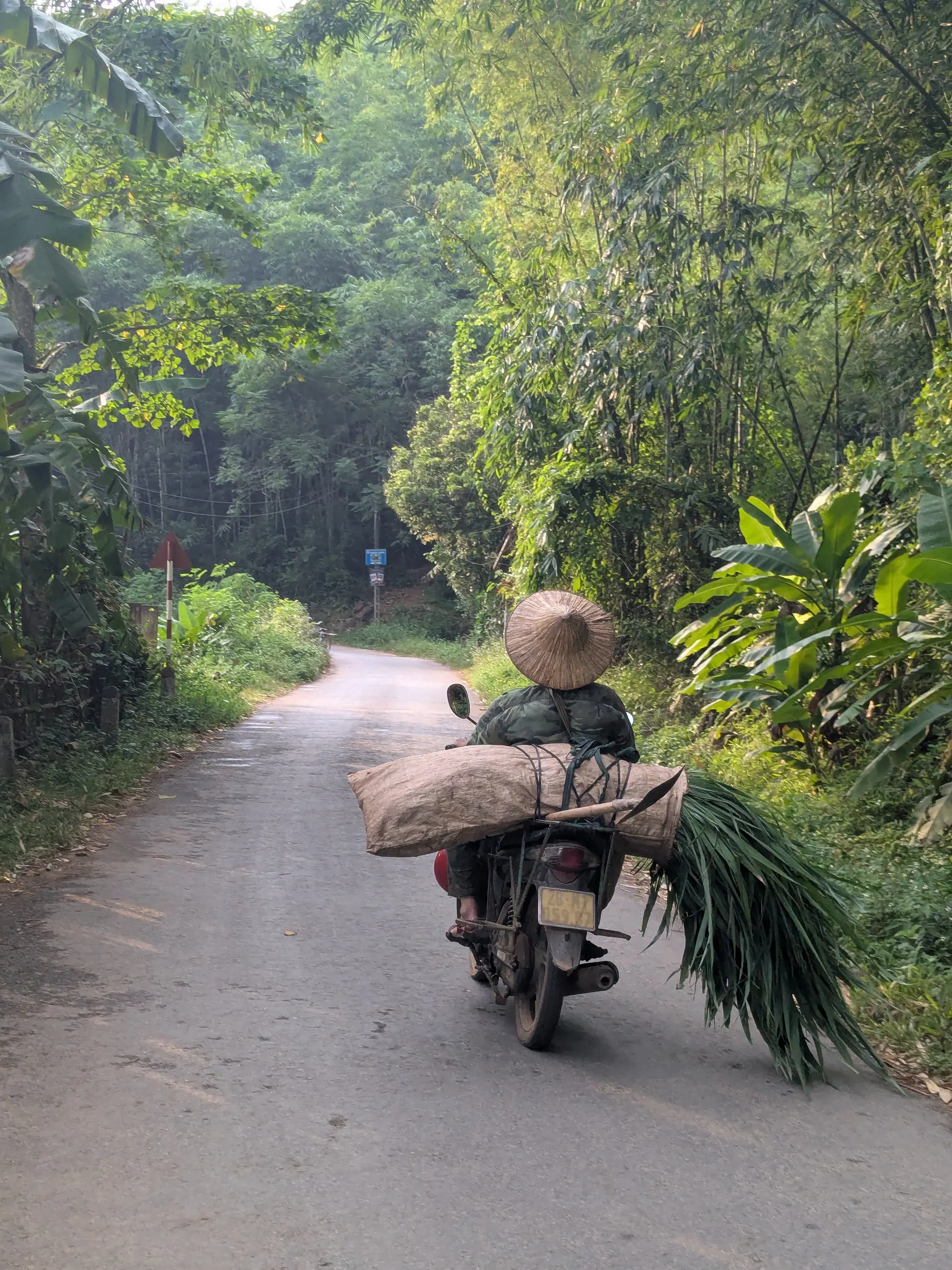
The main street is Ban Lac,and many side streets, and there are also tourist oriented souvenir shops along it - but there are also ordinary houses and ordinary life going on, which is the more interesting part. Bulls tied up beside the buildings, people heading off somewhere on scooters, men carrying bundles of plant material. Nothing performed for anybody. An unrushed place.
They weave cloth here, the kind you’d put on a table or wherever you like, and it’s made locally. I bought one for my grandmother.
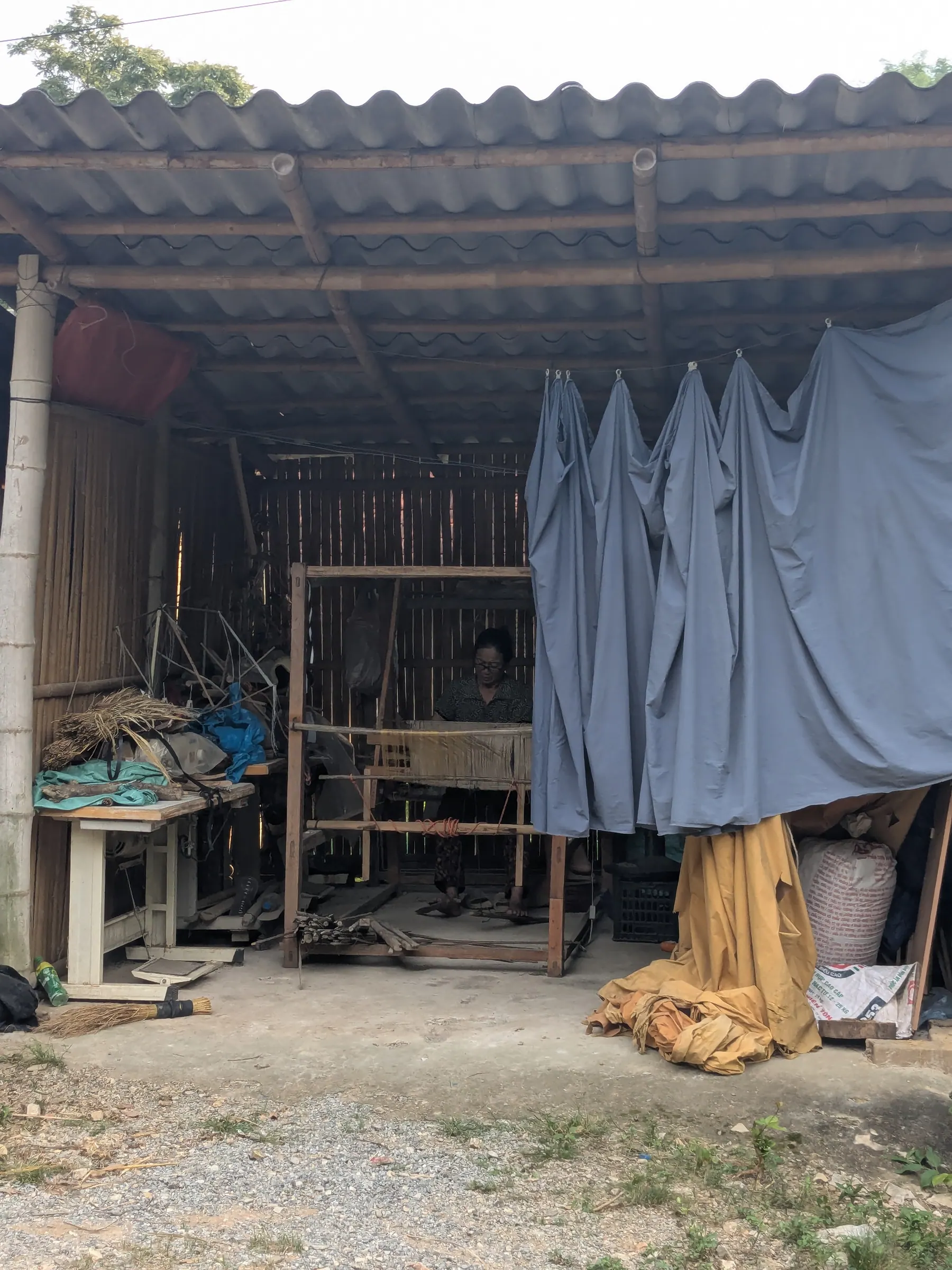
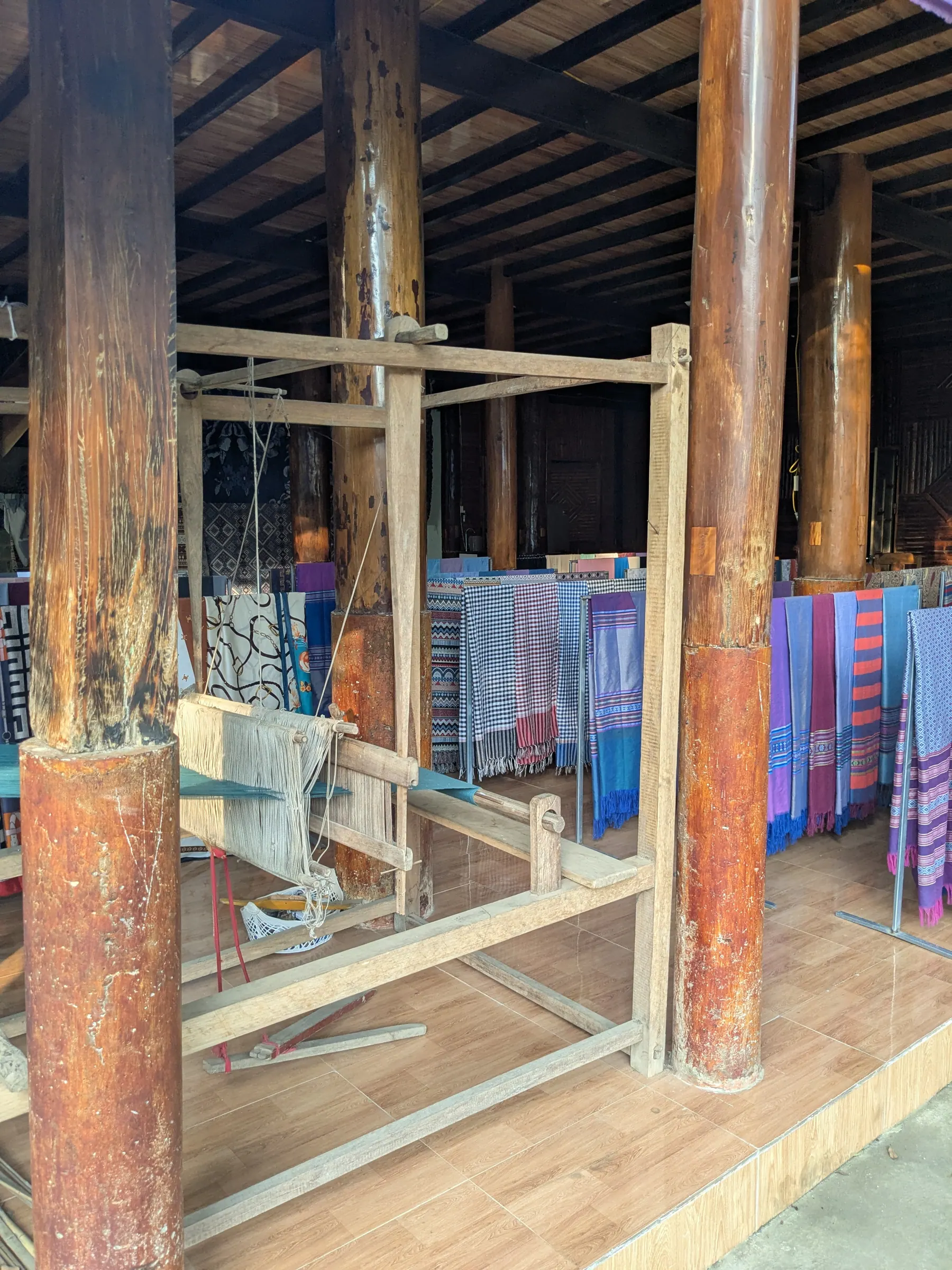
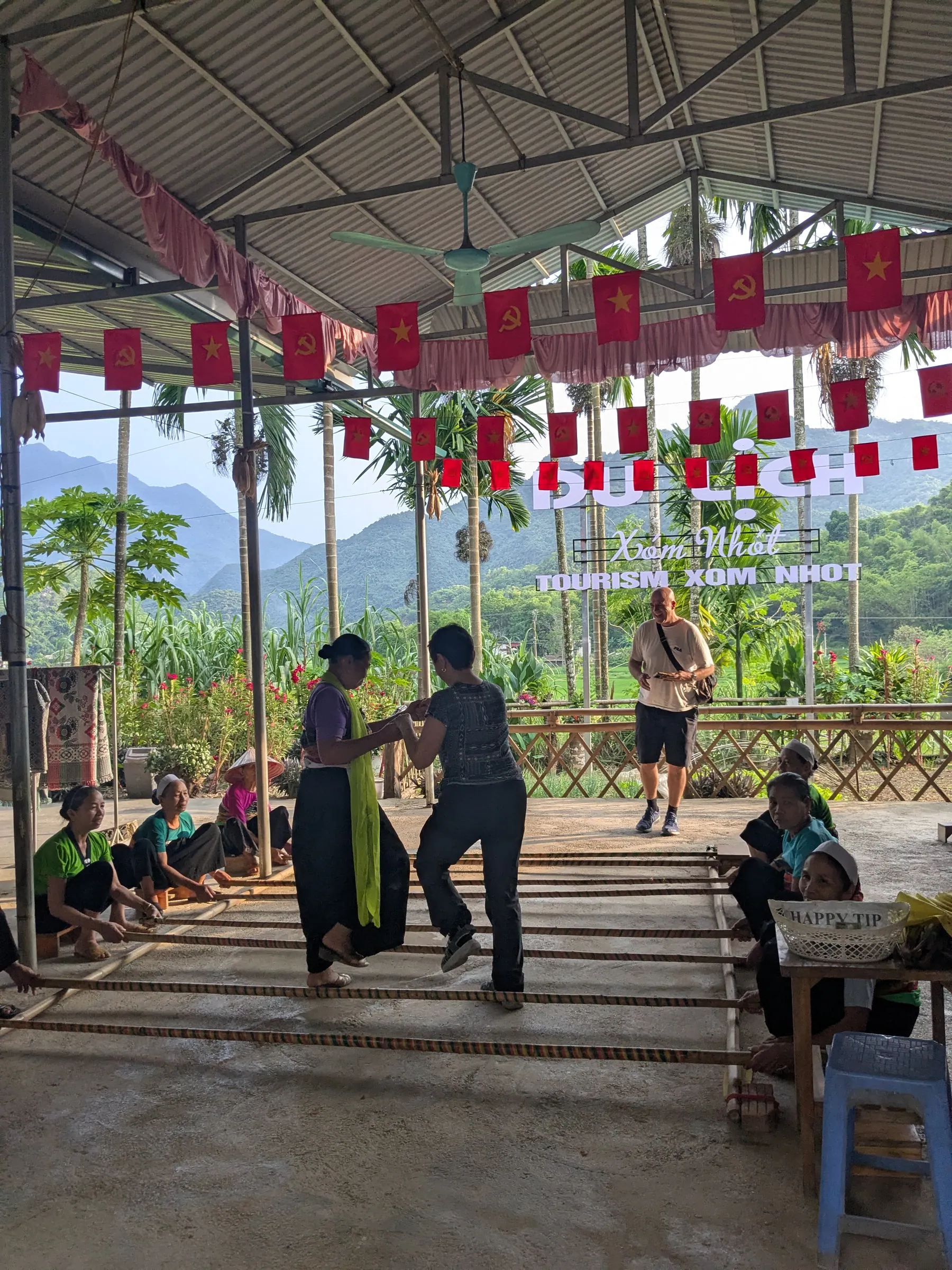
There’s a weaving and cultural dancing house where you can dance with the local women, if that appeals.
And if you follow the street on towards Nà Phòn, the rice fields start to appear in layers across the flat ground and the landscape gets wilder. Check the side streets as you go. The whole thing is about exploring rather than arriving.
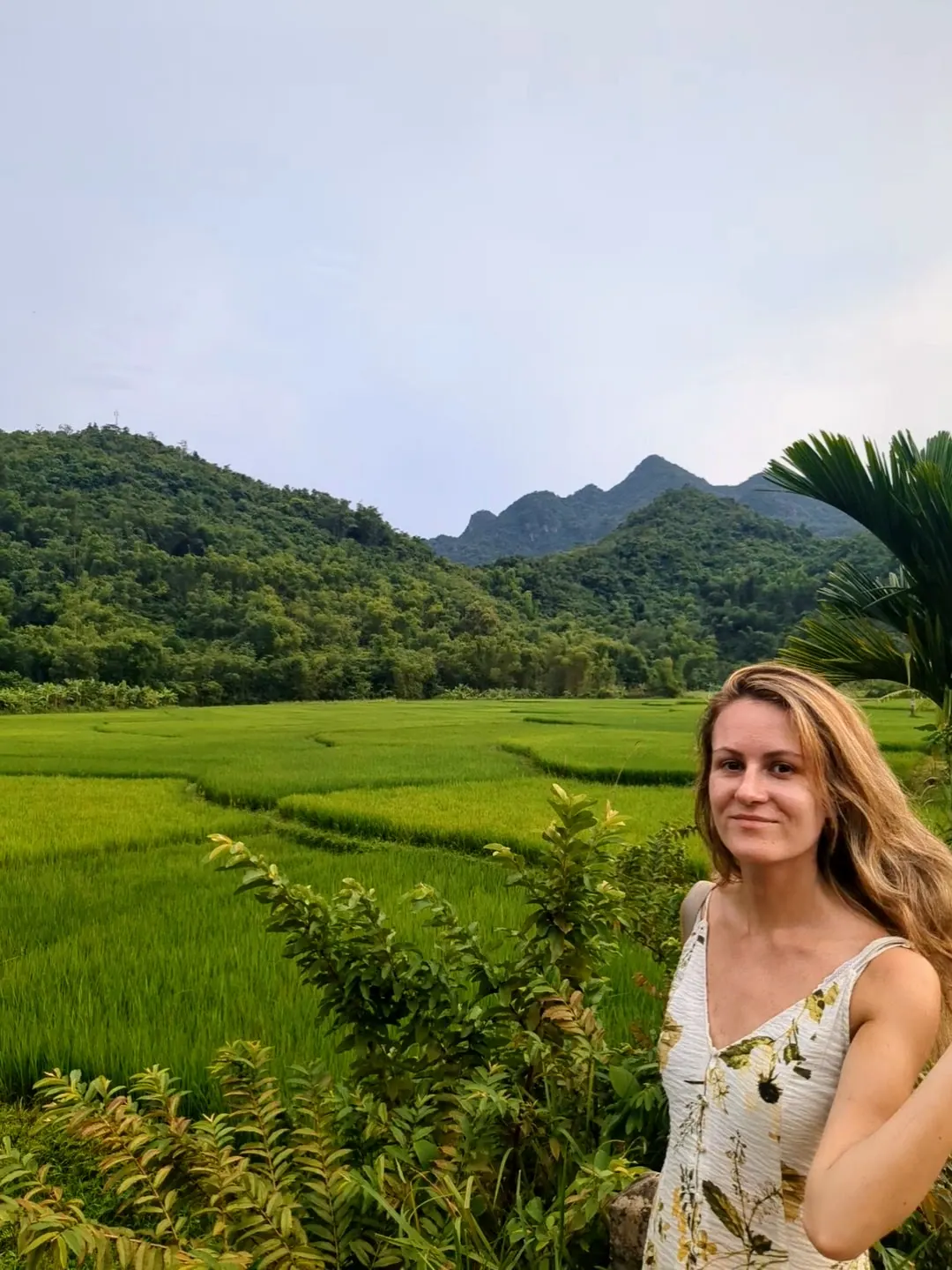
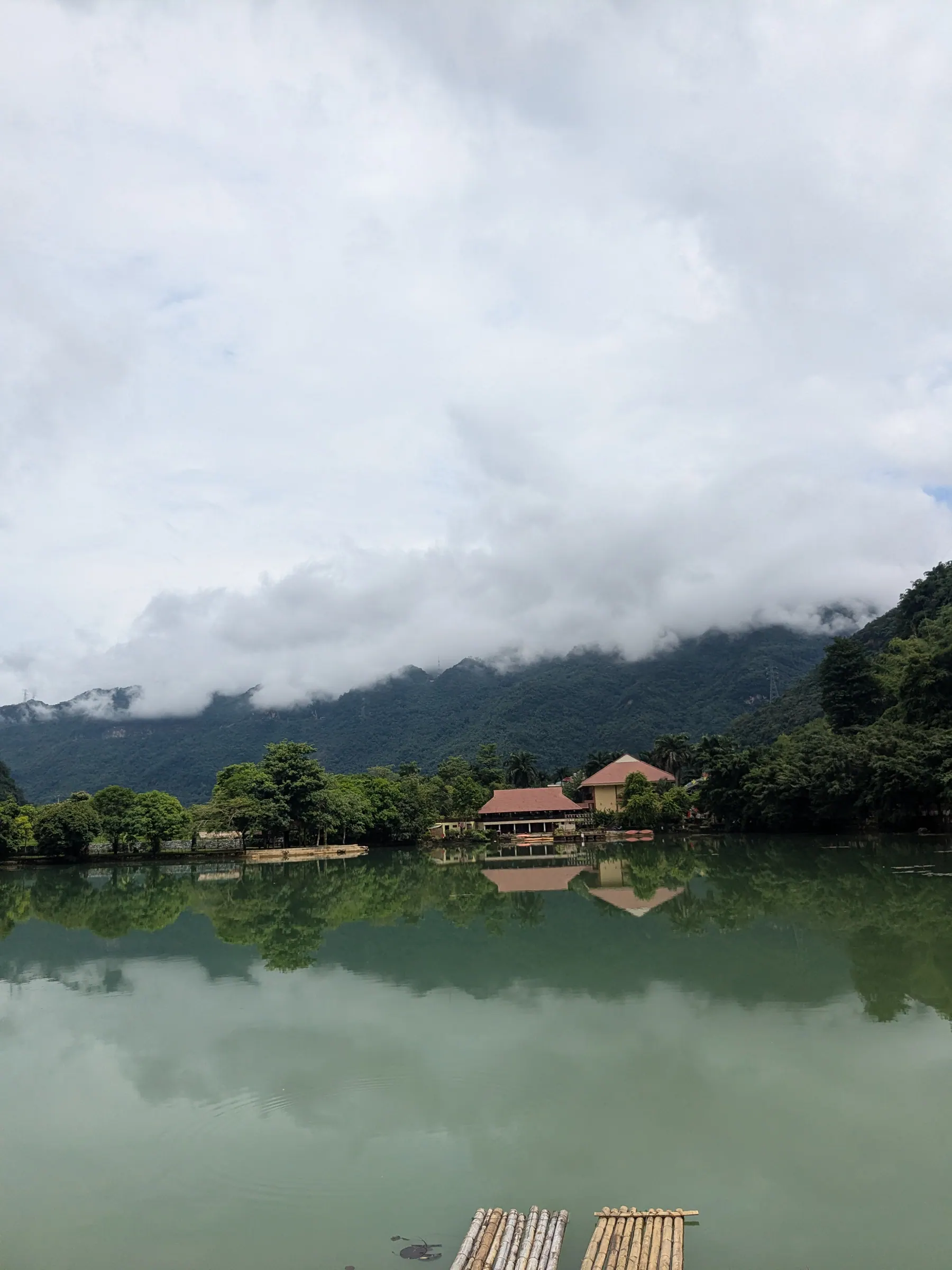
Mo Luong lake is close to Lac Village too, and worth a look if you find yourself nearby.
A day beyond the valley
On the second day we wanted to see a bit more, so we arranged a local taxi driver through the homestay - they offer a set tour with the stops already included. We found going with a local driver convenient for these stops; road conditions and transport options can vary.
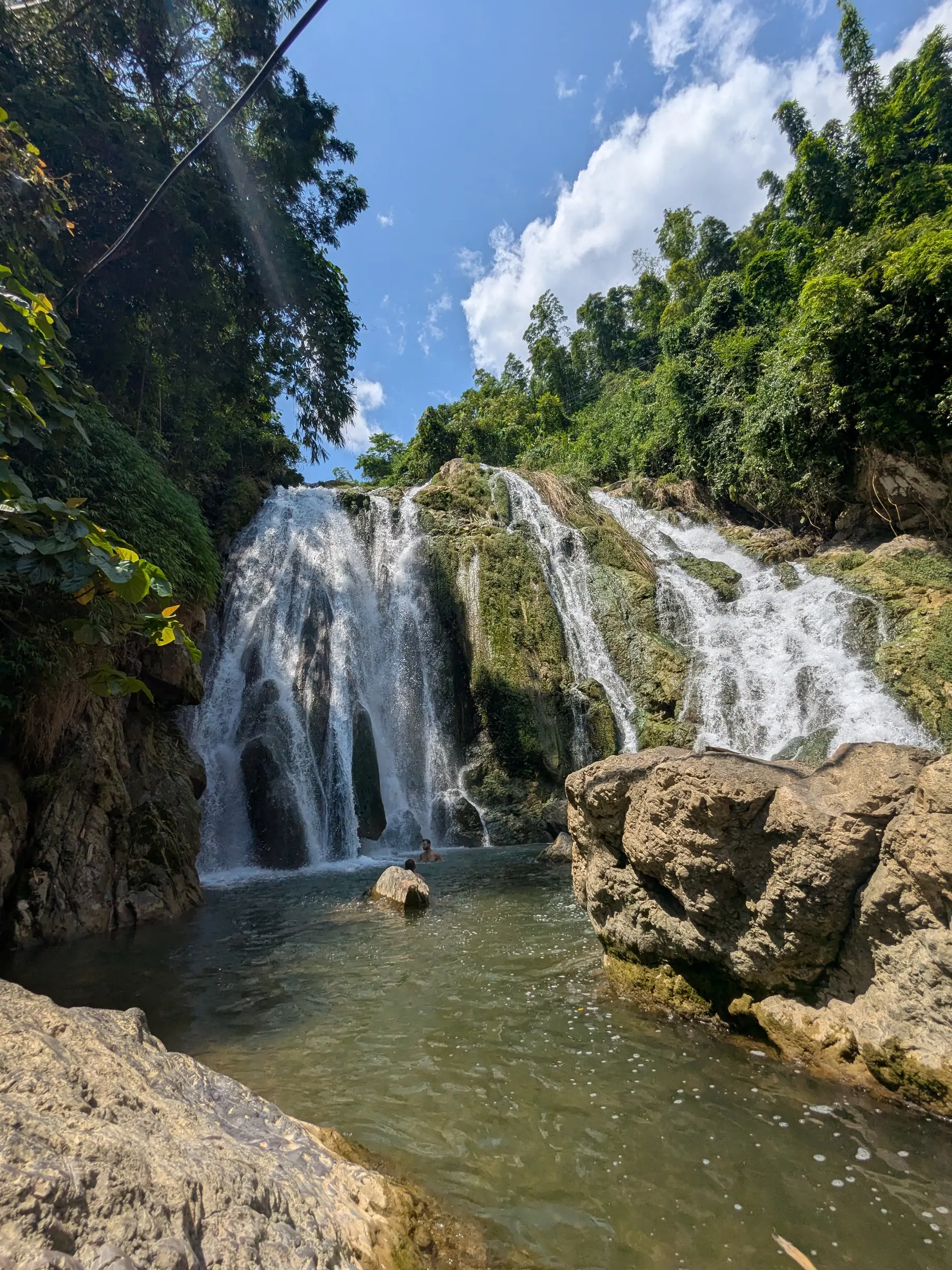
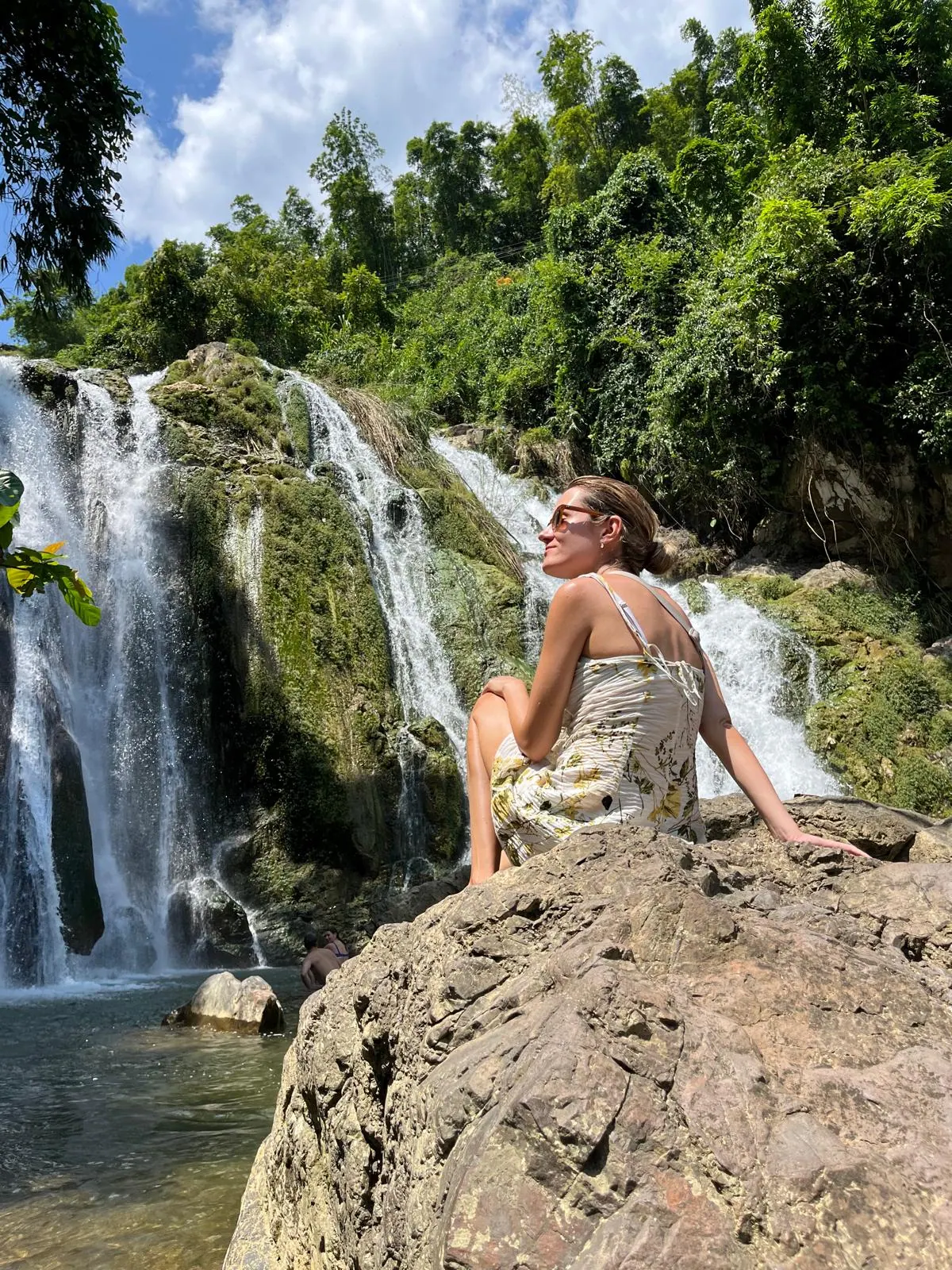
We stopped first at Gò Lào waterfall, where the driver left us for about half an hour. The waterfall was very beautiful and it was definitely worth the stop: two mountain streams meet above the cliff and fall as a broad curtain into a pool below, reached by a staircase.
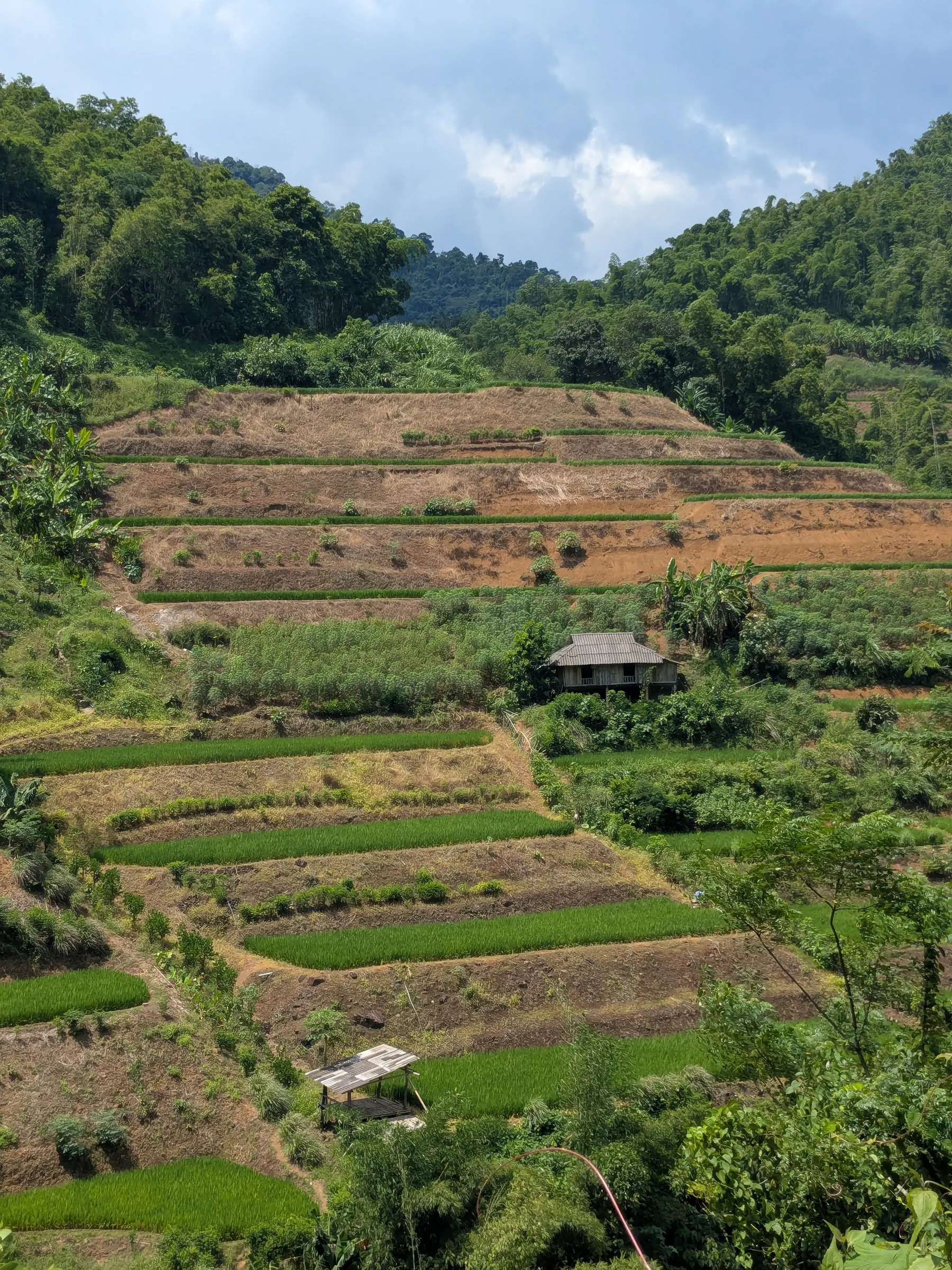
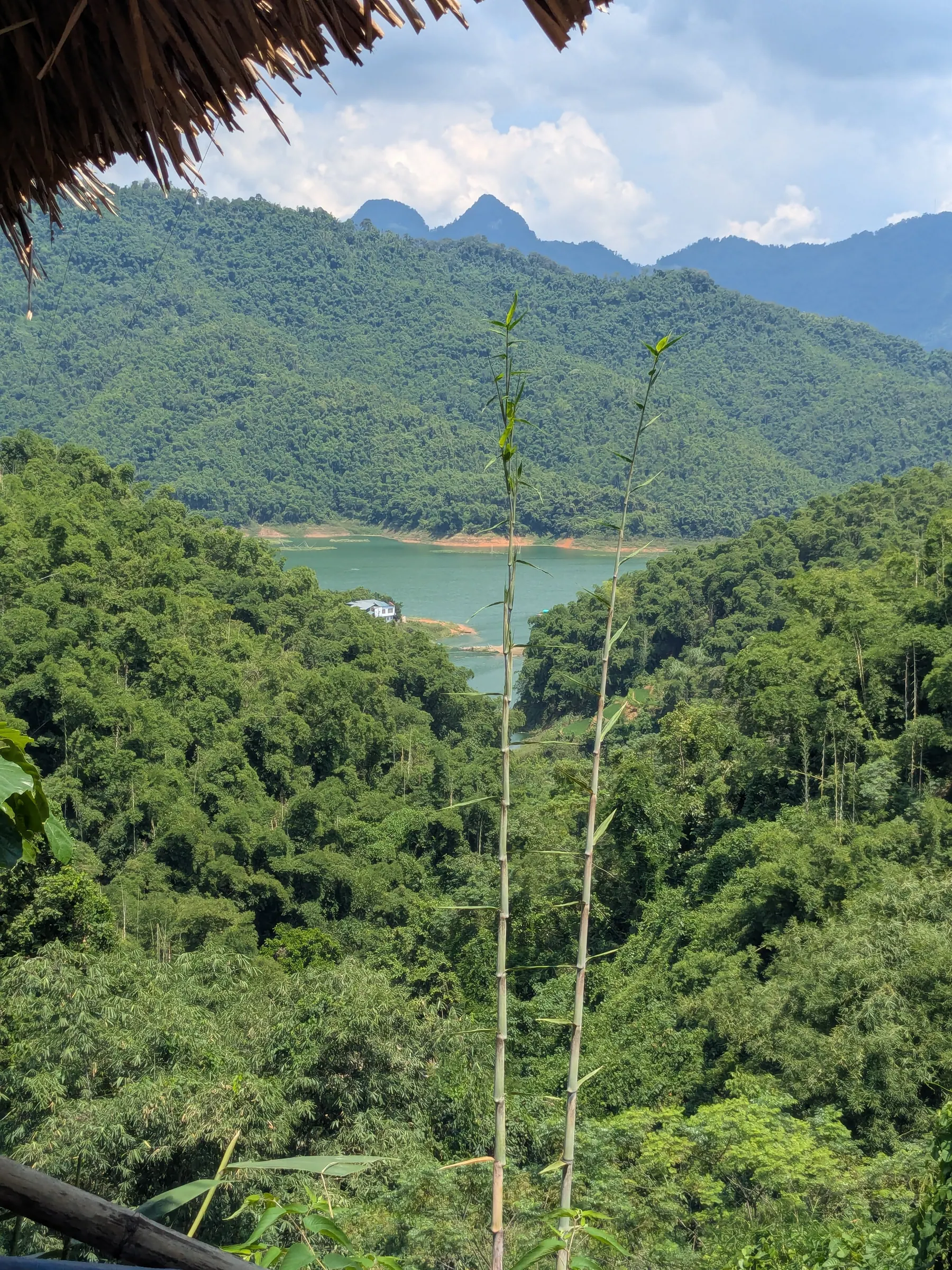
Then, on the way towards Hòa Bình lake, we pulled in at a terrace with a beautiful landscape opening out all around it.
After that the Thác Tạt Nàng waterfall area, where we walked around for a while.
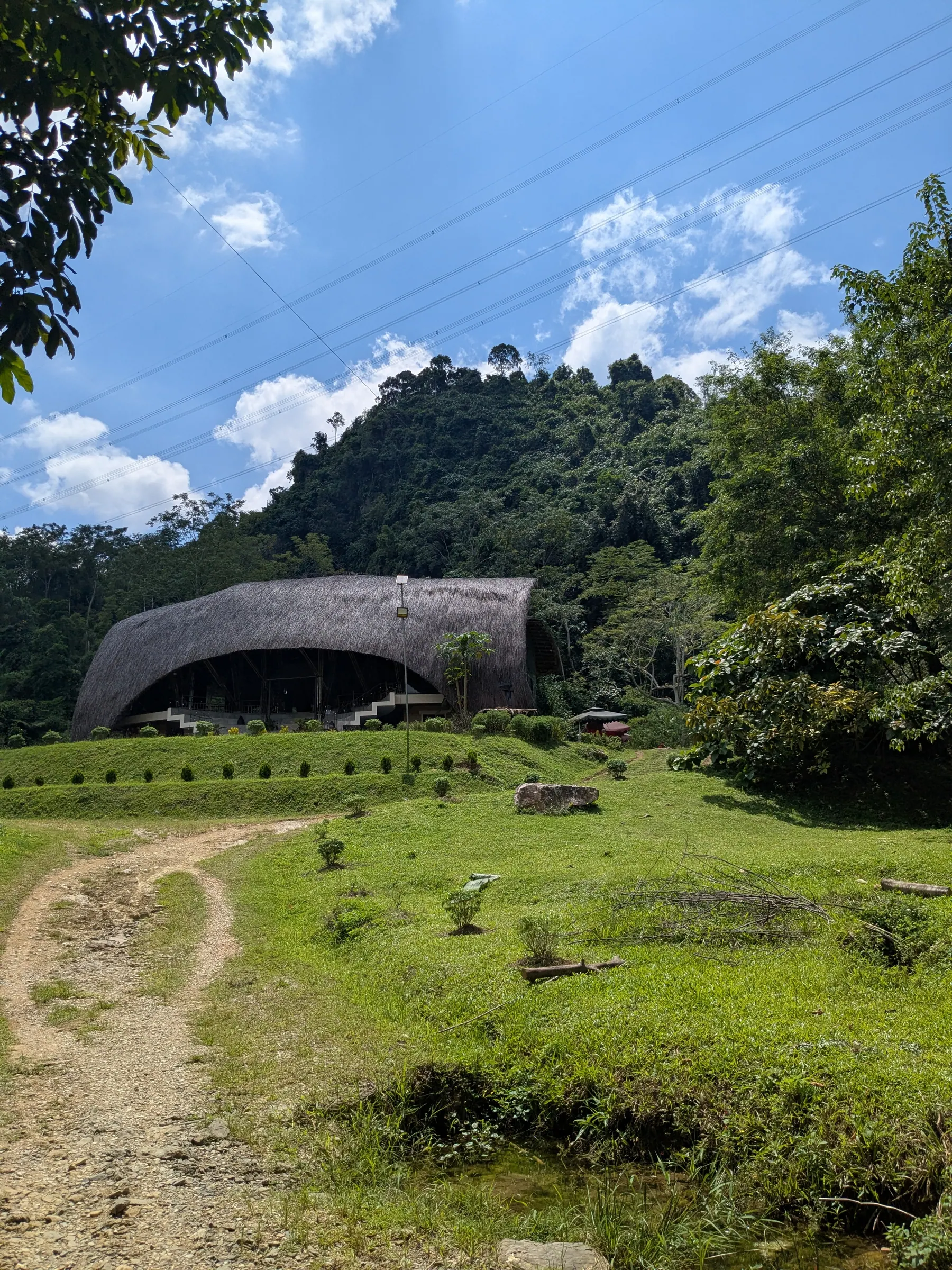
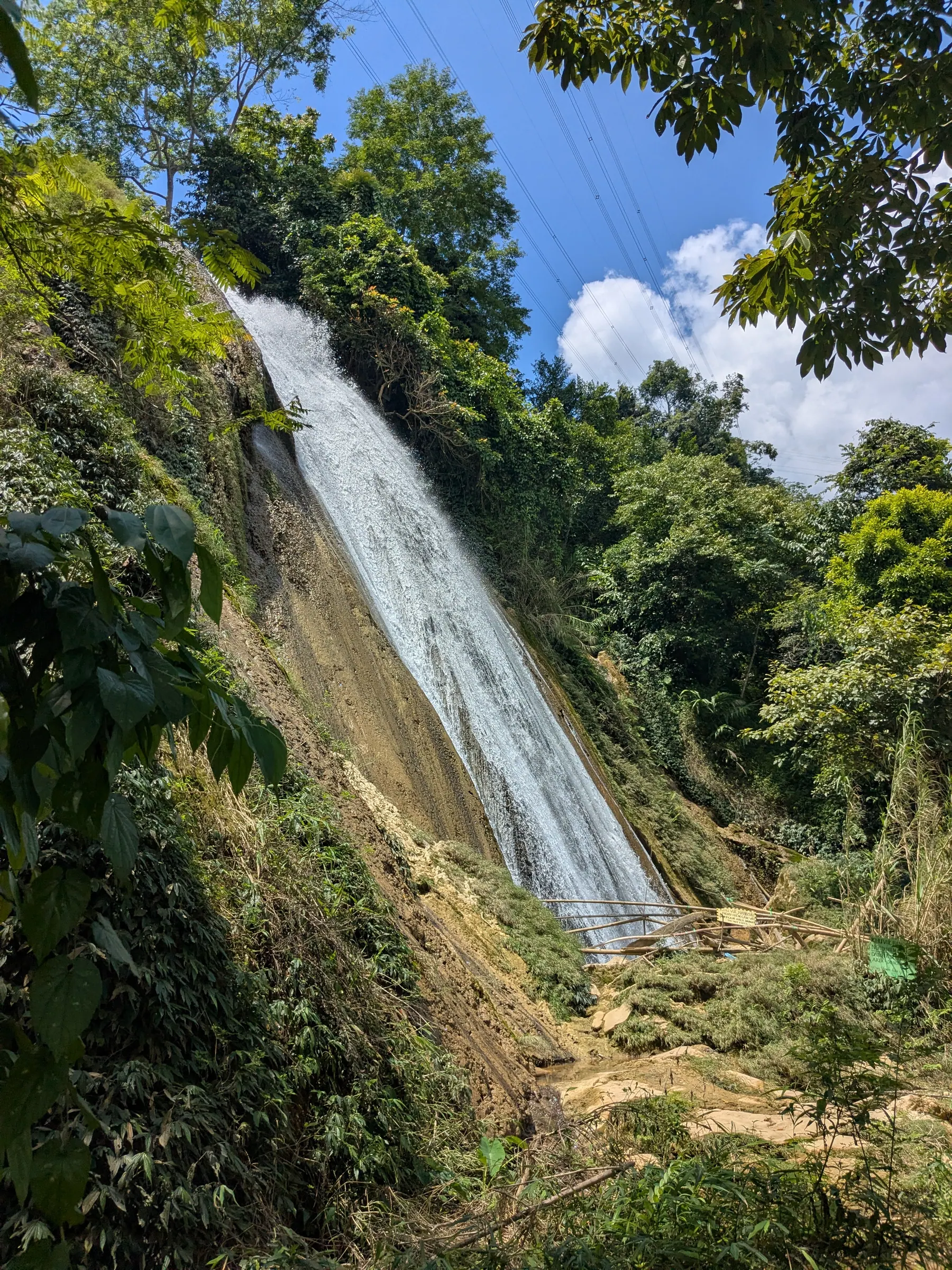
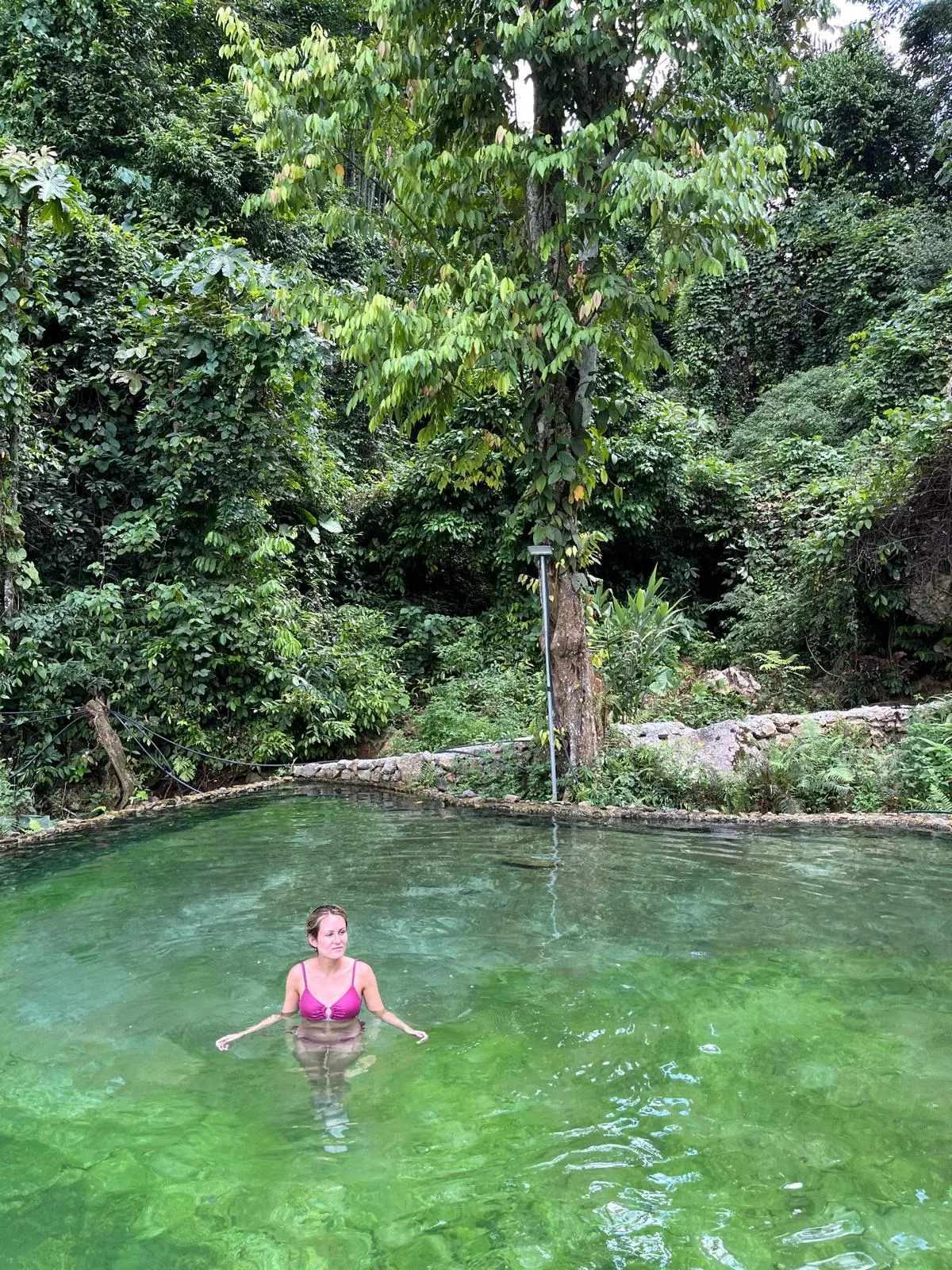
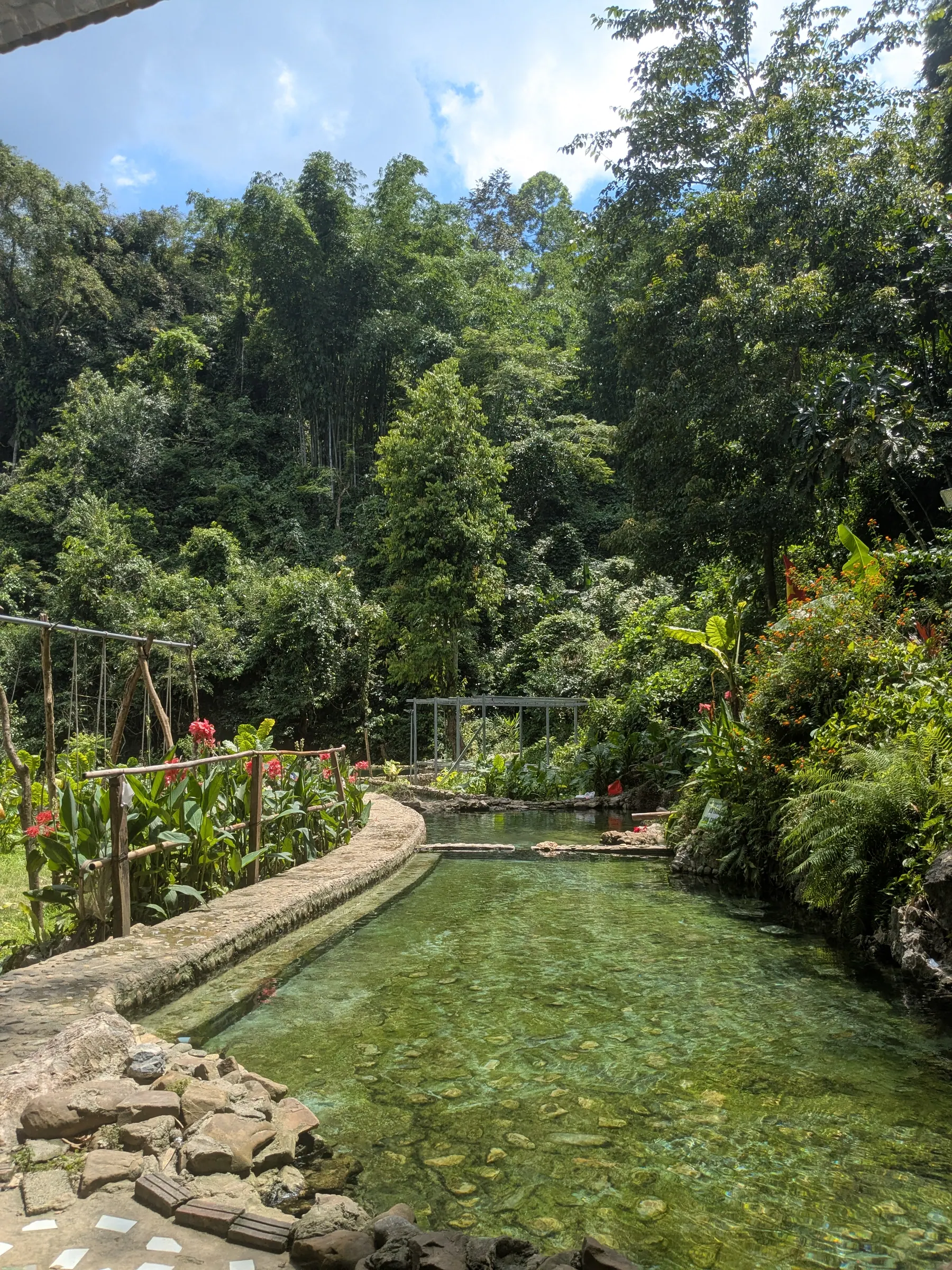
Then the Bo Am hot springs, where I had a swim. The water was very warm and the landscape around it beautiful, and there are proper facilities - changing rooms, showers, and a bar next to the springs. We were lucky with the timing: it was sunny exactly when we arrived, I got in the water, and then the rain started. Rain in Vietnam, at least in our experience, was always a short thing rather than a day ruined.
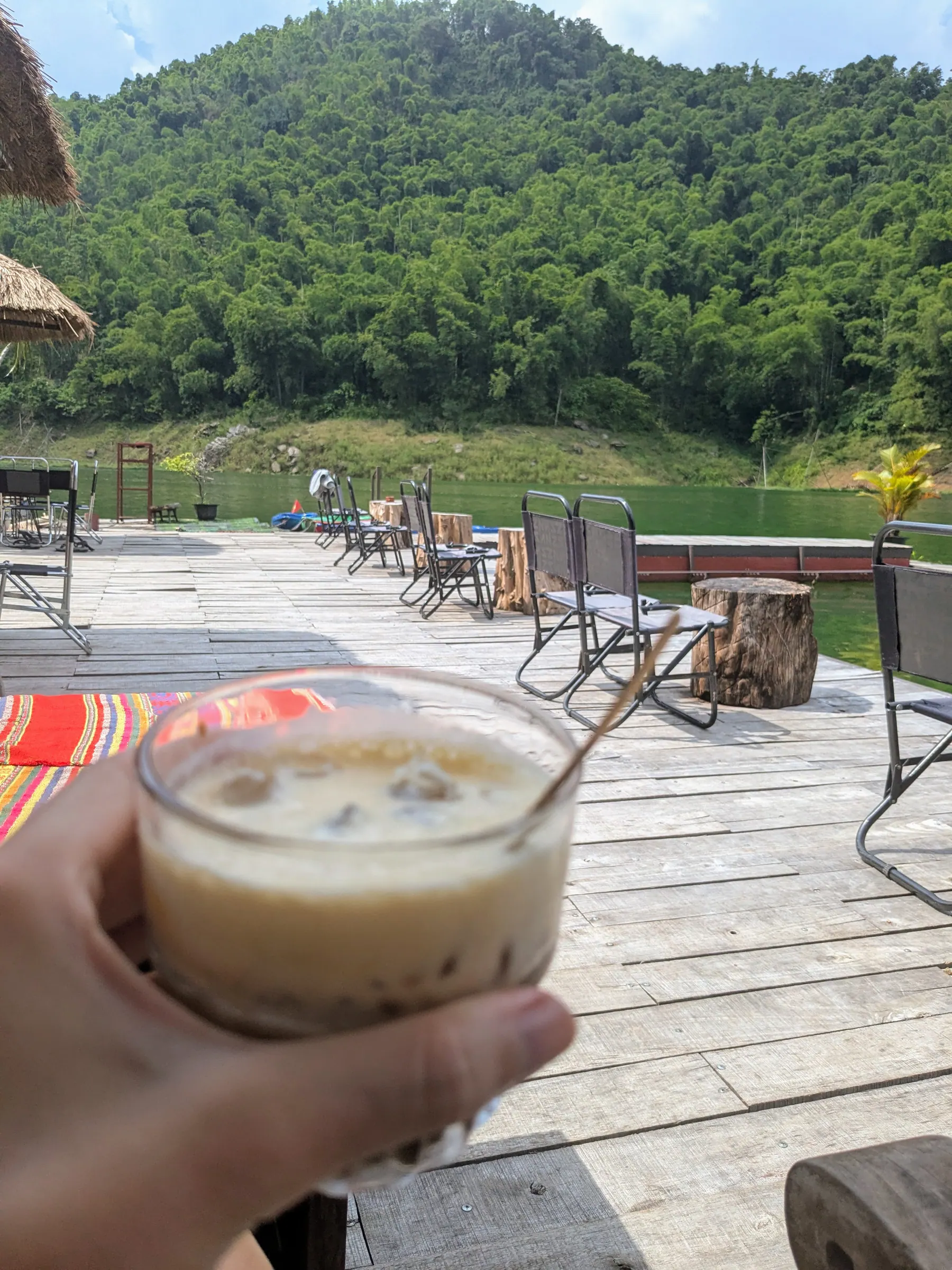
We finished at the floating houses on Hòa Bình lake with a coconut coffee, sitting by the water. The lake isn’t natural - it was made by a dam on the Đà river. Vietnamese coffee is the best in the world as far as I’m concerned, and the coconut version is the one to have.
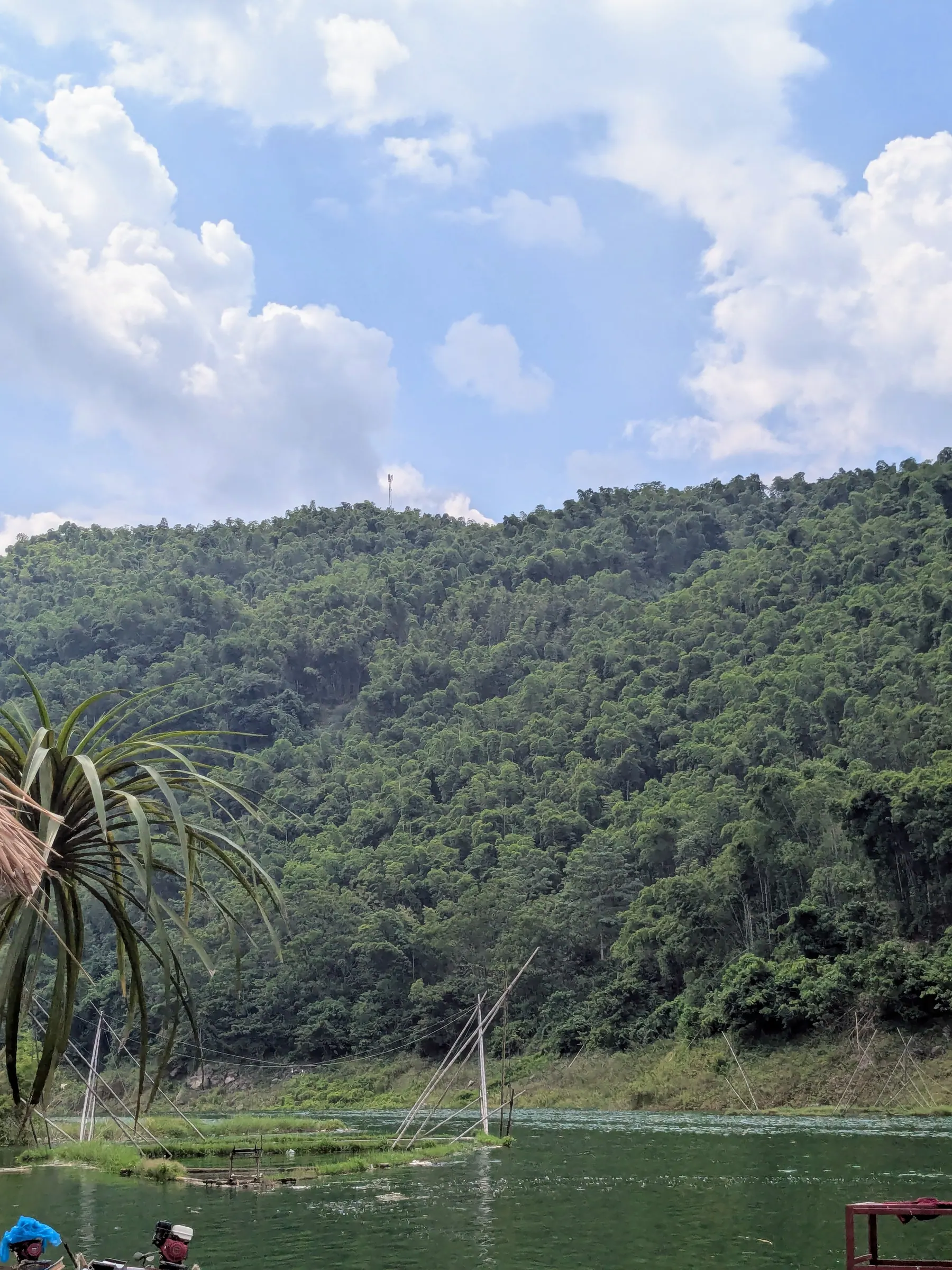
Those hours outside Mai Chau were very well spent. It’s a chance to see the area rather than only the village, and the nature out there is beautiful.
Food and when to go
Once we had a very oily crispy chicken. Another time we had rice with pieces of chicken, along with rau muống - water spinach, the green that comes with almost everything in Vietnam - and green mango salad.
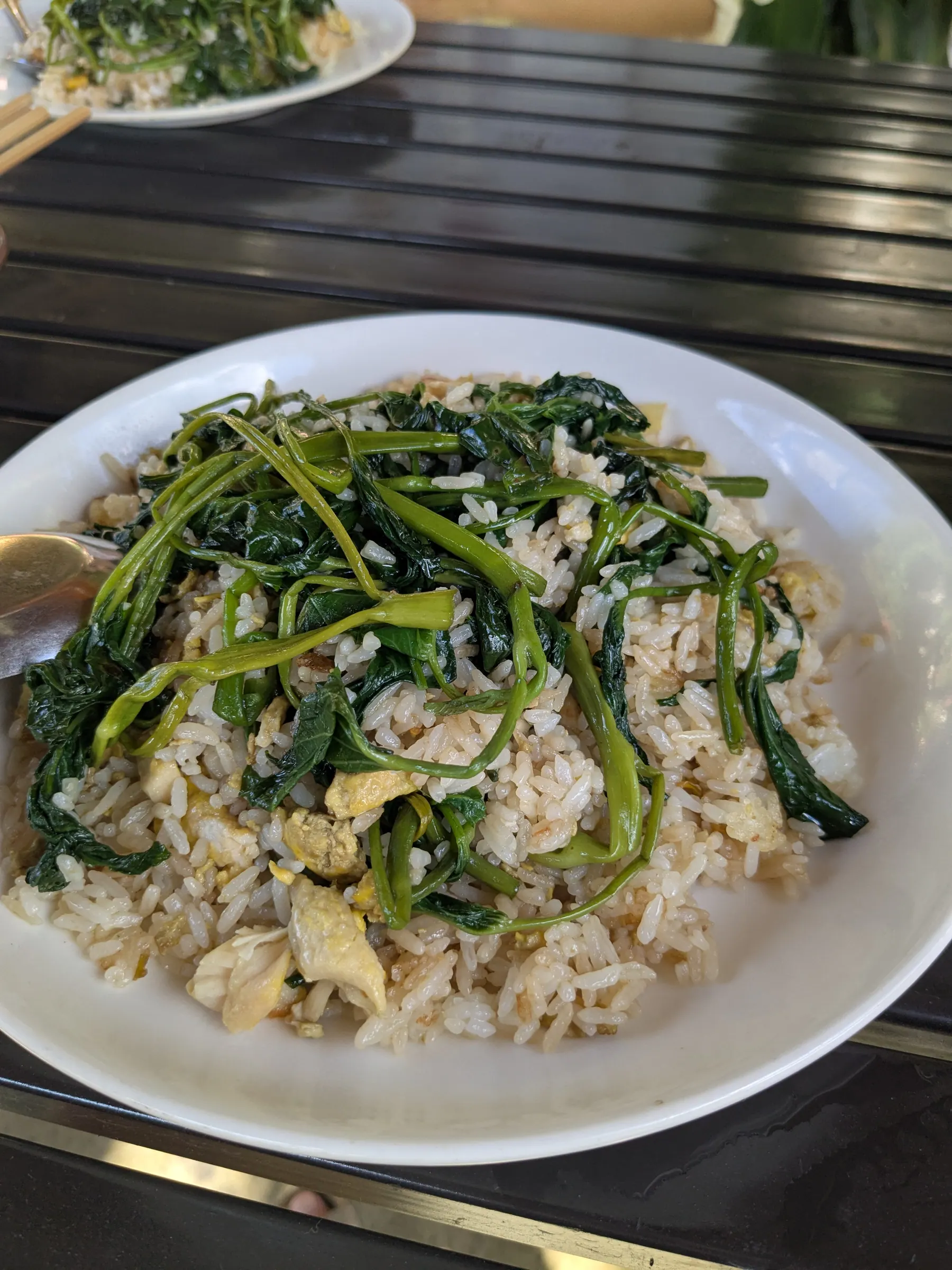
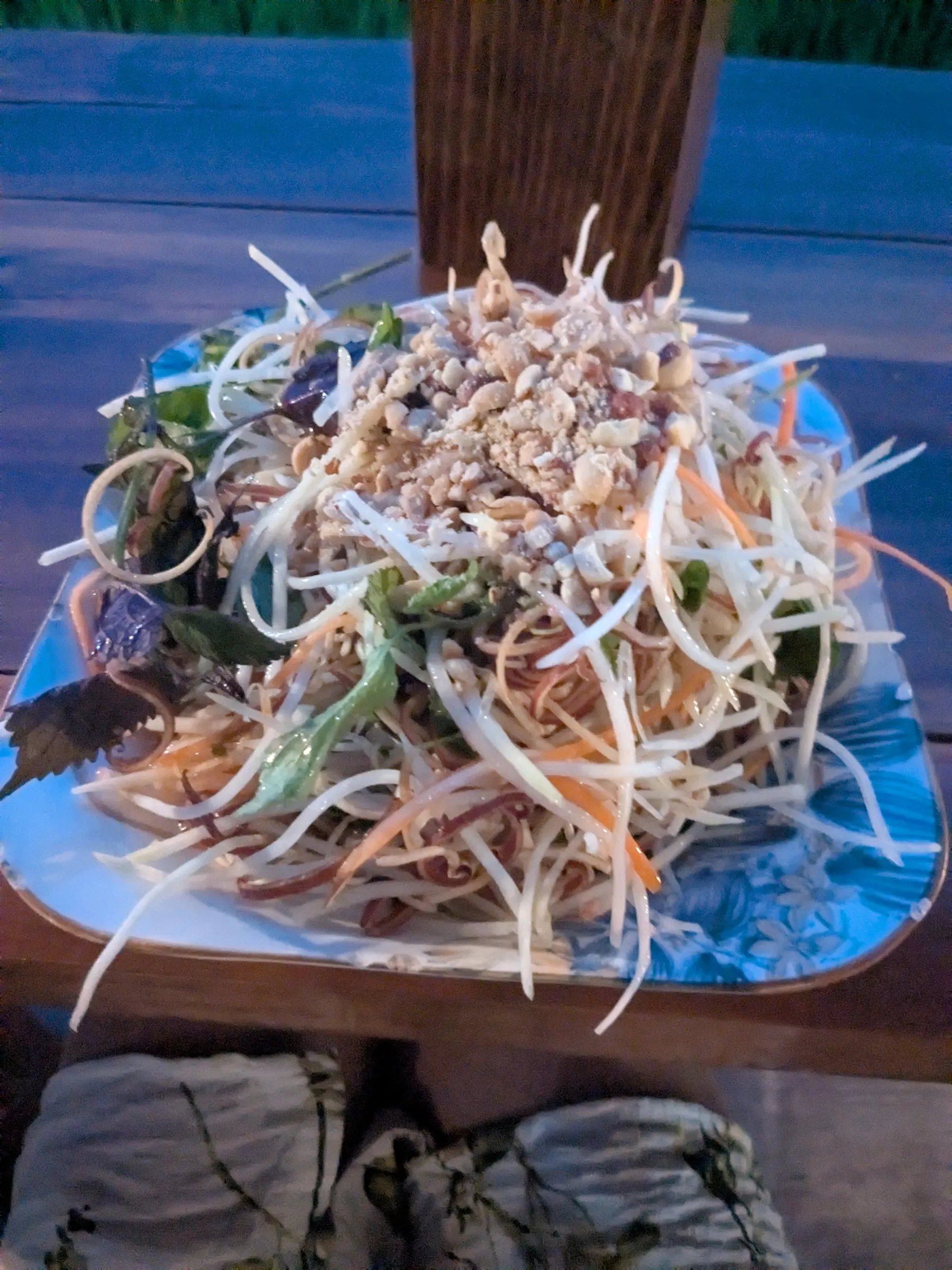
Basically everything you’re served here comes from the valley itself — the rice, the chicken, the vegetables. It’s simple food and it’s fresh because it comes from there.
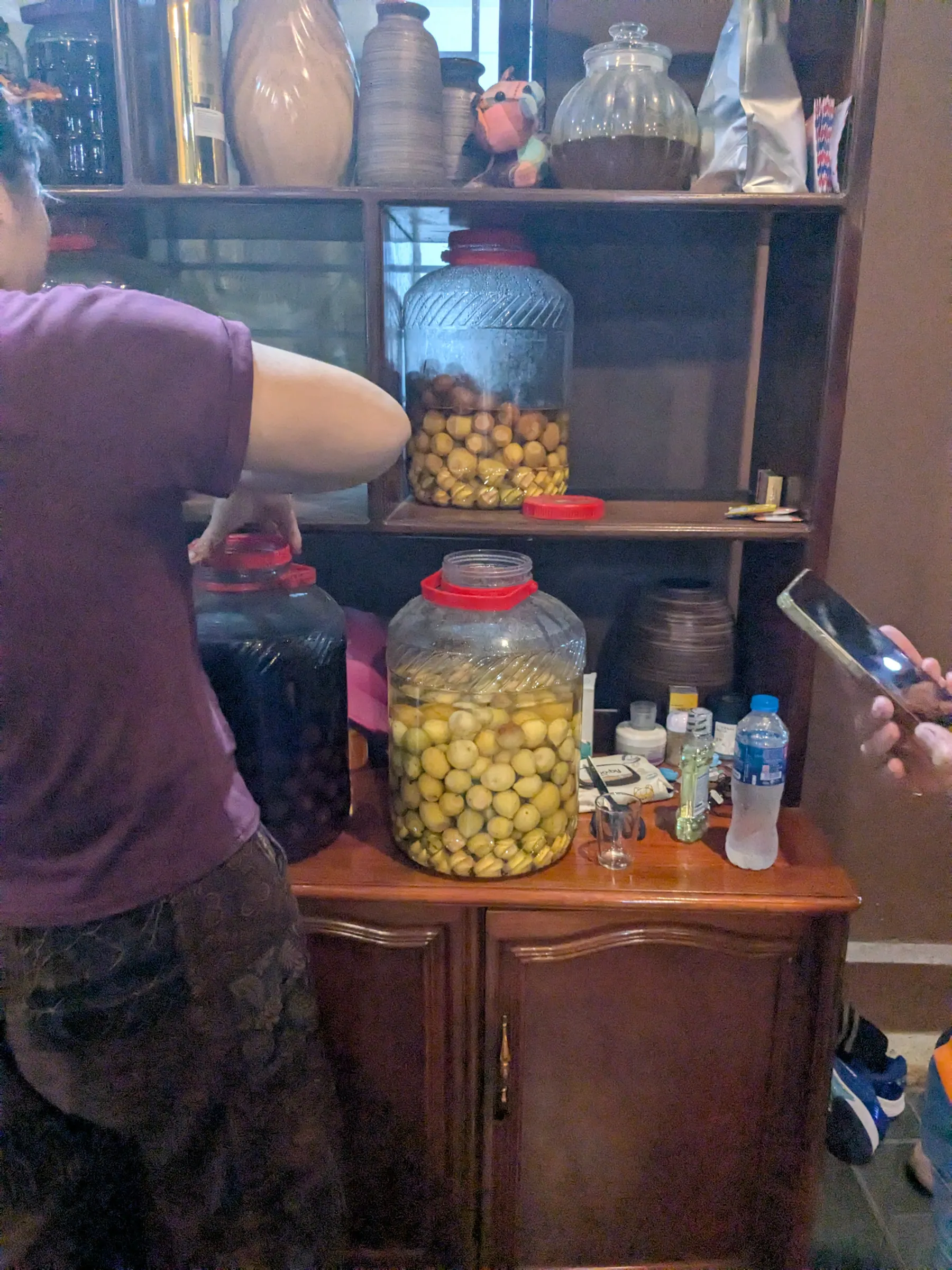
The homestay also let us try the local wine. I found it strong.
If you’re there on a clear day, stay out for the evening. The light comes down across the valley and everything lifts - it’s the best hour of the day here by some distance.
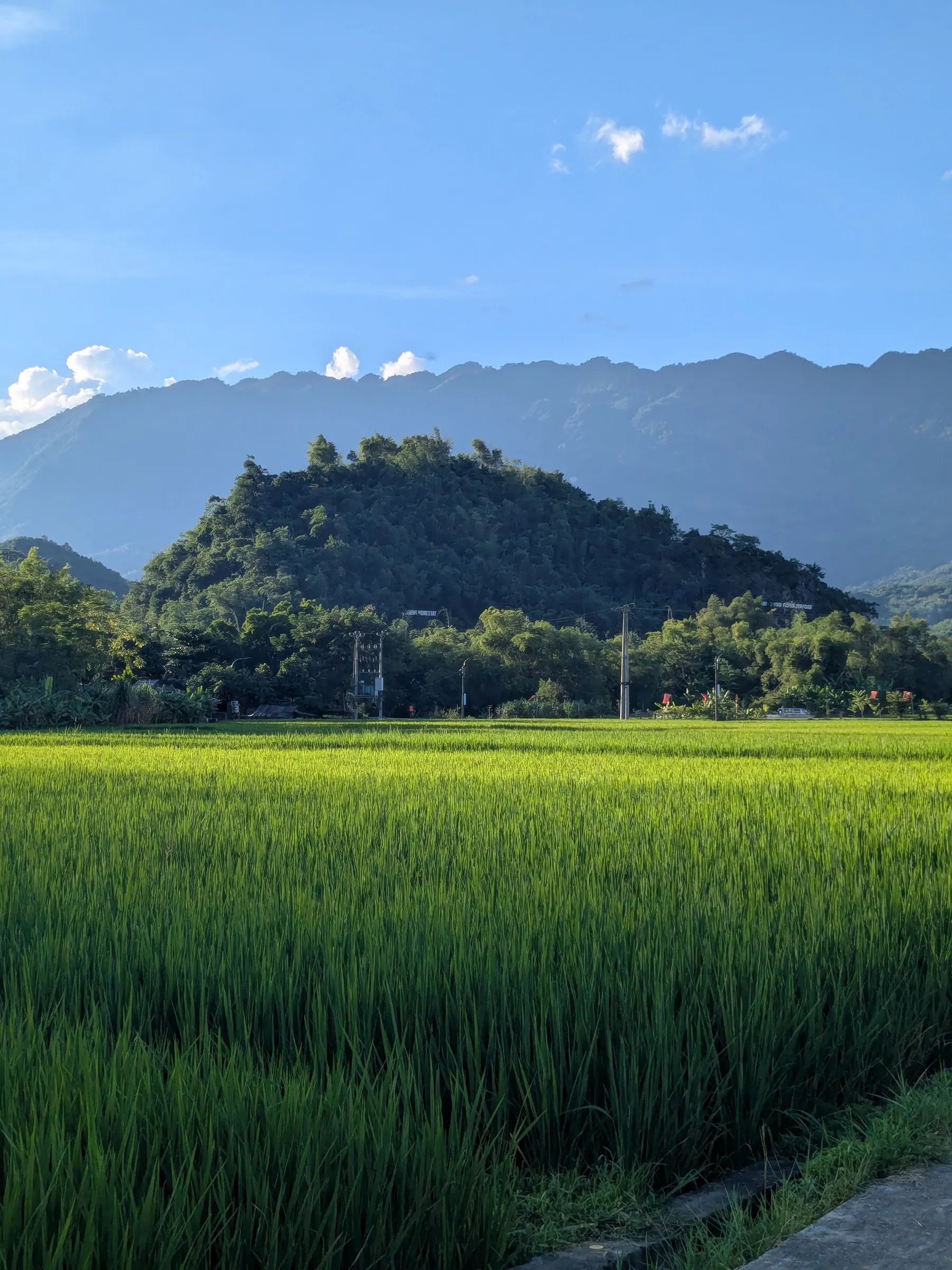
For sunset we went to the Mai Chau Sunset Hotel, which has a roof terrace you can sit on. You can watch it from almost anywhere in the valley, but being up on a roof helps.
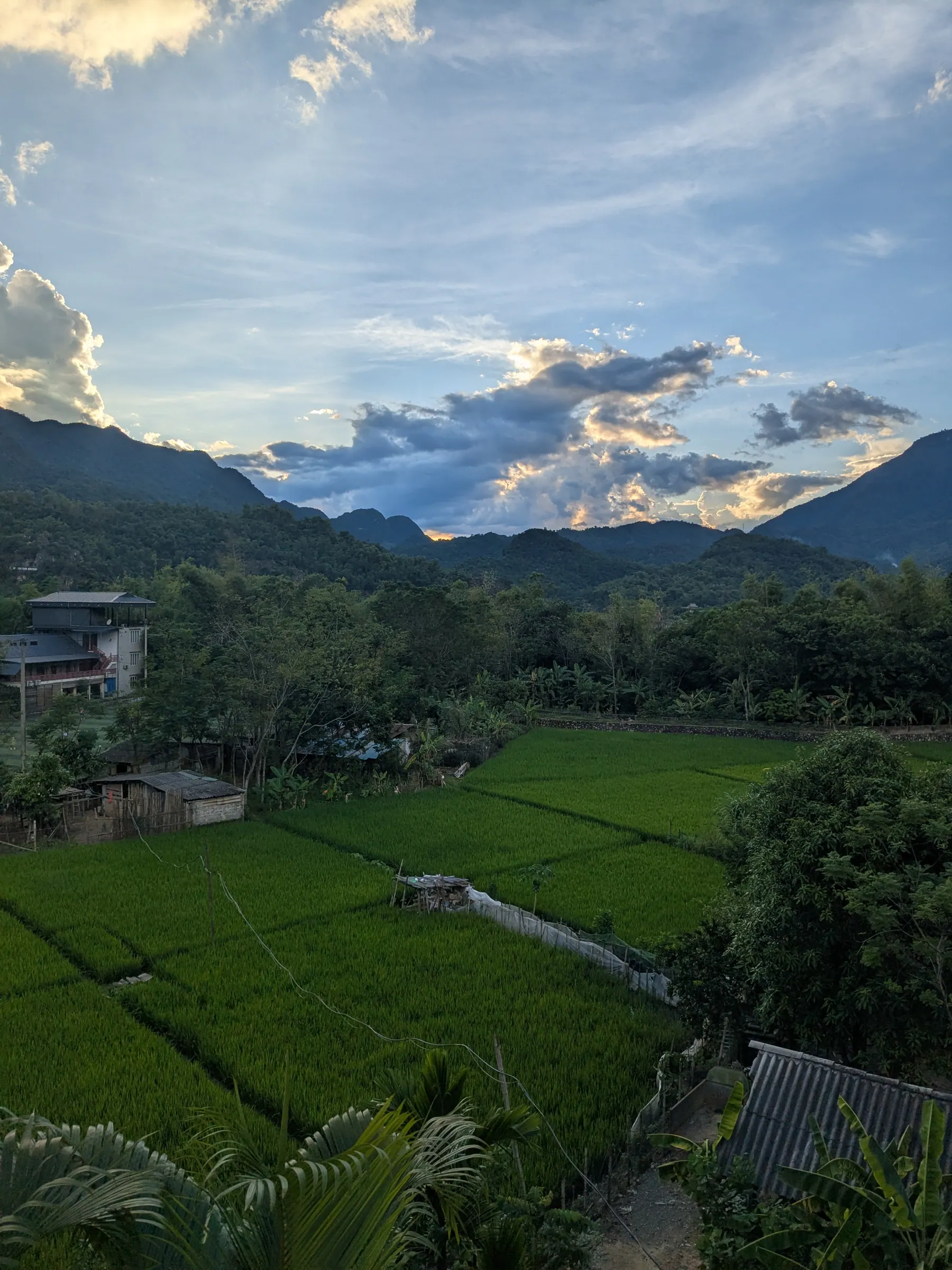
When to go, and what the weather was like
We went in the middle of September, which is when the weather in northern Vietnam starts to turn good, and we were lucky with it for the whole trip. Plenty of sun, and none of the grey cloud you see in so many photographs of Vietnam. In Mai Chau it was close to perfect - still humid and hot, but pleasant with it.
The rice was bright green when we were there rather than gold. We were a couple of weeks early for the colour we had hoped for. Rice timing here depends on the weather and local farming calendar, so check recent local reports before choosing dates specifically for green or golden fields.
How long to stay
Two days is about right. That’s what we gave it and it felt like the correct amount - enough to ride around properly, walk Lac Village without rushing, and still have a day out of the valley.
Pu Luong, which we didn’t get to
Most guides pair Mai Chau with Pu Luong, the nature reserve, and it’s the obvious next stop. We didn’t go: it was hours away and we’d run out of time, and rather than rushing between places we decided to stay put and give Mai Chau two days instead.
I don’t regret that. But if you have longer, it’s there.
Is it worth it?
There were tourists in Mai Chau when we were there, but not many. It’s still not a well-known place.
And here’s the thing I’d say about it. Mai Chau is an example of somewhere that is very quiet and won’t offer you a list of attractions to work through. There isn’t much to do. It was still one of the most memorable parts of the whole trip.
Two days are right. Take the bike, ride around the field, walk through Lac Village, eat looking at the rice, and stay out for the light in the evening. That’s the whole of it, and it’s enough.
For the complete two-week Northern Vietnam route, costs and transport sequence, see our 14-day Northern Vietnam itinerary.
FAQs
Is Mai Chau worth visiting?
Yes. It is quiet, beautiful and memorable for its green rice fields, bike rides, Lac Village and the surrounding nature, without a long list of attractions to work through.
How do you get to Mai Chau from Hanoi?
Shared vans are a common option from Hanoi and can often drop you at your homestay. Departure points, journey times, fares and drop-off arrangements vary, so check them with the operator before booking.
How long should you stay in Mai Chau?
Two days are about right: enough time to ride around the rice fields, walk Lac Village without rushing and take a day trip outside the valley.
When is the best time to see golden rice in Mai Chau?
The colour of the rice fields follows the local farming calendar and weather, so ask your accommodation or check recent local reports before planning a trip around a particular colour.
Read next
More posts for this trip mood
 Asia
Asia Red River Delta & Northern Highlands, Vietnam
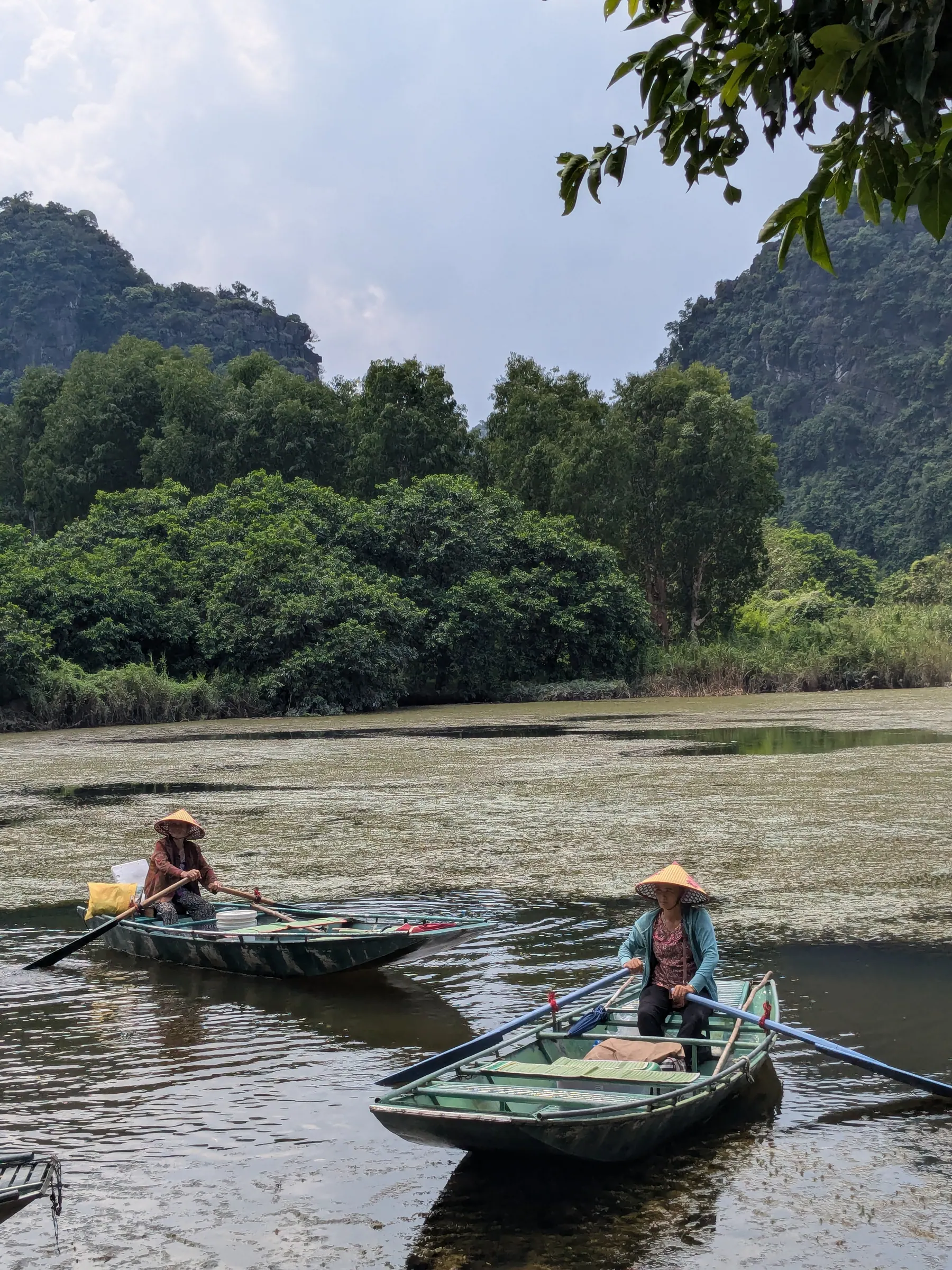
Northern Vietnam in Two Weeks: A Complete Route
A realistic two-week Northern Vietnam itinerary balancing Hanoi, Lan Ha Bay, Ninh Binh, Mai Chau, and the Ha Giang Loop with honest budgets and transit tips.
 Asia
Asia Northern Vietnam, Vietnam
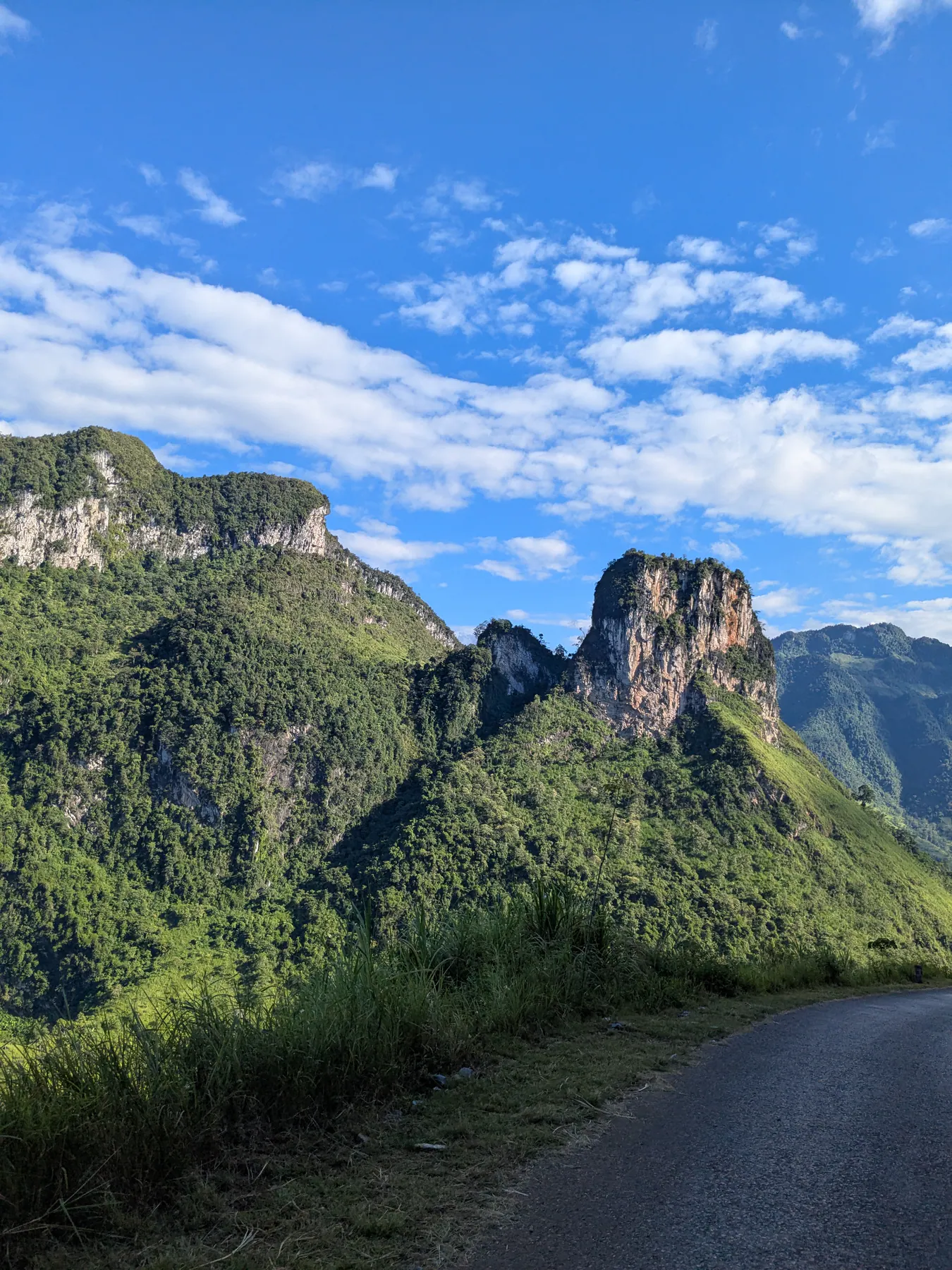
The Ha Giang Loop: Three Days on a Motorbike
Three days on the Ha Giang loop with an easy rider: what it cost, what the route covers, what to bring, and the Sunday market at Dong Van worth waking for.
 Asia
Asia Hai Phong, Vietnam
Cat Ba and Lan Ha Bay: The Quieter Ha Long
Two quiet days on the water: limestone karsts, cave kayaking, a floating village and no crowds.
Why we based ourselves on Cat Ba Island, skipped the mainland cruises, and spent two quiet days cruising, kayaking and exploring Lan Ha Bay instead of Ha Long.