

Hanoi · Hanoi · Vietnam
Things to Do in Hanoi, and What the City Is Actually Like
A four-day Hanoi guide to Hoan Kiem Lake, water puppets, the Old and French Quarters, temples, Train Street, food and a day in Đường Lâm.
Arriving in Hanoi is being thrown into a city at full volume, with motorbikes honking all the time. The streets are extraordinarily lively and you feel it immediately.
Quick facts
- Time needed
- Two days for the city itself, four if you want to take it slowly and add a day trip.
- Where to stay
- The Old Quarter. Everything is walkable from there and it's where the food and the coffee are.
- Don't miss
- Egg coffee, the water puppet theatre, and Hoan Kiem lake after dark.
- Good to know
- Carry small cash, expect to bargain for everything, and dress modestly for the temples and the Ho Chi Minh complex.
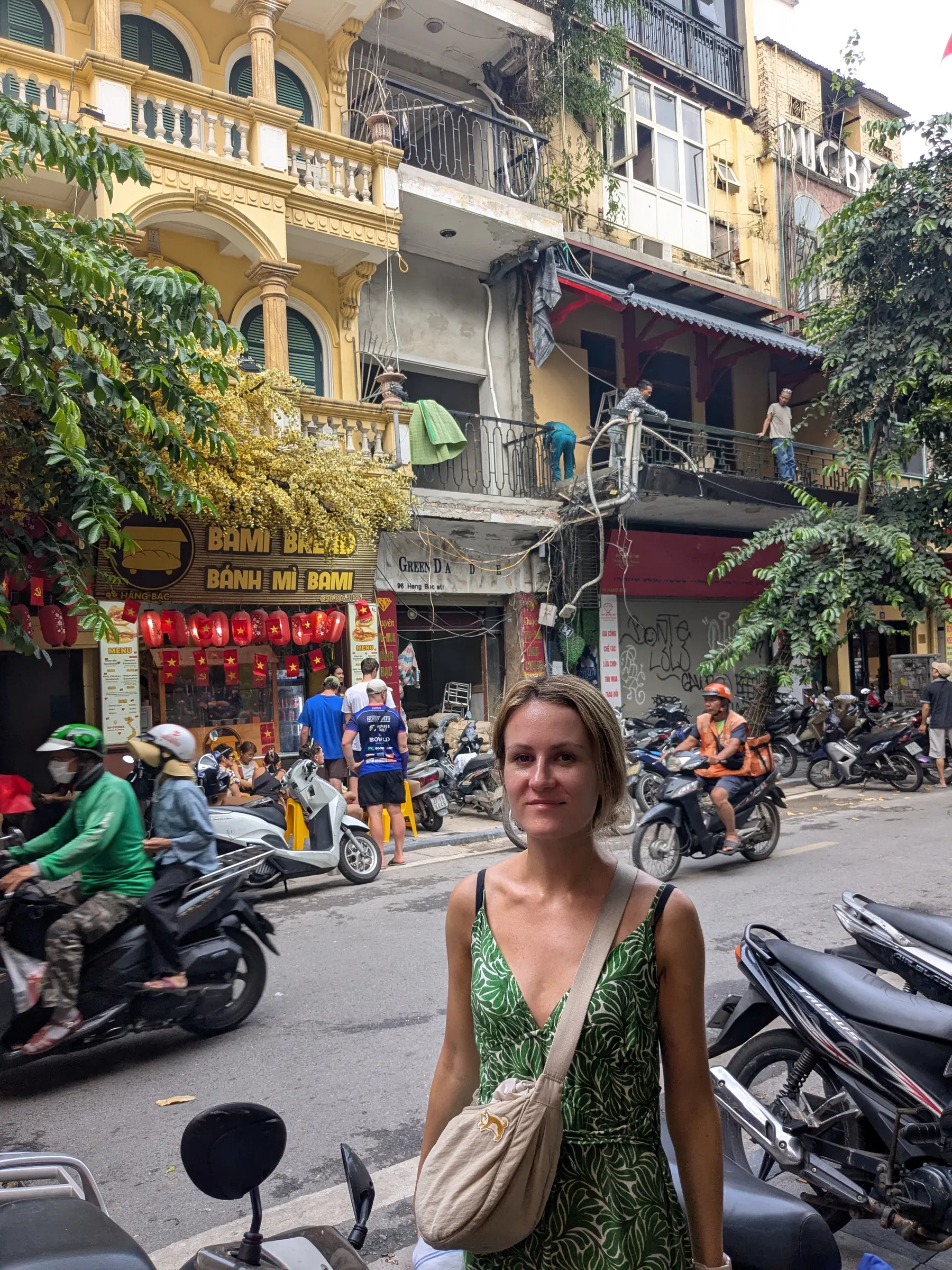
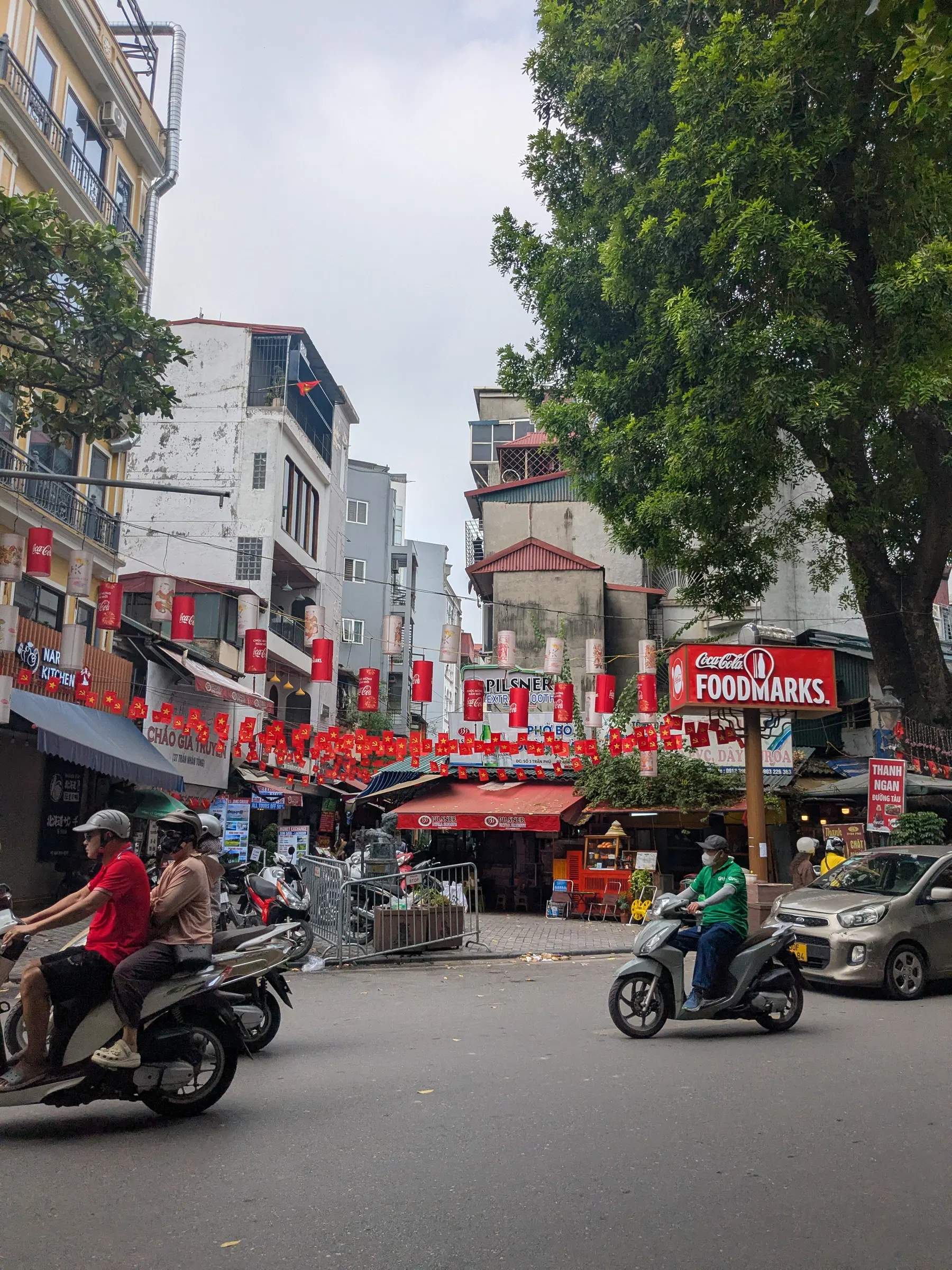
We were there twice, at the start of our two weeks in Vietnam and again at the end, about four days in total. That turned out to be a good way to do it: you see the place once when everything is overwhelming and once when you've adjusted. We arrived around the 10th of September, with red flags still hanging all over the city - the national flag with its yellow star and the red one with the hammer and sickle - because National Day falls on 2 September and 2025 was its eightieth anniversary.
From the airport, we took the public bus, which cost almost nothing, and stayed at the Silk Flower Hotel and Spa in the Old Quarter, around €11 each a night, with breakfast. That’s the sensible part of the city to base yourself in: everything below is either walkable from there or a short bus ride.
What follows is what we actually saw in those four days, which is also, I think, a reasonable list of what’s worth seeing.
Hoan Kiem after dark and water puppets
Hoan Kiem lake
In the central part of Hanoi sits a beautiful lake, and it’s right by the puppet theatre, so the two are easy to combine. The Old Quarter is on one side of it and the French Quarter starts on the other, which makes it a useful point to orient yourself from.
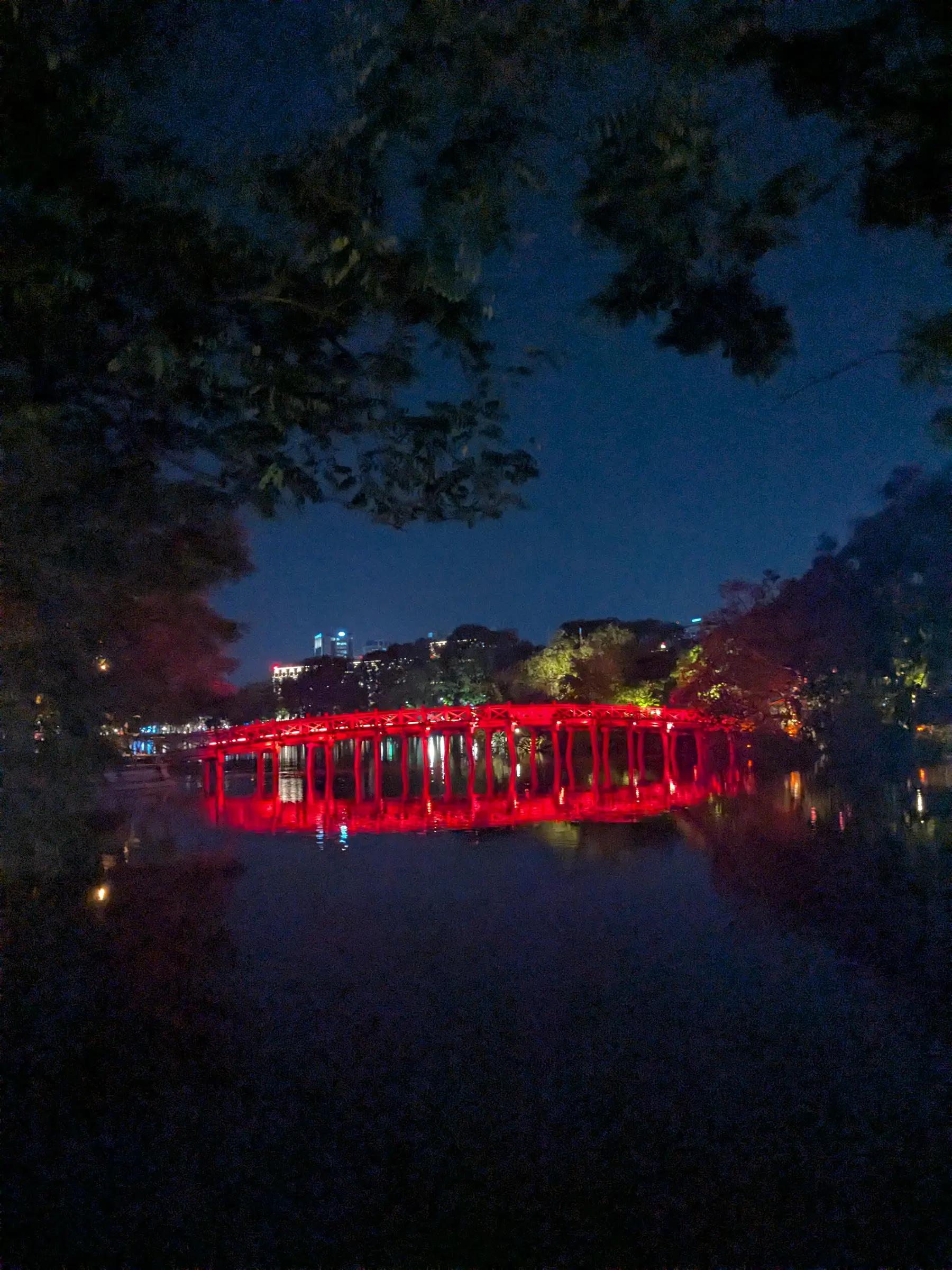
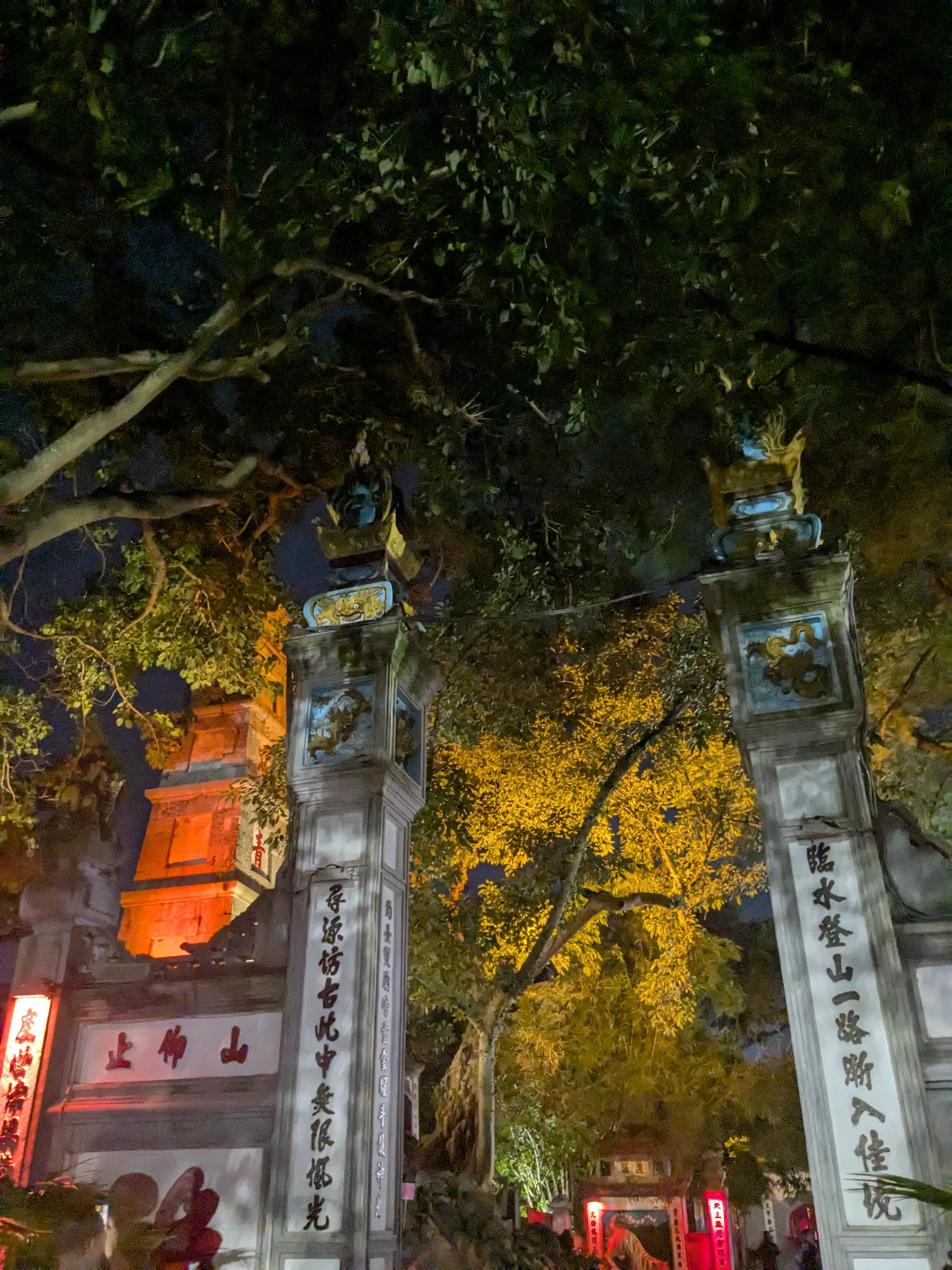
Crossing the red Thê Húc bridge takes you to a small pagoda on an island, which is worth walking over for. Around parts of the lake there are plenty of cafés and bars.
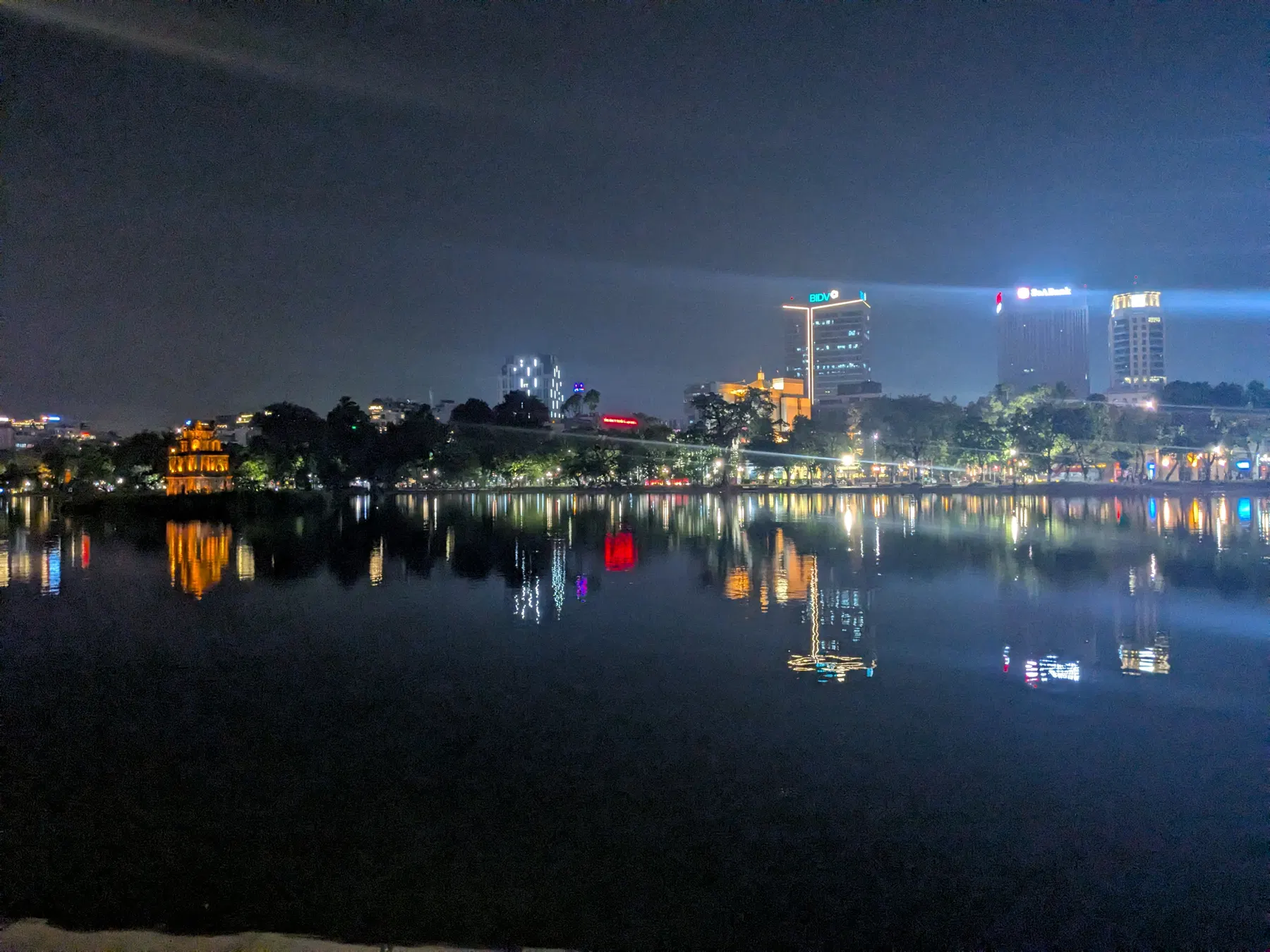
Hoan Kiem lake at night
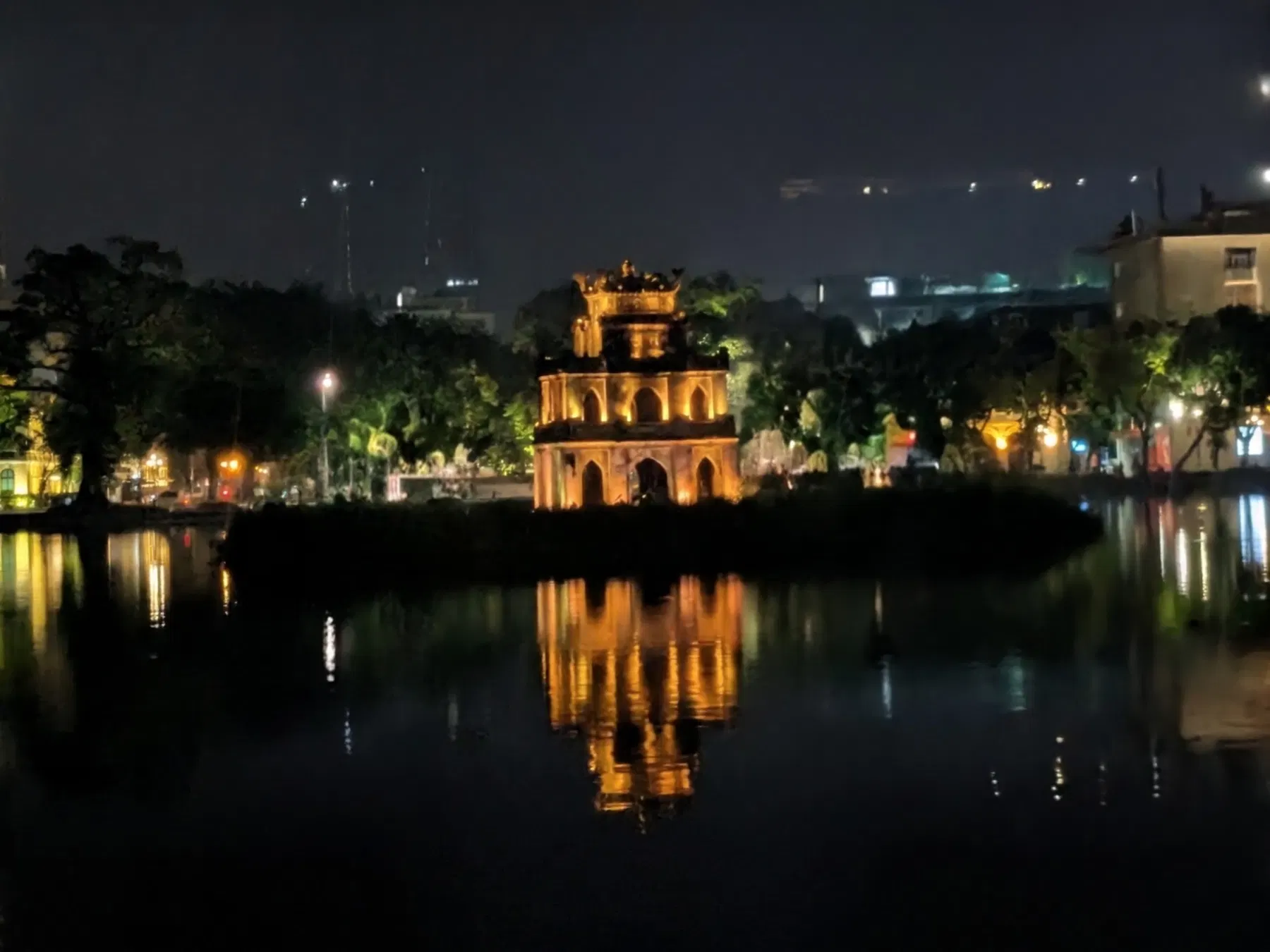
I saw it during the day and at night, and honestly it’s better at night. The bridge is lit red, and out on its own island the Turtle Tower is lit gold, and the whole walk around the water takes on a romantic feel it doesn’t quite have in daylight.
The water puppet theatre
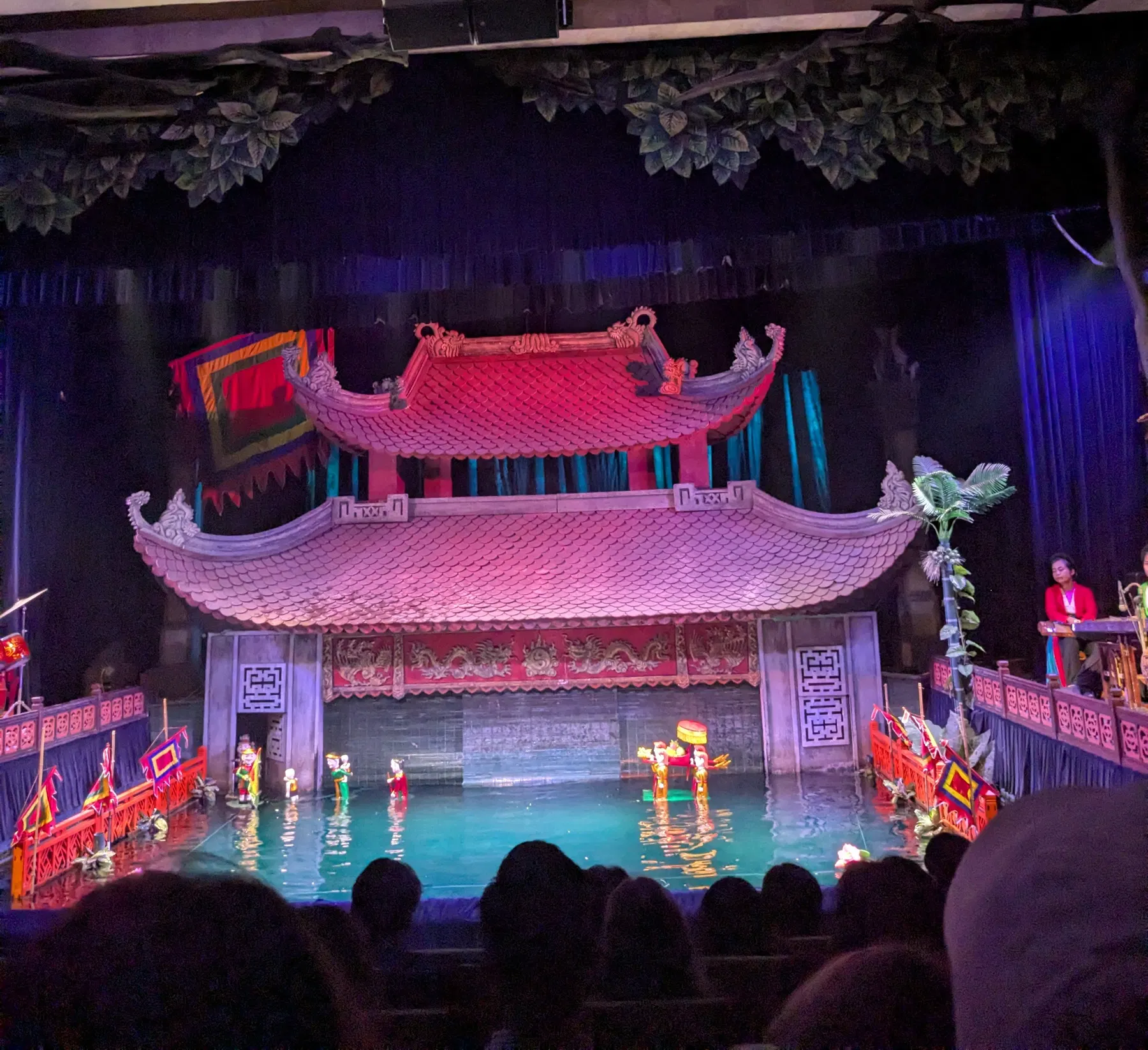
An unusual experience and one I’d call a must. Scenes acted out on water by puppets, which is something I’d never seen before.
We saw it at the Thang Long Water Puppet Theatre, right beside Hoan Kiem Lake.
The show isn’t especially long - around fifty minutes. Tickets start at 100,000 VND, roughly €3.60, rising to about 200,000 for the better seats, which is what we paid. Book in advance - when we bought ours, a lot of the good times had already gone, and weekend shows tend to sell out a couple of days ahead.
One thing worth knowing: buy from the theatre itself rather than a reselling site. People have reported paying nearly double the face value through third parties.
The art form is about a thousand years old and began in the flooded rice paddies of the Red River Delta, where villagers performed standing waist-deep in the water. The puppeteers are still behind a screen, working everything with poles under the surface, and there’s traditional music played live alongside the show.
The Old Quarter, markets and the French Quarter
The Old Quarter
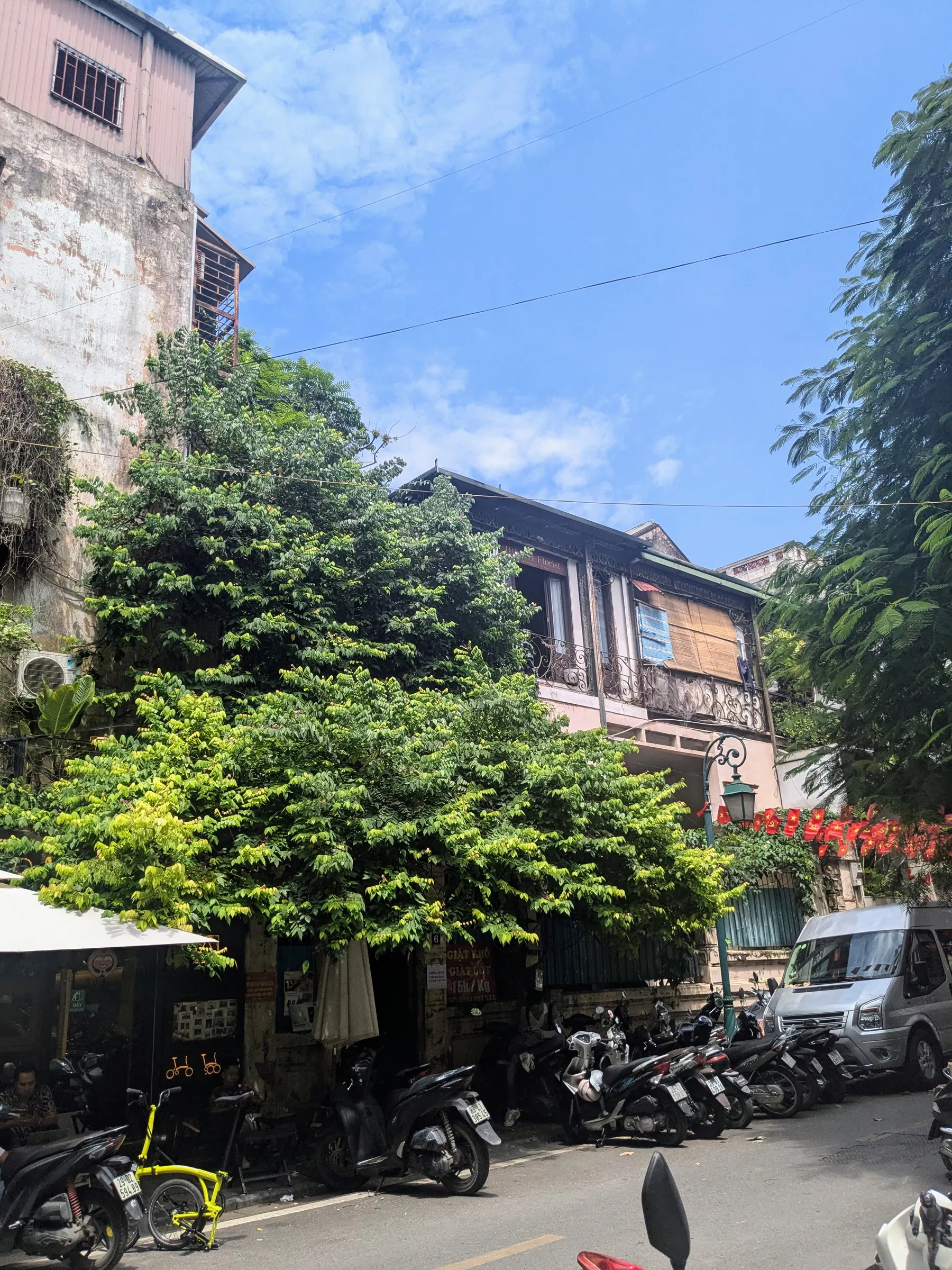
A busy area with streets running in every direction, and the part of Hanoi most people stay in.
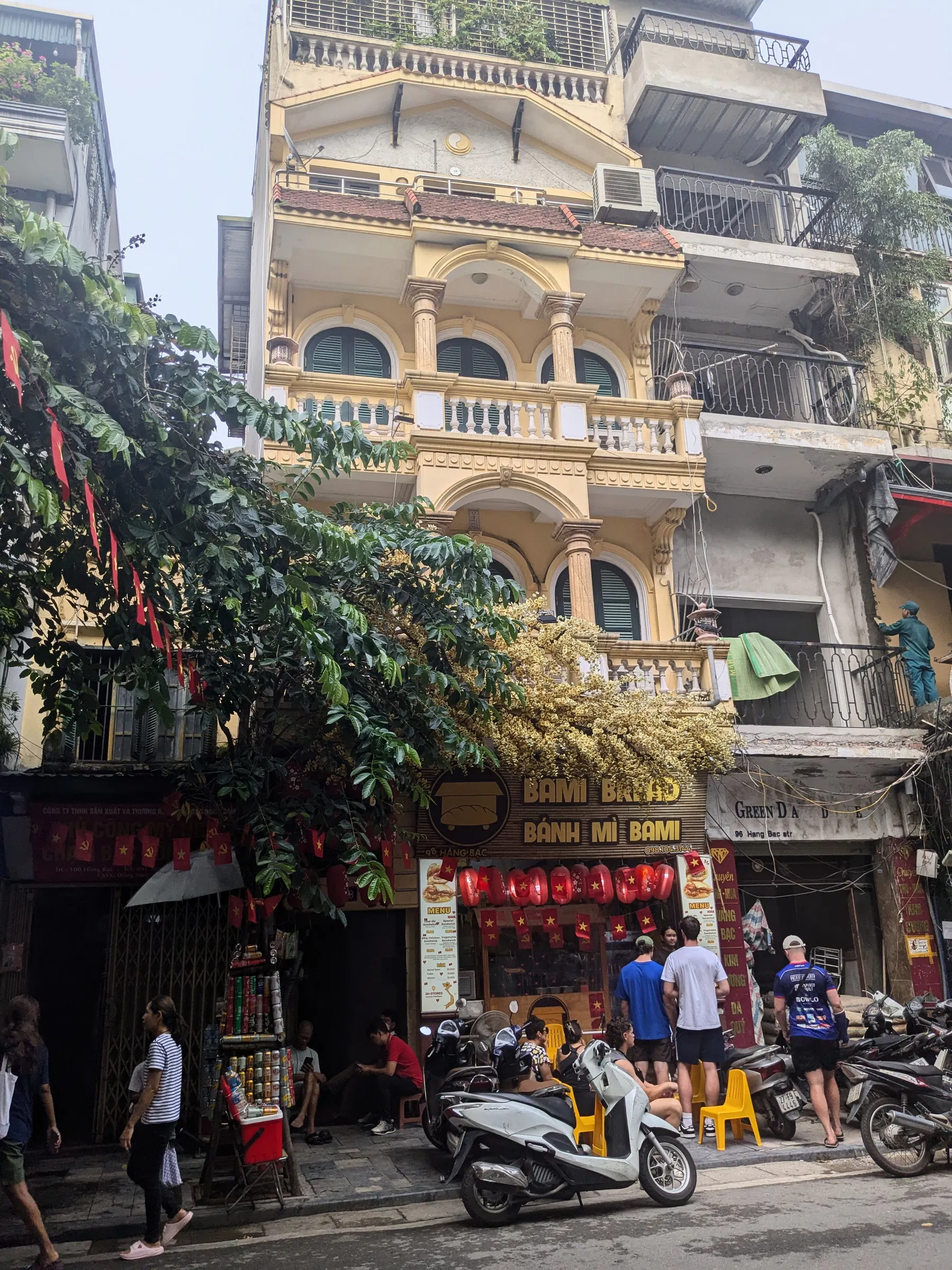
There’s a logic underneath the chaos, and knowing it helps. The Old Quarter is often called the 36 Streets, and each one was historically home to a single trade. Most of the names begin with Hàng, meaning goods, followed by what was sold there. Hàng Bạc is Silver Street and still has the jewellery shops. Hàng Gai is the silk one. Hàng Mã sells paper offerings and festival decorations and is the most colourful street in the quarter. Hàng Thiếc was tin, Hàng Đường sugar, Lãn Ông herbal medicine. Some have kept their trade and some haven’t, but the names are all still there.
There are a lot of shops advertising silk products. I bought some things for myself, but be careful: in many places what’s sold as silk isn’t silk. The traditional street for it is Hàng Gai, off the north-west corner of the lake, though that doesn’t guarantee anything.
What I found hardest about the Old Quarter is that you have to bargain for everything, and it was often difficult to understand what things were really worth.
The other thing that takes adjusting to is crossing the road. The motorbikes are everywhere and they never stop. Somehow you manage it, but in the first days it felt tricky.
At the weekend there’s a night market running through the quarter, which is worth timing a visit around.
The temples that appear out of nowhere
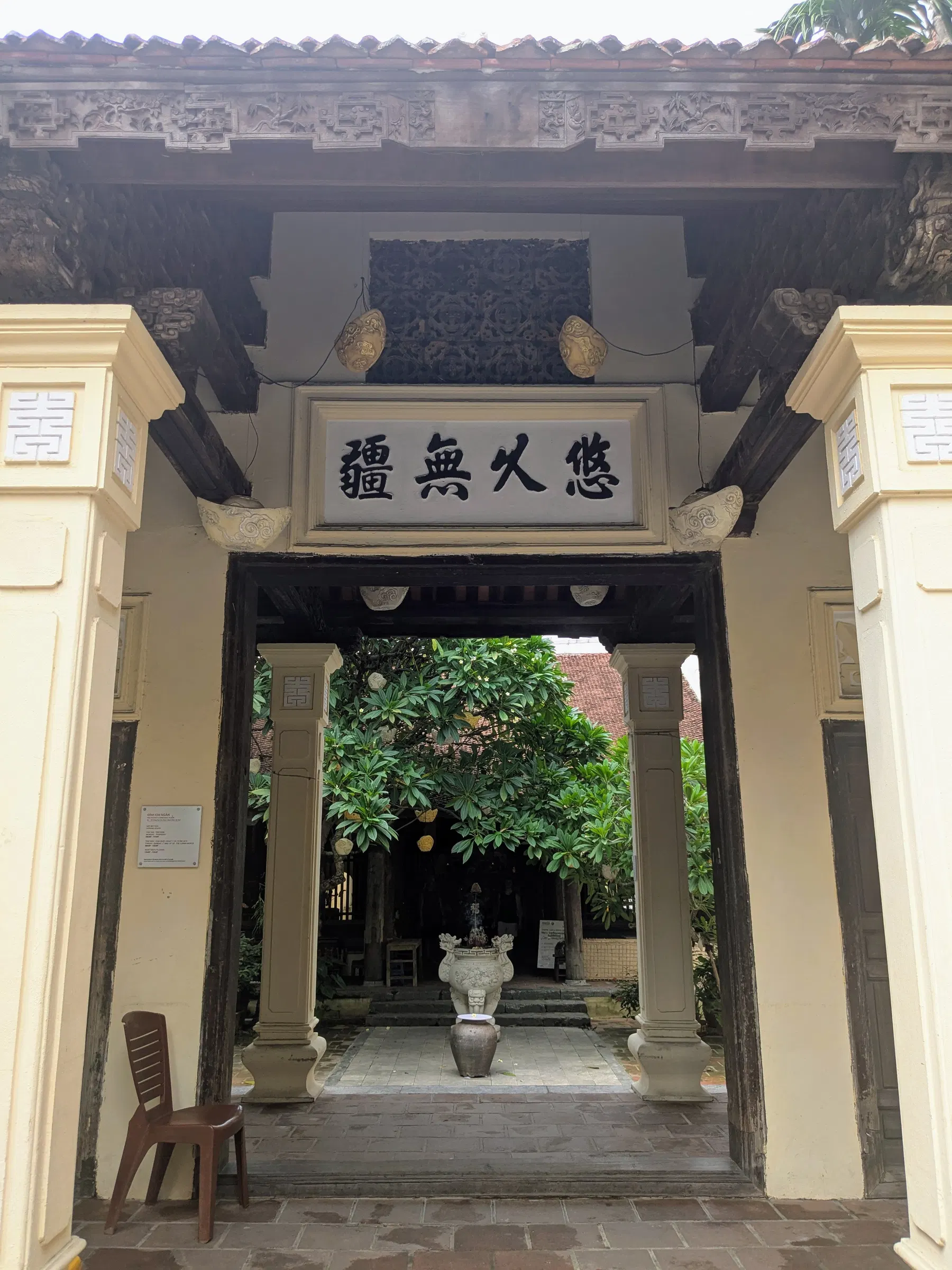
One of the more interesting things about Vietnam, and Hanoi in particular, is coming across a small doorway in the middle of an ordinary shopping street and finding a temple behind it.
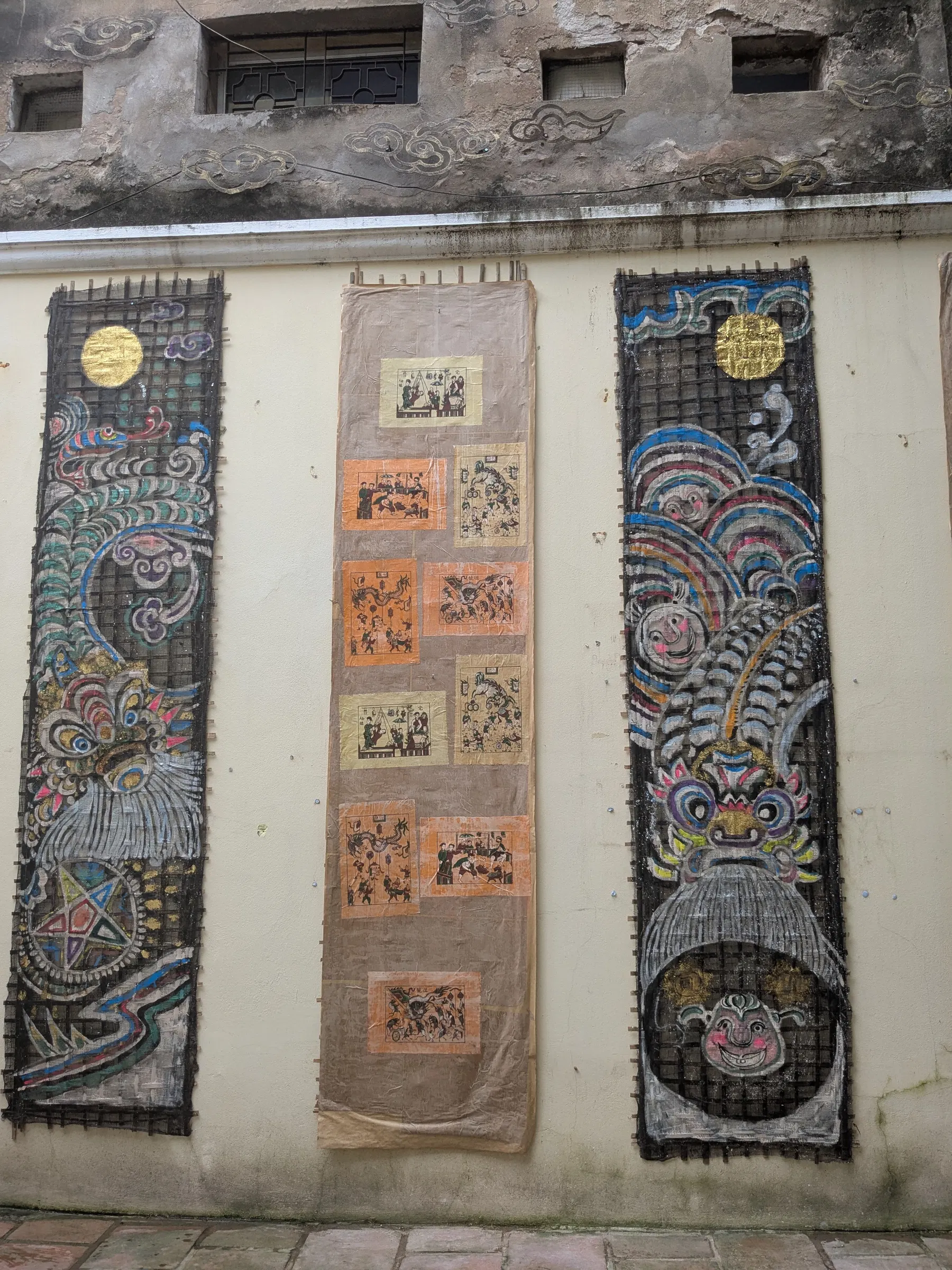
Đình Kim Ngân on Hàng Bạc is a good example - a 15th-century communal house built for the silversmiths’ guild (artisans who work with silver), sitting between shops on the silver street itself. Each guild had one of these, with its own patron deity; this one is dedicated to the god of precious metals. Worth going in. Most people walk straight past.
Đồng Xuân market
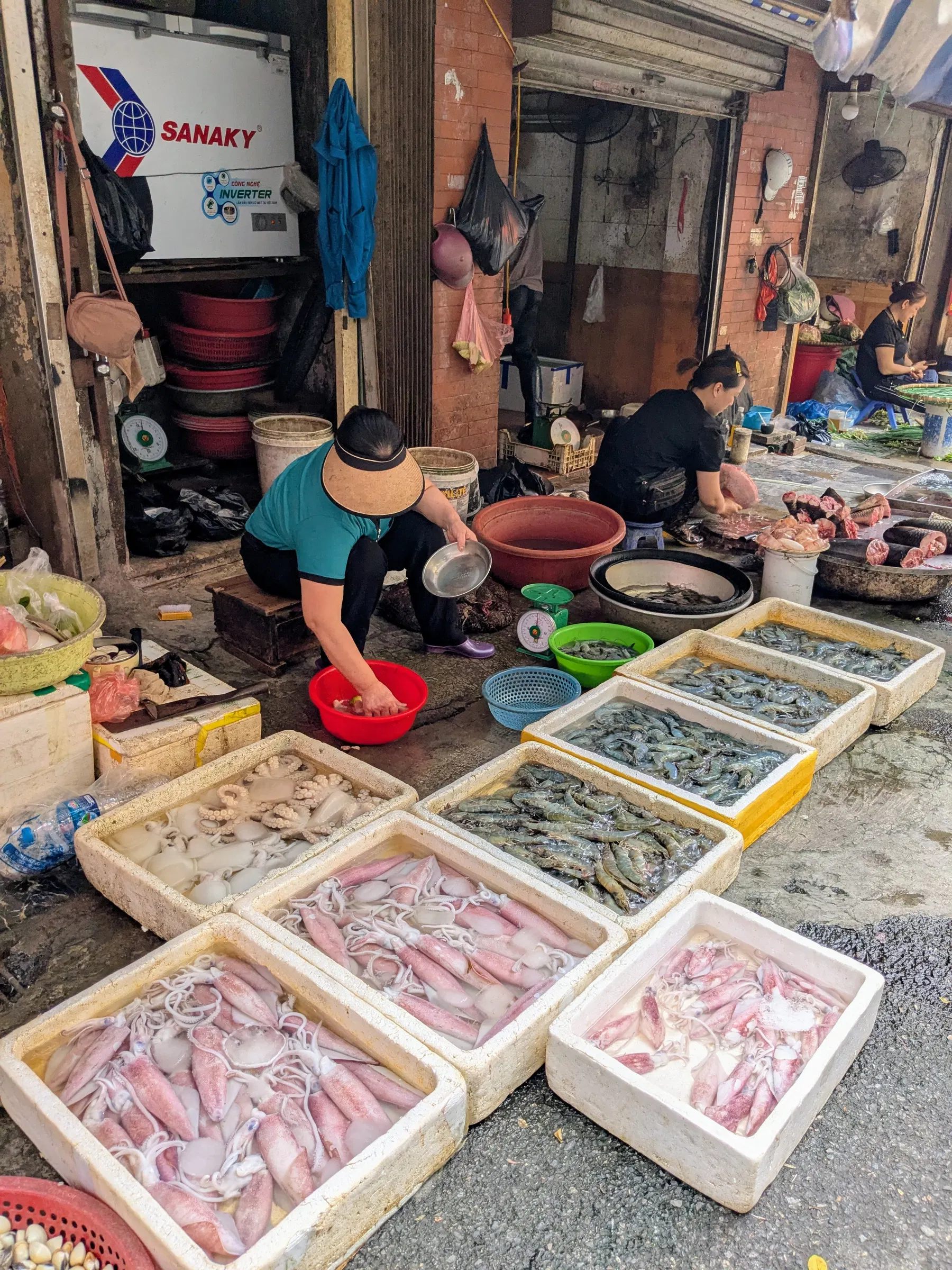
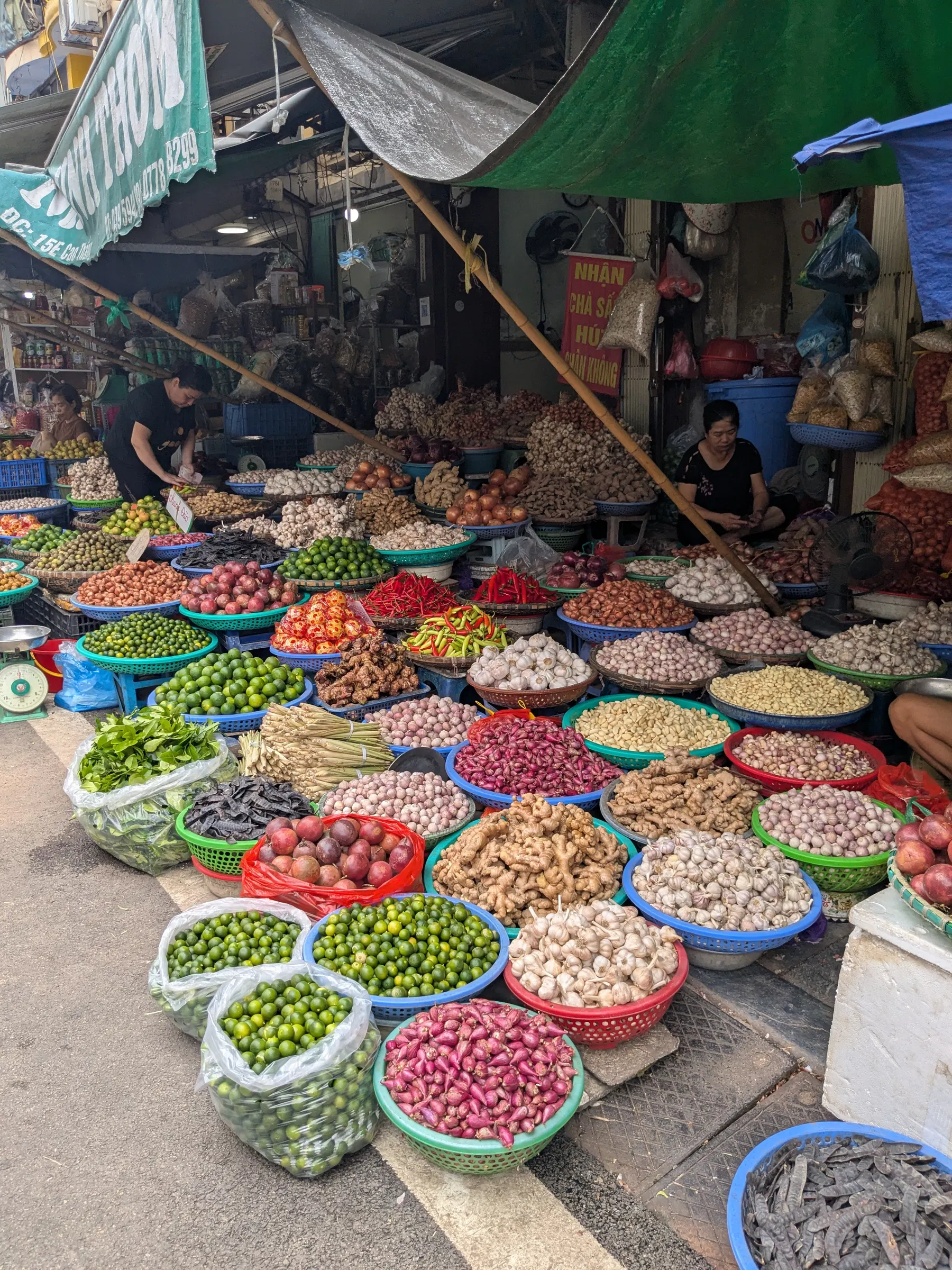
A vibrant market and the biggest in the city, but confusing - it’s hard to work out what’s where.
We went looking for specialities like worms and never found them. What we saw was mostly ordinary goods, but chaos around was real.
Worth knowing how it’s arranged: part of it is inside a covered building over several floors - the original French market hall from 1889 - and part of it spills out into the surrounding side streets.
Ba Đình
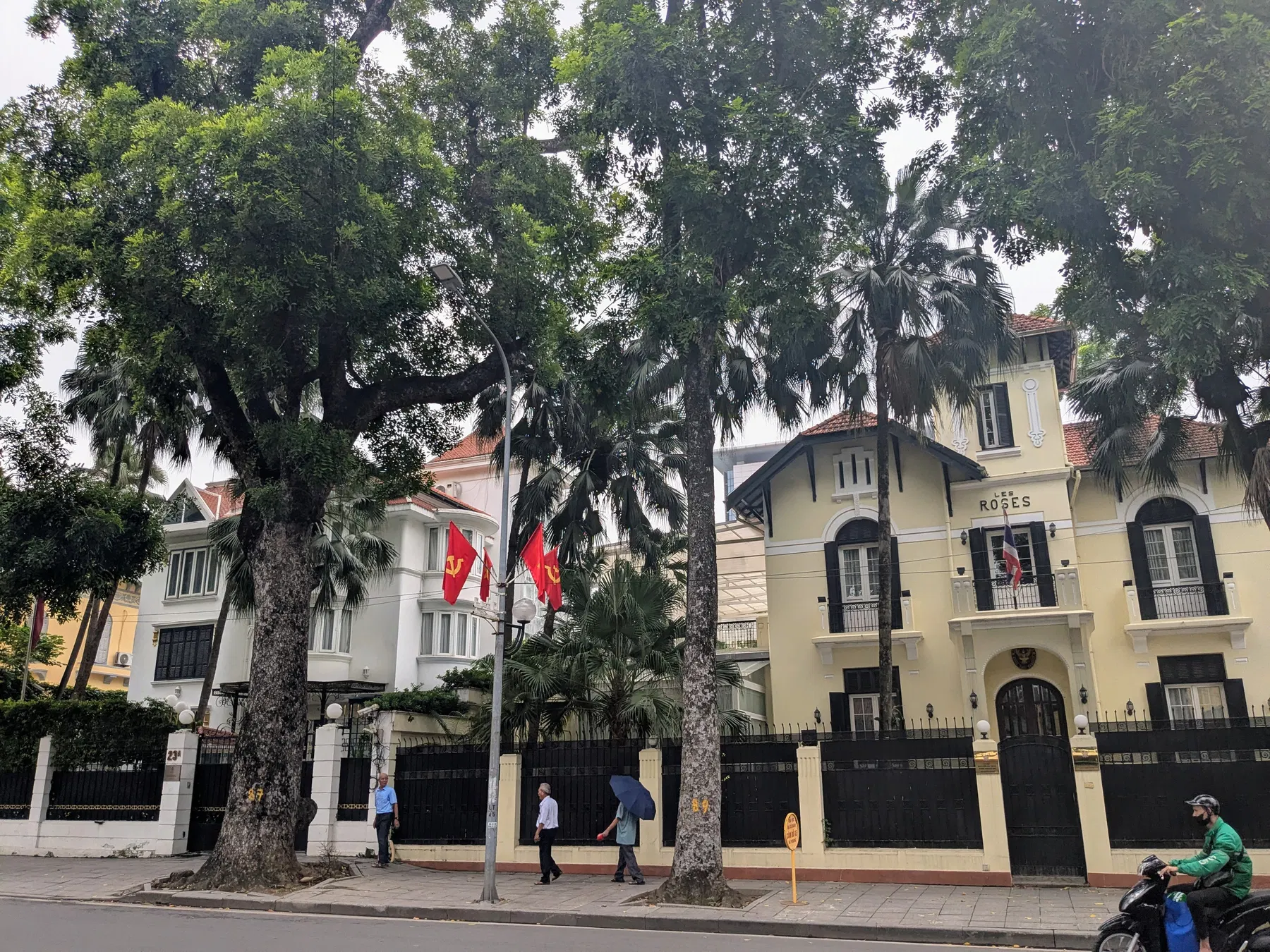
We walked through Ba Đình on the way to the Ho Chi Minh complex, and it’s a different Hanoi again - wider streets, bigger and more polished buildings, and the feel of a wealthy district. This is where the government sits, and where most of the city’s monuments are clustered.
The French Quarter
Here you get grander Paris-style buildings and luxury hotels and stores, though some of the side streets have a simpler, more chic feel to them. It’s a useful contrast with the Old Quarter, and it shows you Hanoi isn’t one thing.
The difference is immediate. The Old Quarter is narrow, tangled and loud; this side of the lake has wide boulevards, trees along them, and space between the buildings. You can cross from one to the other in a few minutes and feel like you’ve changed city.
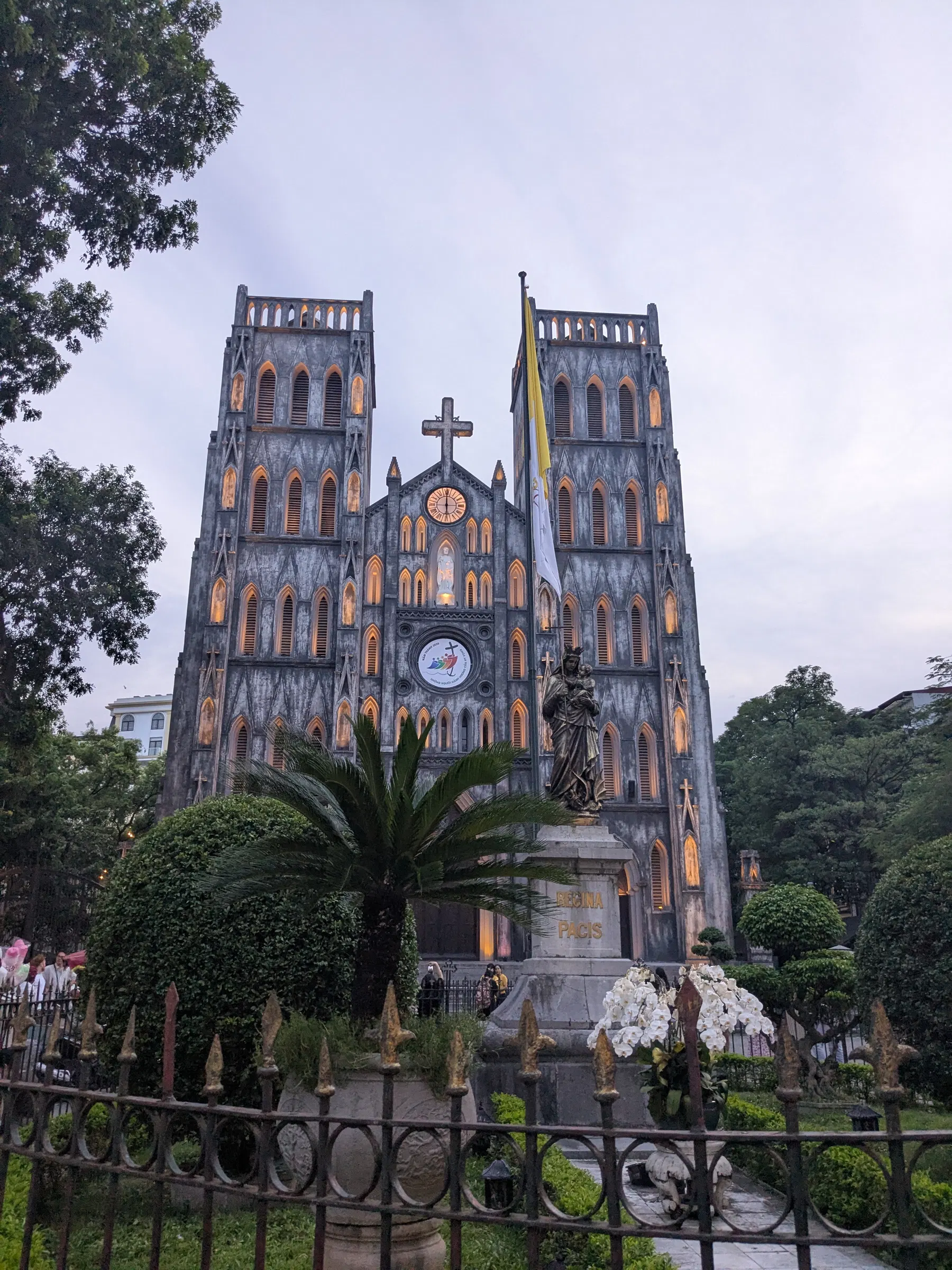
If you’re wondering why a Vietnamese city has a quarter that looks like this: Vietnam was under French rule for roughly seventy years, and in 1902 Hanoi was made the capital of French Indochina, which covered Vietnam, Laos and Cambodia. So the French built this part of the city as an administrative capital - wide boulevards, an opera house, villas, grand hotels. That period is also why there’s a neo-Gothic cathedral a few streets away, and why Vietnam grew coffee in the first place.
We only saw it from outside - it was closed at the time. It looks unusual in a place like Hanoi, and honestly it looks like a paper version of Notre-Dame, but still beautiful.
The streets around it are worth a wander too - there are cafés facing the square and it’s a good place to sit for a while.
Temples, Ho Chi Minh and the city’s quieter side
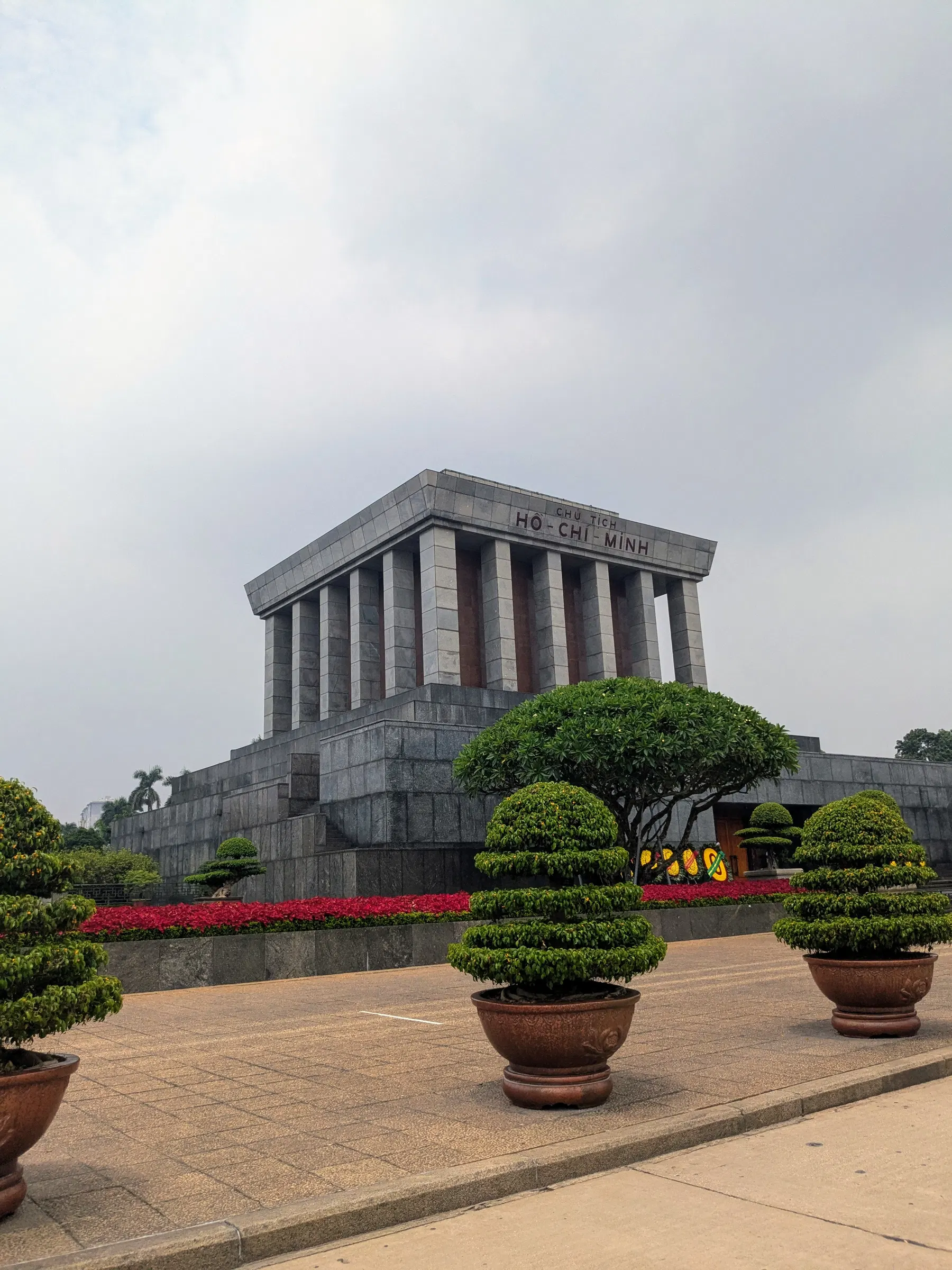
The Ho Chi Minh complex
This was interesting in a way I hadn’t expected. You can visit the whole complex, and it’s culturally fascinating - you see the scale of the reverence Vietnamese people have for him, and the museum is built in his honour. There were a lot of school groups inside having it all explained to them, which suggests the place matters to Vietnamese people from a young age.
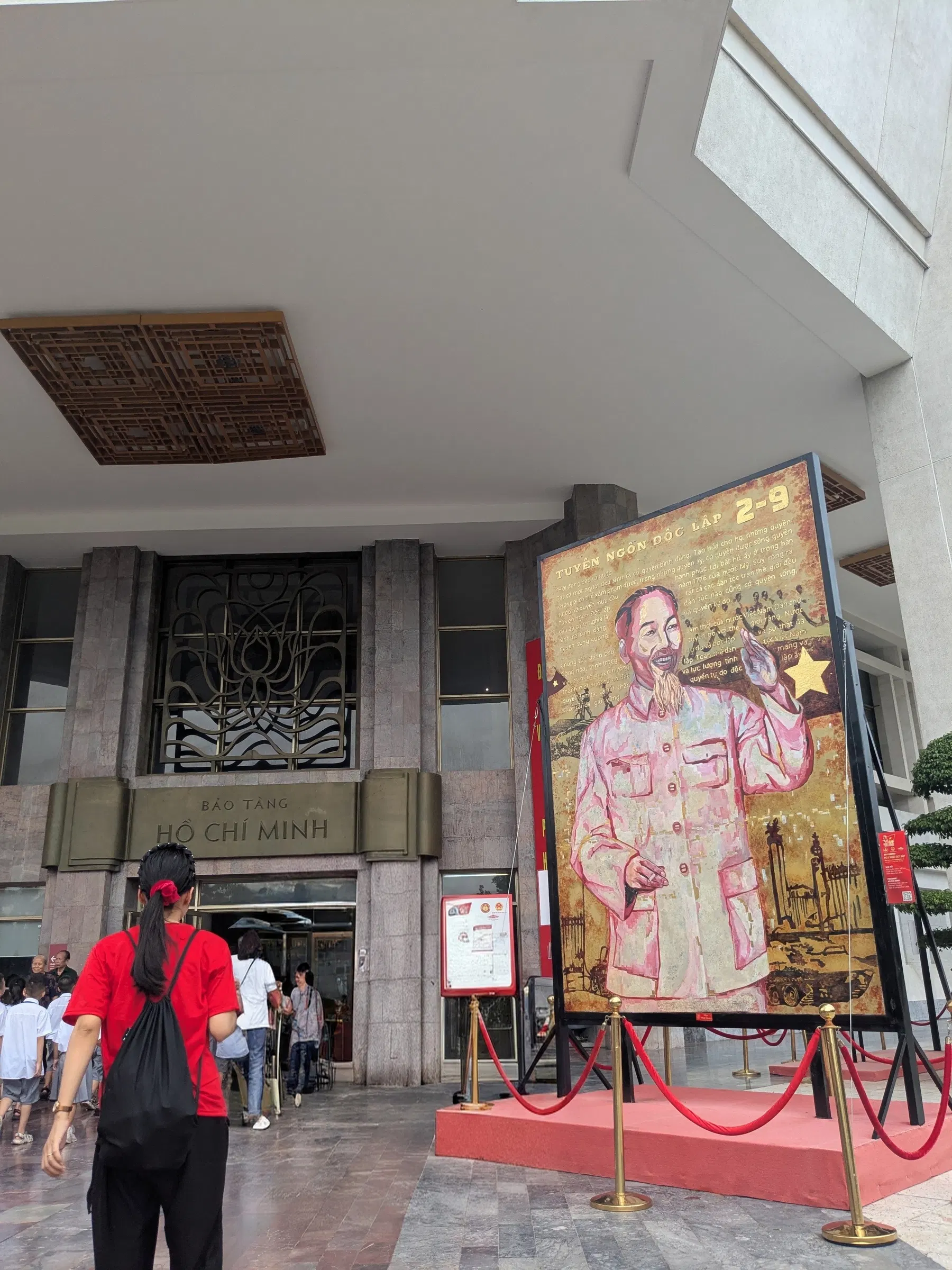
Cover your legs and shoulders. That applies here and in a lot of places across Vietnam. There are usually people selling scarves at the entrance to places like this, so if you’d rather not spend the money, turn up prepared.
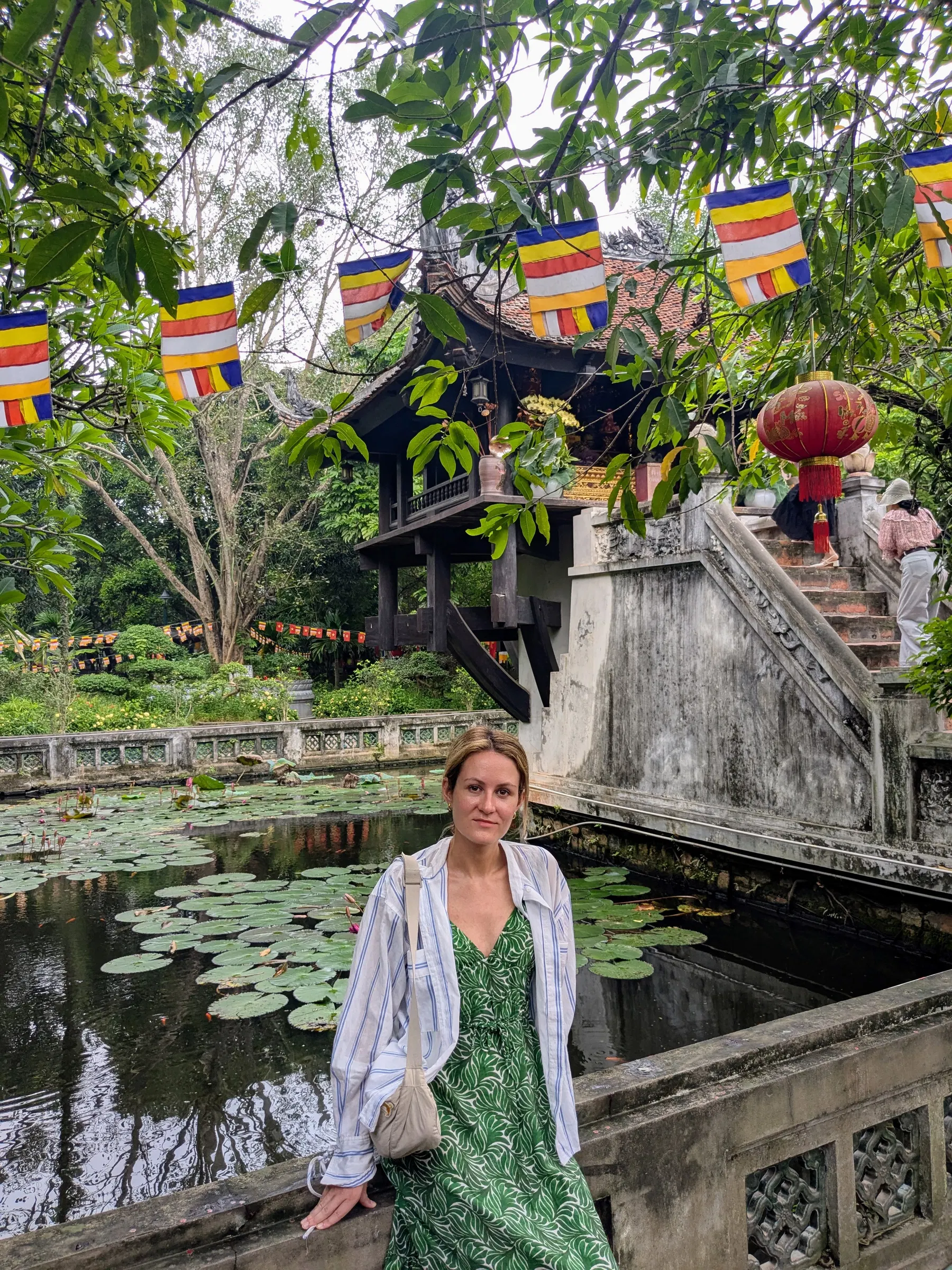
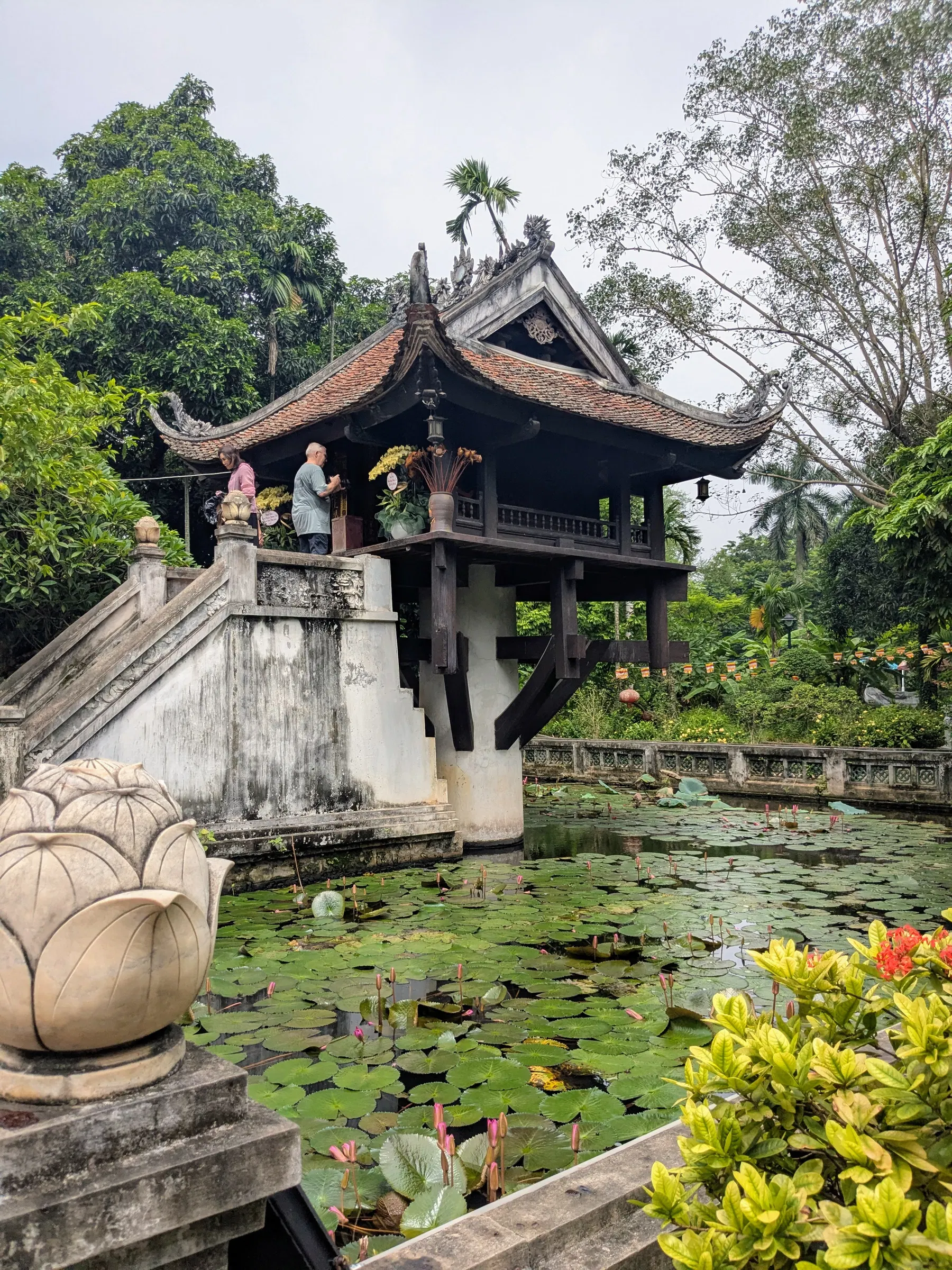
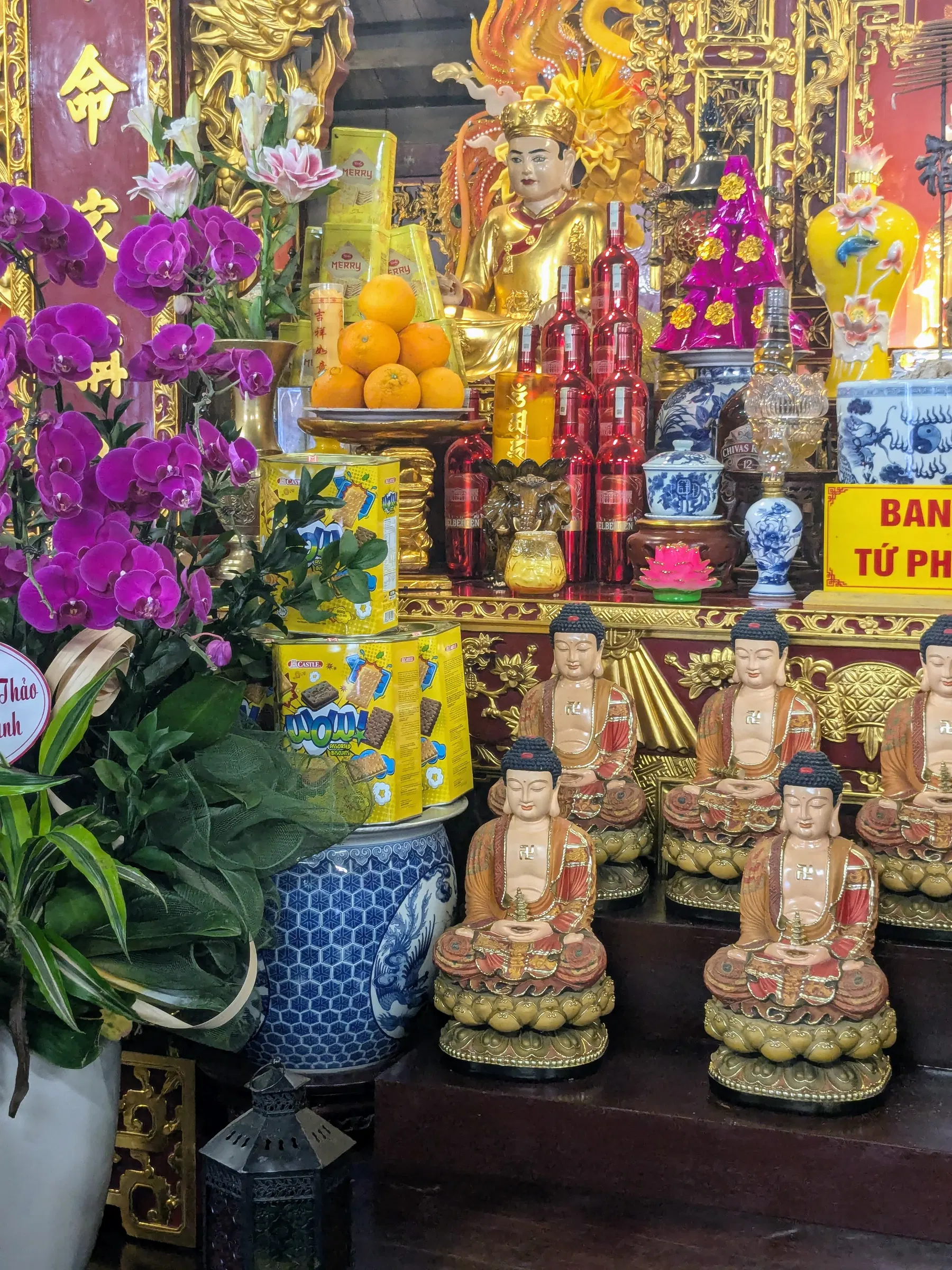
Walking around the area is worth doing in itself. There are large concrete buildings that recall communism very directly. And there’s a small garden with a lotus pond and a pagoda beside it - the One Pillar Pagoda, a small wooden temple standing on a single stone column, built in 1049 and shaped to resemble a lotus flower rising out of the water. This was also where I discovered that Vietnamese Buddhist temples can have cookies and sweets inside. It surprised me at first, but I got used to it.
Trấn Quốc Pagoda
We walked here from the Ho Chi Minh complex, since it was on the way. When we arrived it was closed and wasn’t reopening for a few hours. Temples here often shut in the middle of the day, so check the opening times before you set off rather than turning up and being surprised.
We could see it well enough from outside anyway. It’s the oldest Buddhist temple in Hanoi, founded in the 6th century, and it stands on a small island in West Lake connected by a causeway, which is why it photographs so well from the shore.
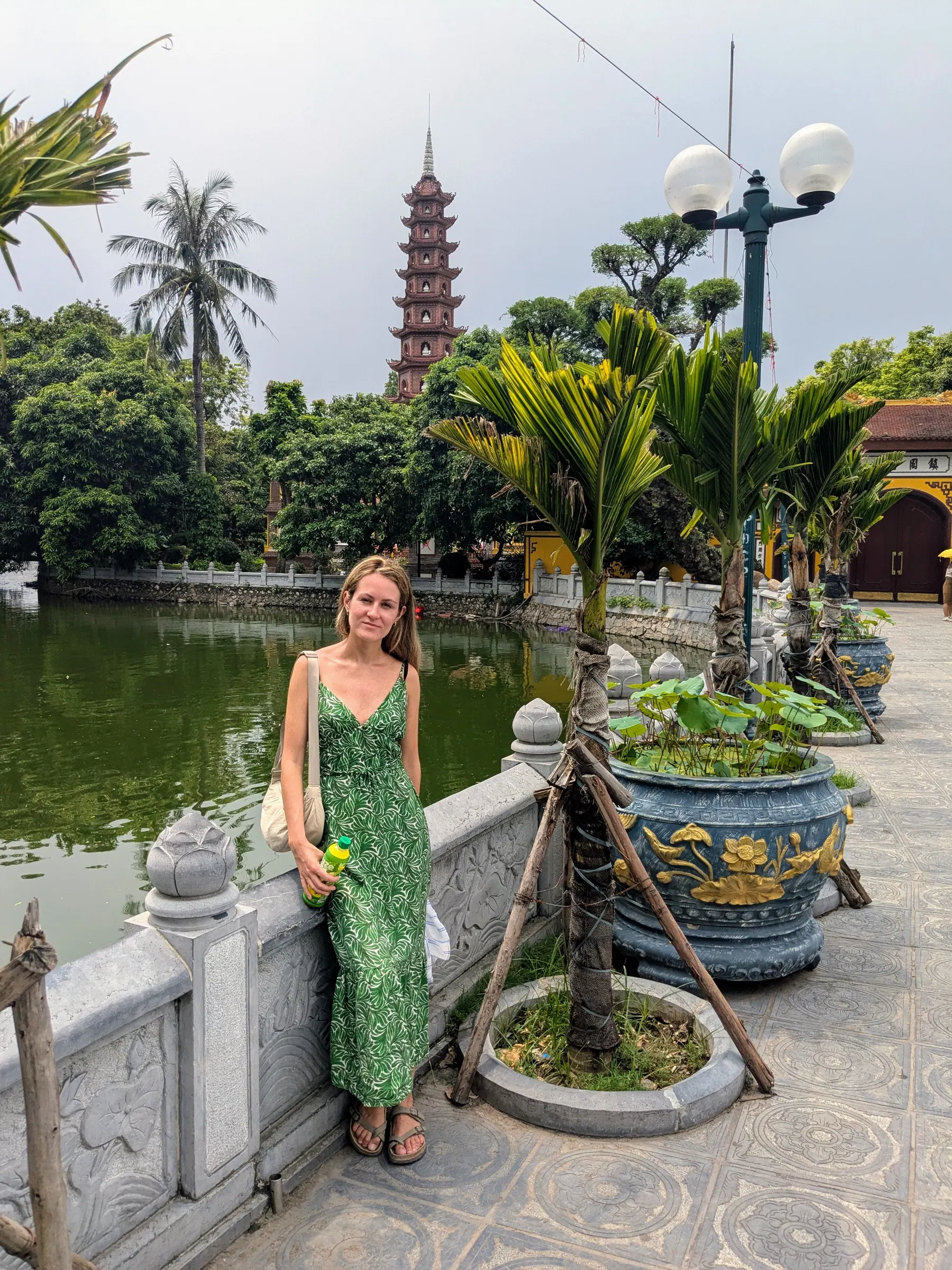
West Lake itself is worth knowing about. It’s much bigger than Hoan Kiem - the biggest in the city - with a road running the whole way round it that people walk and cycle, and the Tay Ho district on the far side is quieter and full of cafés. We saw it from the pagoda rather than going round it, but if you have a spare afternoon that’s where I’d spend it.
The Temple of Literature
A beautiful historic complex, and I spent about forty minutes there walking round the courtyards and going into the buildings. There’s a collection of small figure sculptures outside that caught my eye.
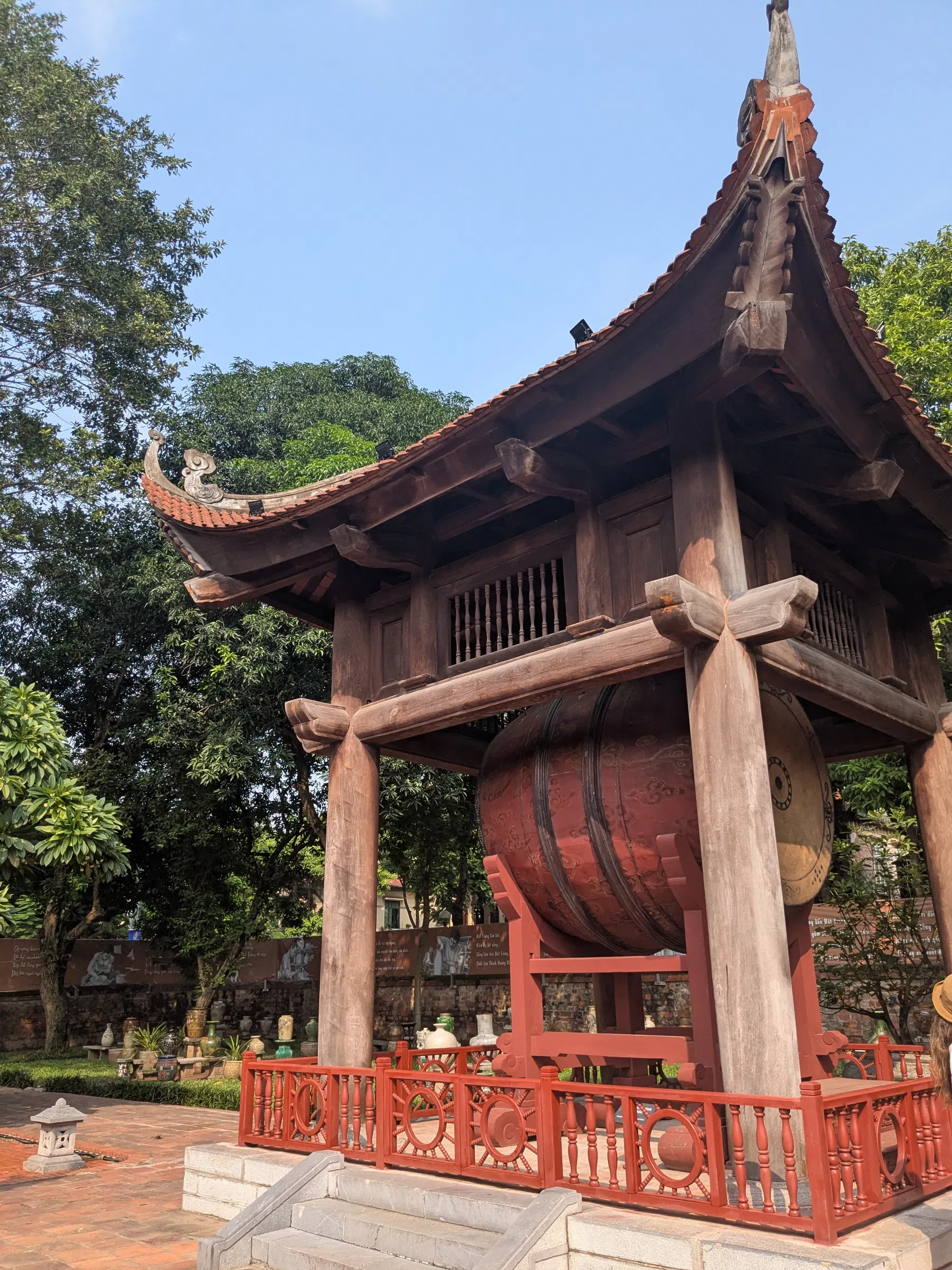
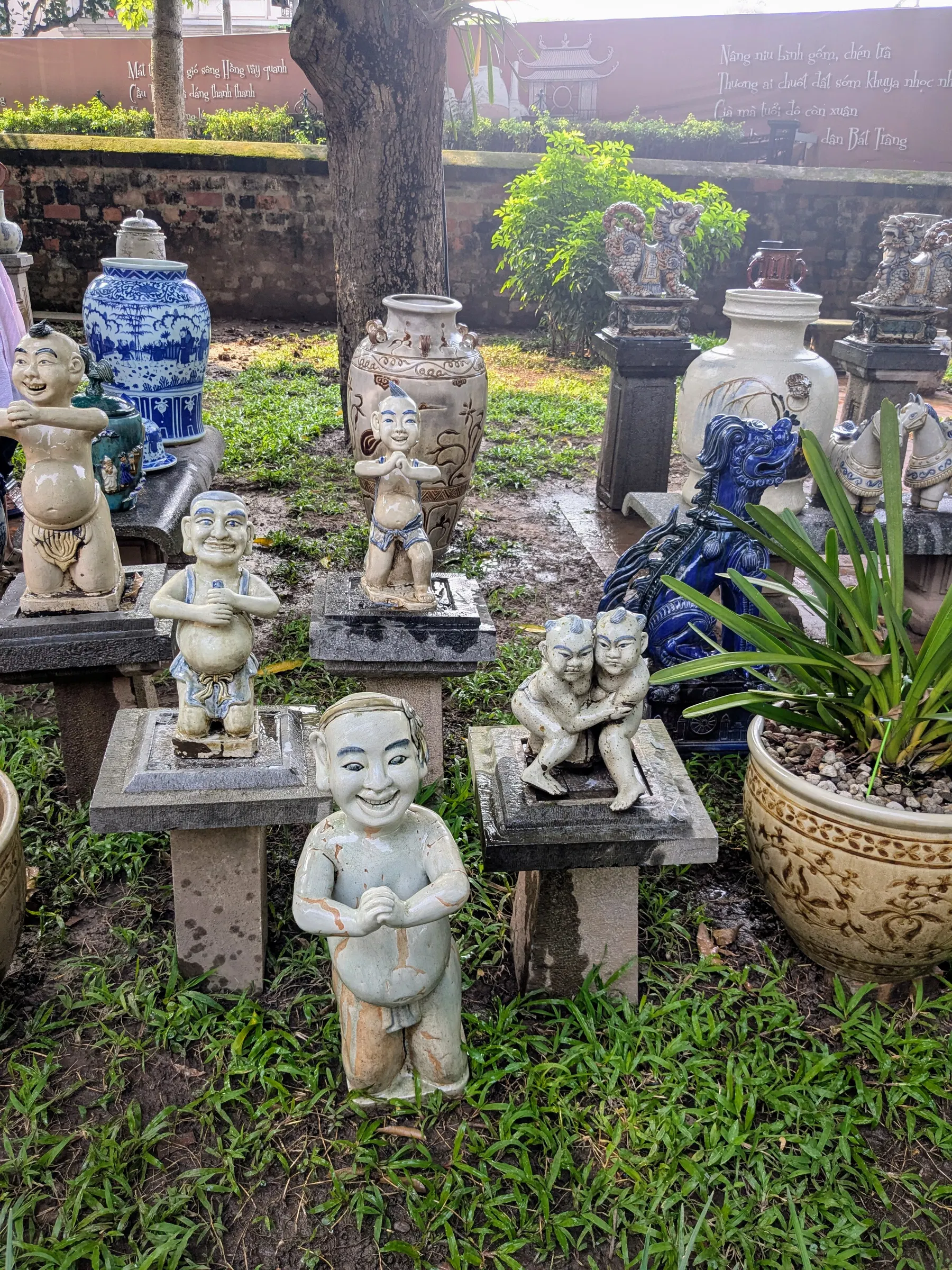
In the Temple complex
It was founded in 1070 and became Vietnam’s first university a few years later, training the country’s scholars for the next seven hundred years. The thing it’s known for is the stone tortoises: 82 of them, each carrying a tablet carved with the names of the students who passed the hardest exams. Students still come here before their own.
You’ll also recognise the pavilion in the third courtyard, because it’s on the 100,000 dong note and it’s the symbol of the city.
The Vietnamese Women’s Museum
Very much recommended. It covers how the role of women in Vietnam has changed over the years, with collections of clothing and textiles, video material, and explanations of daily life.
It’s arranged in three parts: women in the family, women in history - which covers their role in the wars - and women’s fashion across Vietnam’s different ethnic groups. That last section is where the textiles are, and it connects to something you’ll have seen if you’ve been north: the clothing is how the communities up there identify themselves.
We went on our last day, with a few spare hours to fill, and it turned out to be a very interesting way to spend them.
Train Street: the section to choose
A very touristic attraction, and there’s no denying that.
There are two sections, and it’s worth knowing which you’re going to. The northern one, around Phùng Hưng and Trần Phú near the Old Quarter, is the famous stretch - lanterns, murals, cafés packed either side of the rails. It’s also the busiest, the most closely monitored, and the one that gets closed when the crowds are judged unsafe.
The southern section, down Alley 224 off Lê Duẩn past the railway station, is quieter, has fewer visitors and no barriers, and it’s about fifteen minutes from the Old Quarter. It is a better choice if you would rather avoid the crowds.
We went to the famous northern stretch. There weren’t many people when we arrived, but they started coming. We sat right next to the rails with a Bia Hà Nội, the local Hanoi beer.
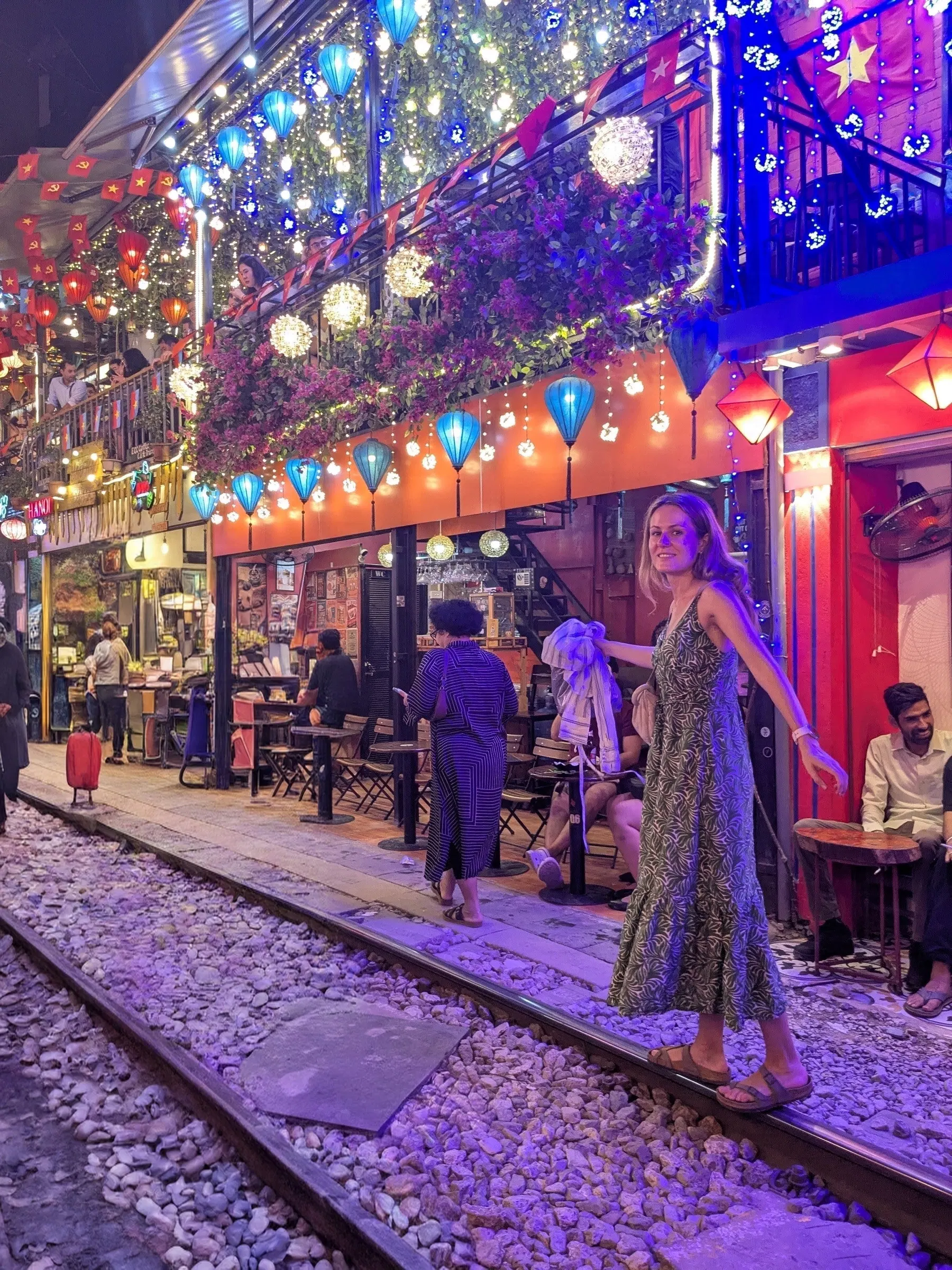
The trains aren’t punctual, and nobody knows exactly when one will pass. We waited about two and a half hours. Drinks there cost more than they do anywhere else in the city, which is what you’d expect but worth knowing before you sit down for that long.
If you’d rather not sit right beside the track, several of the cafés have upper terraces, and from what we saw those were less crowded.
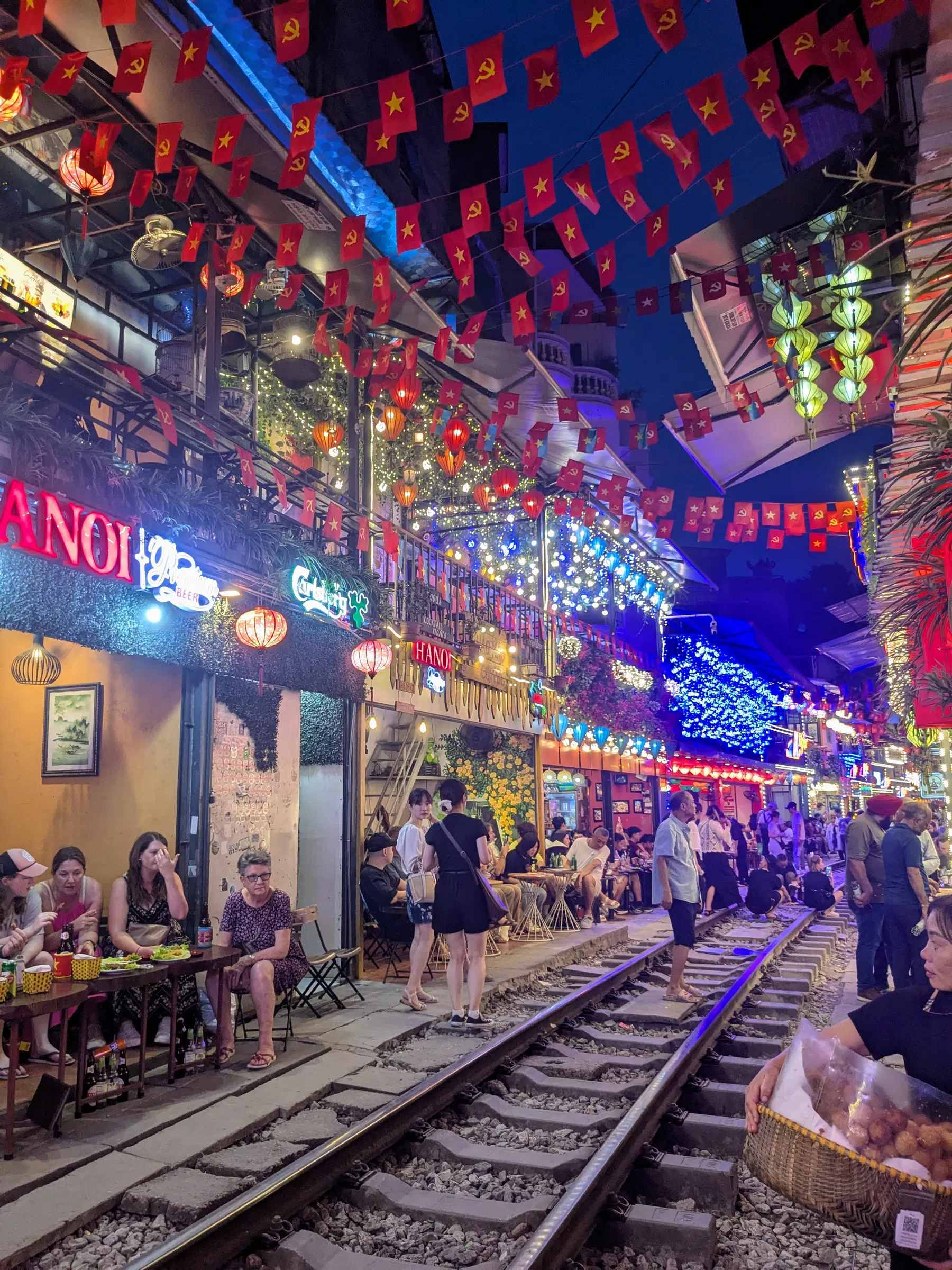
Was it worth it? Pretty much. It’s an unusual experience, everything around you is very bright, and the moment the train goes past is really something - the feeling of being that close to it.
One practical note: the street has been closed and reopened by the authorities several times on safety grounds, and the cafés along it have been shut down more than once. Check it’s open before you make the trip.
Egg coffee, coconut coffee and what to eat
Hanoi coffee, and where to drink it
Egg coffee is a Hanoi invention rather than a Vietnamese one, and it’s worth understanding before you order. In the 1940s, when milk was scarce, a bartender at the Metropole hotel whipped egg yolk with condensed milk instead. It works better than it sounds - the top is a thick sweet foam, almost a custard, sitting on strong black coffee.
The man who invented it was Nguyễn Văn Giảng, and Café Giảng is still run by his family. That’s the original.
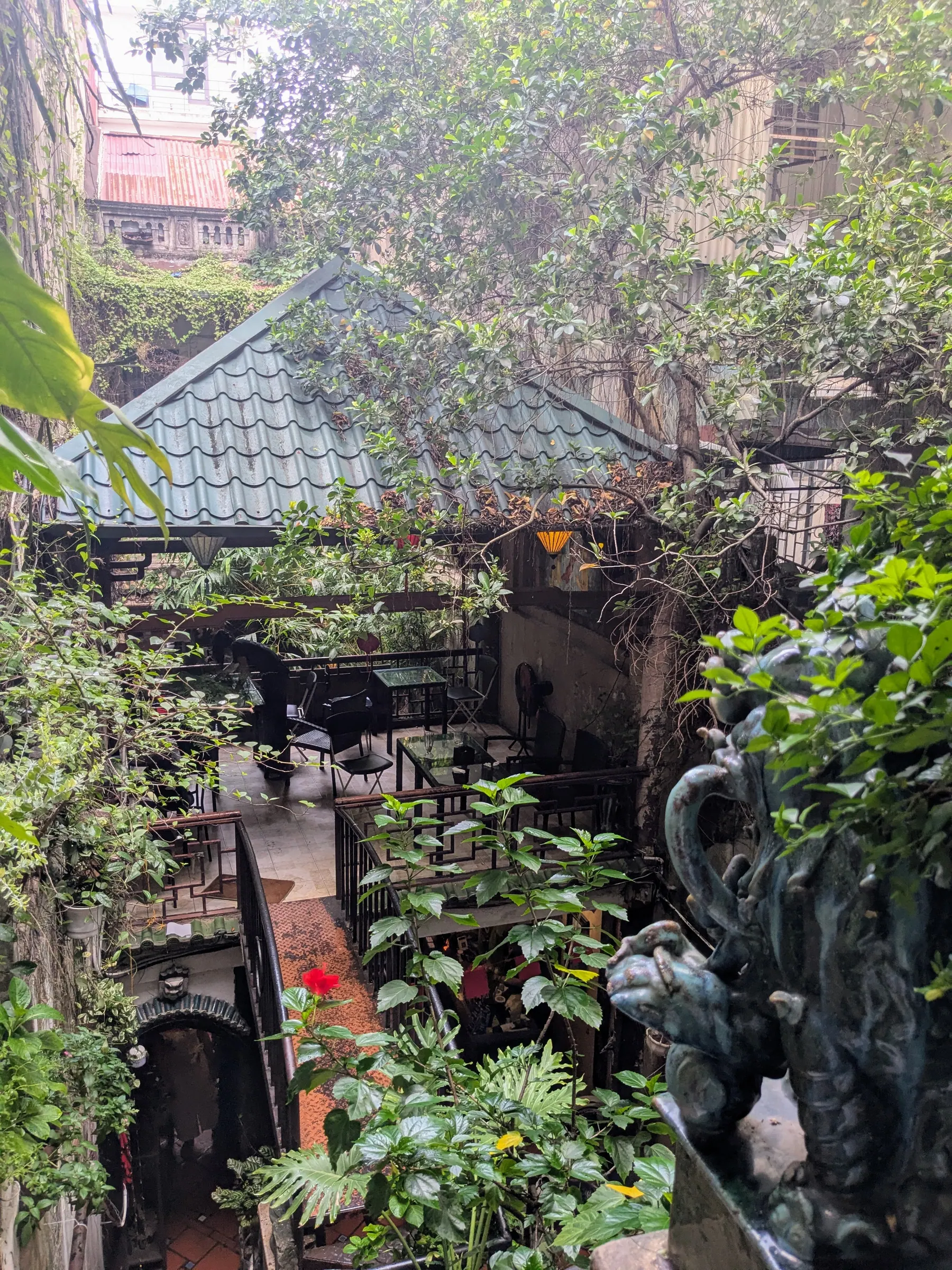
The first place I tried it was Café Phố Cổ, and I fell in love with it immediately. The café itself is lovely - you go in through a shop and up several flights of stairs, and there’s a patio full of plants.
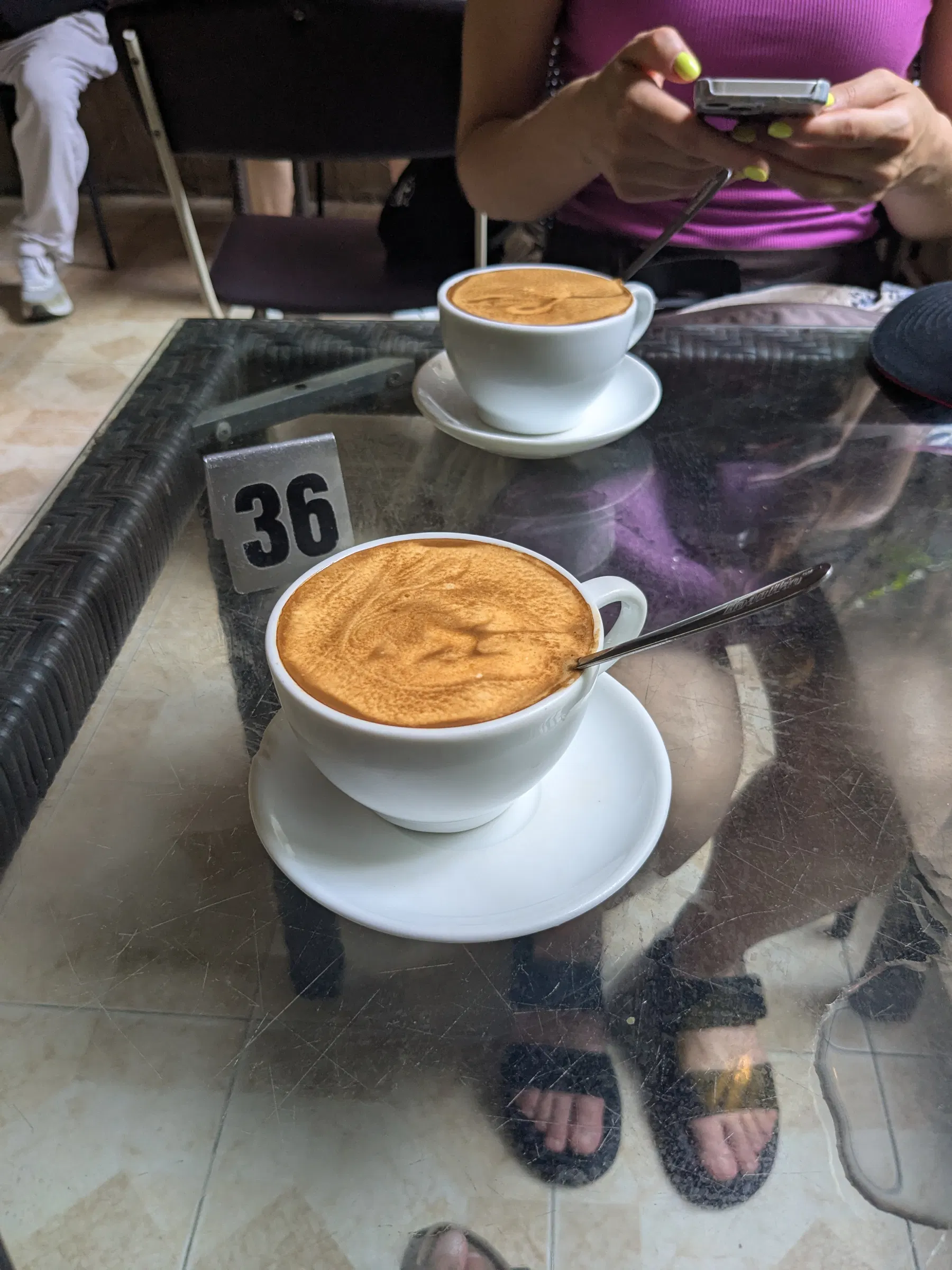
Egg coffee isn’t the only one worth trying, though. I ended up drinking cold coconut coffee even more often - in that heat it was the better option, and it’s every bit as good.
Coffee places are everywhere in Hanoi, so you’ll find something wherever you are. One thing we noticed: the coffee served at the hotels and homestays we stayed in was never particularly good, so we always ended up ordering it outside instead.
What to eat
Phở is from here, and Hanoi’s version is plainer than the southern one: clear broth, few herbs, no bean sprouts. We ate a lot of it in Hanoi, in some homestays they even served it for breakfast.
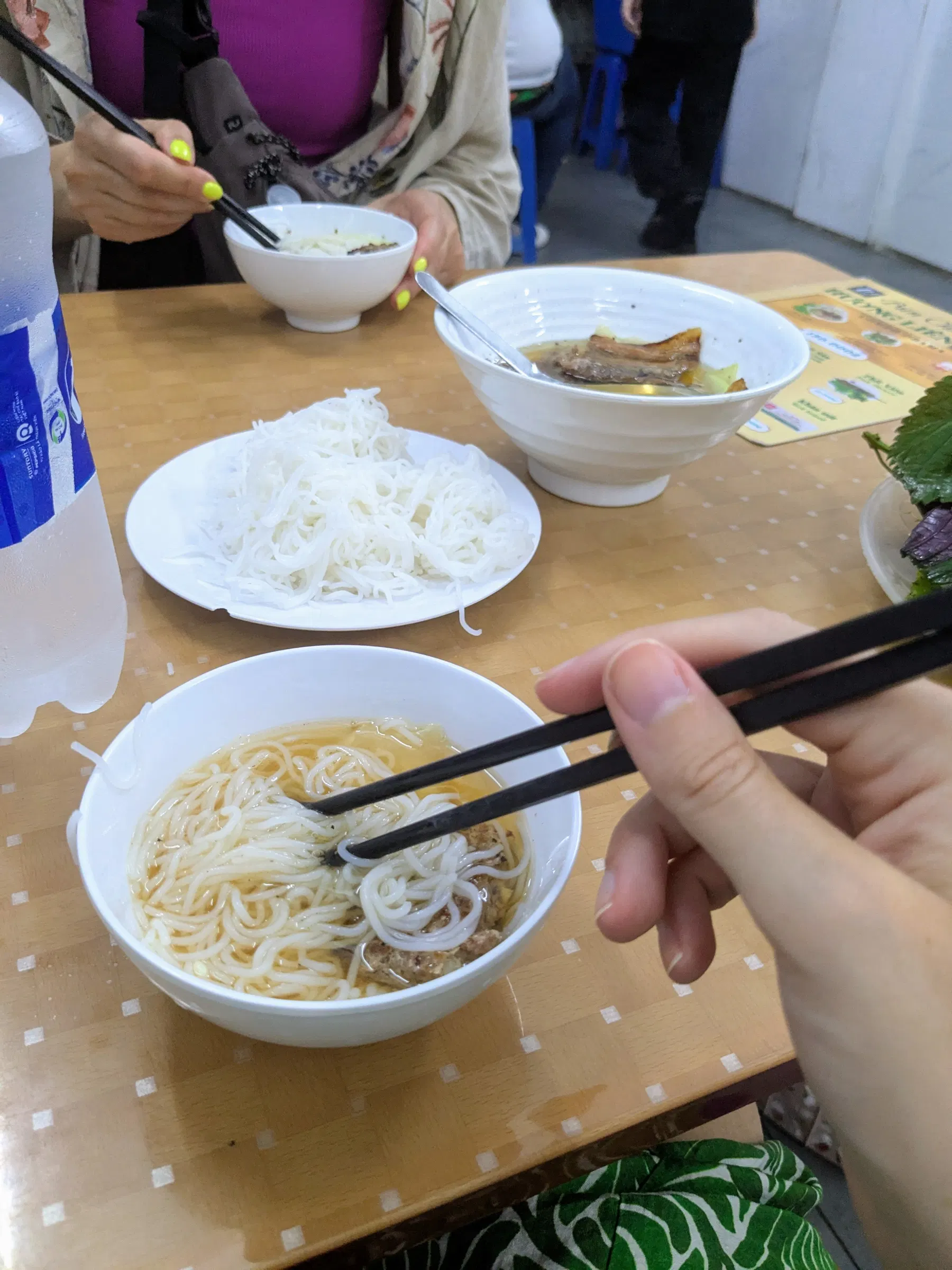
Bún chả is the other Hanoi dish - grilled pork patties and pork belly in a sweet-sour broth, with a plate of noodles and herbs you dip in yourself. We had it at Bún Chả Hương Liên, the very simple place where Obama ate with Anthony Bourdain in 2016 (although the dish came with no greens).
Coconut water is served straight from a real coconut. In the heat and humidity, it was one of the most hydrating things we drank.
Prices can be as little as €1 (around 30,000 VND).
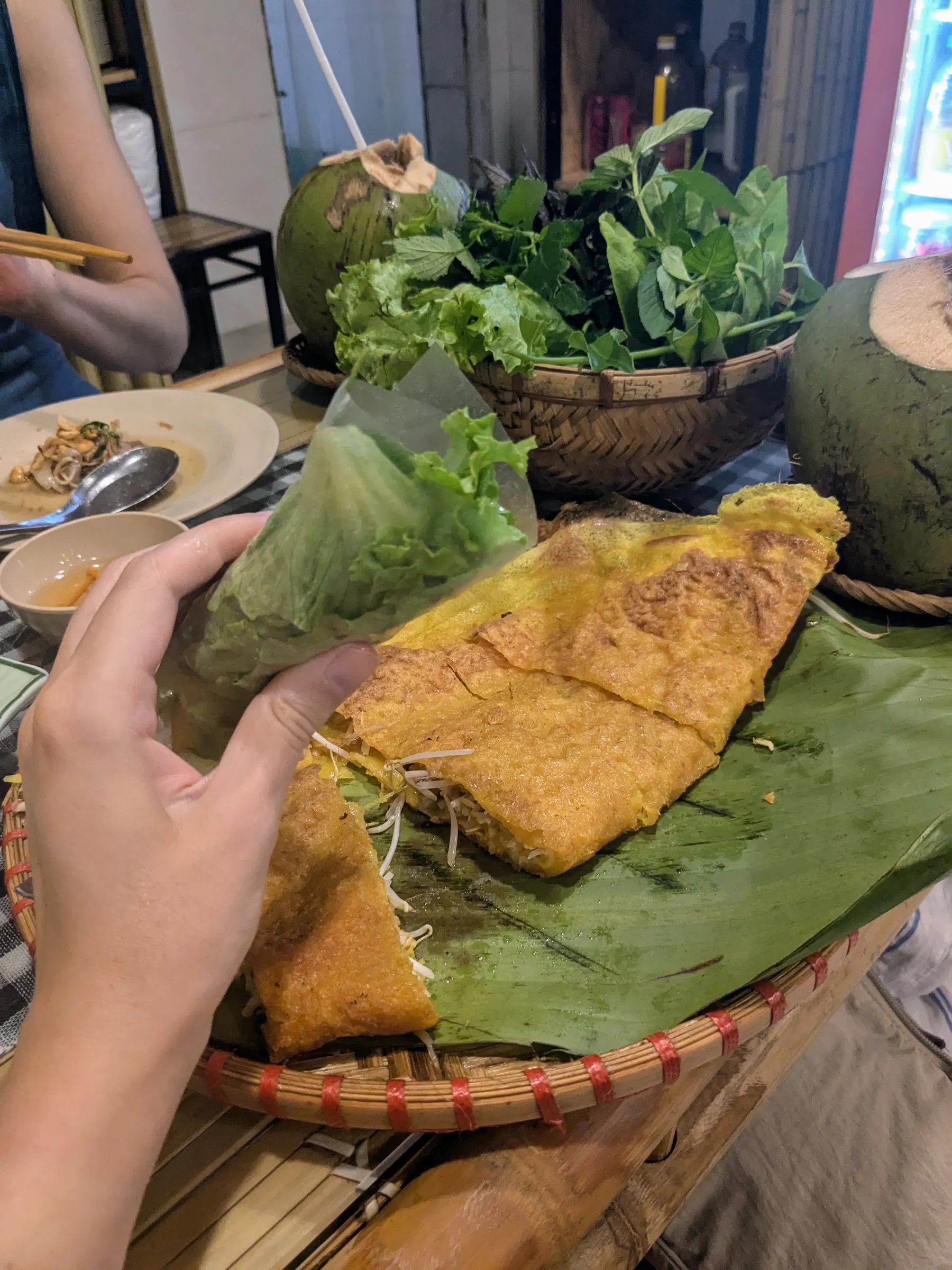
One of our best meals anywhere in Vietnam was at Mr Bảy Miền Tây, where we had bánh xèo - a sizzling rice-flour pancake, yellow from turmeric, filled with pork and prawns and bean sprouts, which you wrap in herbs and lettuce and greens that you wrap in rice paper. It was superb.
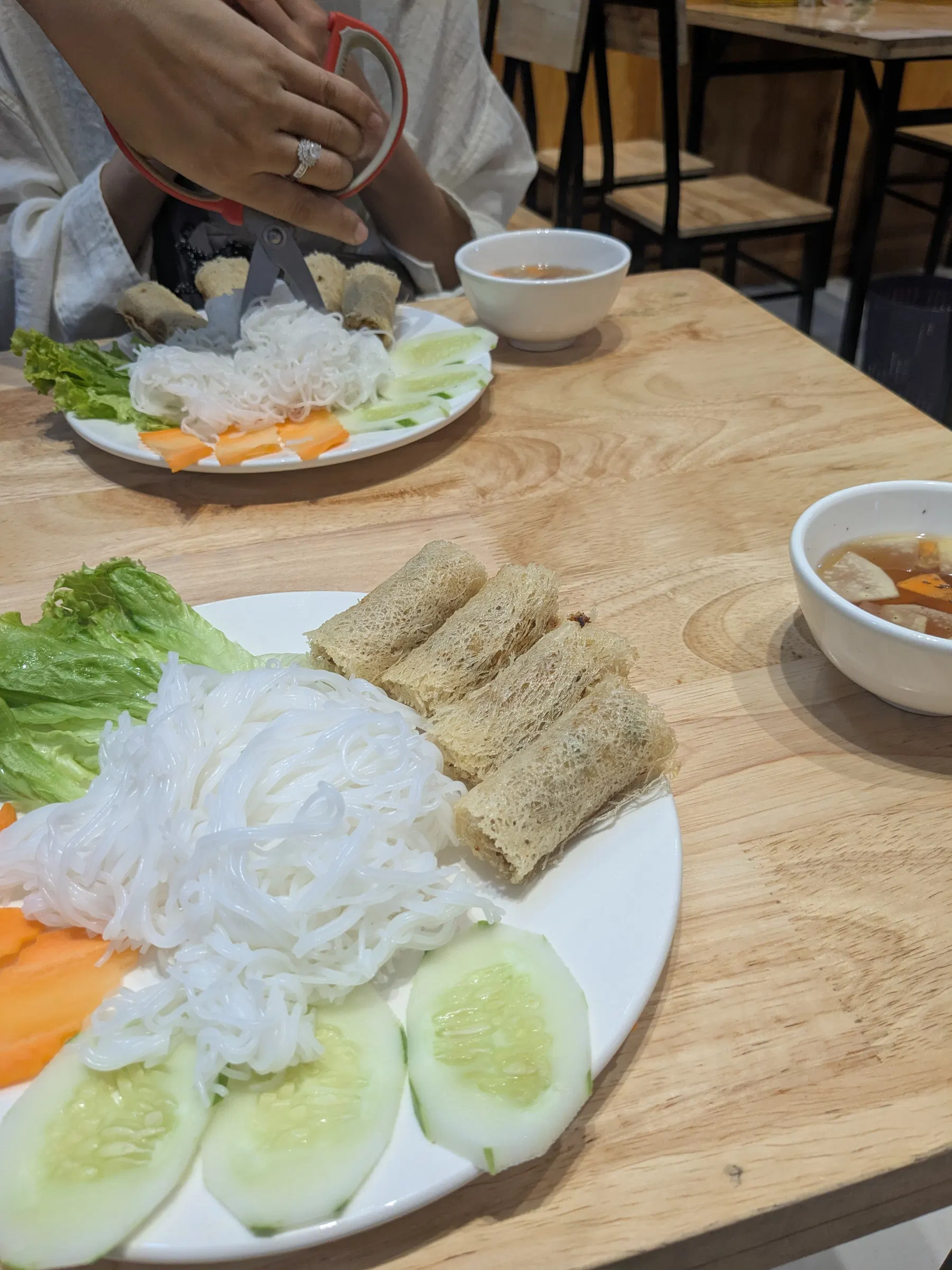
And the Vietnamese version of spring rolls was one of the common snacks in Hanoi as well.
Beyond the famous dishes, the everyday food is rice with pork and vegetables, and you find it on almost every street - small places with low plastic stools where people eat quickly and cheaply. That’s what most of Hanoi actually eats, and it’s usually the best value you’ll get.
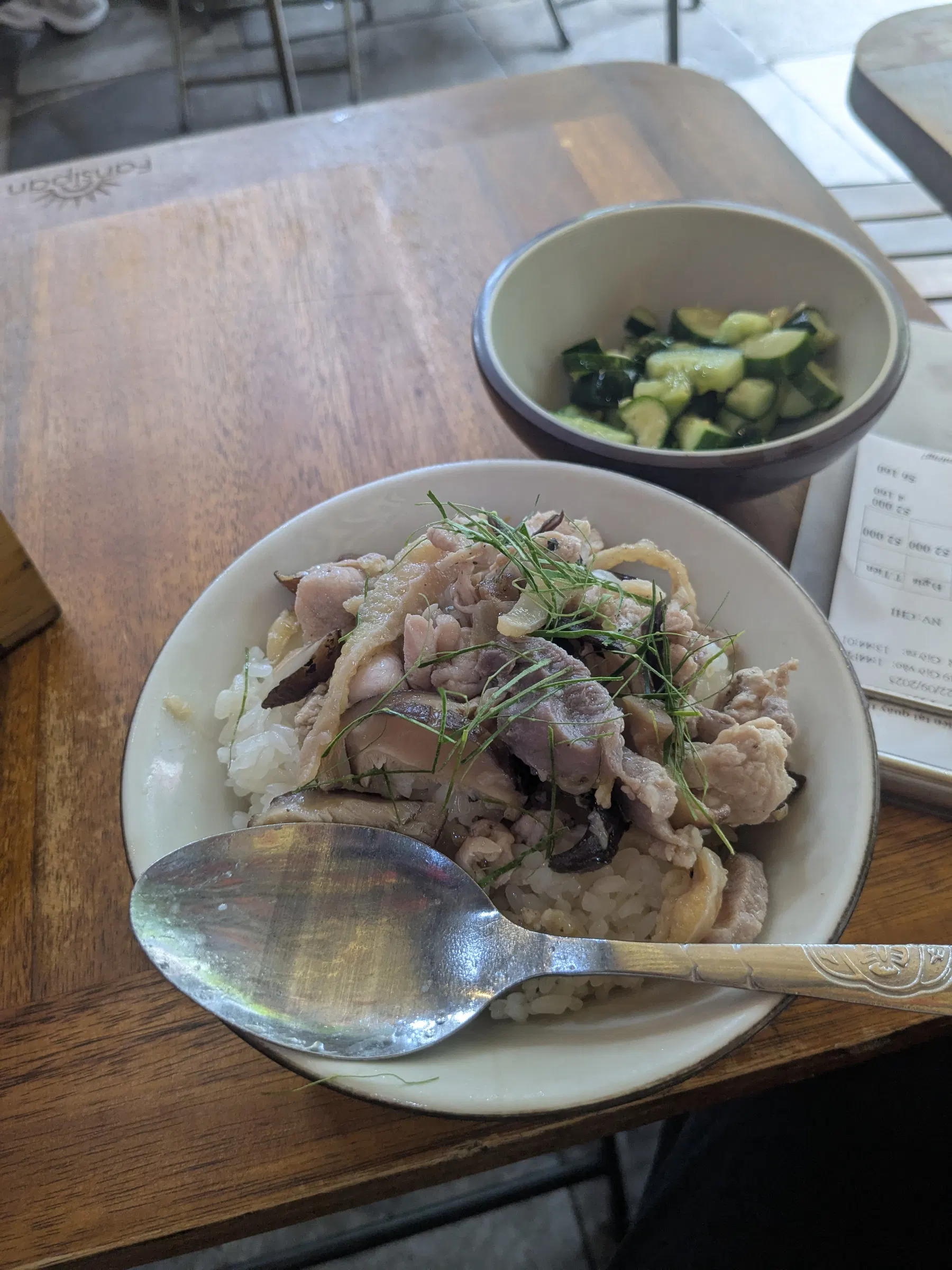
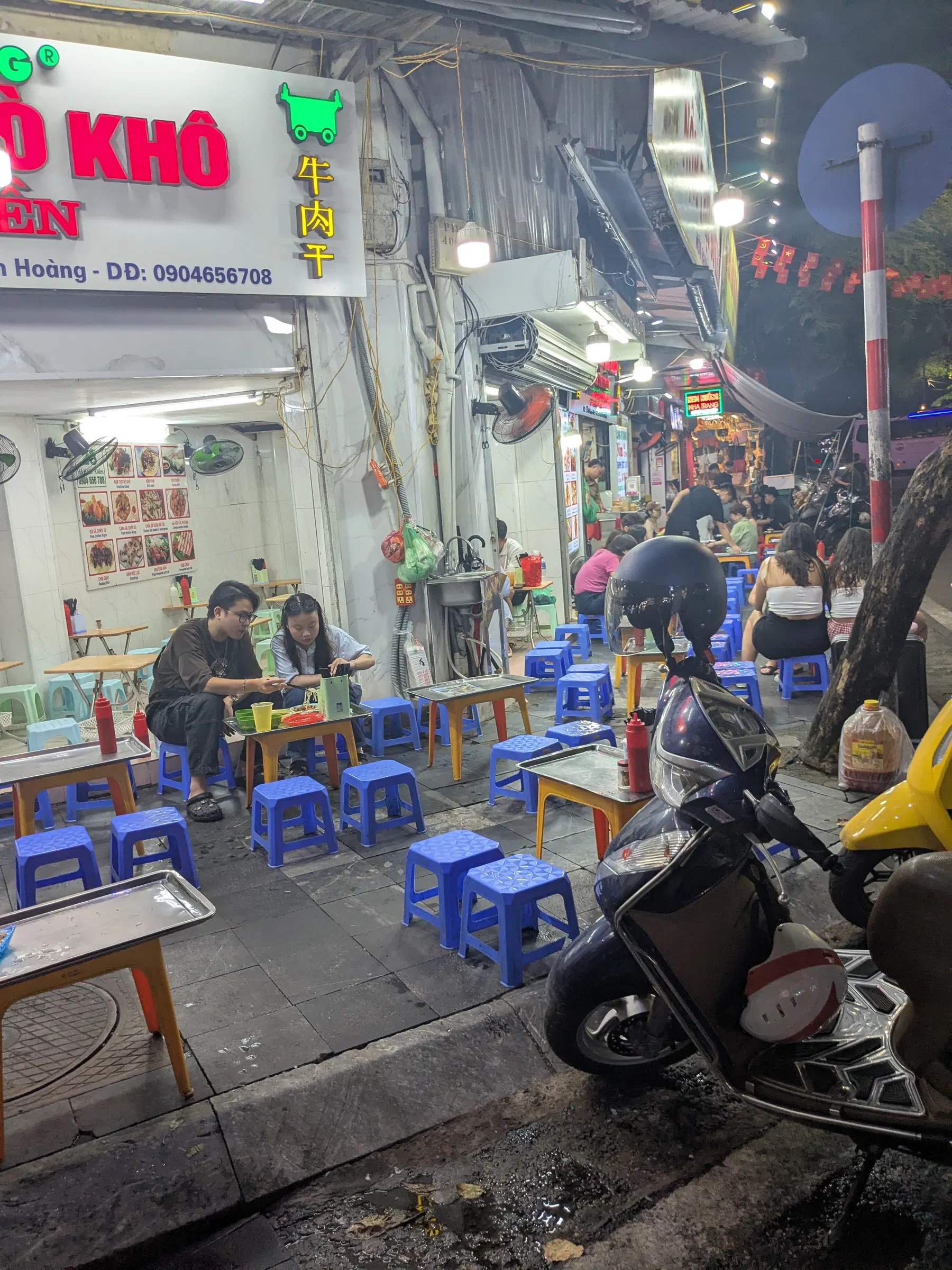
On price: a meal generally came to three or four euros, more at the higher-end restaurants. You can eat very well here for very little.
One more thing worth ordering in that heat: the smoothies. Avocado smoothie in particular was wonderfully refreshing, and you find them everywhere.
Two things surprised me about eating here. The first is how many greens come with everything - a basket of fresh herbs and leaves arrives in front of you before the food does, and you add them yourself. It’s a very healthy way to eat.
The second is that Vietnamese food isn’t spicy, and it doesn’t use many spices at all. It has nothing in common with Thai food in that respect. I like food with strong flavours, so that was the thing I missed - though it’s entirely a matter of taste. I think people divide fairly cleanly into those who love Vietnamese food and those who don’t quite.
A day out in unpolished Đường Lâm
If you have a spare day, Đường Lâm is an old village about 45 kilometres west of Hanoi, and it’s the opposite of the city in every way.
Getting there is the tricky part: there’s no public transport, so we had to take a taxi, and that wasn’t cheap - we spent around €20 each for the return ride, our most expensive taxi ride in Vietnam.
We went with a guide - a university student who wanted to practise her English. It’s arranged through Hanoi Free Private Tour Guide, where students take visitors out and don’t charge for the guiding (they also offer tours in Hanoi city). What you do pay for is the transport, including your guide’s, but you will all be travelling from Hanoi together. If you eat together in the village, you cover her meal as well, which we did. That seems entirely fair for a day of someone’s time.
She turned out to be the best part of the day. She was around our age, so as well as showing us the village she answered all the questions we had about daily life in Vietnam - work, family, what young people here actually do. It went both ways, which made it a cultural exchange rather than a tour.
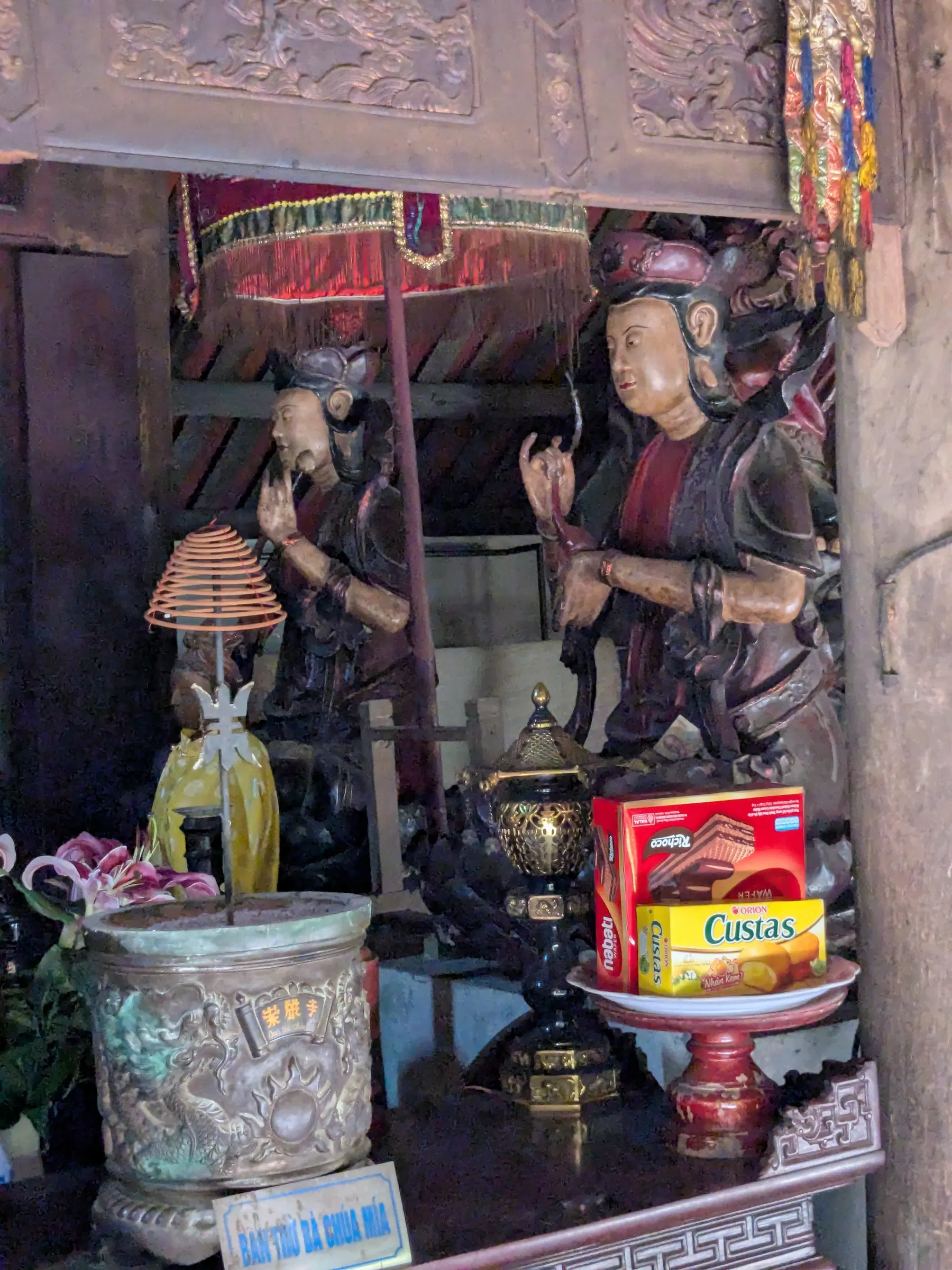
The village itself feels like time stopped. The streets were largely empty, there were mostly locals about, and nothing was polished for anyone. Old houses, a few temples, soya beans fermenting in clay jars outside the doors. Three hours is enough to see it without rushing.
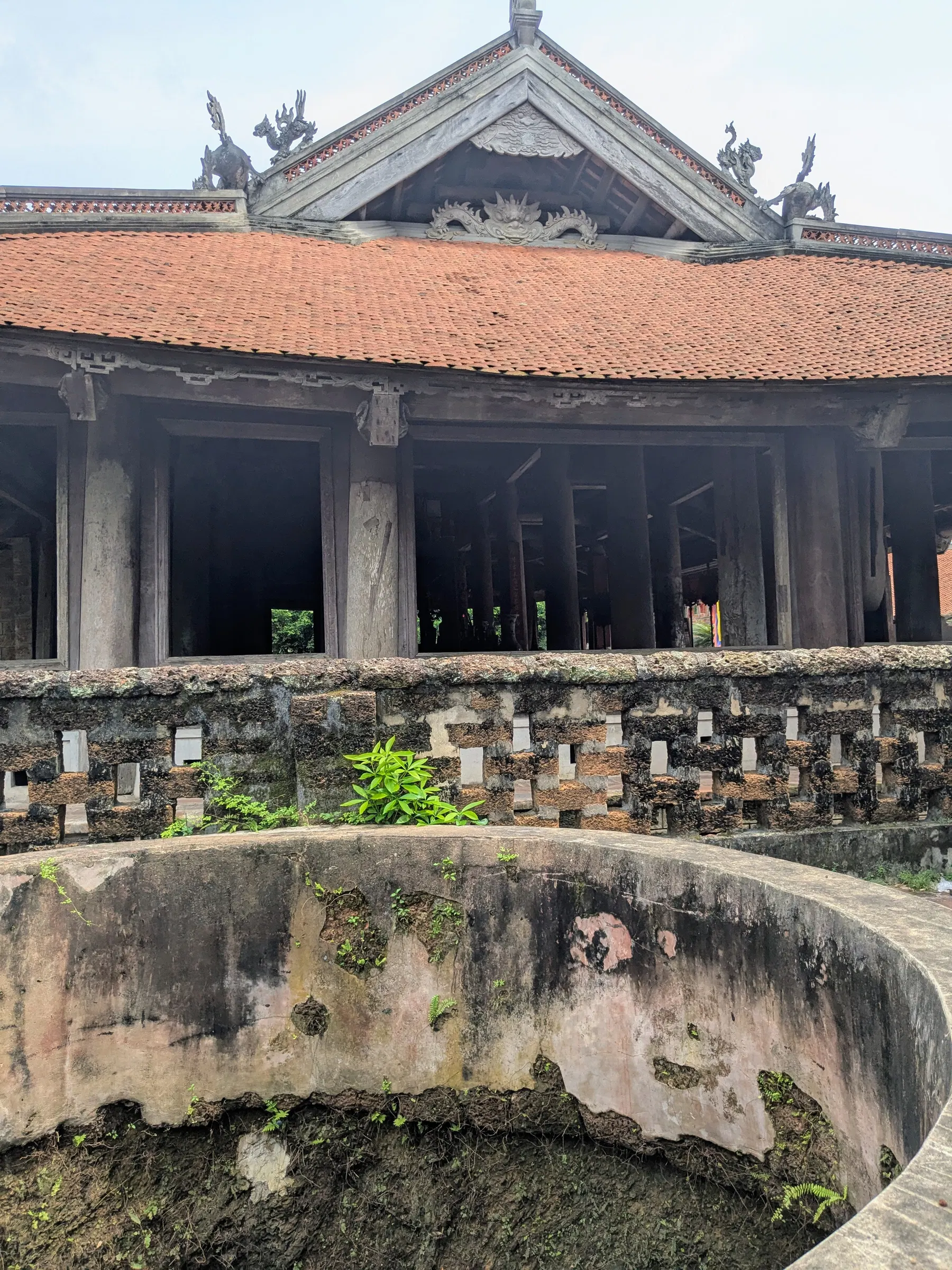
One interesting detail: the older houses and walls use local laterite, a porous reddish stone that helps keep them cool in summer and warm in winter.
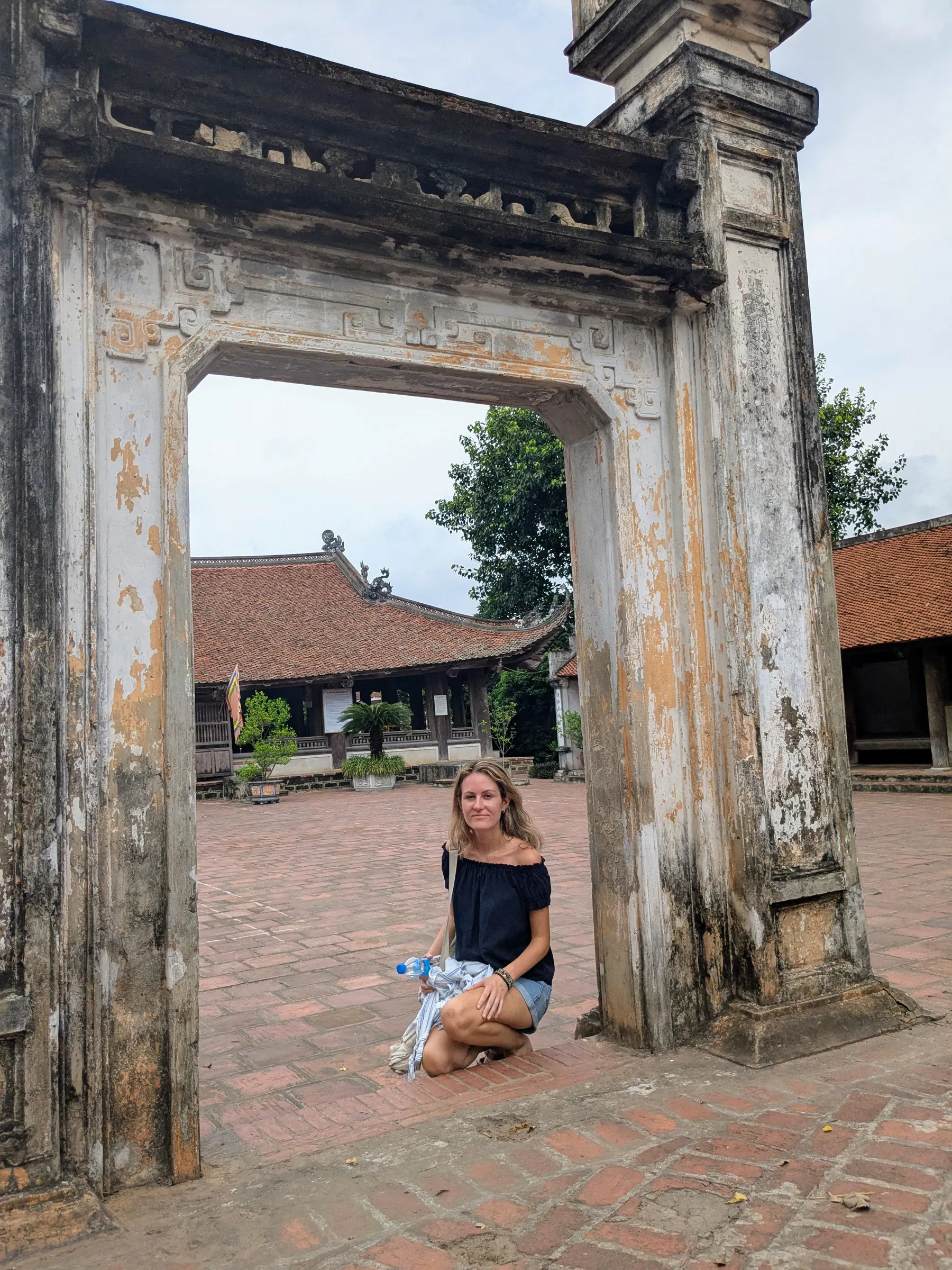
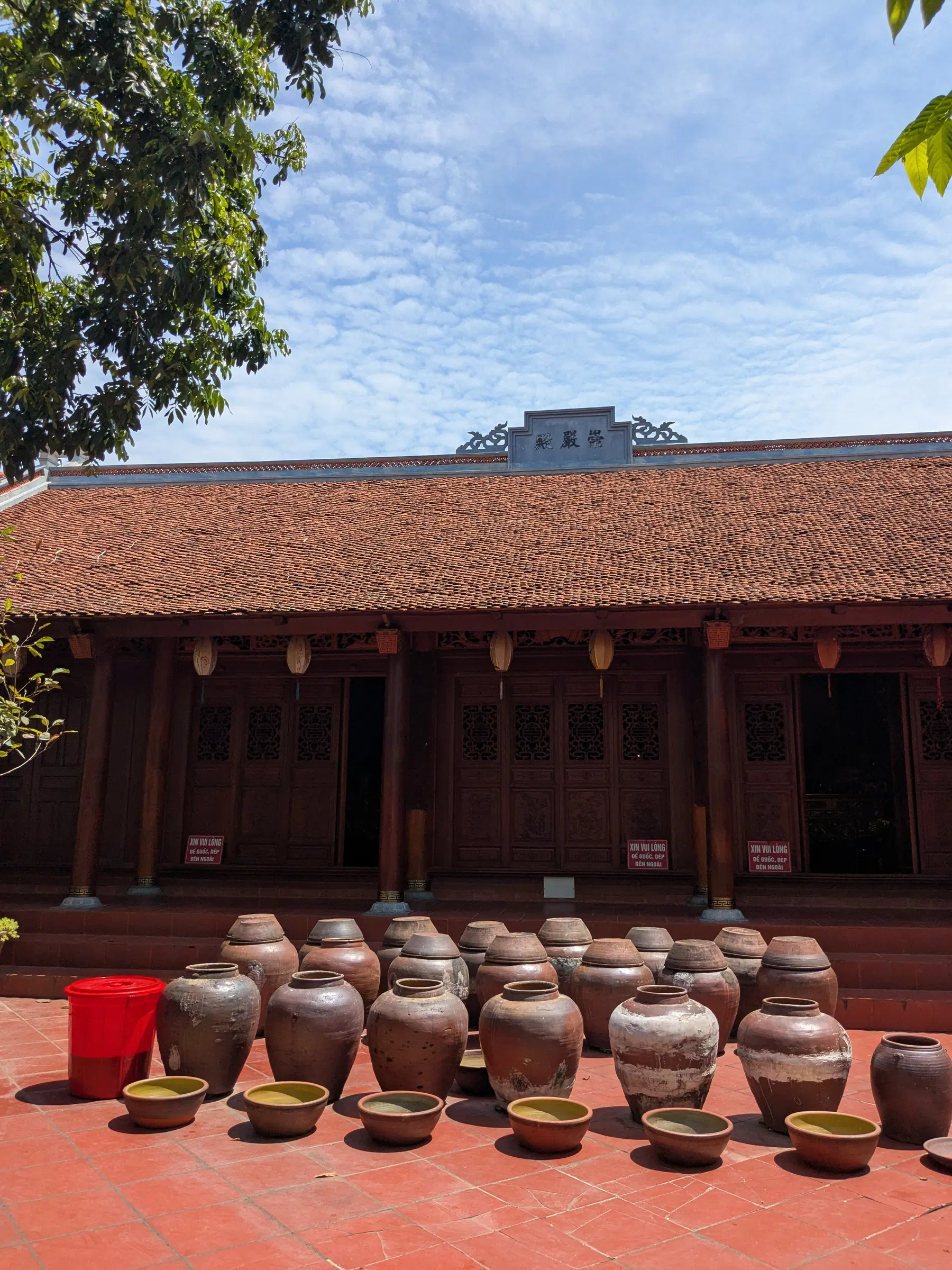
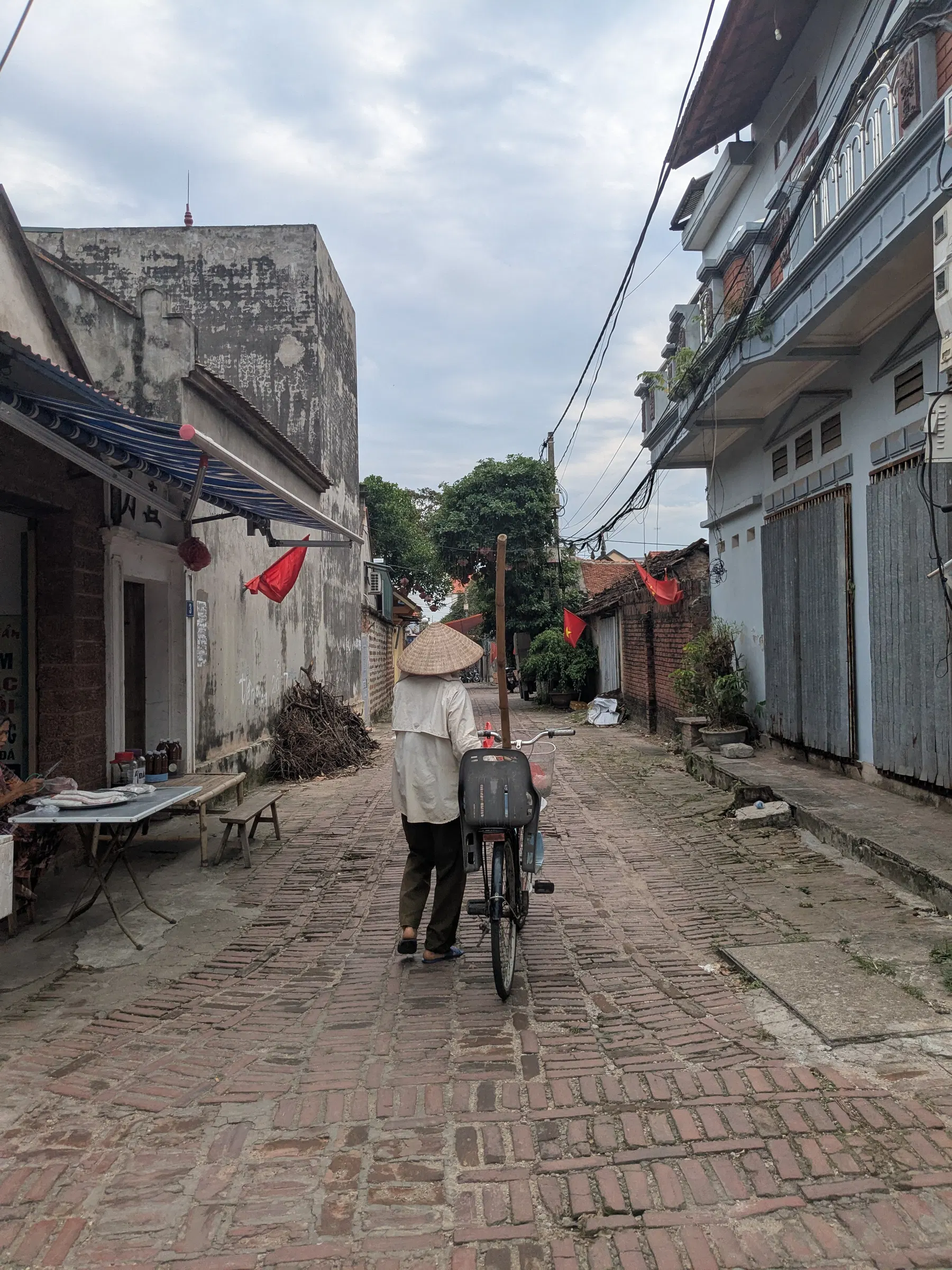
Đường Lâm
Check the opening times before you go. The temples were closing when we arrived and we didn’t manage to see them all. We did get into one, where the local woman who looks after it explained briefly how the house had been used.
Other sights to save for later
There are things on most Hanoi lists that we either missed or didn’t prioritise: Hoa Lo Prison, the French-built jail later used for American prisoners of war; the Imperial Citadel of Thang Long, a UNESCO site north of the Old Quarter; and Beer Street, which is exactly what it sounds like. Worth knowing they’re there.
How to get around without the taxi stress
This is the thing I’d most want to pass on, because nobody mentions it.
The public buses in Hanoi work surprisingly well. We didn’t use taxis much; we took buses instead, and they were punctual and comfortable. You pay cash on board. The people handling the tickets were noticeably kind to us - possibly because foreign visitors don’t often use them.
Taxis work too, but be aware that the price isn’t always the same for the same journey. Grab is the safer option if you want to know what you’re paying before you get in.
How to pace four days in Hanoi
The places above cluster fairly naturally by area, so here’s roughly how long each one takes.
The Old Quarter and Hoan Kiem lake - a full day. Đồng Xuân market sits at the northern edge of the quarter, about ten minutes up from the centre, and it’s best in the morning when it’s busiest. Work your way back down through the guild streets. St Joseph’s Cathedral is a couple of minutes west of the lake. Hoan Kiem itself is worth seeing in the late afternoon and again after dark, and the puppet theatre is right on the lakeside for the evening.
The Ho Chi Minh complex, the Temple of Literature and Trấn Quốc Pagoda - a full day. The Temple of Literature is about a kilometre south of the complex, and Trấn Quốc Pagoda is on West Lake. You can walk between them, but they are a fair distance from the Old Quarter, so it is either a long walk or a short bus or taxi ride to get out there.
The French Quarter - a couple of hours. The boulevards and the colonial buildings, plus the Women’s Museum, which is a short walk south of the lake. It starts on the far side of Hoan Kiem from the Old Quarter, so you can walk straight across if you’d rather combine the two.
Train Street - a couple of hours at least. The northern section is on the western edge of the Old Quarter, so it’s easy to add on to that day. The timing is unpredictable, so allow more than you think.
Đường Lâm - most of a day. The village itself takes about three hours, but the drive out and back accounts for the rest.
Practical advice: shopping, food, and street touts
A few practical things worth keeping in mind as you explore Hanoi:
- Bargaining in tourist areas: In central Hanoi market streets and artisan stalls, negotiate on items without fixed prices, including everyday goods like chargers or phone adapters. Foreigner starting prices are often inflated, so polite counter-offers are standard.
- Watch for fake silk: The vast majority of scarves and garments marketed as “pure silk” in street stalls and tourist night markets are actually polyester synthetics. If you want authentic mulberry silk, look for established heritage businesses or certified artisan shops along Hàng Gai.
- Beware of street massage touts: Walking the Old Quarter, touts will constantly wave flyers offering cheap foot and body massages. We tried one on impulse and the experience was completely unprofessional and unpleasant. Avoid street touts entirely: check reviews first or book through a reputable spa recommended by your accommodation.
- Generous portion sizes: Sit-down meals at local restaurants are often very generous, and we frequently split dishes. Order one or two plates first to gauge the size before asking for more.
Is Hanoi worth it?
Yes, though it’s a city you have to meet on its own terms.
I liked Hanoi and it deserves some time. Two days is the minimum, and four is comfortable - one of those can go to Đường Lâm or a silk village, depending on what you prefer.
Being honest about our own four: we set aside some time to look for silk. Without that we could have seen the same things in less time. So how long you need depends partly on whether you’re planning to buy anything.
Splitting them across the beginning and end of a trip worked well for us. On the first visit it’s loud and chaotic and you spend a lot of energy simply navigating it; on the second you know where things are and can enjoy it. If you’re travelling on to the north - Ninh Binh, Mai Chau, Ha Giang - you’ll pass back through anyway, so there’s no reason to do it all at once. For the complete two-week Northern Vietnam route, costs and transport sequence, see our 14-day Northern Vietnam itinerary.
FAQs
How many days do you need in Hanoi?
Two at a minimum, four if you want to take your time or add a day trip. We had four, split between the start and end of our trip, which worked well - you arrive once when everything is overwhelming and come back when you know your way around.
Where should you stay in Hanoi?
The Old Quarter. Everything is walkable from there, the buses run through it, and it is where the food and the coffee are. Tay Ho by West Lake is quieter if you are staying longer.
Is Hanoi Train Street open?
Access and enforcement change regularly. Check the current rules before travelling there, follow staff instructions and never stand on the tracks.
What should you eat in Hanoi?
Phở and bún chả are the two local dishes. Egg coffee is a Hanoi invention and worth trying once; coconut coffee is better in the heat. Everyday meals of rice, pork and vegetables cost three or four euros almost anywhere.
What is the best way to get around Hanoi?
The buses work far better than anyone tells you. Cash on board, punctual, comfortable. Grab is the other reliable option, because the price is fixed before you get in; ordinary taxis are not always consistent.
How do you get from Hanoi airport?
The public bus costs almost nothing and is the cheapest way in. It takes longer because of traffic and stops, and it is not always reliable - ours did not turn up on the way back, so we shared a taxi with other travellers who were waiting. If you have a flight to catch, allow for that.
Is Hanoi easy to walk around?
Walkable, yes. Easy, not at first. The motorbikes never stop, and crossing the road takes a few days to get used to. You do manage it.
Read next
More posts for this trip mood
 Asia
Asia Red River Delta & Northern Highlands, Vietnam
Northern Vietnam in Two Weeks: A Complete Route
A realistic two-week Northern Vietnam itinerary balancing Hanoi, Lan Ha Bay, Ninh Binh, Mai Chau, and the Ha Giang Loop with honest budgets and transit tips.
 Asia
Asia Hai Phong, Vietnam
Cat Ba and Lan Ha Bay: The Quieter Ha Long
Two quiet days on the water: limestone karsts, cave kayaking, a floating village and no crowds.
Why we based ourselves on Cat Ba Island, skipped the mainland cruises, and spent two quiet days cruising, kayaking and exploring Lan Ha Bay instead of Ha Long.
 Asia
Asia Ninh Binh, Vietnam
Two Days in Ninh Binh, by Bike and by Boat
Two slow days of bicycles, limestone mountains, temples, caves and a boat through Trang An.
Two days in Ninh Binh: cycling from Tam Coc to Bich Dong, Buffalo Cave and Mua Cave, with a quiet Trang An boat trip.