

Starting a trail barefoot
Starting a trail barefoot is an unusual experience. You start to feel every small stone, and all your focus goes to each single step you take. In daily life we treat walking as nothing special - we do it without thinking, in shoes, staring at a phone. But the moment you go barefoot, an immediate connection to the ground and to nature begins.
The reasoning behind it is simple. When you walk barefoot over changing surfaces, your feet have to work in a way they never do inside shoes. The changing textures make your feet react in different ways, which is believed to improve blood circulation and slowly strengthen the many small muscles in the feet and legs that we barely use when we're wrapped in cushioned soles all day.
There's also the mental side, which for me was the strongest part. Walking barefoot is a kind of grounding - direct, physical contact with the earth. It's said to lower stress, and I can believe it, because it's almost impossible to worry about anything when all your attention is on the ground under your feet. It pulls you straight into the present moment. In a life spent mostly indoors, in shoes and always rushing, an hour of feeling the actual ground - cold water and warm sand - is a small reset.
None of this is a medical prescription. But you step off the trail with warm, tingling feet, a clearer head, and the feeling of having done something good for your body, which is more than most walks give you.
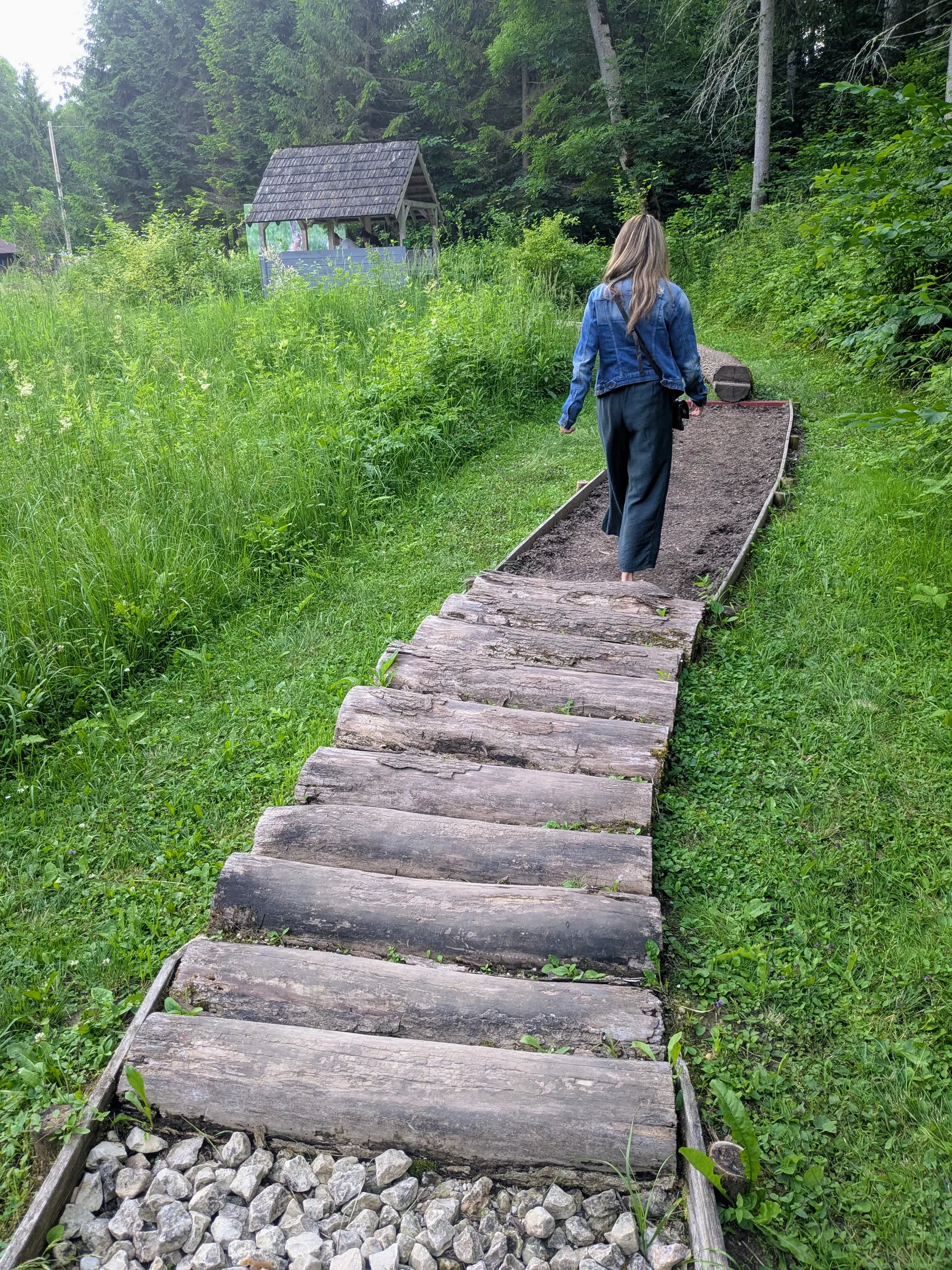
A strong Latvian connection to nature
I chose Valguma Pasaule partly because it was on our way, partly because my family had recommended it, and because it's the biggest barefoot trail in Latvia - and the first one created in the Baltic States, back in 2012. We visited it during our Engure Lake trip. It also holds a "Hiking Friendly" certificate, a Baltic scheme for places that welcome walkers.
There are a few more around the country: Sajūtu Parks, the Park of Senses in Valmiera, and a much smaller trail at Dizaina parks in Tīnūži, not far from where I grew up. I'd like to visit the others too, if I ever find myself near them.
In Latvia, a lot of sport and leisure activities are built into nature. The barefoot trail is not a common activity, but it has a strong Latvian character: a simple, slightly strange way to spend time outdoors.
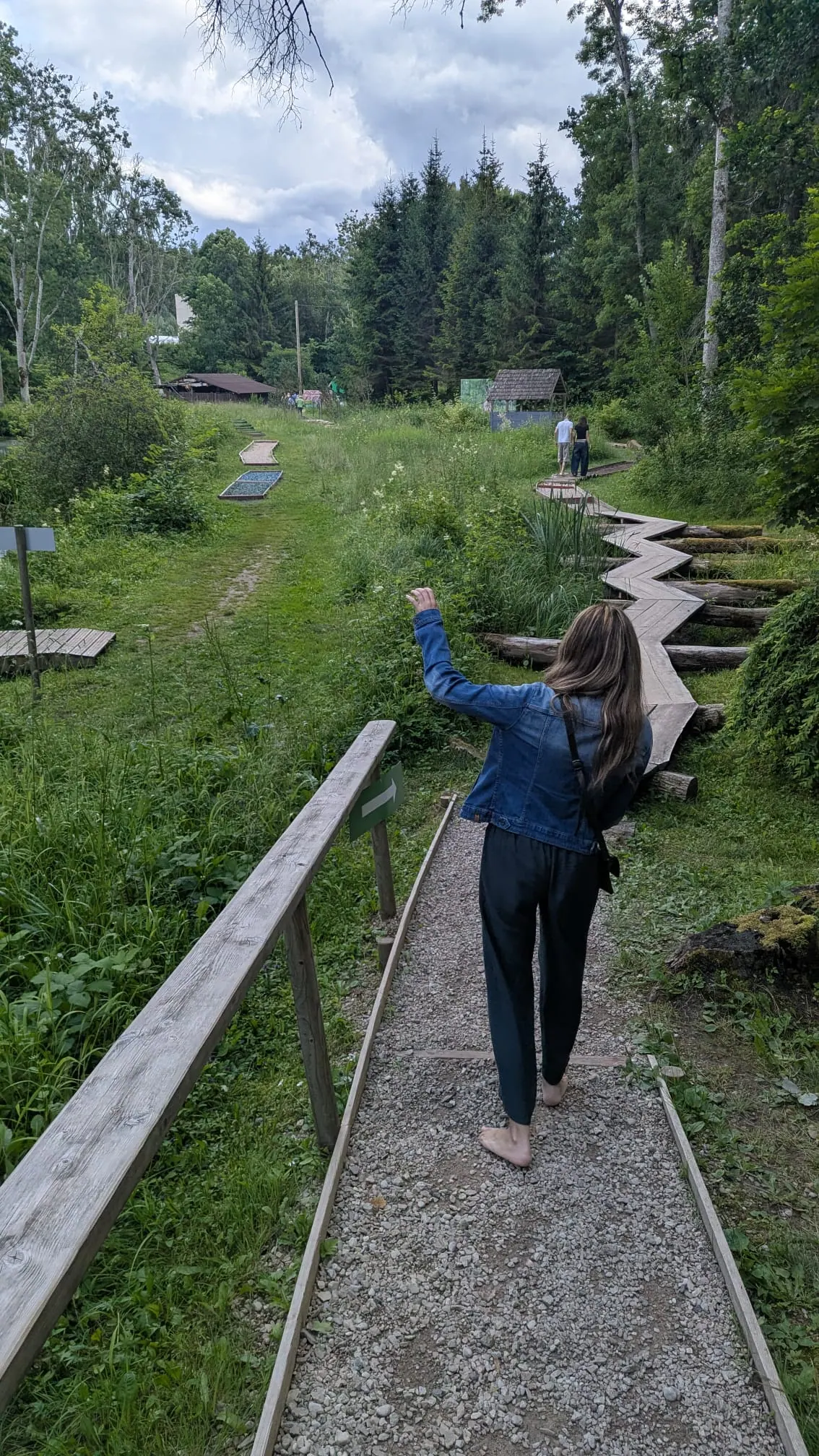
Stones
The section that makes you slow down.
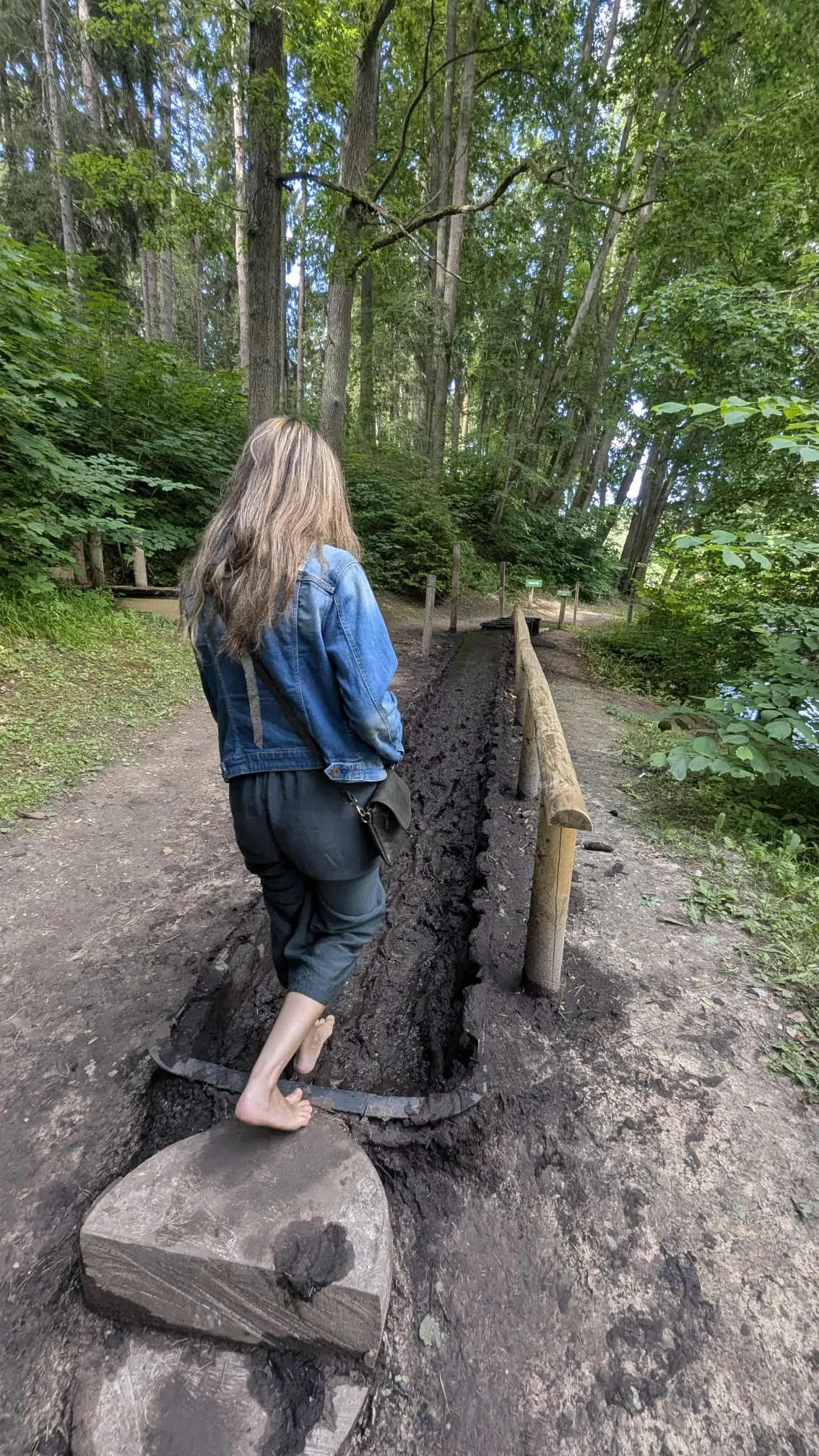
Mud
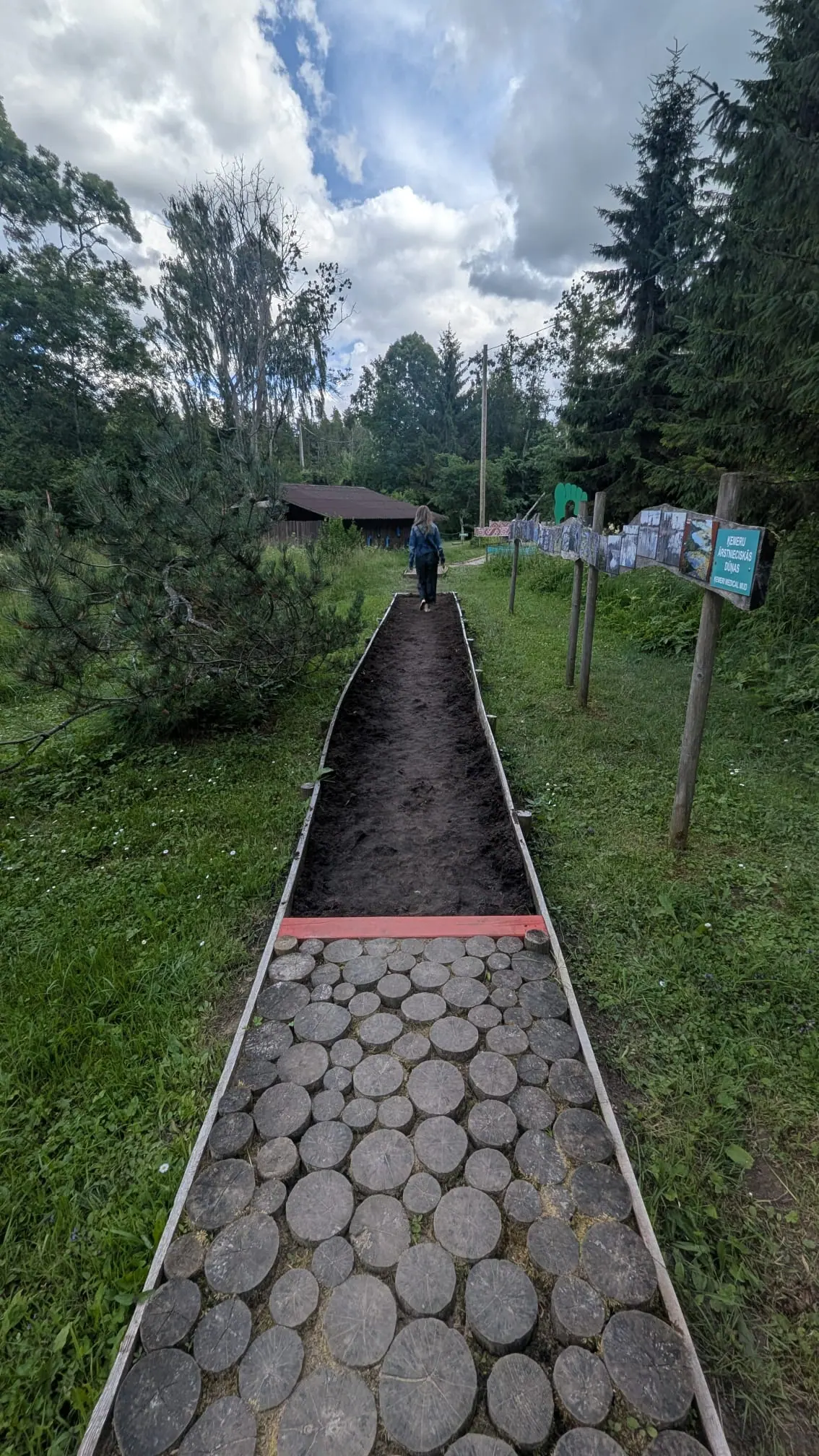
Messy and incredibly soft.
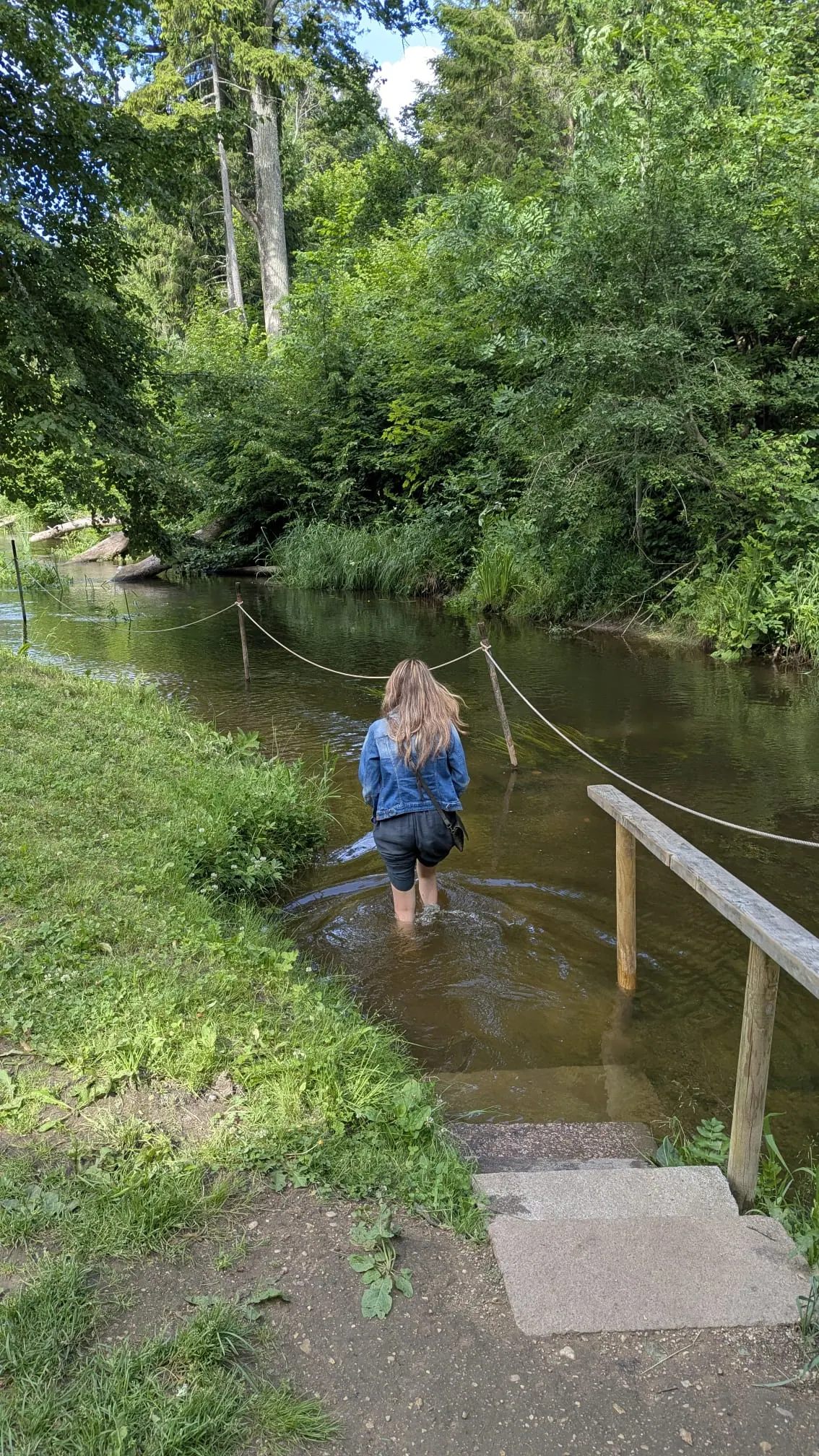
Water
Cool, calming and the perfect way to rinse off the mud.
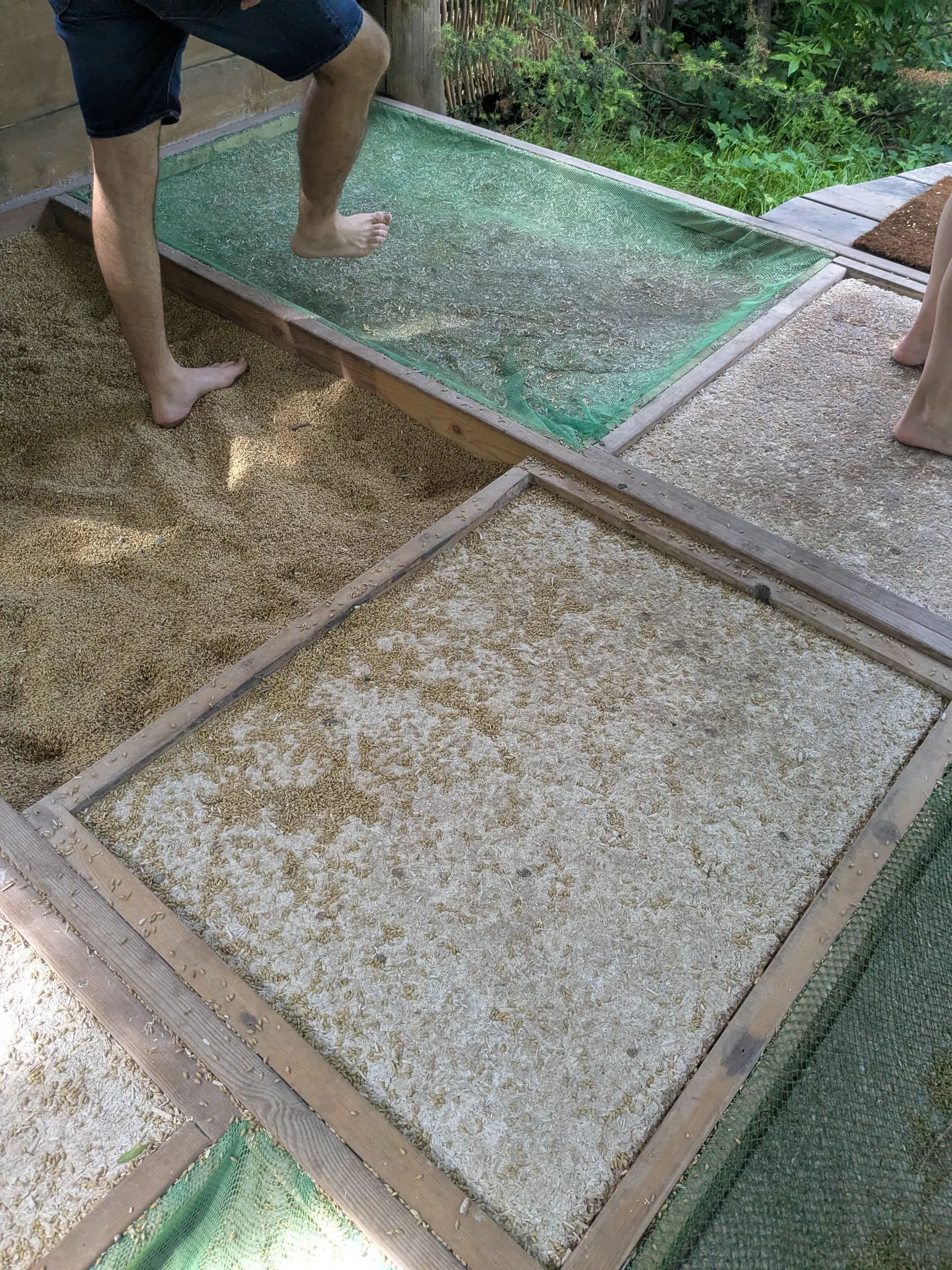
Seeds
Small, shifting textures that make every step precise.
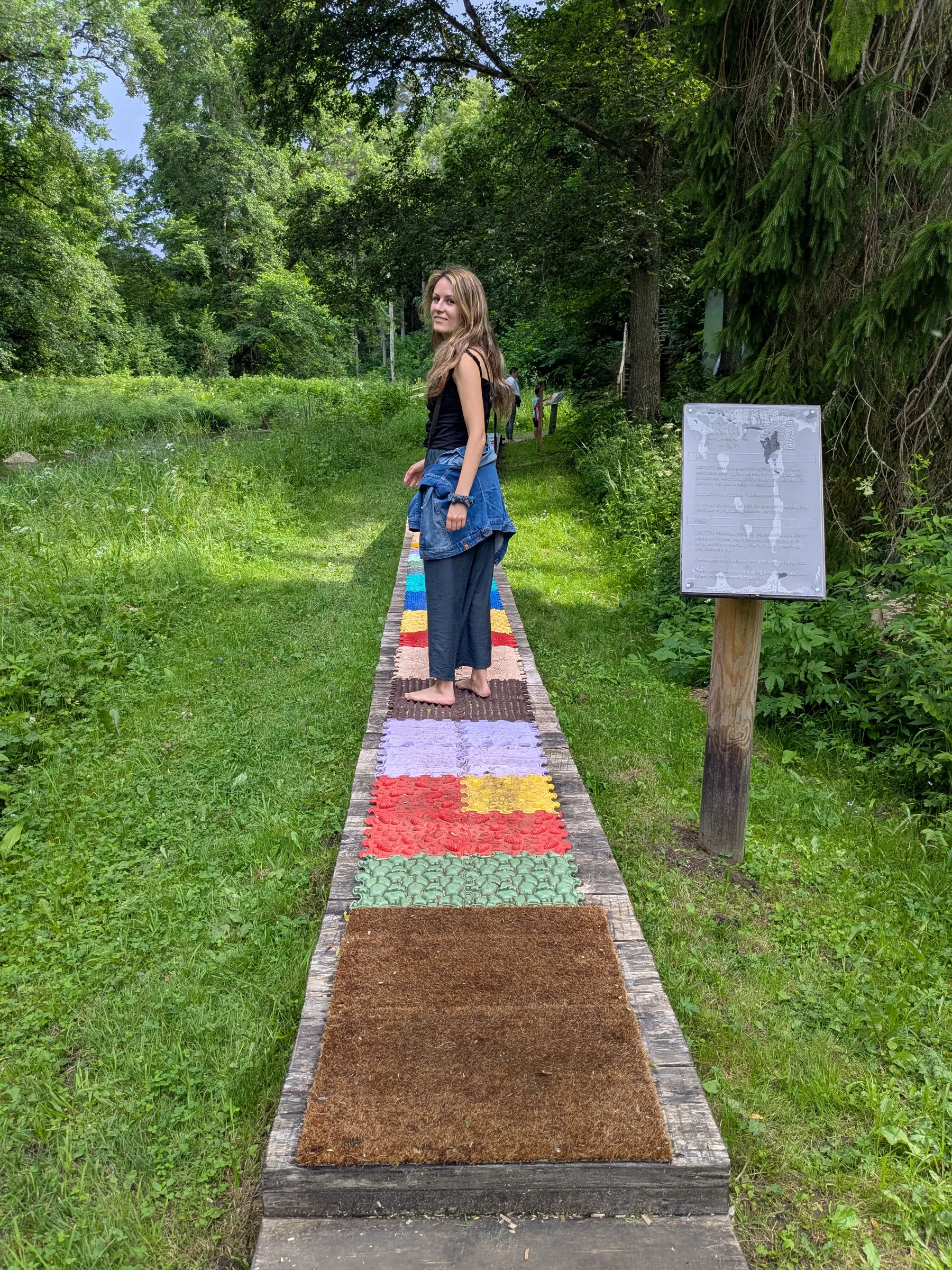
Acupressure mats
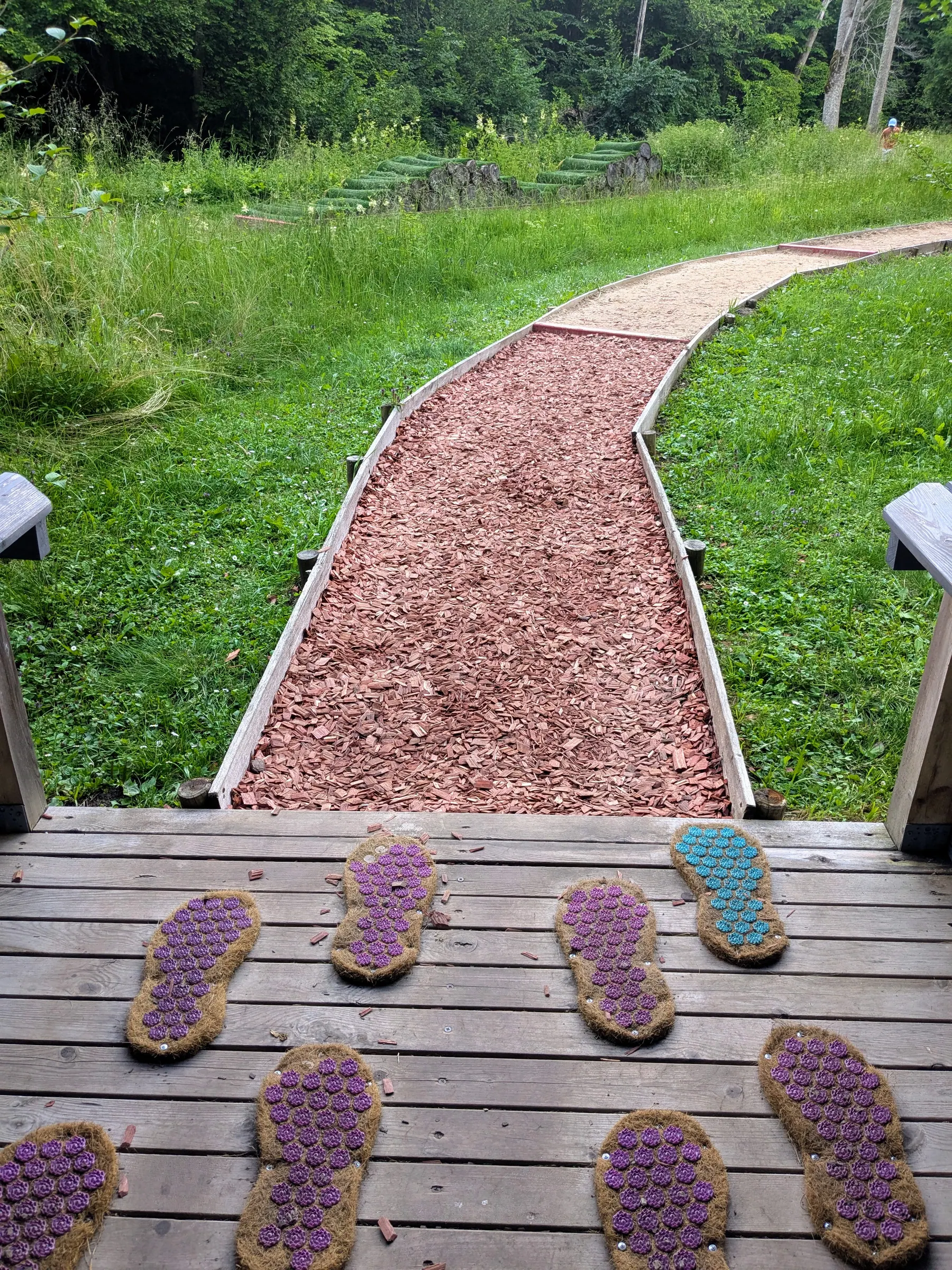
Sharp, strange and best taken one careful step at a time.
Wood chips
Light, scratchy and softer than it looks.
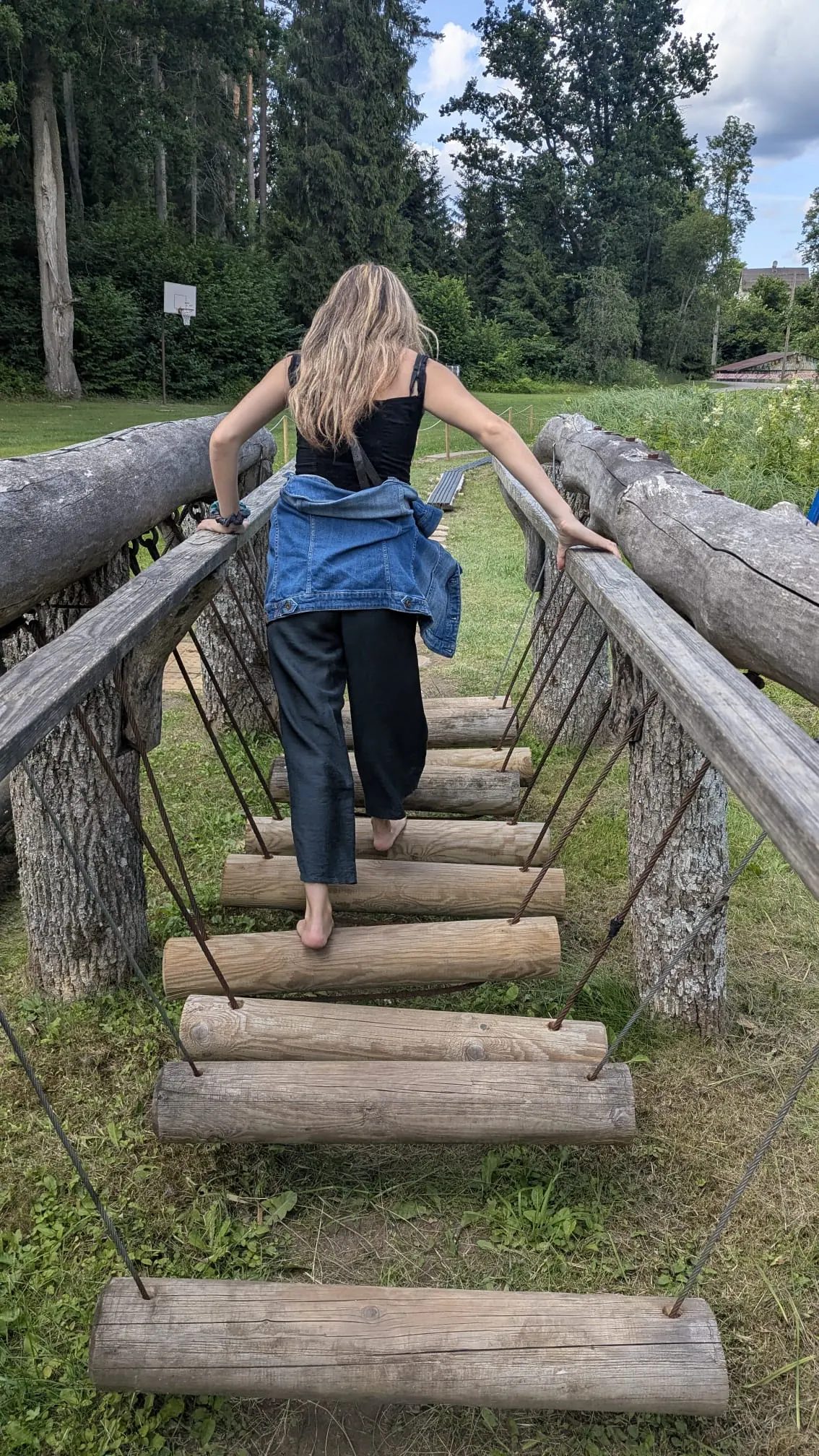
Balance logs
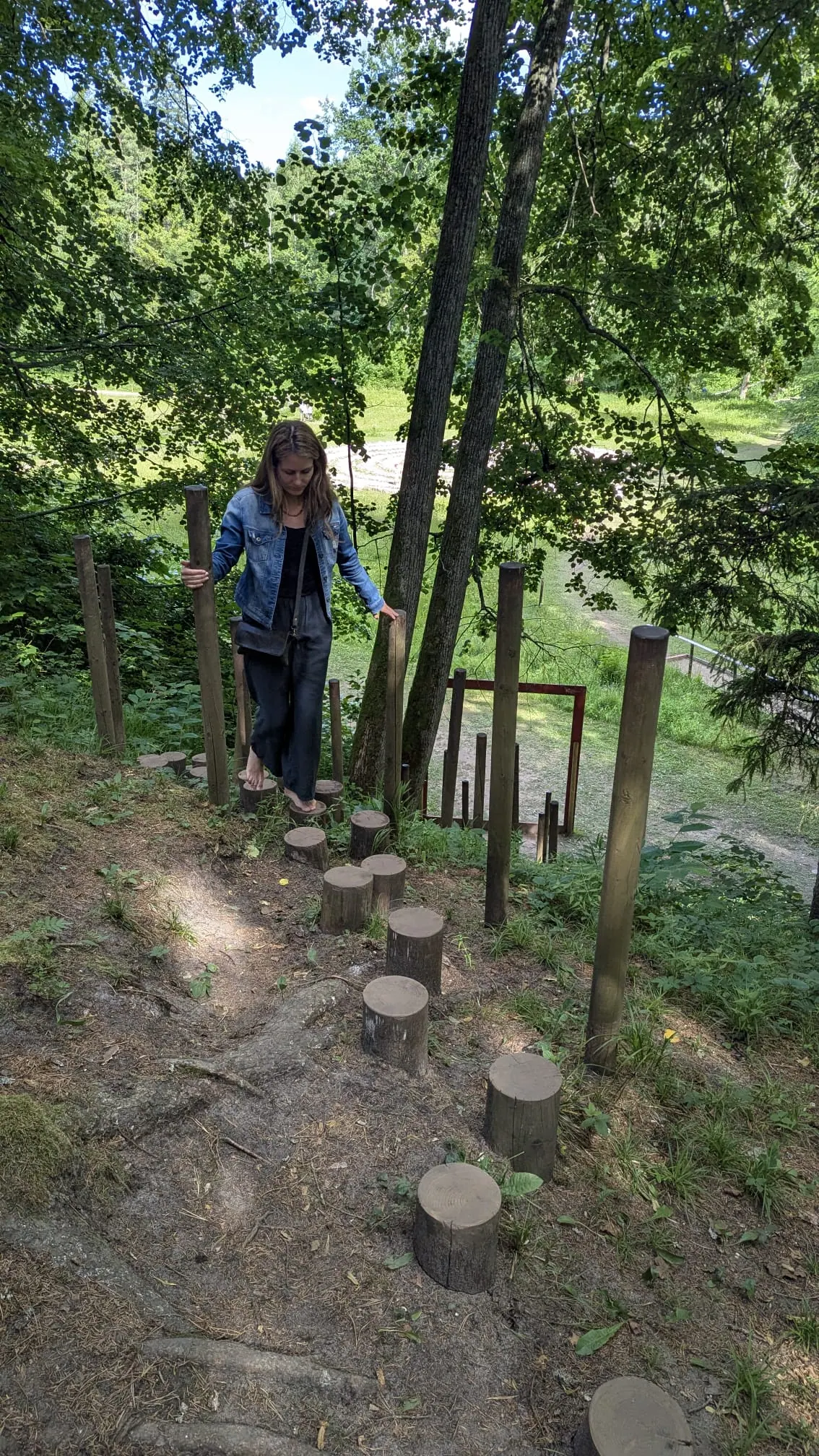
Wobbly, playful and harder when you stop looking ahead.
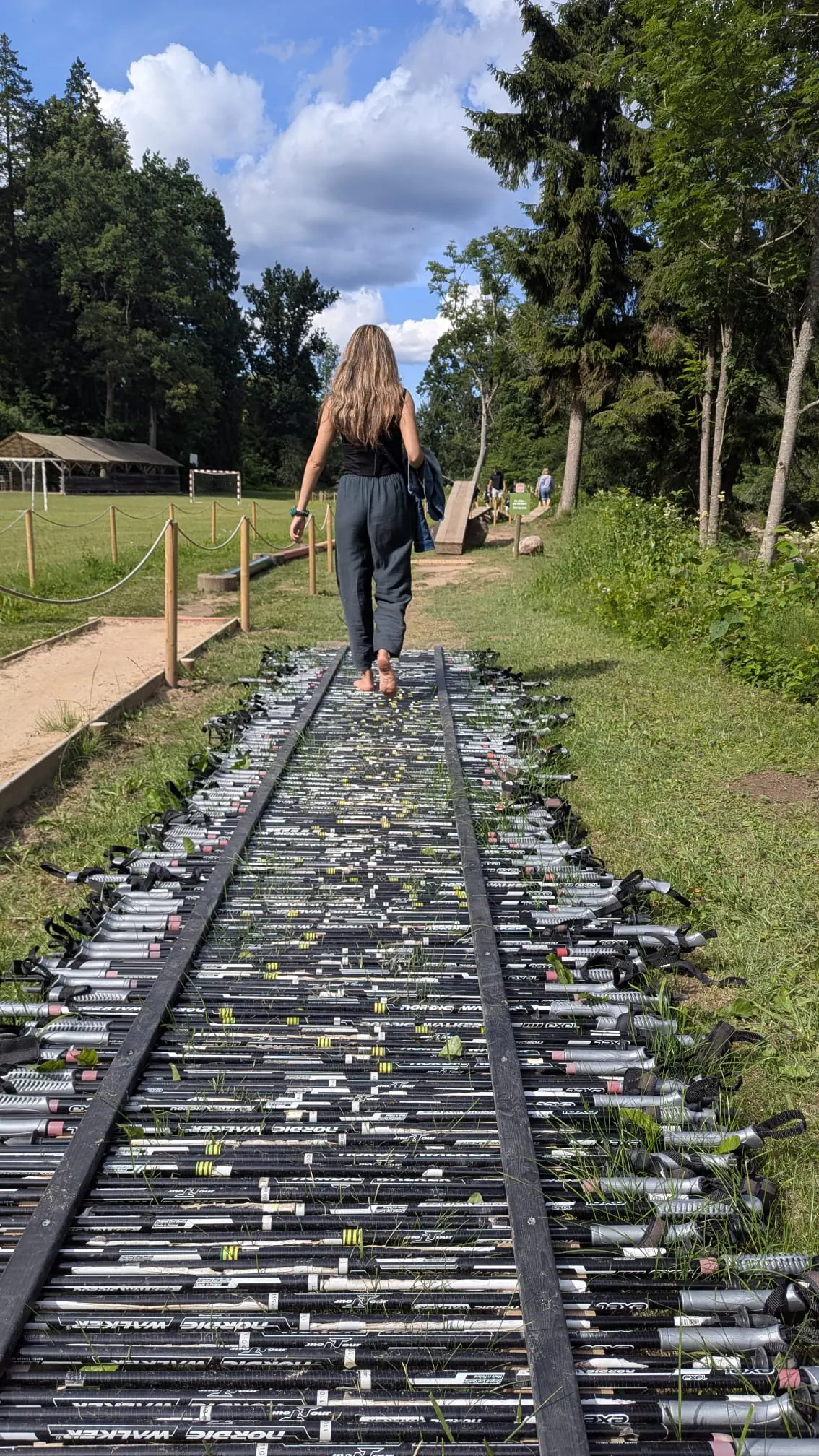
Ski poles
Odd, springy and surprisingly demanding underfoot.
Walking the different paths means sensing different materials, mostly natural, in direct contact through your senses. I'll admit that some parts are not so comfortable - you have to step on small pointy stones, or onto a special massage section that quickly reminds you your feet have been spoiled by shoes their whole life - but you keep going, because you know these things won't harm you. They only feel harder because your feet aren't used to them.
The path isn't just a long flat line either. There are wooden balance sections, and parts where you cross by holding onto wooden poles. At one point you step into mud up to your knees. That was the strangest part for me - I could feel the deep mud slowly swallowing my legs, and I decided I'd had enough and cut across to the exit point. As it should be, soon after came a small river crossing to wash all that mud off, which felt like a small reward for surviving it.
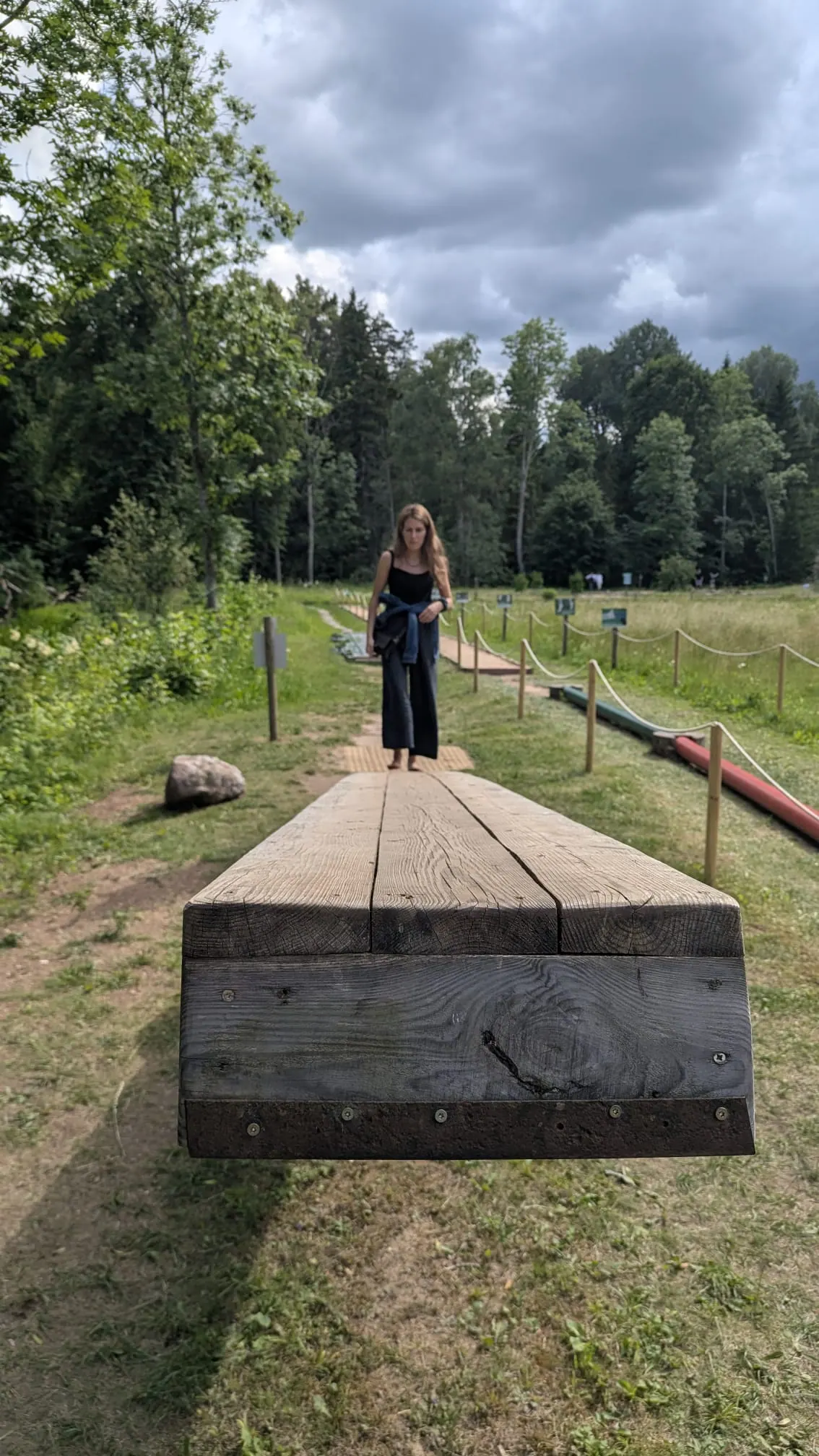
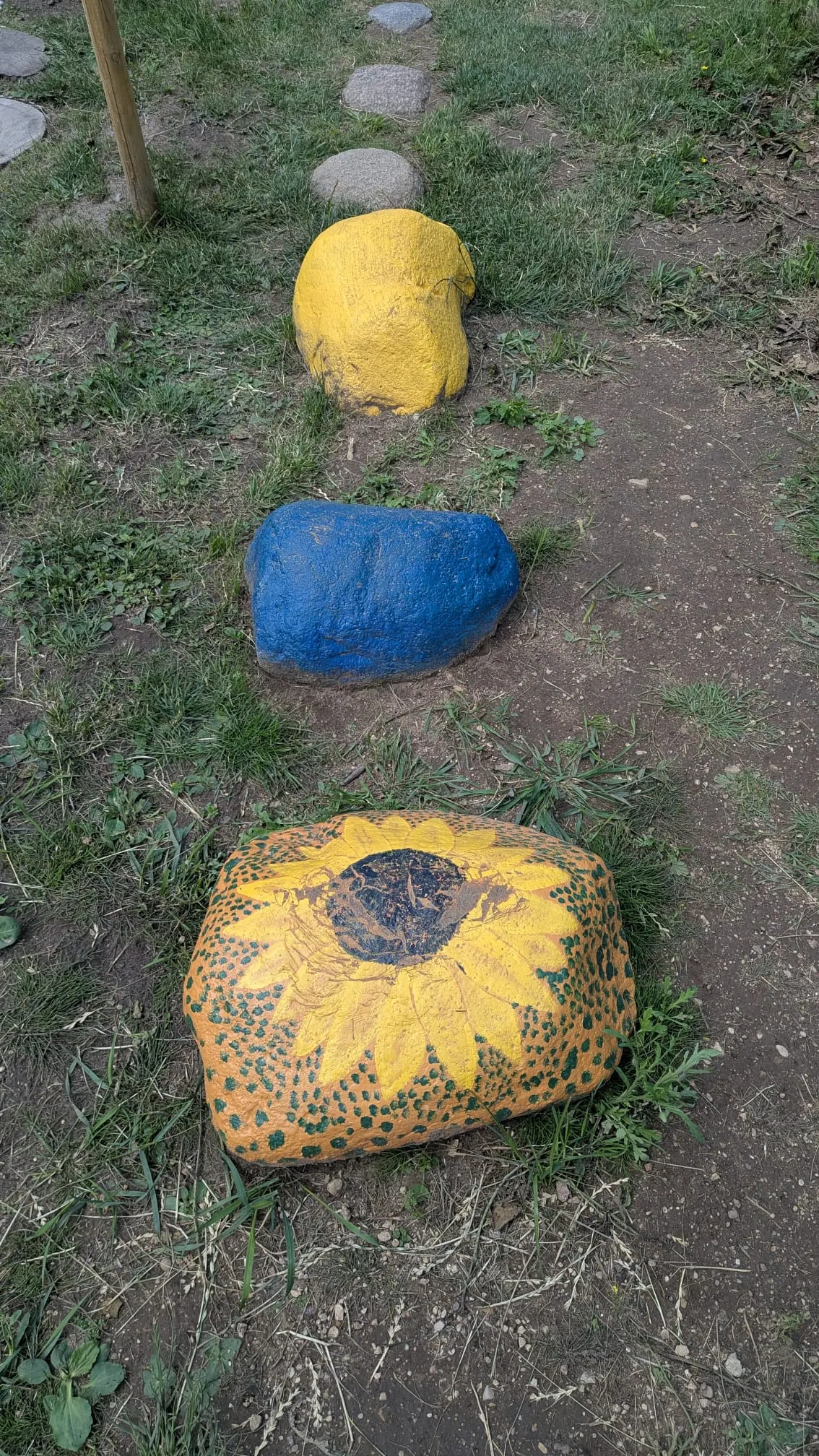
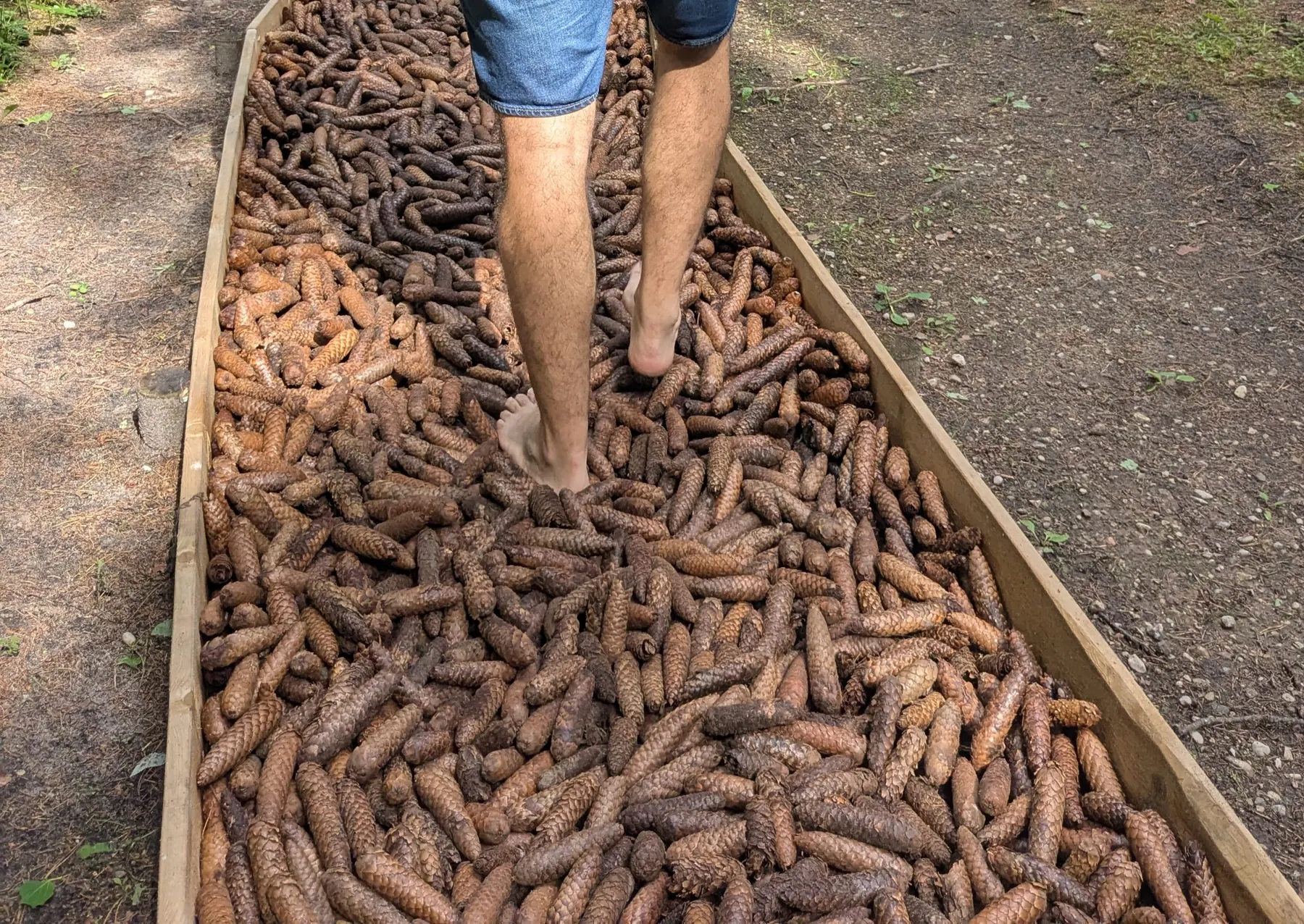
The variety of surfaces is really the whole idea. Over the trail your feet move across pebbles and larger stones, sand, pine cones, wood chips, reeds, clay, a rough pine trunk, cool river water, and soft peat in the shade of the trees - among many others. Not everything is natural, though: some of the massage sections use made surfaces, like the spiky acupressure mats that give your soles the biggest wake-up call, and there's even a stretch where you walk across a row of old ski poles laid on the ground. There was a stone labyrinth to walk, and in another part the ground was covered in different kinds of seeds. Along the way there's a section explaining the foot's chakras - the energy points in the sole, and how each one is said to connect to a part of the body and to different areas of life, like love, prosperity and friendship. It's a good thing to learn how much is said to be going on under your feet.
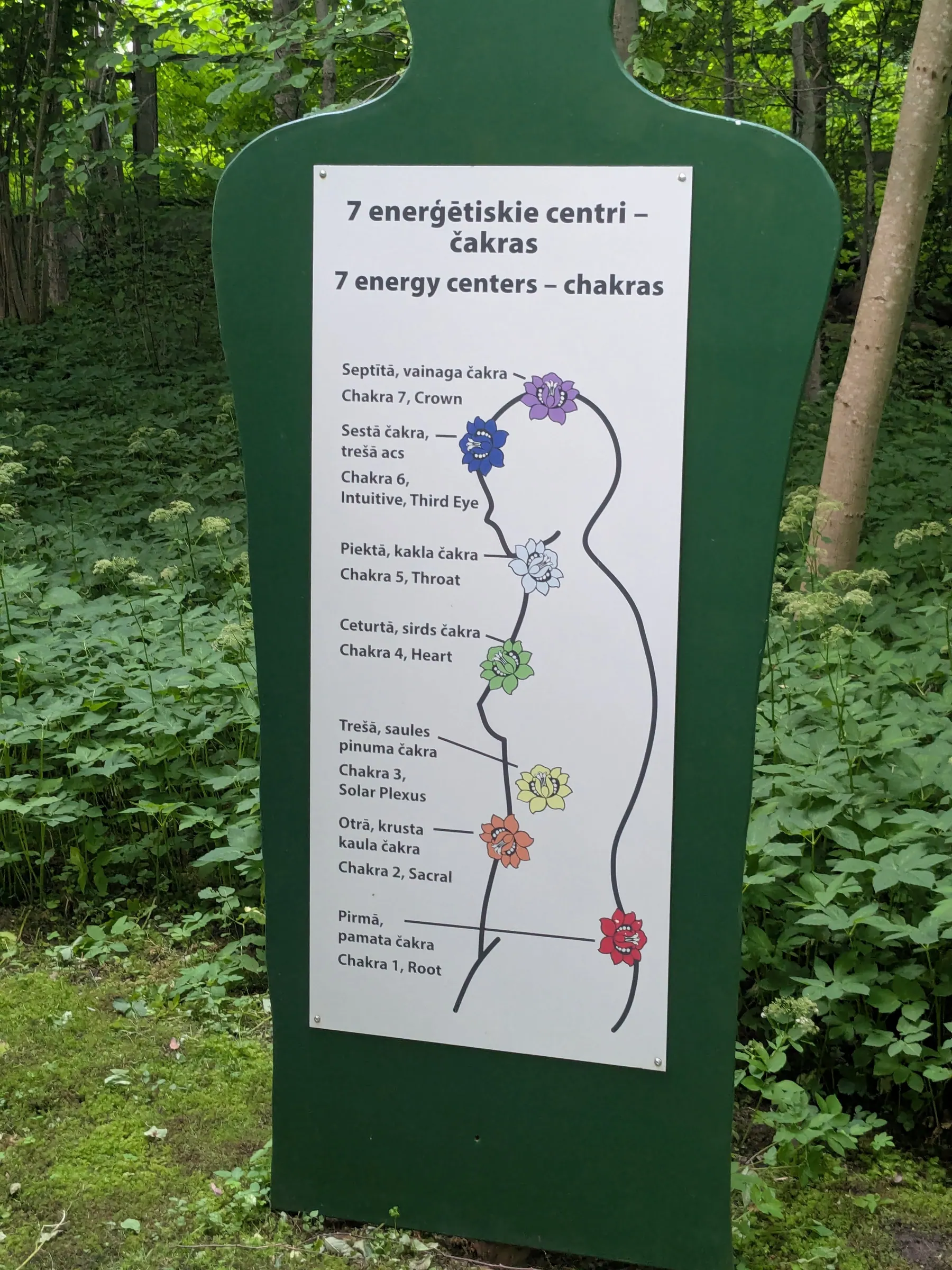
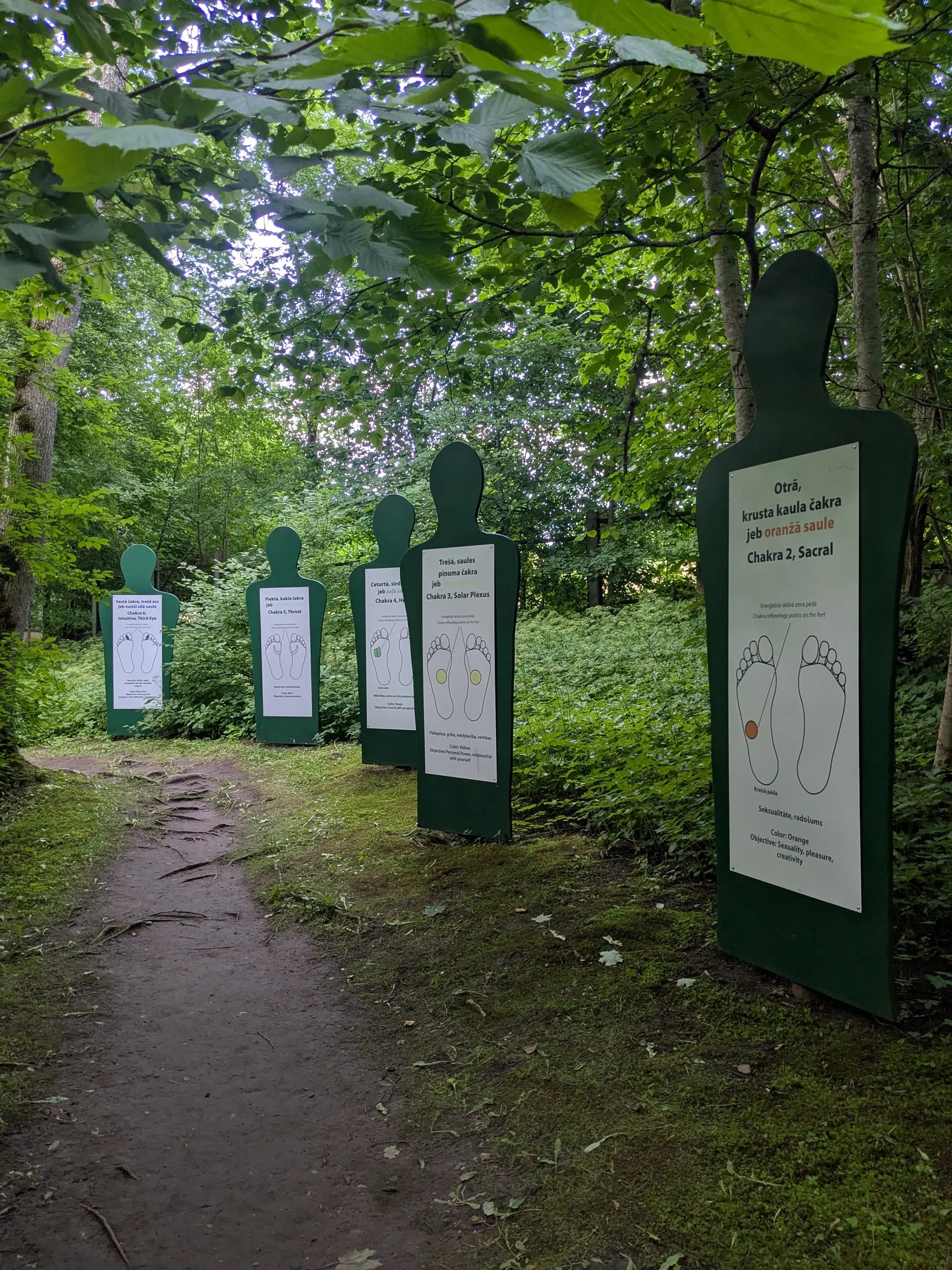
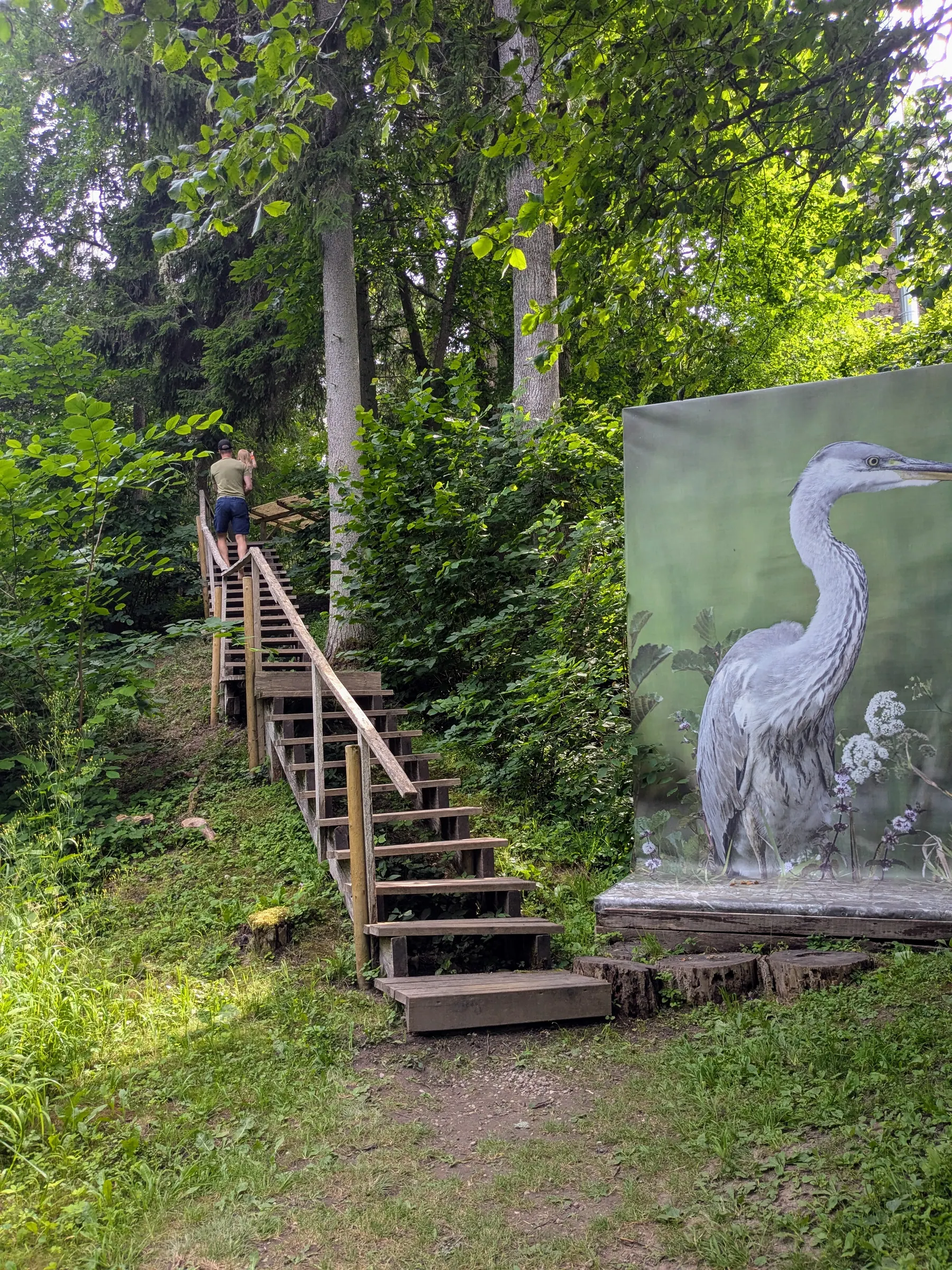
Most people in the park were adults with kids, because for children going barefoot is pure fun - but I think it brings out the inner child in adults too, walking in the mud with no one there to tell them off. It's also a good thing to do as a couple, which is how I did it - laughing at each other's reactions to the surfaces makes it even better. The path is very well maintained, and something I enjoyed were the posters of Latvian wildlife that appear along the way. There's even a section that uses the therapeutic Ķemeri mud.
If I had to pick a best part it would be hard, but I think what I liked most was feeling the contrasts - stepping from small sharp pebbles onto soft, shallow mud. Not the knee-deep pit, which I'd already escaped, but the smooth surface mud that squeezes up between your toes. Nothing feels better.
Feeling nature instead of looking at it
I mentioned the calm it brings, but I felt it most strongly here. Even me - an absolute overthinker - I forgot everything for a while, because when your feet are busy, your head goes quiet. Here, you feel nature directly, one step at a time.
The trail also runs beside Valguma lake, and the views there are stunning. Wherever you look it is forest, water and countryside, nothing artificial. It is the kind of place that pulls you fully into the present, which is something a normal walk rarely does. If you like the idea of green travel that is about being in nature rather than passing through it, this is exactly that.
 Read next Read the full Engure Lake day trip
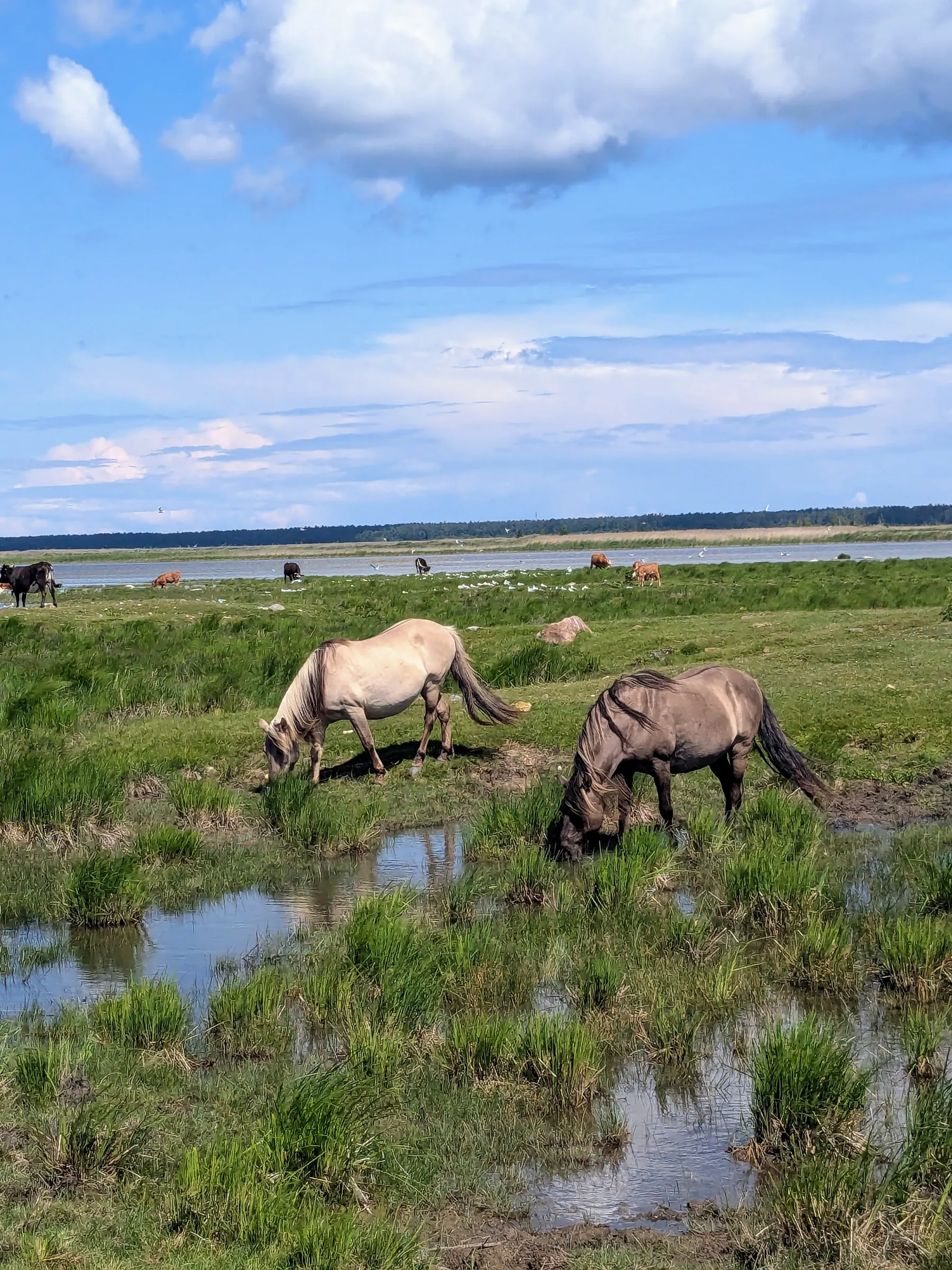
 The wider day trip, including Lake Engure, wild horses, Šlokenbeka Manor and Valguma Pasaule.
 Road trip itinerary Best Places to Visit in Latvia Beyond Riga
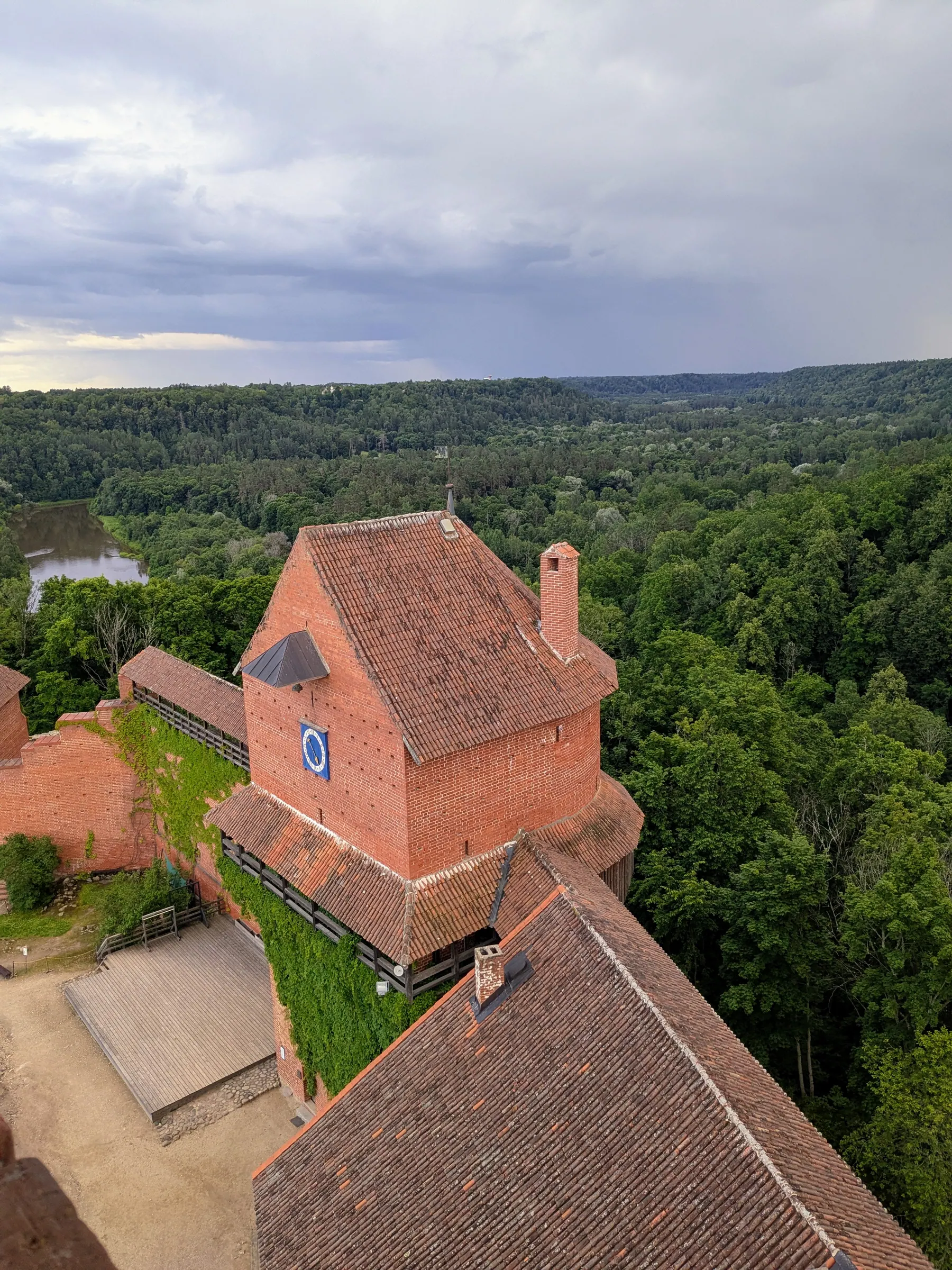
 Four flexible road trip routes and nature day trips across Vidzeme, Kurzeme and Zemgale.
 Recommended trip Continue to Sigulda and the Gauja Valley
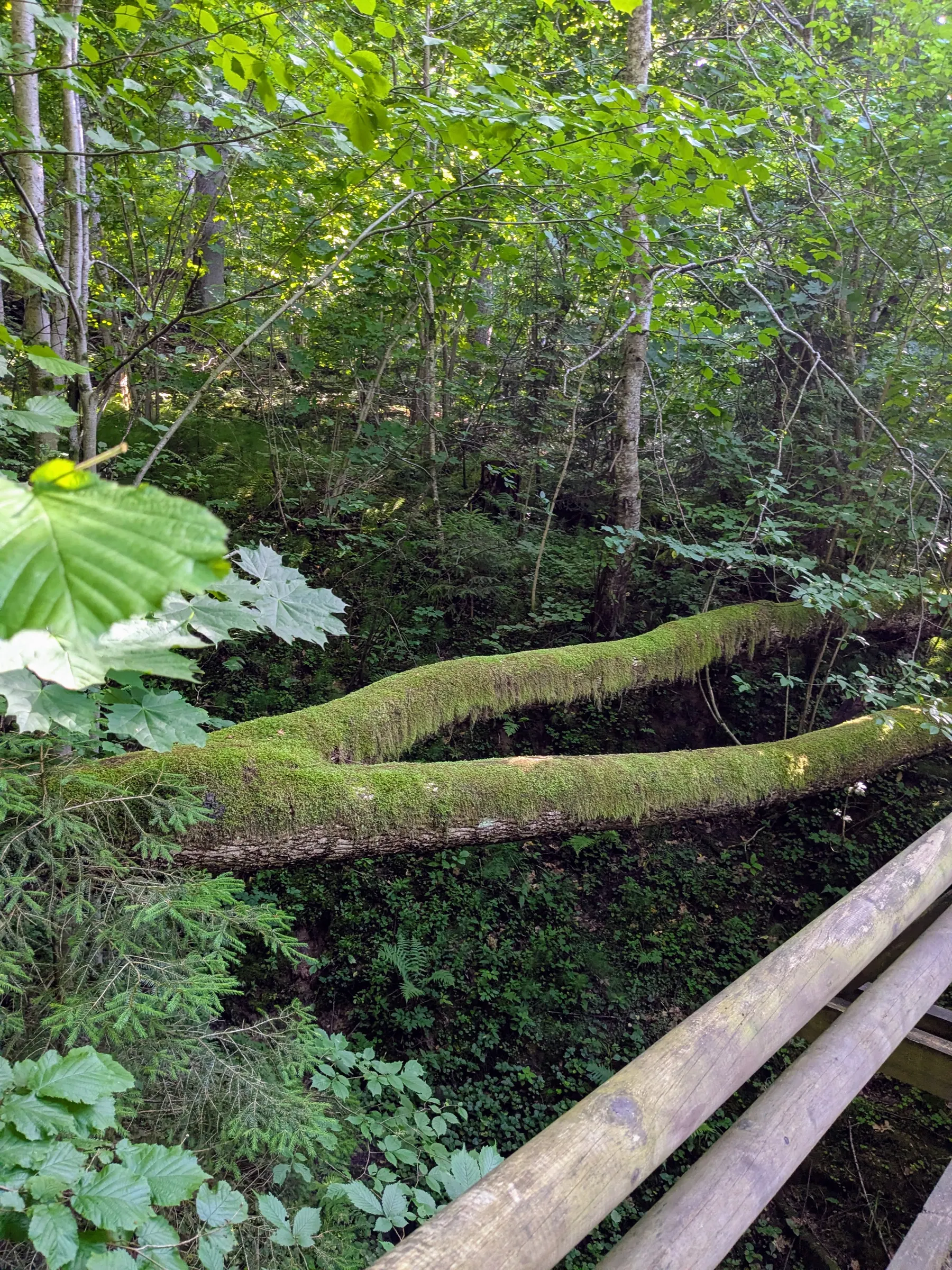
 A nature-filled Latvia trip with forests, trails and castle-country views.