

Latvia · Vidzeme, Kurzeme & Zemgale · Latvia
Best Places to Visit in Latvia Beyond Riga: Road Trip Routes & Day Trips
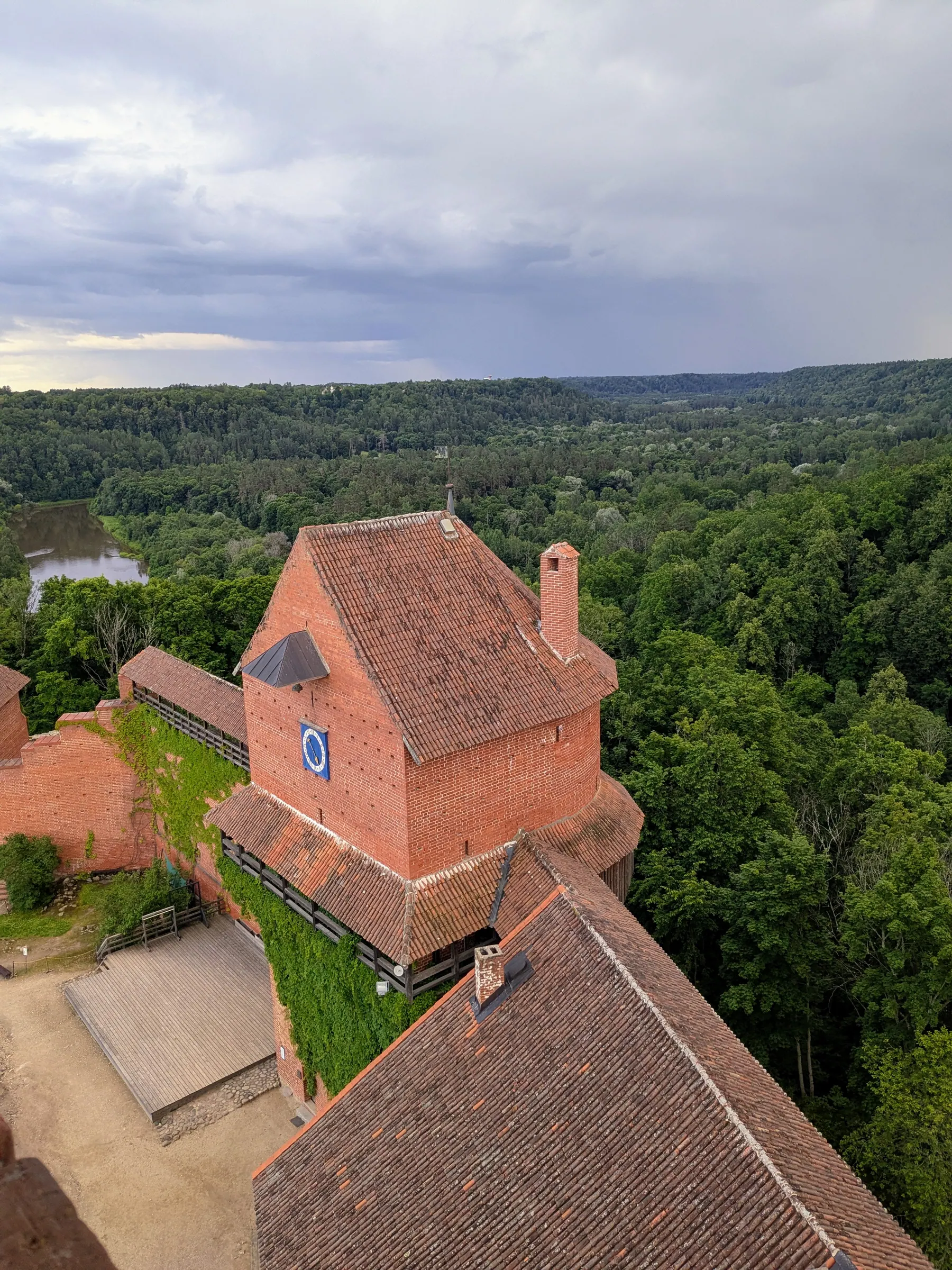
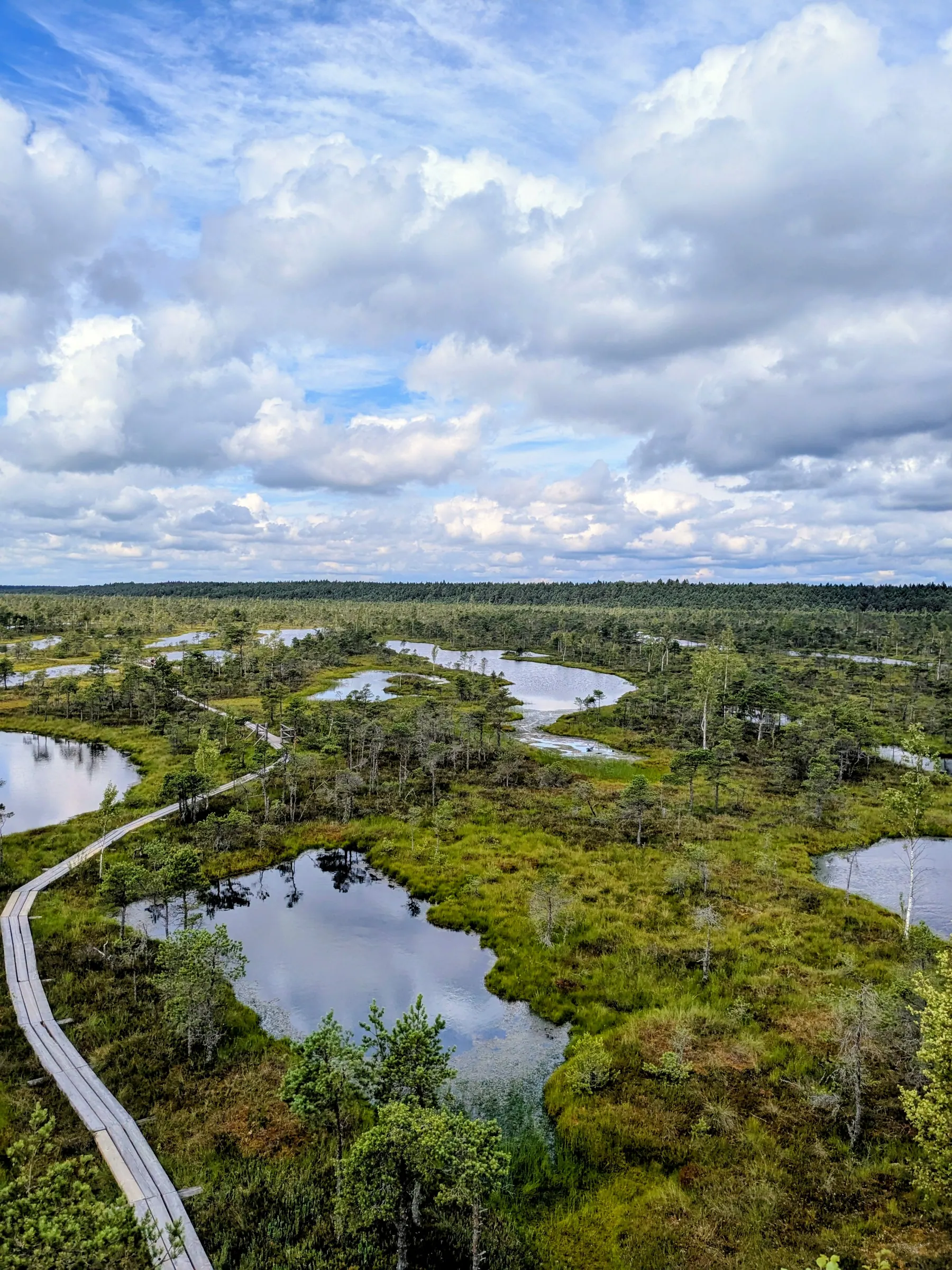
When most people think about visiting Latvia, they picture the Old Town of Riga and the famous coastal city of Jūrmala. But as someone who grew up here and has traveled this country from coast to border, I know that what makes traveling here so rewarding begins once you leave the capital behind: mist-covered bogs at dawn, wild Baltic coastal bluffs, medieval river valleys, and quiet cobbled towns where life moves at an unhurried tempo.
I visited these places on separate trips. This guide organizes those journeys into four regional routes: Gauja Valley and Cēsis in Vidzeme (Route 1), Ķemeri Bog and Lake Engure west of Riga (Route 2), the Baltic coast and towns of Kurzeme (Route 3), and Rundāle Palace and Bauska in Zemgale (Route 4). These routes are ideas, not a sequence you need to follow: each stands on its own, and any place that catches your eye can be visited separately. The shorter outings also work as day trips from Riga.
Renting a car in Riga and heading out onto the open country roads gives you the freedom to explore at your own pace. Riga is an obvious, essential stop that deserves a couple of days on foot, but it is intentionally not included in these regional routes.
These routes focus on Vidzeme, Kurzeme, and Zemgale. Eastern Latvia - especially Latgale, with its serene blue lakes, historic ceramic craft, and distinctive cultural traditions - deserves a separate trip rather than being squeezed into these itineraries.
Road Trip Routes & Day Trips Beyond Riga
Riga is the natural hub for exploring the country, with straightforward highways branching out across Latvia’s distinct regions:
- Route 1 (Northeast / Vidzeme): Sigulda, Līgatne, and Cēsis in the Gauja Valley - easily visited as separate day trips from Riga or as an unhurried 3-day loop through red sandstone cliffs, forest trails, and medieval castles.
- Route 2 (West of Riga / Coastal Nature): Great Ķemeri Bog and the Lake Engure pastures make a full-day nature route. Ķemeri is roughly 45-60 minutes from Riga; allow about 1½ hours to reach Lake Engure Nature Park directly, and longer if you stop at the bog first. This route also works as a first day before Kurzeme.
- Route 3 (Western Latvia / Kurzeme): A 3-to-4-day road trip through the cider orchards of the Abava Valley, the timber architecture and waterfall of Kuldīga, the sea bluffs of Jūrkalne, and the Tsarist naval ruins of Liepāja.
- Route 4 (Southern Latvia / Zemgale): Rundāle Palace and Bauska Castle - a day trip from Riga or an overnight stay in the area.
Route 1: Gauja Valley & Vidzeme (Days 1-3)
Base: Sigulda, Līgatne or Cēsis · Days 1-3 · Transit: ~50 mins drive northeast from Riga to Sigulda (53 km), then through Līgatne (+20 km) to Cēsis (+25 km)
Heading northeast from Riga into Gauja National Park is the classic first leg of exploring Latvia beyond the capital - red sandstone river bluffs, deep forested gorges, and medieval stone fortresses just an hour from the city. You can experience these stops as individual day trips from Riga, but basing yourself in the valley gives you unhurried mornings and peaceful evening walks along cobblestone lanes.
Sigulda, Gauja River Gorge & Turaida Medieval Castle
Base: Sigulda or Krimulda · Day 1 · Transit: ~50 mins drive northeast from Riga (53 km via A2 highway)
Often called the “Switzerland of Vidzeme,” Sigulda sits perched on steep forested ridges overlooking the ancient Gauja River Valley, where ruined medieval castles face each other across the forested river gorge.
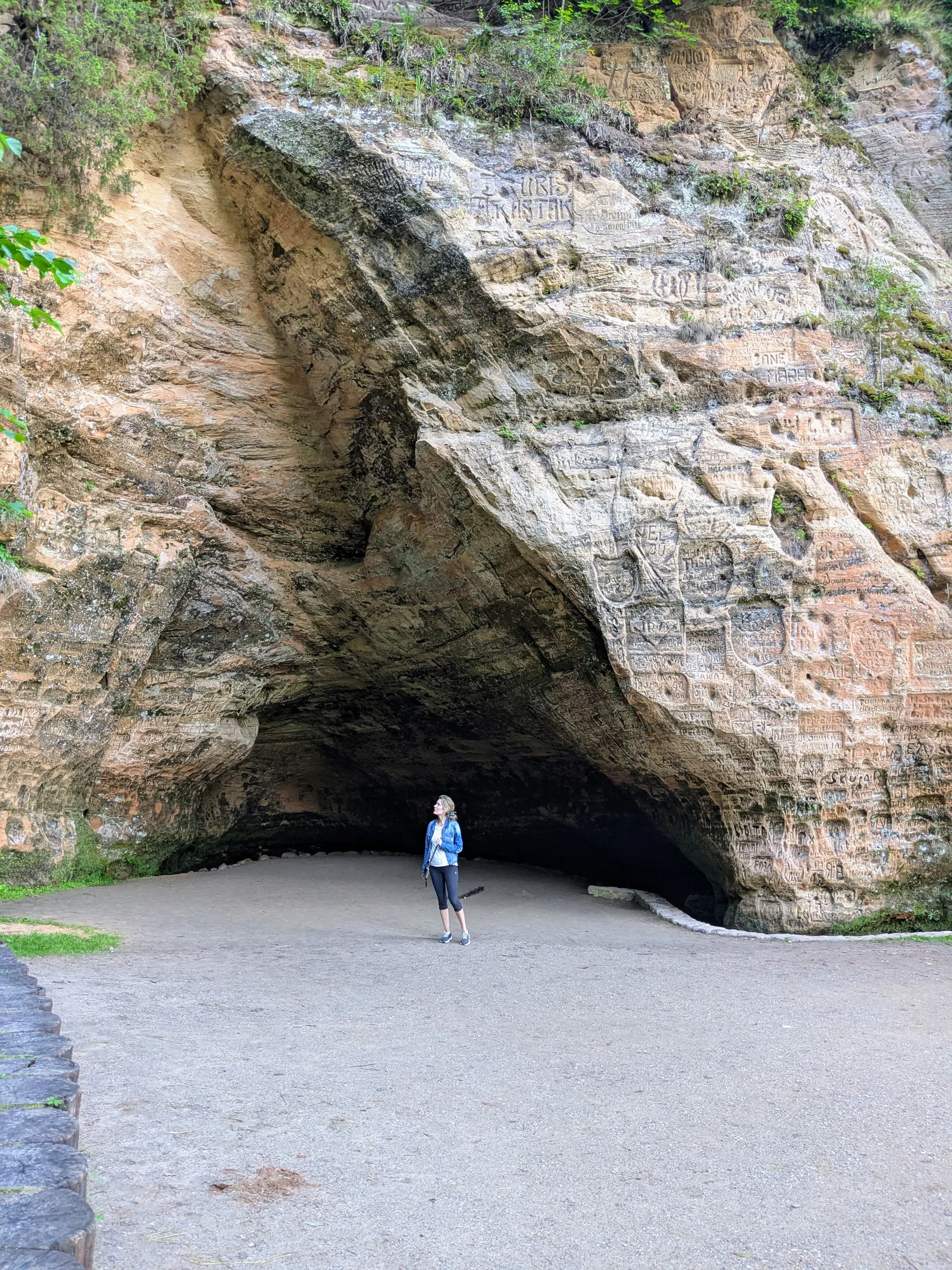
- Cable Car, Gutman’s Cave & Turaida Castle: Ride the aerial cable car 43 meters above the river gorge from Sigulda to Krimulda for panoramic canopy views, walk into Gutman’s Cave (Gūtmaņa ala) to see centuries of historic inscriptions carved into the sandstone, and explore the red-brick fortifications and tower views of 13th-century Turaida Castle.
Līgatne Nature Trails, Sandstone Cliffs & Secret Soviet Bunker
En route to Cēsis · Day 2 · Transit: ~20 mins drive northeast from Sigulda (~20 km)
Set in a deep wooded ravine, Līgatne grew around an 1815 paper mill, creating a unique village known for its red sandstone cliffs, historic cave cellars, forest trails, and a secret Cold War relic.
- Wildlife Trails & Sandstone Cliffs: Walk the quiet forested paths of Līgatnes dabas takas to observe Latvia’s native wildlife (brown bears, lynx, and moose) in natural forest enclosures, and explore Lustūzis cliff and Anfabrika cliff, where hundreds of vaulted cellars were hand-carved directly into the sheer red sandstone bluffs.
- Secret Soviet Bunker Tour: Head 9 meters underground for a guided tour of the top-secret Cold War fallout shelter (Padomju slepenais bunkurs). Built beneath a rural rehabilitation center for Soviet Latvia’s communist leadership in the event of nuclear war, it remains completely preserved with original telecommunications gear, maps, air filtration systems, and a Soviet canteen.
Cēsis Medieval Castle by Candle Lantern & Old Town
Base: Cēsis Historic Old Town · Day 3 · Transit: ~25 mins drive northeast from Līgatne (~25 km)
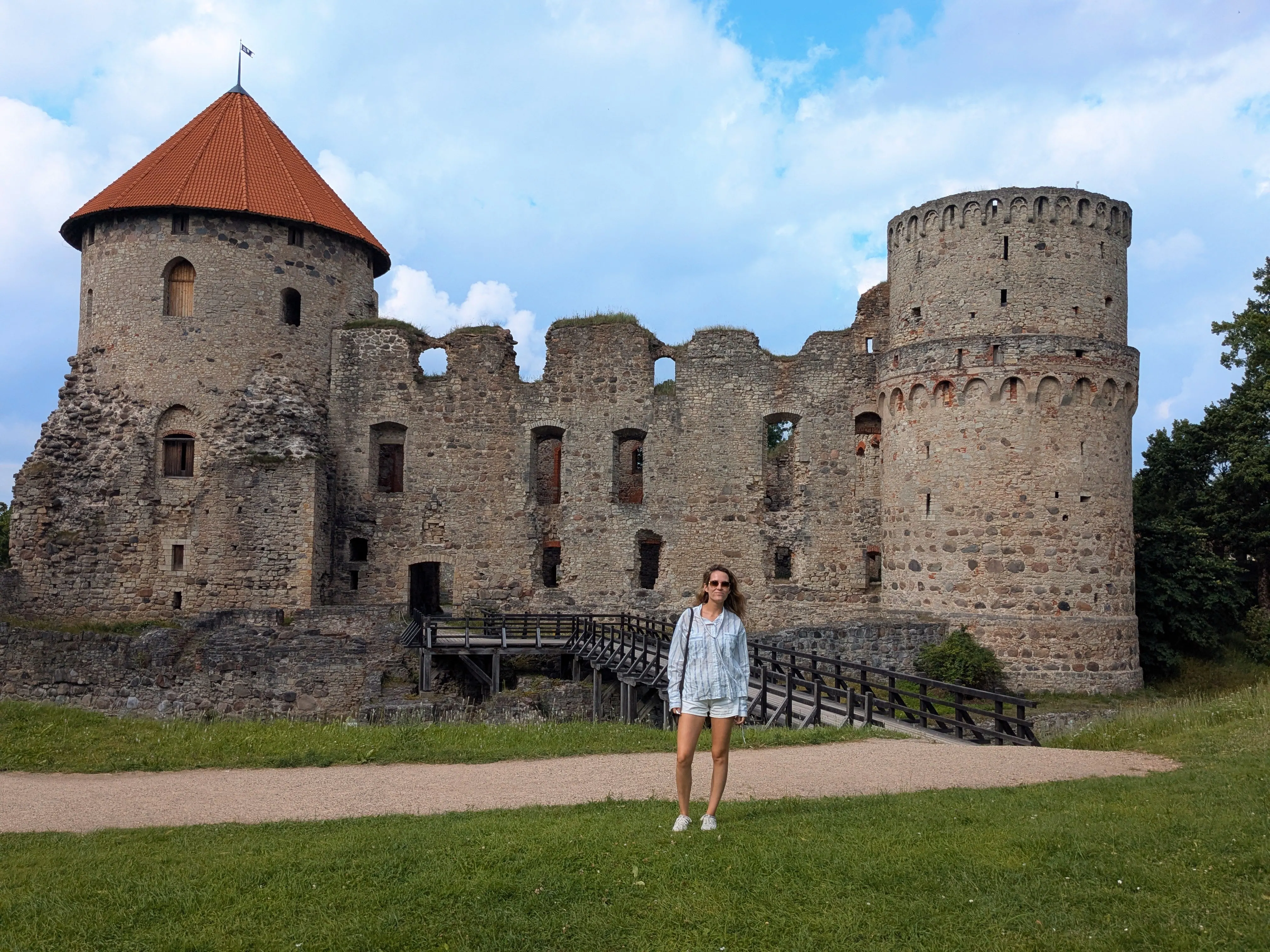
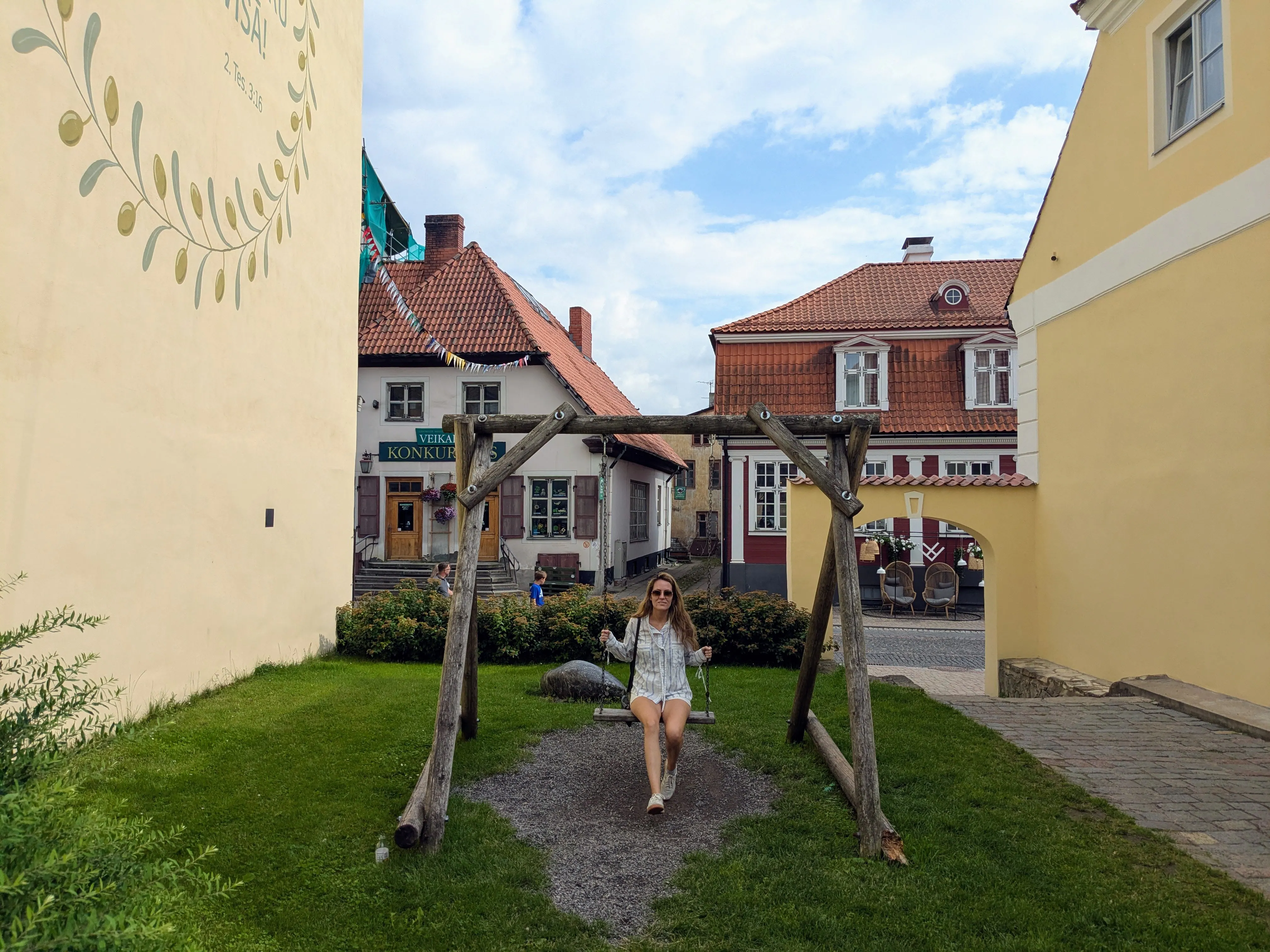
When I revisited Cēsis this past summer, it was one of my favorite memories of the entire country. Founded in 1206, Cēsis is the historical heart of Vidzeme, home to leafy parks, cobblestone streets, and the most atmospheric medieval castle complex in the Baltics.
- Western Tower Lantern Walk & Cobbled Lanes: Pick up an authentic candle lantern at the tower entrance to climb the pitch-black spiral staircase of the 13th-century Western Tower, stroll through Castle Park, and wander the pedestrian lanes and cafes around Rose Square (Rožu laukums).
Optional Gauja Stops: Canoeing & Sandstone Cliffs
If you have extra time or want to add outdoor adventure in the Gauja Valley:
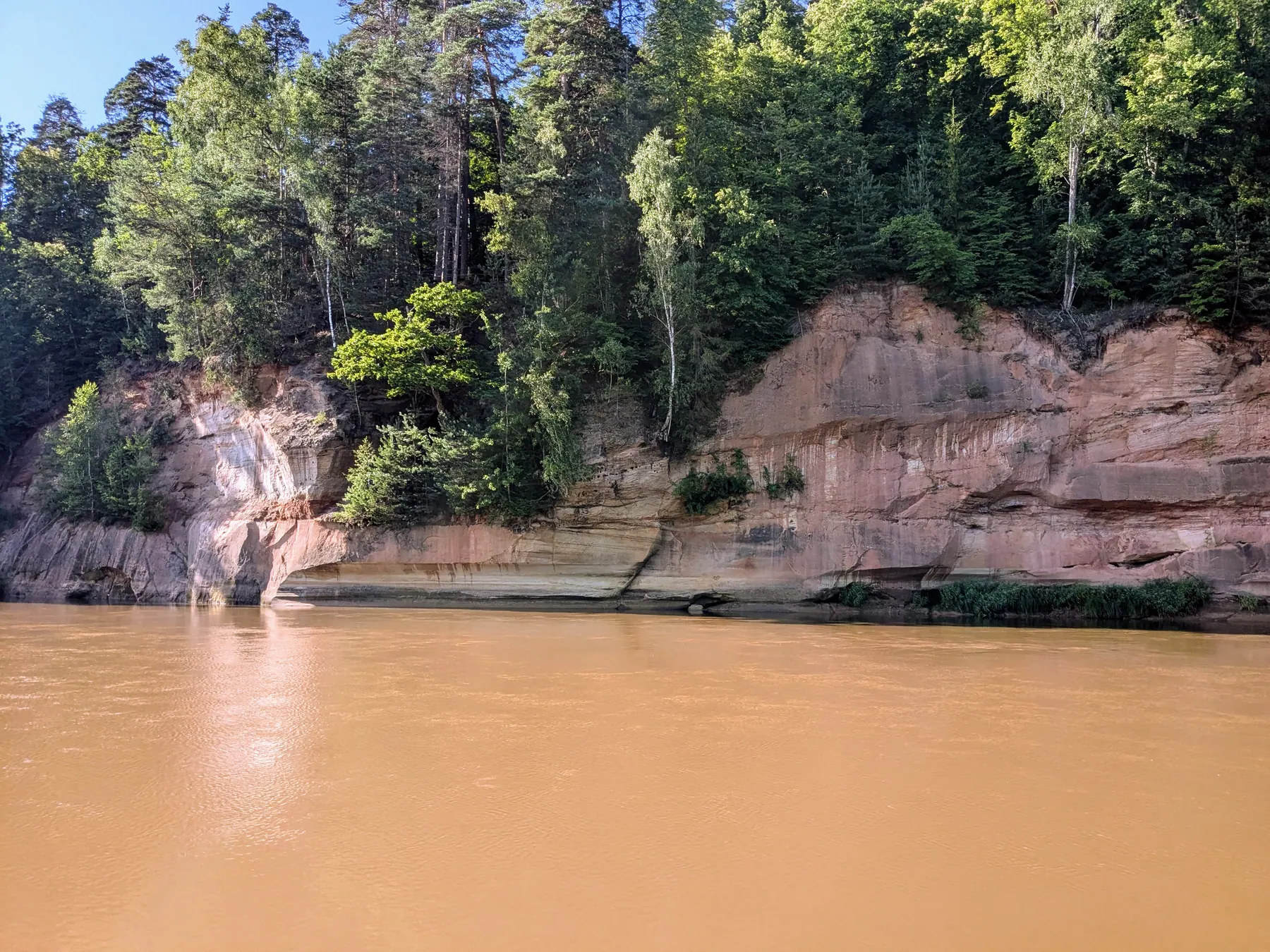
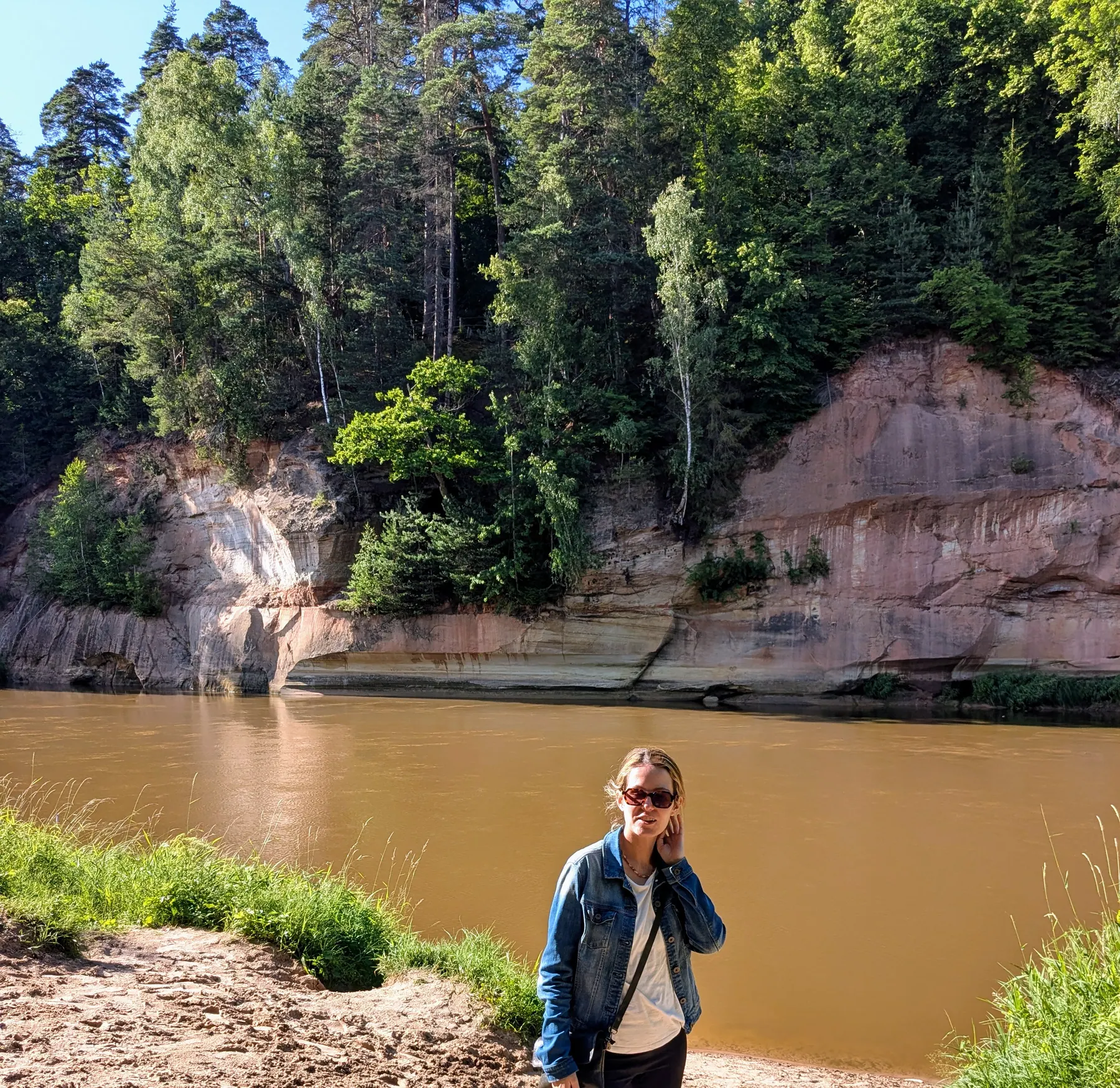
- Canoeing the Gauja River: Renting a canoe or kayak for a day float down the river between Cēsis and Līgatne (or down to Sigulda) is one of the best summer experiences in Latvia, drifting peacefully beneath towering red sandstone cliffs, forest canopies, and quiet sandbanks.
- Ērgļu Klintis (Eagle Cliffs): Just a 10-minute drive north of Cēsis, these sheer 700-meter-long red sandstone cliffs rise dramatically above the bend of the Gauja River, with easy wooden walkways and viewpoint platforms.
Route 2: Great Ķemeri Bog & Lake Engure
Base: Riga or Lake Valgums · 1 full day · Drive: roughly 45-60 mins from Riga to Ķemeri; about 1½ hrs direct to Lake Engure Nature Park
Great Ķemeri Bog and Lake Engure are two of my favorite nature landscapes west of Riga. Ķemeri can be a half-day outing on its own, while visiting both places makes a full day once you include the drive to Lake Engure Nature Park, walks, and stops. You can return to Riga afterward or use Route 2 as a separate first day before heading deeper into the Abava Valley and Kurzeme on Route 3.
Great Ķemeri Bog & Lake Engure: Sunrise Boardwalks & Wild Horses
Base: Day trip from Riga, or overnight near Lake Valgums (Smārde) · Transit: Allow roughly 45-60 mins from Riga to Ķemeri, then extra time to continue to Lake Engure Nature Park; the park is about 85 km and 1½ hrs from Riga by car without stops
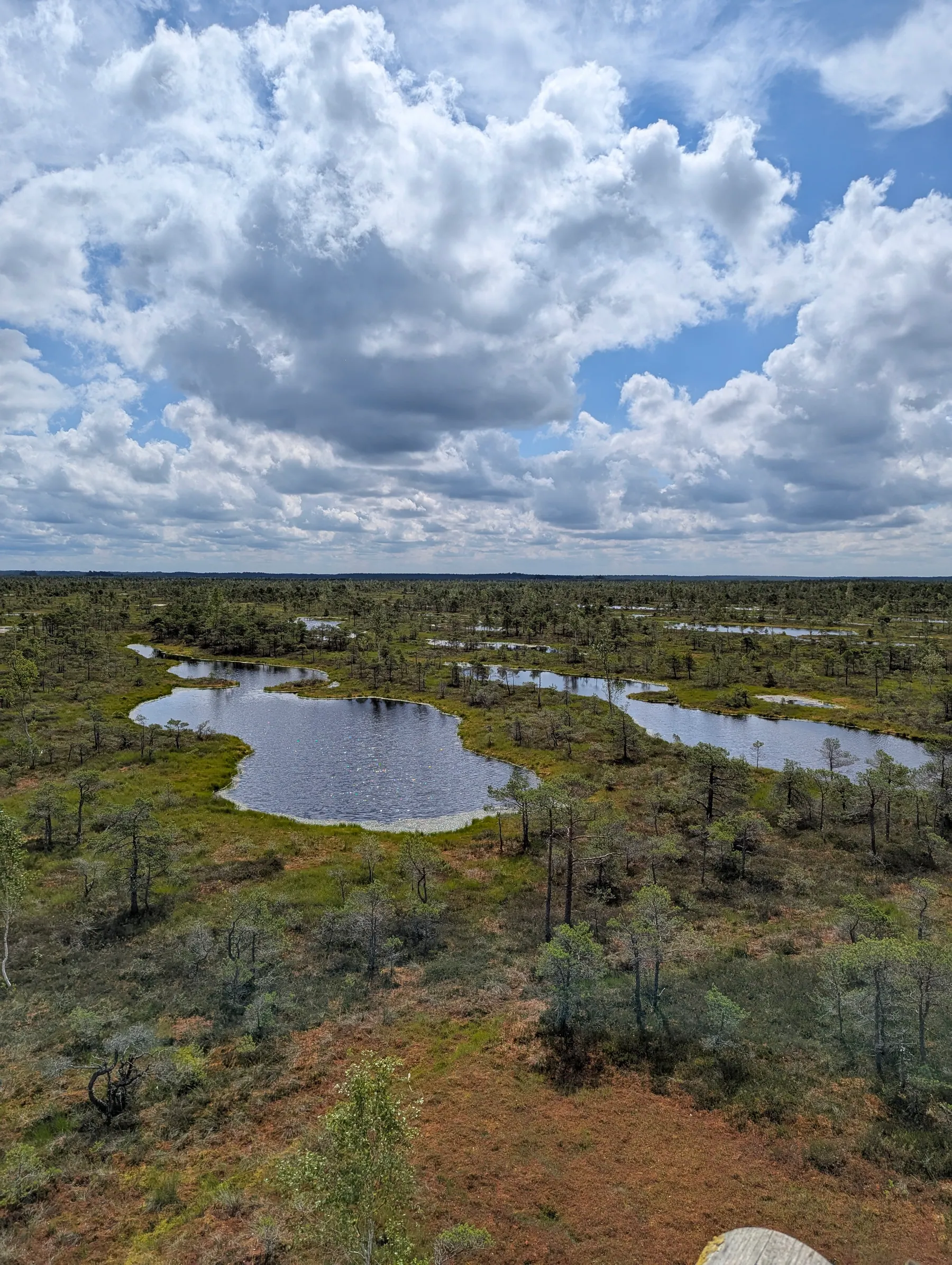
I have walked the Ķemeri boardwalk several times, and because the wooden trails are completely open all the time with no gates or opening hours, you can visit at sunrise to experience the mist rising off the dark bog pools or enjoy an unhurried walk in the quiet evening light.
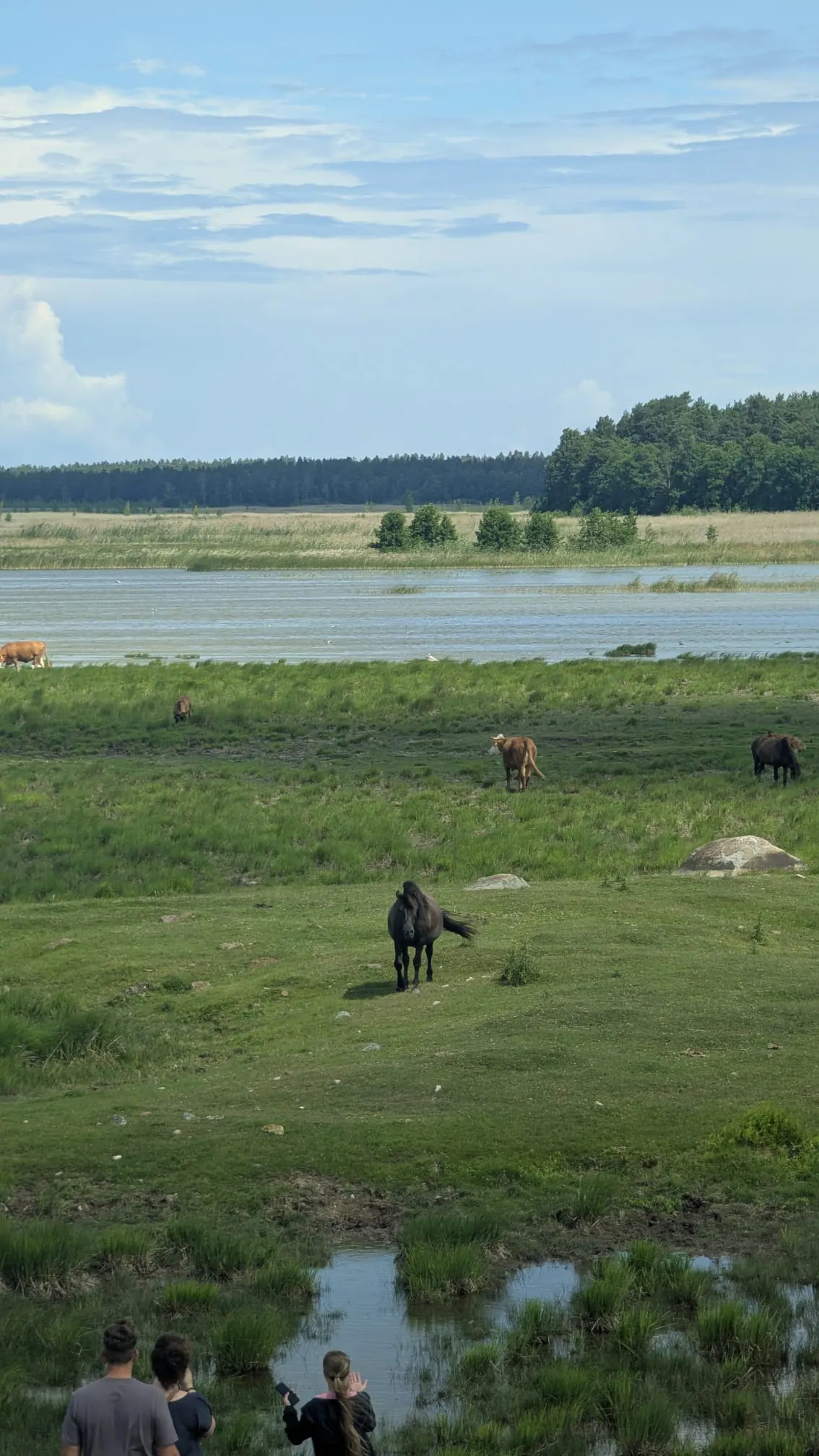
- Great Ķemeri Bog, Lake Engure Wild Horses & Optional Barefoot Trail: Walk the 3.5 km Ķemeri bog loop and climb the wooden observation tower - because the boardwalk is open all the time, arriving early gives you the wooden paths in complete peaceful stillness. Continue north to Lake Engure Nature Park to watch semi-wild horses and Highland cattle graze in the meadows. If time and energy allow, add the barefoot tactile trail at Valguma Pasaule; otherwise, return to Riga for the evening or continue to an overnight stay near Lake Valgums.
Route 3: The Kurzeme Road Trip (Western Latvia)
Base: Kuldīga & Liepāja · 3-4 Days · Transit: Drive west from Riga (or Lake Valgums) through the Abava Valley to Kuldīga, then along the Baltic coast to Liepāja
Kurzeme is Latvia’s historic western region - an expansive landscape of peaceful river valleys, preserved 17th-century wooden towns, amber-strewn beaches, and dramatic maritime fortresses. Give this route three or four days so the Abava Valley, Kuldīga, the wild coast, and Liepāja each have room to breathe. If you also want Ķemeri and Lake Engure, make Route 2 a separate preceding day rather than squeezing both into a morning.
Suggested 3-day Route 3 plan: Day 1 - leave Riga, visit Sabile (with Kandava only if time allows), then spend the afternoon and night in Kuldīga. Day 2 - drive via Jūrkalne to Liepāja and stay overnight. Day 3 - explore Liepāja and Karosta, then allow about 3-3½ hours for the direct 220 km drive back to Riga, plus breaks and any airport car return. With a fourth day, add a second night in Kuldīga before the coastal drive or in Liepāja before the return for a slower pace.
Abava River Valley - Stone Bridges, Vineyards & Cider Country
Base: Kuldīga · Day 1 morning stop en route to Kuldīga · Transit: Drive west from Riga (or Lake Valgums) to Sabile, with an optional Kandava detour
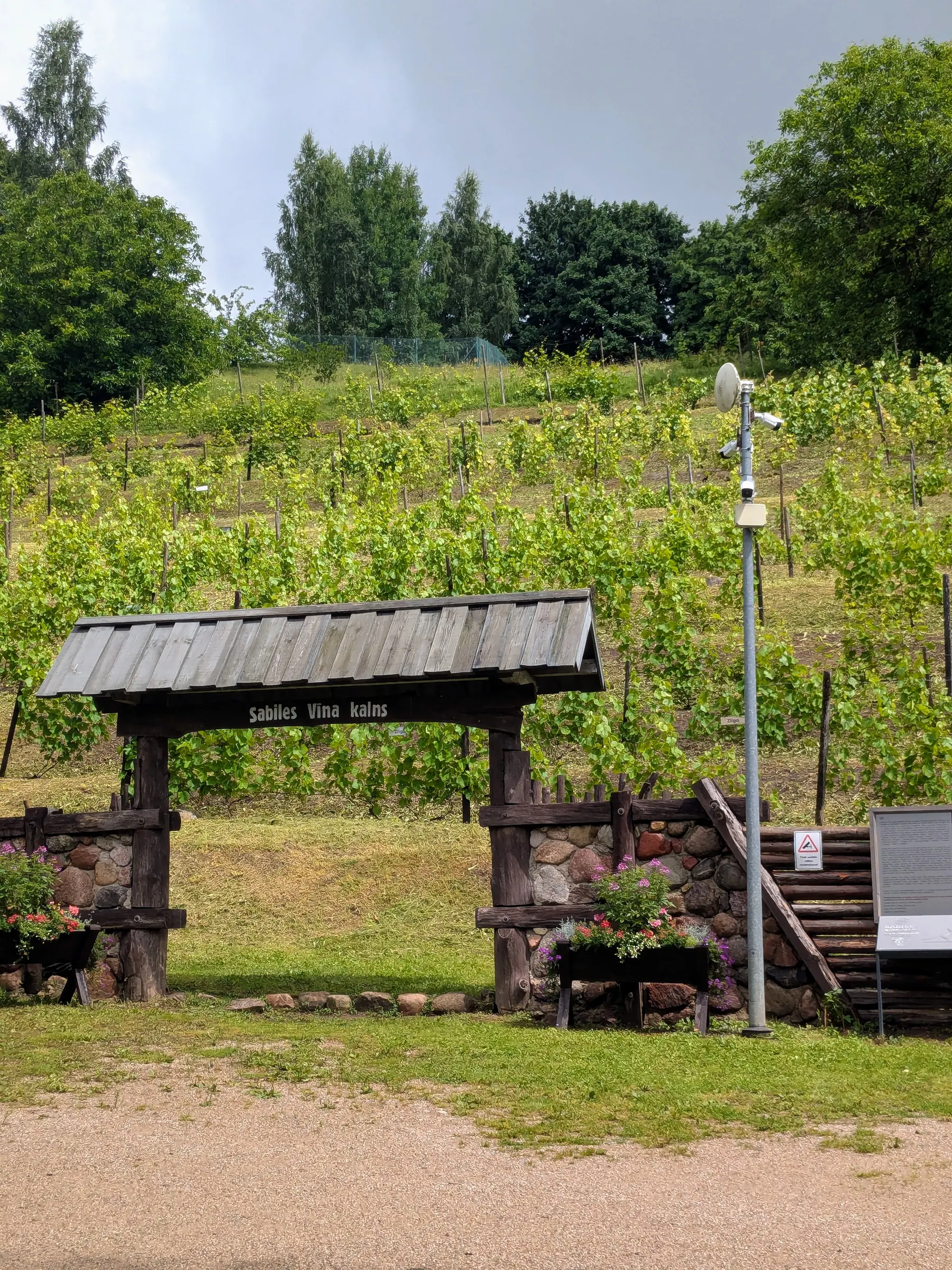
Driving west towards Kuldīga, the scenic Abava River Valley makes for a rewarding morning detour, with Sabile being the true standout stop. Sabile is famous for its open-air hillside vineyard and craft apple cider tasting, while nearby Kandava is worth a brief pause for its historic boulder bridge only if you have extra time to spare.
- Sabile Wine Hill & Cider Tastings (with Optional Kandava): Head directly to Sabile to explore Vīna kalns (Wine Hill) - one of the northernmost open-air vineyards in the world - and sample crisp local craft cider at Sabiles Sidra Nams. If you have extra time on your hands, you can also make a quick stop in Kandava to see its 19th-century stone bridge and Couronian hillfort, before continuing west to spend the rest of the day in Kuldīga.
Historic Kuldīga - Europe’s Widest Waterfall & Wooden Heritage
Base: Kuldīga Old Town · Day 1 afternoon and evening · Transit: ~45 mins drive west from Sabile (~48 km)
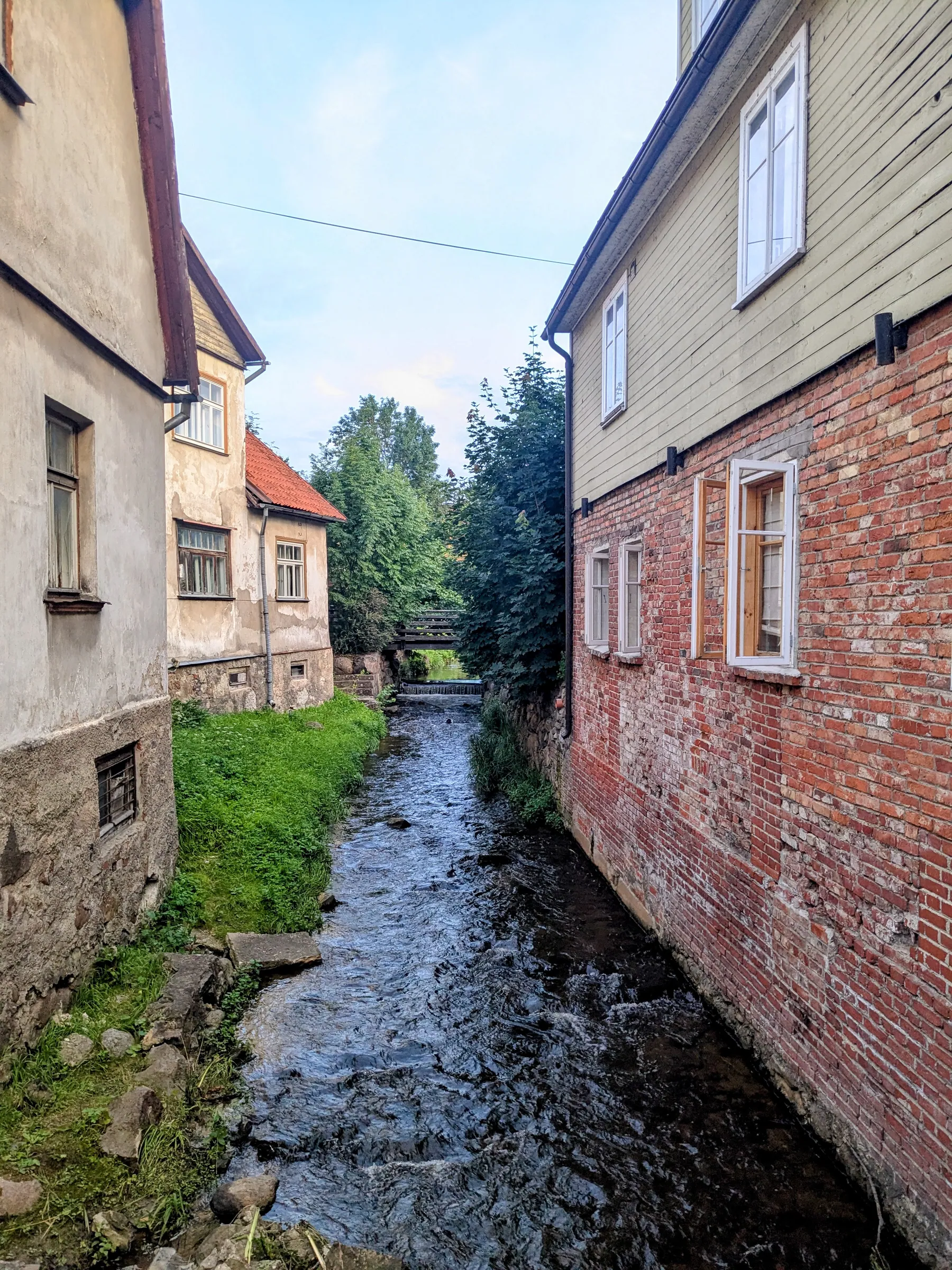
I have visited Kuldīga since childhood because part of my family comes from here, but returning this summer as an adult made me appreciate its magic in a completely new way. Awarded UNESCO World Heritage status in 2023, its preserved 16th to 18th-century wooden houses, weathered red clay tiles, and cobbled lanes along the winding Alekšupīte stream have an authentic soul that captivates you immediately.
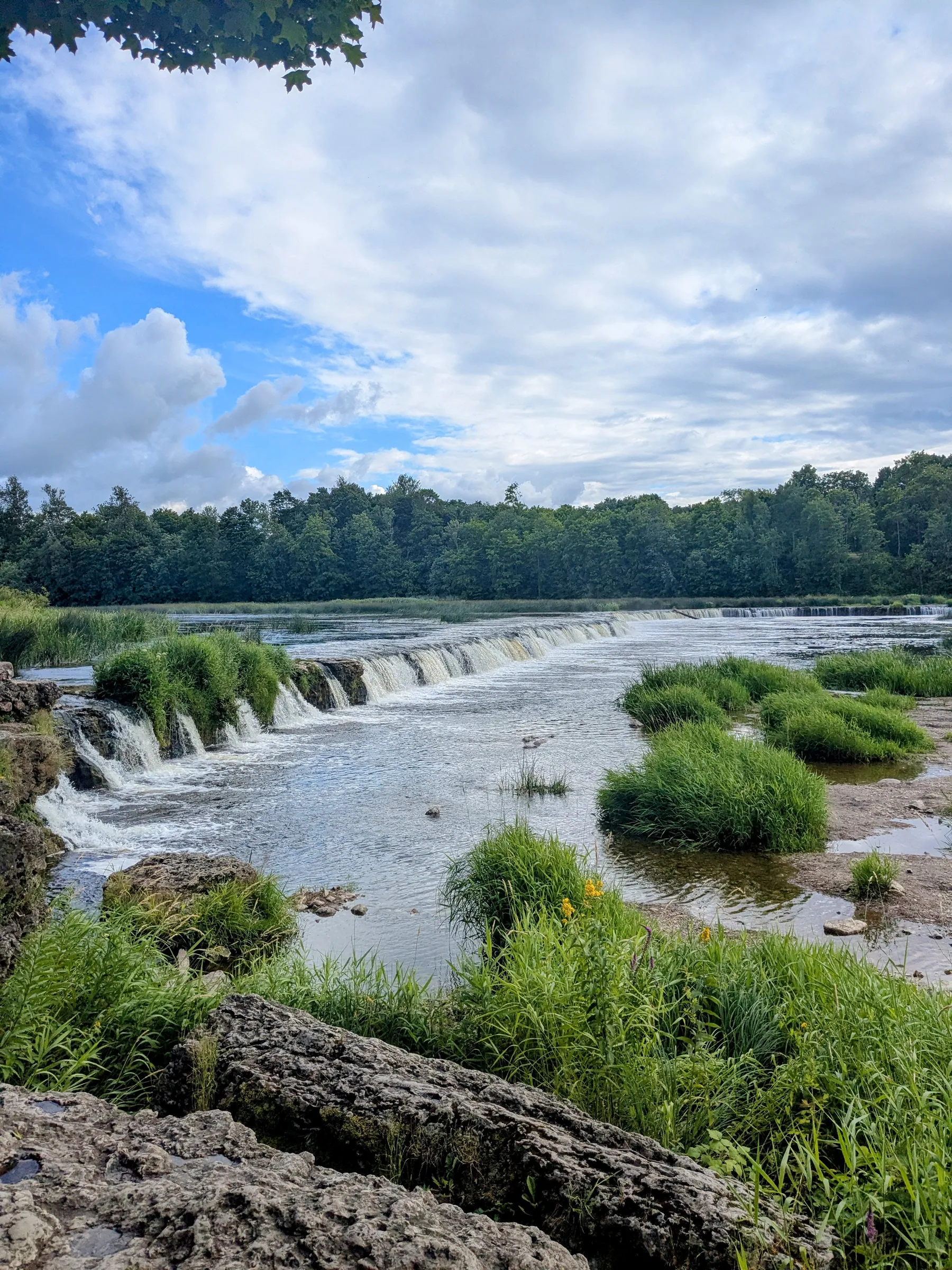
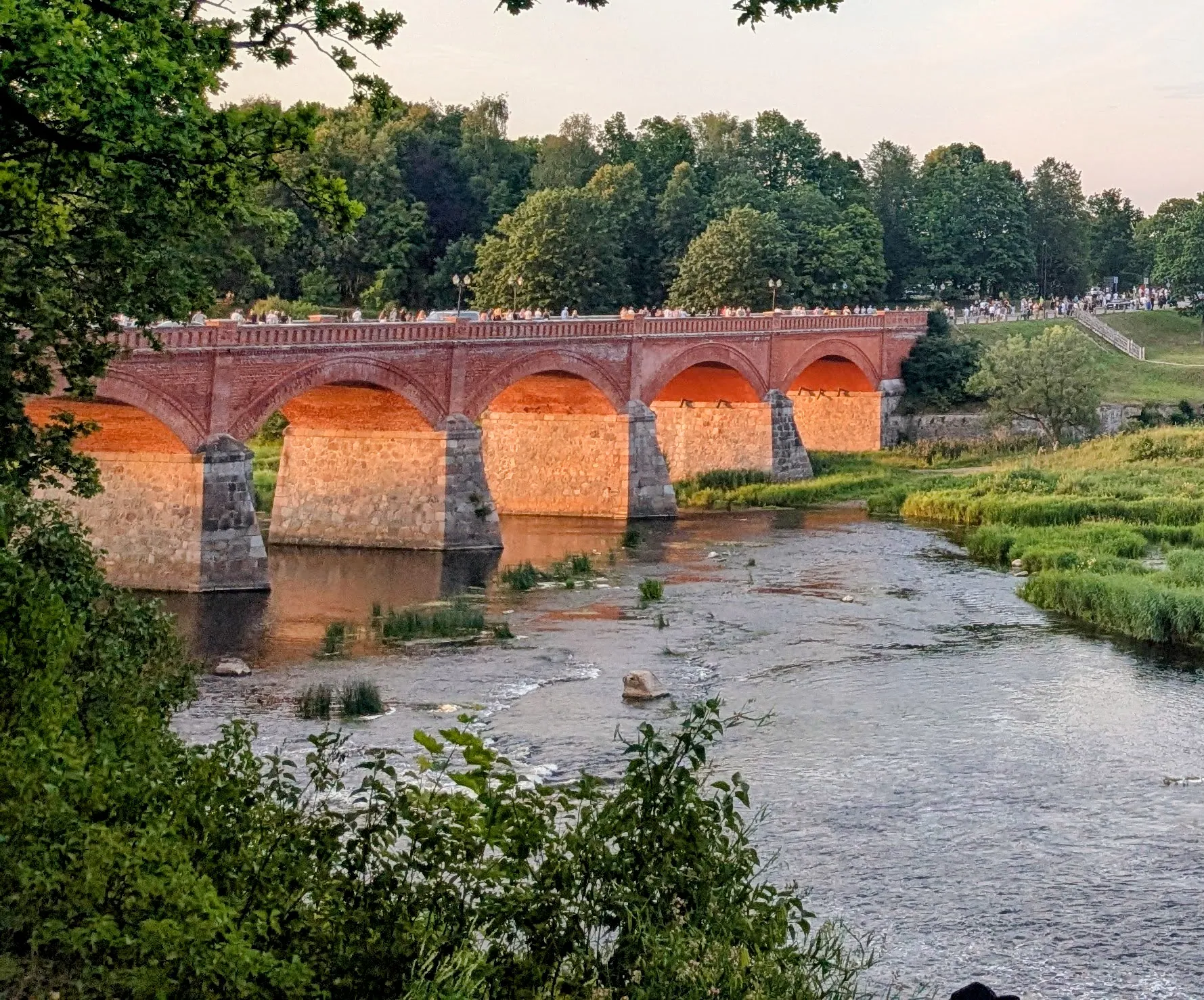
- Ventas Rumba, Red-Brick Bridge & Timber Streets: Arrive in Kuldīga by early afternoon to see Europe’s widest waterfall at Ventas Rumba (240 m), walk across the arched 1874 brick bridge, and wander through the historic wooden side streets.
Wild Baltic Coast & Liepāja - Sea Bluffs & Tsarist Ruins
Base: Liepāja · Days 2-3 · Transit: ~40 mins from Kuldīga to Jūrkalne, then ~50 mins south to Liepāja · Return: allow ~3-3½ hrs to Riga by the direct A9 (about 220 km), before stops
Reaching the open western coast is where you go to recharge. Unlike the sheltered gulf near Riga, the Baltic here is raw and wild: twenty-metre sand bluffs dropping straight into crashing waves at Jūrkalne, and Liepāja’s striking blend of wide white-sand beaches, Art Nouveau streets, and the crumbling military forts of Karosta.
- Jūrkalne Sea Bluffs & Coastal Drive to Liepāja: Climb down the wooden stairs to the rugged beach beneath Jūrkalne’s steep bluffs to walk along the wild open coastline, then drive south along the coast to Liepāja for the evening.
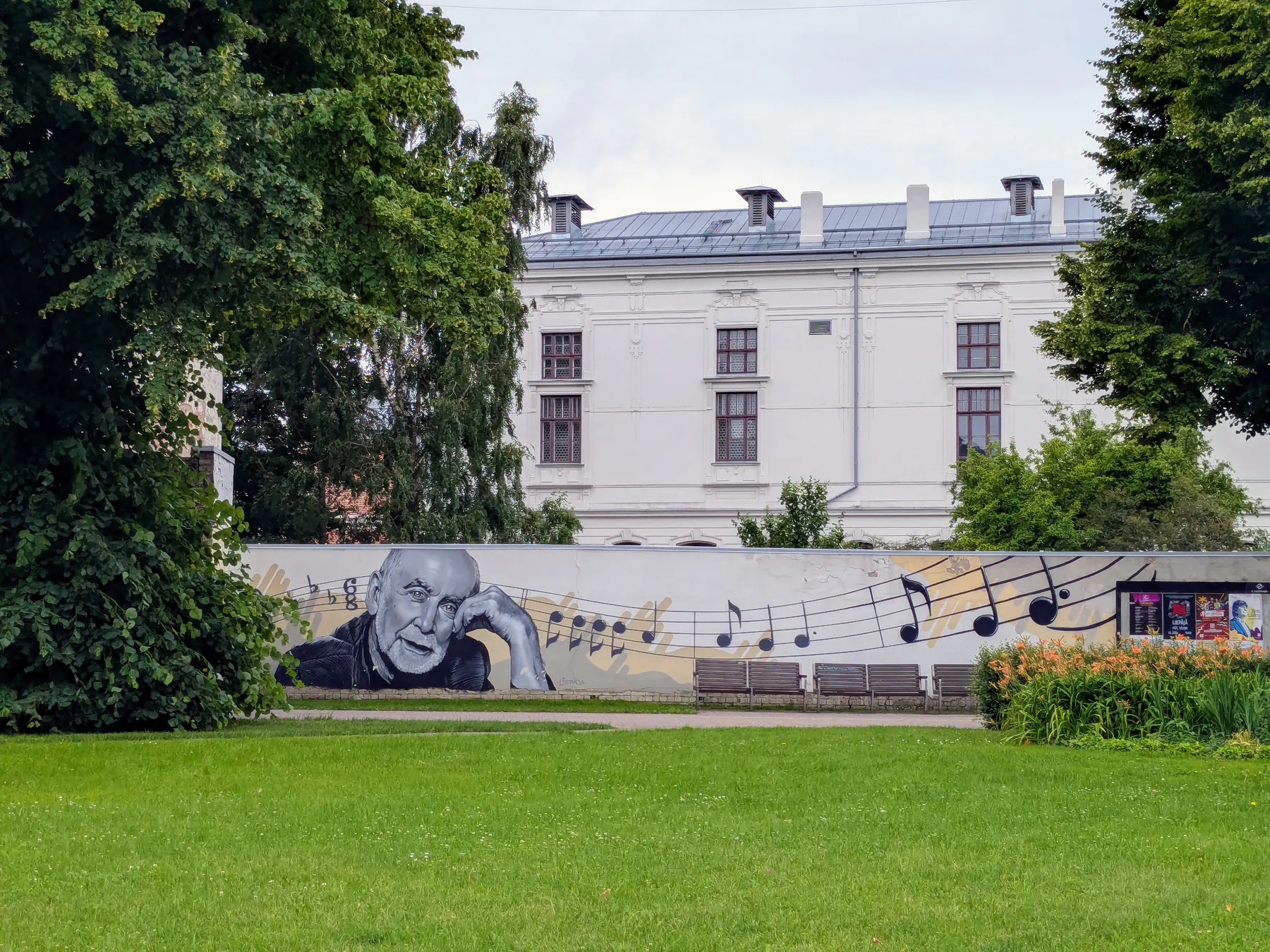
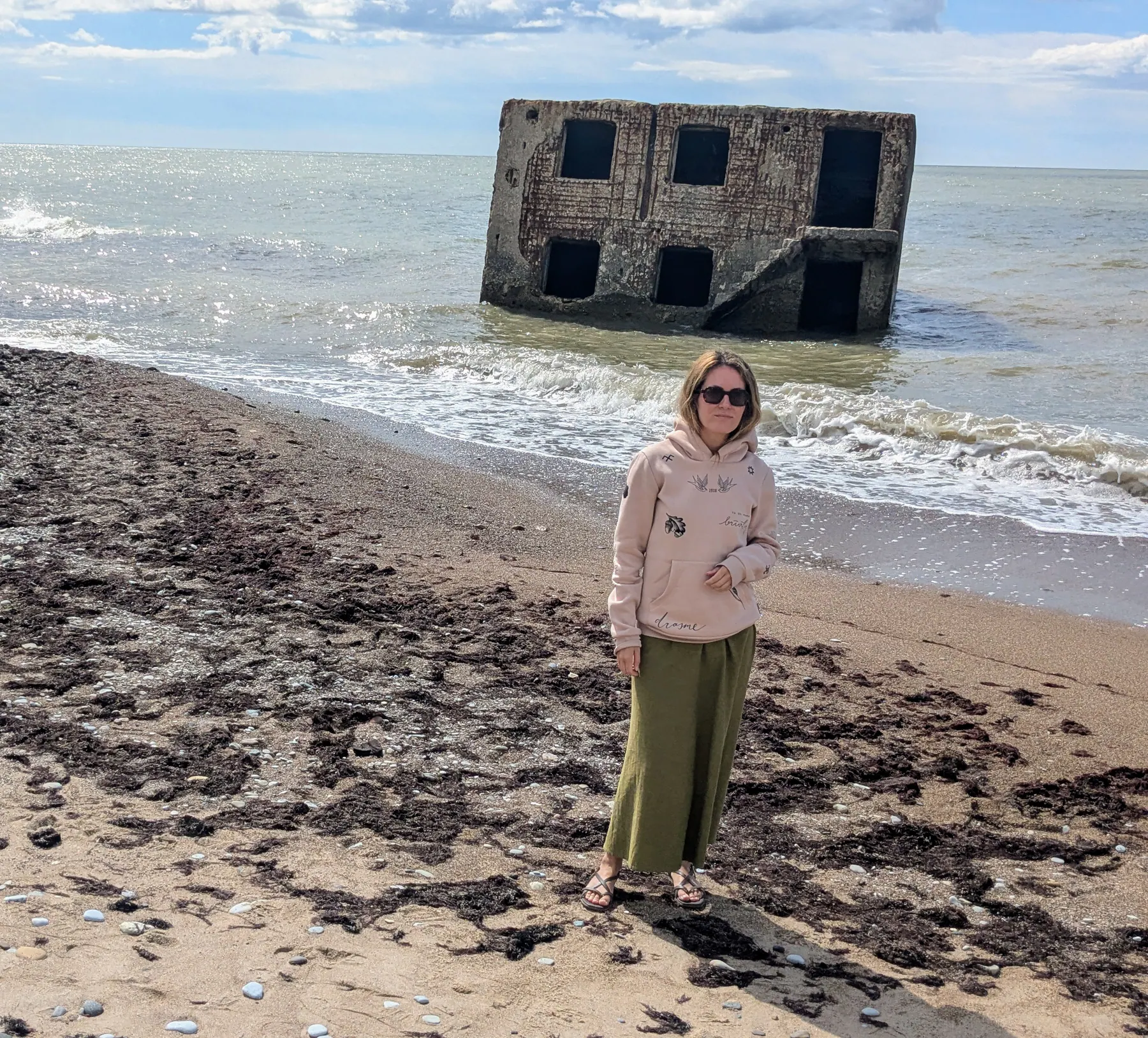
- Liepāja Beach & Karosta Northern Forts: Walk Liepāja’s expansive white-sand beach and explore the dramatic half-submerged Tsarist bunker ruins at Karosta’s Northern Forts.
Optional Kurzeme Stops: Cape Kolka, Ventspils & Pāvilosta
If you have extra days to explore deeper along Latvia’s western coast:
- Cape Kolka (Kolkasrags): The windswept northernmost tip of Kurzeme where the open Baltic Sea collides with the waves of the Gulf of Riga. It is a wild, remote coastal spit surrounded by pine-covered dunes and historic Livonian fishing villages.
- Ventspils: An easygoing, well-kept port city known for its restored medieval Livonian Order Castle, blue-flag sandy beach, and harbor promenade with decorative cows.
- Pāvilosta: A quiet, laid-back fishing harbor between Jūrkalne and Liepāja, famous for fresh smoked fish, open sandy beaches, and a relaxed surf vibe.
Route 4: Southern Latvia - Rundāle Palace & Bauska Castle (Zemgale)
Base: Day trip from Riga or overnight near Bauska or Pilsrundāle · 1-2 Days · Transit: ~1 hr 15 mins drive south from Riga (78 km via A7)
Heading south from Riga into Zemgale brings you to Rundāle Palace (Rundāles pils) and Bauska Castle (Bauskas pils). You can visit both on a dedicated day trip from Riga, or stay in the area overnight to enjoy the palace gardens and Bauska at a slower pace.
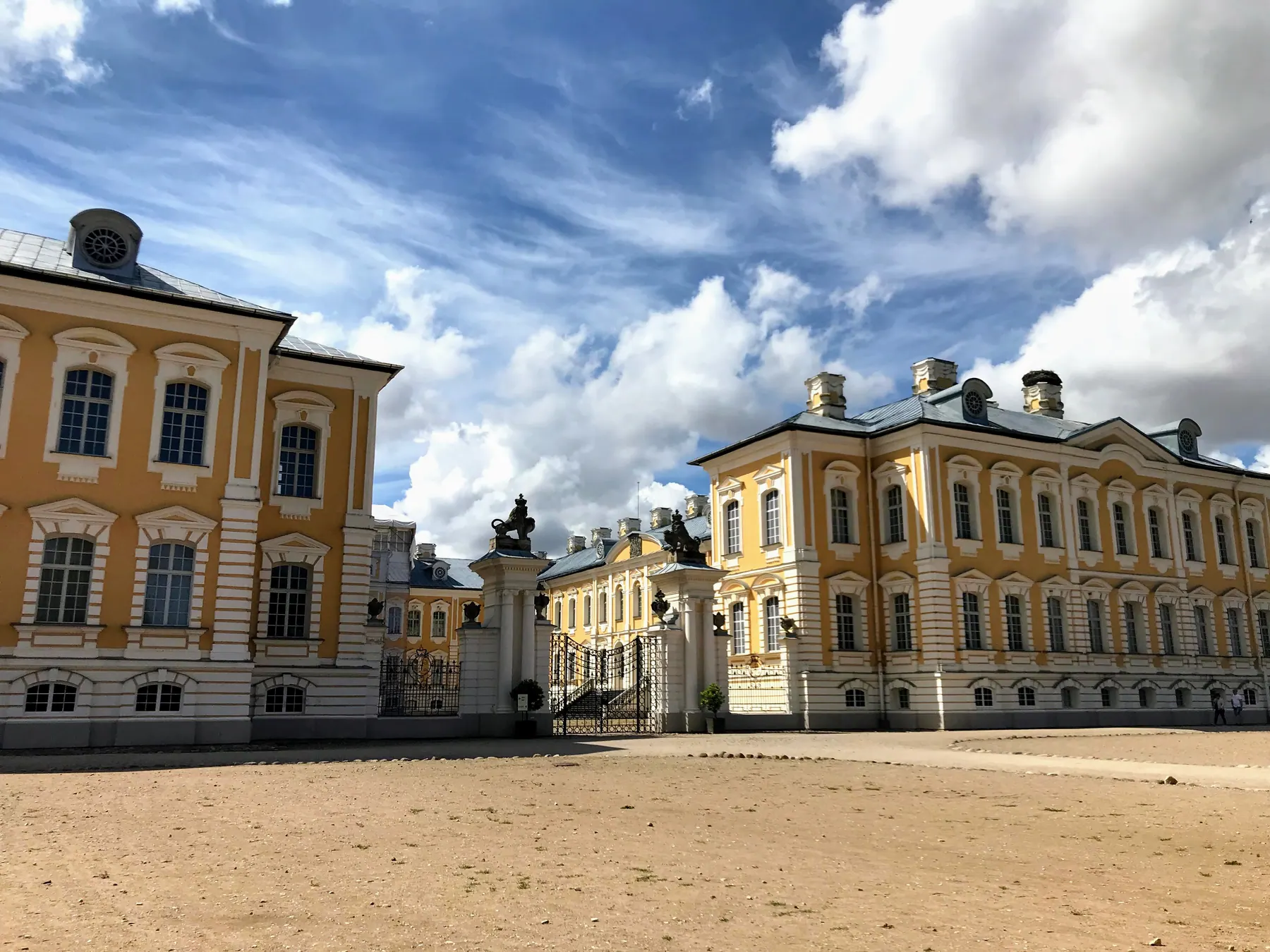
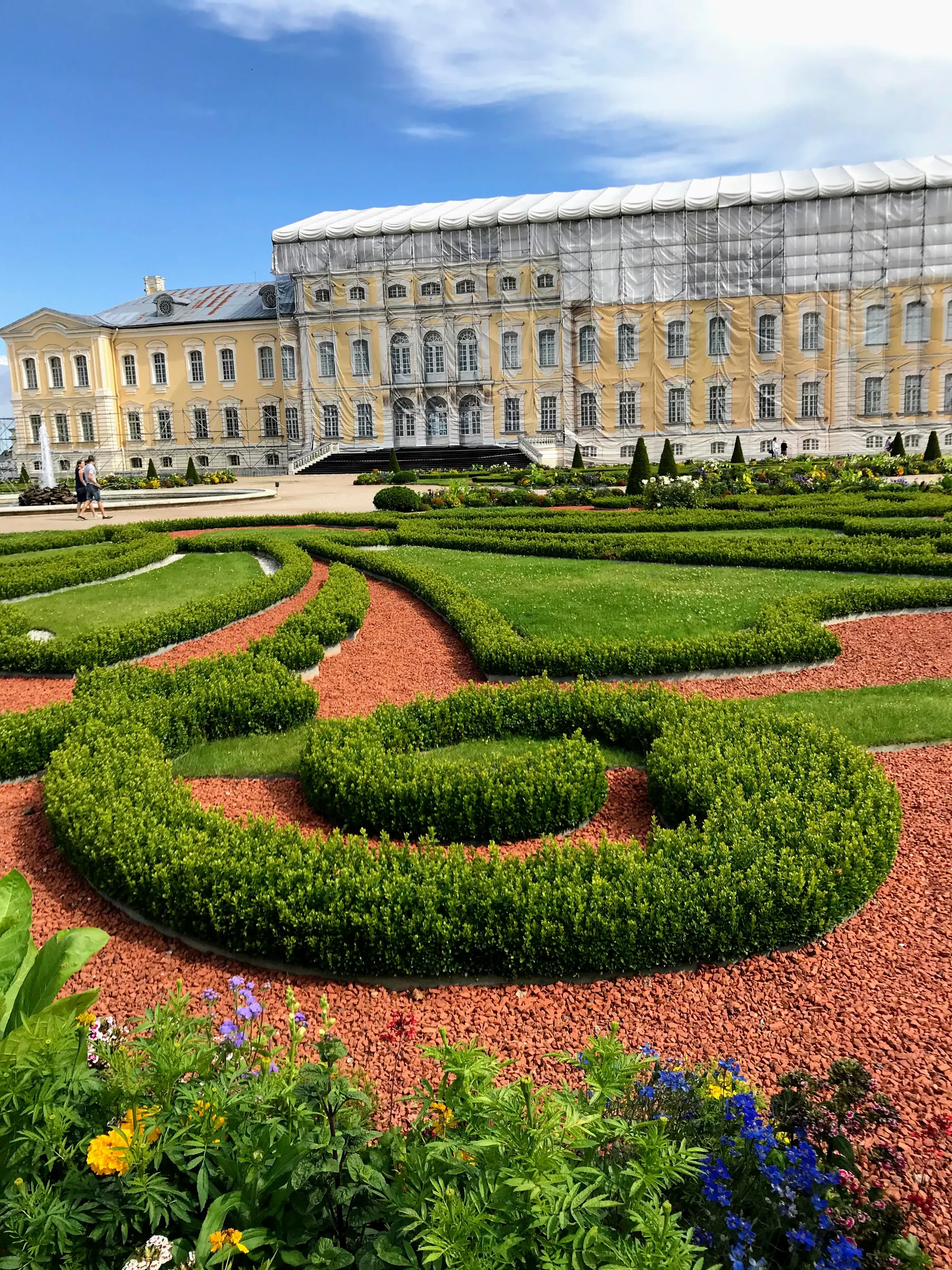
Often called the “Baltic Versailles,” Rundāle Palace was designed by Italian architect Francesco Bartolomeo Rastrelli (the same architect behind the Winter Palace in St. Petersburg) as a summer retreat for the Duke of Courland. About 80 km south of Riga, this massive 18th-century Baroque palace features magnificent state rooms - including the gilded Golden Hall (Zelta zāle) and the ornate White Hall (Baltā zāle) - surrounded by huge French formal gardens.
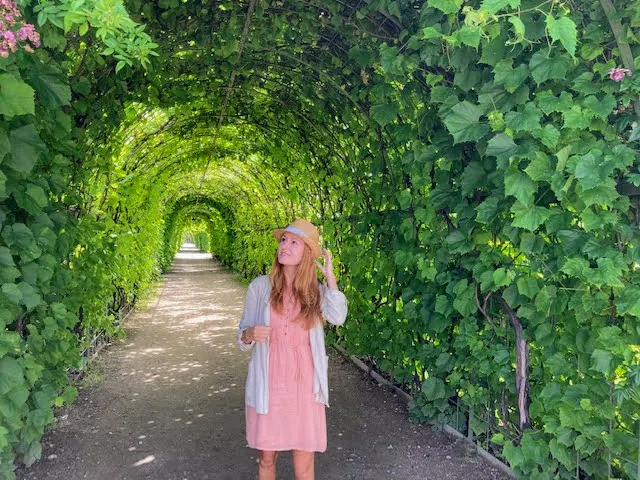
If you are planning a visit, try to come in summer - especially July and August. That is when the French garden is bursting with flowers and the rose garden is in full bloom with thousands of roses. Honestly, wandering through the arched rose tunnels with the yellow palace in the background is the best part of the whole visit.
- How to experience Route 4:
- Dedicated day trip from Riga: Rundāle is an easy 1-hour-and-15-minute drive south (~78 km) from central Riga along the A7 highway. After visiting the palace and rose gardens, drive 12 km east to Bauska Castle, featuring 15th-century Livonian fortress ruins and a restored ducal residence.
- Overnight in the area: Stay near Bauska or Pilsrundāle if you want more time for the palace rooms and gardens. Visit Bauska Castle the next morning before returning to Riga.
- Visiting details: Allow 2 to 3 hours to see both the palace rooms and the French garden. The combined summer ticket (palace long route plus gardens) costs €17 per adult.
Costs and Budget Across the Routes
Latvia provides some of the best travel value in Northern Europe. Unlike Scandinavian road trips where travel expenses can quickly spiral, road tripping in Latvia remains very affordable. How much you spend depends largely on the season and your travel style: high summer coastal weekends command peak lodging rates, while spring and autumn offer great value and quiet roads. The breakdown below shows costs to consider across the routes; your total depends on which regions you choose, how many days you stay, and which optional stops you add.
Expense Breakdown
Accommodation & Stays
Varies by season & styleAccommodation across Latvia ranges from restored wooden apartments and countryside manor guesthouses to beachfront hotels. Availability and rates shift noticeably with the season:
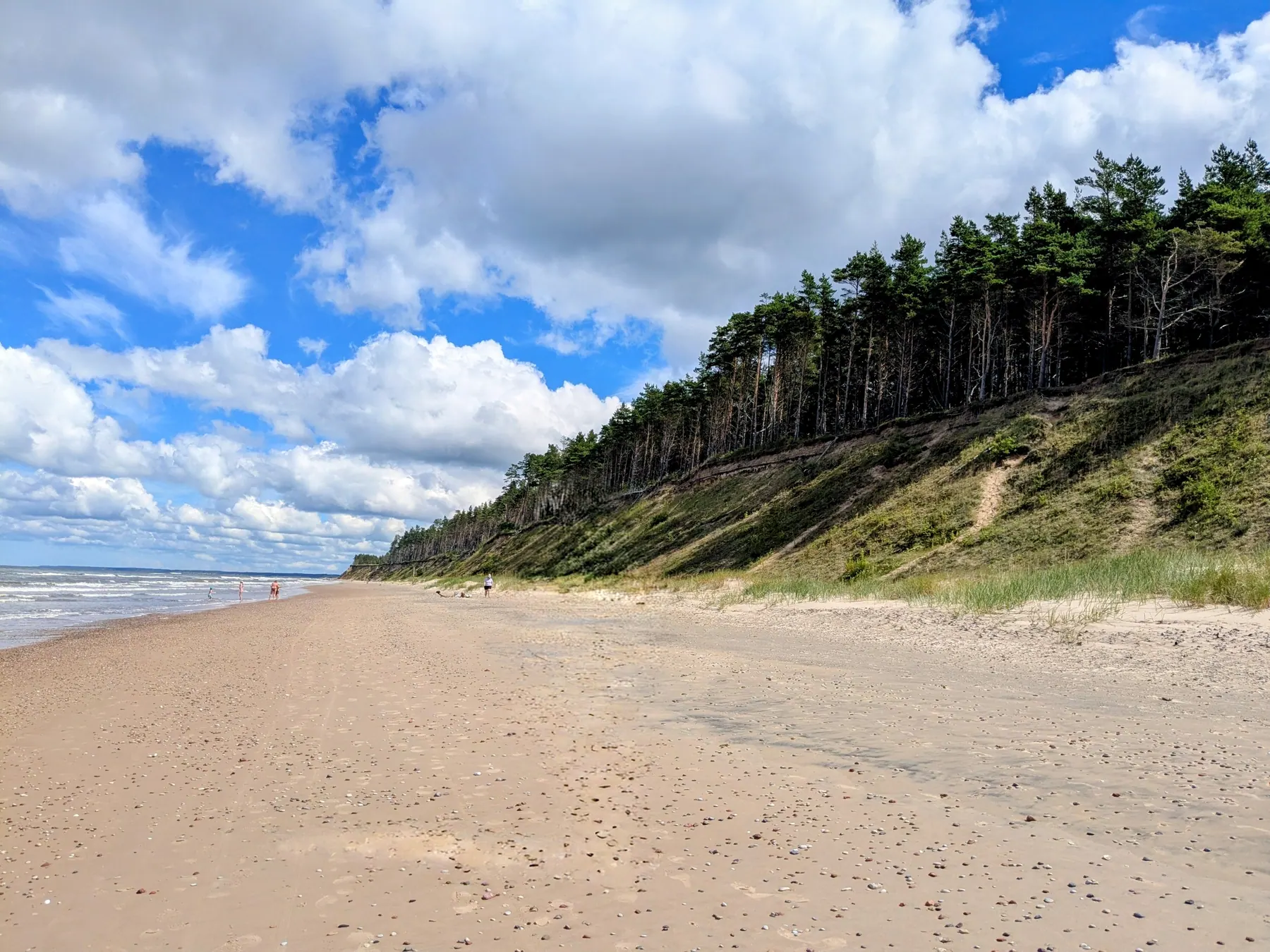
- Seasonal dynamics: Peak summer (late June through August, especially during Midsummer/Jāņi) brings high demand and peak rates along the Baltic coast (Liepāja, Jūrkalne) and in popular small towns like Kuldīga; reserving well in advance is essential. During the shoulder months (May to early June and September to October), rates drop significantly and finding places spontaneously is straightforward.
- Historic wooden apartments (Kuldīga): Restored 18th- and 19th-century wooden apartments with high ceilings, exposed beams, or views over the Alekšupīte stream offer the most characteristic stay in the historic center.
- Countryside guesthouses & manor stays (Sigulda, Līgatne & Cēsis): Family-run rural retreats (viesu nami) set in river meadows and apple orchards, often featuring traditional wood-fired saunas (pirts) and homemade breakfasts.
- Coastal boutique stays & seaside cabins (Liepāja area): Historic town stays near Liepāja's seaside park, or quiet wooden cabins nestled among coastal pine woods near the beach.
- Seaside sleeping barrel tip (Cape Kolka & Melnsils): In summer when the weather is warm, booking a wooden sleeping barrel right beside the sea is an incredible, unforgettable experience. Usually offered by coastal campings and holiday parks - especially around Cape Kolka and the Melnsils area - they sit directly on the beach, but they sell out very quickly for summer dates, so reserve well in advance.
- Camping & forest rest areas: Camping is not always free: while some basic state forest rest spots (atpūtas vietas via the LVM GEO app) are free, organized coastal and town campsites charge for pitches and facilities. In national parks, camp only in designated official sites.
Food, Bakery Treats & Local Taverns
Plan by day and trip lengthLatvian food is hearty, comforting, and generously portioned:
- Countryside tavern lunches (Krodziņš): Around €8-€12 per person for traditional food.
- Sit-down dinner with local craft beer or cider: Around €15-€22 per person at respected local bistros in Kuldīga or Cēsis.
- Morning bakery stops: Around €2-€4 for pastry and coffee.
Sightseeing & Castle Entries
Varies by route and optional stops- Ķemeri Bog Boardwalk: Free entry (small parking fee of €2-€3 in summer).
- Lake Engure Nature Reserve: Free admission (open access to the bird-watching tower and pasture trails; parking is free).
- Valguma Pasaule Barefoot Trail (optional): €10 per adult for the barefoot trail.
- Cēsis Medieval Castle & Lantern: Around €10 per adult (includes lantern and museum exhibits).
- Turaida Museum Reserve (Sigulda): €9 per adult for full admission (or €5 for grounds only).
- Karosta Prison Tour (Liepāja): €8 per adult.
- Rundāle Palace & Gardens (Route 4): €17 per adult for the full palace and French gardens combined summer ticket.
Essential Driving & Practical Advice for Latvia
1. Driving Rules, Road Quality & Speed Enforcement
- Speed Limits, Radars & Navigation Apps: Fixed speed cameras, mobile radar traps, and average speed check zones (vidējā ātruma kontrole) are heavily concentrated heading west across Kurzeme and north toward Lake Engure. Speeding fines are automatically billed to your card by rental companies alongside administrative fees, so stick strictly to posted limits. Both Waze and Google Maps work reliably across Latvia and actively alert you to verified speed cameras in real time.
- Road Tolls & Free Parking: Latvian highways and country roads are toll-free for passenger cars. If you enter Jūrmala’s signed special-regime zone, the vehicle entry permit costs €5 as of January 2026; check the official Jūrmala entry information before driving in. The A10 bypass toward Ķemeri and Kurzeme avoids the paid zone. Parking is free and straightforward outside central Riga, including at castle ruins, nature trailheads, and municipal streets across towns like Kuldīga and Cēsis.
2. Seasonality, Weather & Packing
- Summer (June to August): The most popular road trip season, with long days (nearly 18 hours of daylight around the June solstice, less by August), warm lake swimming, and lively outdoor restaurant terraces. Bring mosquito repellent for bog walks and forest trails.
- Autumn (September to October): Golden autumn foliage across the Gauja River Valley around Sigulda and Cēsis is spectacular. Enjoy crisp mornings, brilliant amber canopies, mushroom foraging, and quiet towns without crowds.
- What to Pack: Pack comfortable walking shoes or light trail runners for boardwalks and castle stone staircases, a waterproof windbreaker for breezy Baltic coastal walks, sunglasses, and a reusable water bottle.
Complete Latvia Guide Collection
Each destination featured across these routes has a dedicated destination guide with local tips, history, and photo diaries:
- Great Ķemeri Bog Boardwalk: Complete Guide to Boardwalks, Sunrise Fog & Bog Pools →
- Lake Engure & Barefoot Trail: Wild Horses, Lakeside Meadows & Sensory Paths →
- Kandava & Sabile Road Trip: Stone Bridges, Northern Vineyards & Cider Country →
- Kuldīga Old Town Guide: Ventas Rumba Waterfall, Red-Brick Bridge & Wooden Streets →
- Jūrkalne Coastline: Steep Sand Bluffs, Surfing & Wild Baltic Shore →
- Liepāja City Guide: Karosta Naval Prison, White Sands & Crumbling Northern Forts →
- Sigulda Adventure Town: Gauja Valley Views, Cable Cars & Turaida Medieval Castle →
- Cēsis Medieval Castle: Exploring Dark Stone Towers by Candle Lantern →
FAQs
How much time do you need to visit Latvia beyond Riga?
Allow about three days for the Gauja Valley route (Route 1) through Sigulda, Līgatne, and Cēsis, one full day for Ķemeri Bog and Lake Engure (Route 2), three to four days for Kurzeme (Route 3) through Kuldīga, Jūrkalne, and Liepāja, and one day for Rundāle Palace and Bauska (Route 4). Routes 2 and 4 also work as day trips from Riga. To combine all four routes at an unhurried pace, allow eight or nine days.
Do you need a 4x4 car to drive around Latvia?
No, a standard compact 2WD rental car is completely sufficient. Main highways between regions are paved and well-maintained. While some rural access roads to coastal beaches or forest trails are unpaved gravel, they are regularly graded and easily driven at sensible speeds.
What is driving in Latvia like?
Driving in Latvia is relaxed and straightforward. Traffic is light once you exit the Riga ring road. Be aware that roads heading west across Kurzeme and routes toward Lake Engure are monitored with fixed speed cameras and average speed check zones, so drive carefully to avoid traffic fines.
When is the best time of year for a Latvia road trip?
Summer (June through August) is actually the best time for a Latvia road trip. You get long summer days, with nearly 18 hours of daylight around the June solstice but less by August, plus warm weather for swimming in the Baltic Sea and calm lakes, the traditional Midsummer (Jāņi) celebrations, and lively outdoor restaurant terraces across the country. If you prefer cooler weather and fewer travelers, September and early October also offer spectacular golden autumn foliage across the Gauja River Valley.
Is Latvia expensive for a road trip holiday?
Latvia offers excellent value compared to Western or Northern Europe. Outside of Riga, road trip expenses remain very reasonable: highways are toll-free, castle and reserve admissions are modest, and countryside taverns serve hearty portions at fair prices. Total trip costs depend largely on the season and your choice of accommodation, with peak summer along the coast commanding higher lodging rates than quiet spring or autumn months.
Can you camp during a road trip in Latvia?
Yes, but keep in mind that camping is not always free. While some basic wilderness rest areas managed by Latvijas Valsts Meži (LVM) on state forest land are free to use with established fire rings, organized commercial campsites and coastal camping grounds usually charge a fee for tent pitches and facilities. Inside national parks like Gauja and Ķemeri, camping is strictly permitted only in designated official campsites, and pitching a tent in protected coastal dunes or on private land is prohibited.
Can I add Rundāle Palace to a Latvia road trip?
Yes. Rundāle Palace and nearby Bauska Castle form Route 4 in southern Latvia (Zemgale), about 80 km south of Riga near the Lithuanian border. Visit on a dedicated day trip from Riga, or stay overnight near Bauska or Pilsrundāle to explore the palace and castle at a slower pace.
Read next
More posts for this trip mood
 Europe
 Kurzeme, Latvia
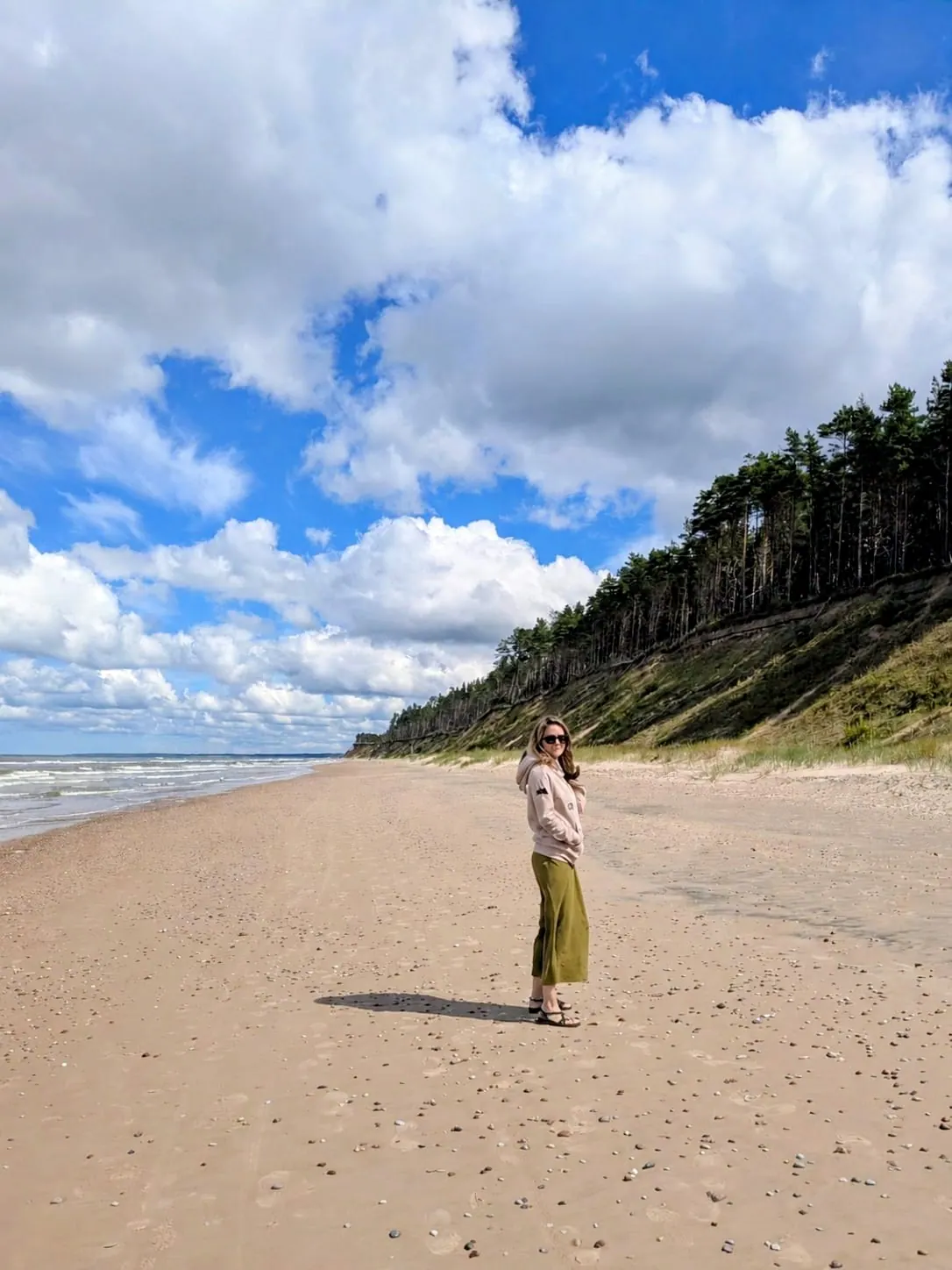
Jūrkalne and Pāvilosta: Latvia's Wildest Stretch of Coast
Between Jūrkalne's high sandy banks and the little harbour town of Pāvilosta lies one of the quietest, wildest stretches of Latvia's Baltic coast.
 Europe
 Kurzeme, Latvia
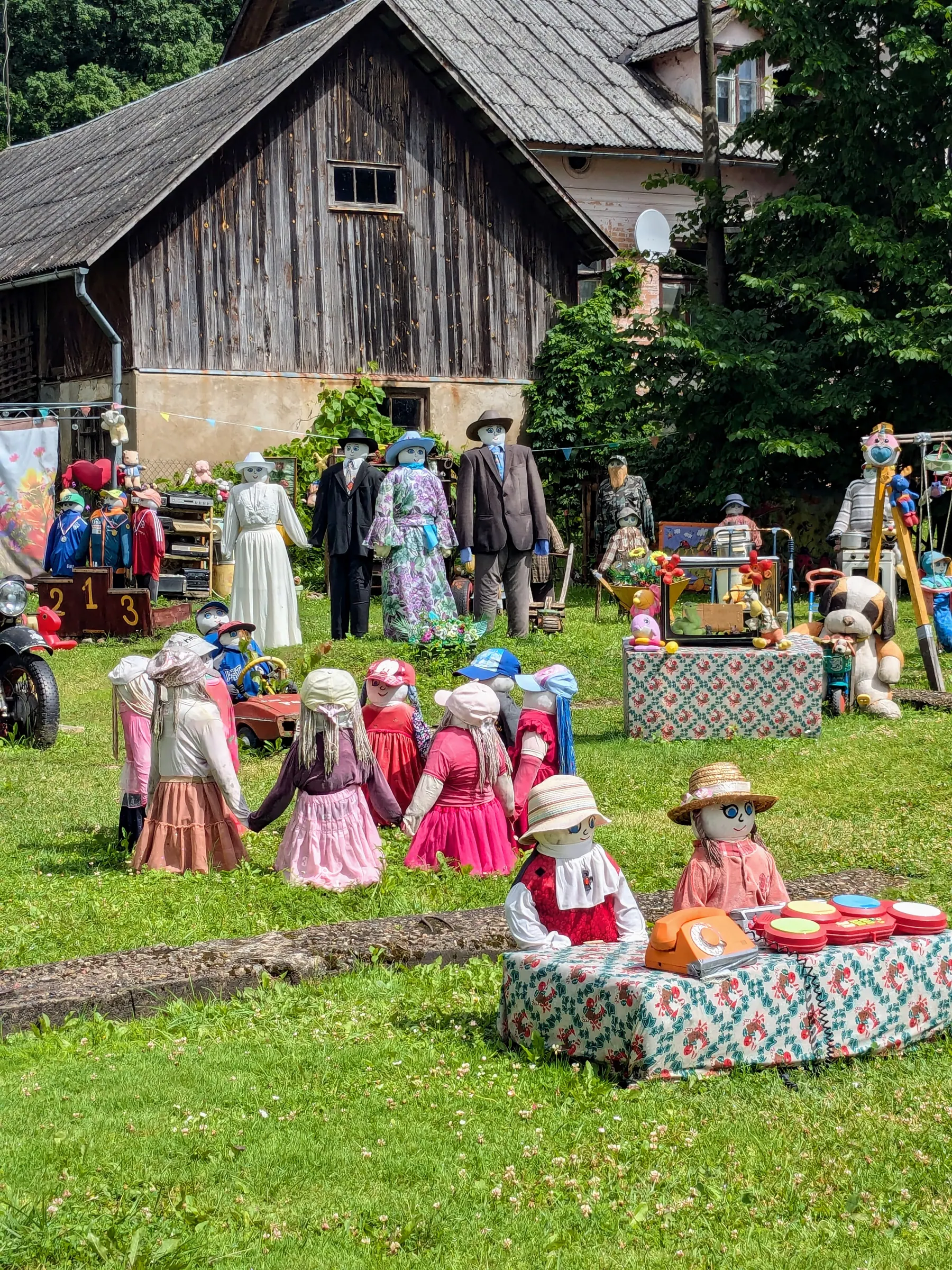
Kandava and Sabile: Two Small Towns Worth a Stop in Western Latvia
Two short stops filled with poetry, wine, handmade dolls and the quiet character of the Abava Valley.
Kandava and Sabile are two easy, characterful stops in the Abava Valley that make any drive west from Riga feel like part of the trip.
 Europe
 Vidzeme, Latvia
A Day in Sigulda: Latvia's Adventure Town in the Gauja Valley
A perfect Latvia day trip, provided you respect the hills.
A day in Sigulda, Latvia, by bike: castles, caves, adventure parks, Gauja Valley views, practical transport tips and the hill that beat us.