

Cēsis · Vidzeme · Latvia
Cēsis: The Castle You Explore by Candle Lantern, an Hour from Riga
A medieval Latvian town where a real flame in a candle lantern turns a castle visit into something you remember.
A practical guide to Cēsis: its candle-lit medieval castle, old town, parks and an easy day trip from Riga.
Quick facts
- Best for
- A candle-lit medieval castle, a compact old town, church interiors and quiet parks.
- Time needed
- Half a day covers the castle and old town; a full day adds the parks and a nearby stop.
- Getting there
- Direct trains from Riga take about an hour and twenty minutes; buses take about an hour and fifty.
- Good to know
- The castle complex can close at 18:00 even in summer, so visit in the first half of the day.
I hadn't been to Cēsis for a long time, and this last visit, this summer, was like finding a pearl in my own country and thinking: this place knows how to make a visit interesting for tourists.
Cēsis is one of Latvia's best small-town visits: medieval, full of character and only an hour from Riga.
From 1237 to 1561 it was the capital of the Livonian Order and the home of its Master, making it one of the main centres of German power in the Baltic. The castle came first, in 1209; the town grew around it.
You can see that German influence everywhere: in the castle and church, but also in the houses around the square, the roofs and the layout of the streets.
Getting there
A car isn't compulsory here. There's a direct train from Riga, the fastest of which takes about an hour and twenty minutes and starts at around €4.60, and it runs frequently. Buses take a little longer, about an hour and fifty, and cost around €5. Either way it's straightforward, and Cēsis works perfectly well as a day trip from Riga.
If you do drive, parking in Cēsis is free - but most of the old town is limited to one or two hours on weekdays, which isn't enough for the castle. Use one of the unlimited car parks instead: for example Bērzaines iela, Smilšu laukums, Valnu iela (where we parked). Wherever you park, leave a note behind the windscreen showing the time you arrived, because you can still be fined without one.
Finding your way around
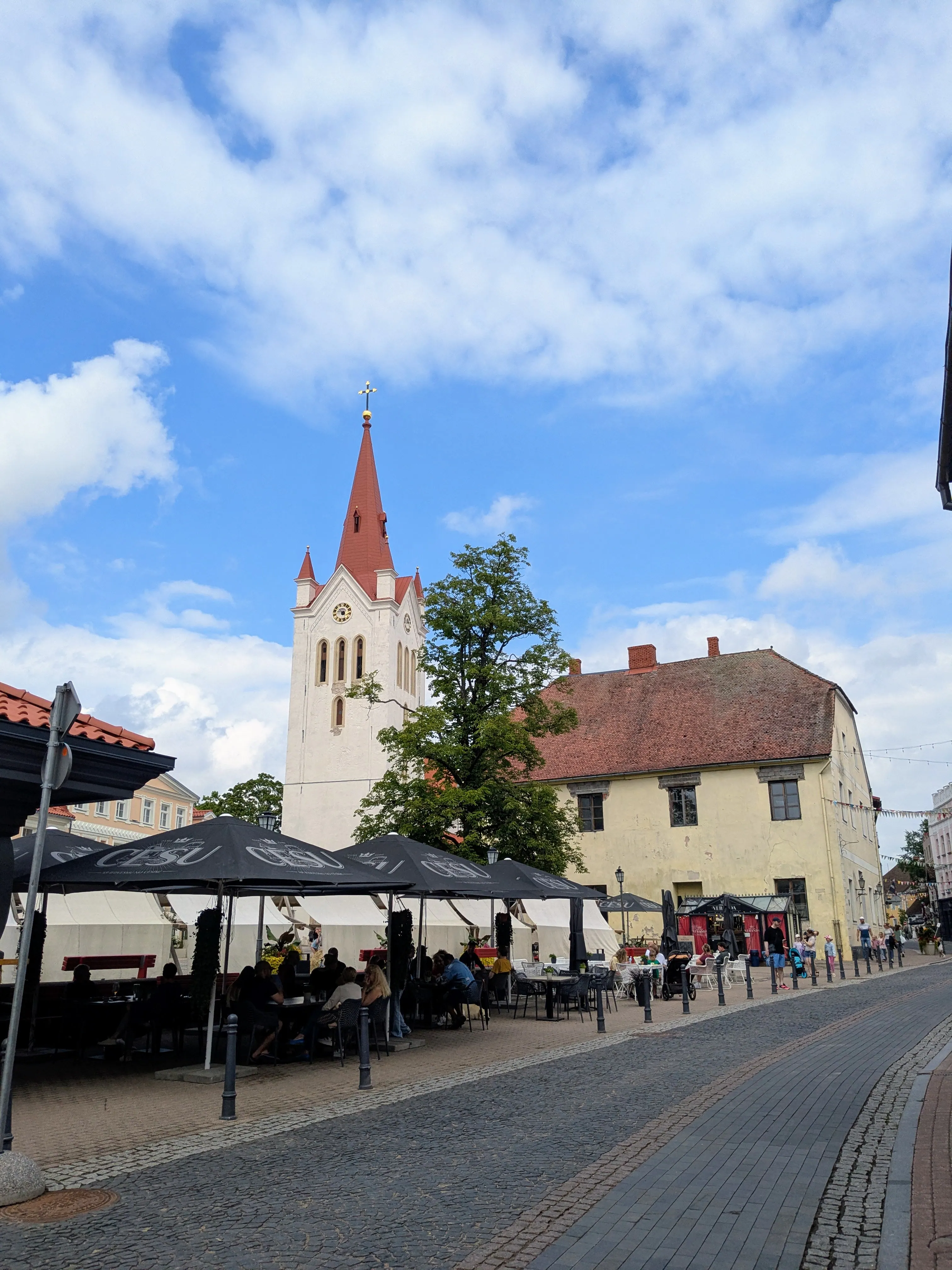
Cēsis is easy to get around. The centre is compact and cosy, and everything is only a few minutes from everything else. Rose Square (Rožu laukums) is the heart of it, with the white bulk of St John’s Church (Sv. Jāņa baznīca) standing over it and handsome old buildings around the edges. There are plenty of cafés, restaurants and souvenir shops, so you won’t be short of options.
Rose Square (Rožu laukums) was the town market from the mid-13th century until 1927. In medieval times, it held the pillory and the town well. The pleasant square full of cafés was once where punishments took place.
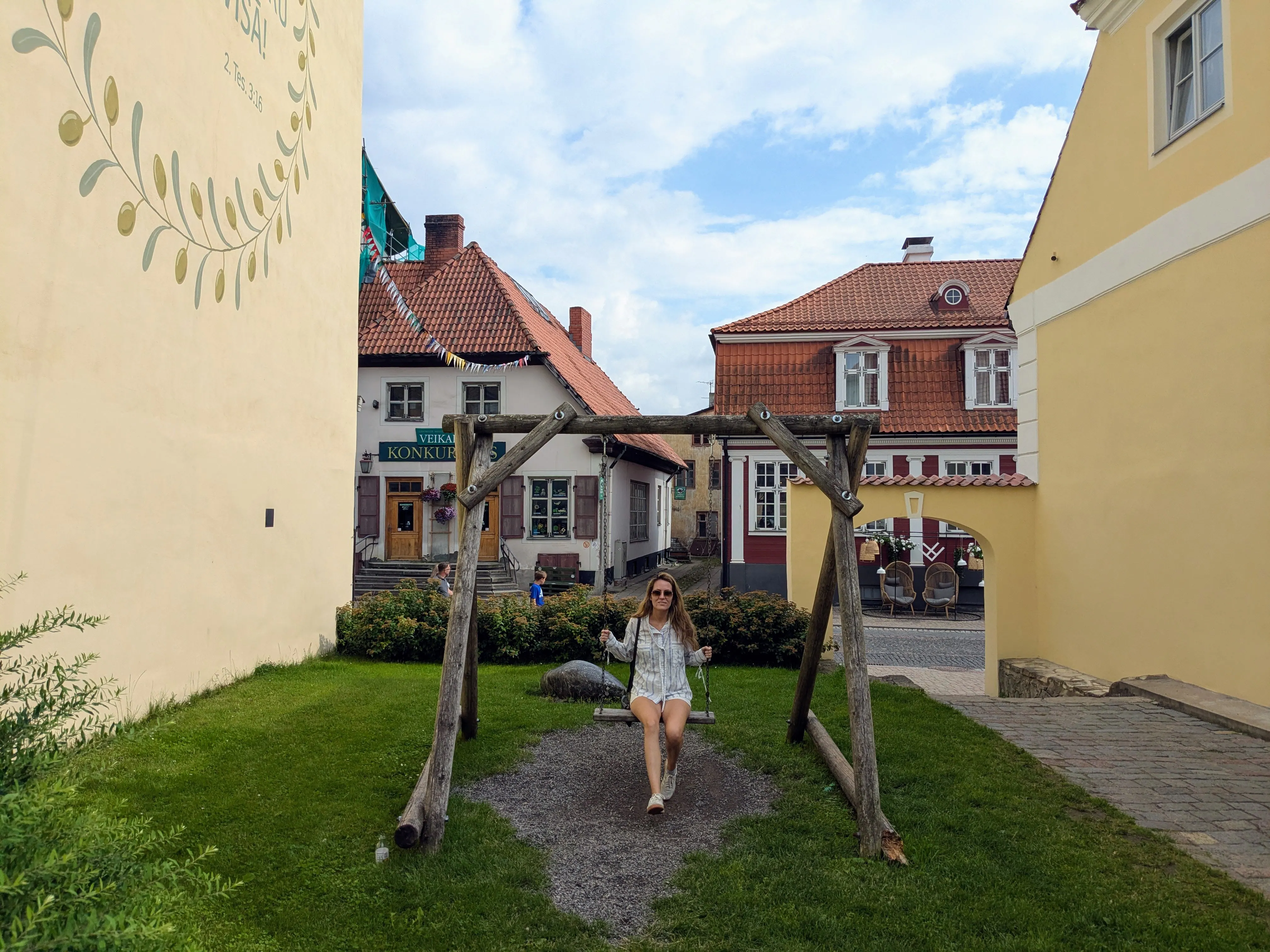
Rīgas iela is the main street, lined with historic buildings, and it starts at Līvu Square (Līvu laukums), the town’s marketplace in the 13th century. I found it very charming, and we ended up walking along it several times on our last visit. It has been the main street since the town began and has many of Cēsis’s best 18th- and 19th-century buildings: the former town hall, Faber House (Fābera nams) and the Princesses’ House (Princešu nams).
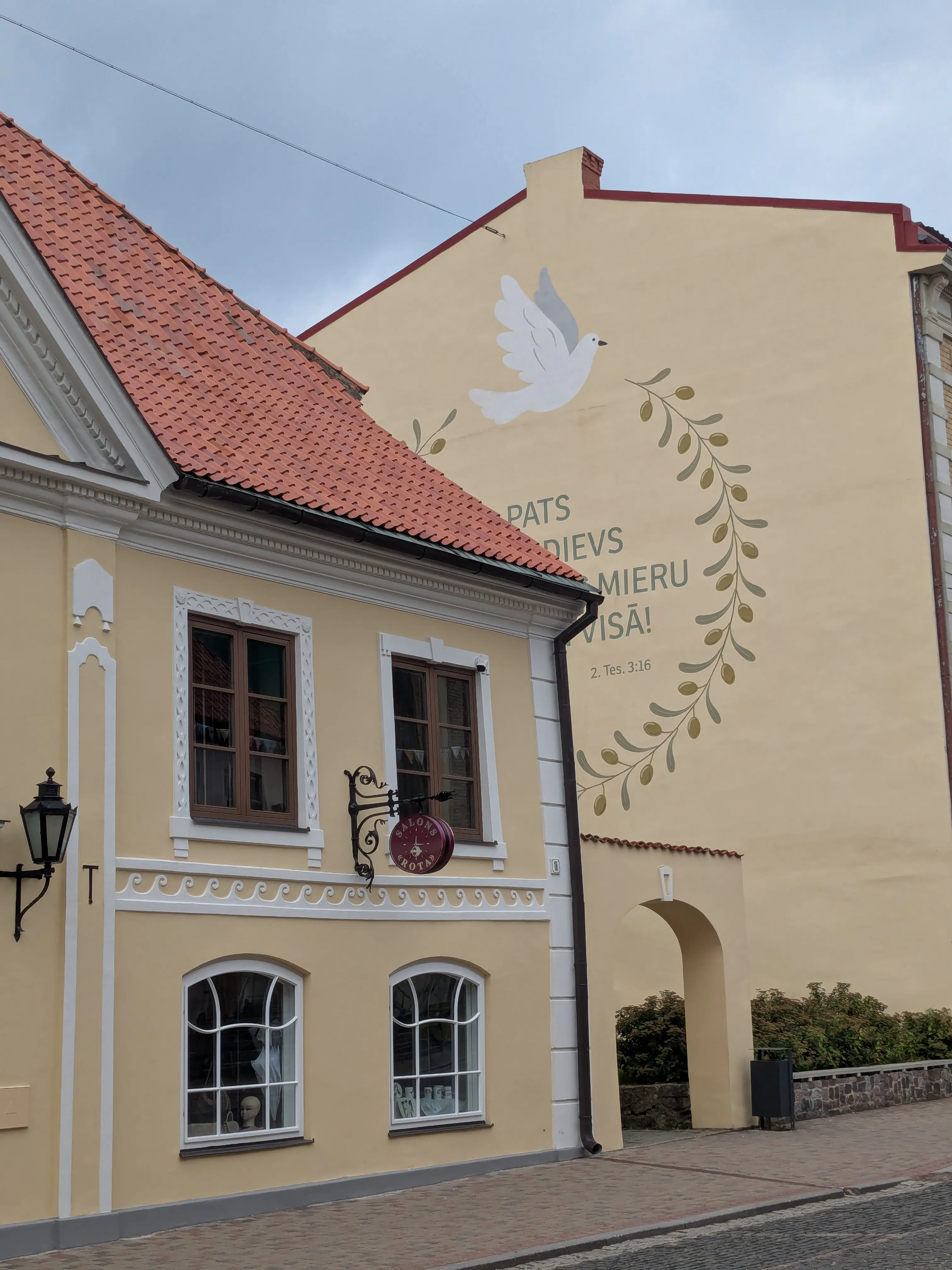
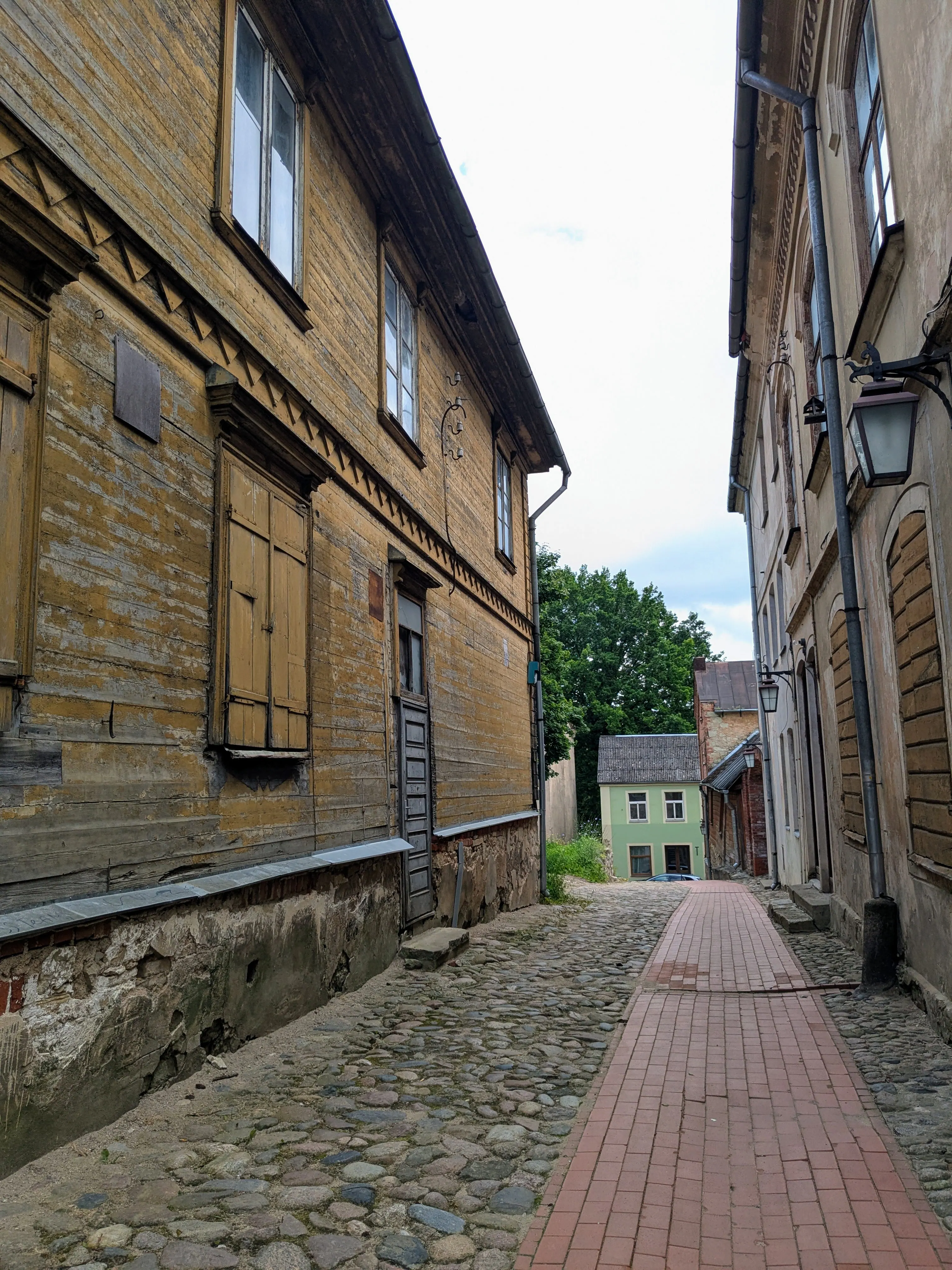
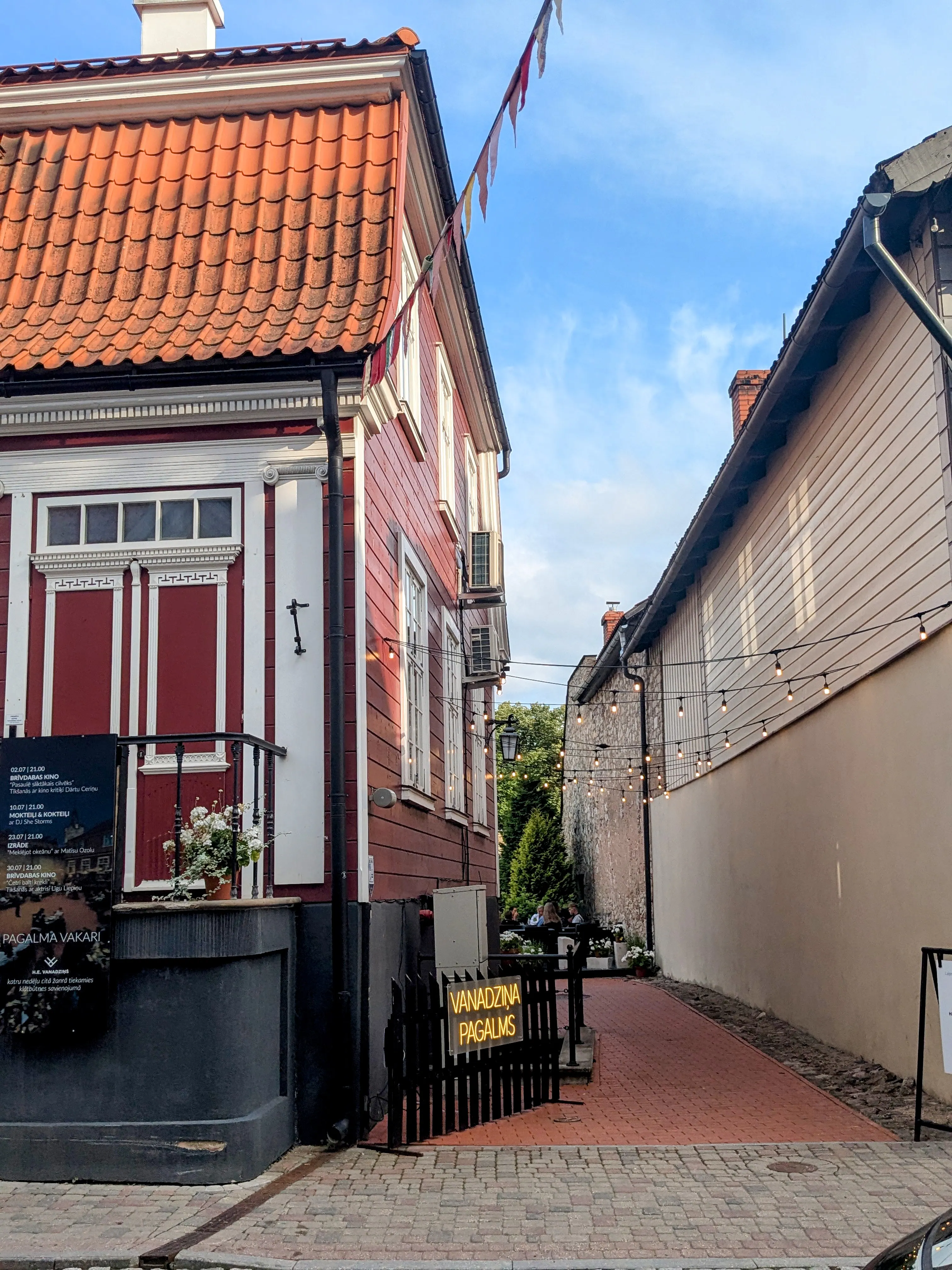
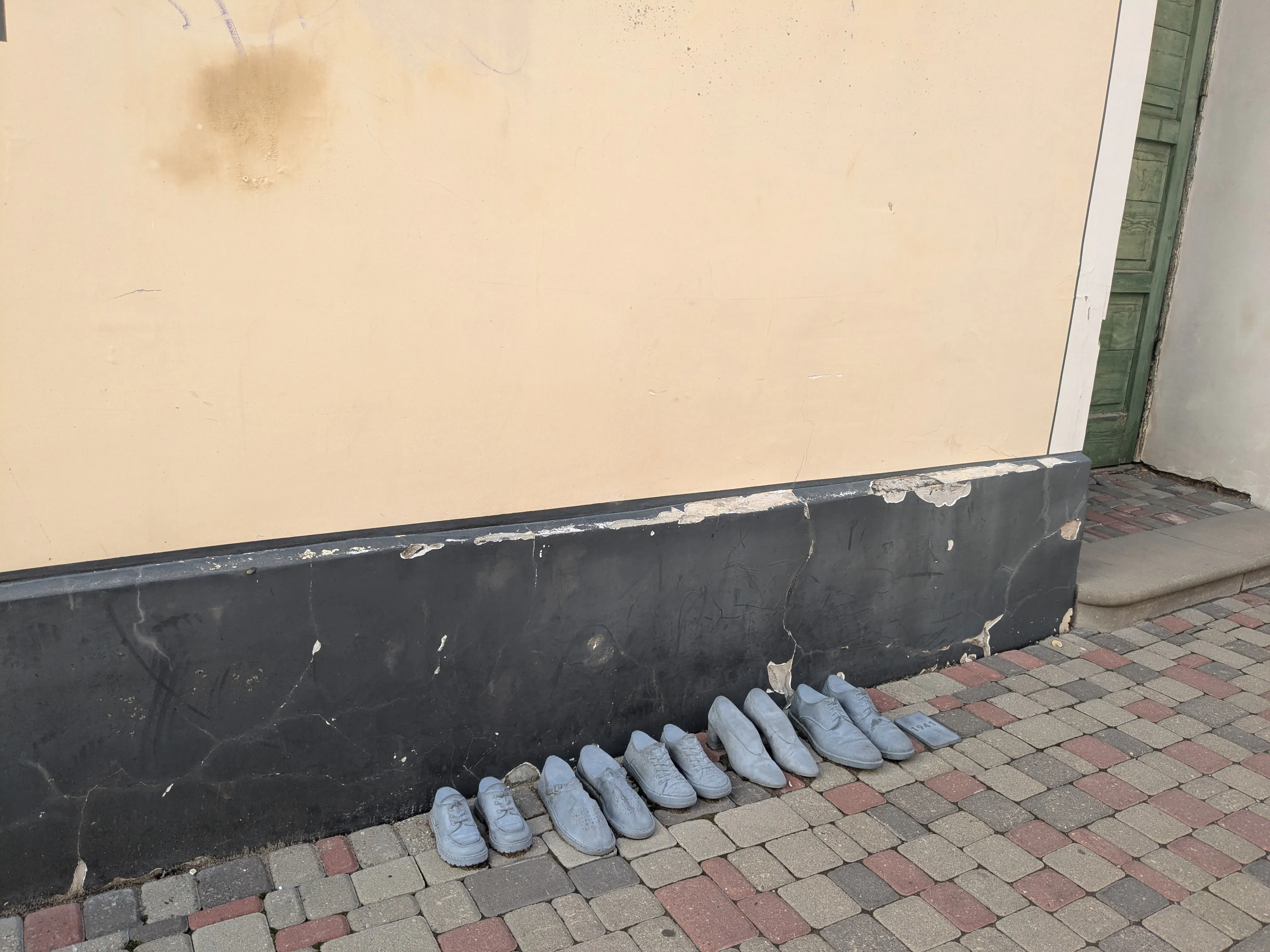
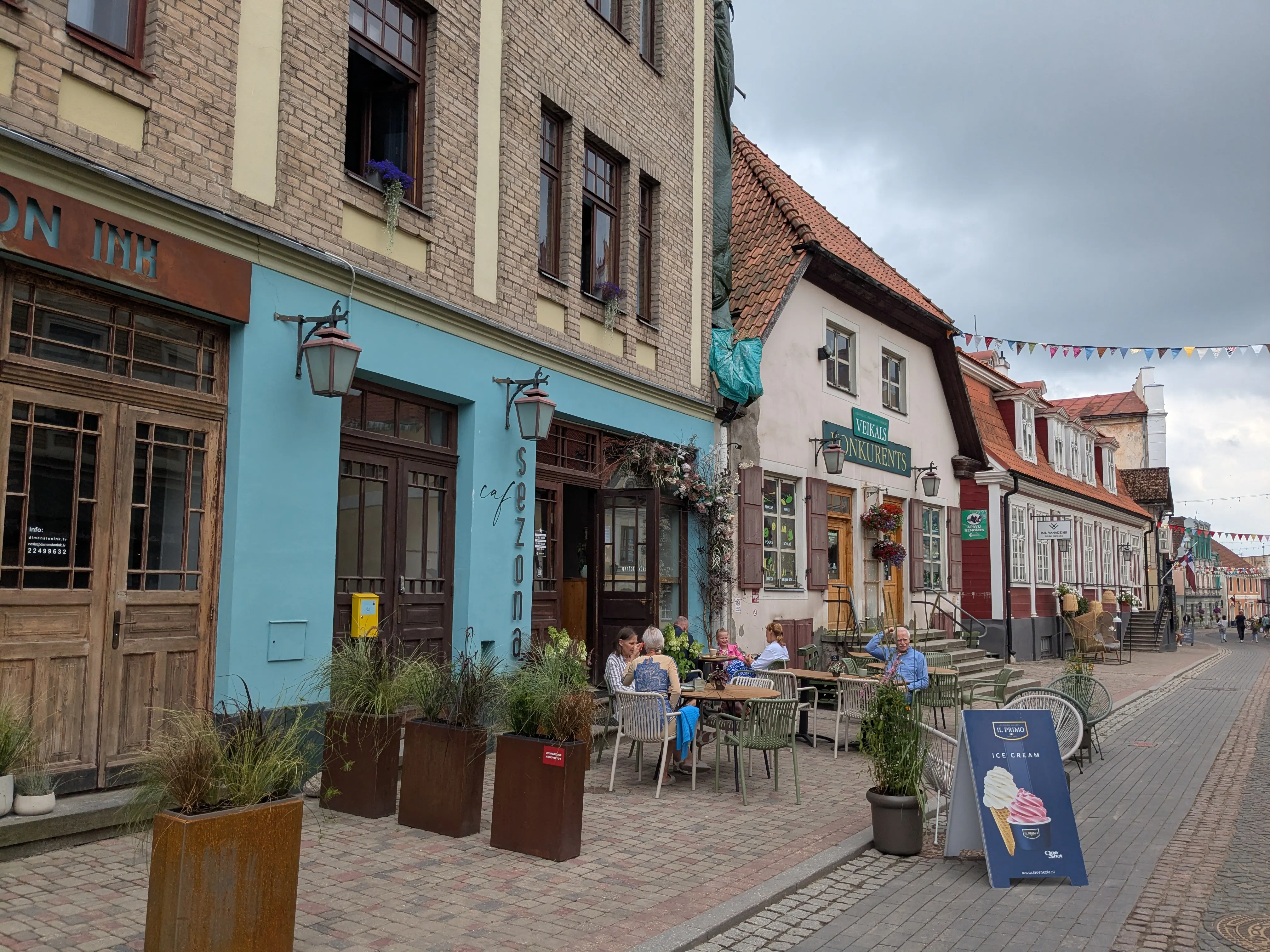
Torņa iela runs uphill from the church towards the castle. You can cross the old town in fifteen minutes without stopping, or happily spend two hours there if you do.
St John’s Church
The white church on Rose Square is St John’s (Sv. Jāņa baznīca). Go inside.
Built in the 1280s and consecrated in 1284, it was the cathedral of the Livonian Order. At 65 metres long, with a 65-metre Gothic tower, it is the largest medieval basilica outside Riga and one of Latvia’s oldest surviving buildings.
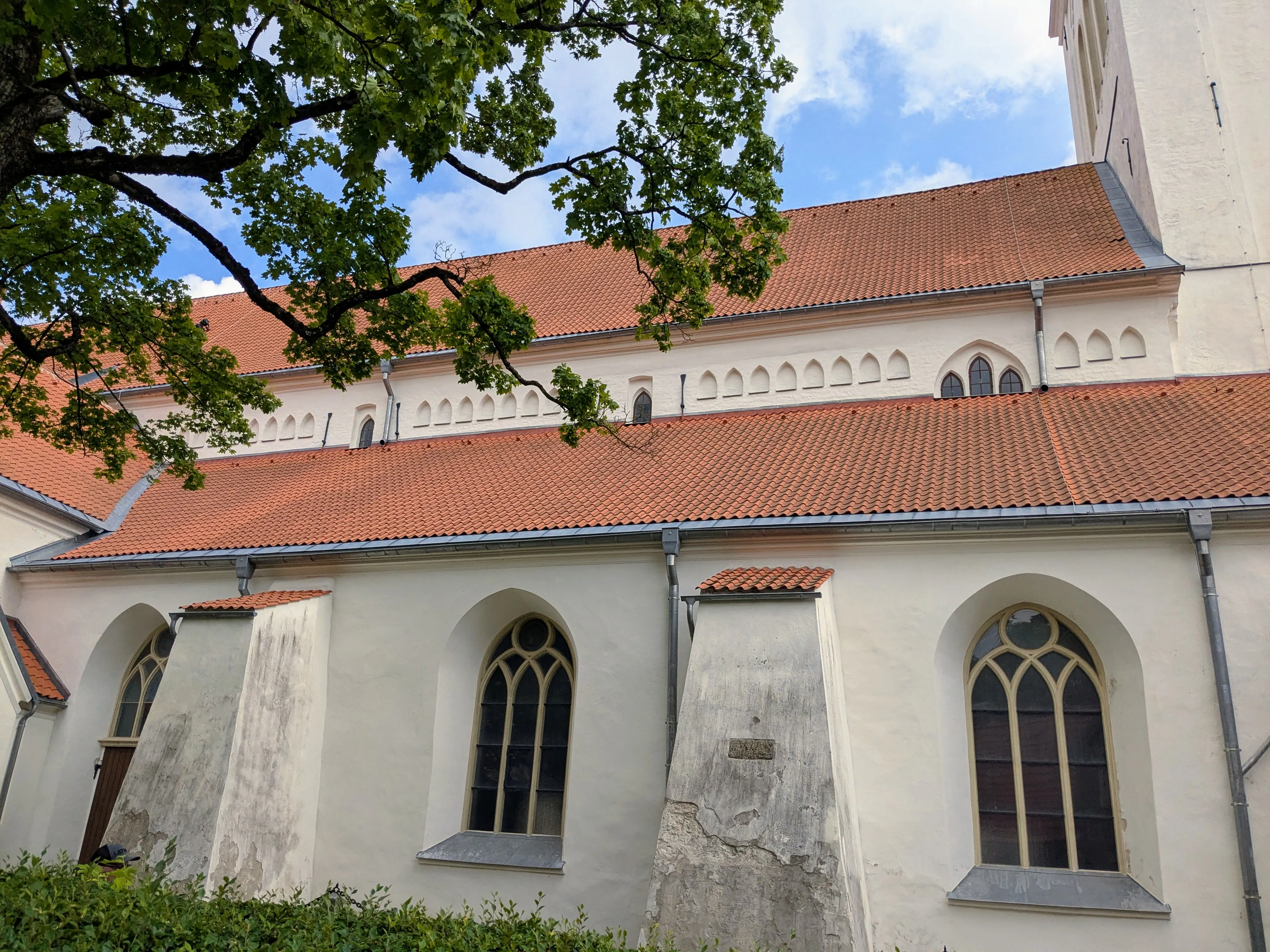
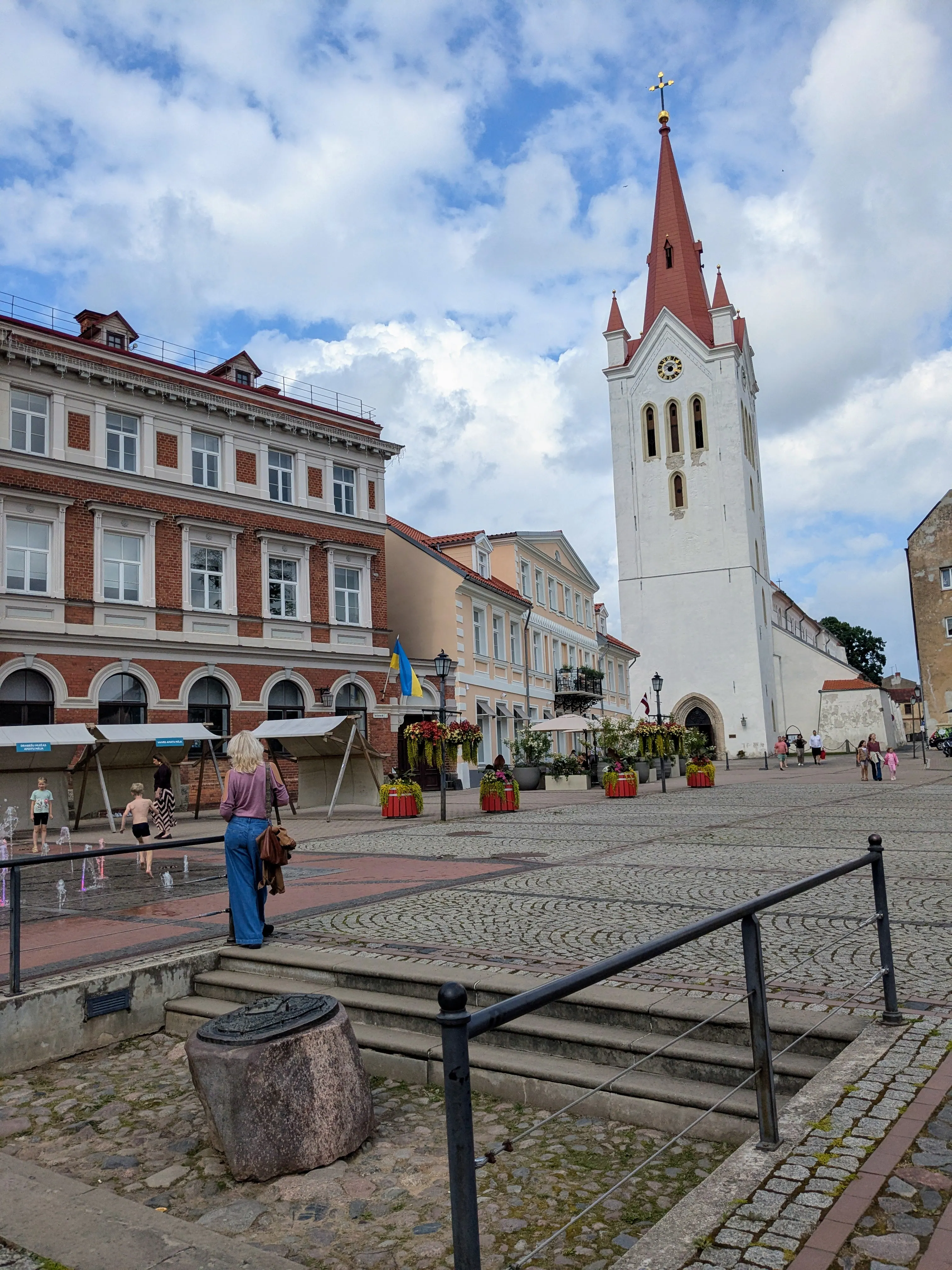
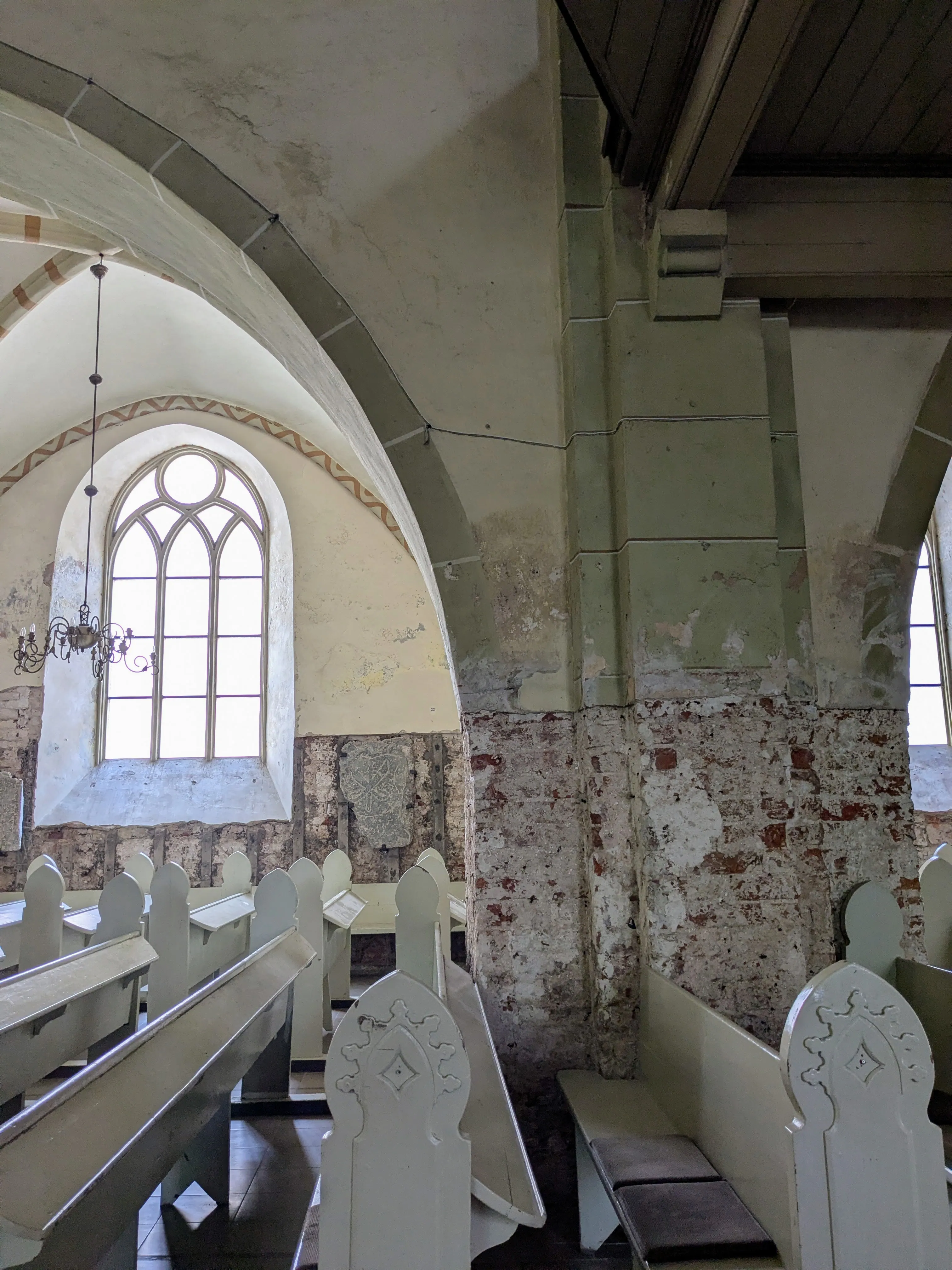
St John’s Church
Inside, the white walls and ceiling make the space feel vast and light. It may also hold Latvia’s largest collection of medieval tombstones and memorial plaques.
Entry is free, though donations are welcome. For around €3, you can climb the tower for the view over town. Check the opening times first.
A town that puts things on
Cēsis takes culture seriously. The Cēsis Festival is an established annual music festival, held in the castle park among the ruins and views.
There’s also Concert Hall Cēsis, a modern building known for its acoustics and wooden interior, where much of the town’s music happens.
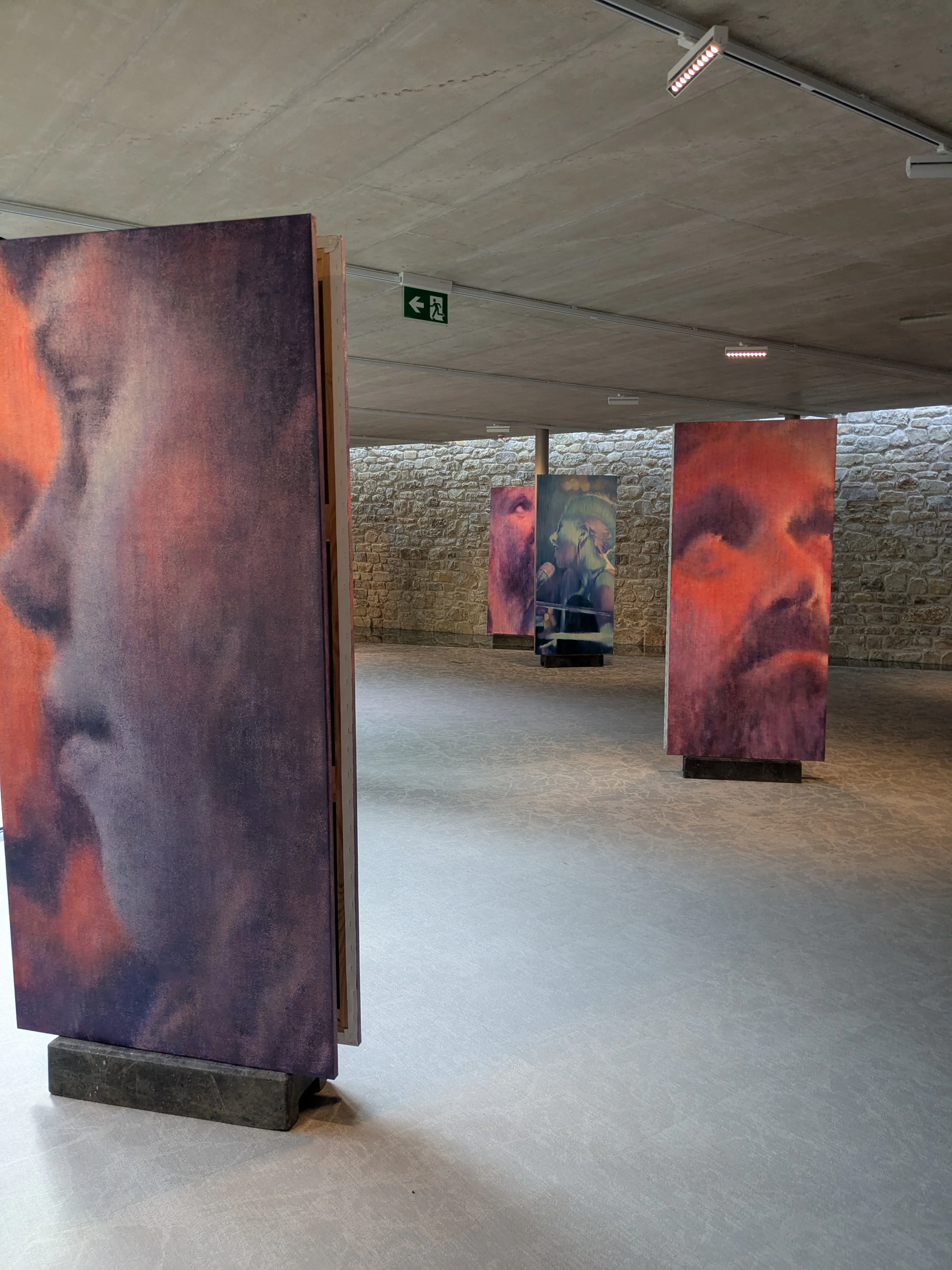
When we were there in July, we visited Konrāda kvartāls for a temporary exhibition in an interesting building. Check what is on before you go: a concert or exhibition can make a good day here even better.
Cēsis Castle
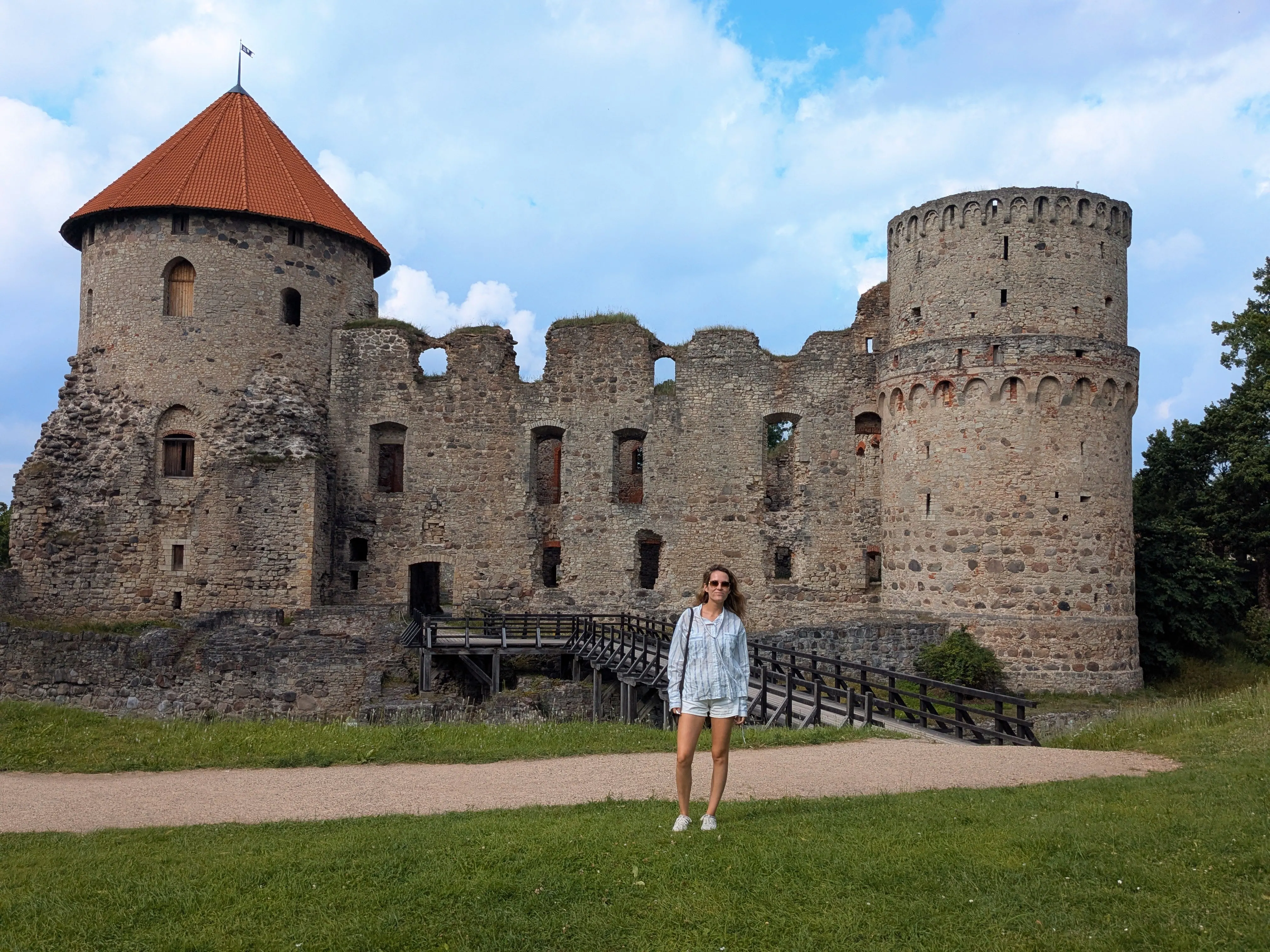
The castle is the reason to come. It’s not an ordinary ruin.
The Livonian Brothers of the Sword began it in 1209. Under the Livonian Order, it became Livonia’s strongest fortress and the residence of its Master.
If the name means little to you, the Livonian Order was a military religious order of German knights. They were sent north to convert the Baltic peoples to Christianity by force, then stayed to rule the land they took. For around three hundred years, they governed most of what is now Latvia and Estonia. Cēsis was their headquarters: the Order’s archive, library, chancery and mint were all here. That is why this small Latvian town has a ruin on this scale.
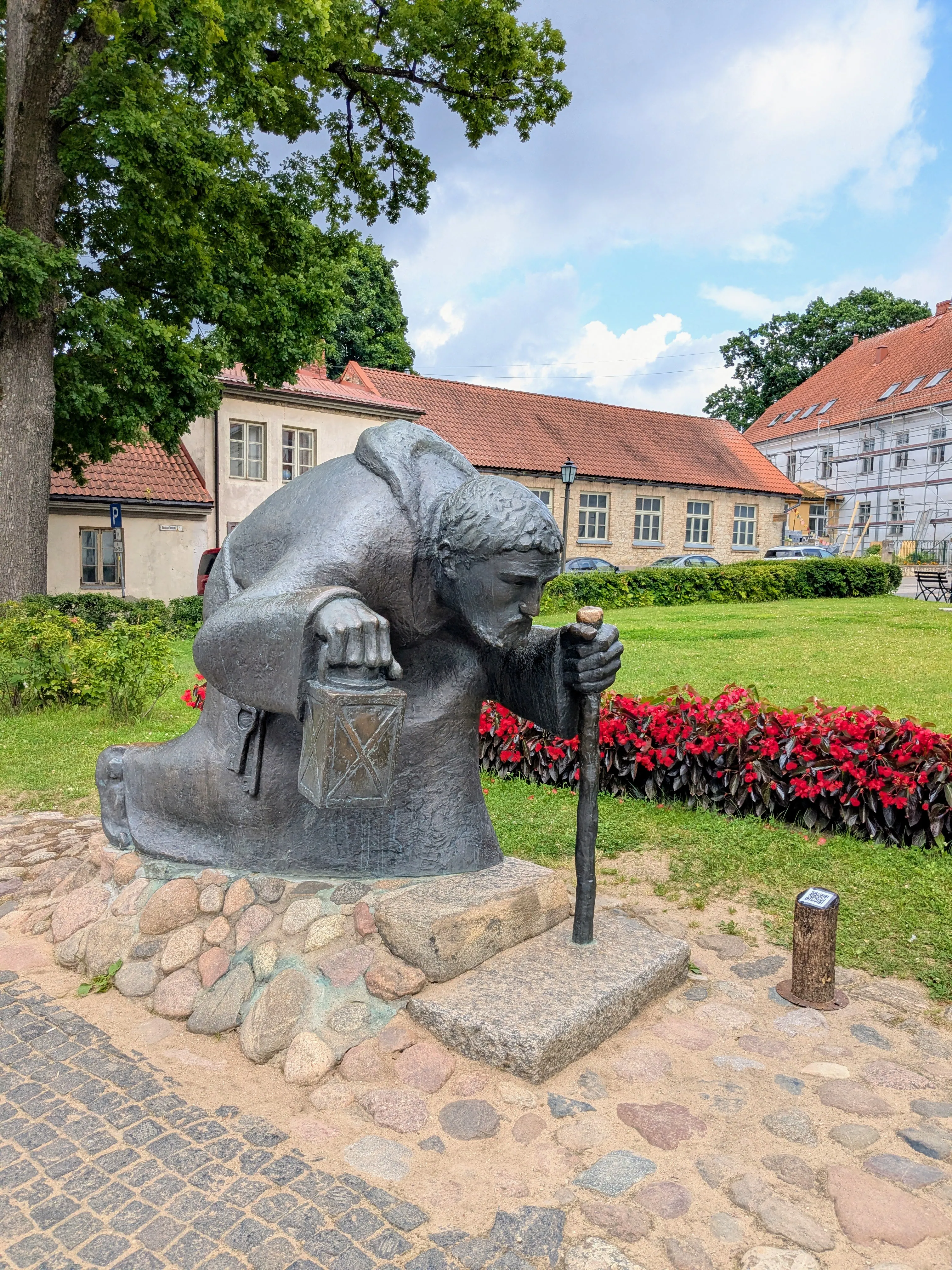
On the way up Torņa iela, you pass Old Man Time, a bronze figure with a candle lantern and one of the town’s symbols. His lantern lights the old-town lamps, and the story goes that he once walked the streets at night, keeping watch over Cēsis and its people.
Tickets. The medieval castle alone was €8 when we went. The combined ticket was €12, and I would take it because it includes the New Castle (Cēsu Jaunā pils).
The New Castle (Cēsu Jaunā pils). This 18th-century manor was built straight against the medieval ruins. It now houses the town’s history and art museum, with more than 160,000 objects and an interactive exhibition called “Cēsis, a symbol of Latvian history”. The mansion and ruin stand side by side in the same courtyard, four hundred years apart.
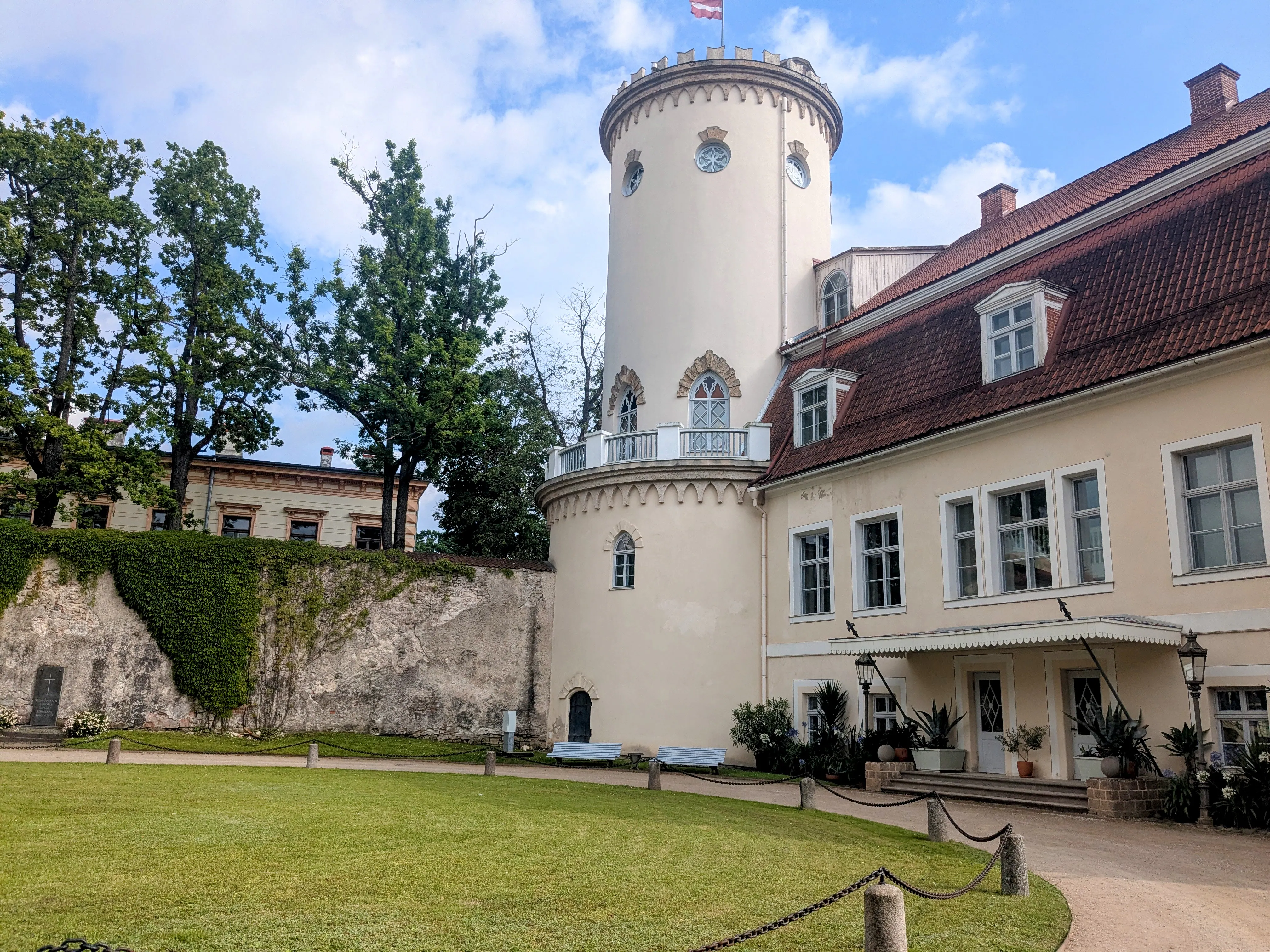
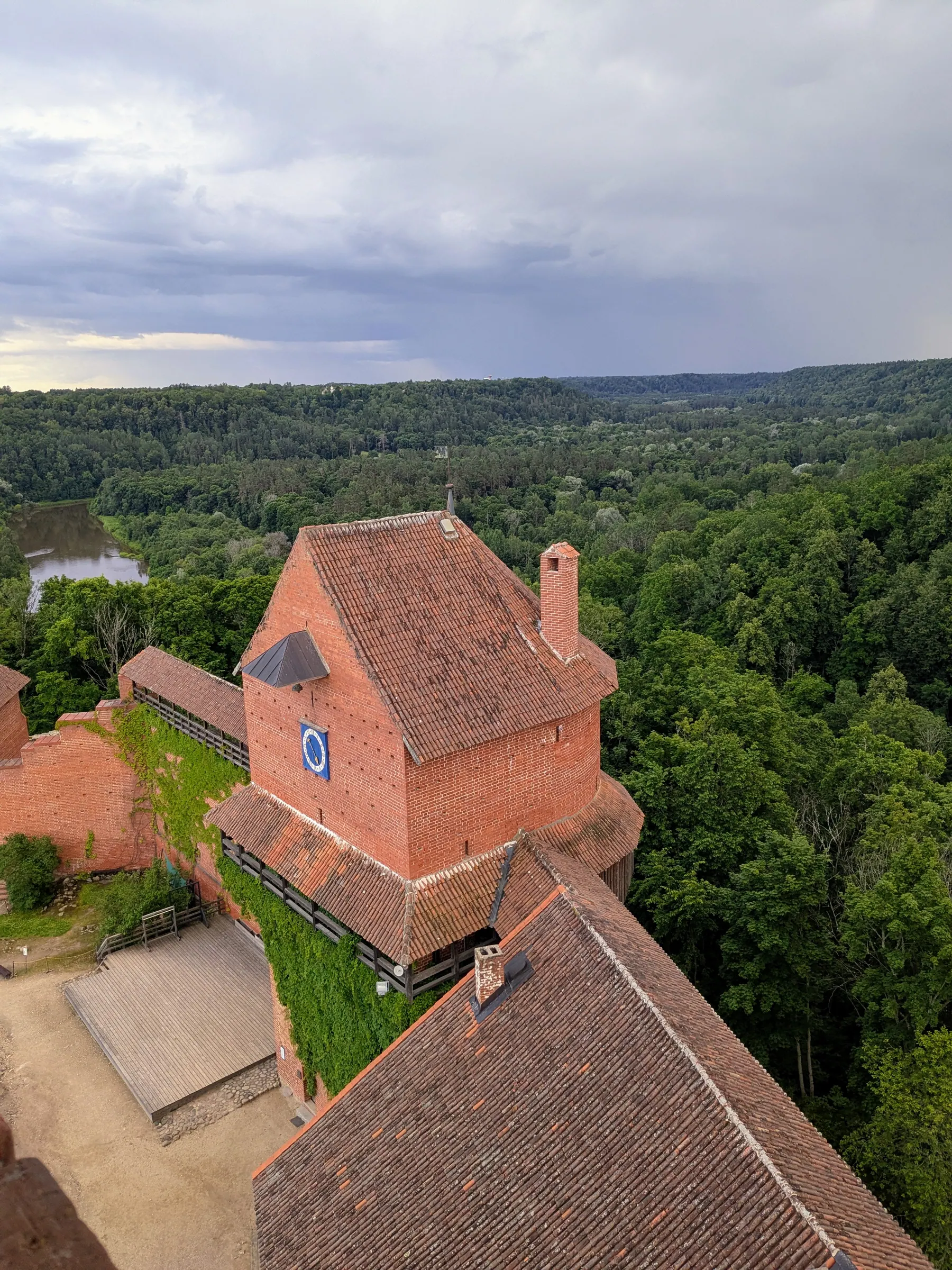
Its neo-Gothic Lademahers Tower is one of Cēsis’s symbols, with a viewing platform over the whole complex. The Latvian flag has flown from it since 1988, because this town is where the flag comes from - more on that at the end.
Timing. Check the closing time before planning your day: even in summer, the whole complex closes at 18:00. We arrived in the evening and ran out of time for the museum. Do not make the same mistake; give it a couple of hours in the first half of the day.
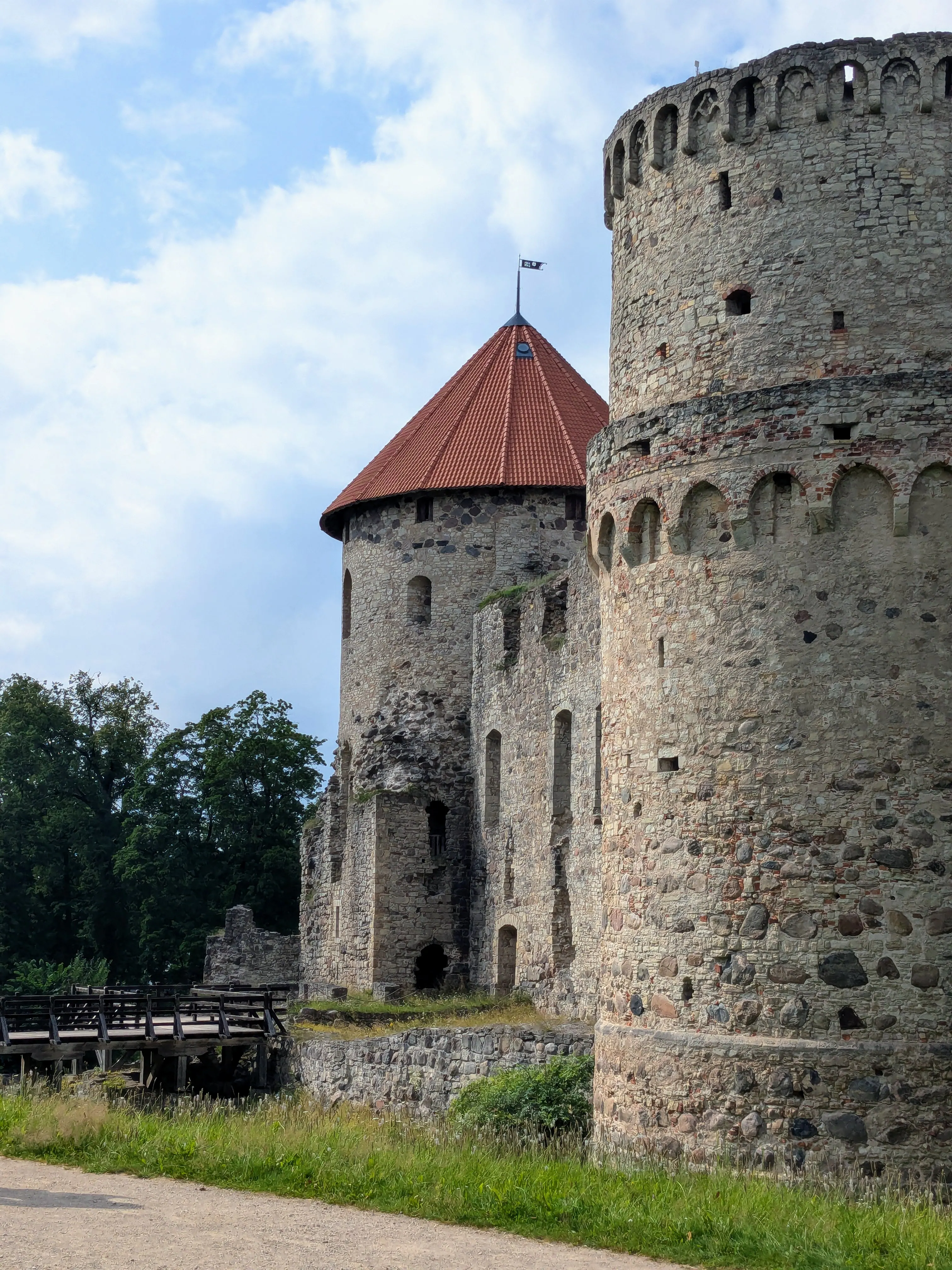
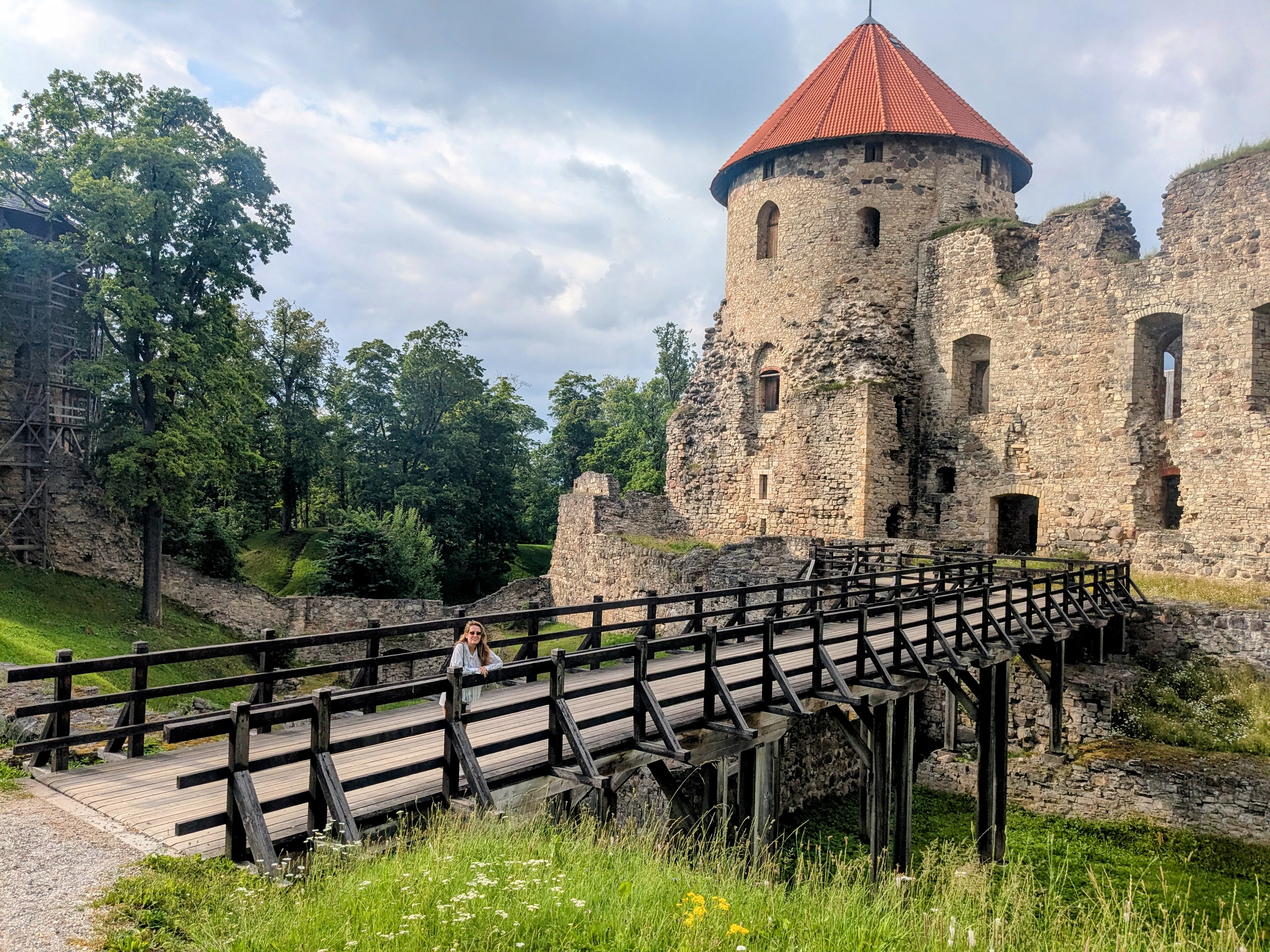
The grounds around the castle. You reach these first, and they’re better than you might expect. At the medieval-craft stations, people in period dress show how pots and other things were made. There’s a garden planted as a medieval one would have been, with herbs, vegetables and medicinal plants, plus an area where children can try old-fashioned games. The people running it clearly know their subject, and the children we saw were every bit as absorbed as the adults.
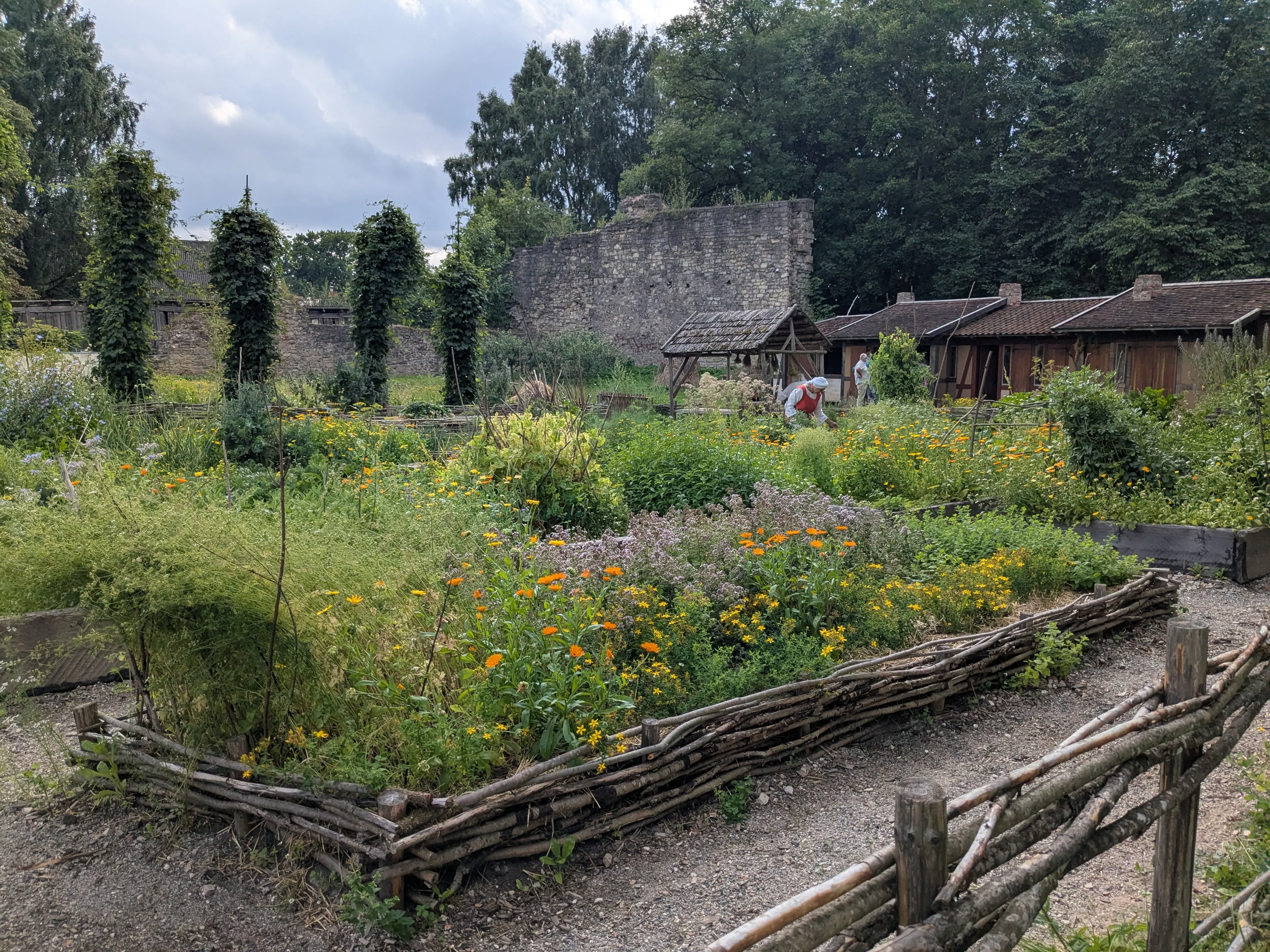
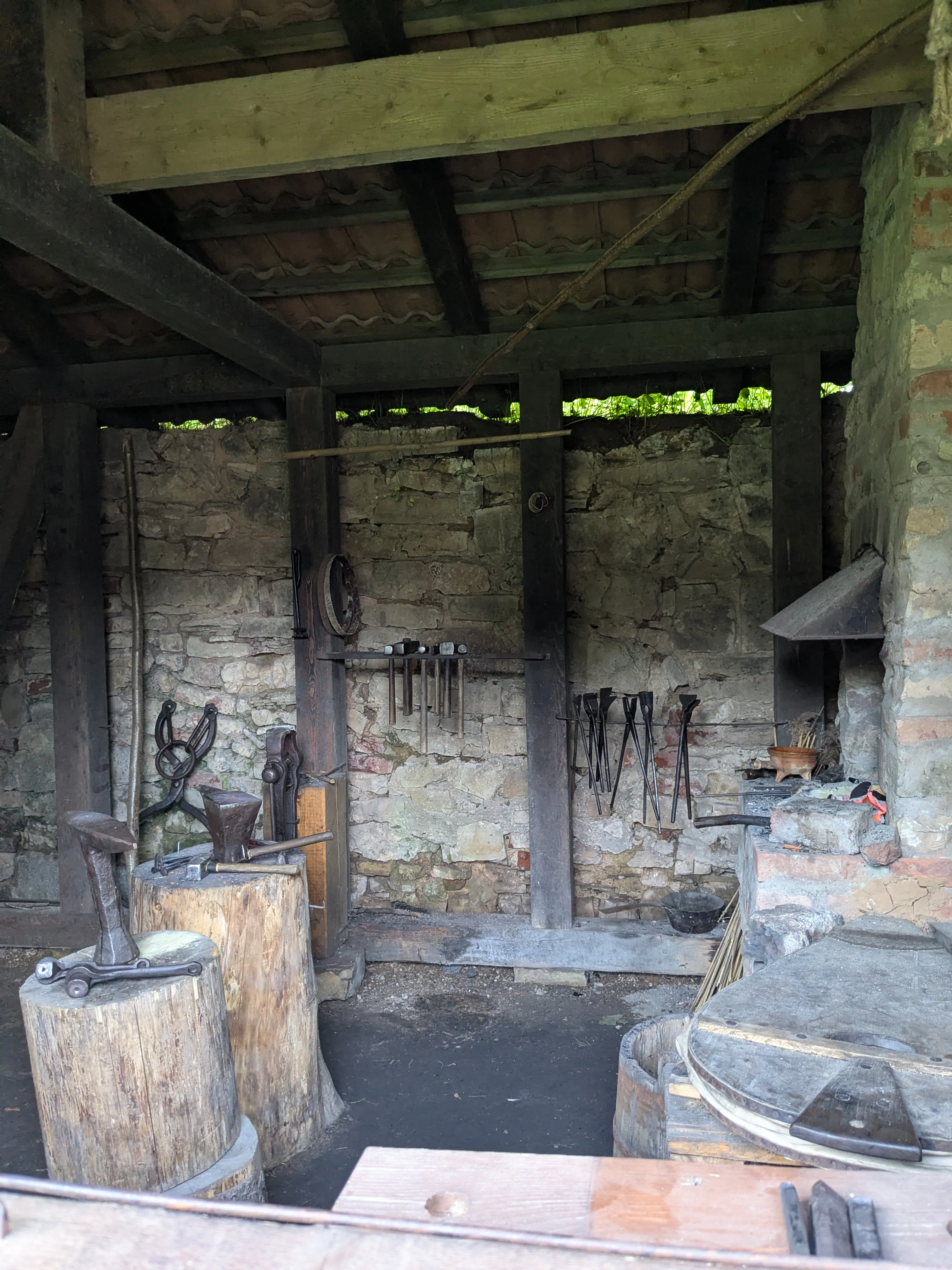
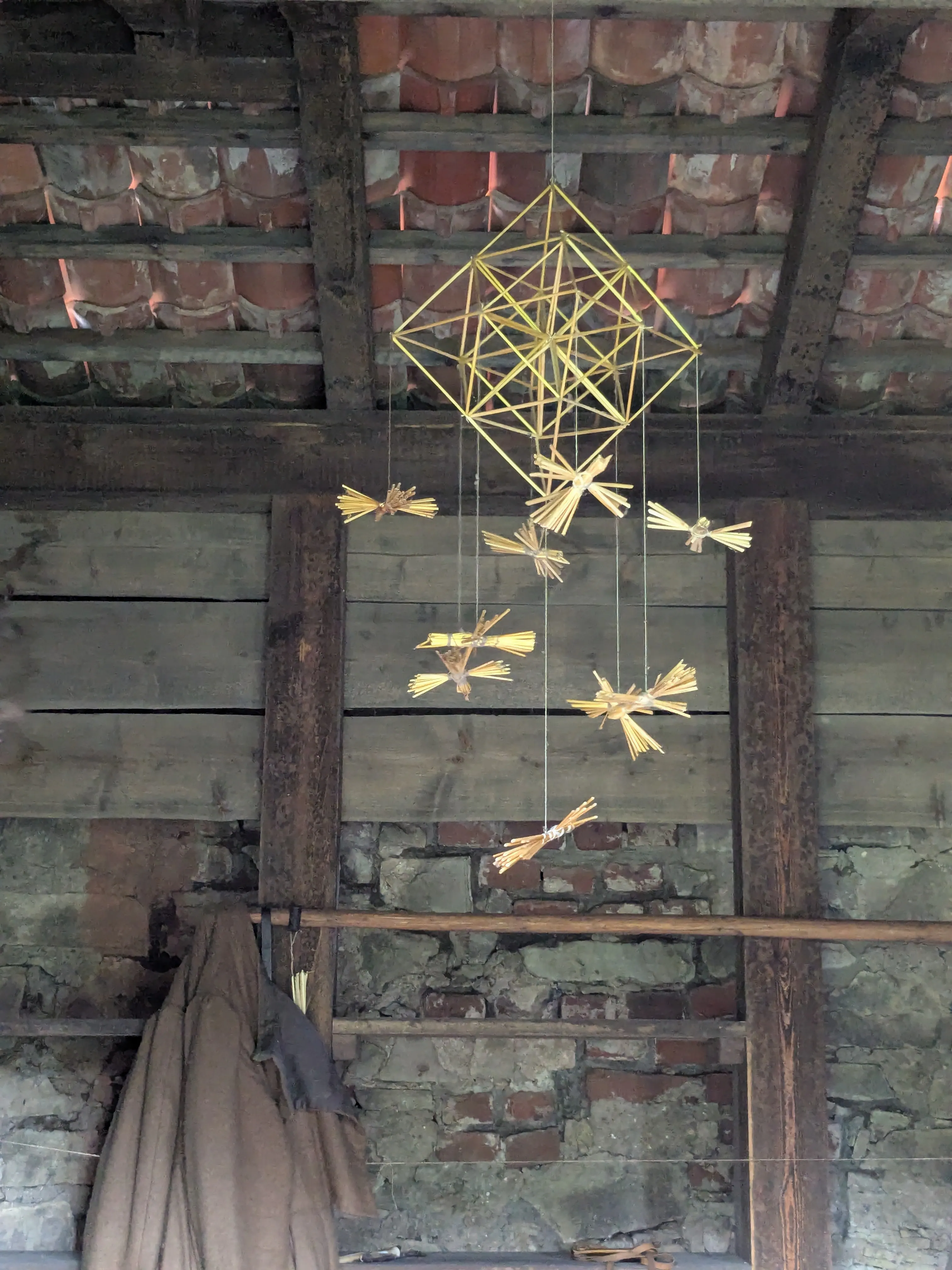
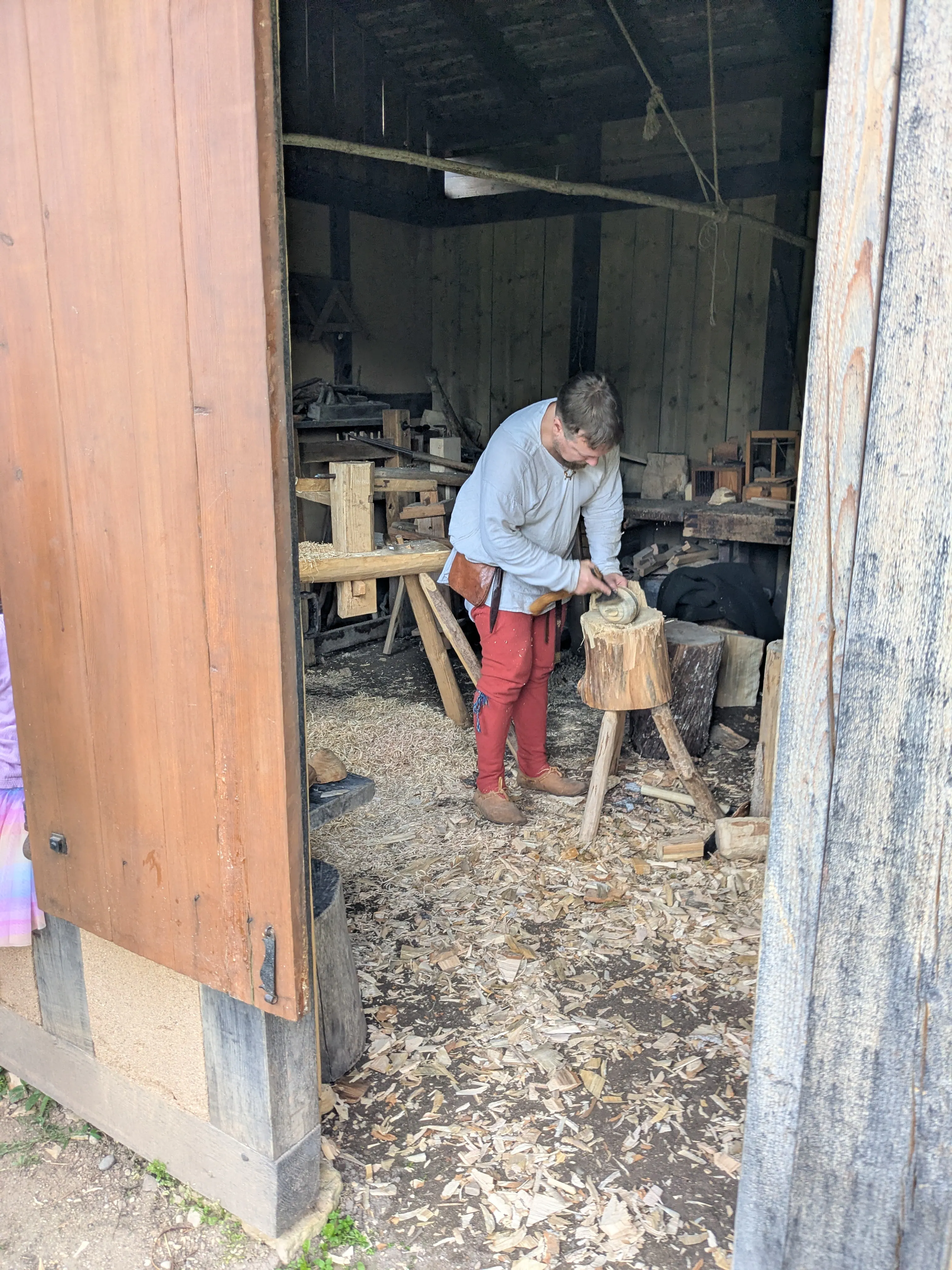
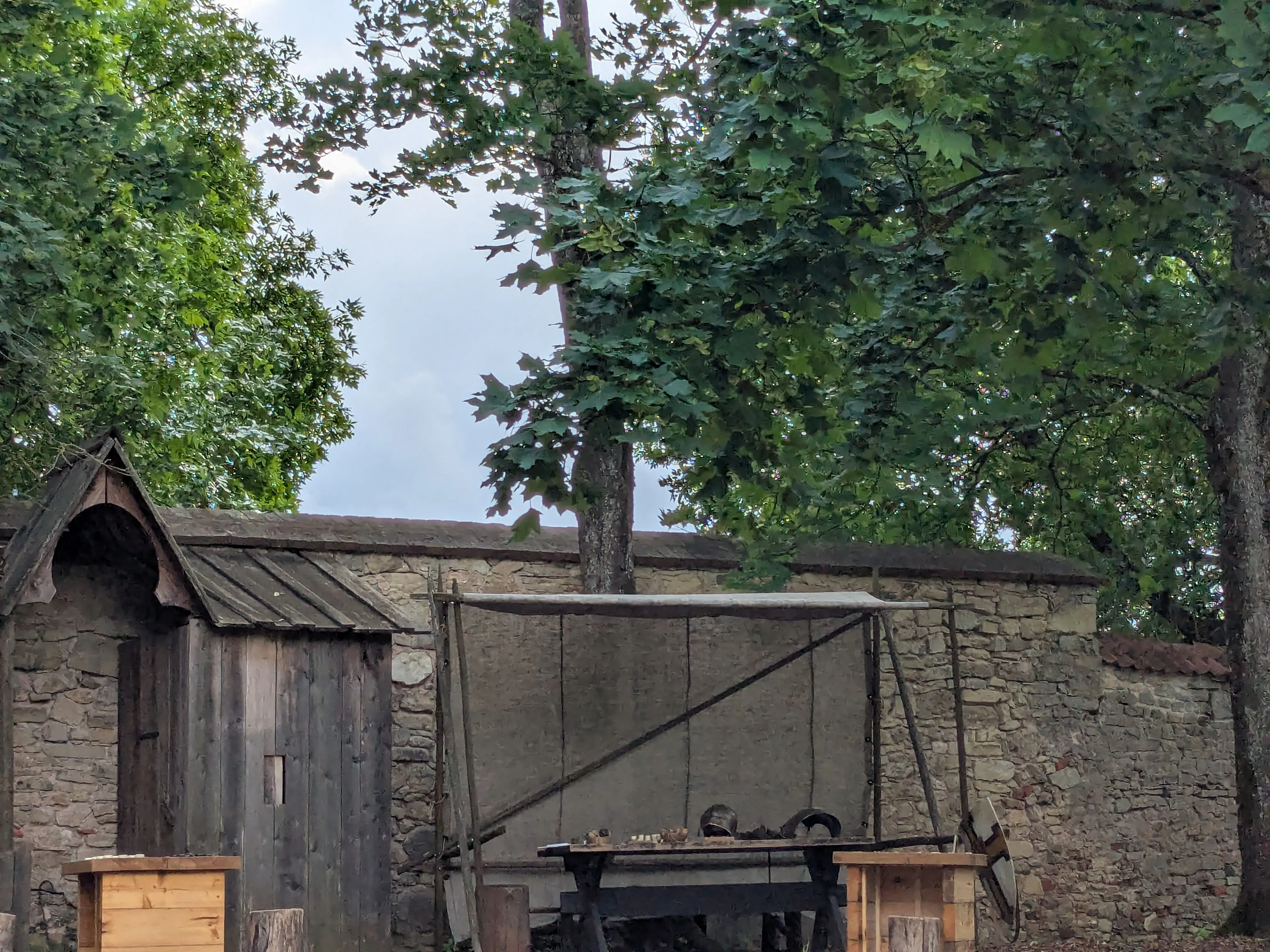
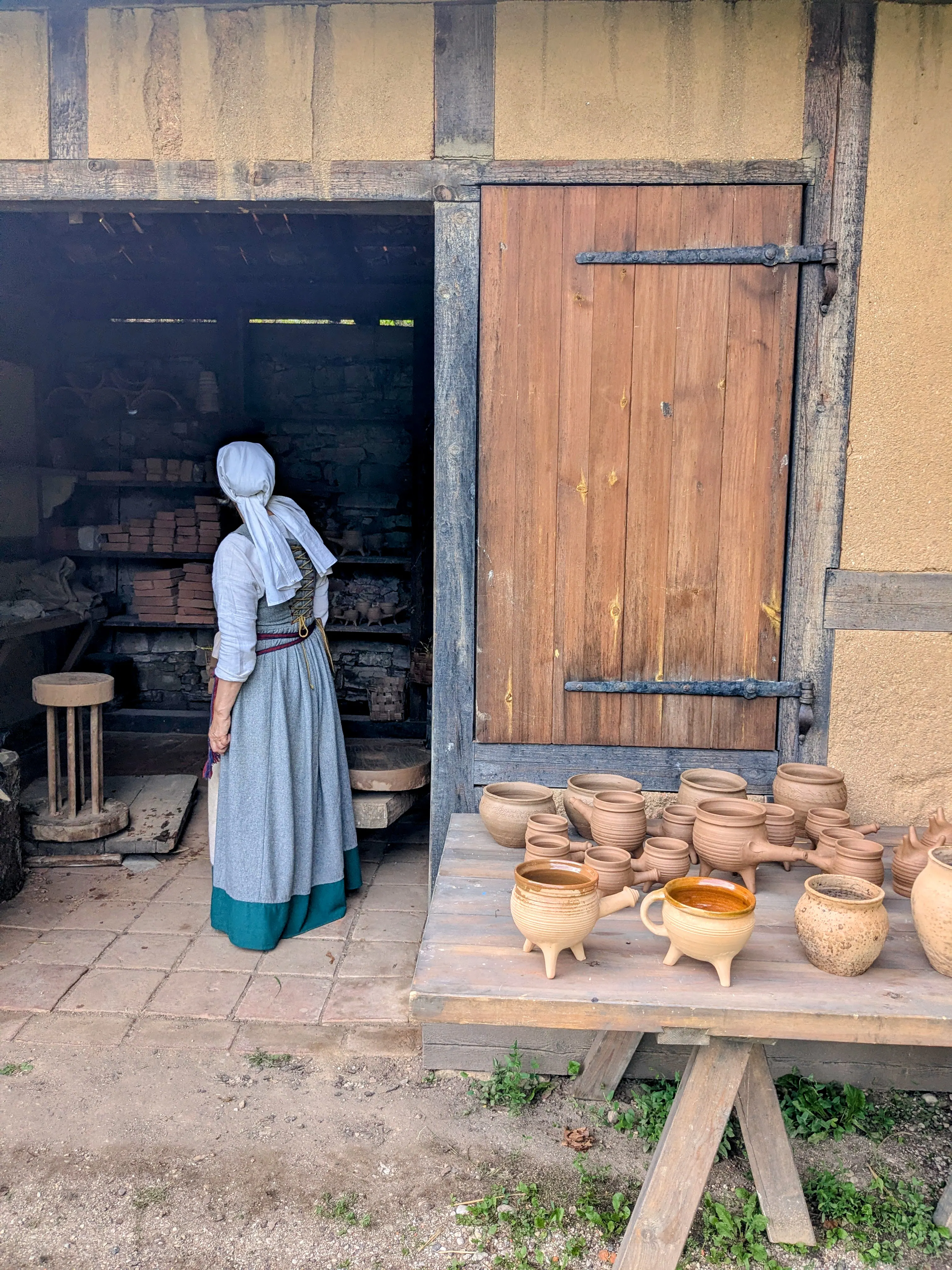
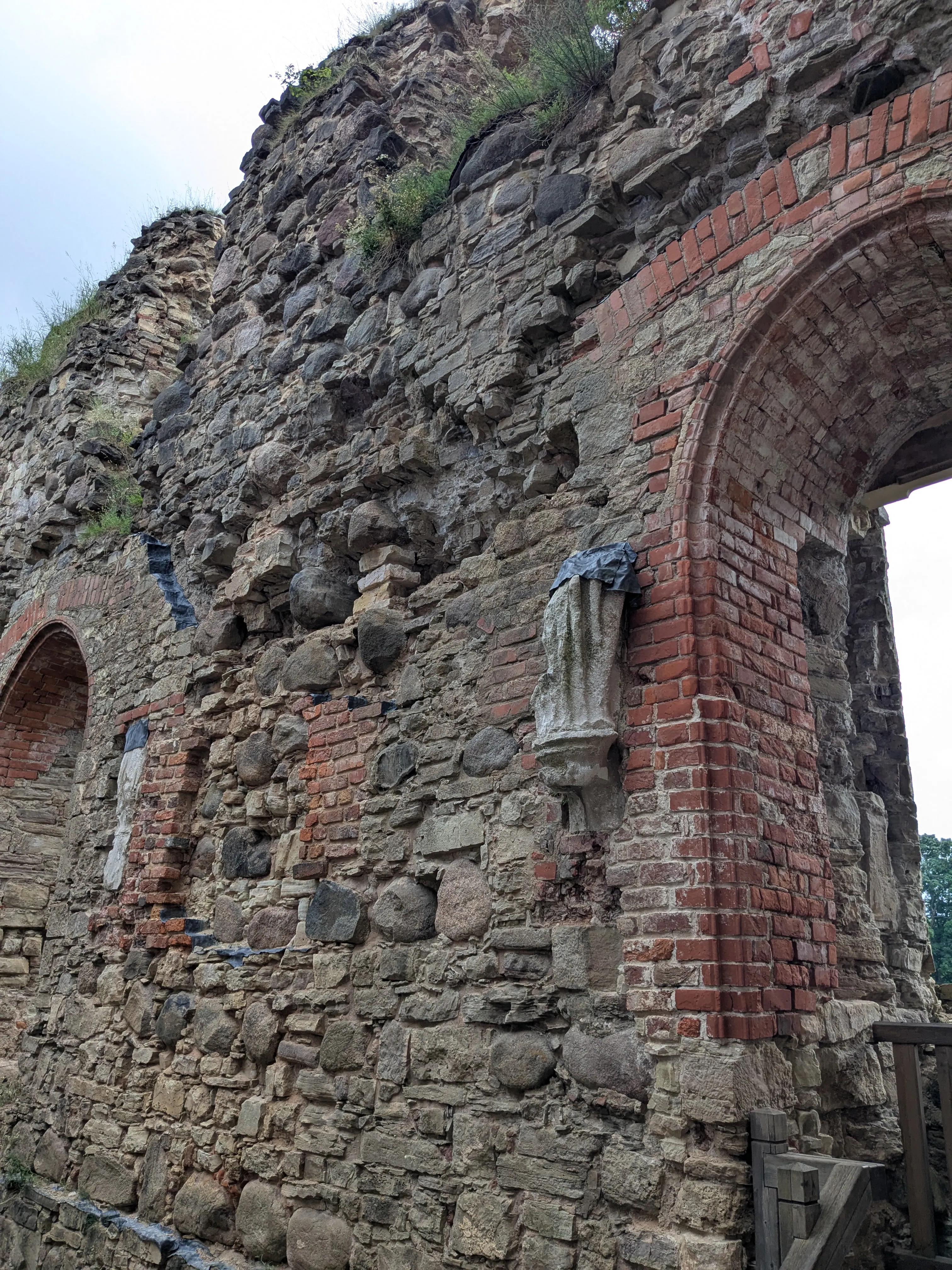
What survives. This is a medieval castle, and the ruins have been left as they are, so don’t expect restored rooms. You’ll see columns and fragments of what once stood here.
The candle lantern. Then comes the castle itself, and this is the part that makes the visit. Two towers are open to visitors, the Western Tower (Rietumu tornis) and the Southern Tower (Dienvidu tornis). At the entrance, you’re handed a real candle lantern with a real flame in it and sent up into the dark.
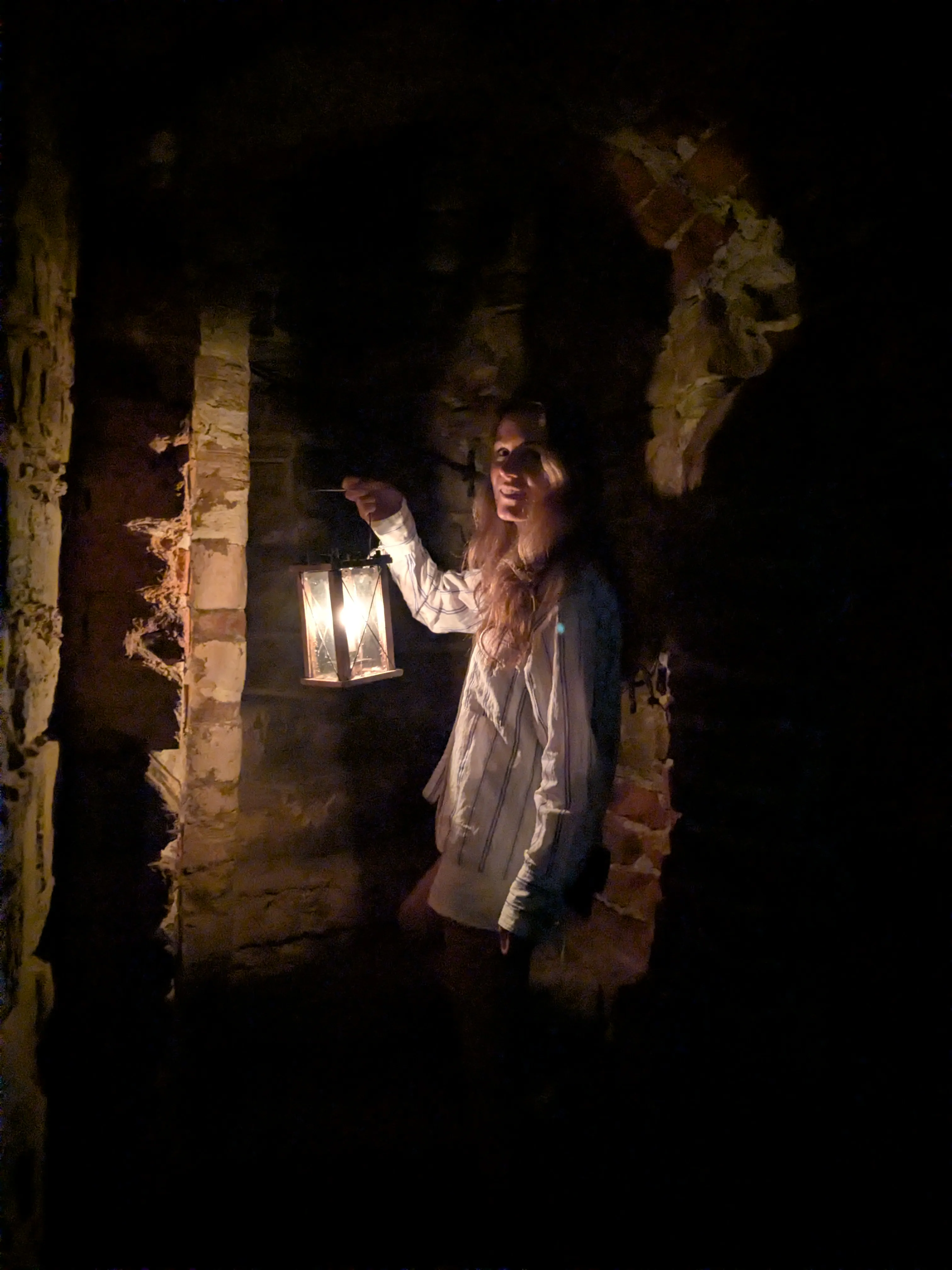
In the Western Tower, you pass through the Master’s living chamber, the room used by the head of the Livonian Order. It’s one of the few places where you get a sense of how the castle was lived in, rather than defended.
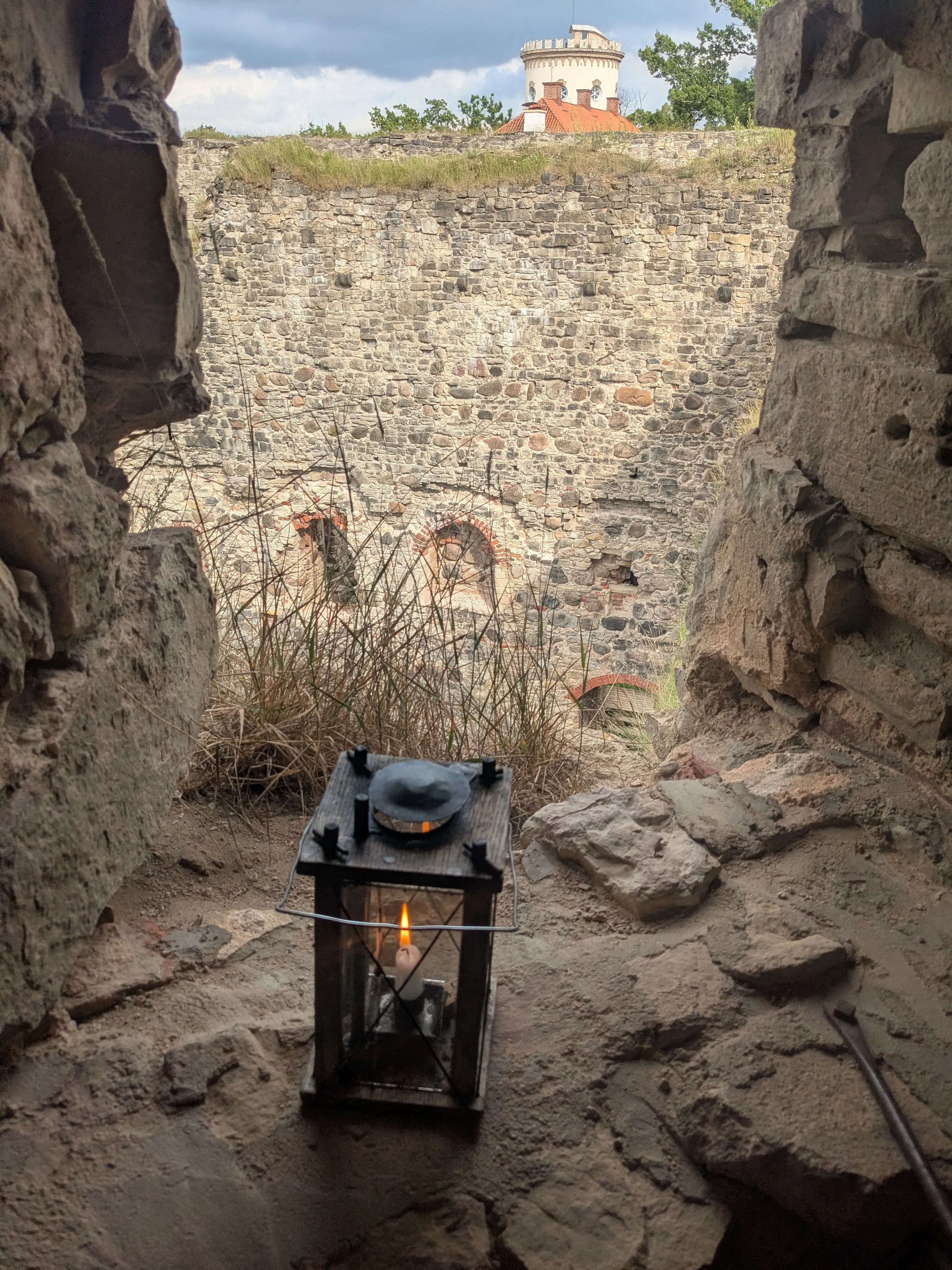
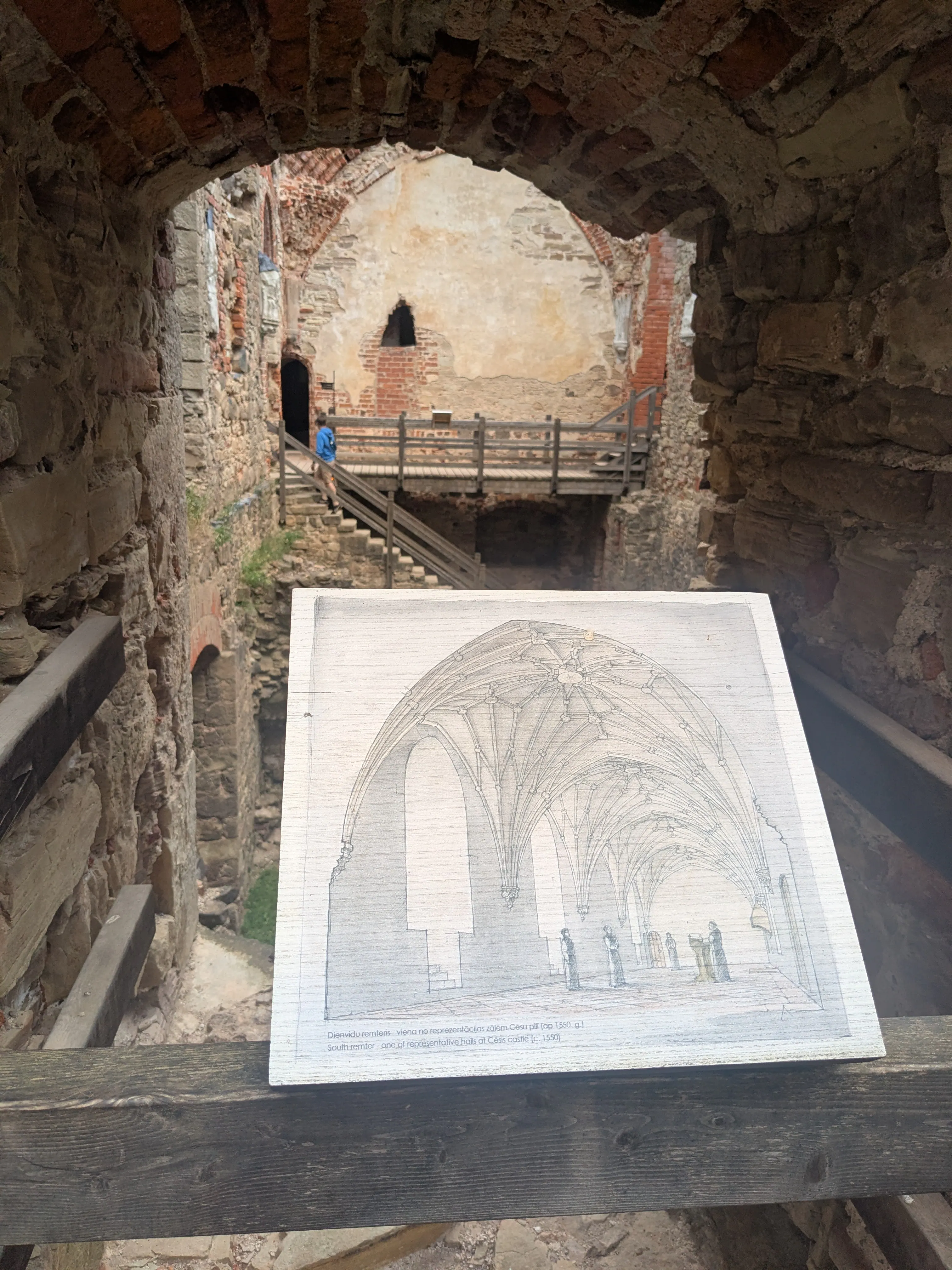
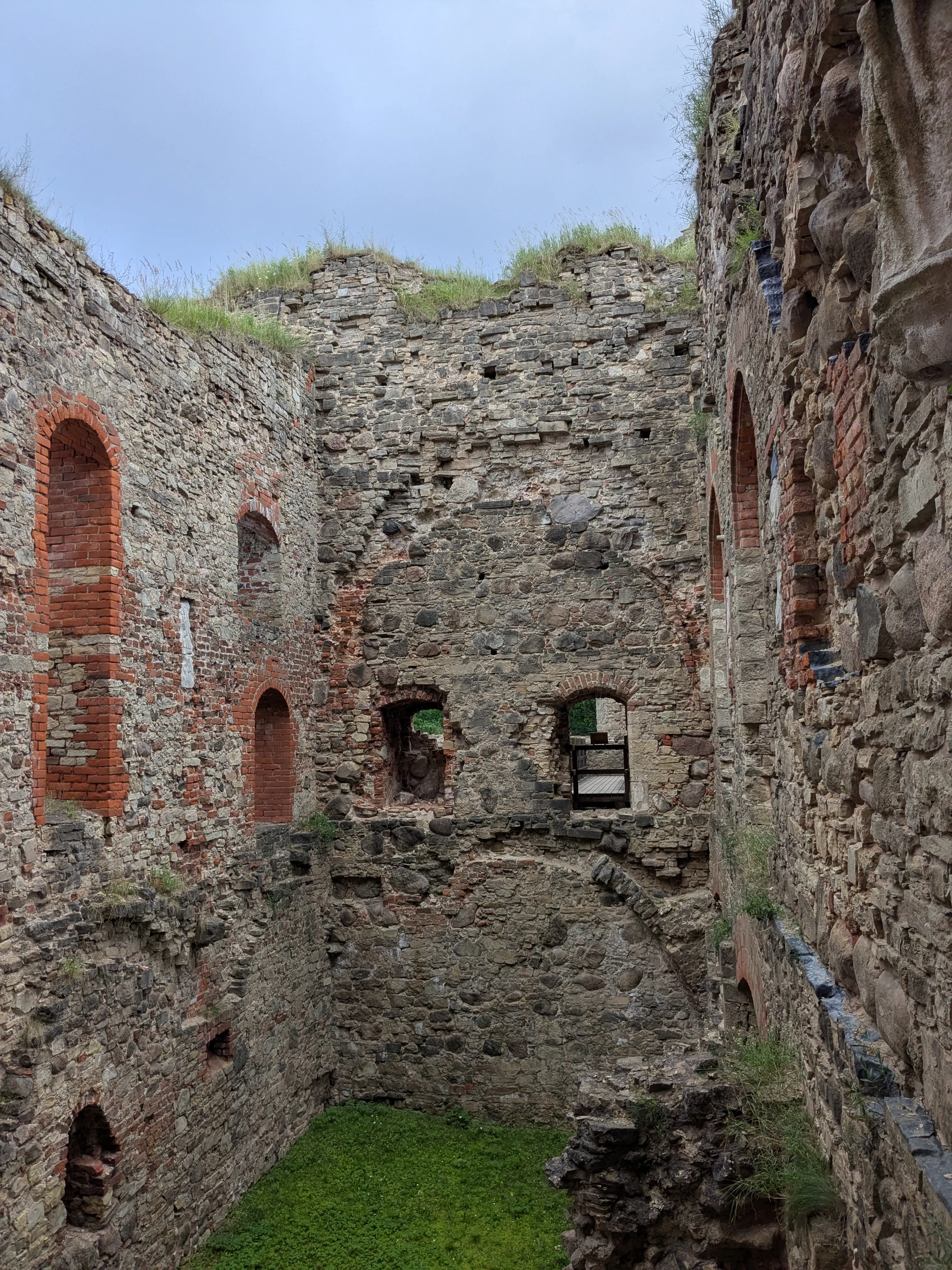
That small detail made the whole visit memorable for me. The tower stairs are steep, narrow and go all the way up. Climbing them by candlelight made me imagine what it must have been like in medieval times, and what people were thinking as they climbed.
The views from the towers are worth the climb: green in every direction, with a glimpse of the lake.
The Southern Tower - once called Tall Herman and one of the Baltics’ best examples of medieval military architecture - has a multimedia exhibition from May to the end of September. It’s about life here five hundred years ago, when the people of Livonia knew change was coming. This is where the interactive elements are. The one that stayed with me is underground: a prisoner’s silhouette is projected onto the wall and tells you how he came to be held there. It’s done well enough to feel real.
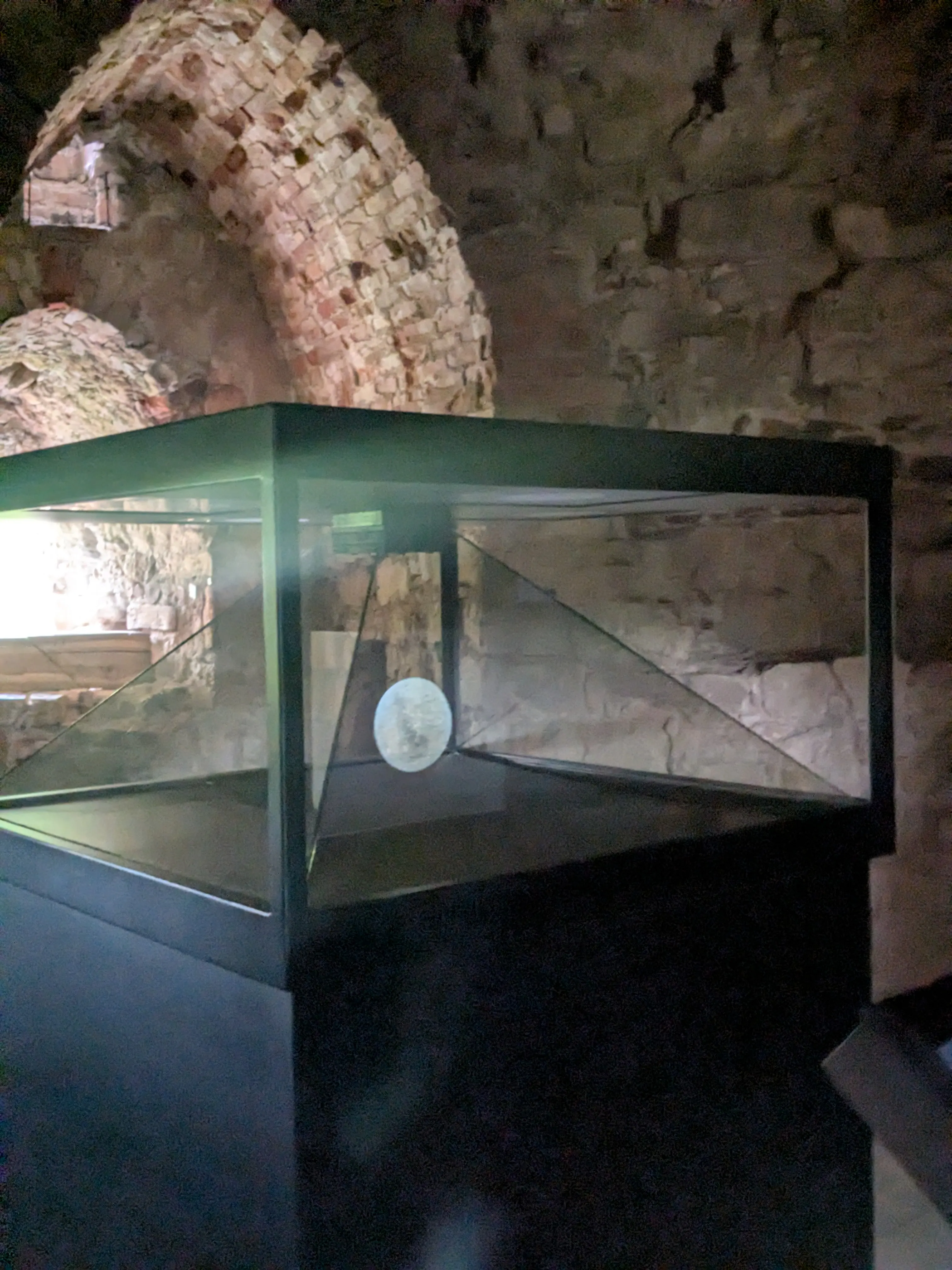
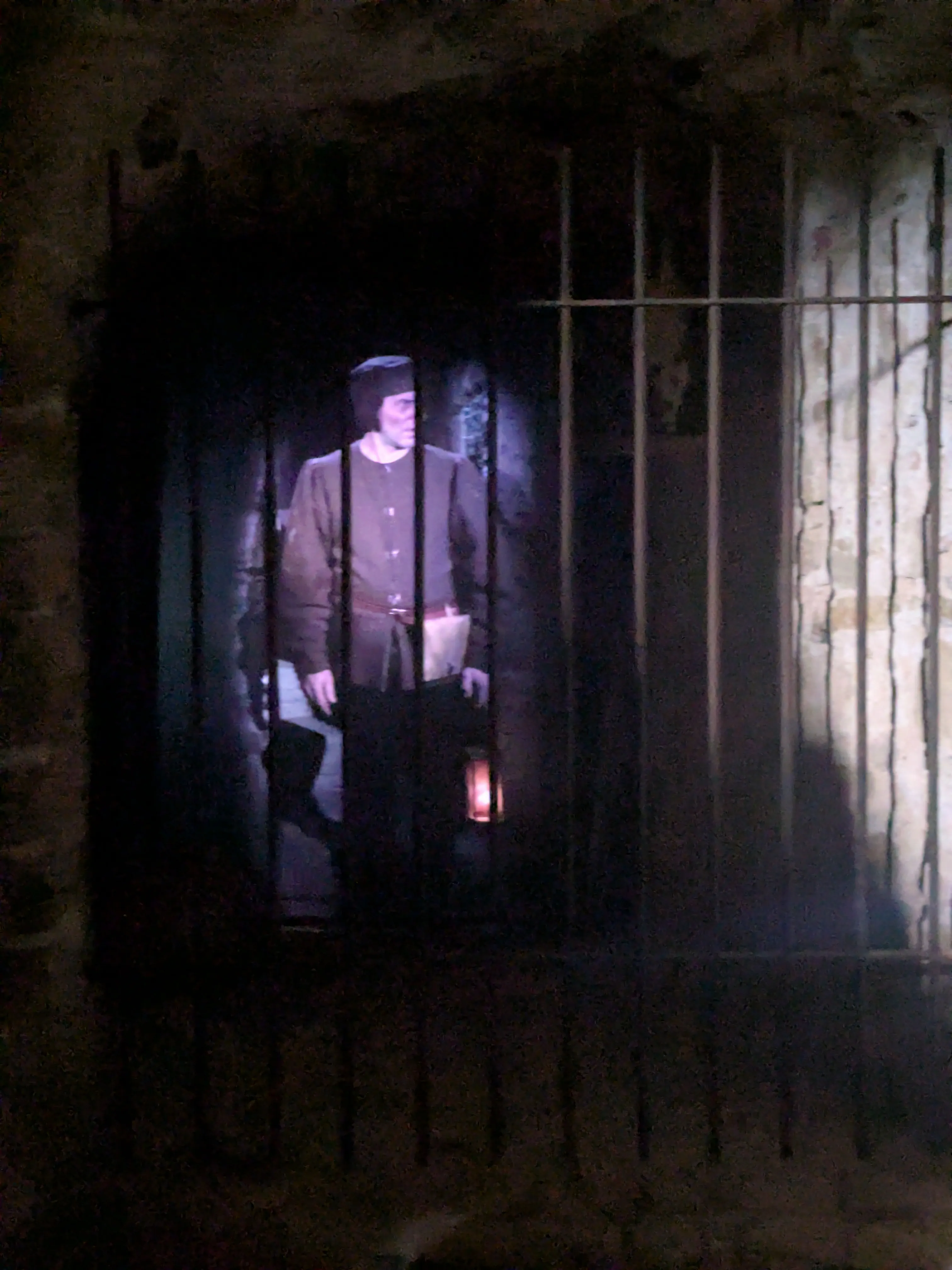
The whole visit is well thought through. It isn’t a walk past information boards; everything is part of the experience, and children will get as much from it as anyone.
Why the western wing is missing
One episode in the castle’s history stays with you.
In 1577, during the Livonian War, the army of Ivan the Terrible besieged Cēsis and bombarded it for five days. Around three hundred people, mostly women and children, had taken refuge inside. Ivan had a reputation for sparing nobody, even those who surrendered.
Rather than be taken, they detonated four barrels of gunpowder and blew themselves up. The castle’s western range collapsed on top of them. Two basement rooms were not uncovered again until 1974.
Standing in those towers, it’s not hard to imagine the fear behind that decision.
The two parks
After the castle, we headed down to the parks. The castle is already in a beautiful setting; the parks around it make the scene even better.
Castle Park (Pils parks) is directly below. Take the stairs all the way down and look at the statues along the sides. It’s a lovely walk.
The von Sievers family laid it out as a private retreat in 1812. The count who created it named its hills and resting places after his relatives: a hill for each child, an island for one sister and a gate for another.
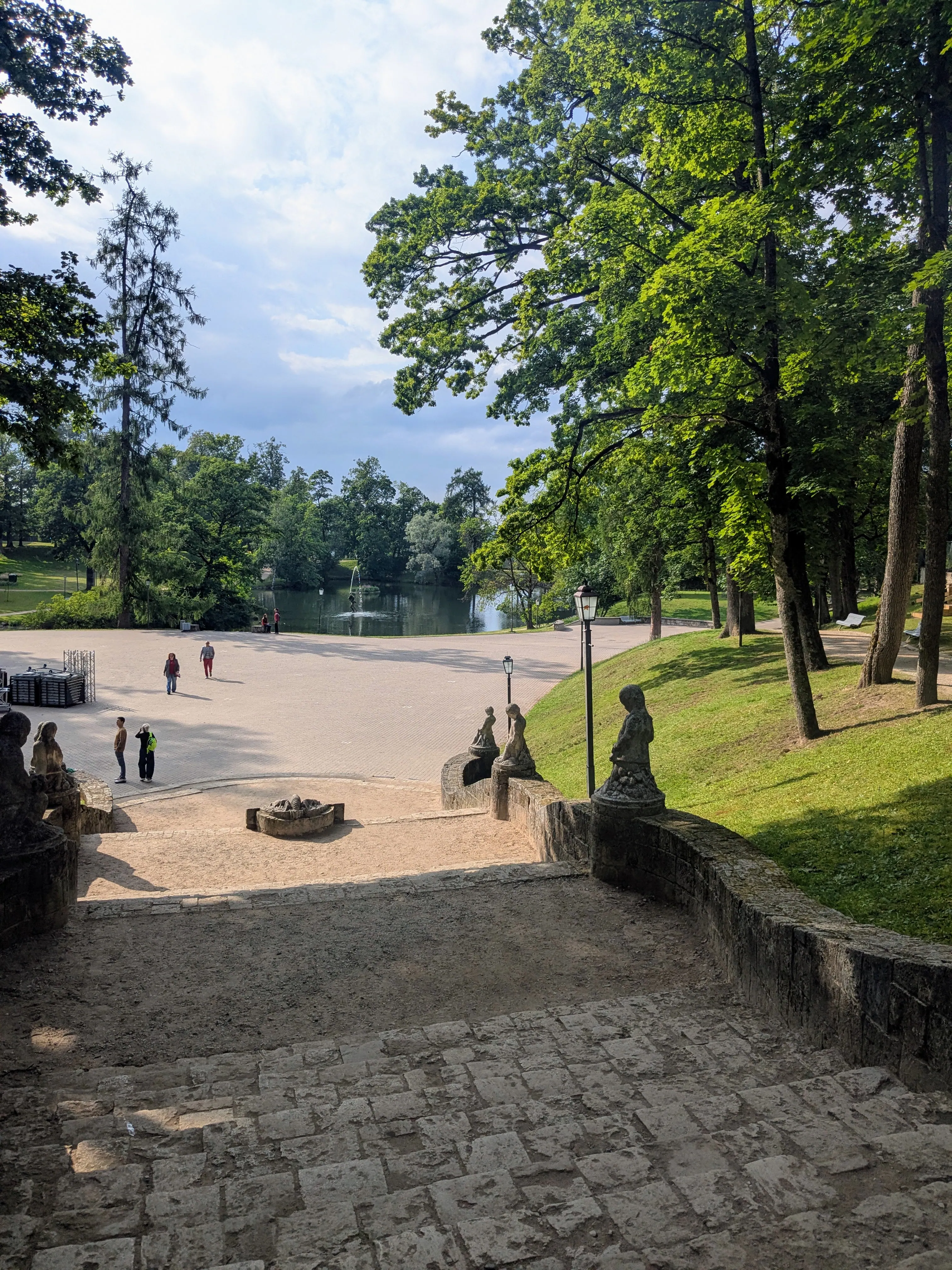
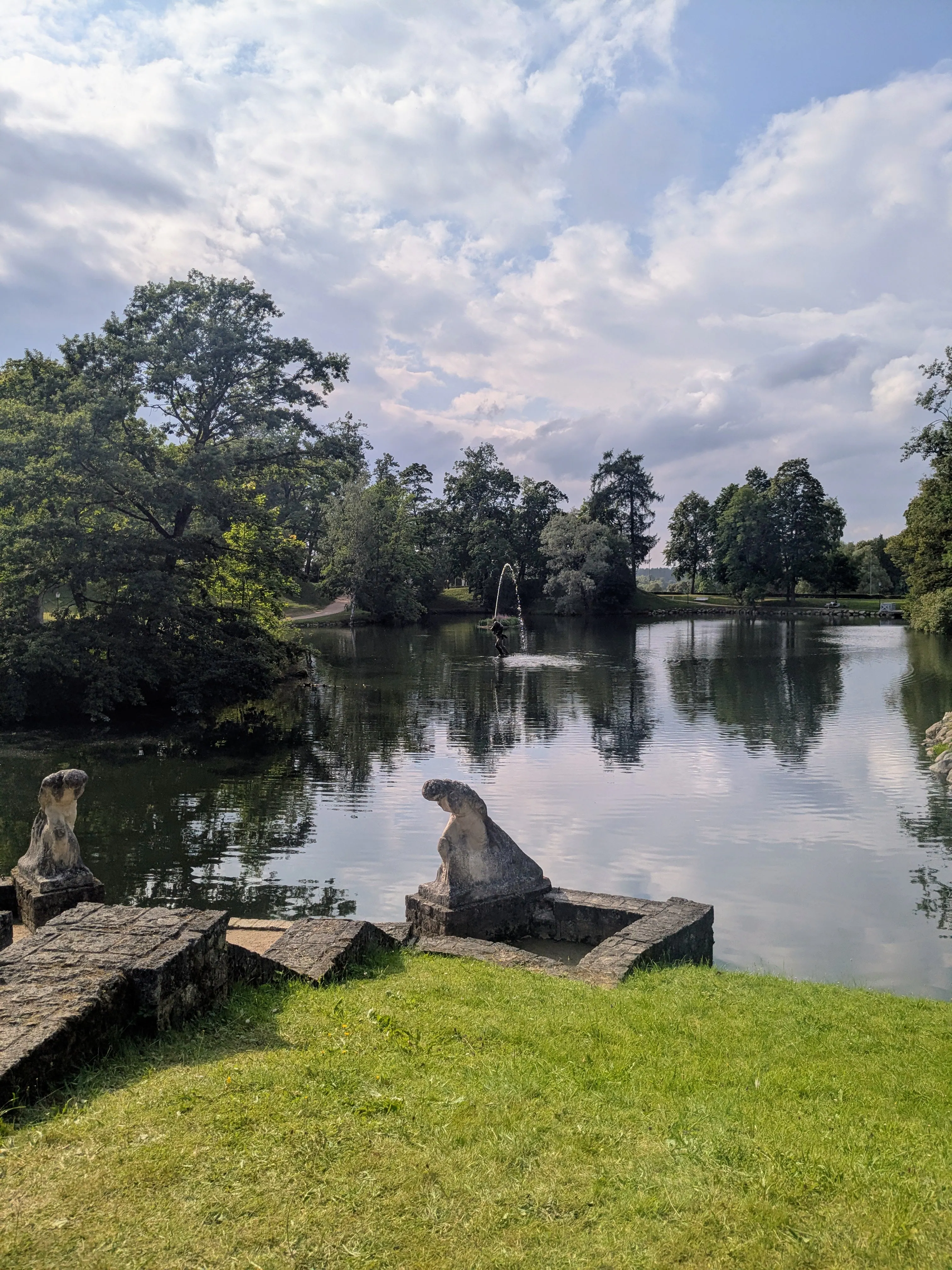
The park also holds the oldest thing in Cēsis. Nut Hill (Riekstu kalns) was the hillfort of the Wends, the people here before the crusaders arrived. The Germans took their name for the town: Wenden.
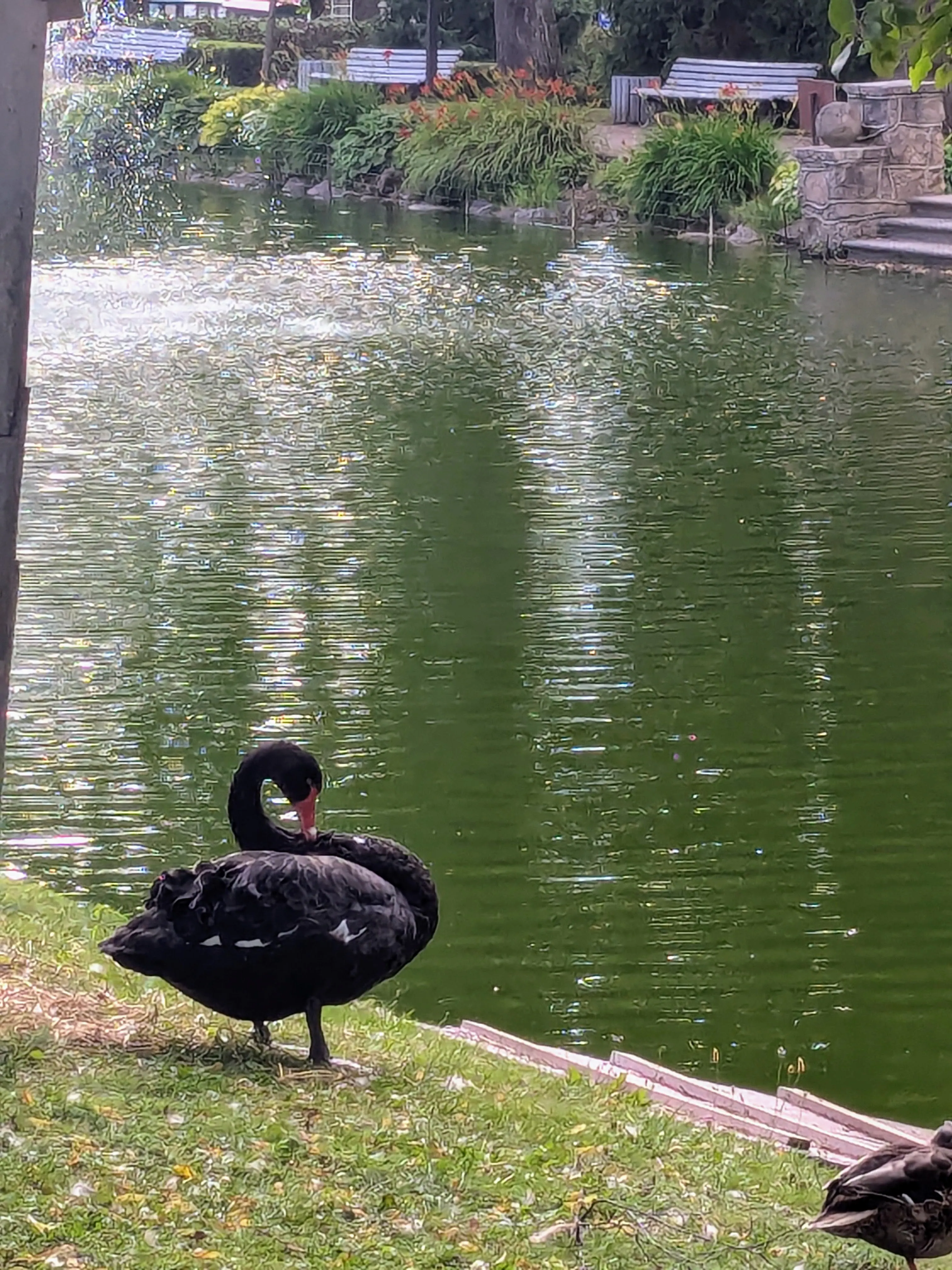
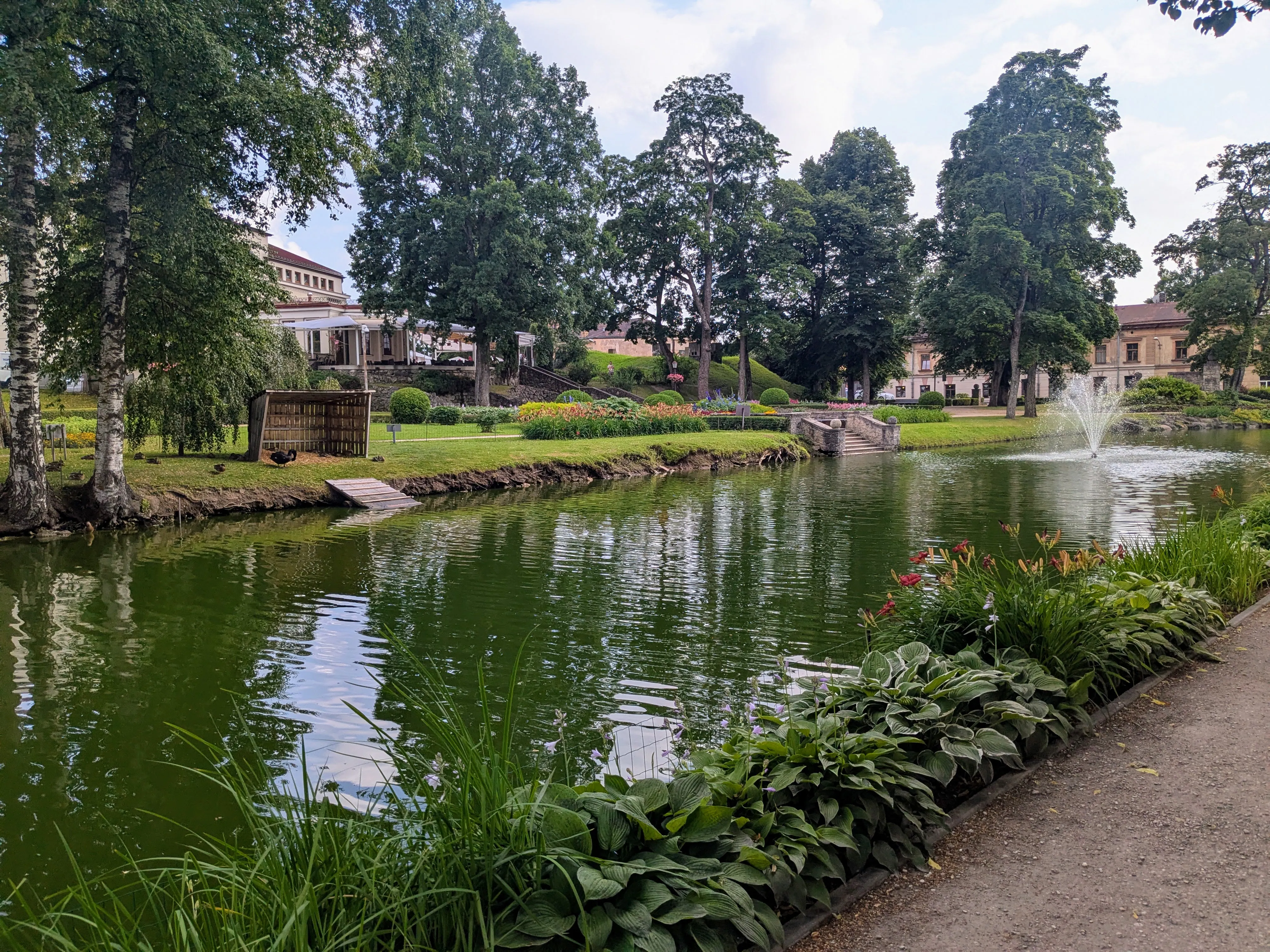
Then walk over to Maija Park (Maija parks), where you will find something you will not see elsewhere in Latvia: black swans. They are not native; they were brought here many years ago and have lived on the park lake ever since. The pair are called Katrīna and Grāfs, names chosen by public vote: Katrīna after Cēsis’s medieval patron saint, and Grāfs, the Count, after the family that built the New Castle and created these parks.
Nearby
Cēsis sits inside Gauja National Park, Latvia’s largest. It’s the main reason many people come to this part of the country. I’ve written more about the valley in my Sigulda piece, and there’s more to come. For now, two nearby places are worth adding to your day.
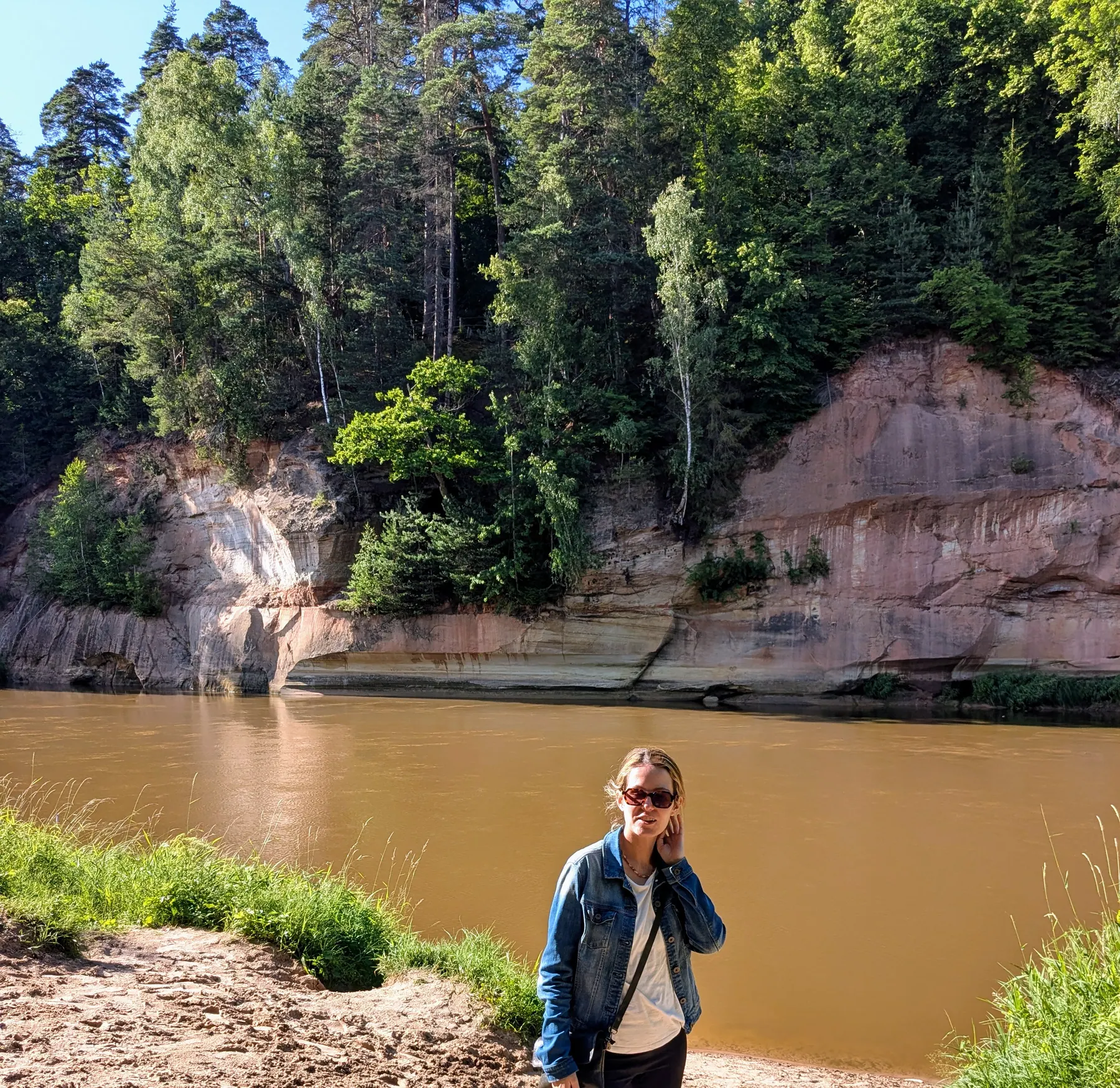
The Cīrulīši nature trail follows the Gauja just outside town, for about six kilometres through sandstone cliffs, forest and river. It’s the easiest way to see the national park without going far.
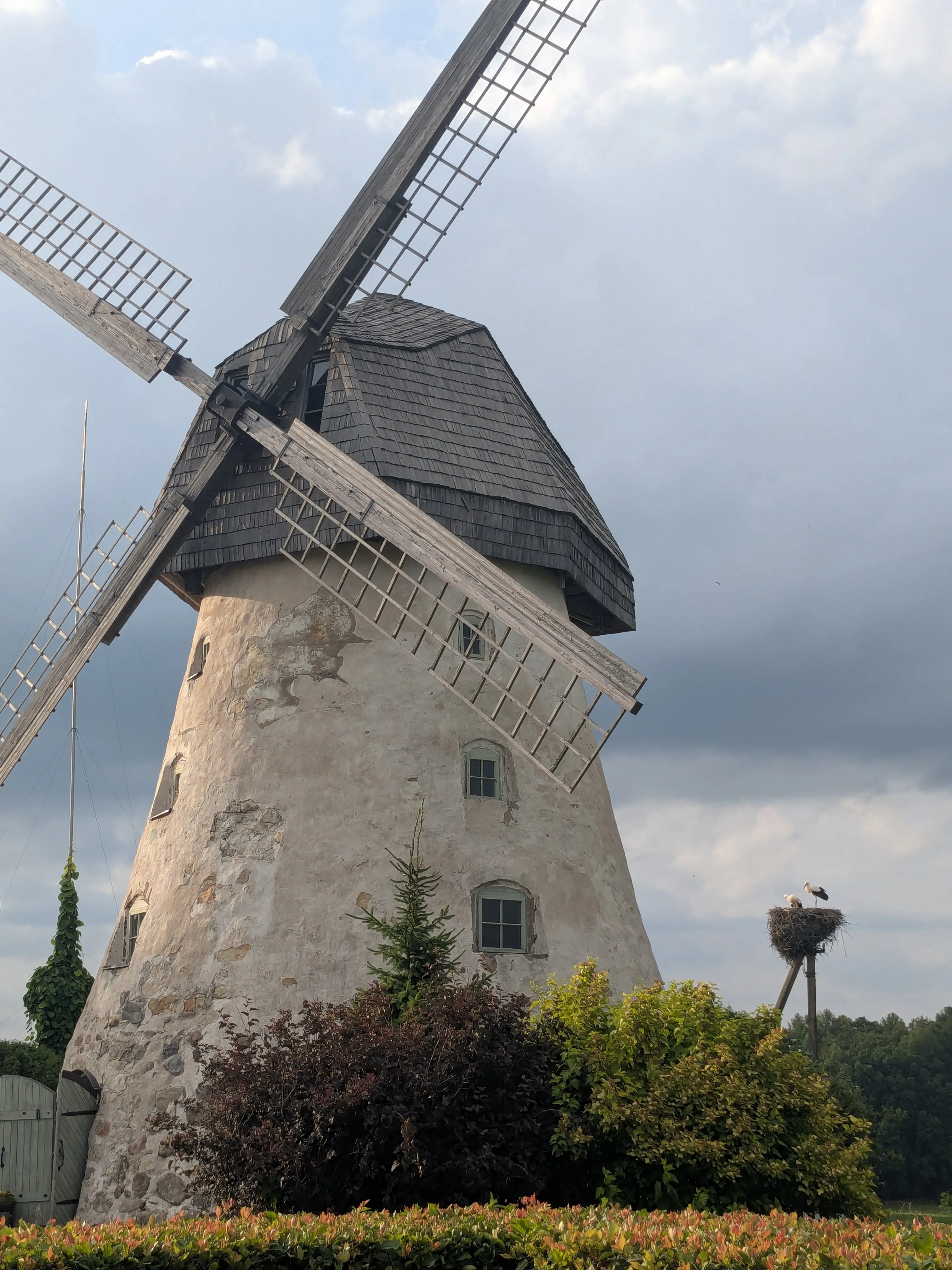
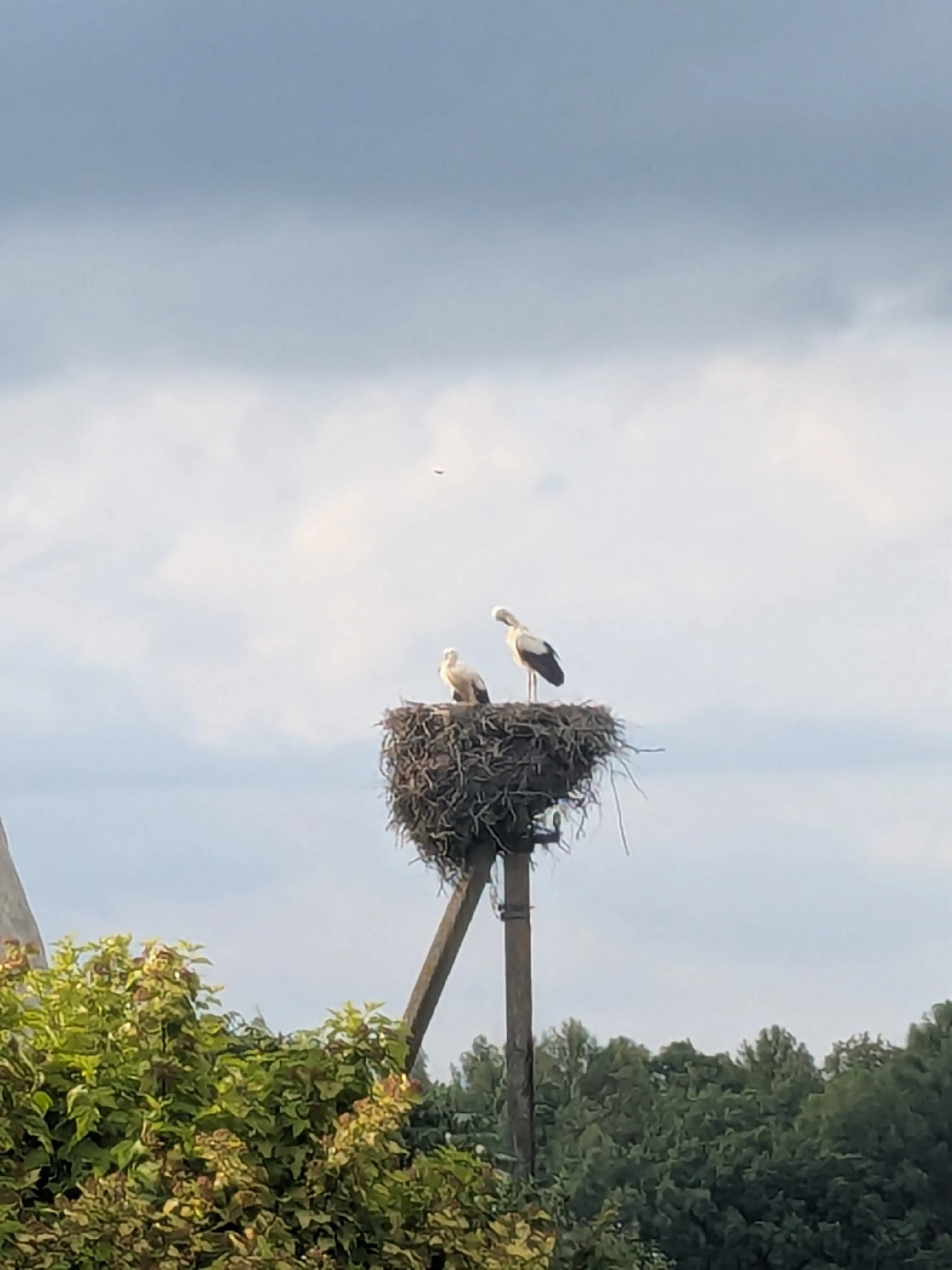
We also stopped at the Āraiši windmill (Āraišu vējdzirnavas) on the way back. It stands in a beautiful spot and is worth pulling over for. This Dutch-type mill dates from around 1852, with four floors and a cap that turns to face the wind. For a time, when milling no longer paid, it housed a small piano-making workshop. It’s open from May to October and closed in winter.
Where to eat
Cēsis has plenty of places to eat, most of them around the central square.
We had lunch at Pagrabiņš. It’s buffet-style, so don’t expect restaurant cooking, but it’s a good choice if you’re short on time and want to eat quickly.
Mala was the place I wanted to try. It’s in an old factory building and looked promising, but by the time we arrived only pizzas were left on the menu. I can’t tell you about the rest, but I’d go back to try it.
For something sweet, Vinetas un Allas Karumlāde is a beautifully designed pastry shop with very good cakes.
Go into Cēsu Maize even if you’re not hungry. The bakery sells fresh organic bread with different things baked into it, and you choose what you want. We bought a loaf to take home and it was excellent: properly moist rather than dry, which is what I look for, and filling enough to go a long way.
If you drink beer, you’re in the right town. Cēsu Alus, founded in 1878, is one of Latvia’s best-known breweries and comes from here, though brewing in Cēsis goes back to the days of the Order. There’s a brewery museum if you want more than the beer.
When to go
Summer is the obvious choice for warmth, though this is Latvia, so bring something for rain whenever you come. It’s also when the Cēsis Festival takes place, worth timing your visit around if you can.
It’s also the best season to explore the wider region. Cēsis, Sigulda and Līgatne are all in the Gauja valley, and you could easily see two of them in a weekend. Sigulda has its own Livonian Order castle, so if you like this one, you’ll want to see that too.
How long to stay
You can see Cēsis in a few hours, but it rewards not rushing. If you have the time, stay the night instead of treating it as a stop.
I can’t recommend a place to stay from experience because we visited on a day trip. There are hotels and guesthouses in and around the old town, which is where I’d look; everything is walkable from there.
If you liked Cēsis
The other small Latvian town with the same German inheritance is Kuldīga, in the west. It’s a very different place: a Duchy of Courland merchant town rather than a crusader fortress, with wooden houses, a brick bridge, a river by people’s walls and Europe’s widest waterfall on its doorstep. If the architecture here appeals to you, go there next.
Is it worth it?
Yes. Anyone spending more than a few days in Latvia should put it on the list. It’s an atmospheric medieval town, an hour from Riga, with a real castle you explore by candle lantern, a 13th-century basilica, two parks and an old town you can walk in an afternoon.
One small thing to know as you stand in Rose Square: according to a chronicle written in the 1290s, Cēsis warriors carried a red banner with a white stripe through the middle. That is where the Latvian flag comes from.
Planning a longer trip across the country? See our Best of Latvia Beyond Riga guide to four regional routes, covering the Gauja Valley, Ķemeri and Lake Engure, Kurzeme, and the Rundāle and Bauska area.
FAQs
Is Cēsis worth visiting?
Yes. It has Latvia's best-preserved medieval castle, a 13th-century basilica, two parks and a compact old town, all an hour from Riga. If you're in the country for more than a few days, put it on the list.
How do you get to Cēsis from Riga?
By train in about an hour and twenty minutes, from around €4.60, running frequently. Buses take about an hour and fifty and cost around €5. A car isn't necessary.
How long do you need in Cēsis?
Half a day is enough for the castle and old town. A full day leaves time for the parks and a nearby stop. If you can stay the night, do.
Cēsis or Sigulda?
Both are in the Gauja valley and both have Livonian Order castles. Cēsis has the better castle and a more complete old town; Sigulda has more outdoor activities. If you only have one day, choose Cēsis.
Is Cēsis Castle good for children?
Yes, unusually so. The candle lantern, craft demonstrations and games in the grounds are as much for children as for adults, and the children we saw were completely absorbed.
When is the best time to visit?
Summer, for the warmth and the festival, though Latvia can be wet in any month. The Southern Tower exhibition runs May to the end of September.
Read next
More posts for this trip mood
 Europe
 Kurzeme, Latvia
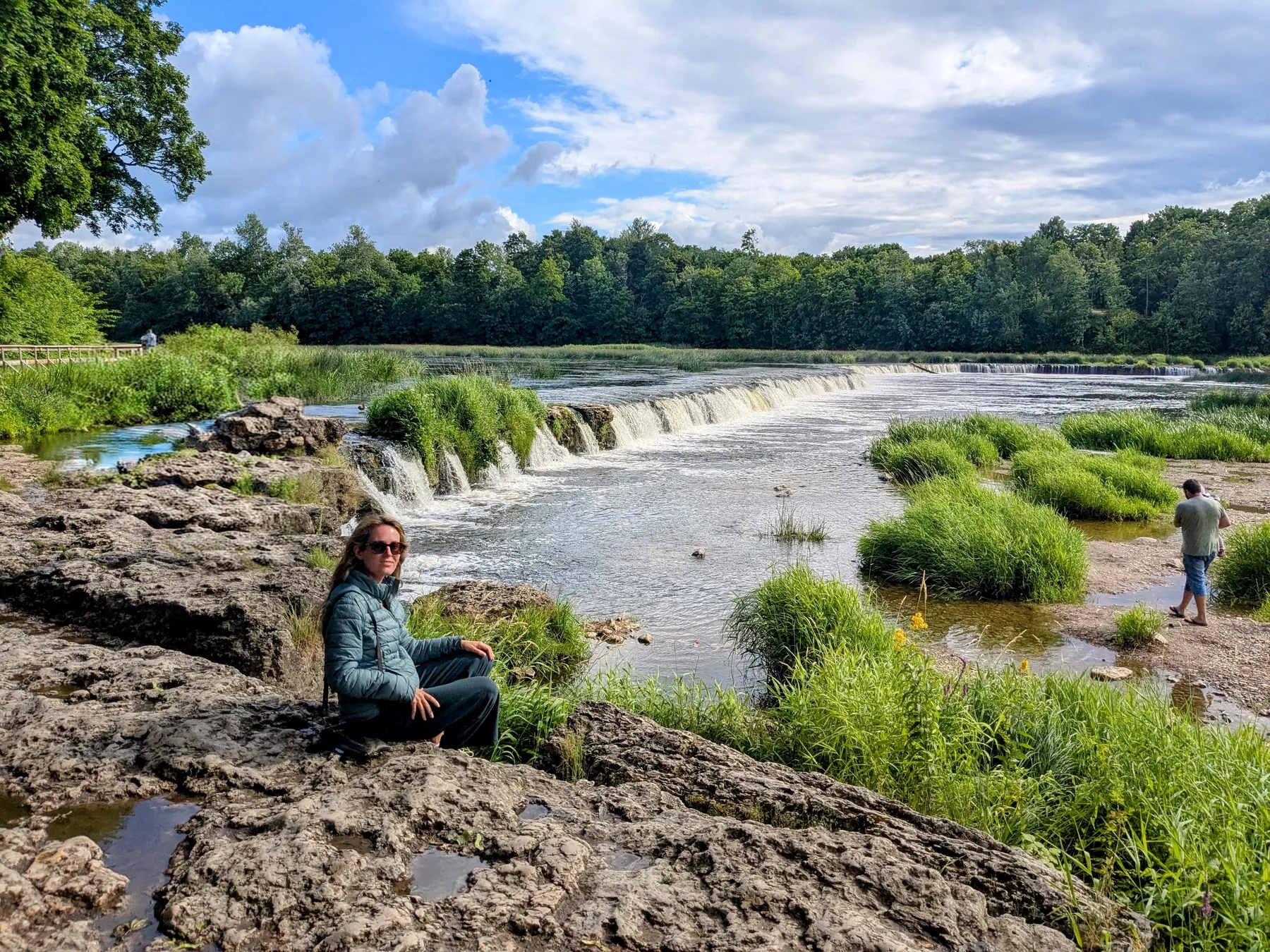
A Day in Kuldīga: Latvia's Most Charming Old Town and Europe's Widest Waterfall
A beautiful day spent between Kuldīga's old wooden streets, the Venta River and Europe's widest waterfall.
Kuldīga is a striking town, and if you happen to be in Latvia, I would say it is a must.
 Europe
 Vidzeme, Latvia
A Day in Sigulda: Latvia's Adventure Town in the Gauja Valley
A perfect Latvia day trip, provided you respect the hills.
A day in Sigulda, Latvia, by bike: castles, caves, adventure parks, Gauja Valley views, practical transport tips and the hill that beat us.
 Europe
 Vidzeme, Kurzeme & Zemgale, Latvia
Best Places to Visit in Latvia Beyond Riga: Road Trip Routes & Day Trips
Discover the best places to visit in Latvia beyond Riga with flexible road trip routes and day trips: Gauja National Park, Cēsis, Ķemeri Bog, Kuldīga, and the Baltic coast.