

Kuldīga · Kurzeme · Latvia
A Day in Kuldīga: Latvia's Most Charming Old Town and Europe's Widest Waterfall
A beautiful day spent between Kuldīga's old wooden streets, the Venta River and Europe's widest waterfall.
Kuldīga is a striking town, and if you happen to be in Latvia, I would say it is a must.
Quick facts
- Best for
- A relaxed old-town walk, historic wooden architecture, river views and Europe's widest waterfall.
- Time needed
- Allow a full day for an unhurried visit; the main sights can be seen in around three to four hours.
- Getting there
- Driving from Riga takes about two hours. The fastest direct bus takes around two and a half hours, and there is no train.
- Good to know
- The old town is compact and easy to explore on foot, and parking along the streets in the centre is usually free.
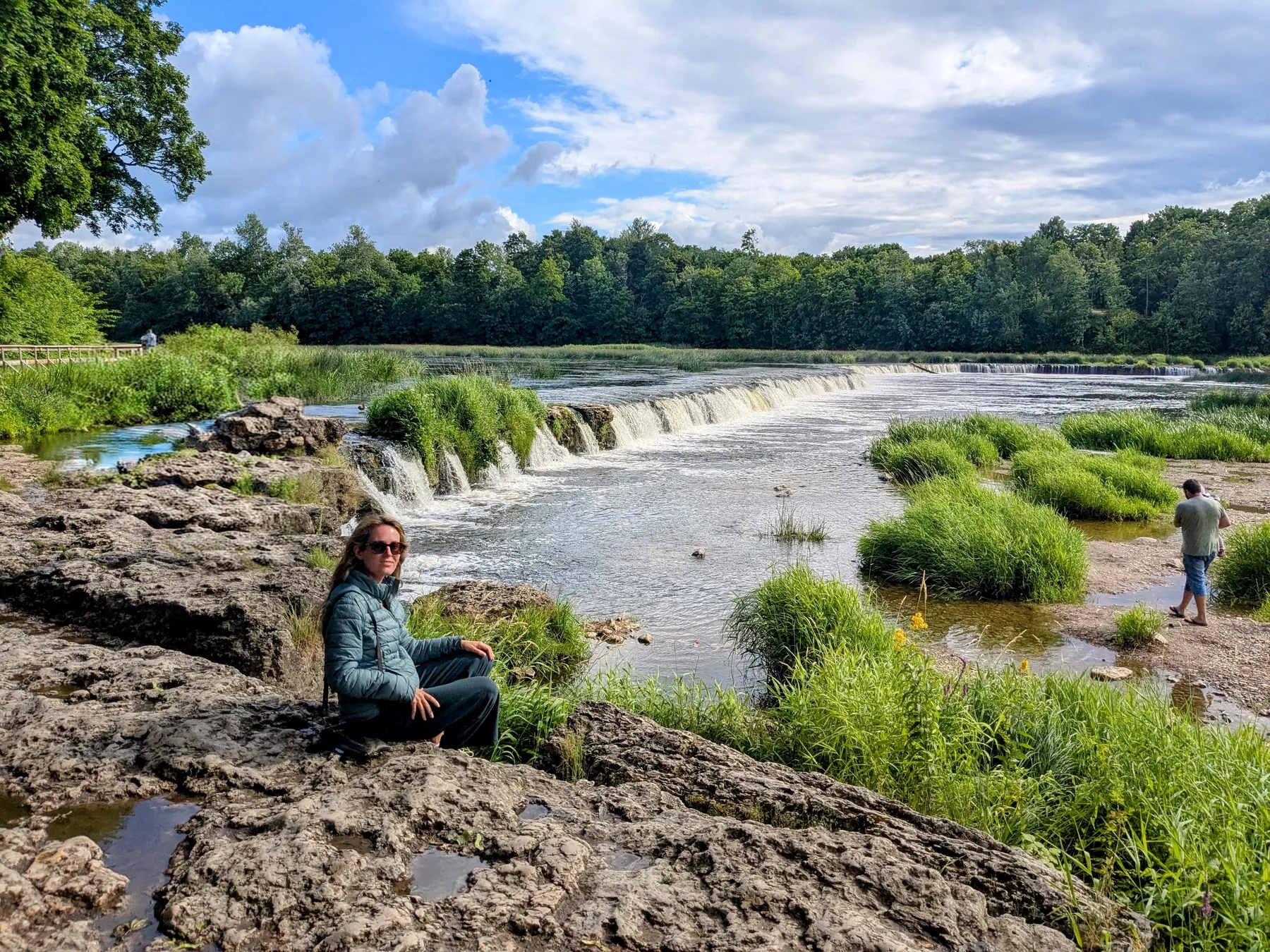
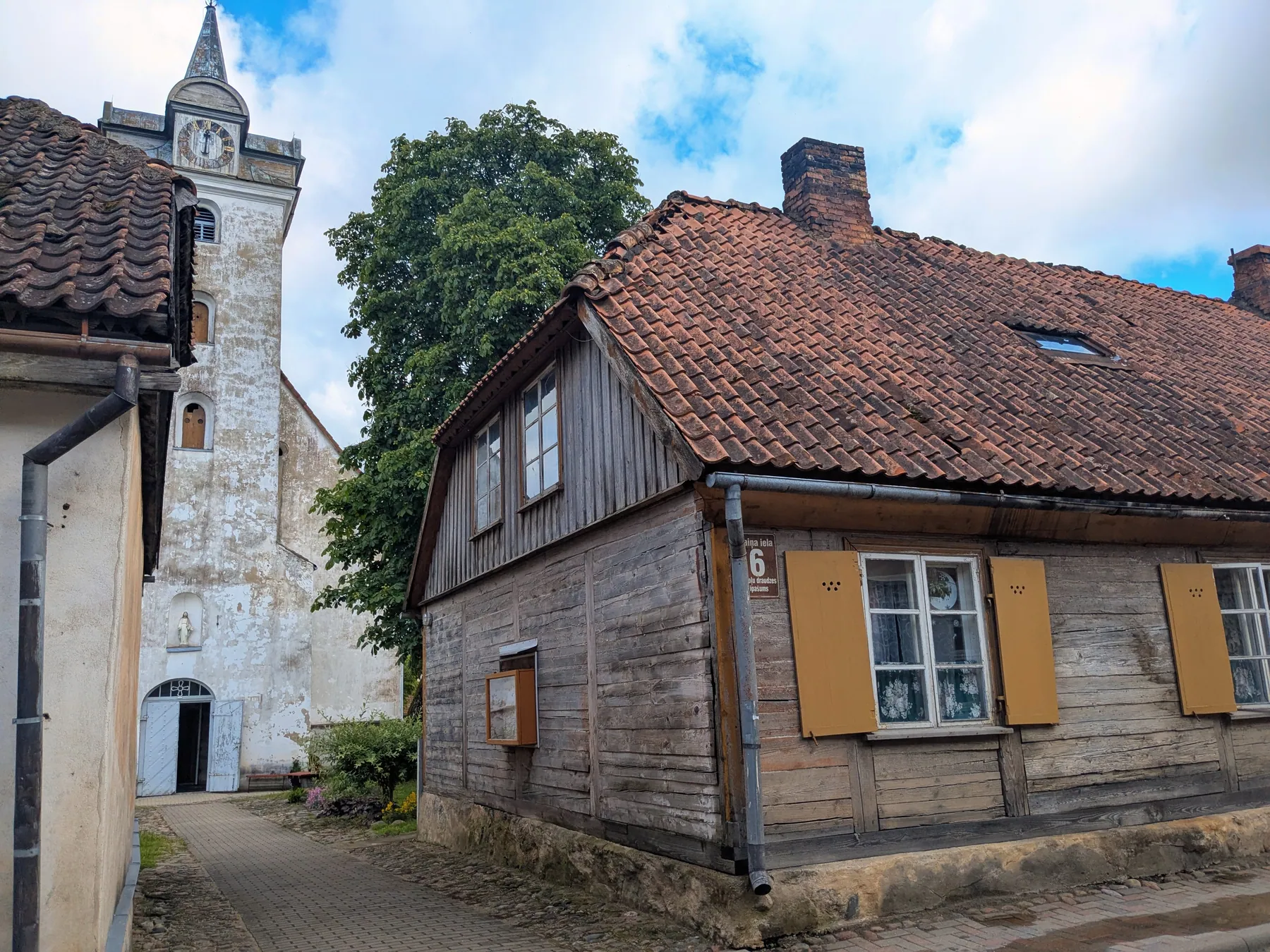
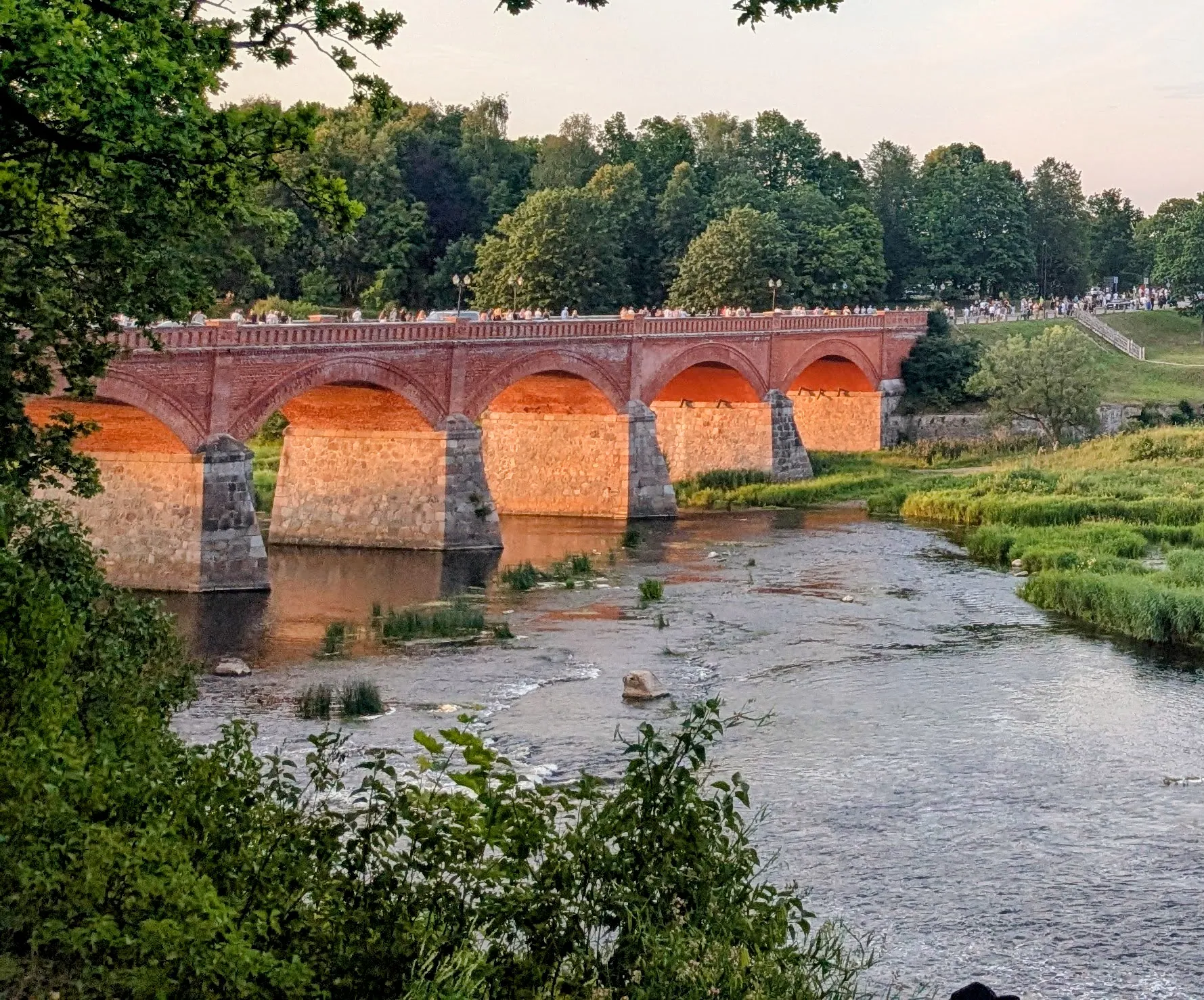
I have been to Kuldīga many times. Part of my family comes from there, and as a child I visited often. But back then I had a completely different experience of the place. I was a child, and all I cared about was crossing the Ventas Rumba waterfall from one side to the other. I paid no attention to the beauty of the town itself, the beauty I now admire as an adult. This summer I went back twice, and this time I really took the town in.
It is around a two-hour drive west of Riga, which is not a short distance, but it is worth it. It’s best known for the Ventas Rumba, the widest waterfall in Europe, but the town around it is just as much of a reason to come - its old town and brick bridge were added to the UNESCO World Heritage List in 2023. Kuldīga still has an authentic feel that Riga, being a big city, simply cannot give you. It keeps the soul of an old Latvian town, and you notice it the moment you start walking.
A little history: Goldingen and the Duchy of Courland
To understand why such a small town has such rich architecture, it helps to know its past. For centuries Kuldīga was known by its German name, Goldingen, and in the 16th, 17th and 18th centuries it was an important town of the Duchy of Courland and Semigallia. For a time, between 1596 and 1616, it was even the capital of the duchy. Under Duke Jacob Kettler in the 17th century it grew into a busy centre of trade and crafts, and much of the old town you walk through today dates from that prosperous period. It’s some of the best-preserved historic townscape in this part of Europe - which is exactly what earned it that UNESCO recognition, after more than twenty years of the town working towards it.
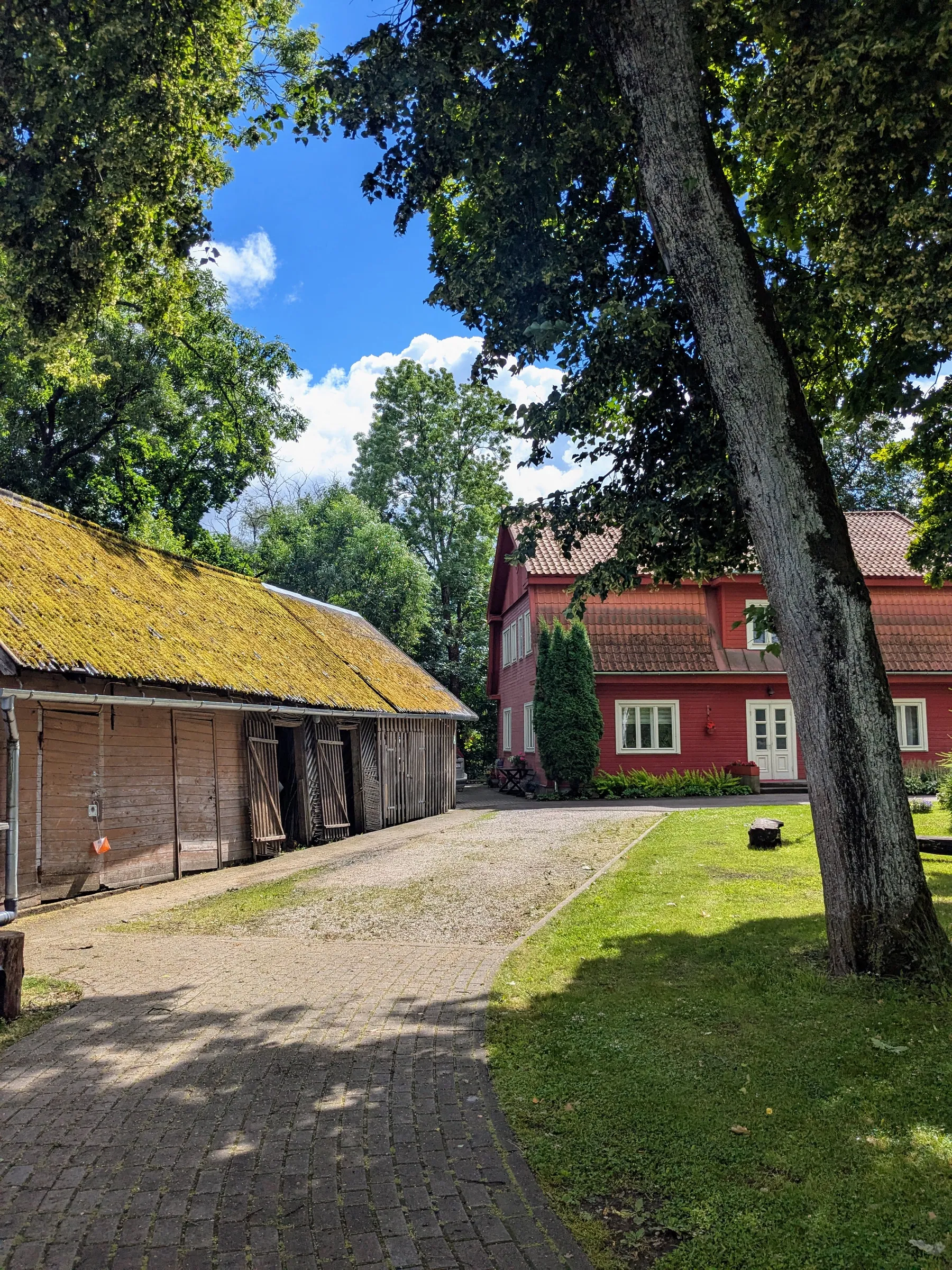
What I noticed, walking around, is how the town is preserved. A lot of old towns get frozen into a pretty shell for visitors, or quietly rebuilt behind period facades. Kuldīga keeps the ordinary, everyday bits too - right down to the wooden firewood sheds behind the houses, of which not one has been demolished. It’s the difference between a town that protects its character and one that just protects its postcard, and it’s why Kuldīga still feels like a real place rather than a museum of itself.
Getting there and parking
Going to Kuldīga by car is the easiest way. It is about two hours from Riga. If you don’t have a car, don’t worry - there are buses from Riga fairly often. They cost around €8 one way, and the journey takes from about two and a half hours on the fastest direct bus, though some take considerably longer with the timetable and stops, so check the times before you go. There is no train to Kuldīga.
We visited Kandava and Sabile on our way to Kuldīga, and both made easy, worthwhile stops along the drive west.
Once you arrive, parking is not a big problem. I would suggest parking along one of the streets in the centre, where it is usually free.
How much time to give it? I’d say a full day lets you see everything at a relaxed pace, with stops for food and a drink along the way. But if you’re short on time, you can see most of the main sights in around three to four hours, since the town is small and everything is close together.
Start with the old town, and don’t rush it
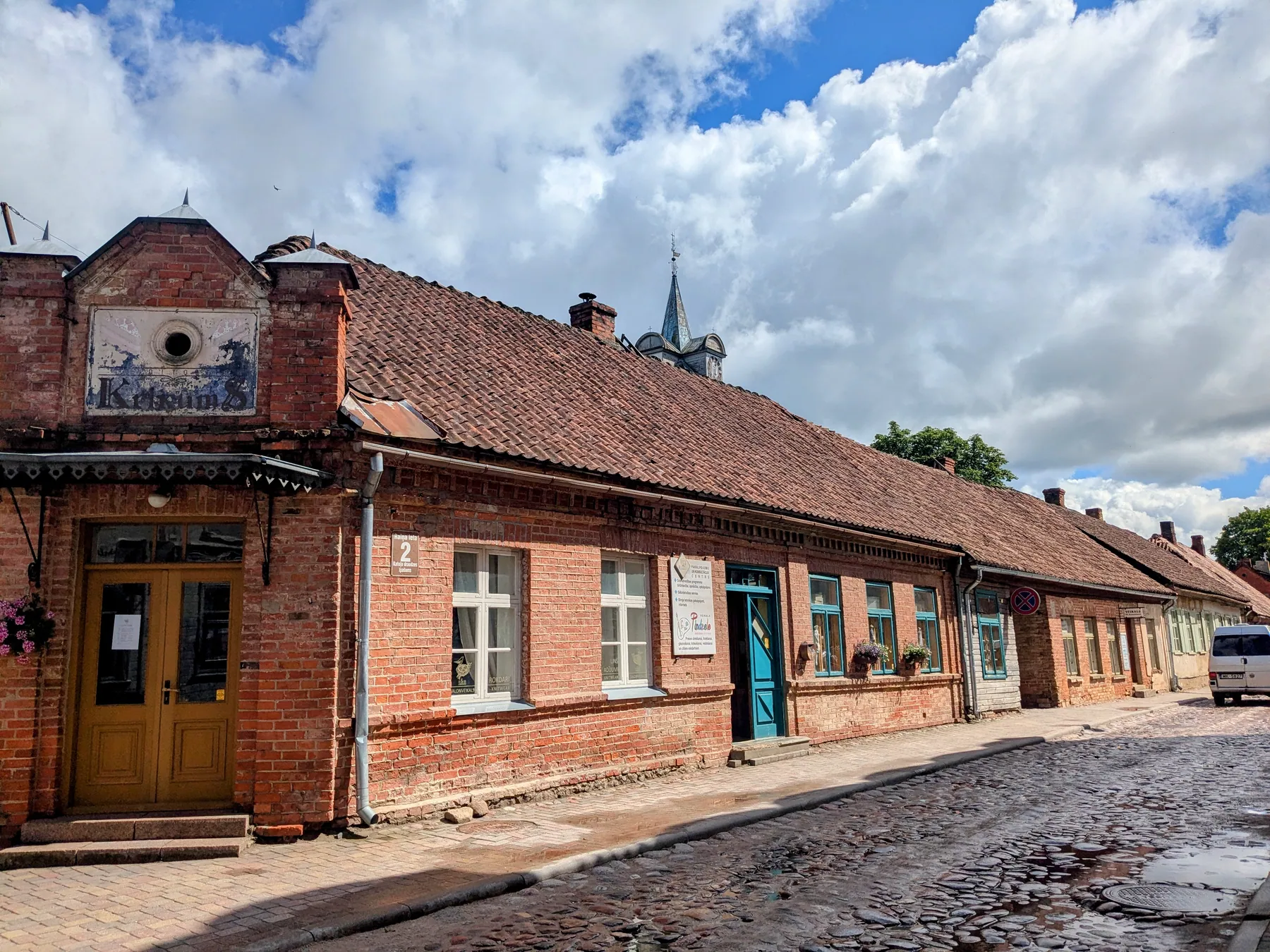
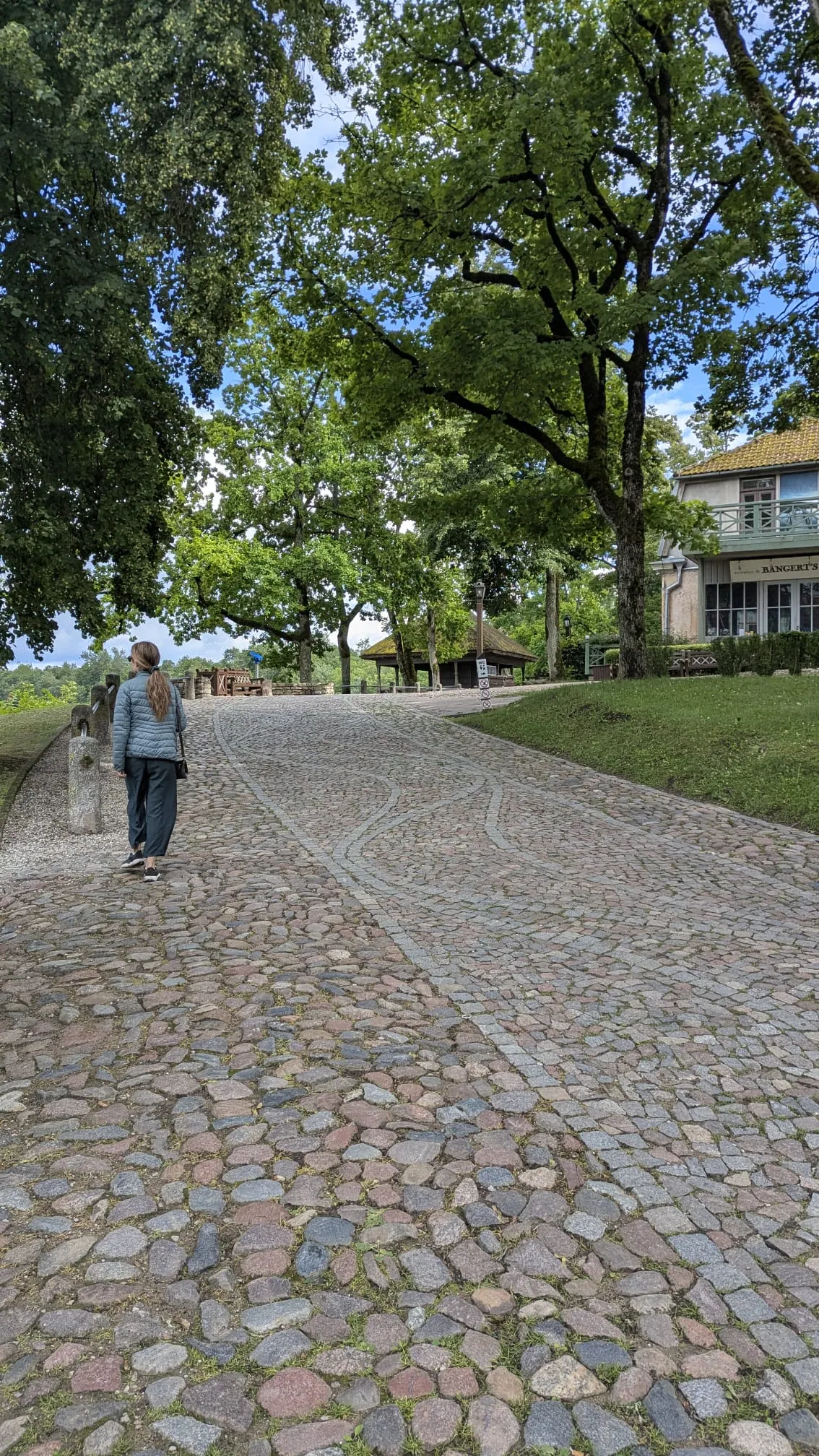
My biggest piece of advice is this: don’t rush the old town. It is small and compact - you definitely don’t need a car once you’re here - but it is worth a slow stroll, because otherwise you simply won’t notice all the beautiful architecture. Walk slowly, look up, wander into the side streets.
The heart of it all is the Town Hall Square (Rātslaukums), with the town hall and the historic buildings around it. From this central square you can reach everywhere. One of the buildings nearby is Steffenhagen’s house (Stefenhāgena nams), the home of a former Kuldīga mayor. King Charles XII of Sweden stayed there in 1701 and left behind a chest, which you can still see if you step into the entrance hall - I looked in briefly. The house also holds the largest mantle chimney in Courland. It’s a small, curious thing to see.
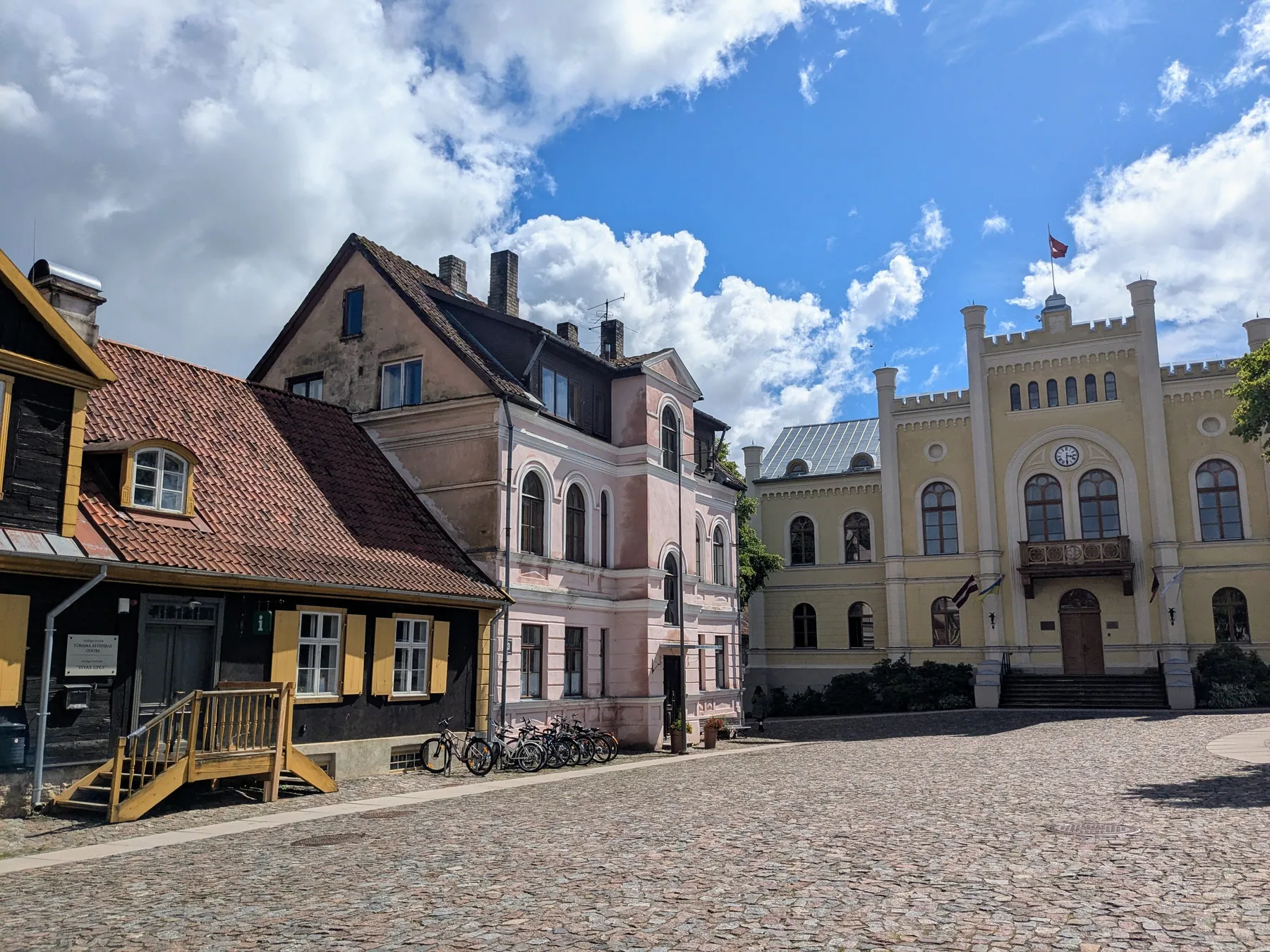
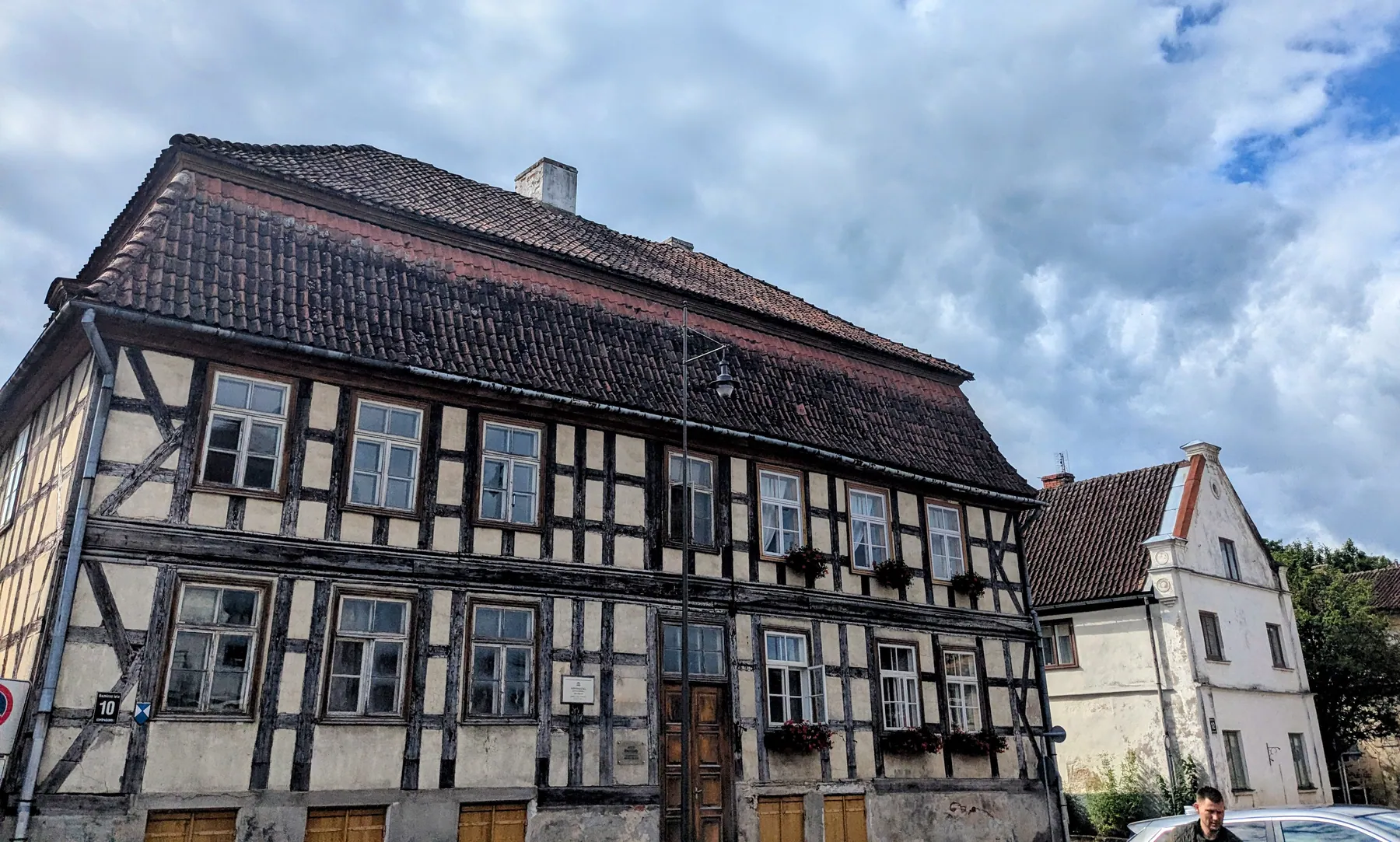
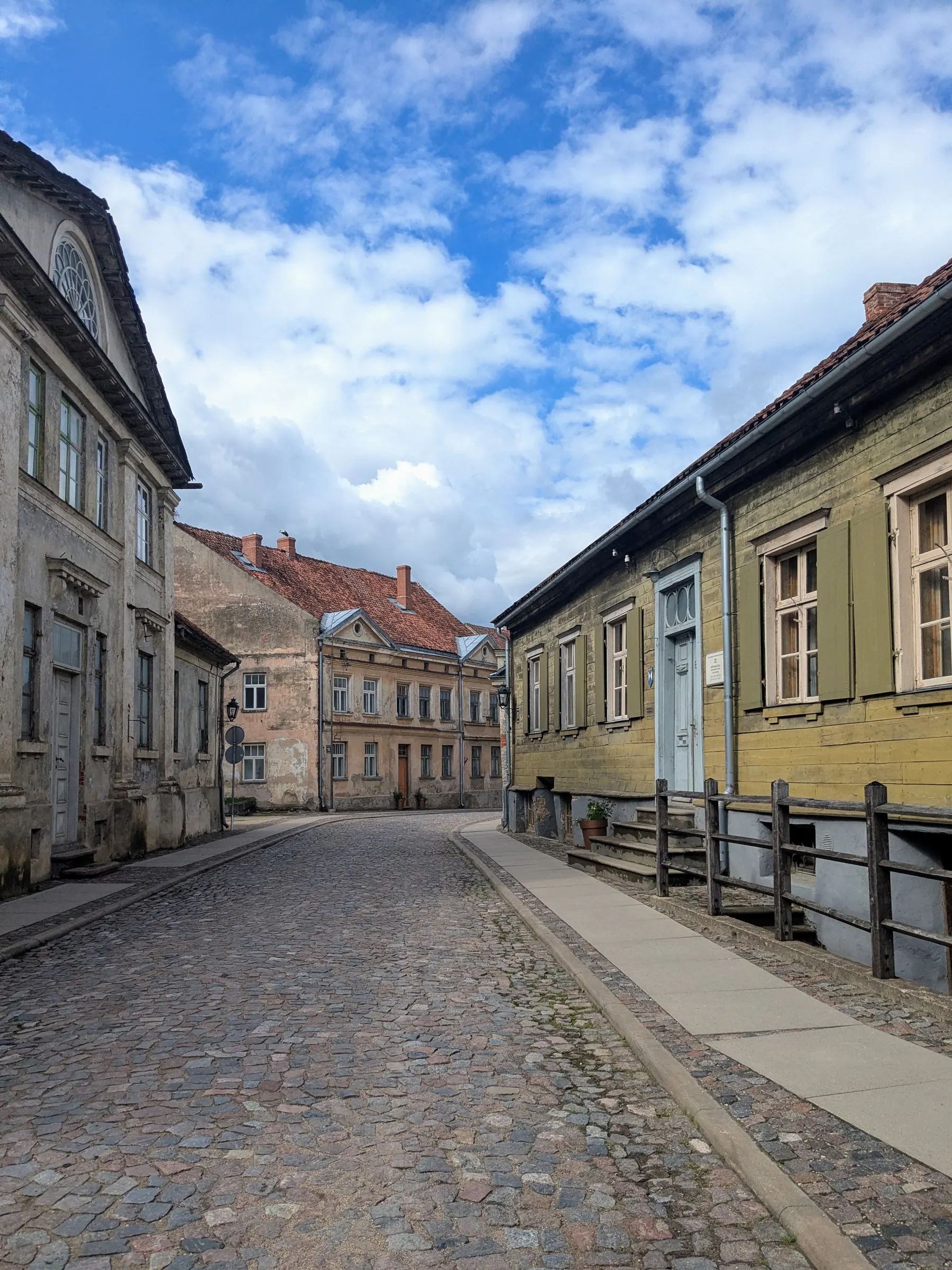
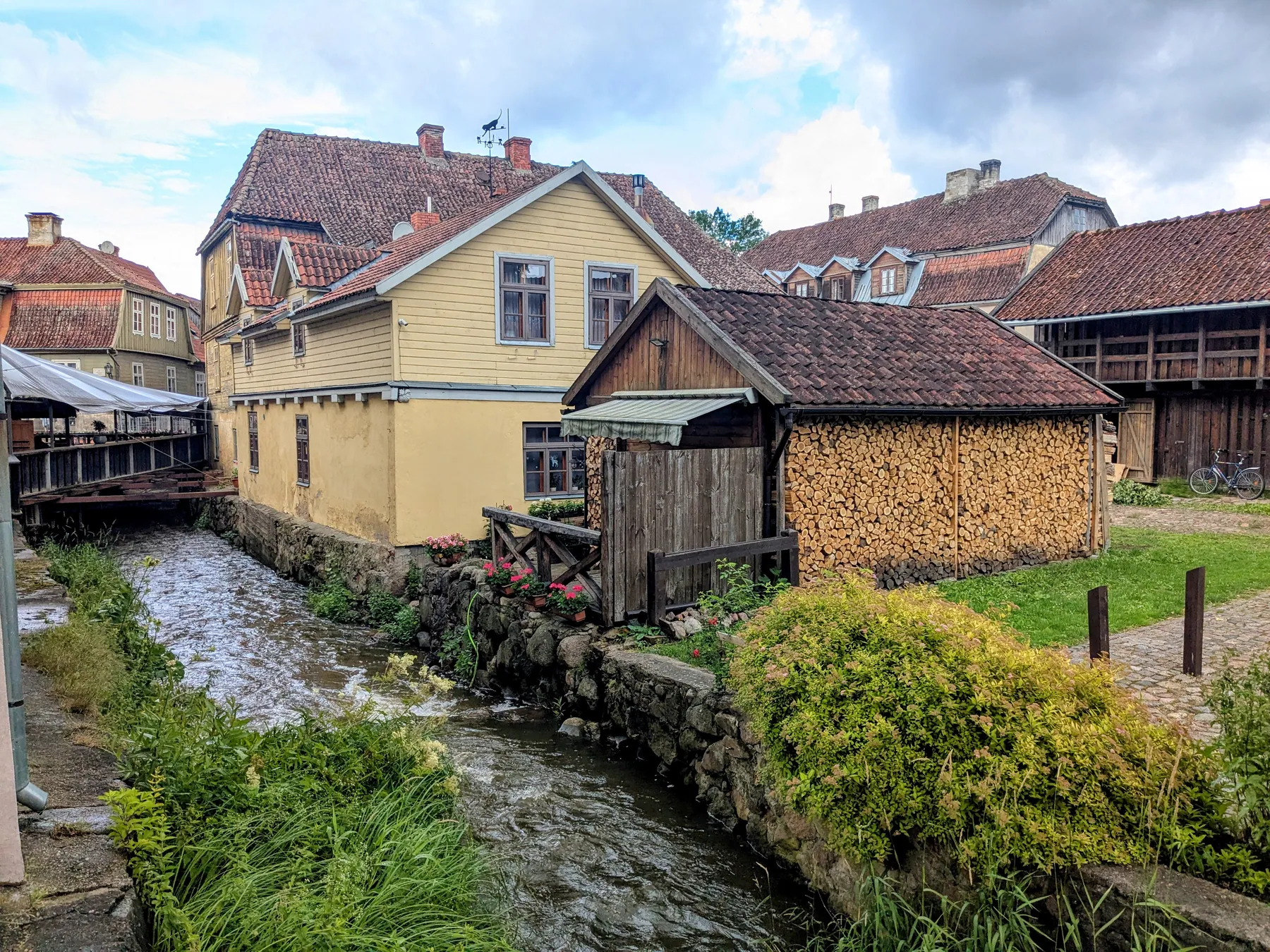
One of the features of Kuldīga that I hold a beautiful childhood memory of are the malkas šķūnīši, the little wooden firewood sheds by the houses. In Kuldīga they are always arranged so perfectly, and they give the town a look that can’t be copied anywhere else - a view you won’t find almost anywhere else.
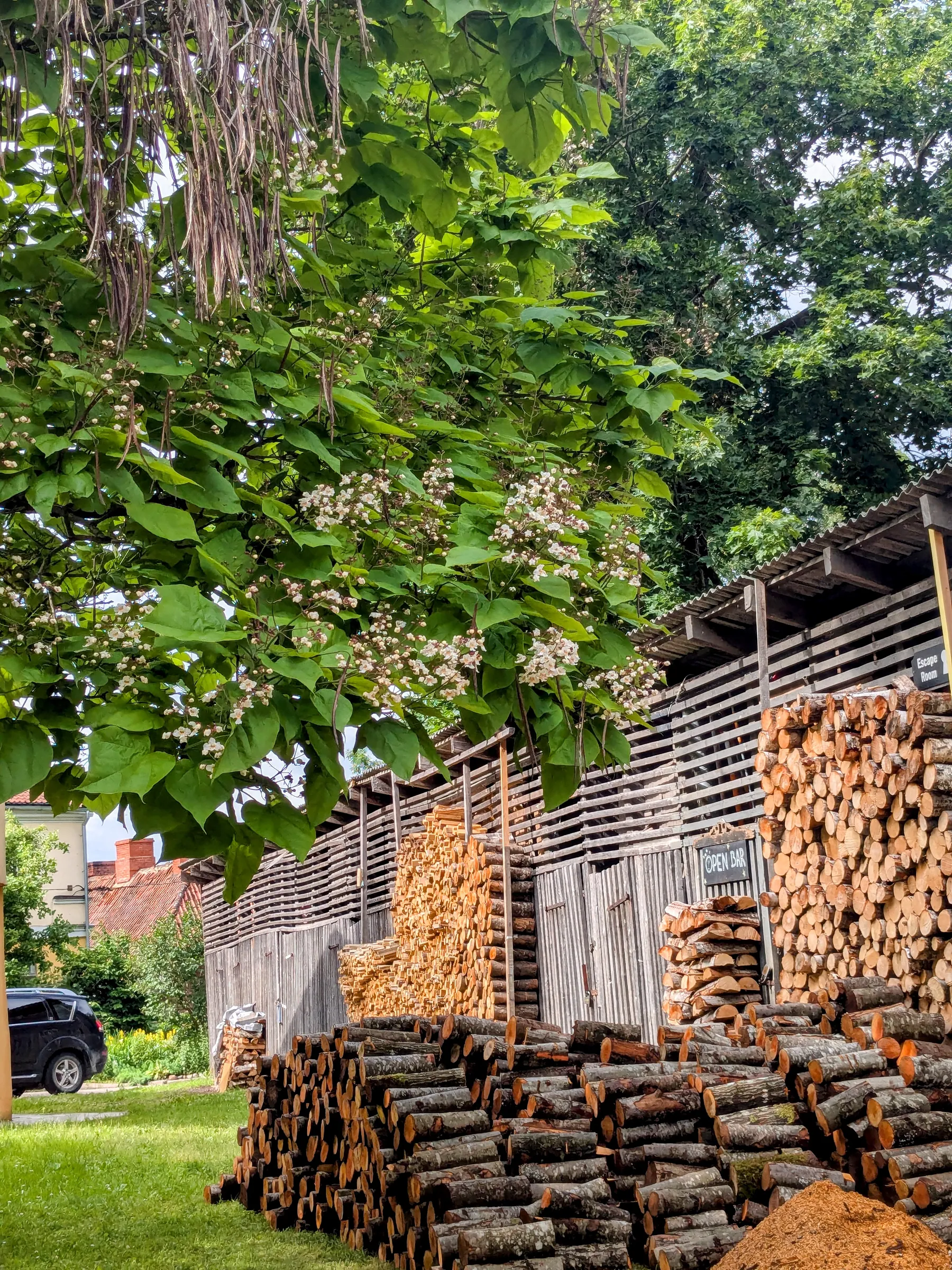
The old town is really about walking and looking around. Its wooden architecture is unique and makes you stop and take it in. You can step by the Holy Trinity Roman Catholic Church (Kuldīgas Trīsvienības Romas katoļu baznīca), and what I liked even more were the beautiful houses around it, with their neat lawns.
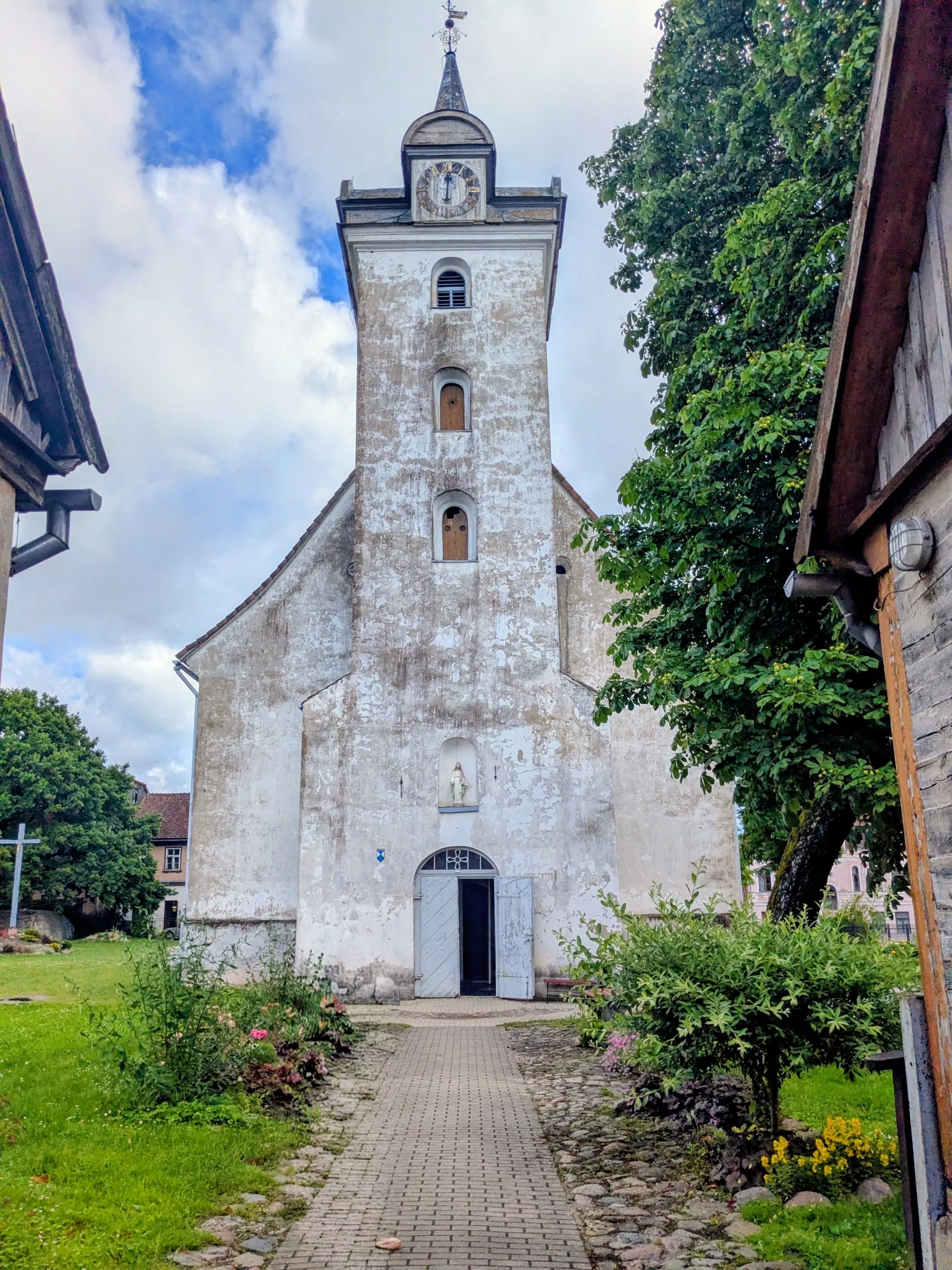
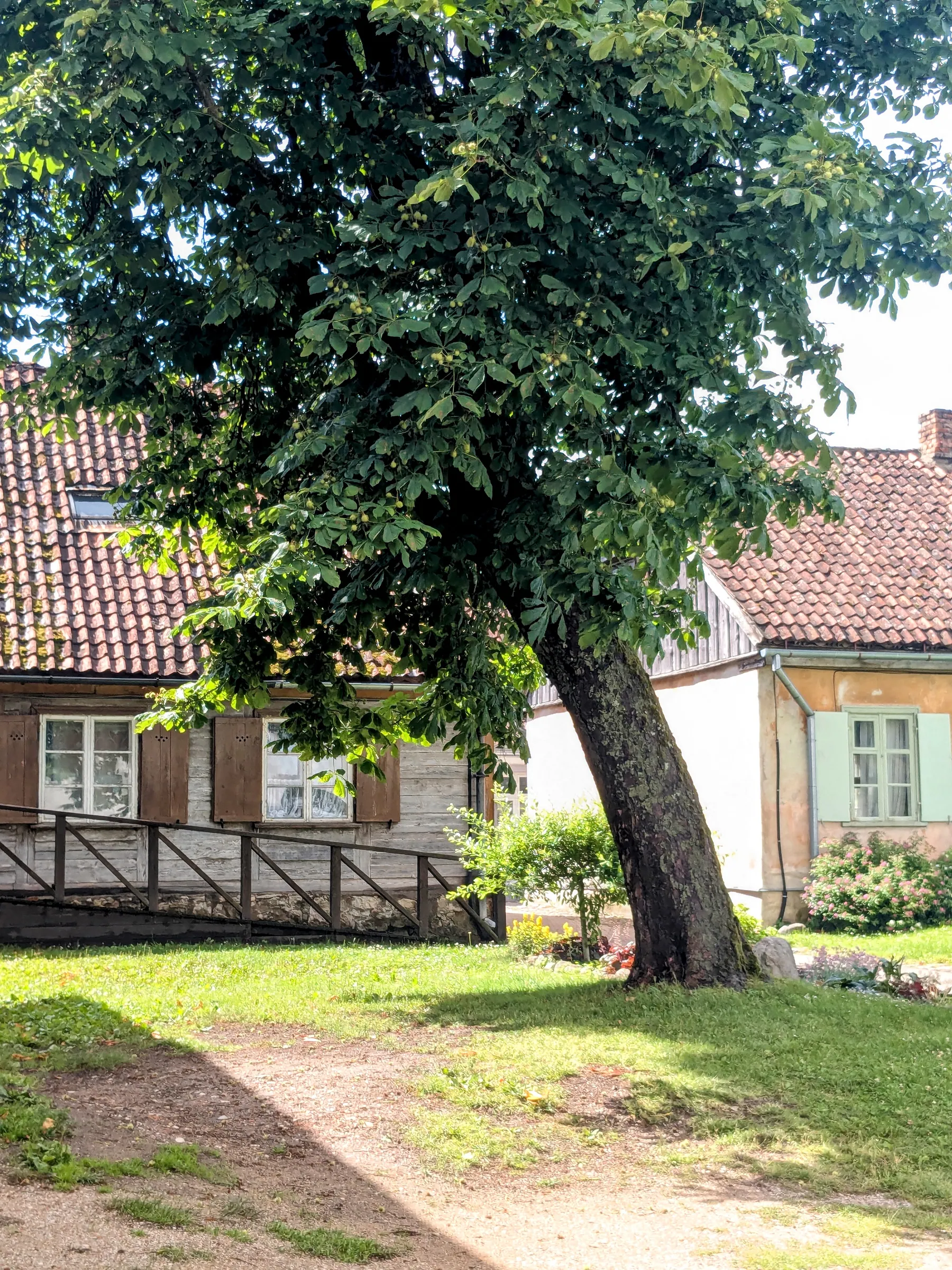
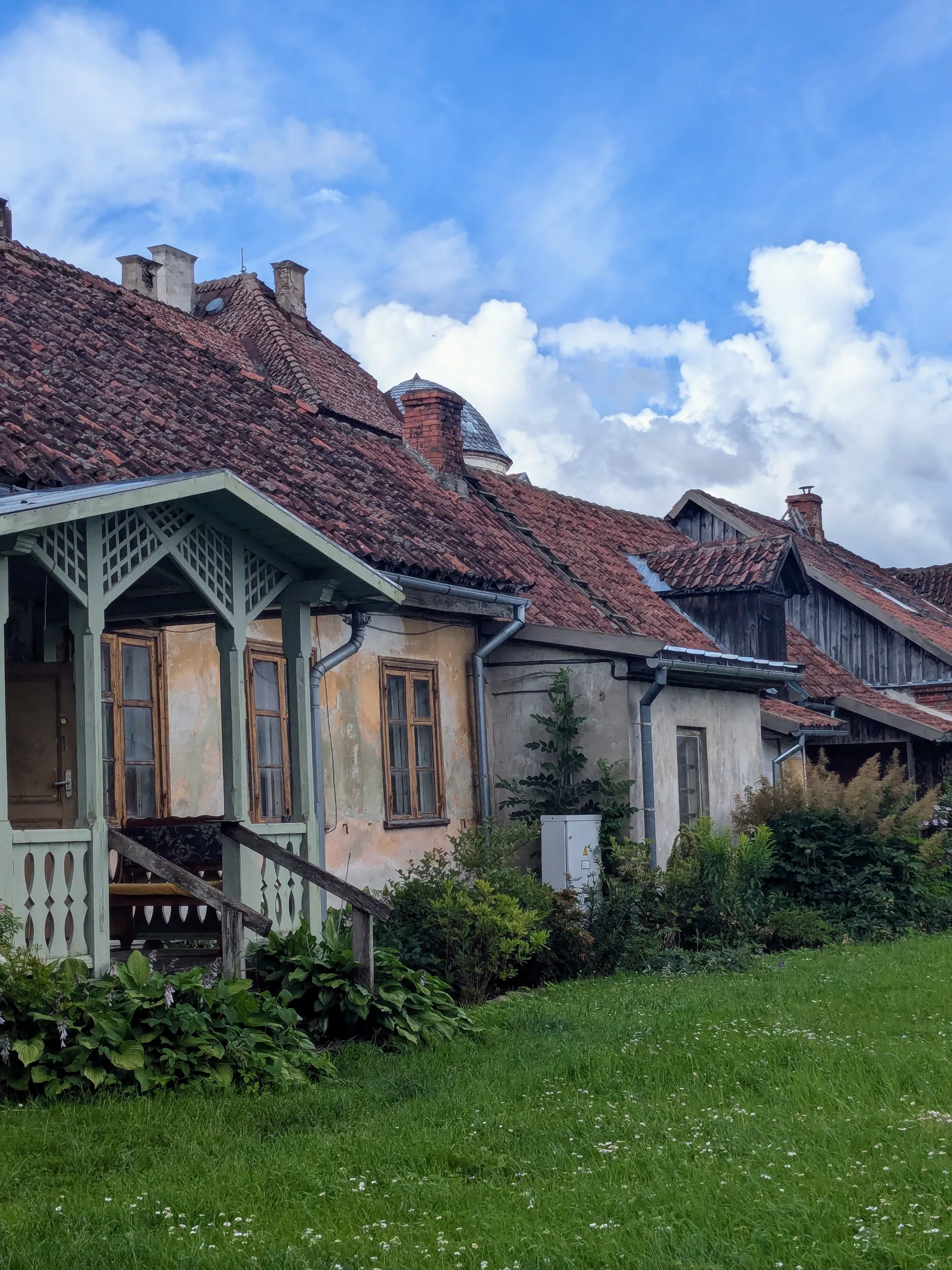
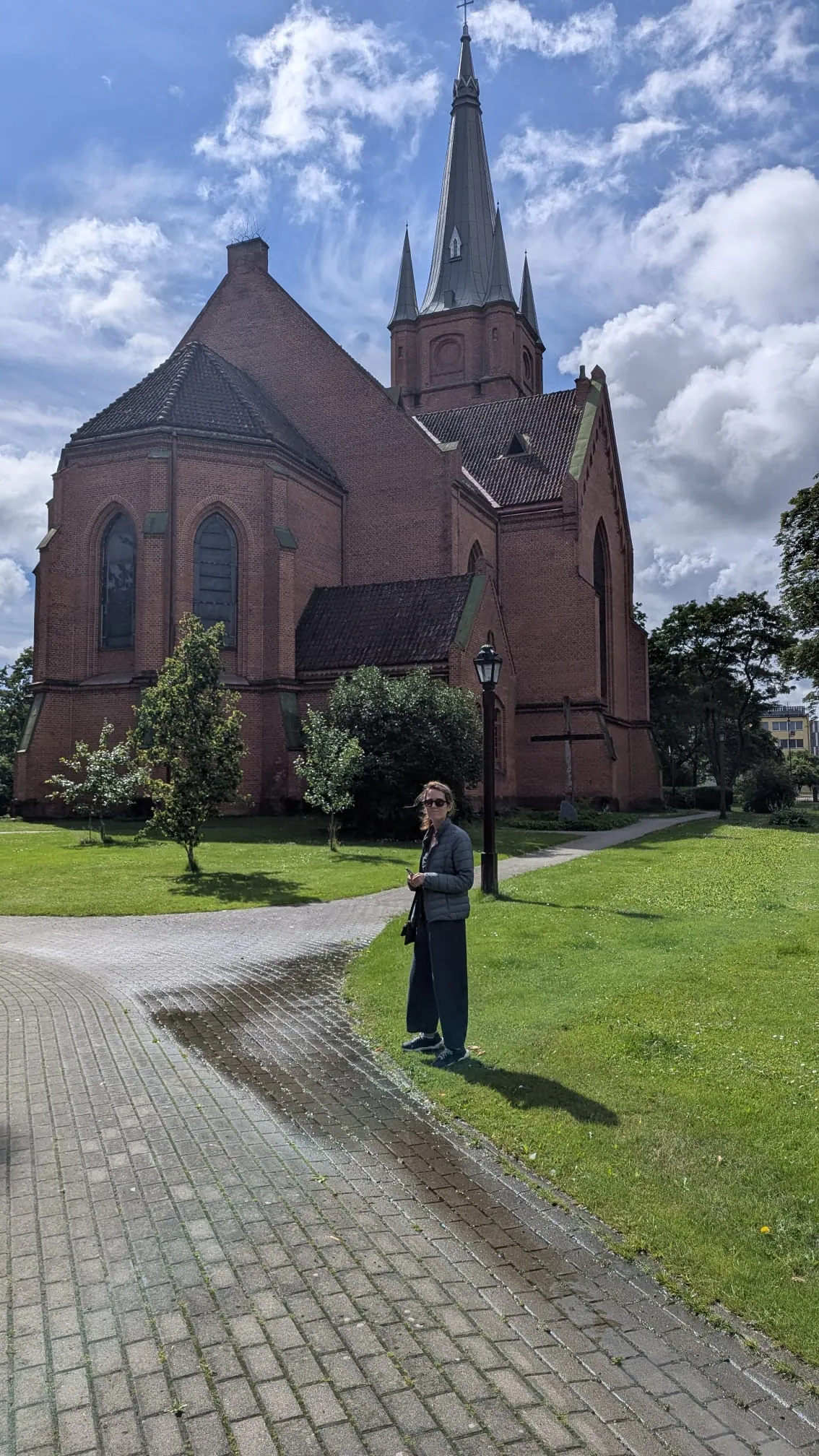
From my own experience, I’d recommend wandering the streets also past the central square, and past St. Anna’s Evangelical Lutheran Church (Kuldīgas Sv. Annas baznīca). It’s the newest church in town, built in 1904 in a Neo-Gothic style - and it took its time: donations were being collected for it from 1606, but kept getting redirected to more urgent needs, so it was finally built three hundred years later.
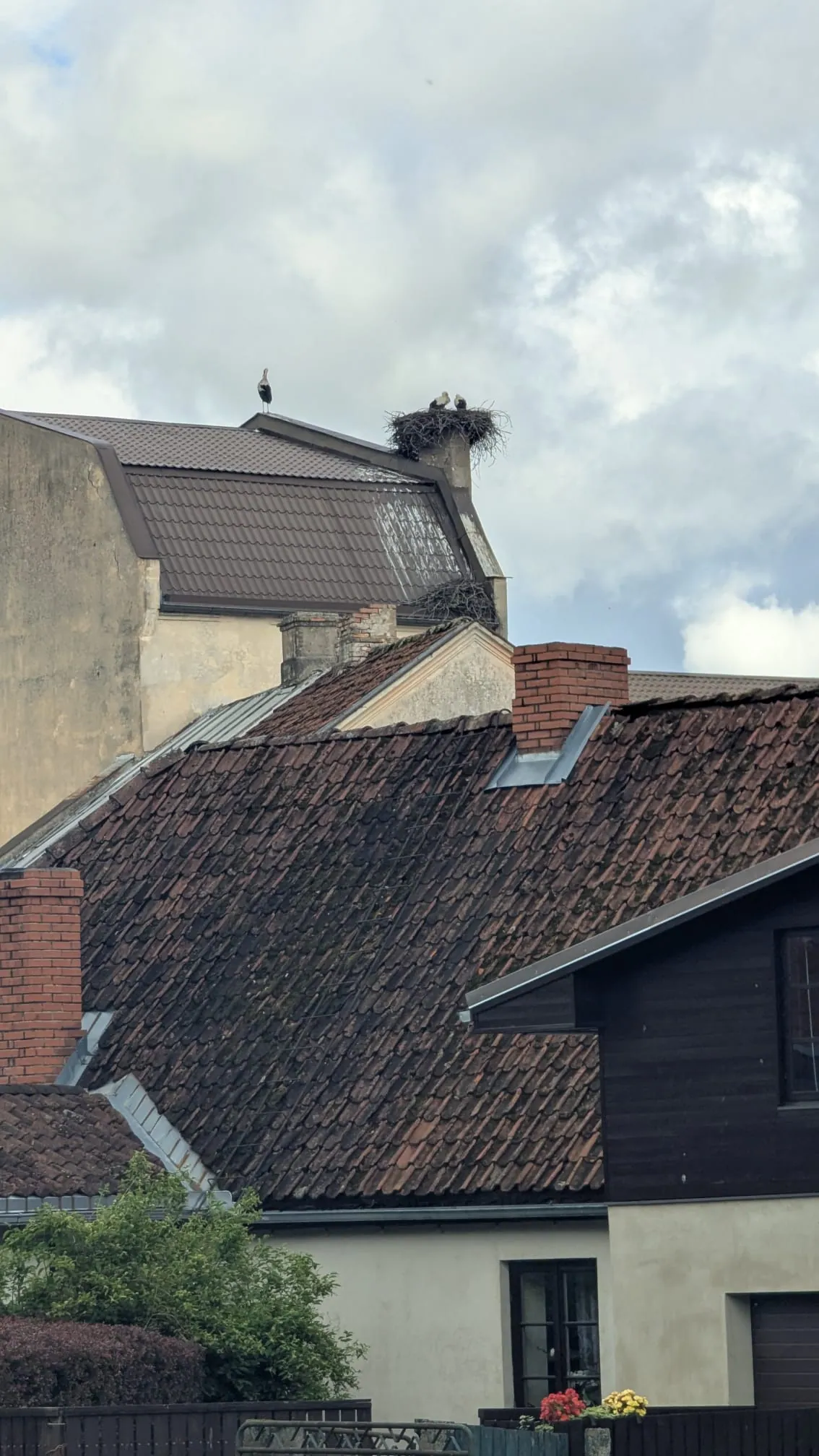
Liepājas iela is another good street for walkers, lined with lovely buildings, though it has quite a few shops, including souvenir shops, that tourists might like. Along here you’ll also find the Adatu tornis (the Needle Tower).
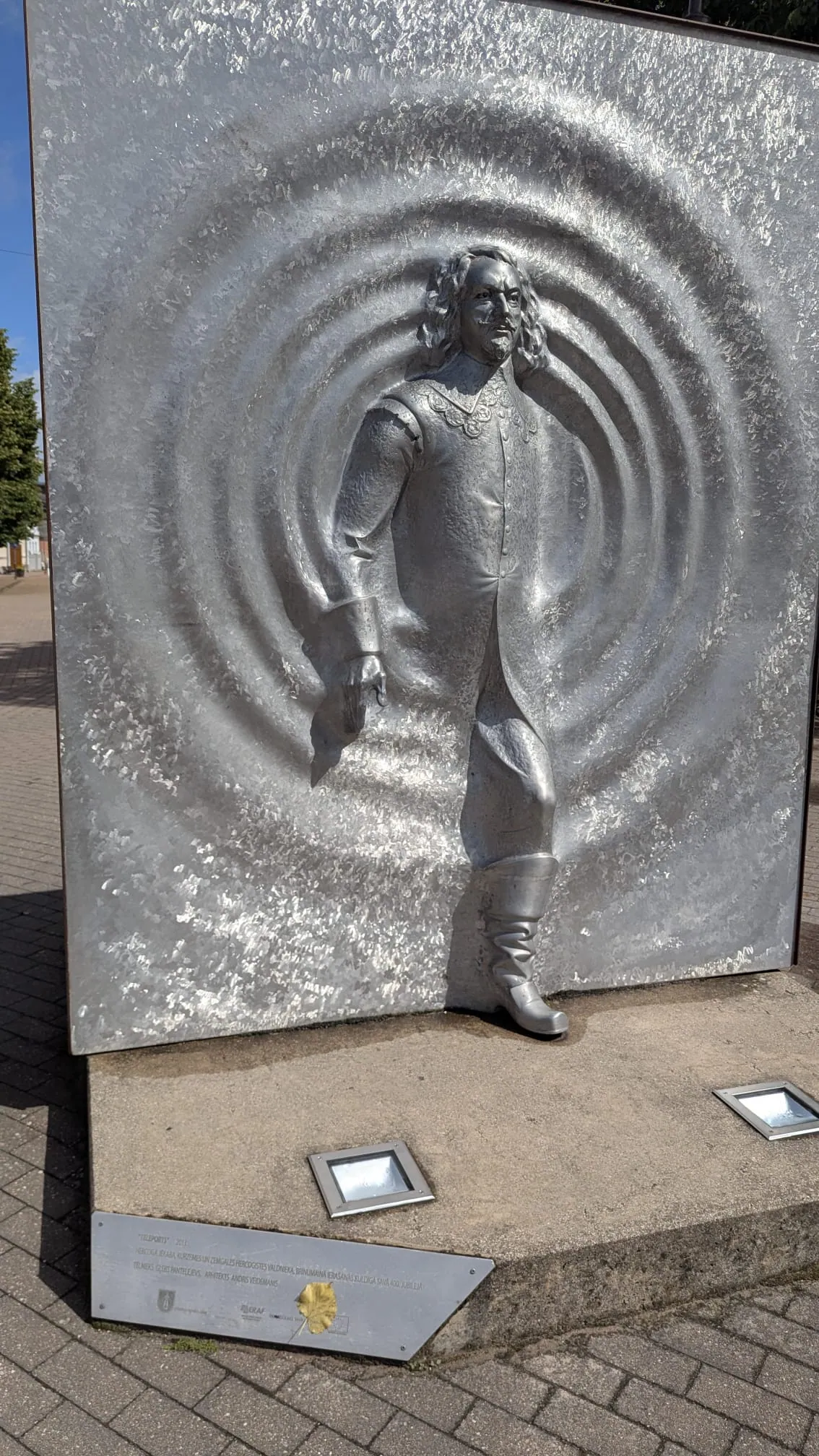
At the end of Liepājas iela, the Teleport statue honours Duke Jacob of Courland.
Aleksupīte: Kuldīga’s own little Venice
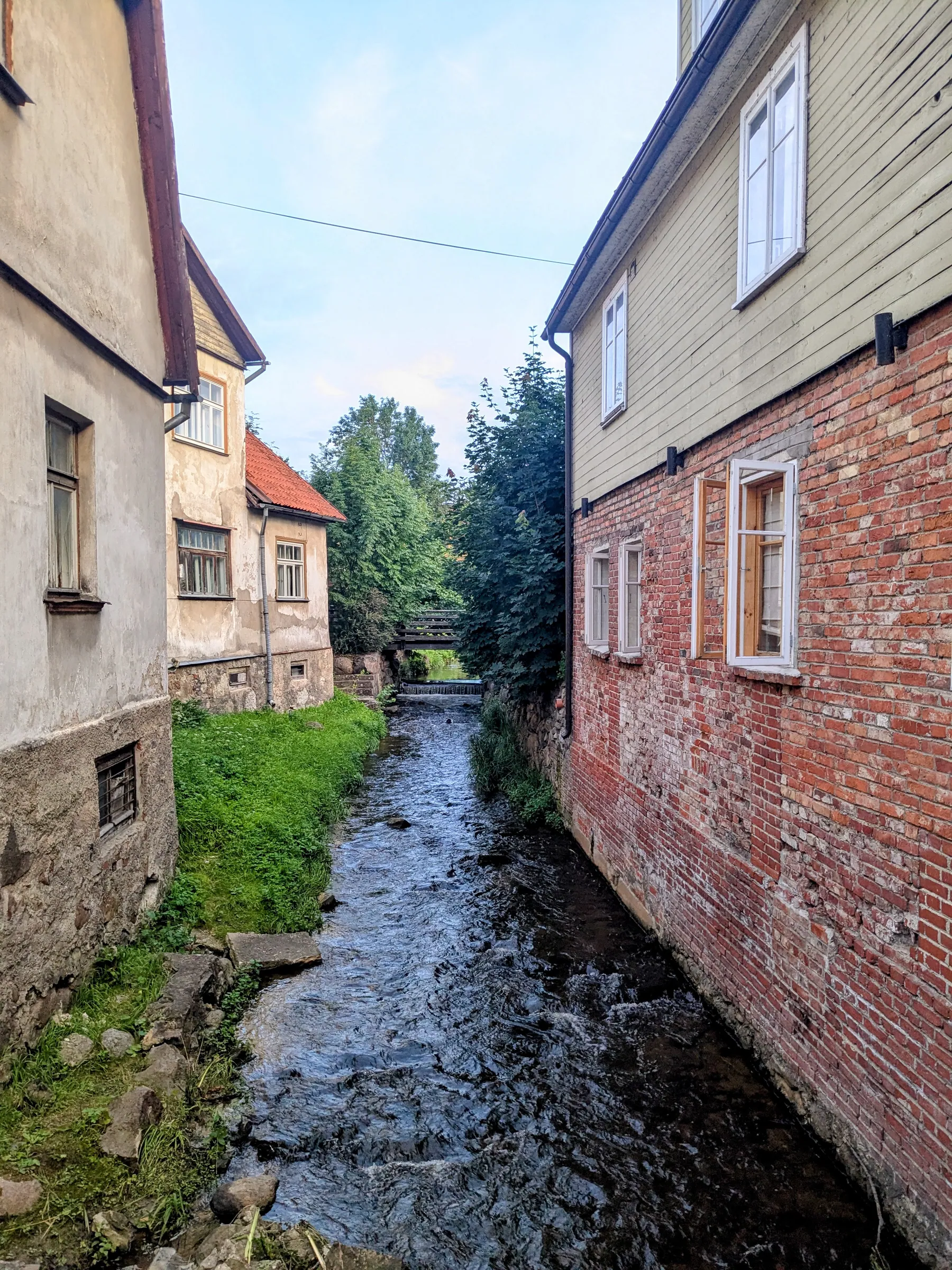
Another quiet, beautiful moment is seeing the Aleksupīte, the small stream that runs right along the walls of the buildings. This is why Kuldīga is sometimes called the “Venice of Latvia,” and it is another of the town’s wonders. As with everything here, it’s compact and easy to find - one place to reach it is just off the central square, on the right side of the town hall, along one of the small parallel streets. One of the best spots is the little footbridge, Gājēju tiltiņš, or you can simply follow the stream and let it lead you.
Where to eat
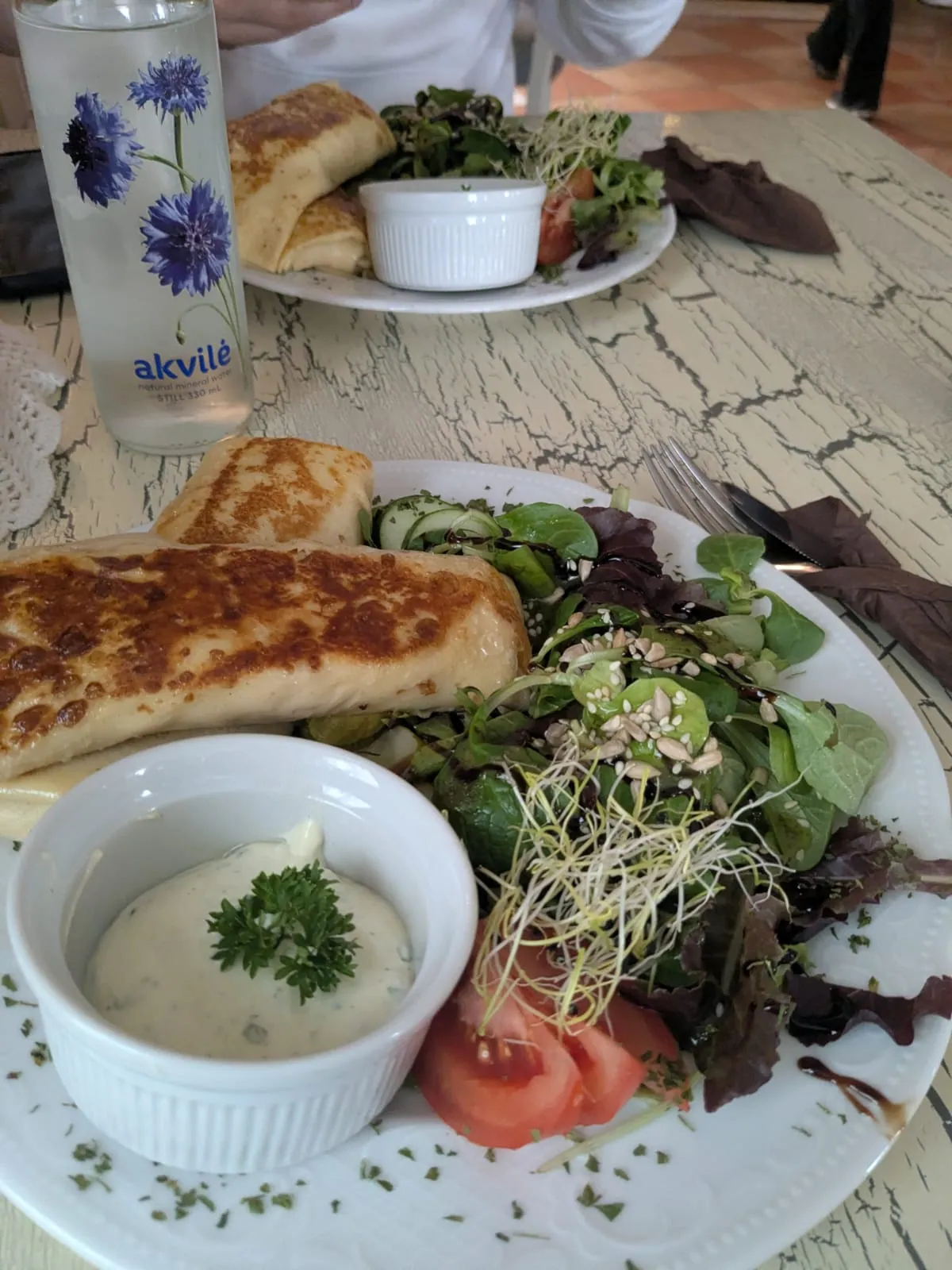
If you’re looking for a place to eat while exploring the old town, I highly recommend Marmelāde. I’ve been twice and would happily go back more. It’s mostly known for pastries, but we had a simple, perfectly presented lunch there - siera šķiņķa pankūkas, cheese and ham pancakes, which were very delicious - and the dish was cheap, around €7. This place is a goldmine, combining quality with very good prices.
On and around the central square there are other good options too: Goldingen Room comes recommended for pizza (it has even been recognised by the Nordic “White Guide” restaurant guide), and Pagrabiņš, in an old brick cellar just off the square, does Latvian cooking.
Down to the river and the brick bridge
Once you’ve taken in the old town, follow the central square’s street, Baznīcas iela, all the way down until it reaches the Venta River. Along the way there are a few souvenir shops if you’re interested.
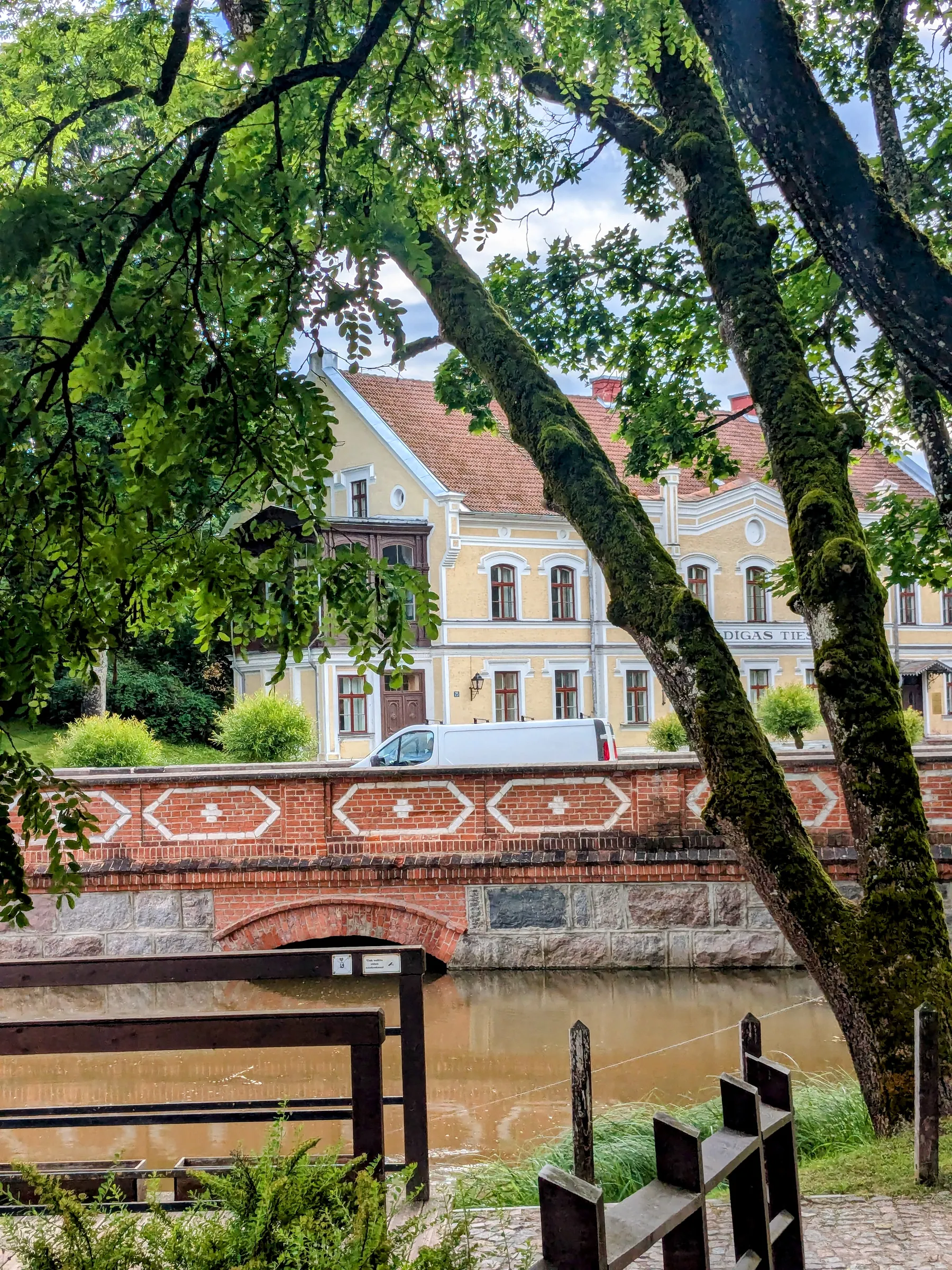
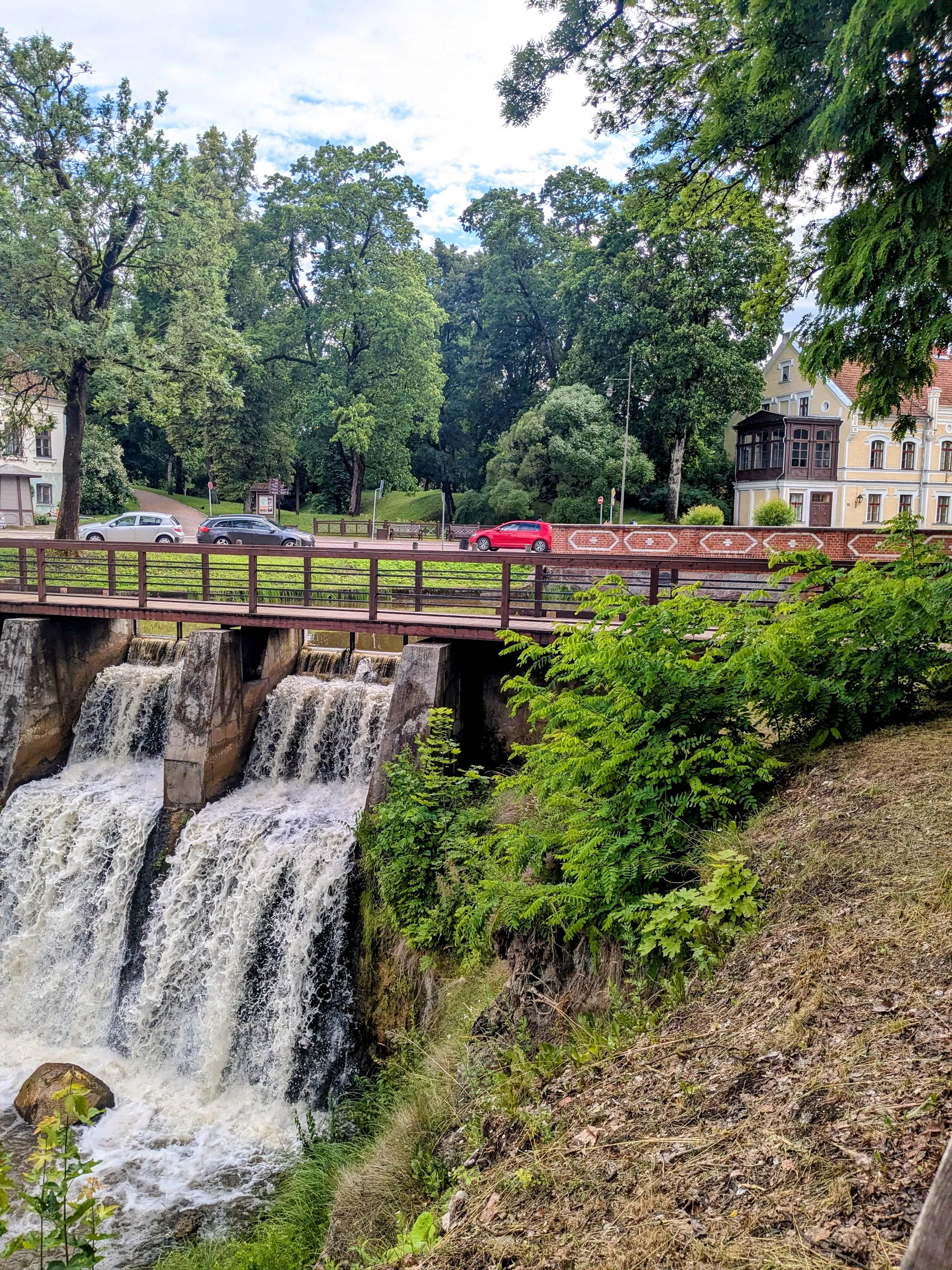
On the way down you’ll pass the Aleksupītes ūdenskritums (the Aleksupīte waterfall), where the little stream drops over what looks like a small dam. It’s worth a stop - the bridge above it has some beautiful ornamentation - and this is also where the lovely views towards the Venta River and the famous brick bridge begin. (A couple of nice details: at about 4 metres, this modest waterfall is actually the tallest natural waterfall in Latvia - while just around the corner the Ventas Rumba is the widest in Europe. And it wasn’t always just for show: back in the 17th century, the drop was used to power the first paper mill in Courland.)
Keep going and you’re almost at the Ventas Rumba and the bridge.
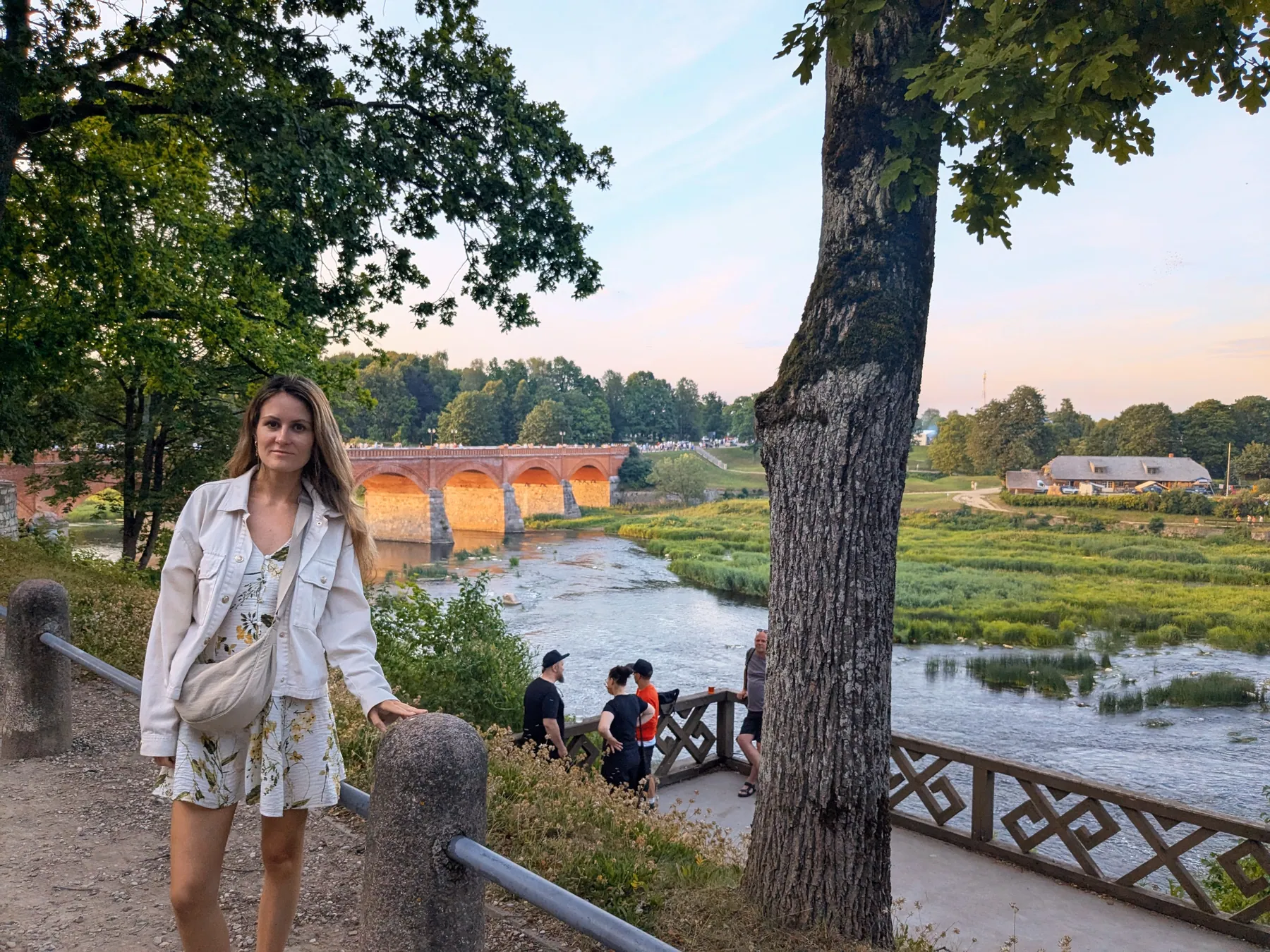
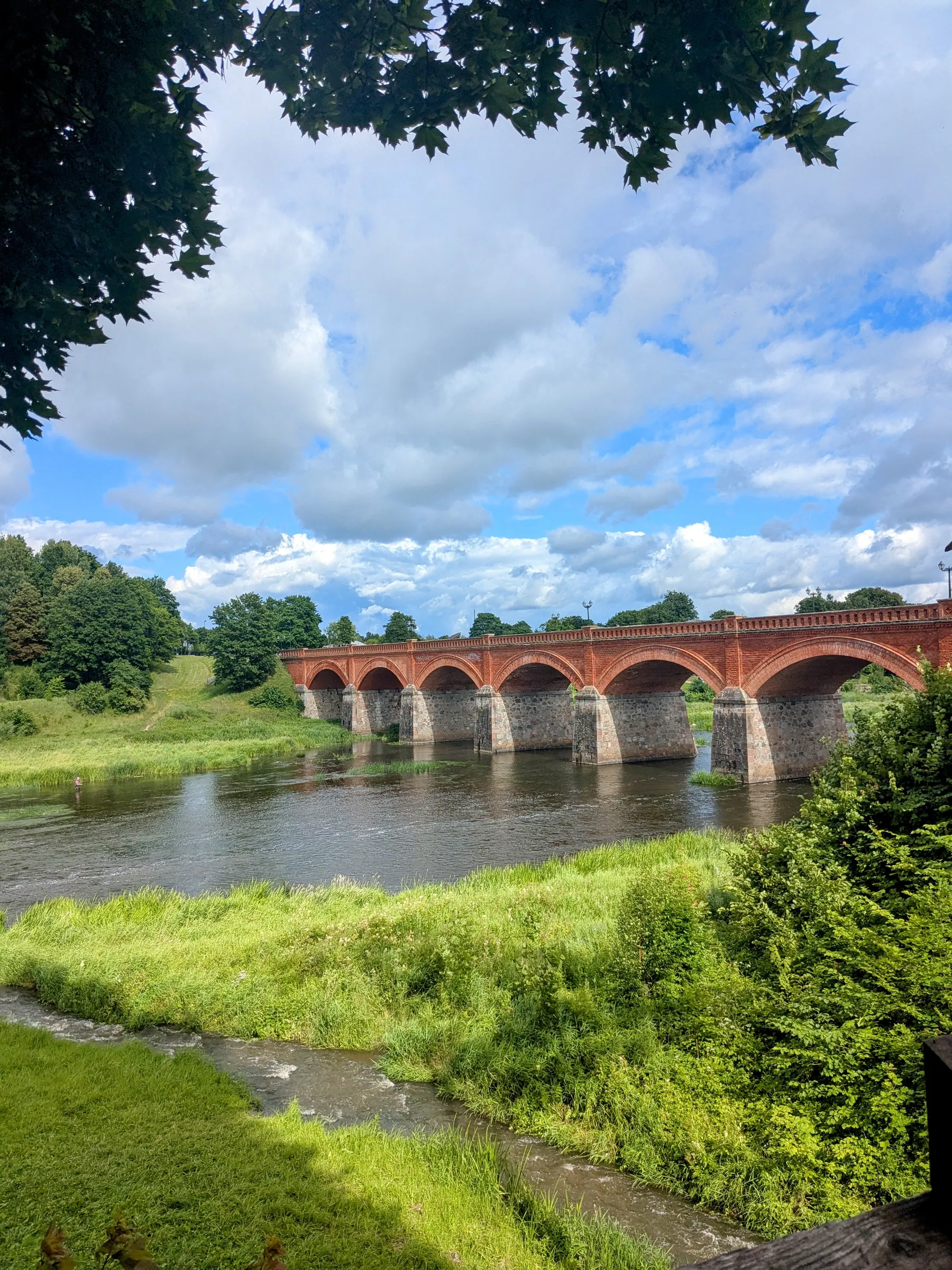
Walking across the old brick bridge is one of those experiences you can’t miss. Built in 1874, it is around 164 metres long and is the longest brick road bridge of its kind in Europe. It gives you wonderful views of the Ventas Rumba and the flowing river. To me it looks extraordinarily beautiful during golden hour, when the red tones of the brick grow brighter and the whole bridge seems to glow.
The Ventas Rumba: Europe’s widest waterfall
I’d recommend crossing the bridge and getting closer to the Rumba on the far side of the river. That side is a natural area where you can walk right up along the riverbank towards the waterfall, and the views are beautiful. Honestly, both sides are beautiful, and it’s hard to choose between them - so go yourself and figure out which one you like better.
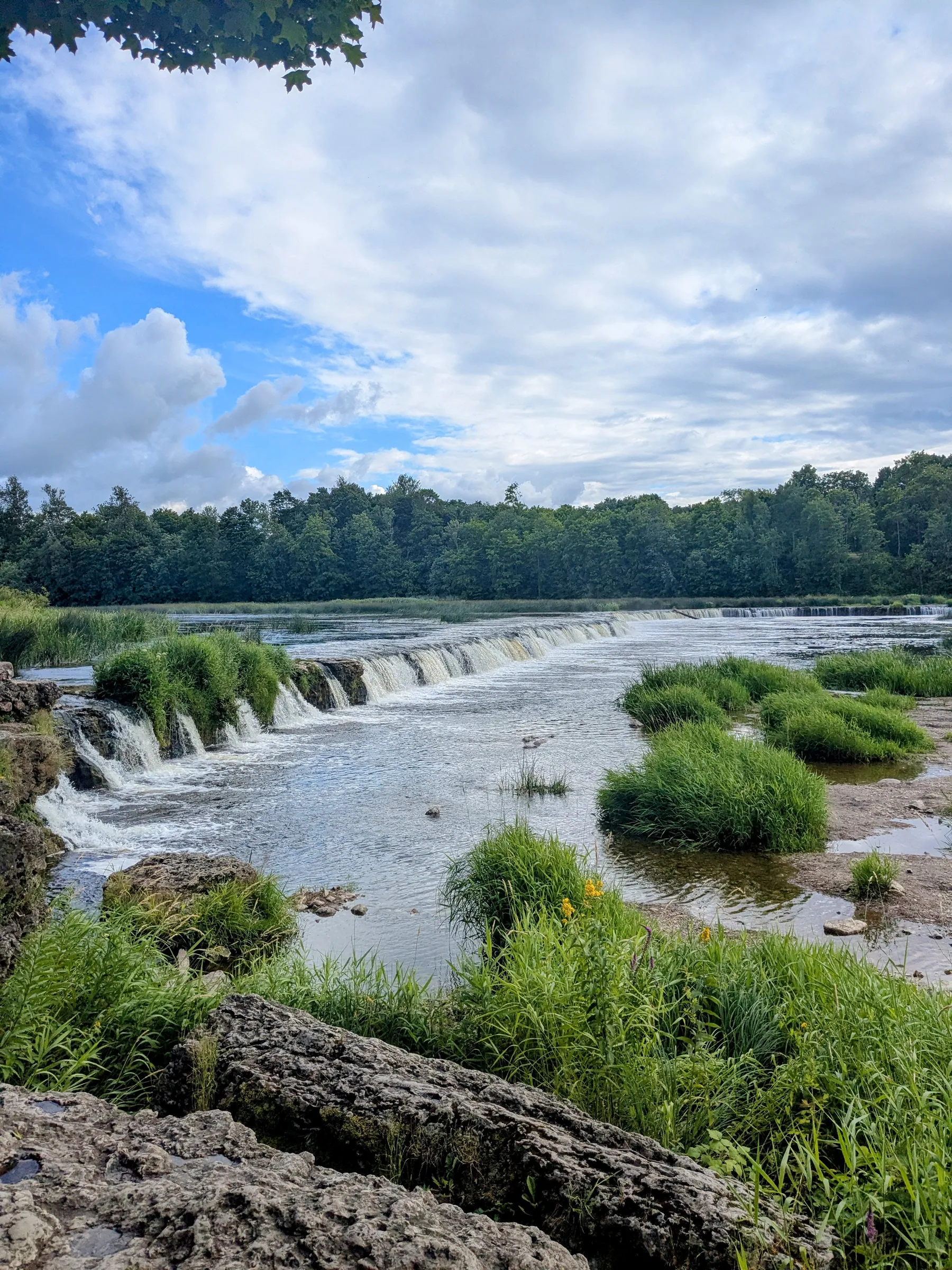
The waterfall feels wild - incredibly wide, with the brick bridge behind it, just magic. It is the widest waterfall in Europe, stretching about 249 metres across the Venta (and even wider, up to 270 metres, during the spring floods), though it is very low, not much more than a couple of metres high. It’s not about the drop here; it’s about the width.
And a funny fact: there are times of year when the fish leap right out of the water, trying to jump up over the rapid. It’s unlikely you’ll see it in summer - it mostly happens in spring and autumn - but I saw it once, and it really is a funny sight. In fact, in the old days Kuldīga was known as the place “where salmon were caught in the air.” If you’re daring enough, you can even wade across the Ventas Rumba on foot, though it can be a slippery experience.
On this side of the river is also the Kuldīga observation tower (Kuldīgas skatu tornis), a tall, slightly leaning viewing tower - though it’s a fair way from the Rumba itself, so don’t expect to be right on top of the waterfall from there.
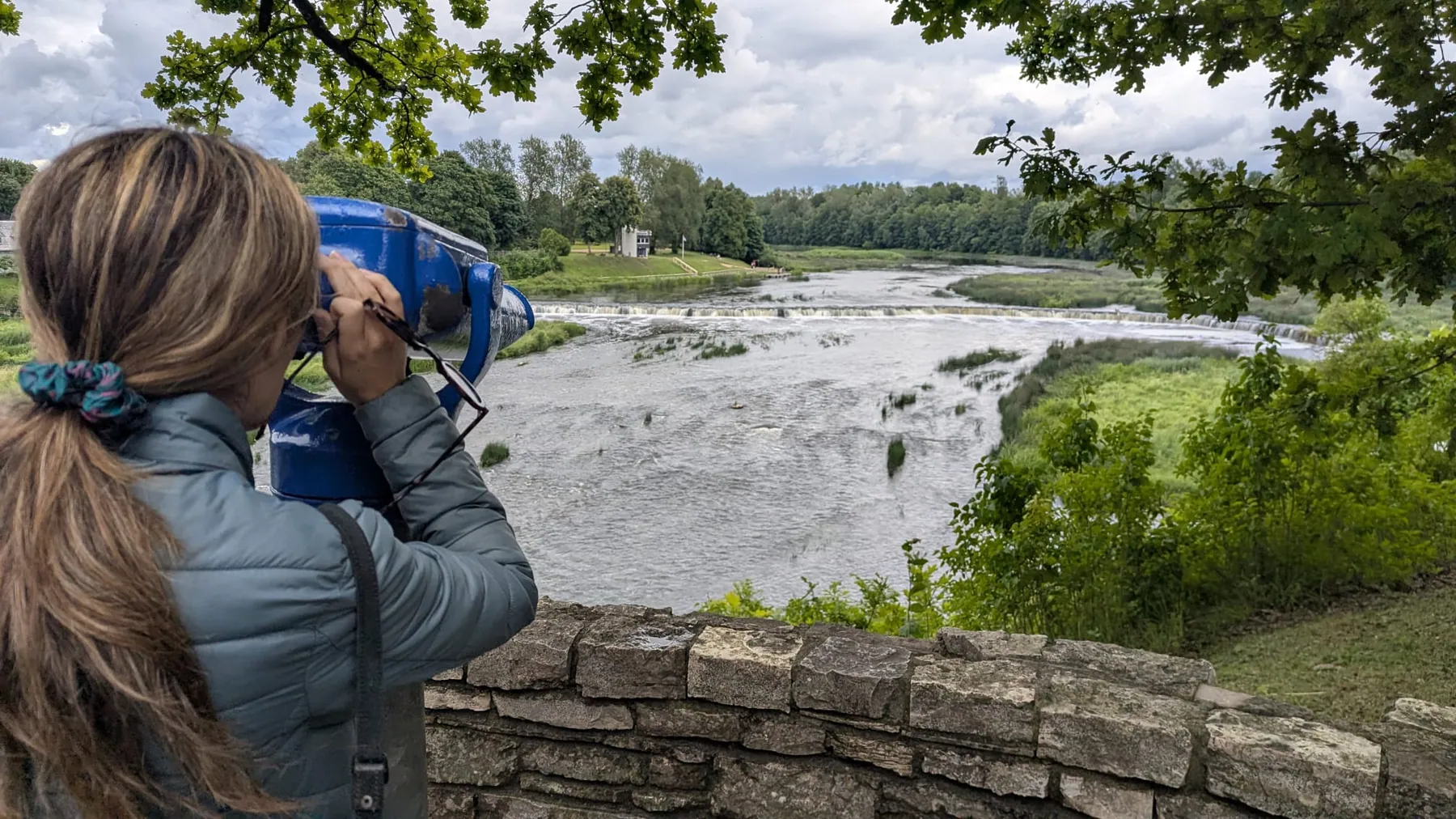
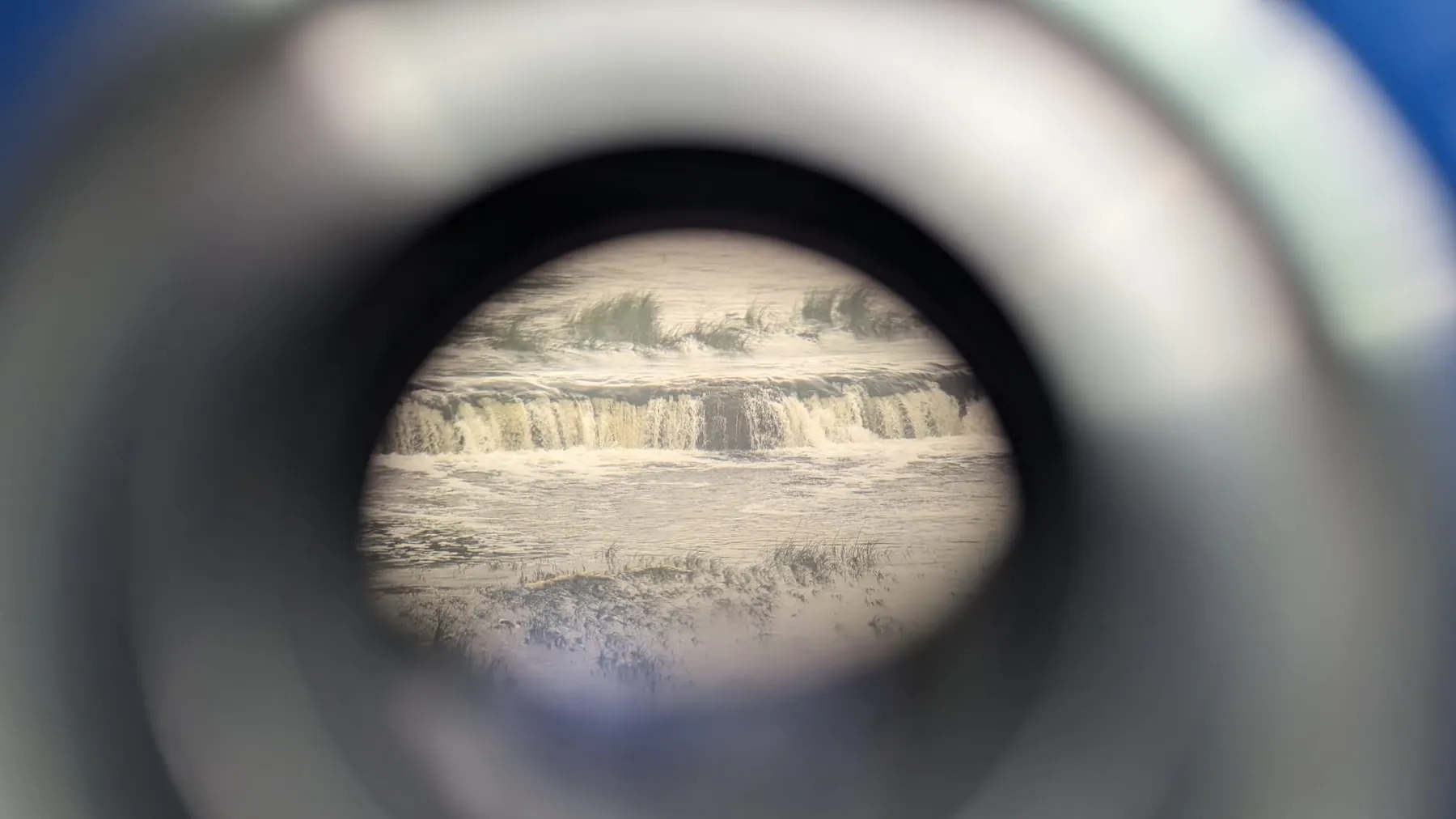
For a view of the Rumba from above, one of the best spots is the promenade beside the old-town bridge, on Pils iela. There’s a free binocular there to see the Venta from a distance, and if you’d rather take in the views with a nice glass in hand, Pils iela has several restaurants.
While you’re on this side, the Kuldīga District Museum (Kuldīgas muzejs) is worth a look if you want to go deeper into the town’s history, and right next to it is the Castle Park (Pils parks), with beautiful, well-kept fountains - worth a quick stroll just to see how nicely it’s cared for.
Kuldīga’s creative side
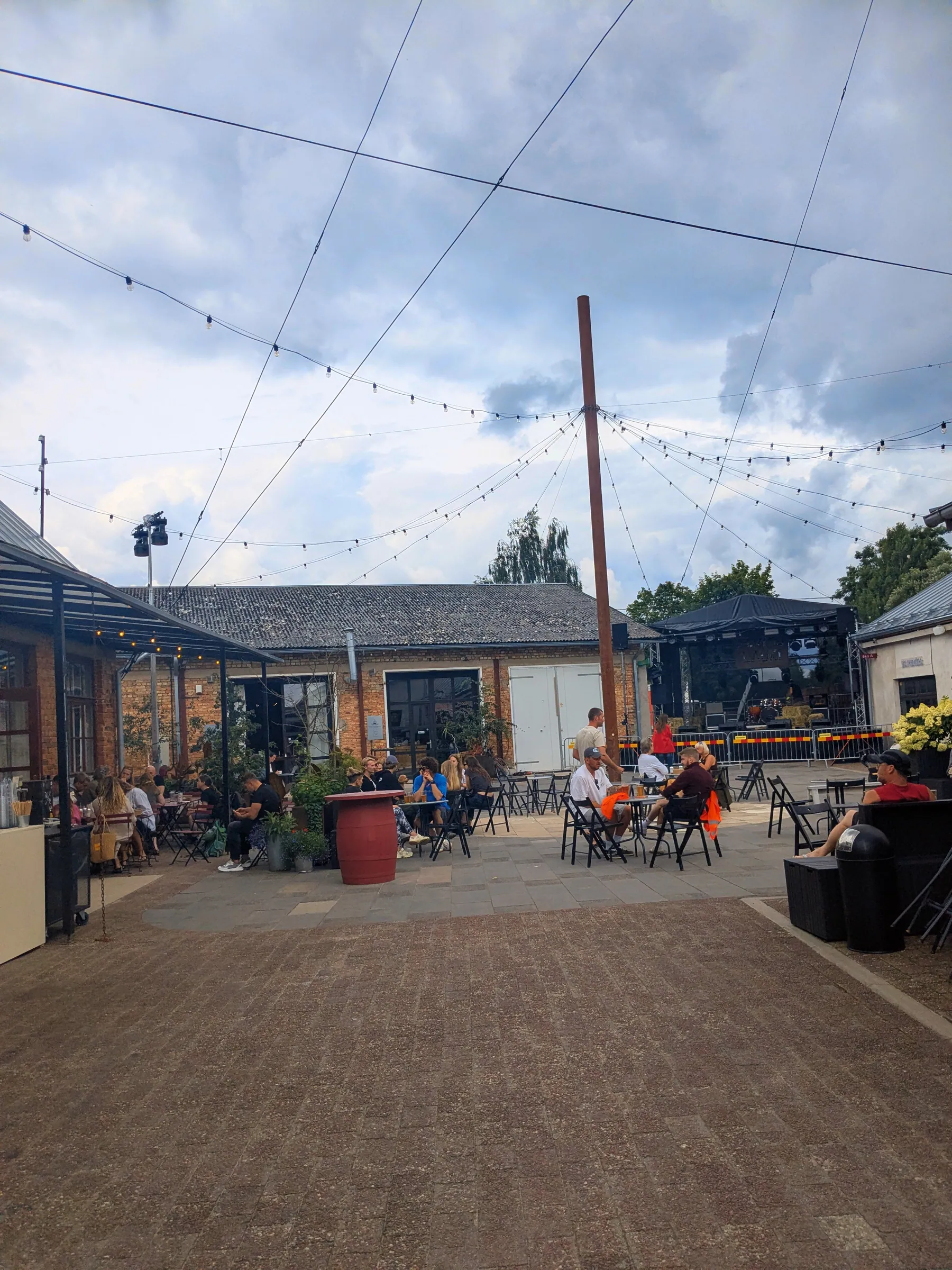
One thing worth mentioning is that in recent years Kuldīga has been attracting new people, and it’s becoming more and more popular, especially with younger visitors. A good example is the Kaļķu iela Quarter (Kaļķu ielas kvartāls), a former industrial area of old garages and workshops next to the historic centre that has been reinvented as a creative hub - now home to bars, a brewery, a coffee roastery and cultural spaces, with concerts and events. It’s a nice sign that Kuldīga isn’t a frozen museum town, but a place that’s alive and evolving.
If you can, come during the town festival
I visited twice this summer - once as a proper tourist, and once during the town’s annual festival, which takes place at the end of July. That’s when the town truly comes alive, with lots of visitors and concerts in every corner. The dates change from year to year, so if you happen to be in Latvia around that time, check the date, and if you can go, do it.
Is Kuldīga worth it?
Kuldīga is for the kind of traveller who searches for the soul of a place. It has incredible charm, and you’ll feel it the moment you slow down and let the town reveal itself. For me it’s more than a pretty old town - it’s a place tied to my own childhood, one I’ve now come to see with completely different eyes. If you make it to Latvia and you have a day to spare, give it to Kuldīga. It’s worth the two hours from Riga, and then some.
Planning a longer trip across the country? See our Best of Latvia Beyond Riga guide to four regional routes, covering the Gauja Valley, Ķemeri and Lake Engure, Kurzeme, and the Rundāle and Bauska area.
FAQs
Is Kuldīga worth visiting?
Yes. Kuldīga combines a beautifully preserved old town, the historic brick bridge and Ventas Rumba, making it one of Latvia's most rewarding day trips.
How much time do you need in Kuldīga?
A full day lets you explore at a relaxed pace, although you can see most of the main sights in around three to four hours.
How do you get to Kuldīga from Riga?
Driving takes about two hours and is the easiest option. Direct buses also run from Riga, with the fastest journey taking around two and a half hours. There is no train to Kuldīga.
Can you walk across Ventas Rumba?
It is possible to wade across the waterfall when conditions allow, but the rocks can be slippery, so take care and avoid crossing when the water is high.
Read next
More posts for this trip mood
 Europe
 Kurzeme, Latvia
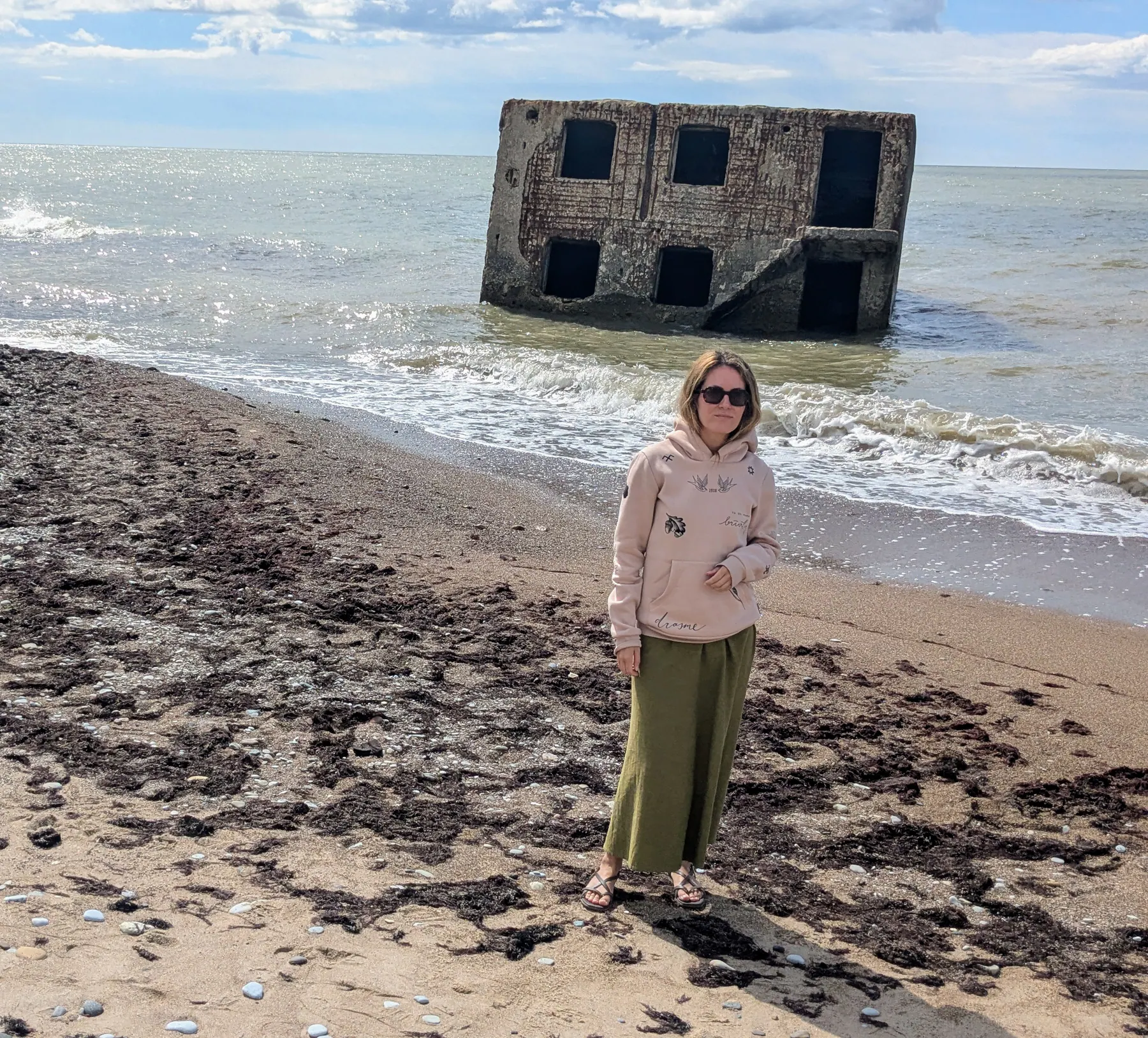
Liepāja: Blown-Up Forts, a Prison Hotel and a City Marked in Musical Notes
A Baltic city where blown-up forts, a prison hotel, music and a wide beach make for an unexpectedly versatile coastal break.
A Liepāja city guide with the Northern Forts, Karosta Prison, Art Nouveau architecture, street art, music, beaches and practical tips.
 Europe
 Kurzeme, Latvia
Jūrkalne and Pāvilosta: Latvia's Wildest Stretch of Coast
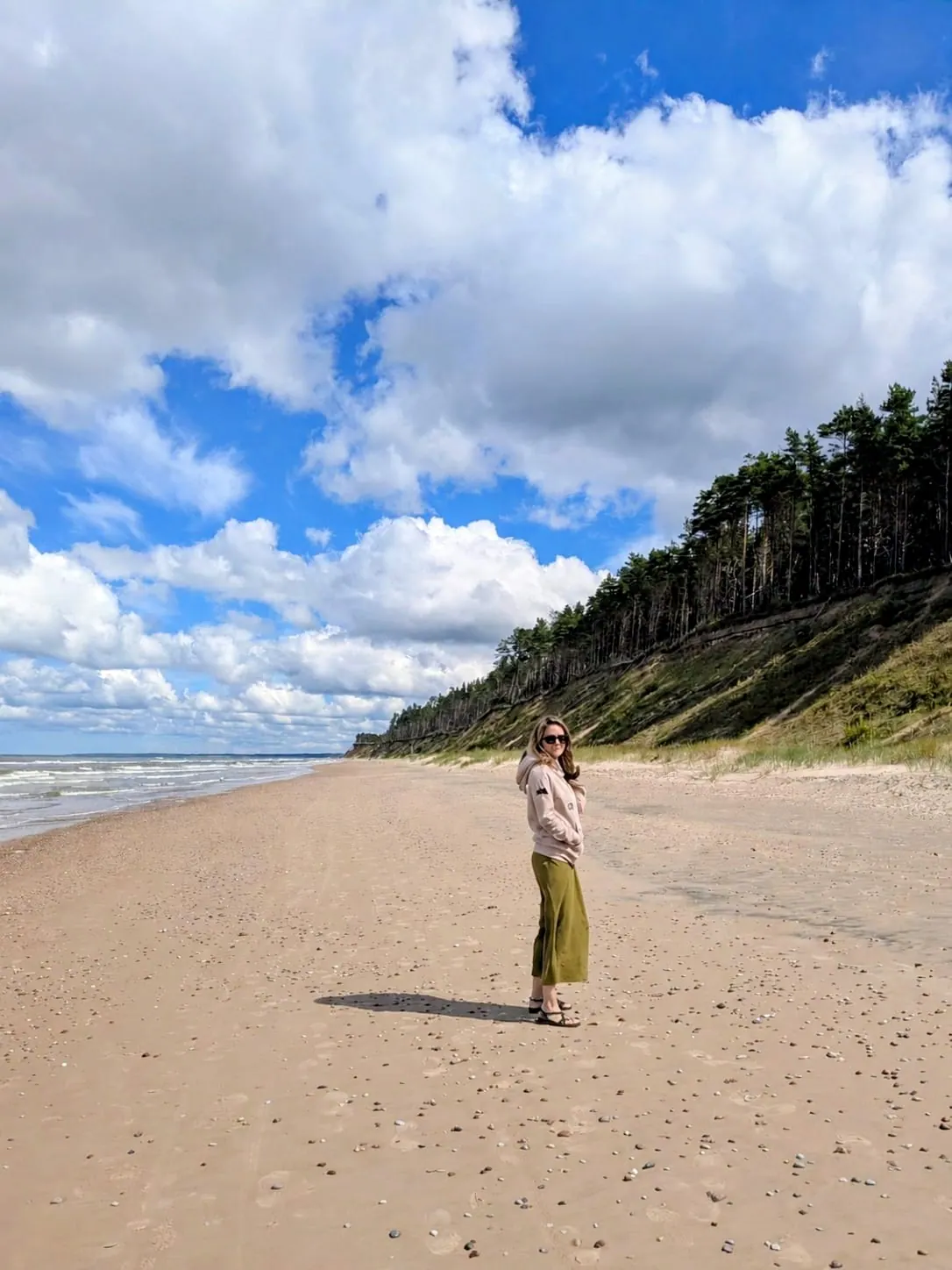
Between Jūrkalne's high sandy banks and the little harbour town of Pāvilosta lies one of the quietest, wildest stretches of Latvia's Baltic coast.
 Europe
 Kurzeme, Latvia
Kandava and Sabile: Two Small Towns Worth a Stop in Western Latvia
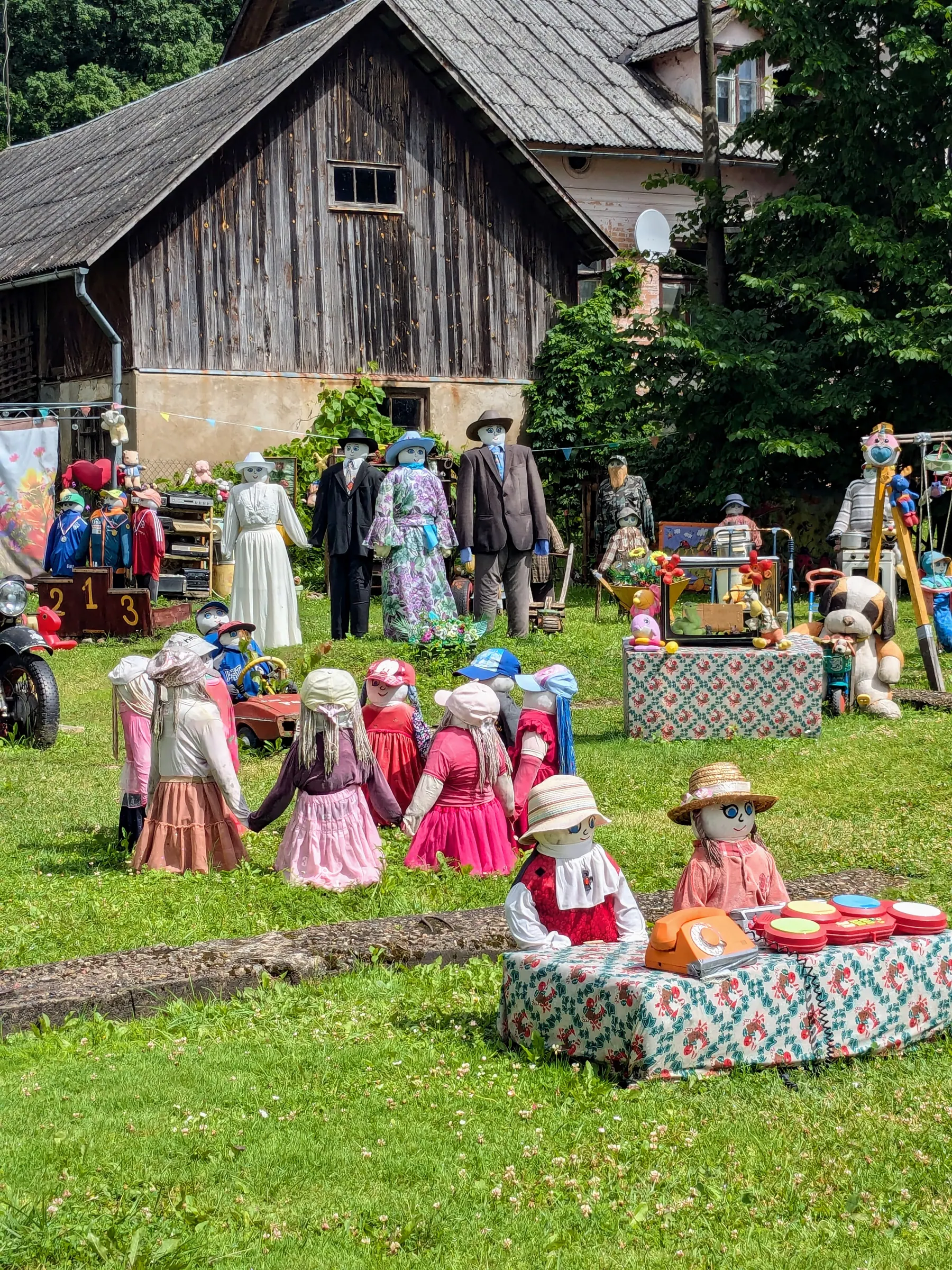
Two short stops filled with poetry, wine, handmade dolls and the quiet character of the Abava Valley.
Kandava and Sabile are two easy, characterful stops in the Abava Valley that make any drive west from Riga feel like part of the trip.